G7-Sci-L1 2026-09-05
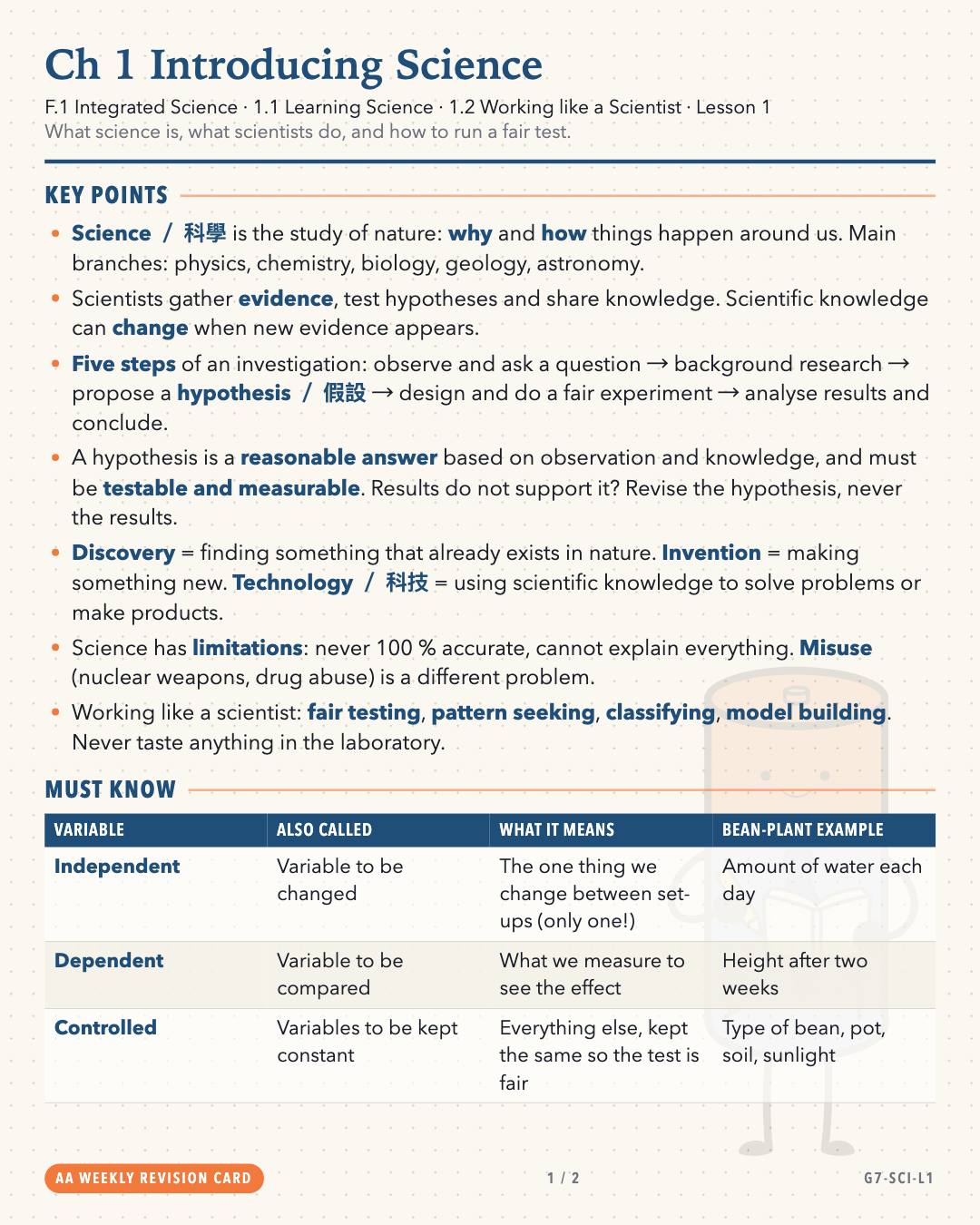
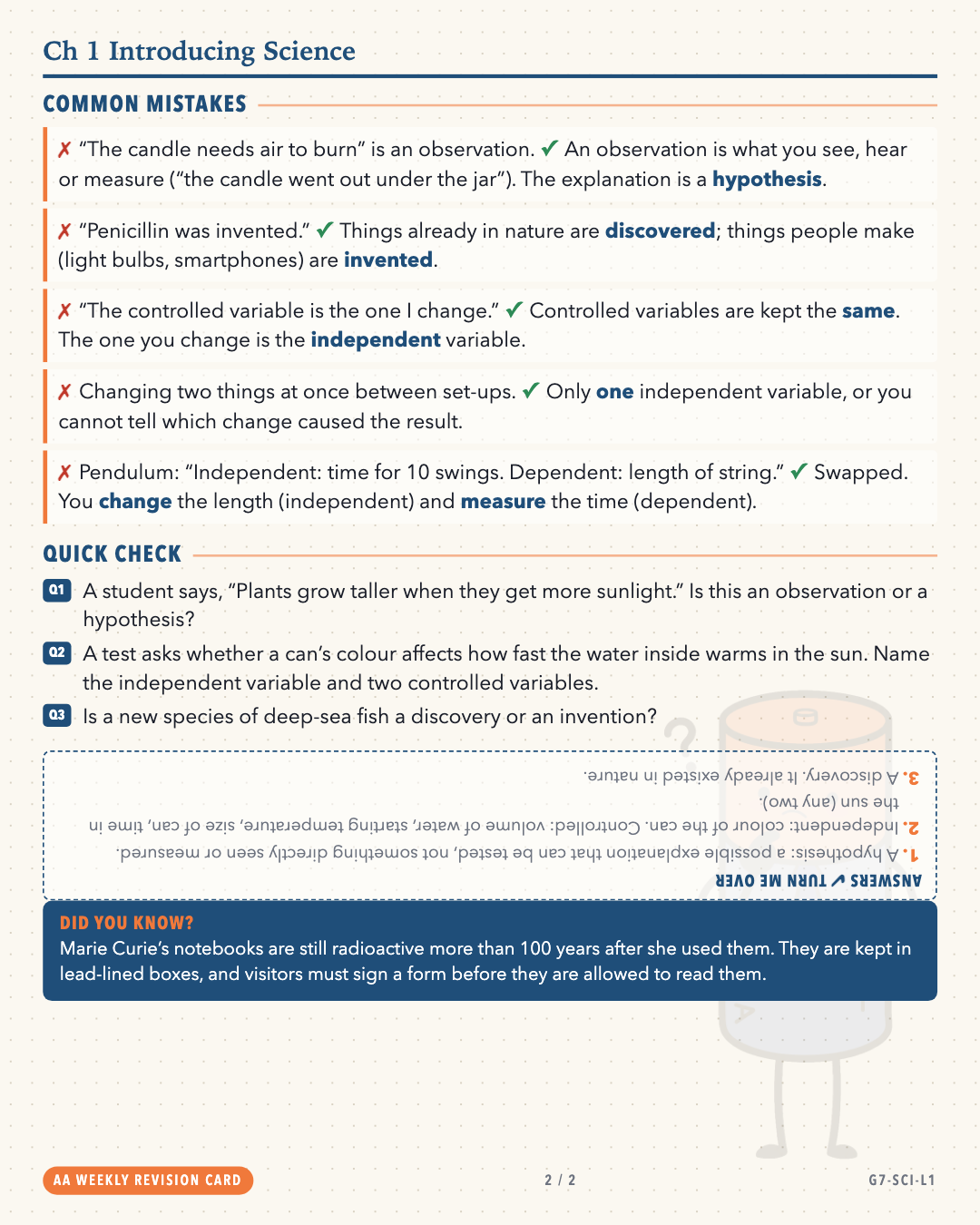
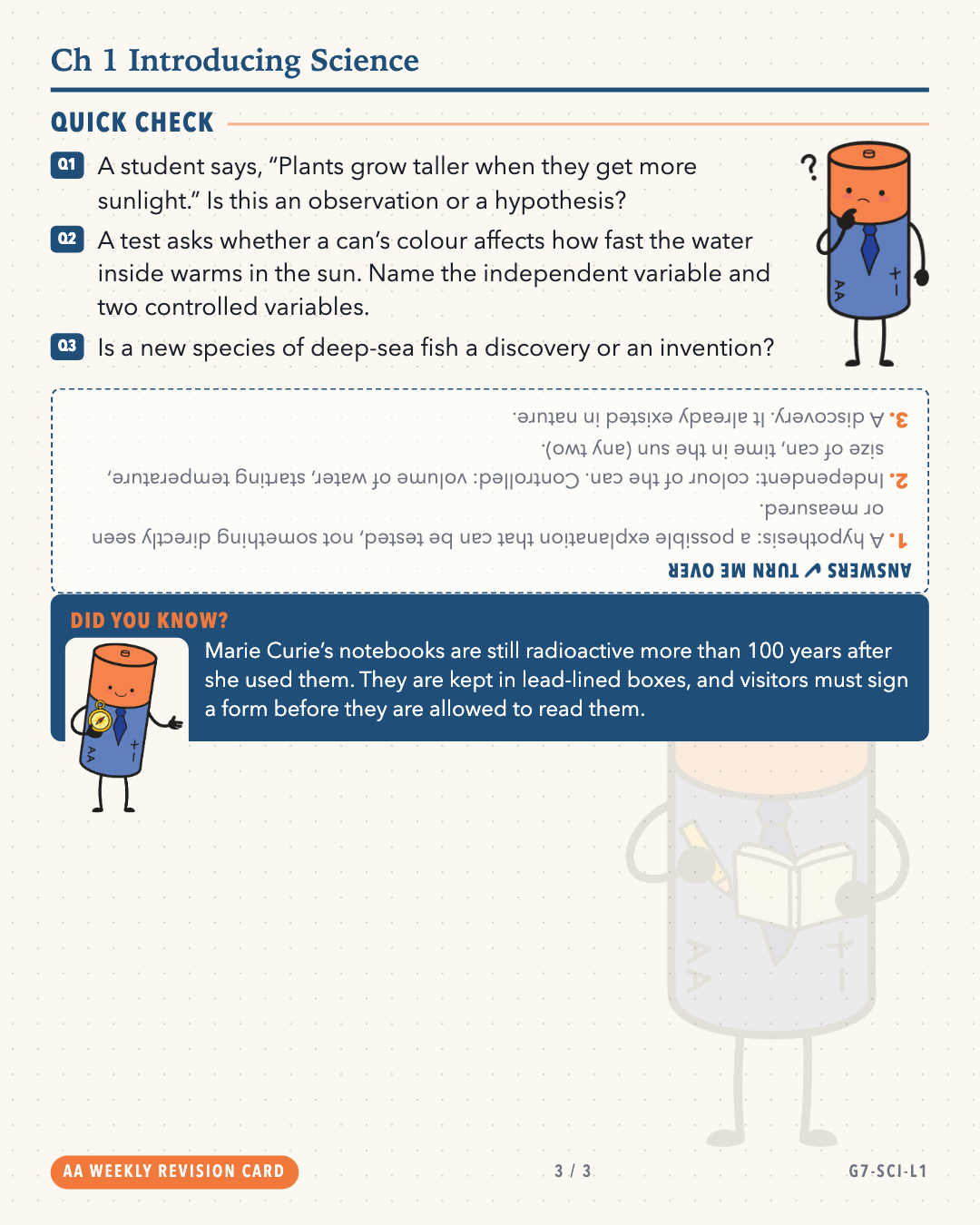
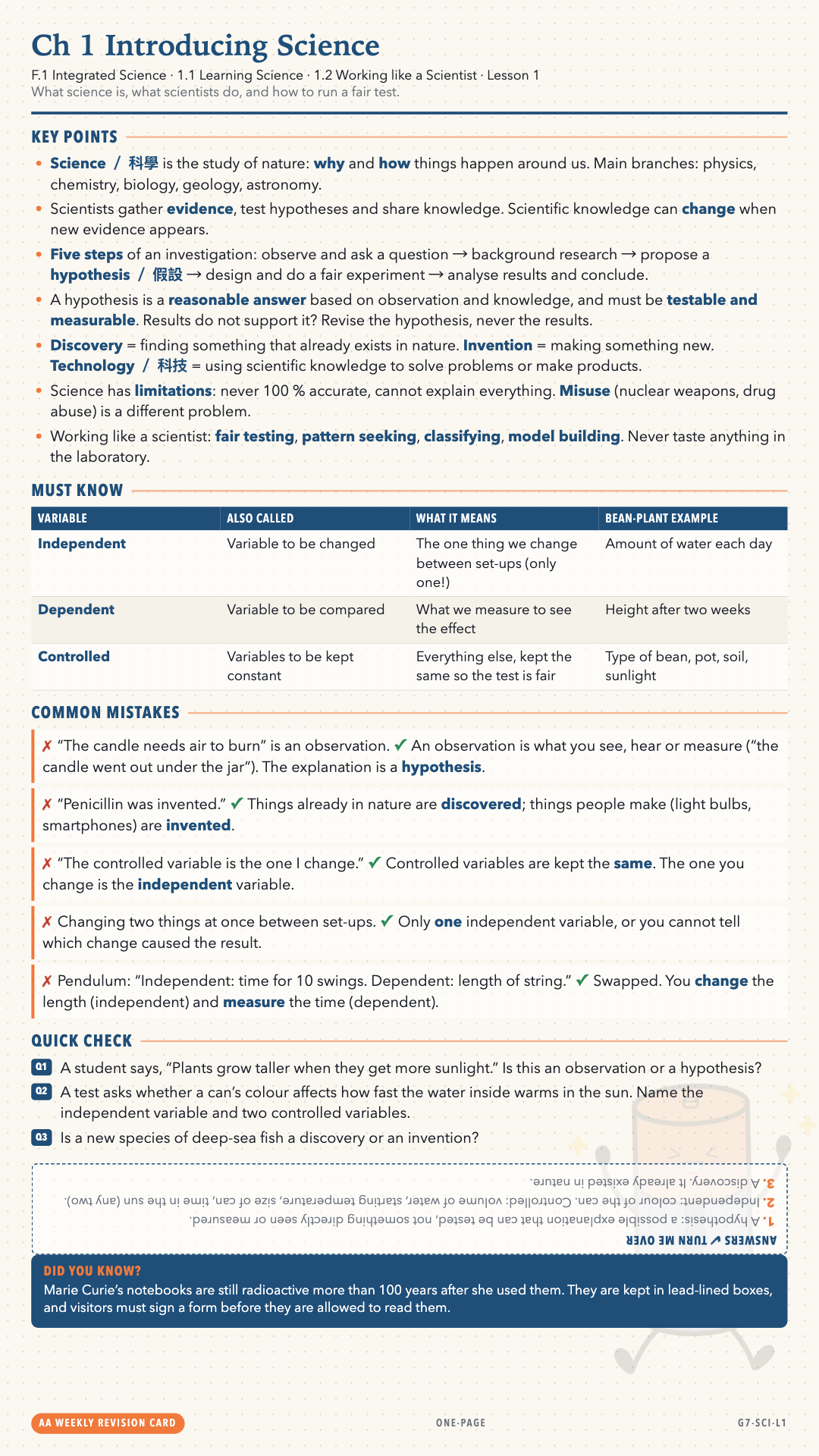
Ch 1 Introducing Science
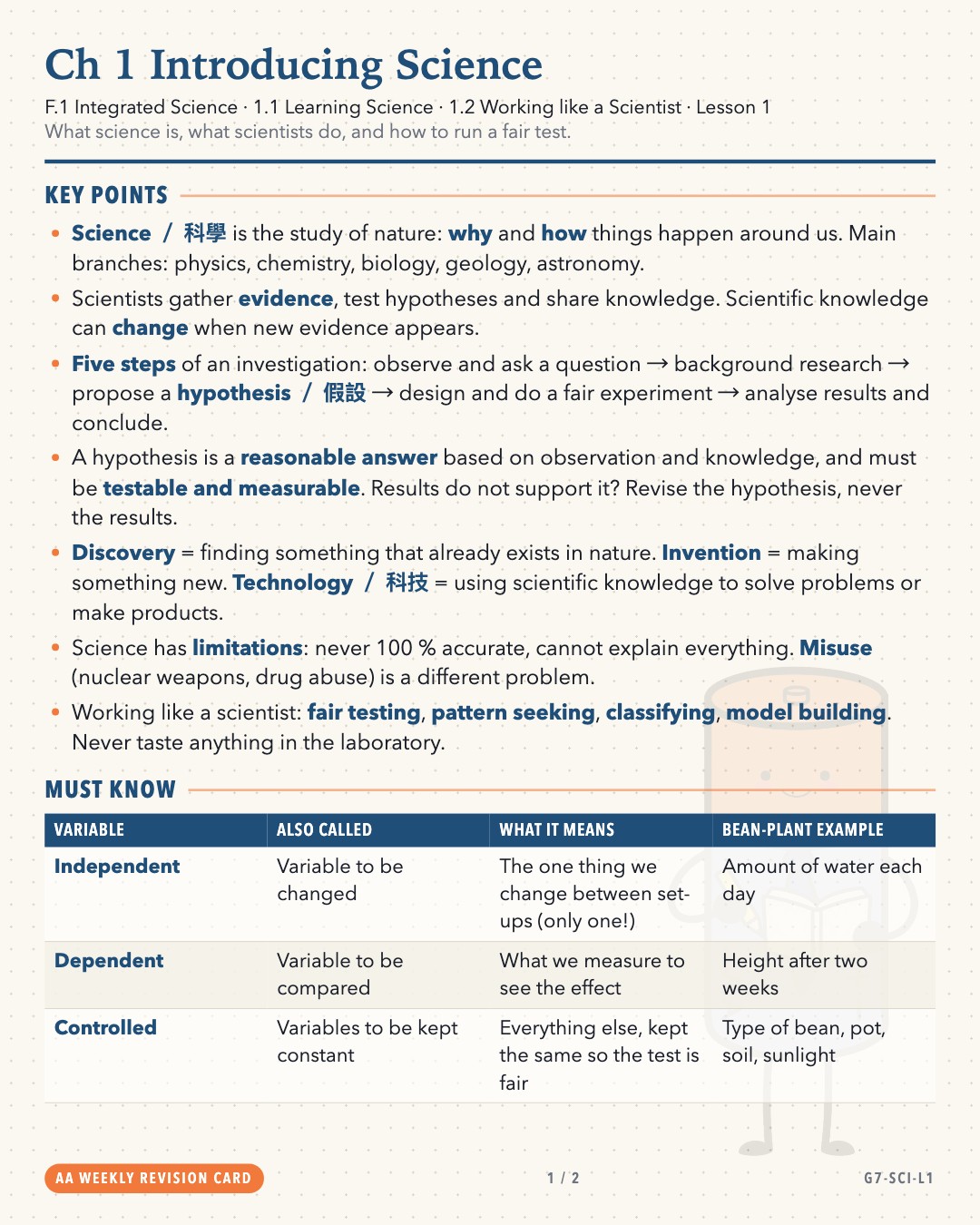
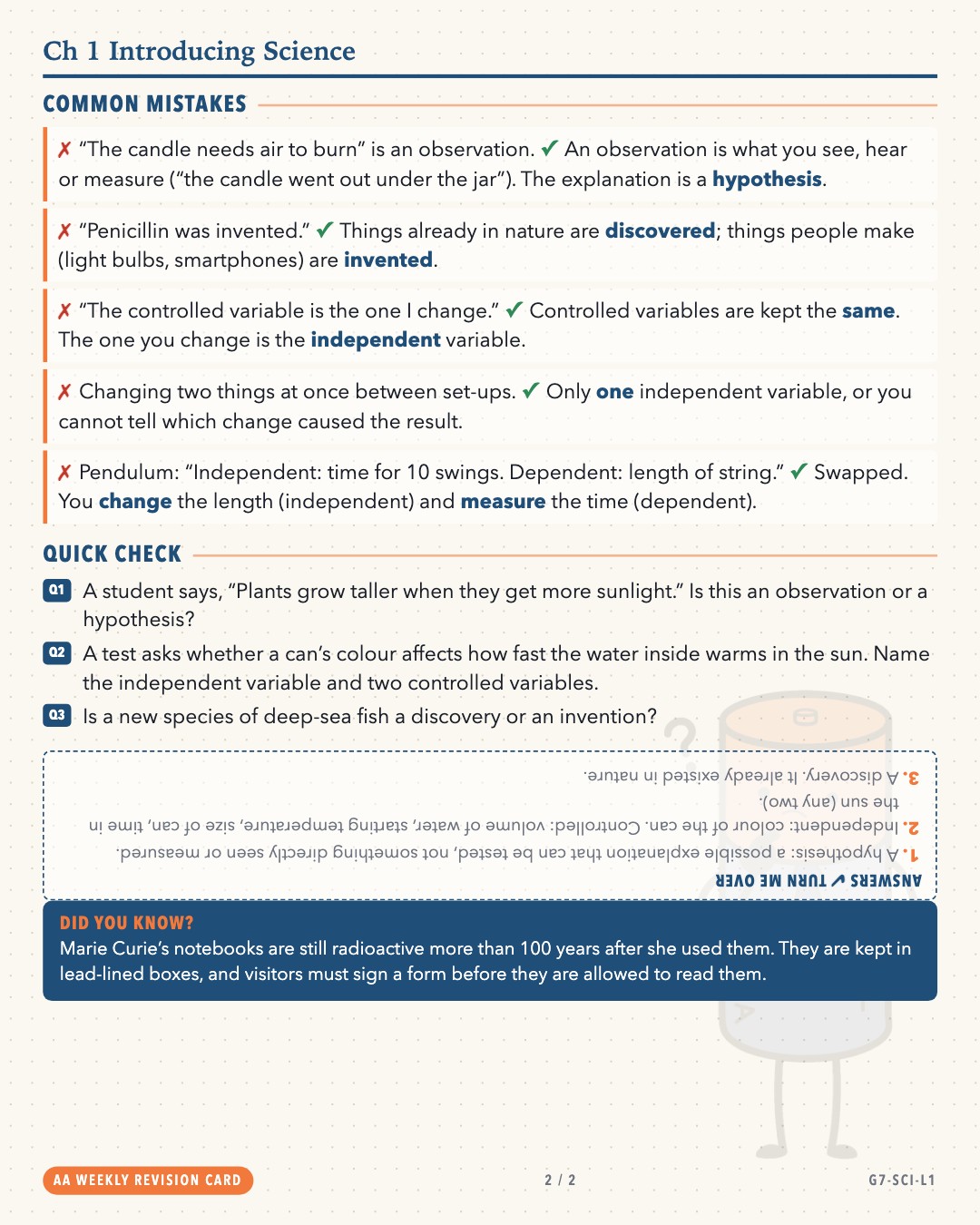
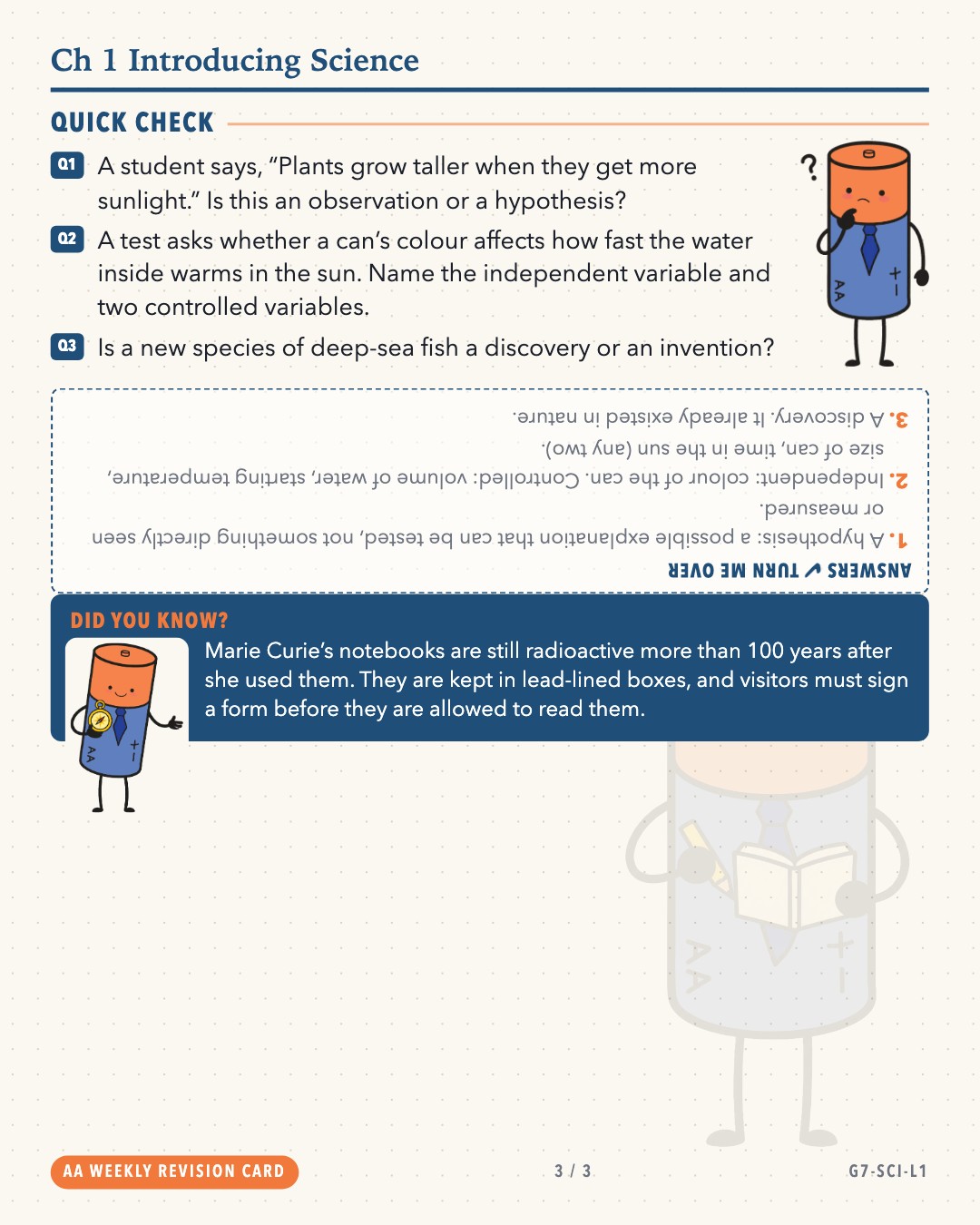
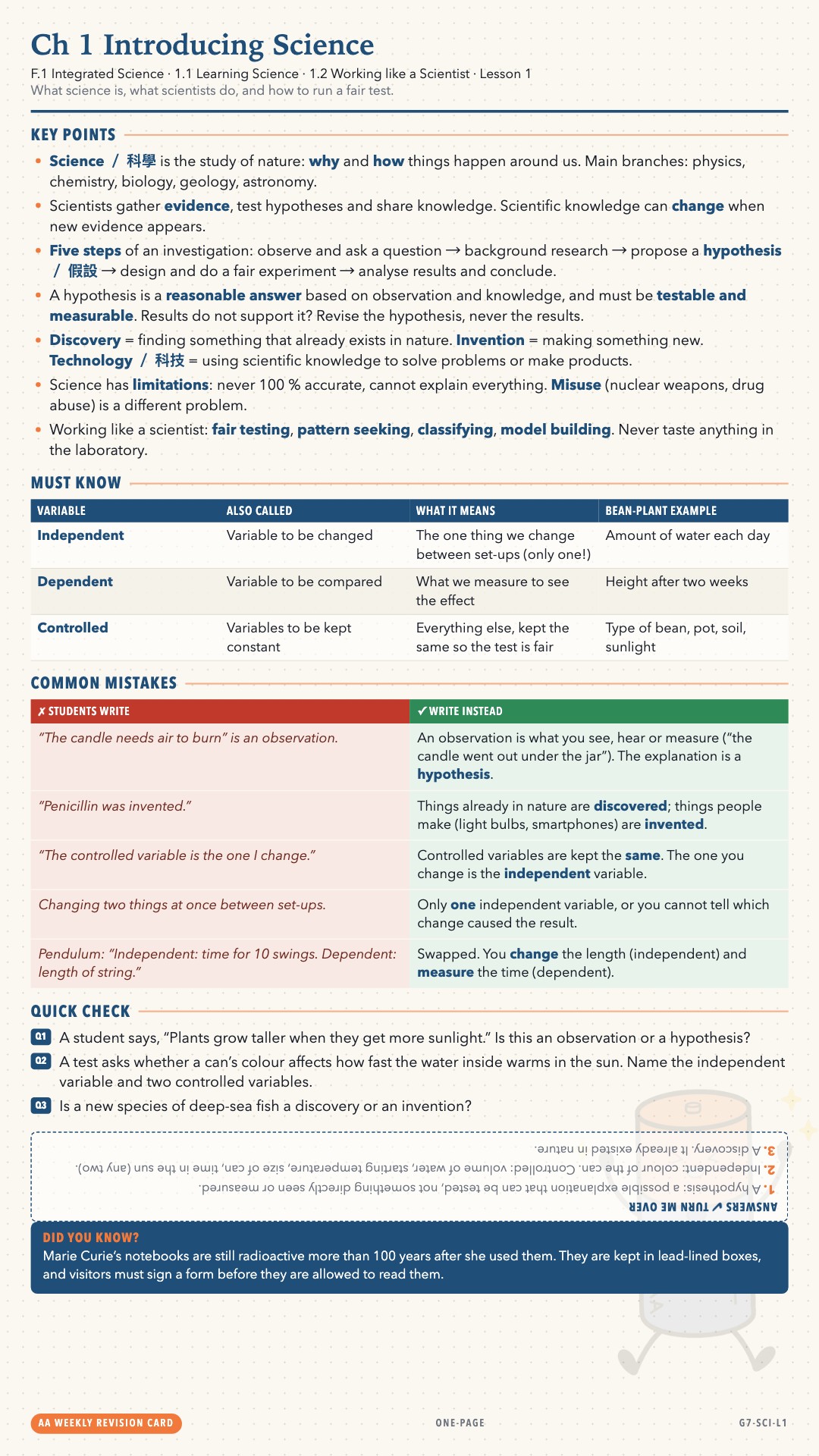
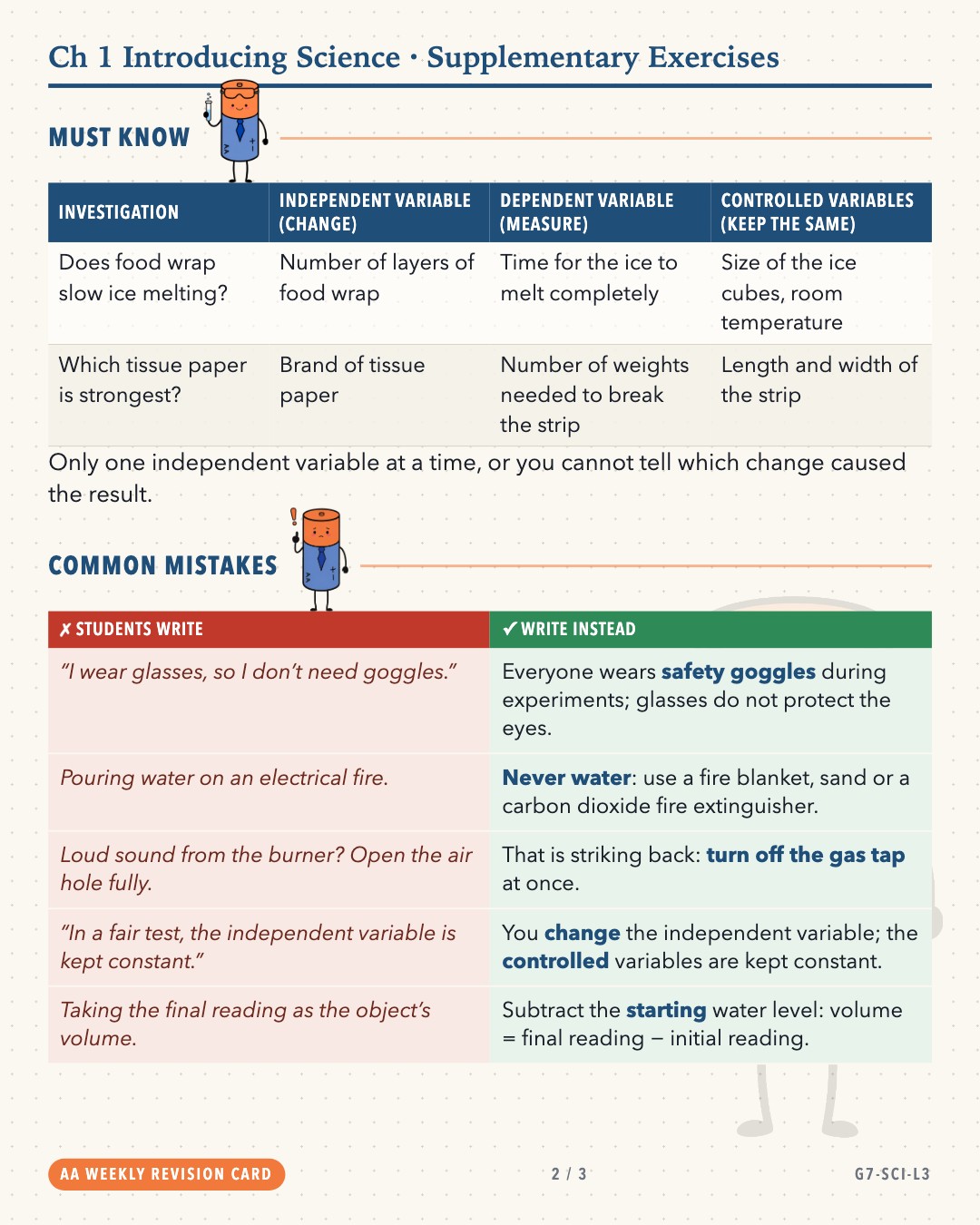
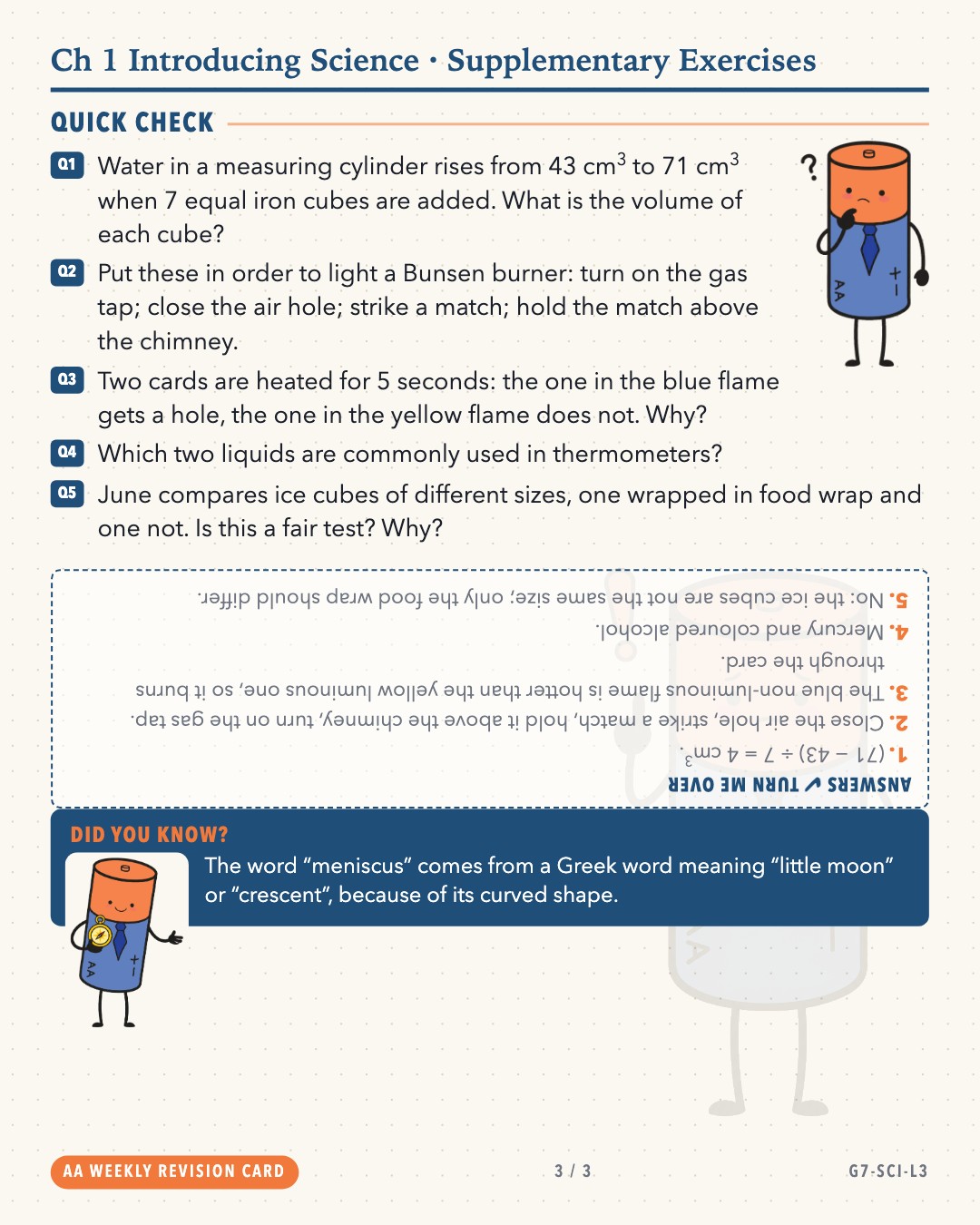
What science is, what scientists do, and how to run a fair test.
✔ fact-checked · 1 added mistake tagged [likely] · 1.3 MB JPG · card.md ·
48 lesson card sets · rebuilt 2026-10-10 · cards.json
What science is, what scientists do, and how to run a fair test.
✔ fact-checked · 1 added mistake tagged [likely] · 1.3 MB JPG · card.md ·
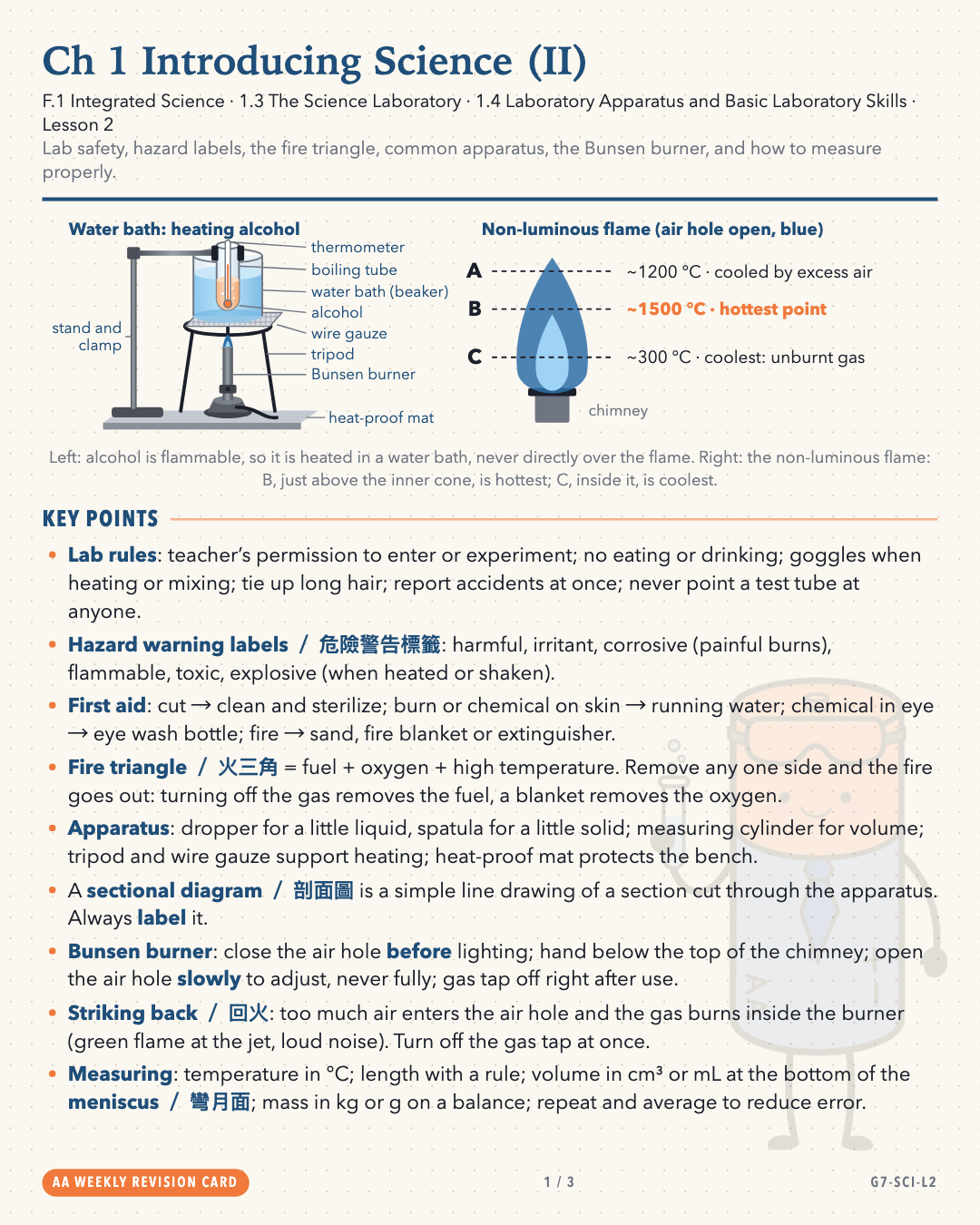
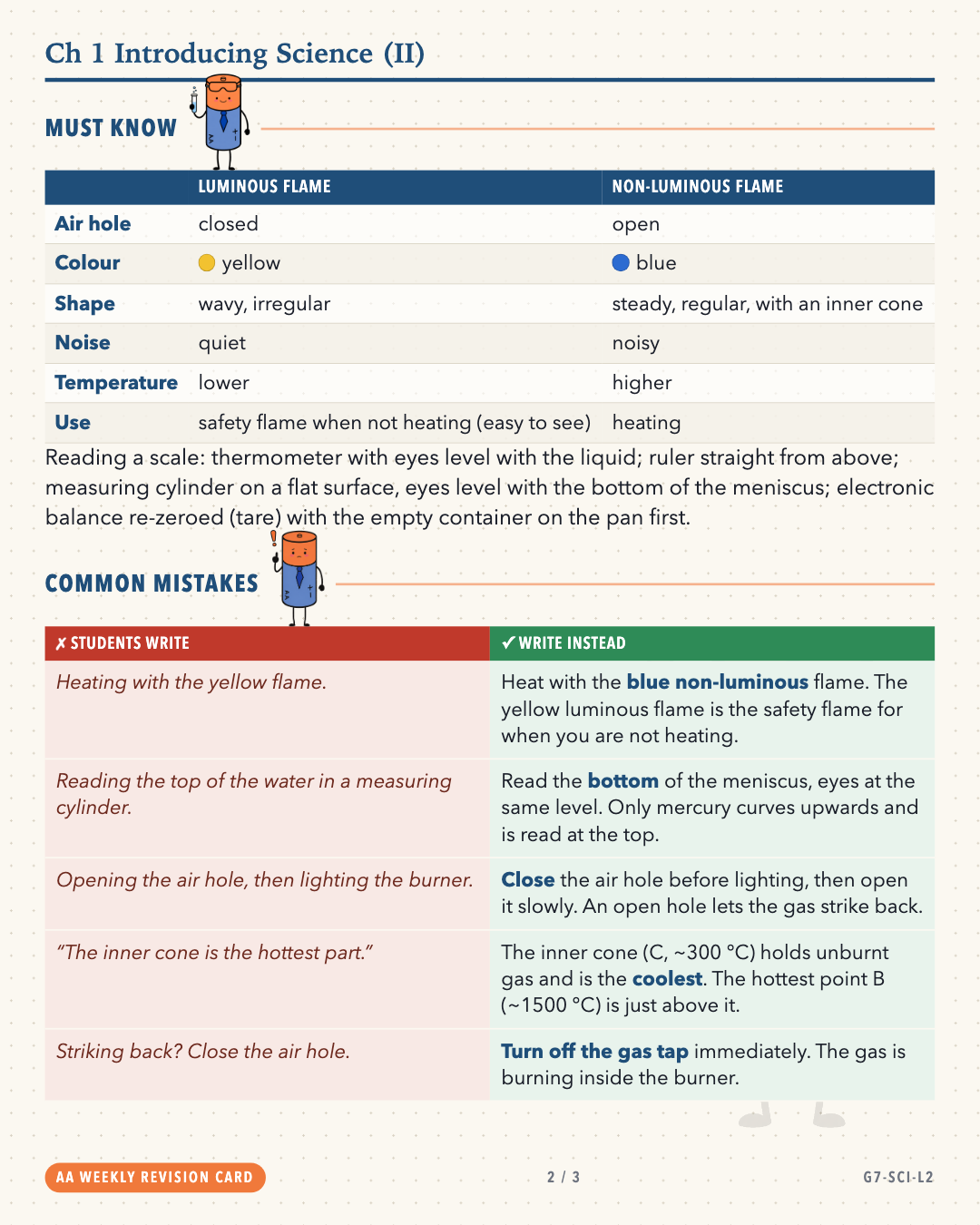
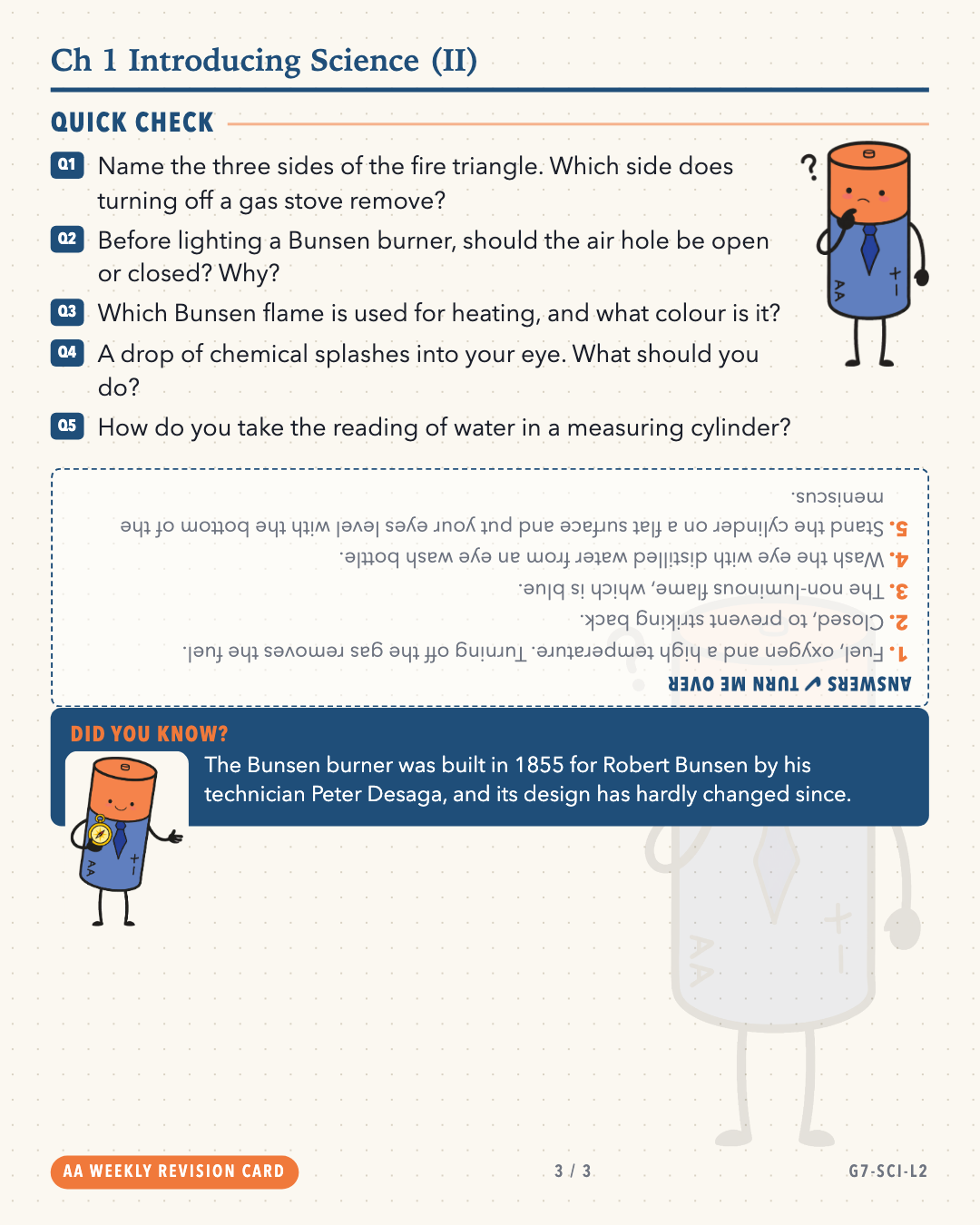
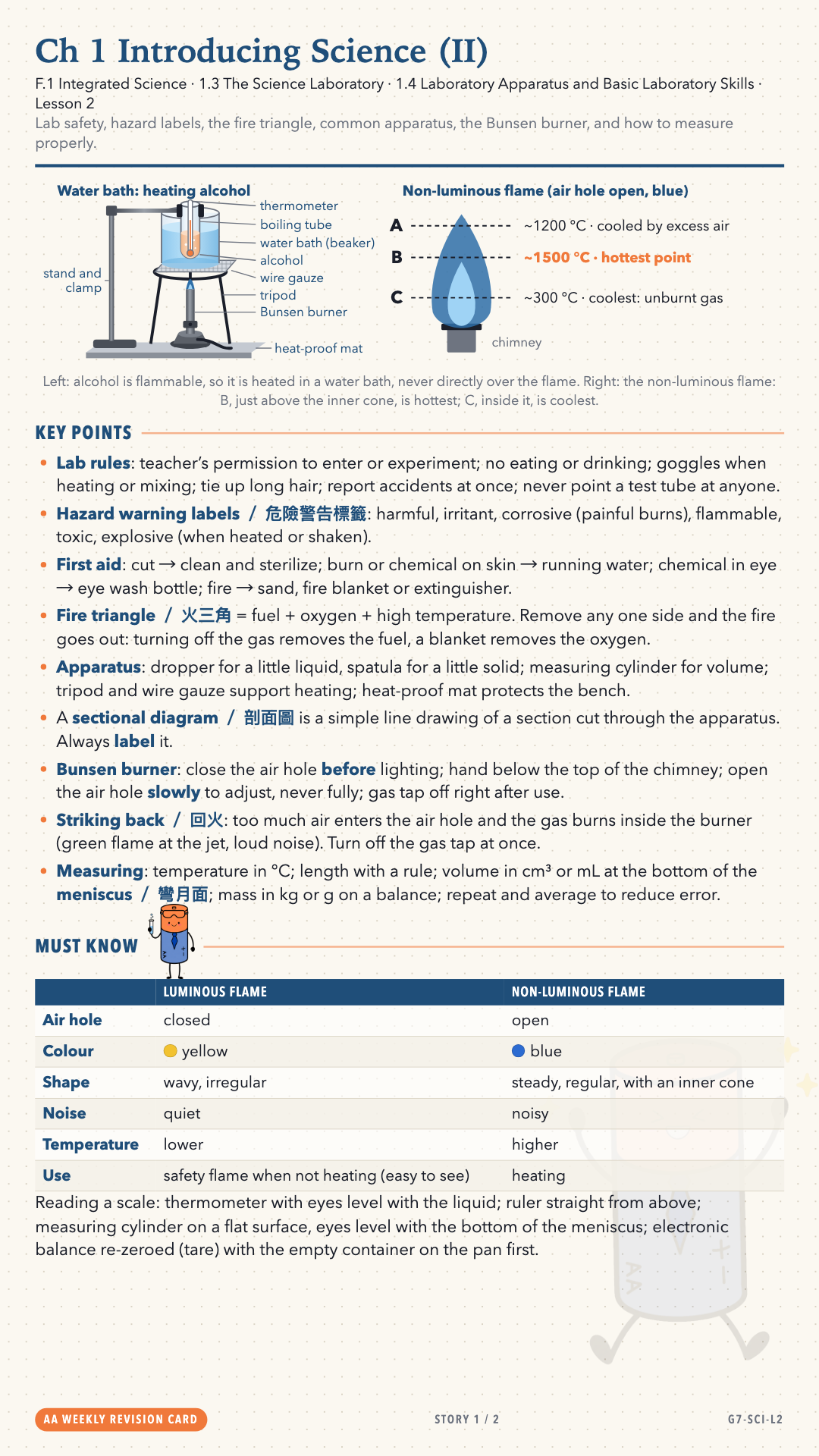
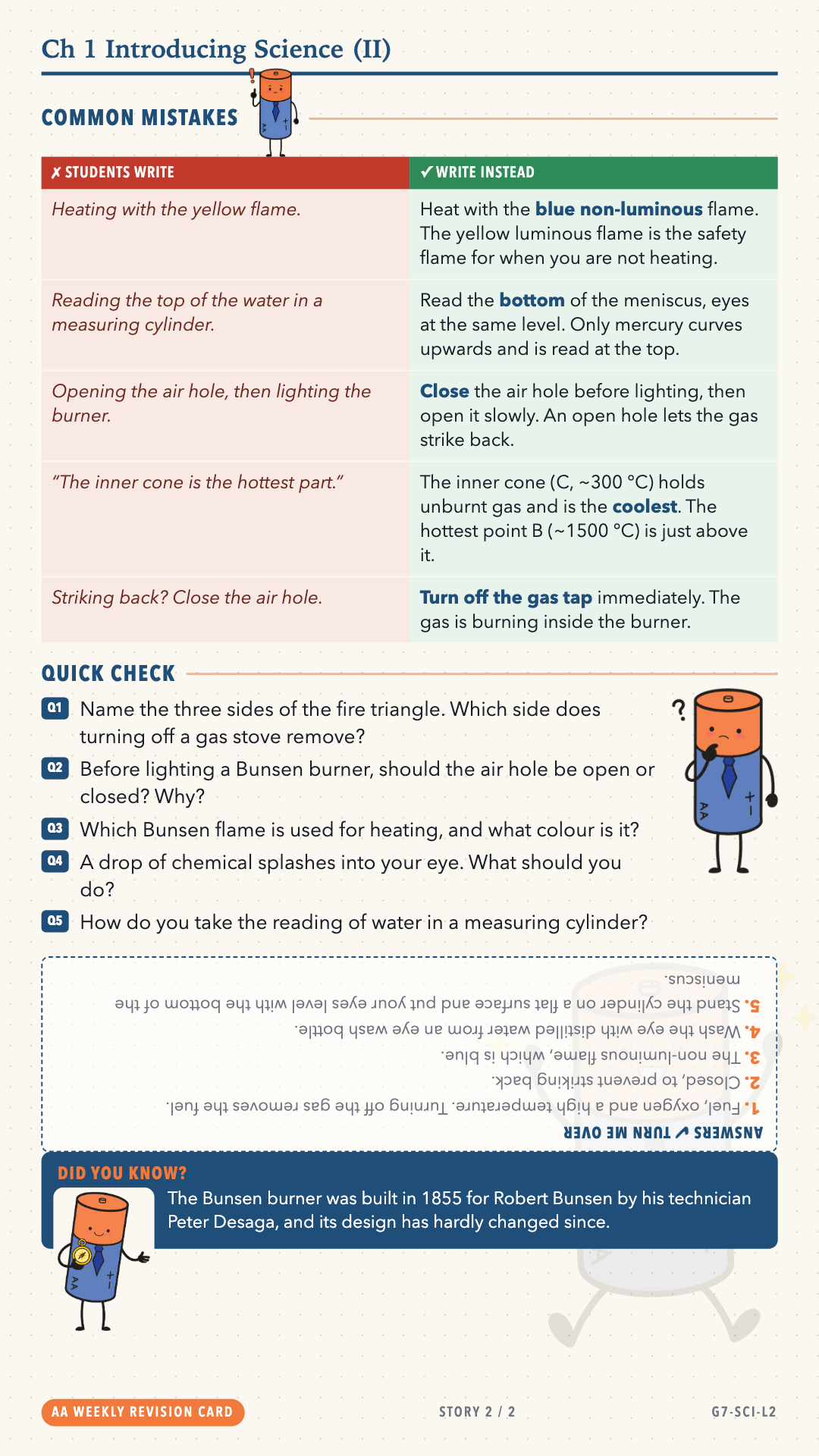
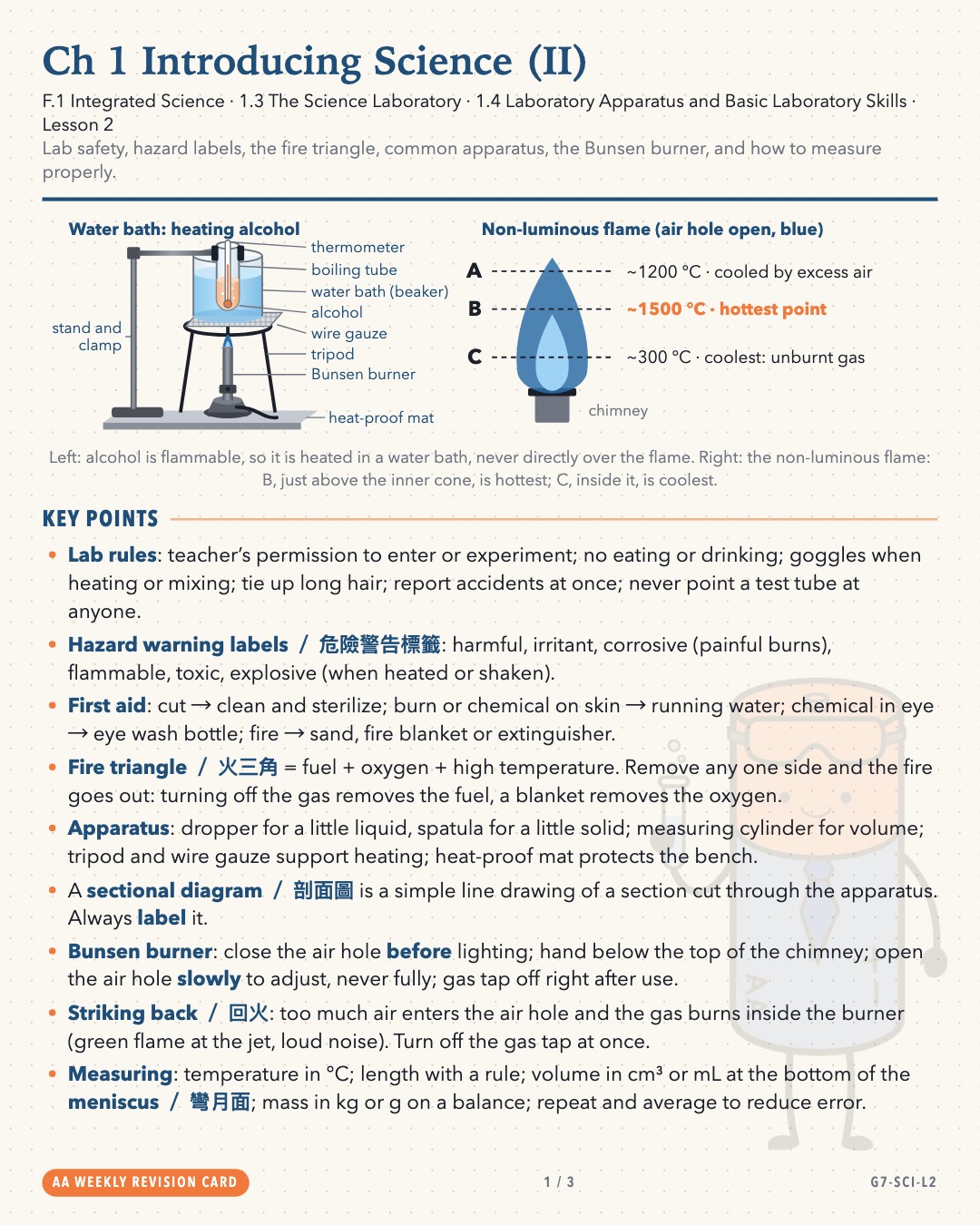
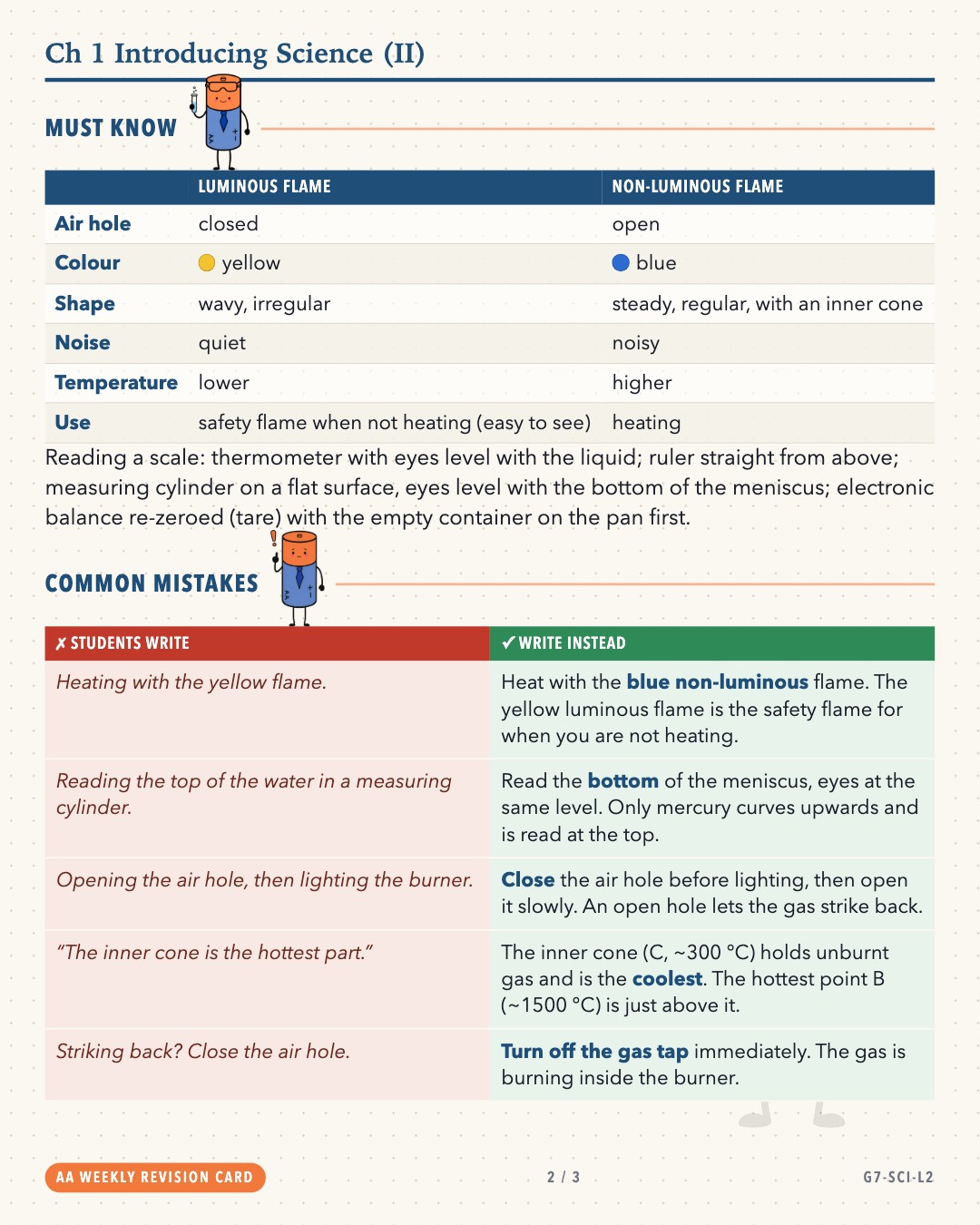
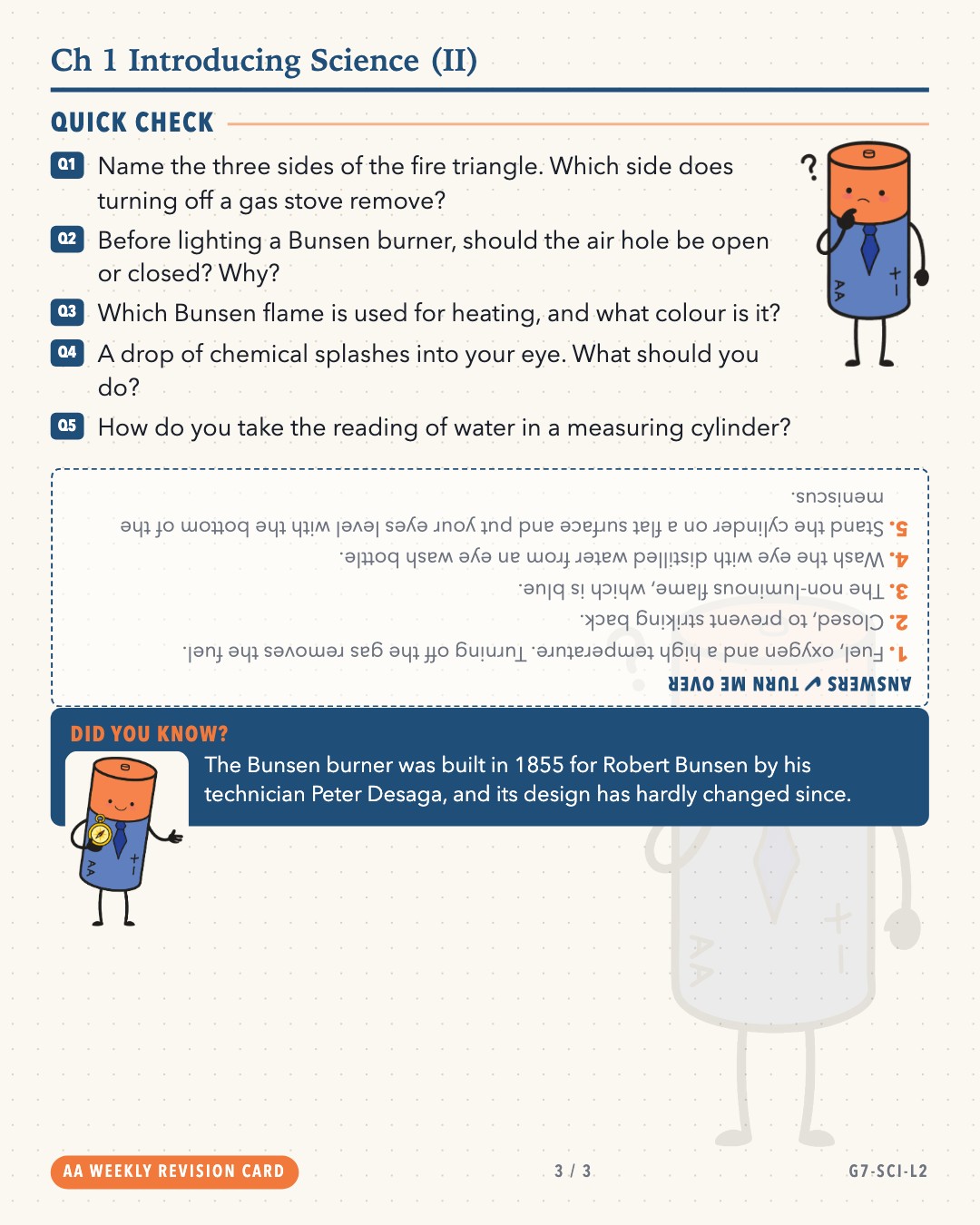
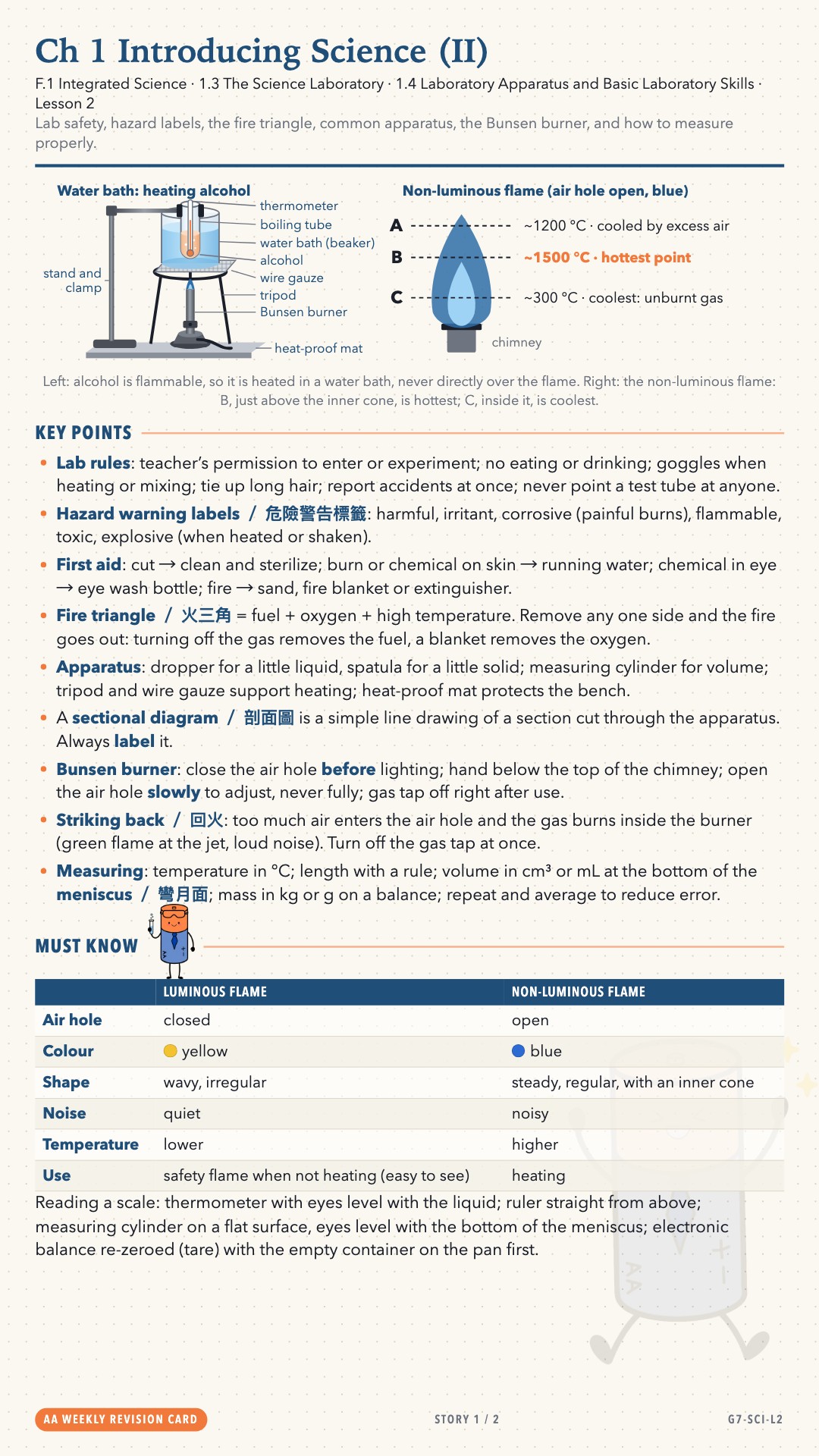
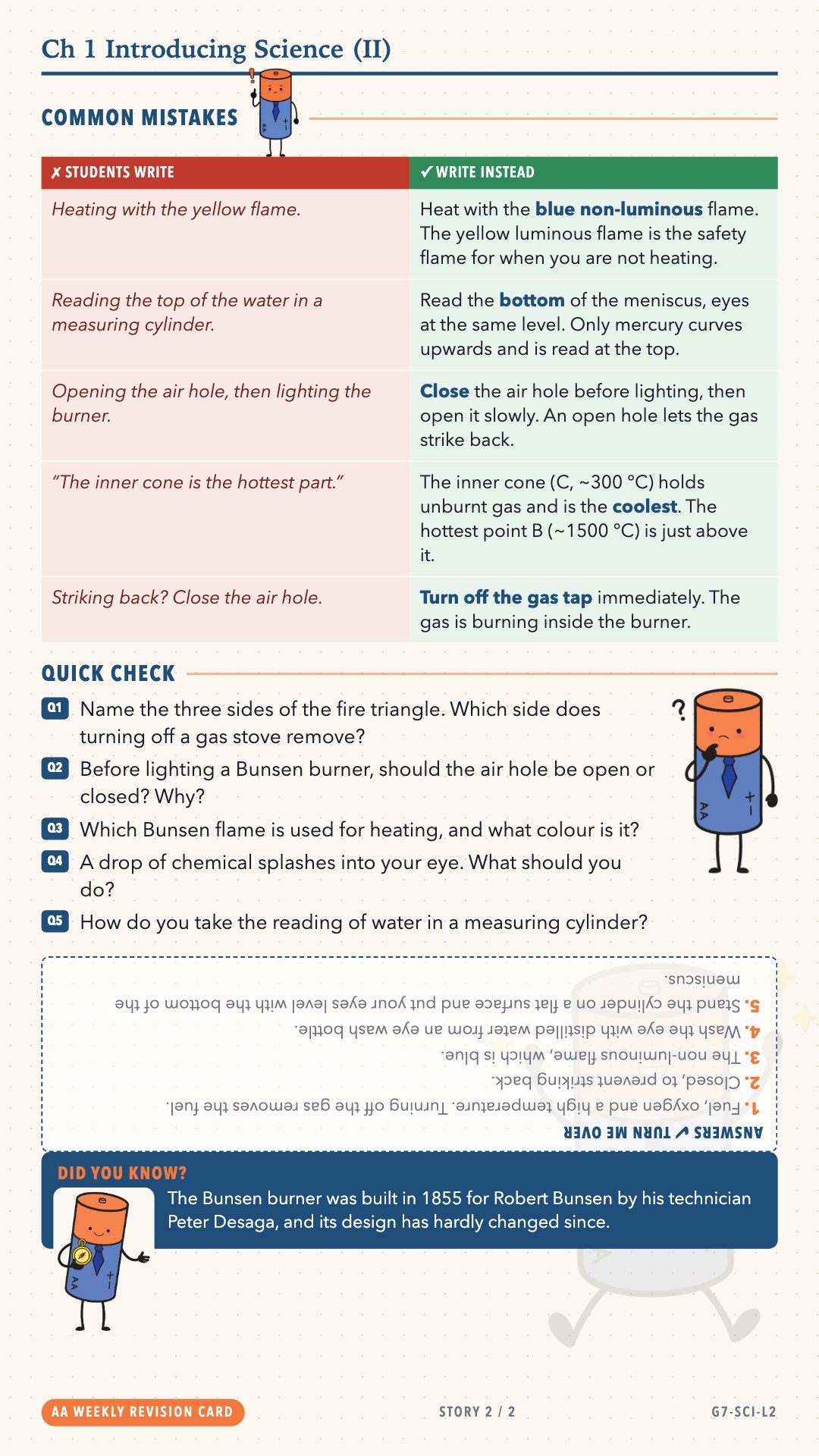
Lab safety, hazard labels, the fire triangle, common apparatus, the Bunsen burner, and how to measure properly.
✔ fact-checked · 1 added mistake tagged [likely] · 1.7 MB JPG · card.md ·
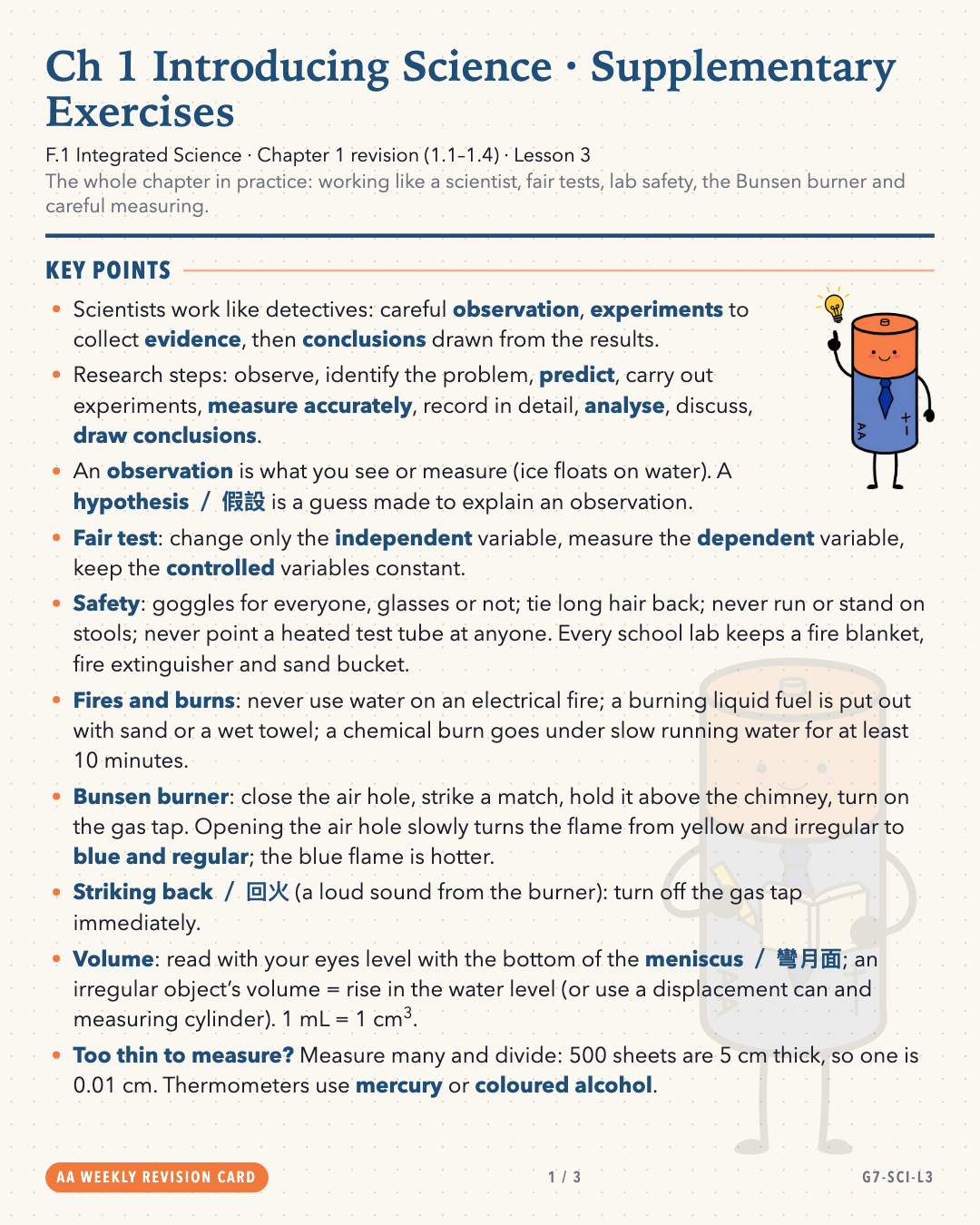
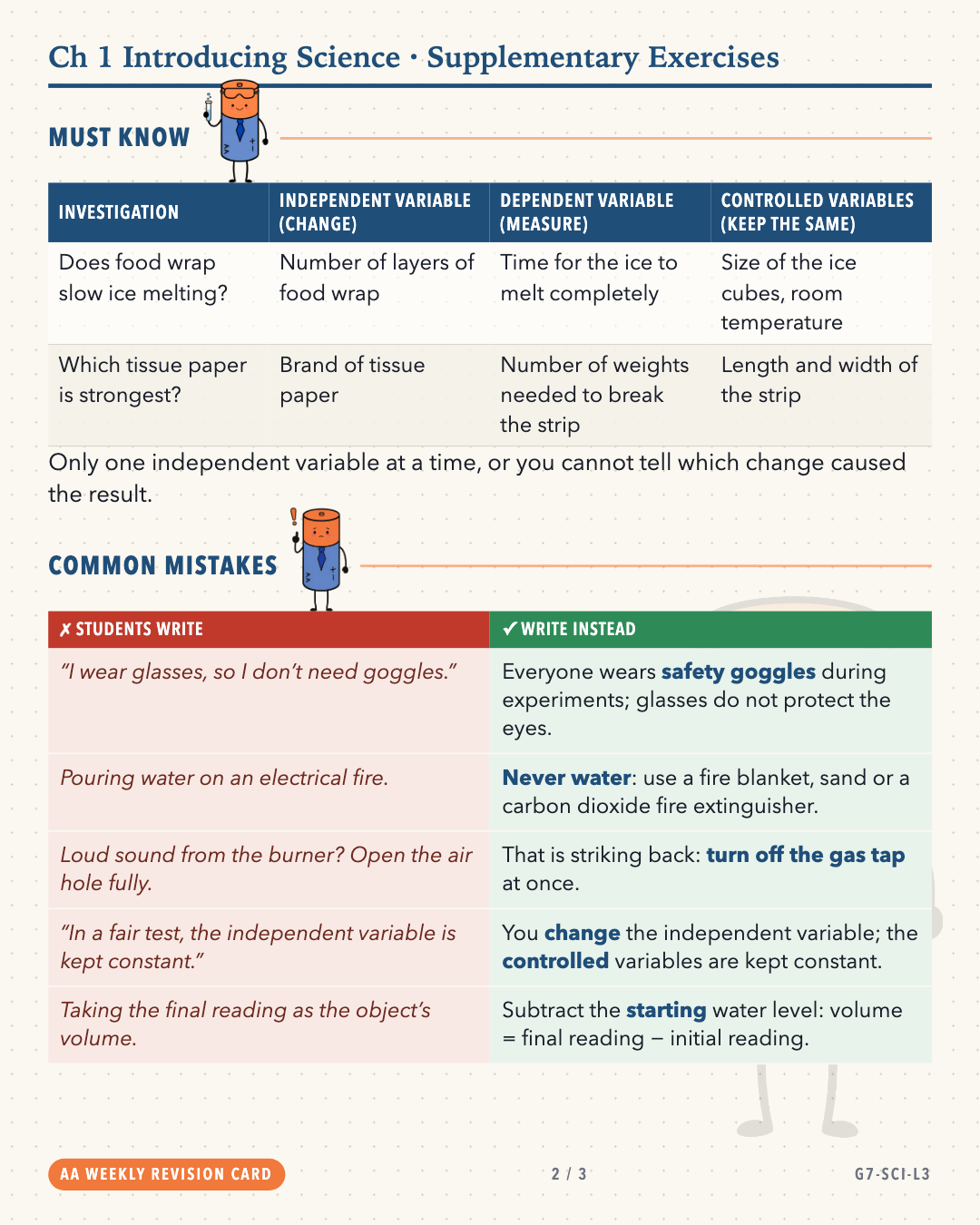
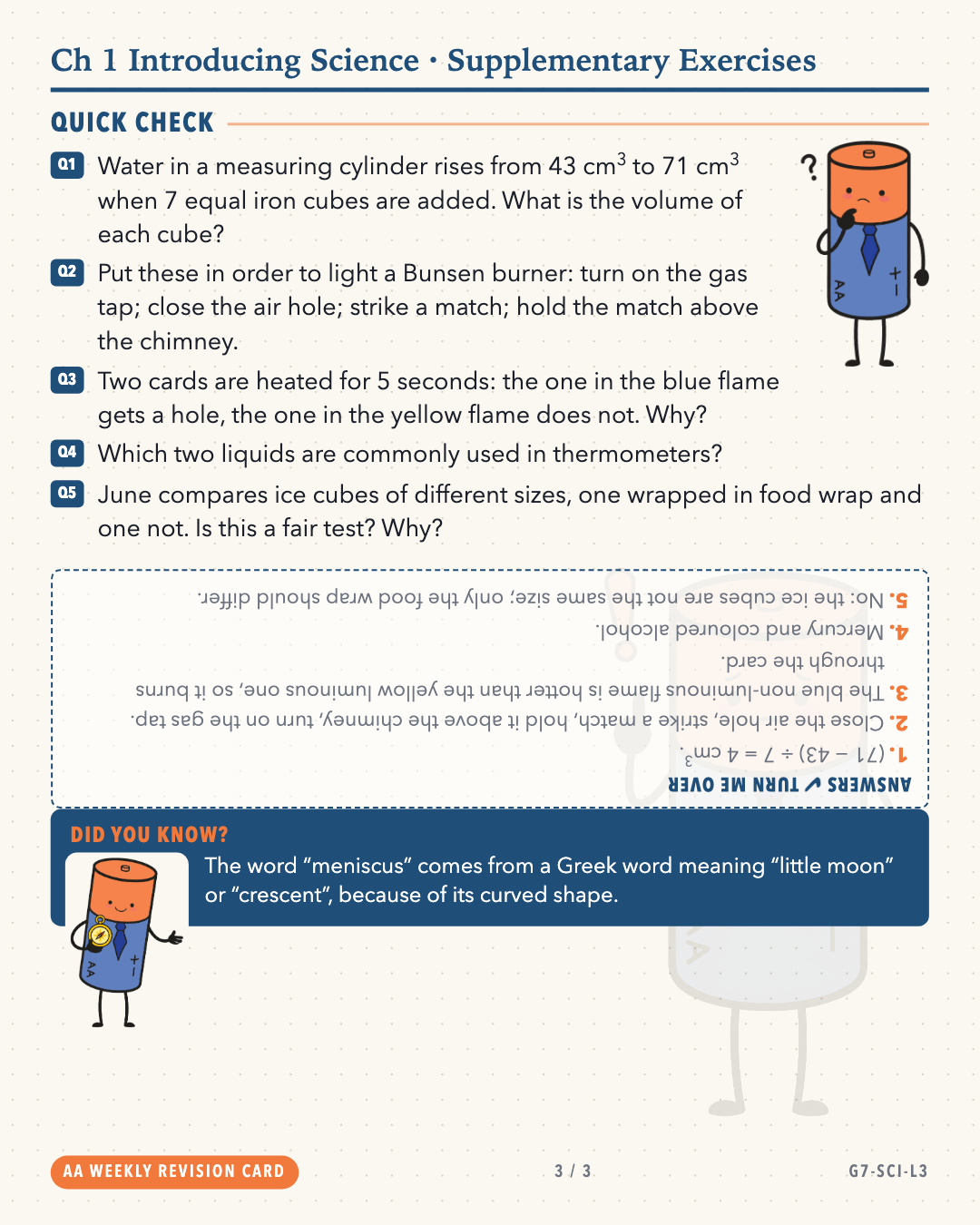
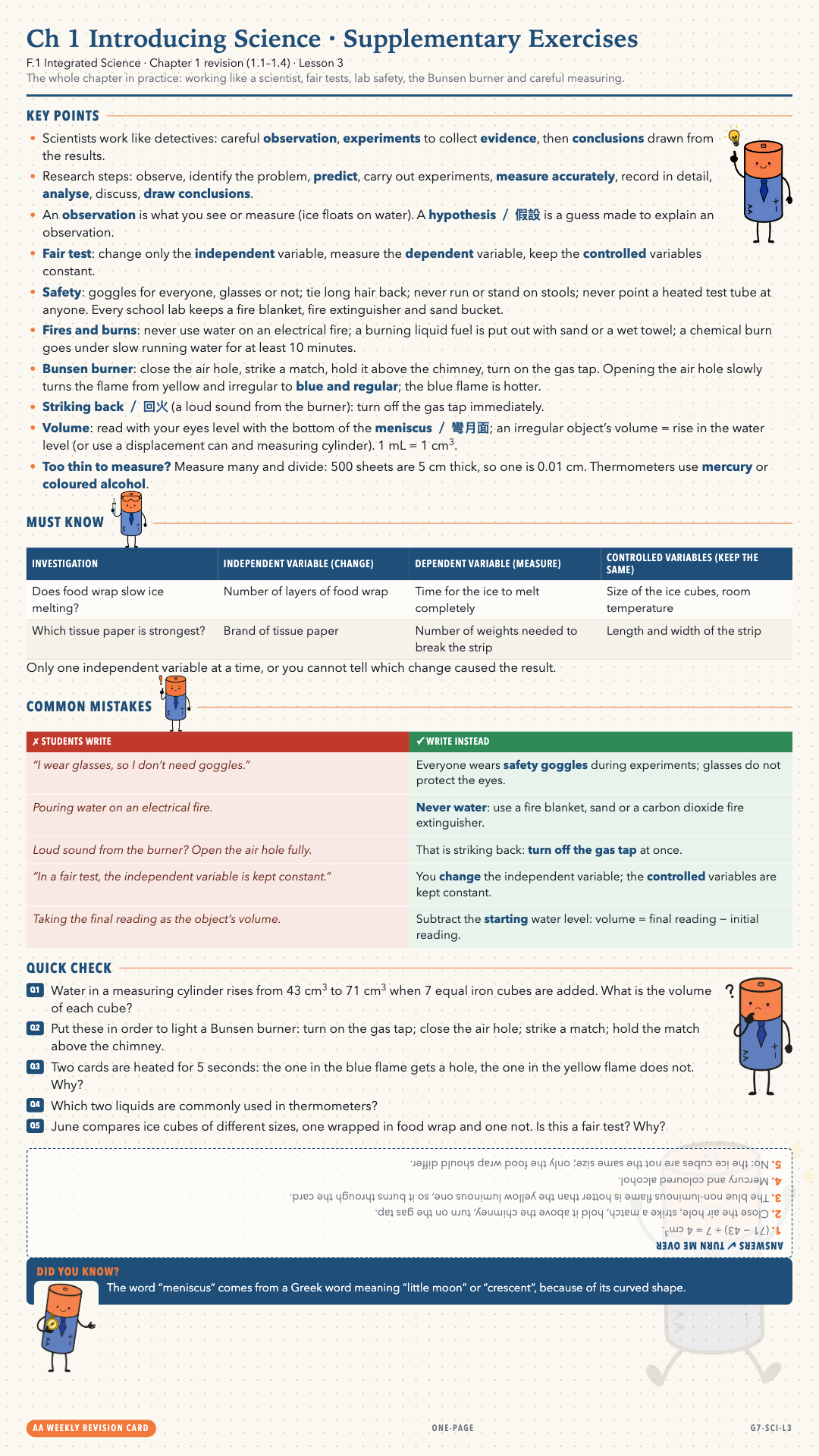
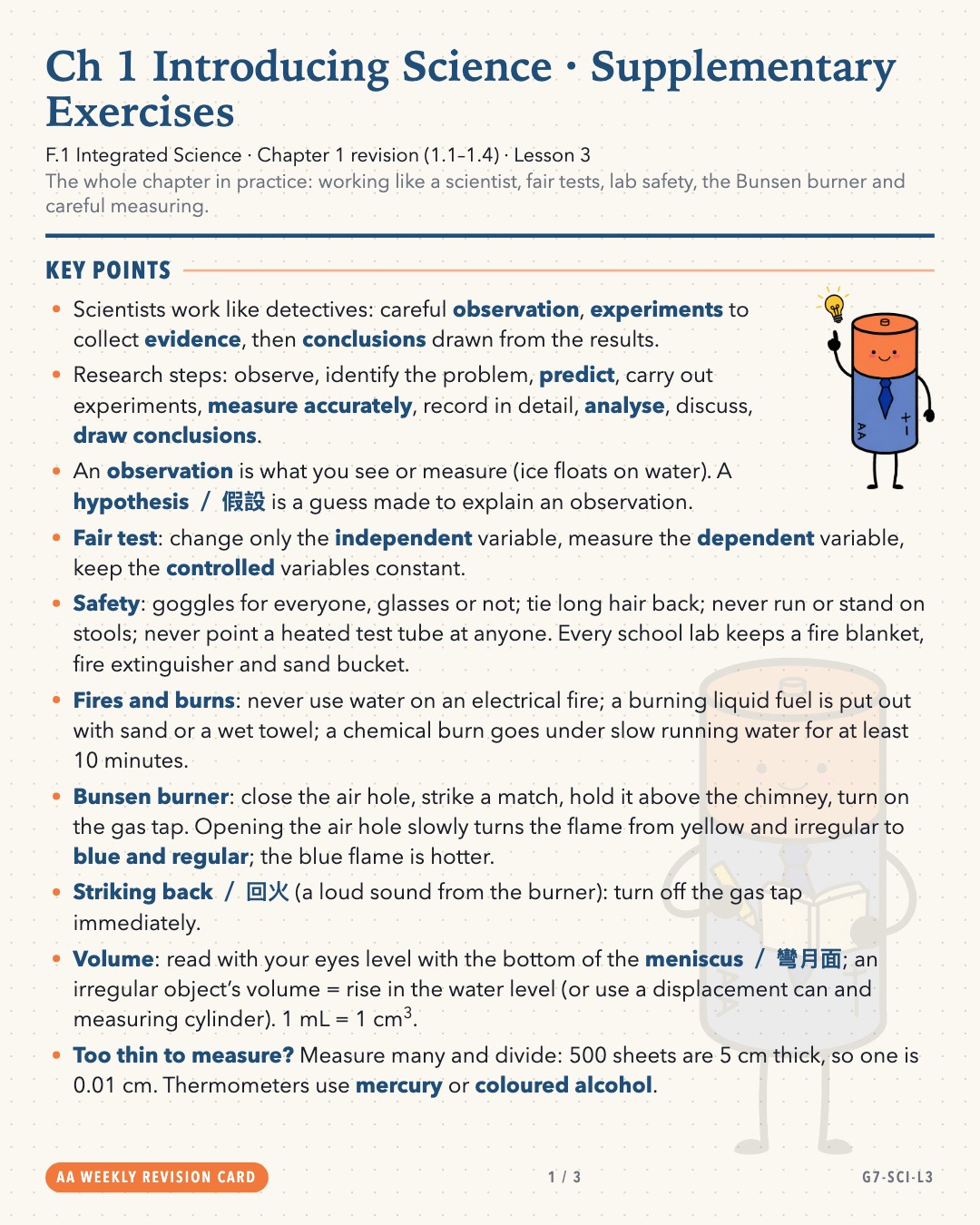
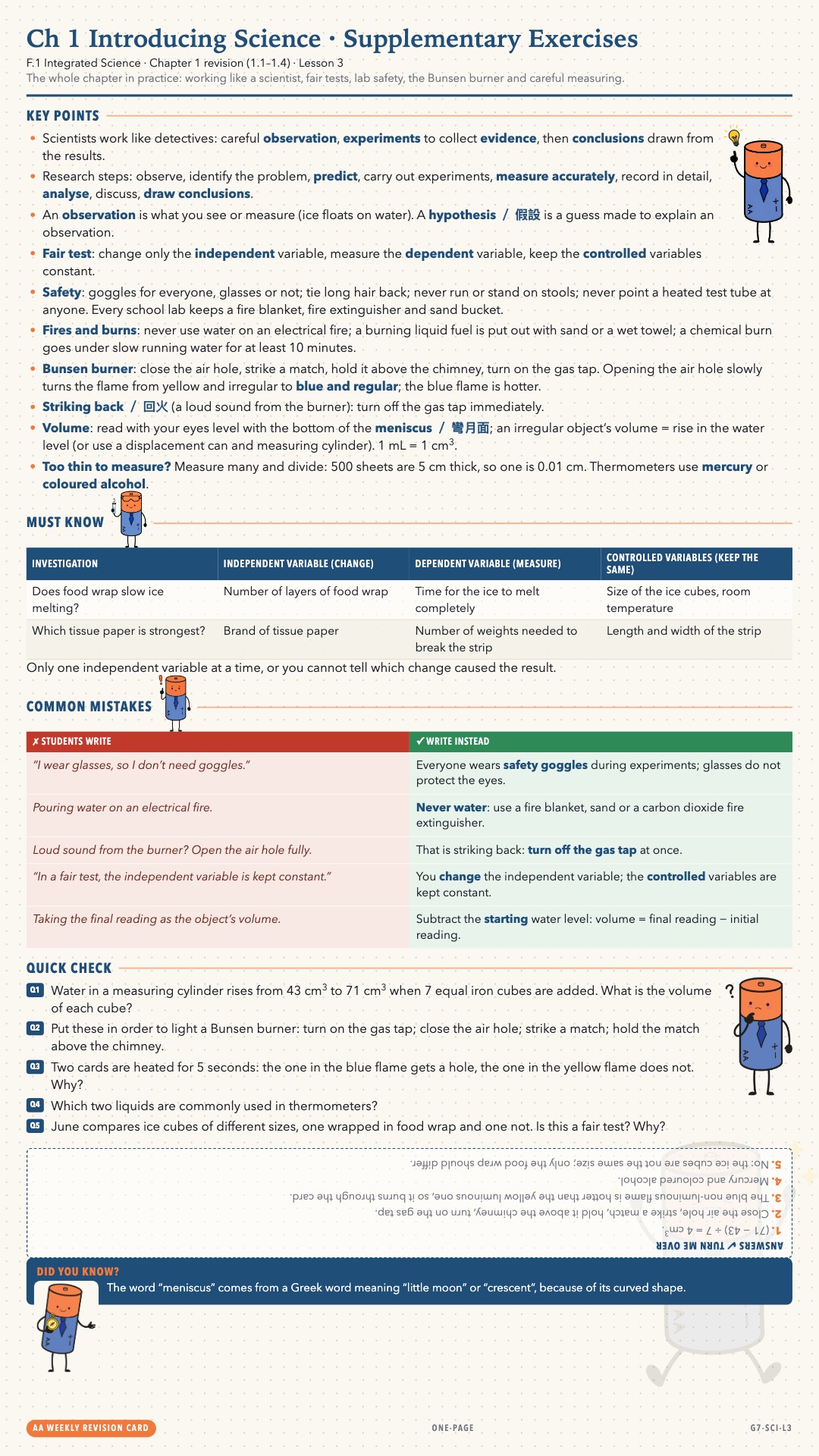
The whole chapter in practice: working like a scientist, fair tests, lab safety, the Bunsen burner and careful measuring.
✔ fact-checked · 1 added mistake tagged [likely] · 1.5 MB JPG · card.md ·
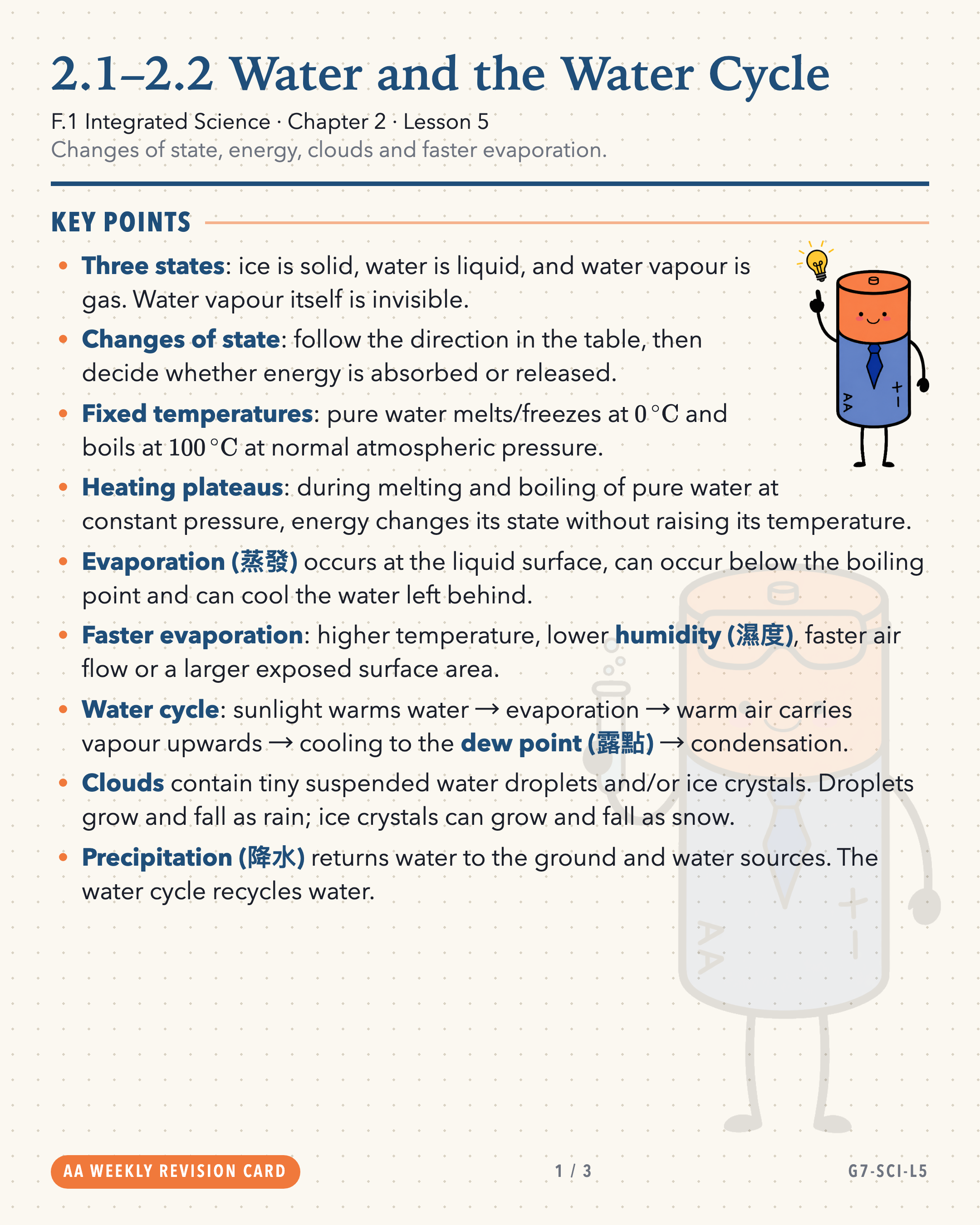
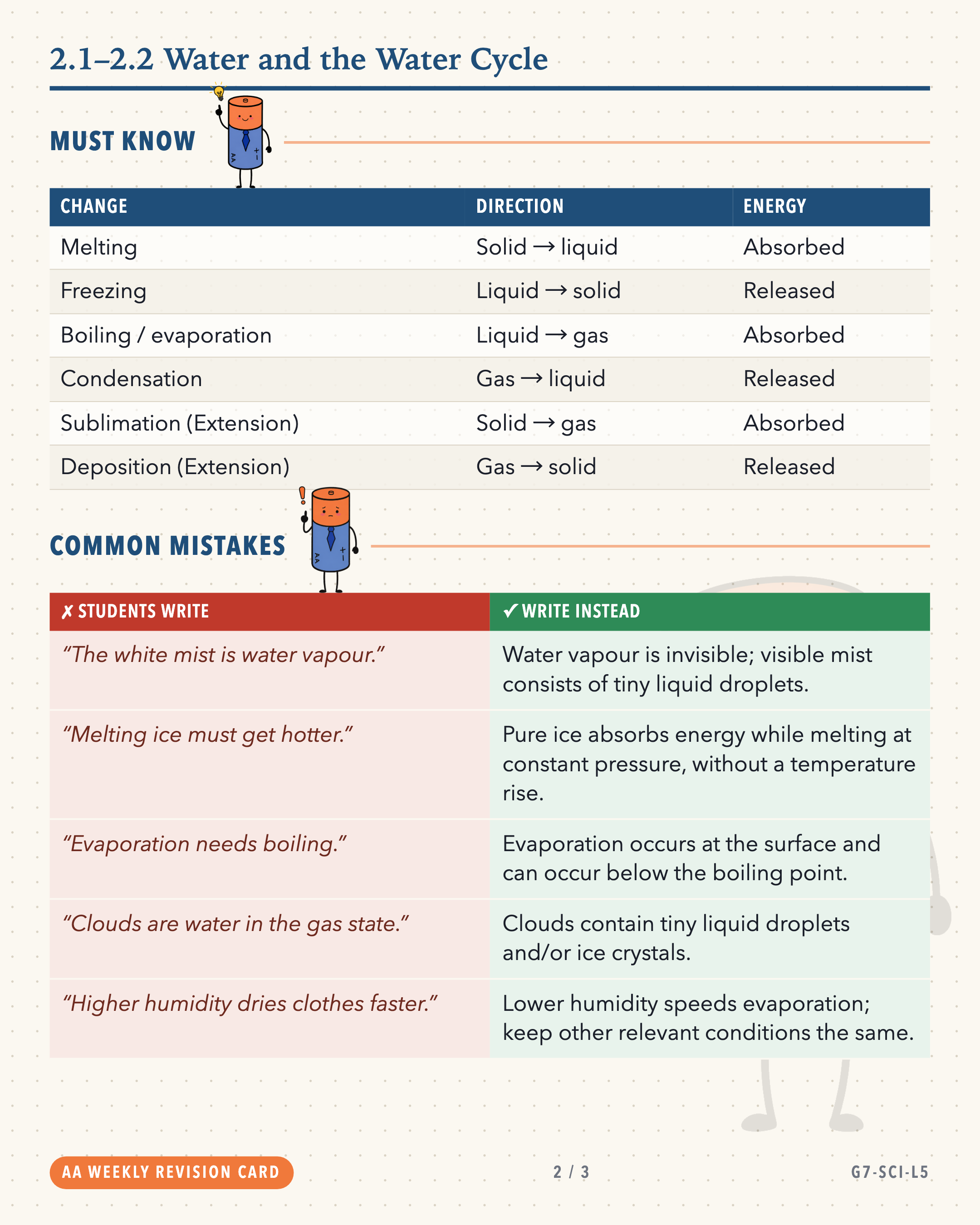
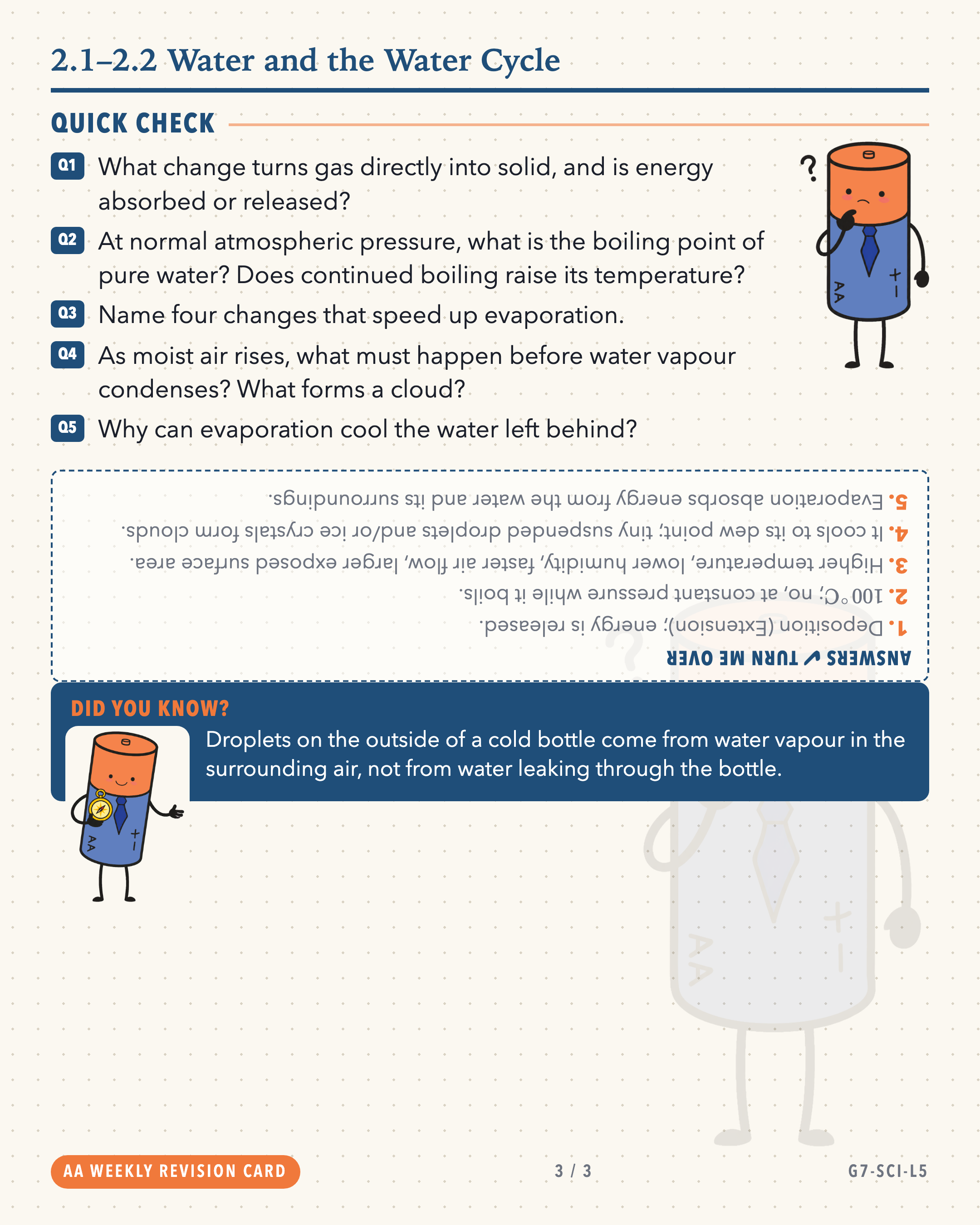
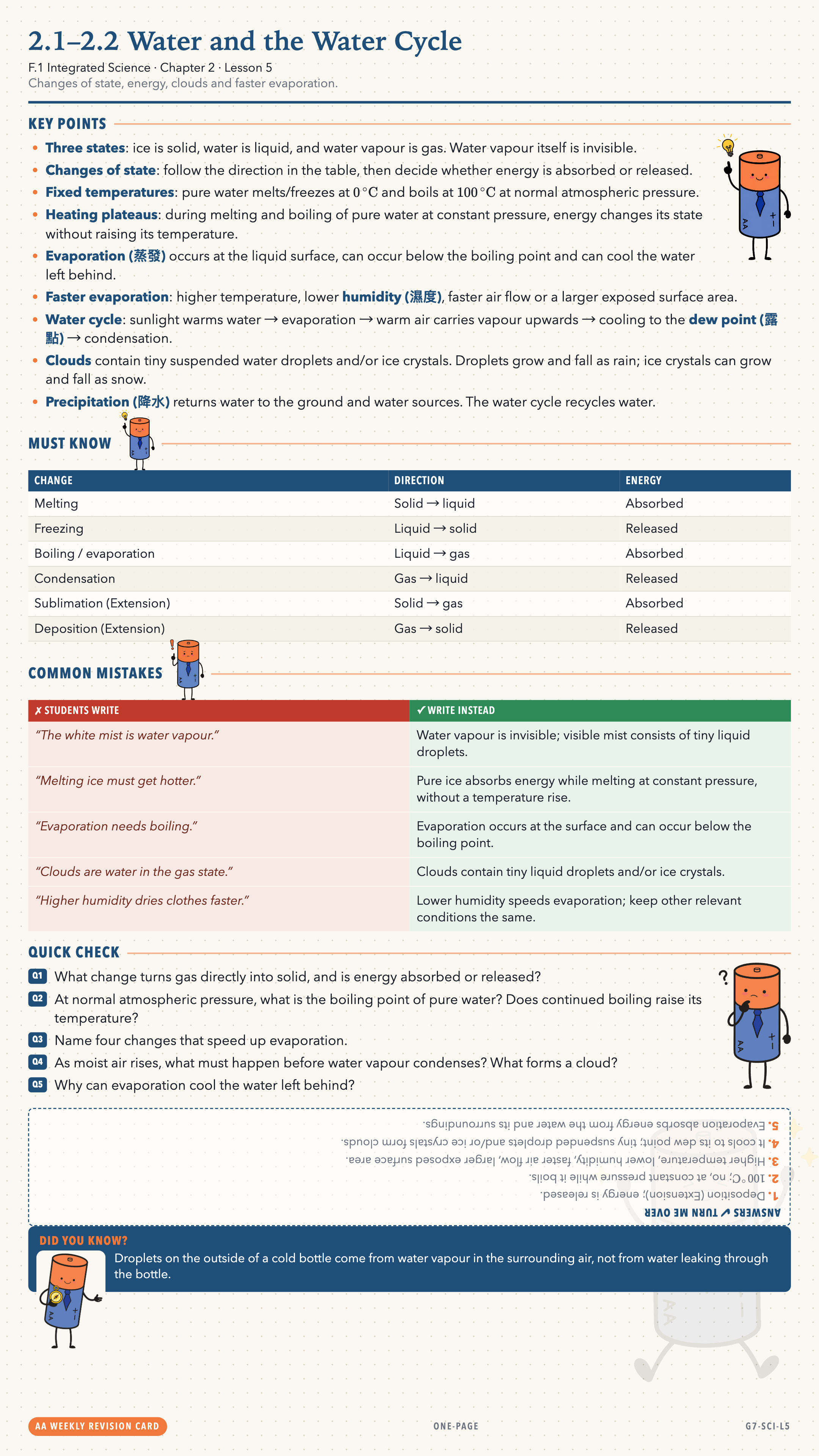
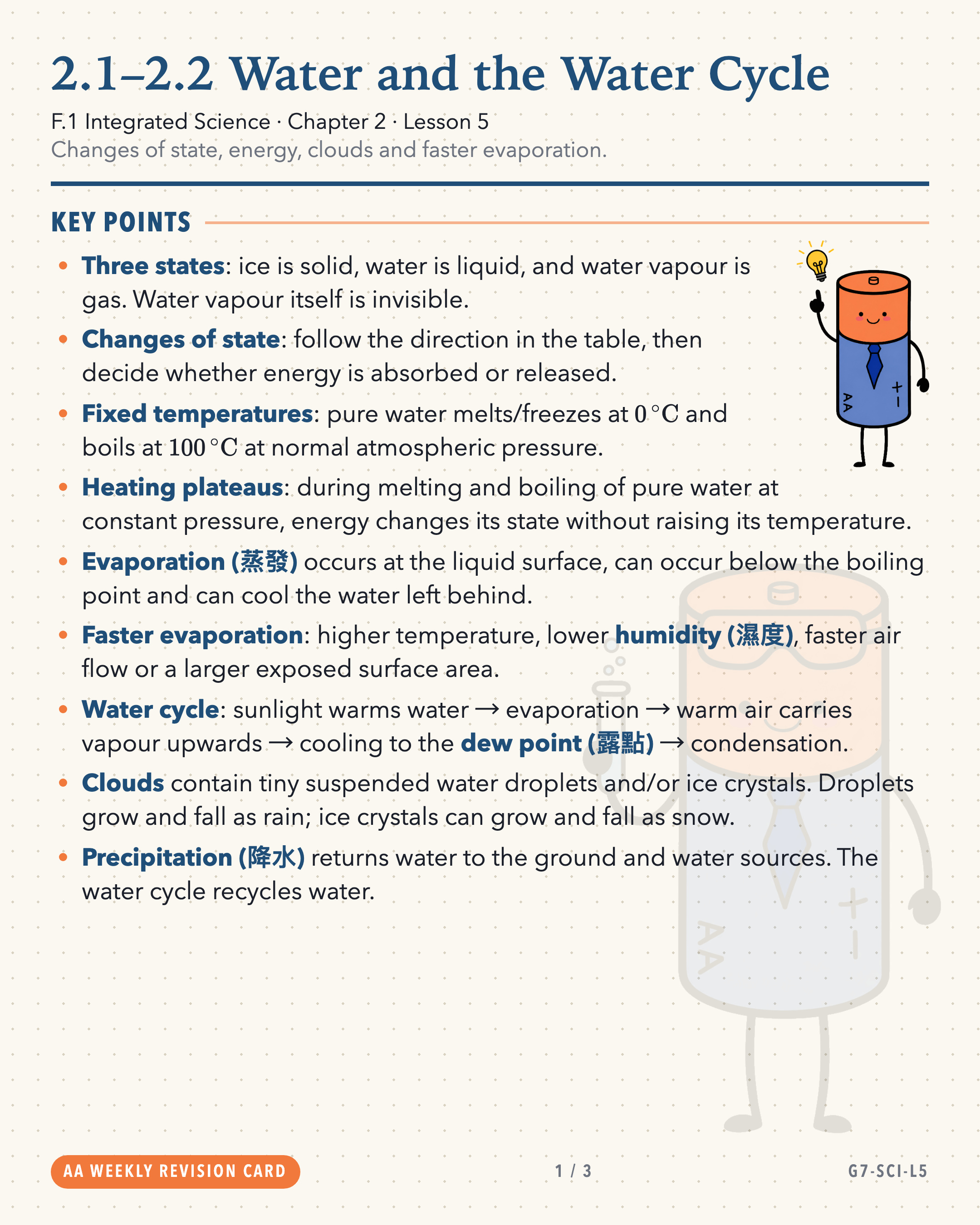
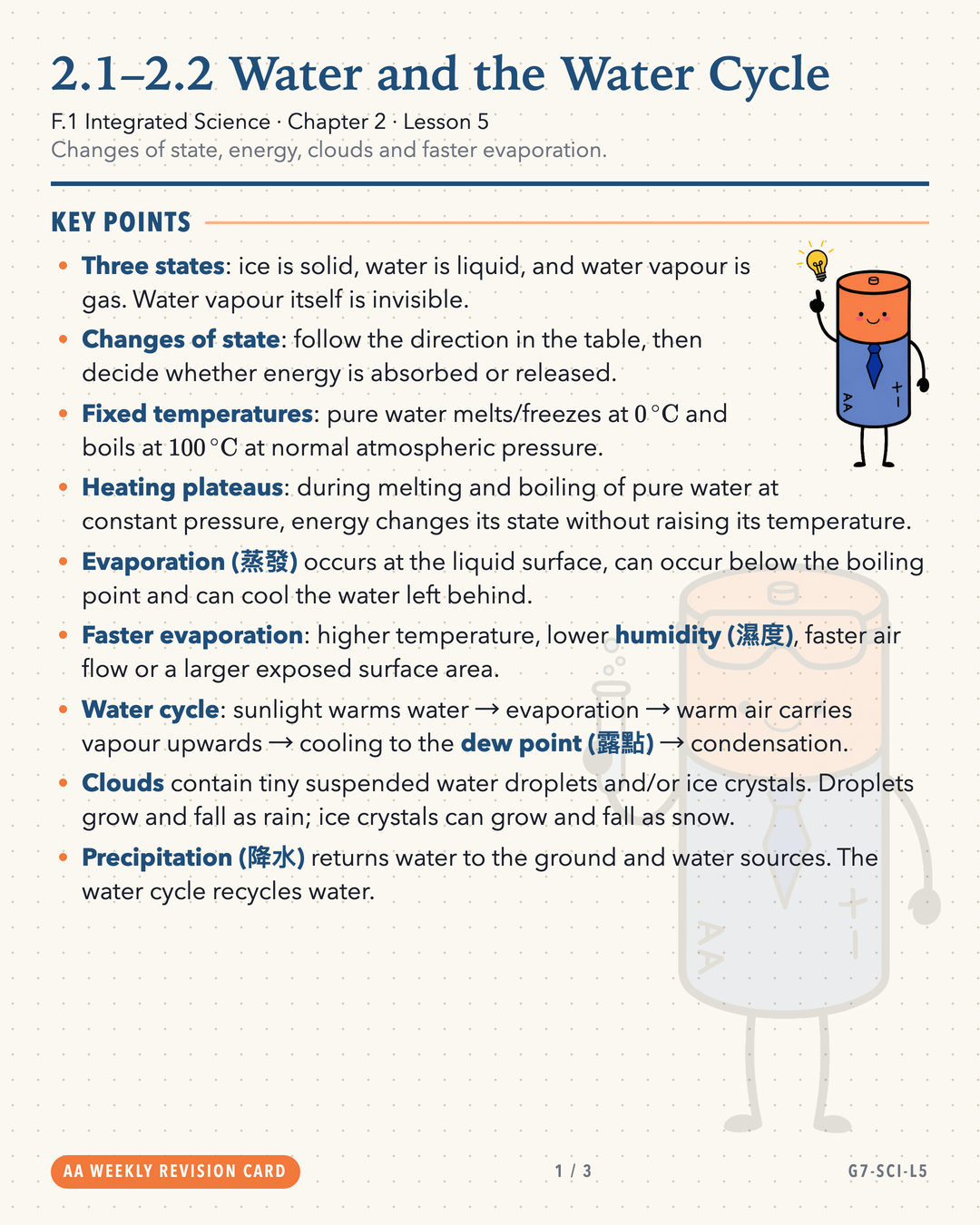
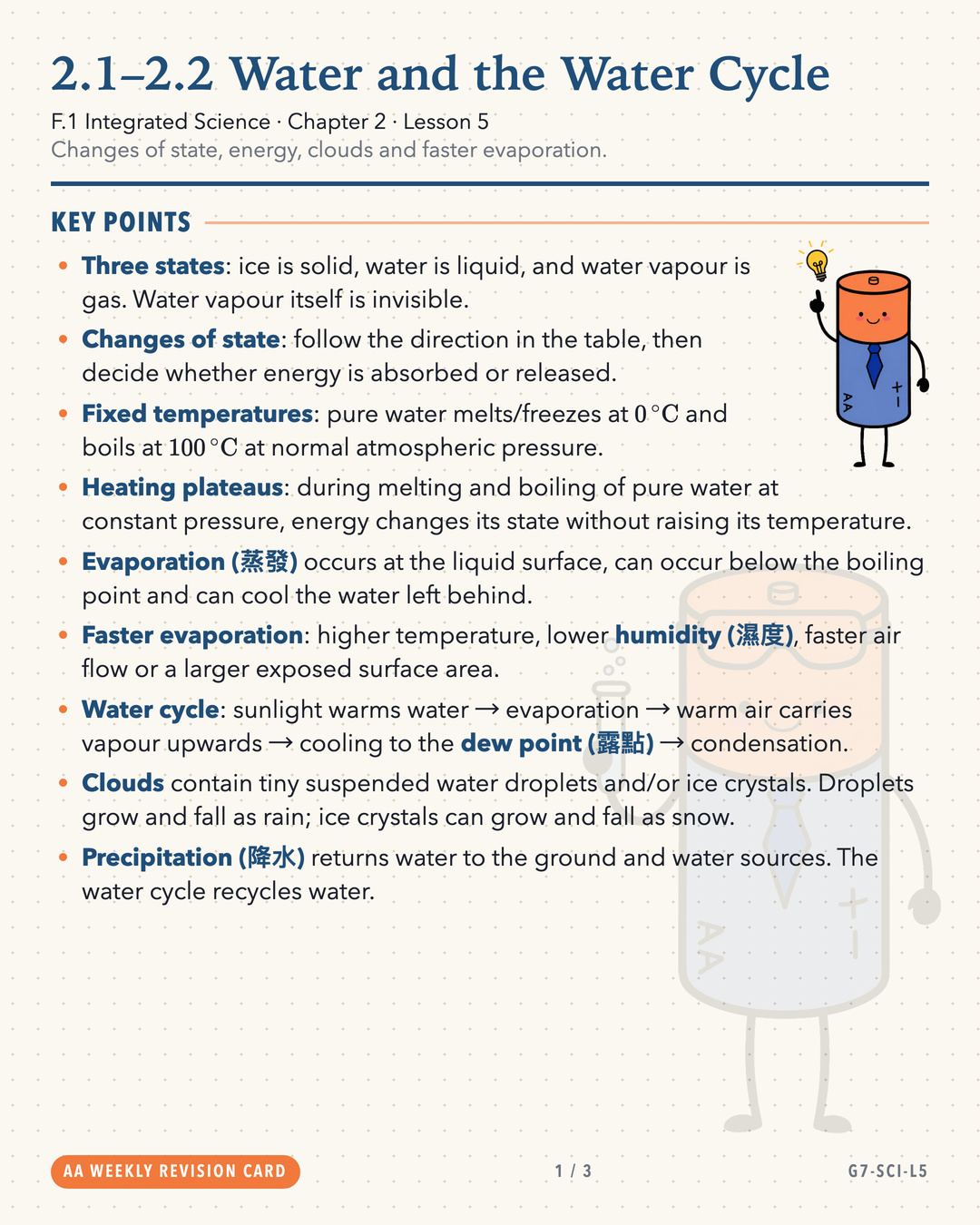
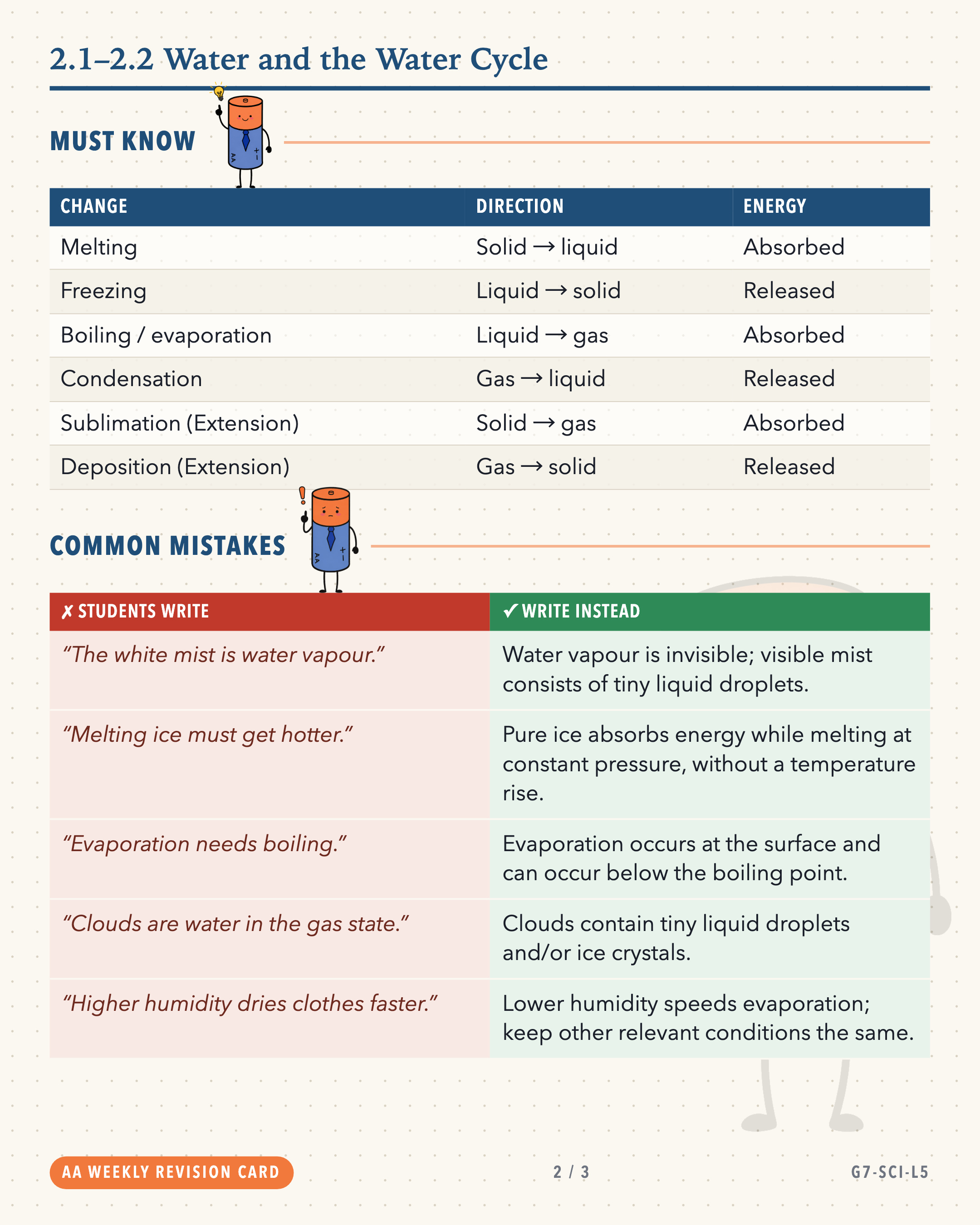
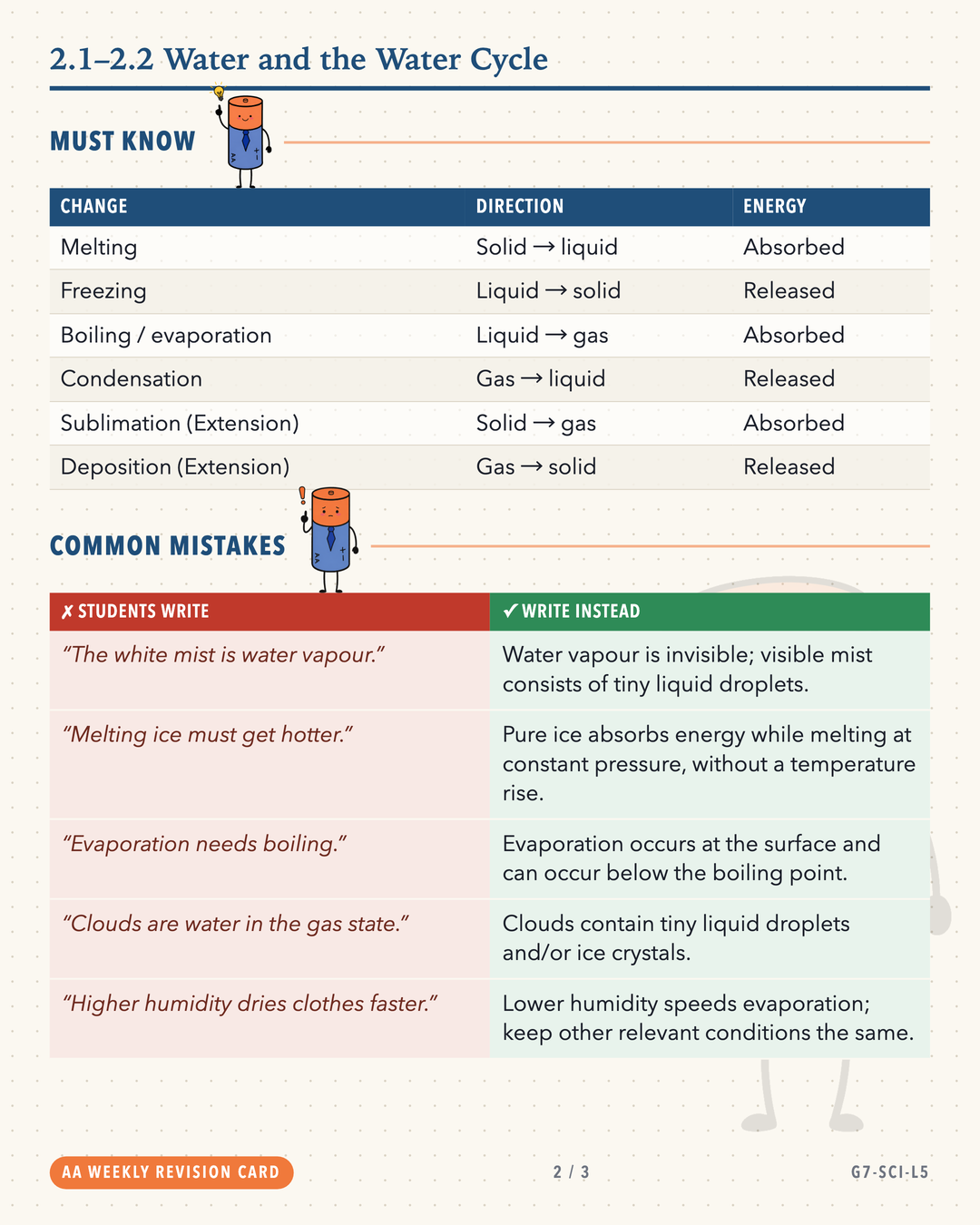
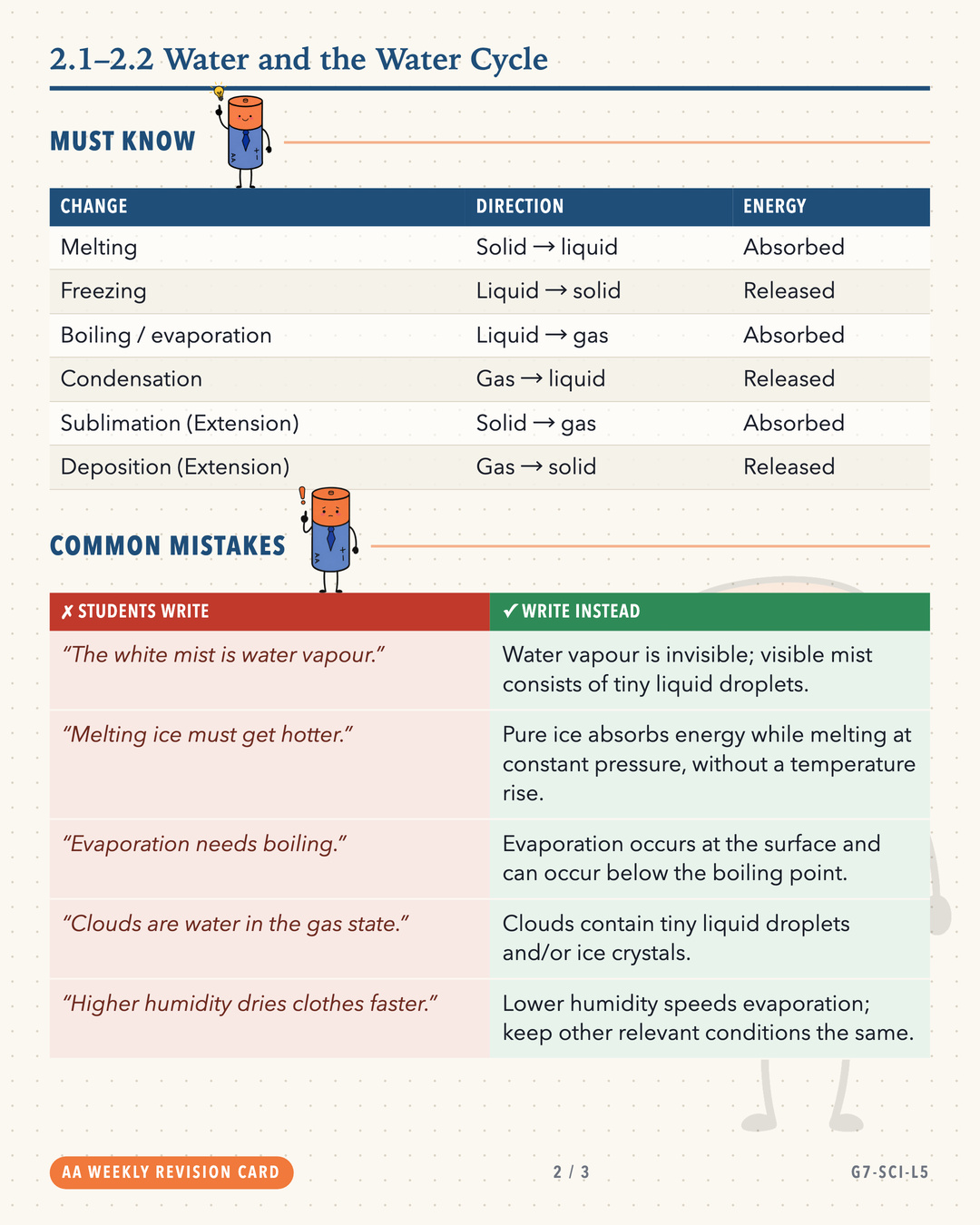
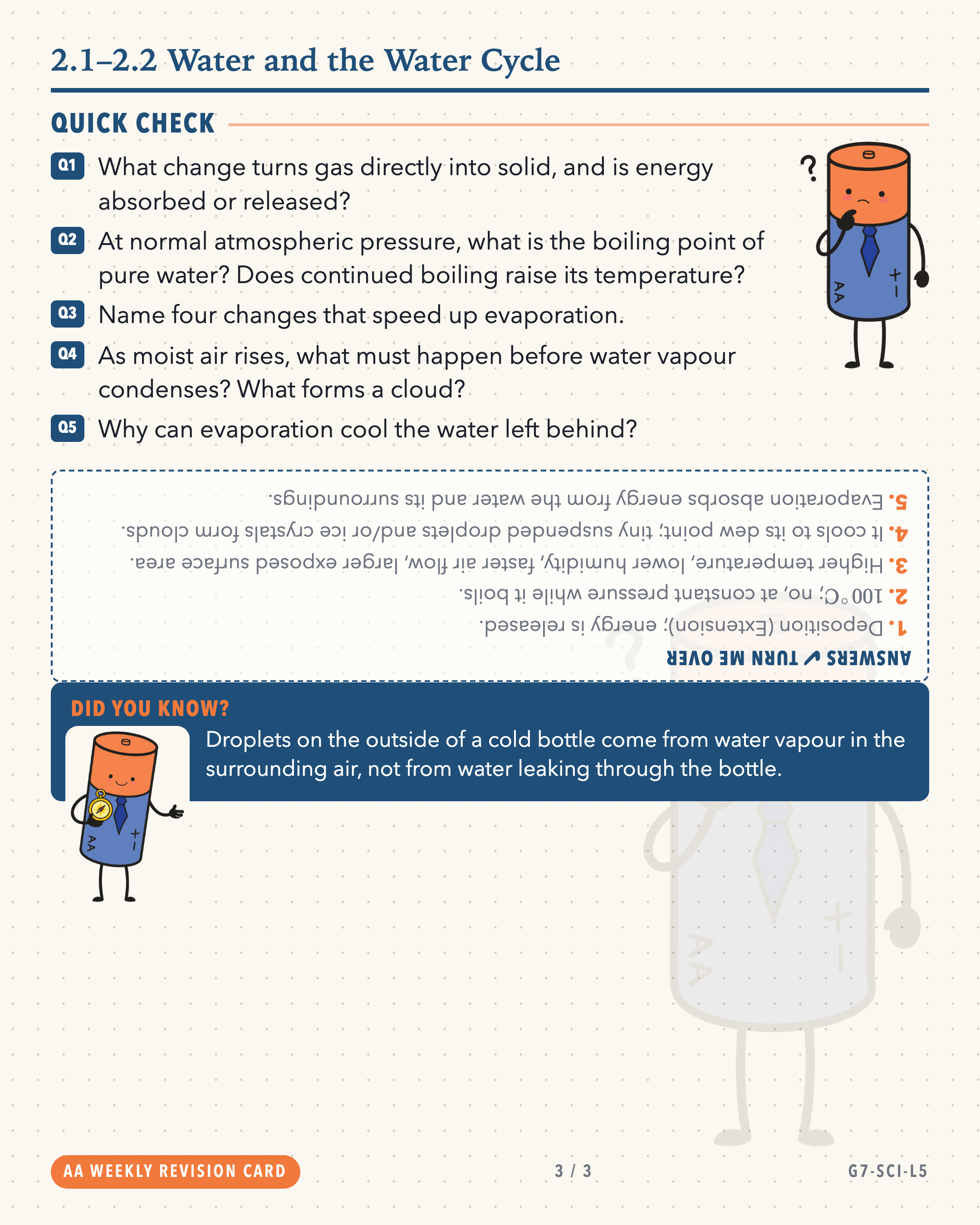
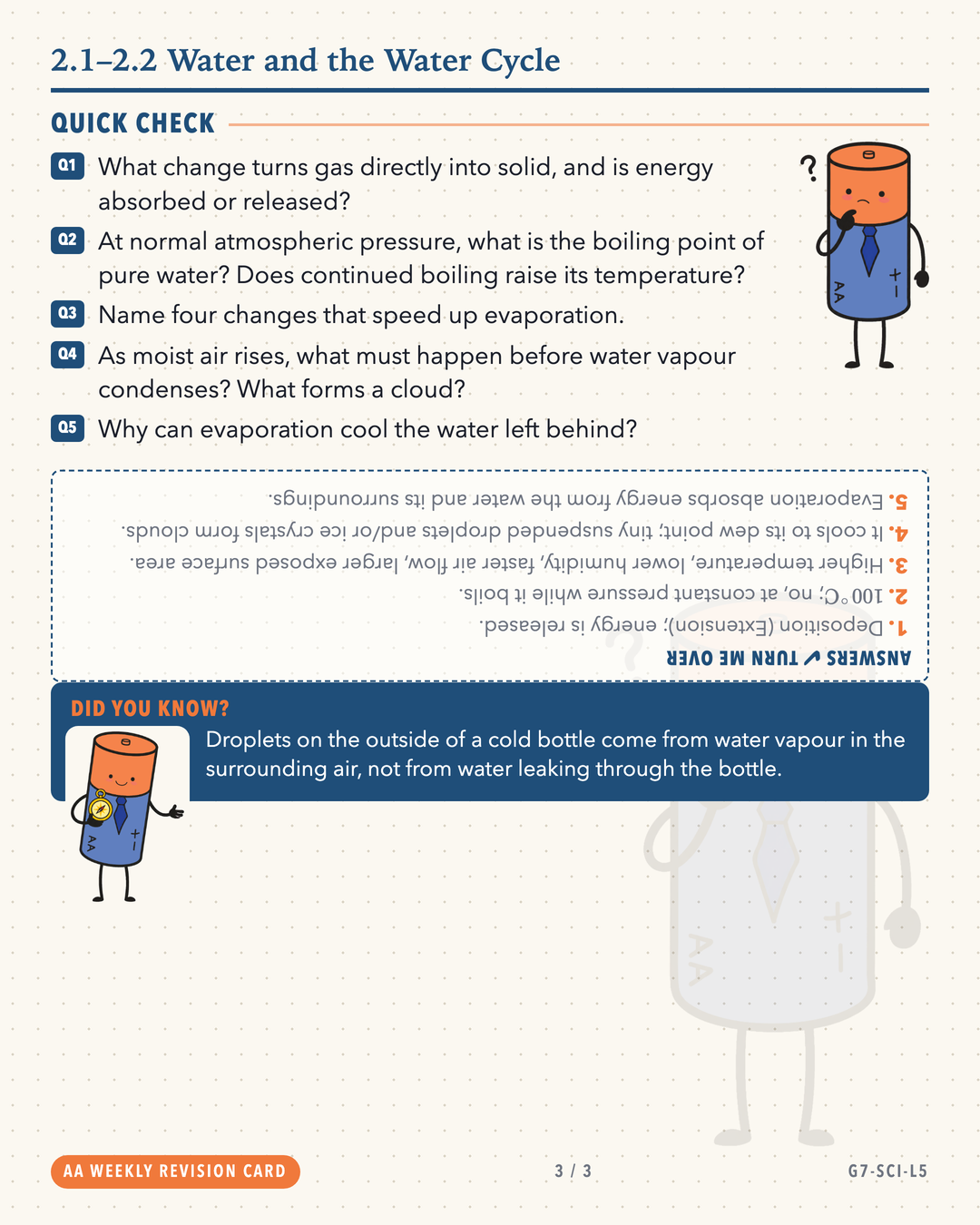
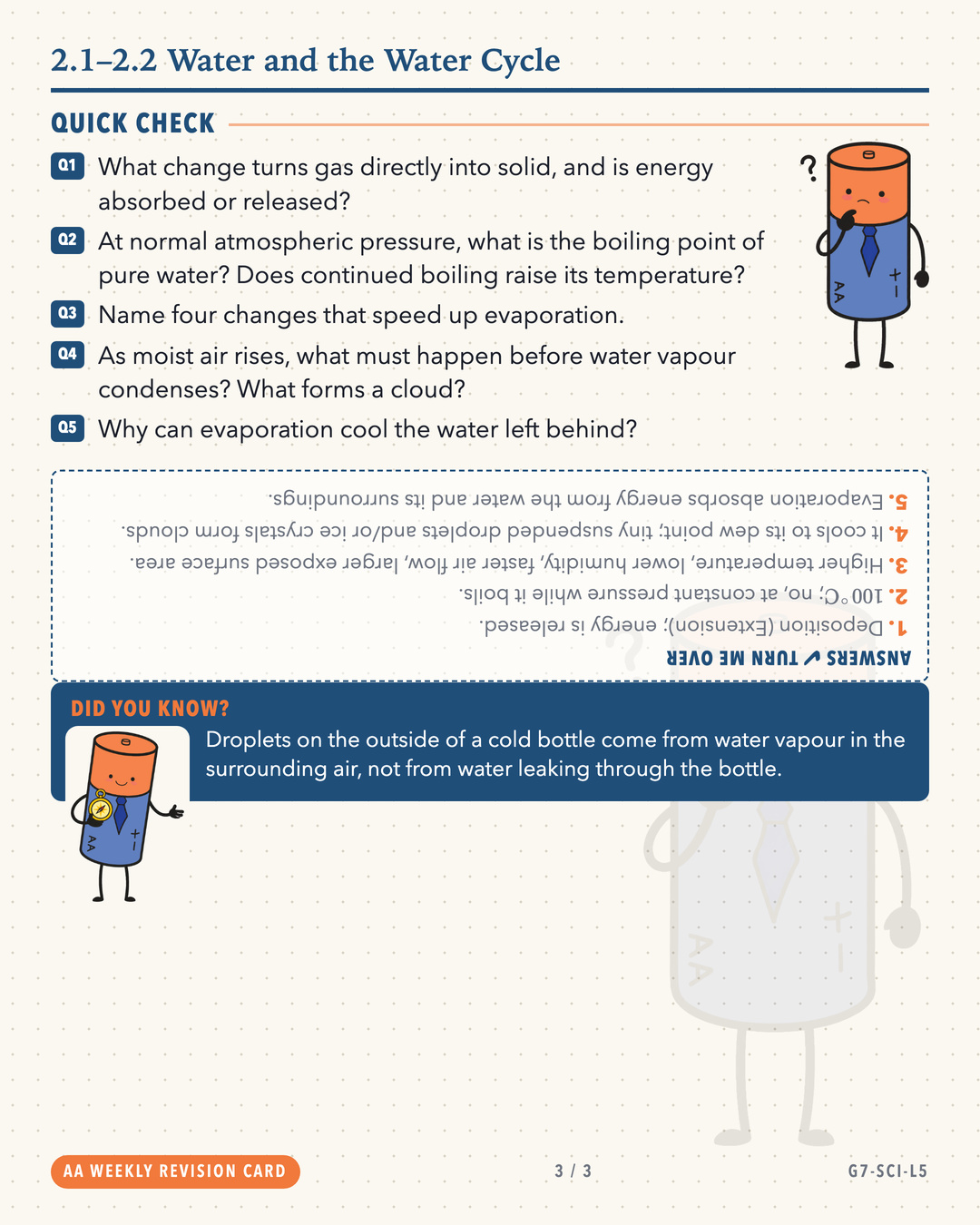
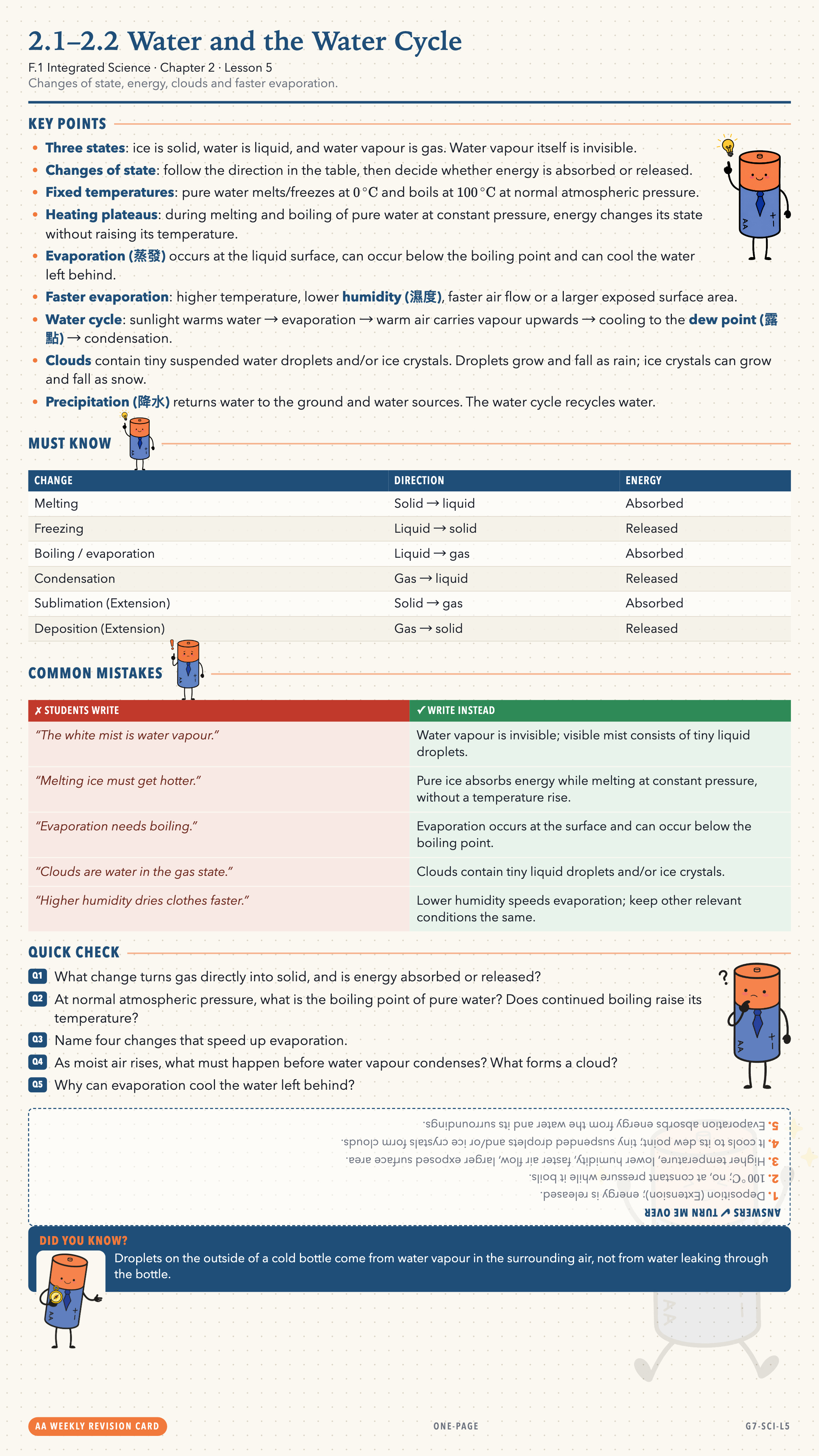
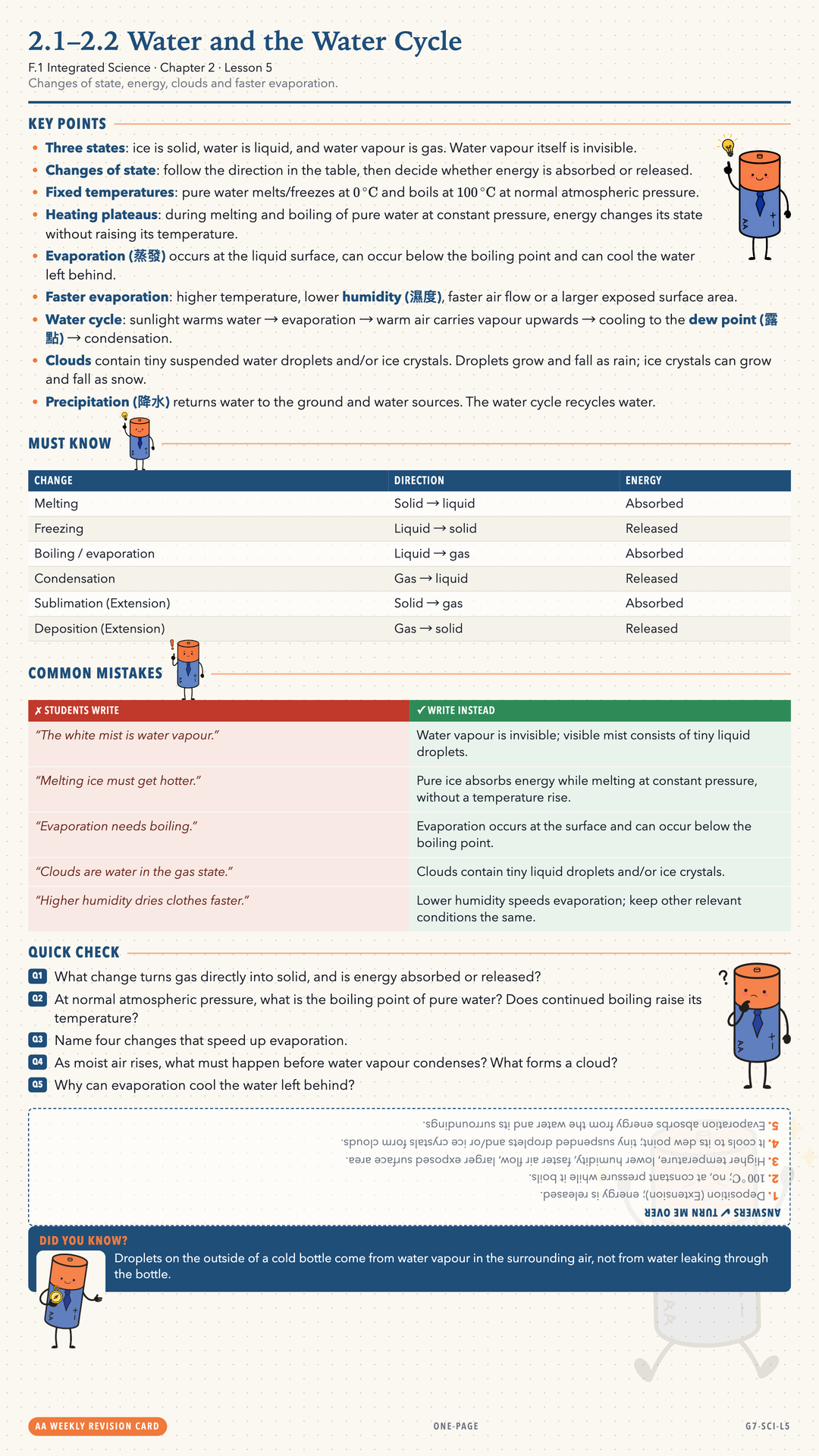
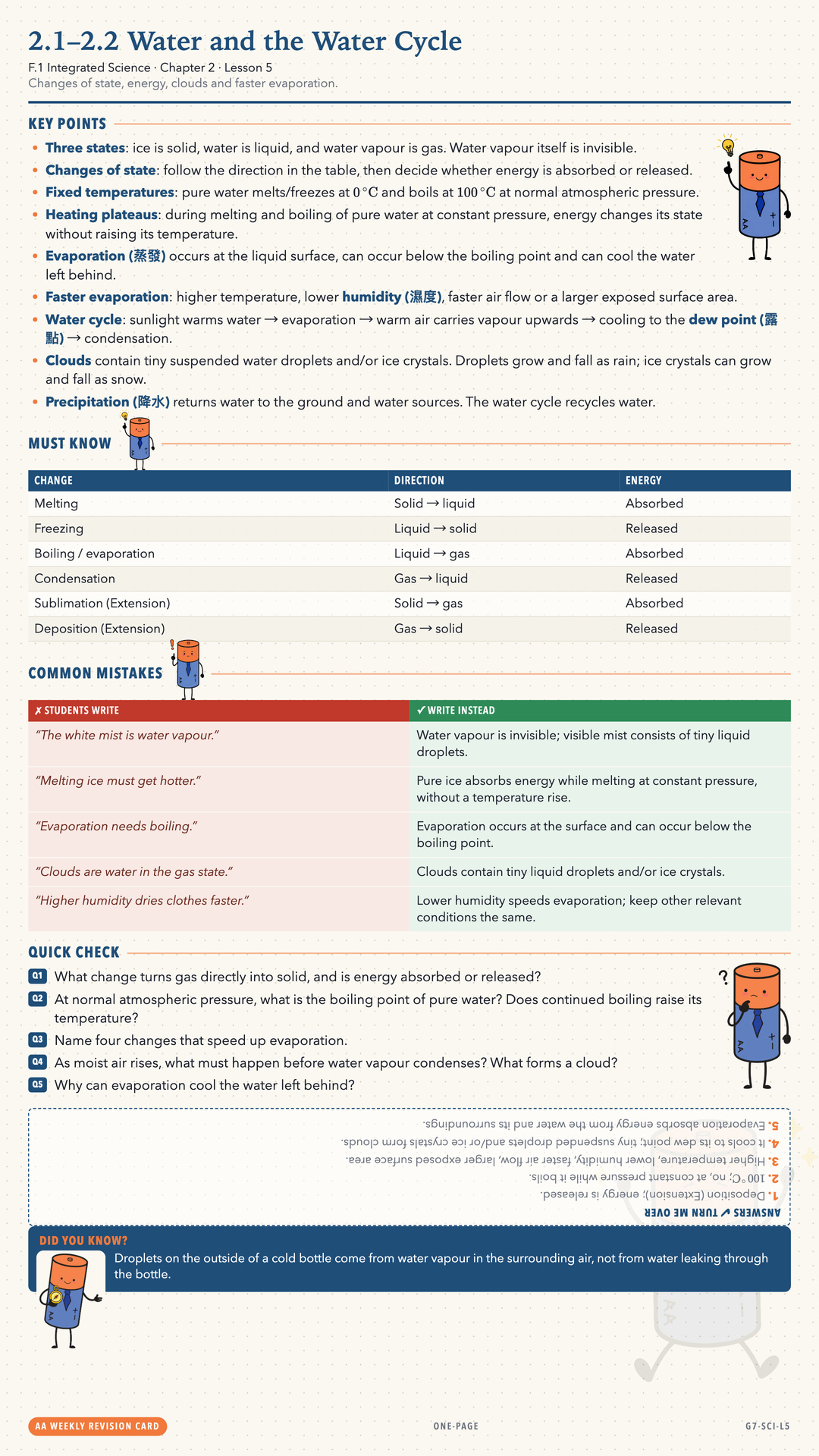
Changes of state, energy, clouds and faster evaporation.
✔ fact-checked · 0 added mistakes tagged [likely] · 2.1 MB JPG · card.md ·
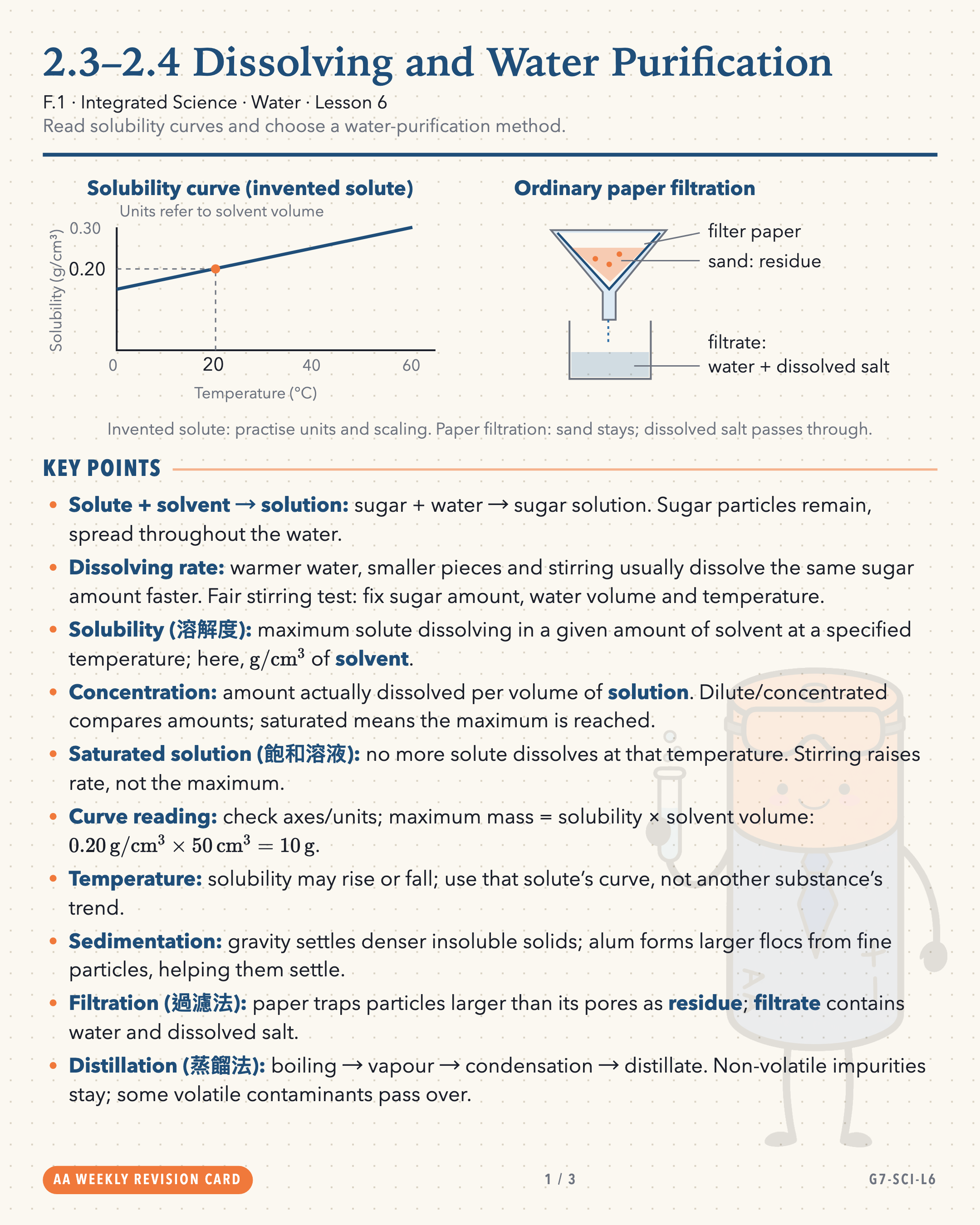
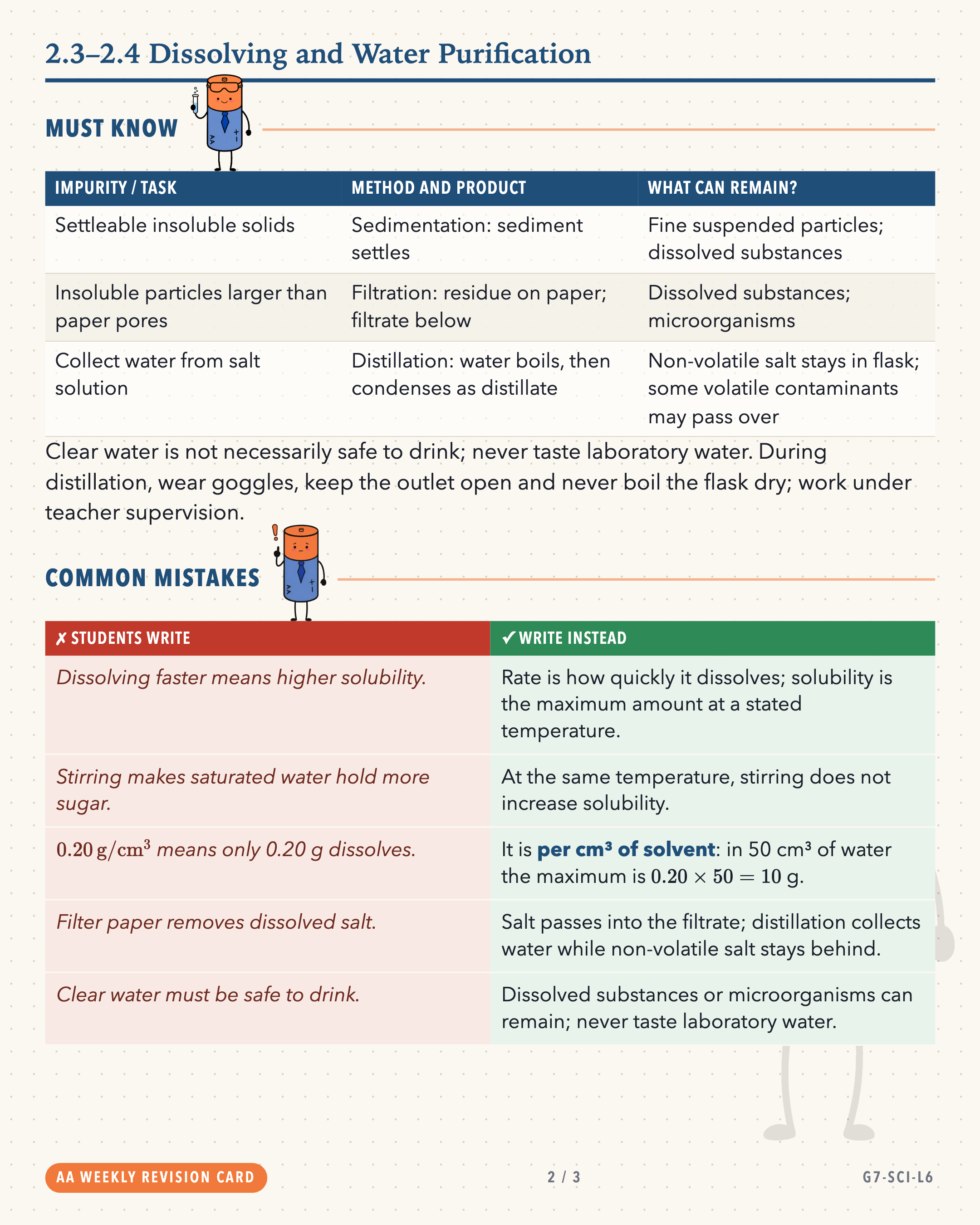
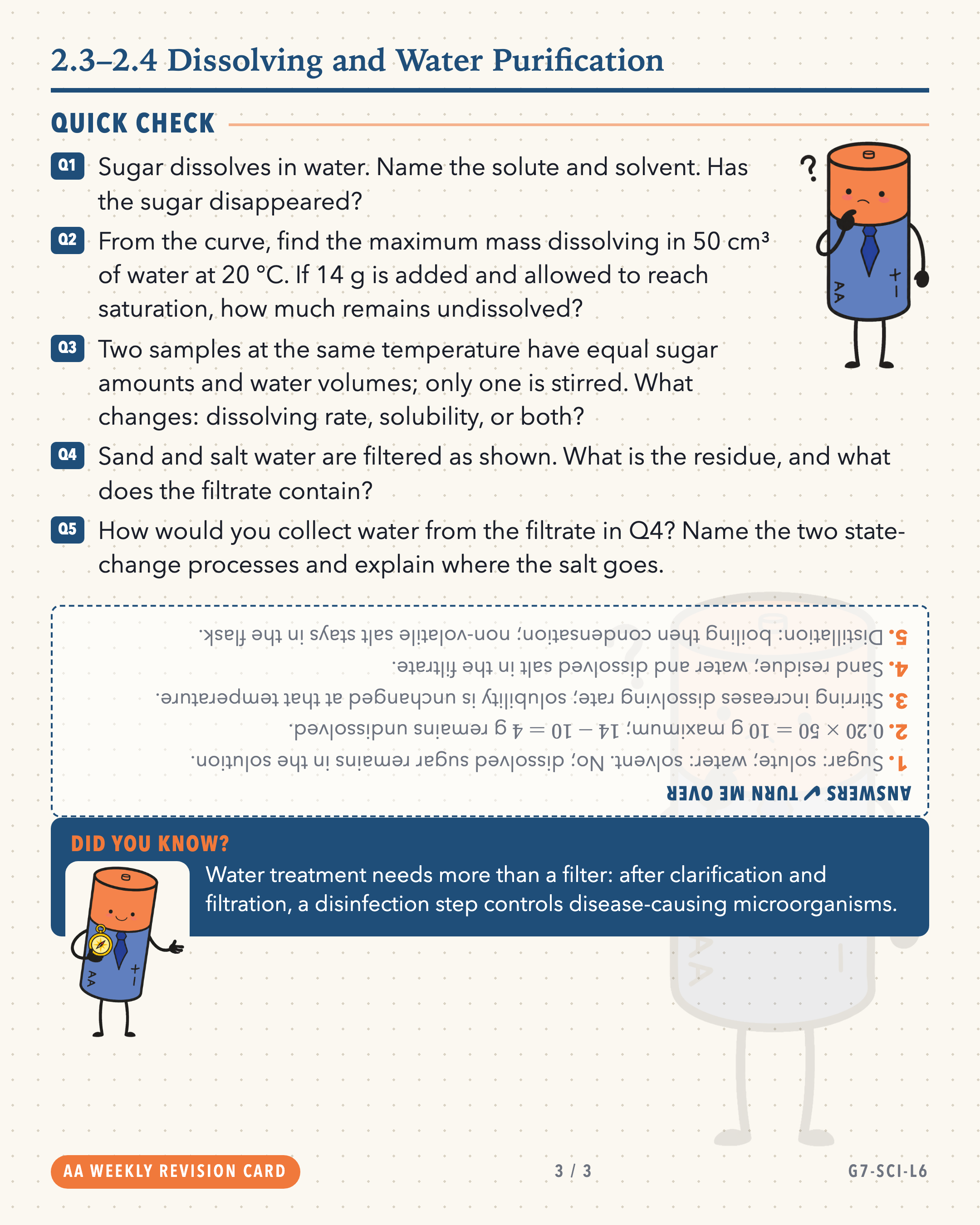
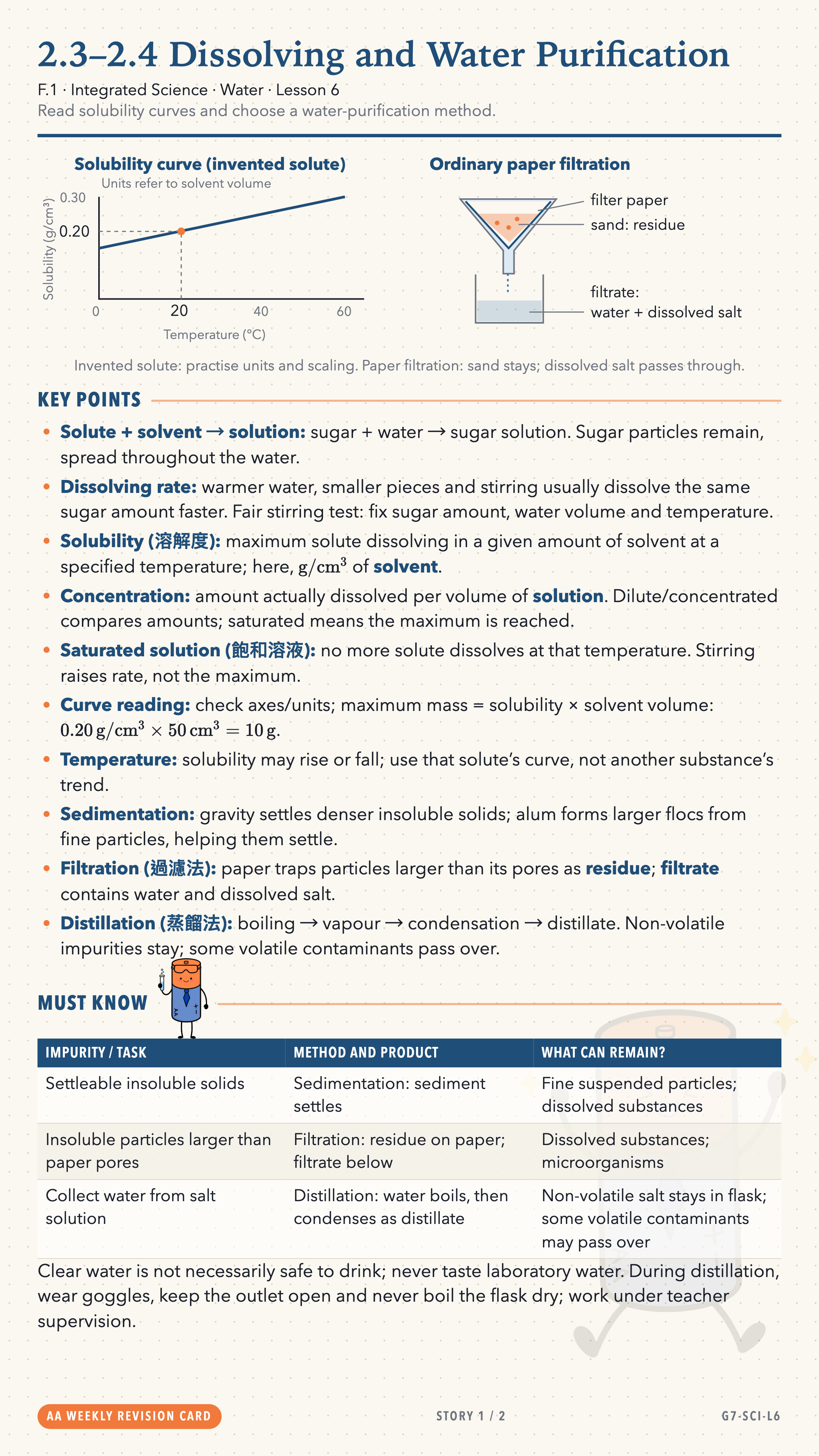
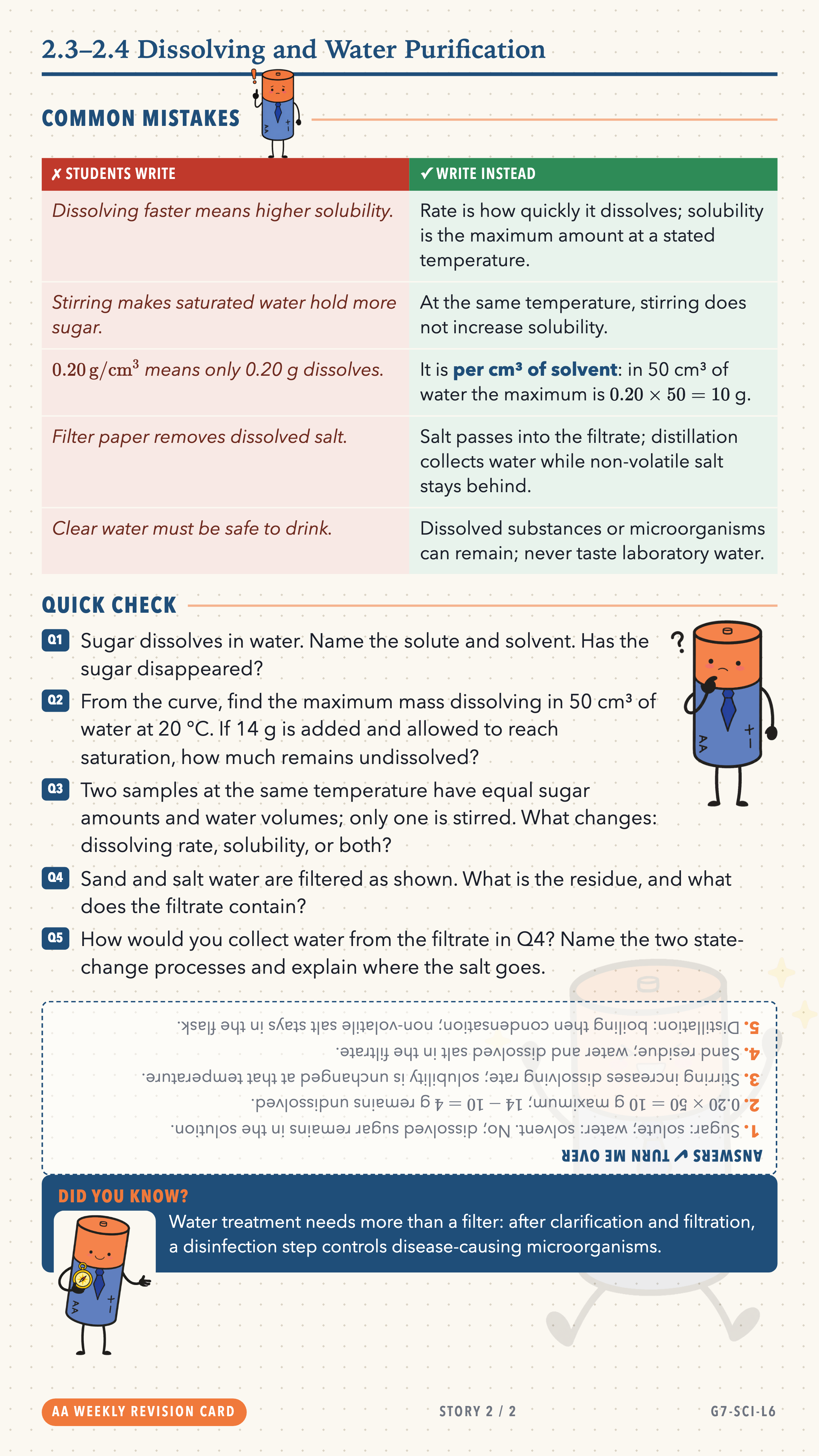
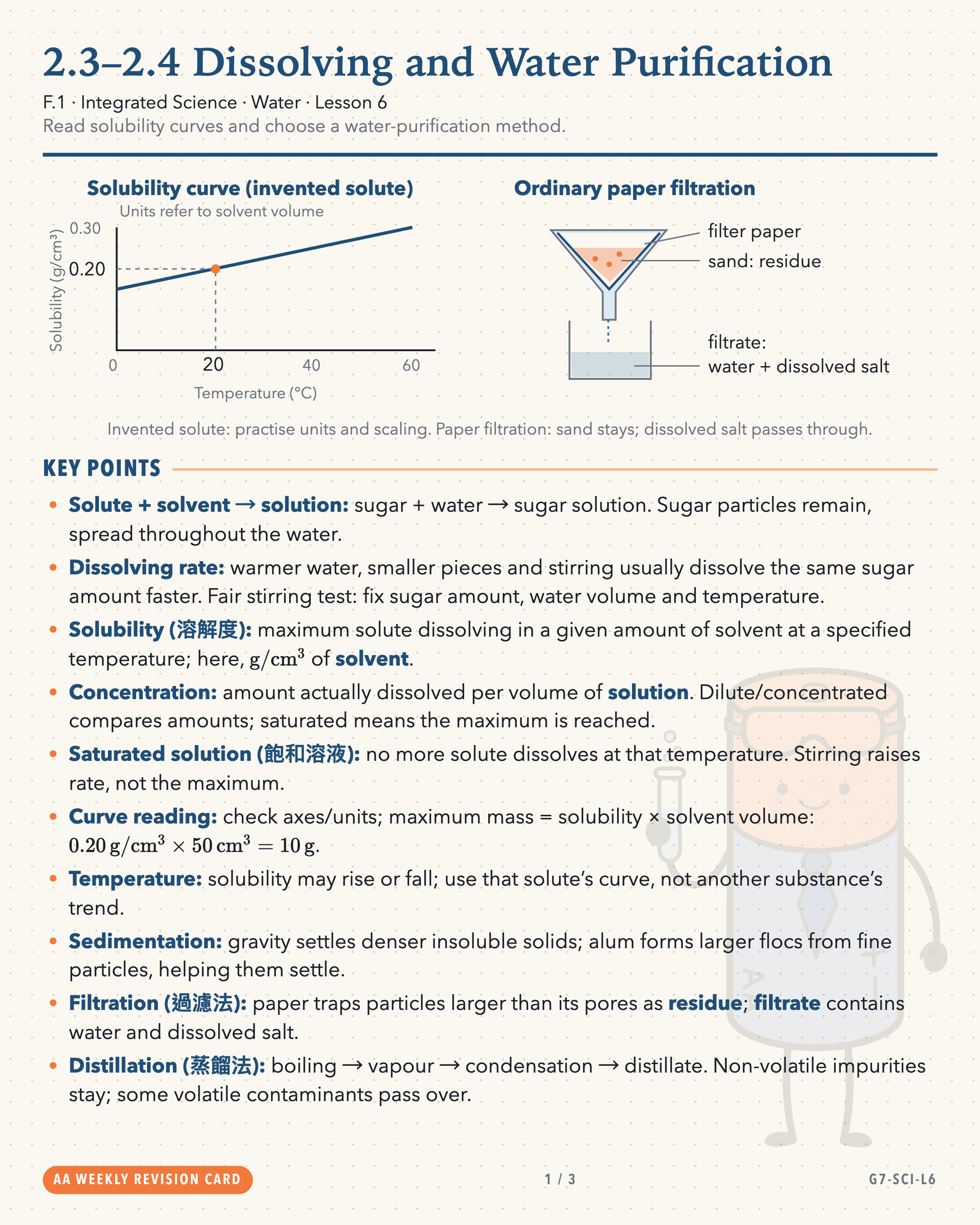
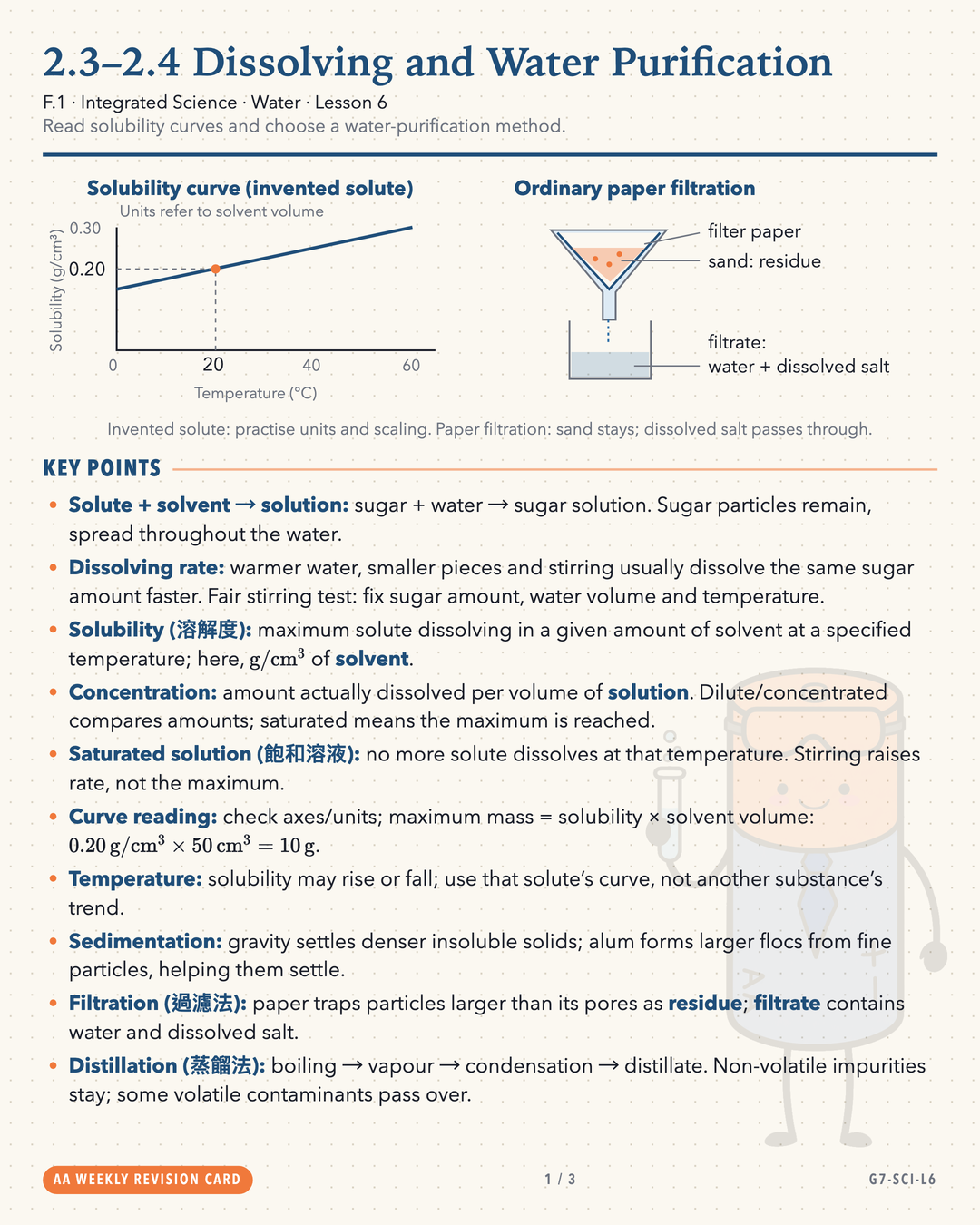
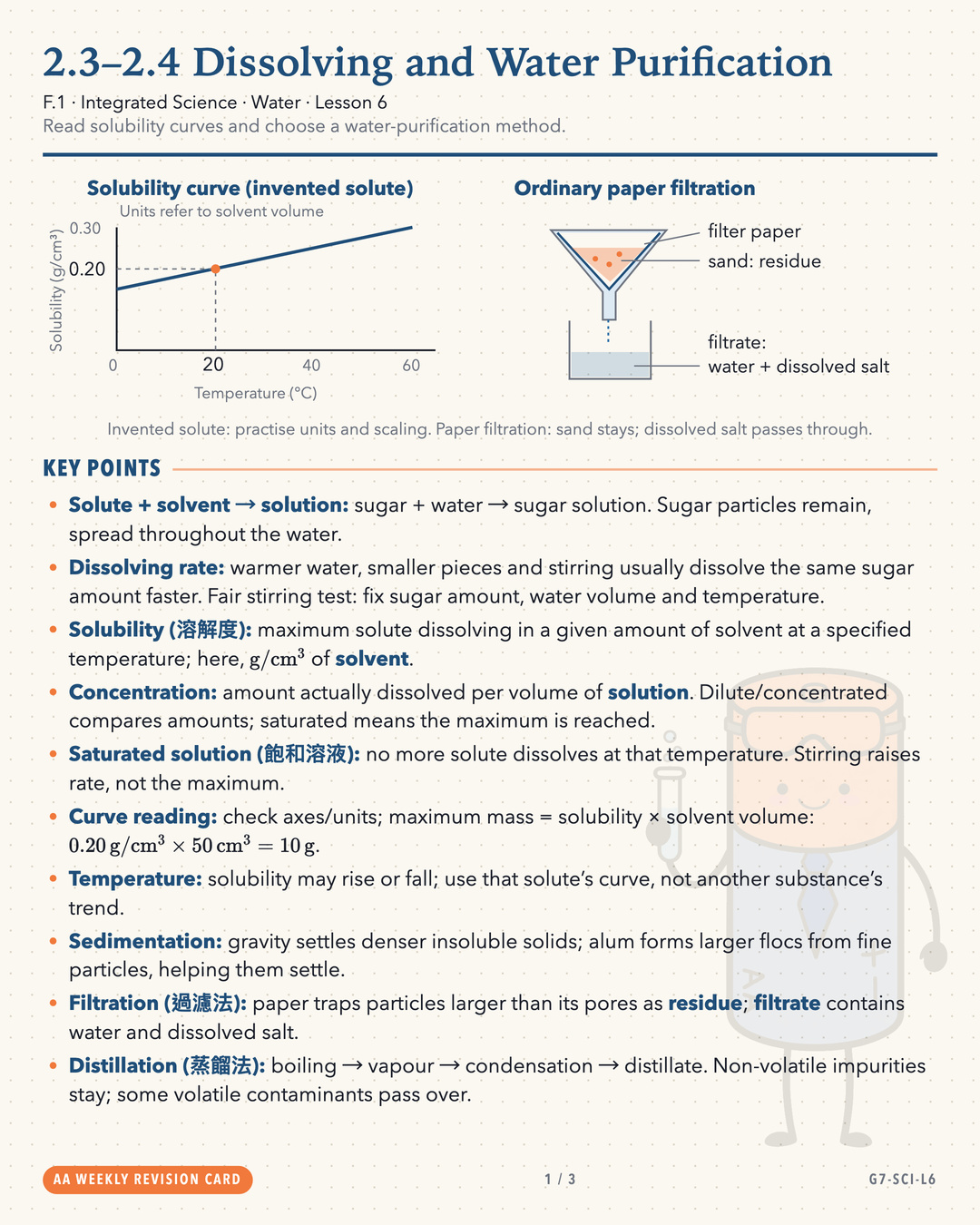
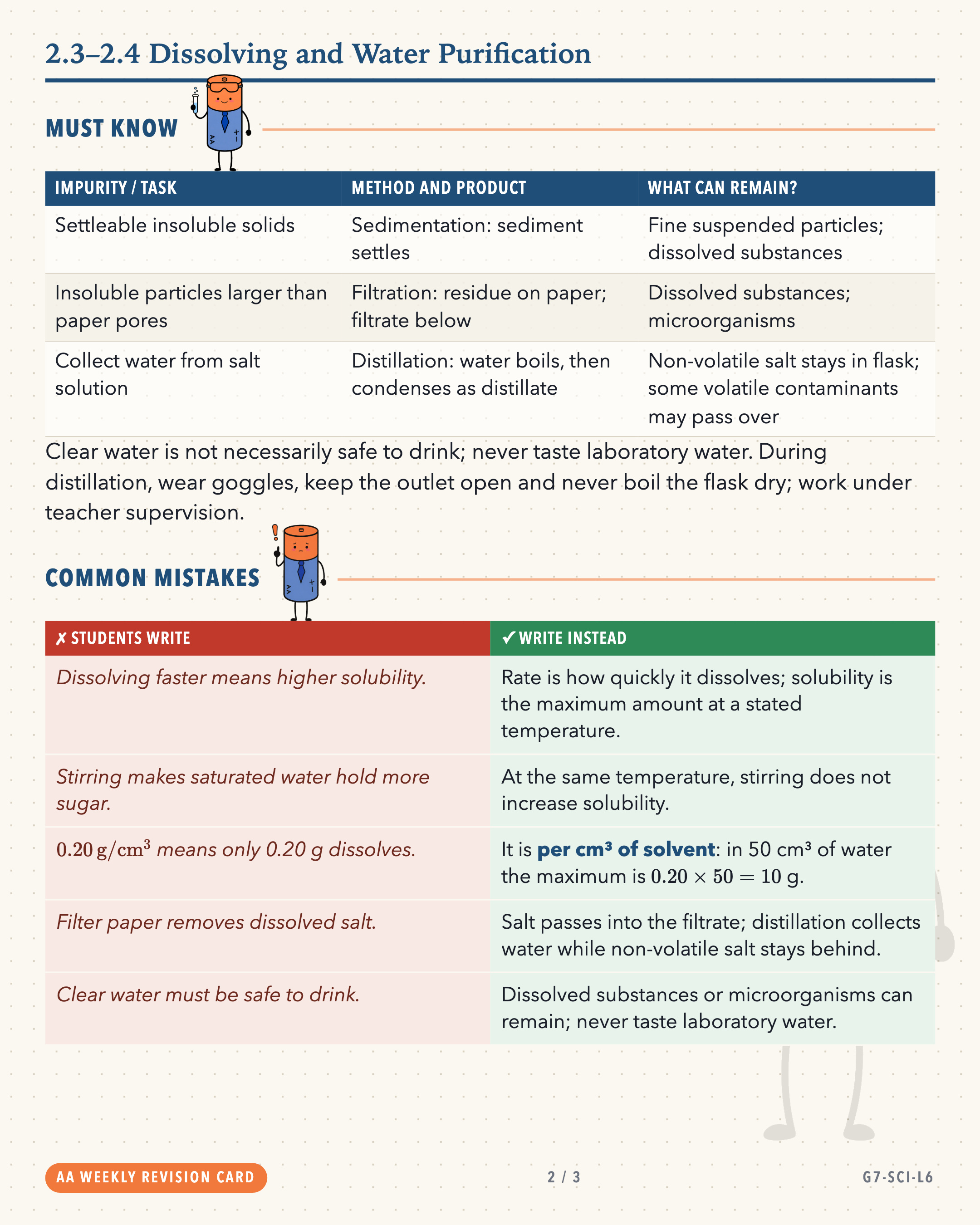
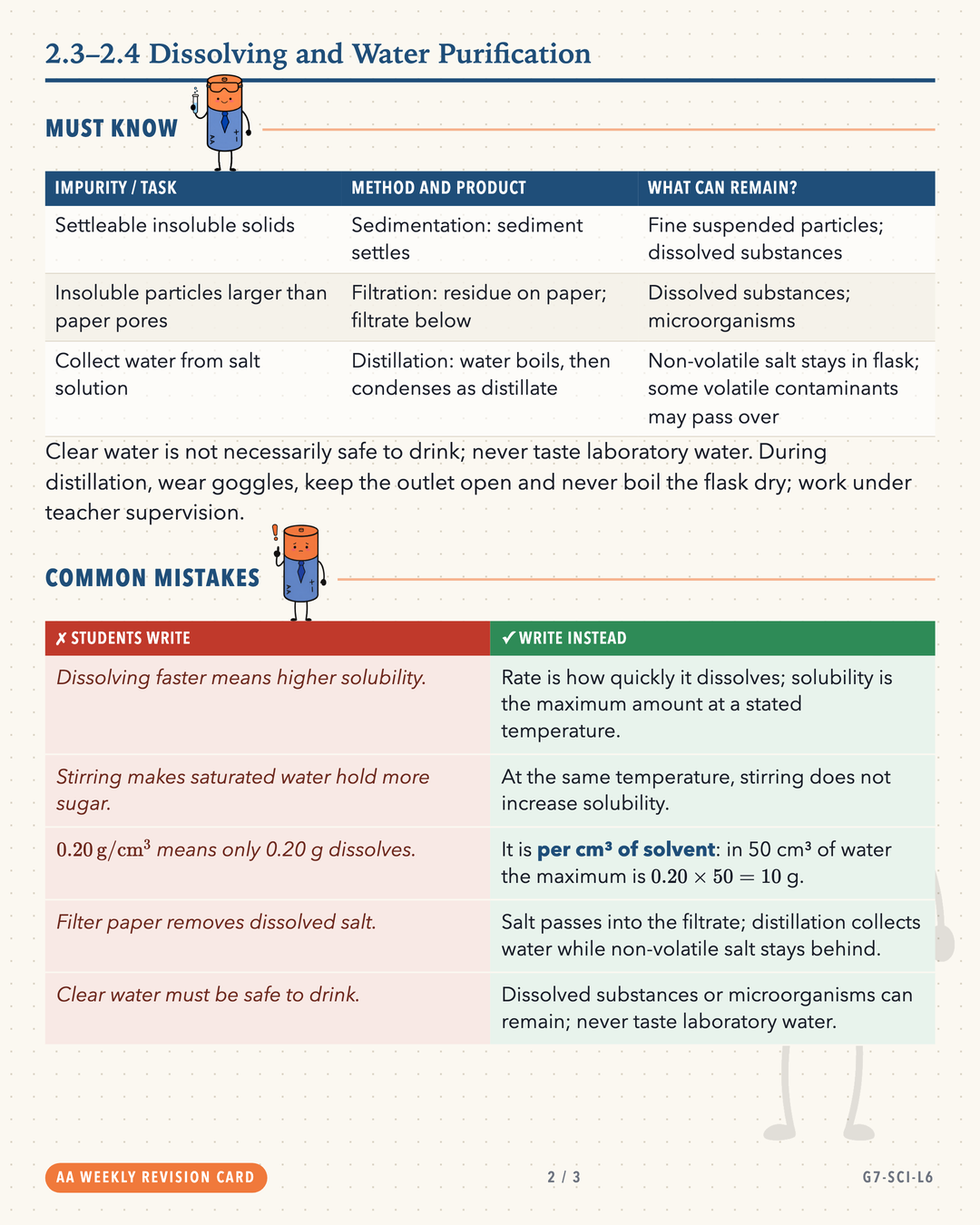
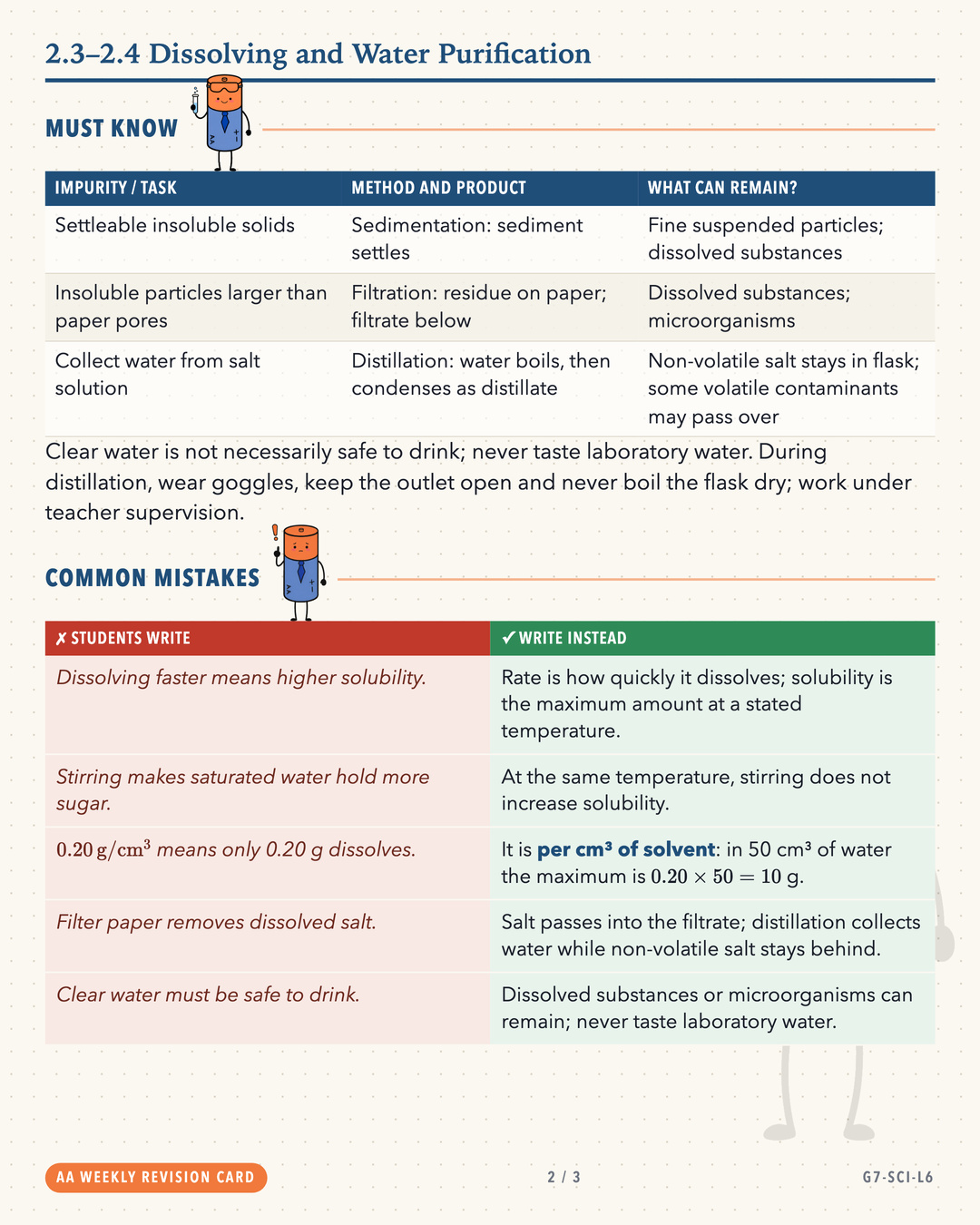
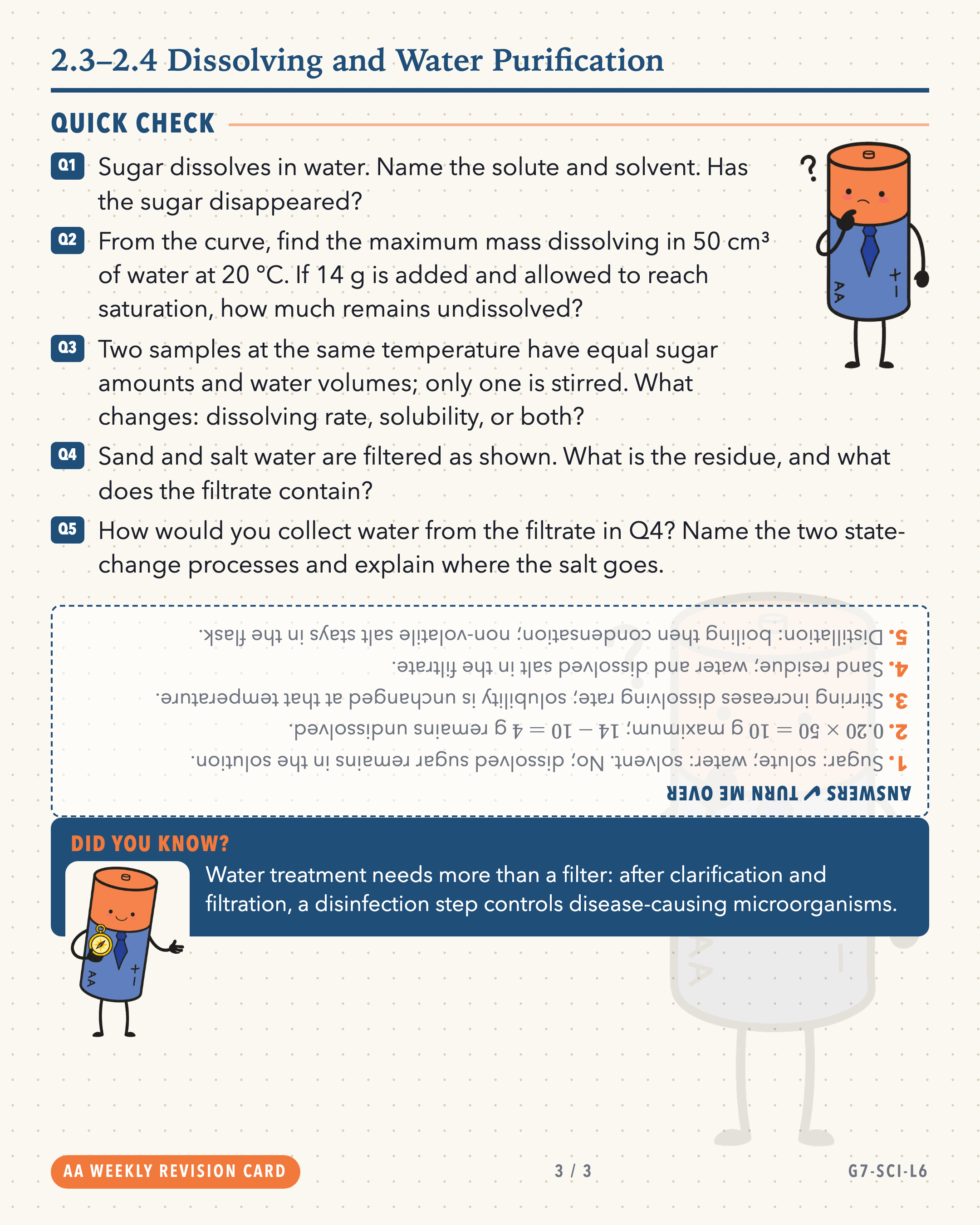
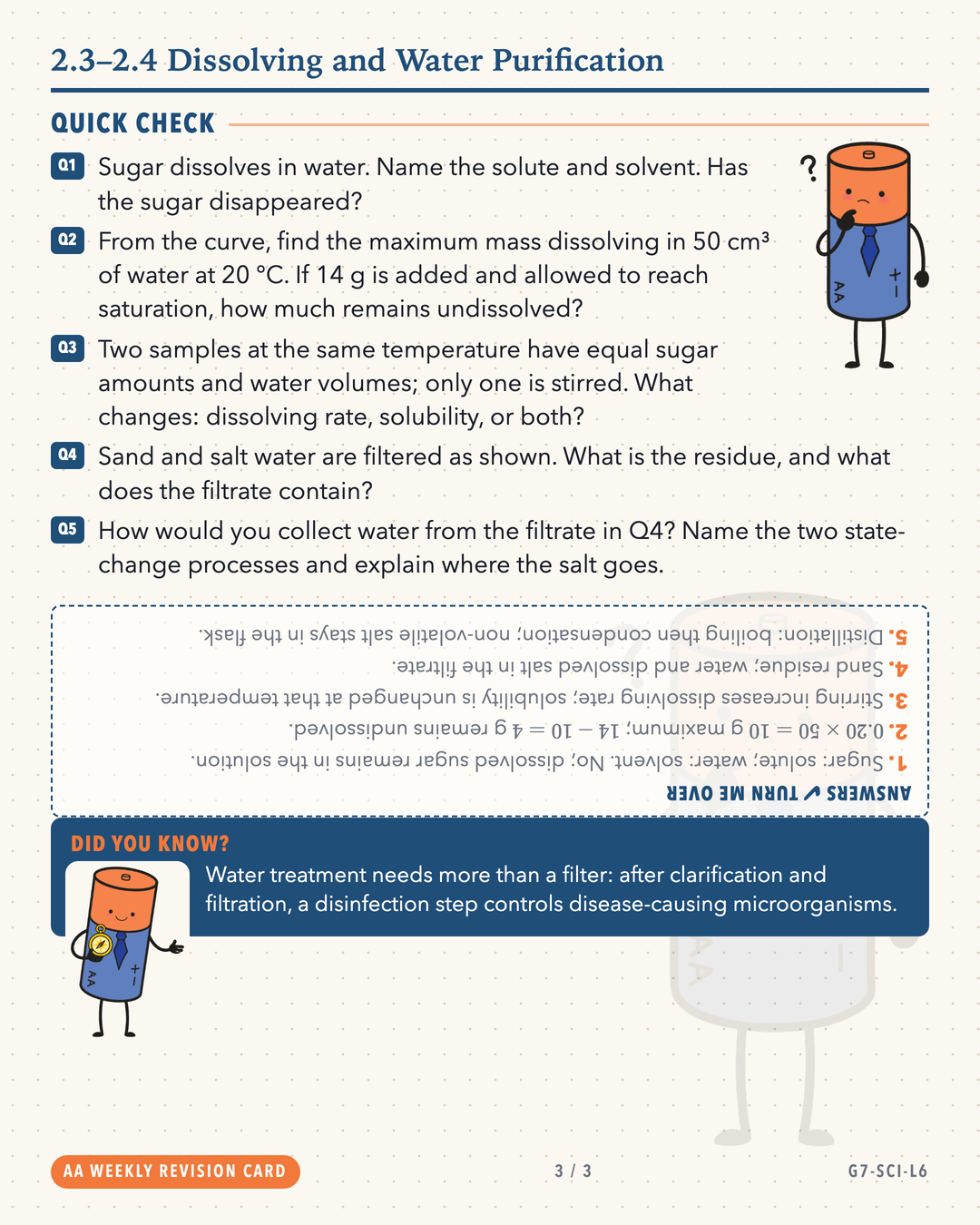
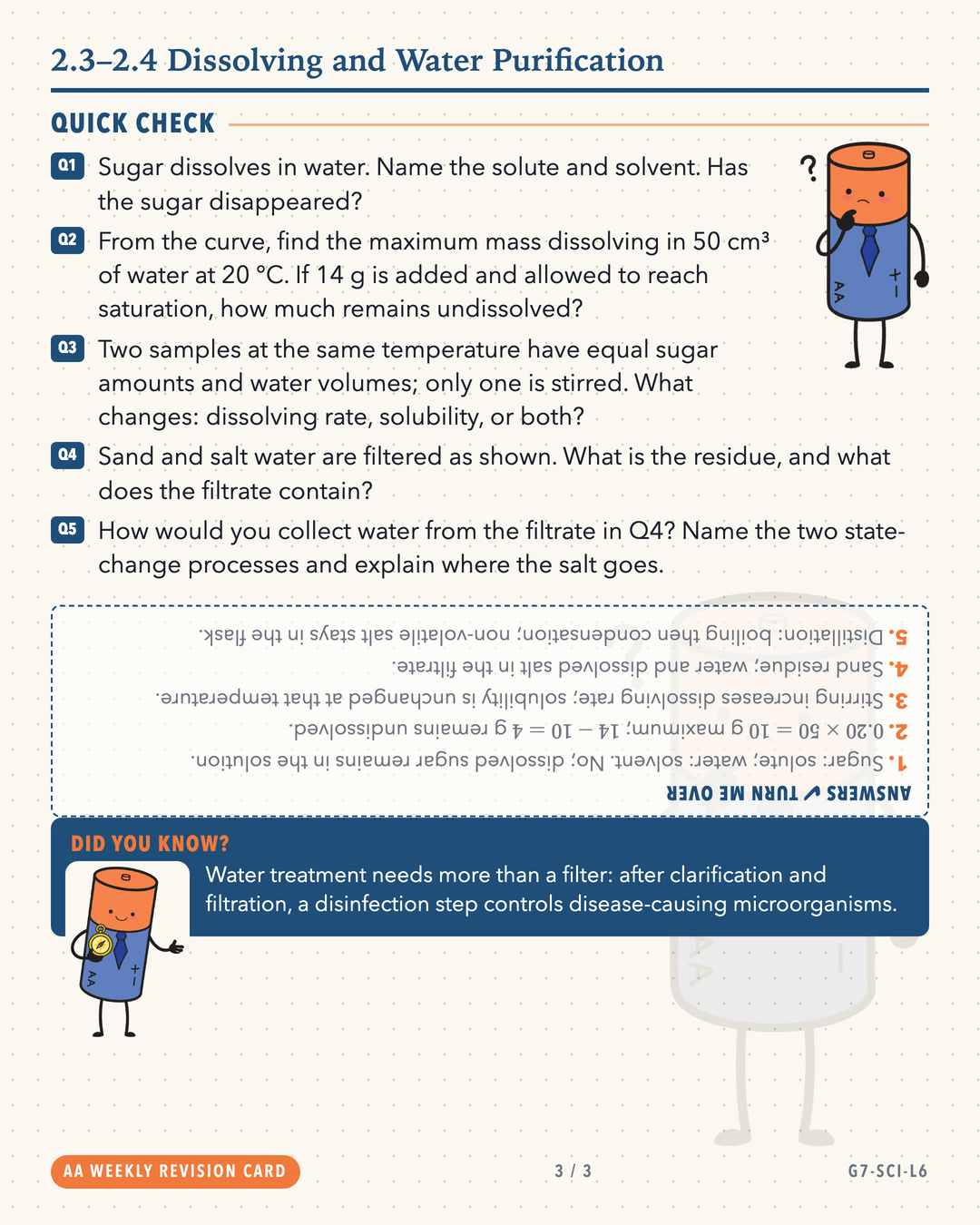
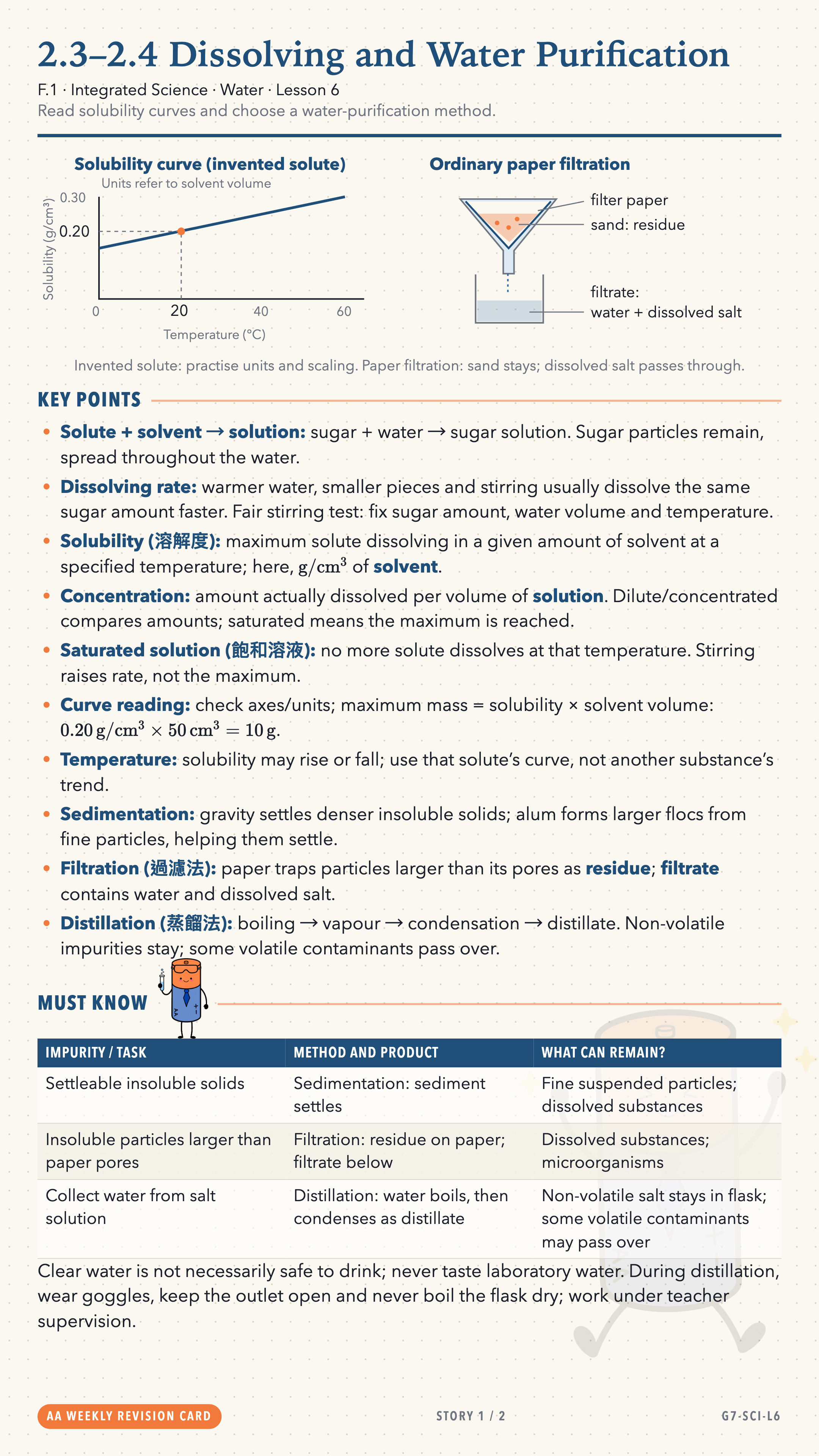
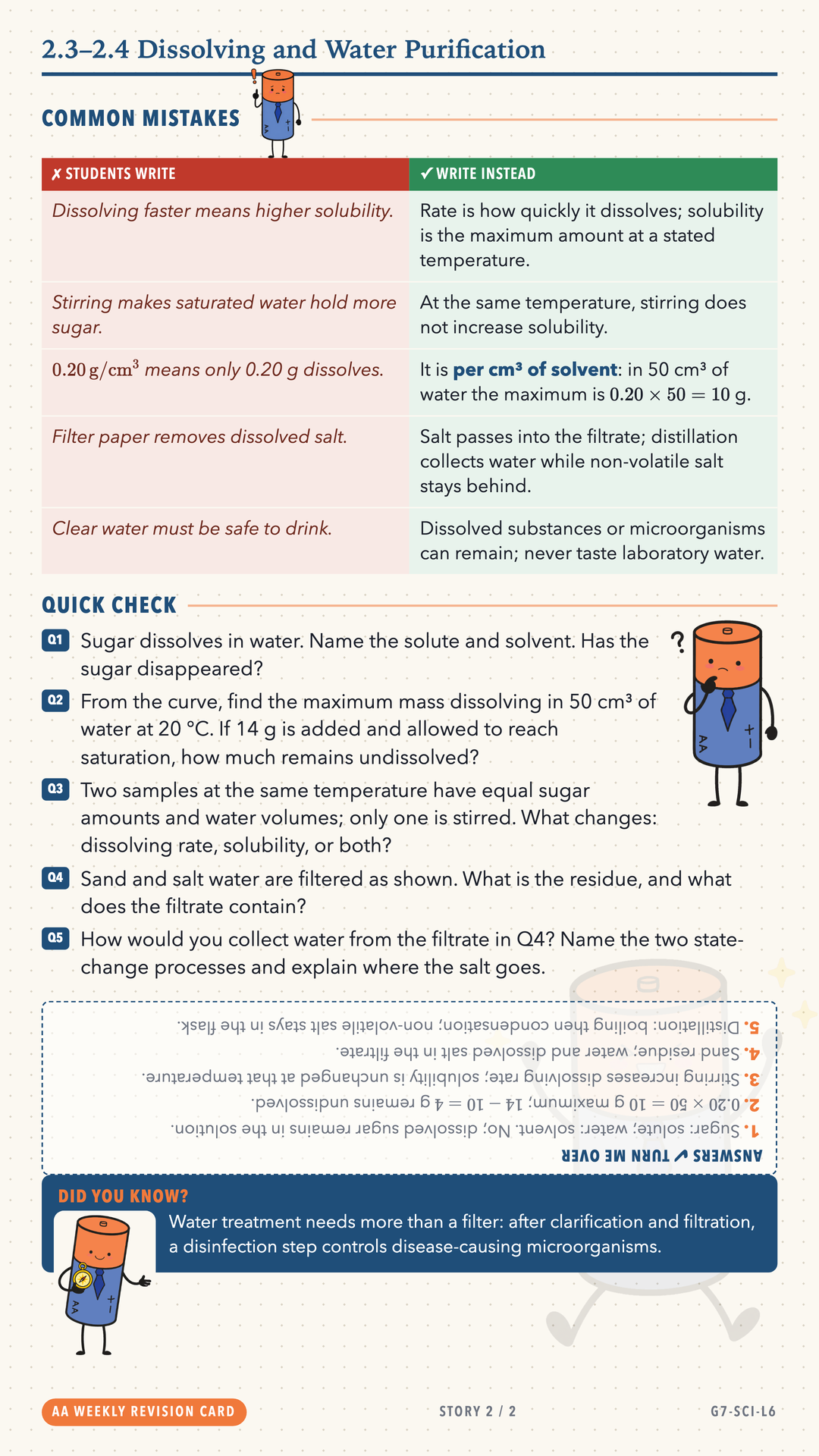
Read solubility curves and choose a water-purification method.
✔ fact-checked · 1 added mistake tagged [likely] · 3.0 MB JPG · card.md ·
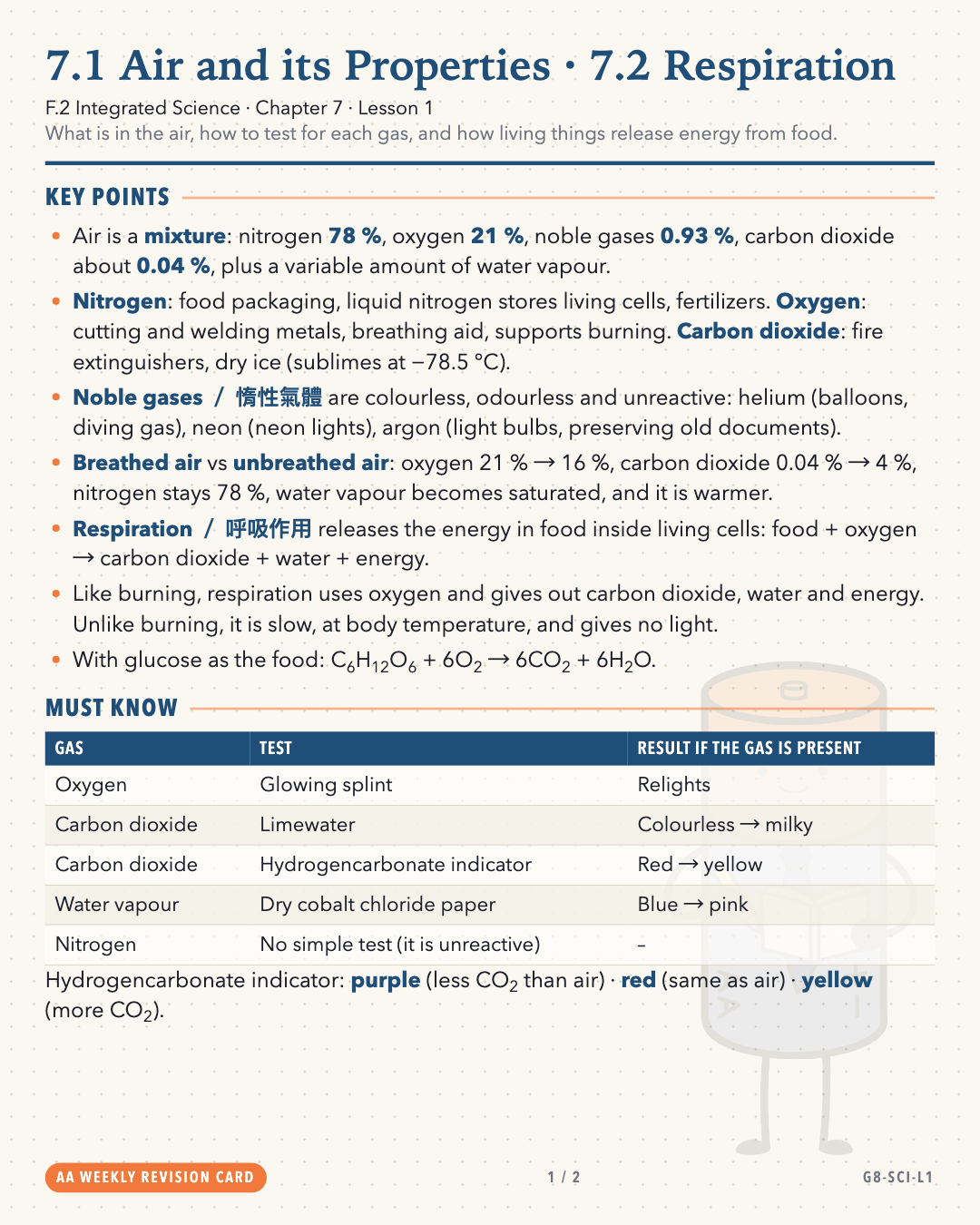
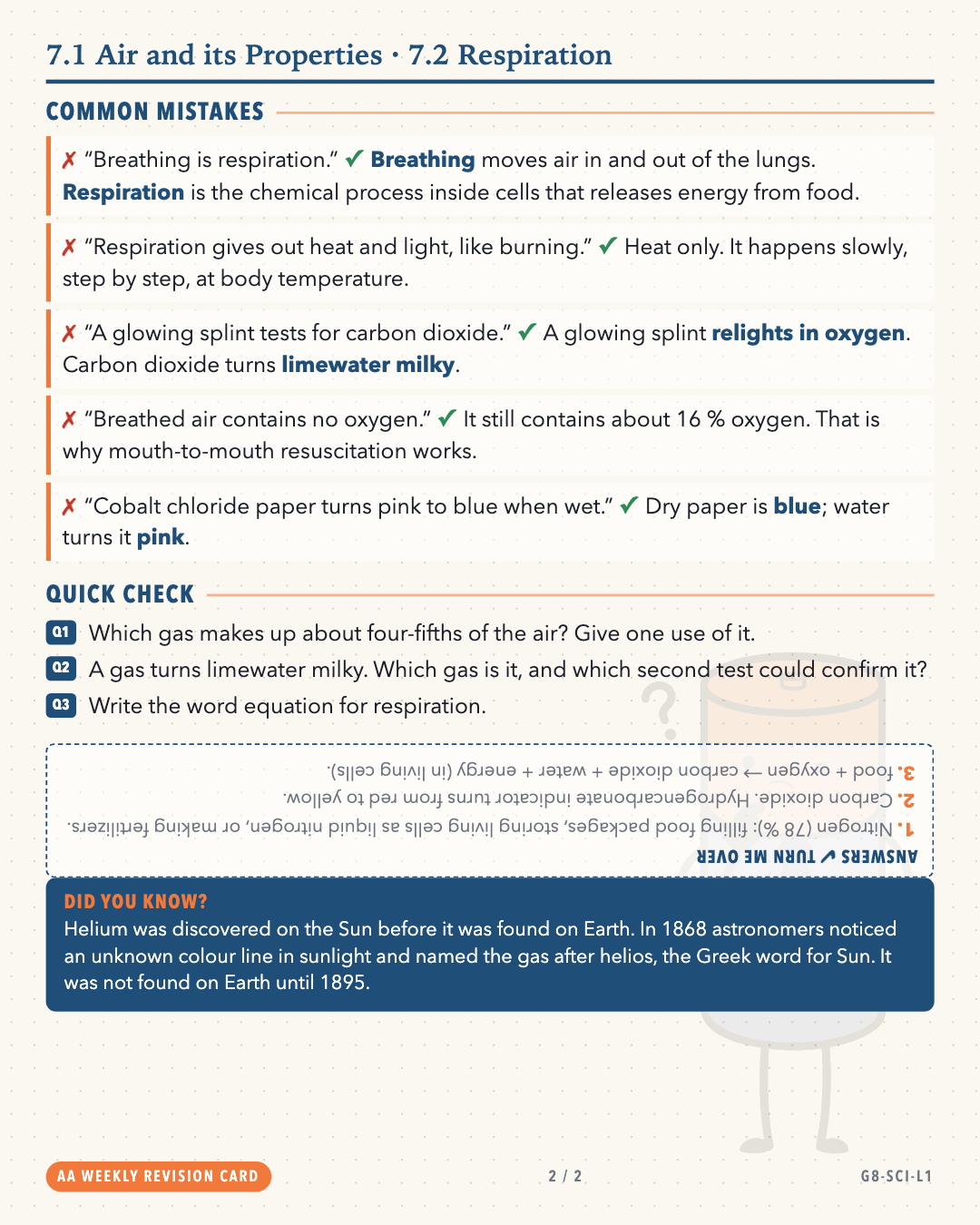
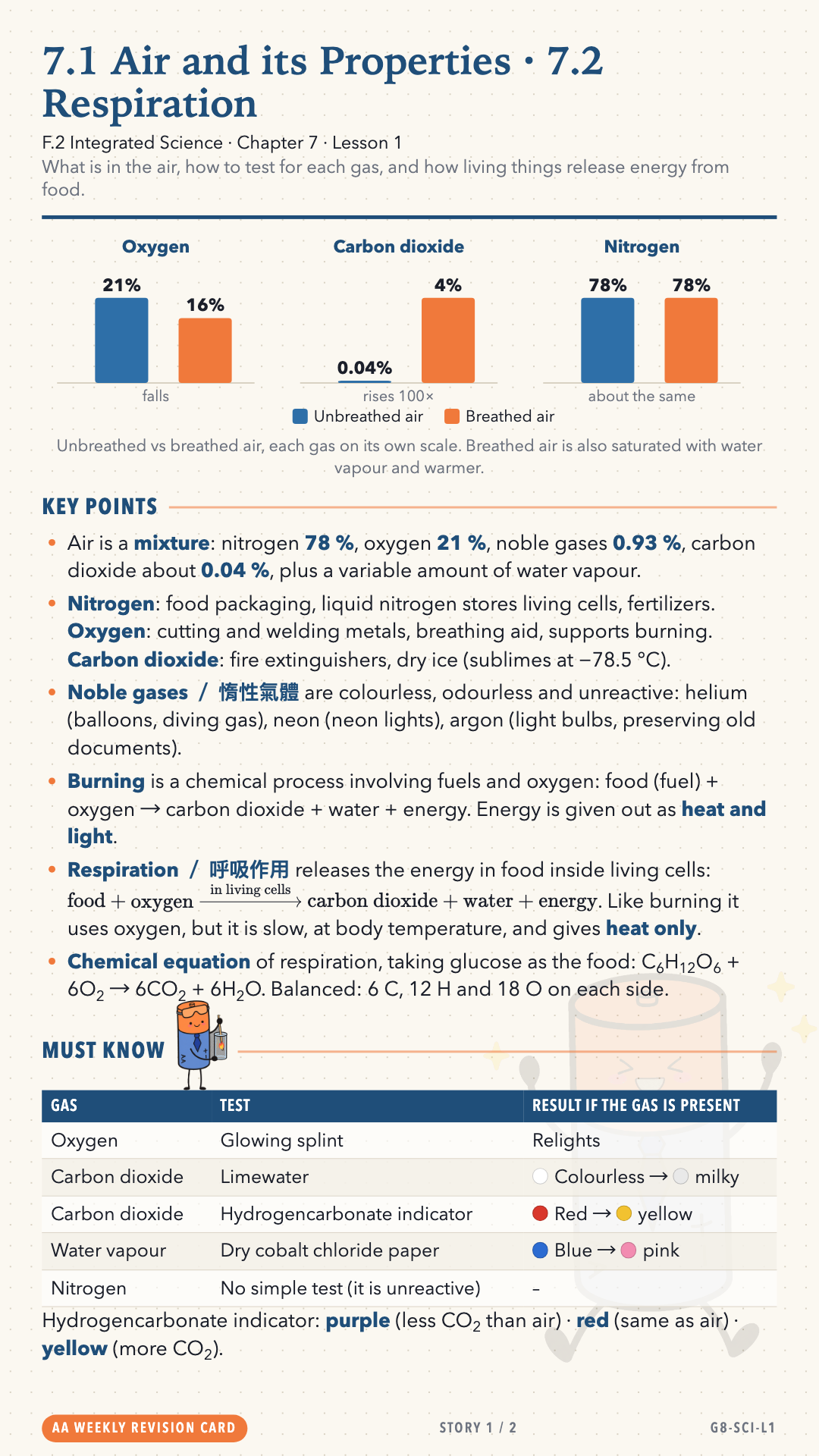
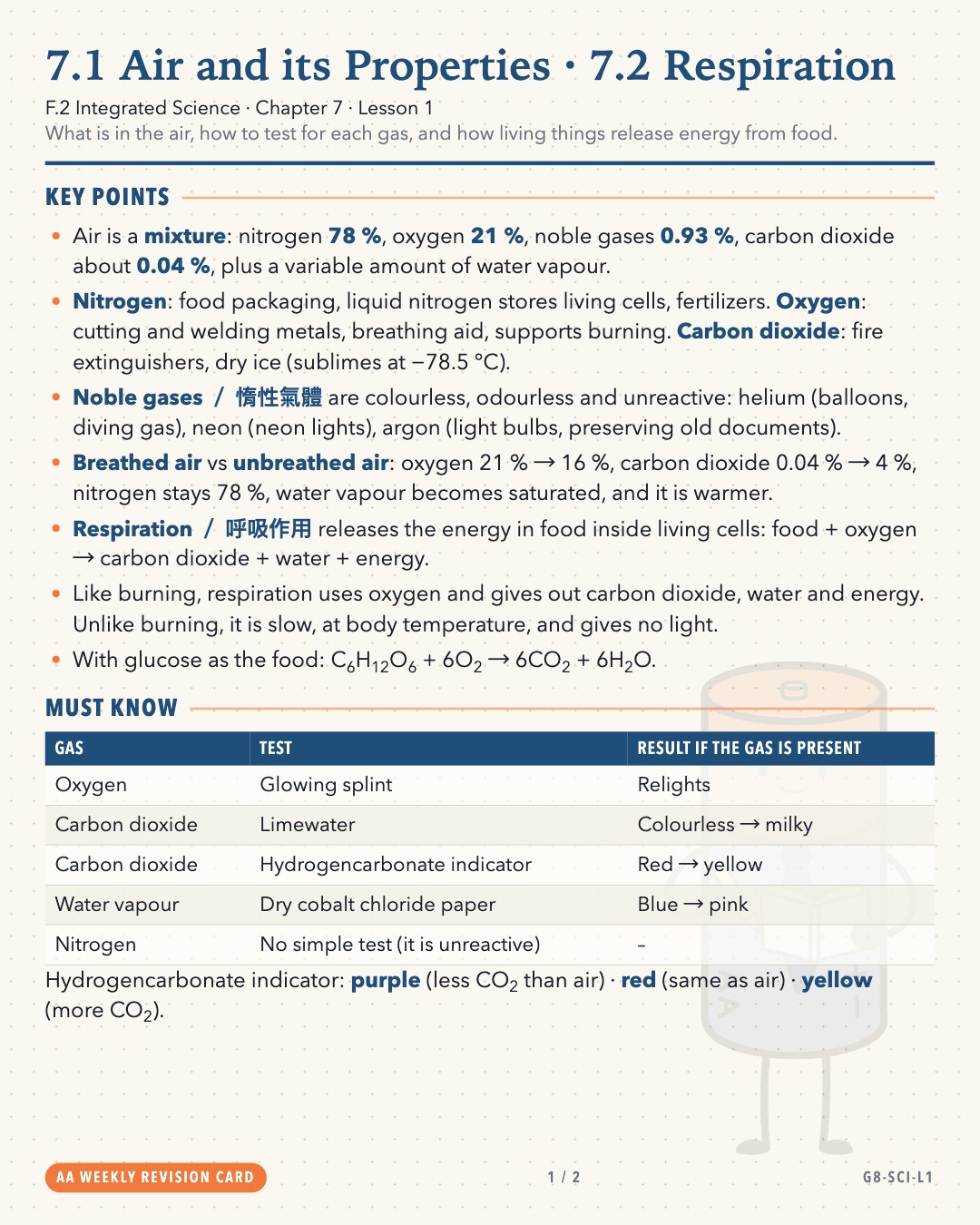
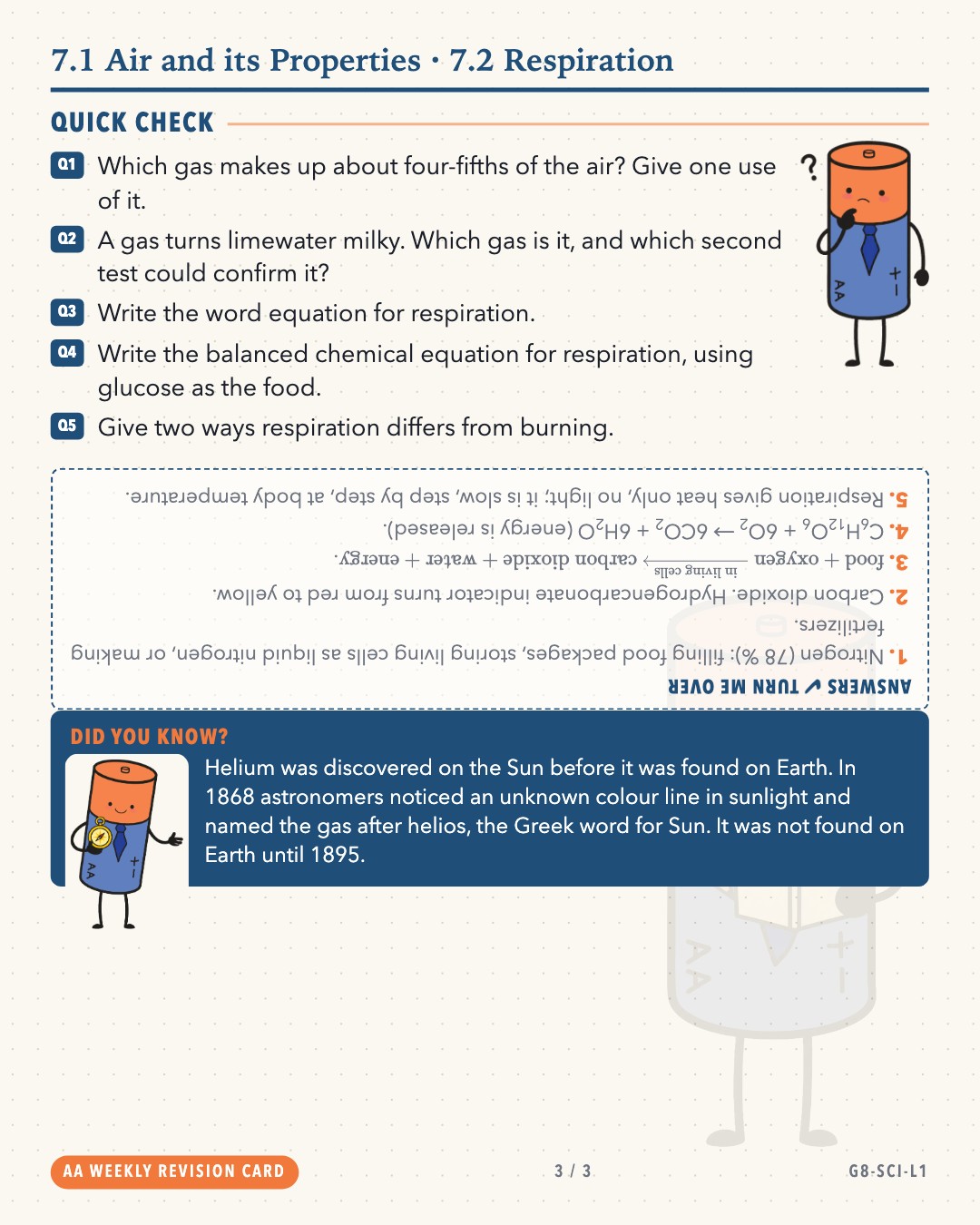
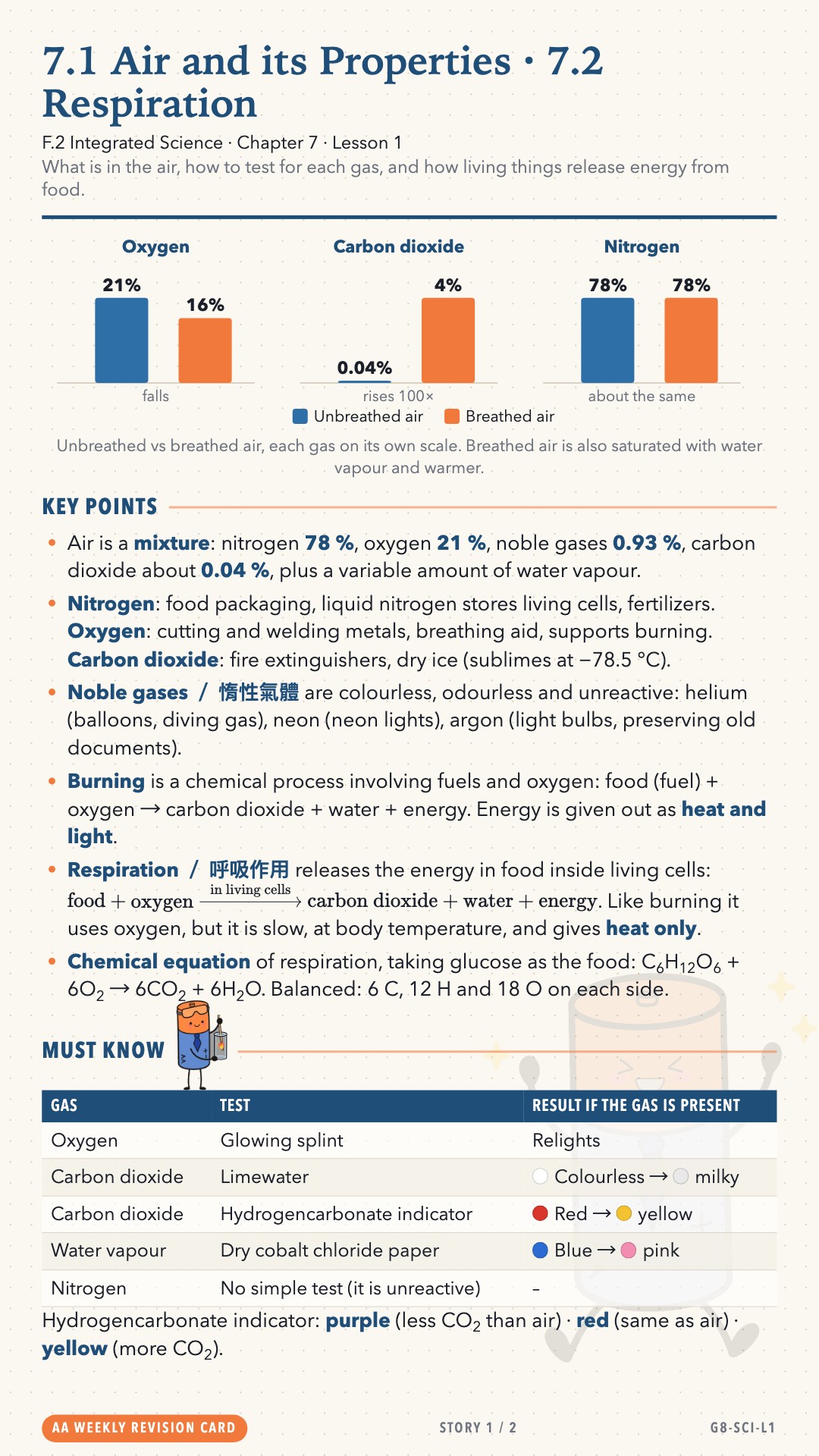
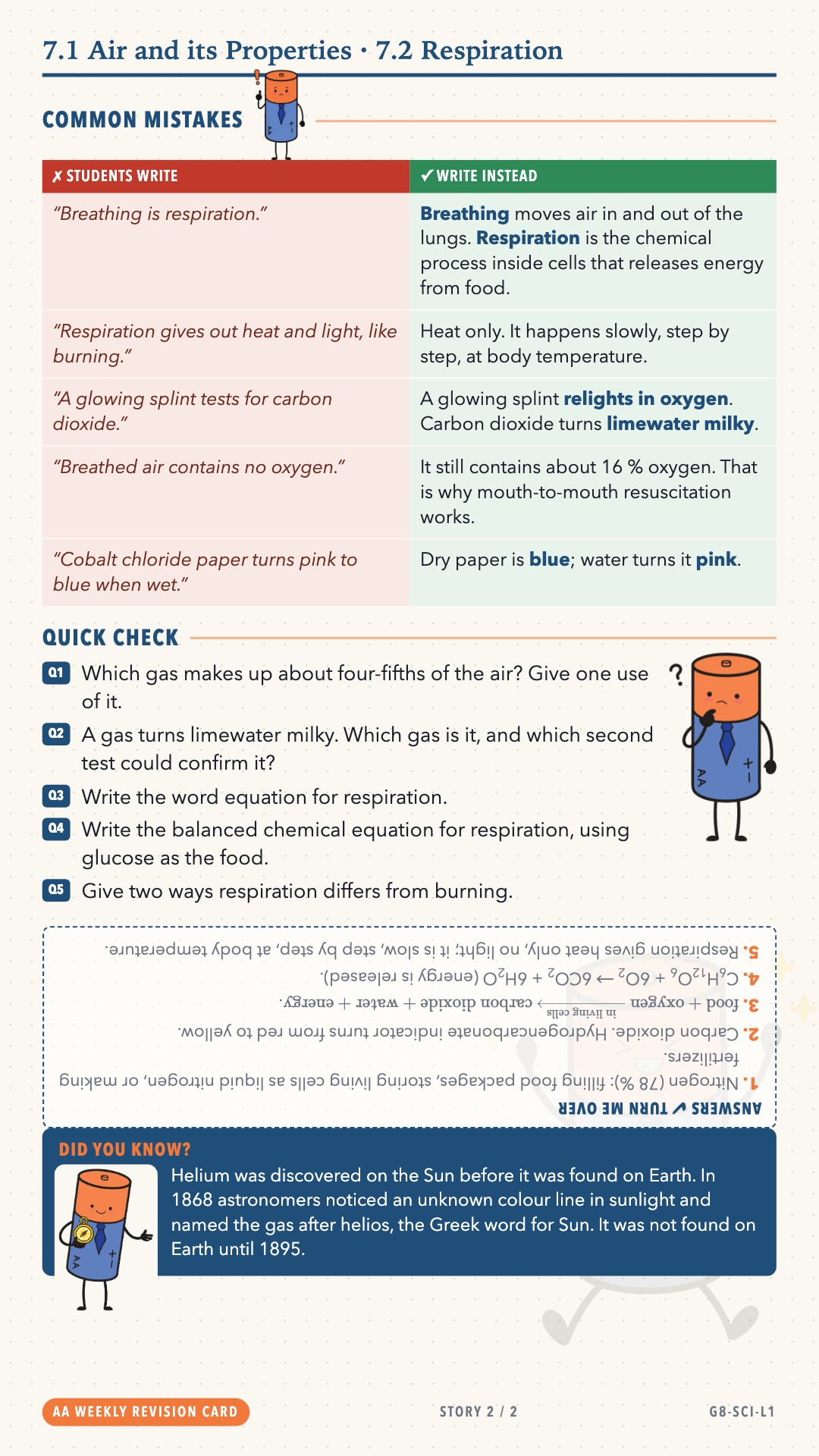
What is in the air, how to test for each gas, and how living things release energy from food.
✔ fact-checked · 2 added mistakes tagged [likely] · 1.6 MB JPG · card.md ·
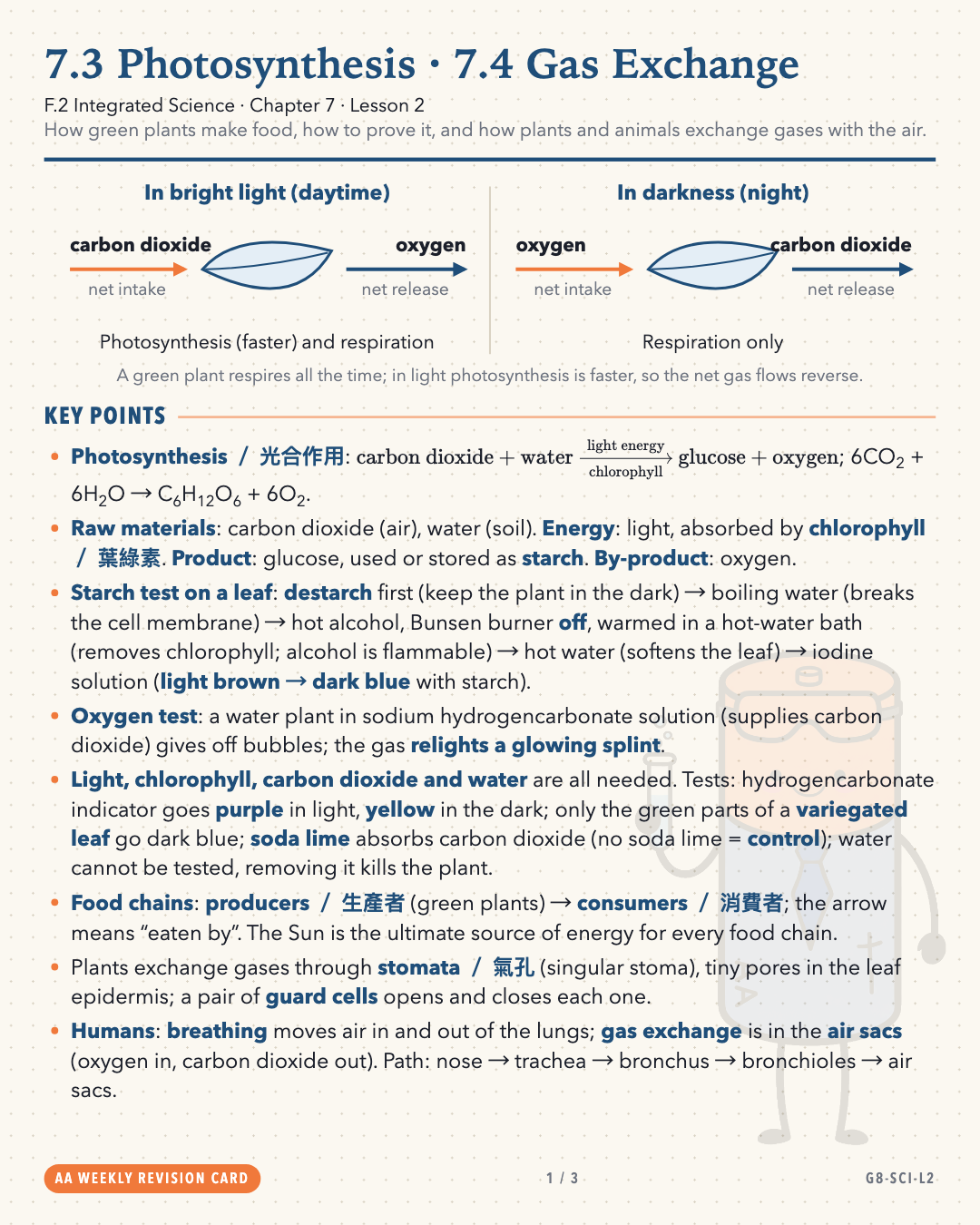
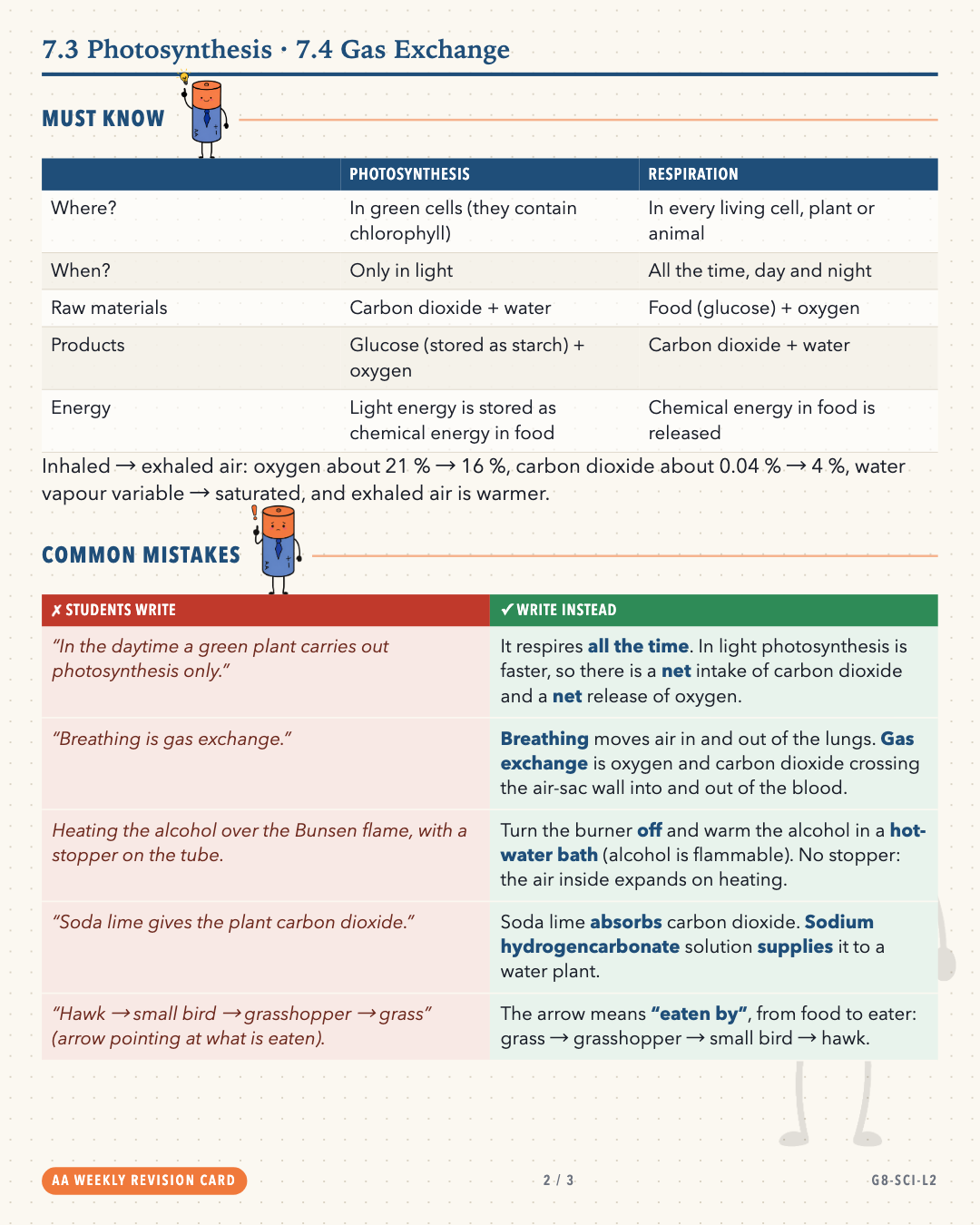
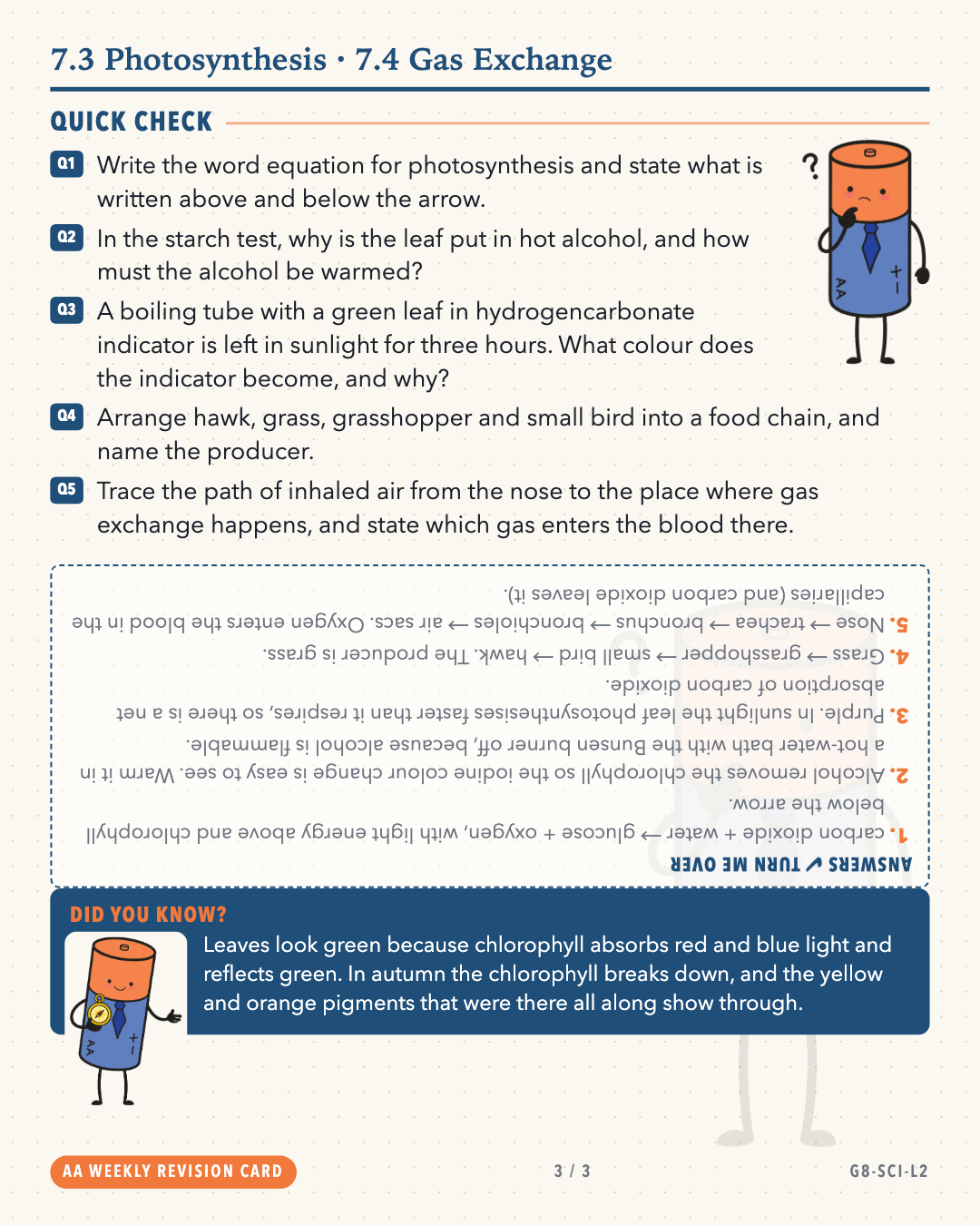
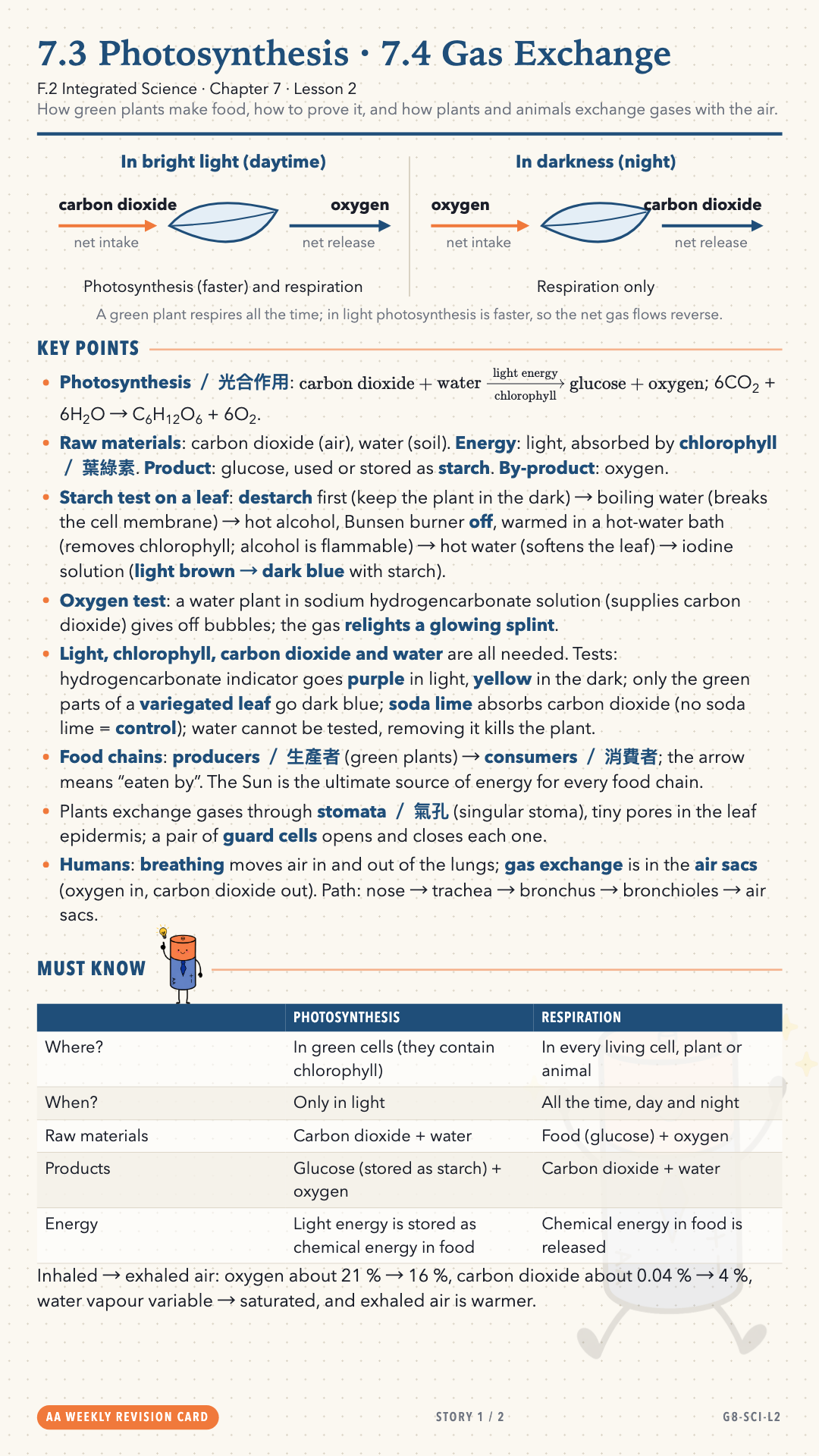
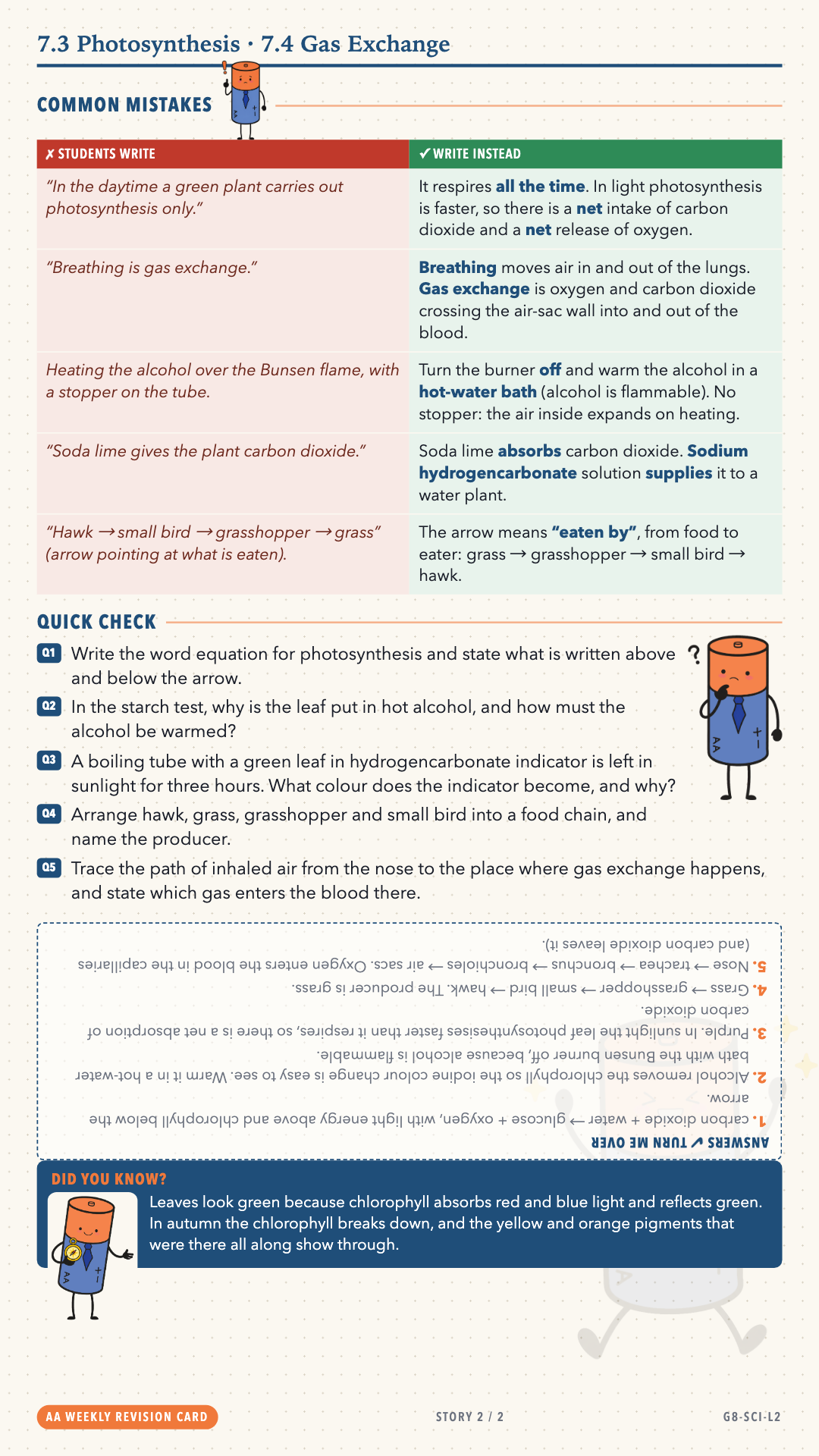
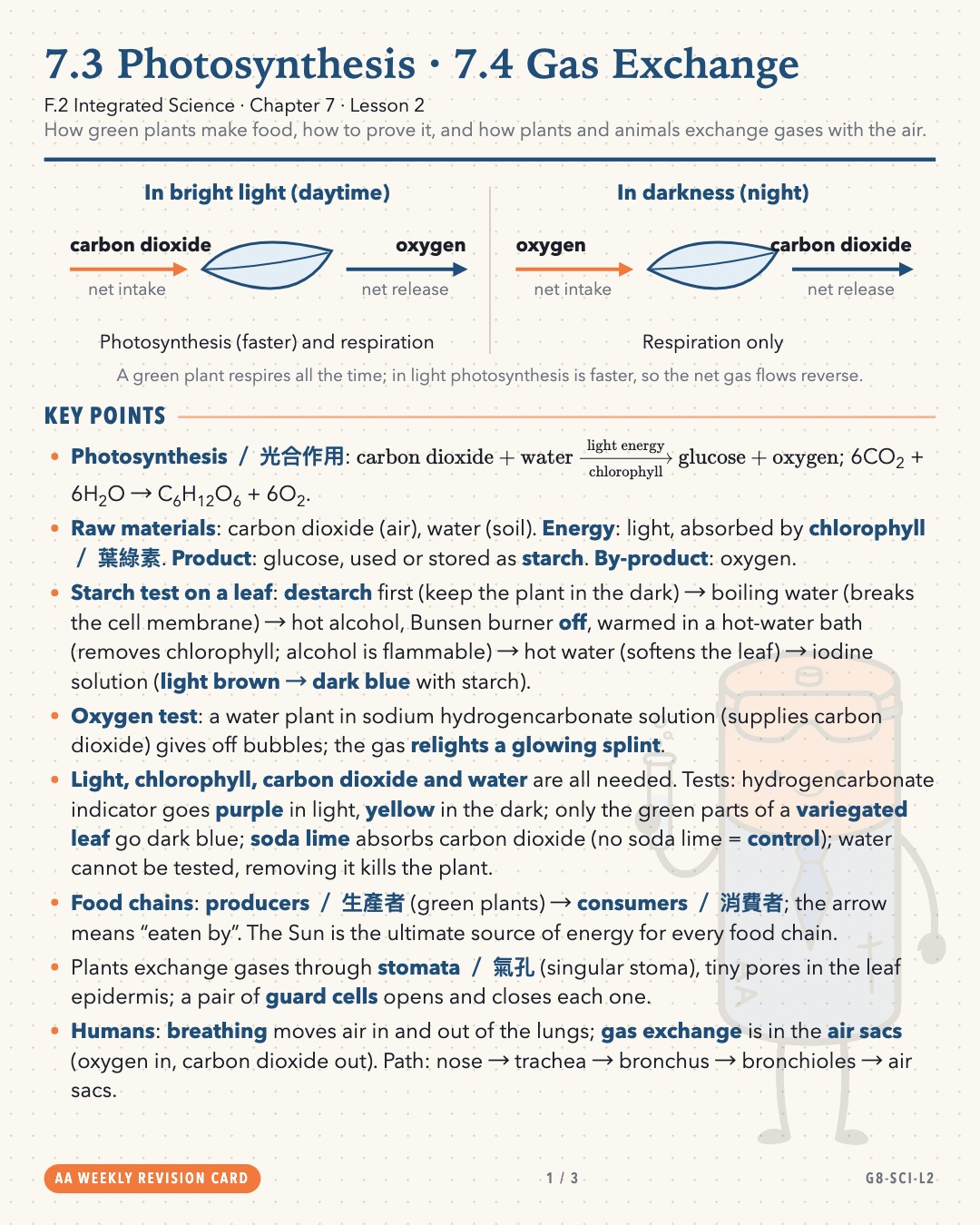
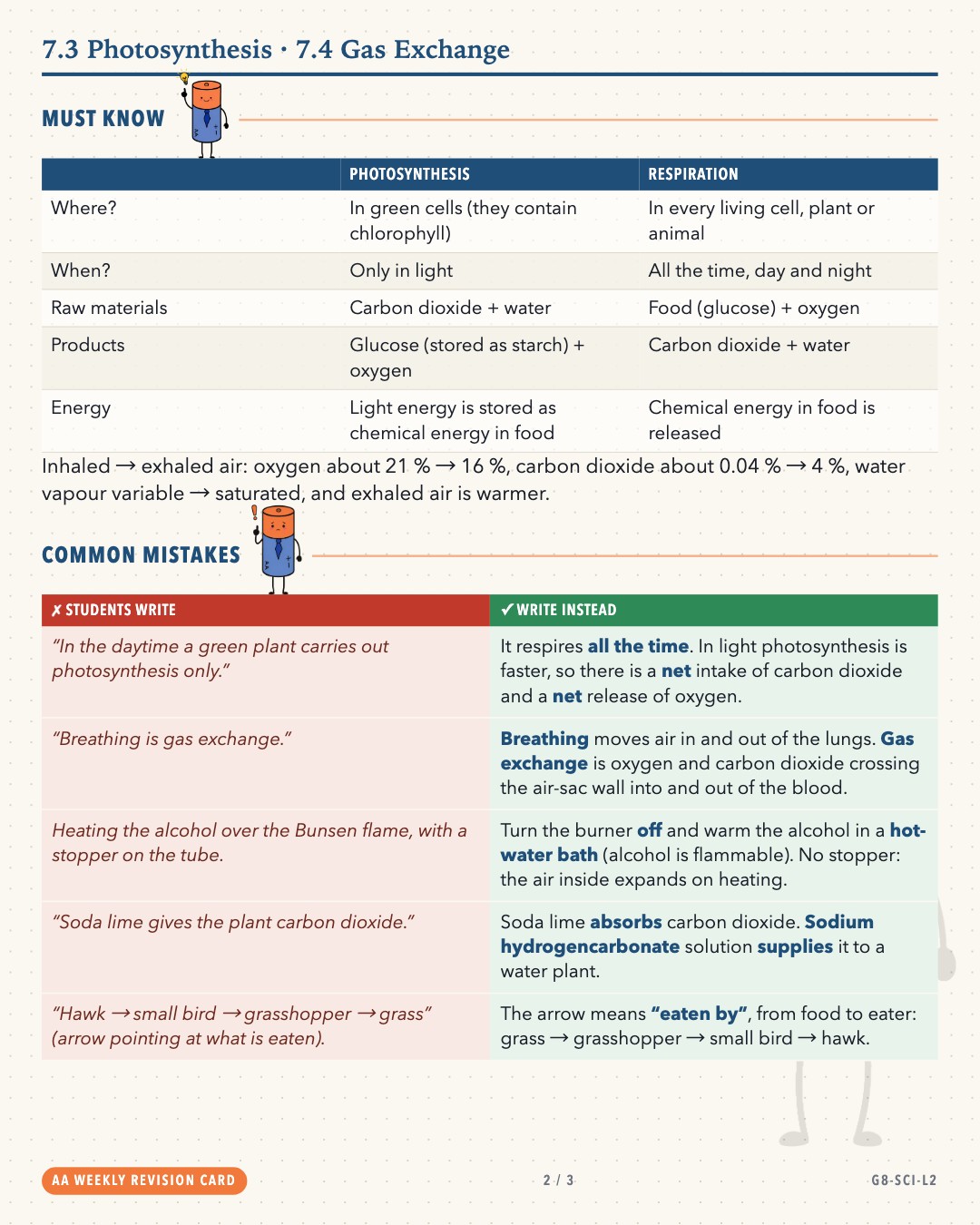
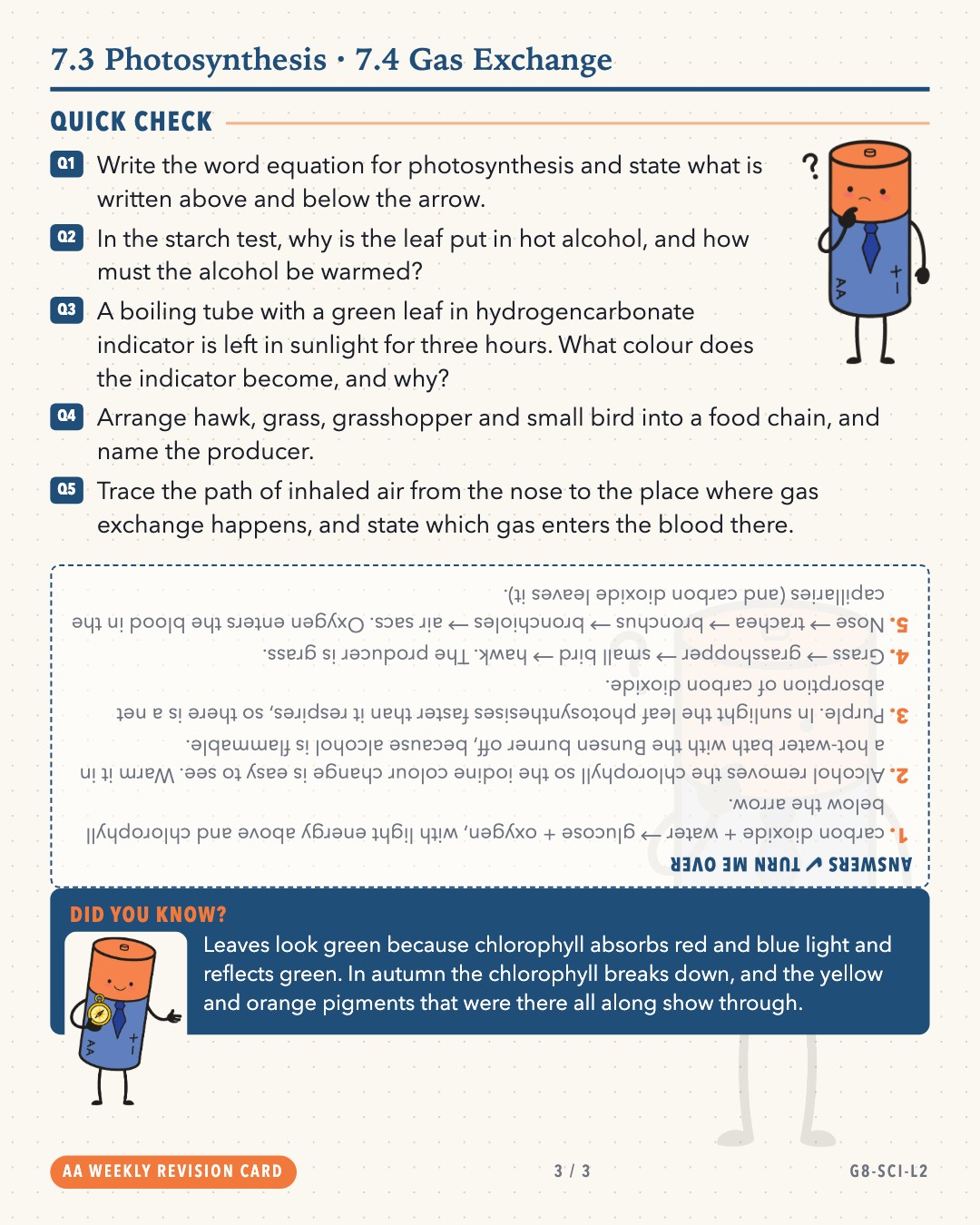
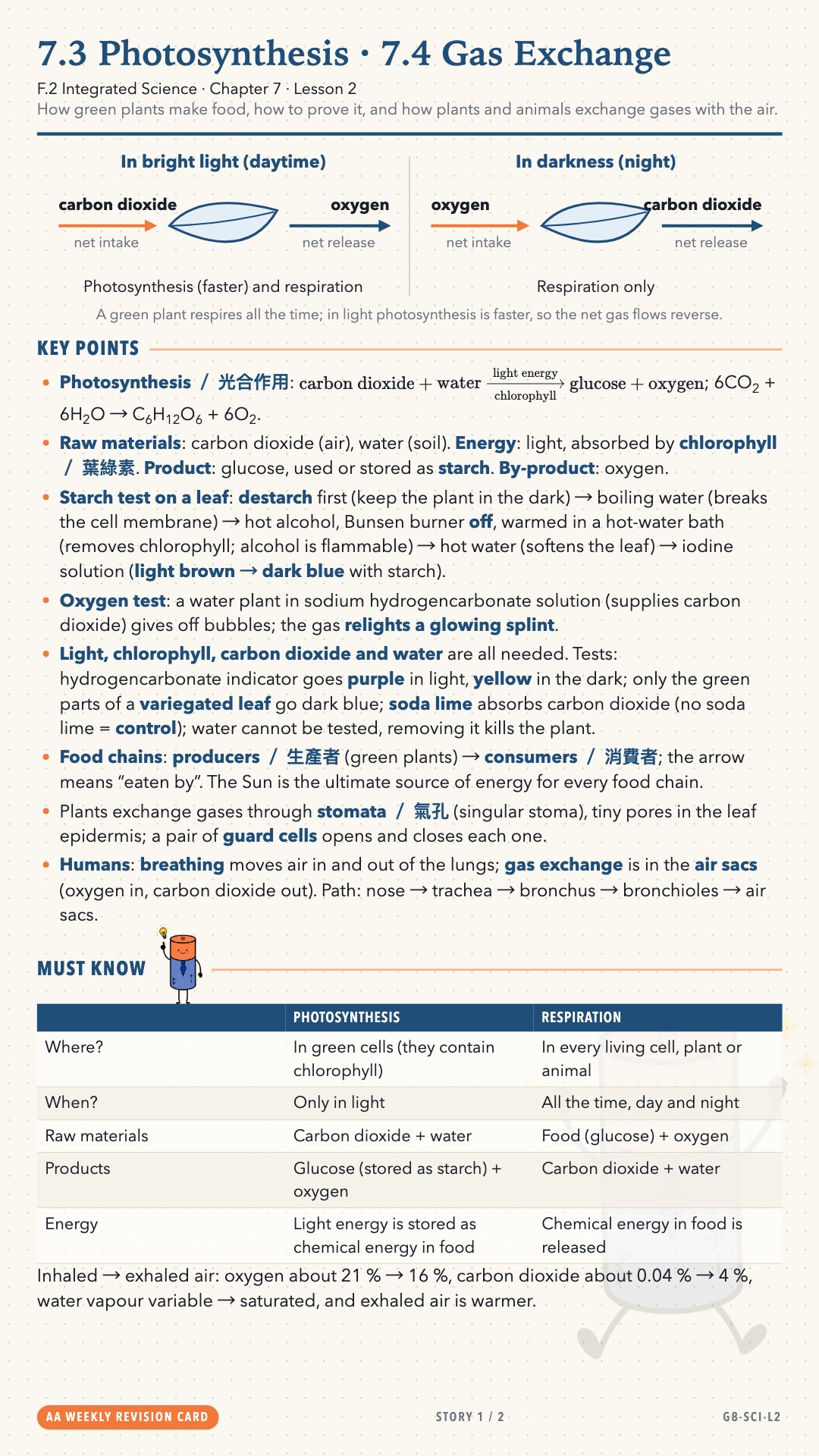
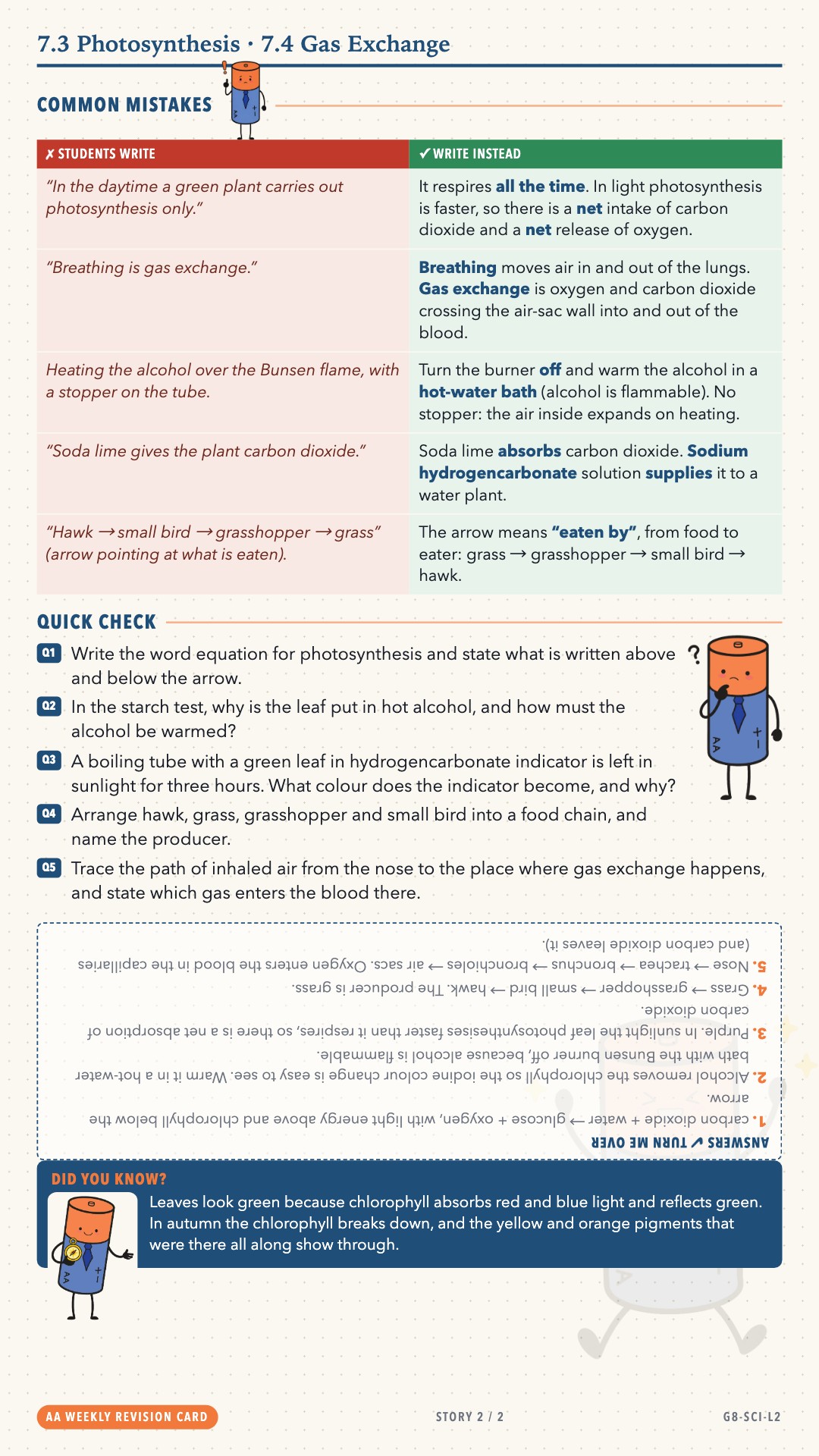
How green plants make food, how to prove it, and how plants and animals exchange gases with the air.
✔ fact-checked · 2 added mistakes tagged [likely] · 1.9 MB JPG · card.md ·
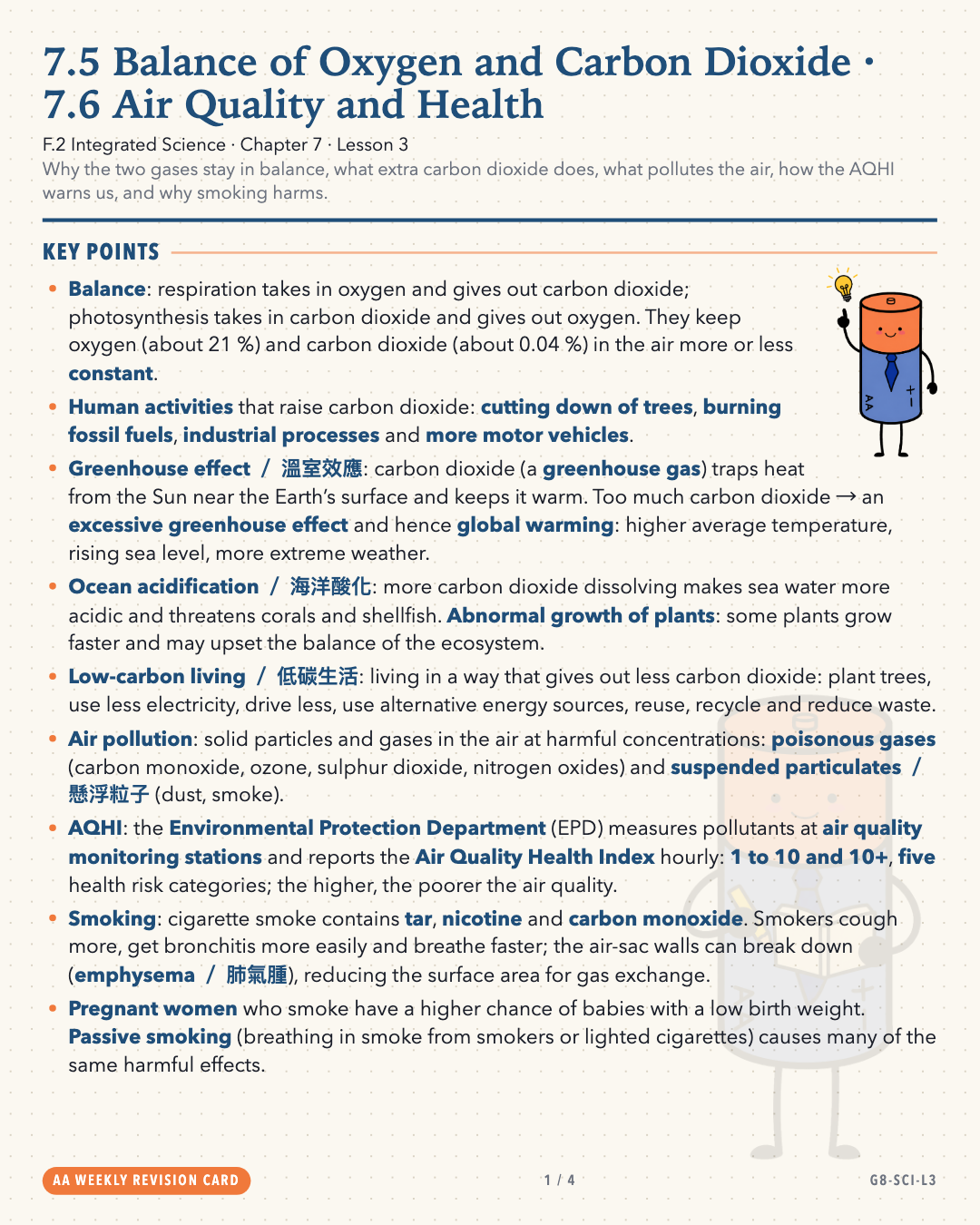
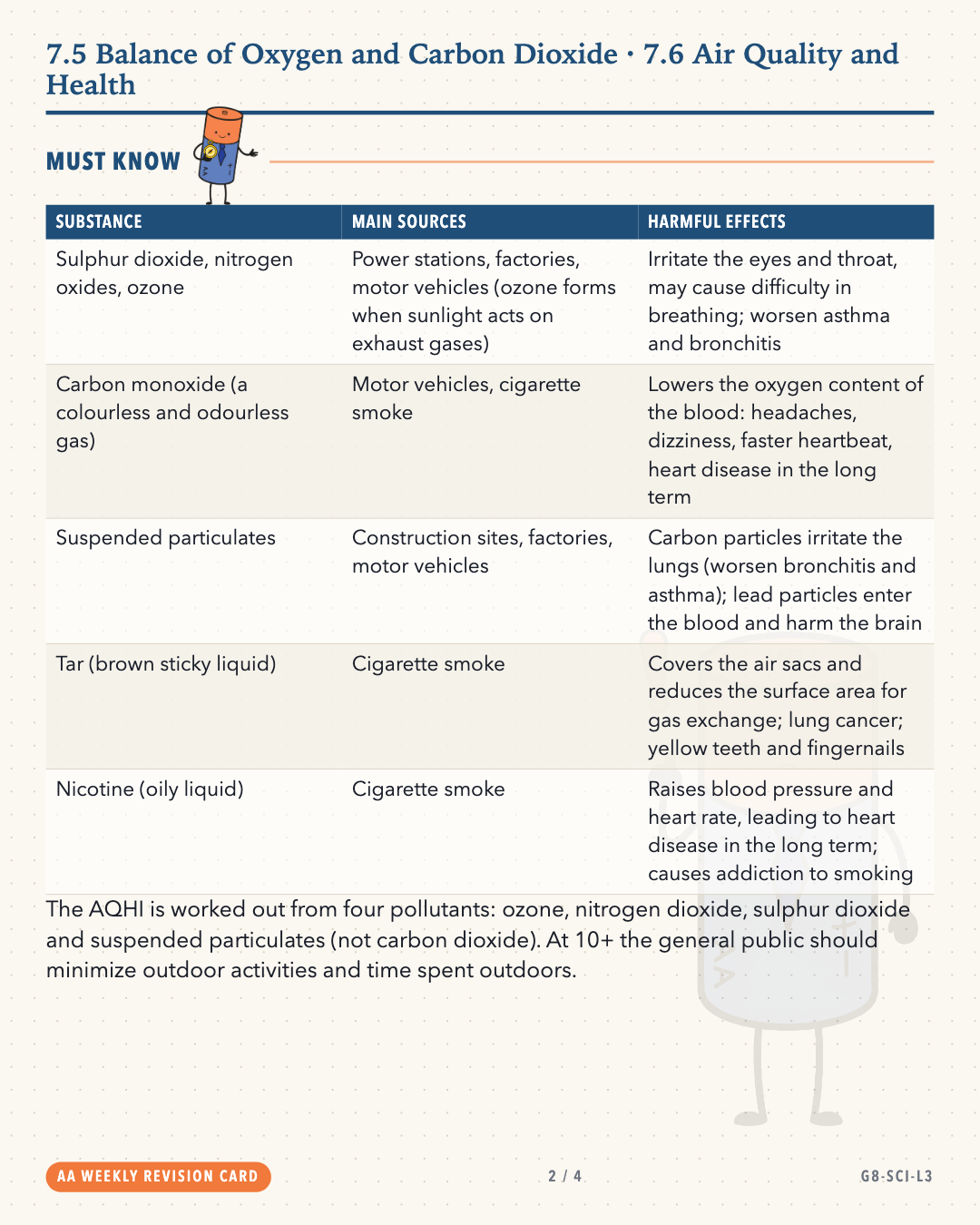
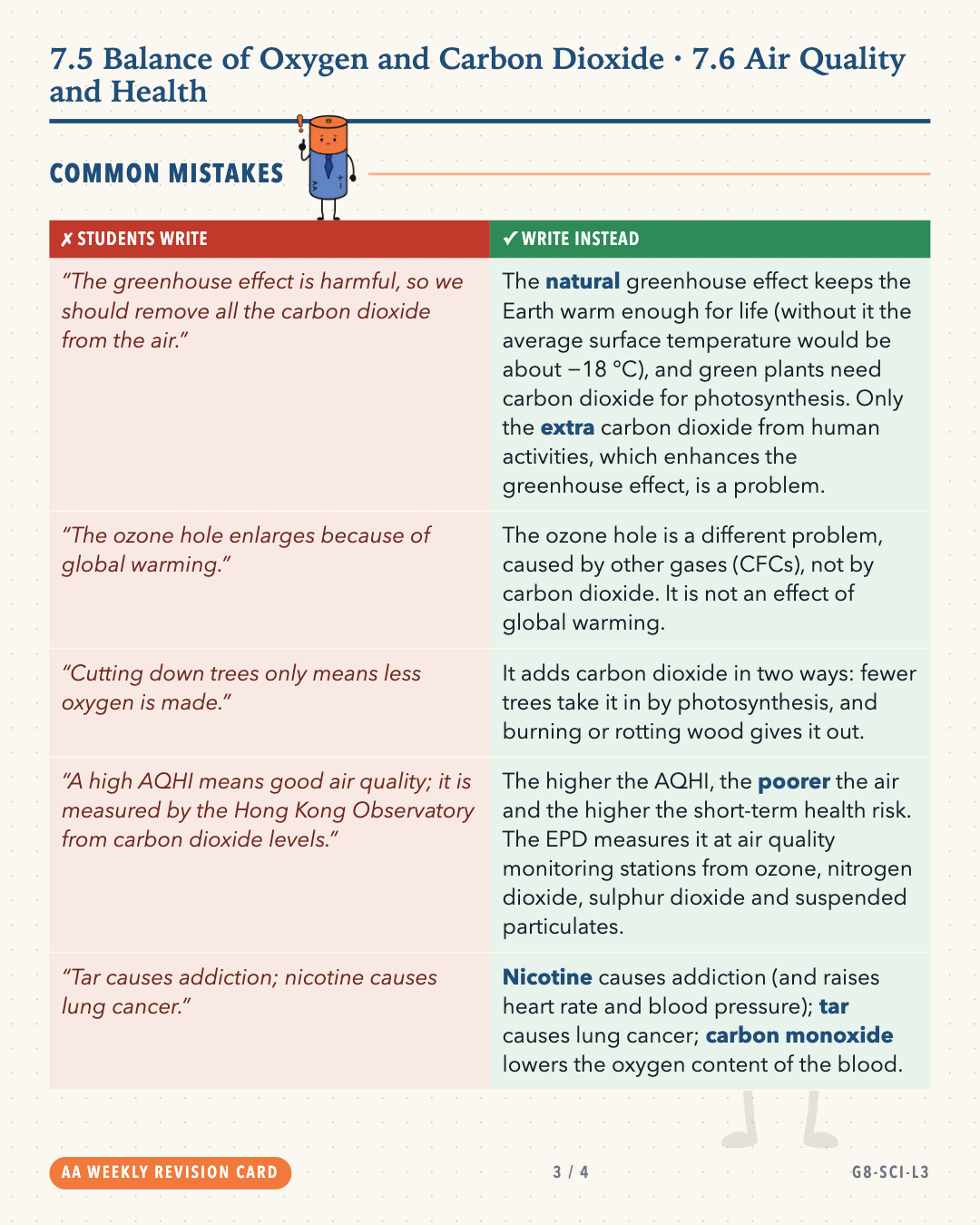
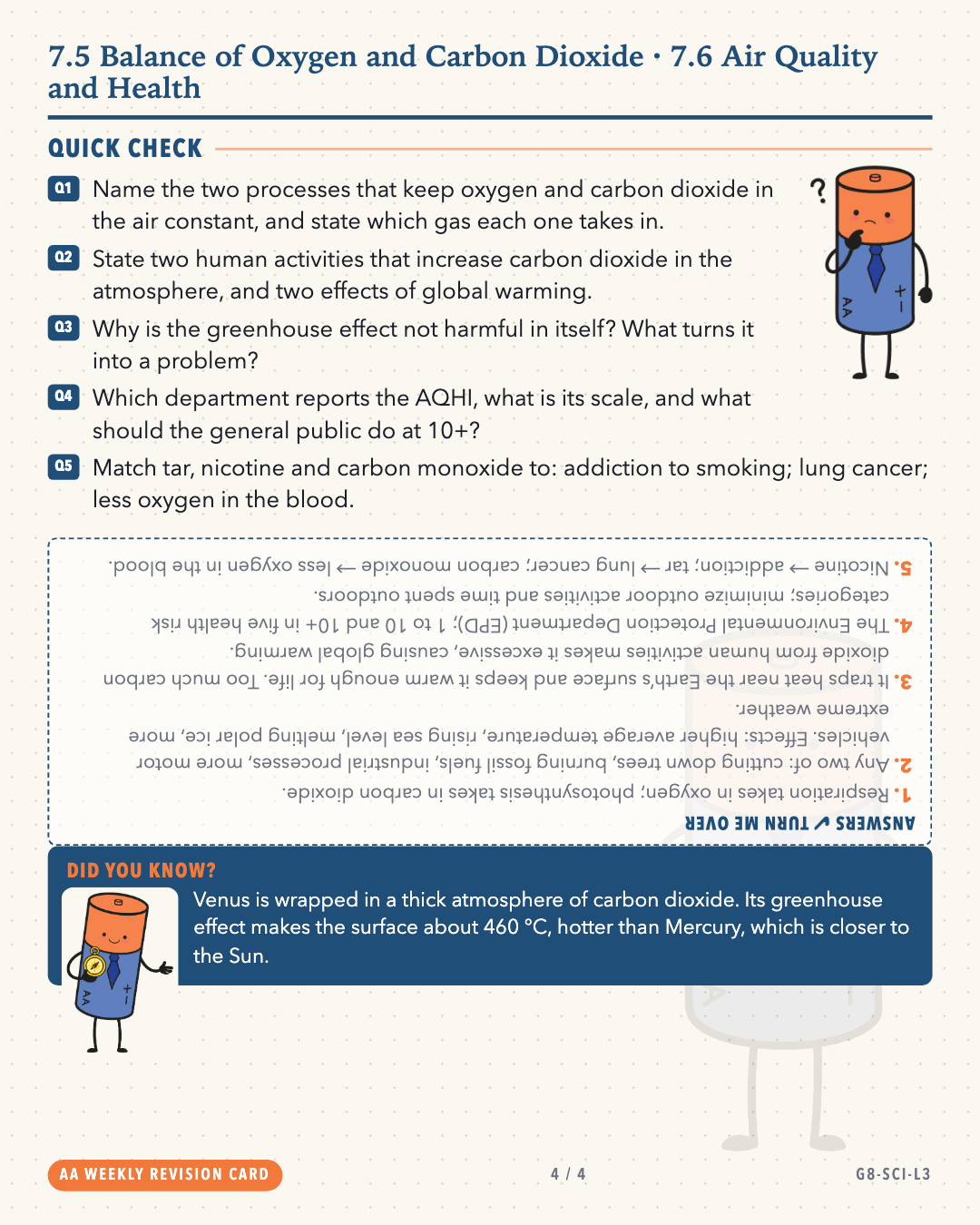
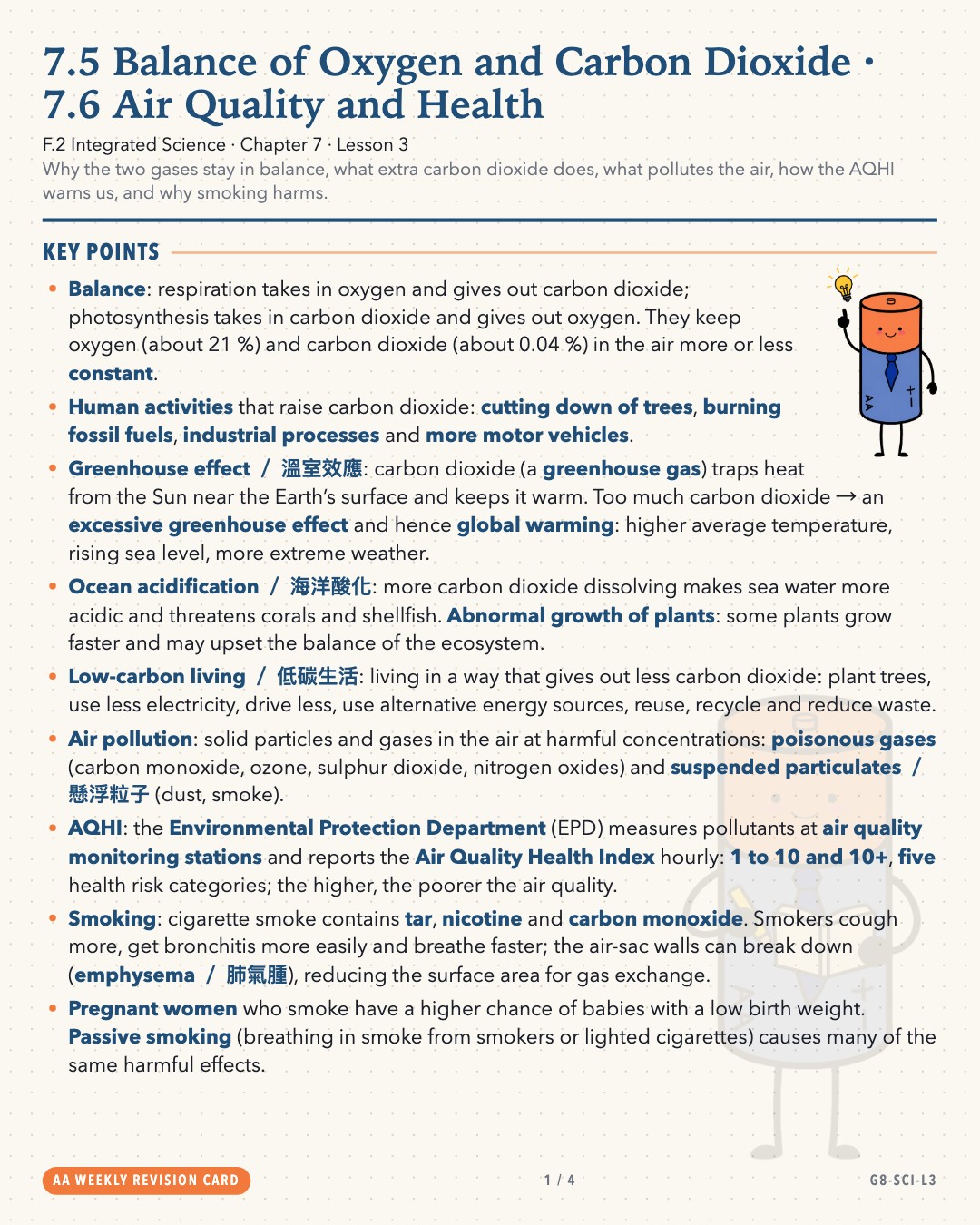
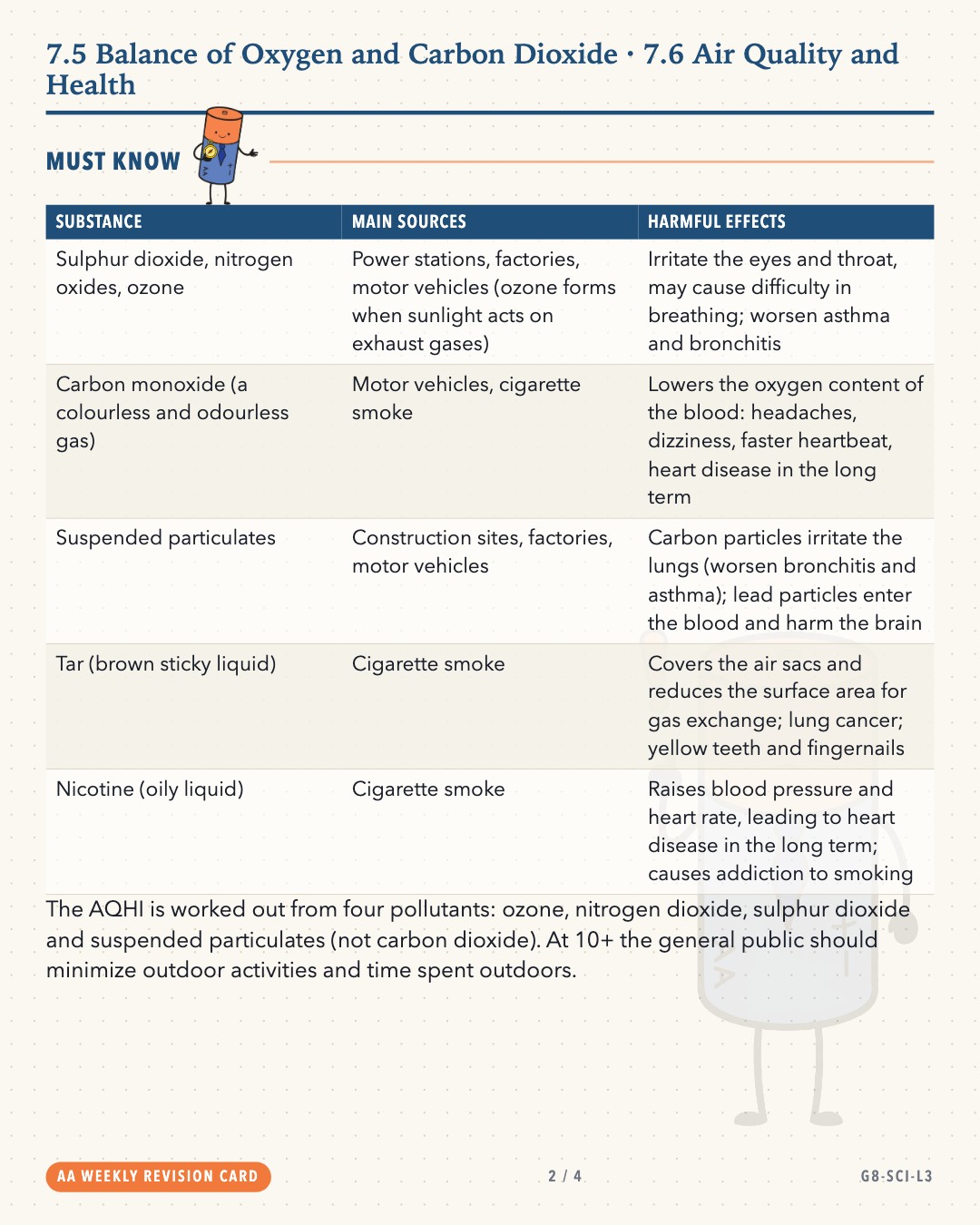
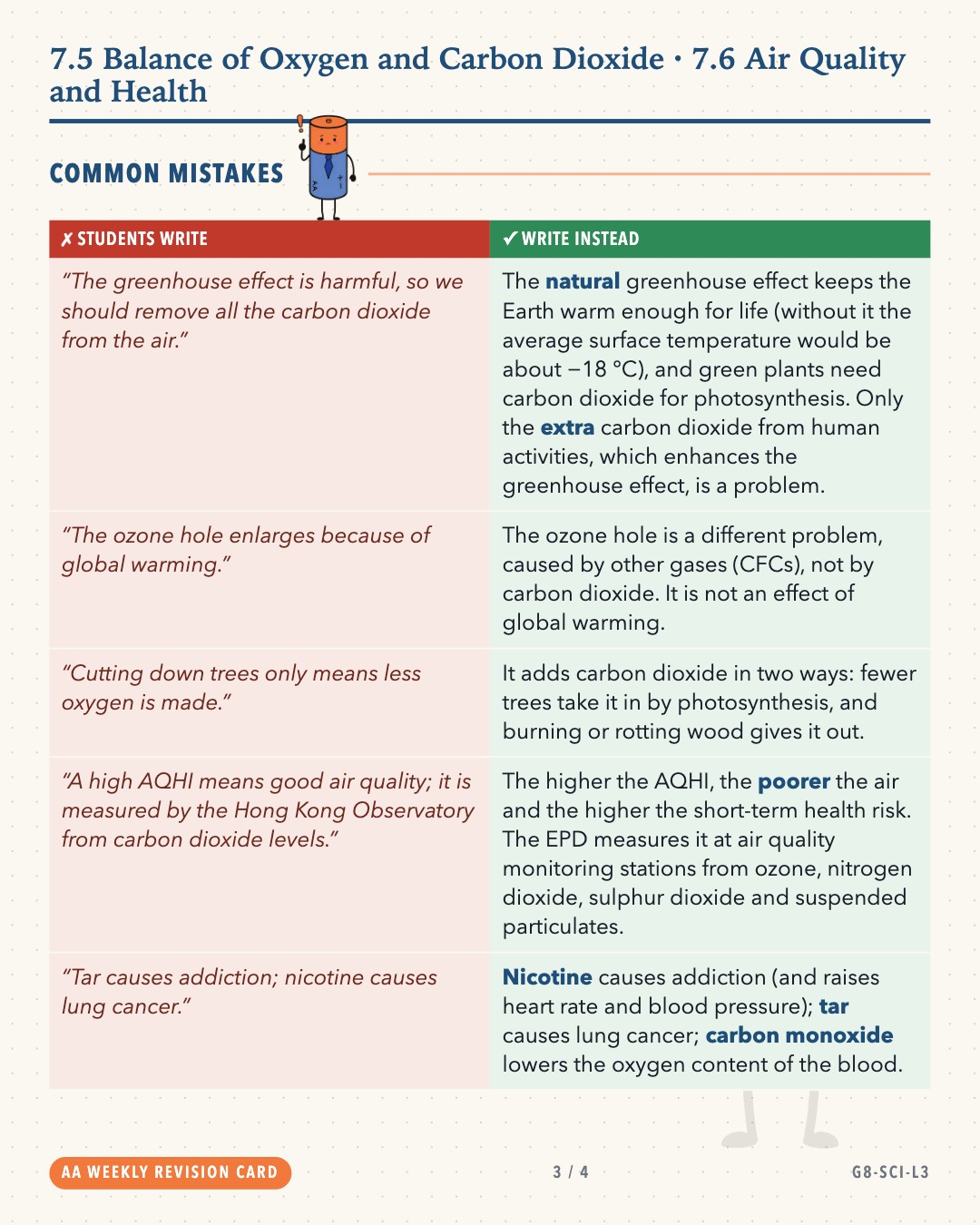
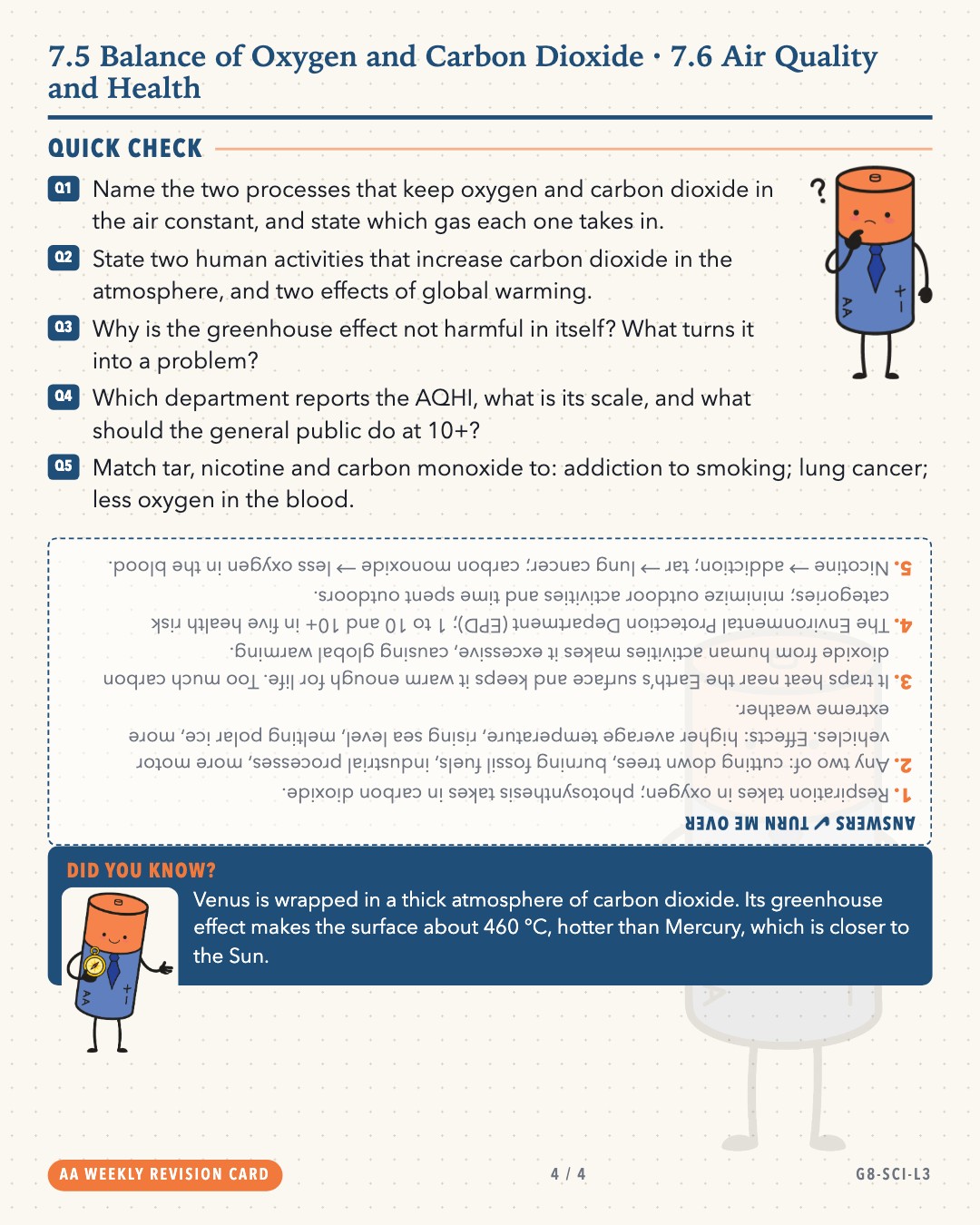
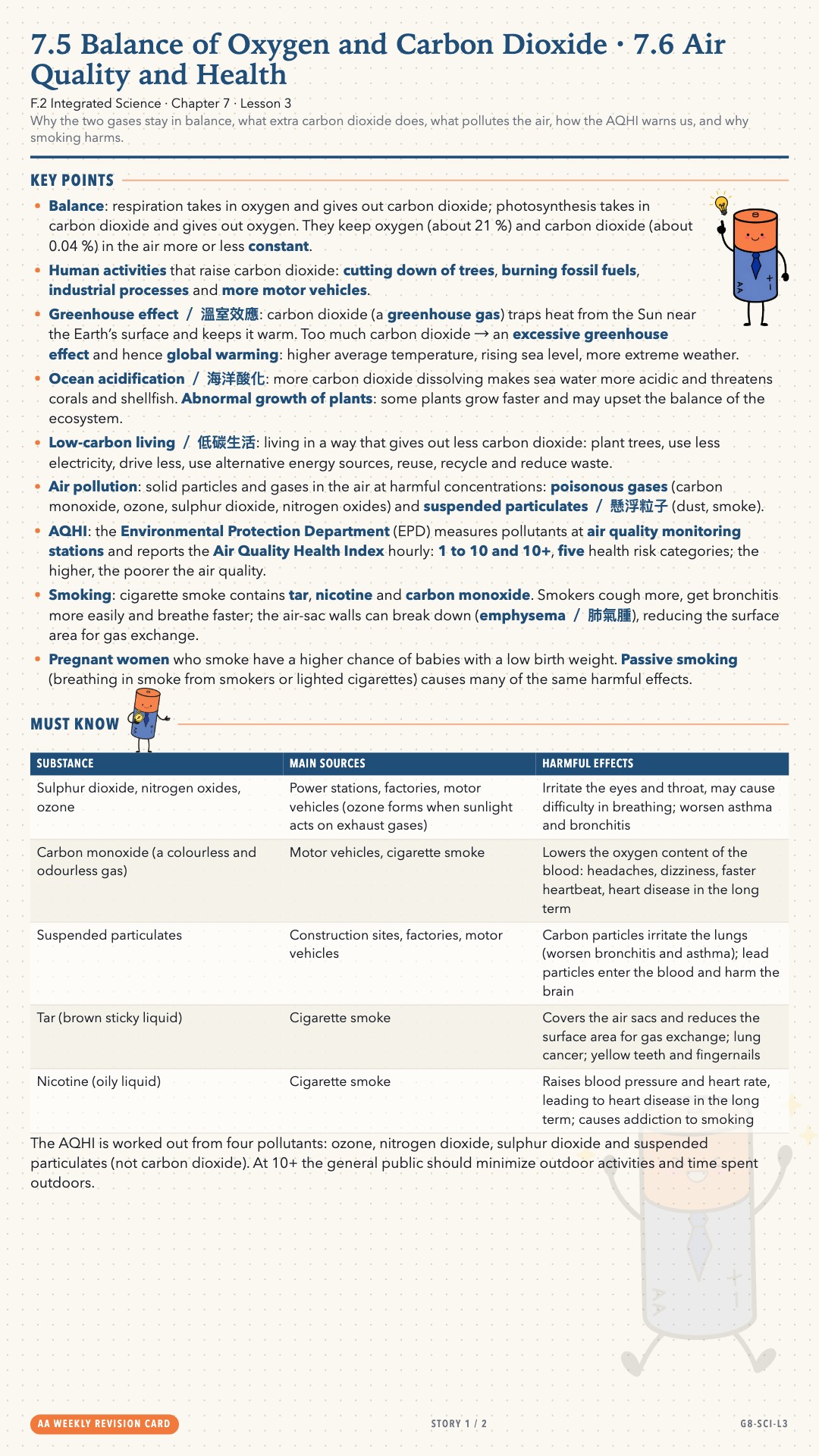
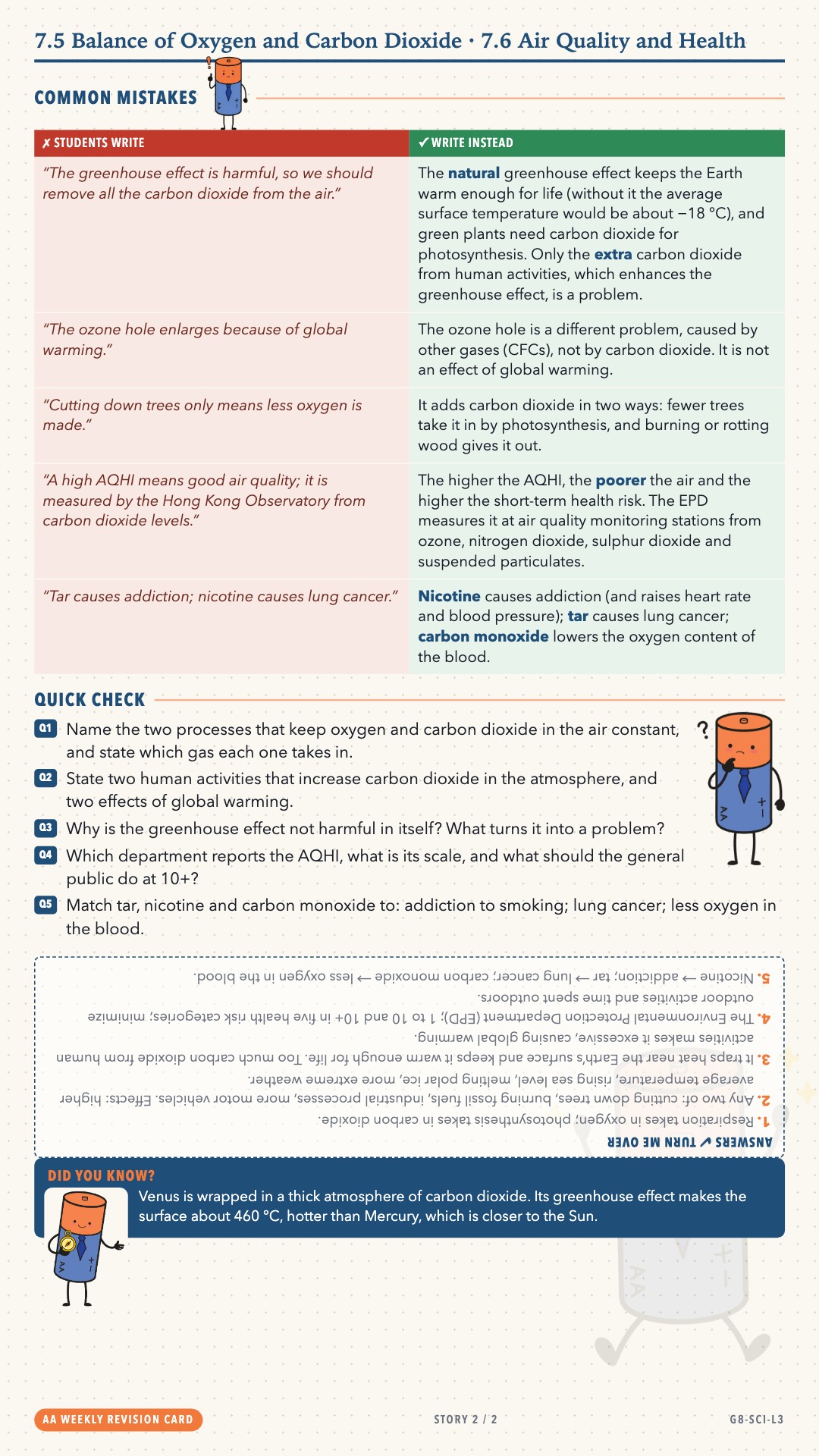
Why the two gases stay in balance, what extra carbon dioxide does, what pollutes the air, how the AQHI warns us, and why smoking harms.
✔ fact-checked · 1 added mistake tagged [likely] · 2.2 MB JPG · card.md ·
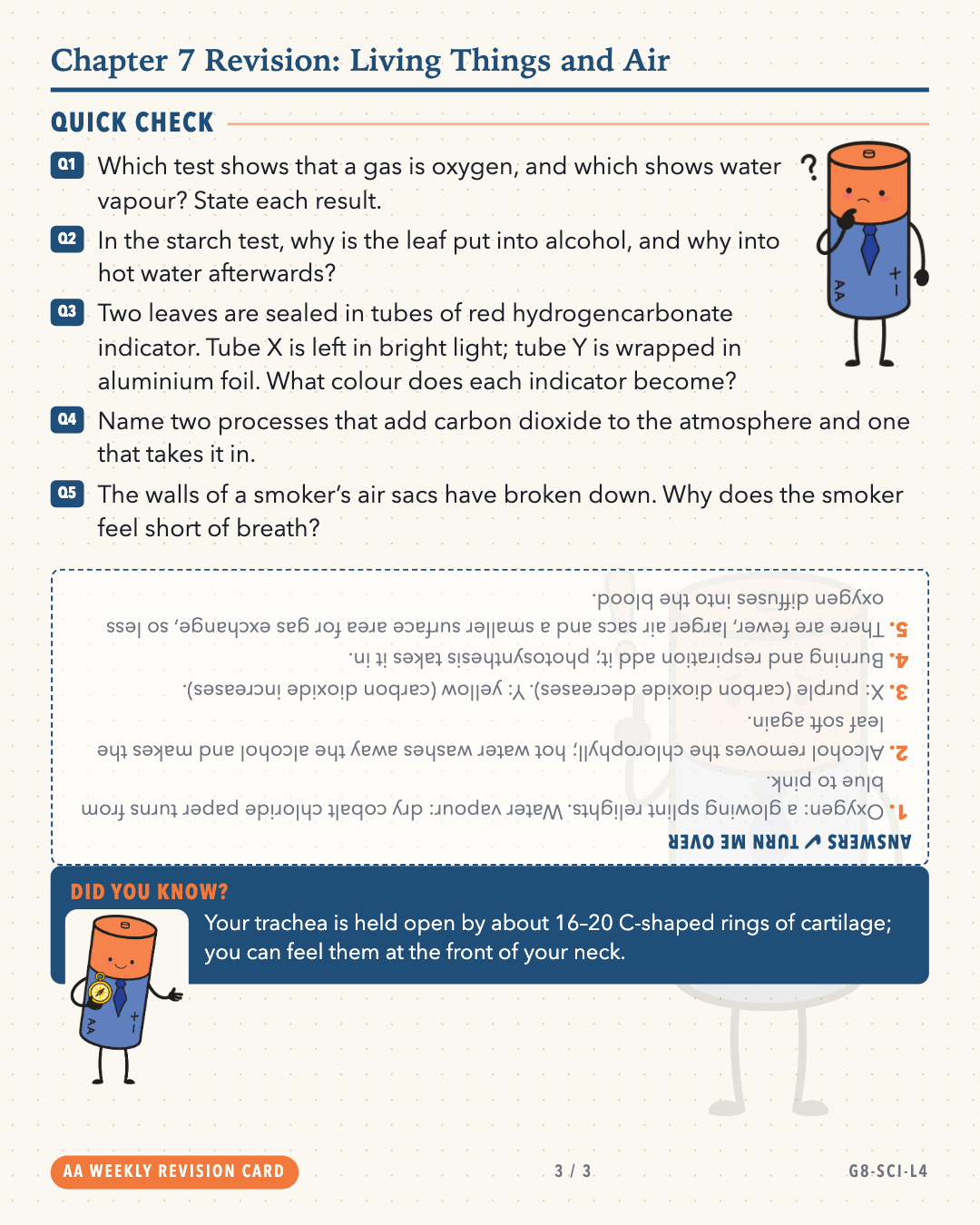
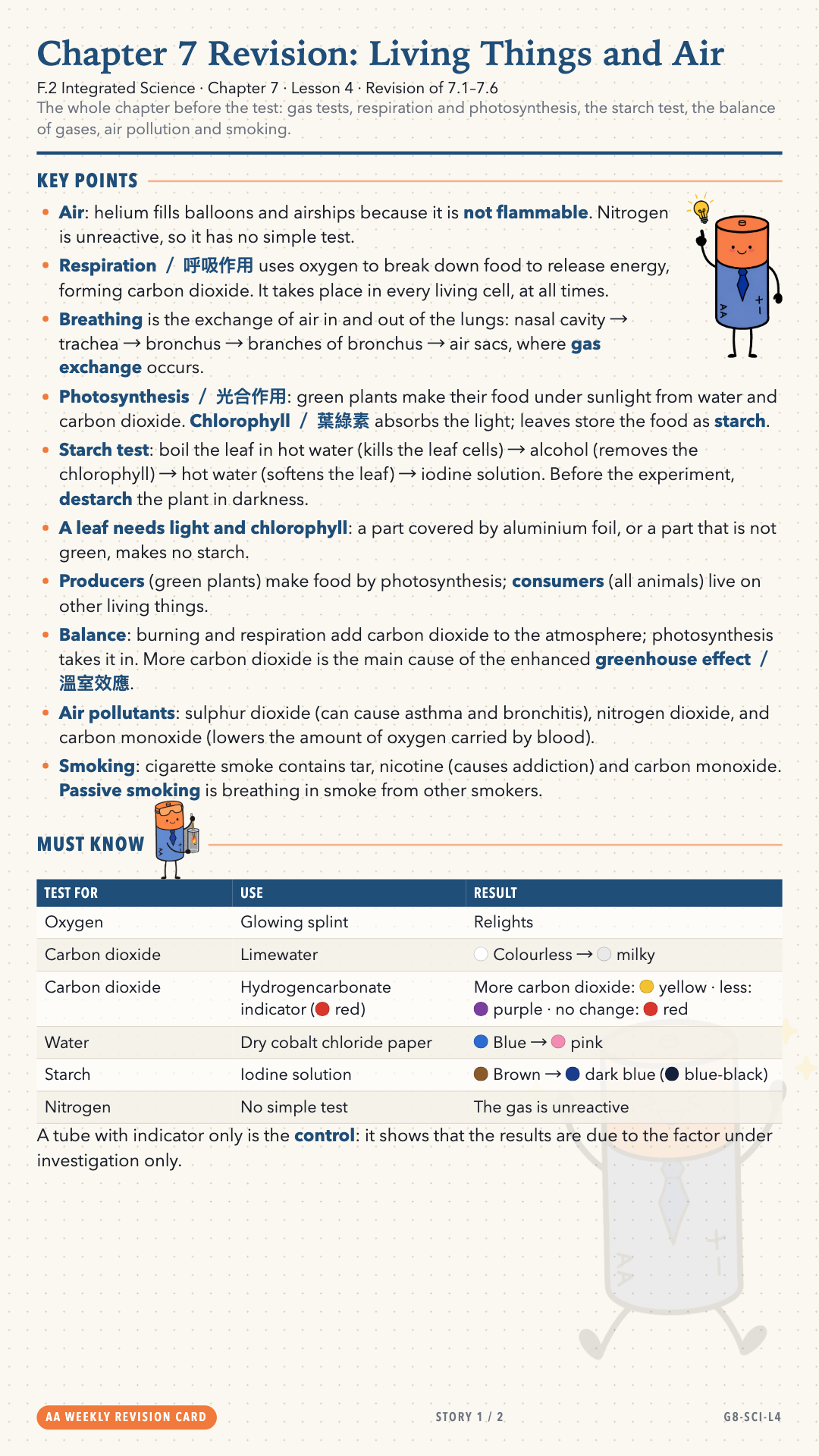
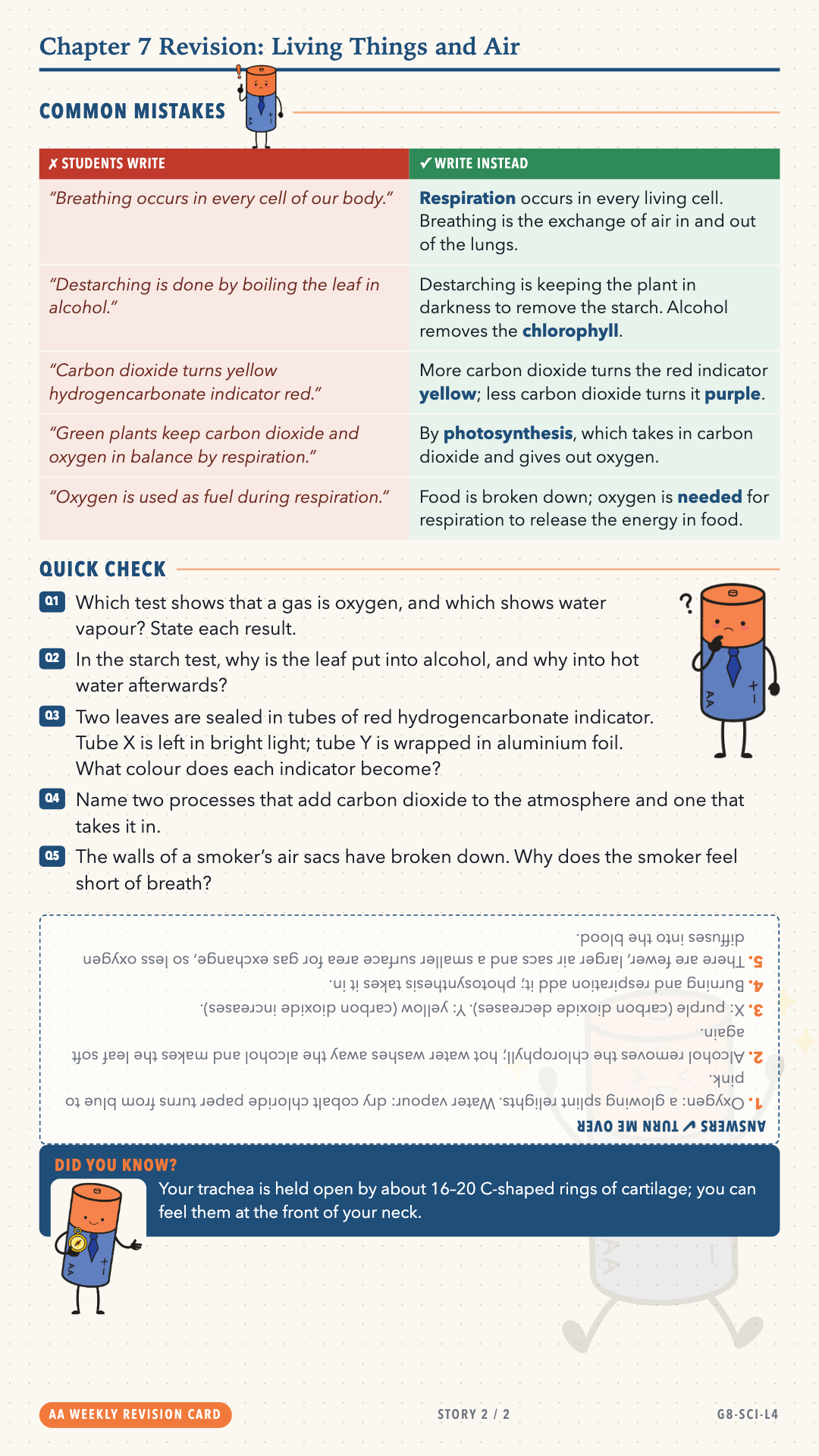
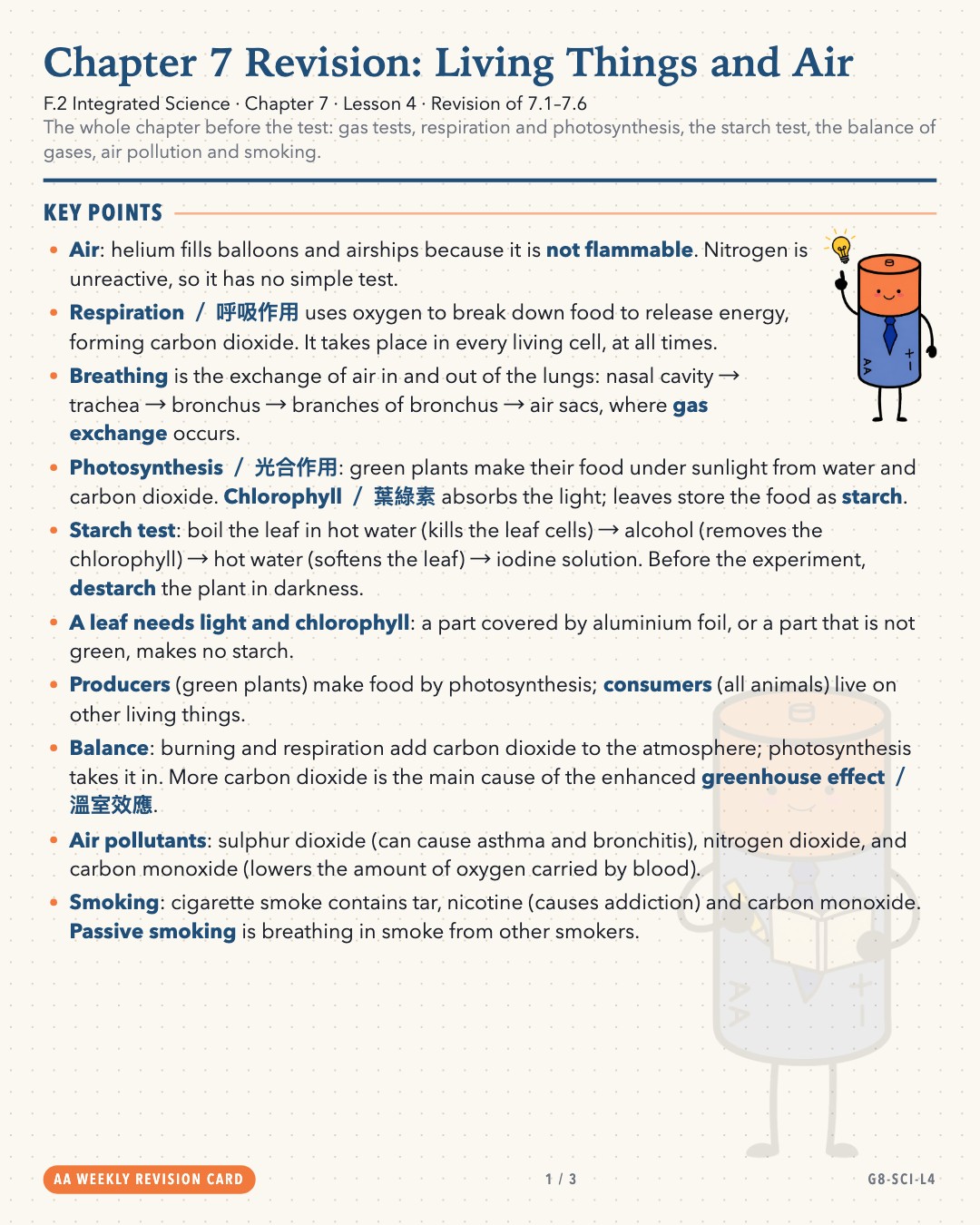
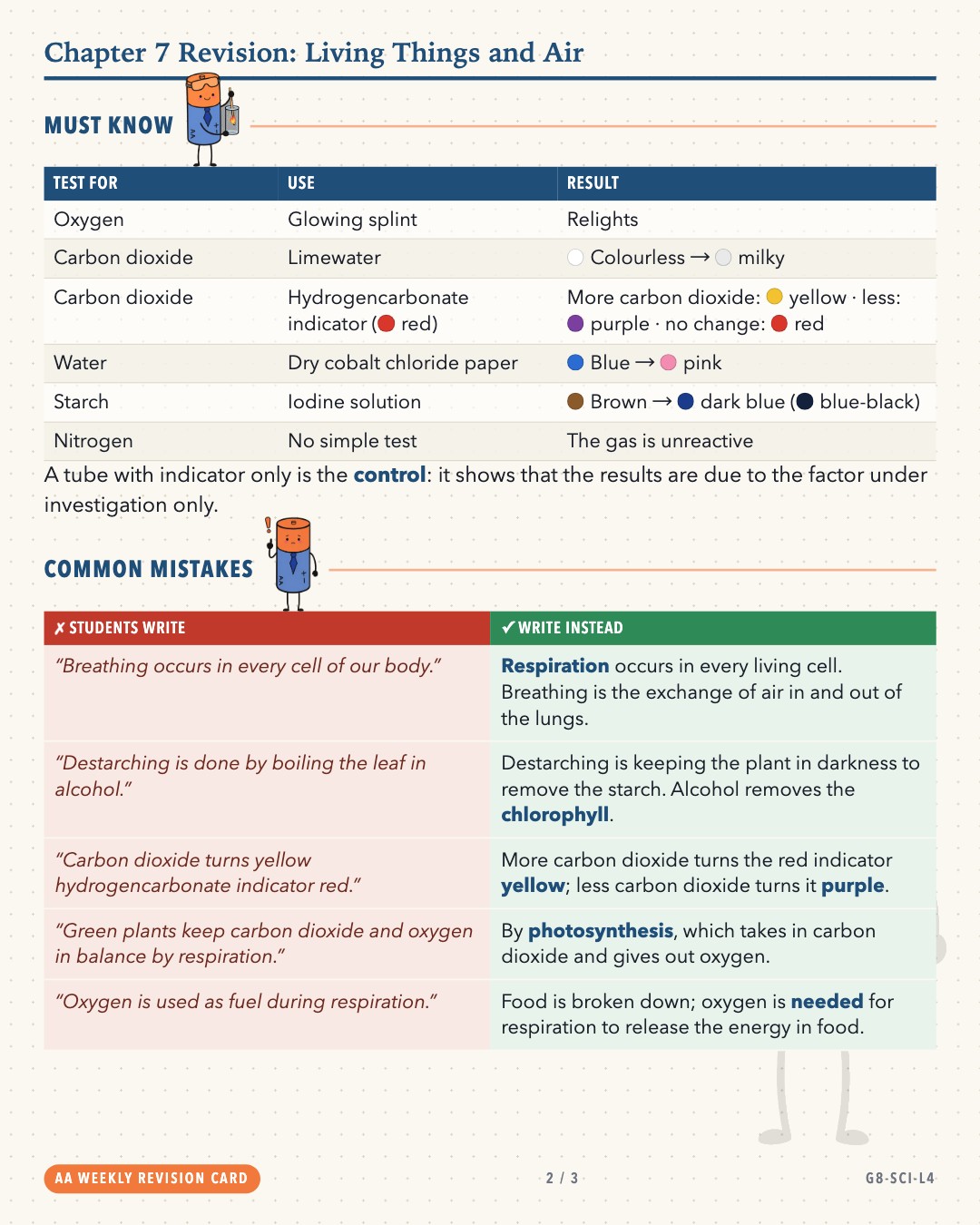
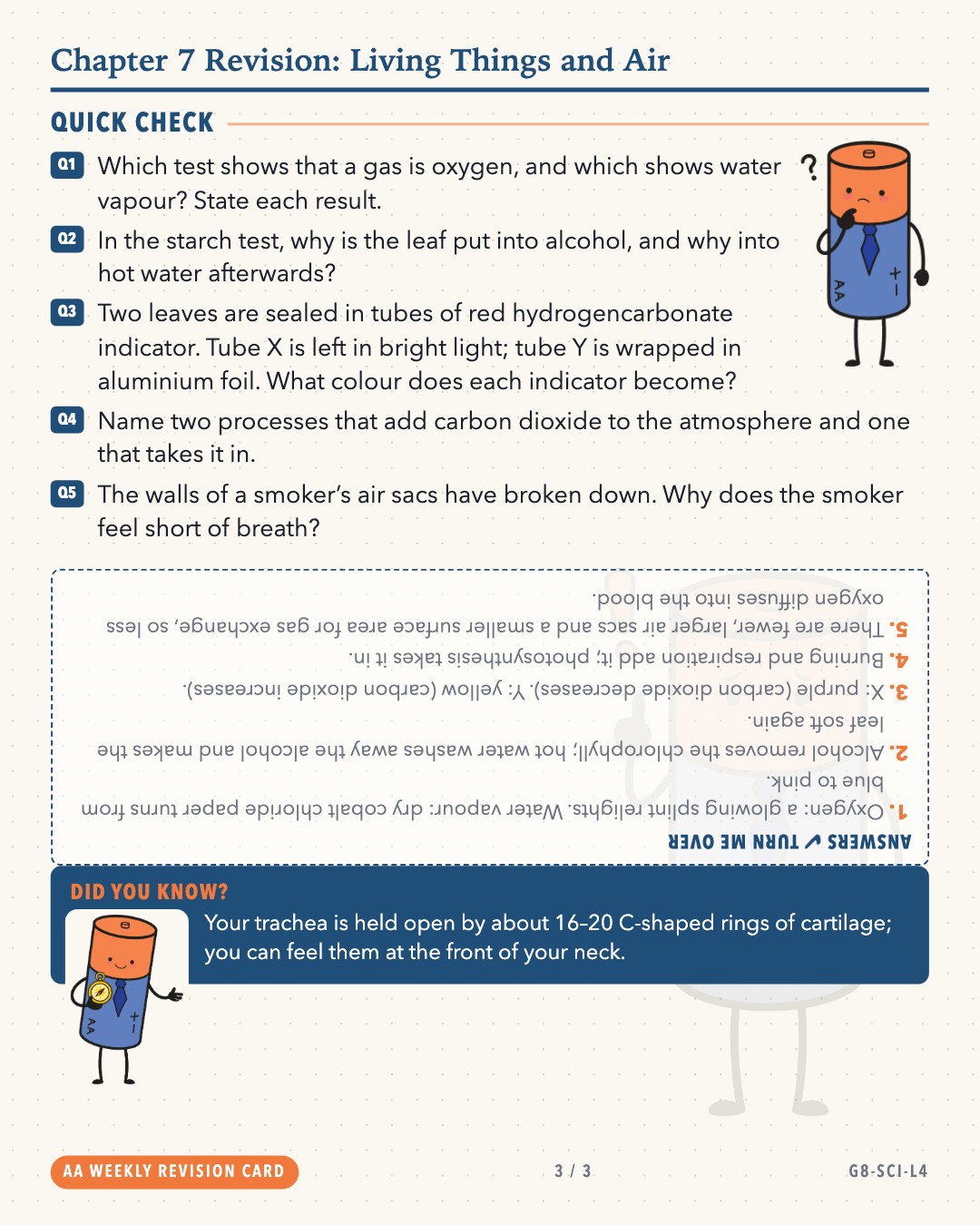
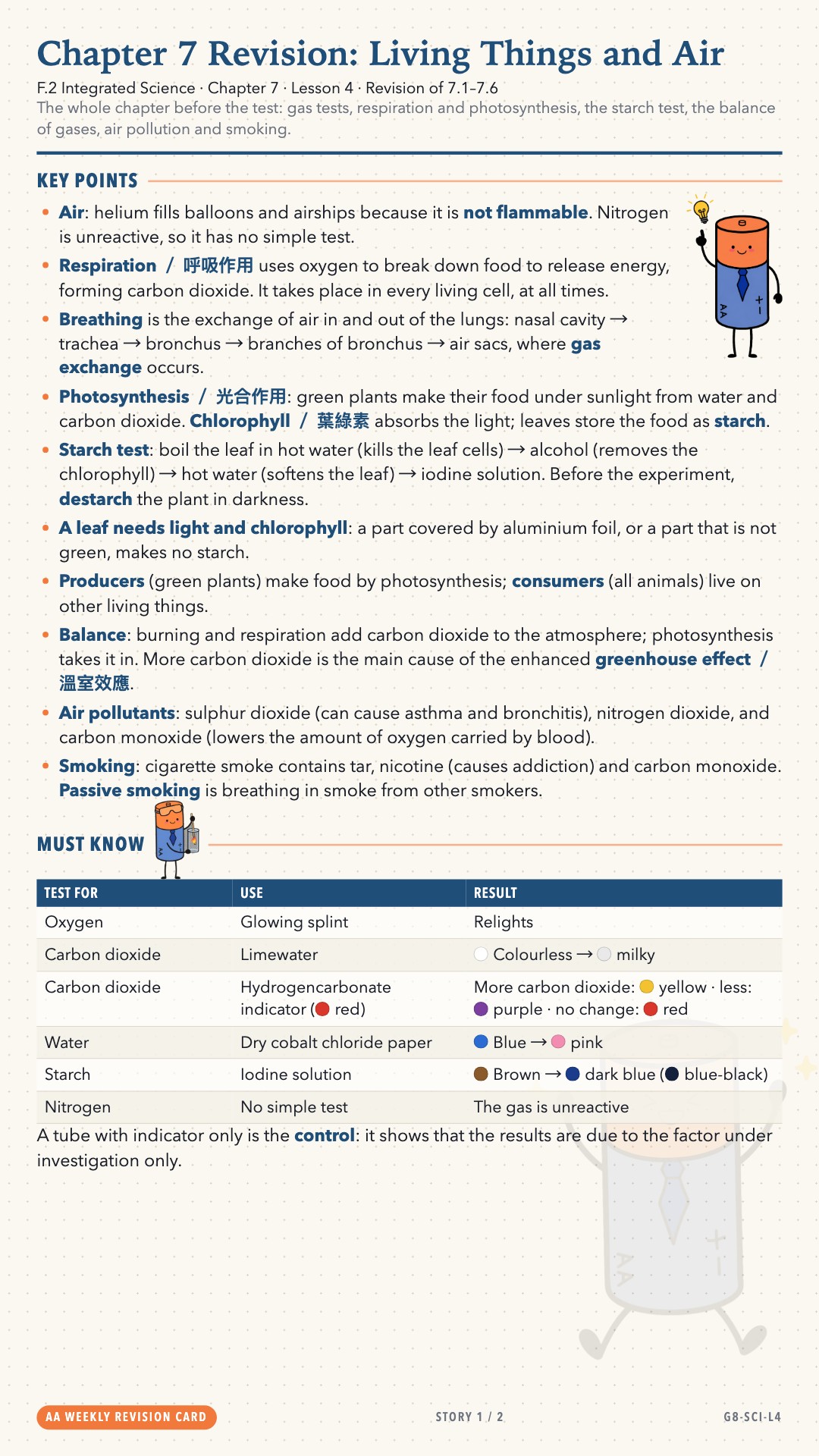
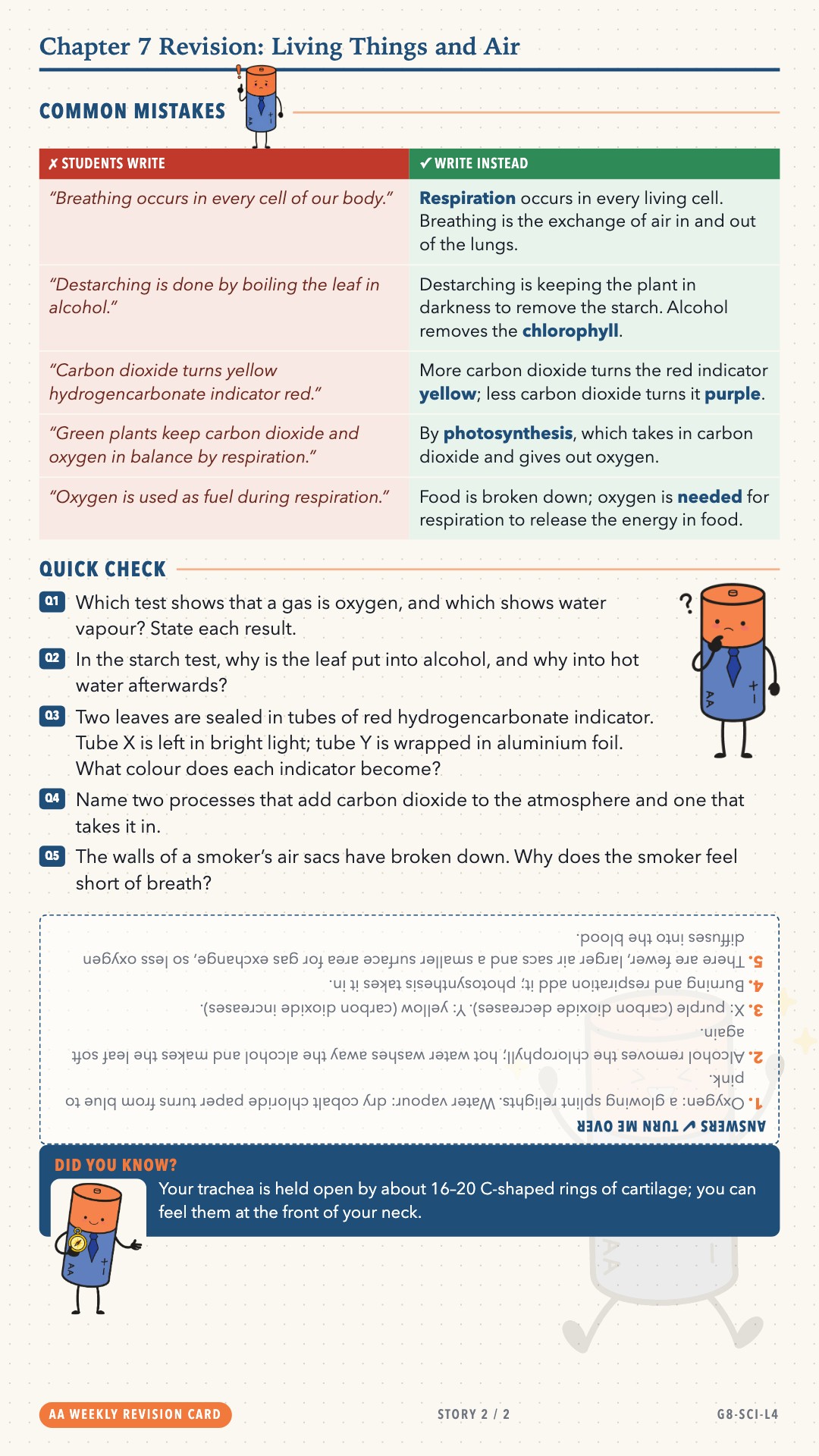
The whole chapter before the test: gas tests, respiration and photosynthesis, the starch test, the balance of gases, air pollution and smoking.
✔ fact-checked · 1 added mistake tagged [likely] · 1.8 MB JPG · card.md ·
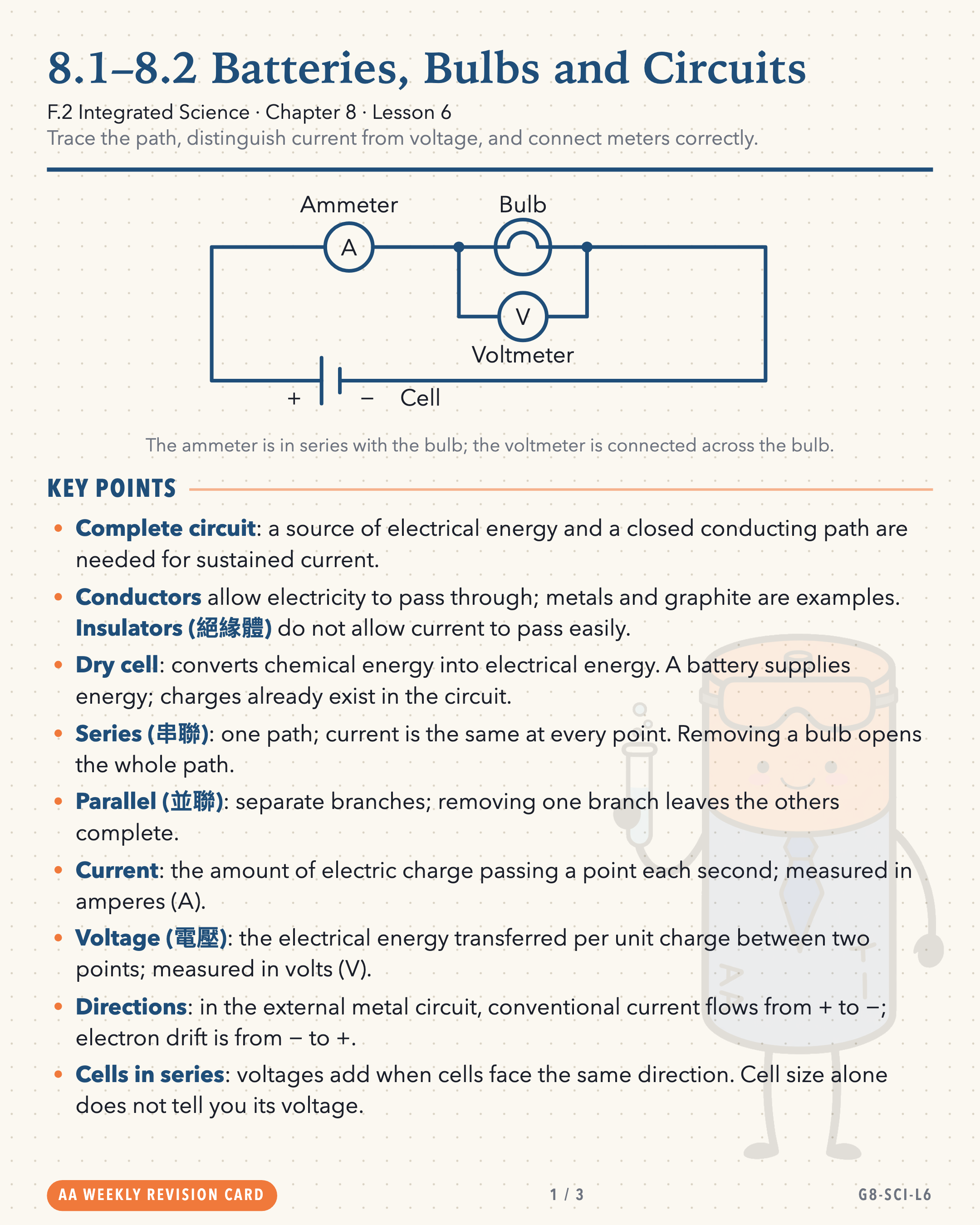
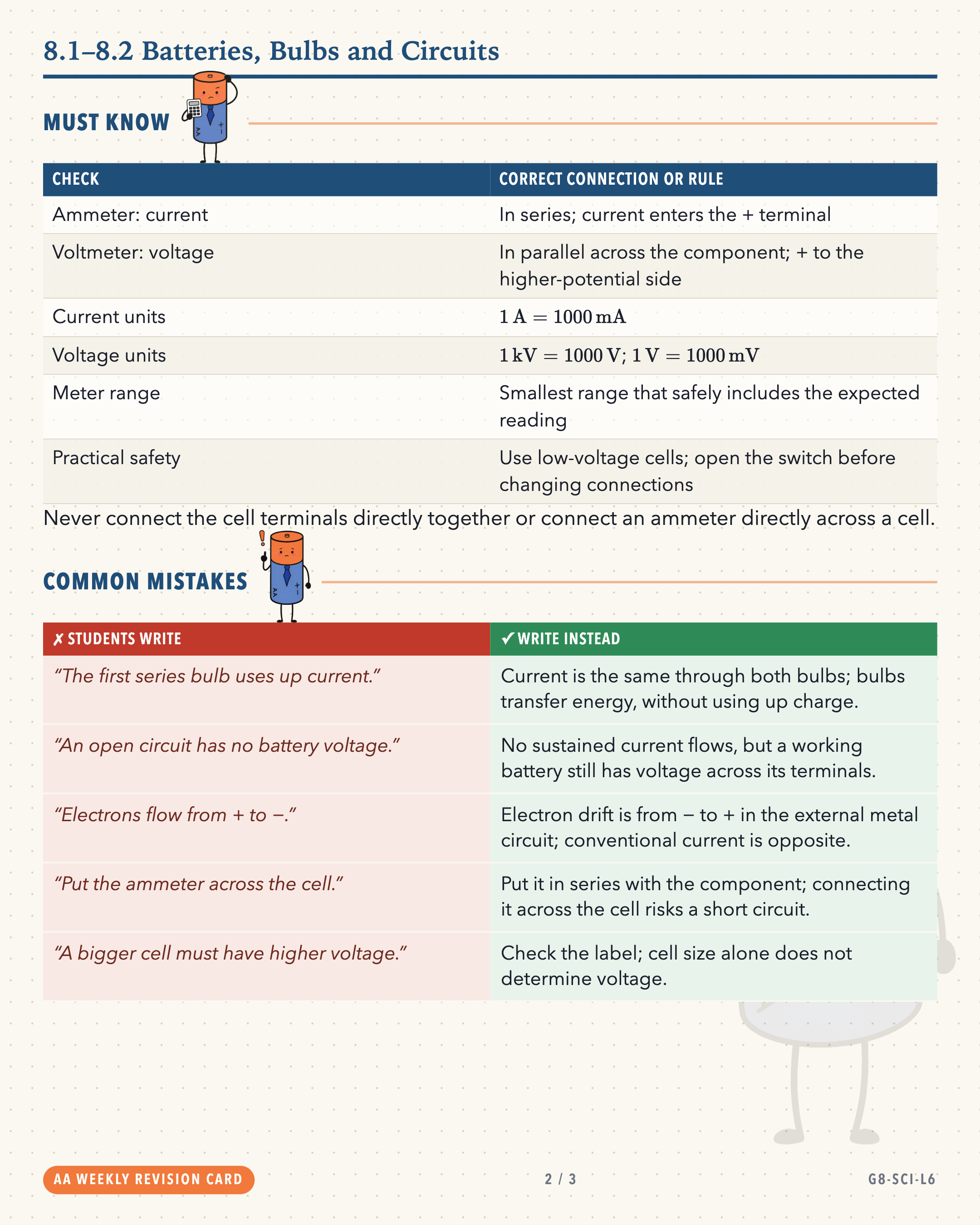
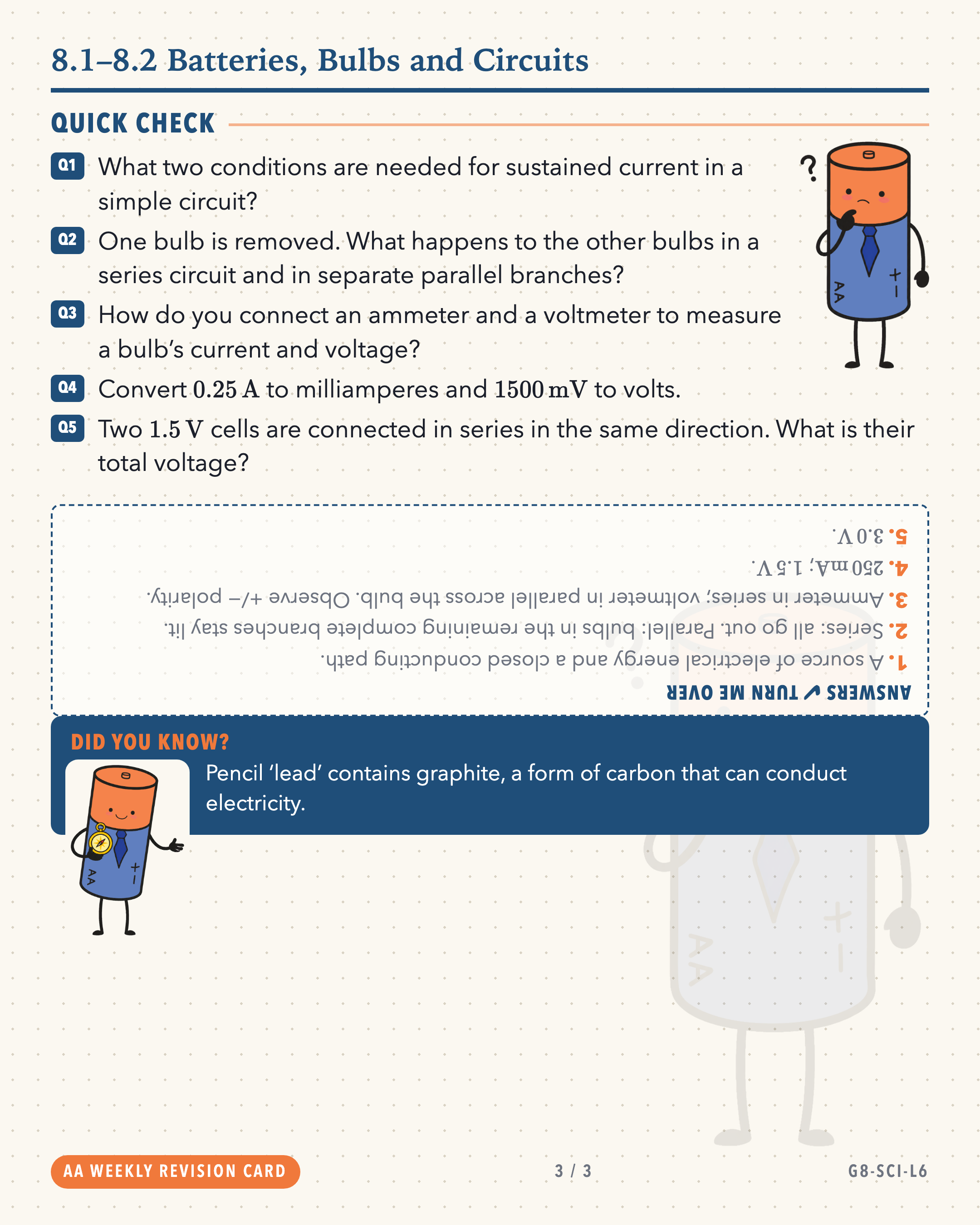
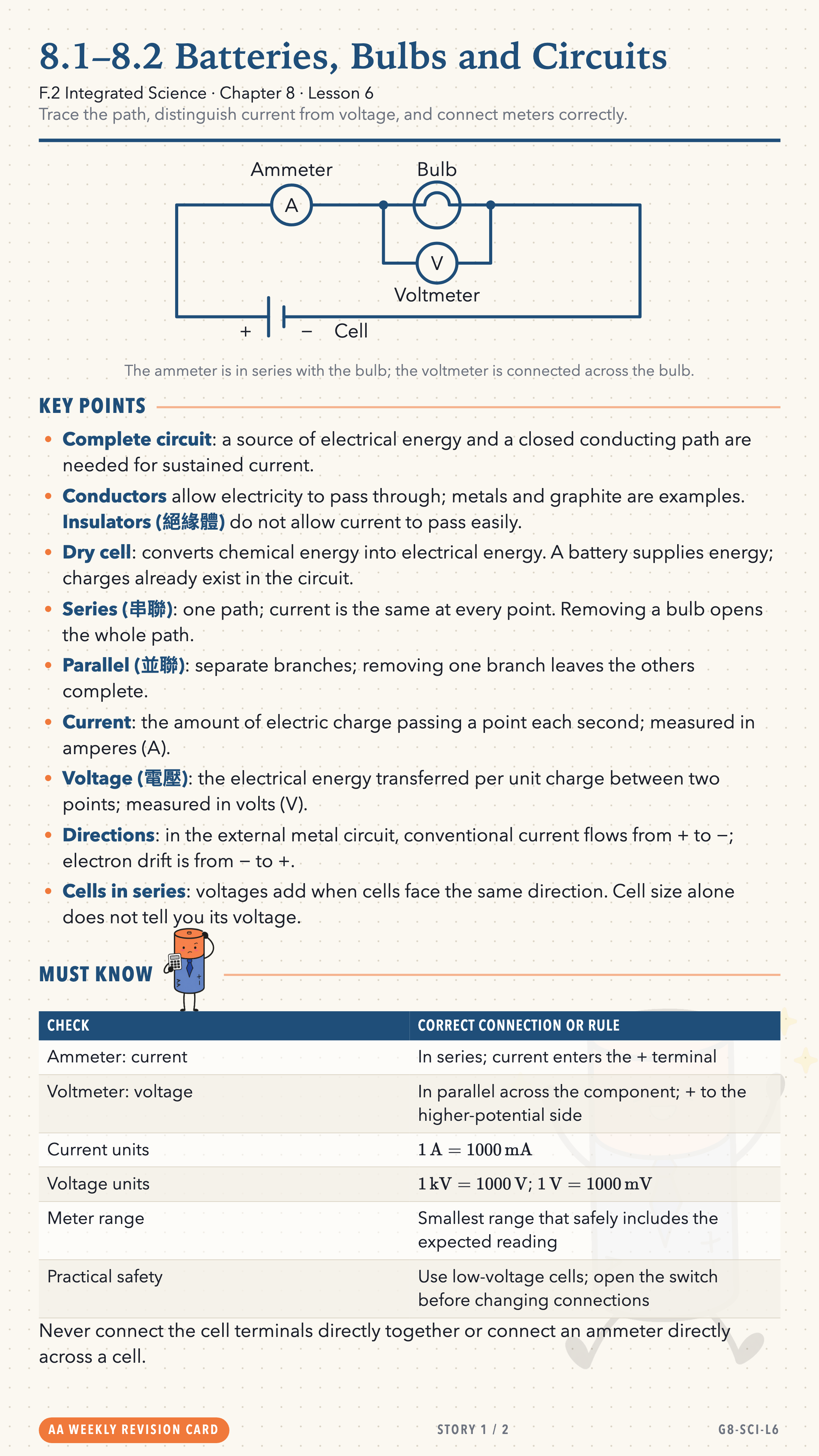
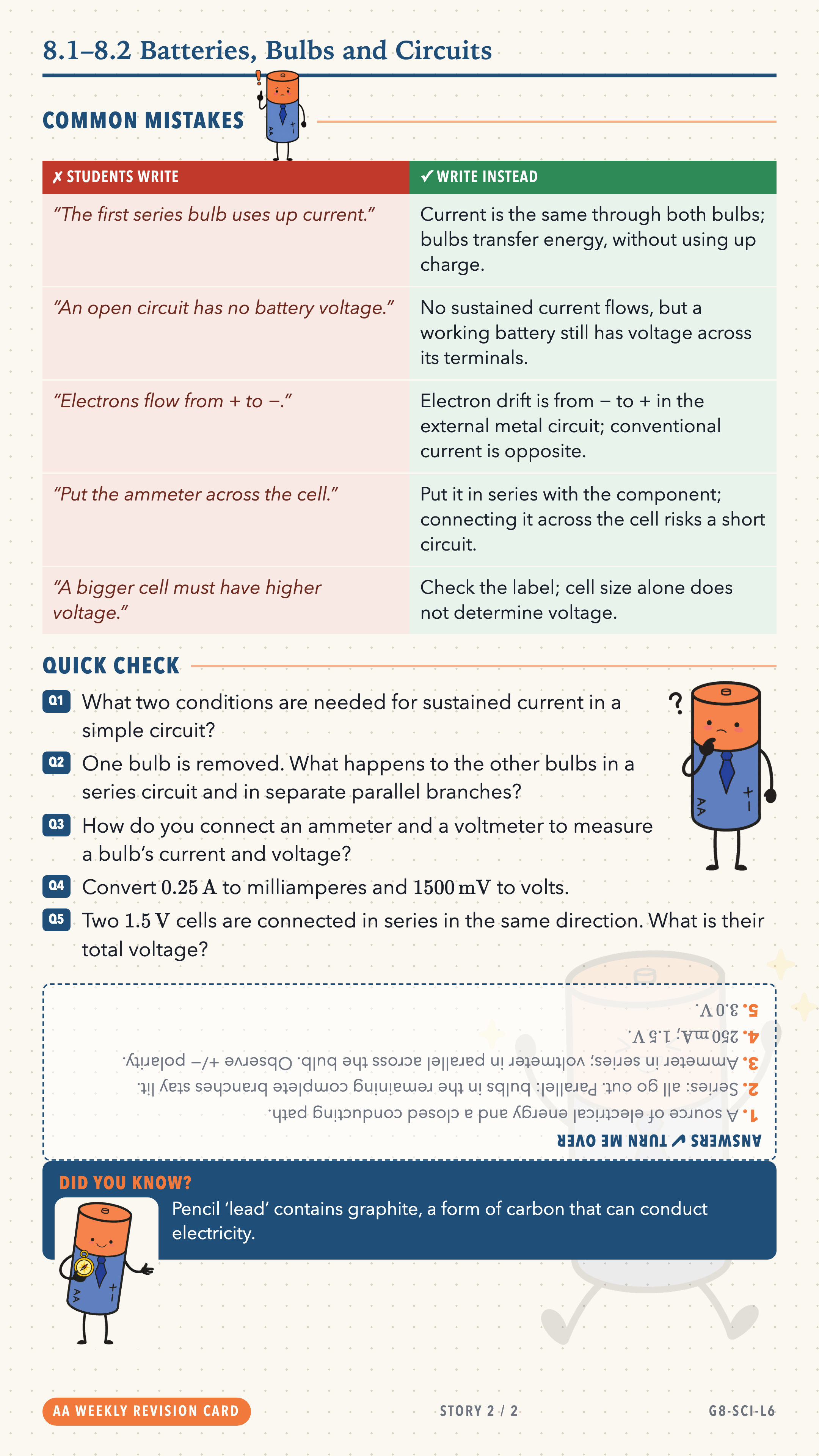
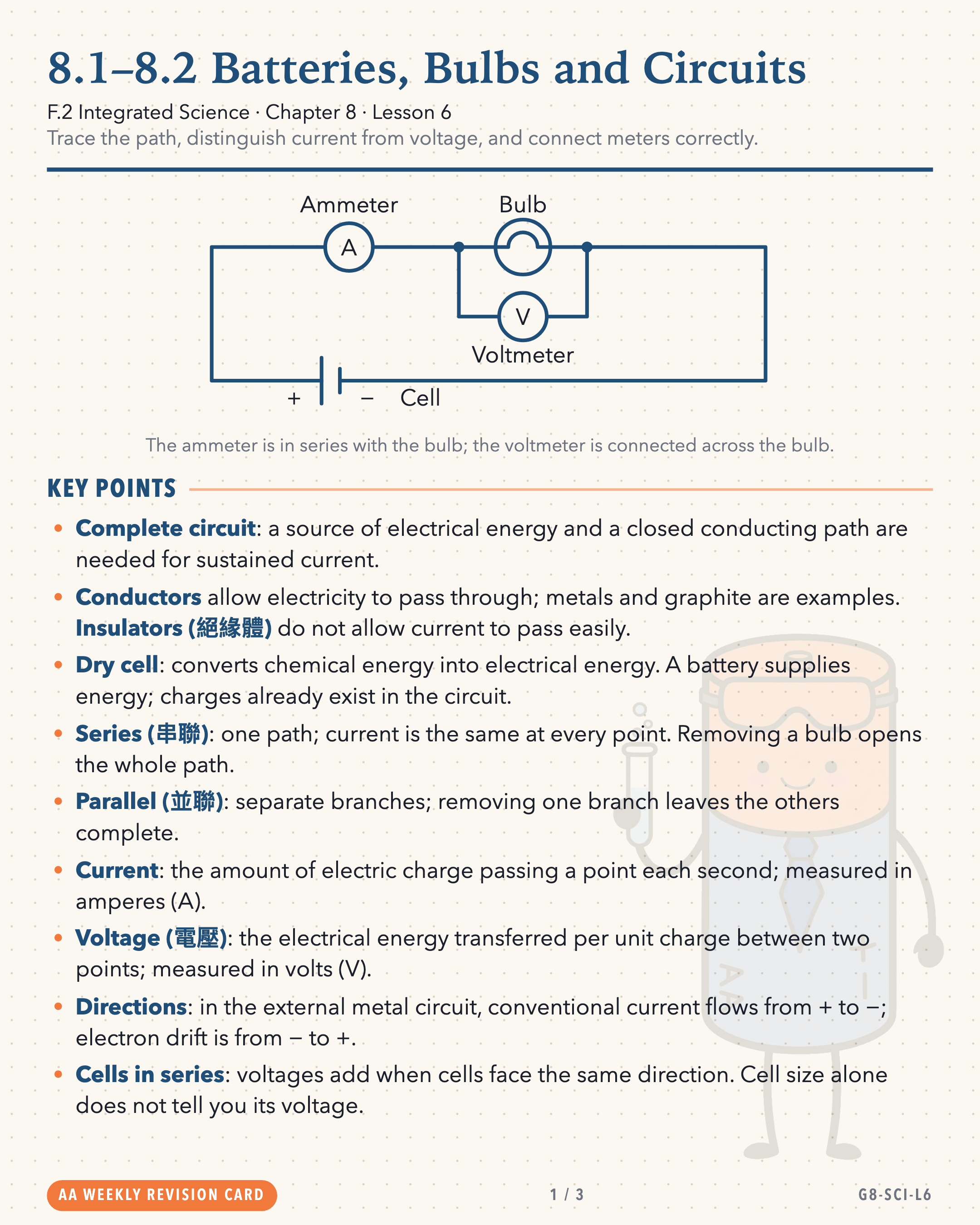
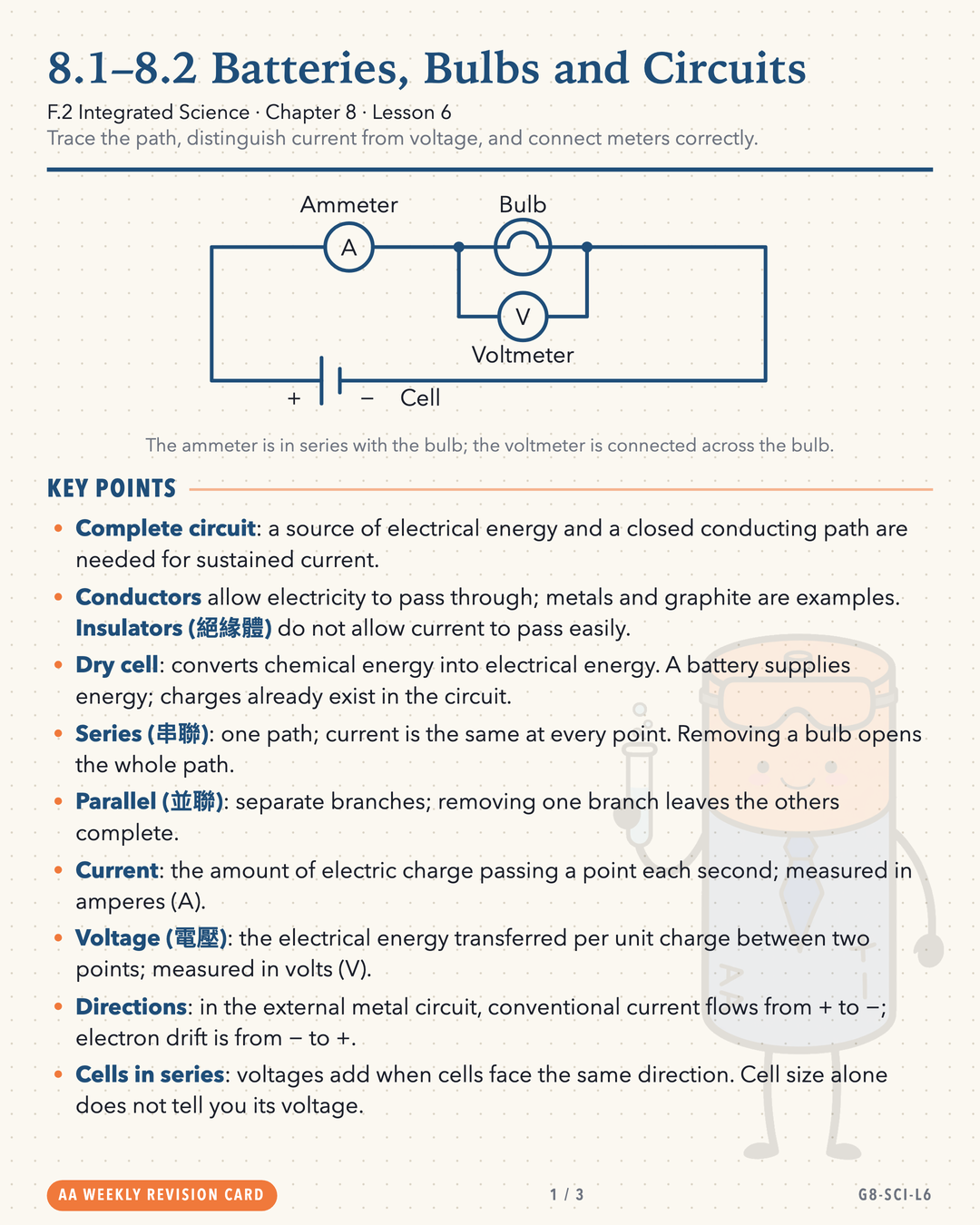
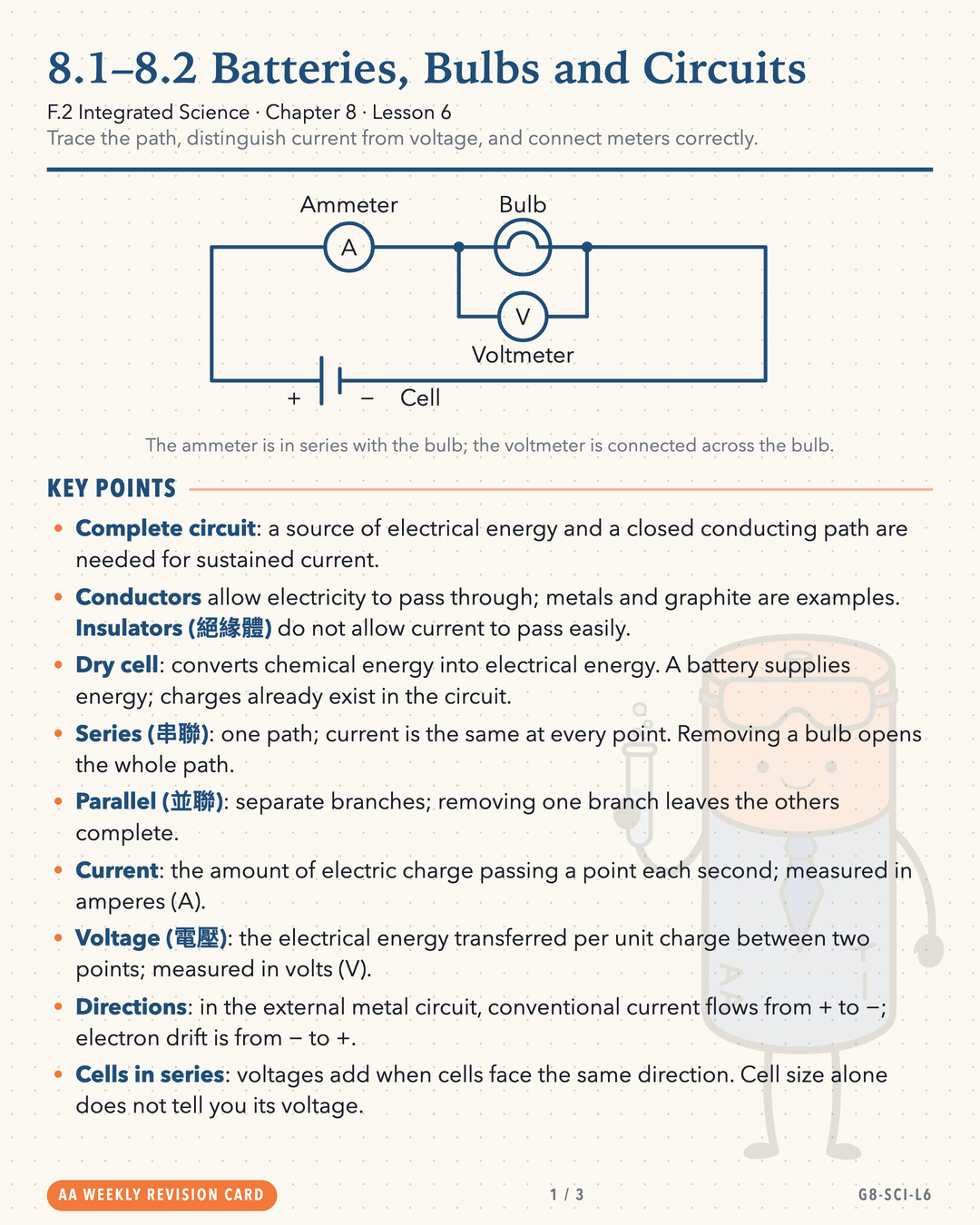
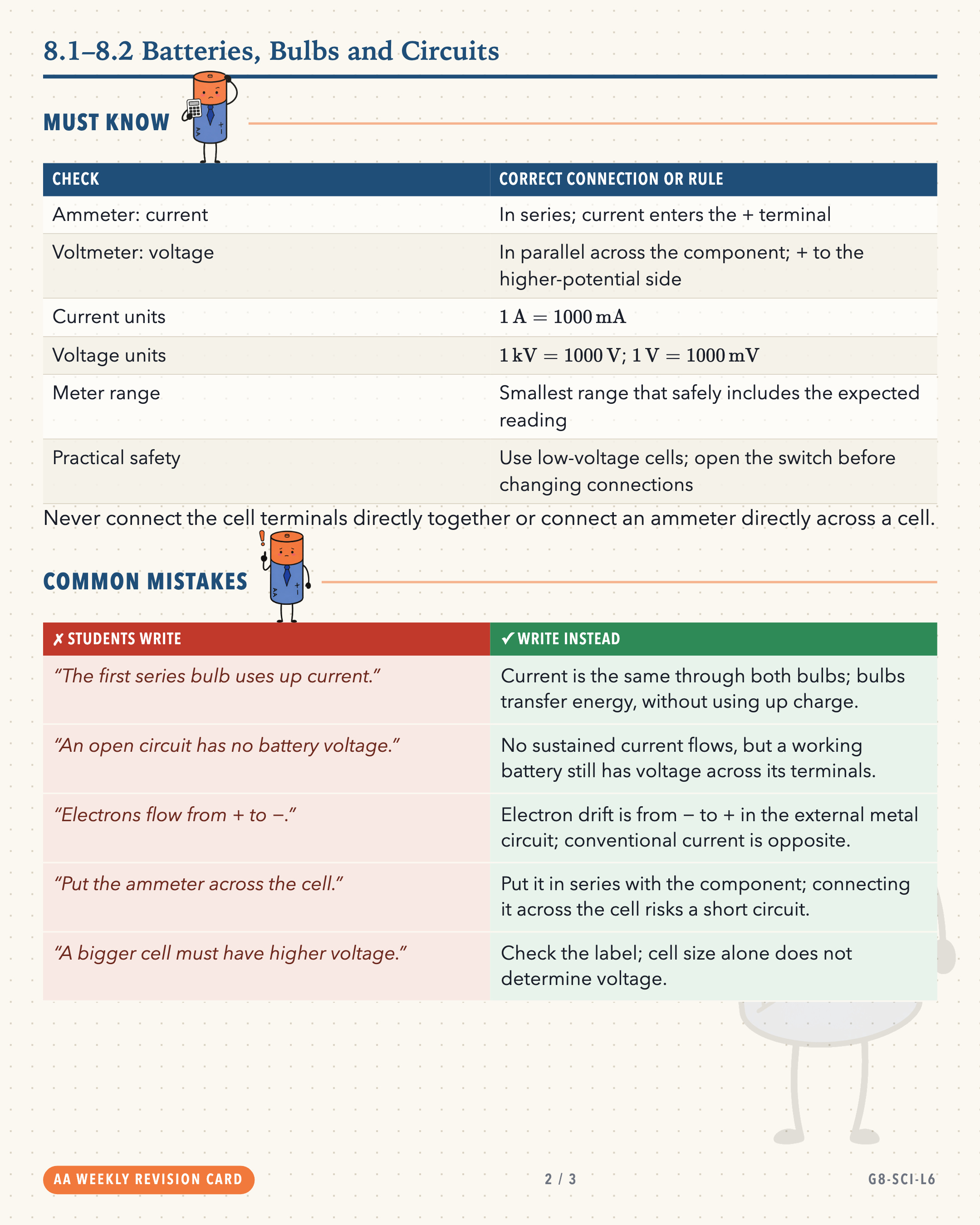
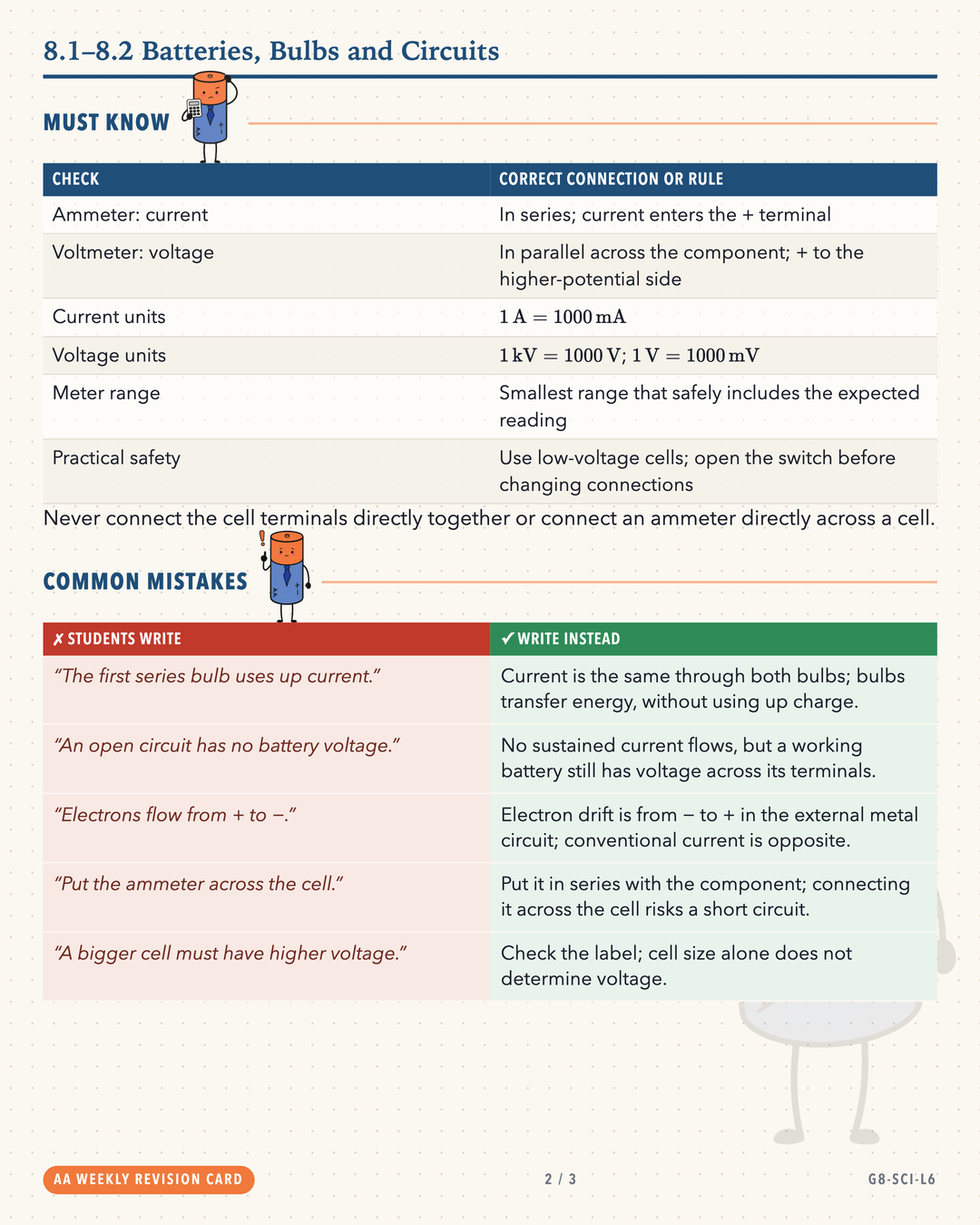
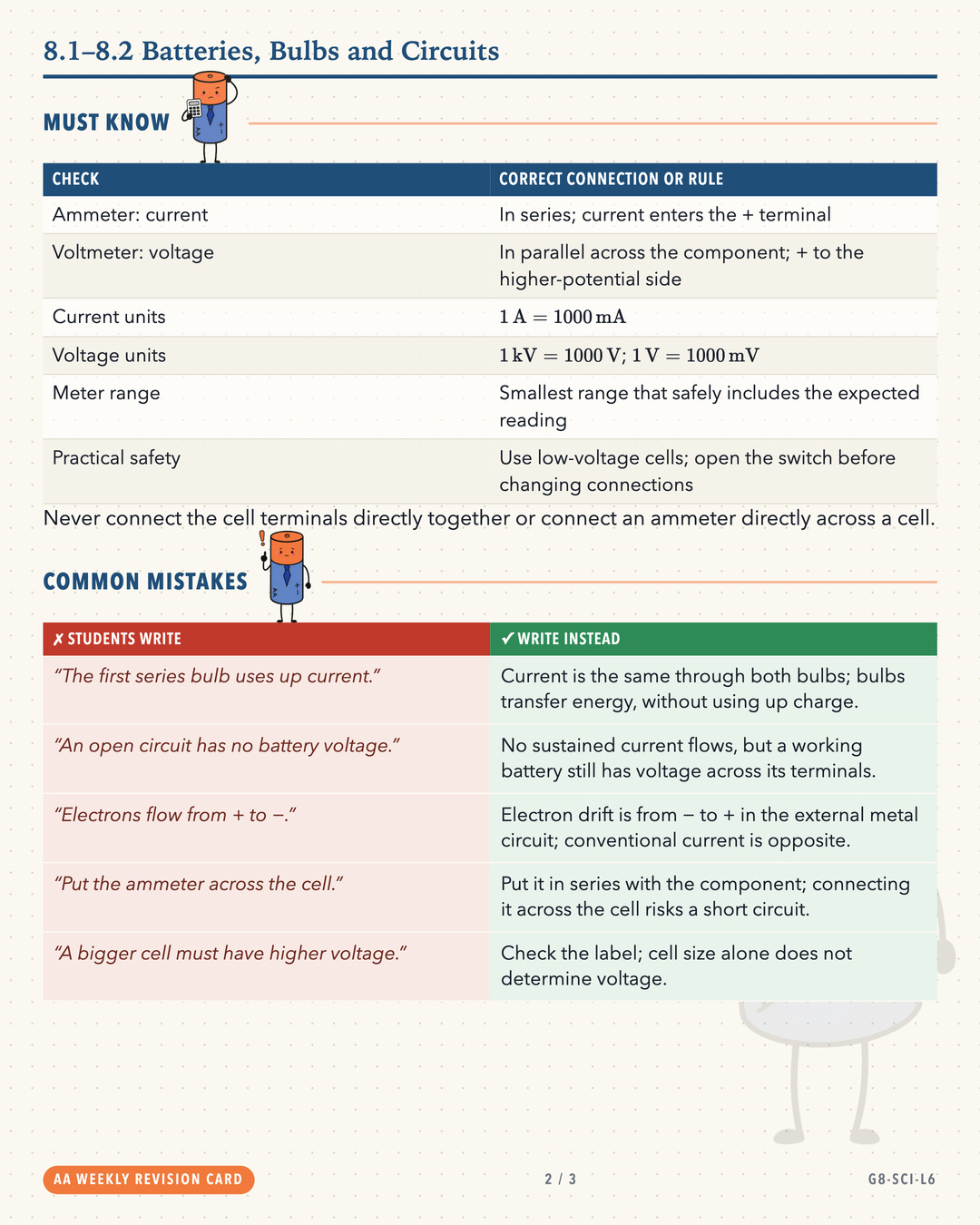
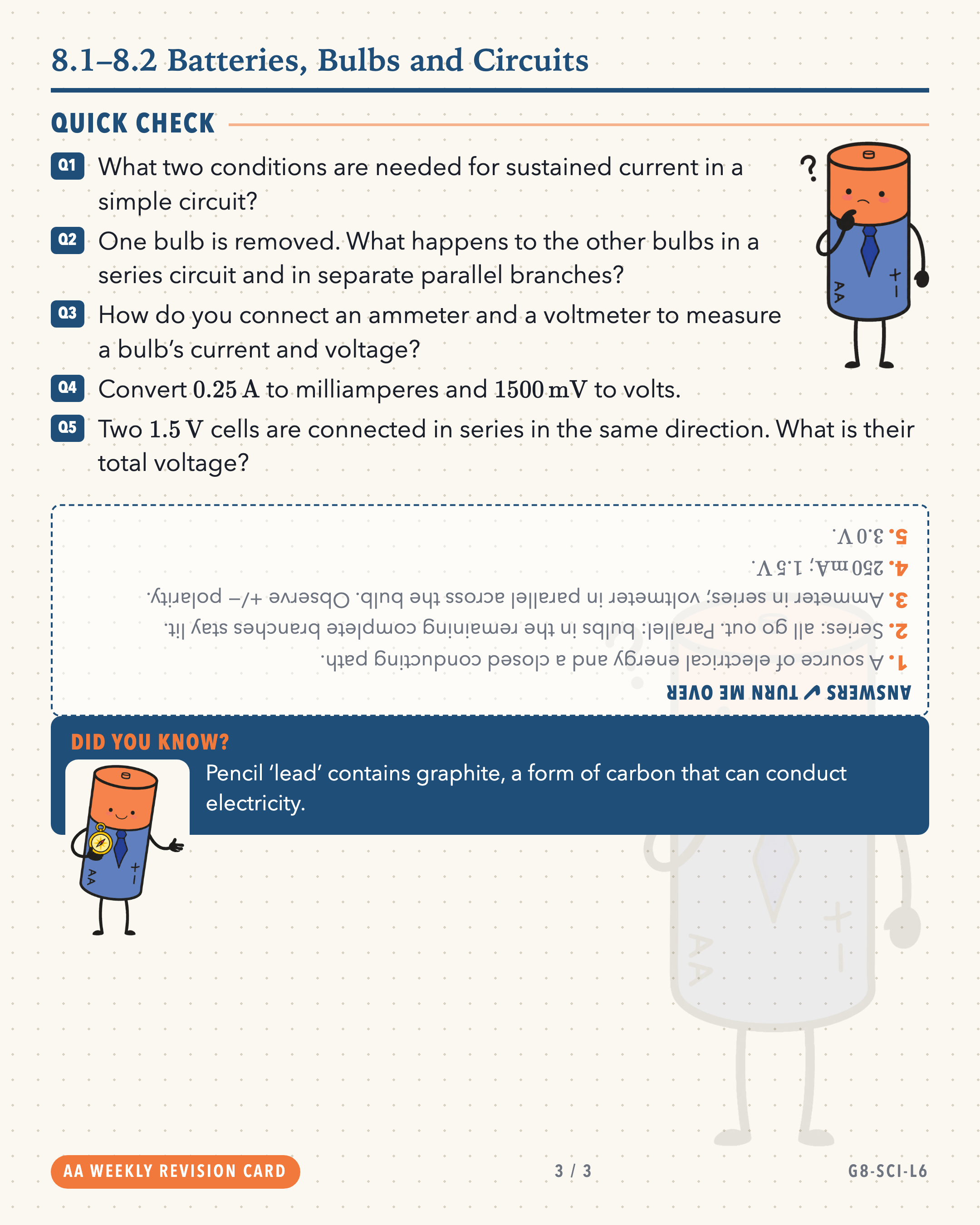
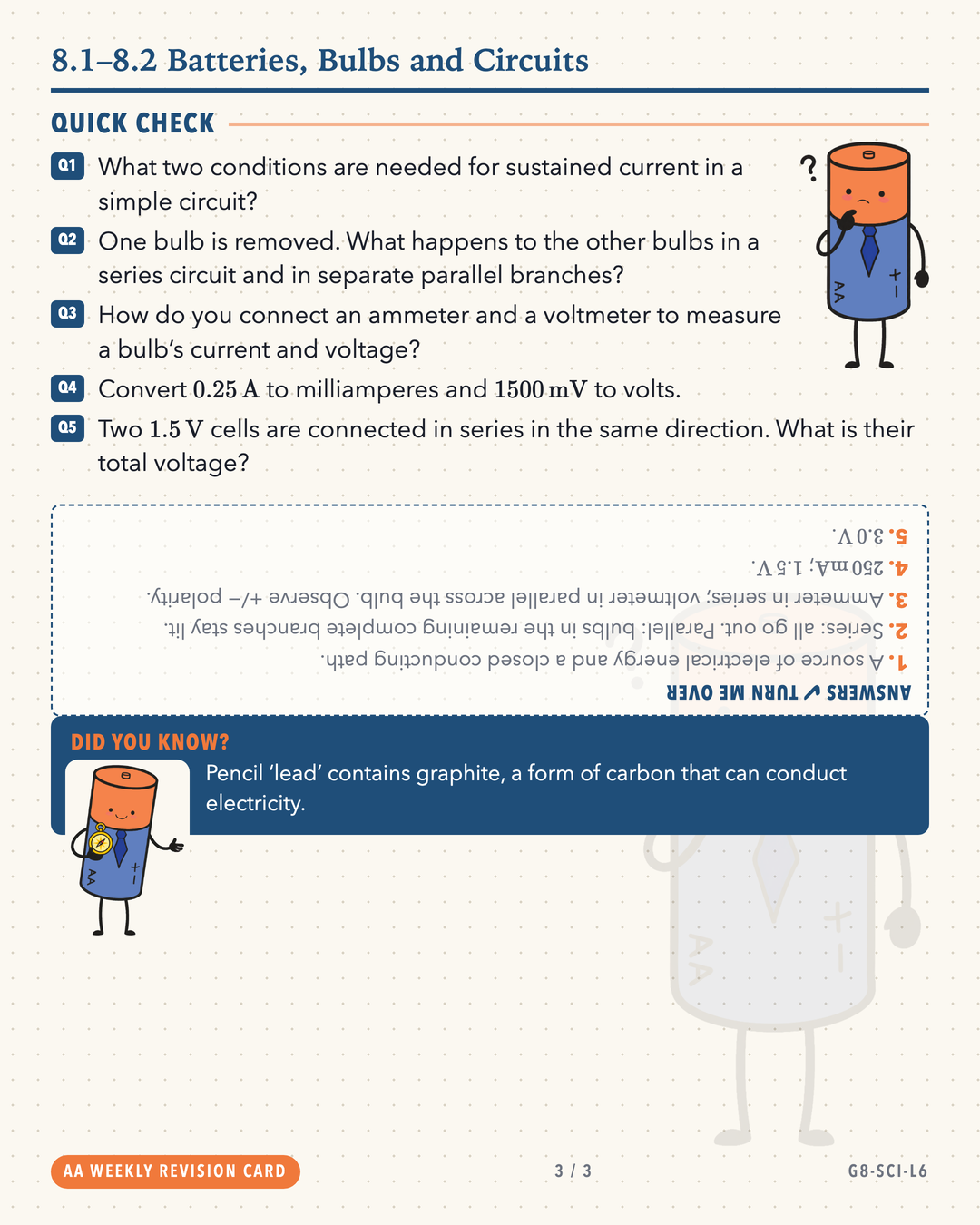
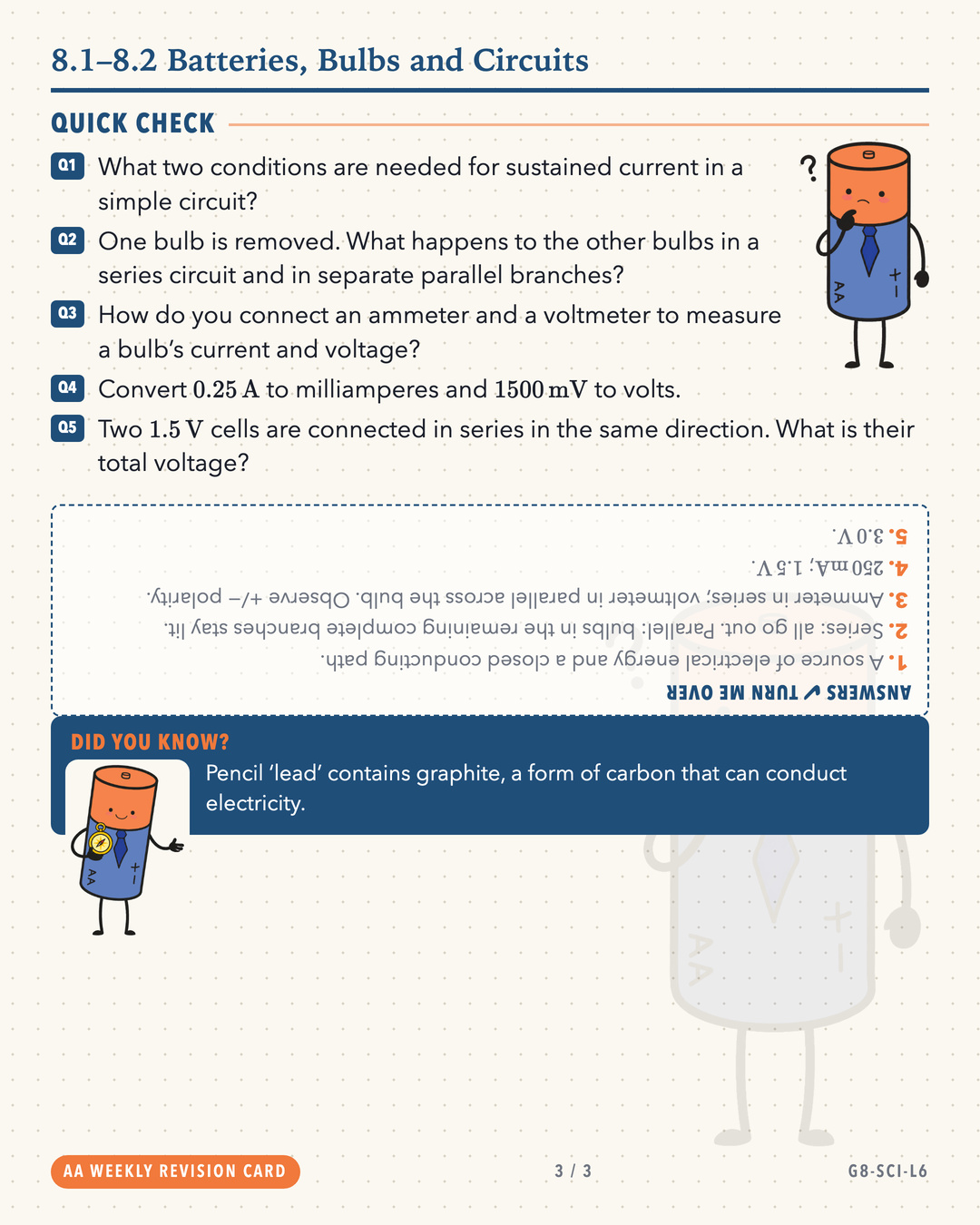
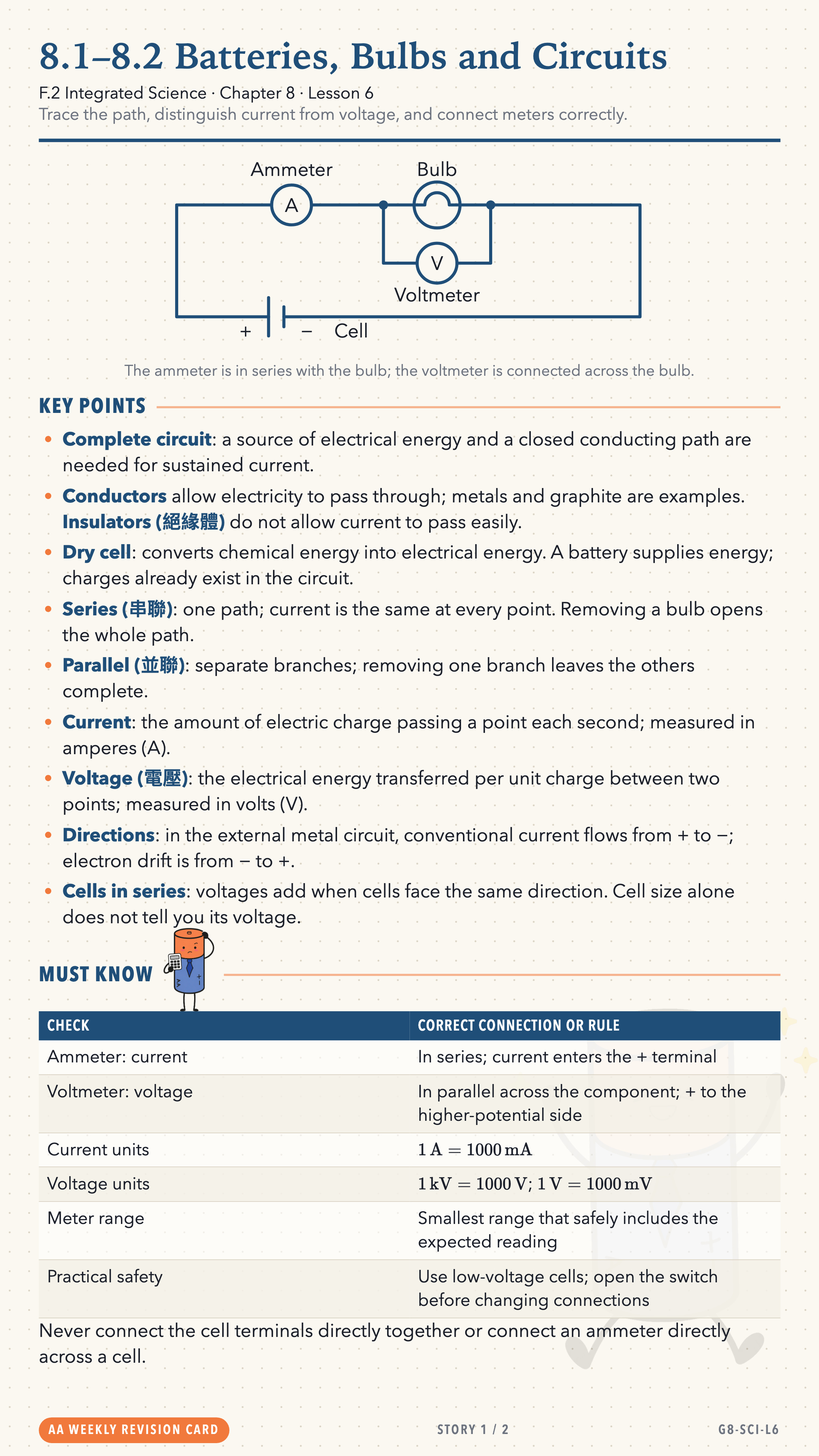
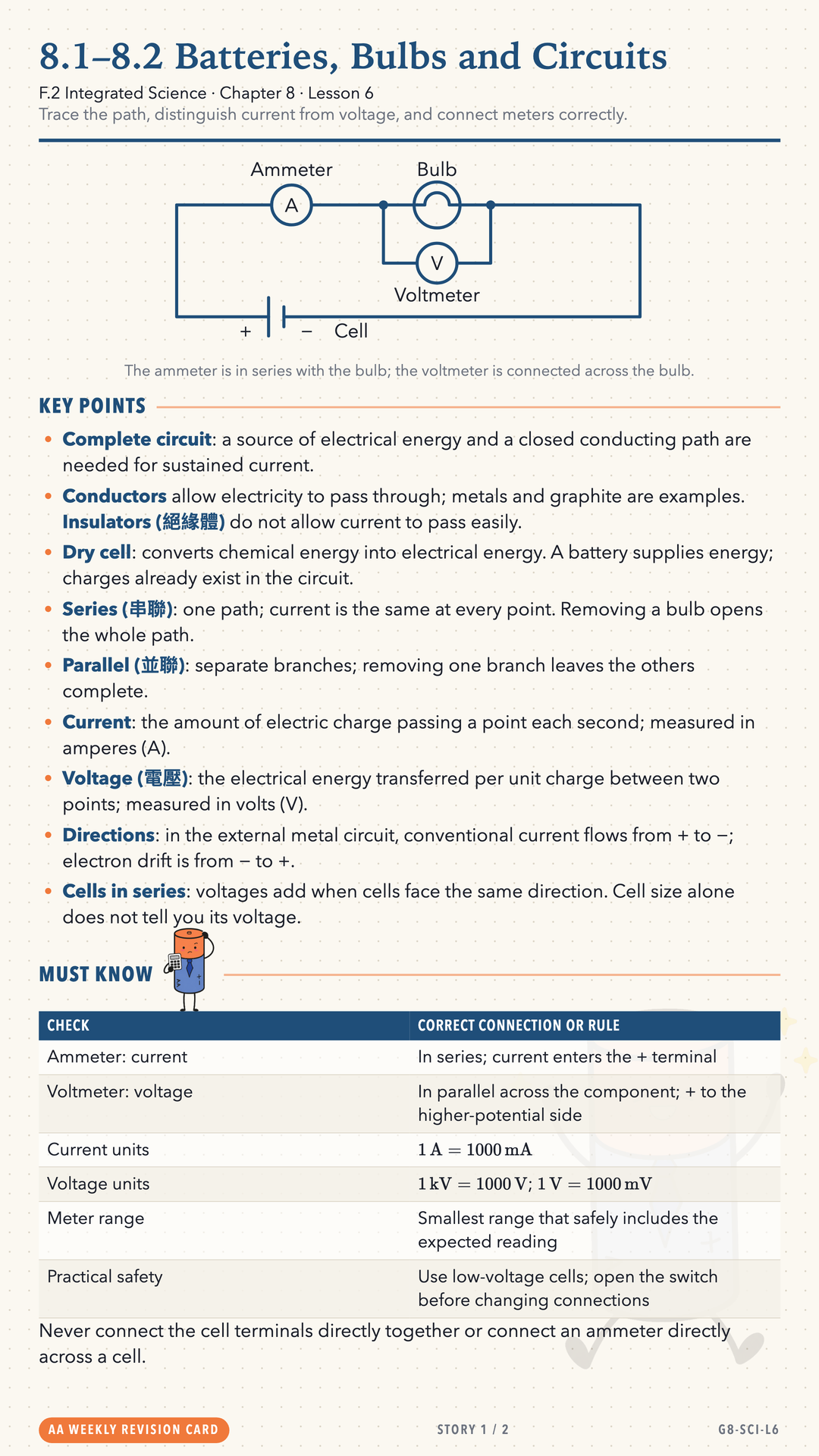
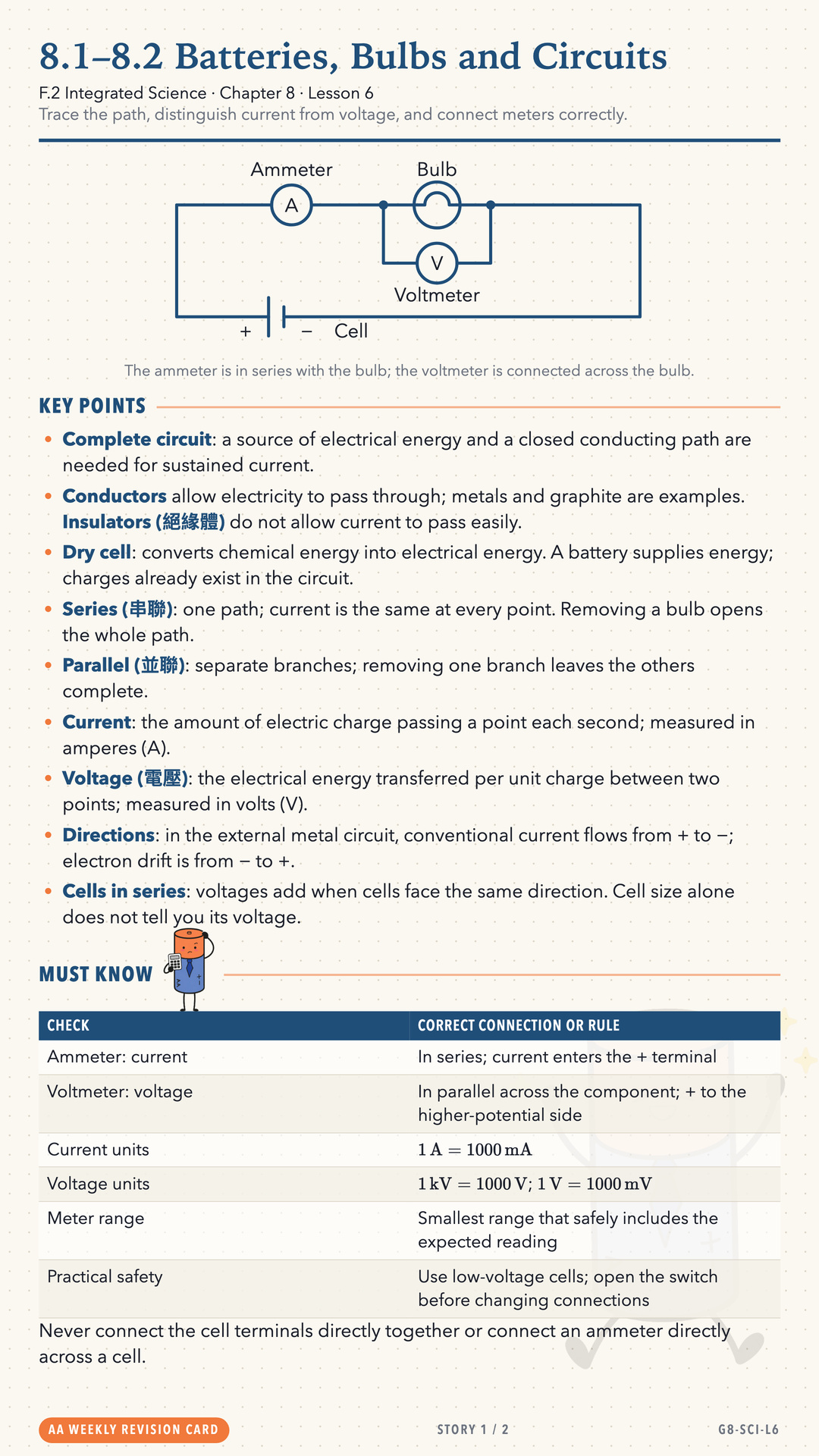
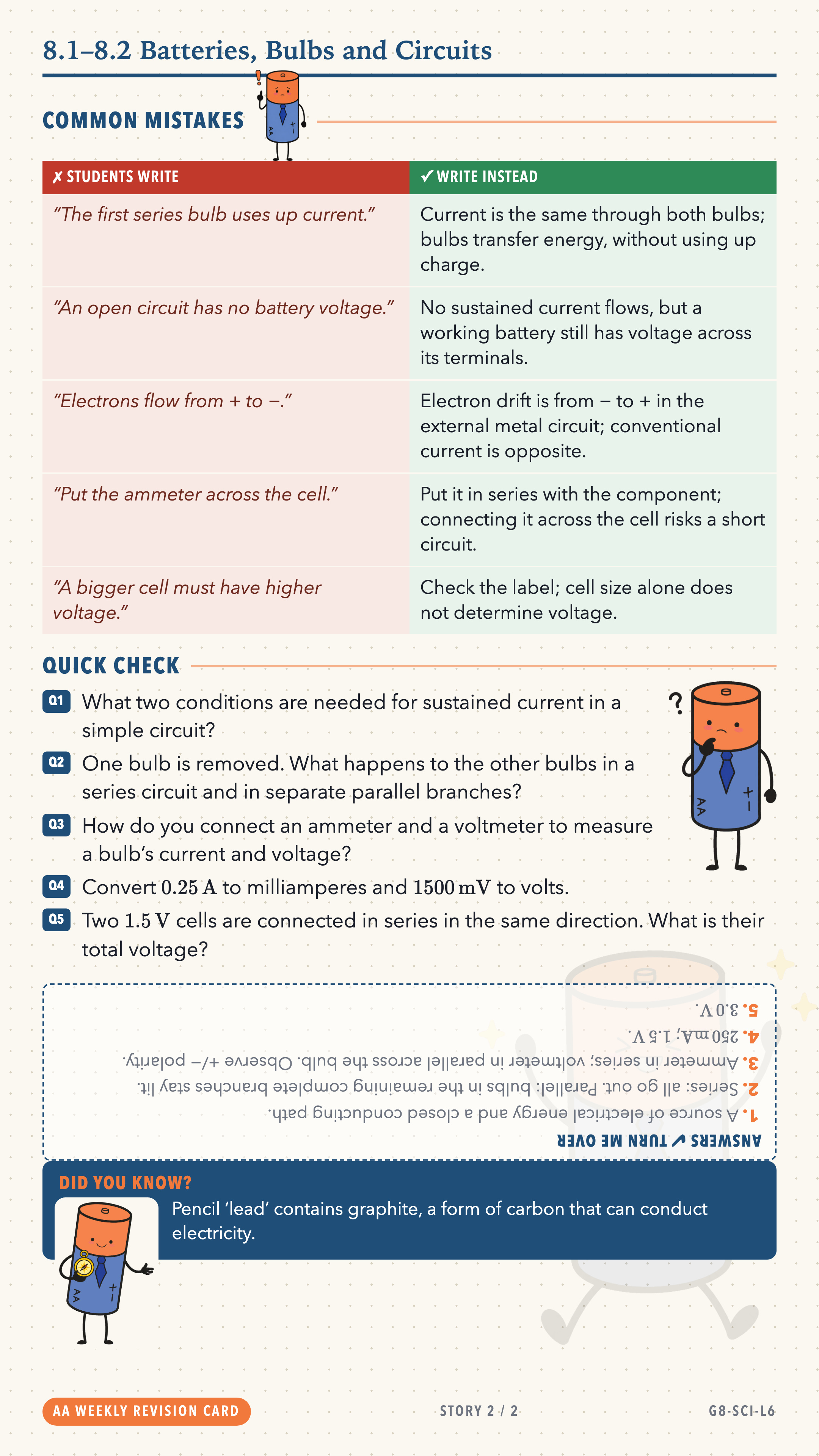
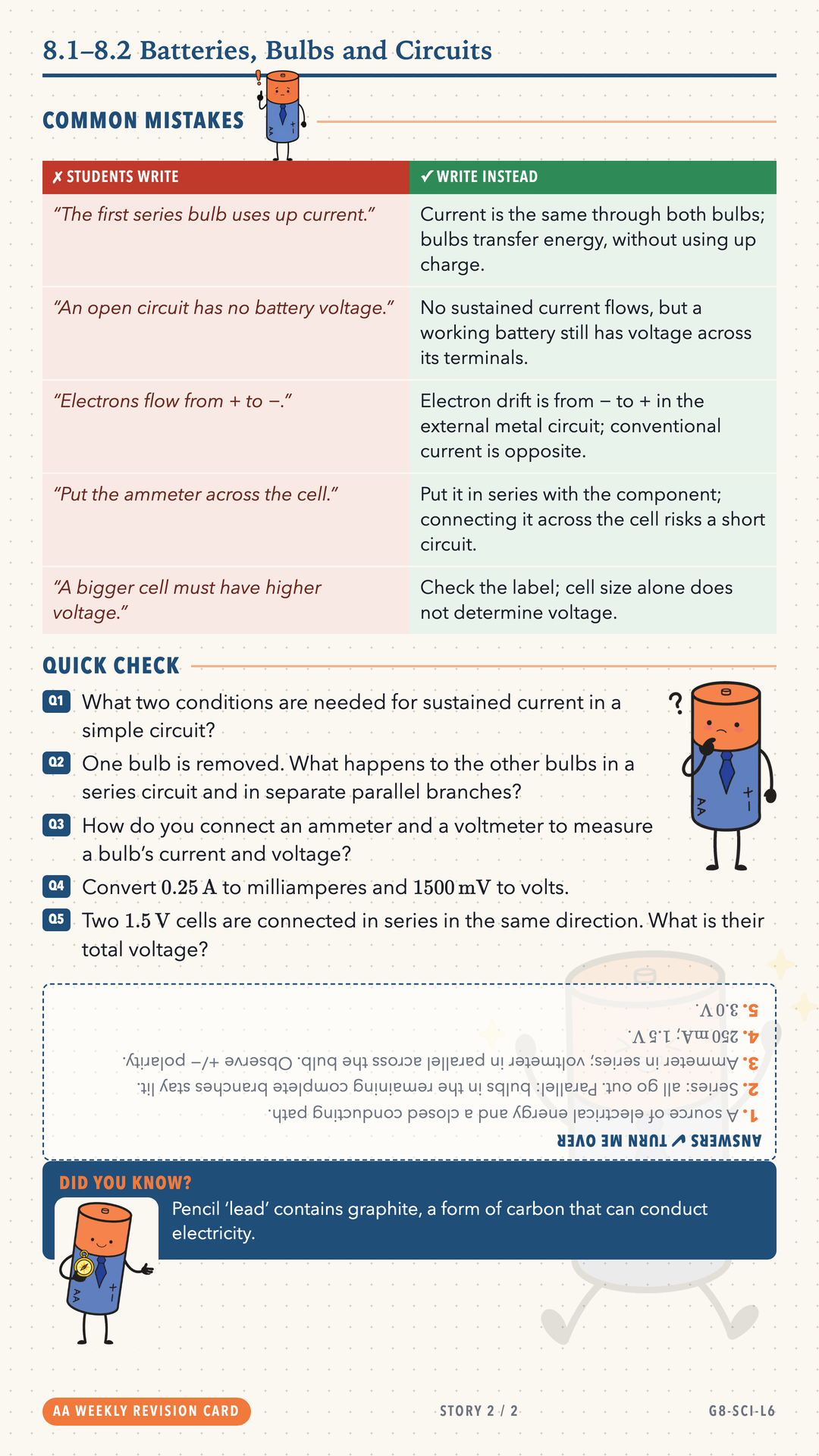
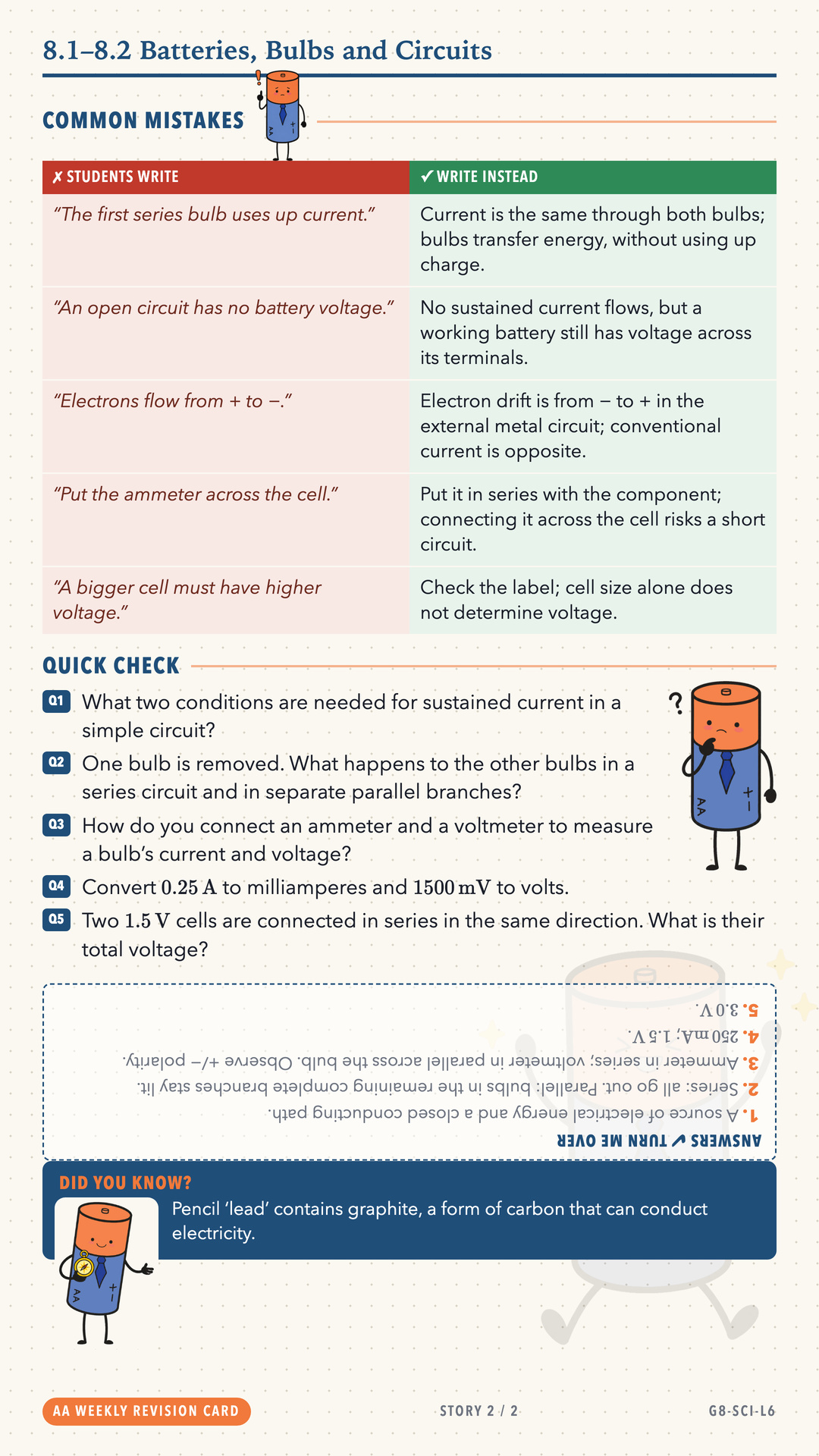
Trace the path, distinguish current from voltage, and connect meters correctly.
✔ fact-checked · 0 added mistakes tagged [likely] · 2.6 MB JPG · card.md ·
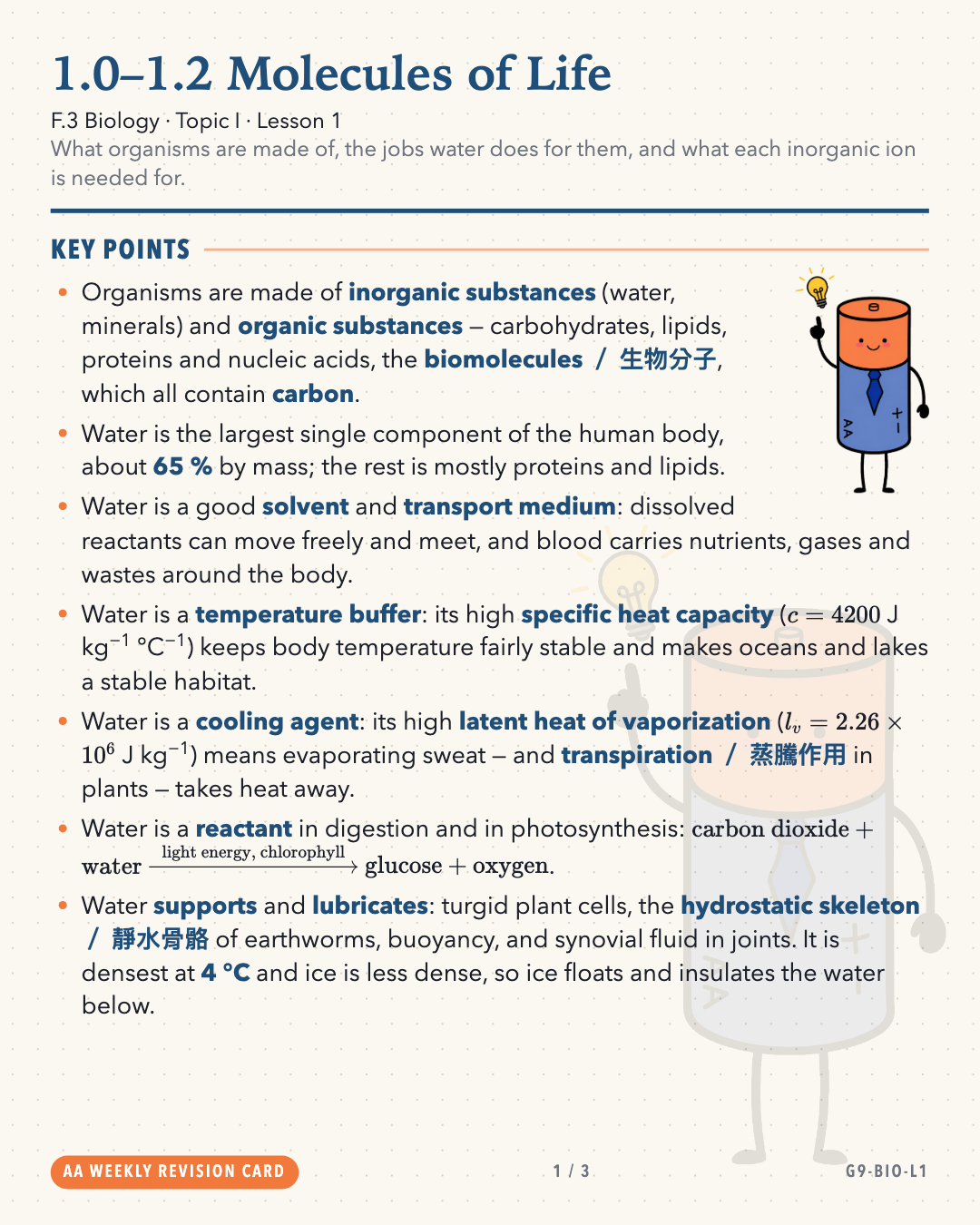
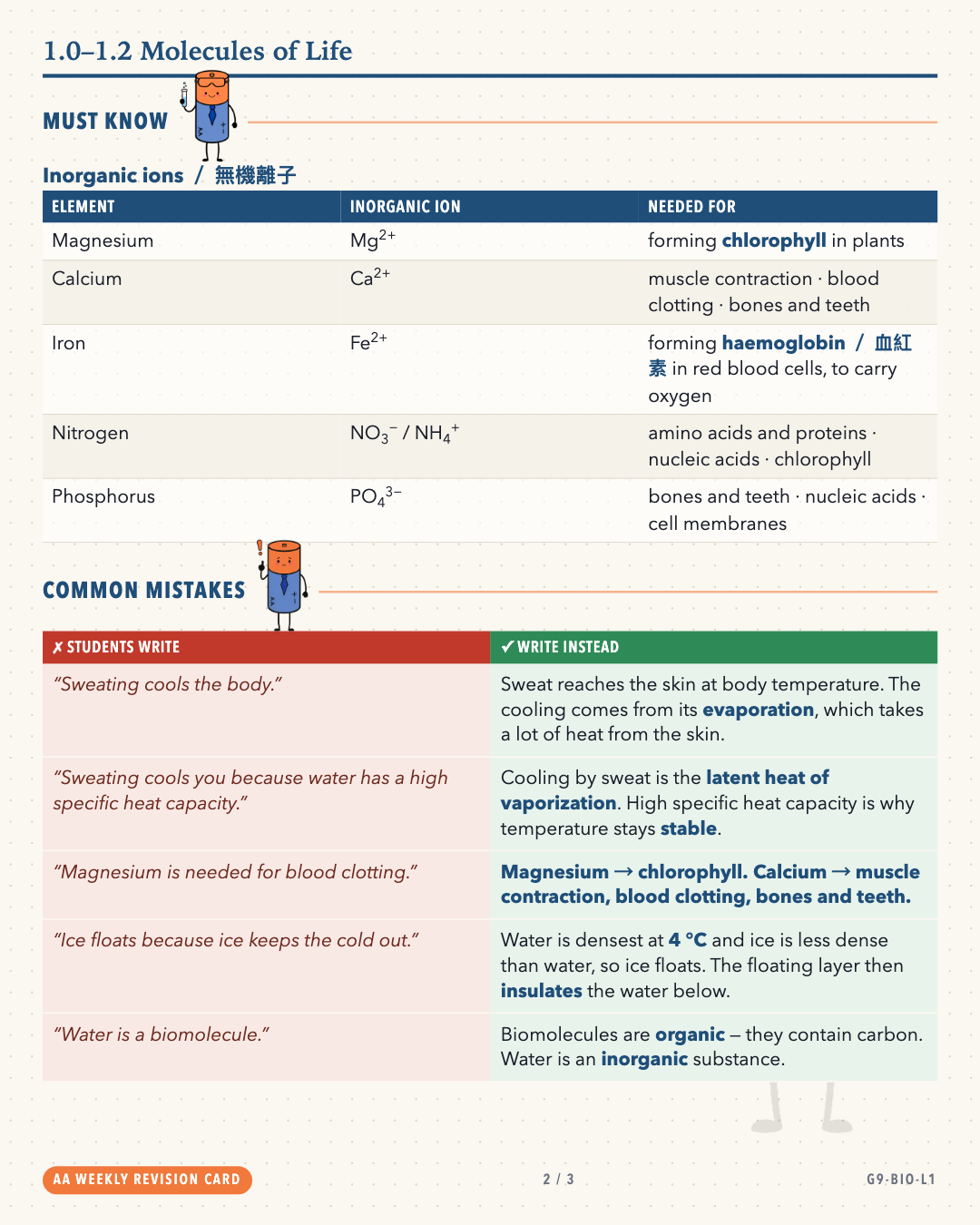
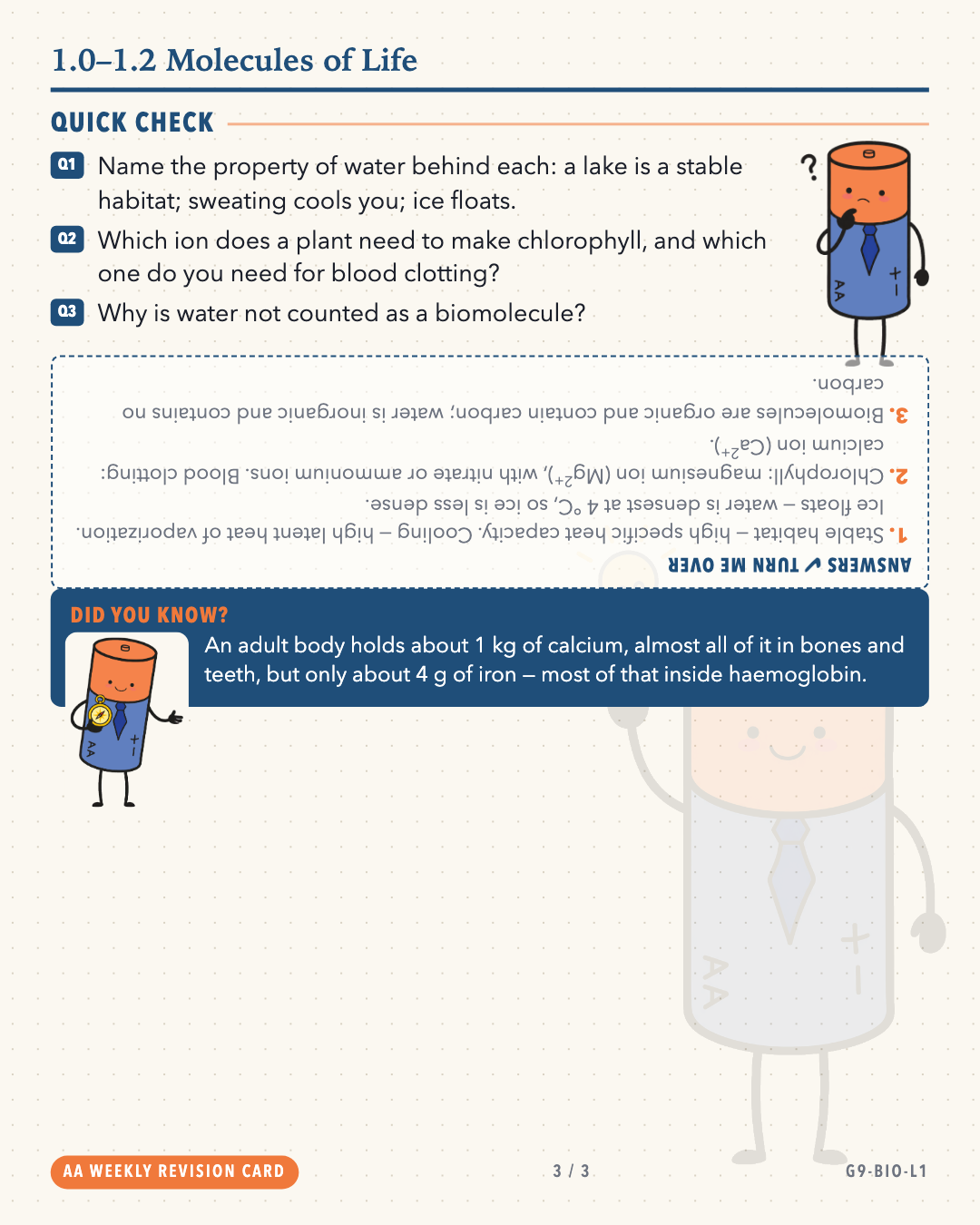
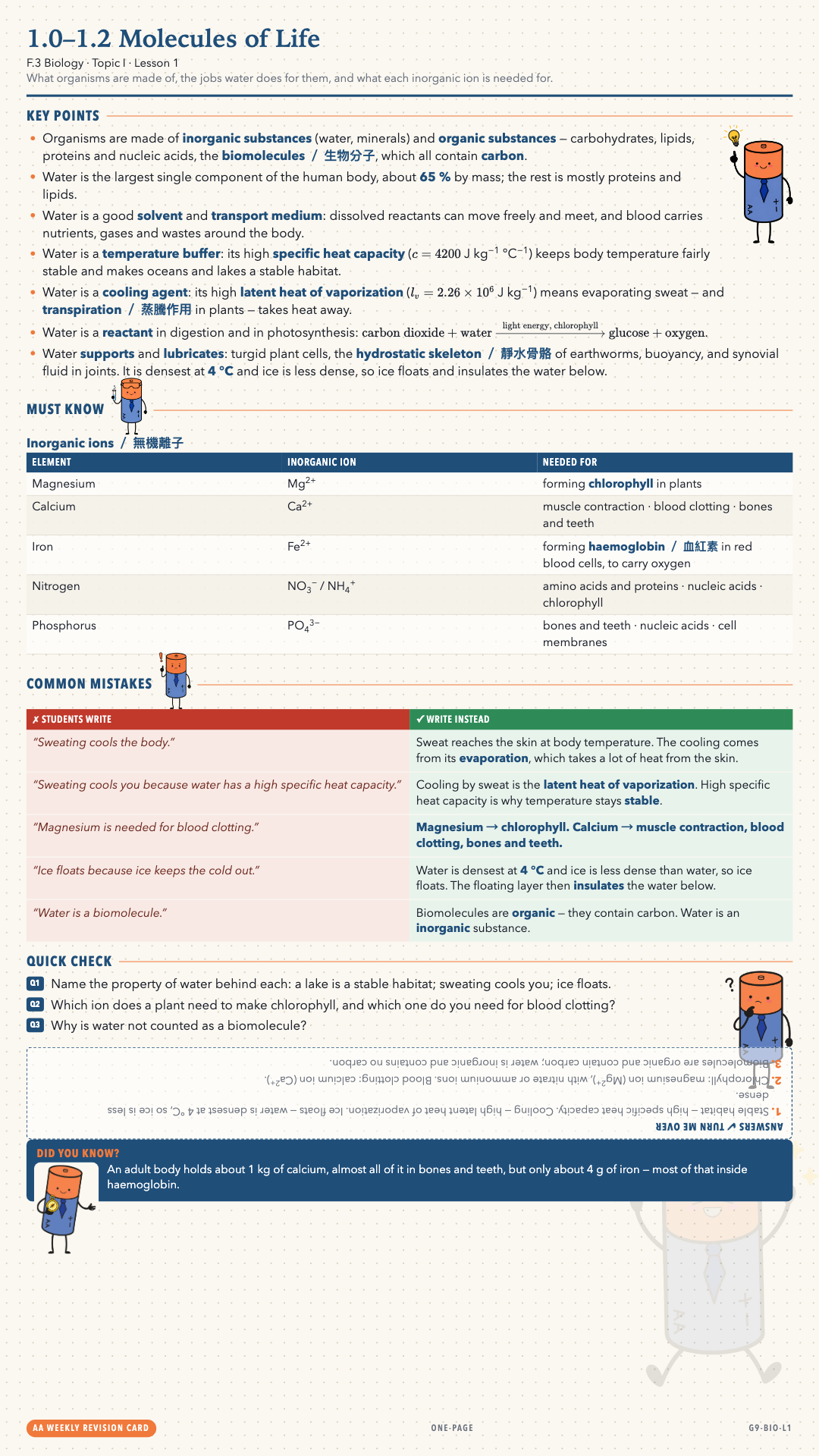
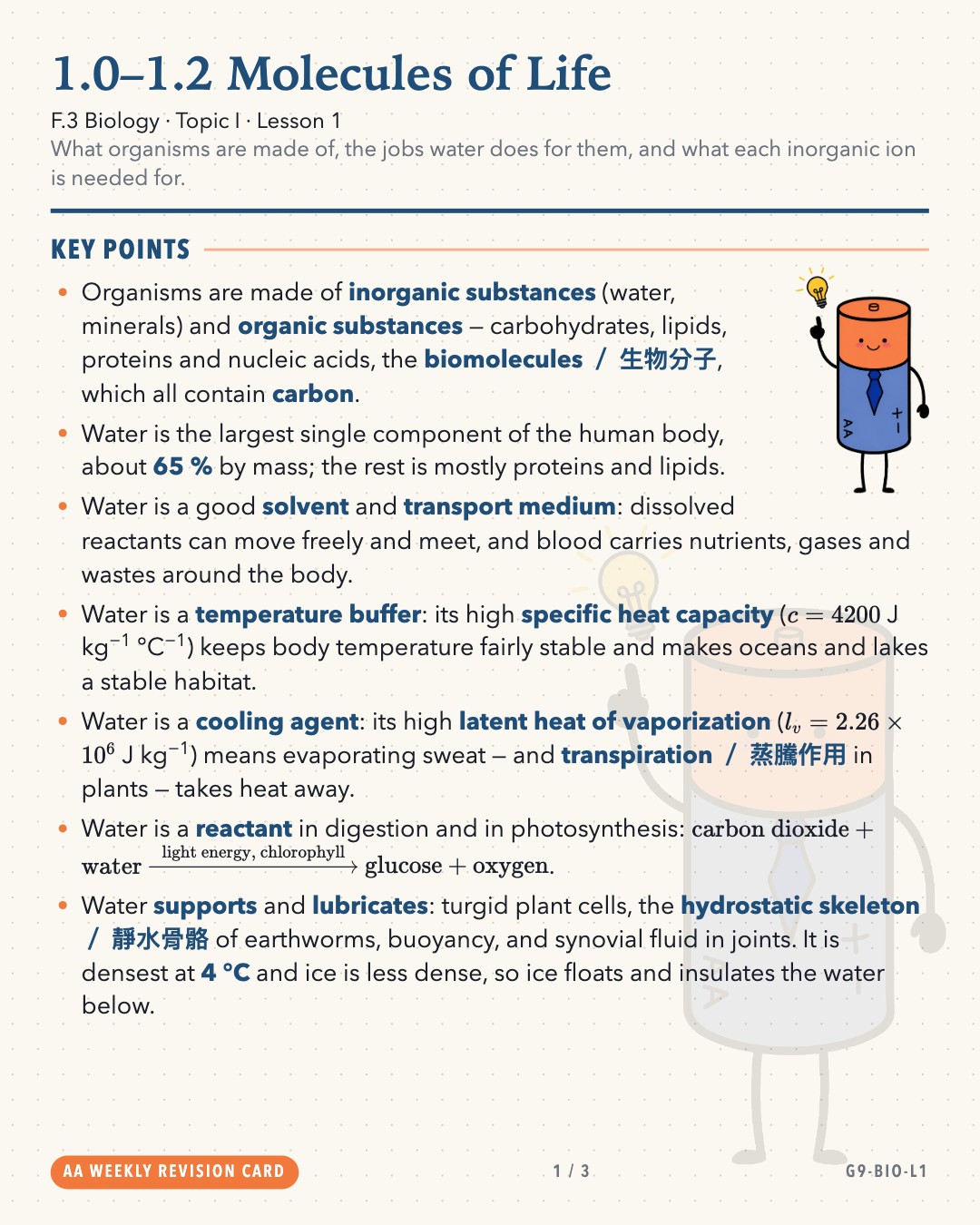
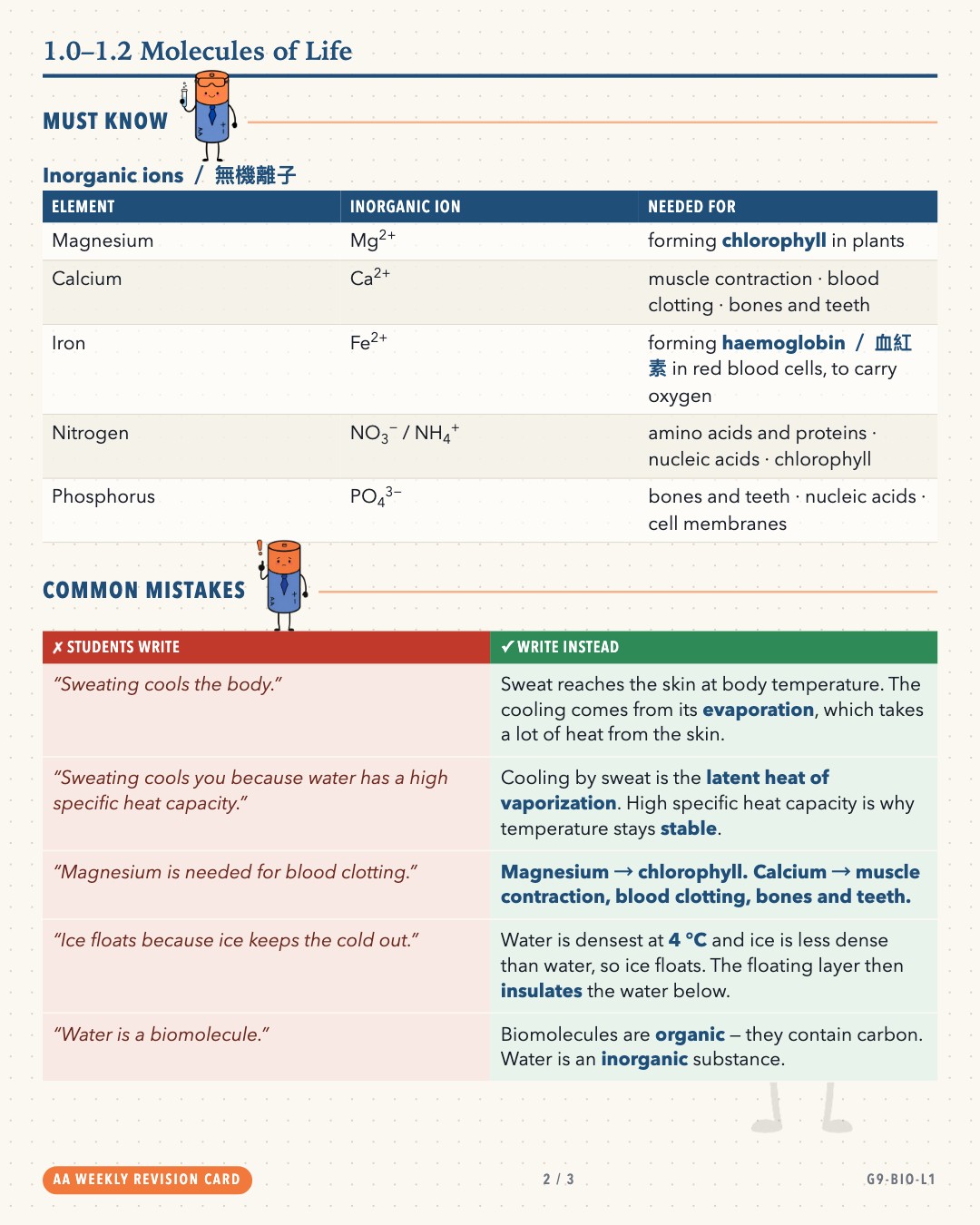
What organisms are made of, the jobs water does for them, and what each inorganic ion is needed for.
✔ fact-checked · 1 added mistake tagged [likely] · 1.3 MB JPG · card.md ·
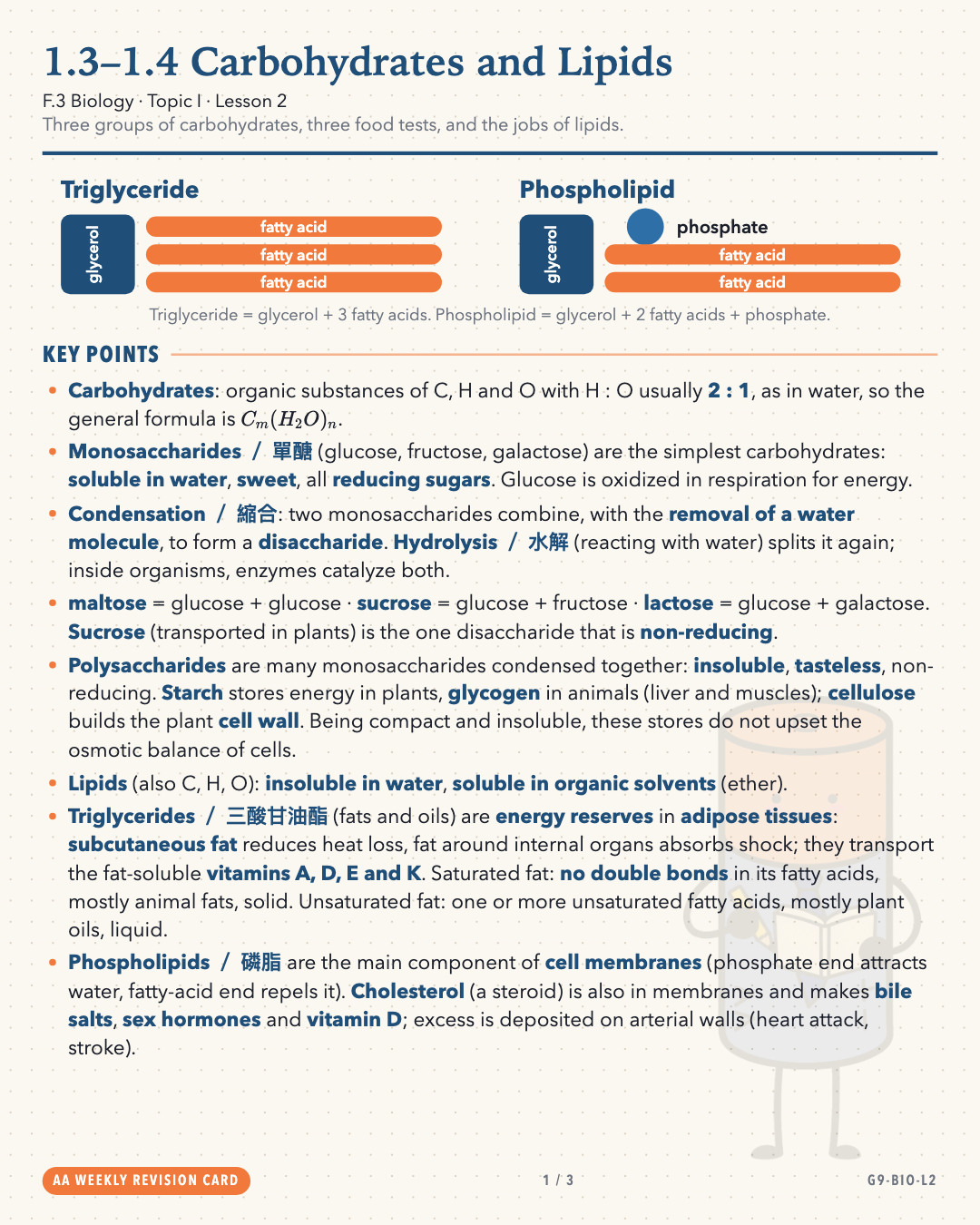
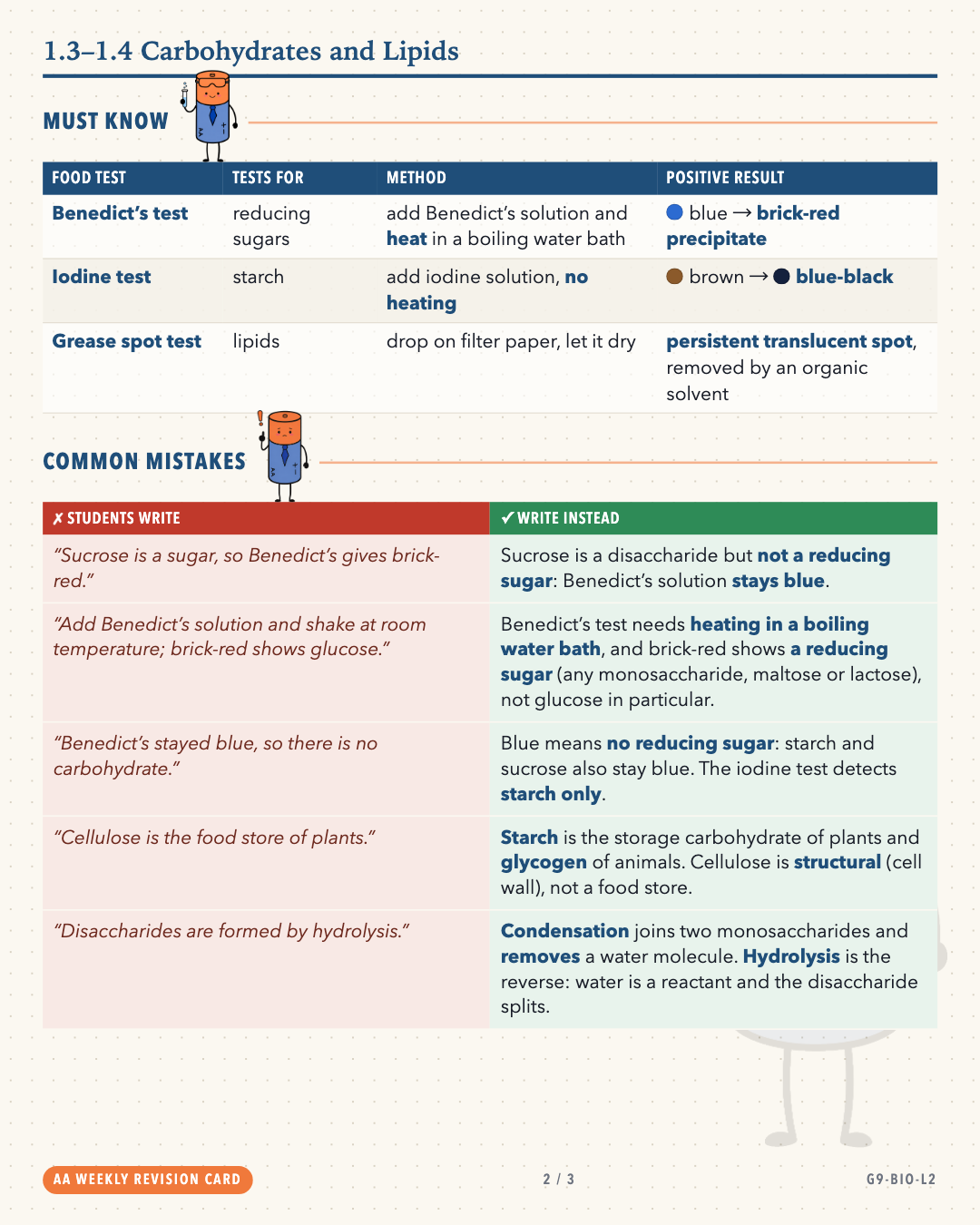
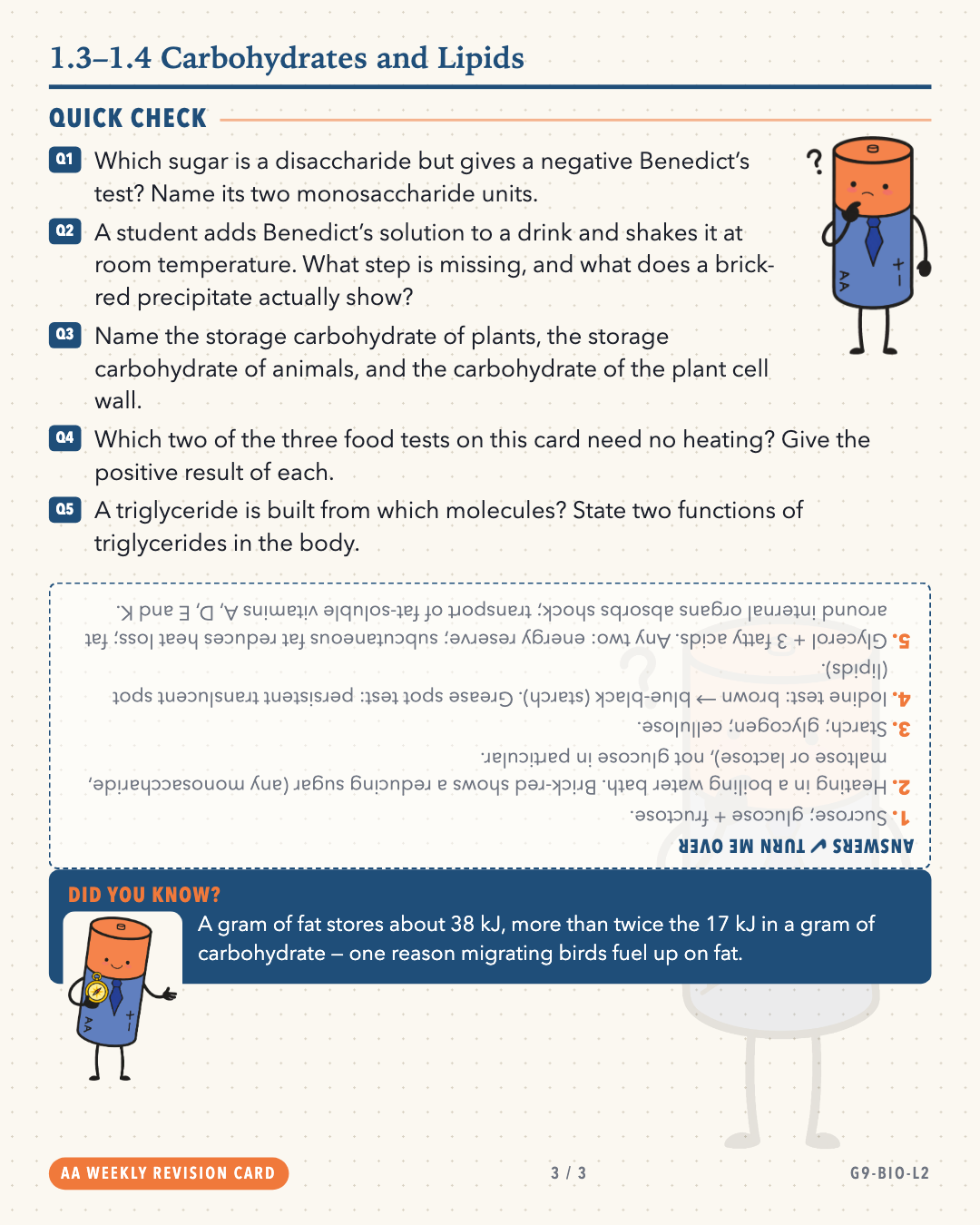
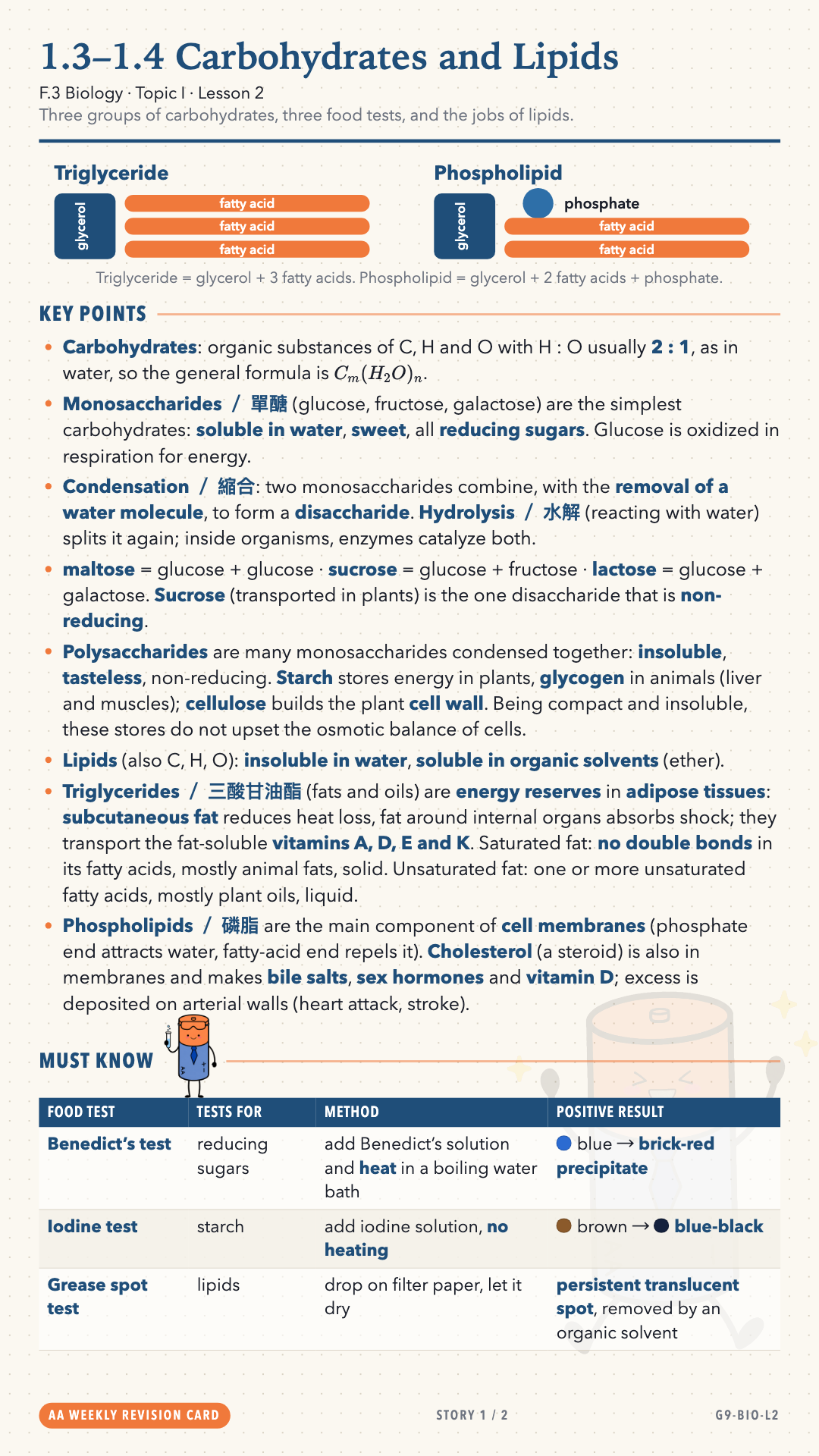
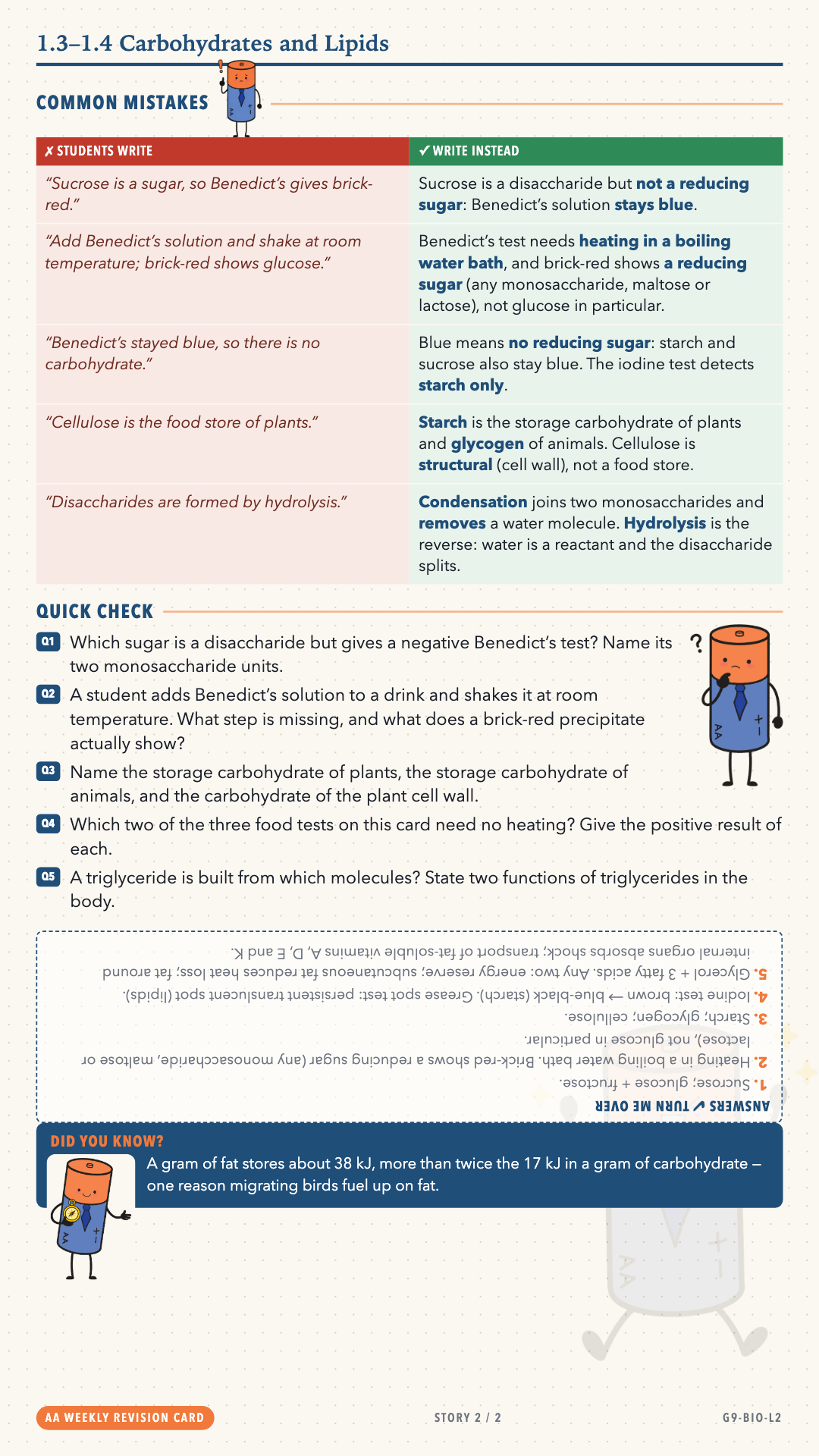
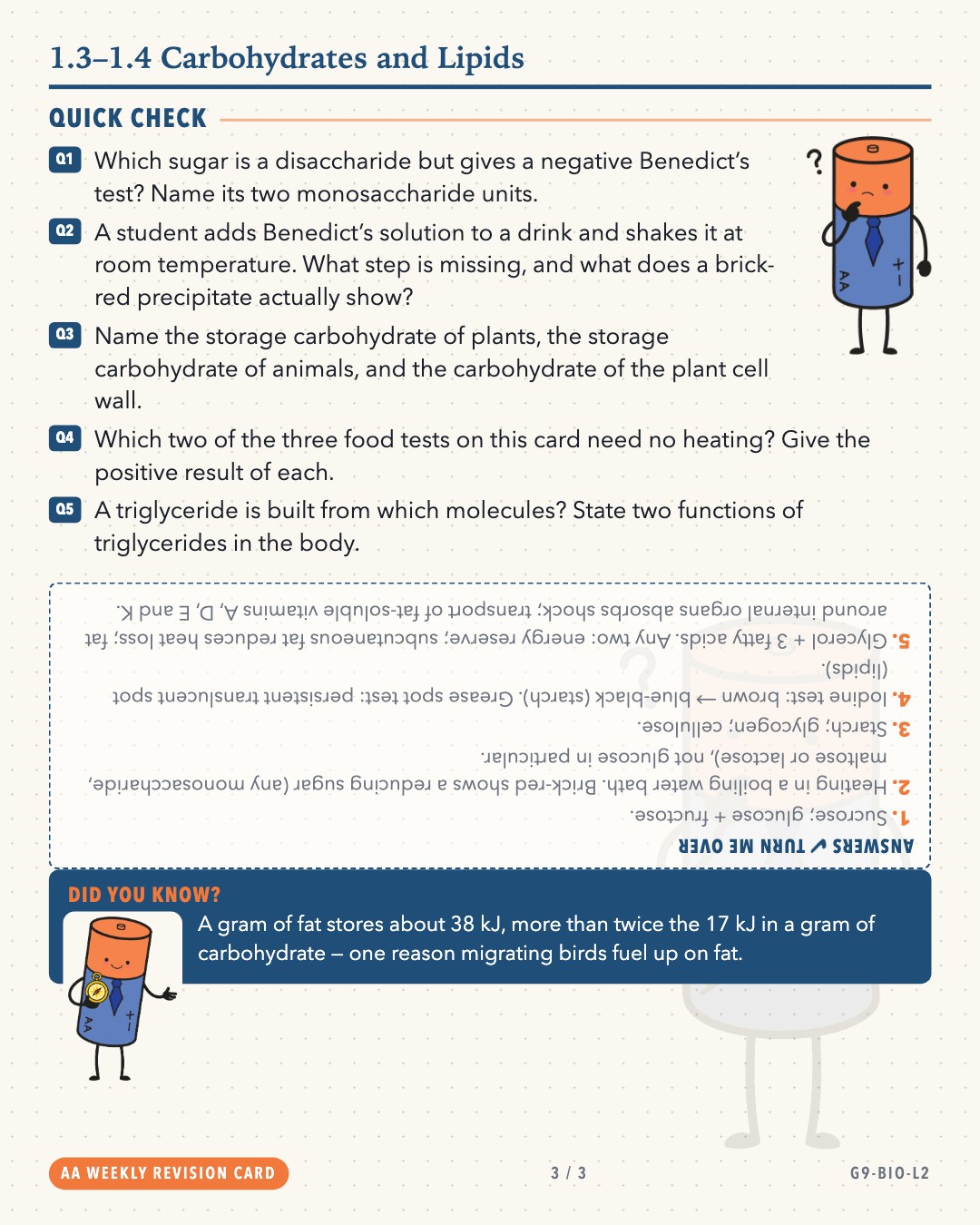
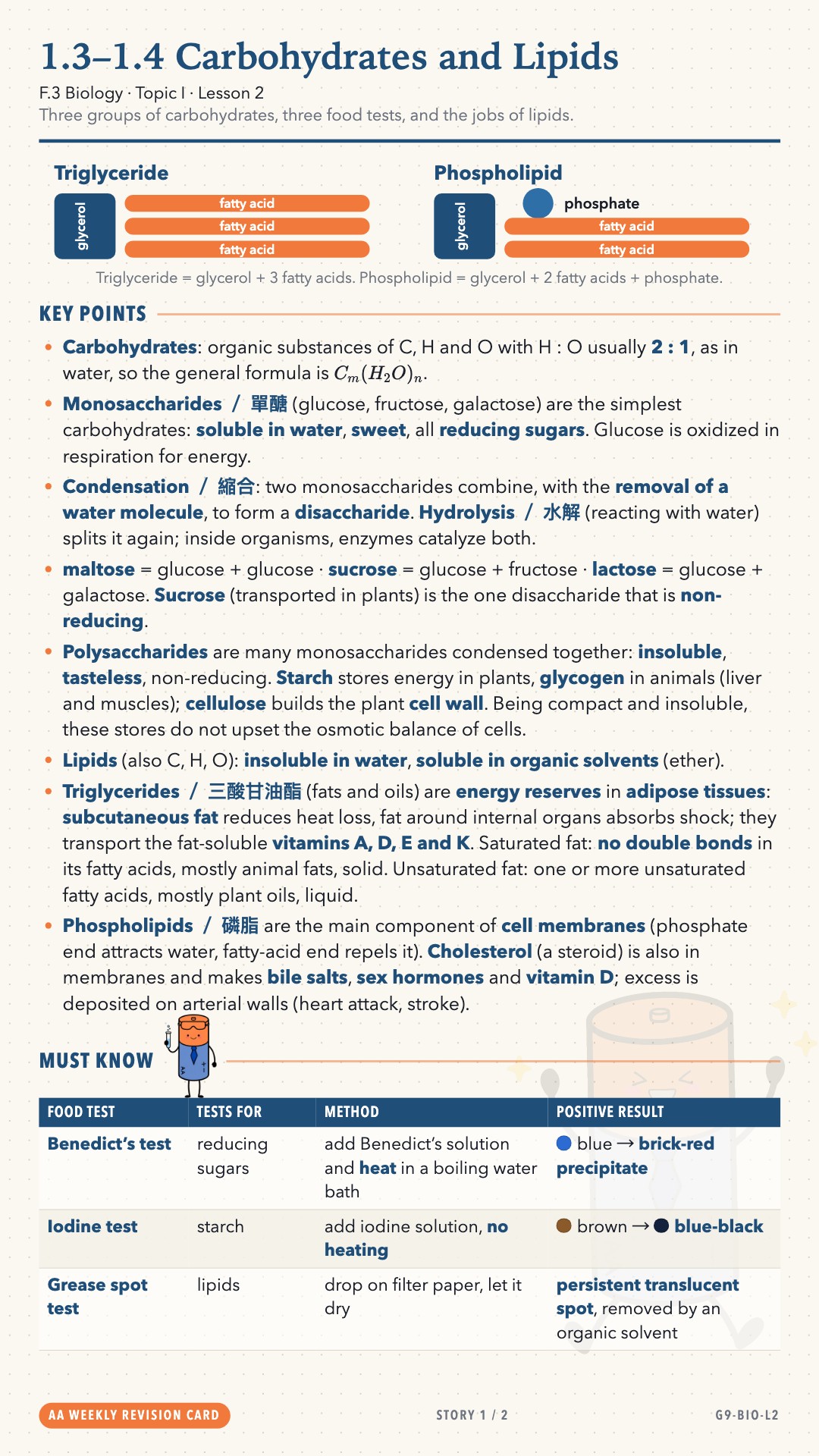
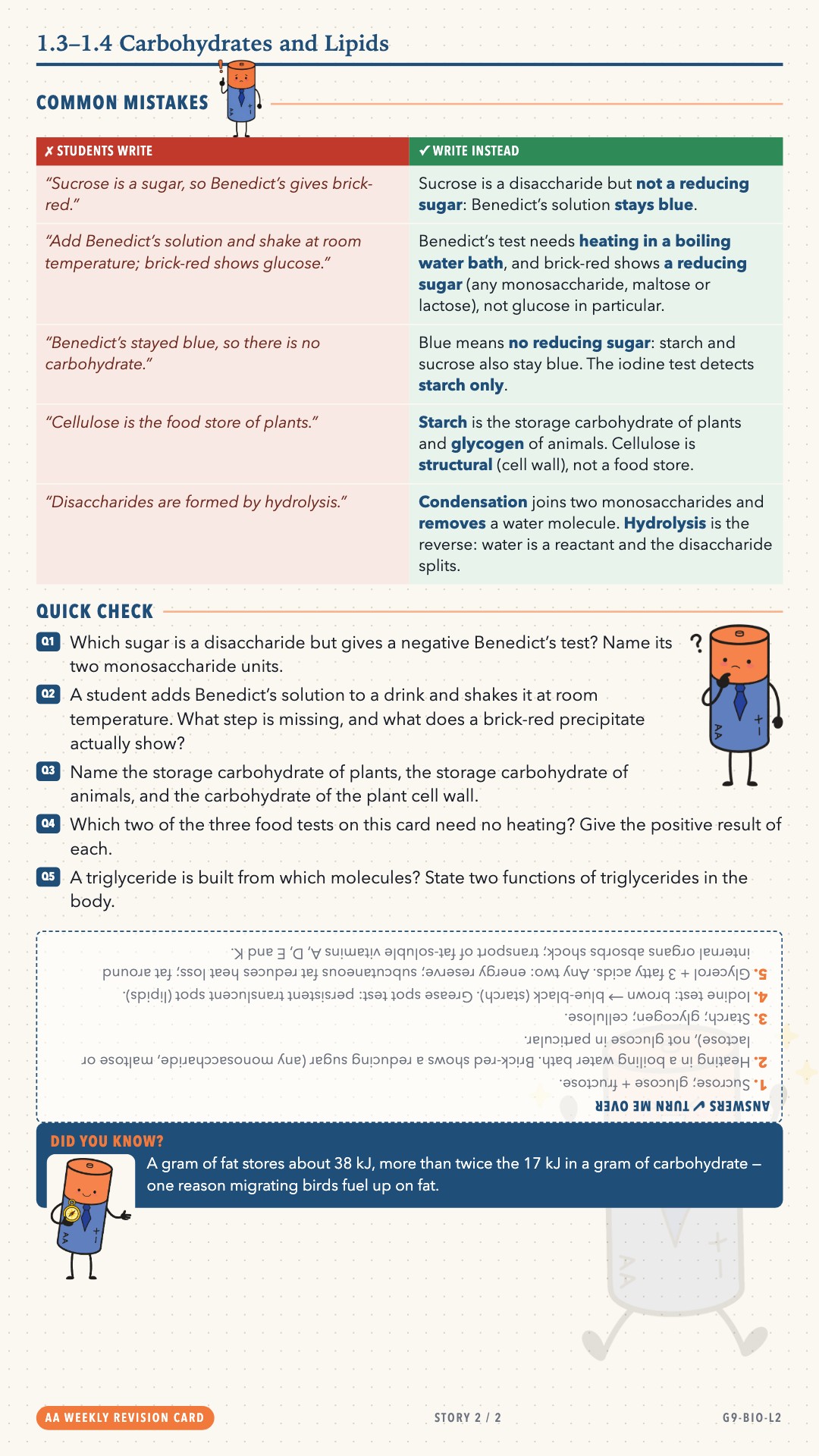
Three groups of carbohydrates, three food tests, and the jobs of lipids.
✔ fact-checked · 1 added mistake tagged [likely] · 1.9 MB JPG · card.md ·
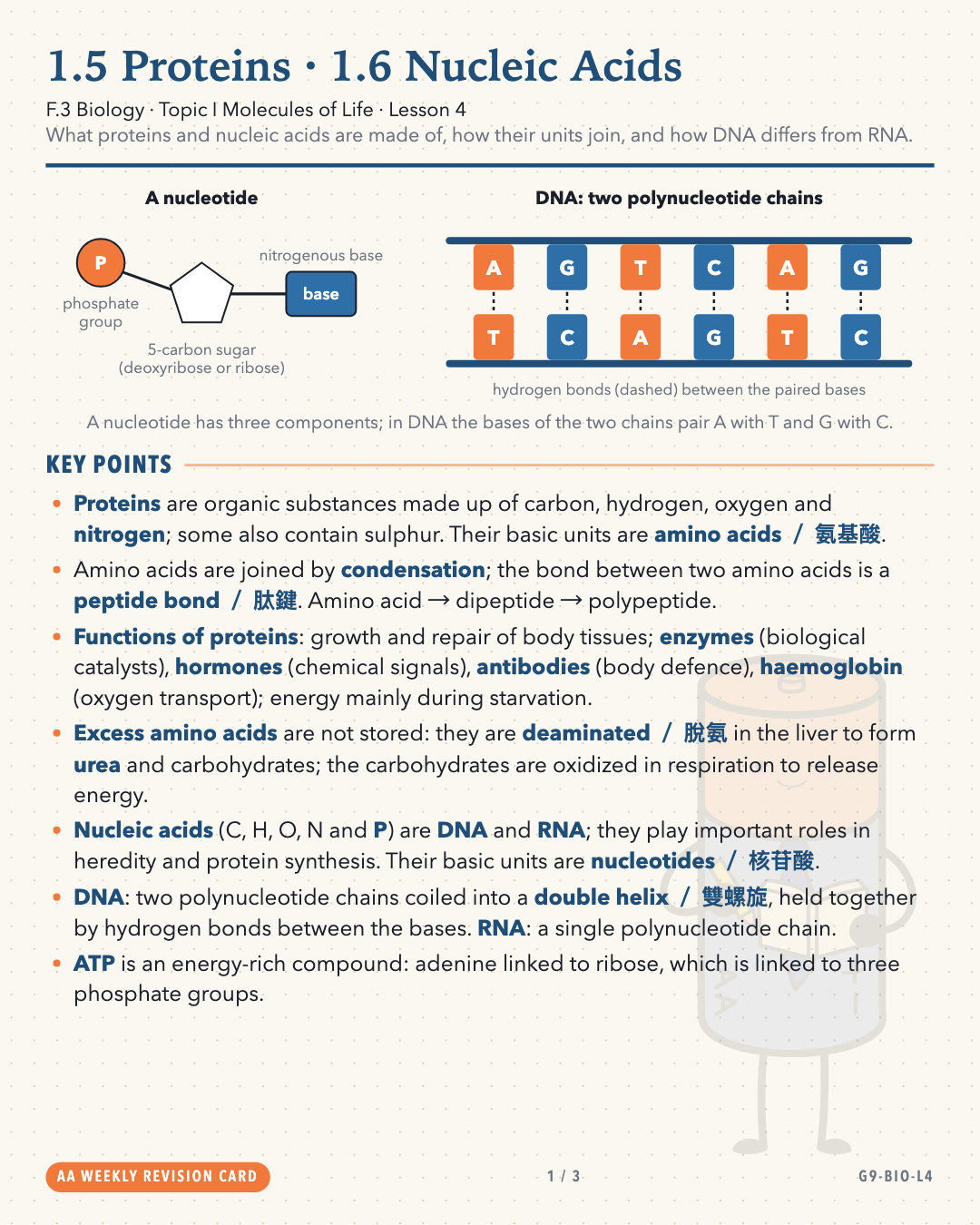
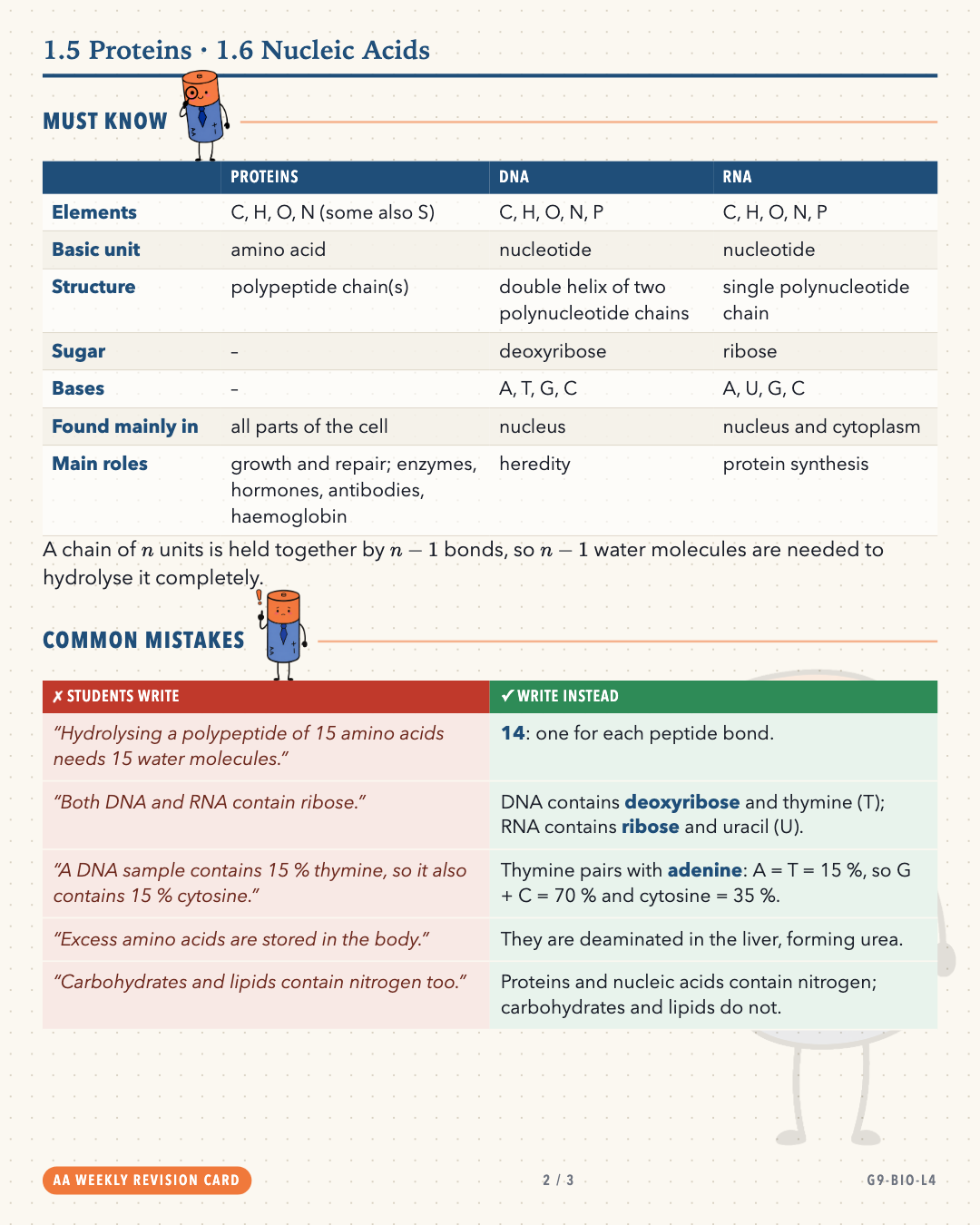
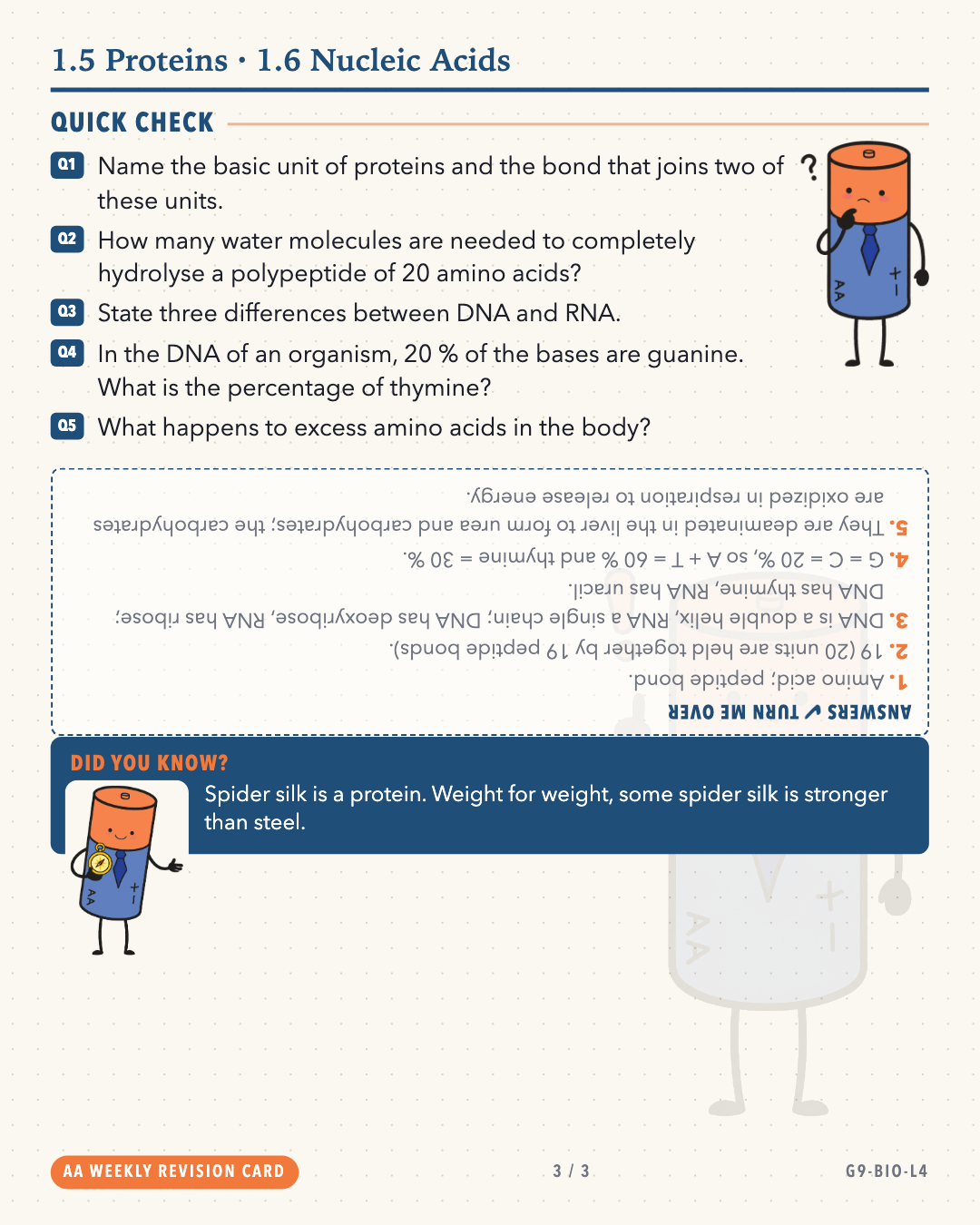
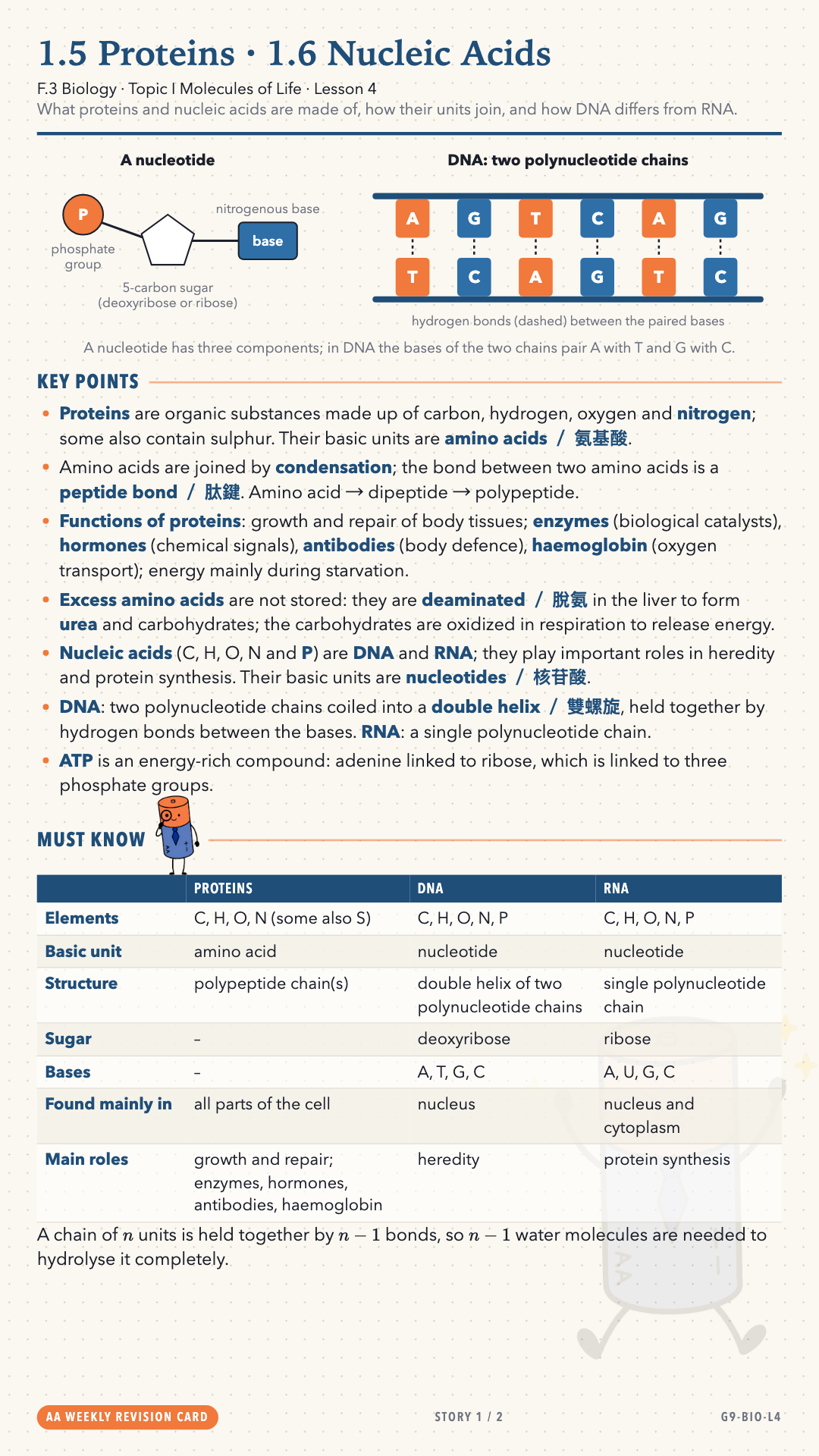
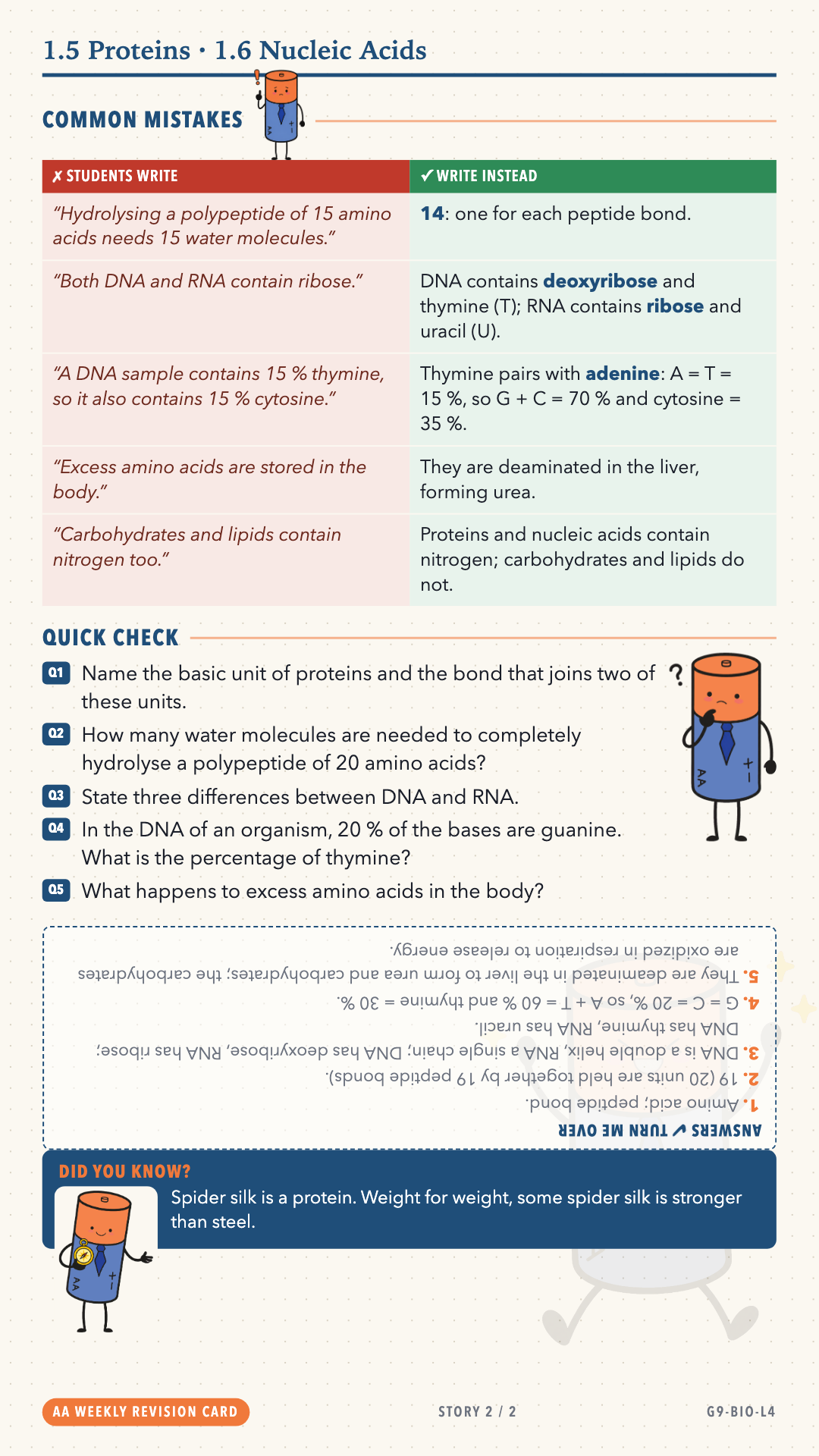
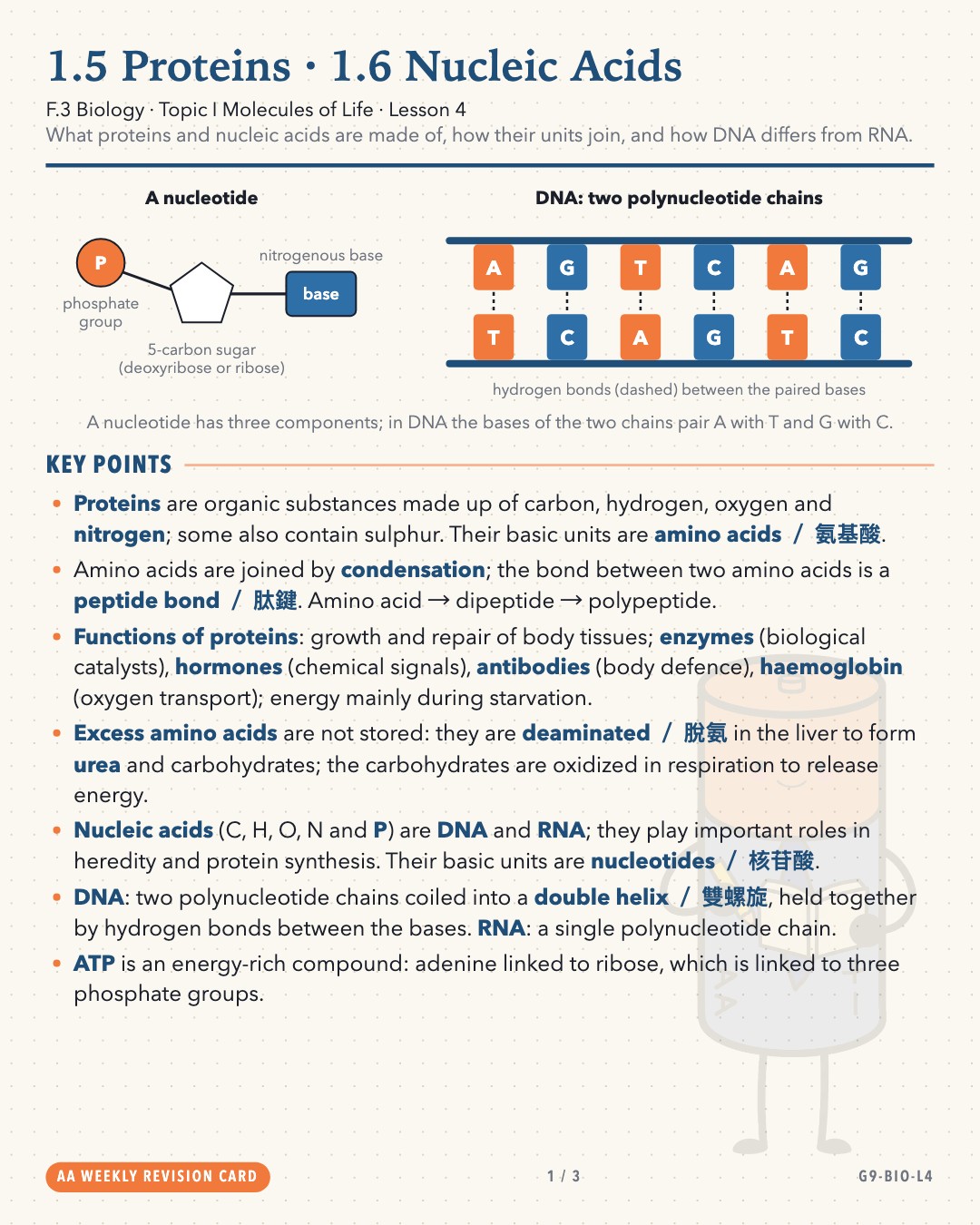
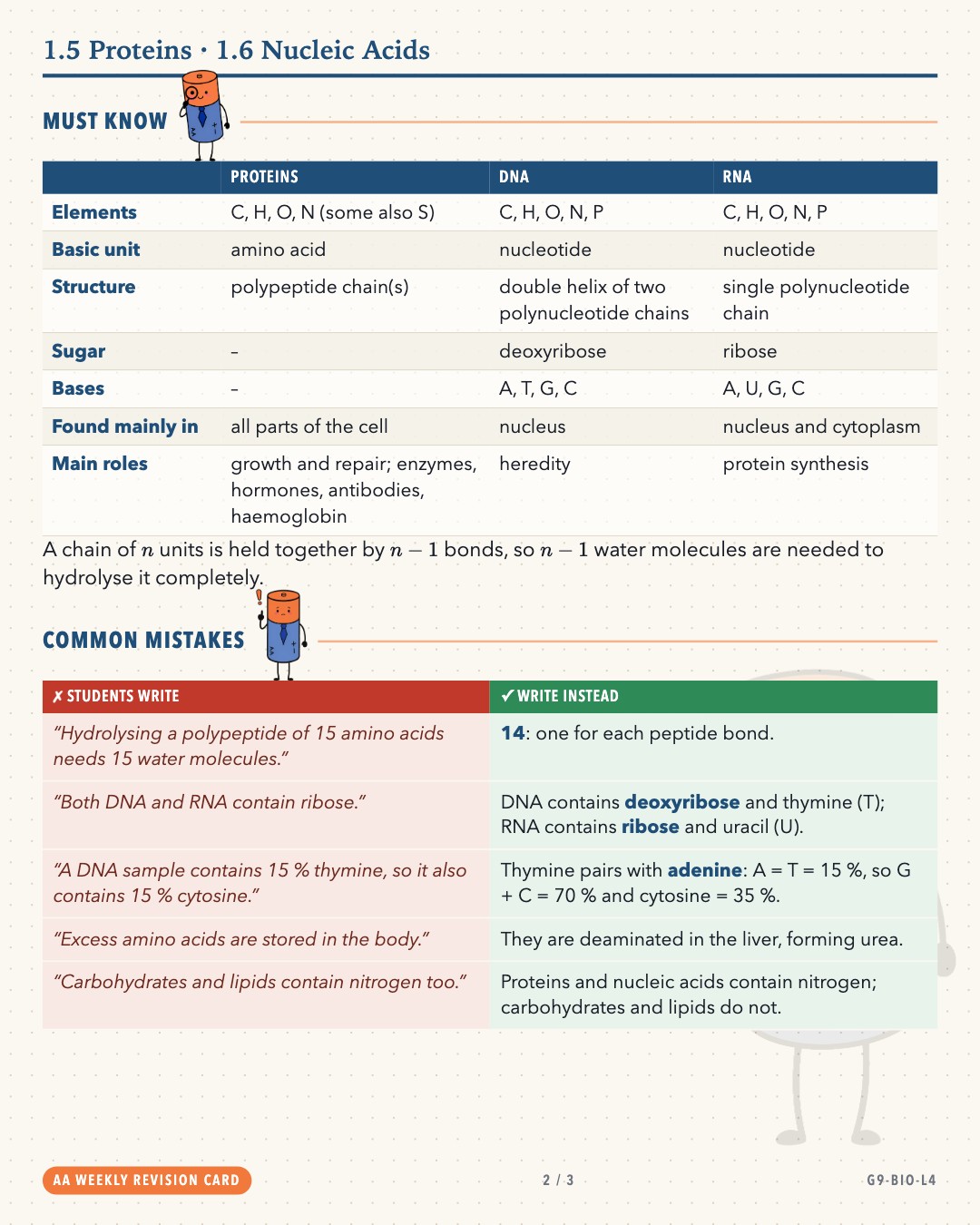
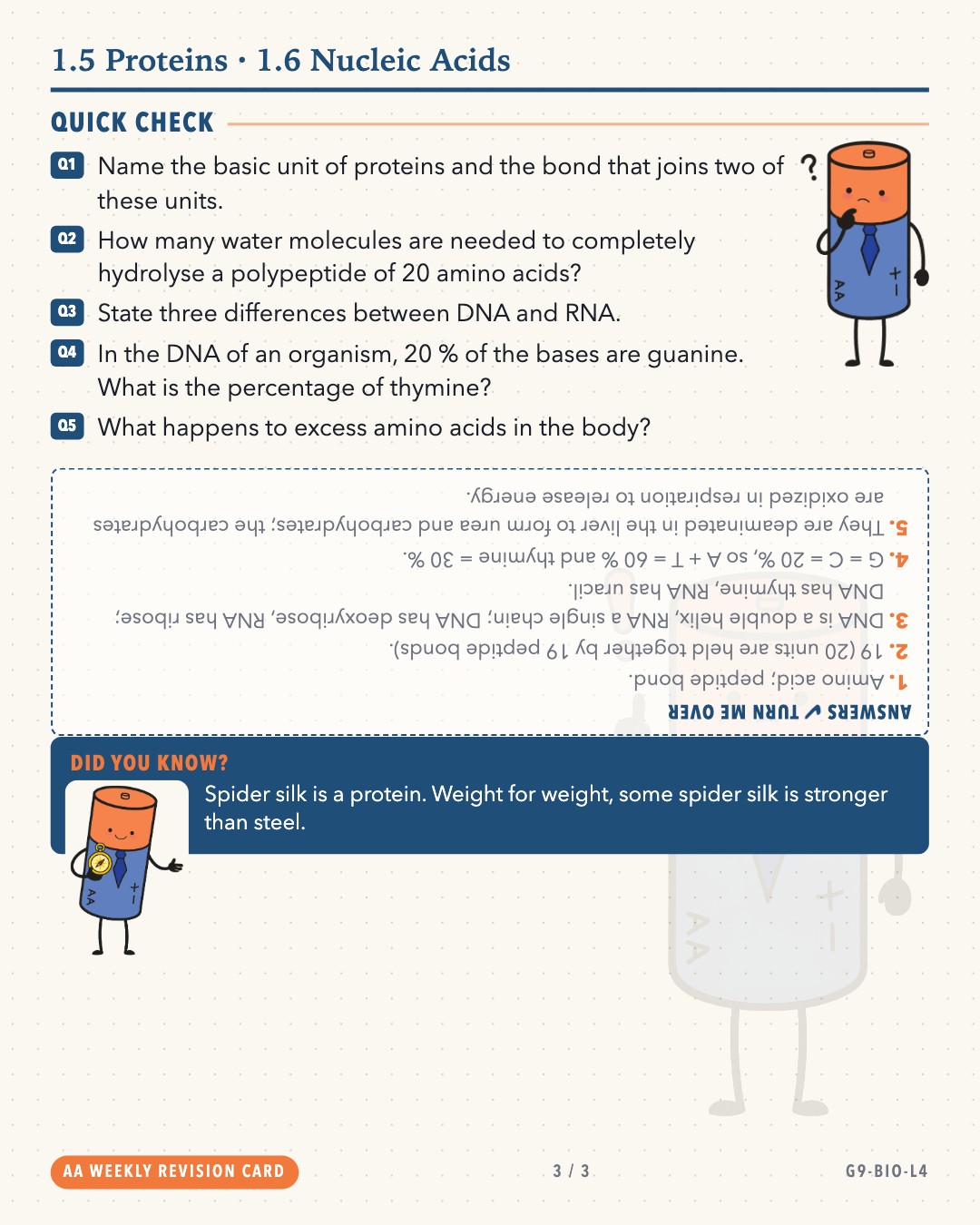
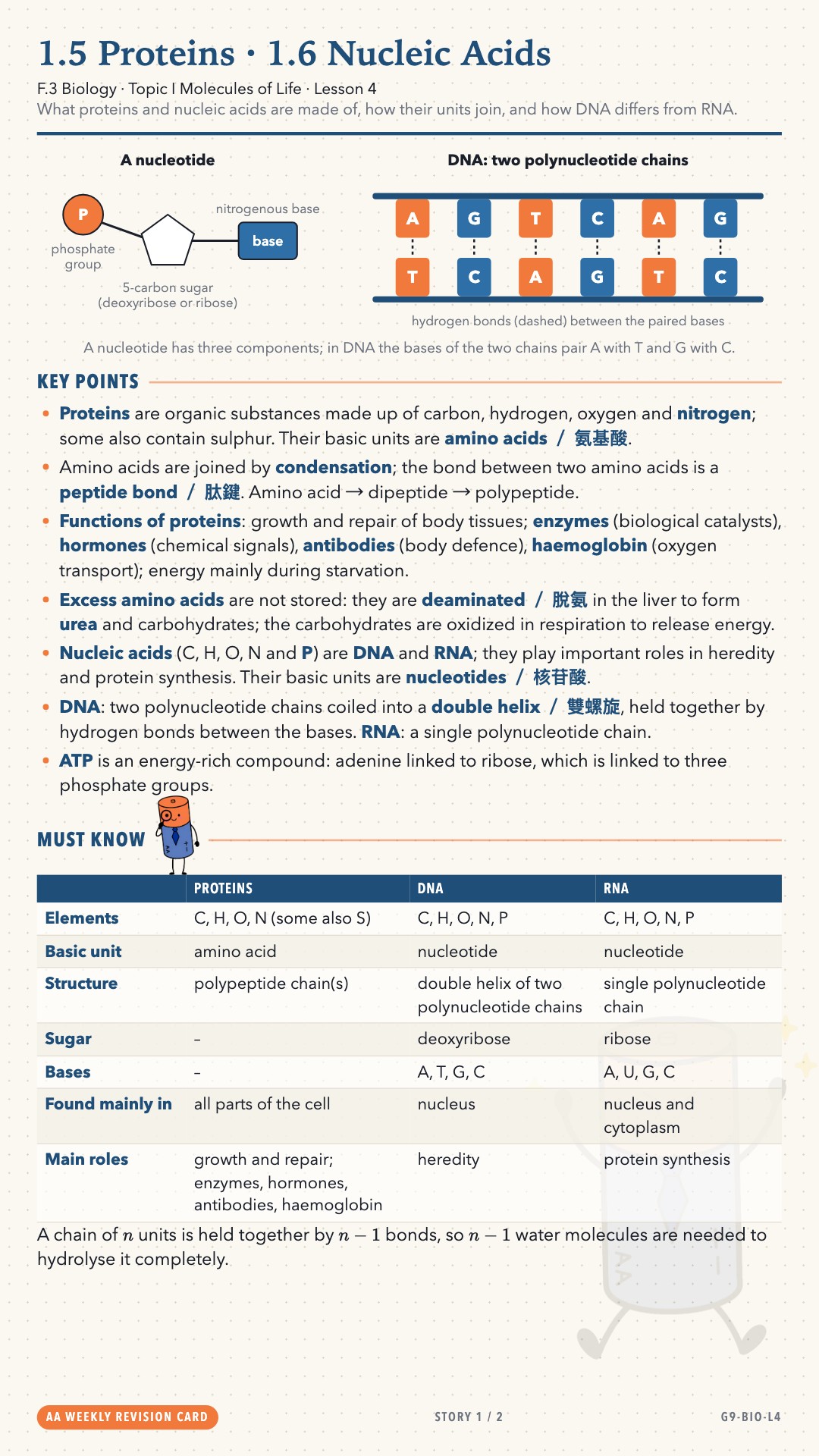
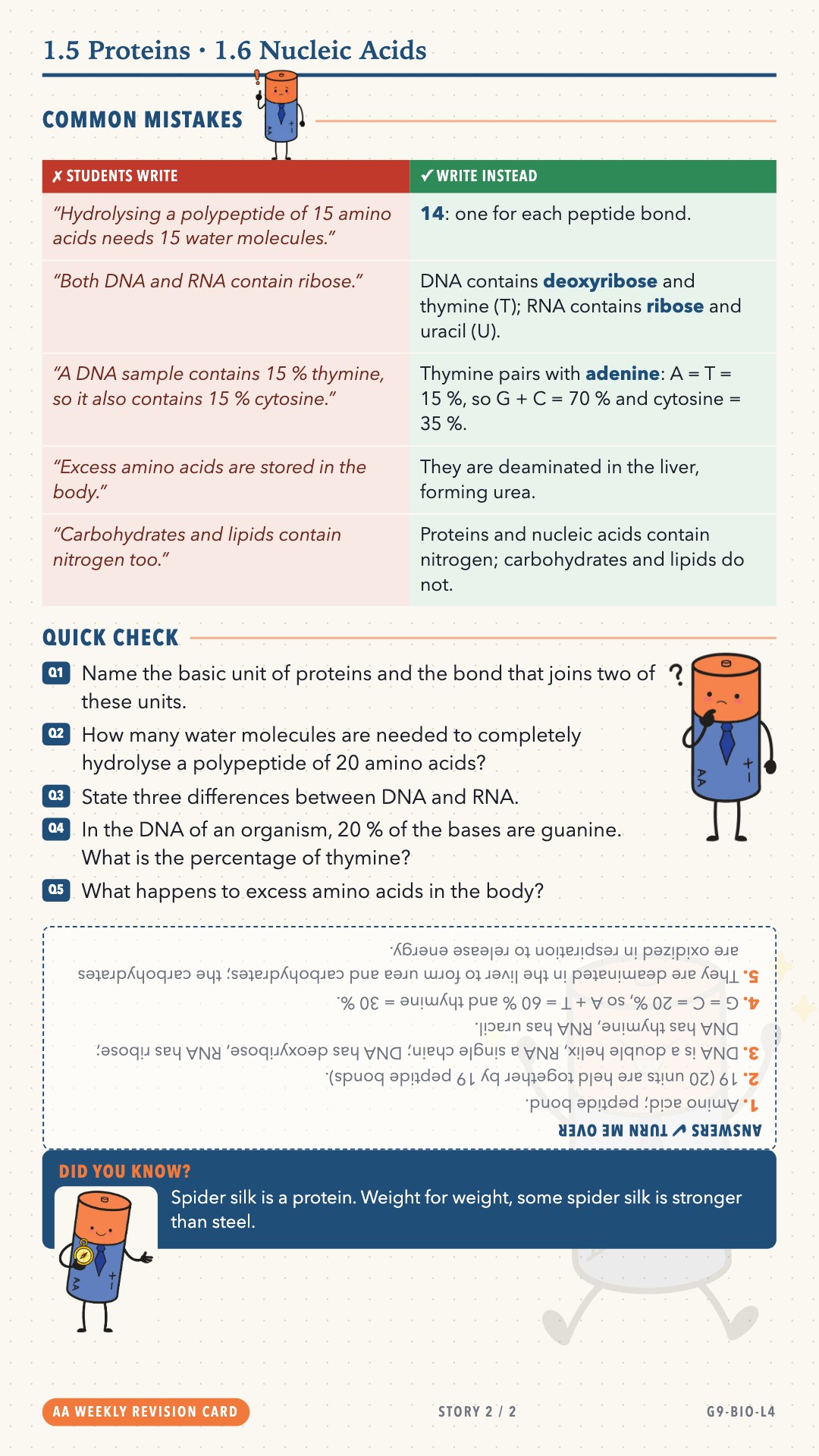
What proteins and nucleic acids are made of, how their units join, and how DNA differs from RNA.
✔ fact-checked · 1 added mistake tagged [likely] · 1.7 MB JPG · card.md ·
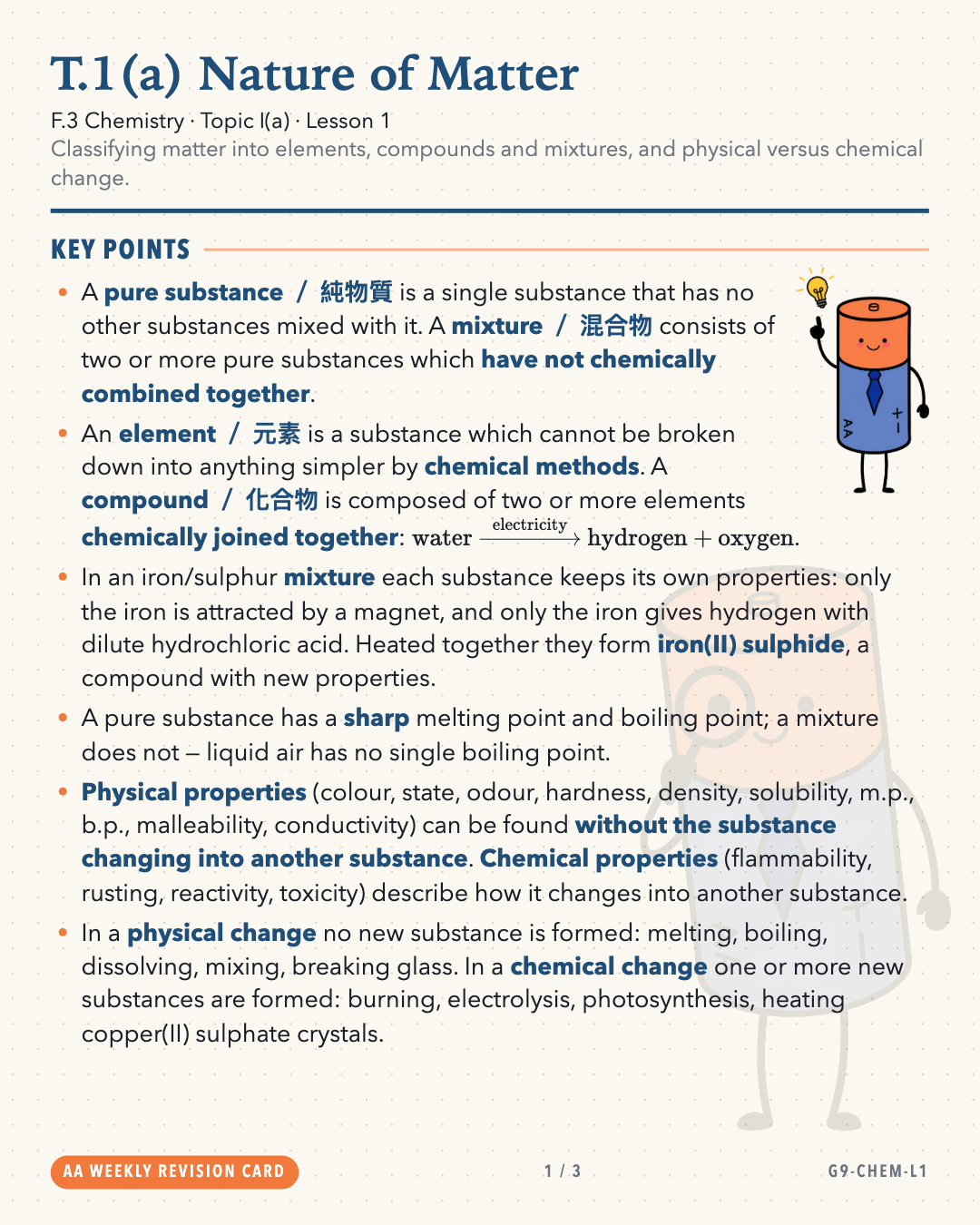
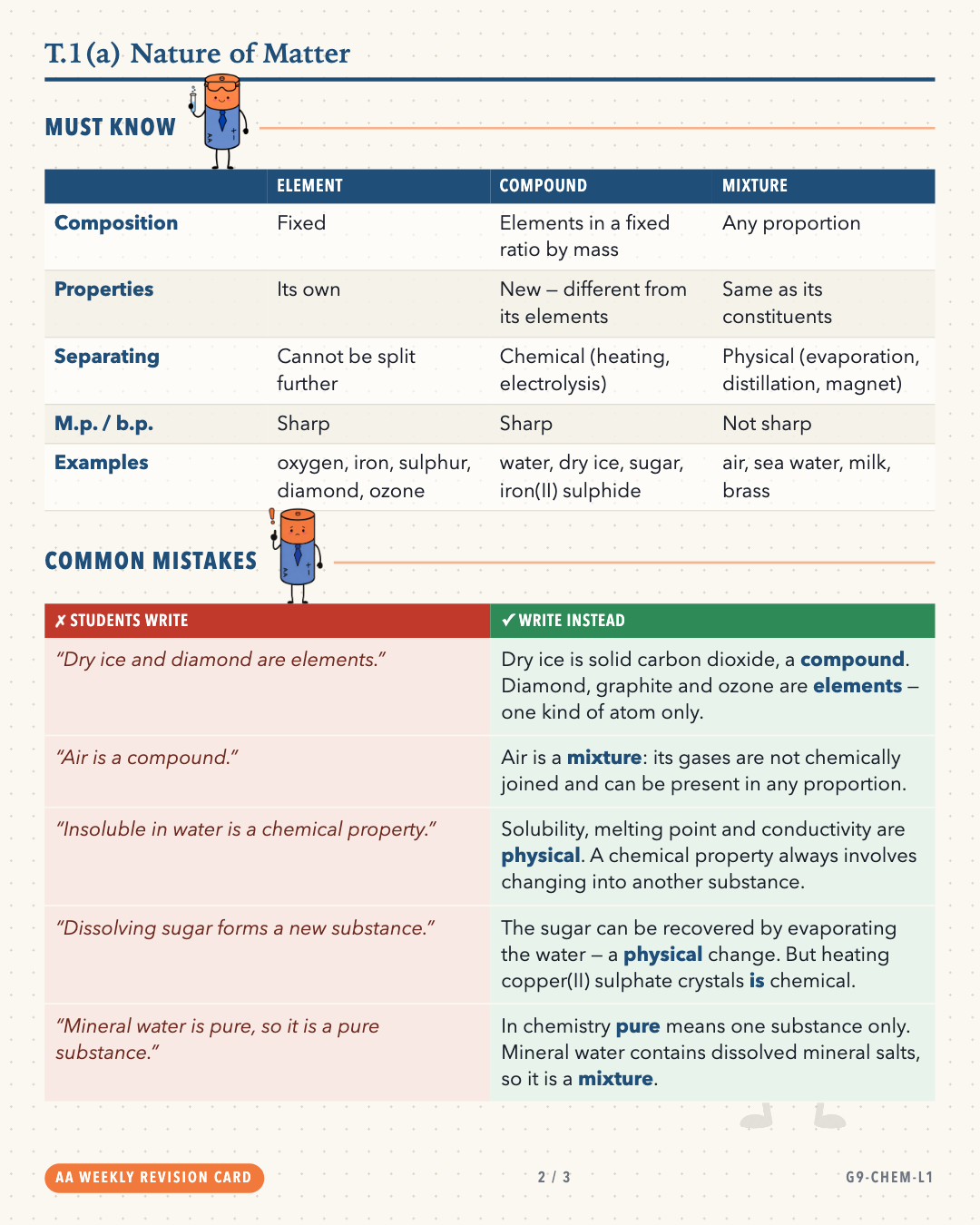
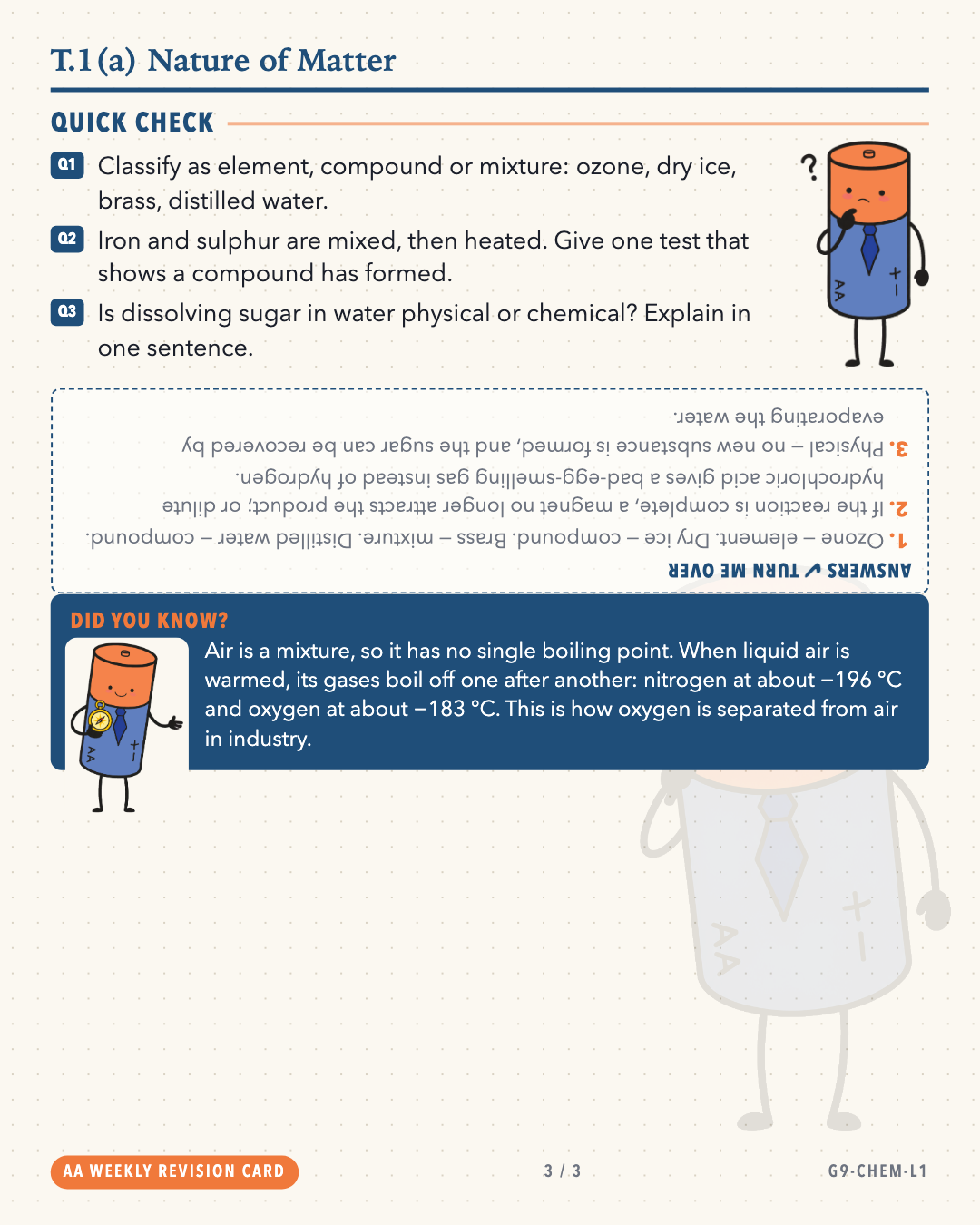
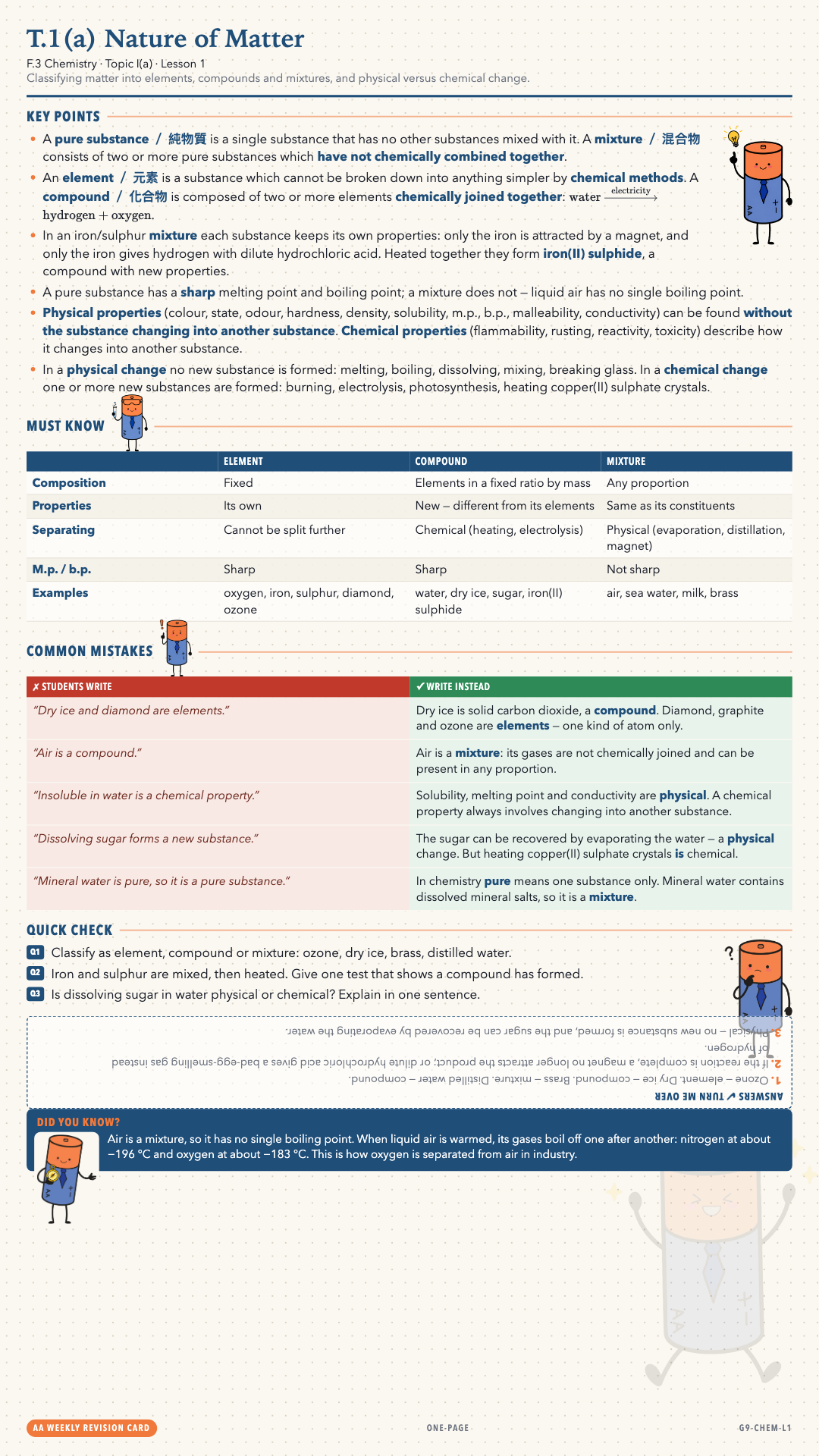
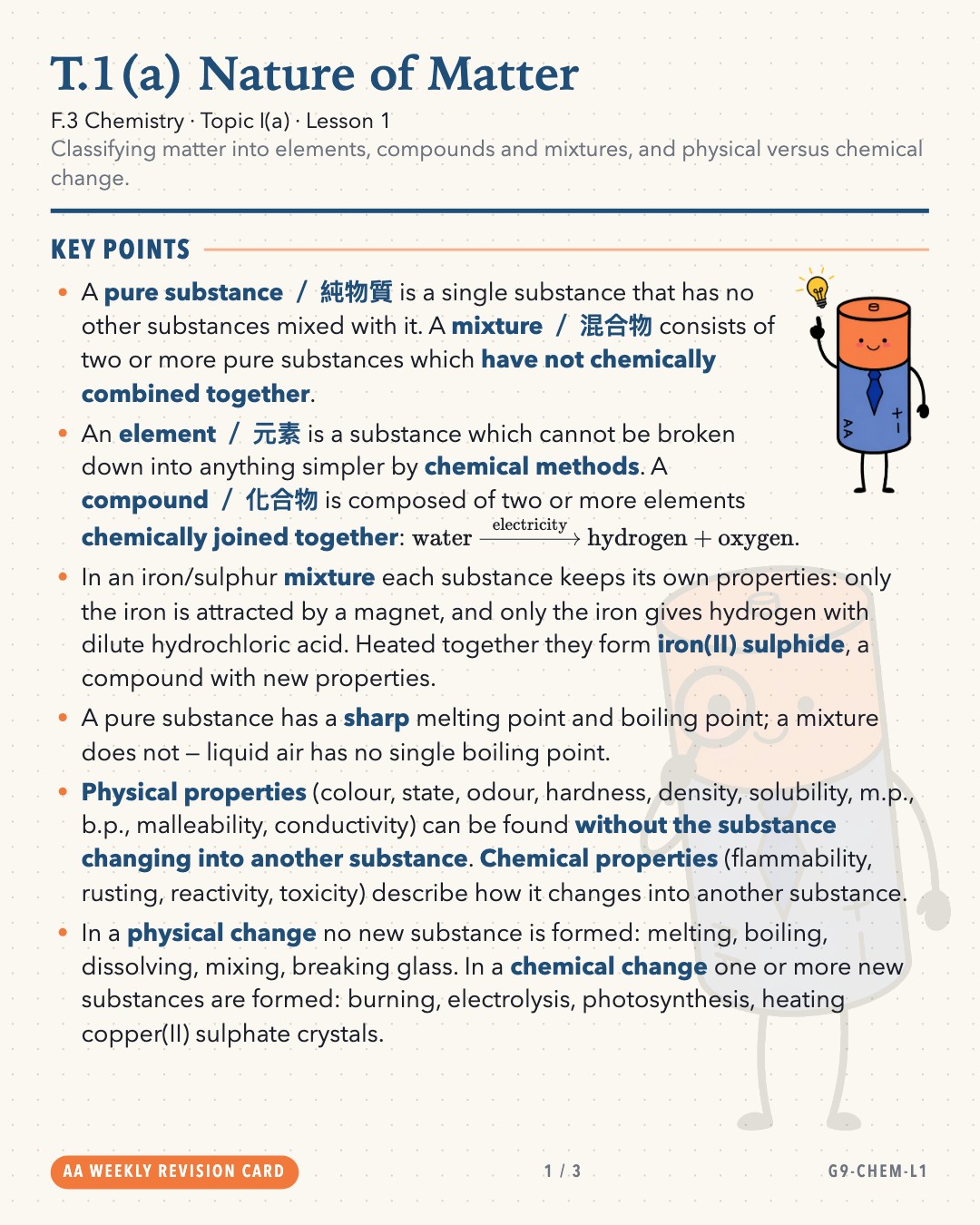
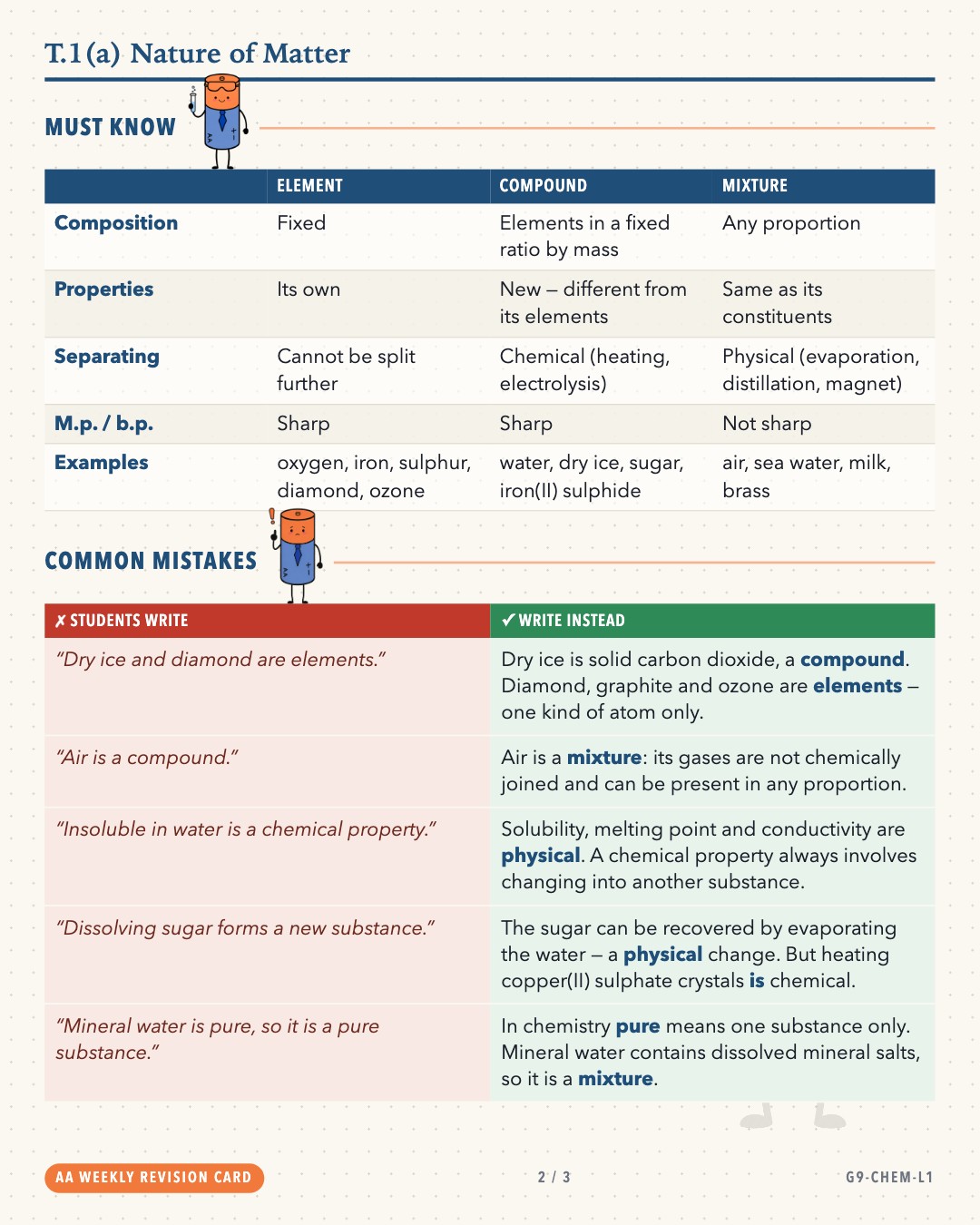
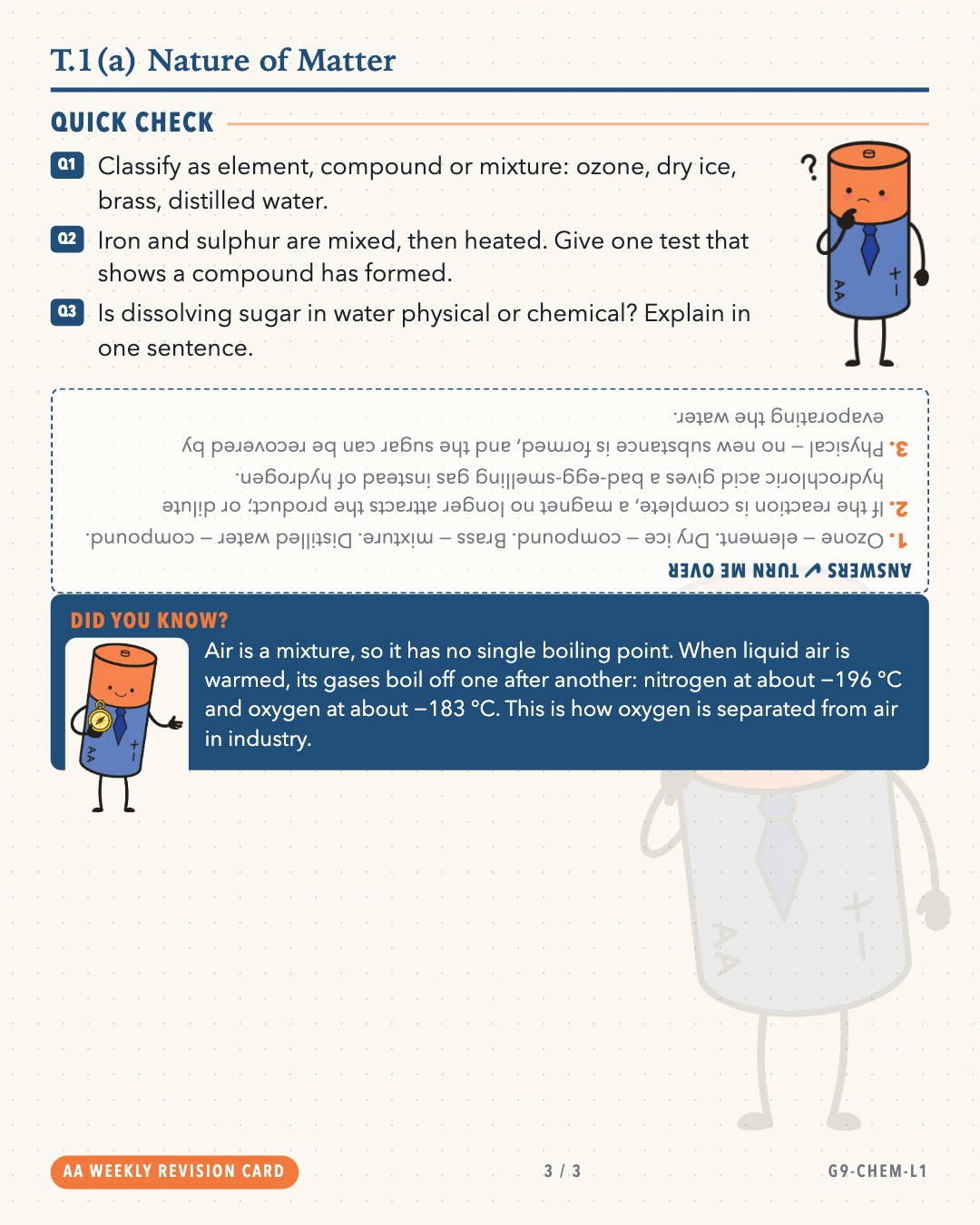
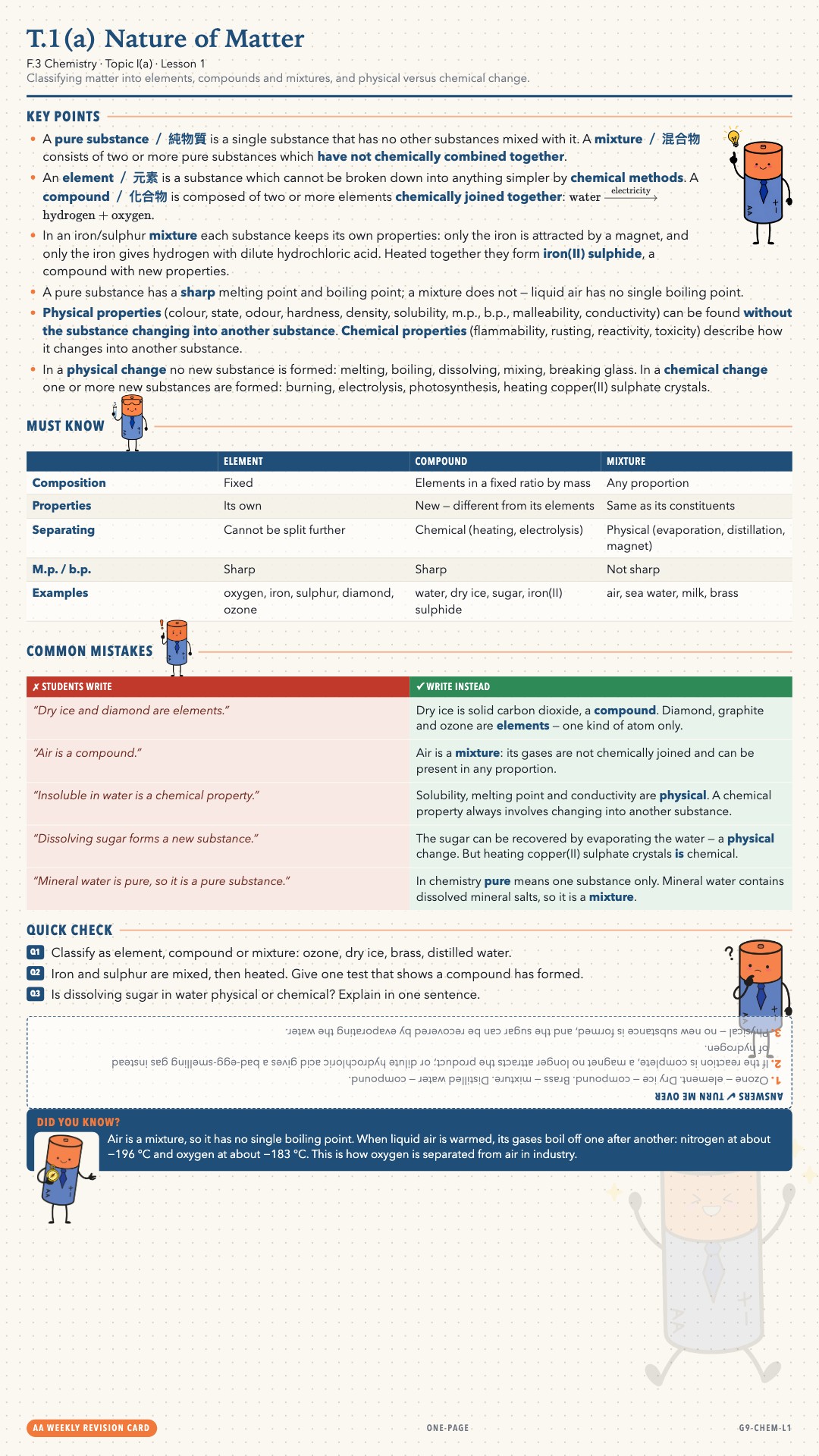
Classifying matter into elements, compounds and mixtures, and physical versus chemical change.
✔ fact-checked · 2 added mistakes tagged [likely] · 1.3 MB JPG · card.md ·
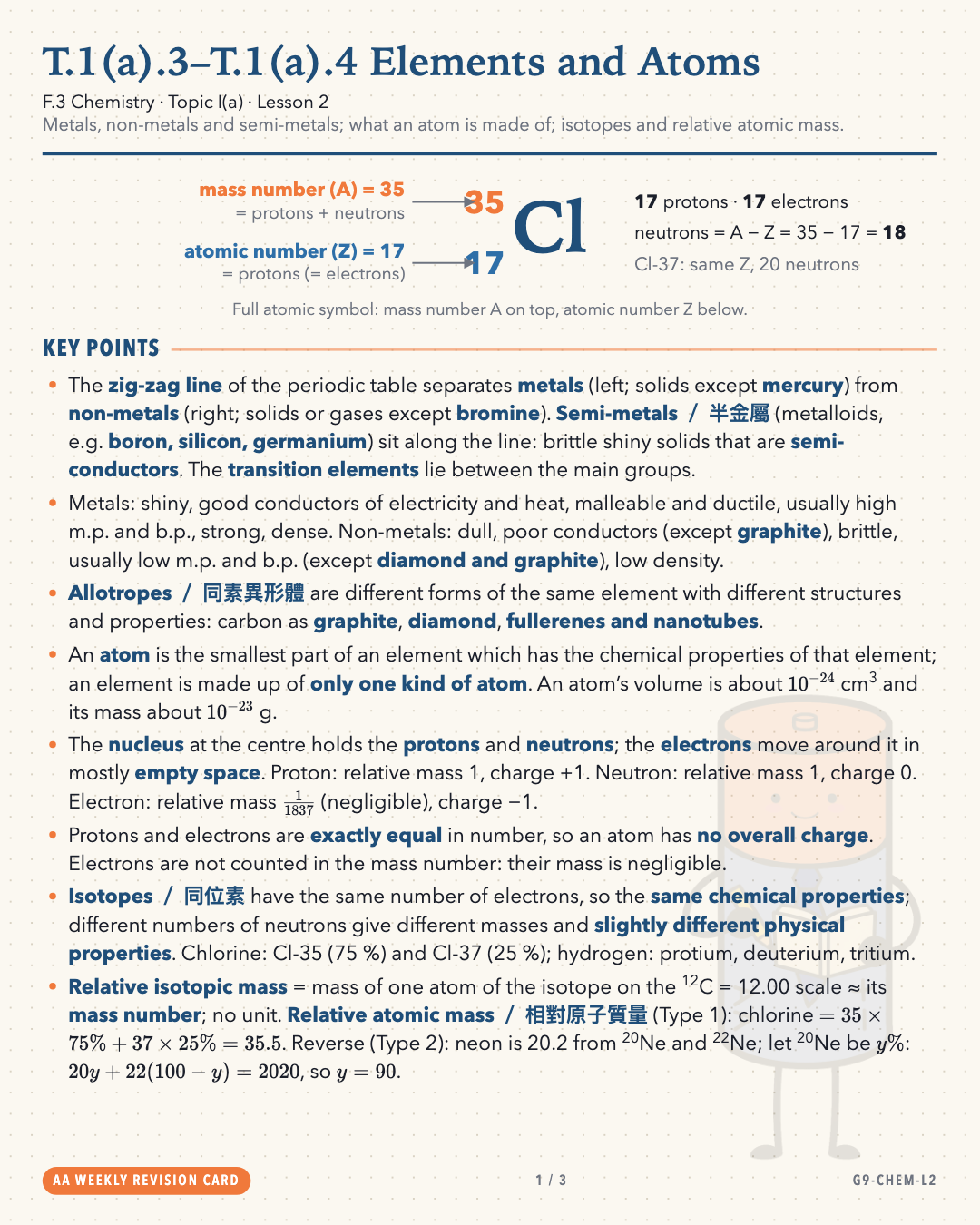
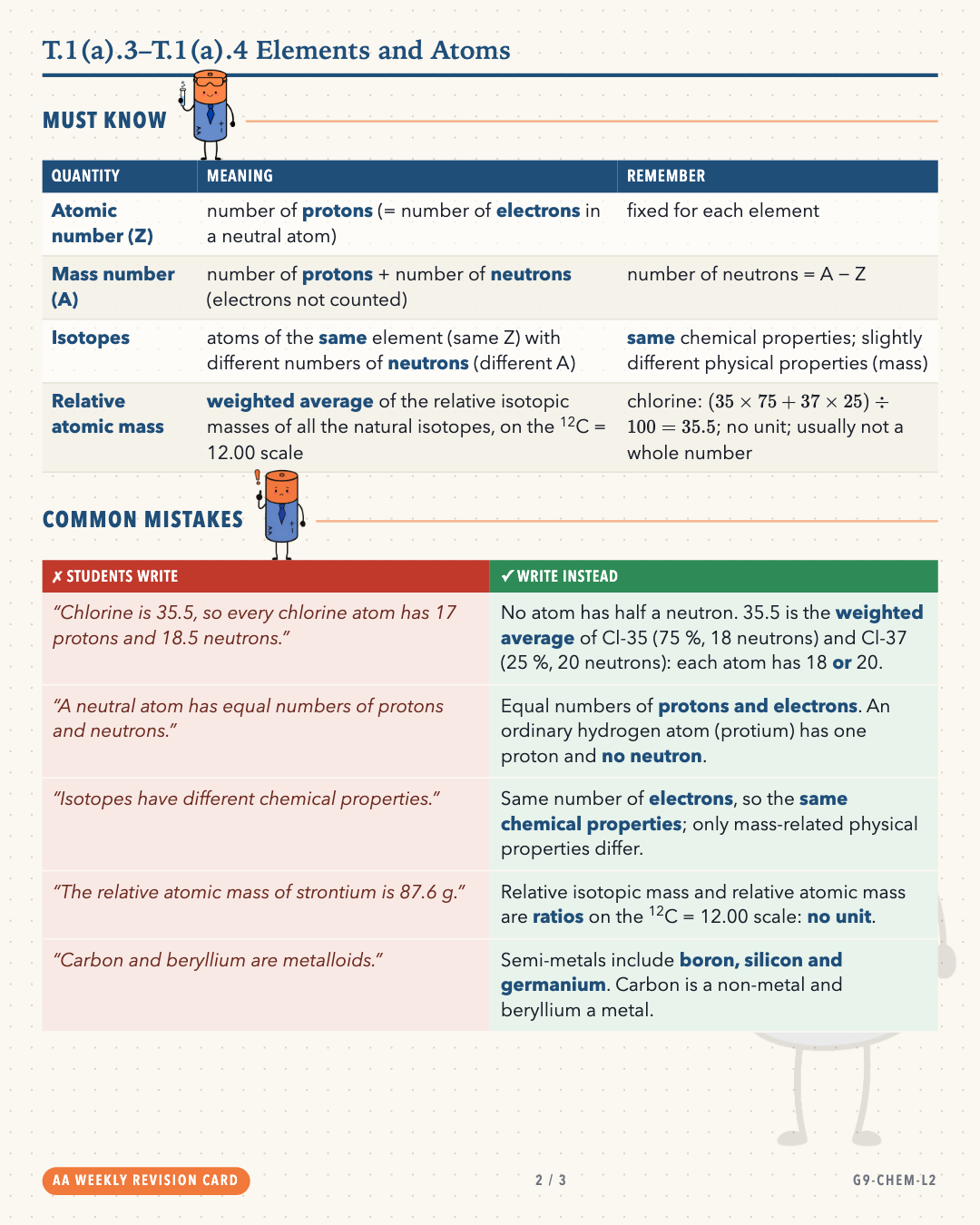
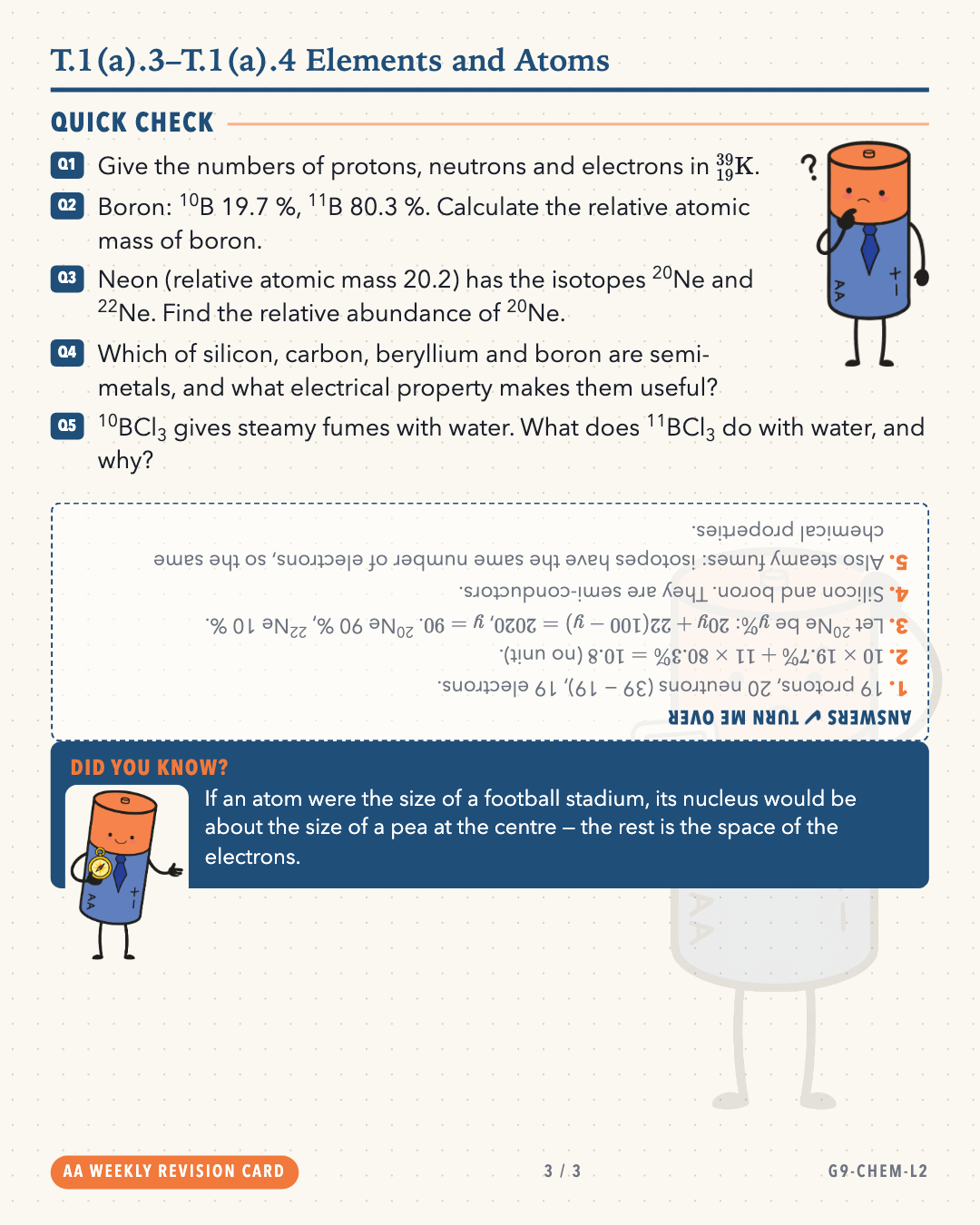
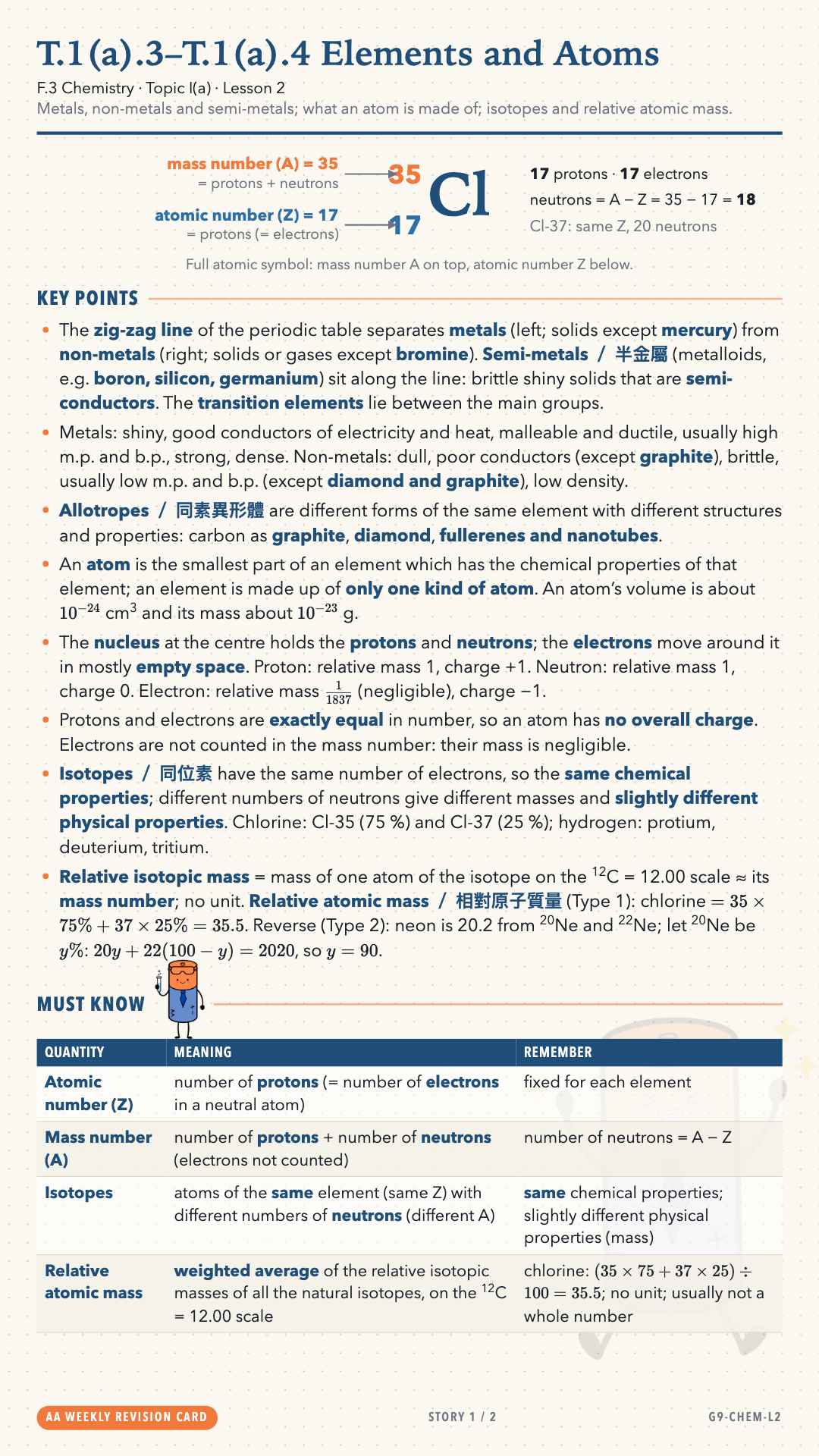
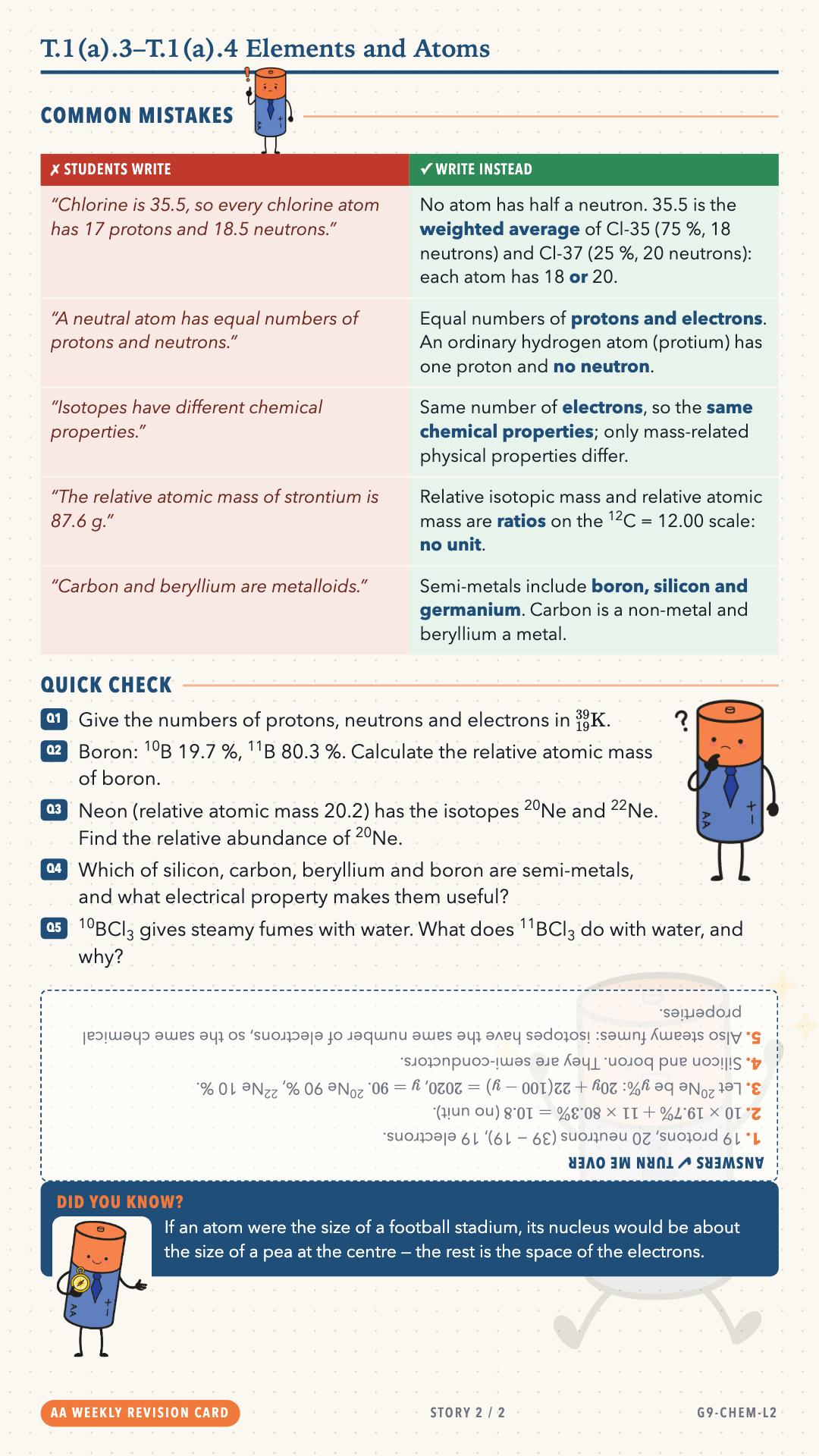
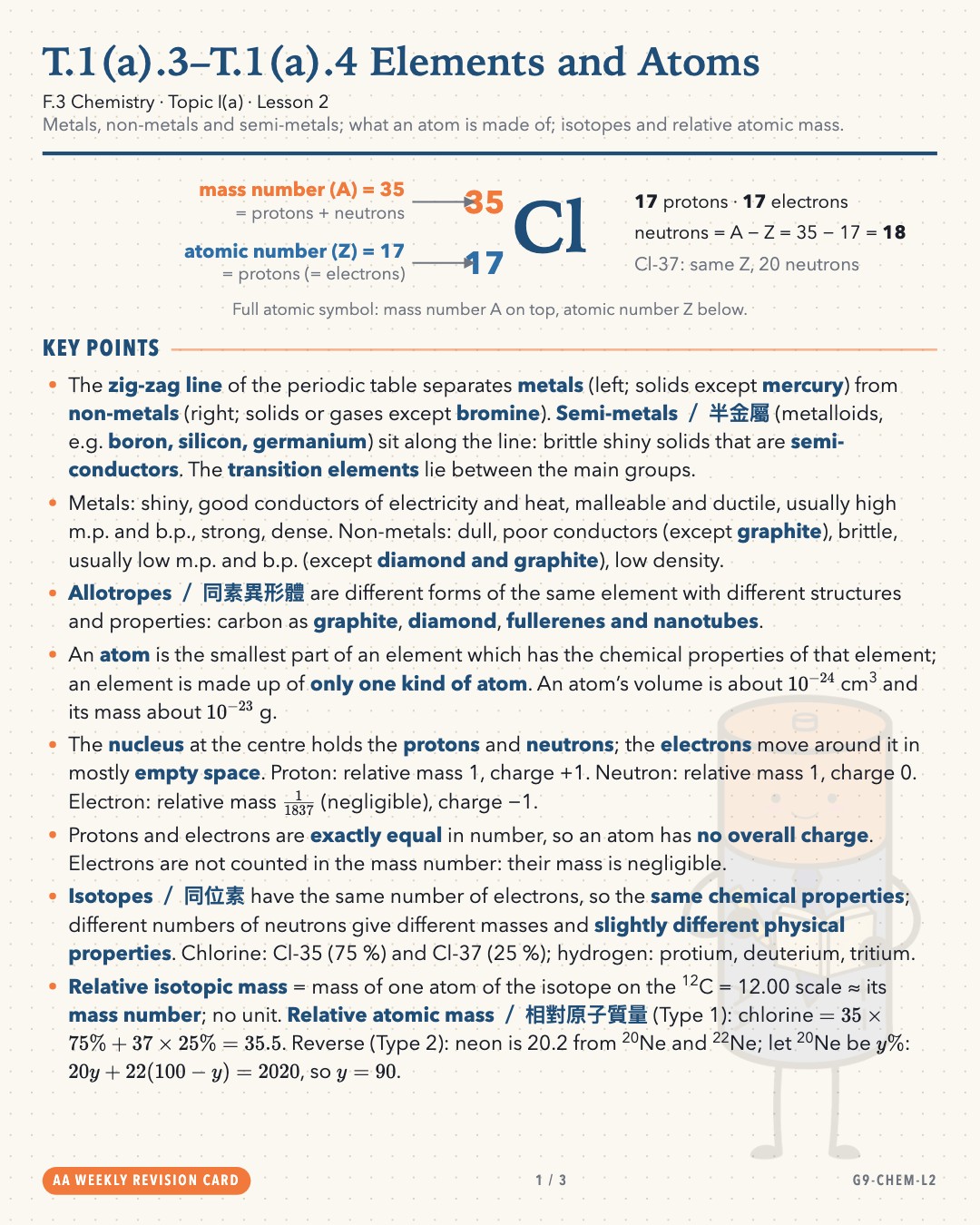
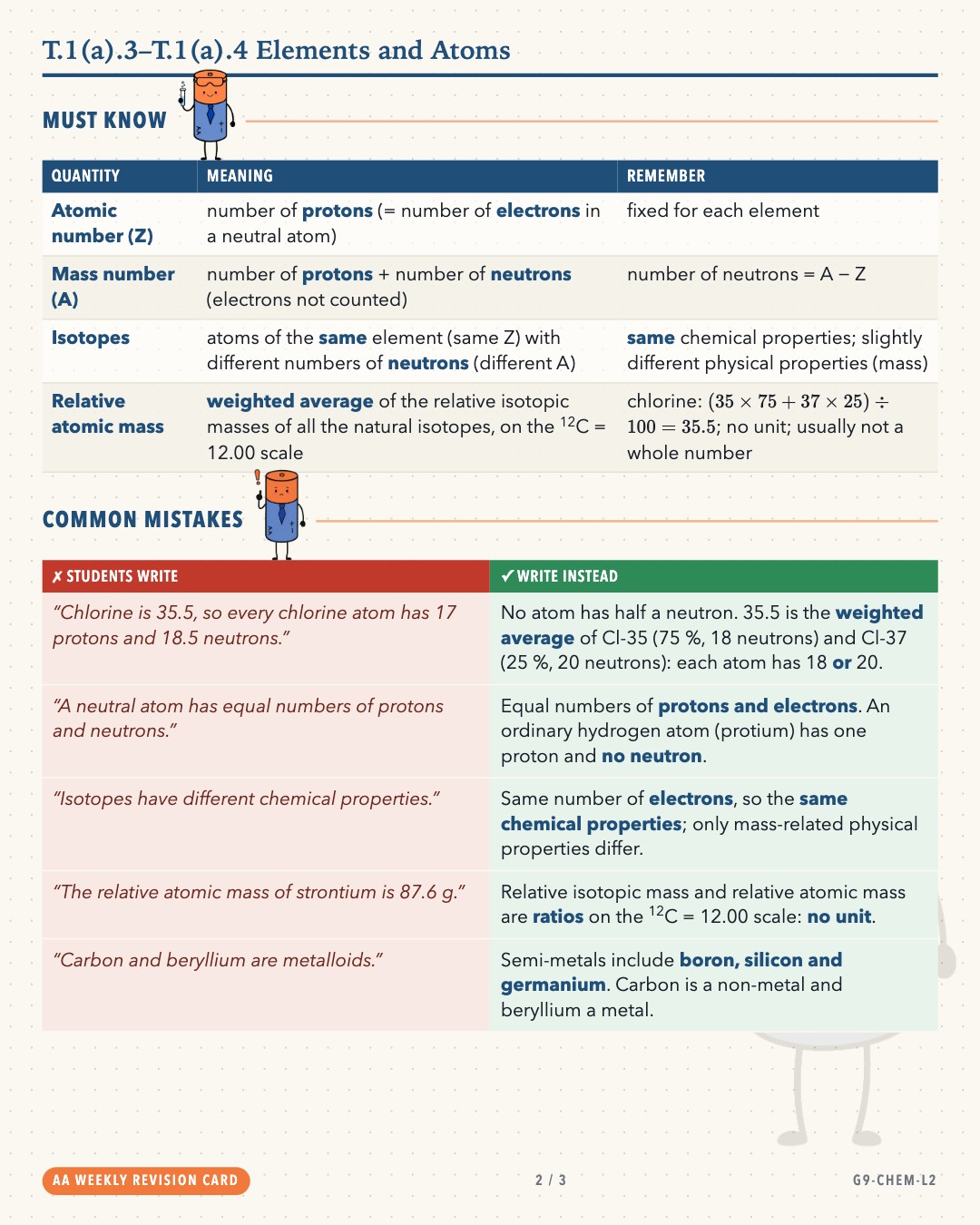
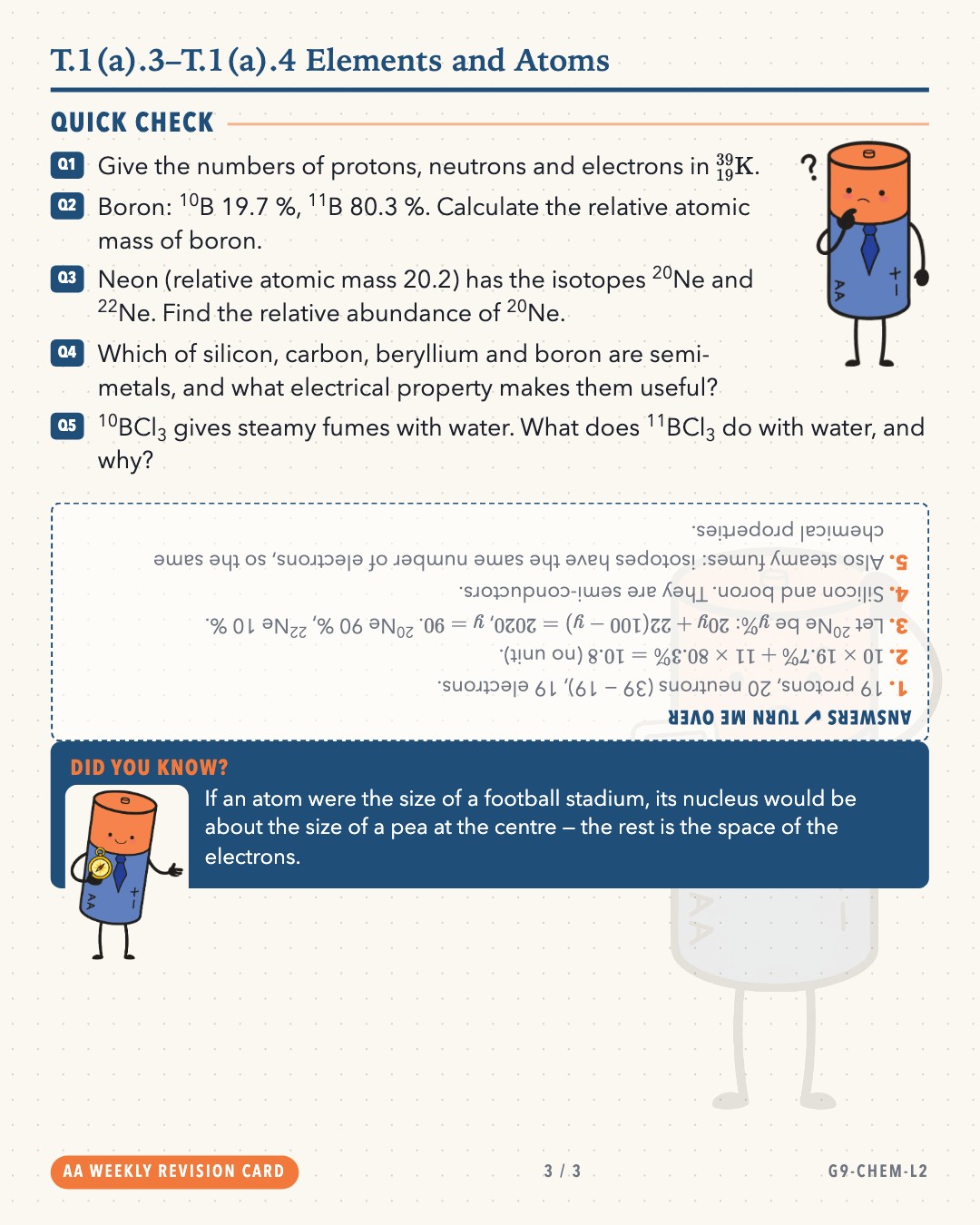
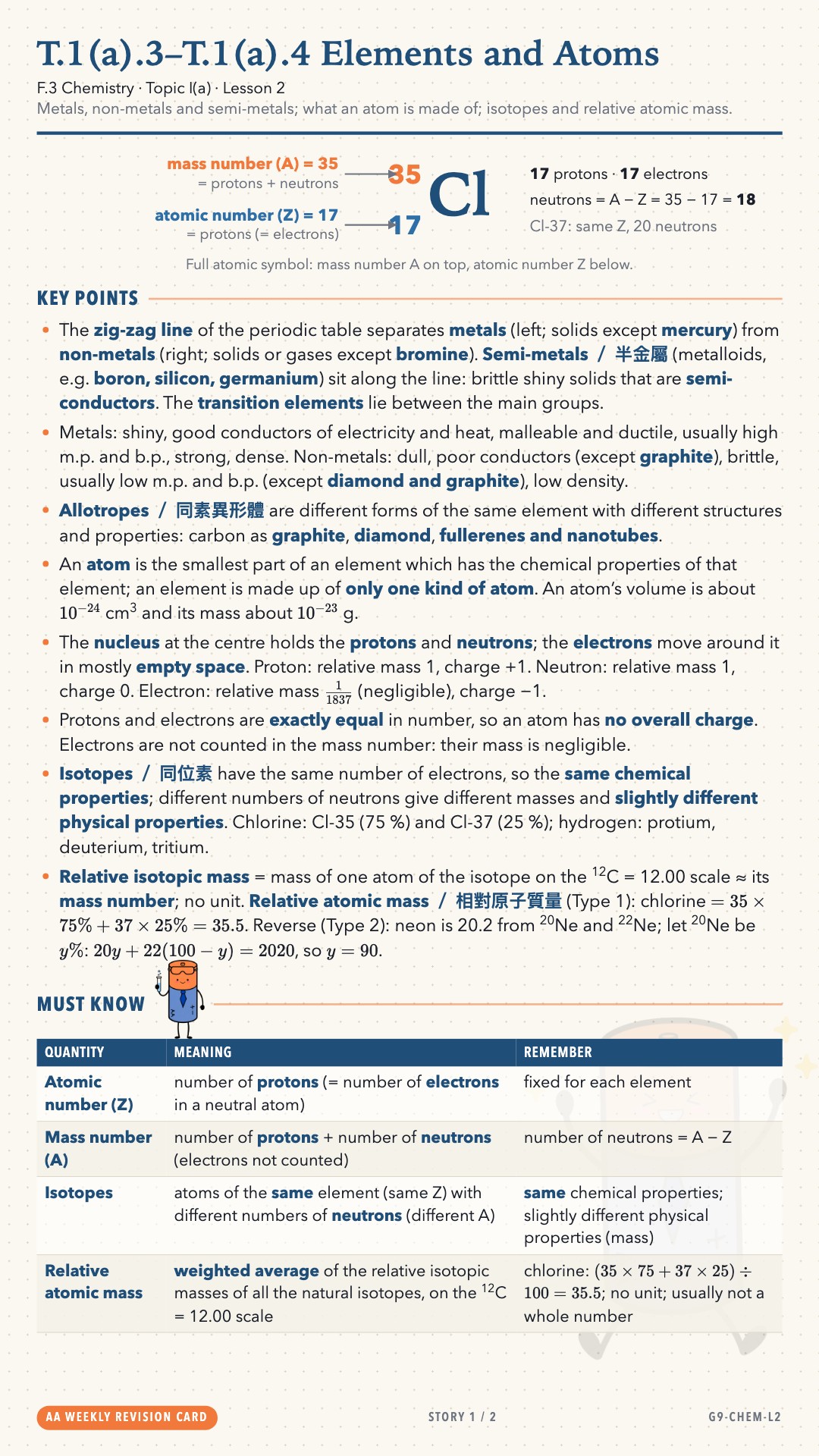
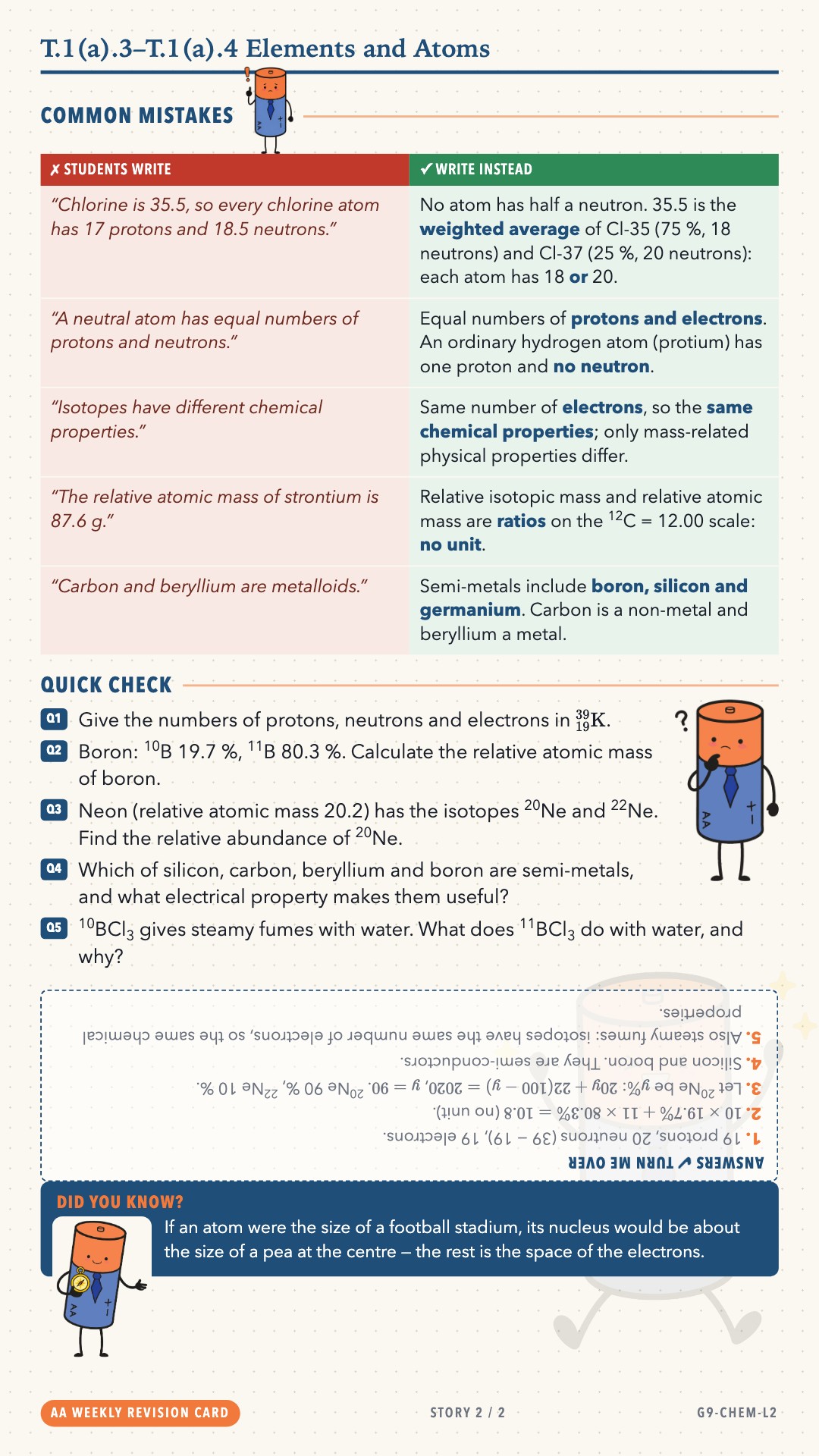
Metals, non-metals and semi-metals; what an atom is made of; isotopes and relative atomic mass.
✔ fact-checked · 1 added mistake tagged [likely] · 1.9 MB JPG · card.md ·
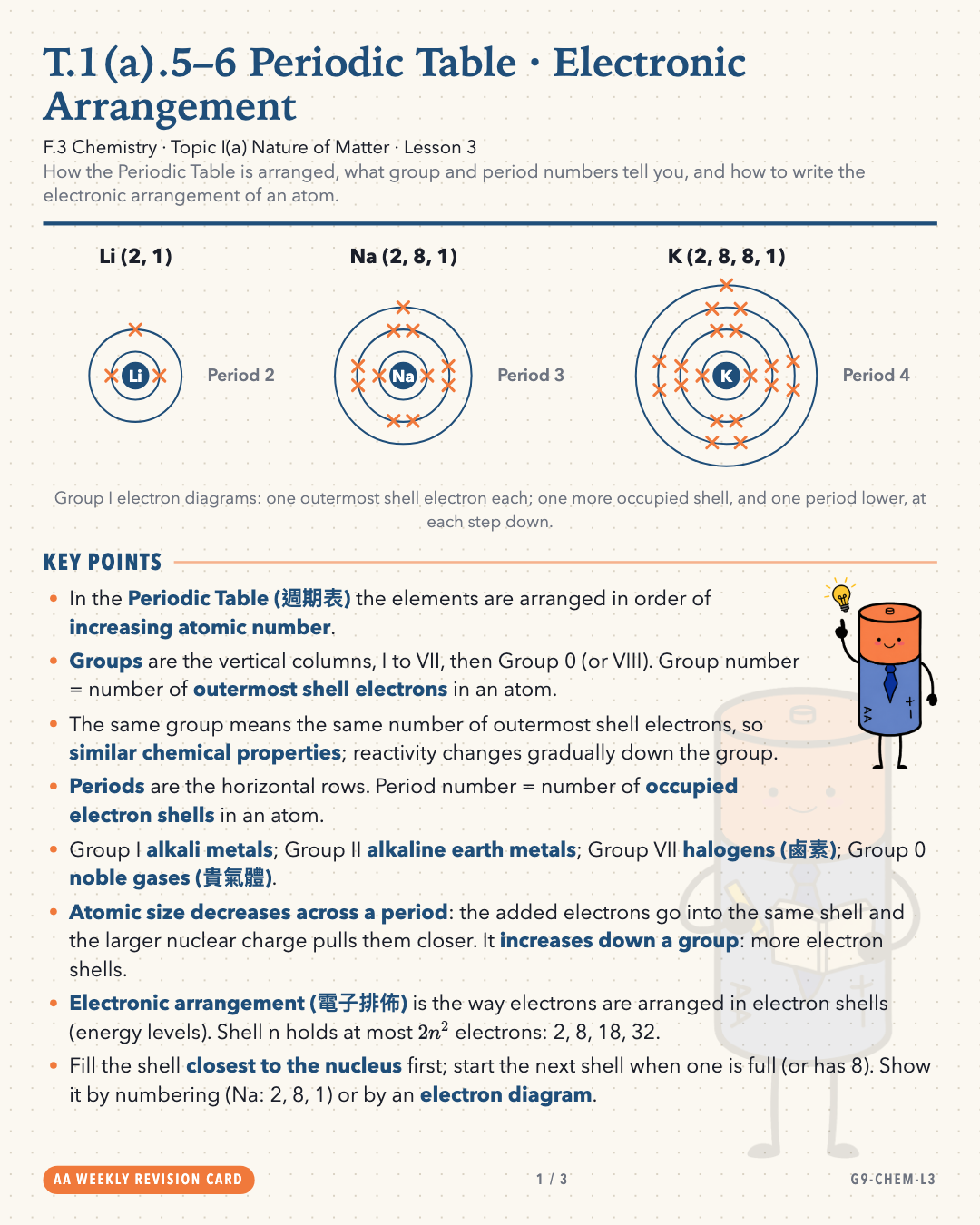
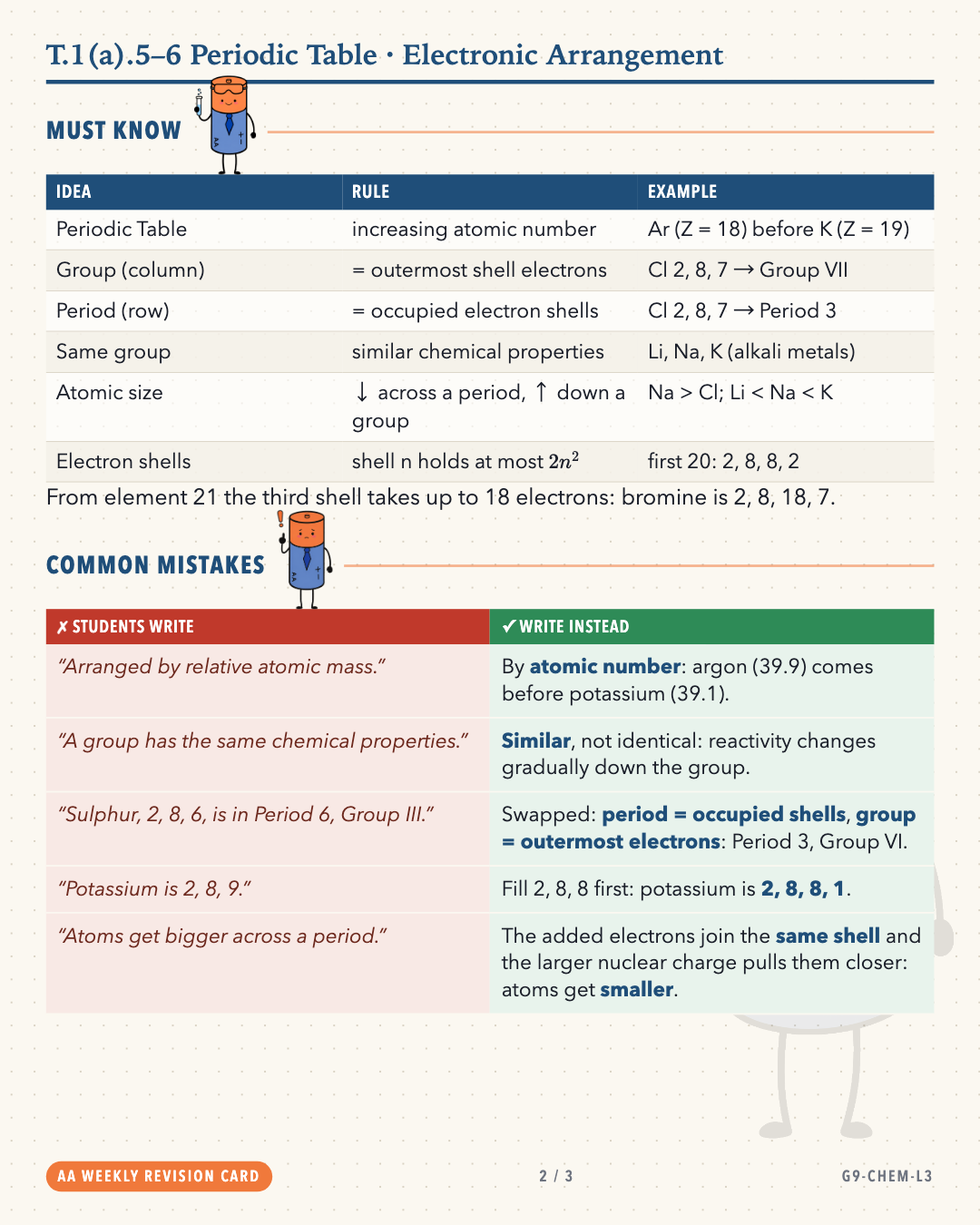
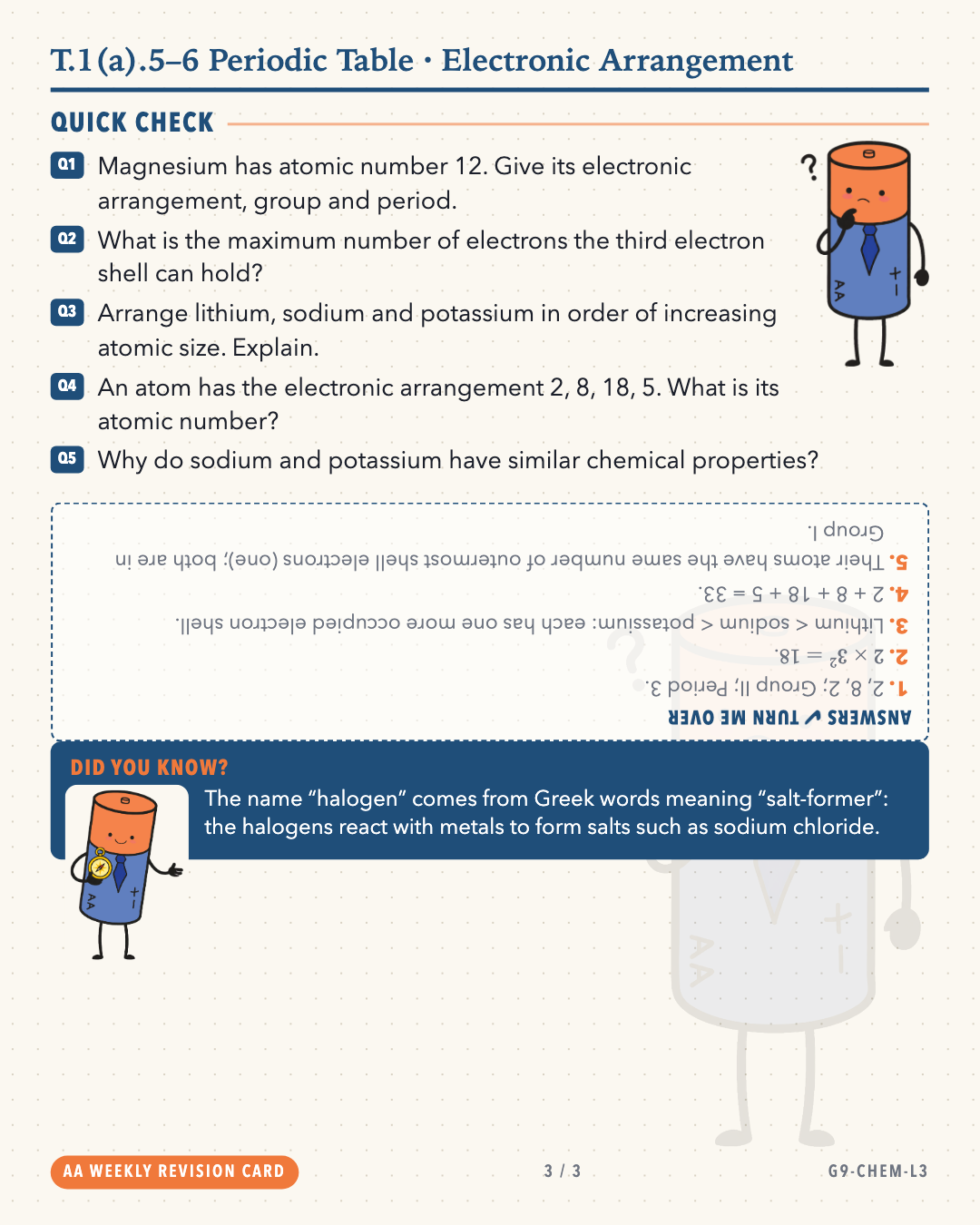
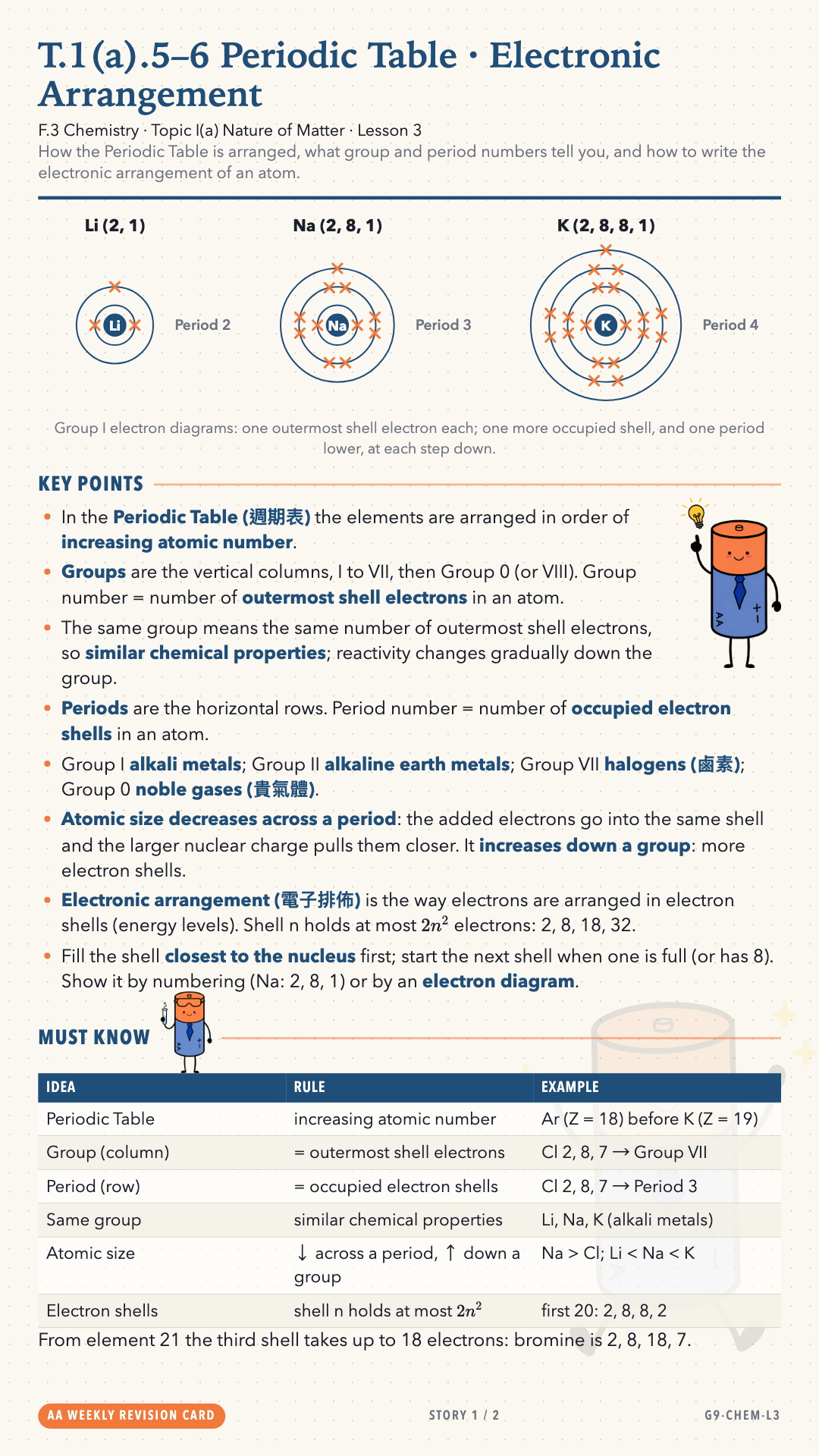
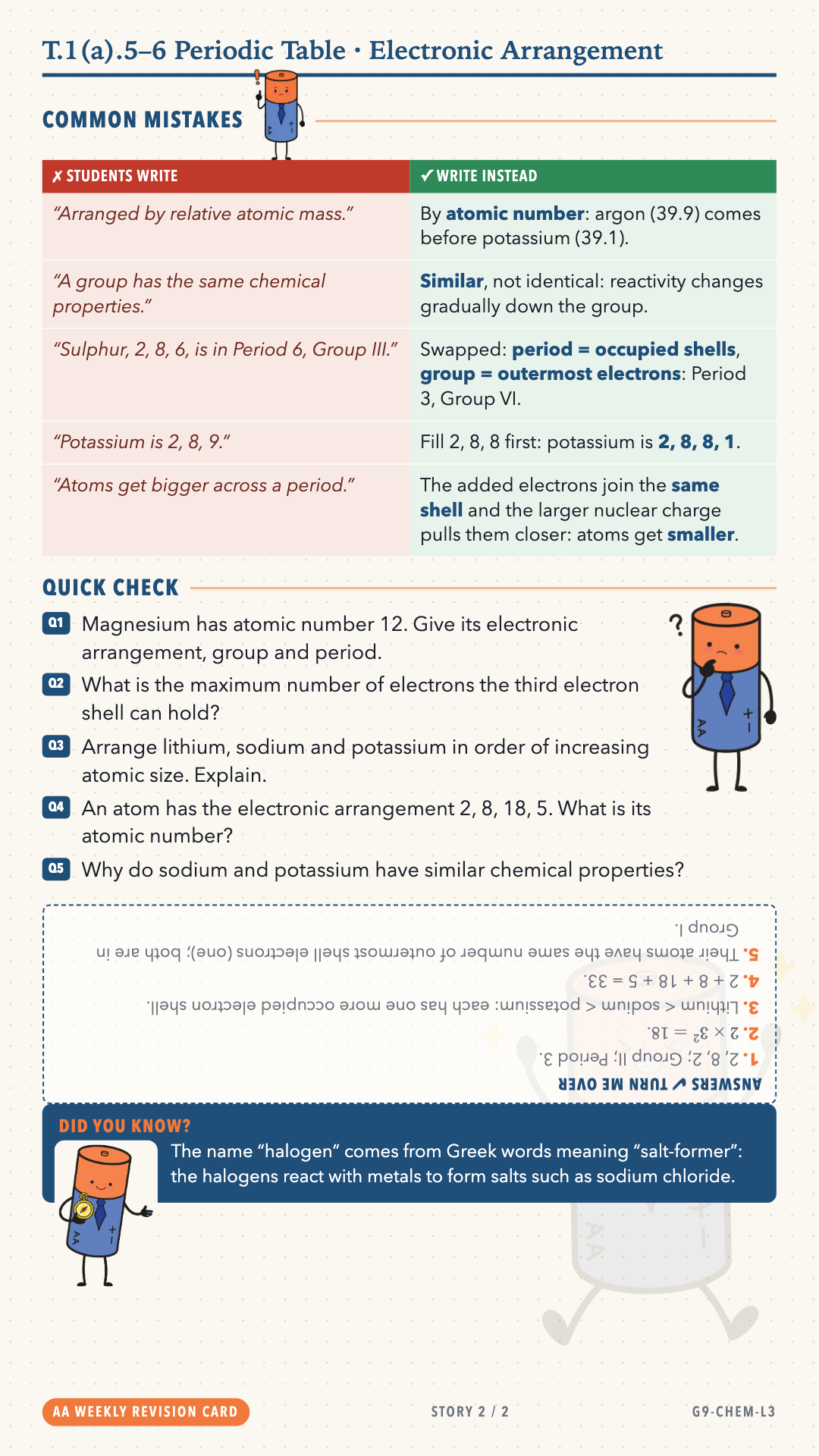
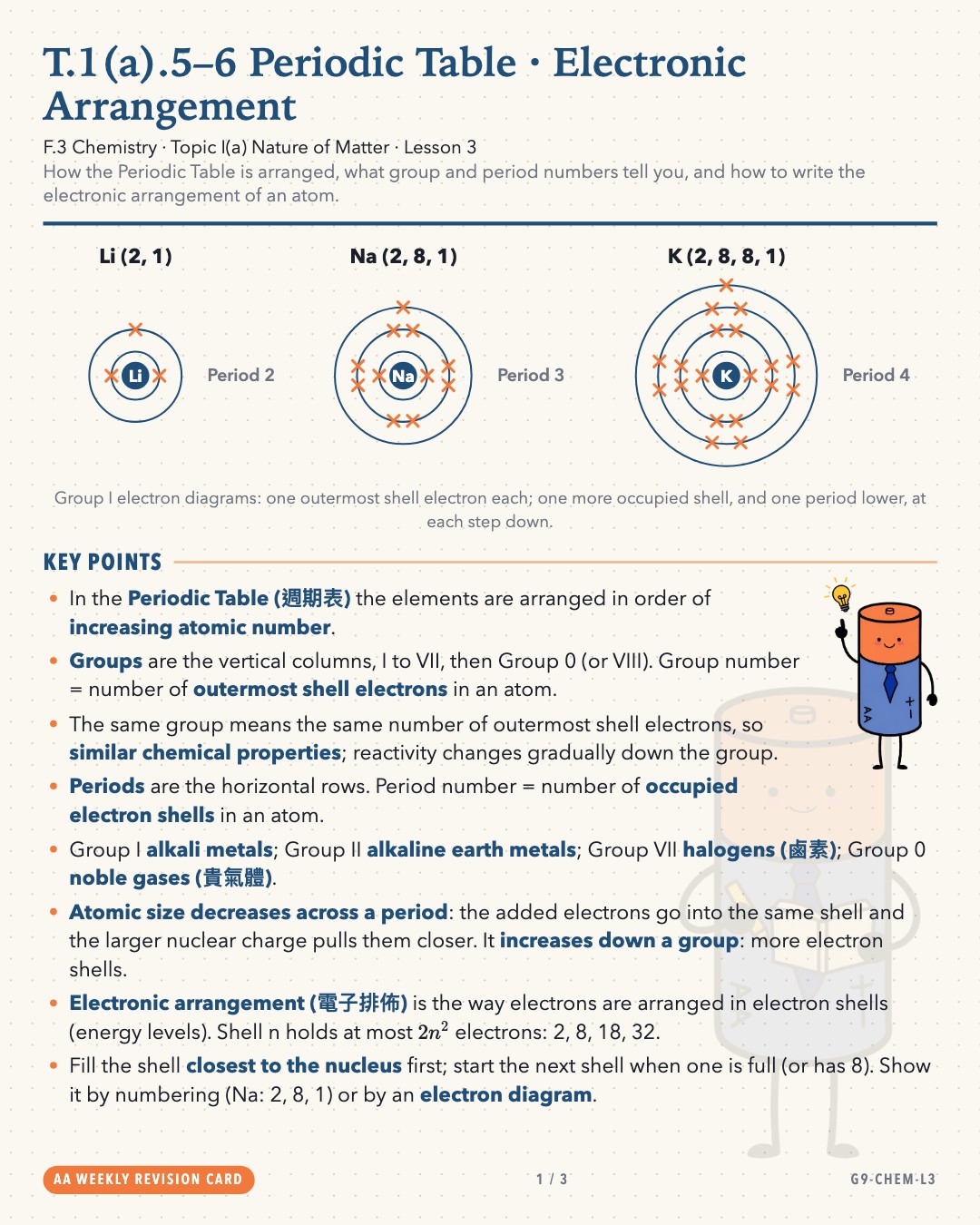
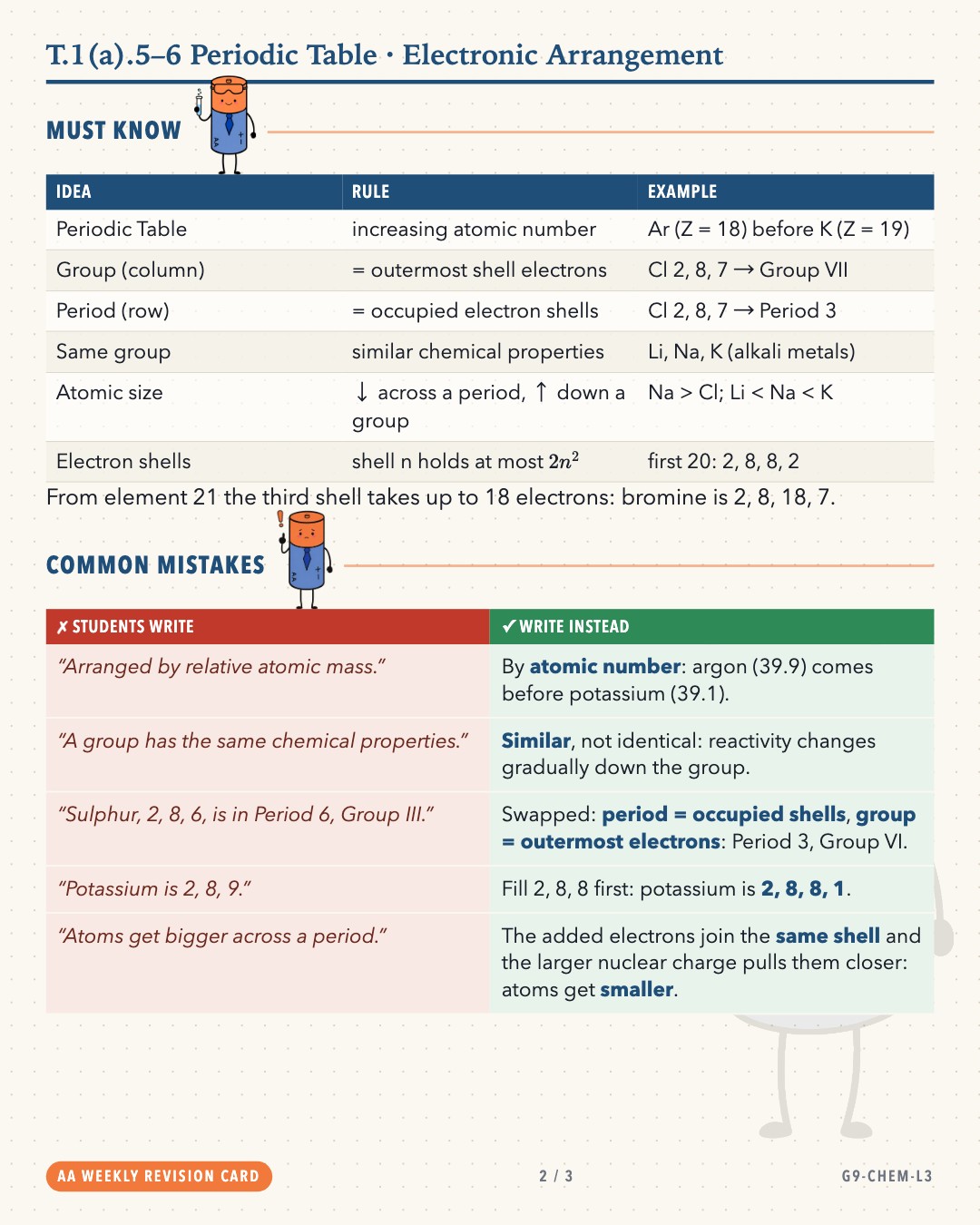
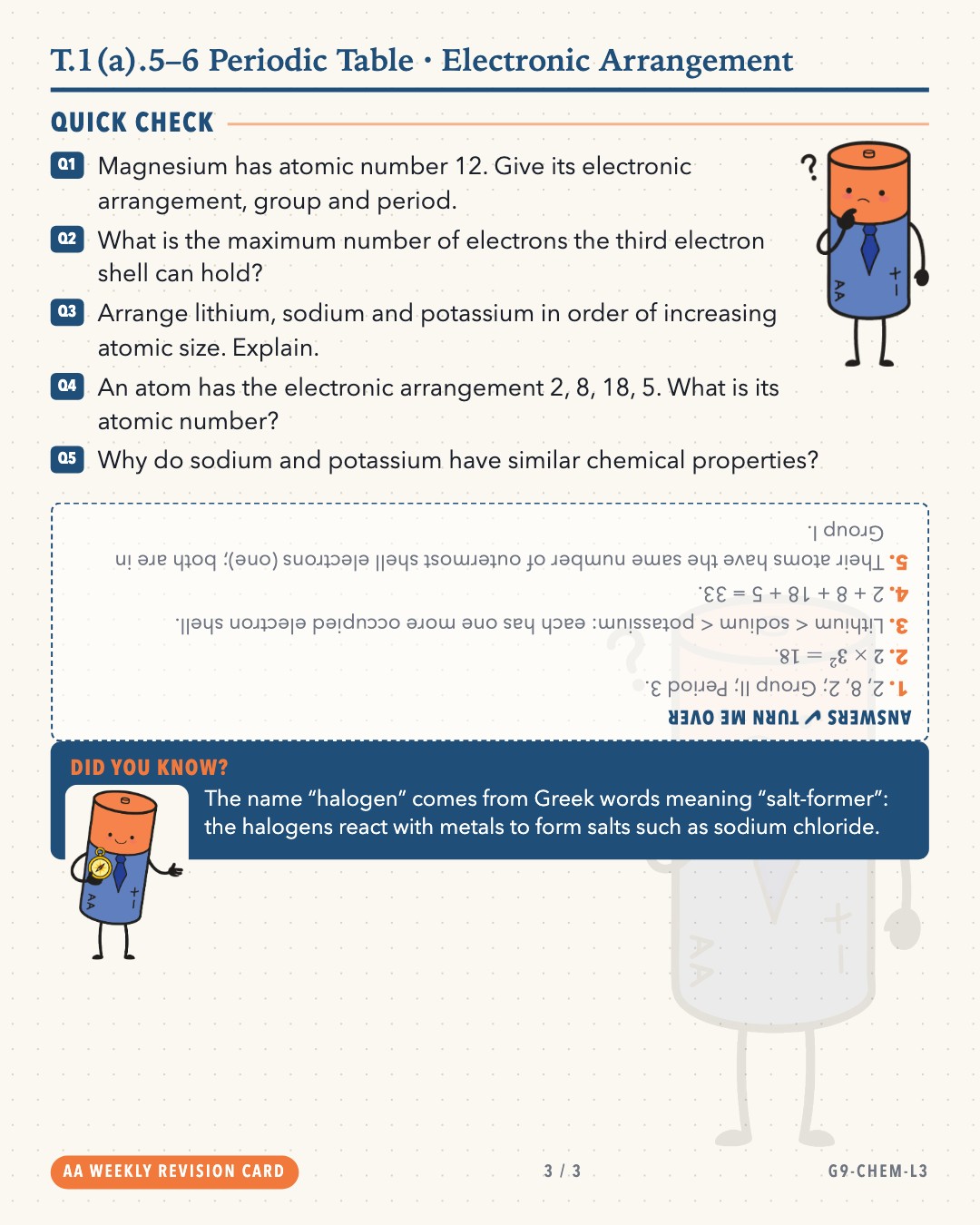
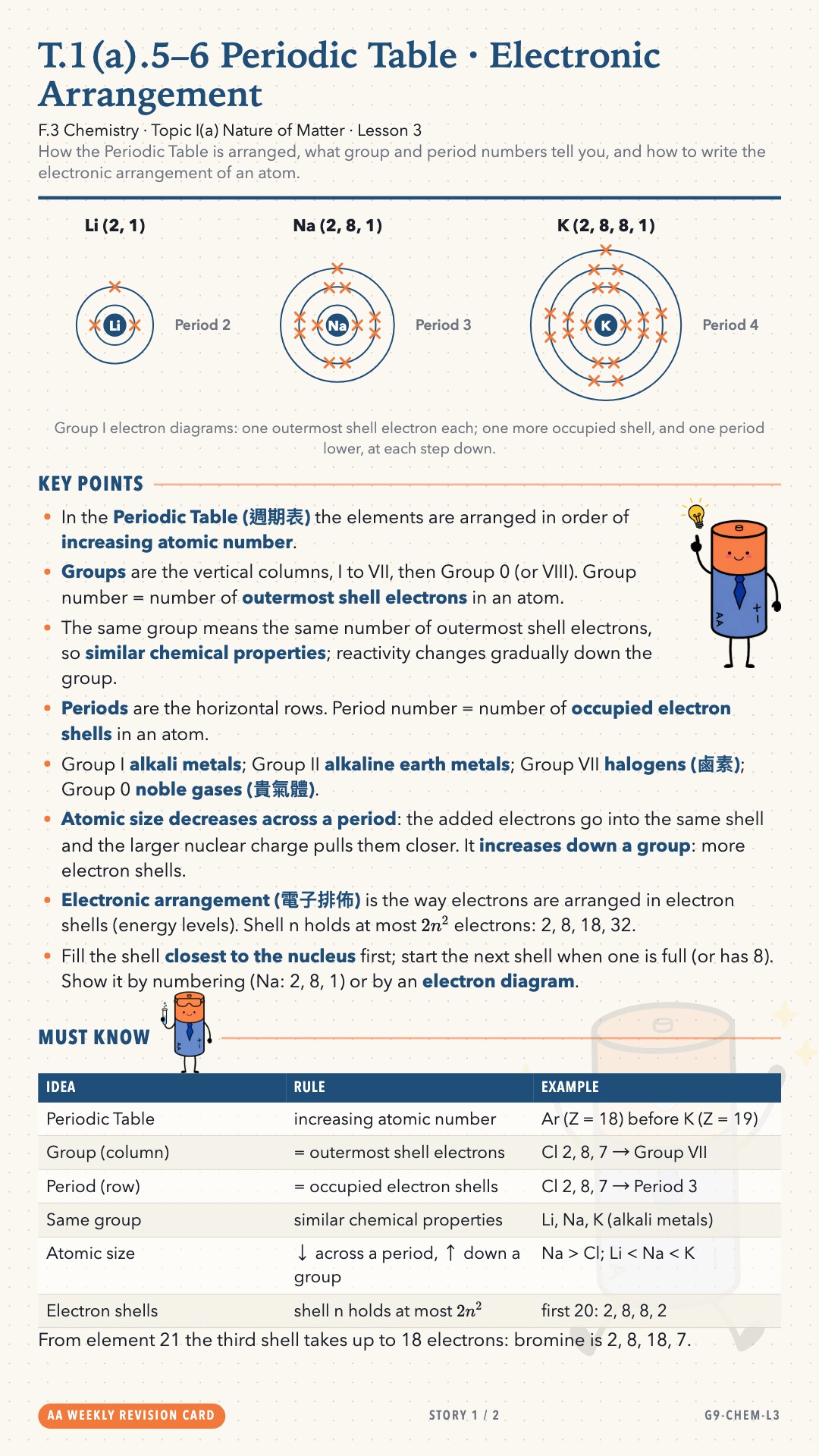
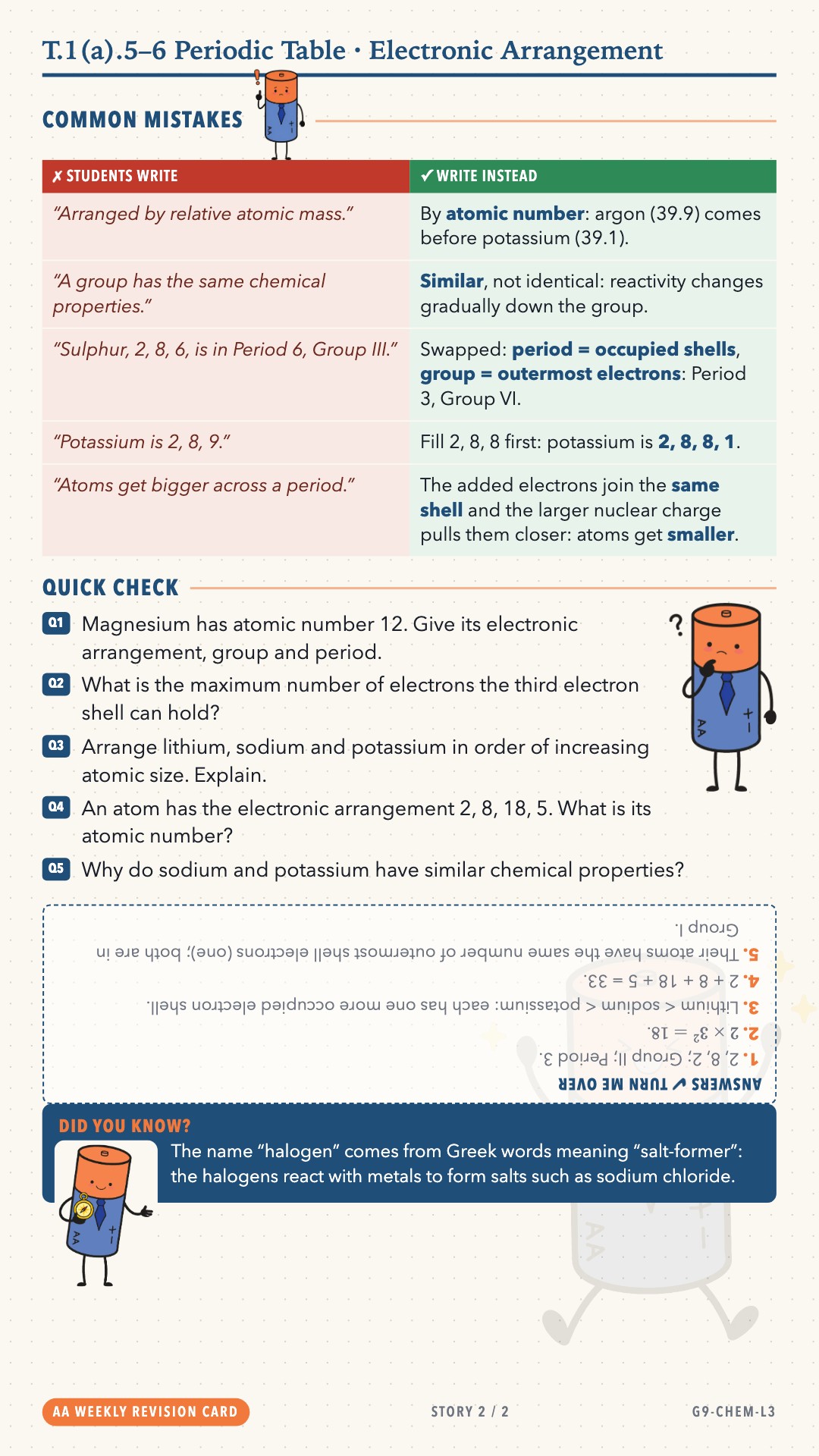
How the Periodic Table is arranged, what group and period numbers tell you, and how to write the electronic arrangement of an atom.
✔ fact-checked · 1 added mistake tagged [likely] · 1.7 MB JPG · card.md ·
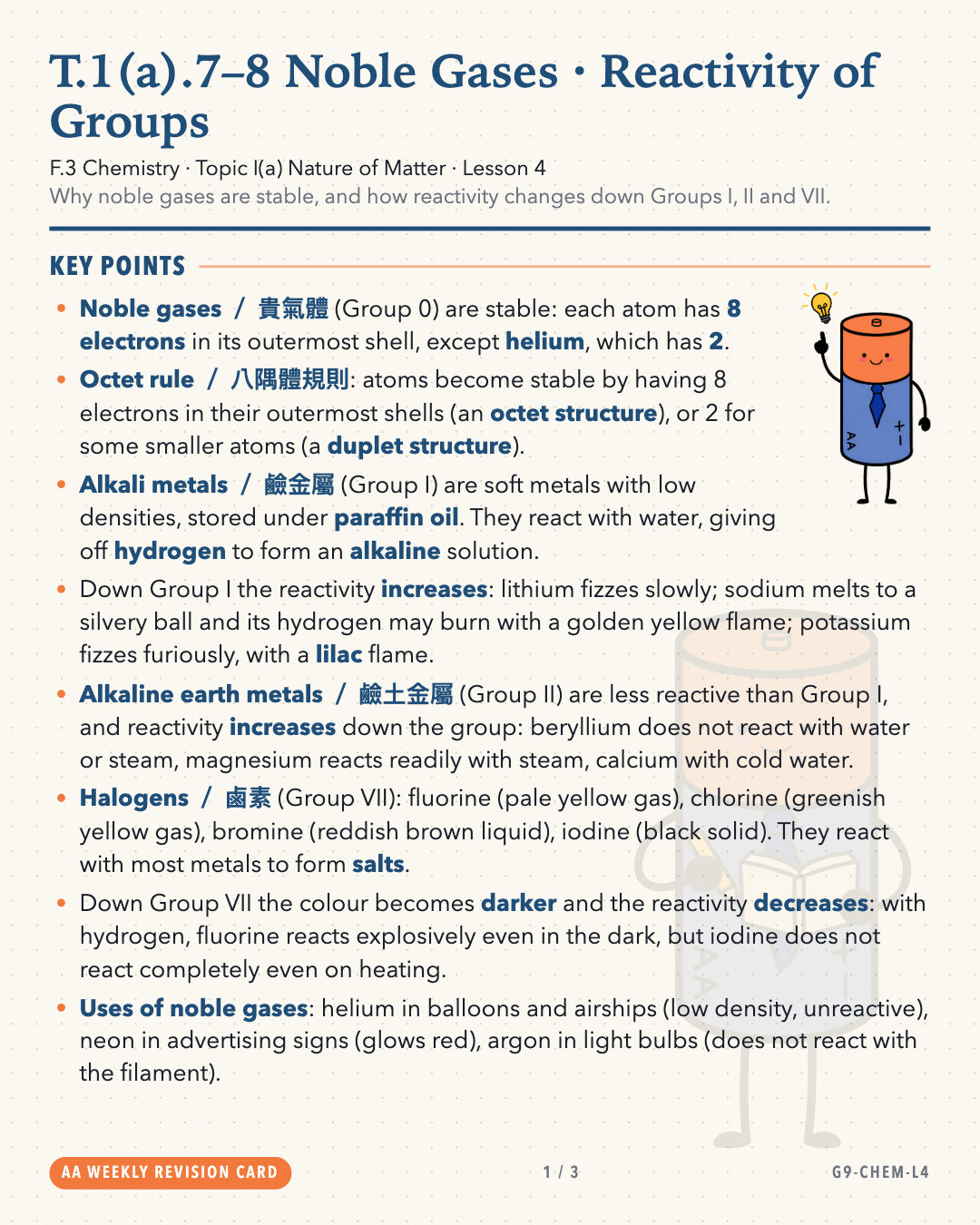
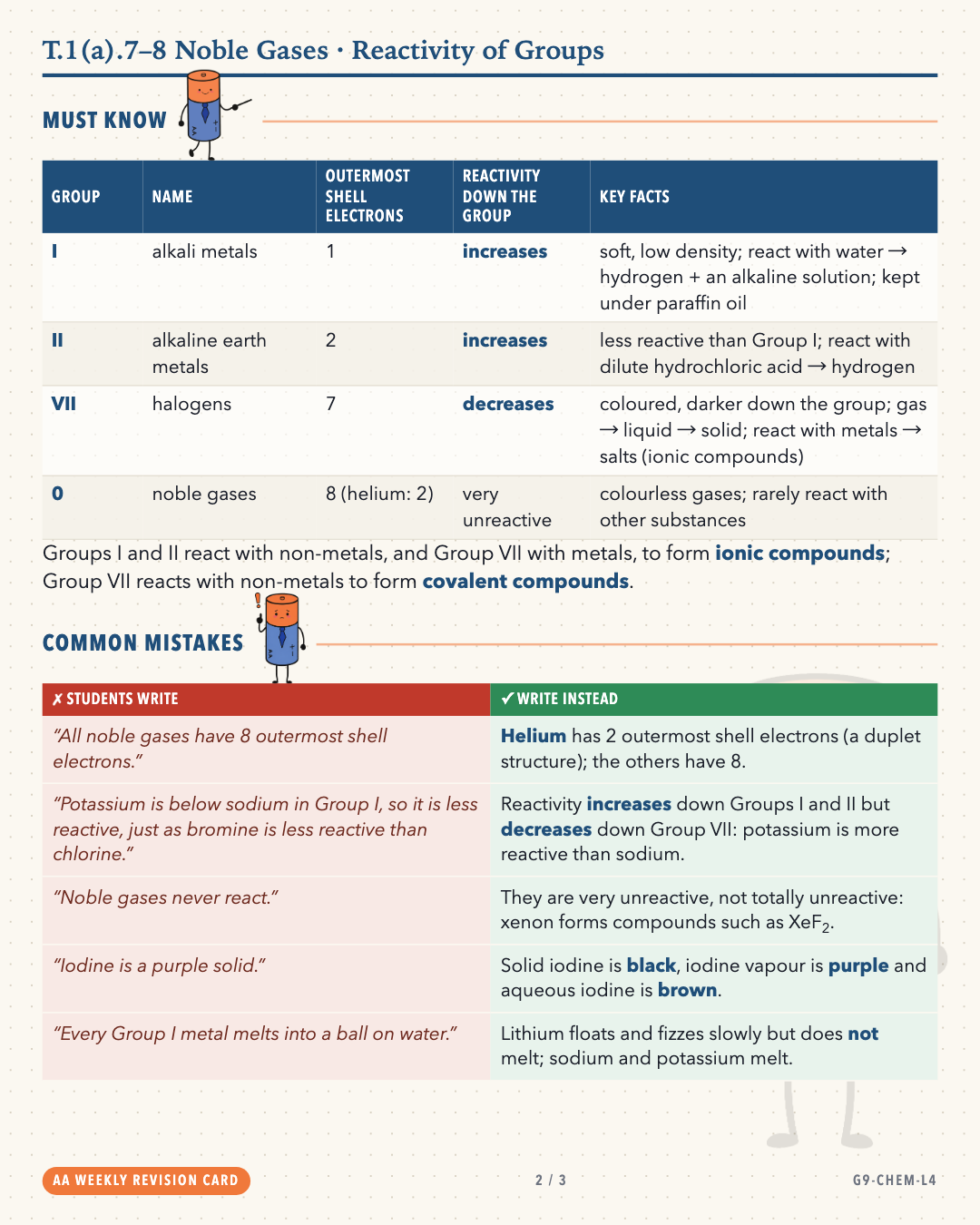
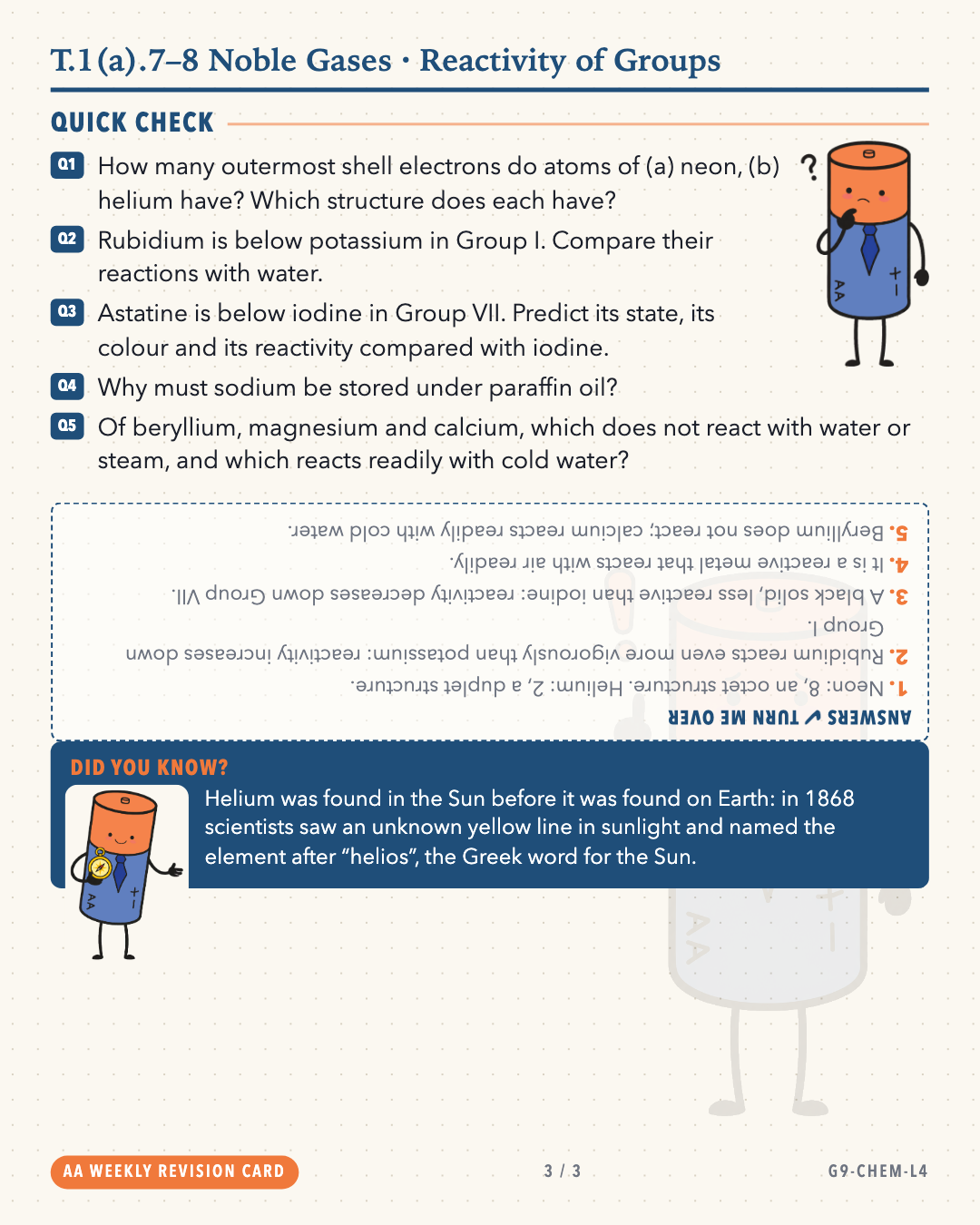
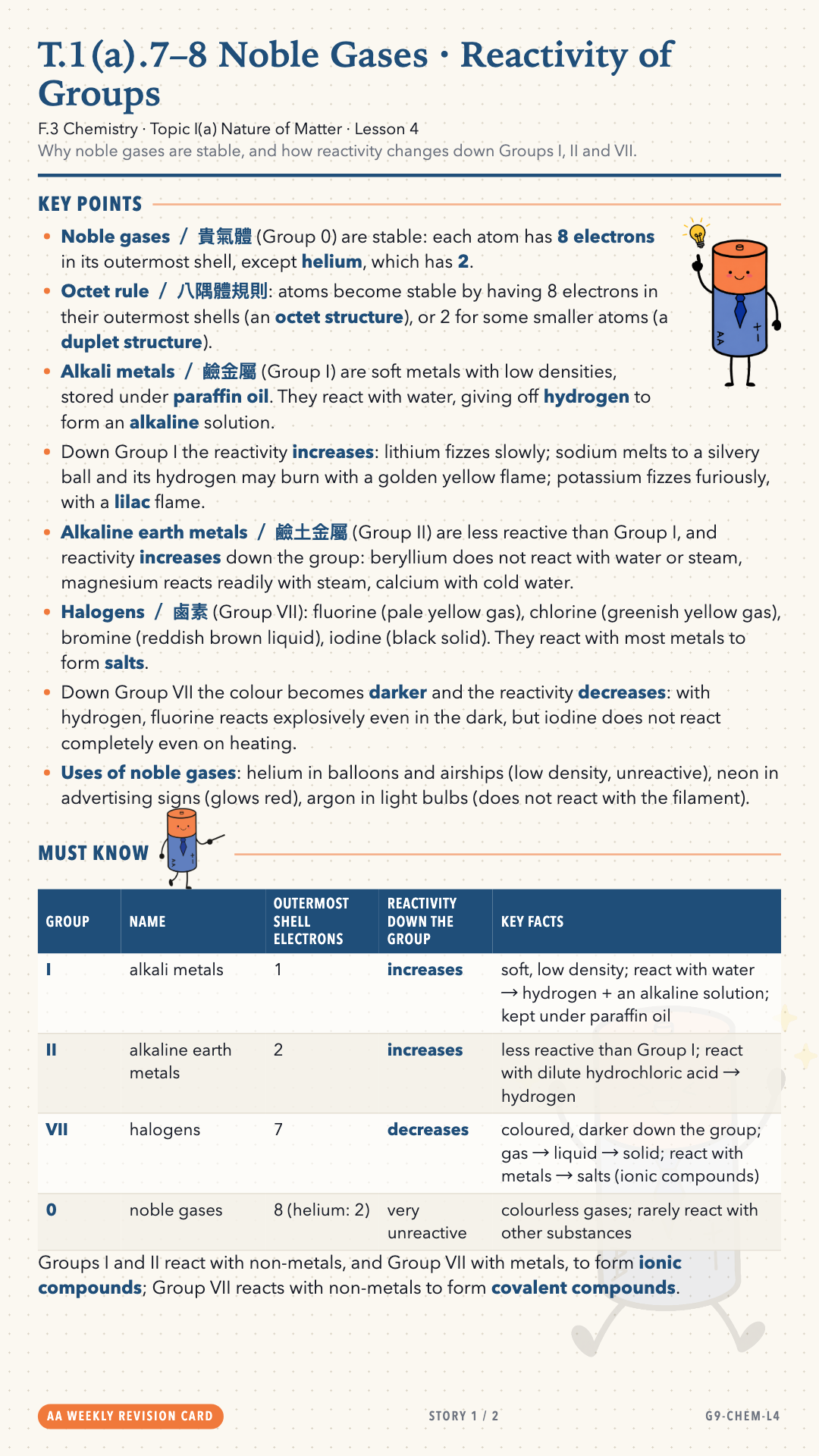
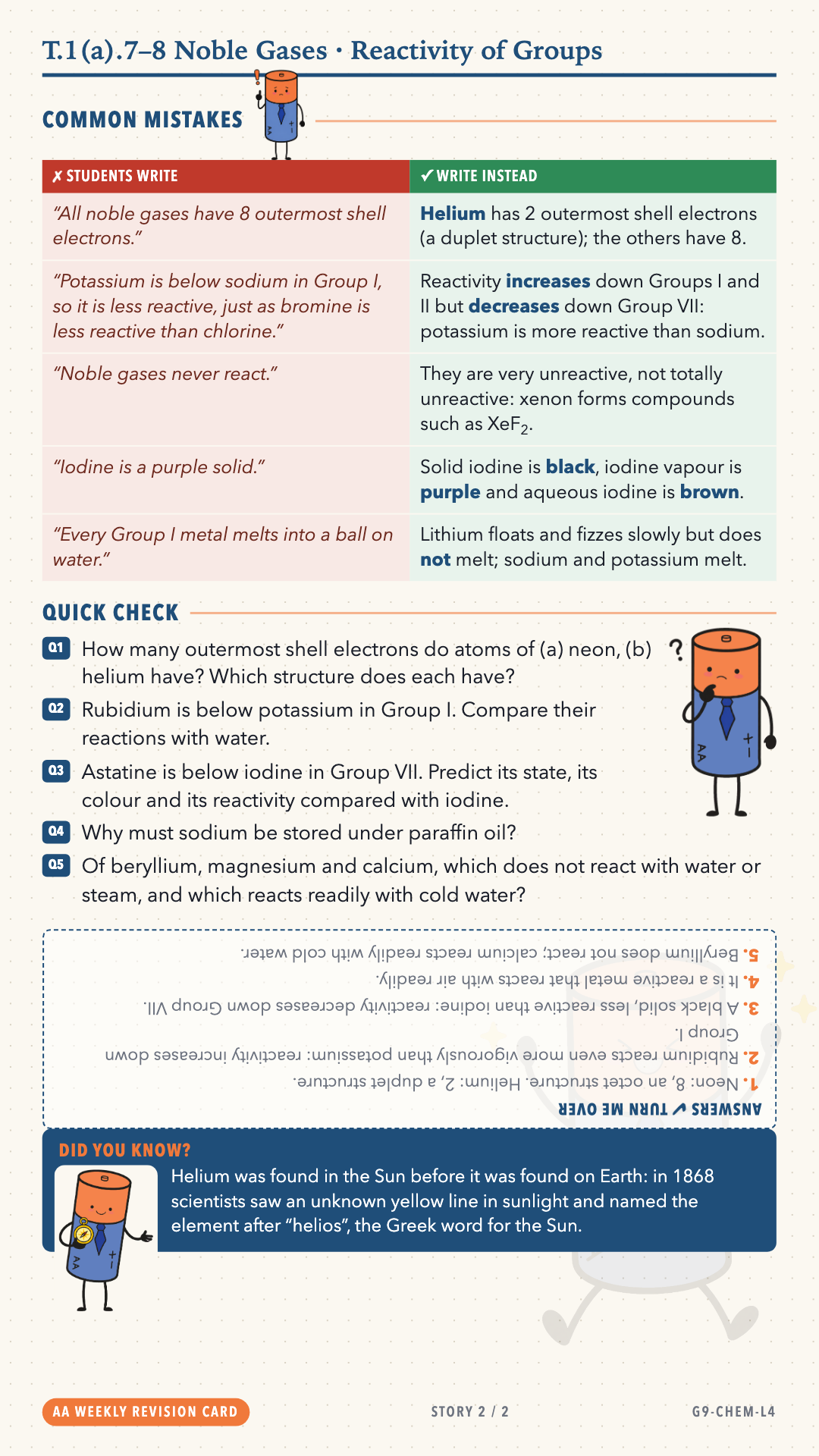
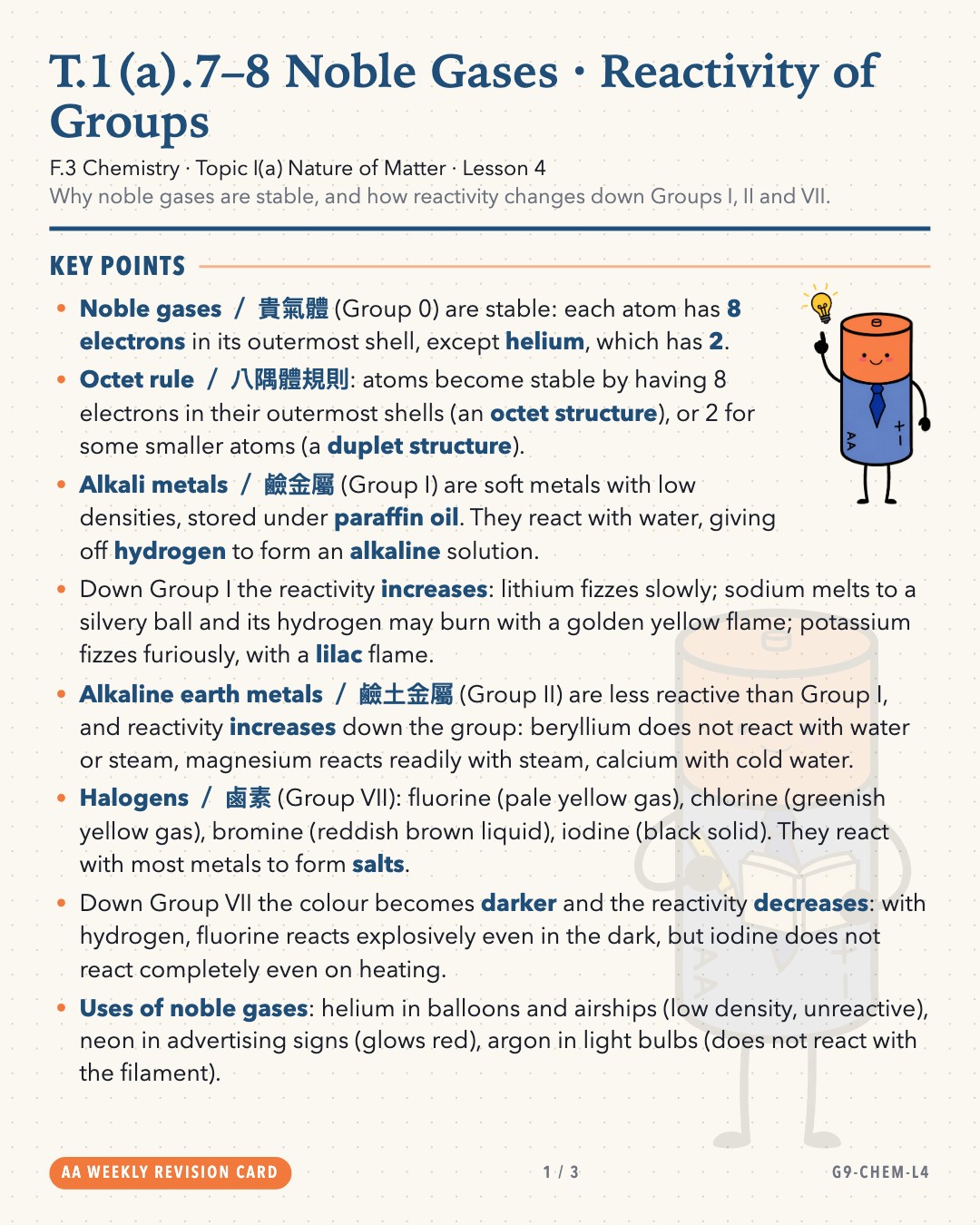
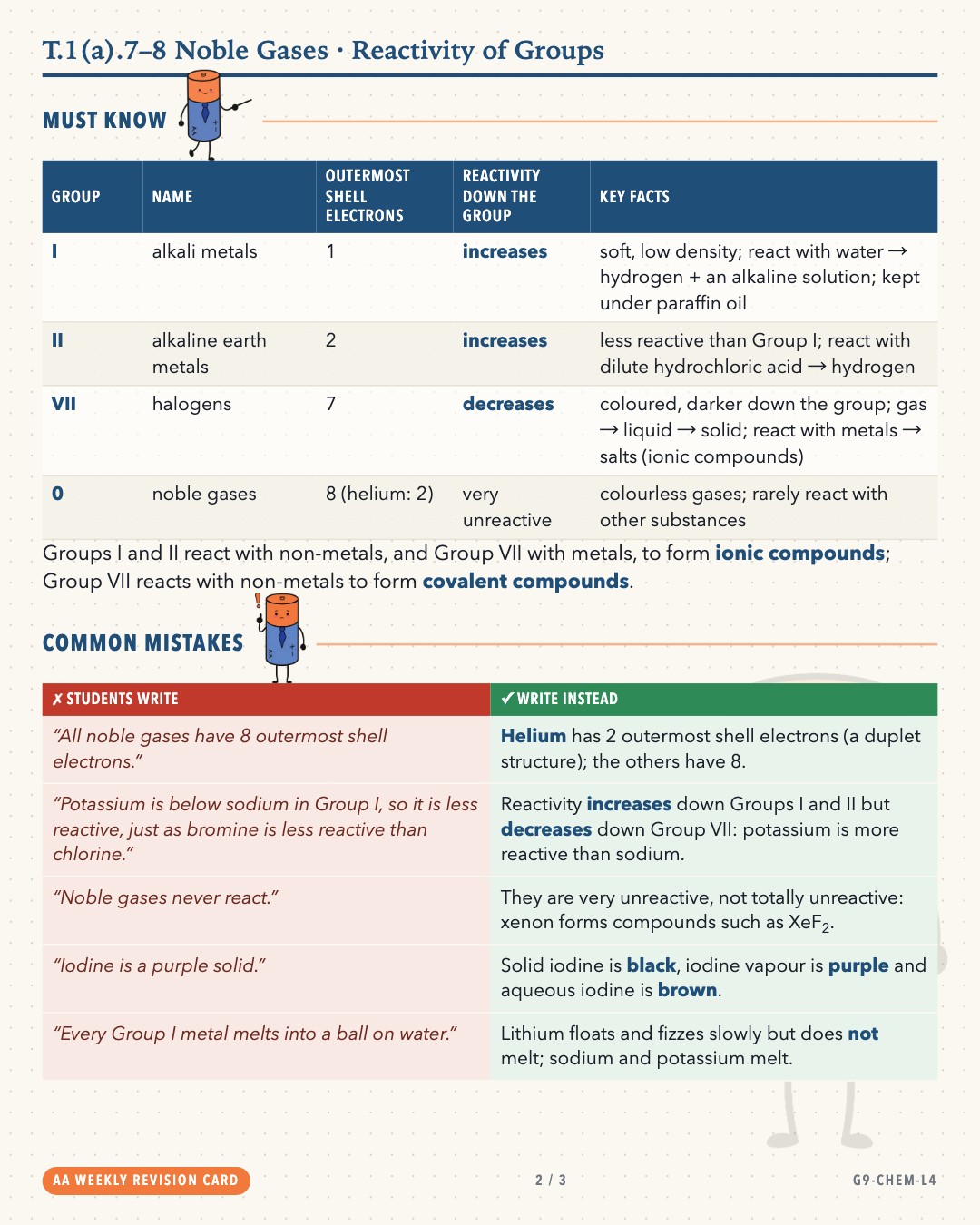
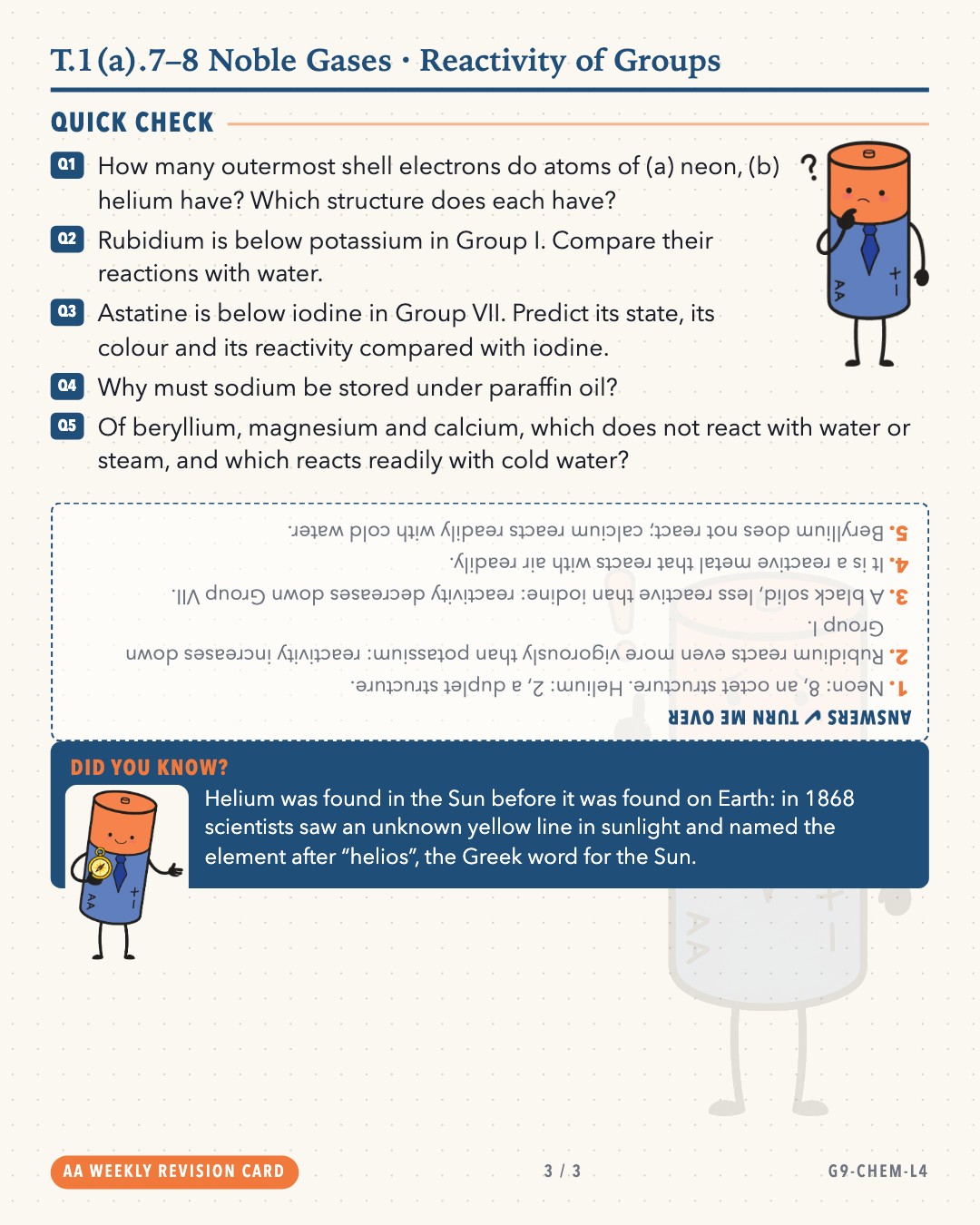
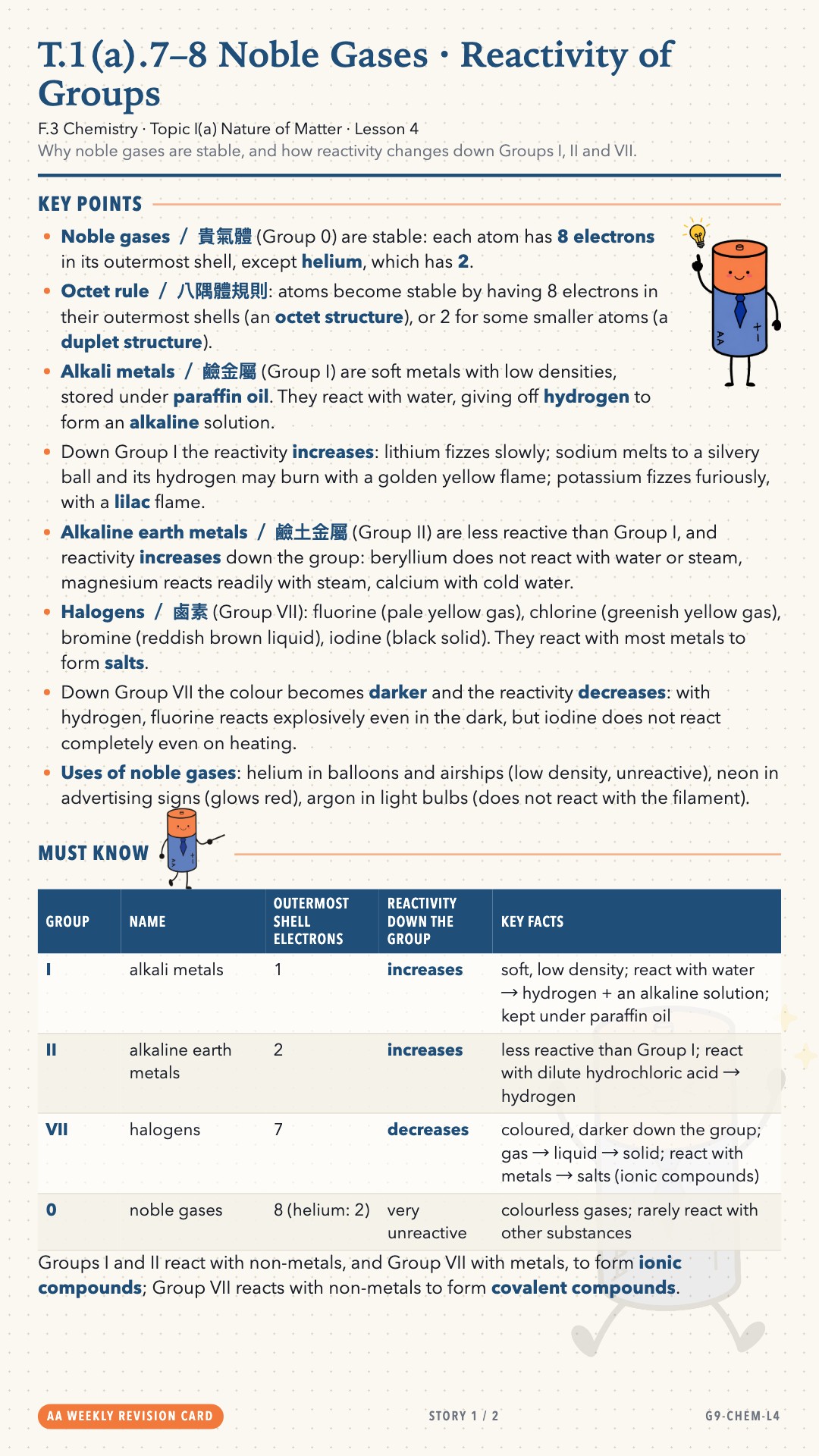
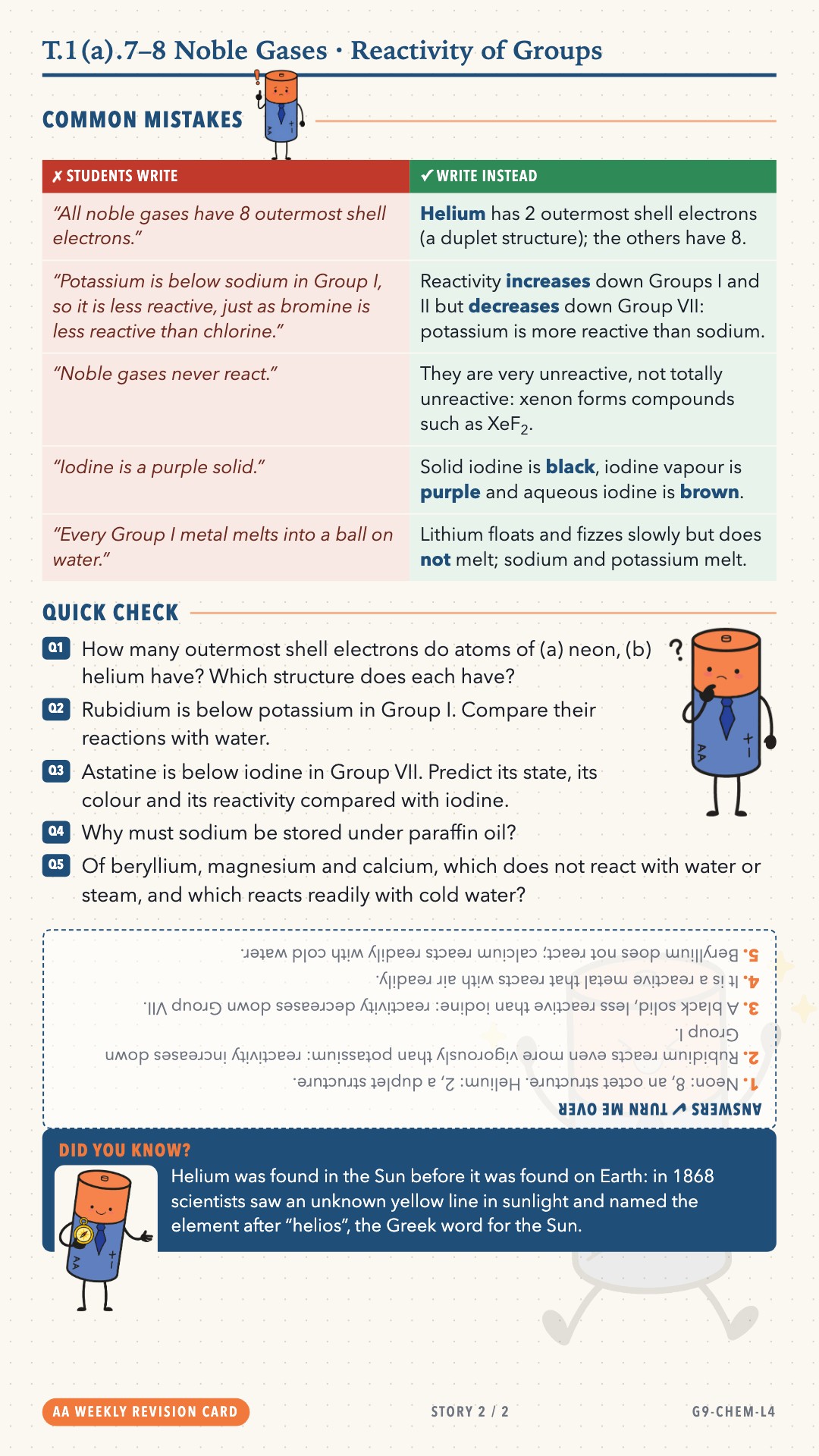
Why noble gases are stable, and how reactivity changes down Groups I, II and VII.
✔ fact-checked · 1 added mistake tagged [likely] · 1.8 MB JPG · card.md ·
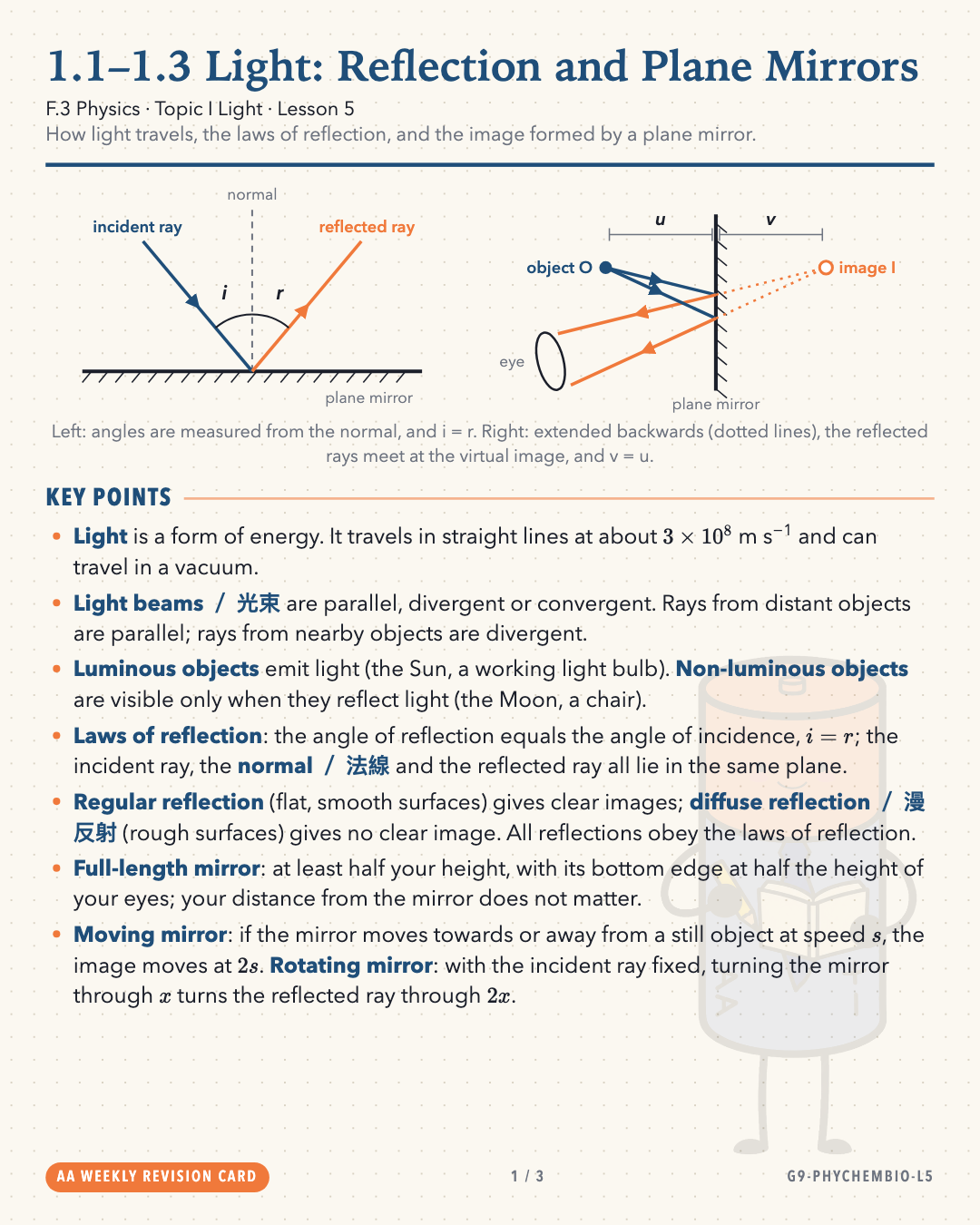
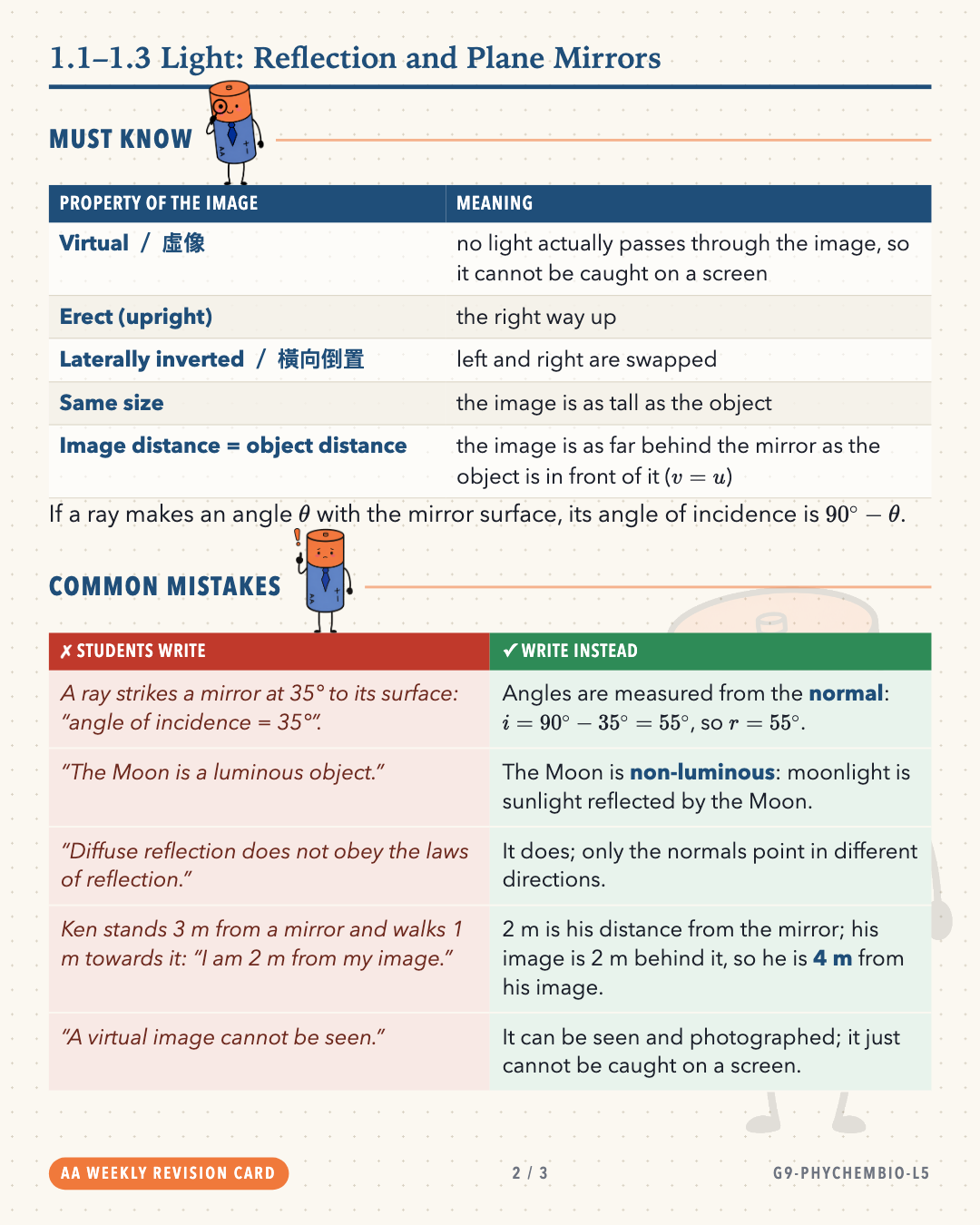
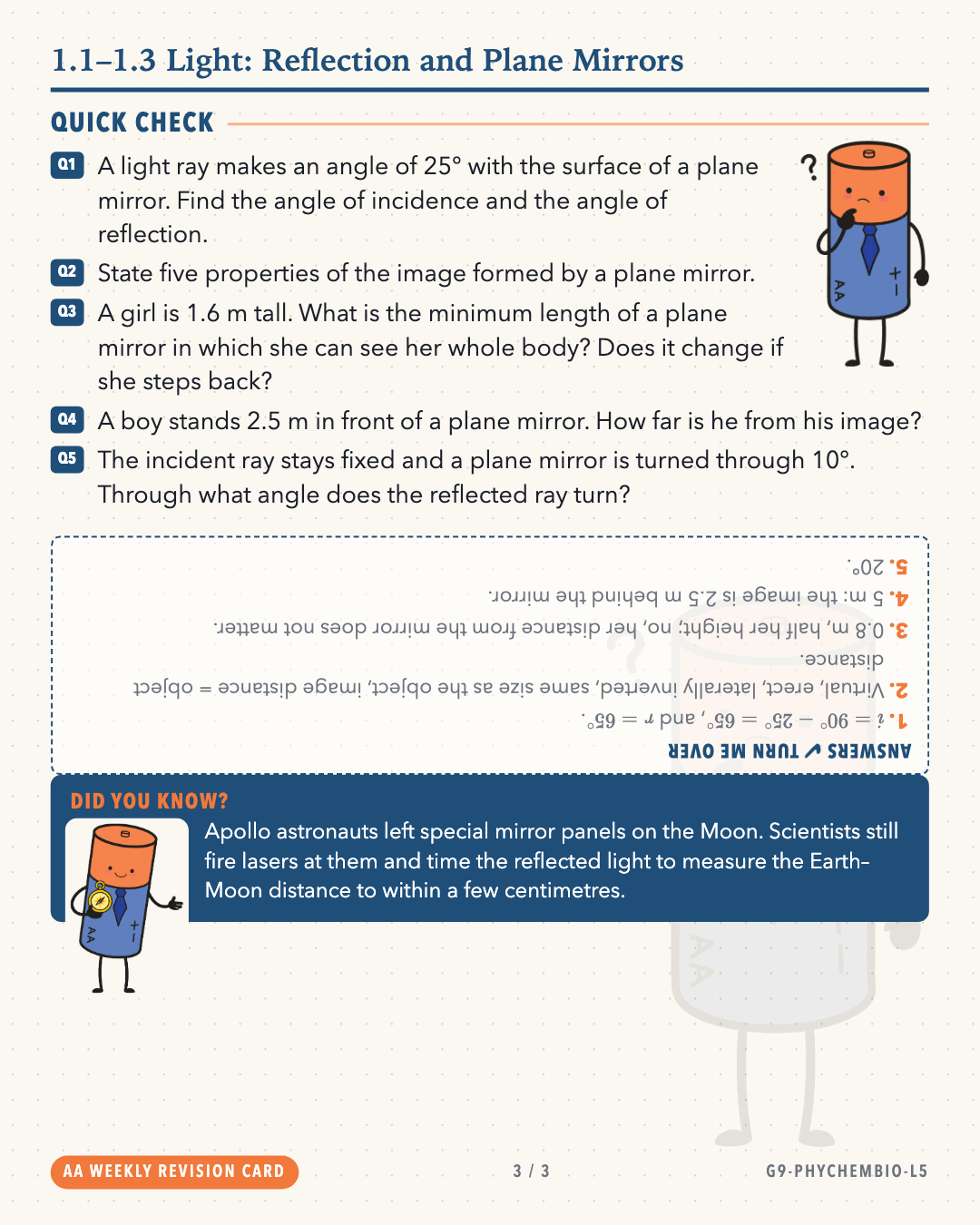
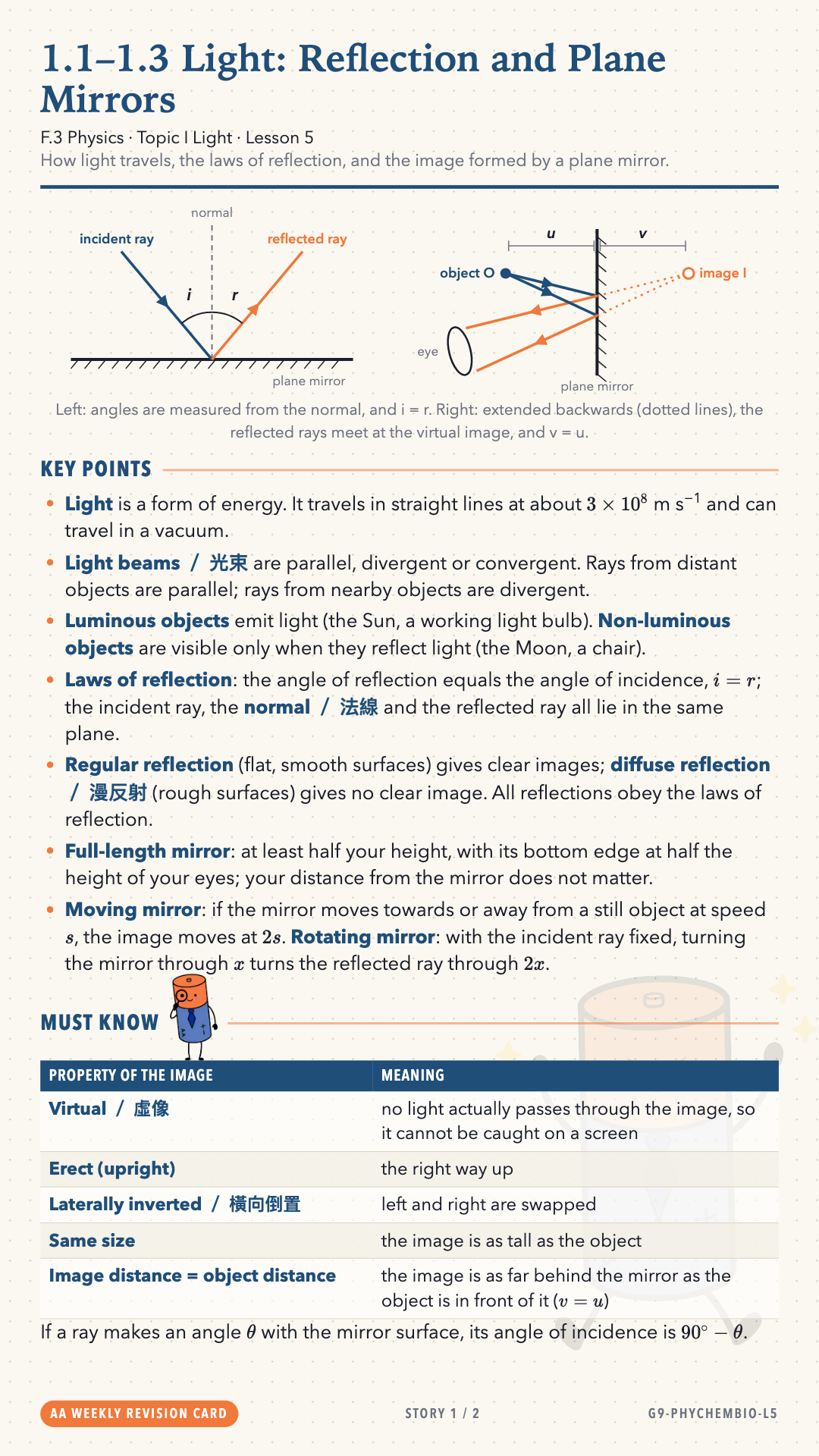
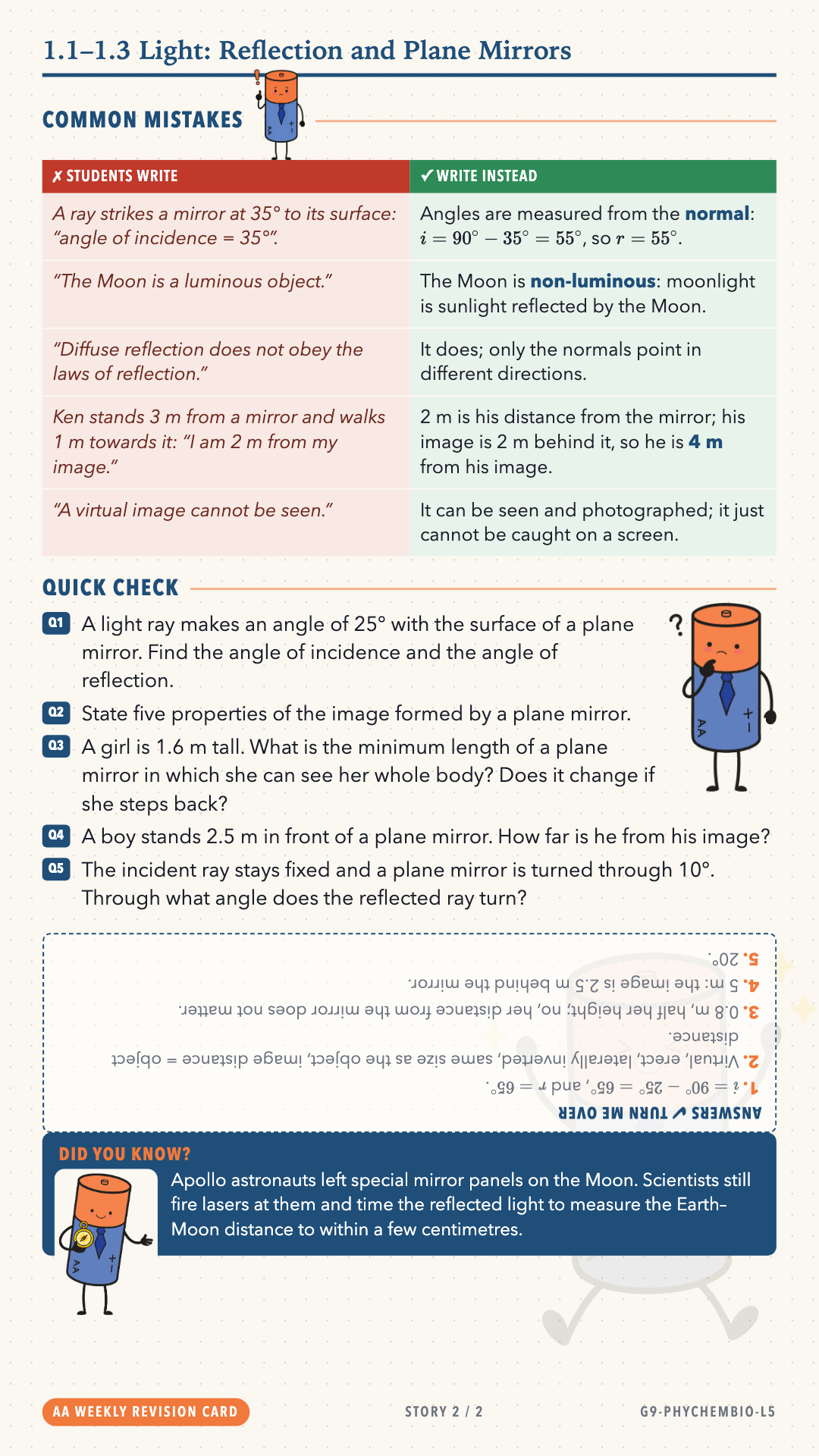
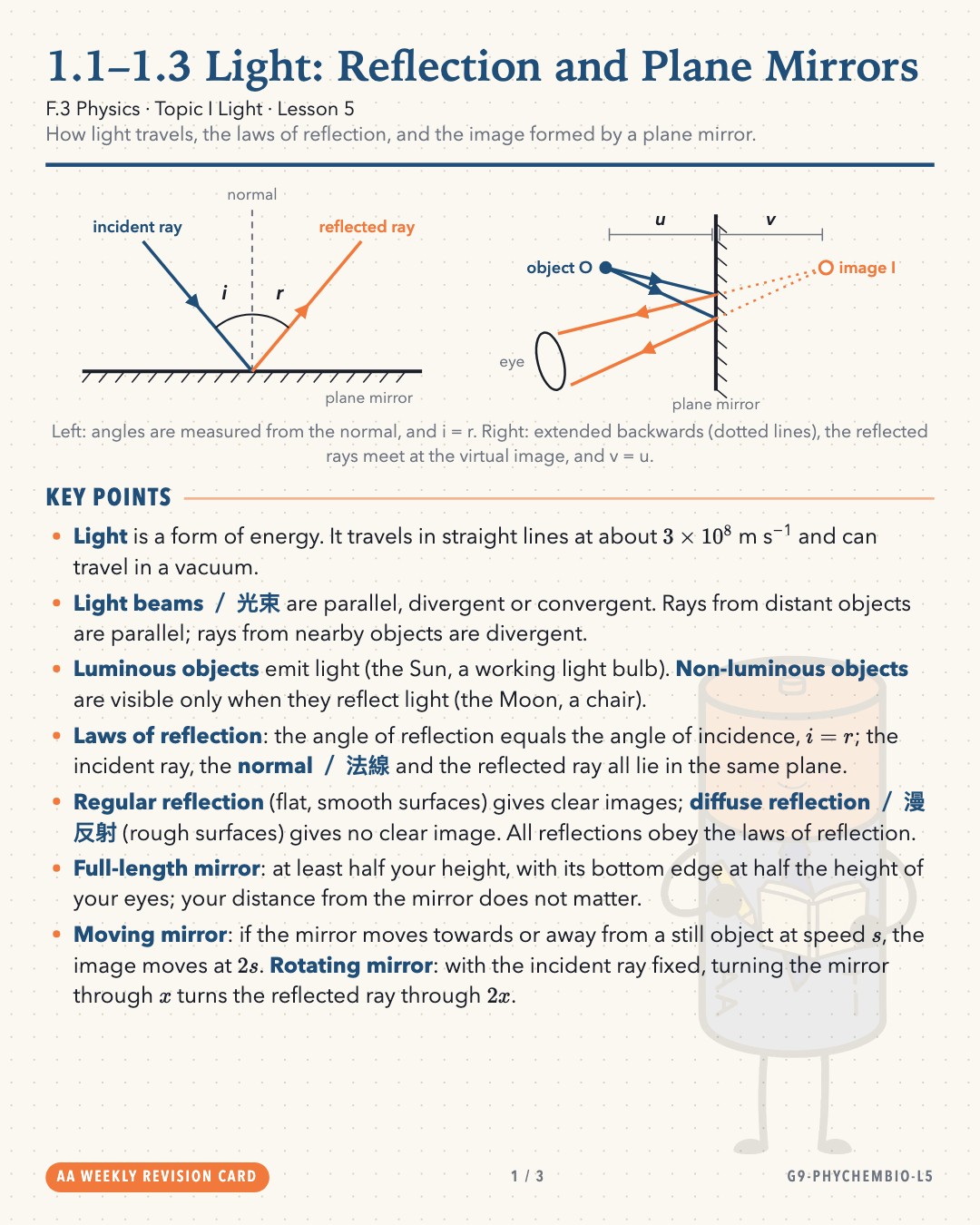
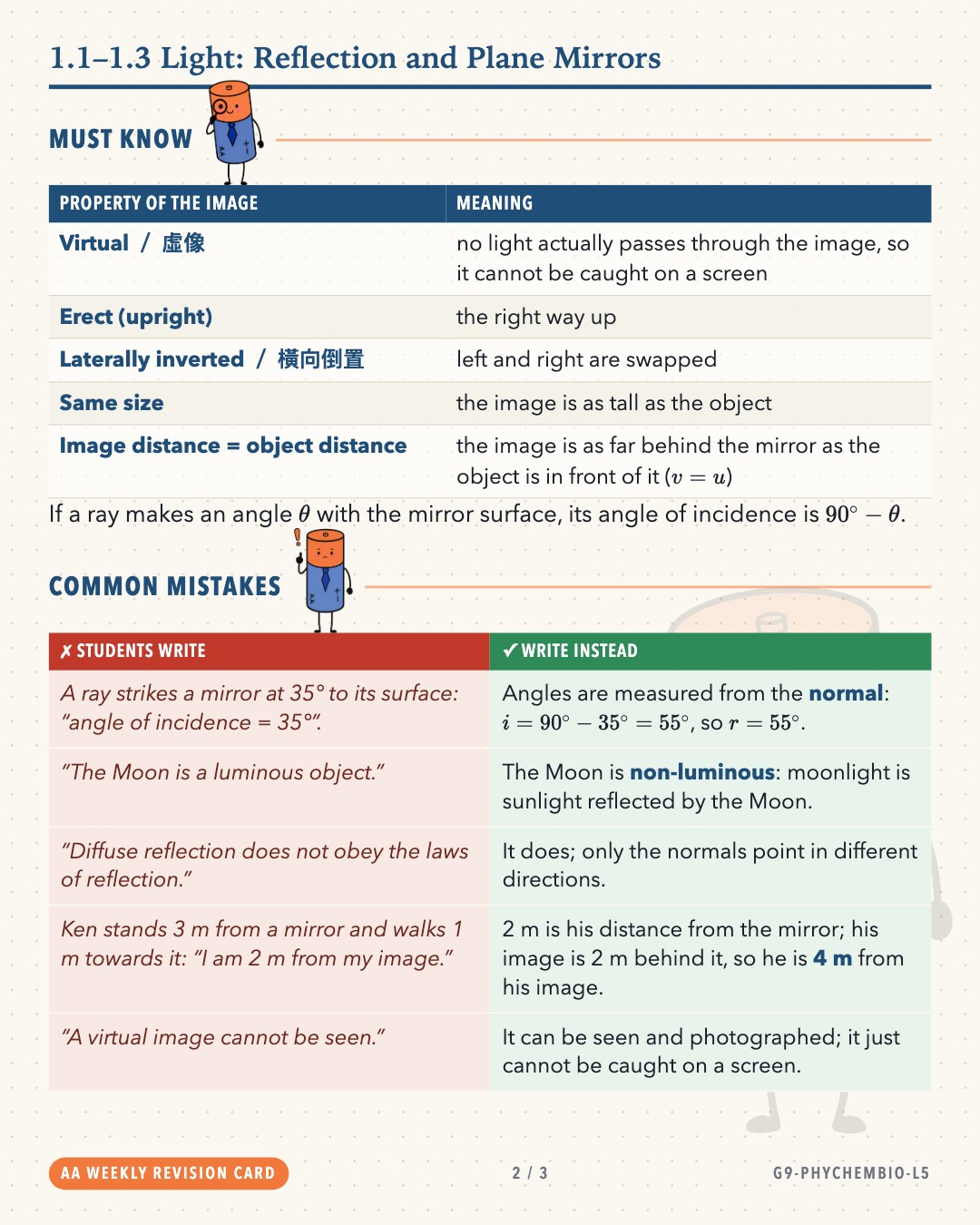
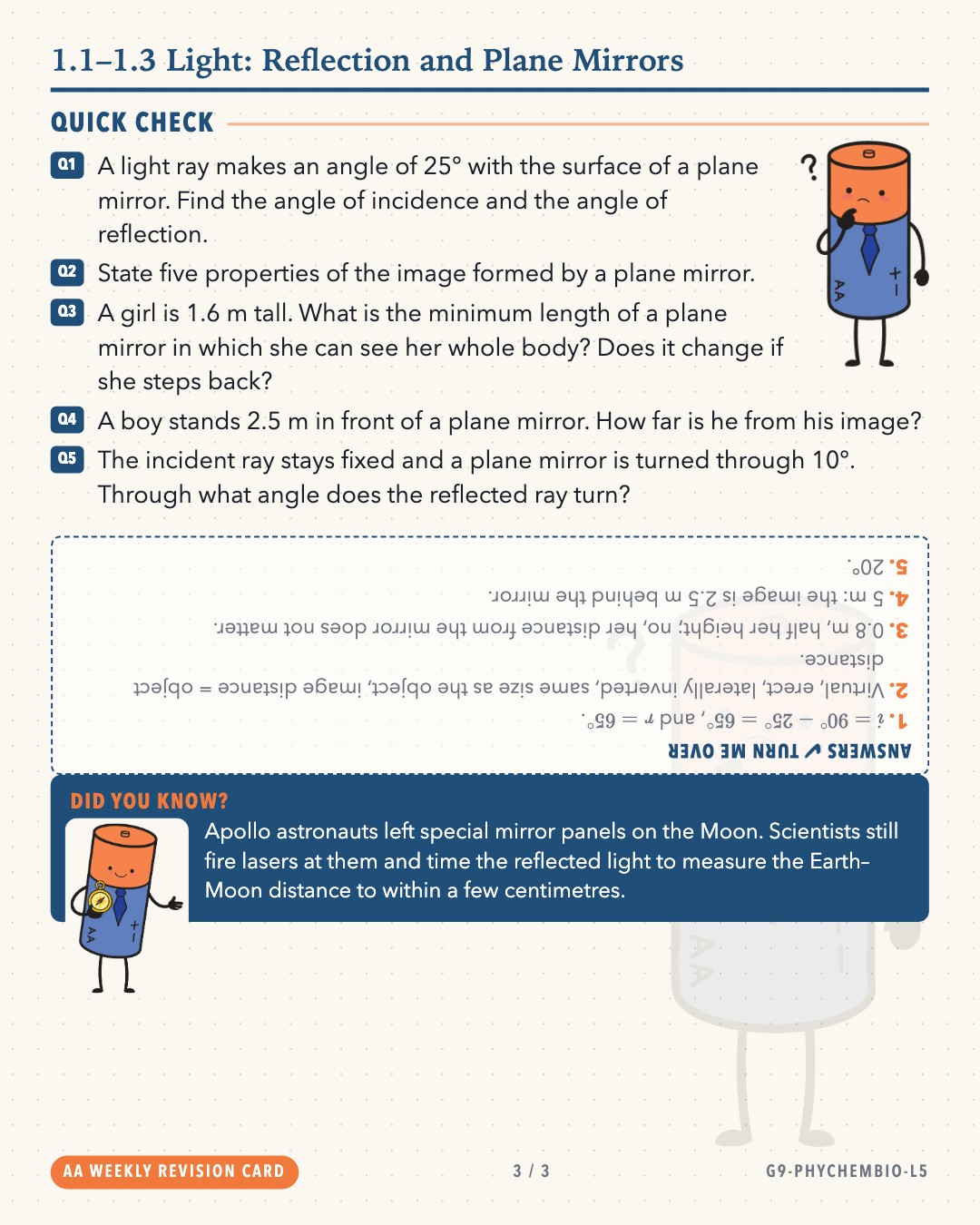
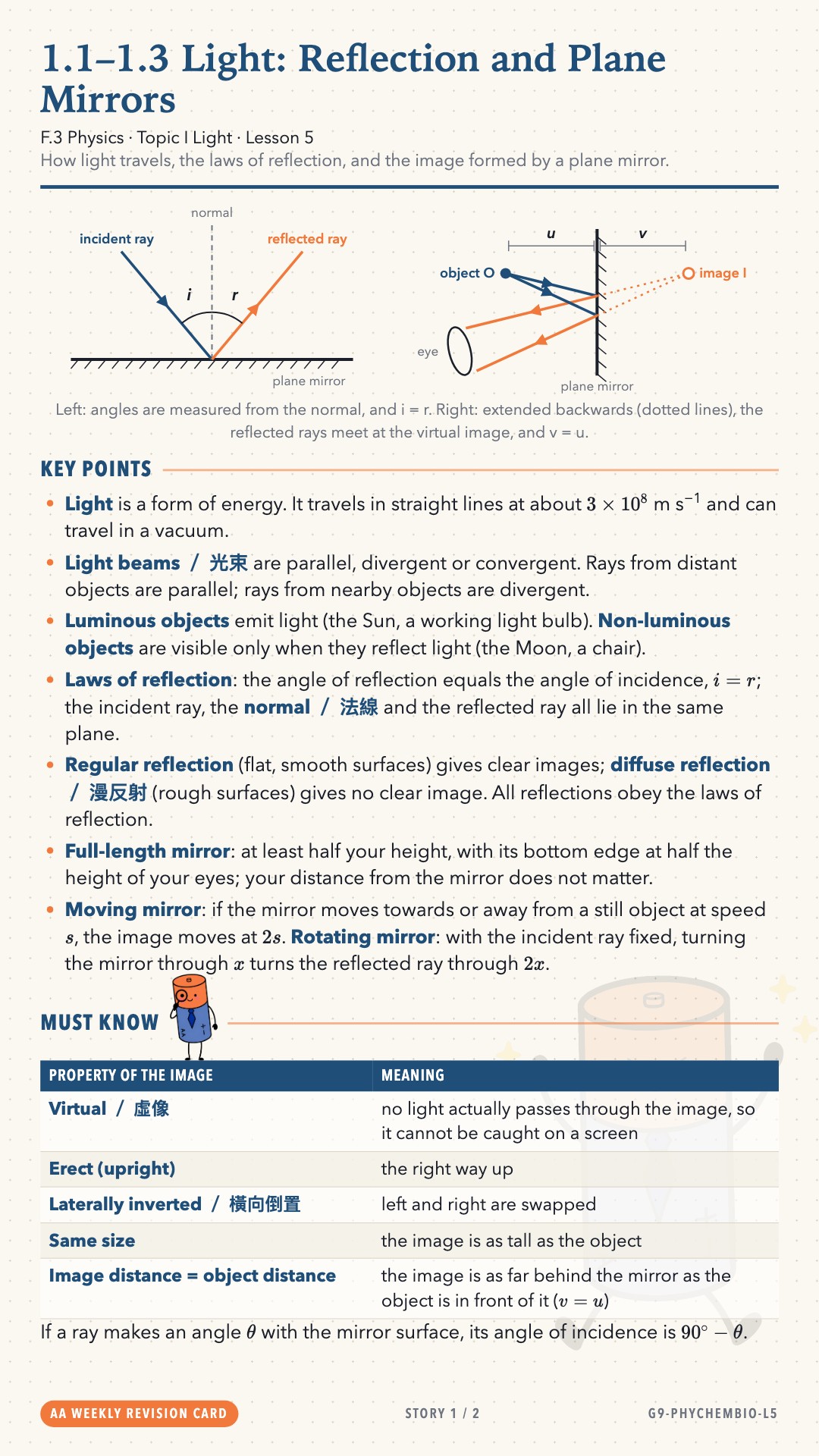
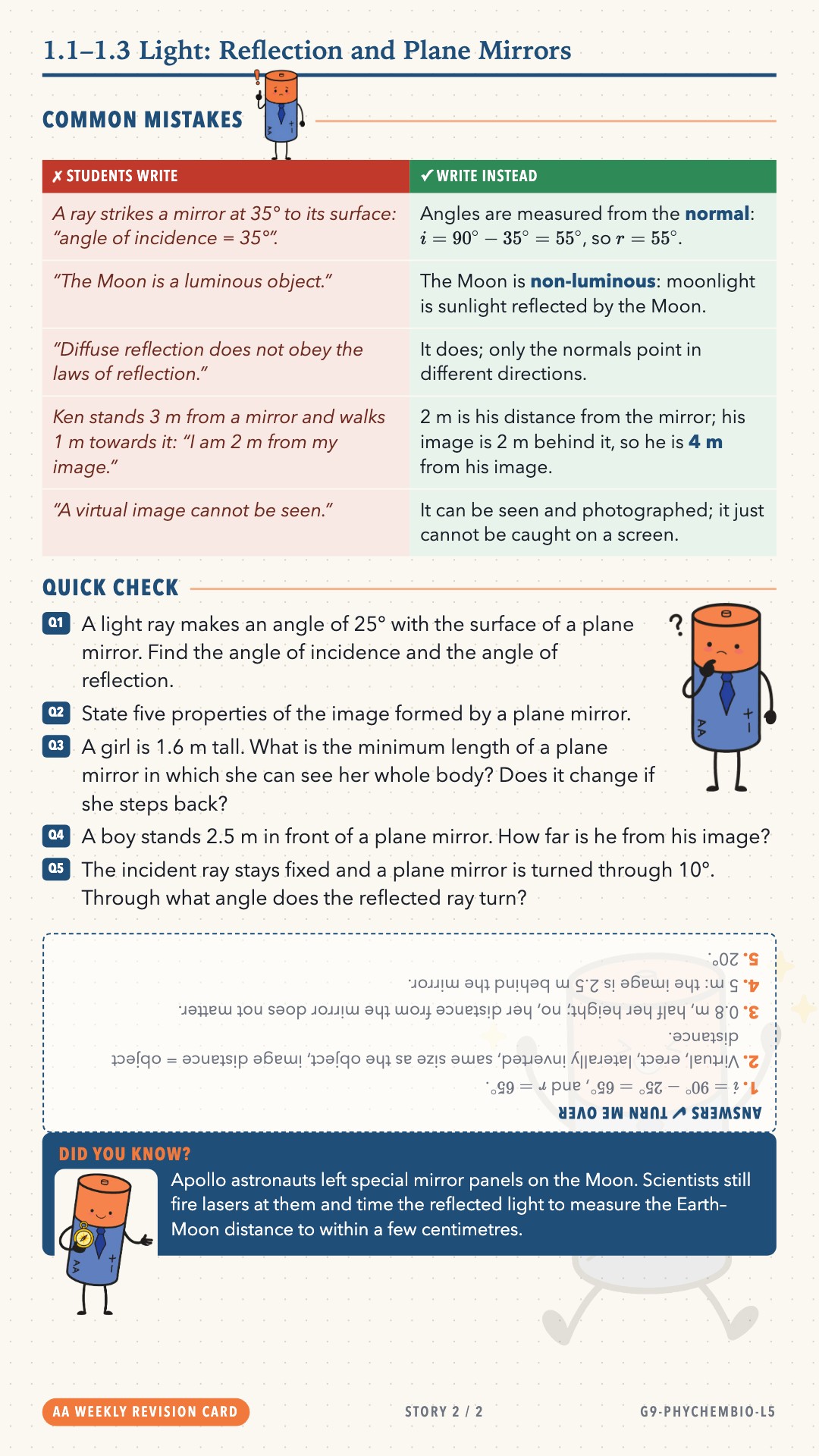
How light travels, the laws of reflection, and the image formed by a plane mirror.
✔ fact-checked · 1 added mistake tagged [likely] · 1.7 MB JPG · card.md ·
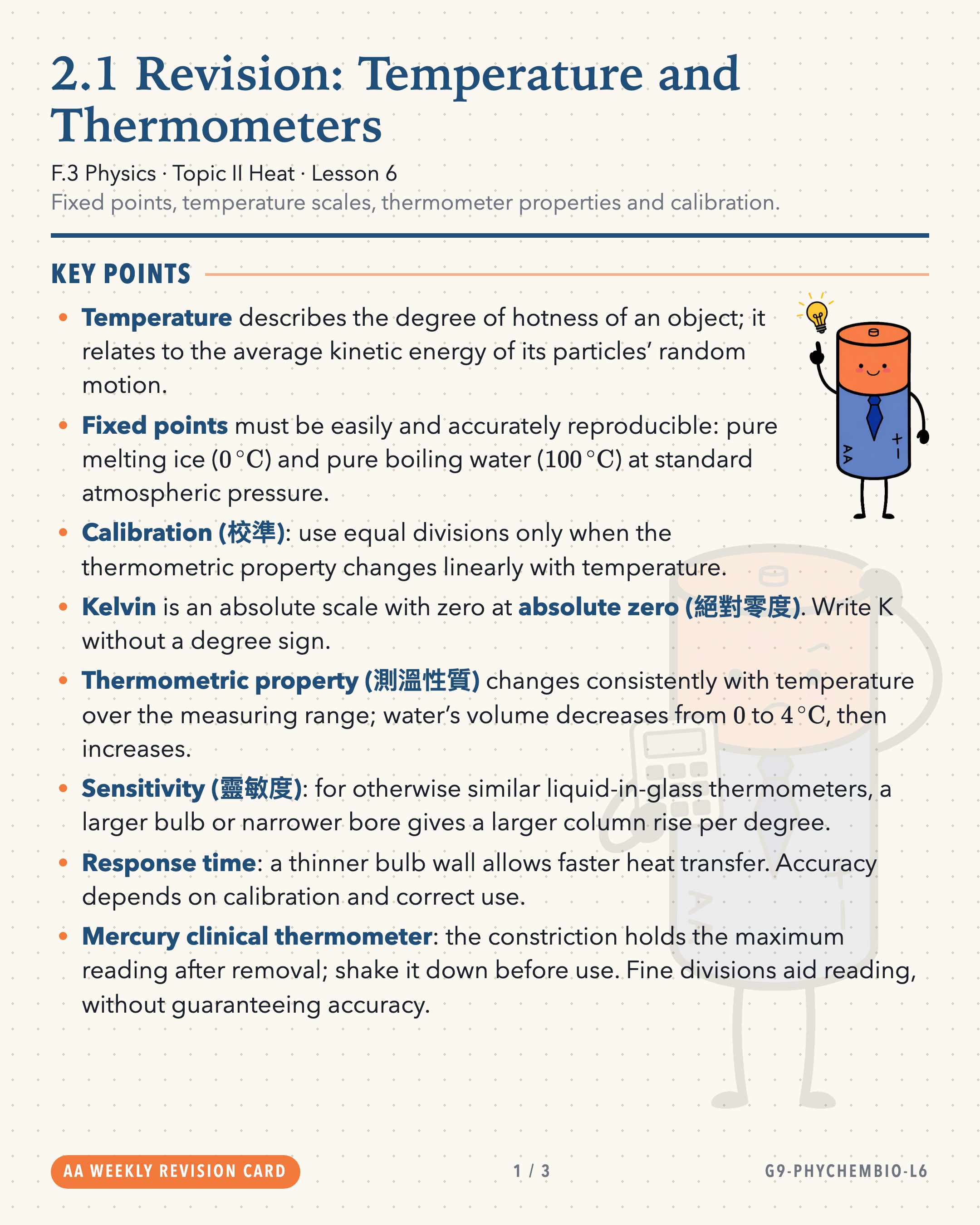
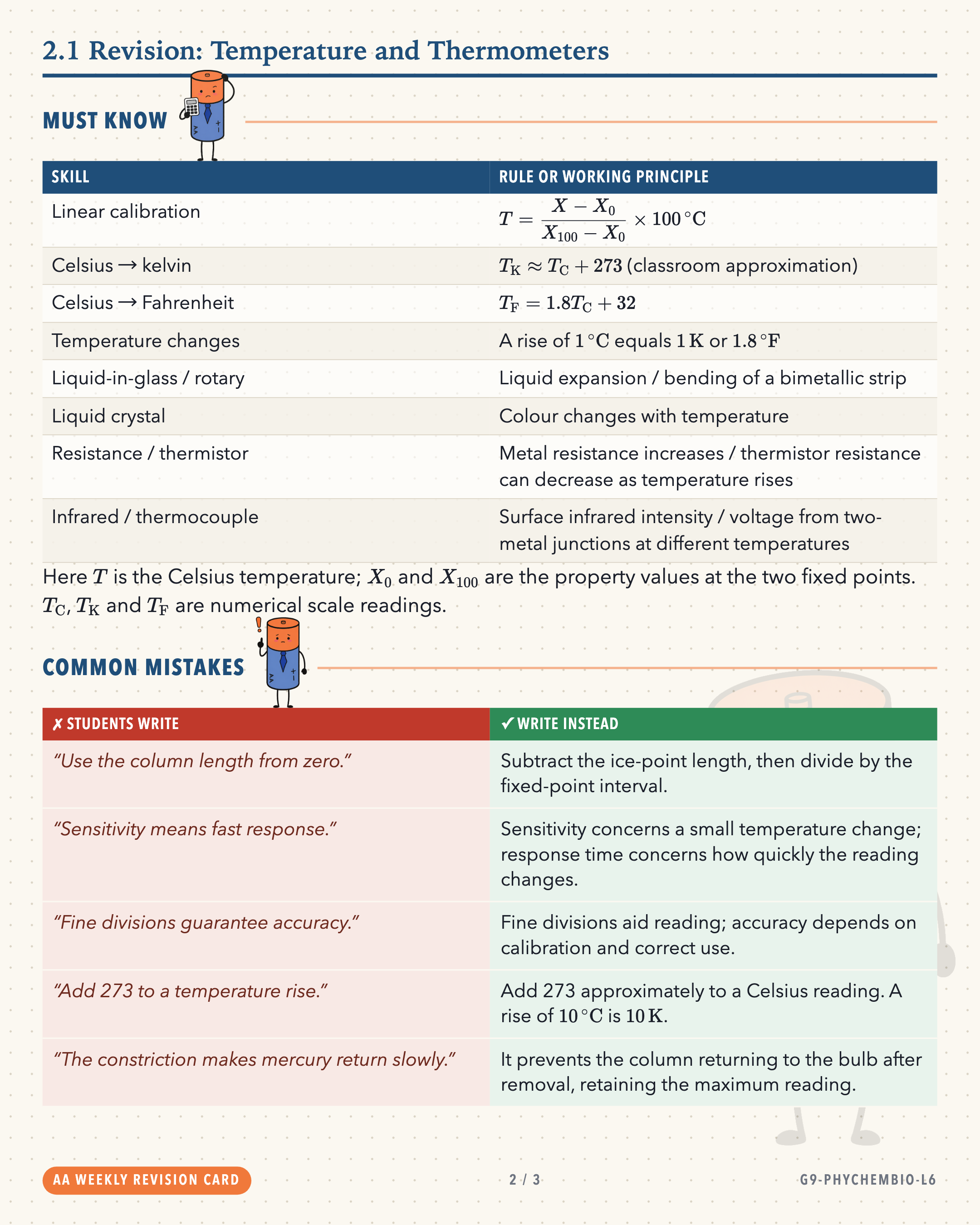
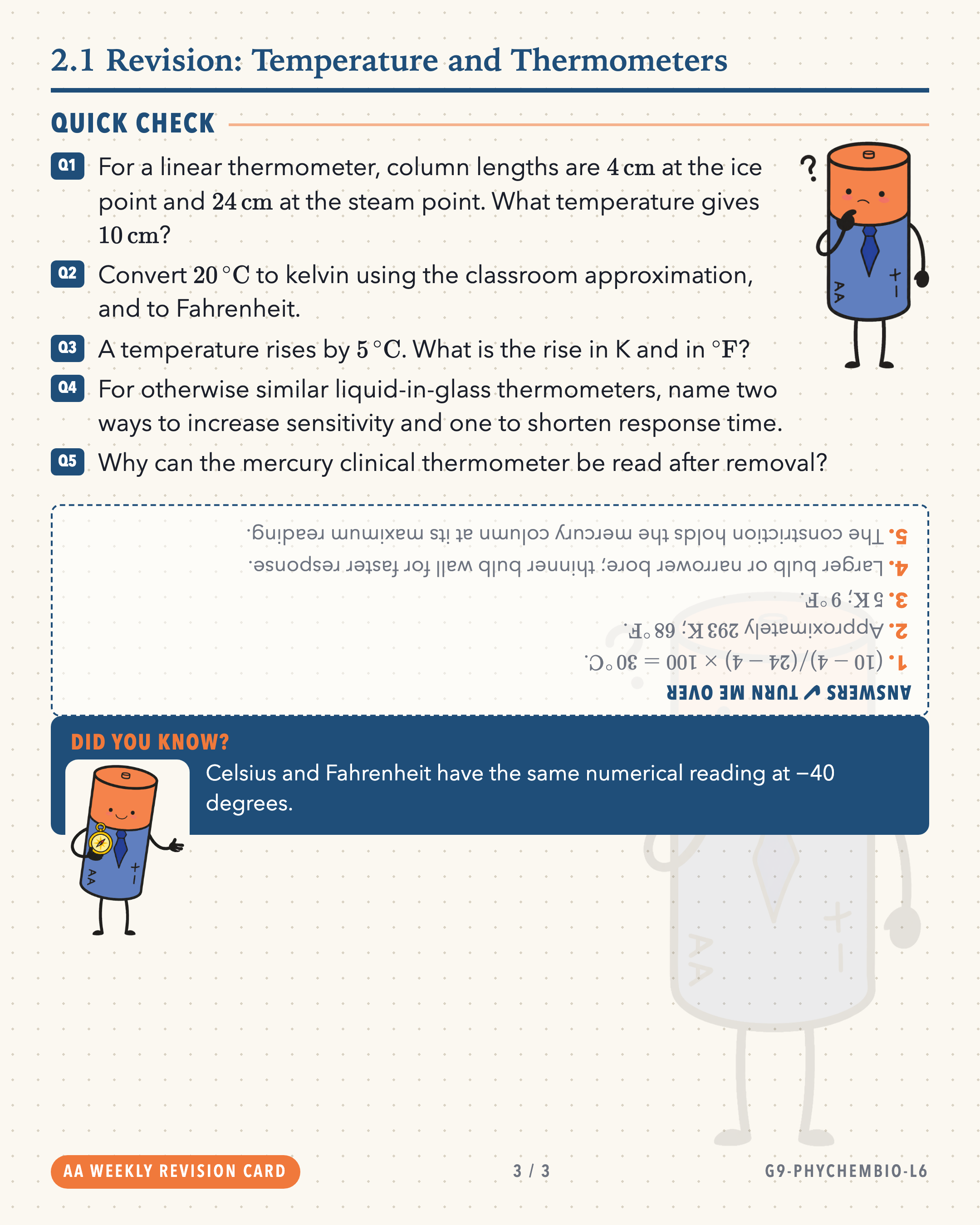
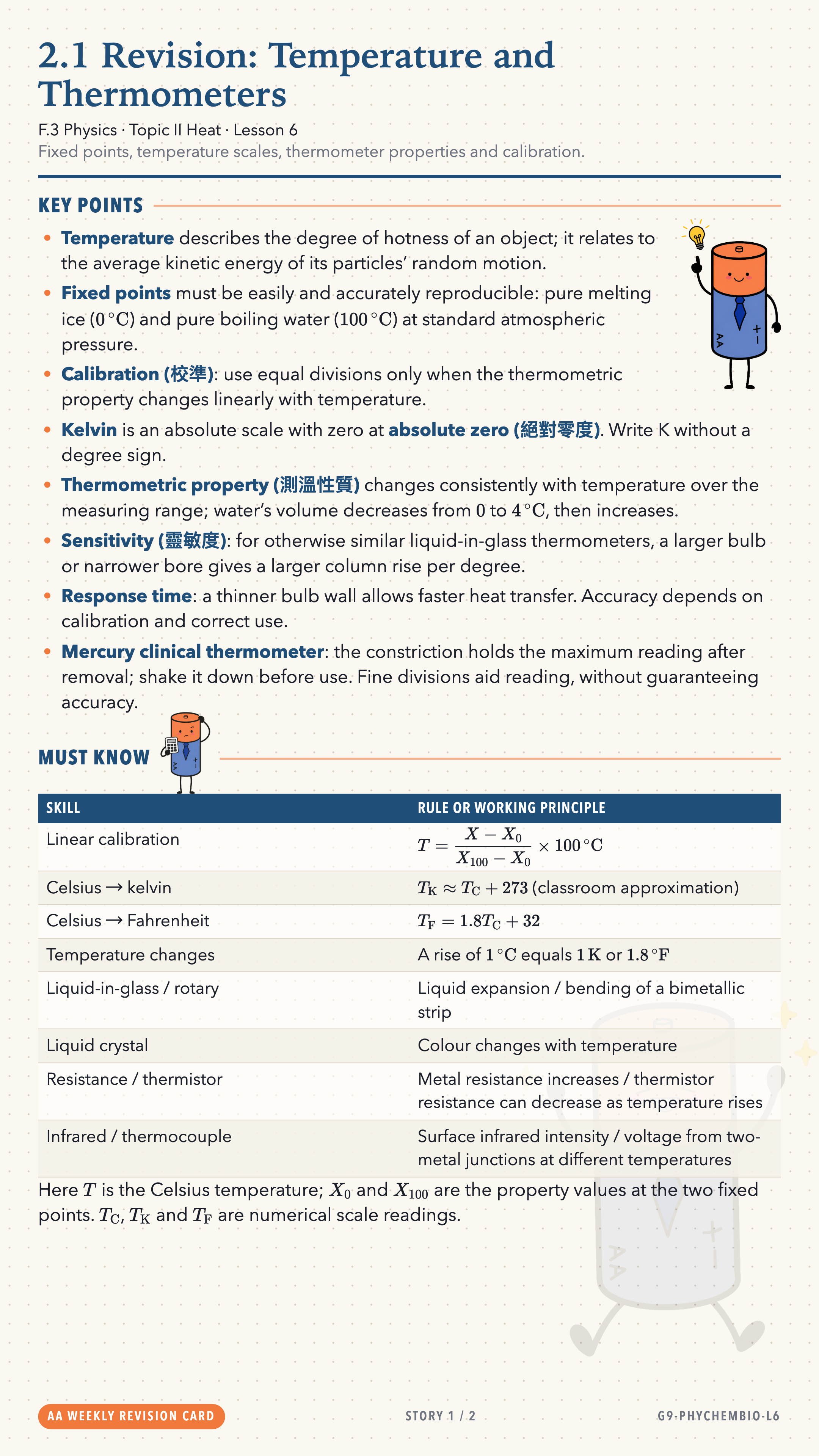
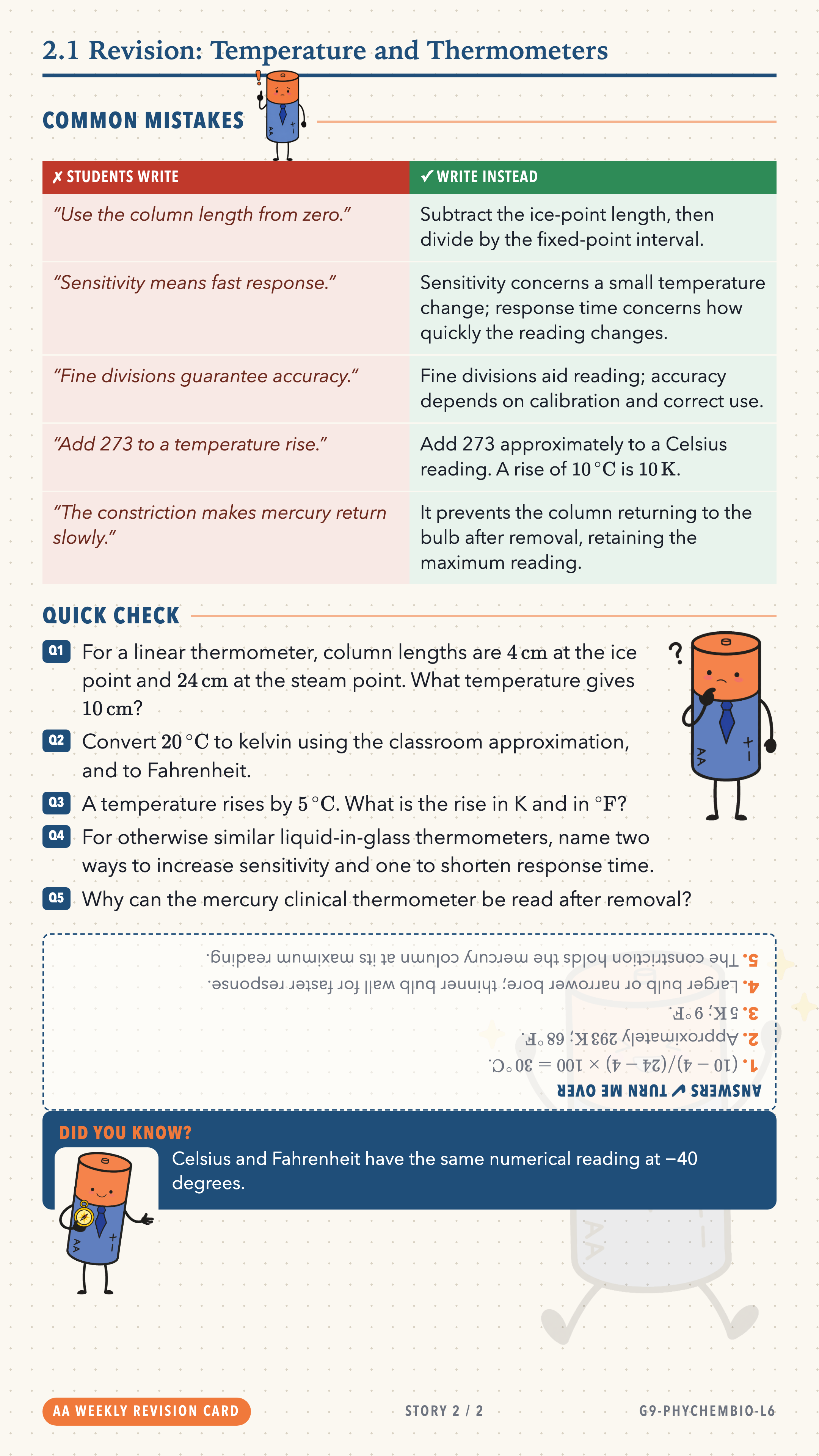
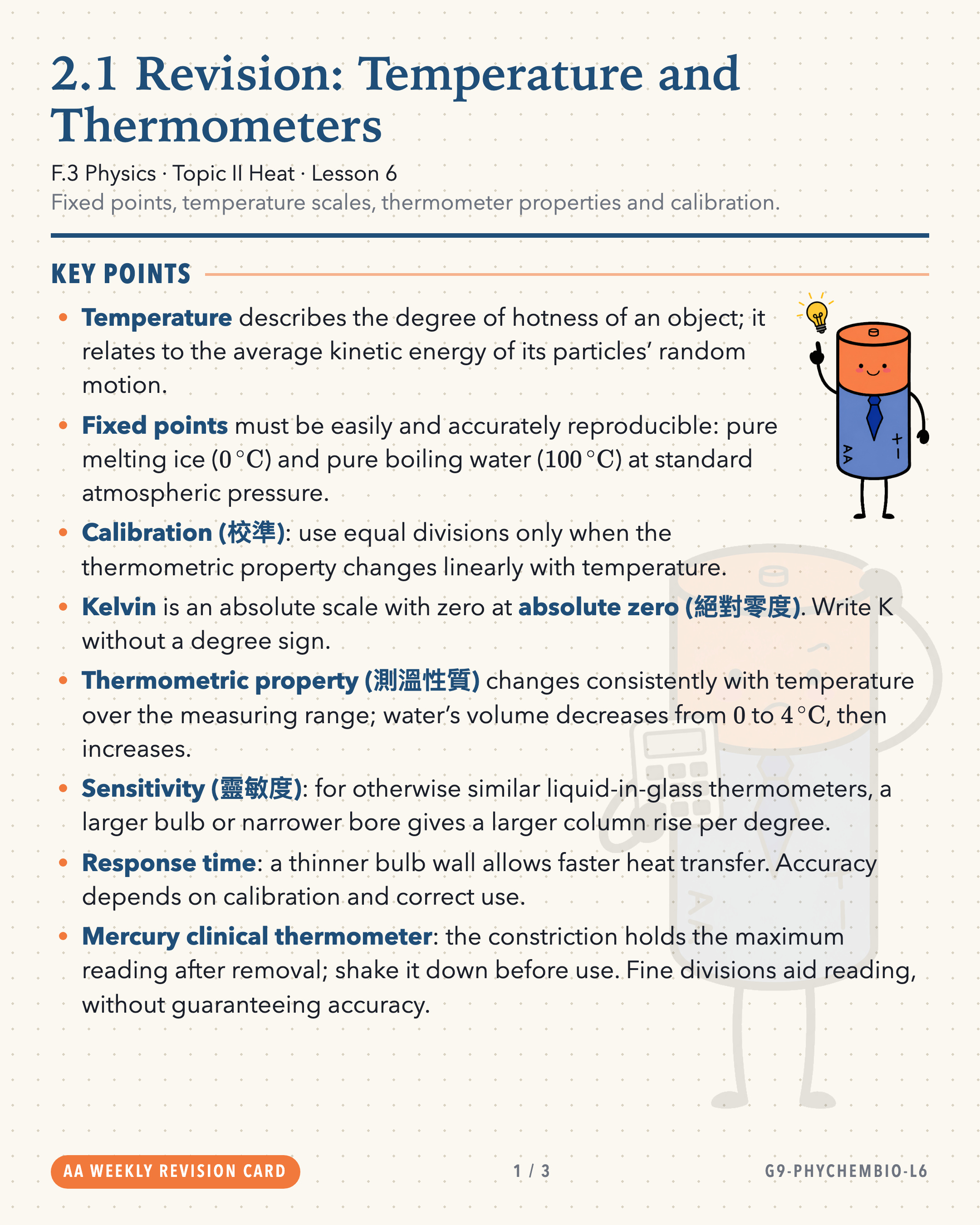
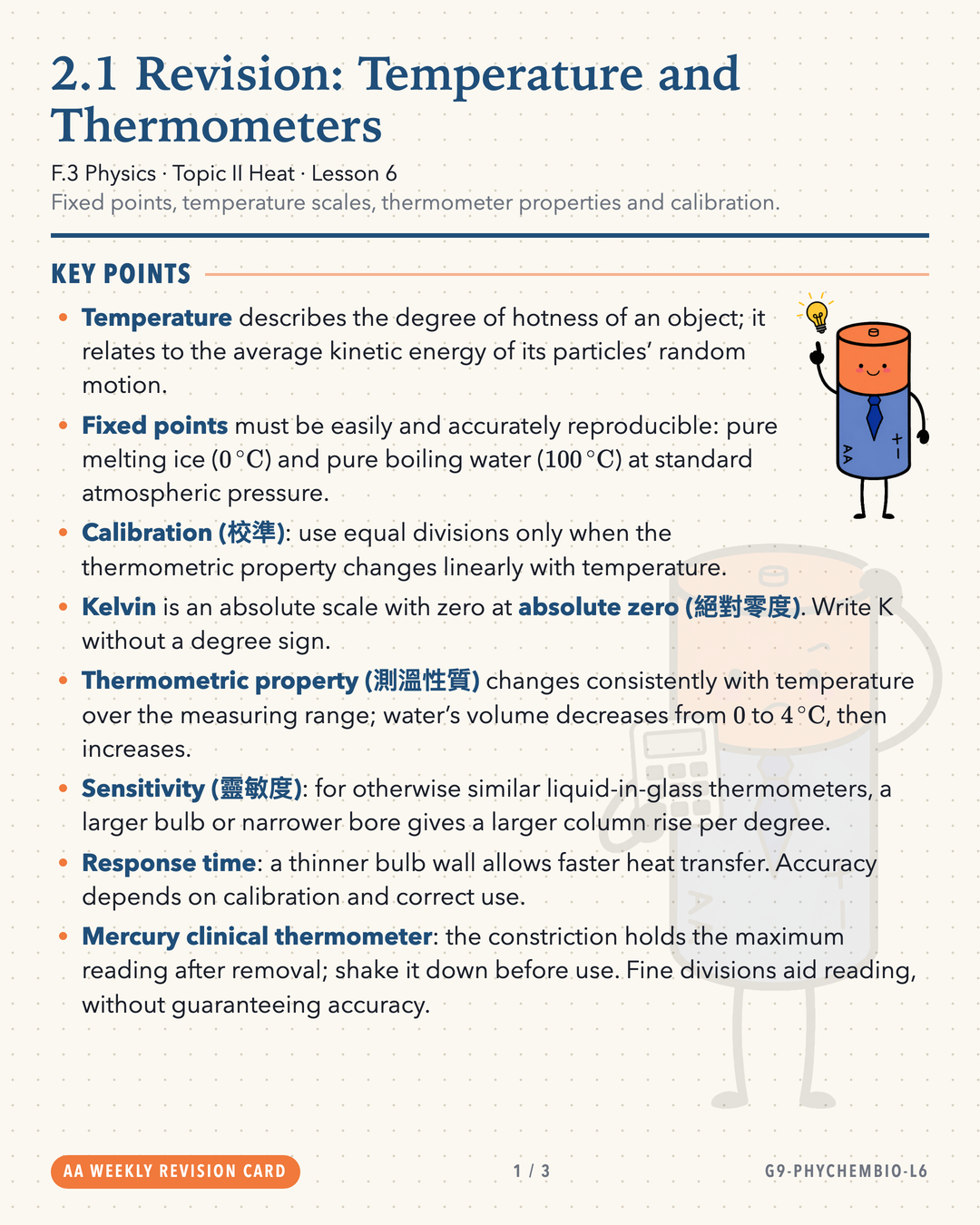
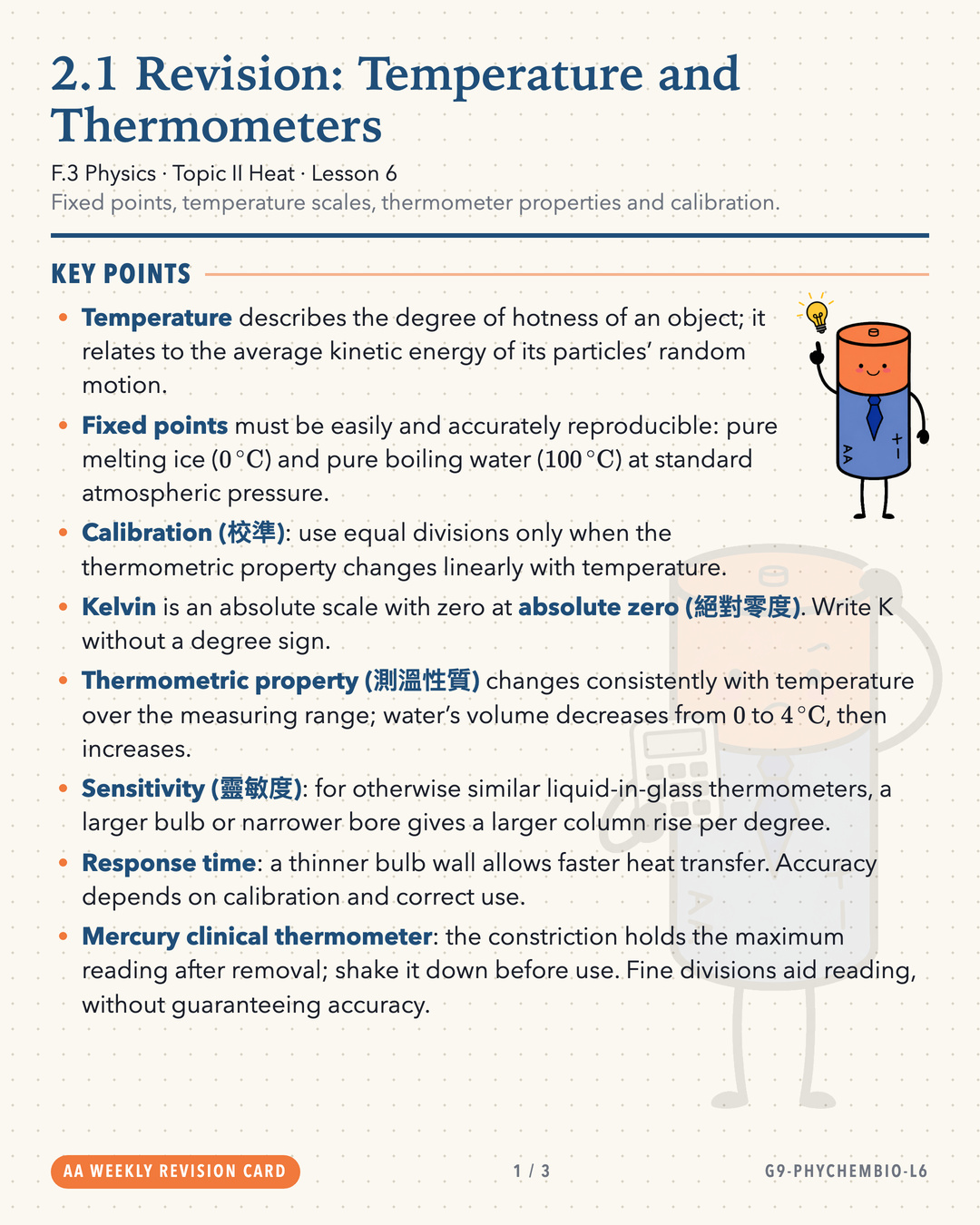
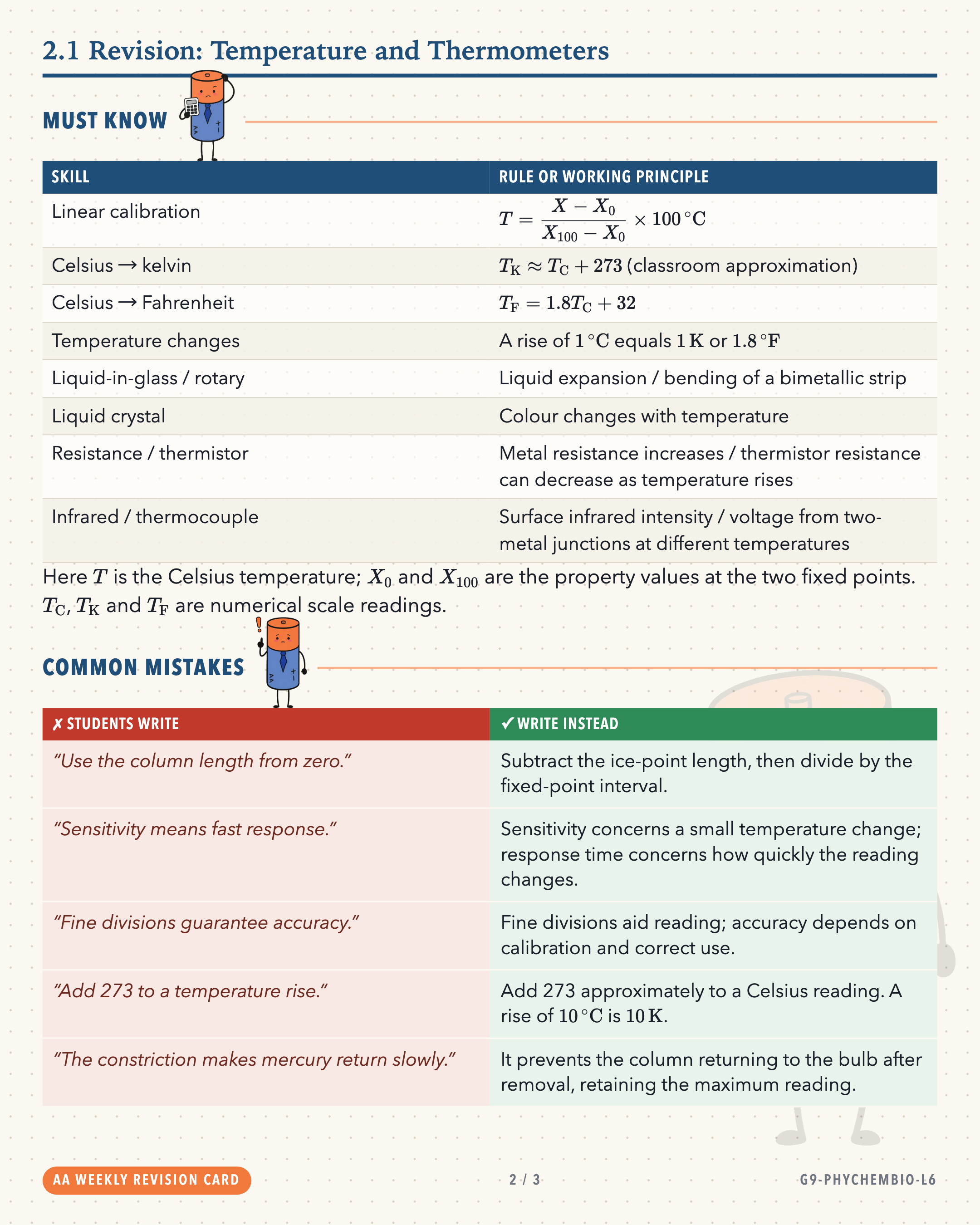
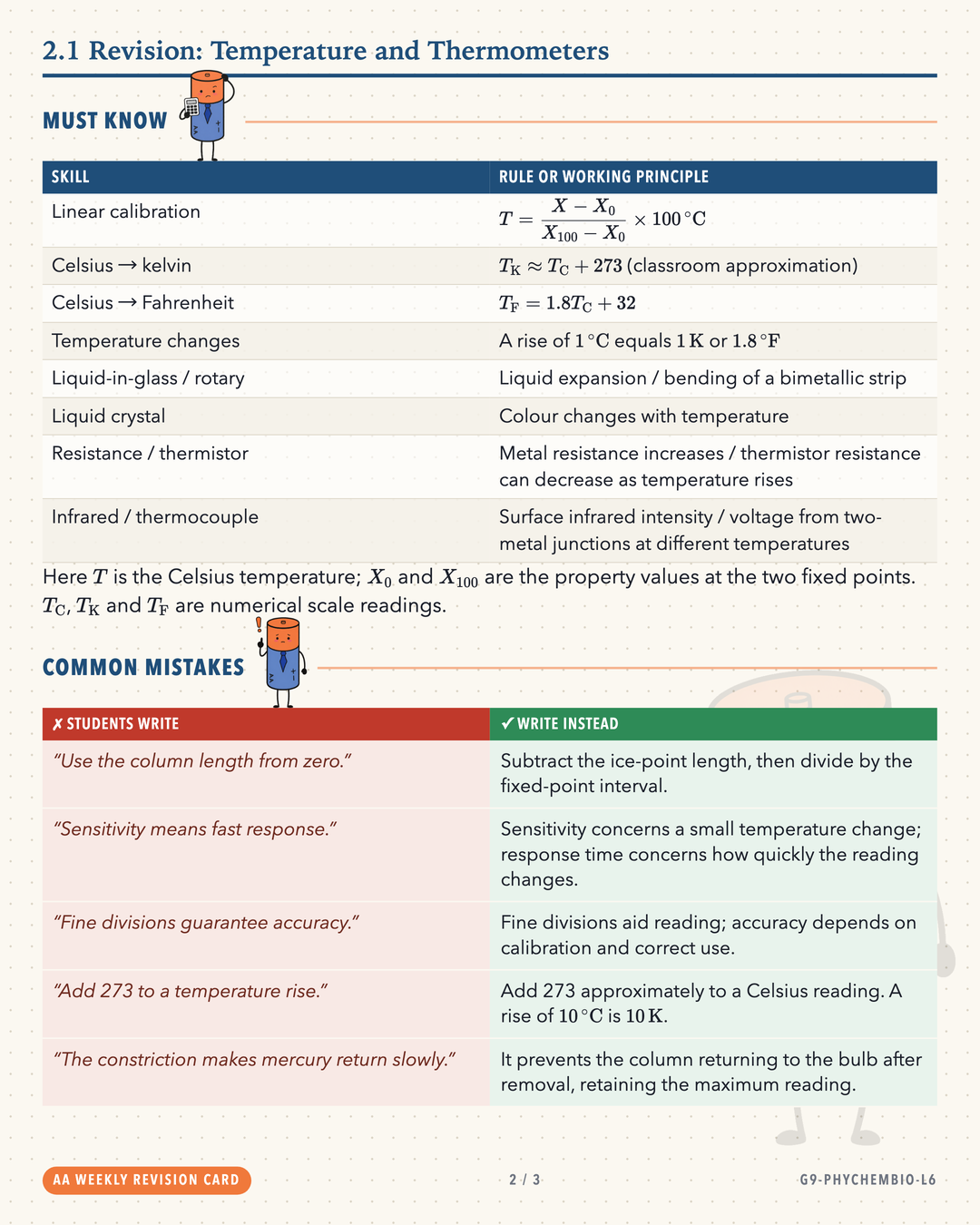
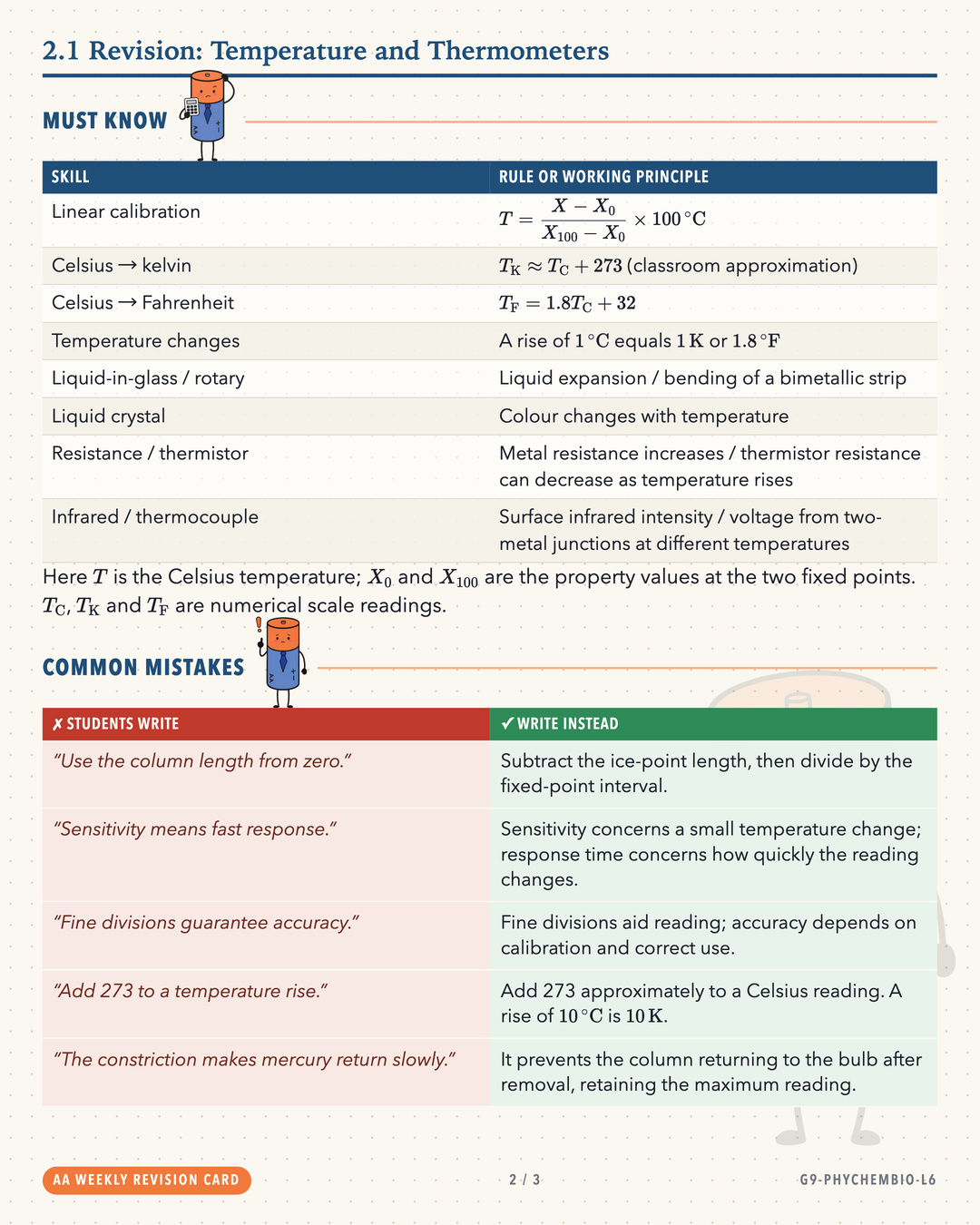
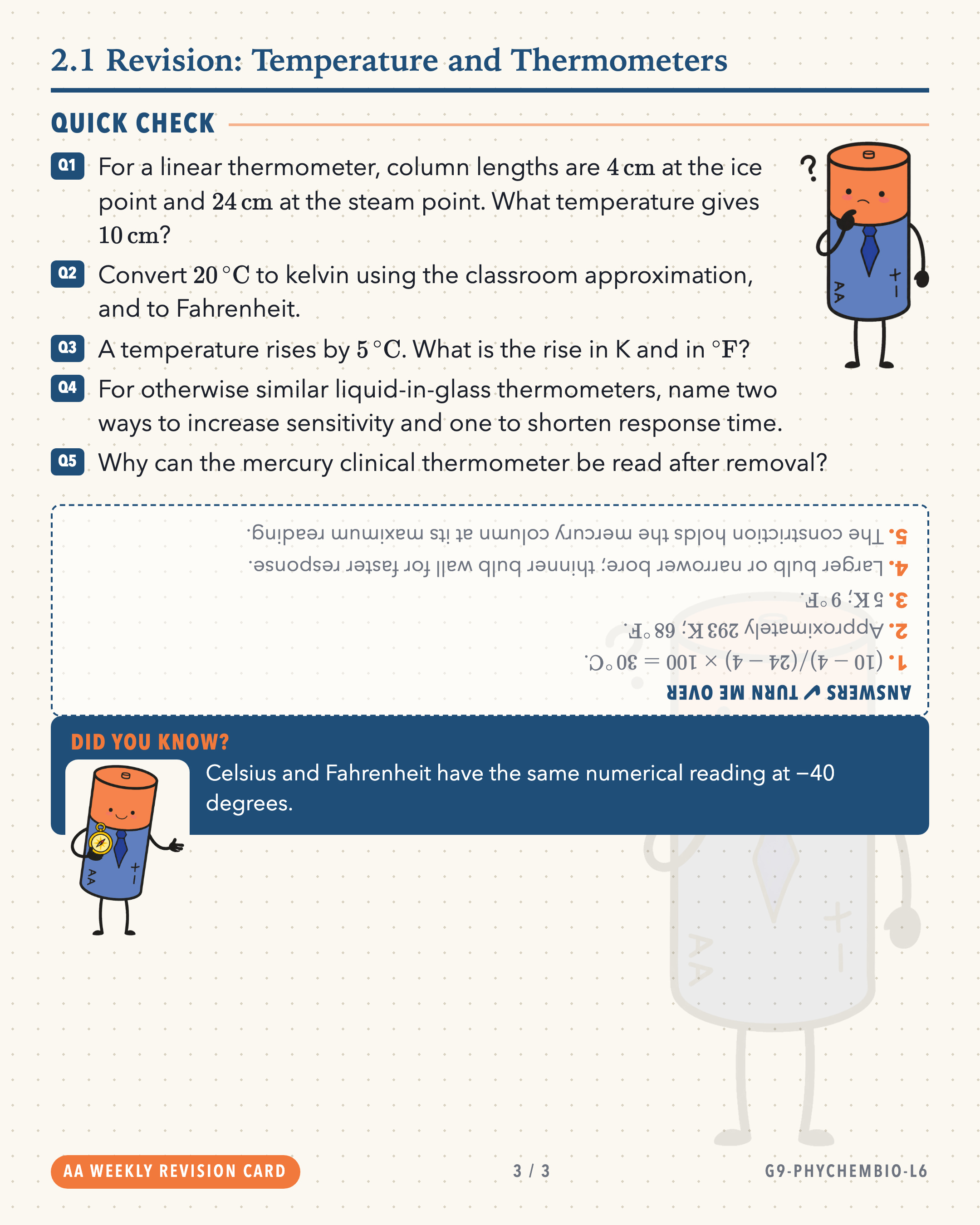
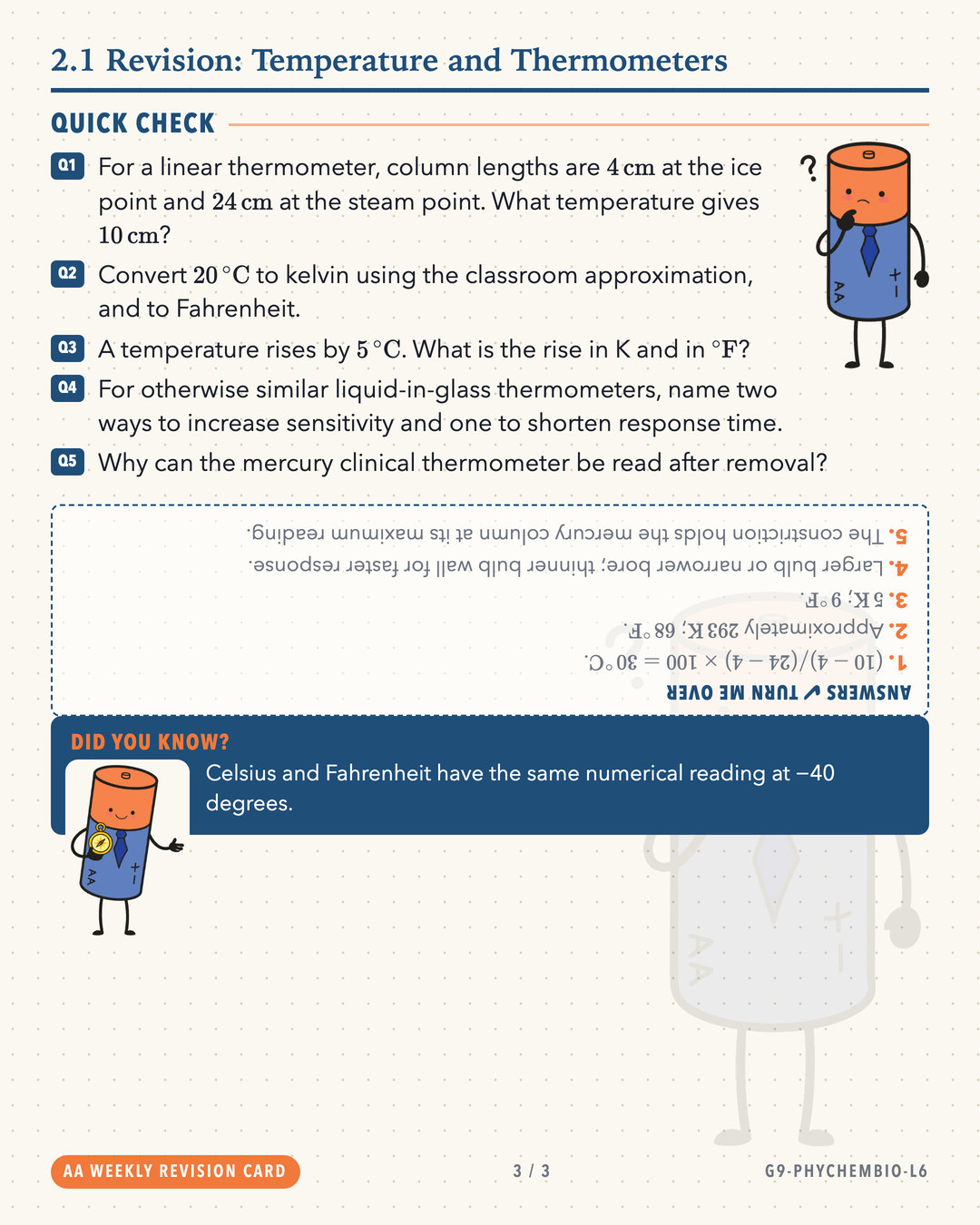
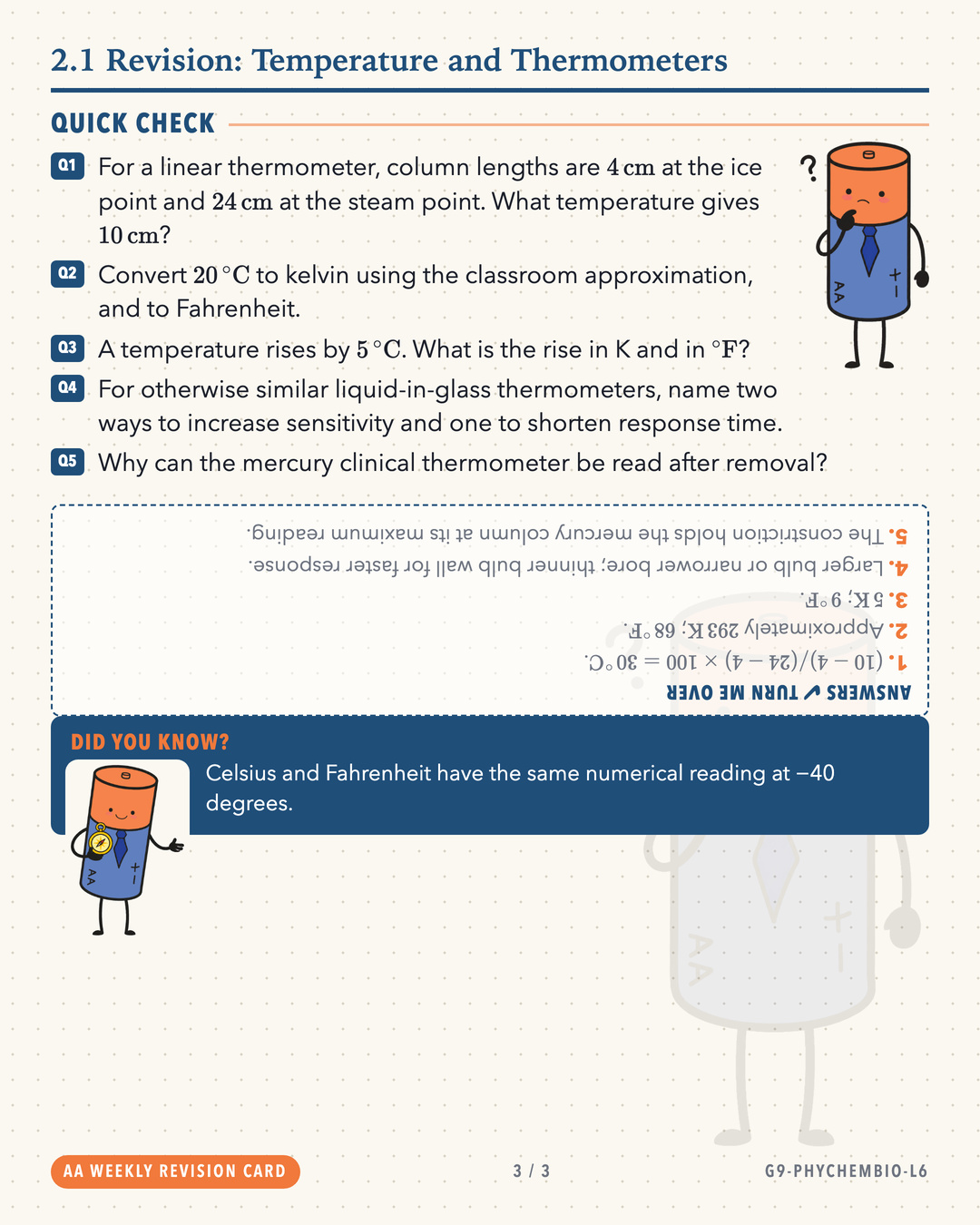
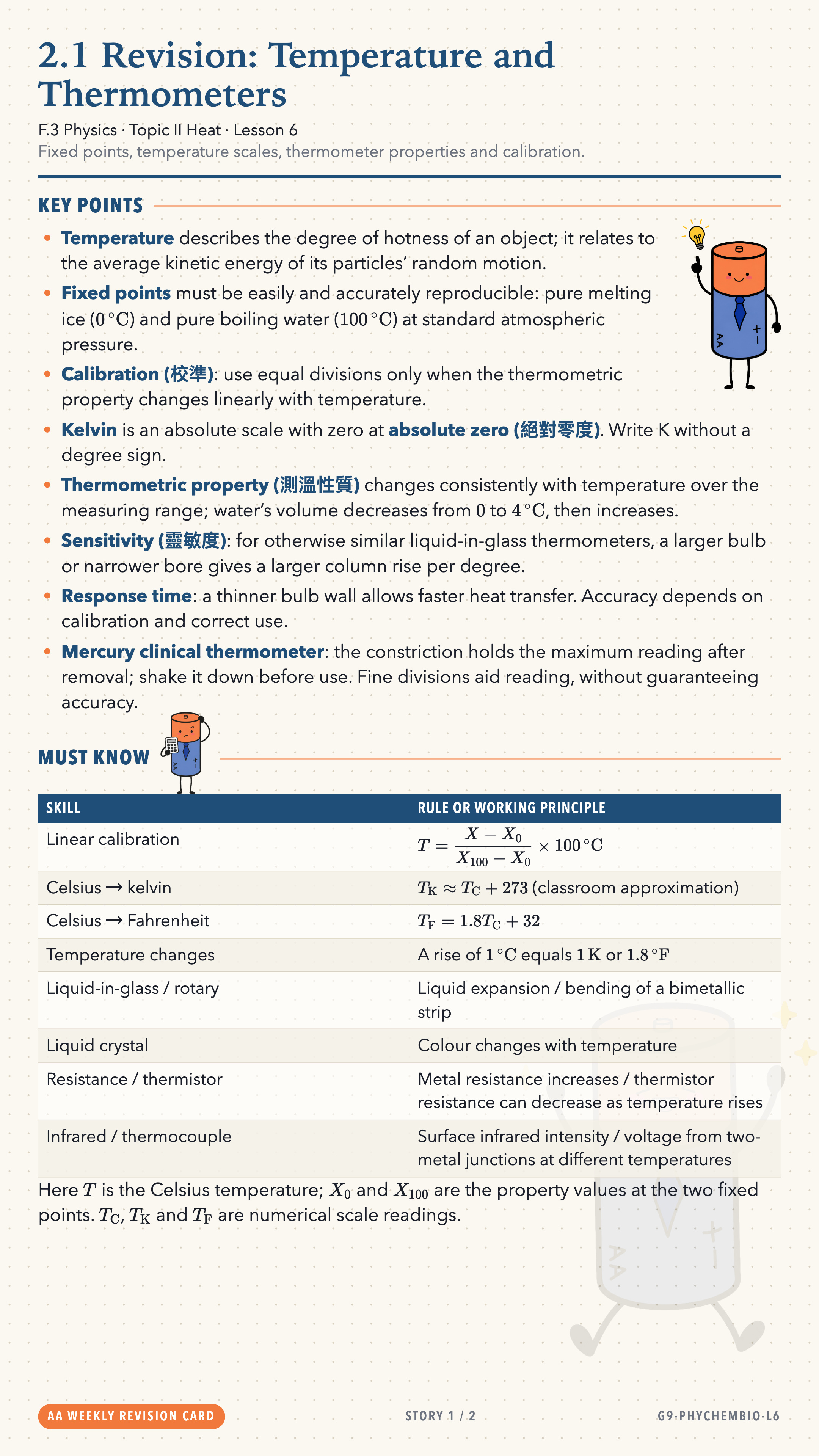
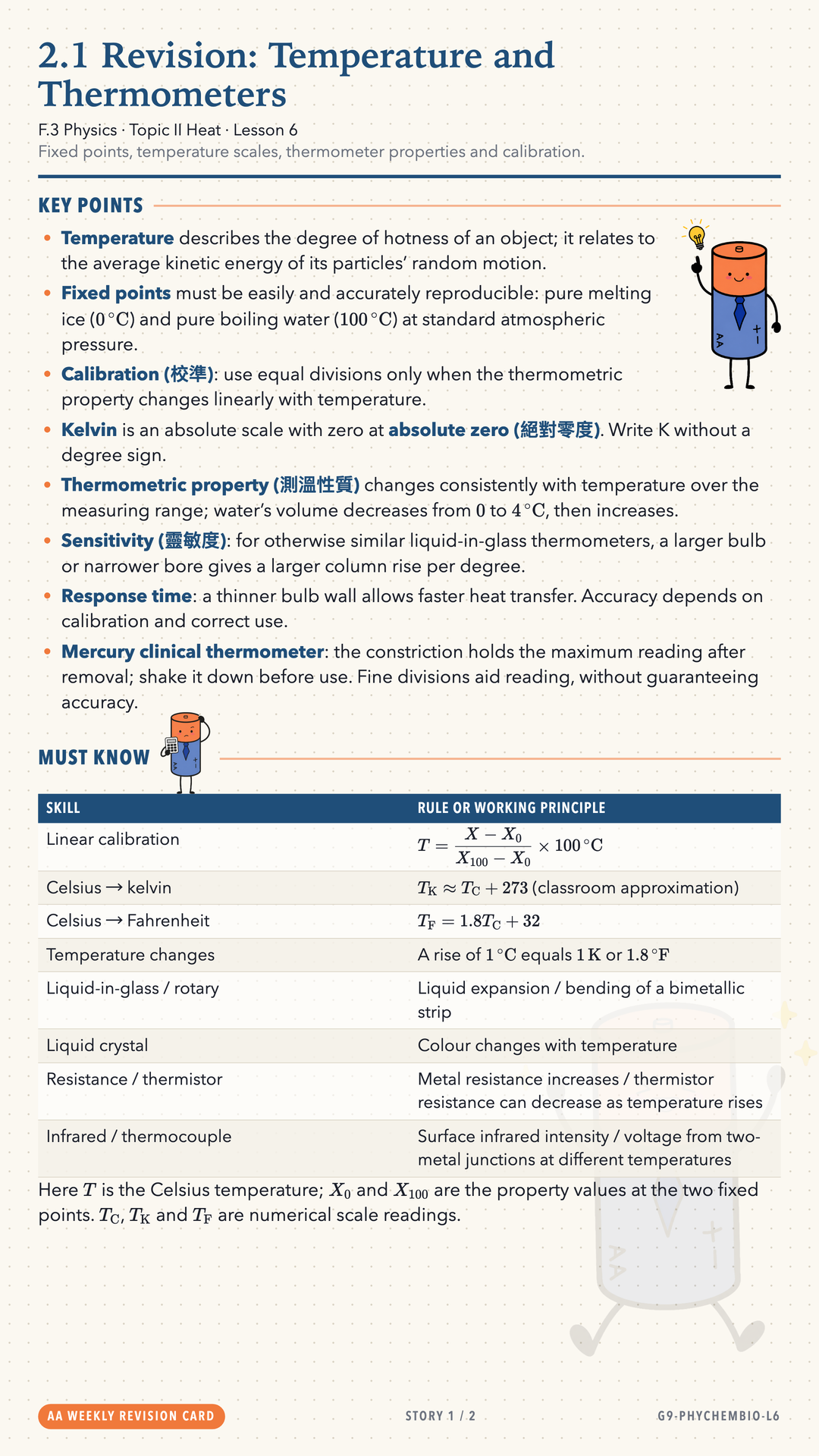
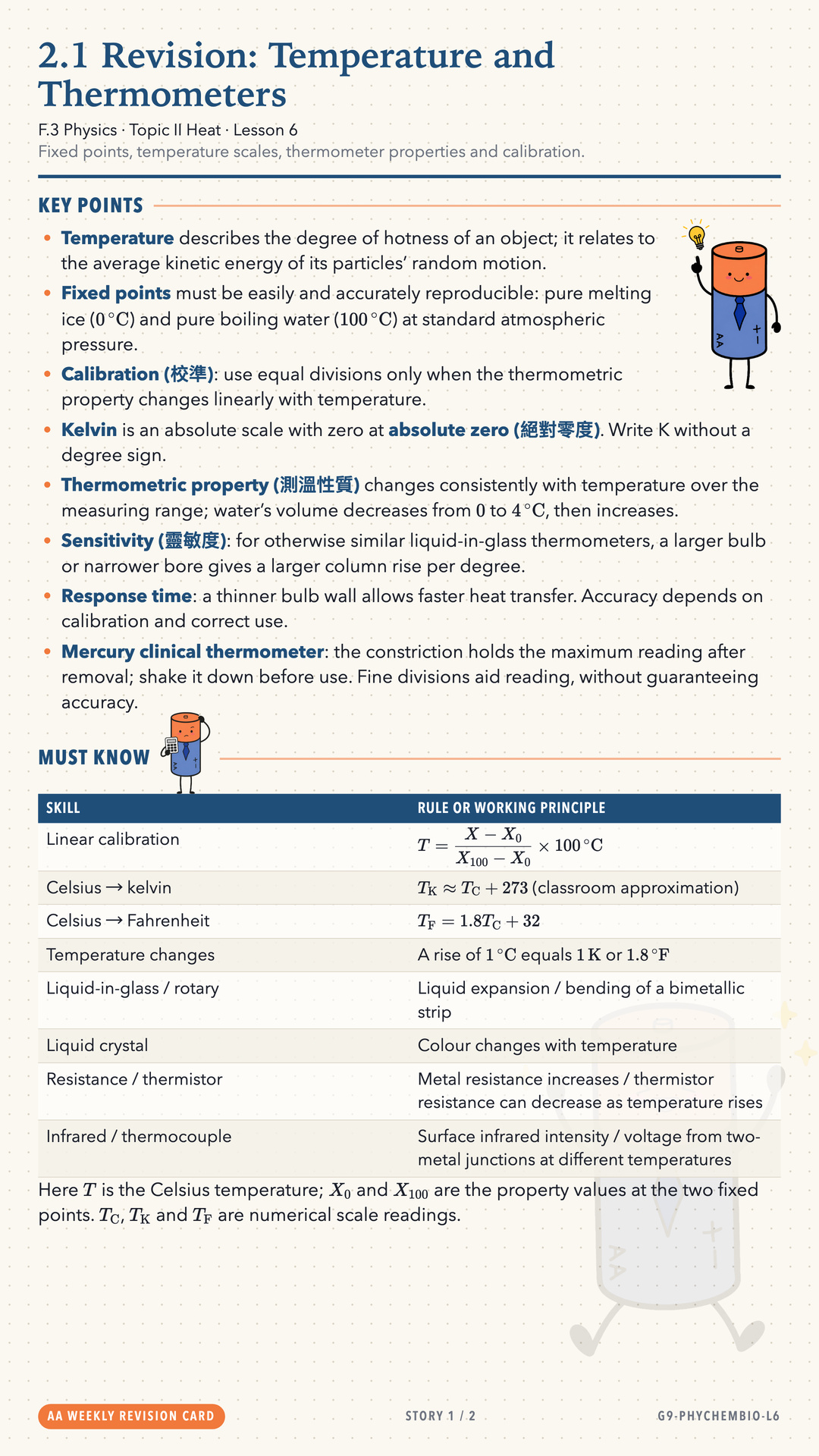
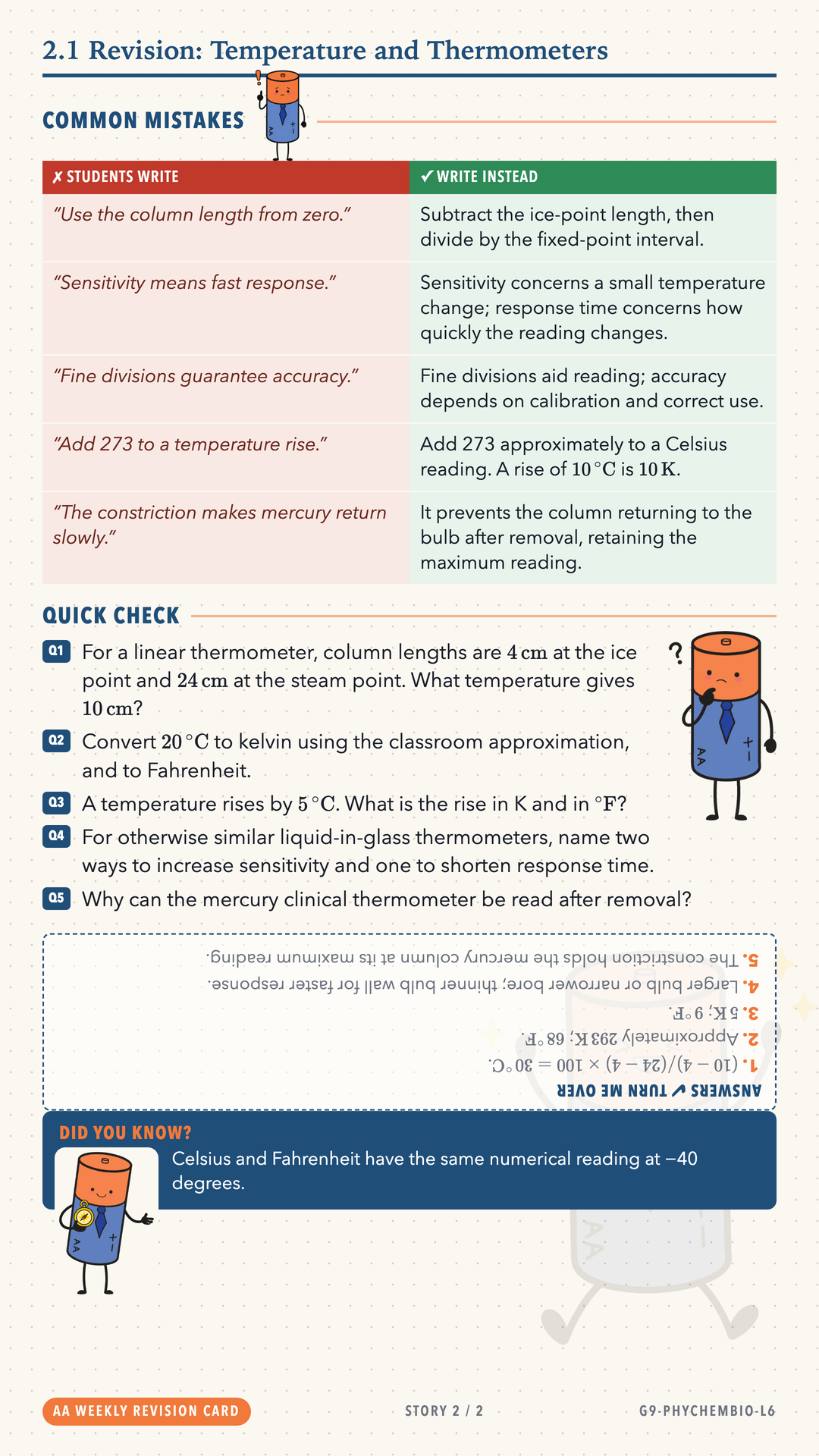
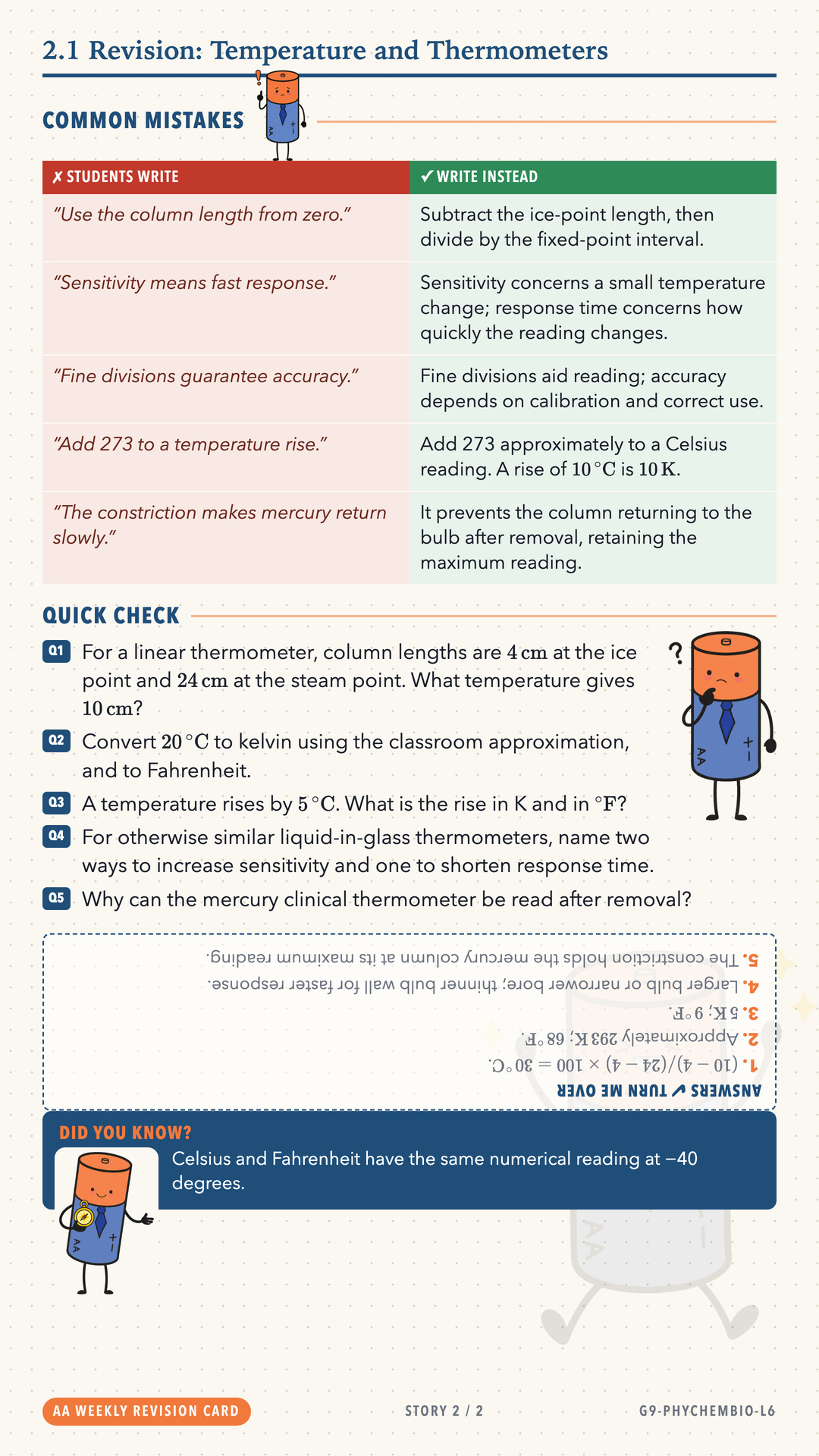
Fixed points, temperature scales, thermometer properties and calibration.
✔ fact-checked · 0 added mistakes tagged [likely] · 2.8 MB JPG · card.md ·
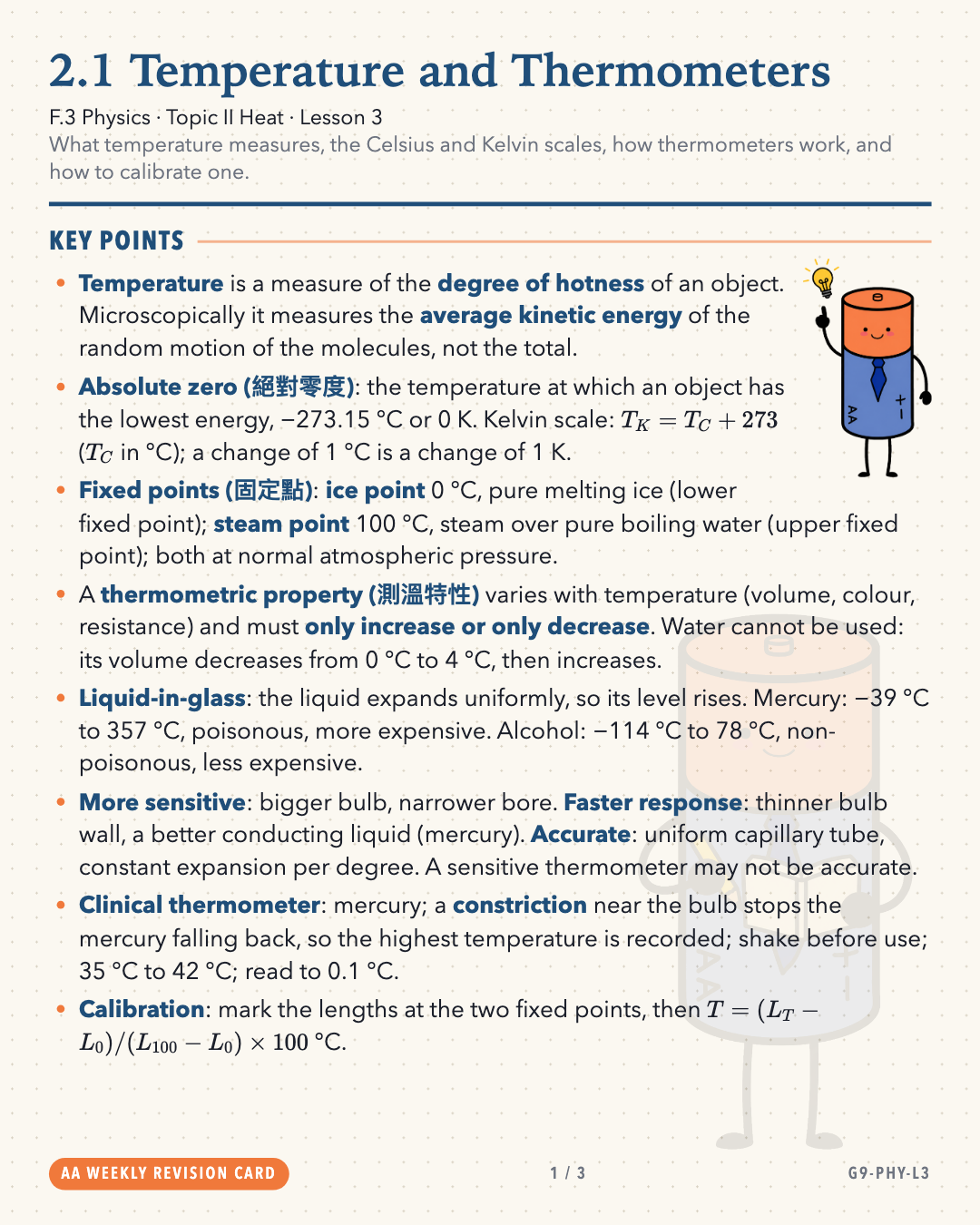
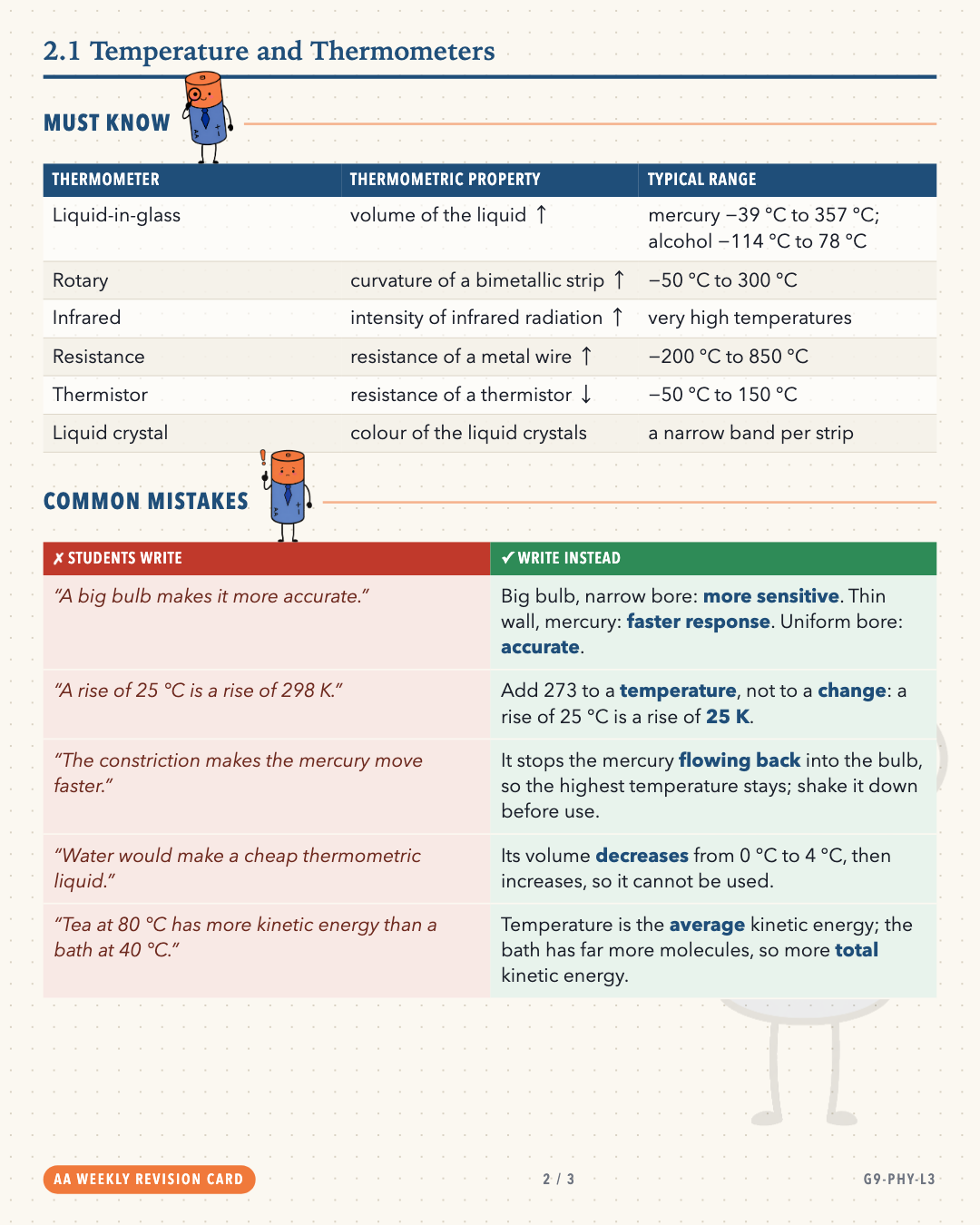
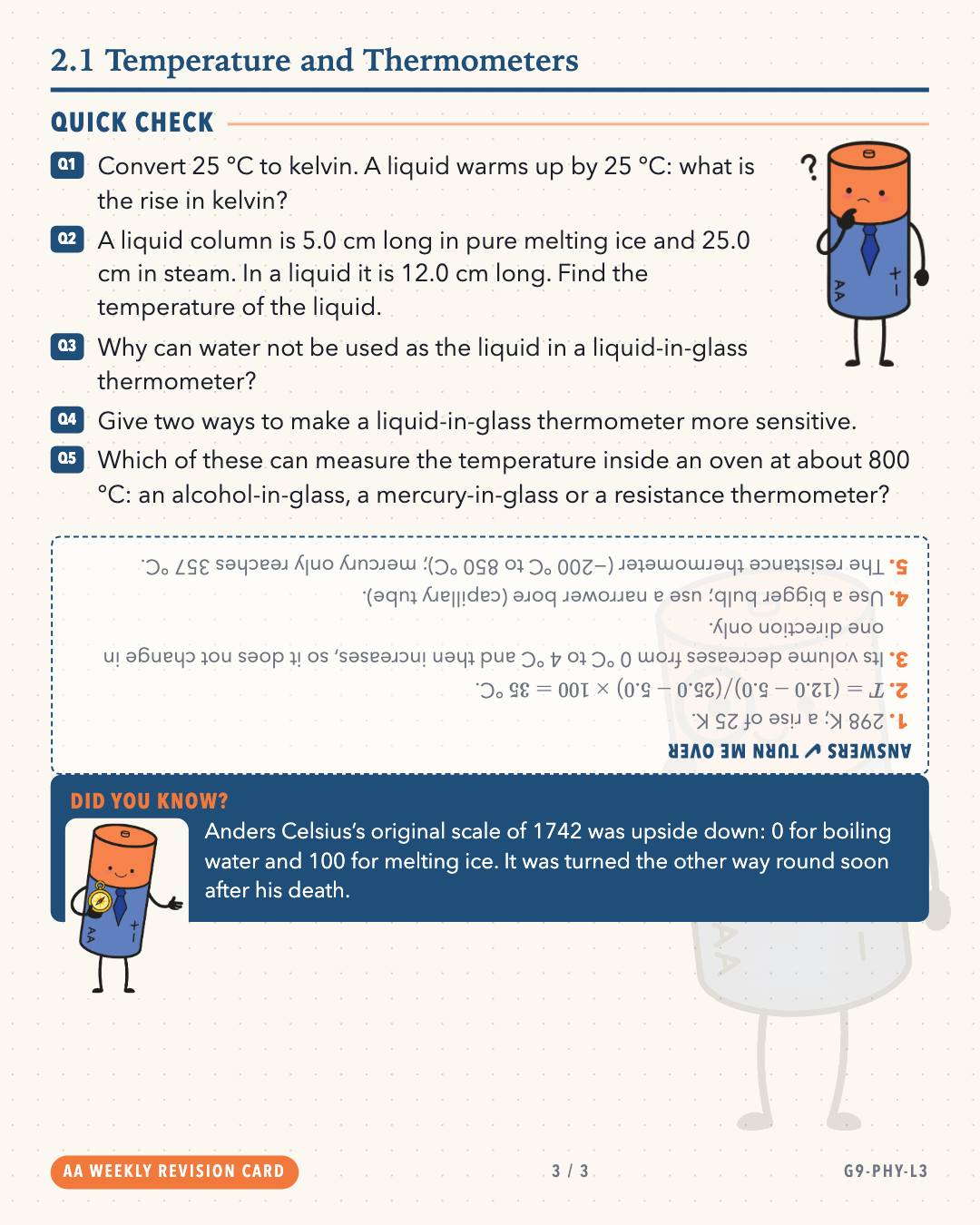
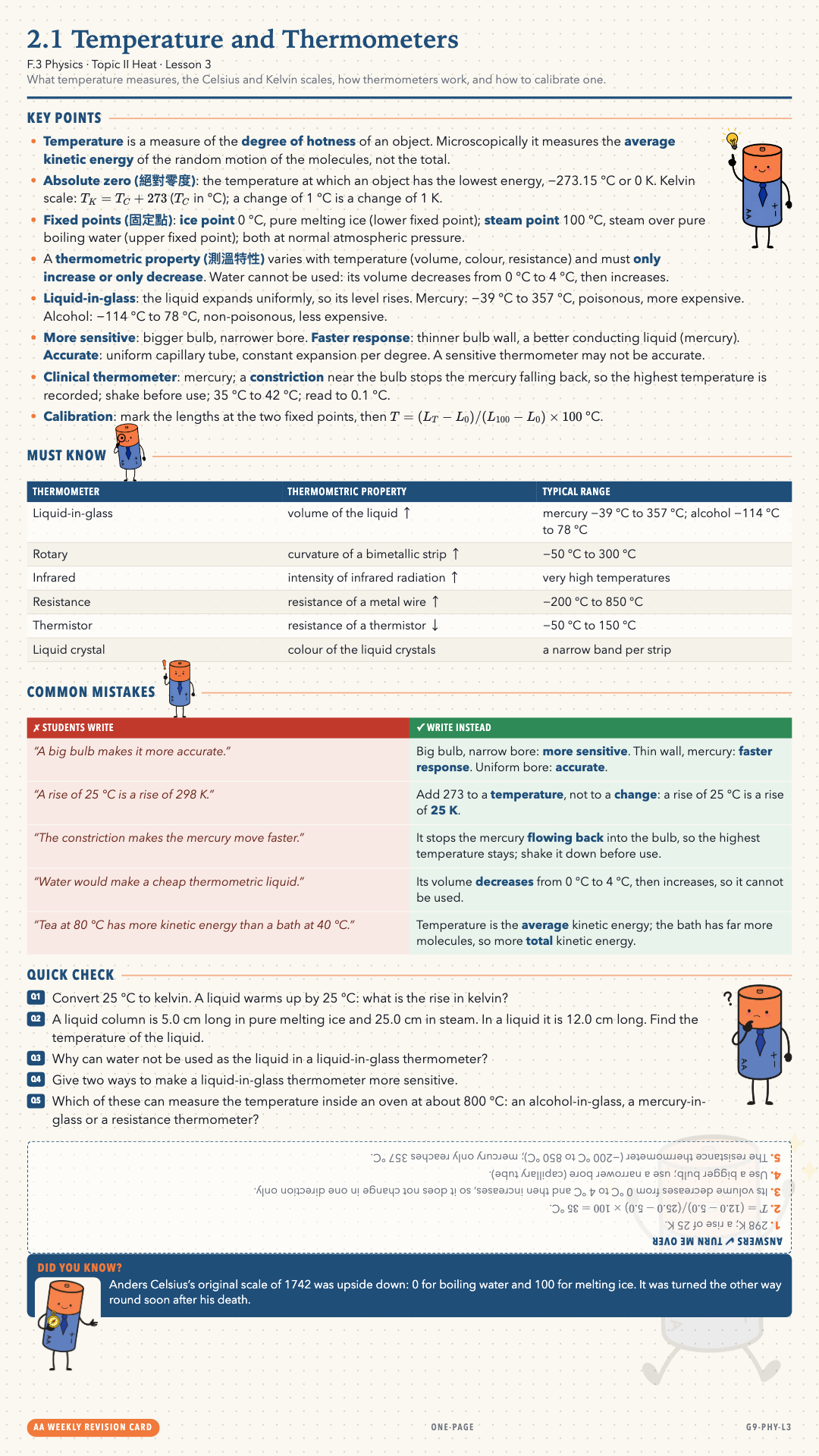
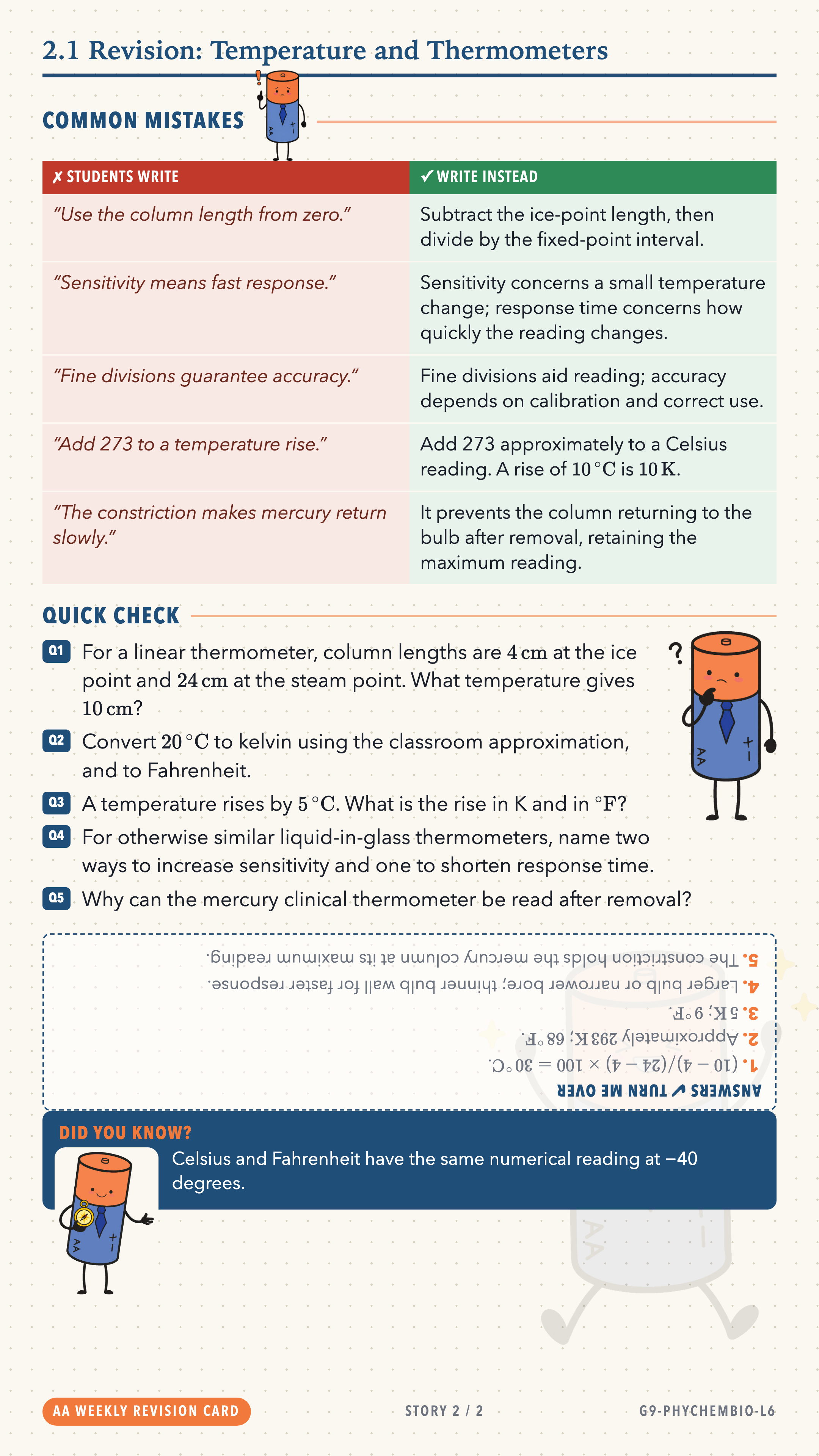
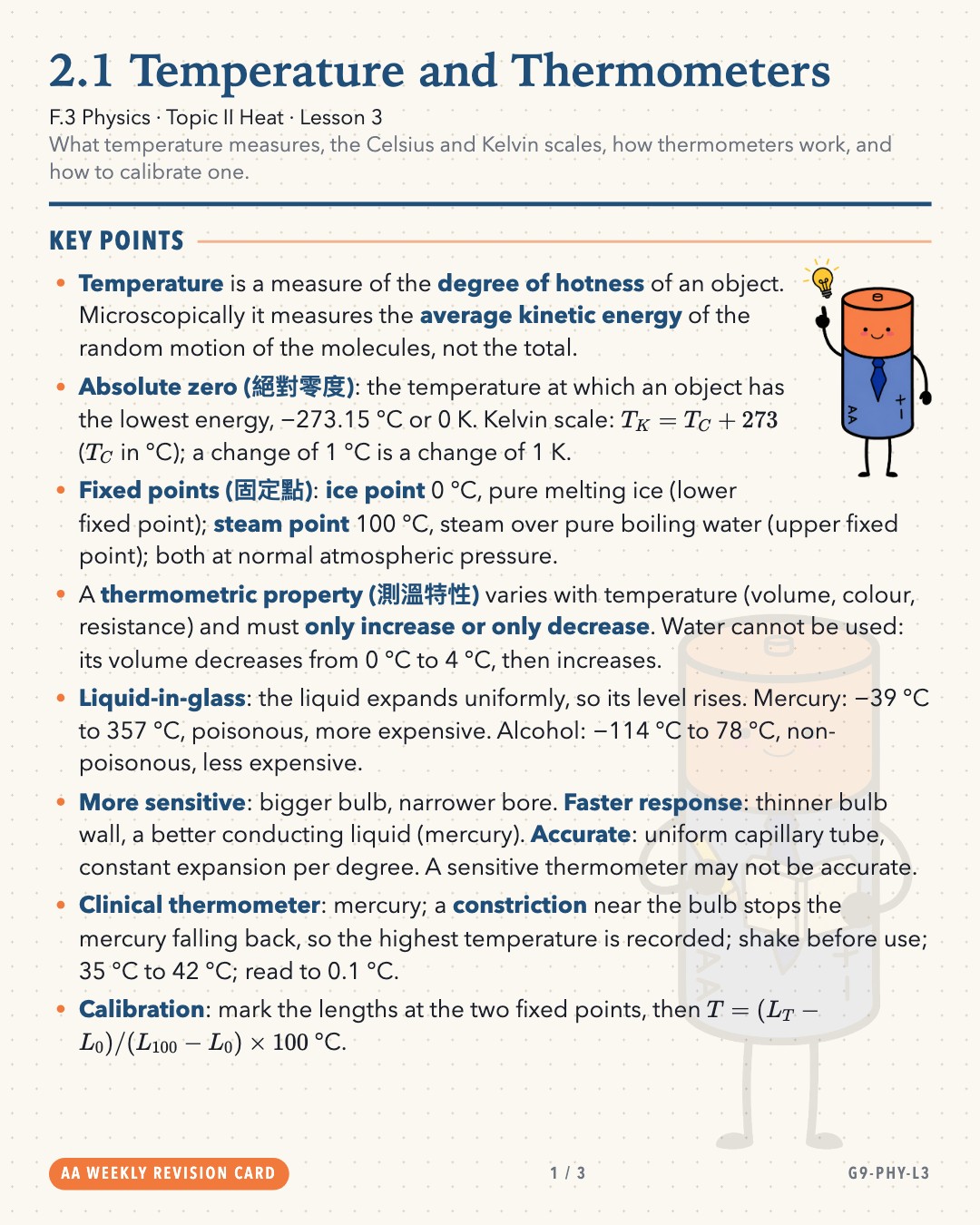
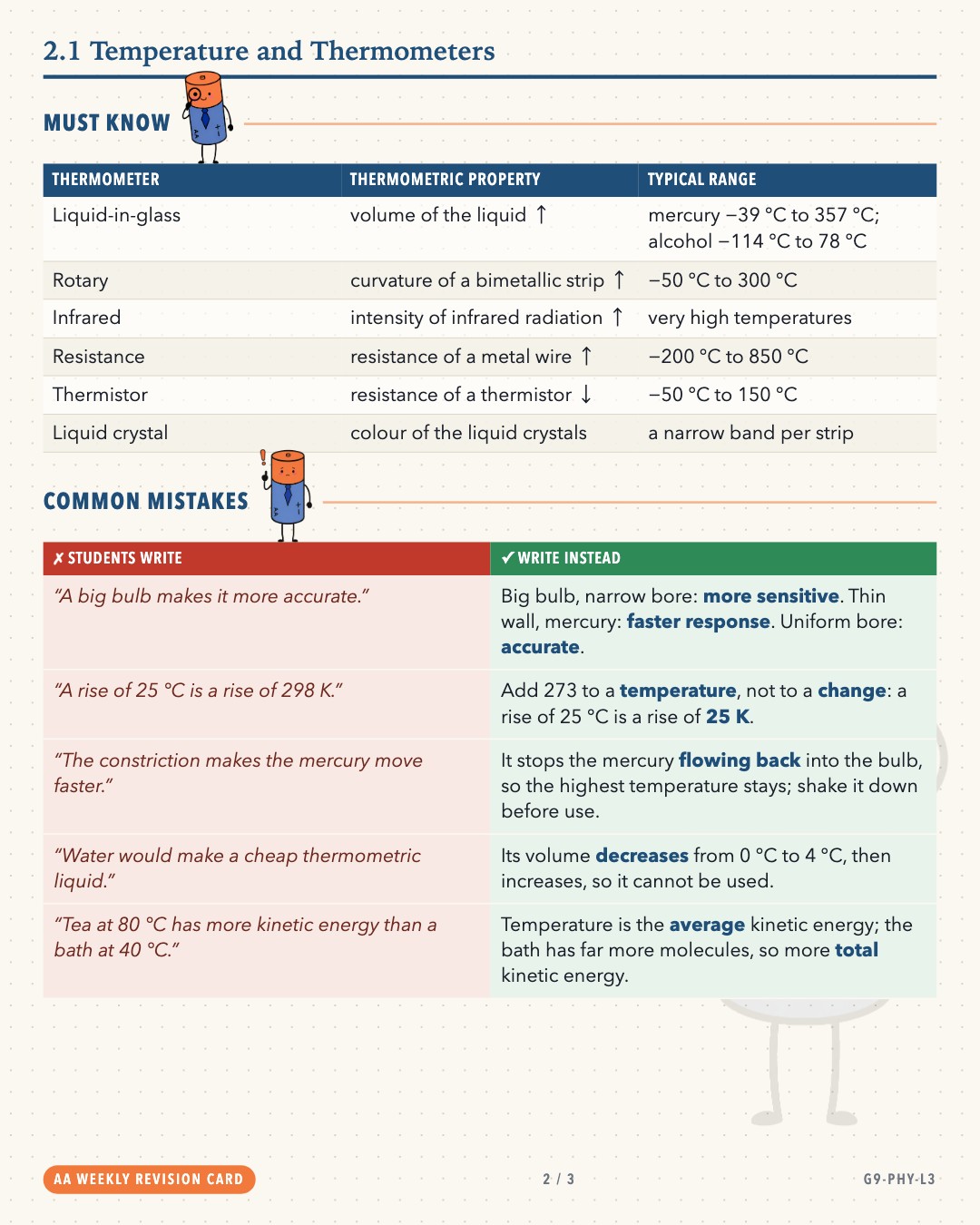
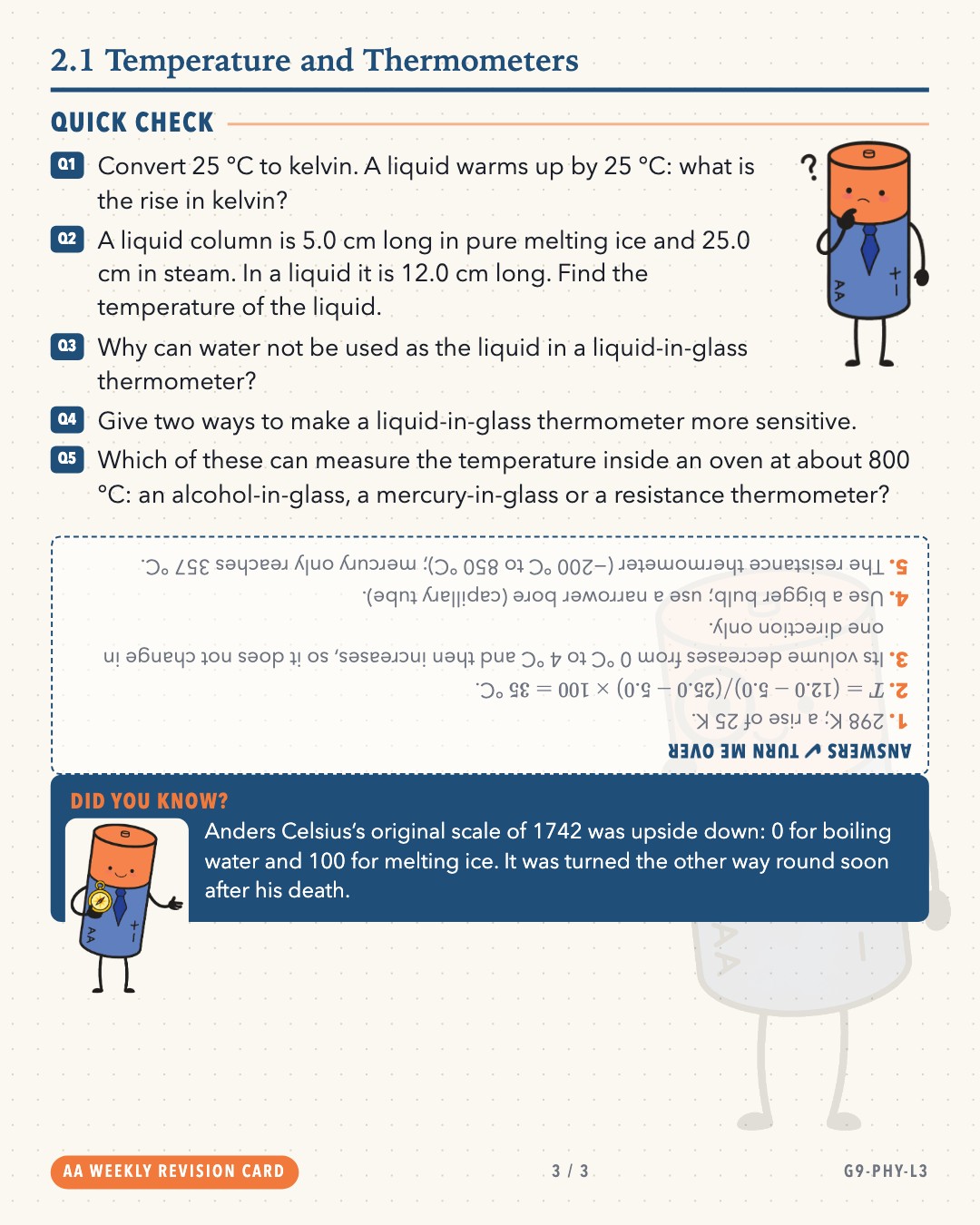
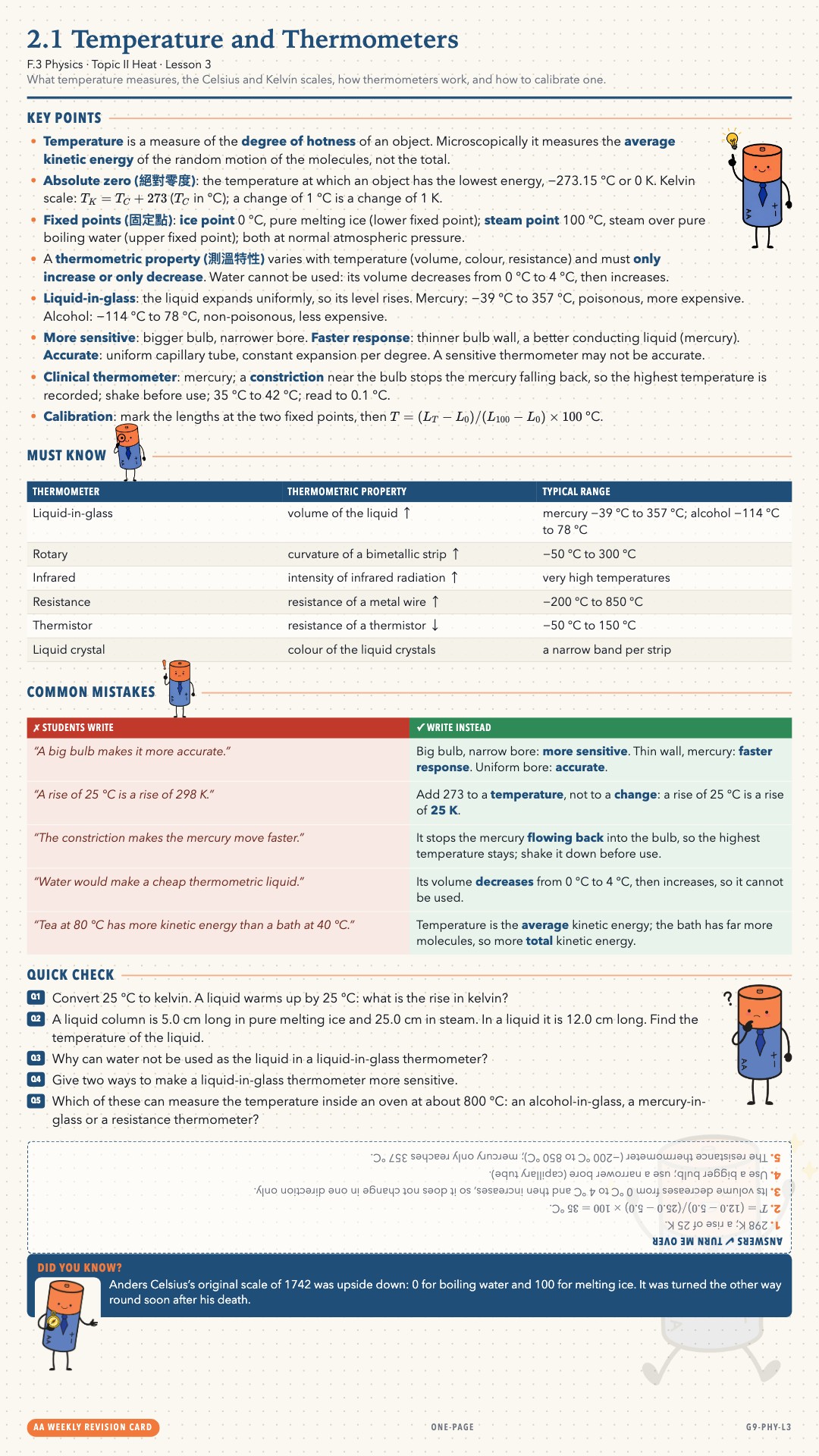
What temperature measures, the Celsius and Kelvin scales, how thermometers work, and how to calibrate one.
✔ fact-checked · 1 added mistake tagged [likely] · 1.4 MB JPG · card.md ·
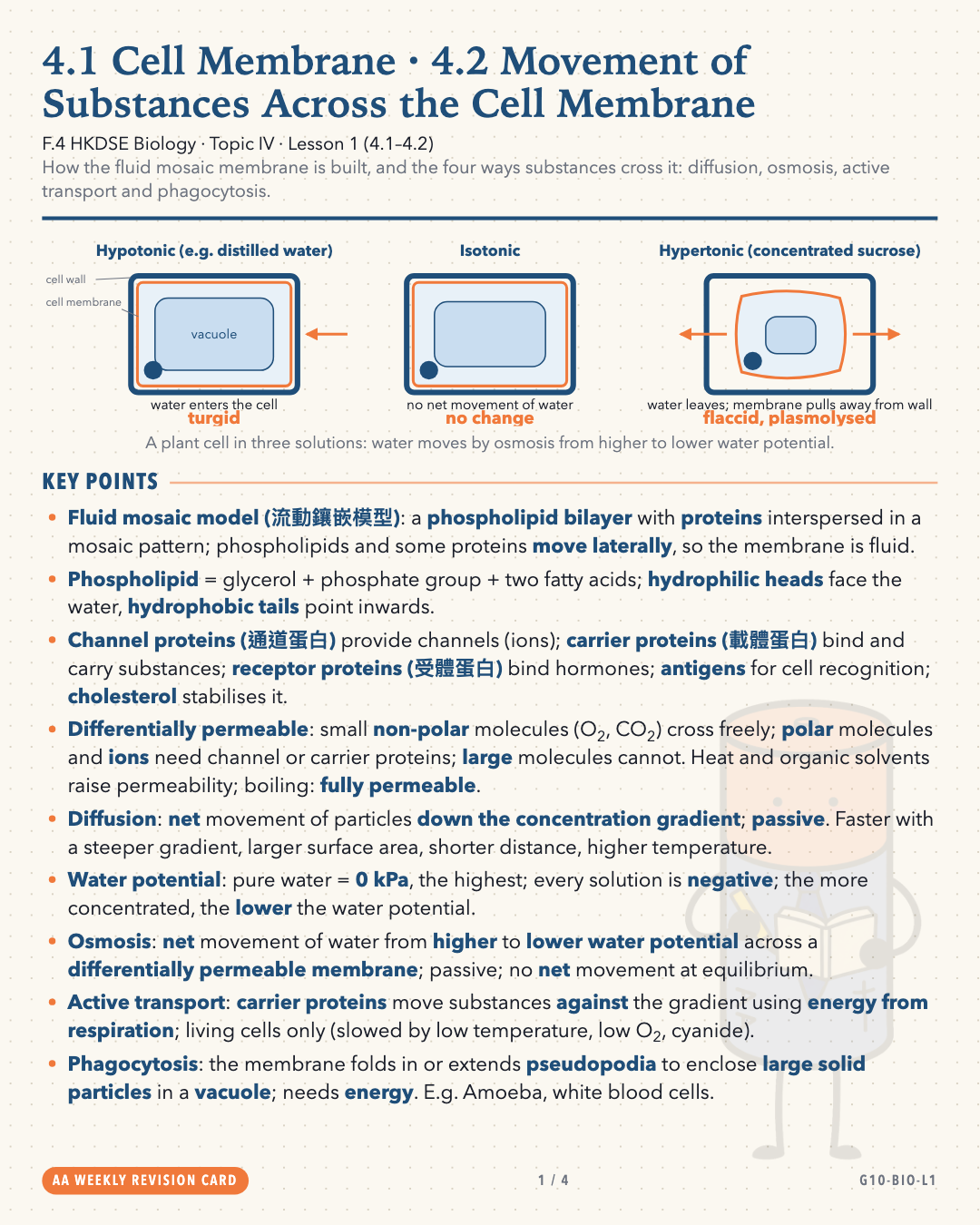
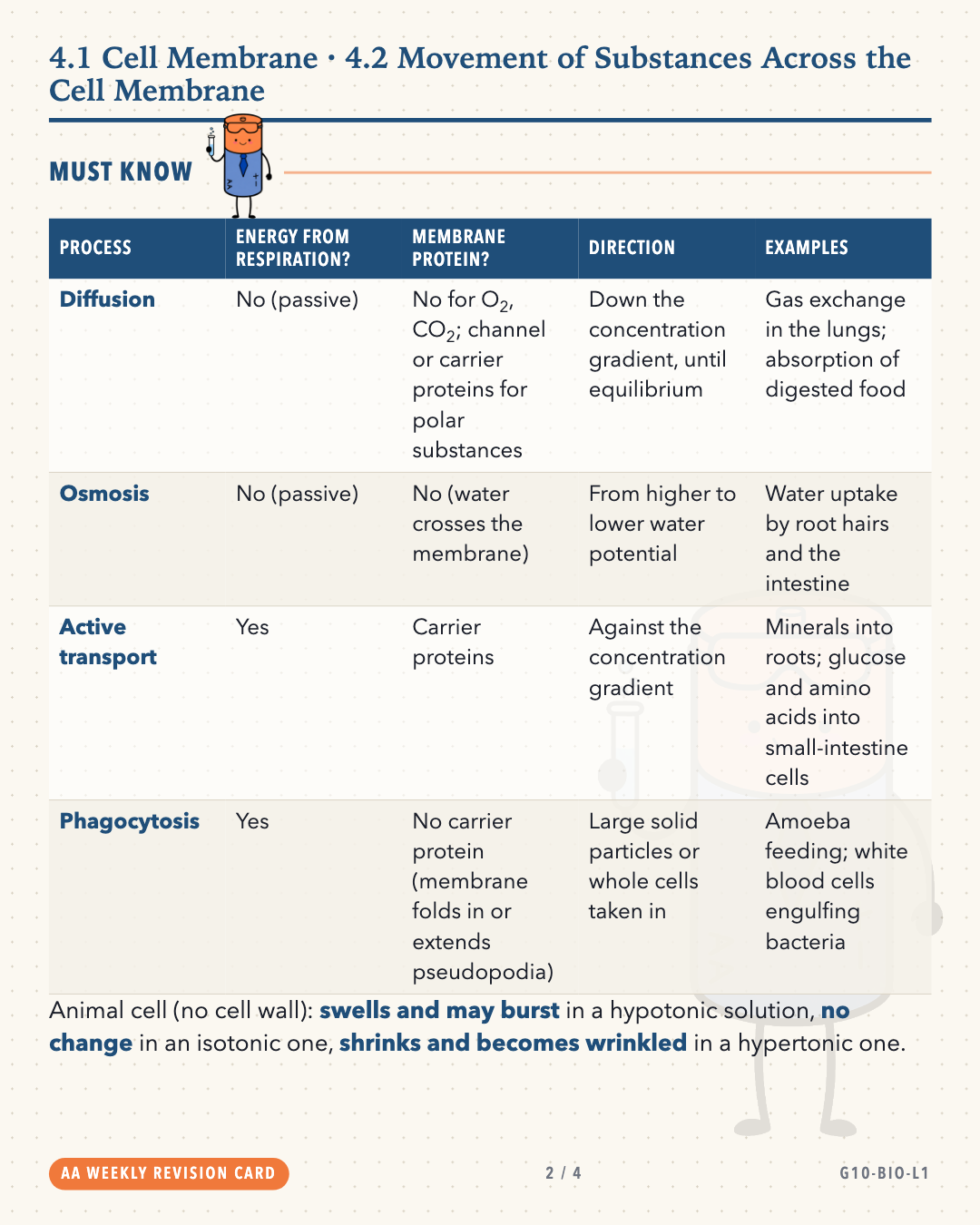
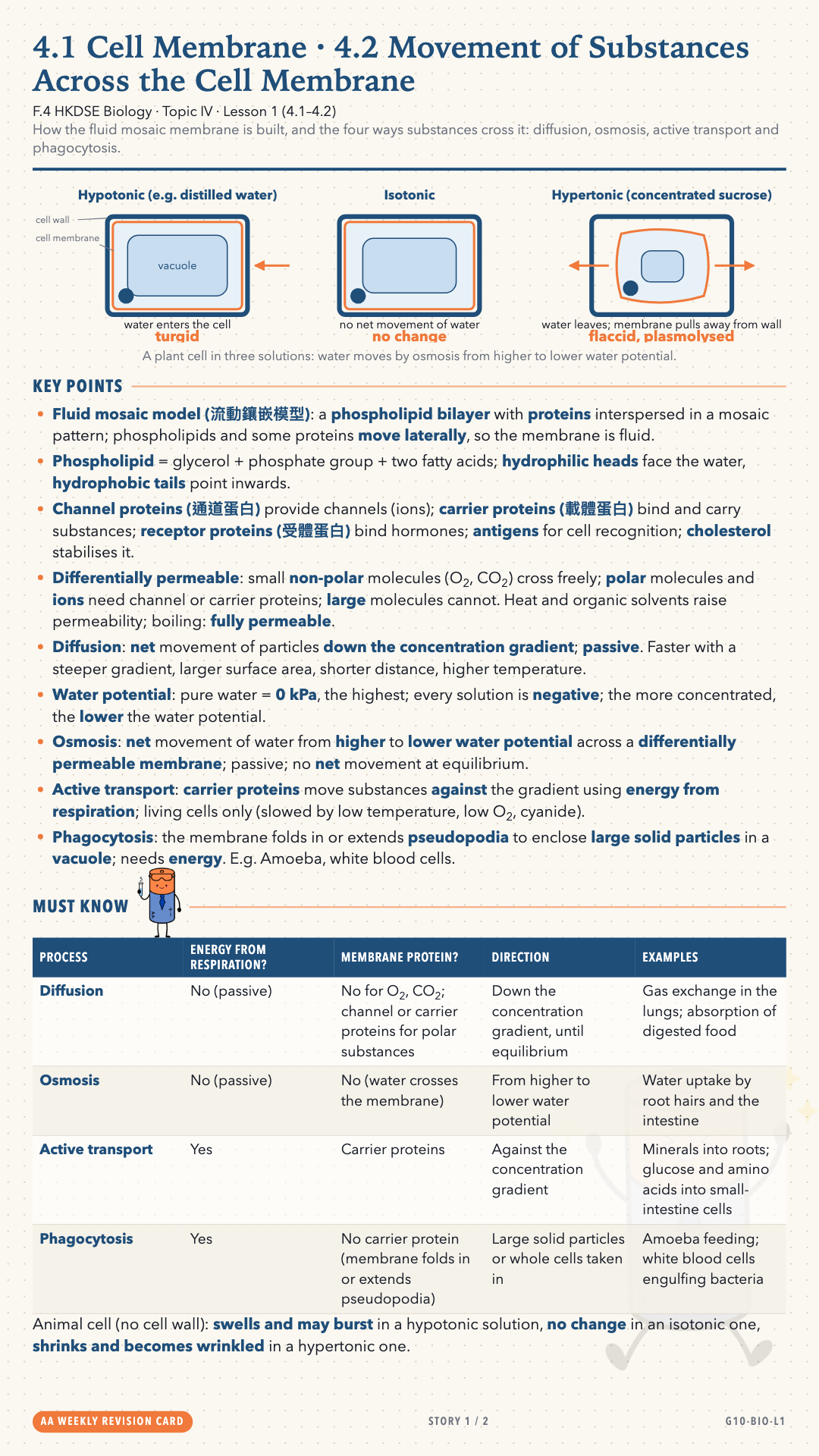
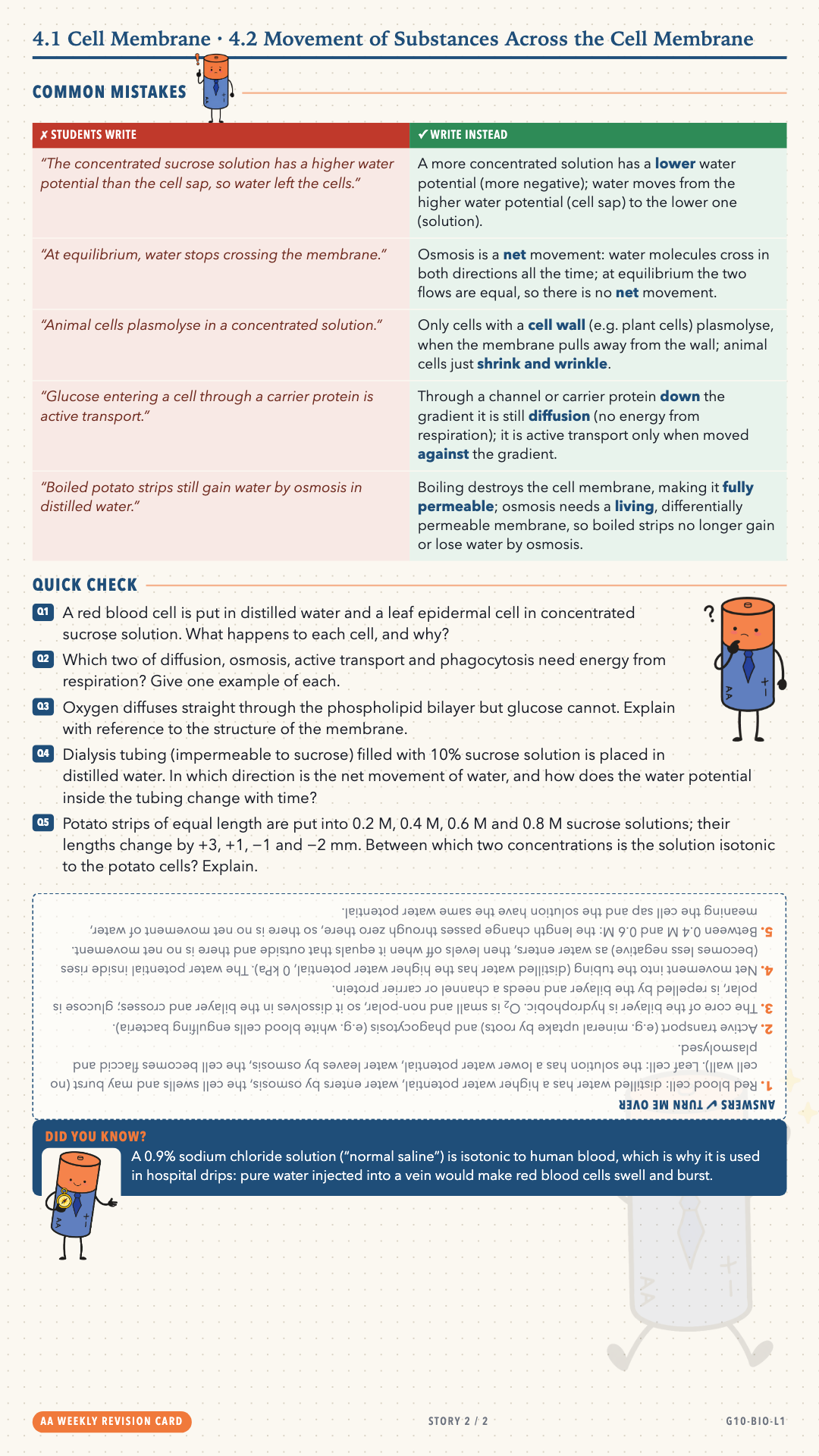
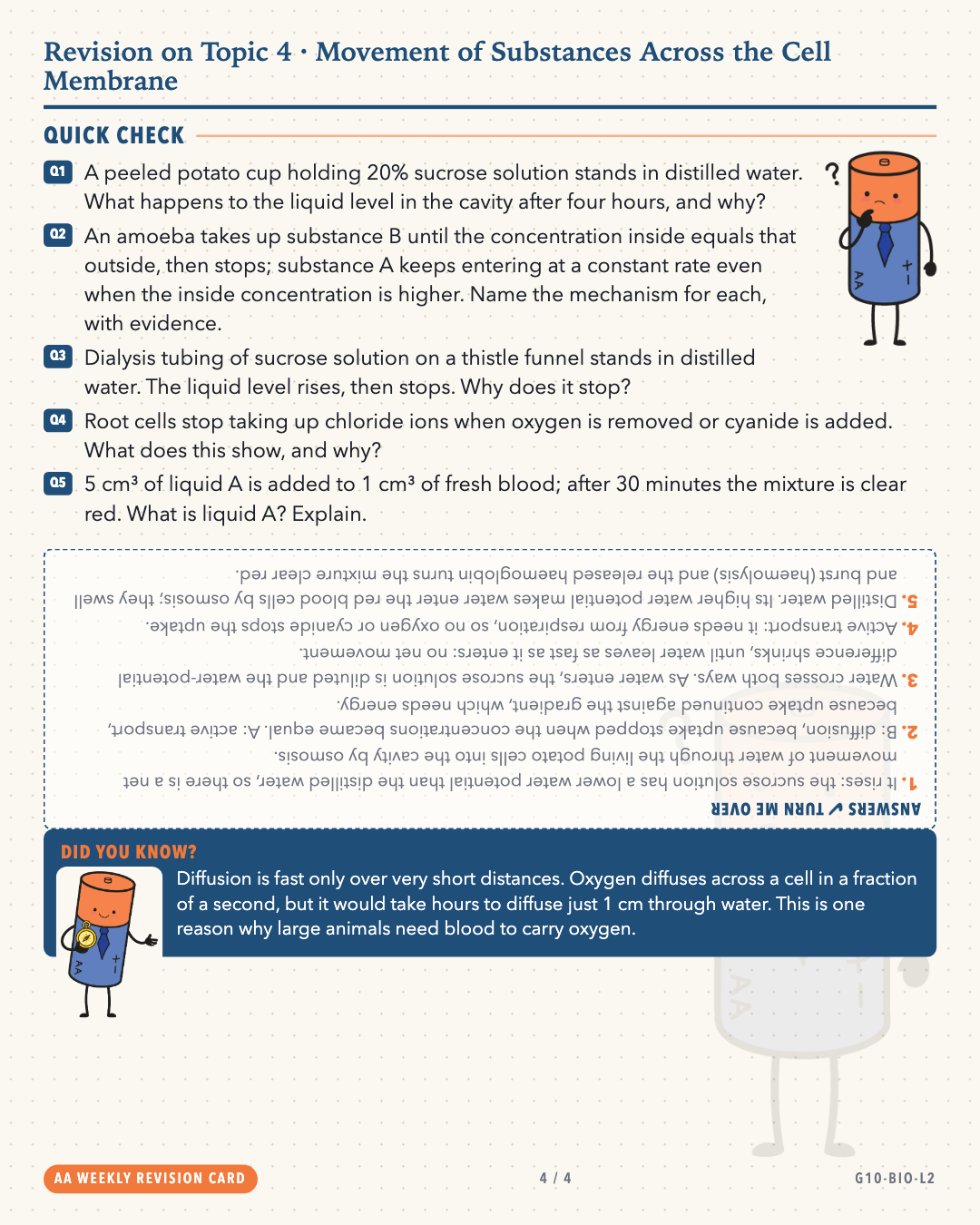
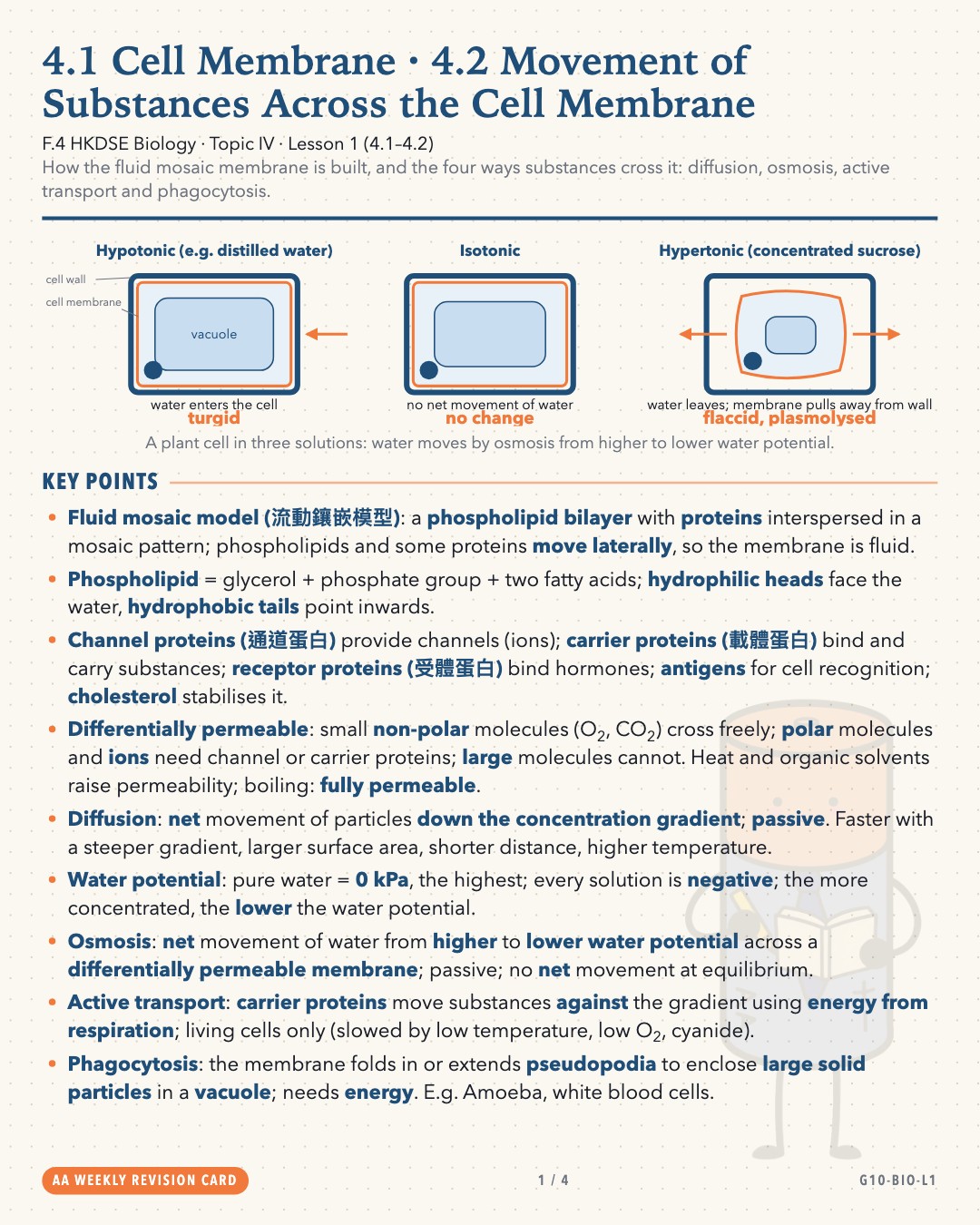
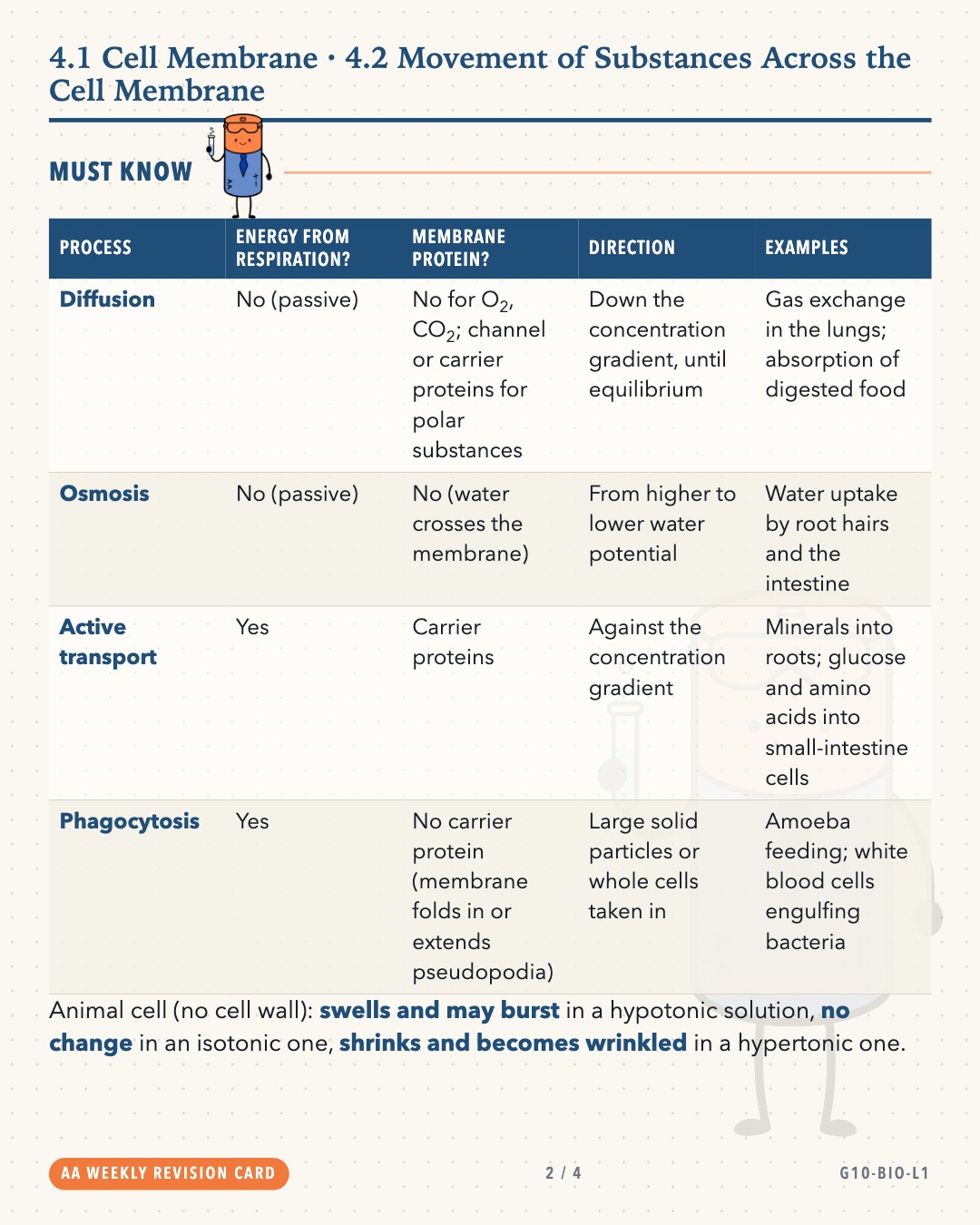
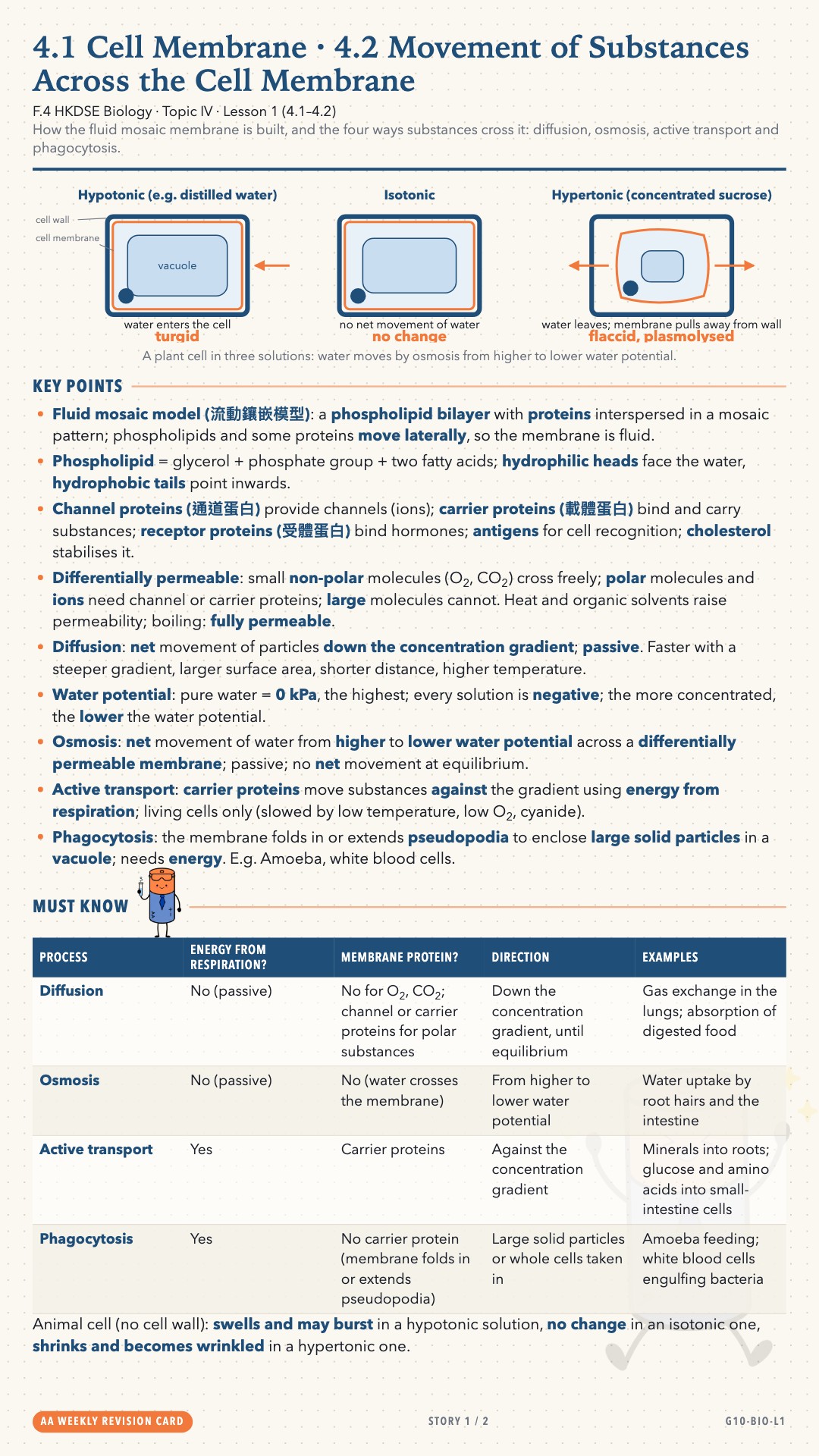
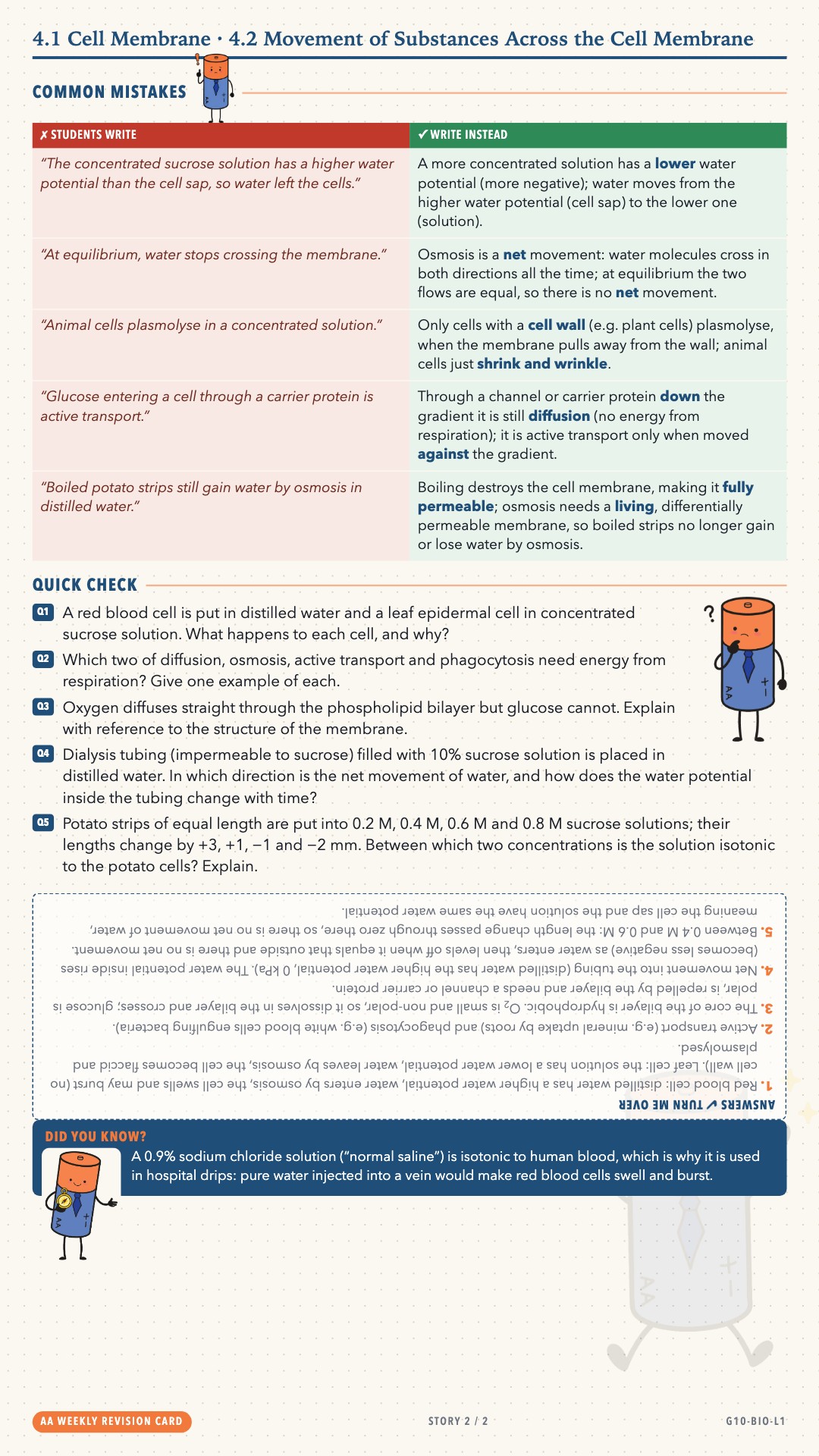
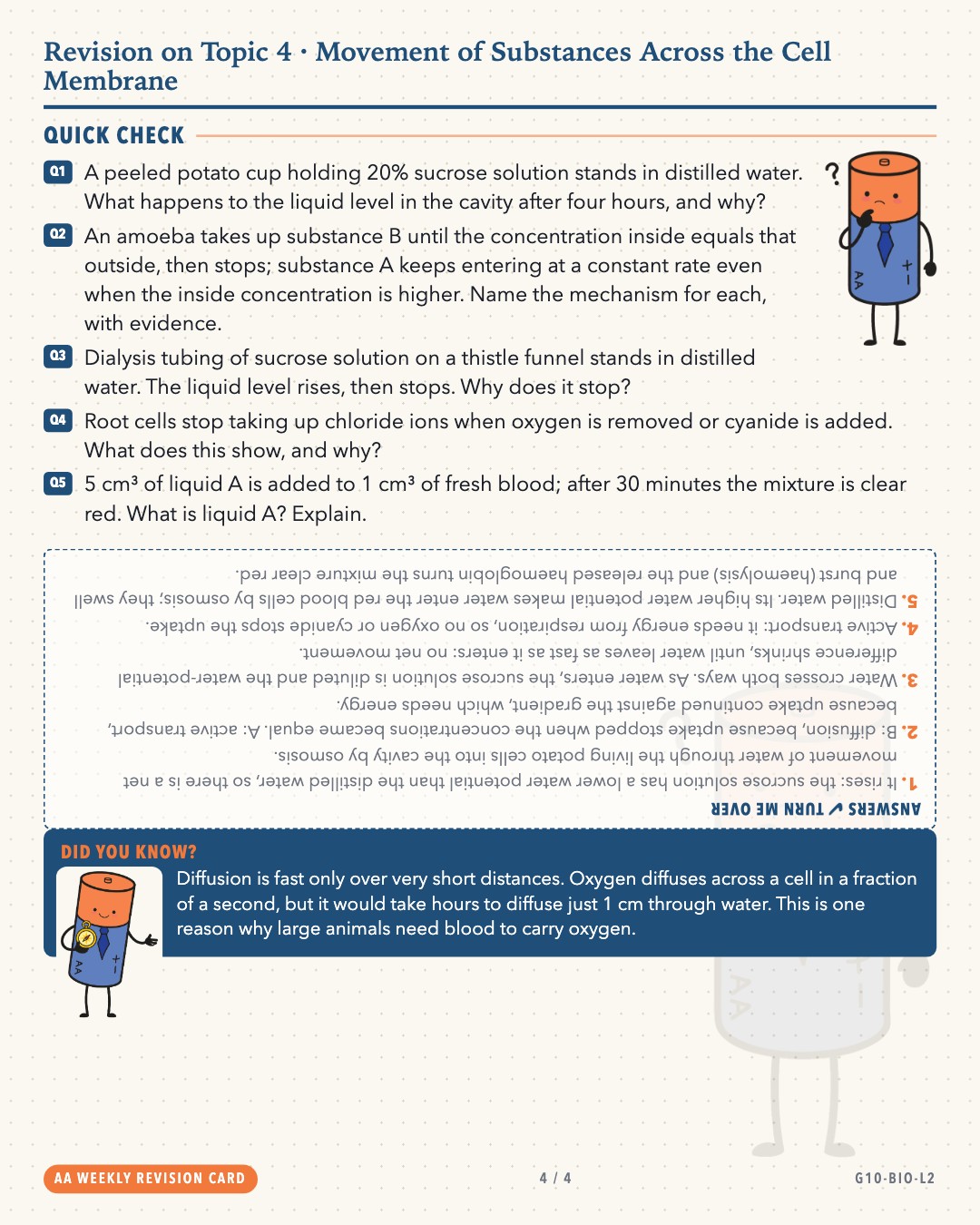
How the fluid mosaic membrane is built, and the four ways substances cross it: diffusion, osmosis, active transport and phagocytosis.
✔ fact-checked · 3 added mistakes tagged [likely] · 2.3 MB JPG · card.md ·
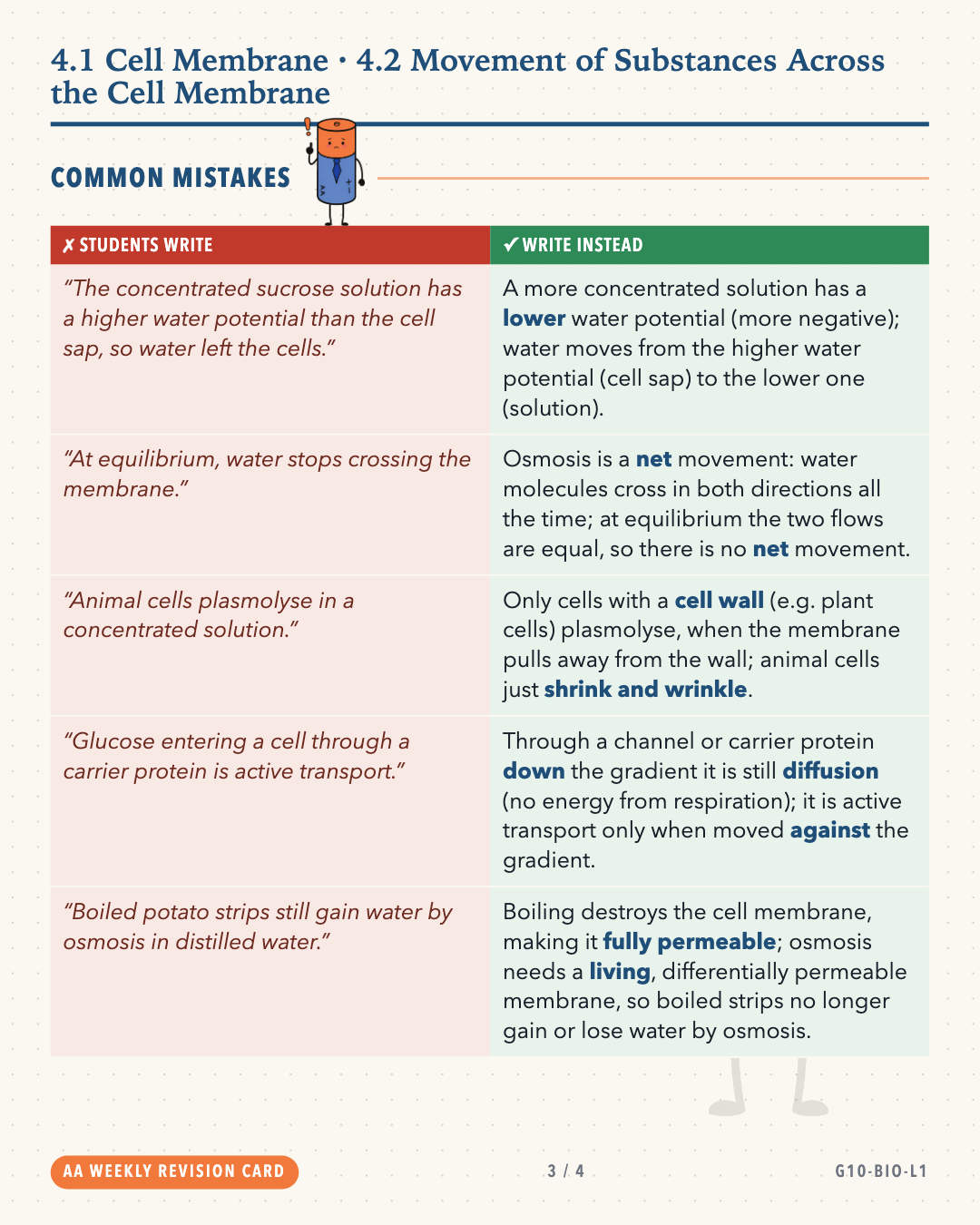
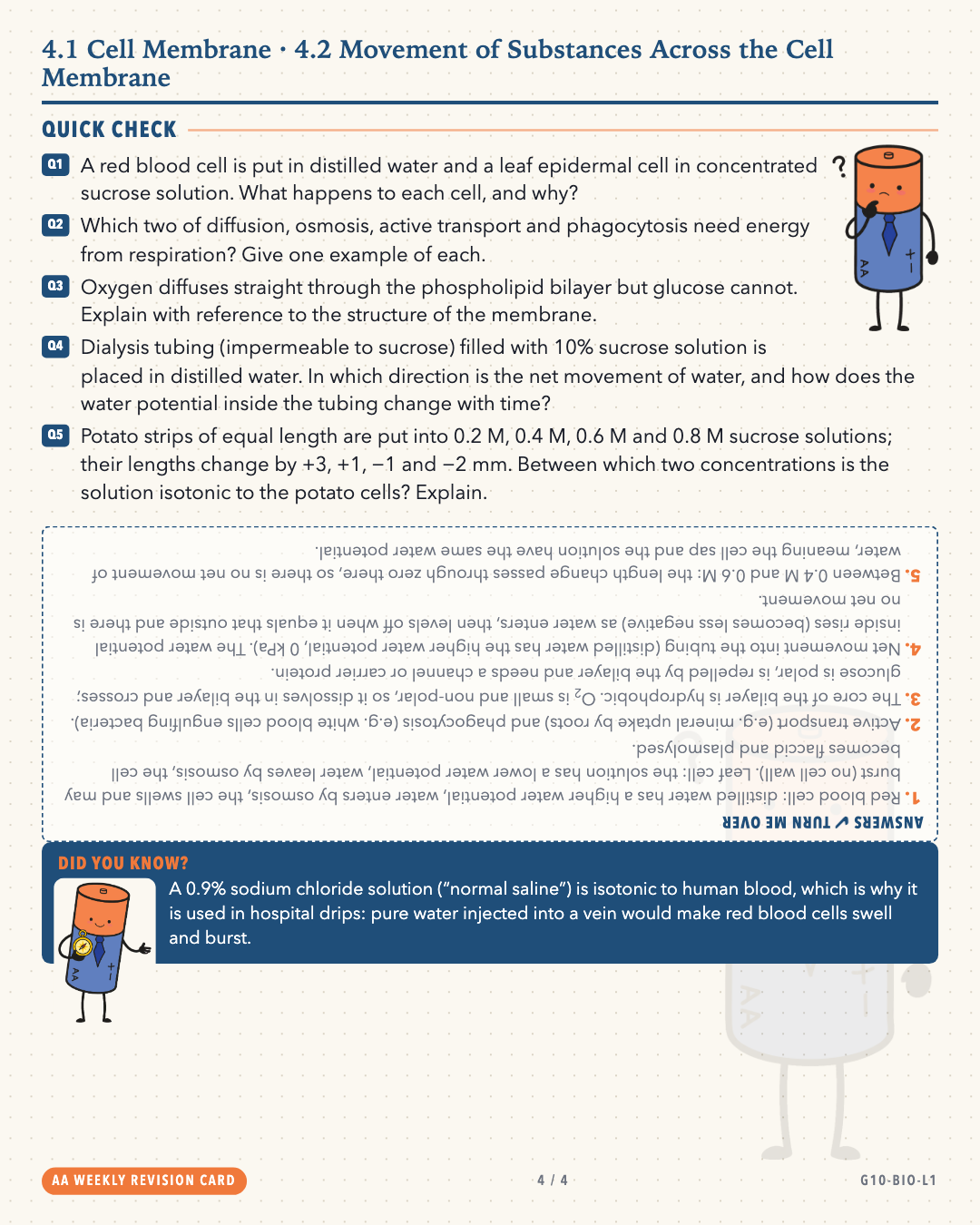
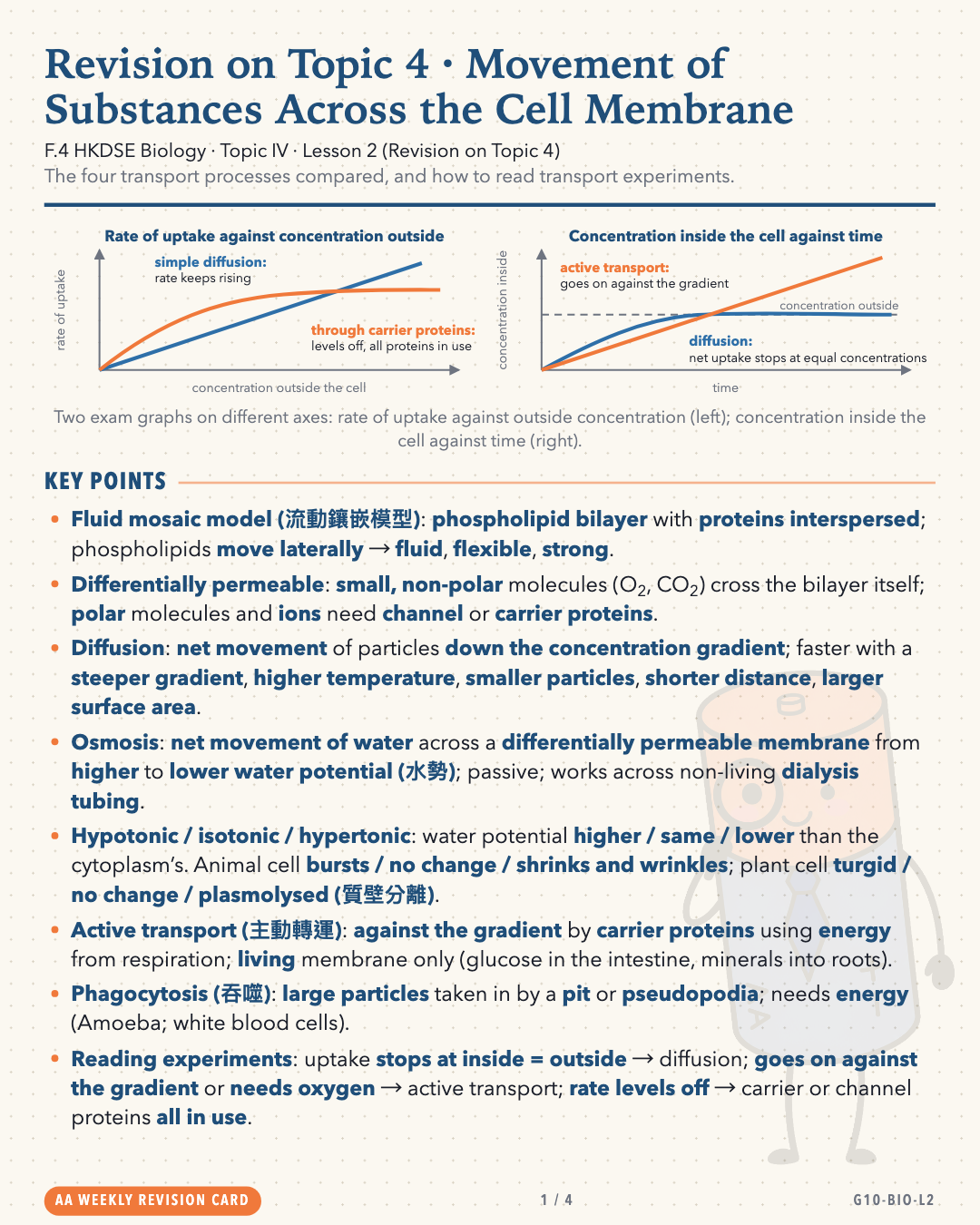
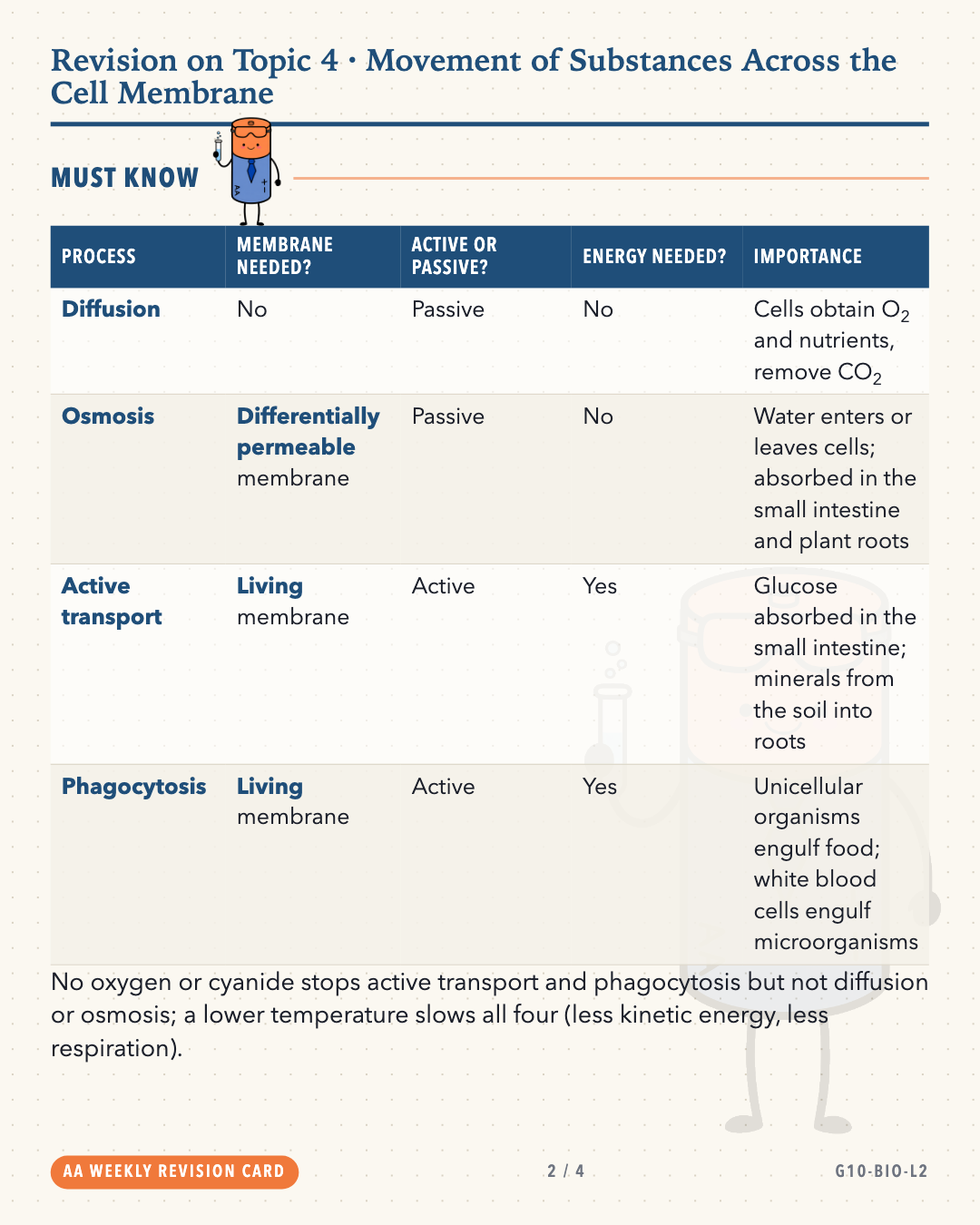
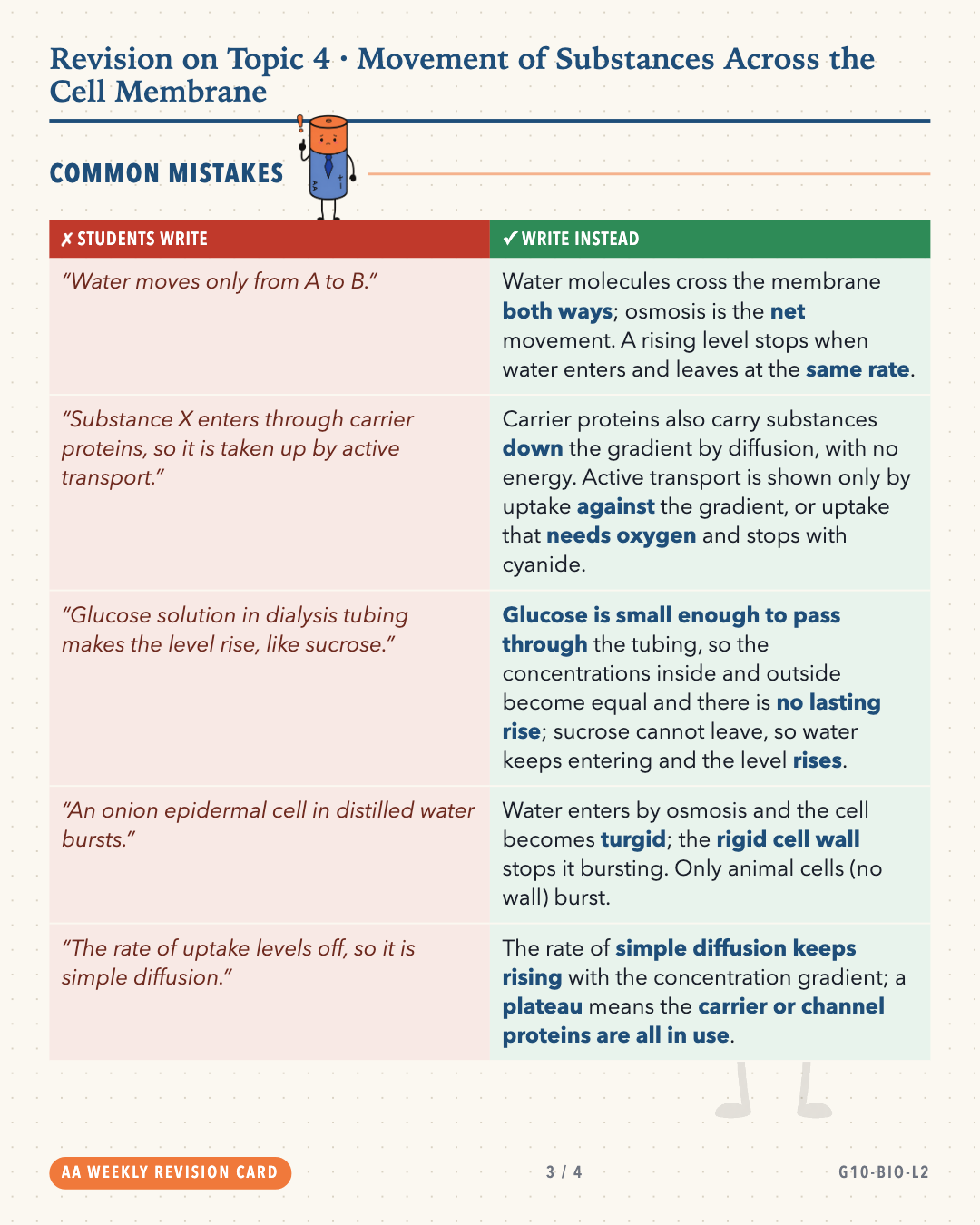
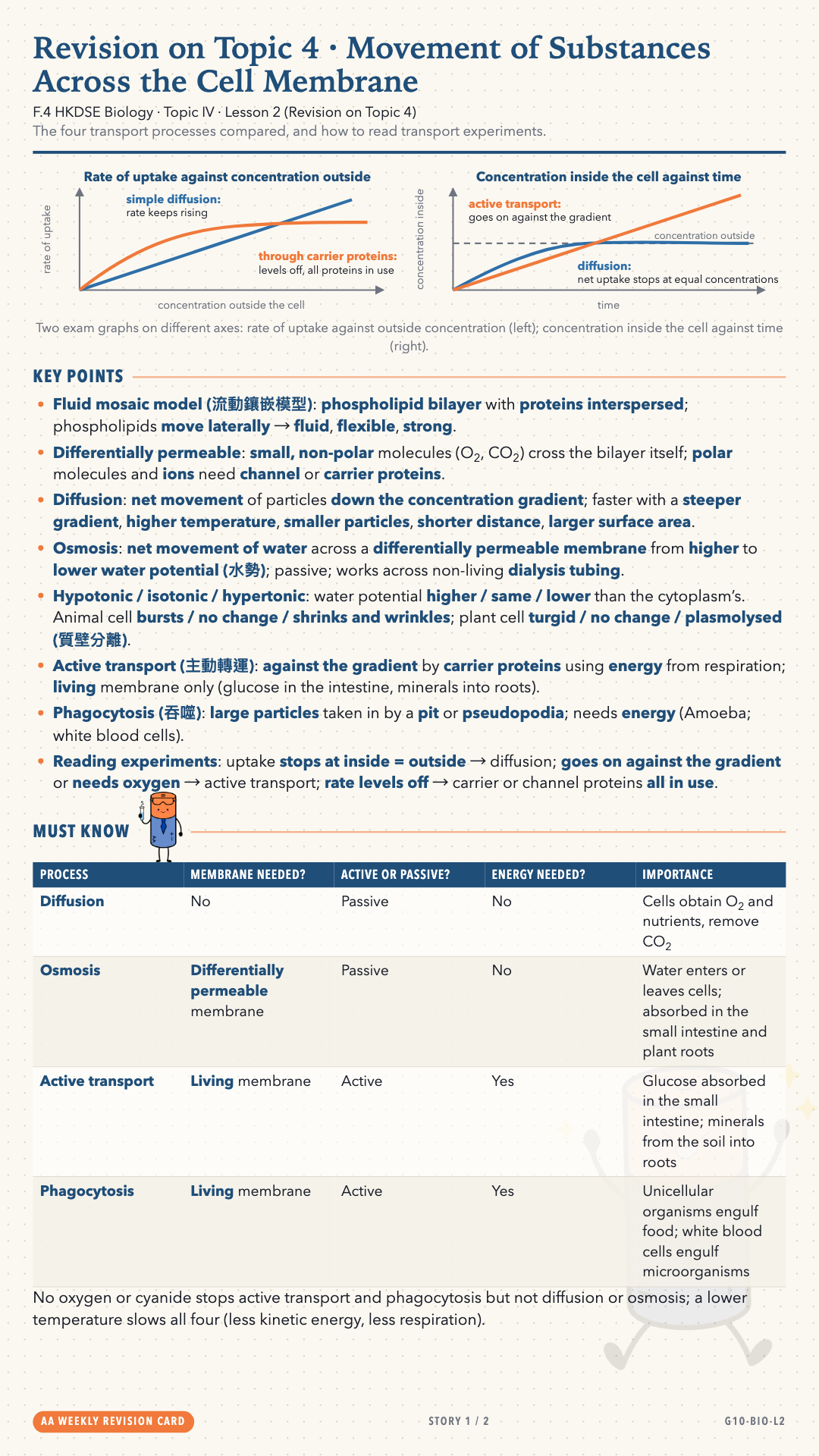
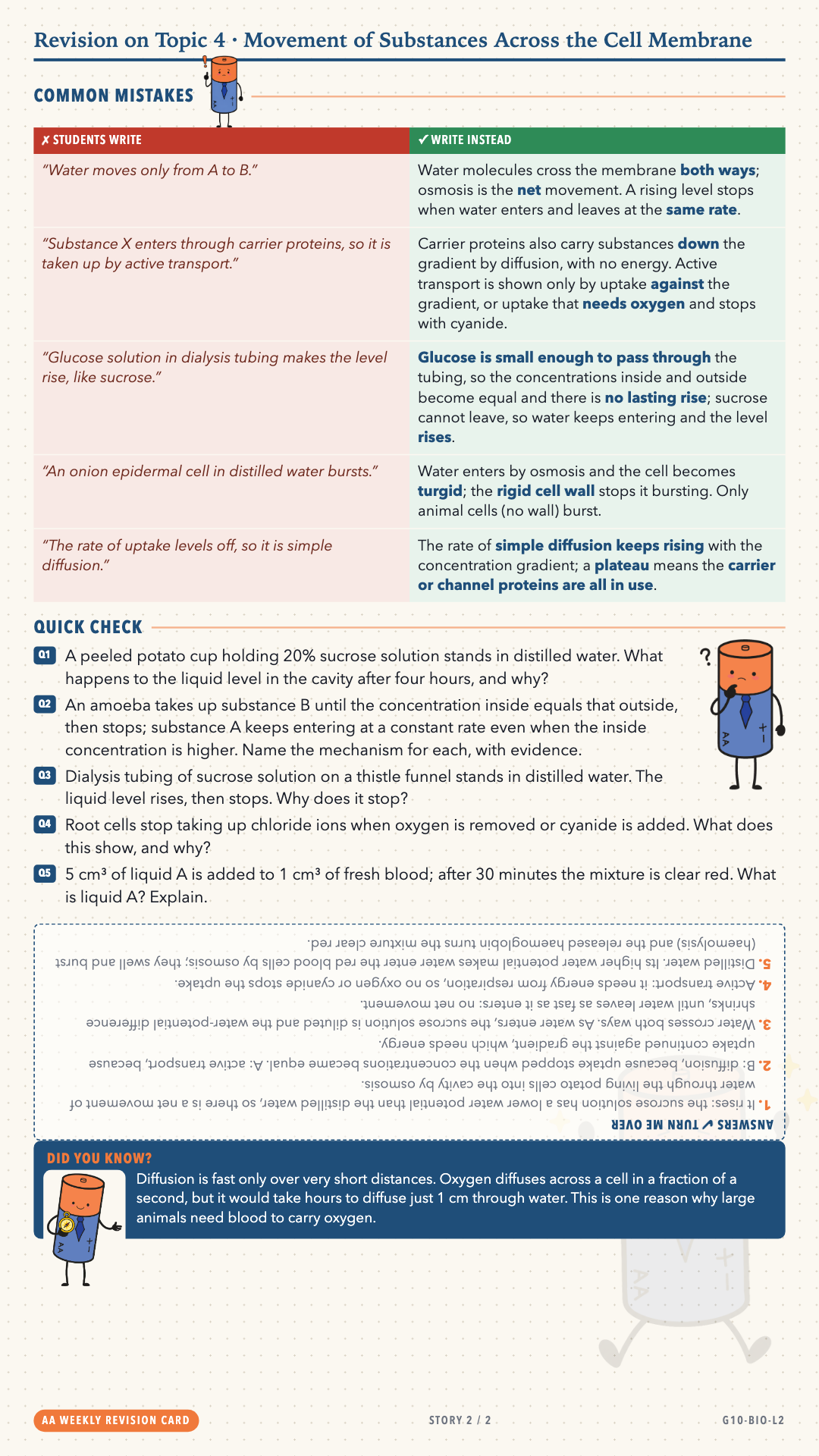
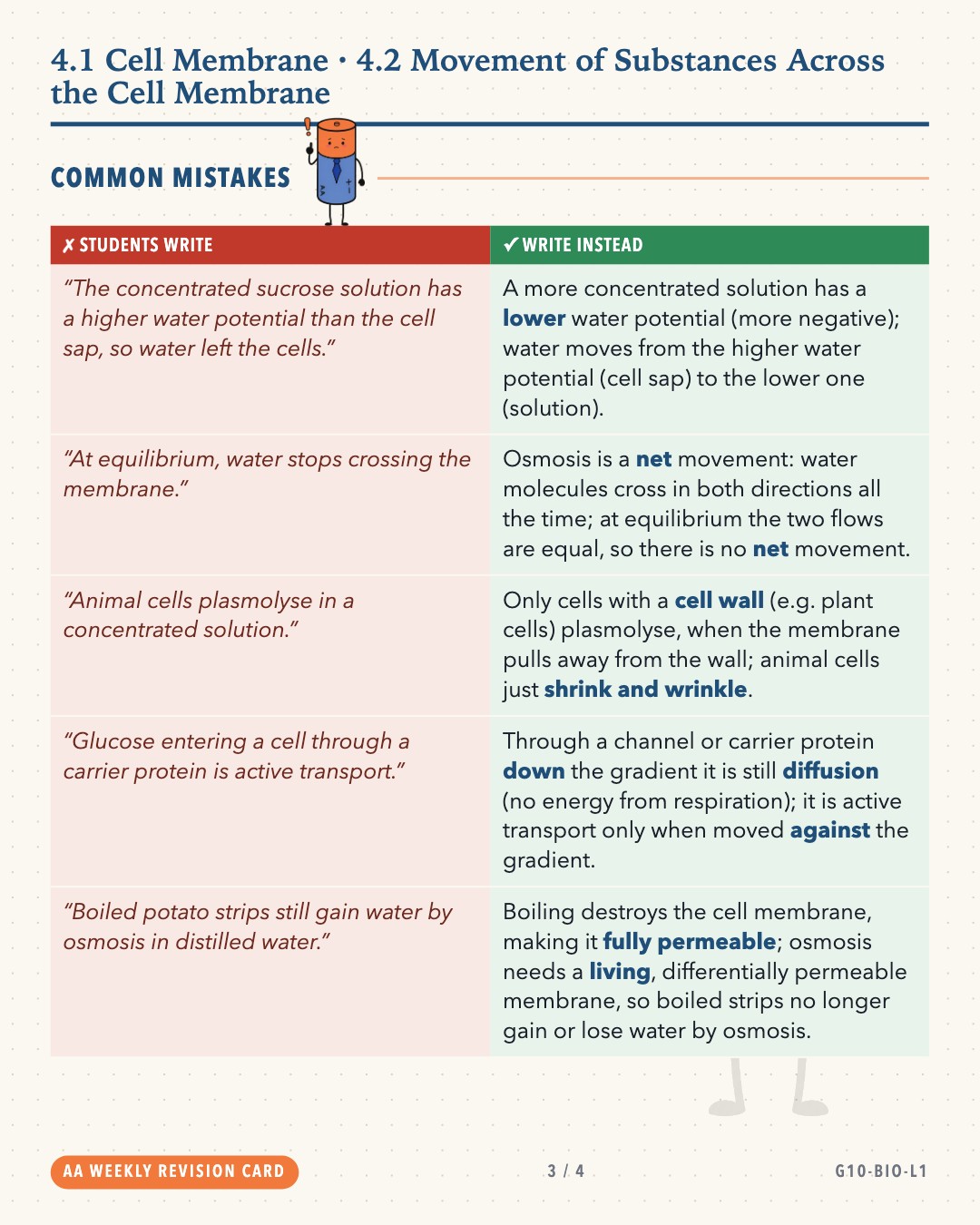
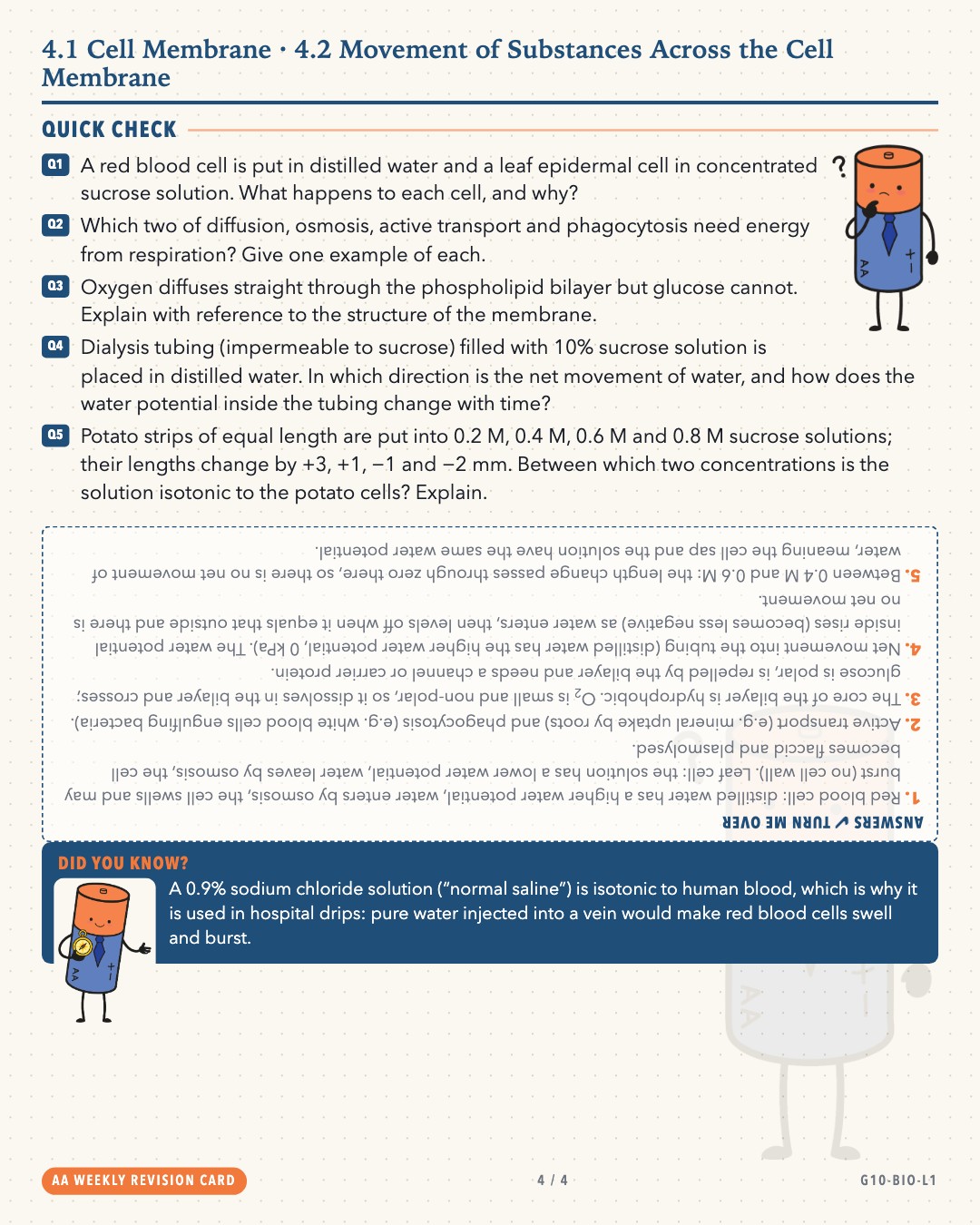
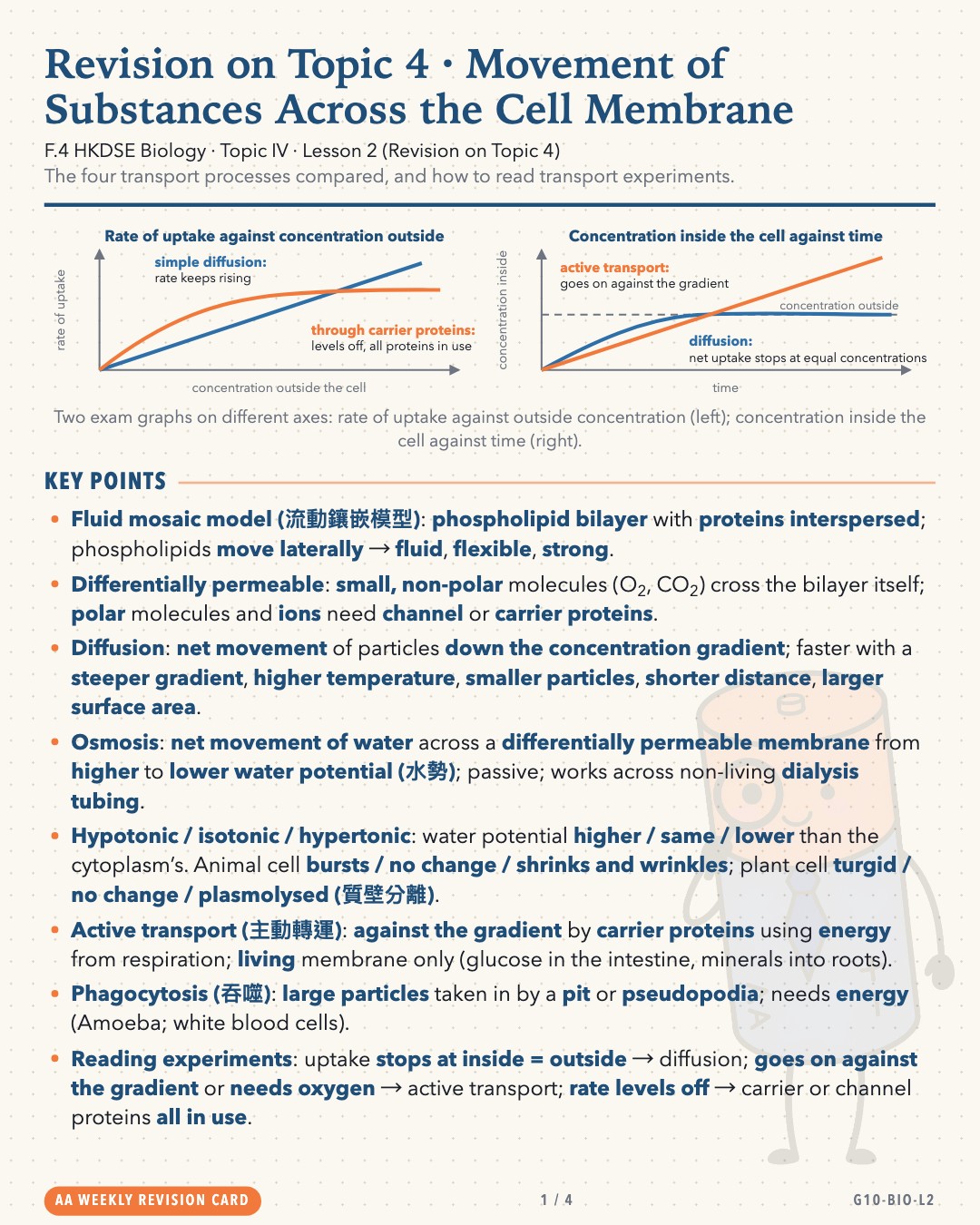
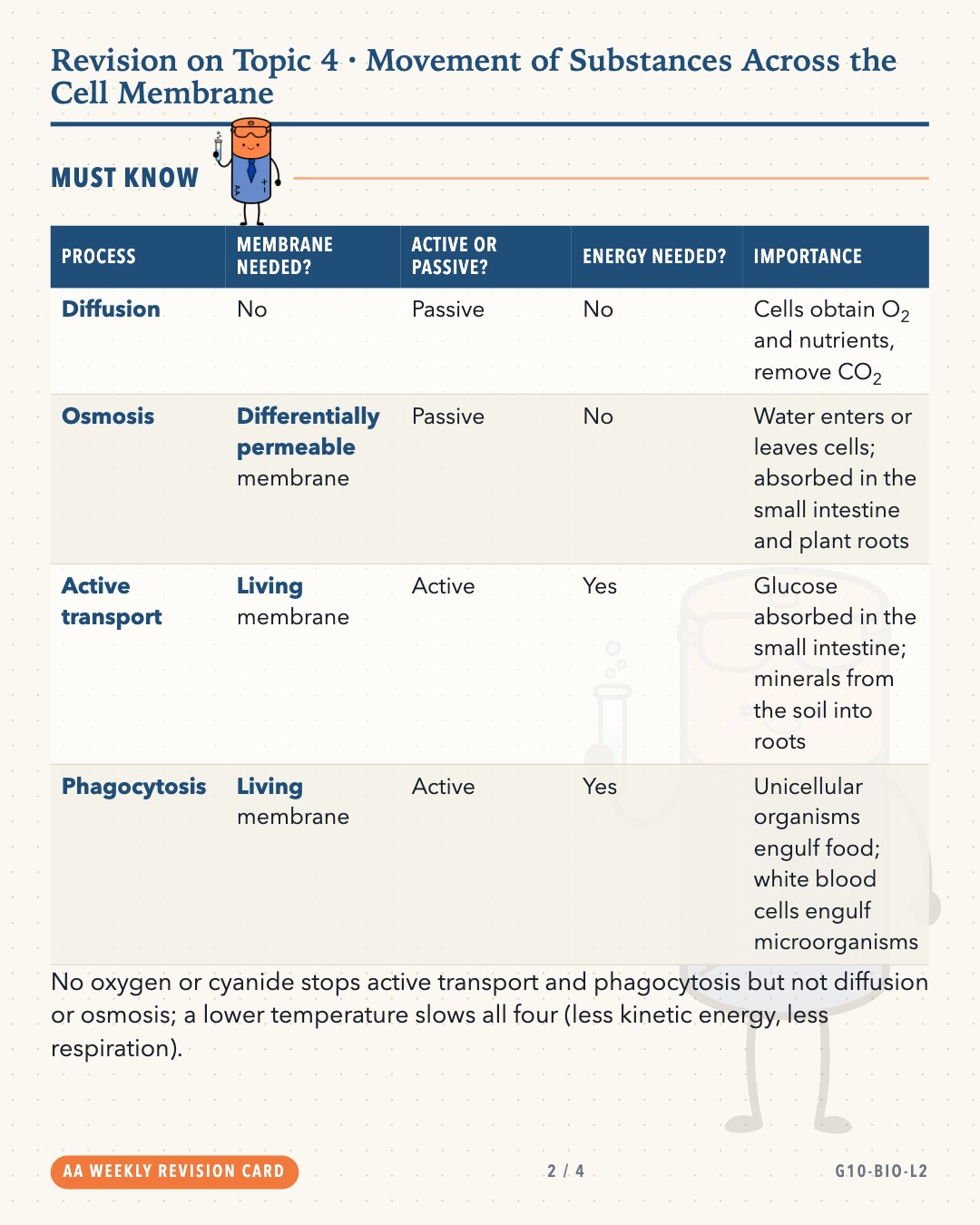
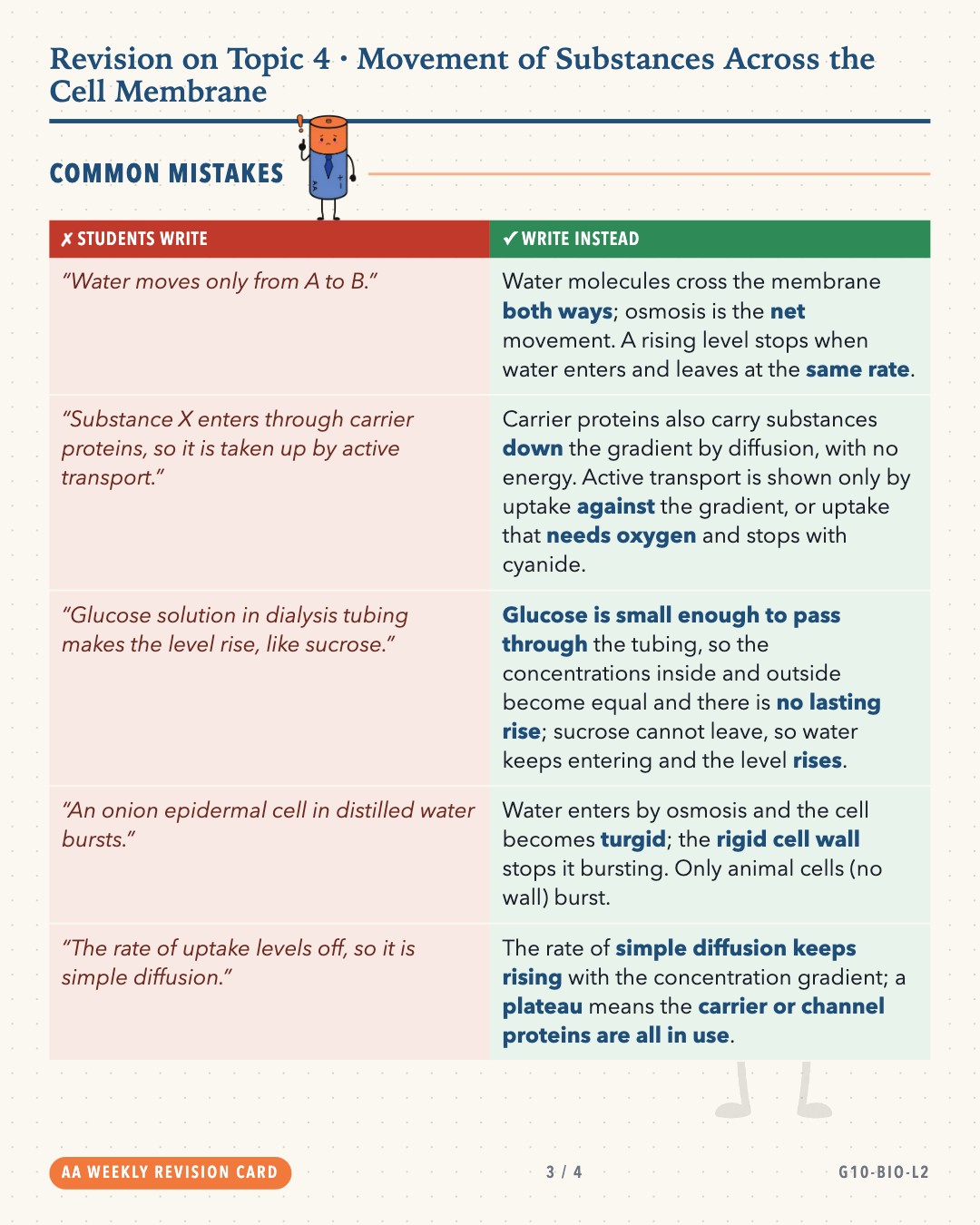
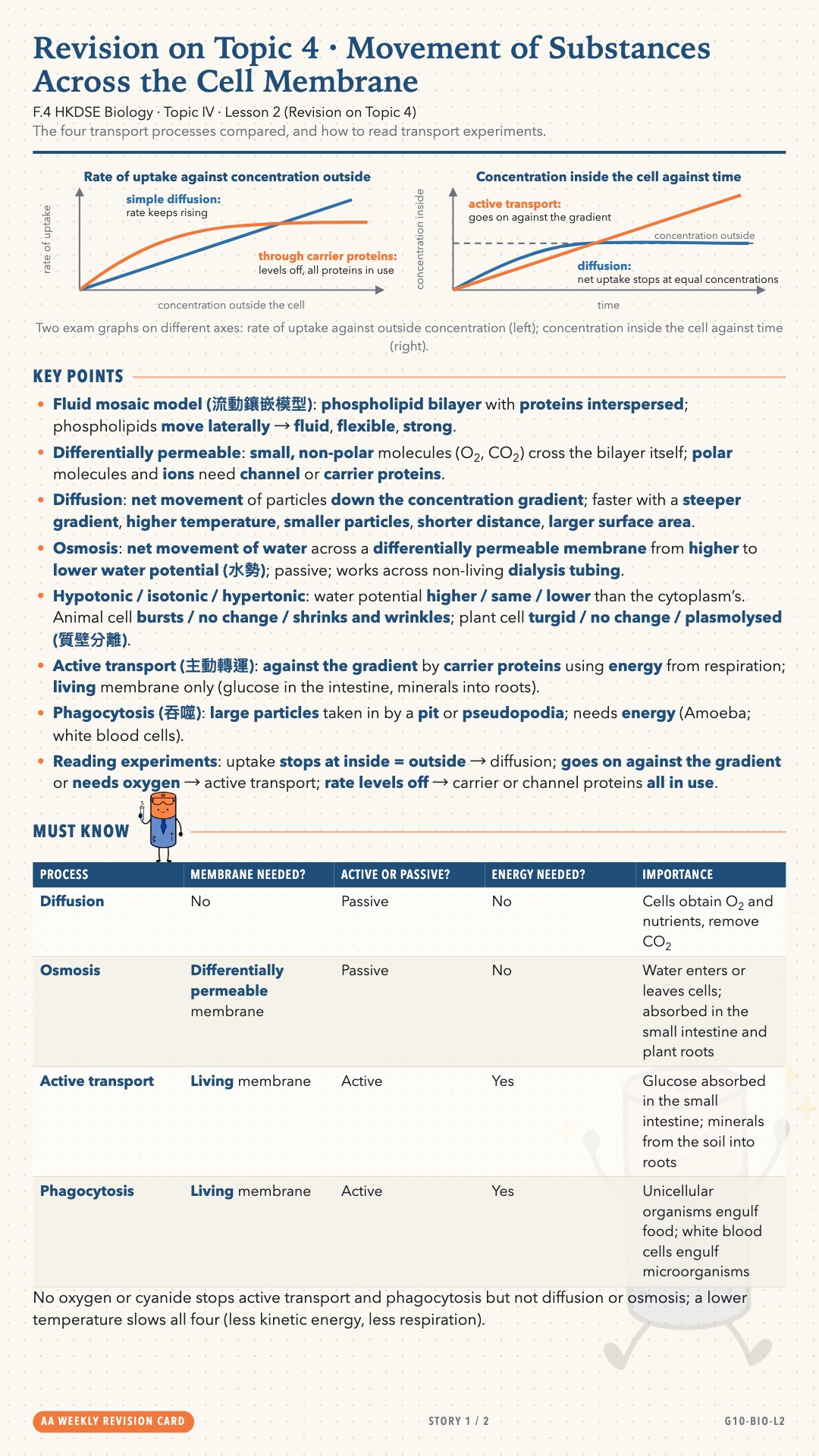
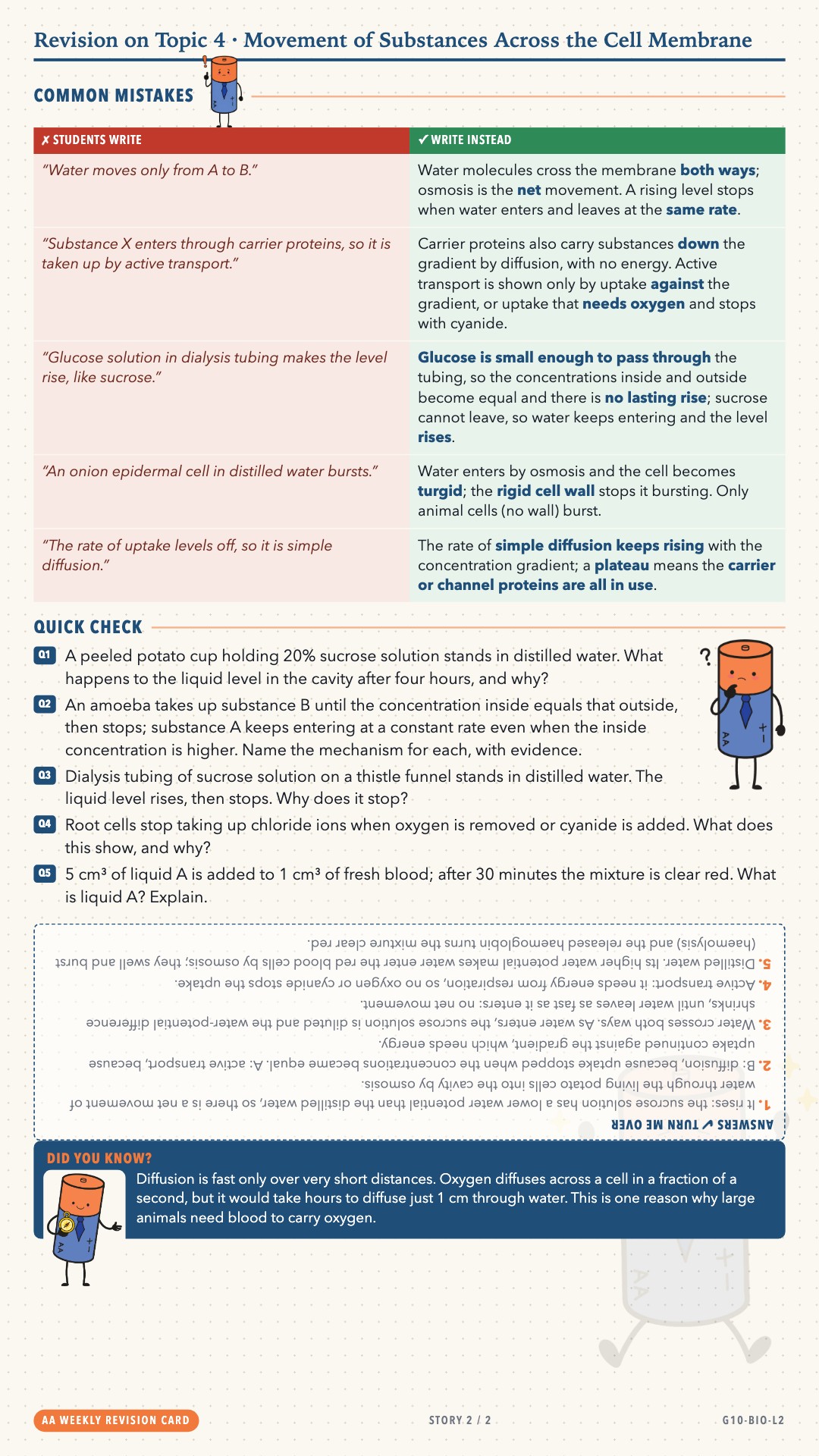
The four transport processes compared, and how to read transport experiments.
✔ fact-checked · 3 added mistakes tagged [likely] · 2.2 MB JPG · card.md ·
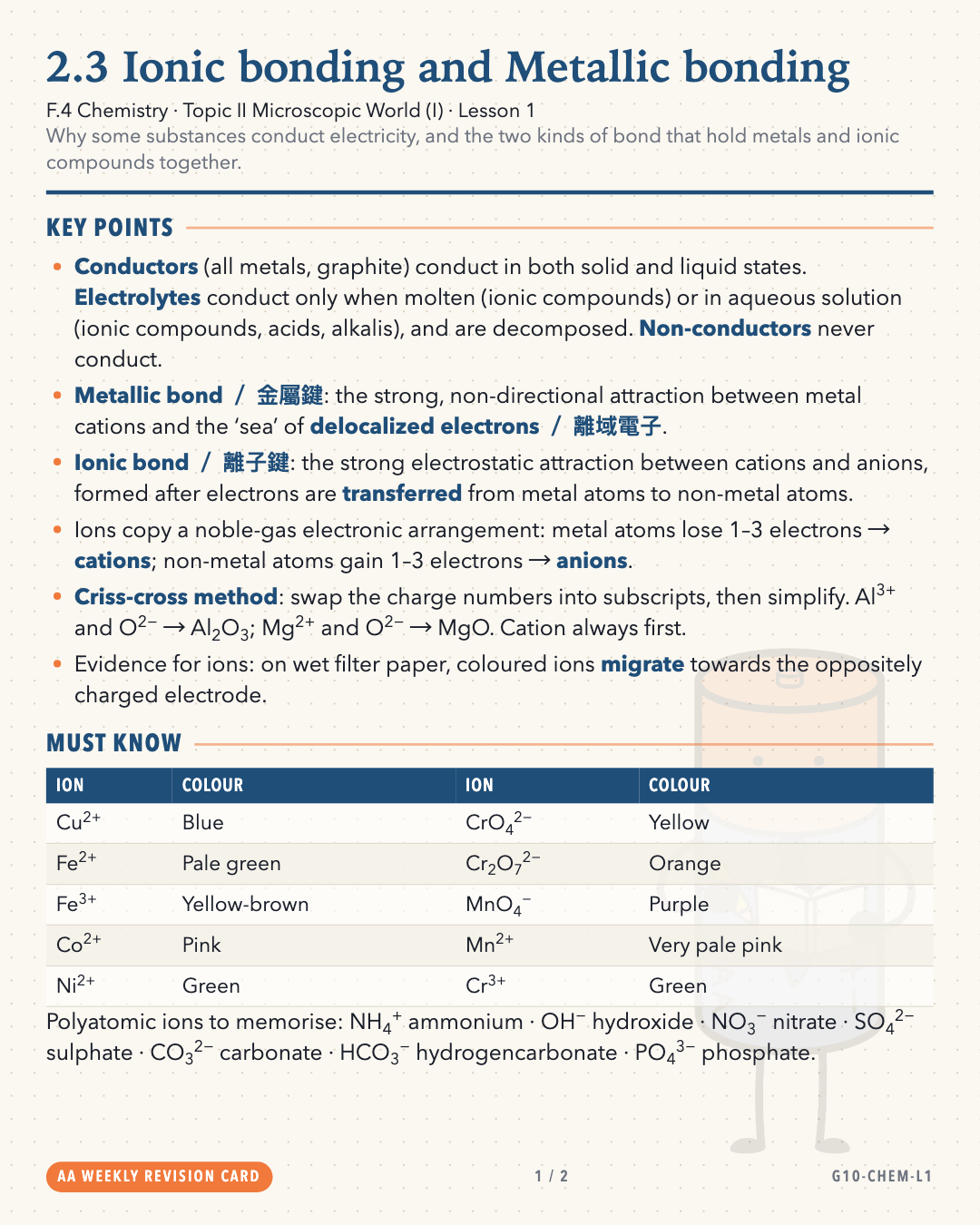
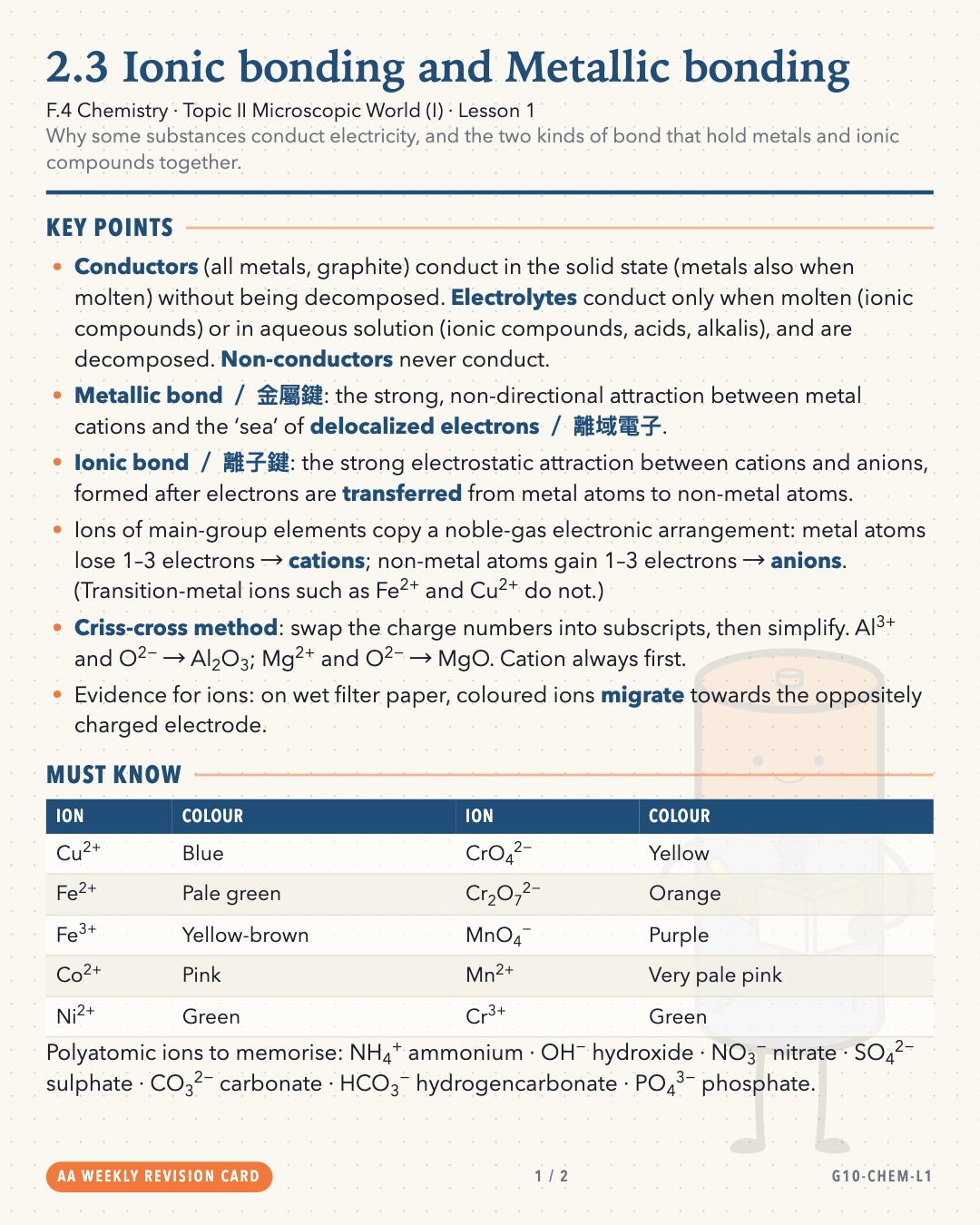
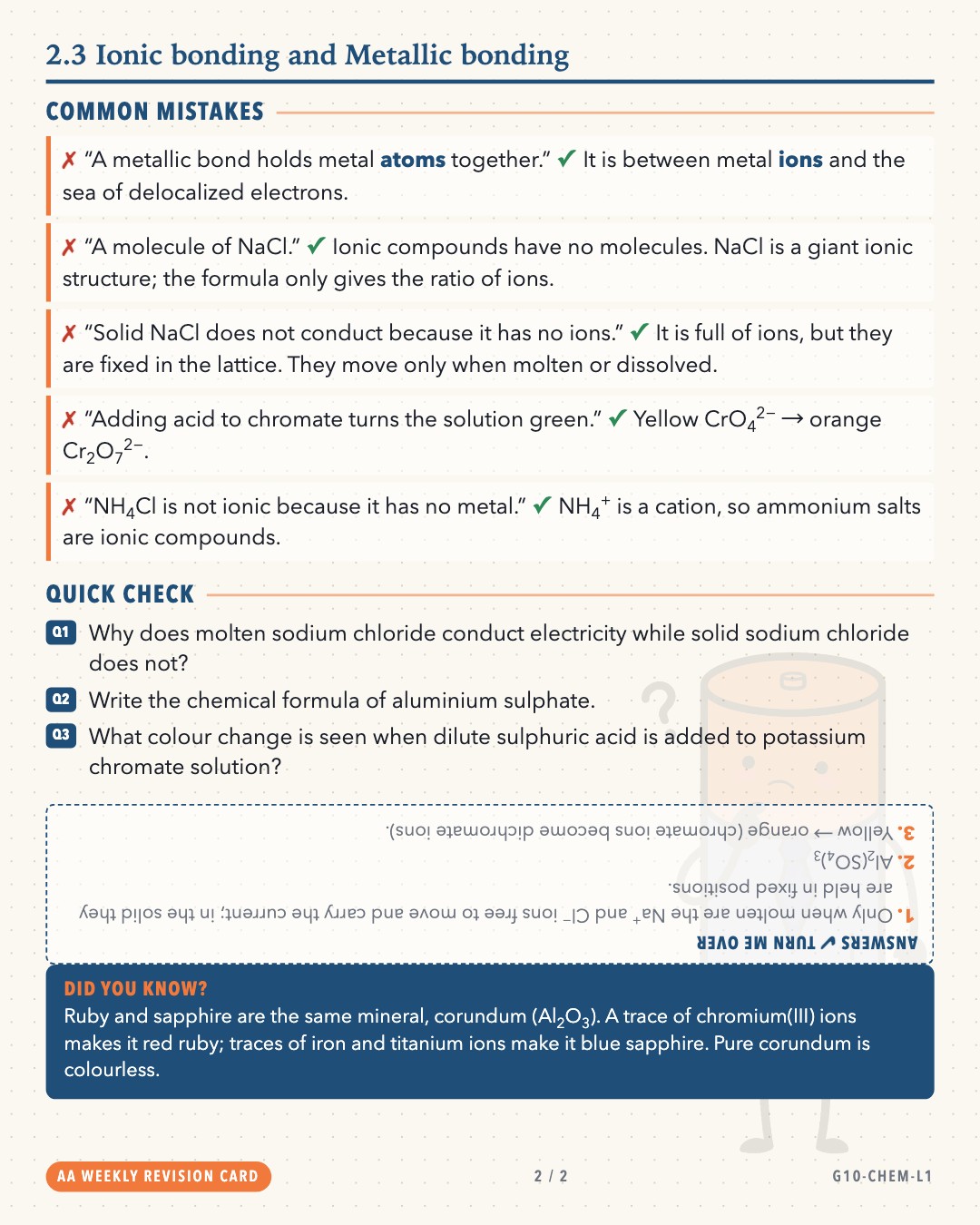
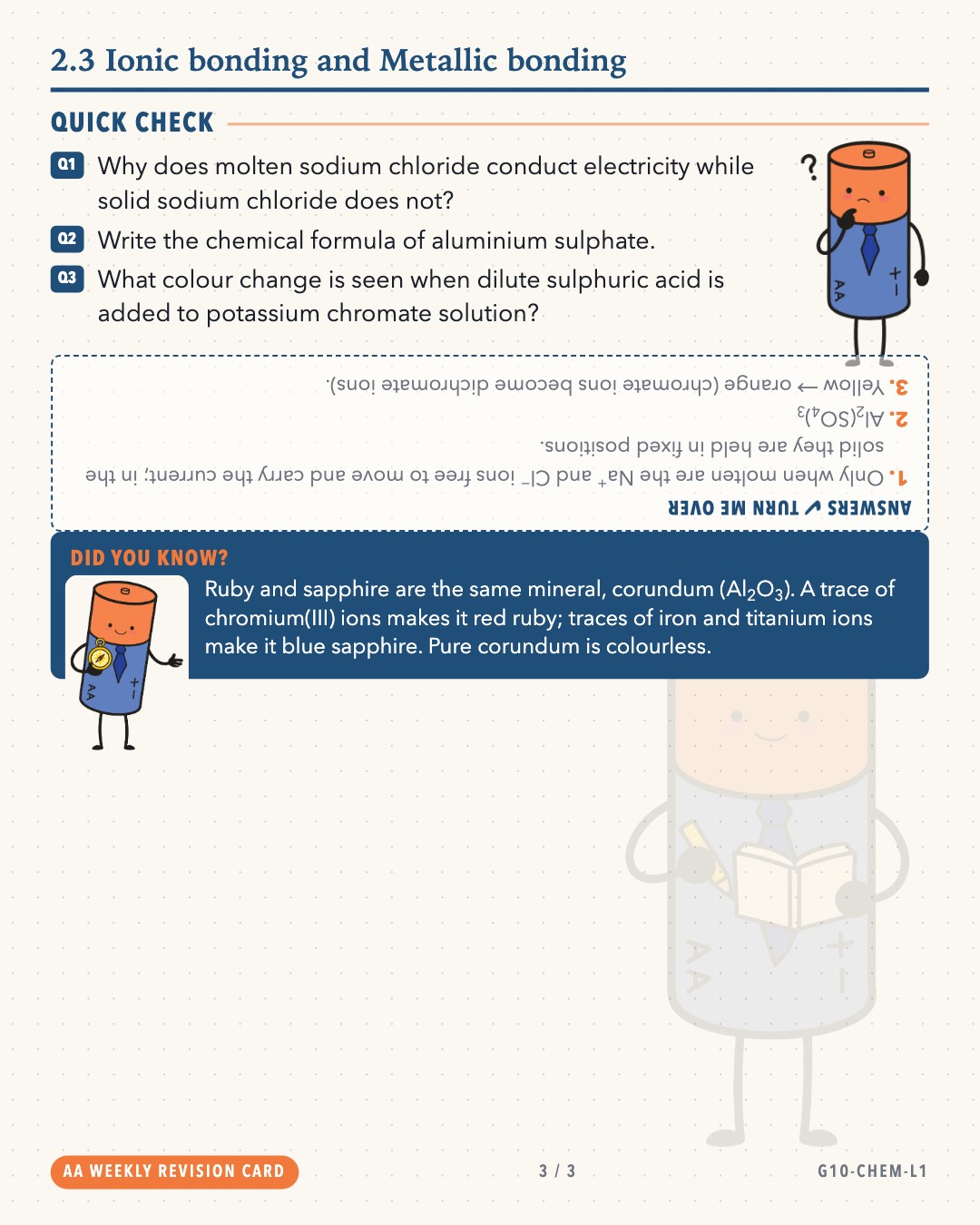
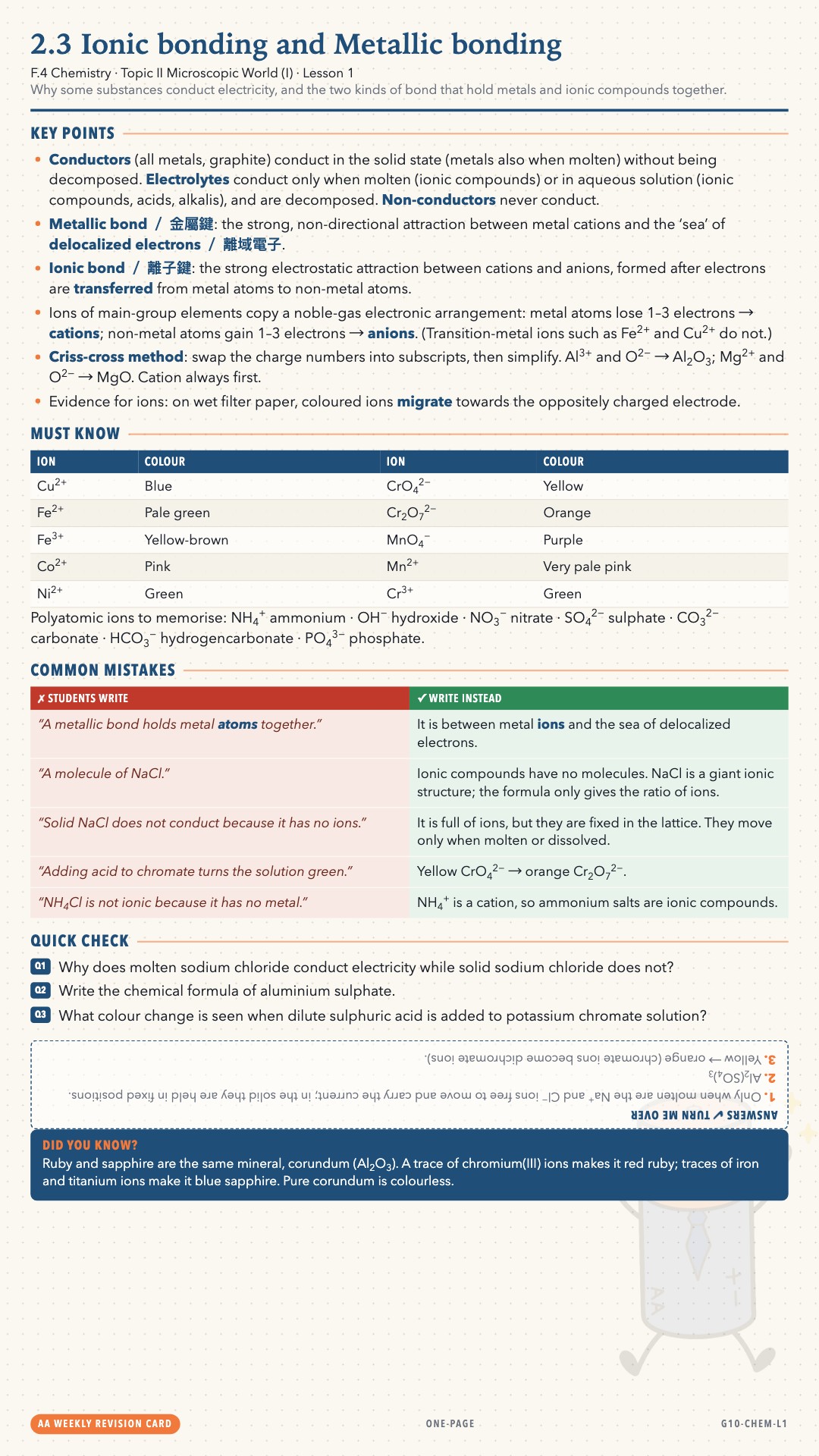
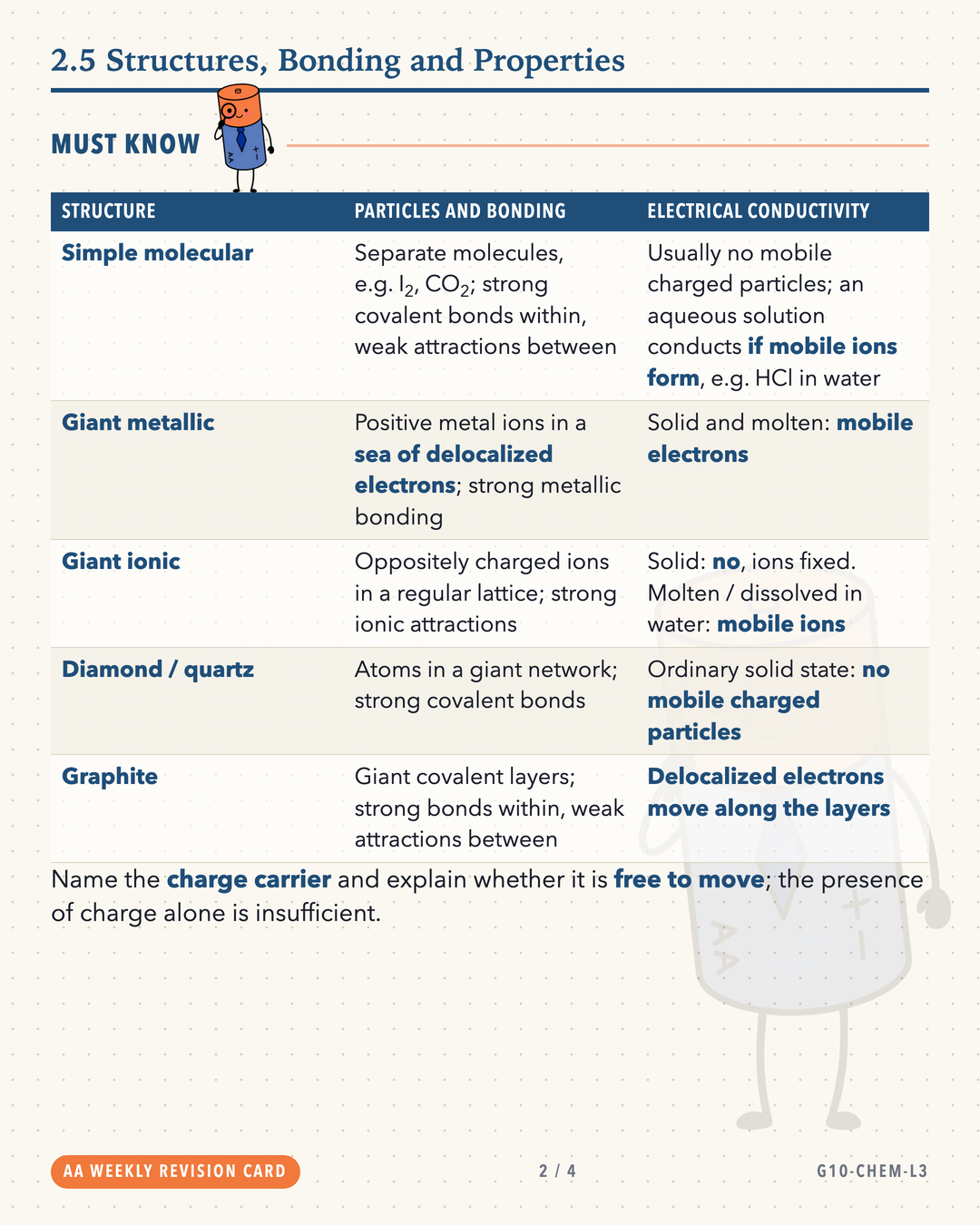
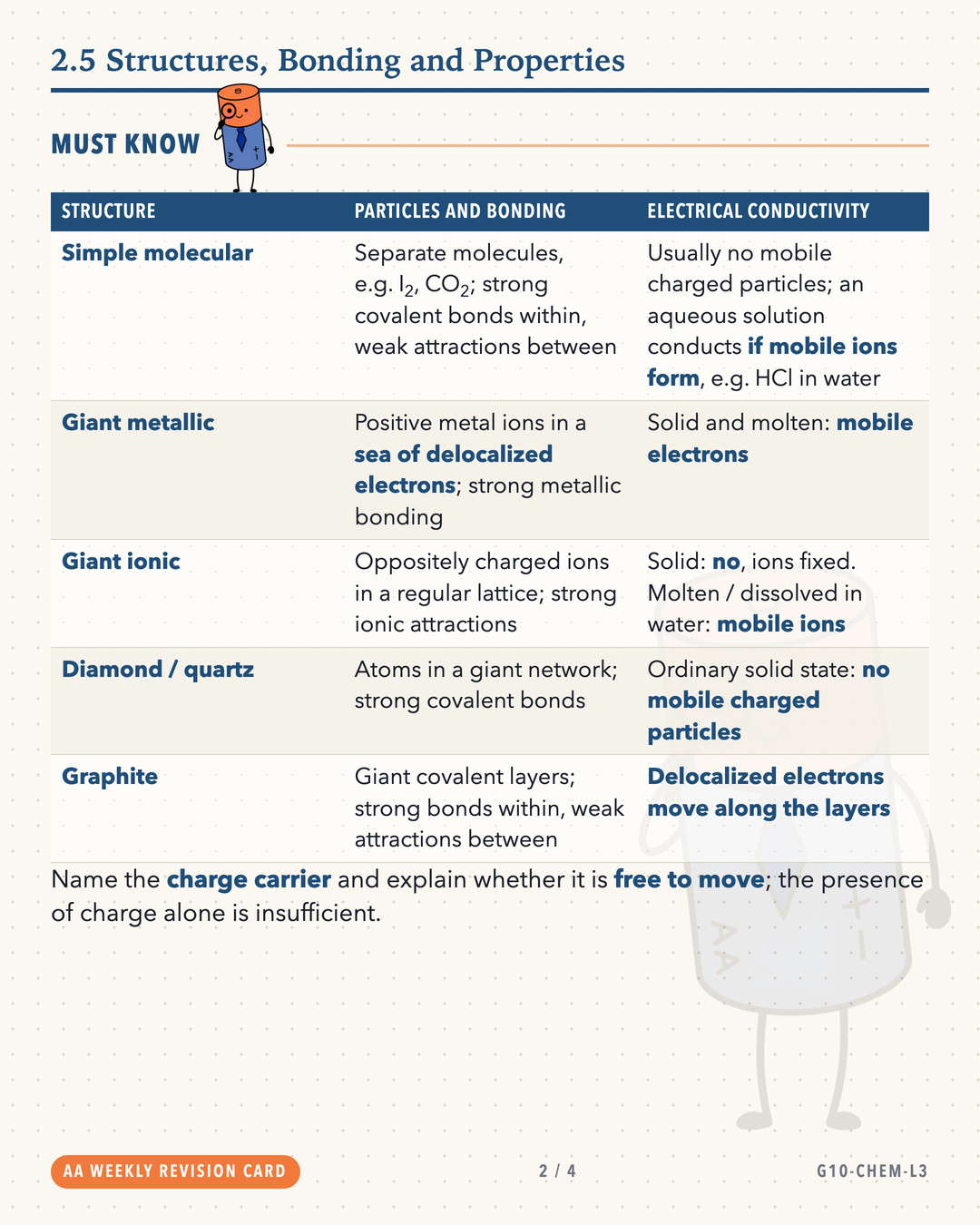
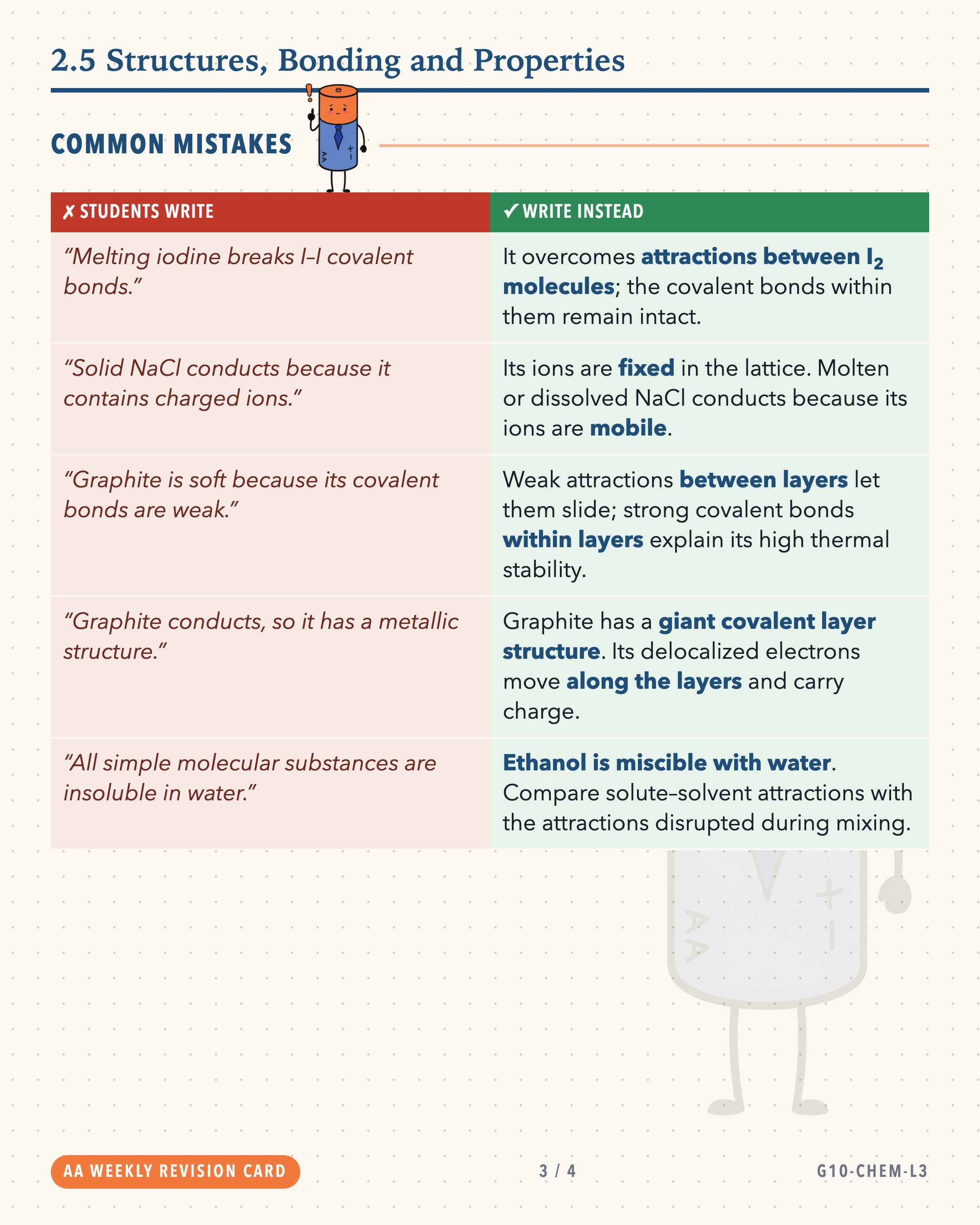
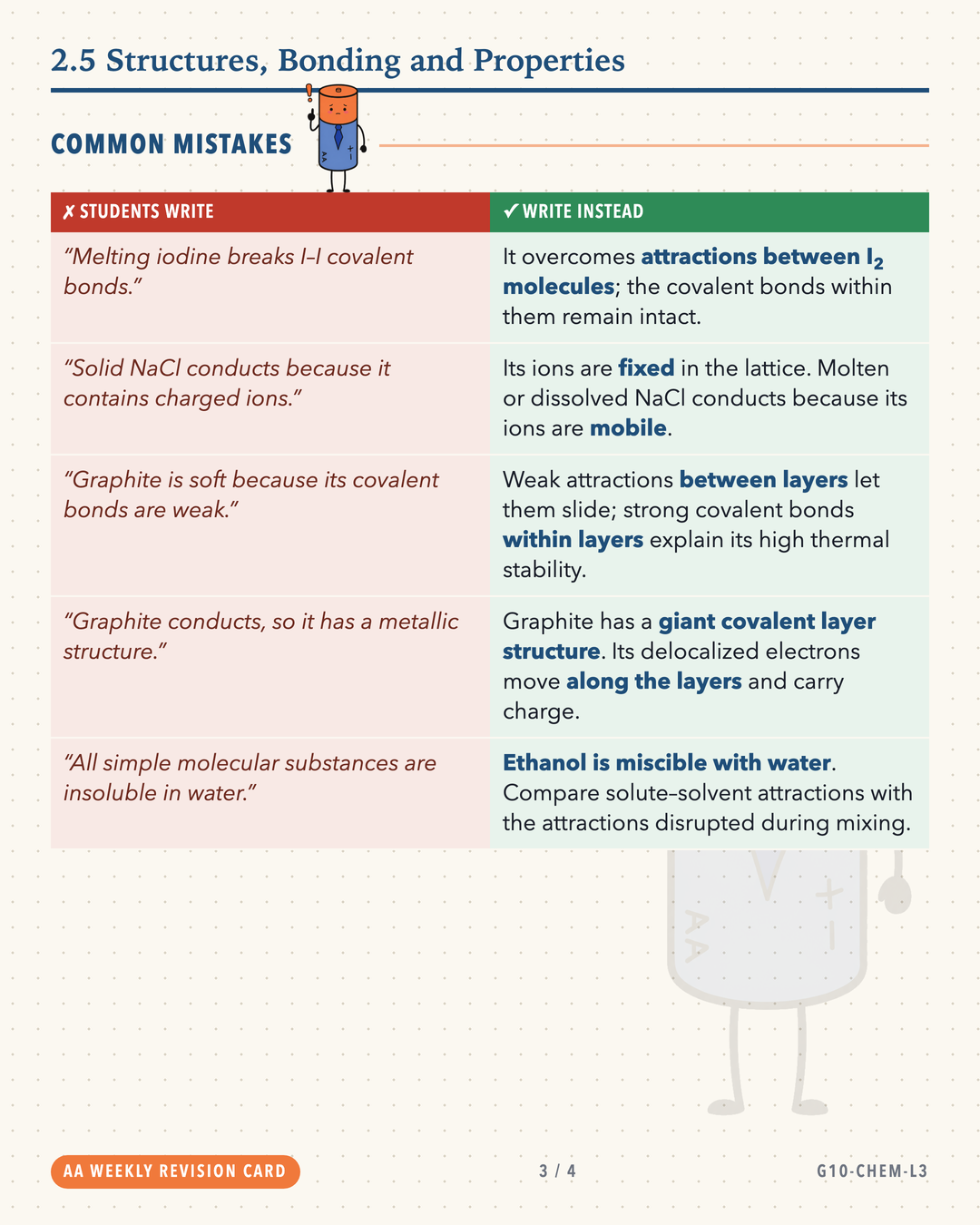
Why some substances conduct, and the two bonds that hold metals and ionic compounds together.
✔ fact-checked · 2 added mistakes tagged [likely] · 1.2 MB JPG · card.md ·
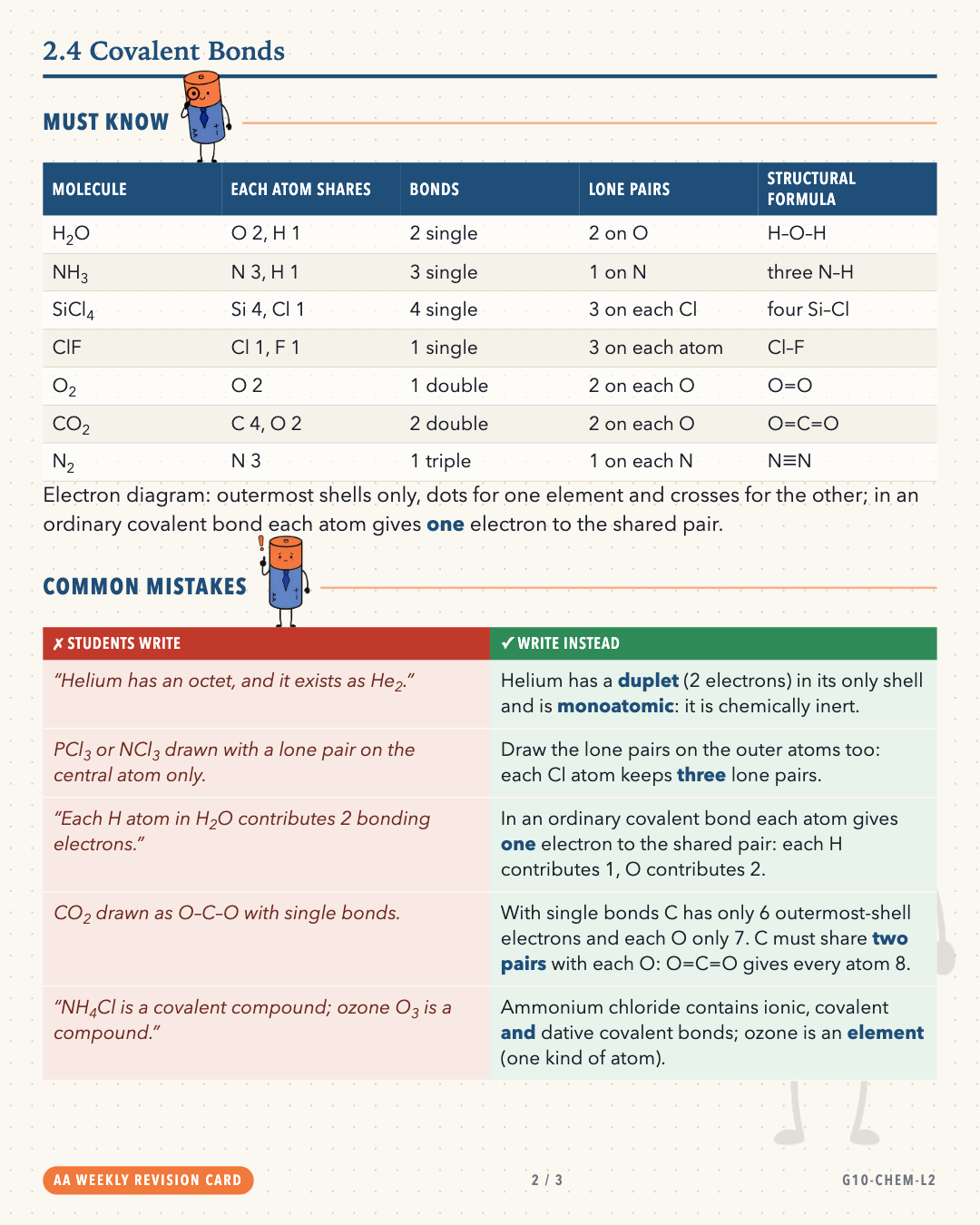
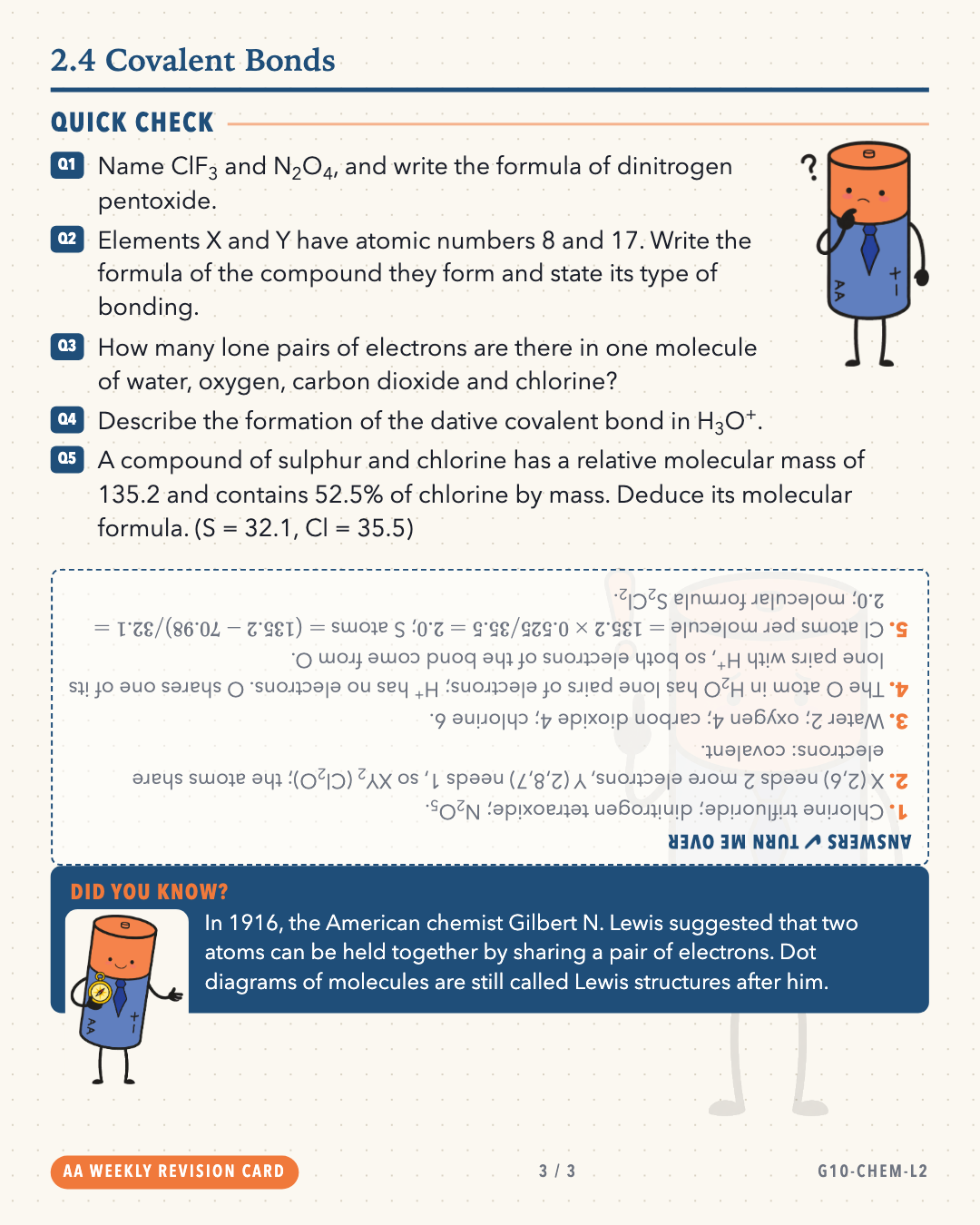
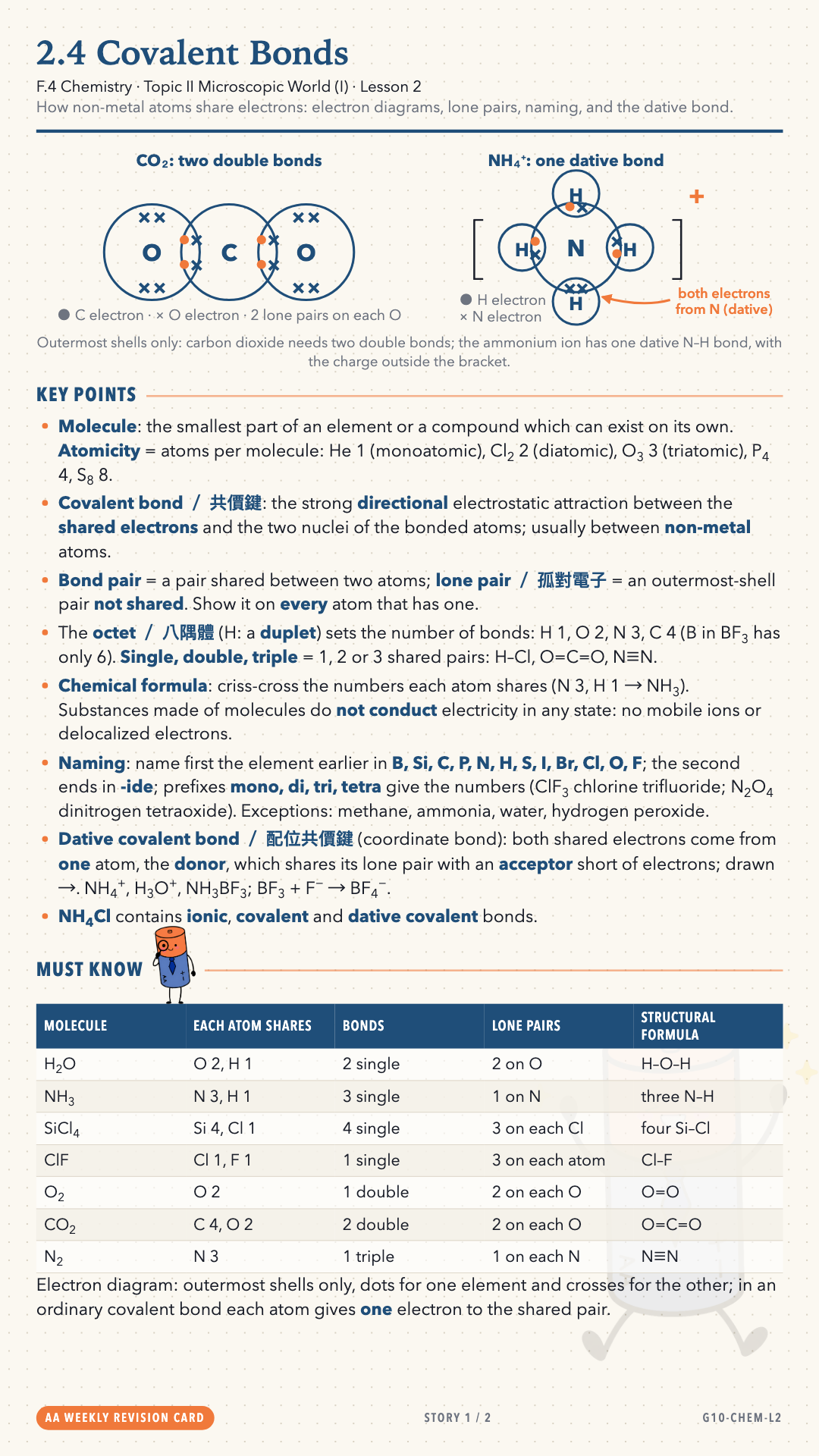
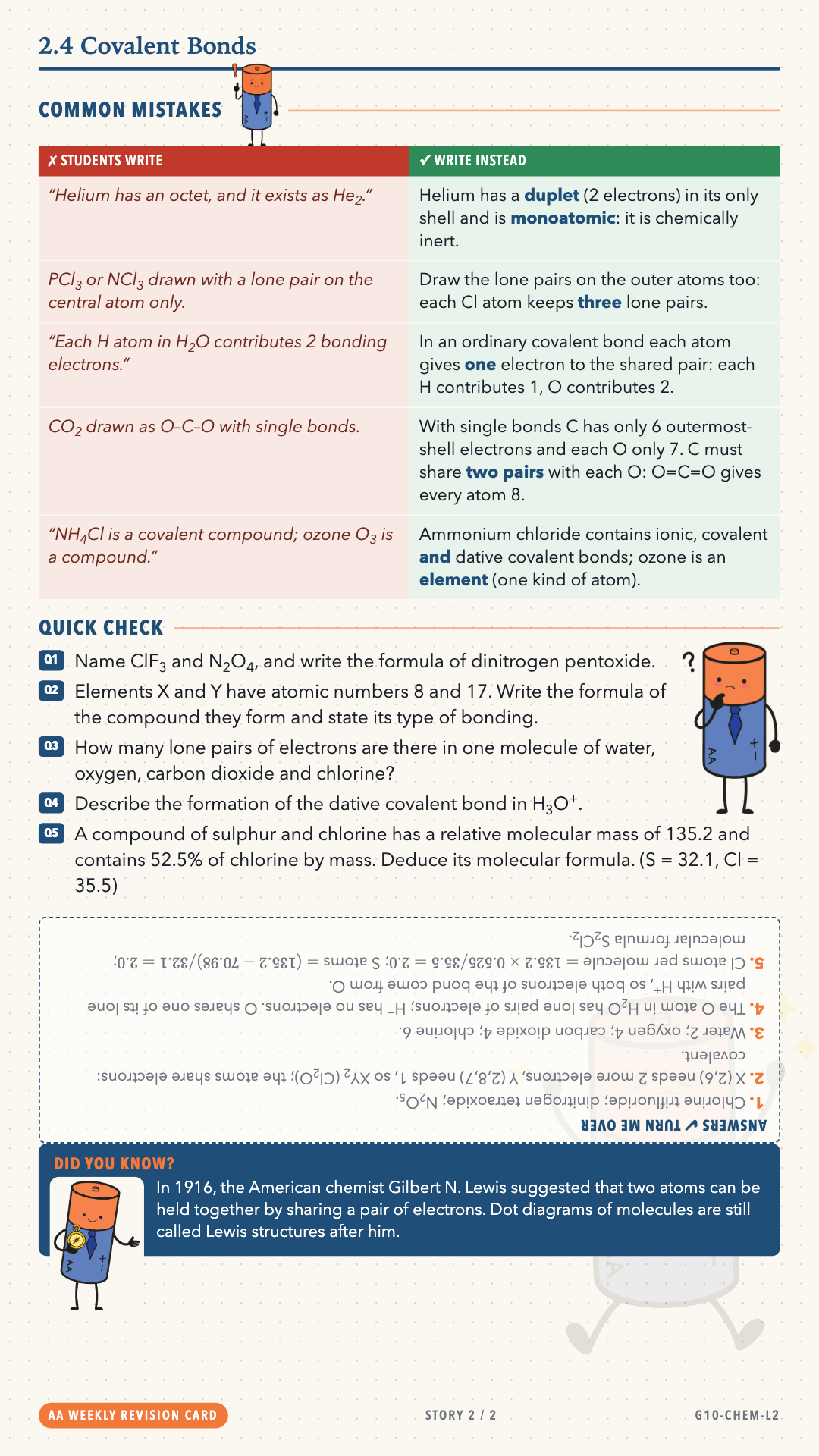
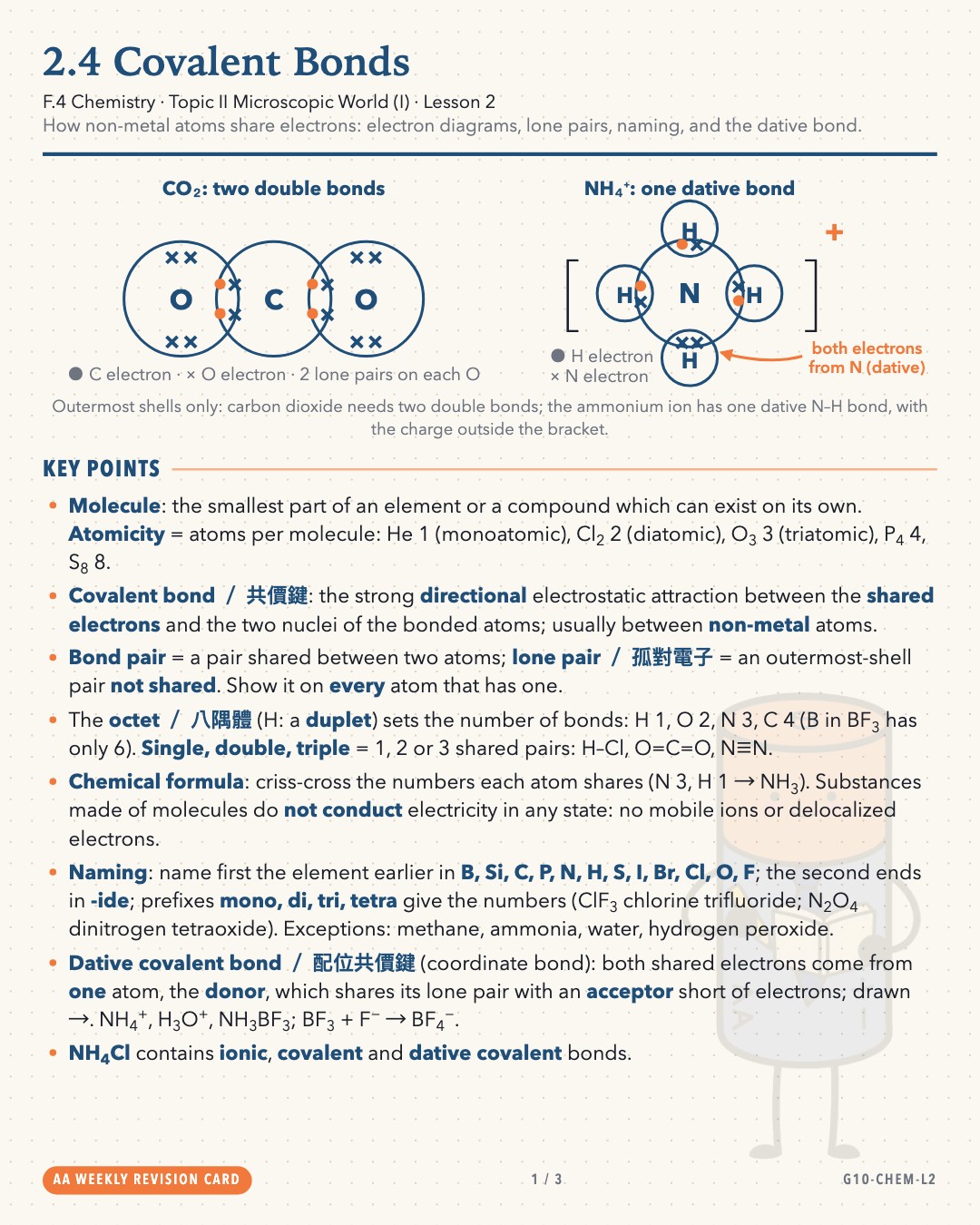
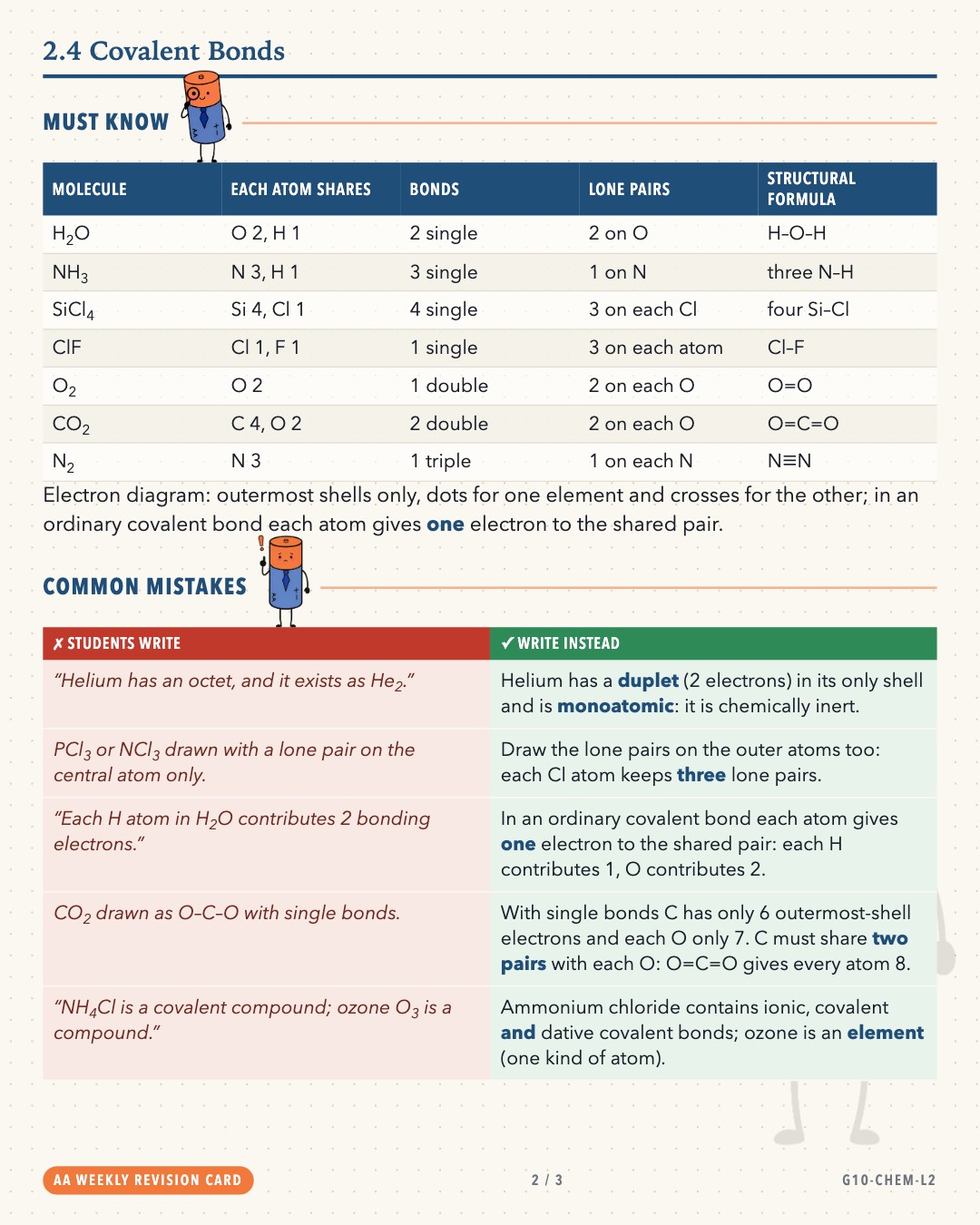
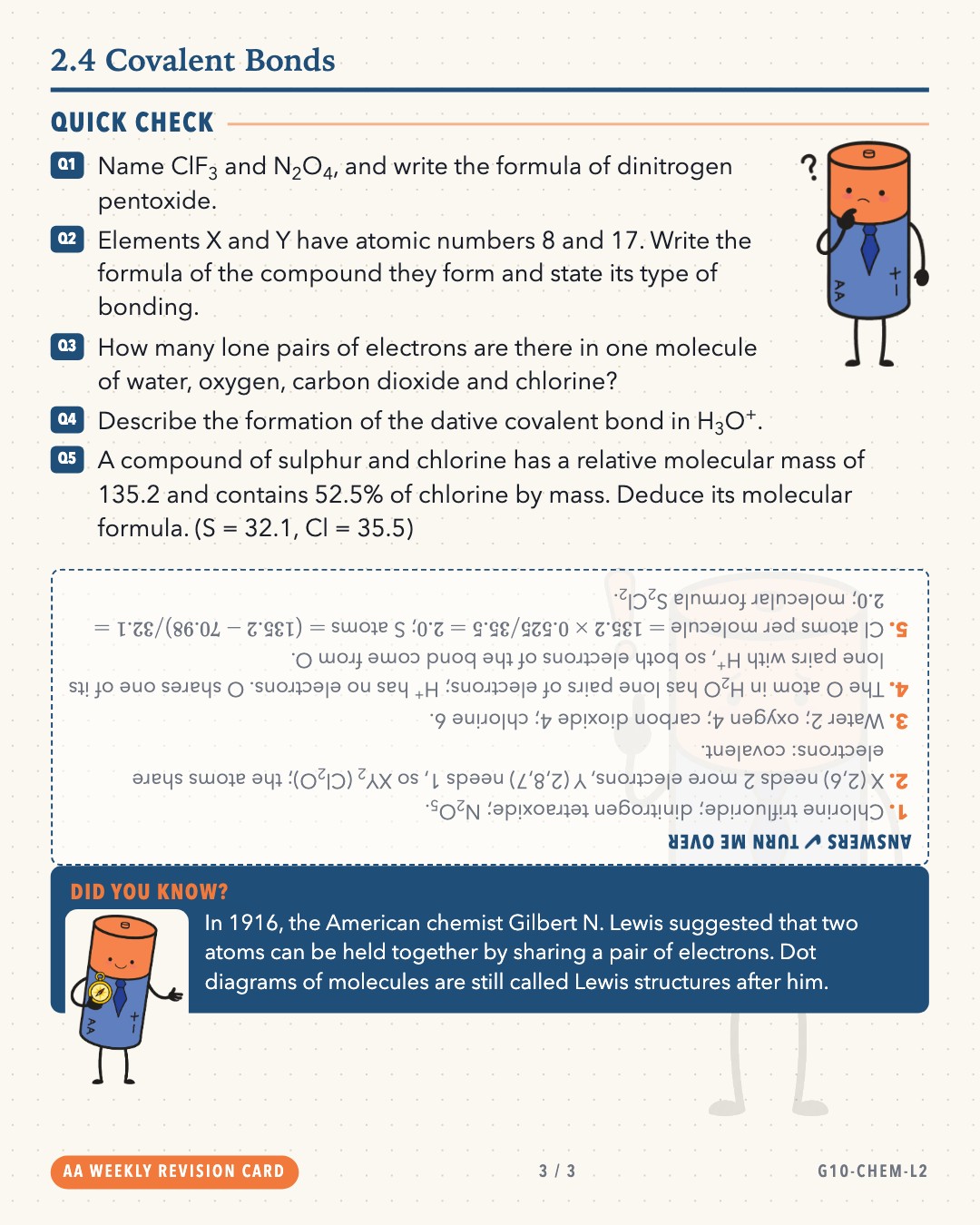
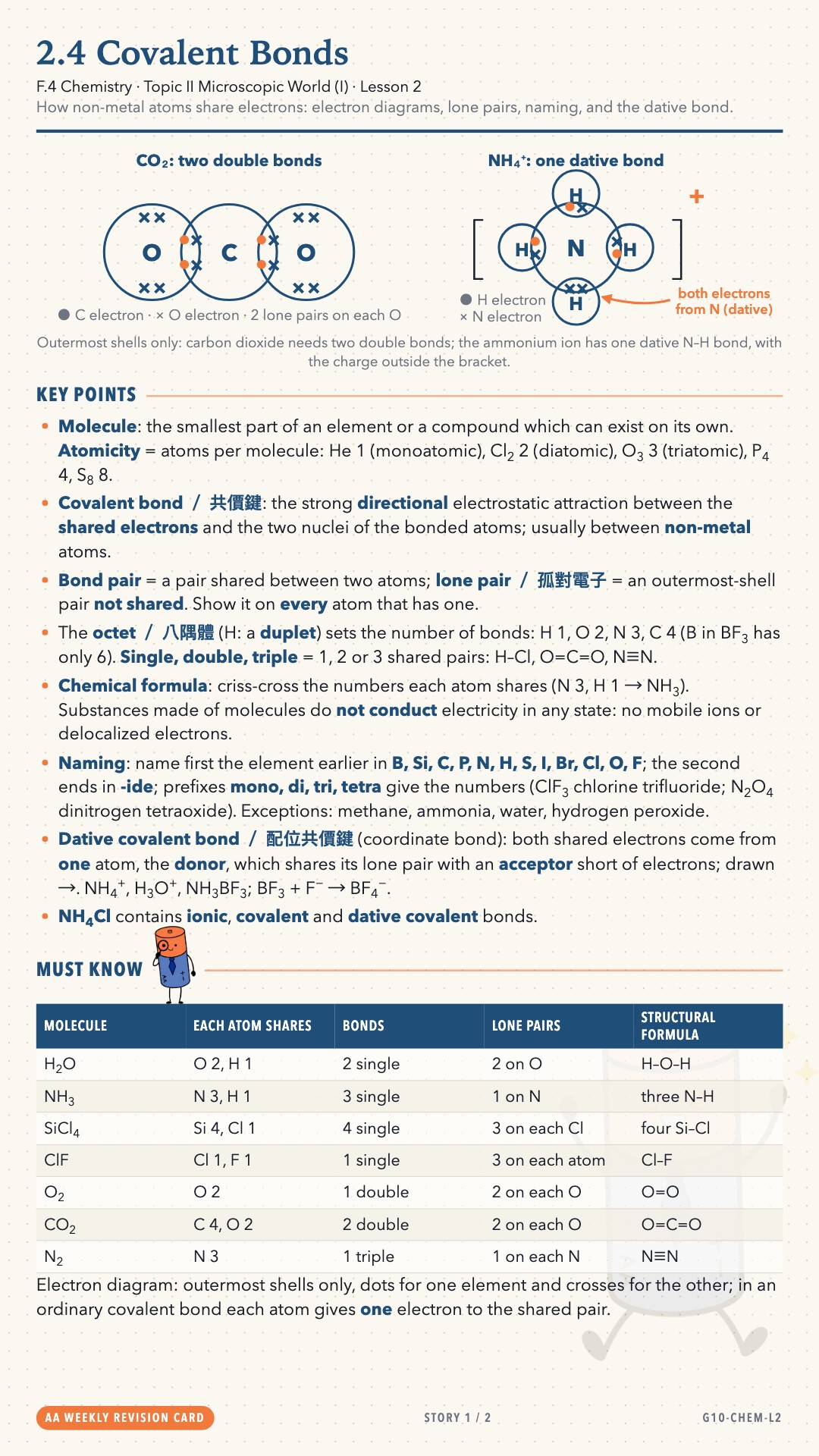
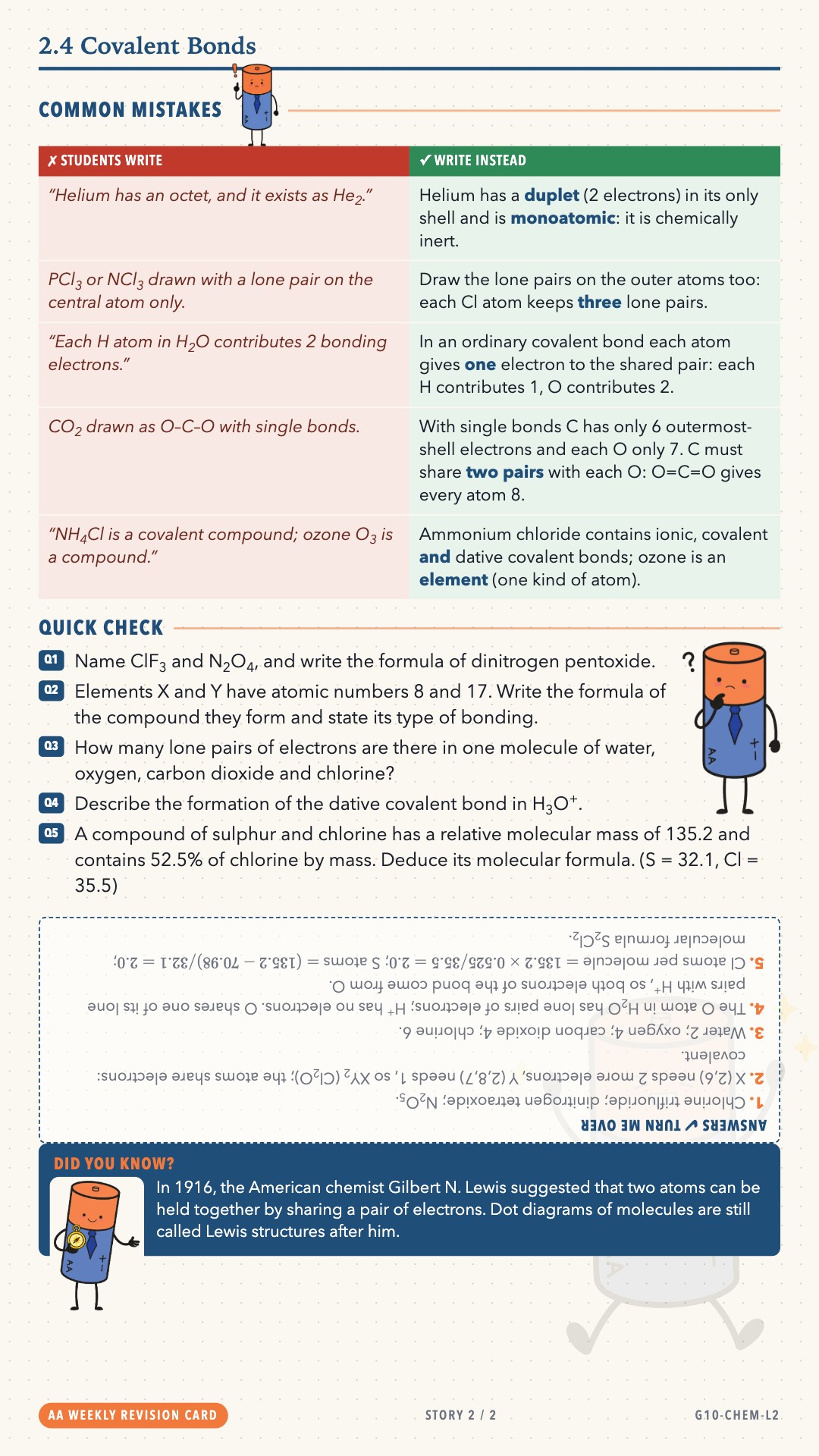
How non-metal atoms share electrons: electron diagrams, lone pairs, naming, and the dative bond.
✔ fact-checked · 0 added mistakes tagged [likely] · 1.8 MB JPG · card.md ·
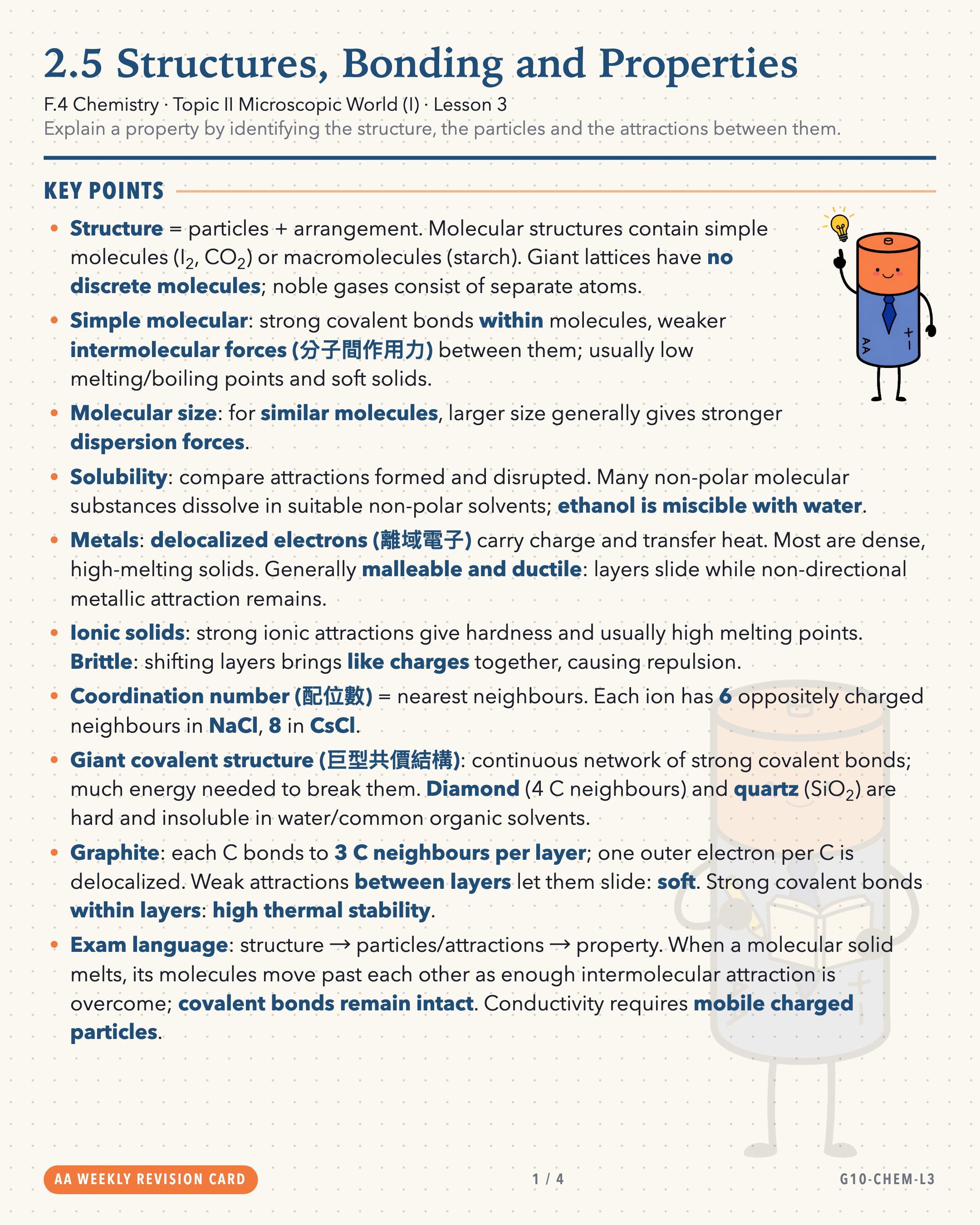
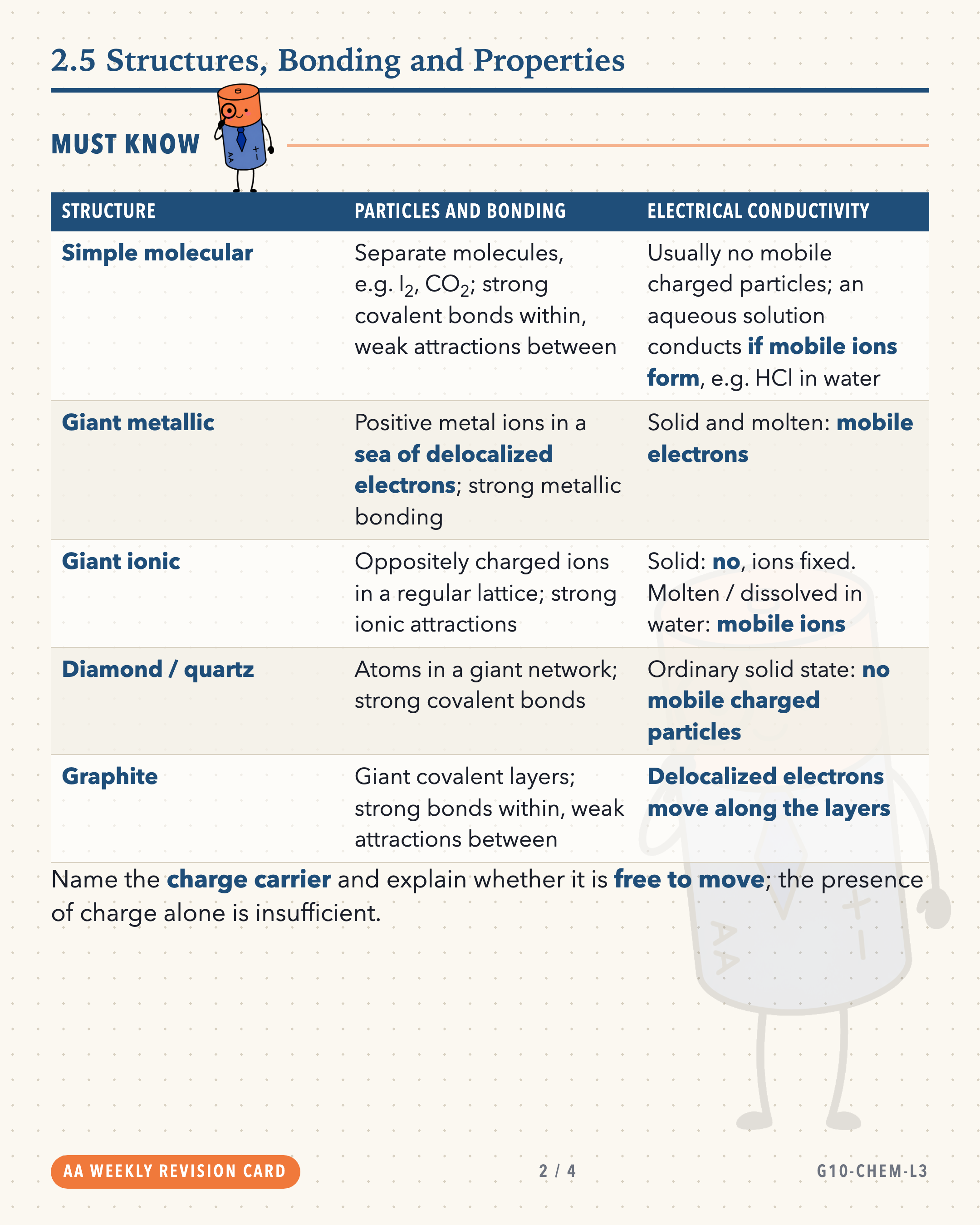
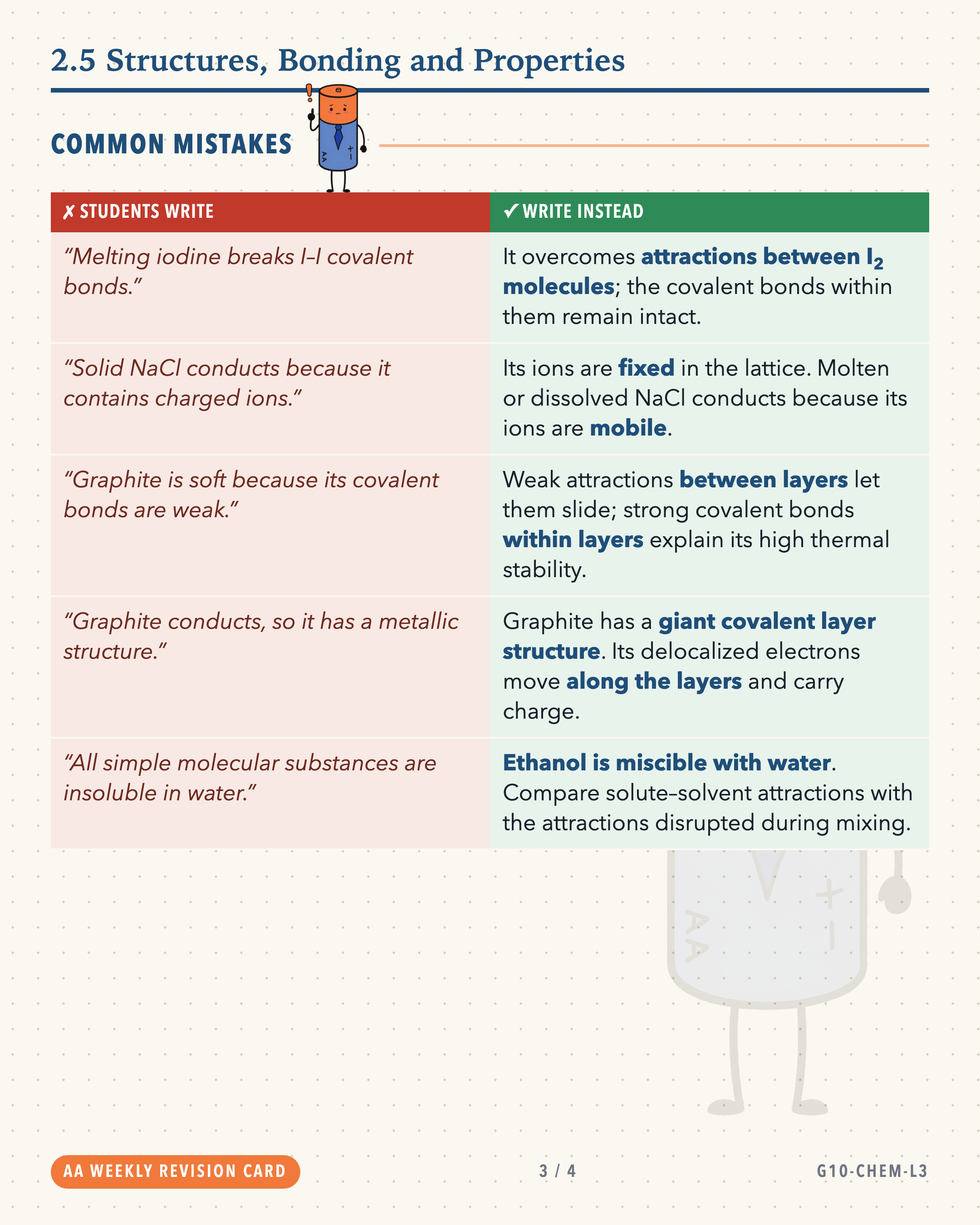
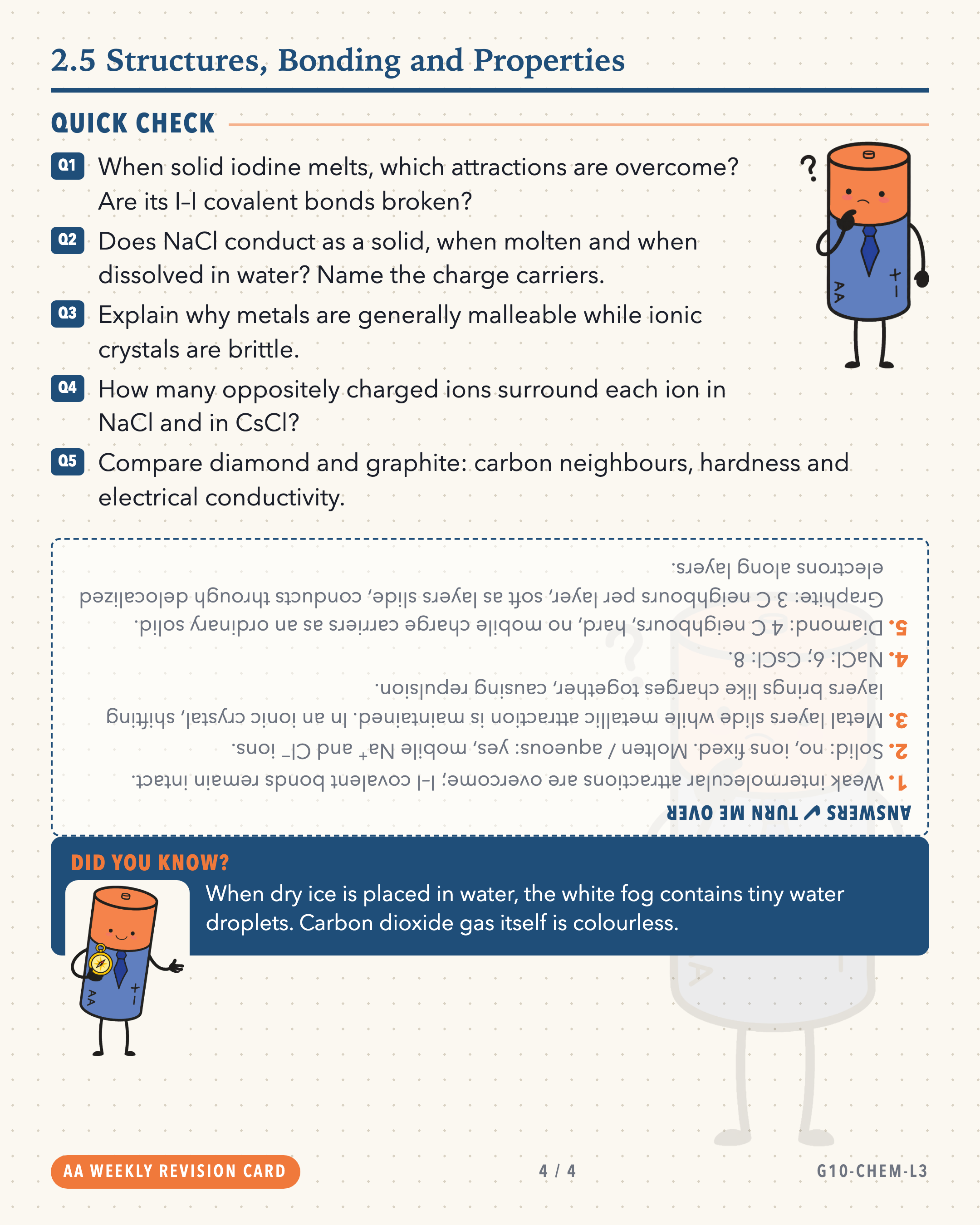
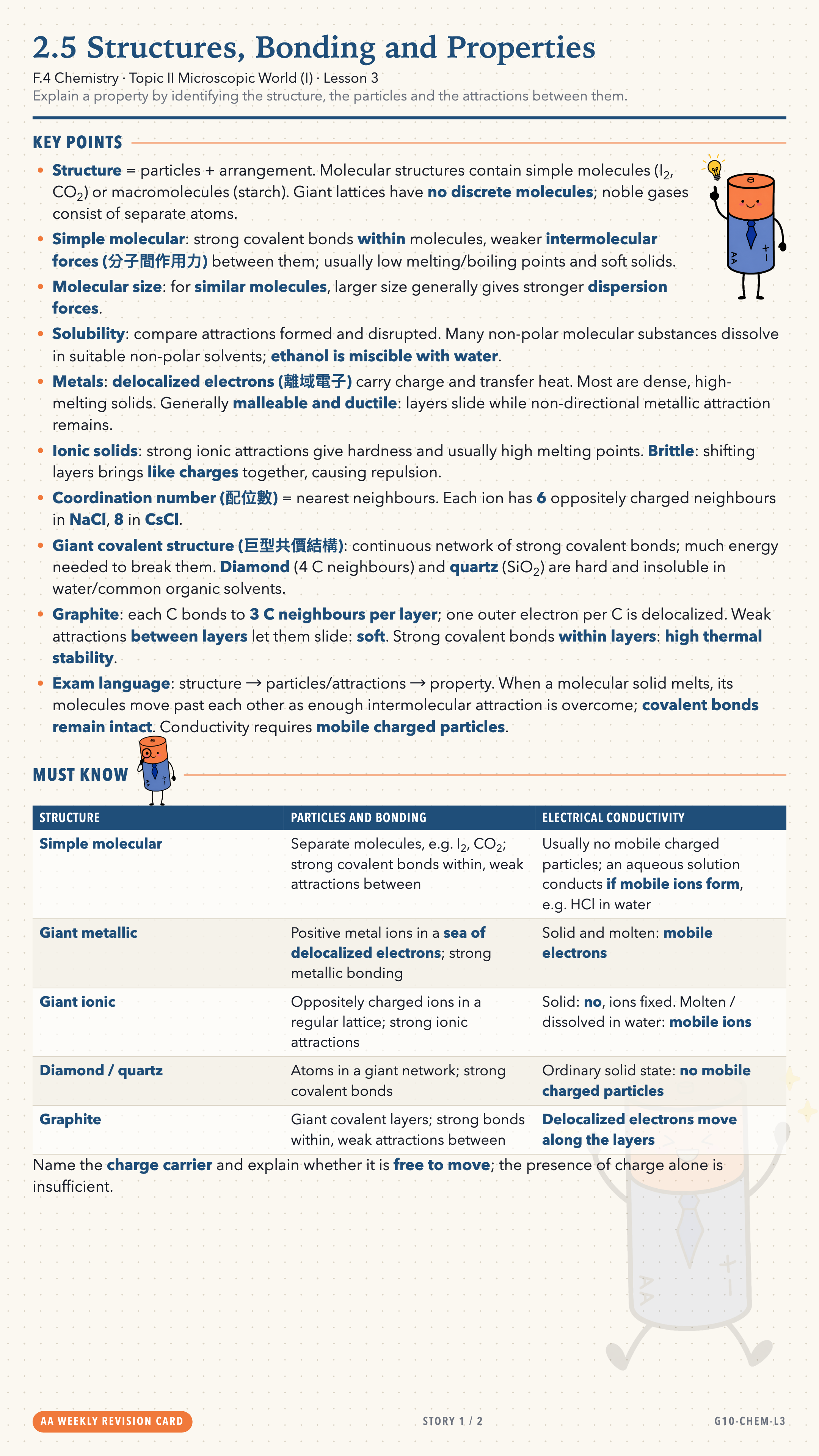
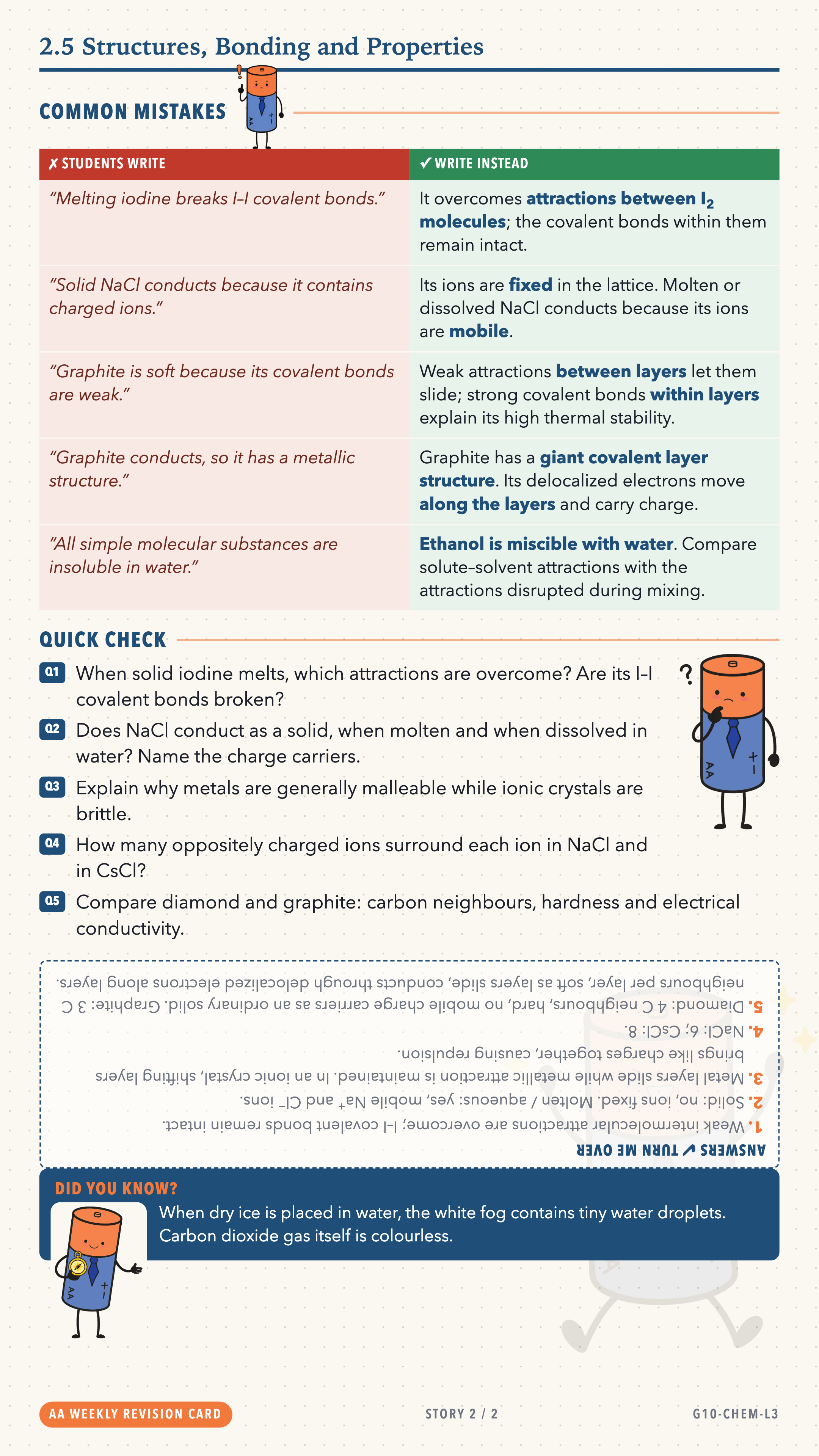
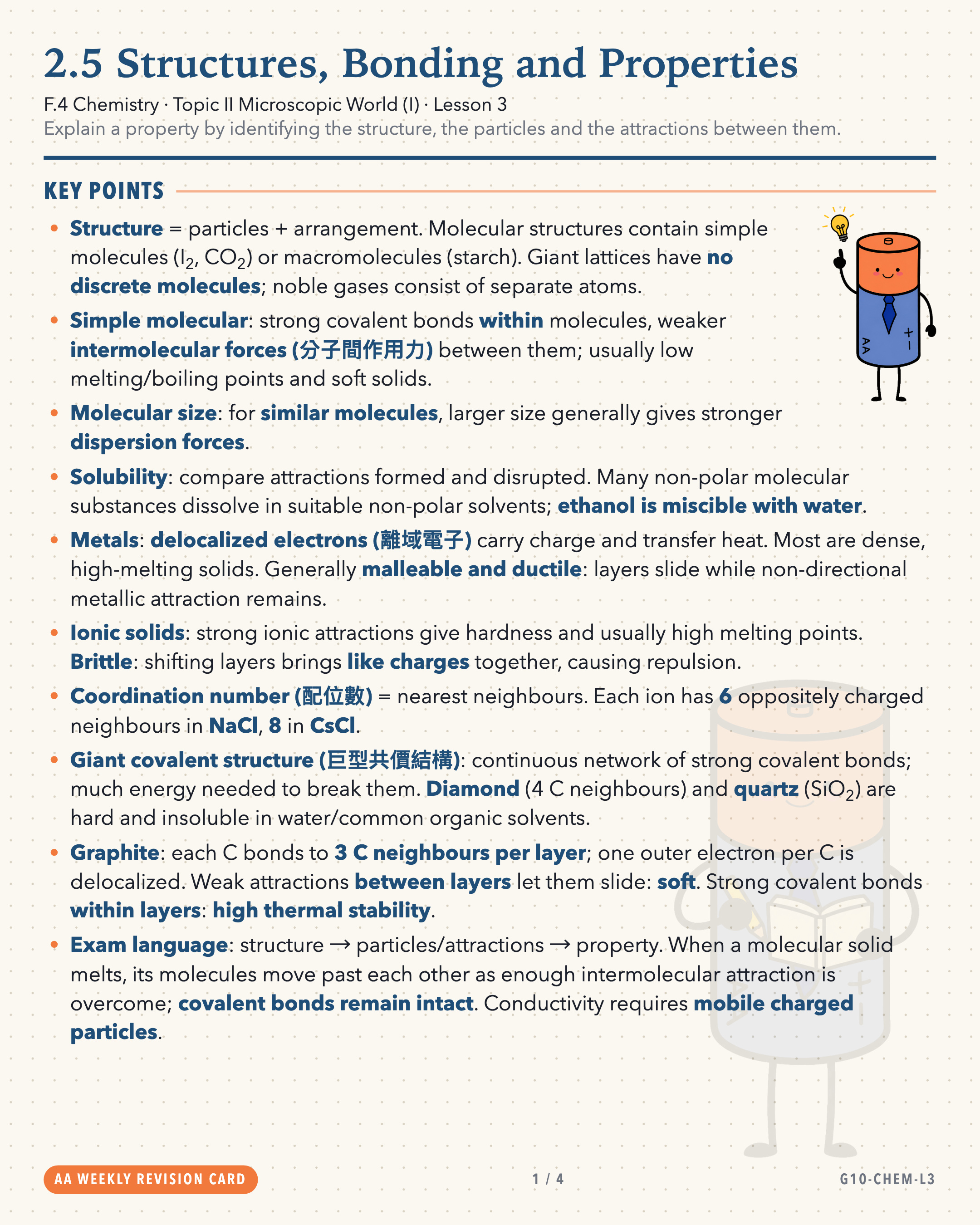
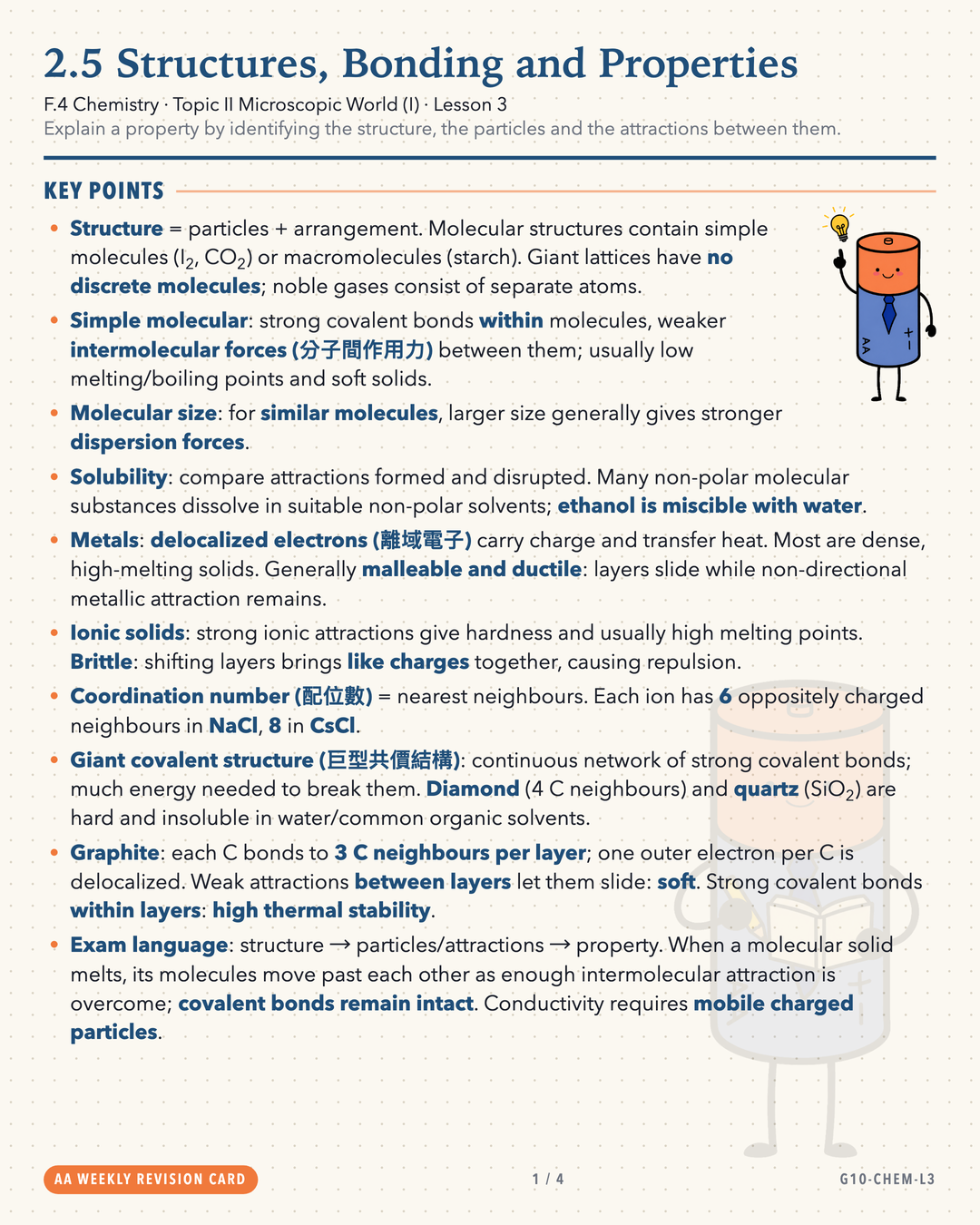
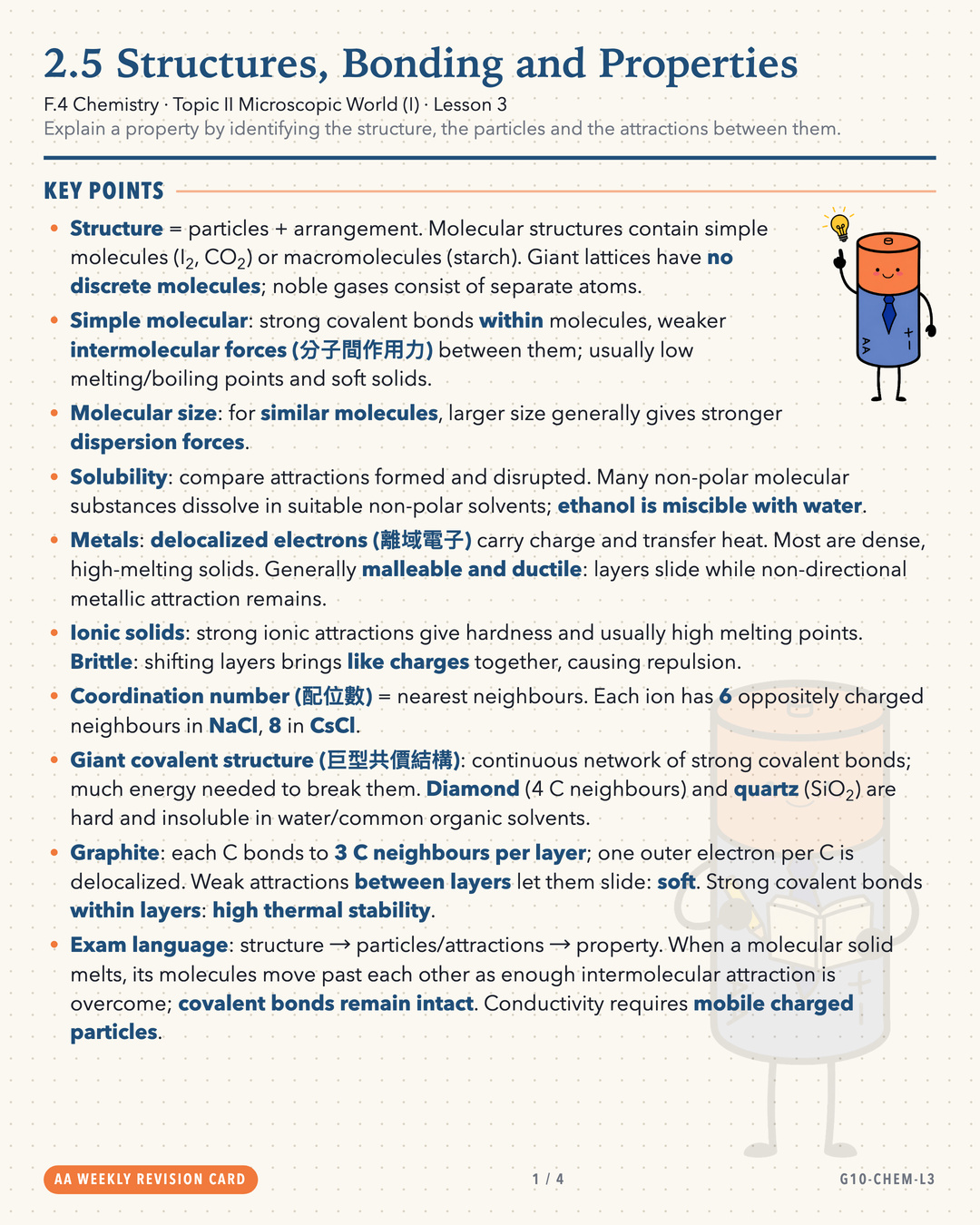
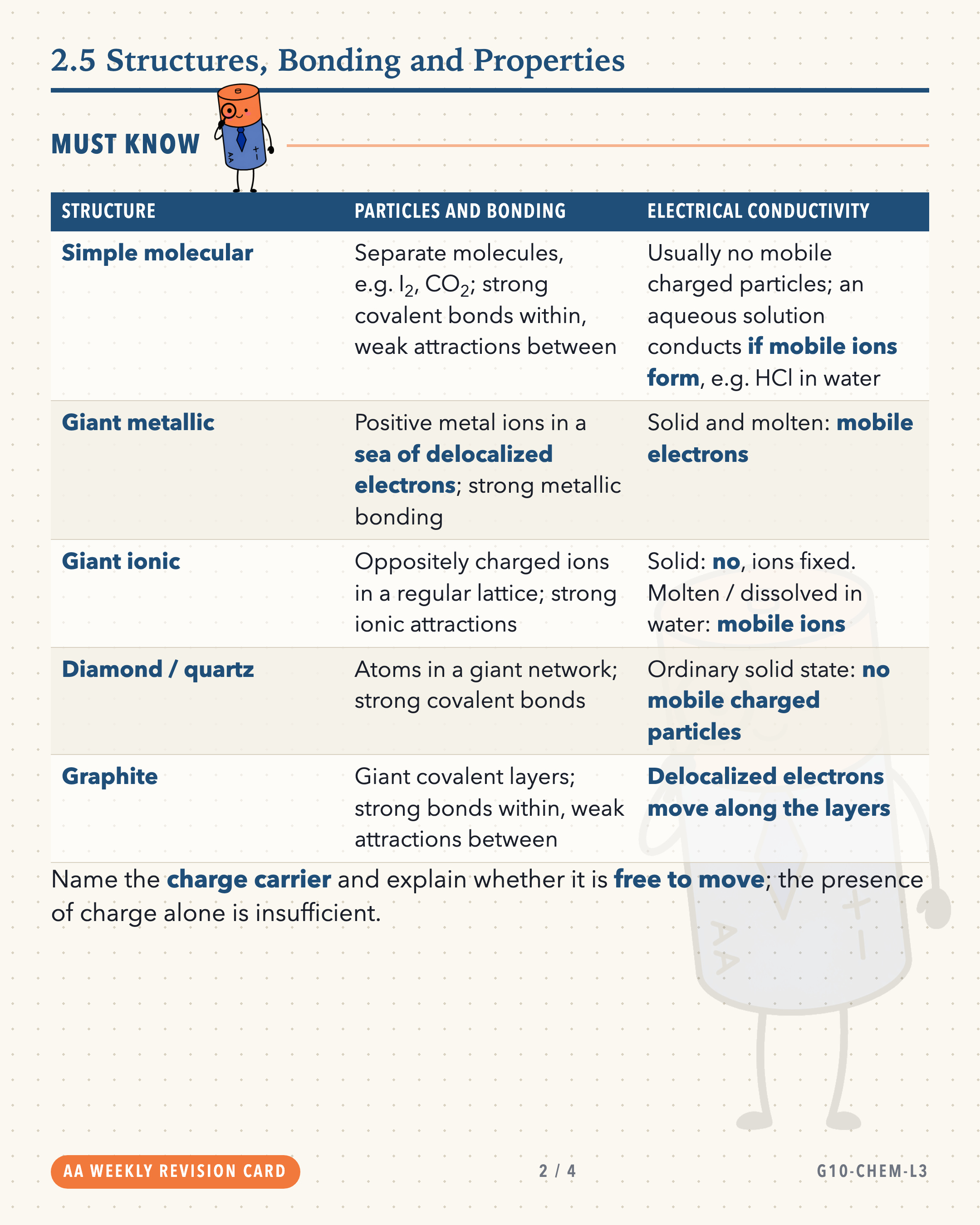
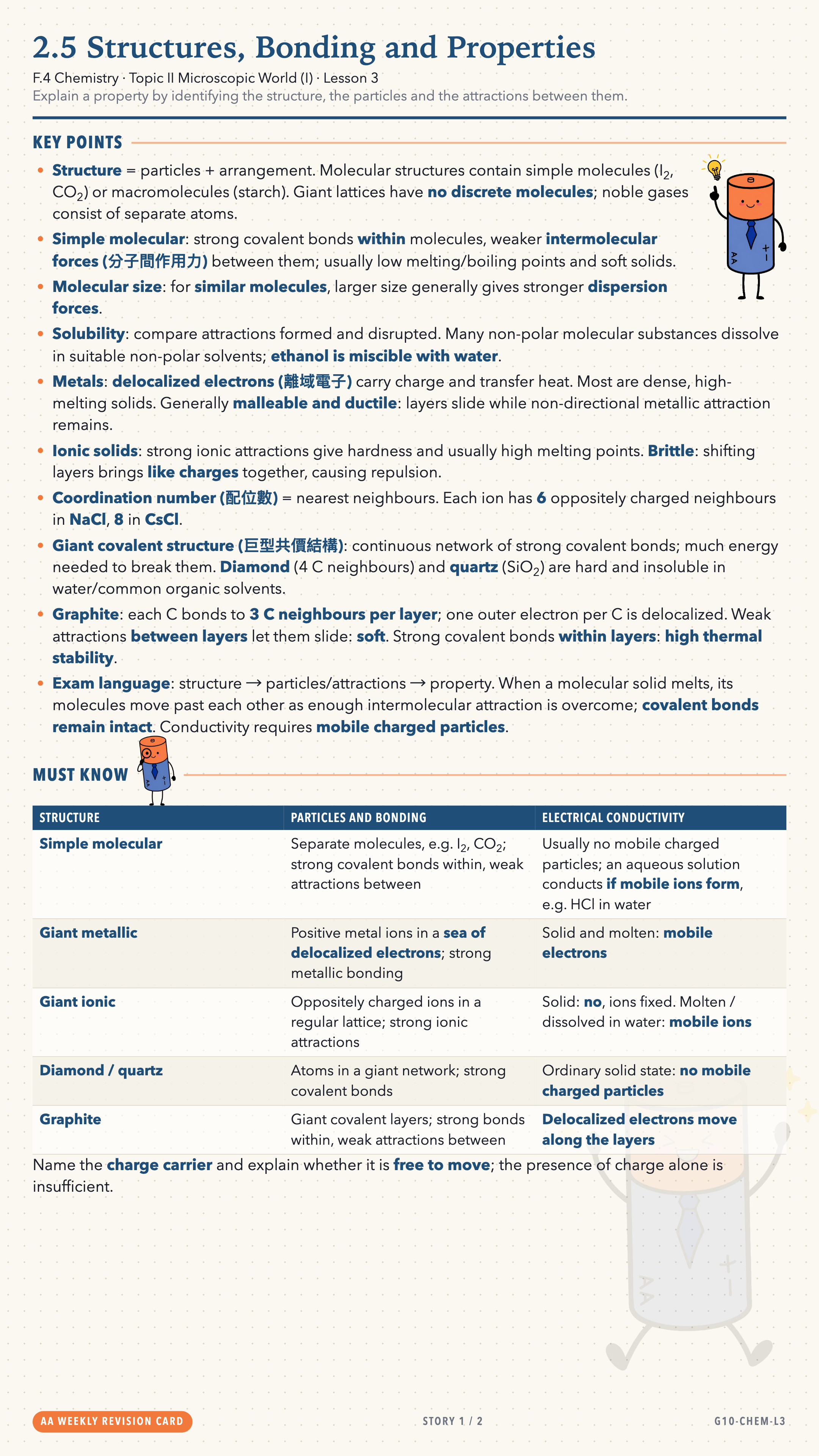
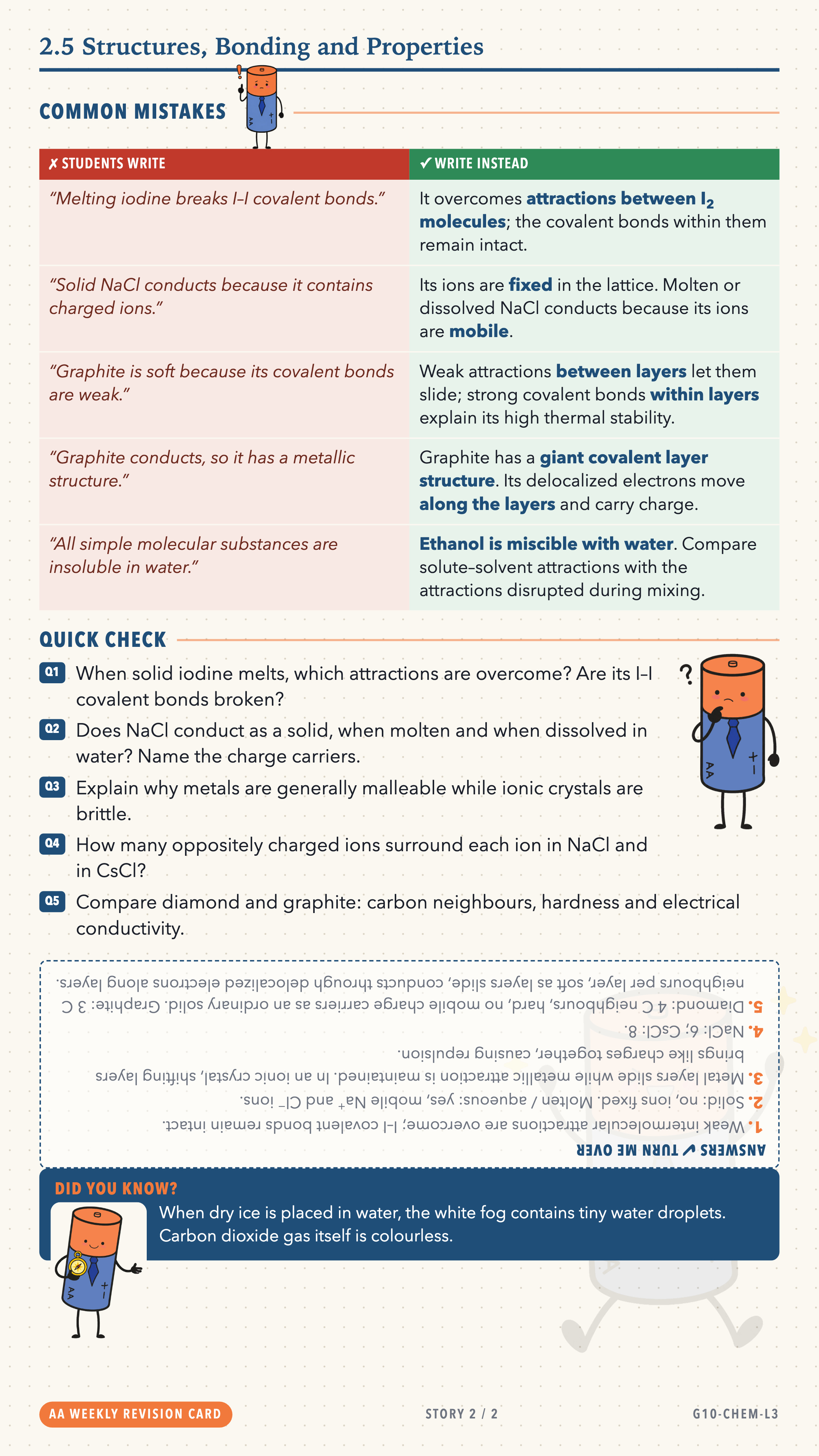
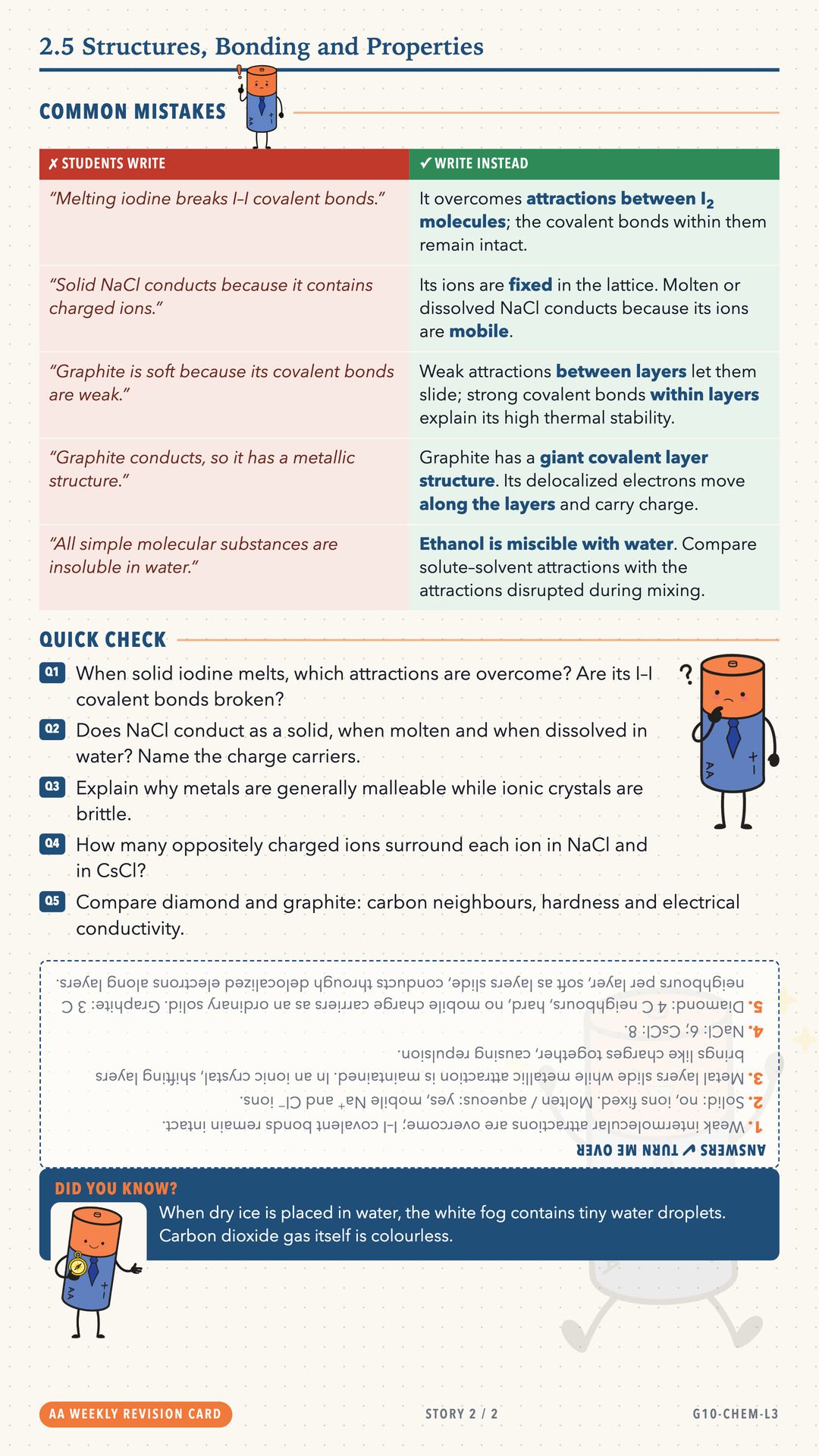
Explain a property by identifying the structure, the particles and the attractions between them.
✔ fact-checked · 0 added mistakes tagged [likely] · 3.5 MB JPG · card.md ·
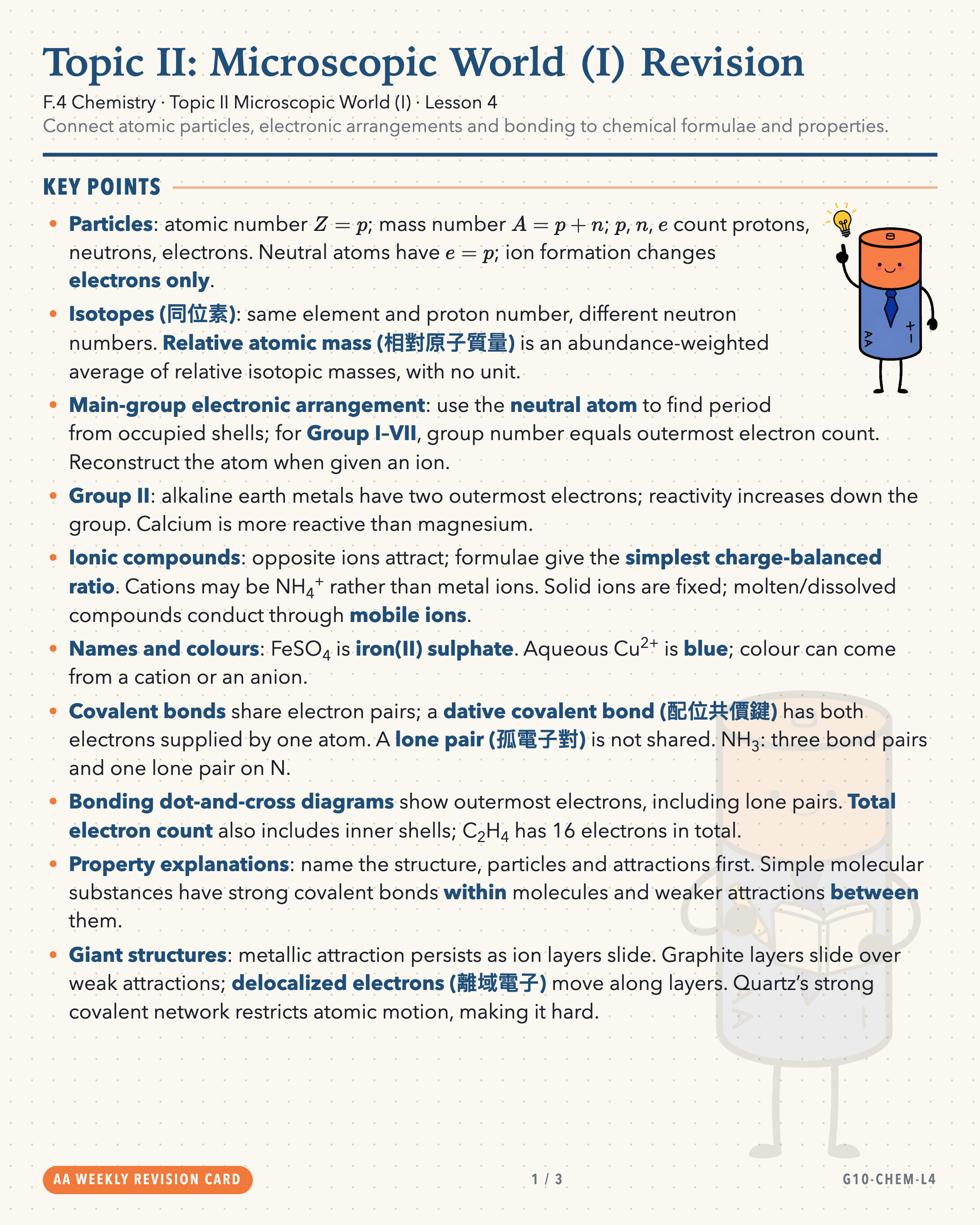
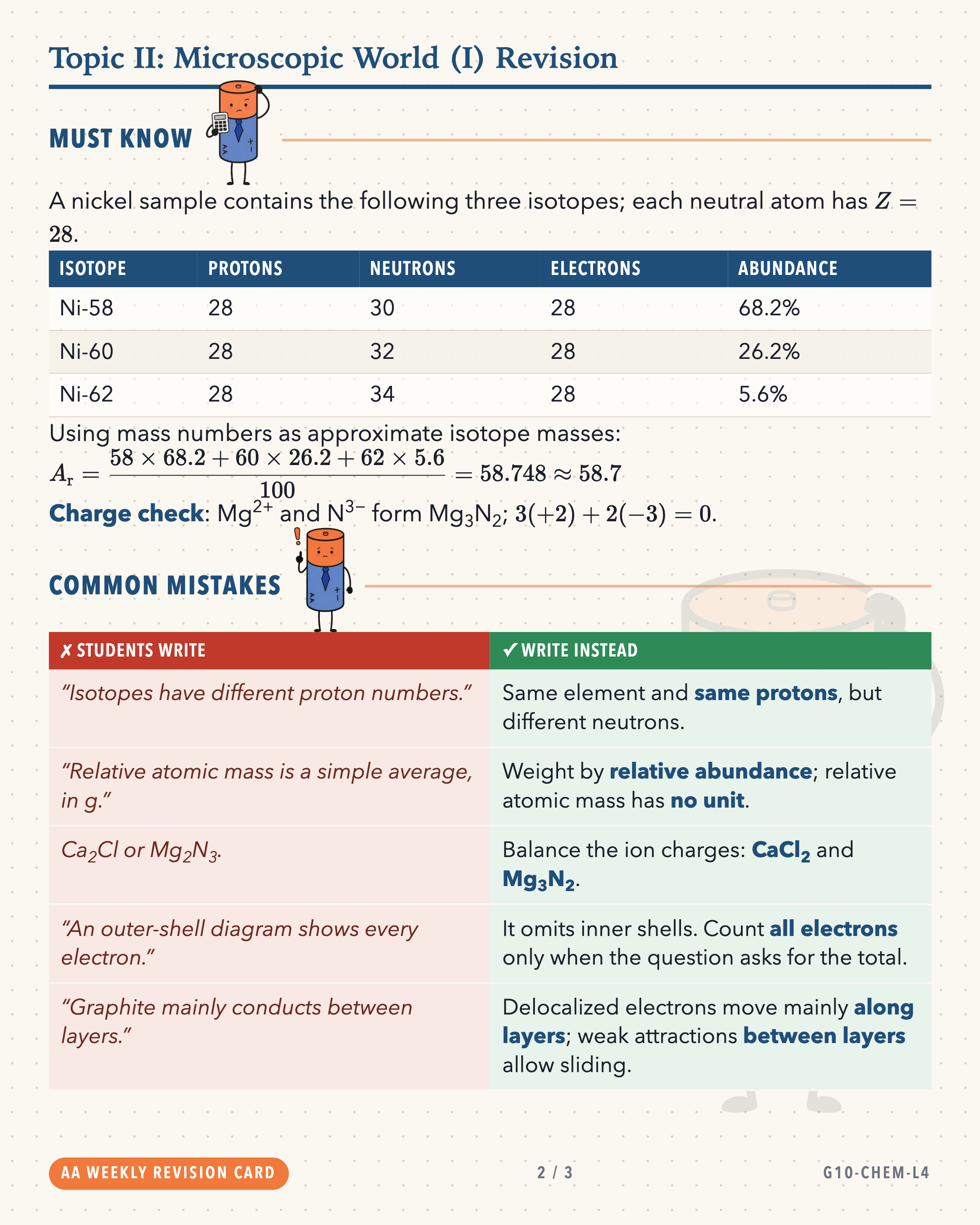
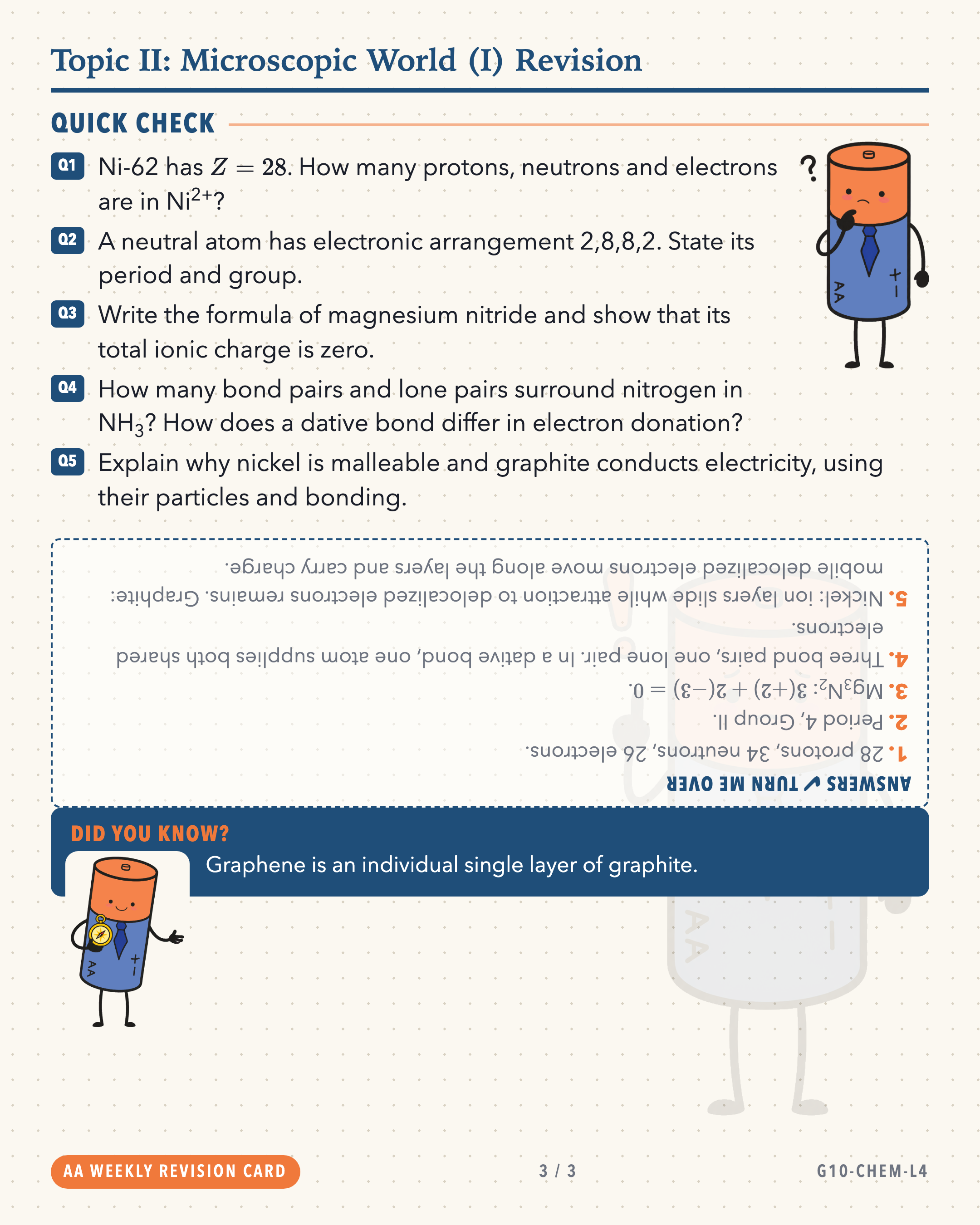
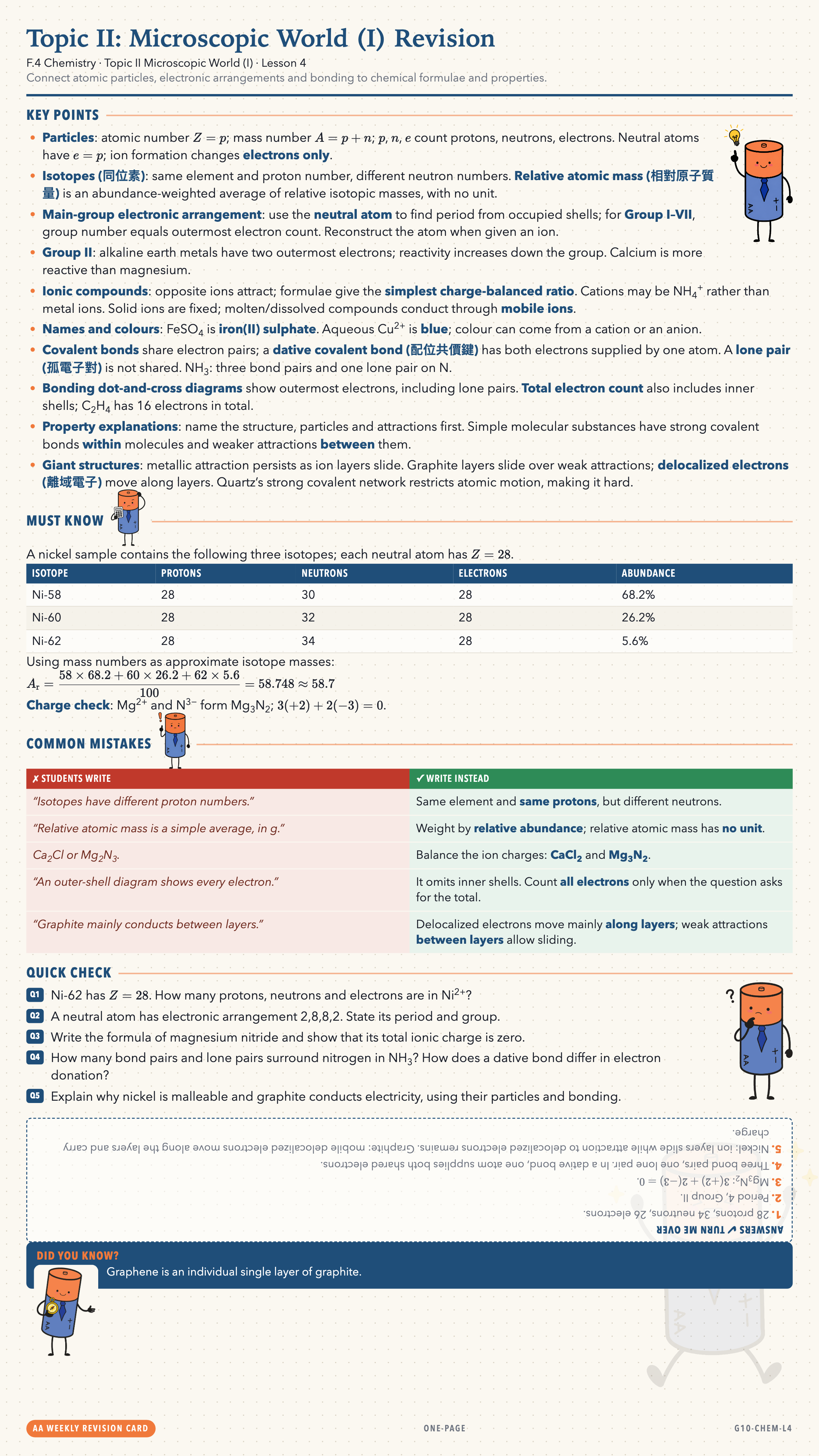
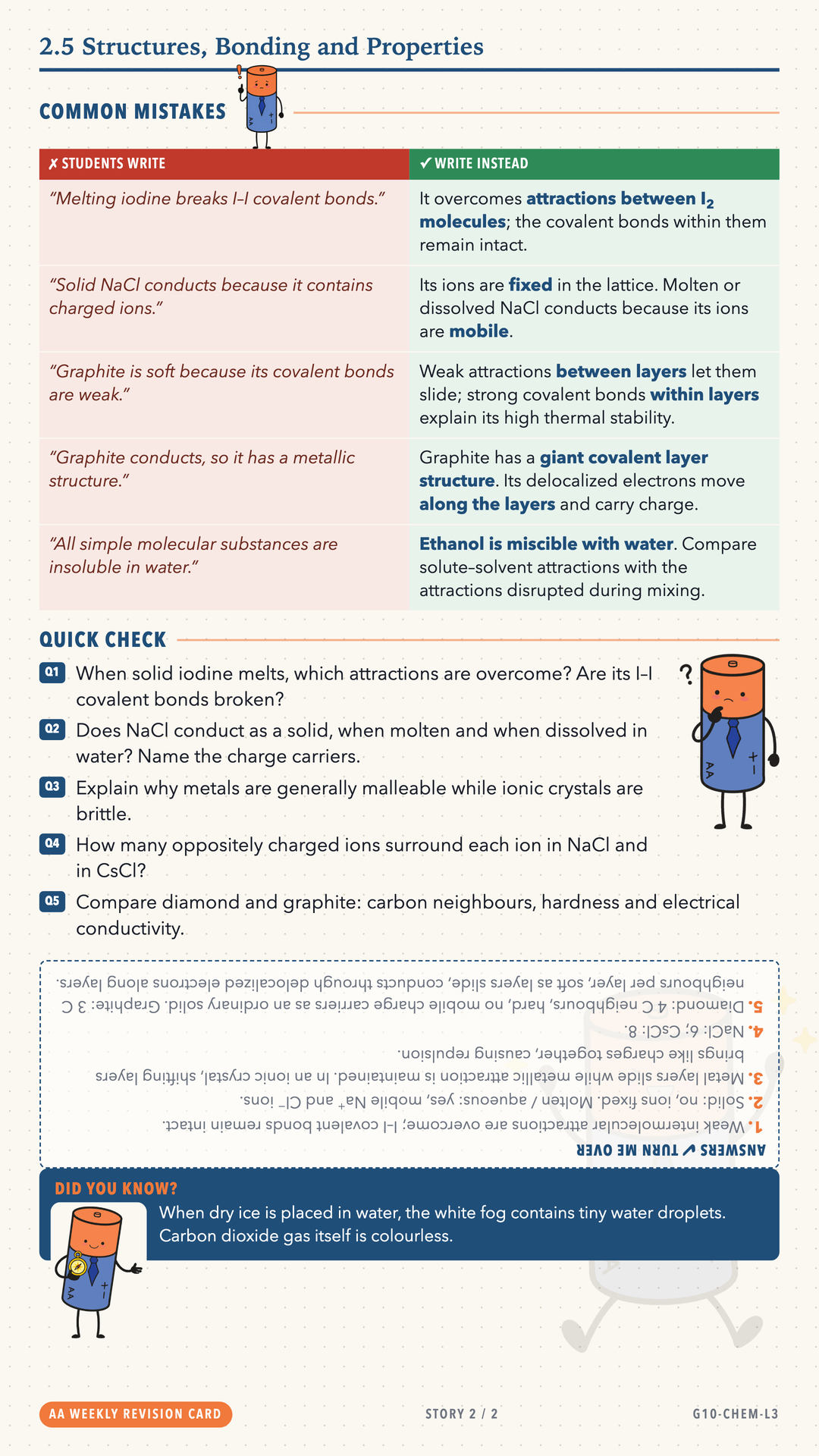
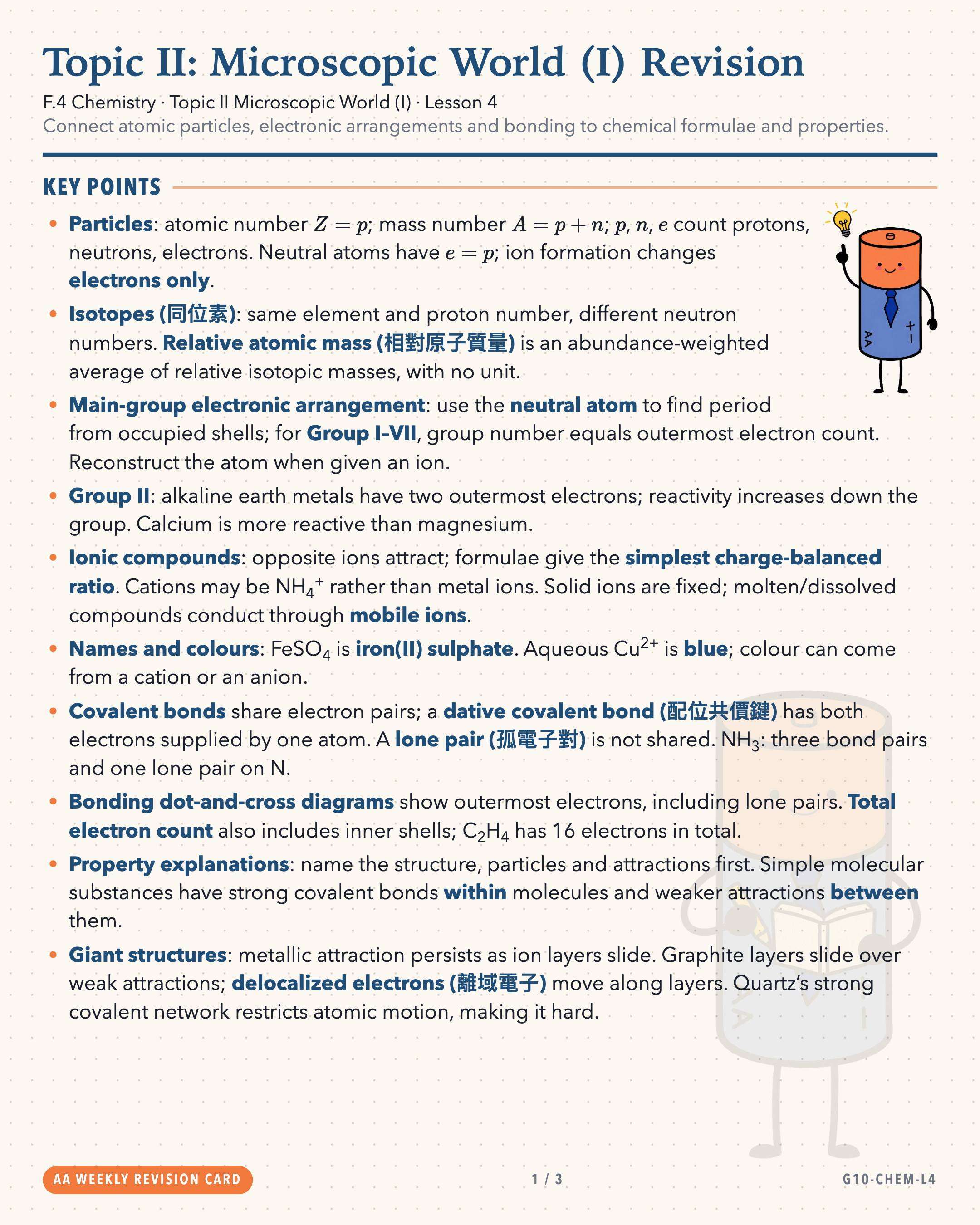
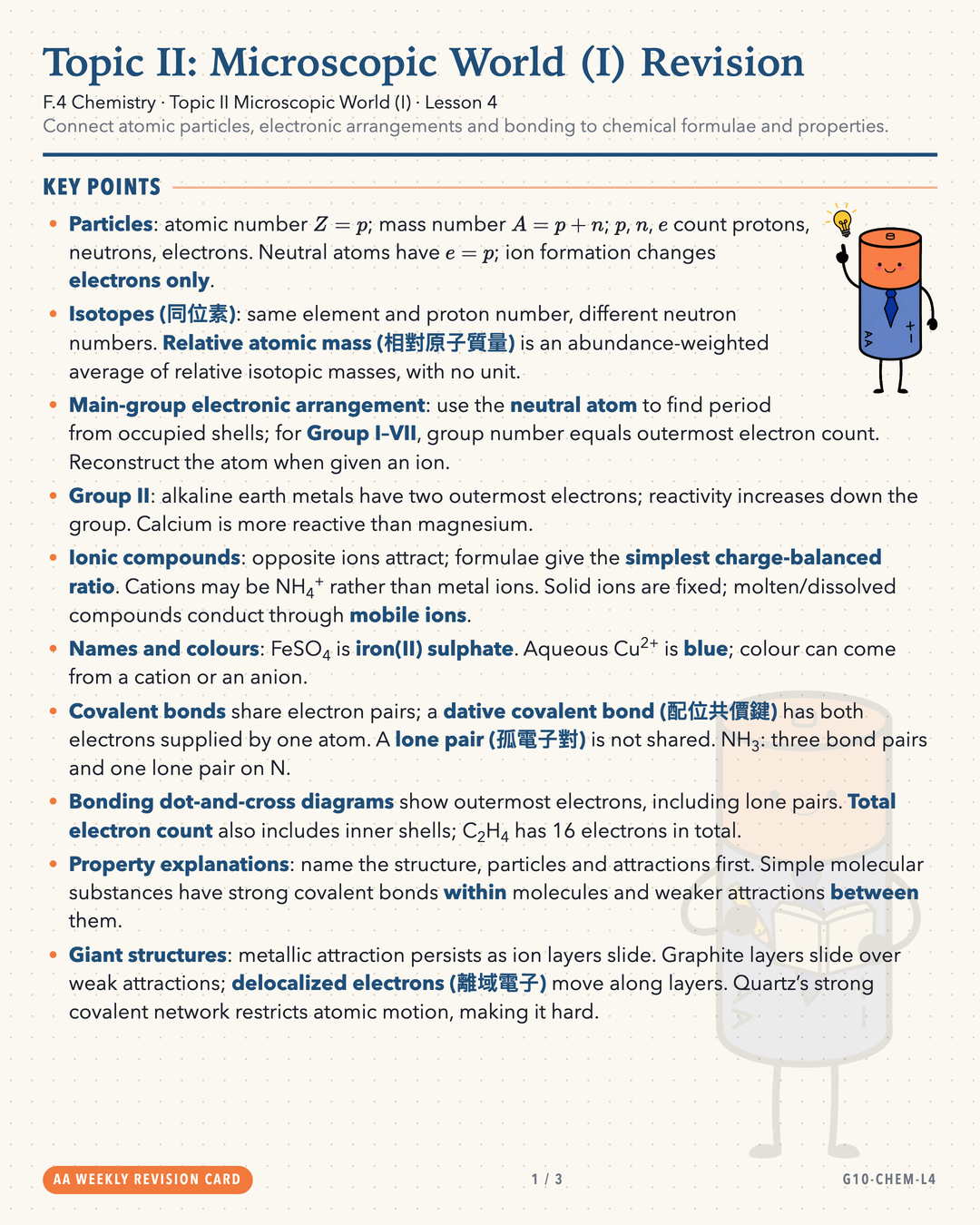
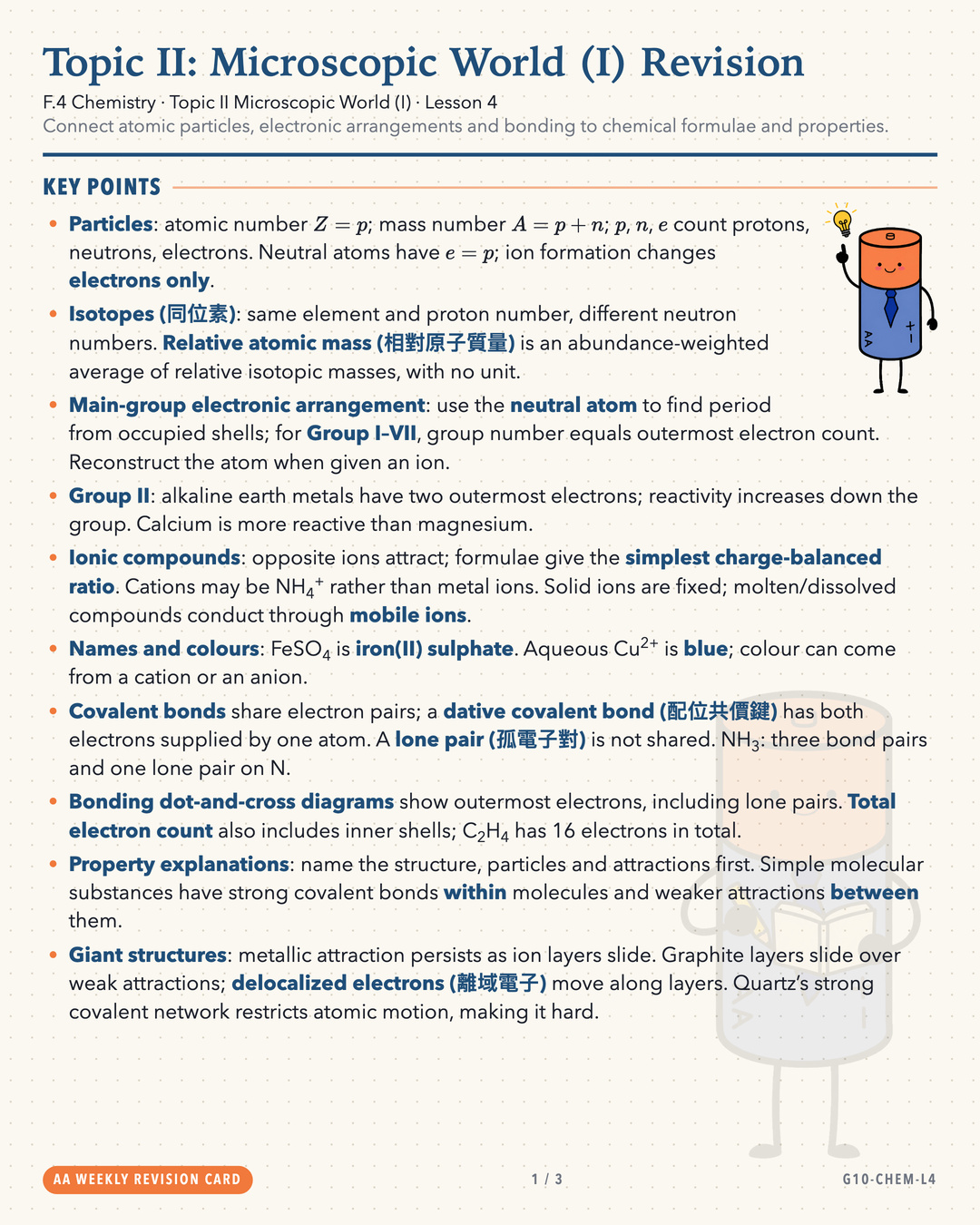
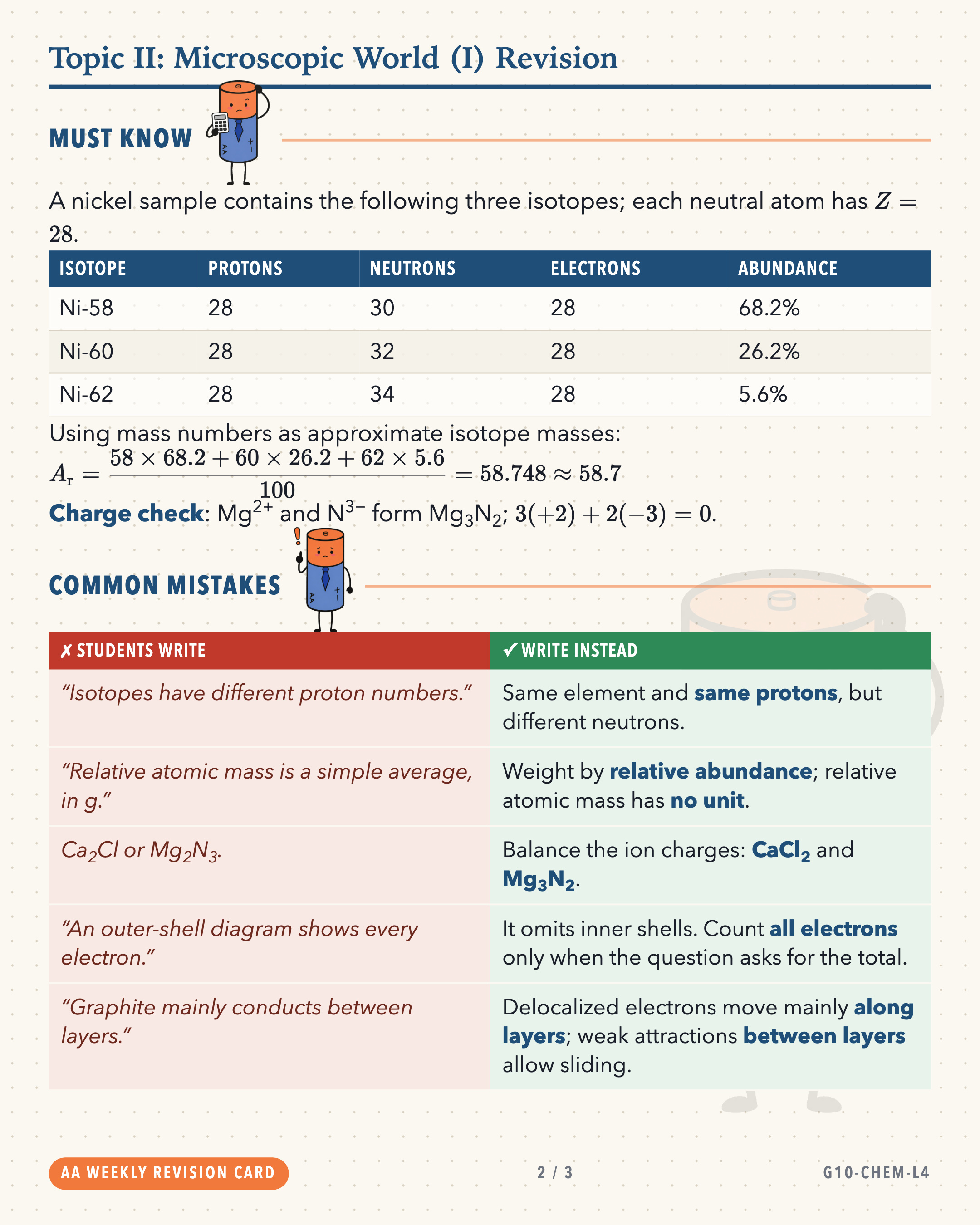
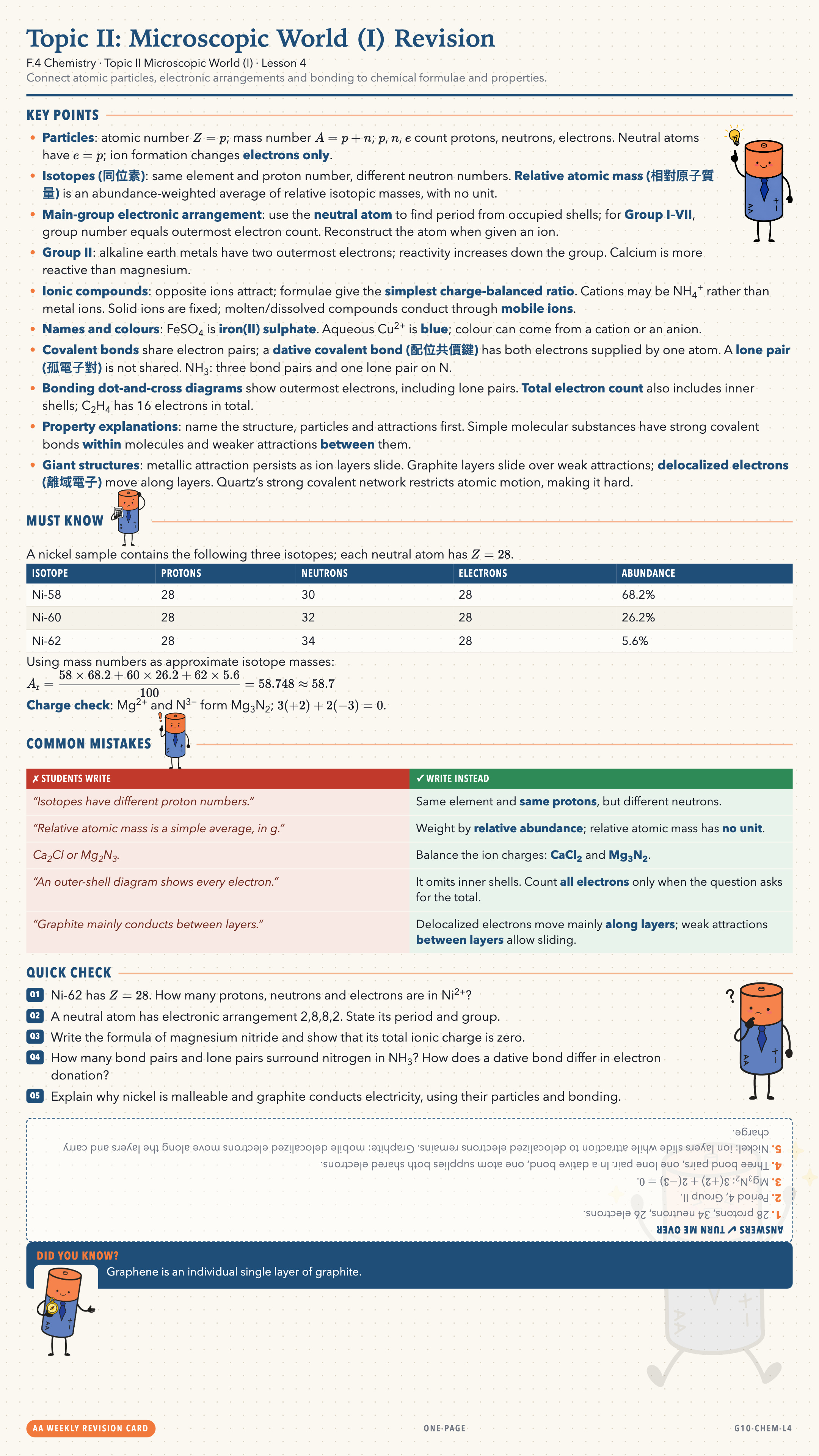
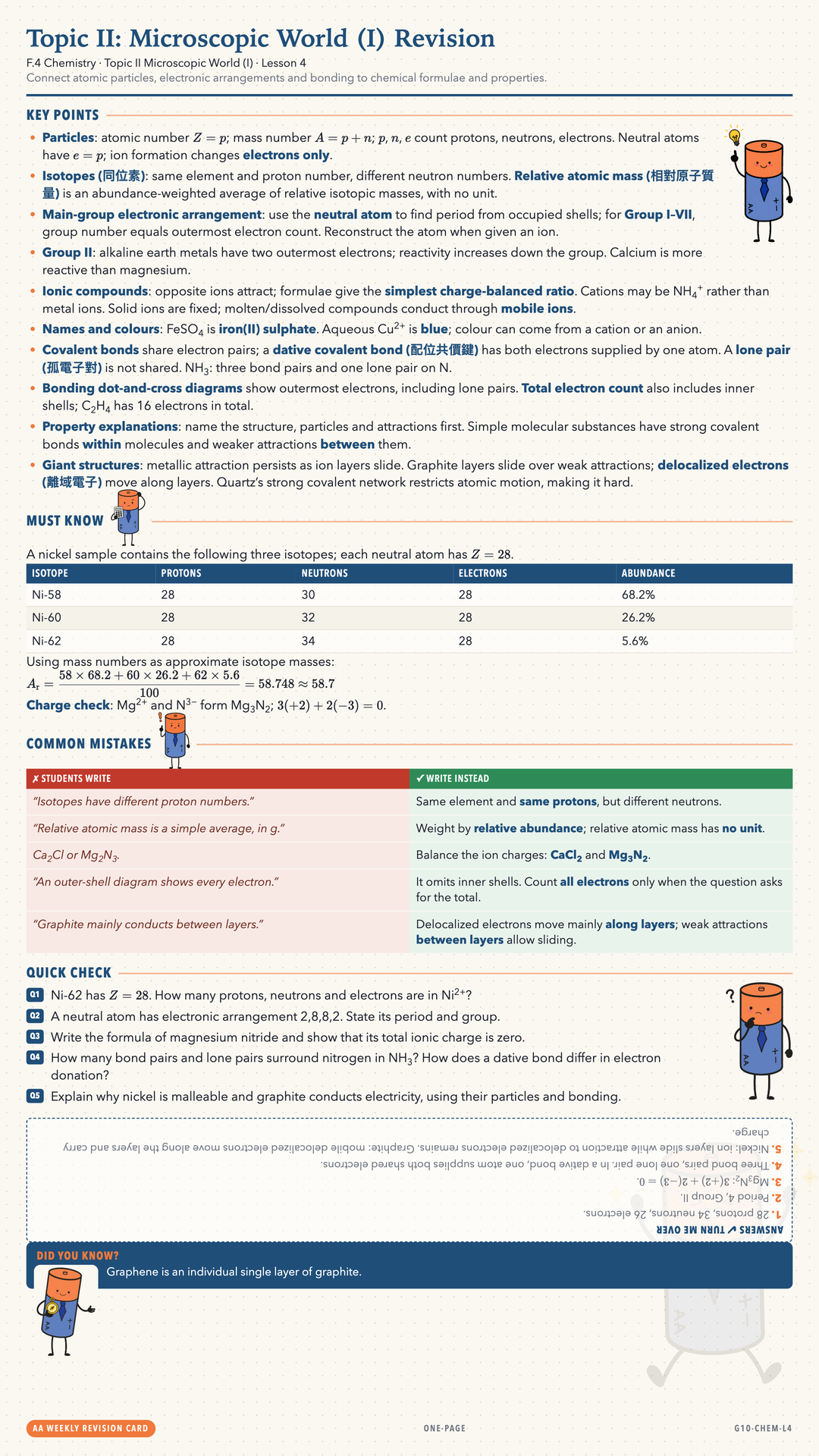
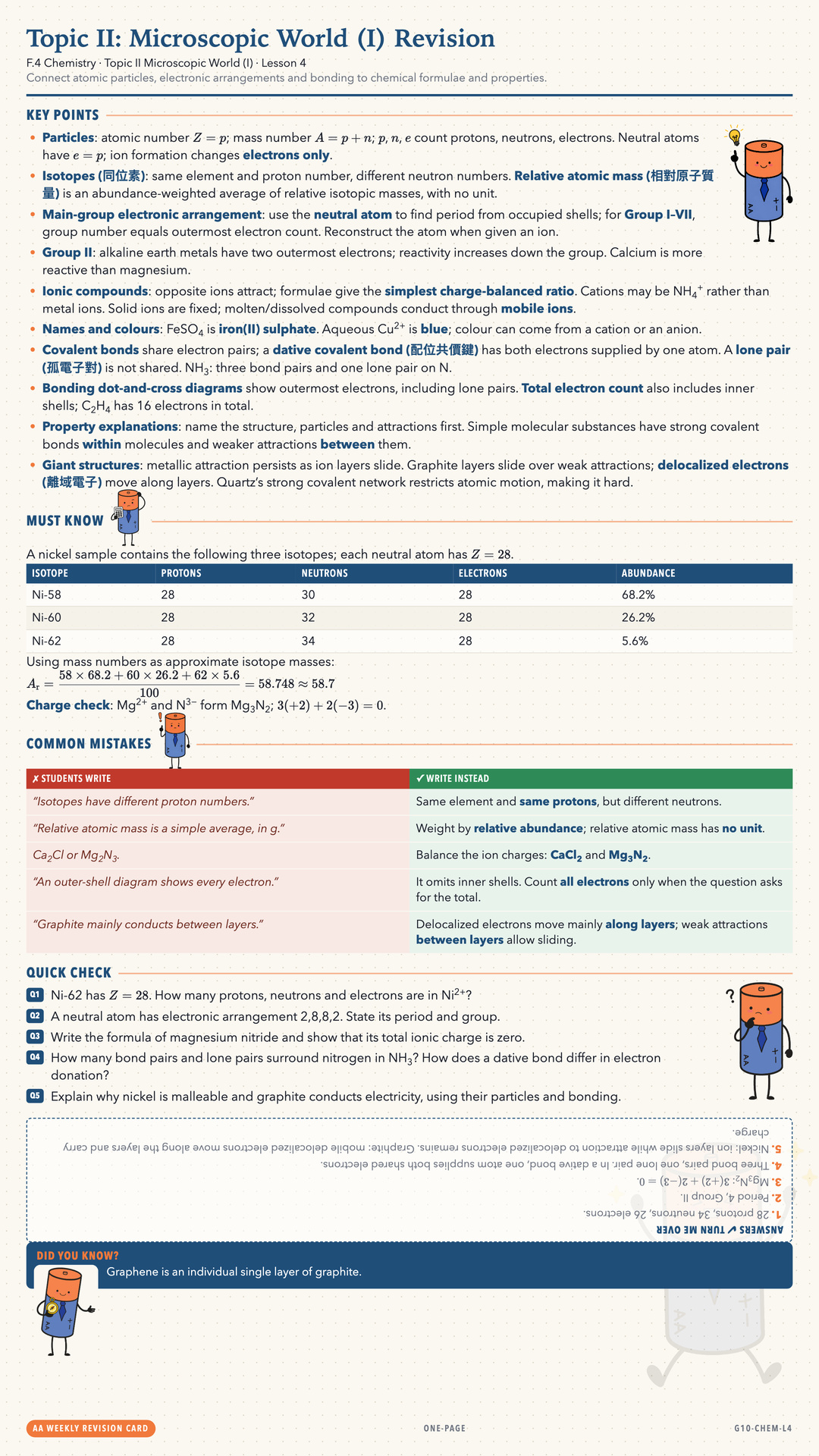
Connect atomic particles, electronic arrangements and bonding to chemical formulae and properties.
✔ fact-checked · 0 added mistakes tagged [likely] · 2.4 MB JPG · card.md ·
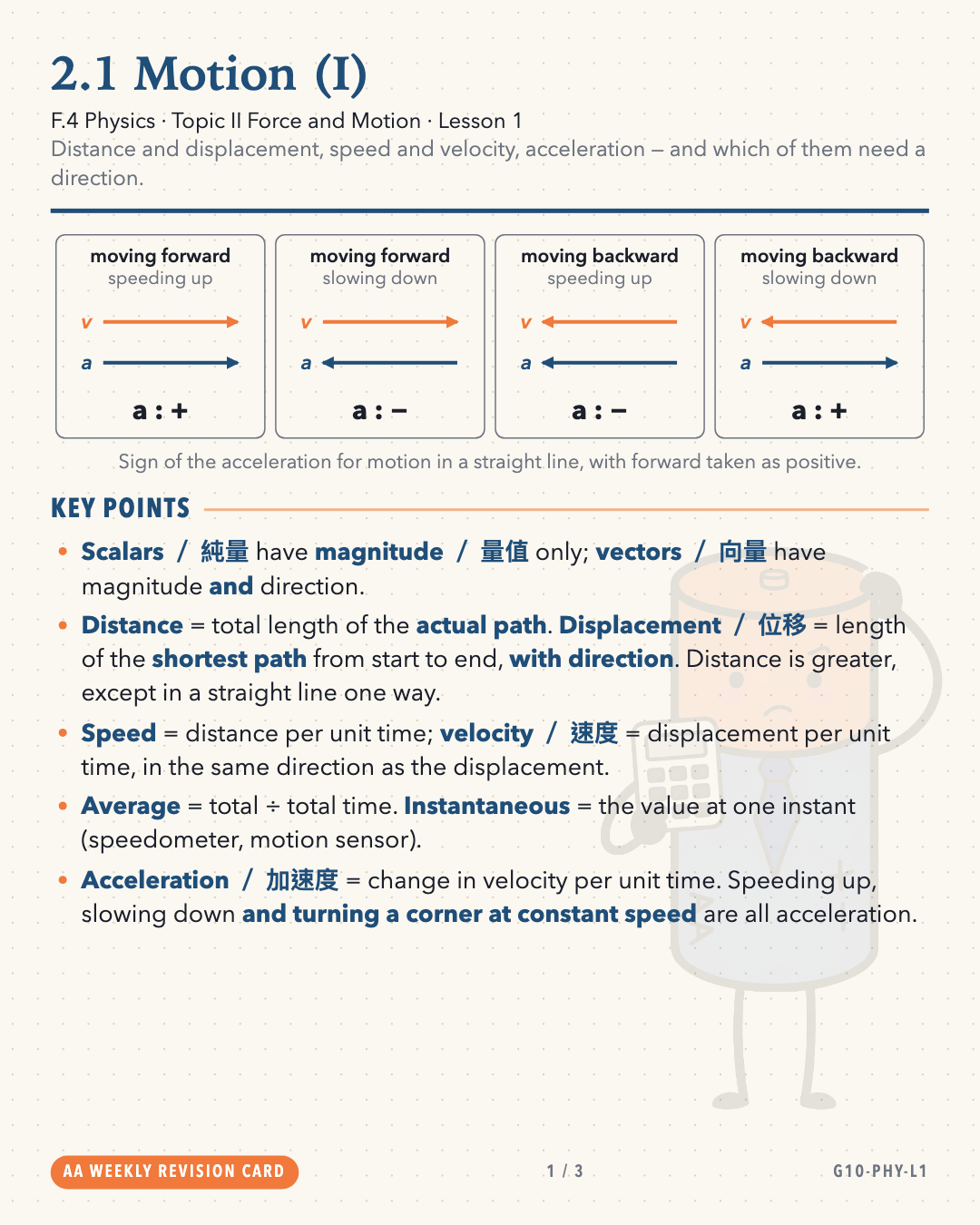
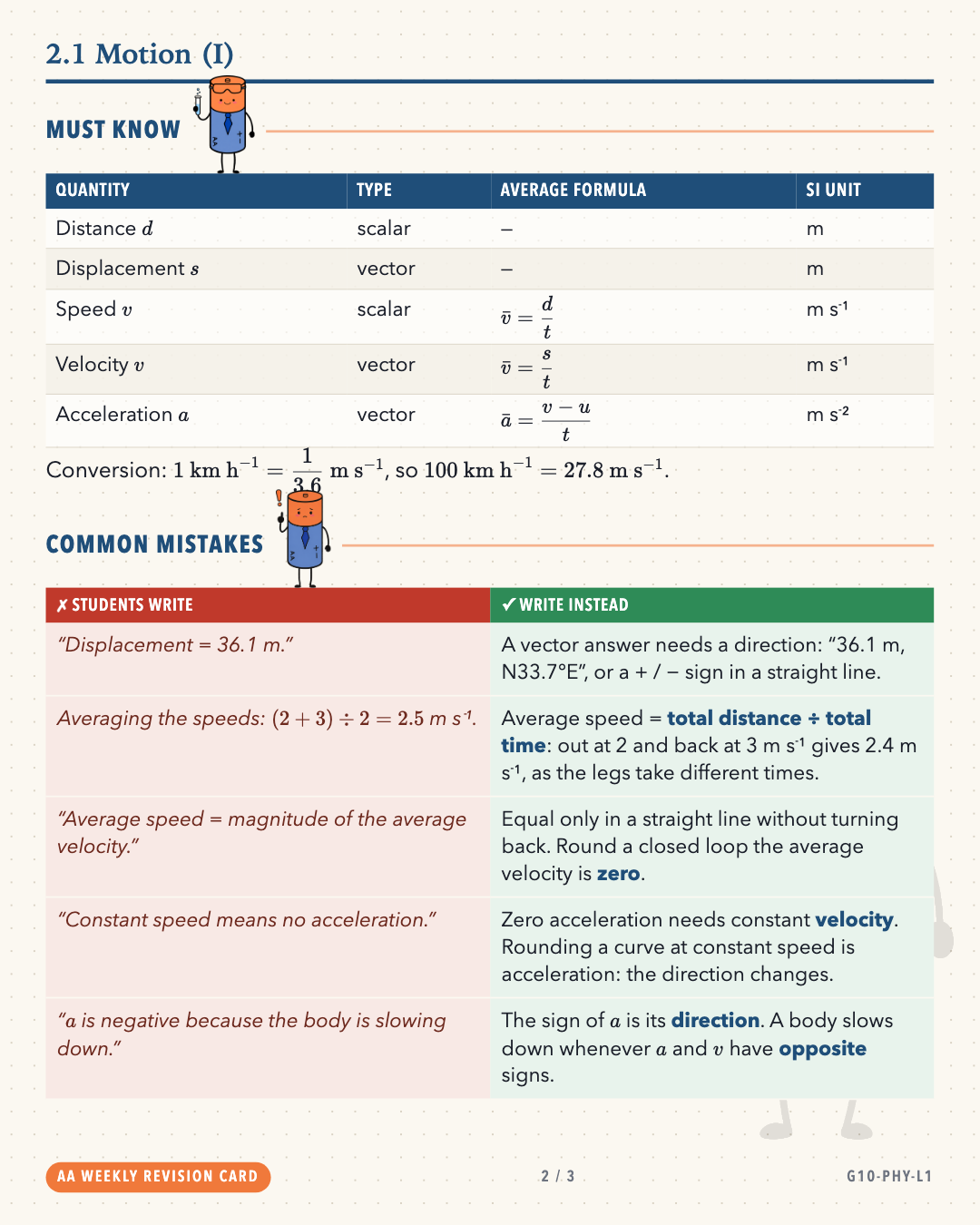
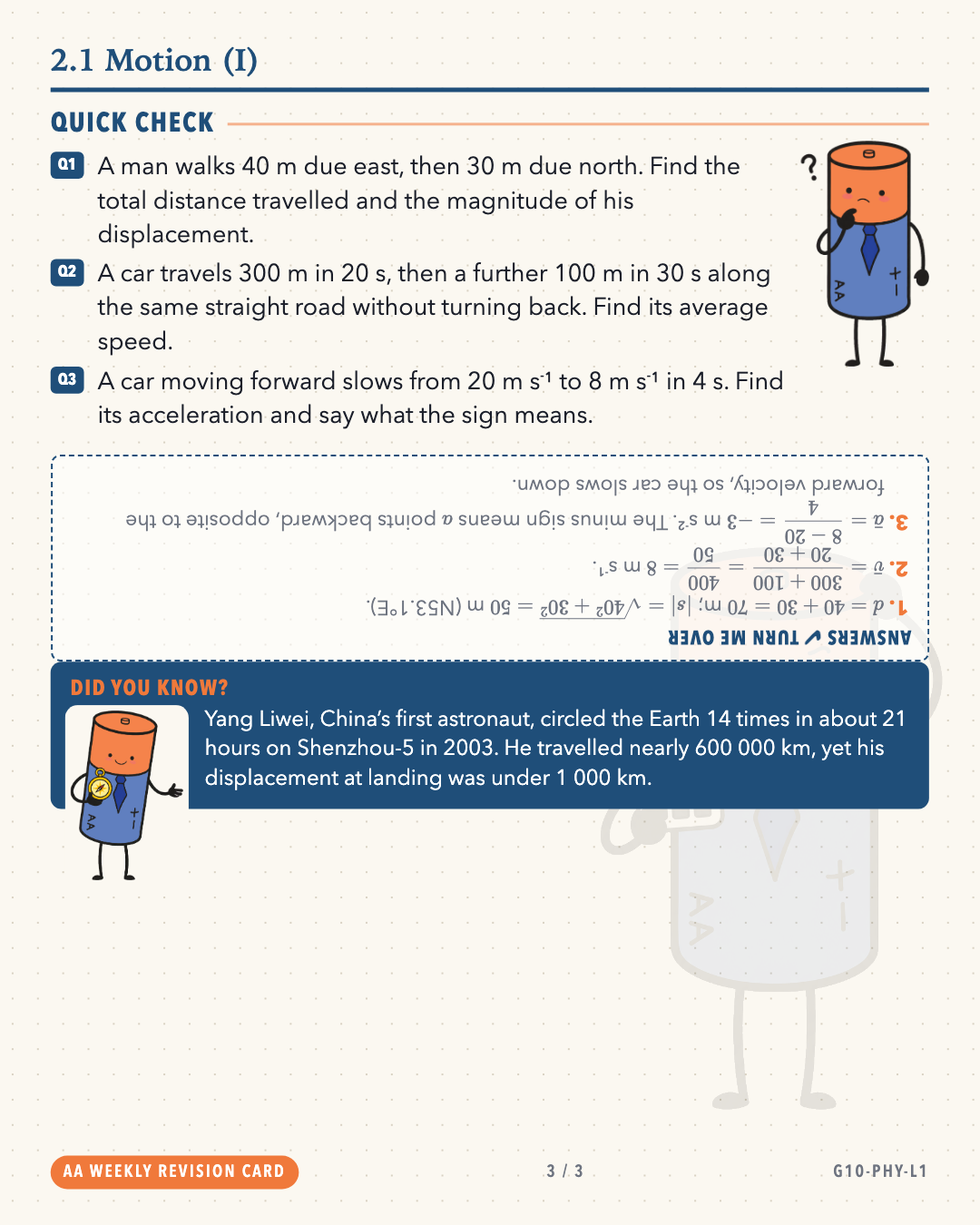
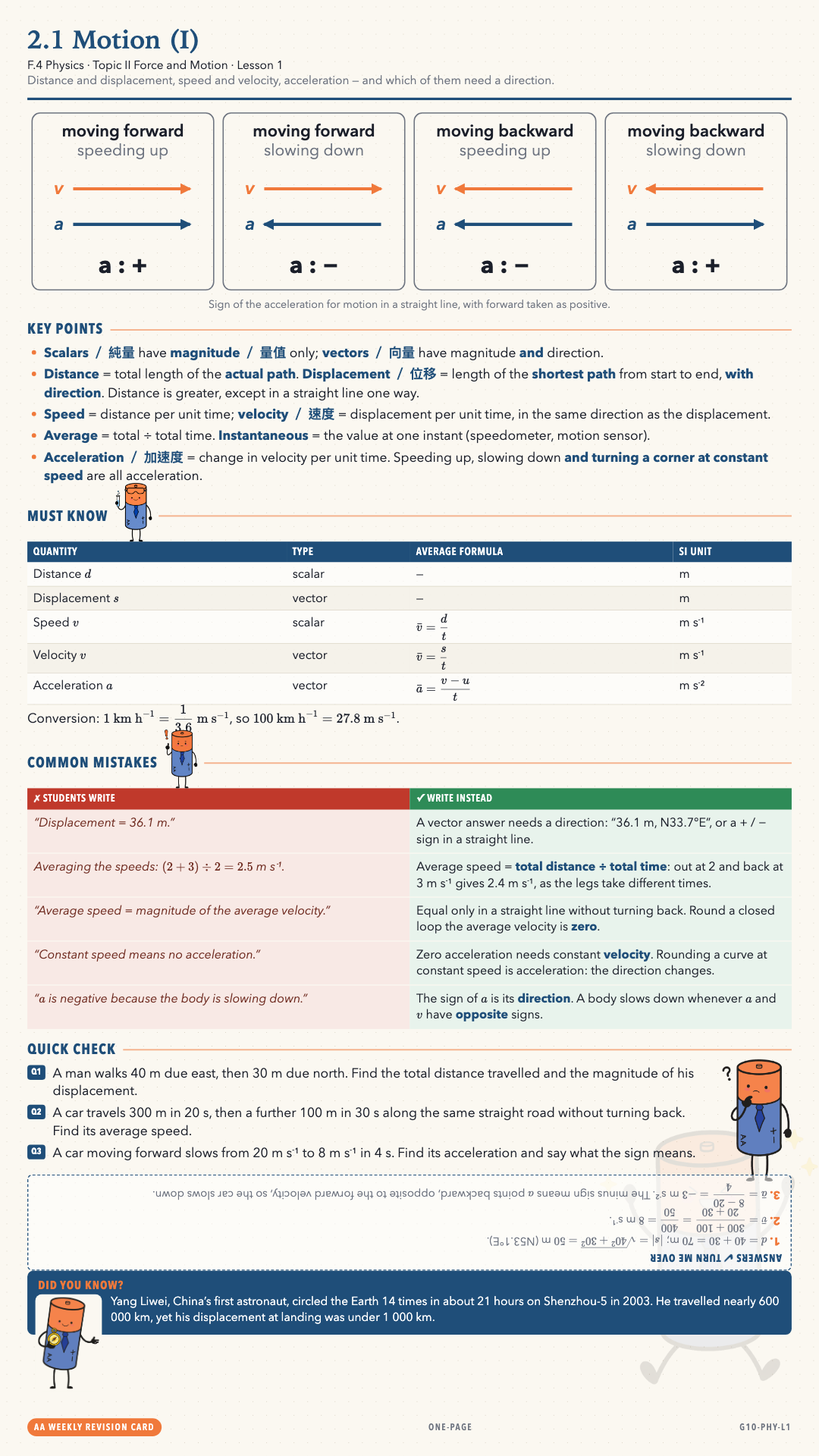
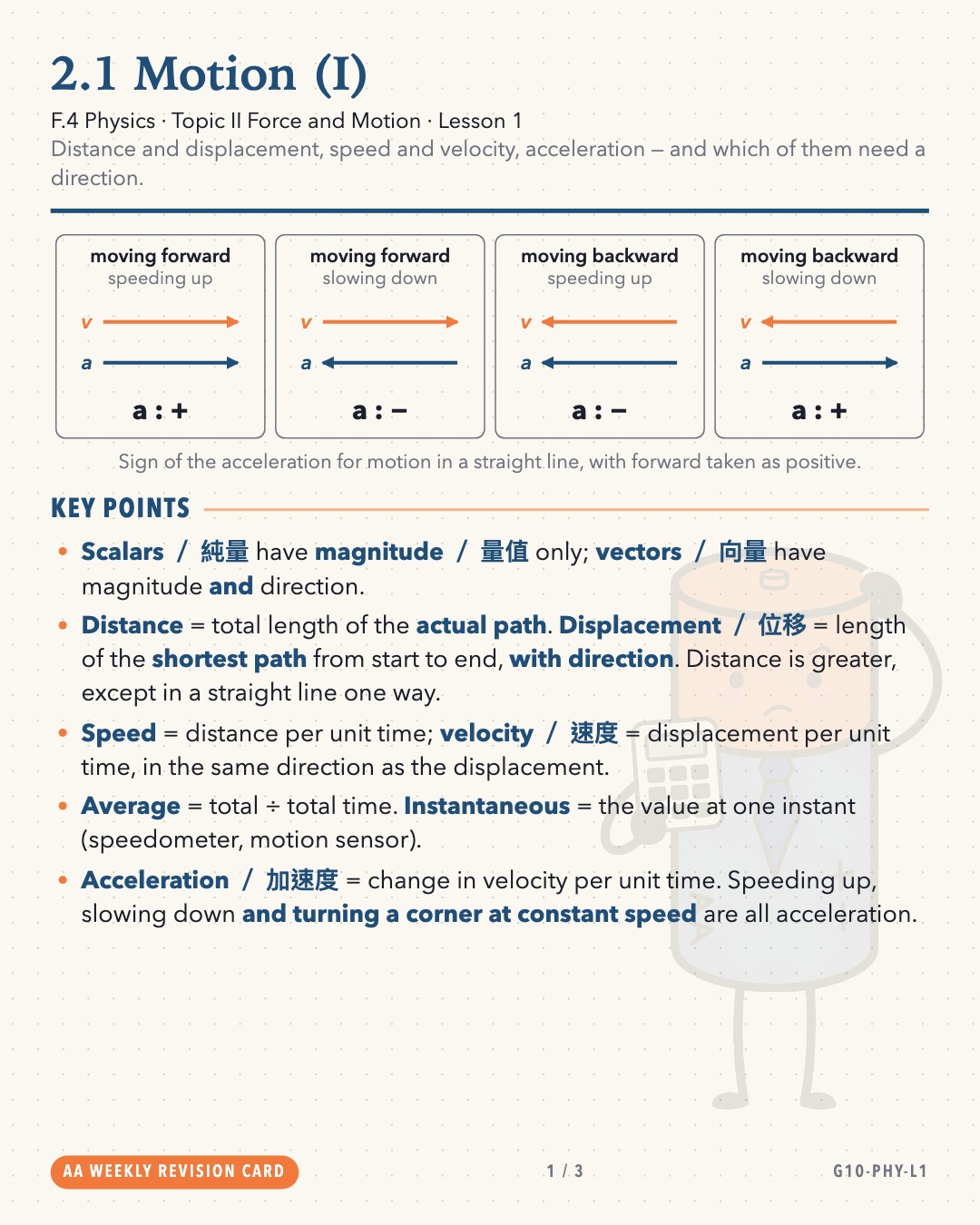
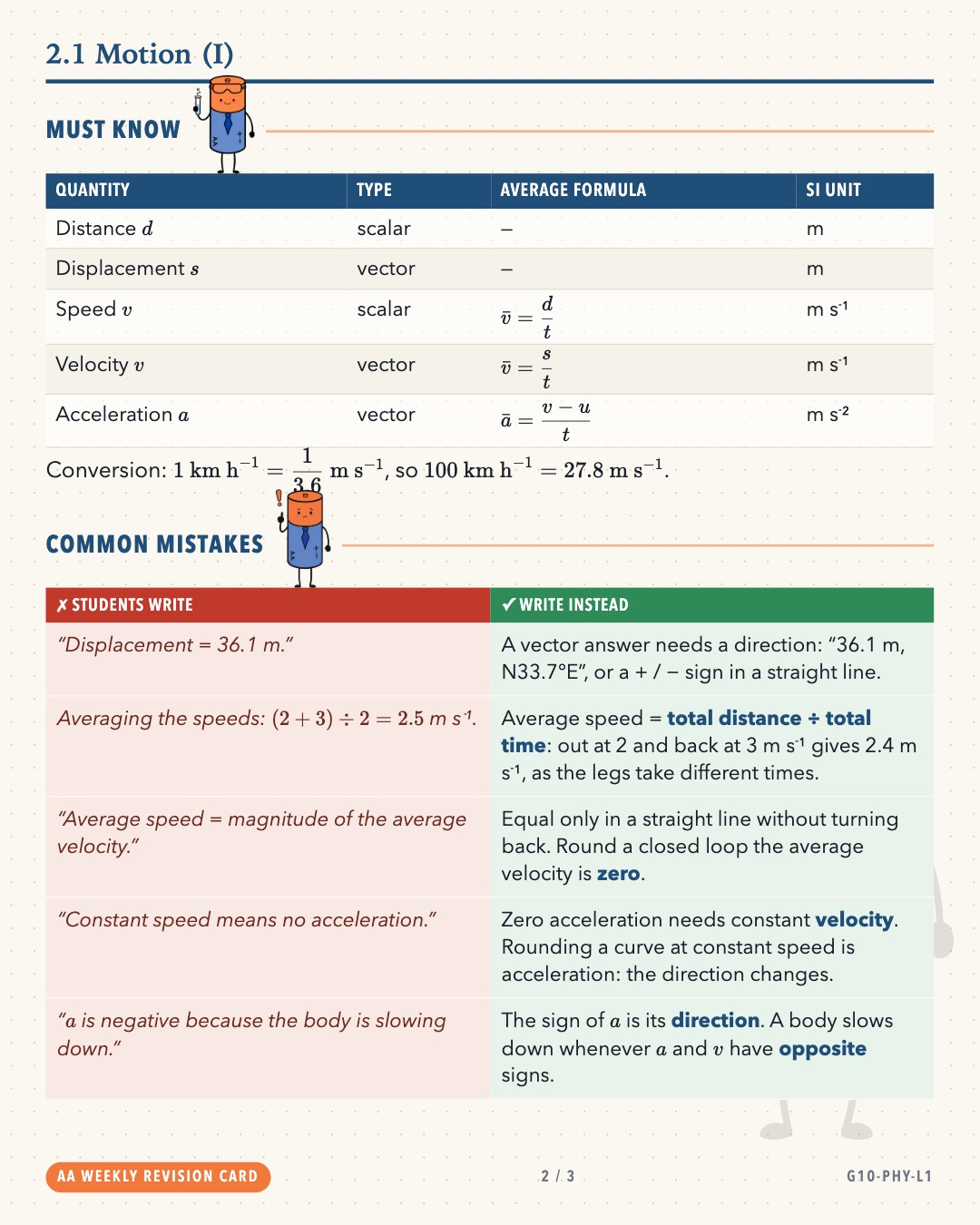
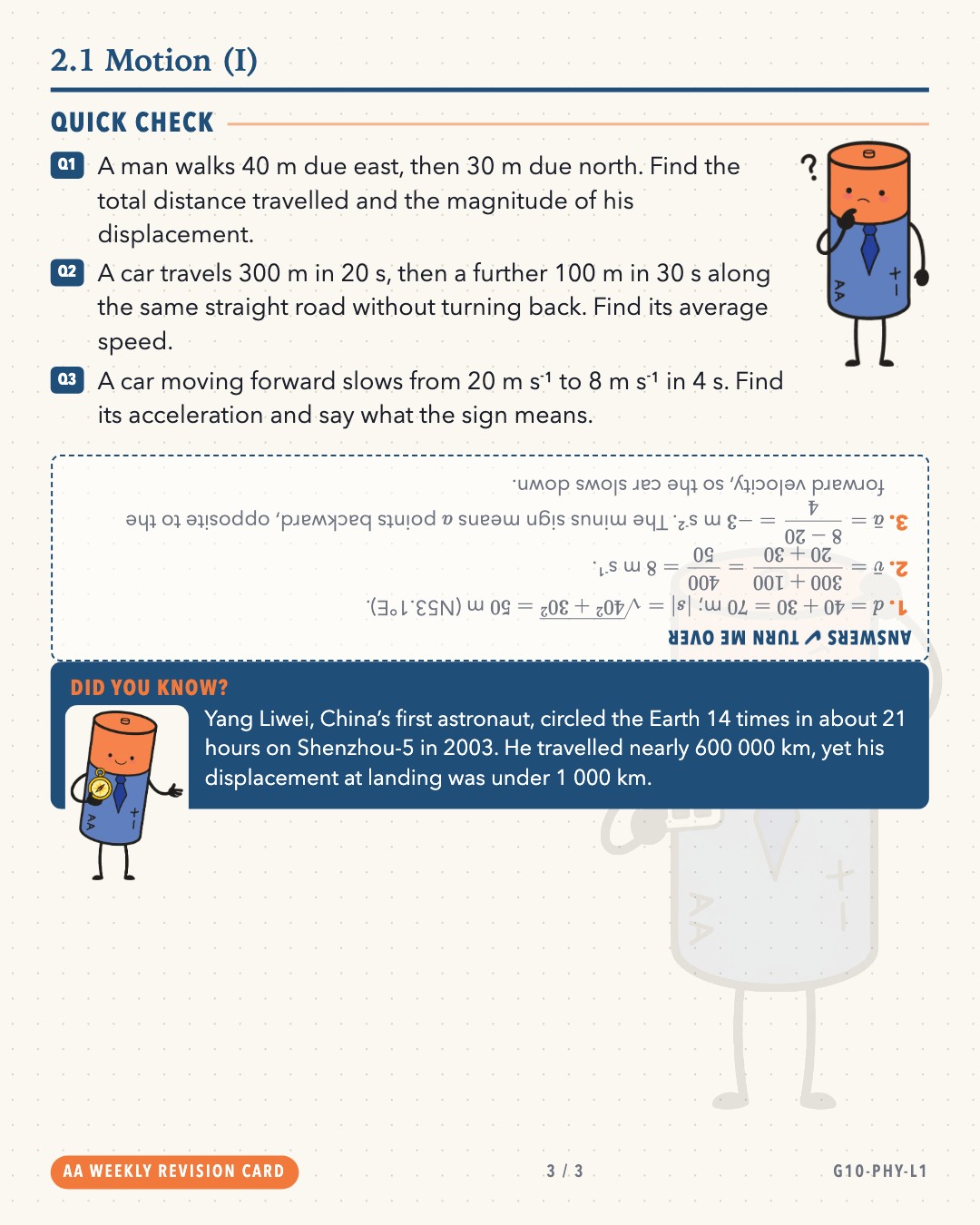
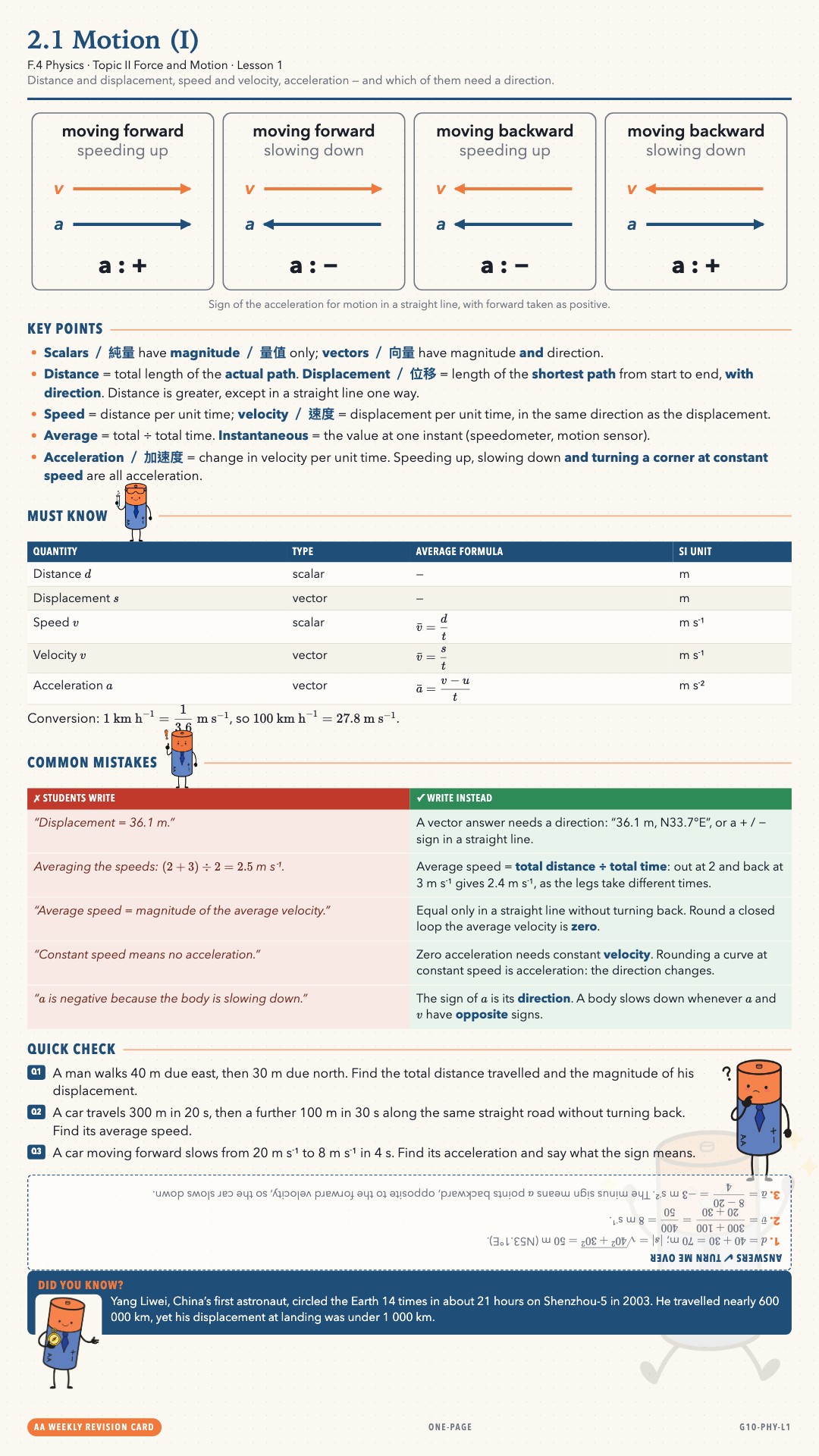
Distance and displacement, speed and velocity, acceleration — and which of them need a direction.
✔ fact-checked · 2 added mistakes tagged [likely] · 1.2 MB JPG · card.md ·
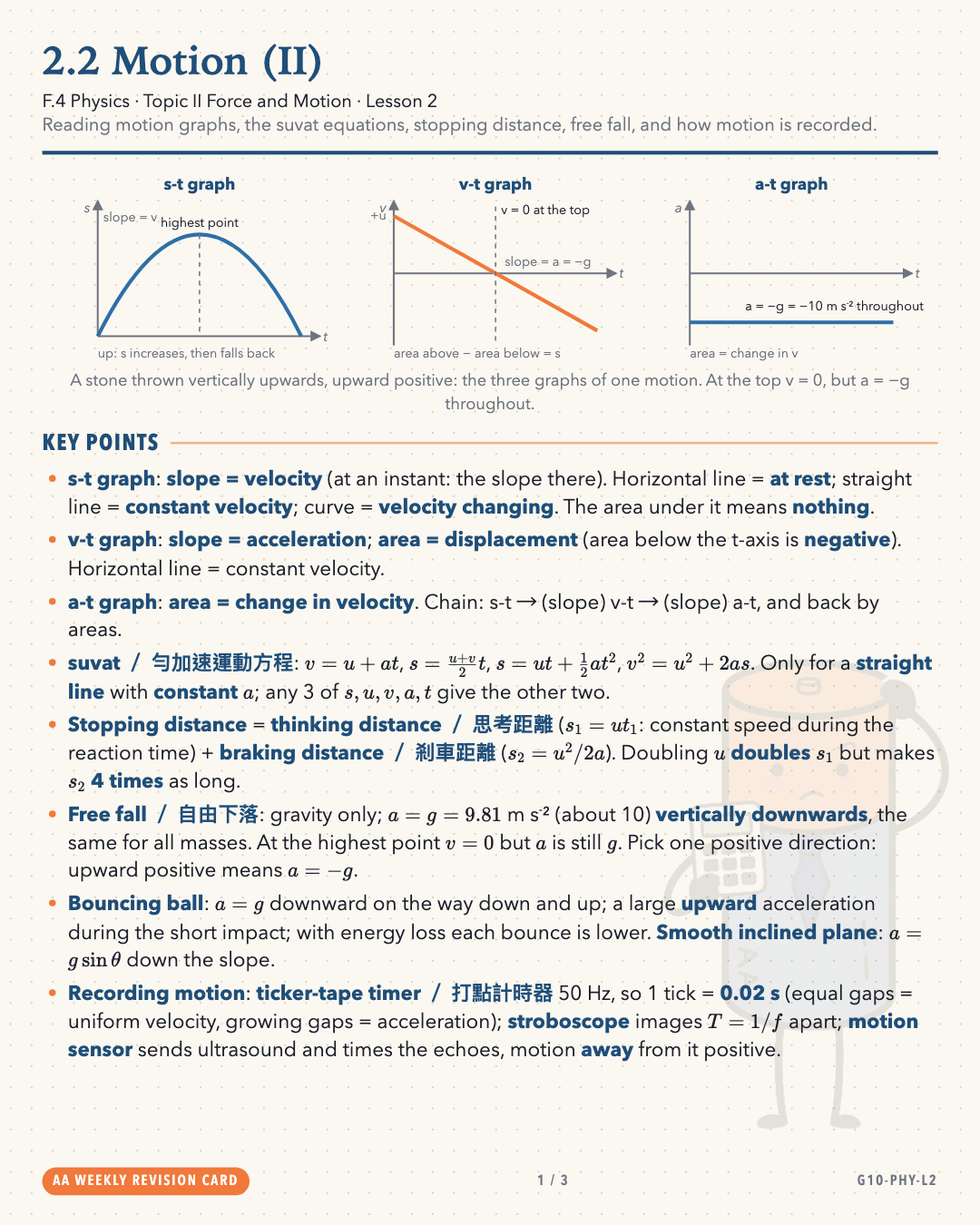
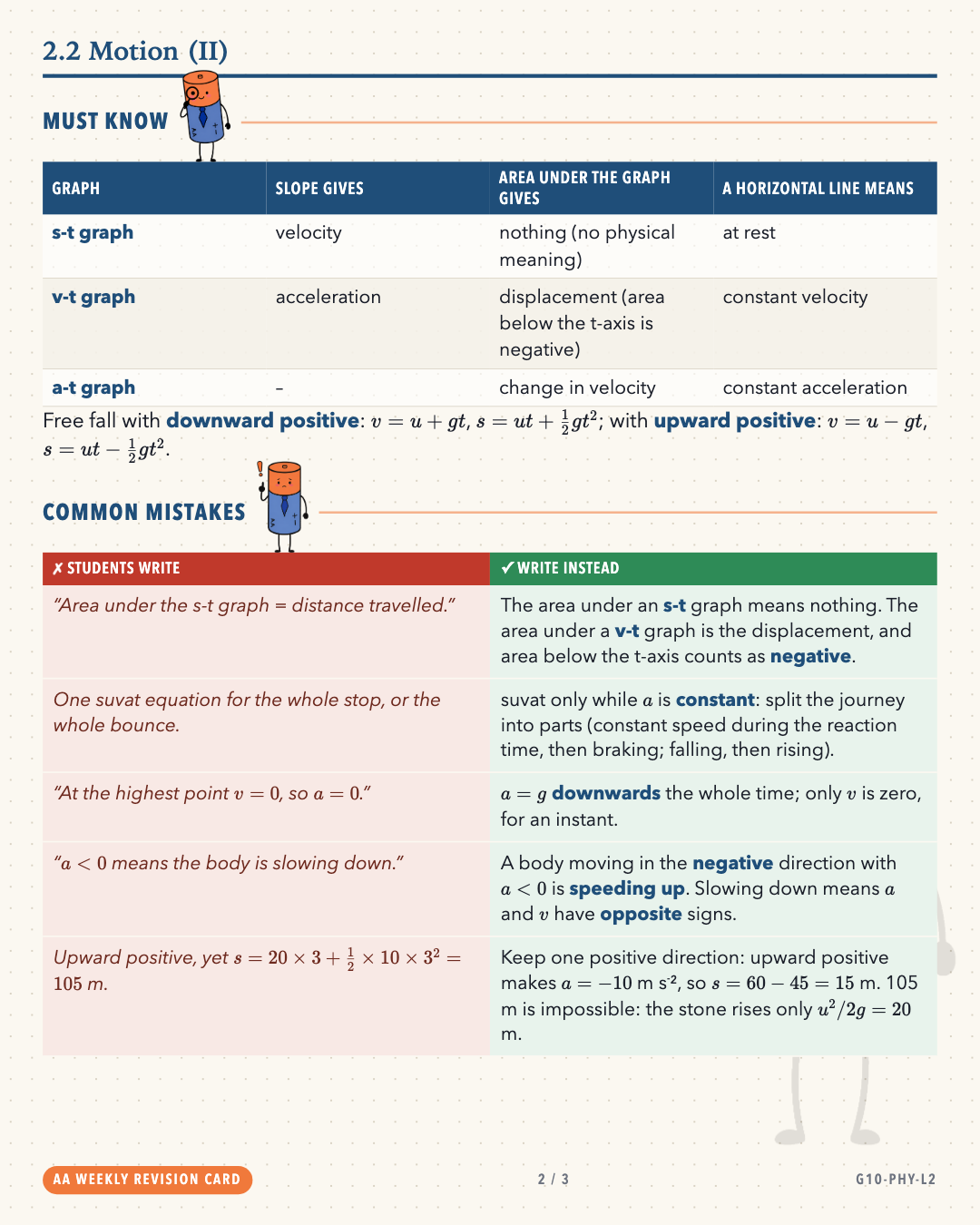
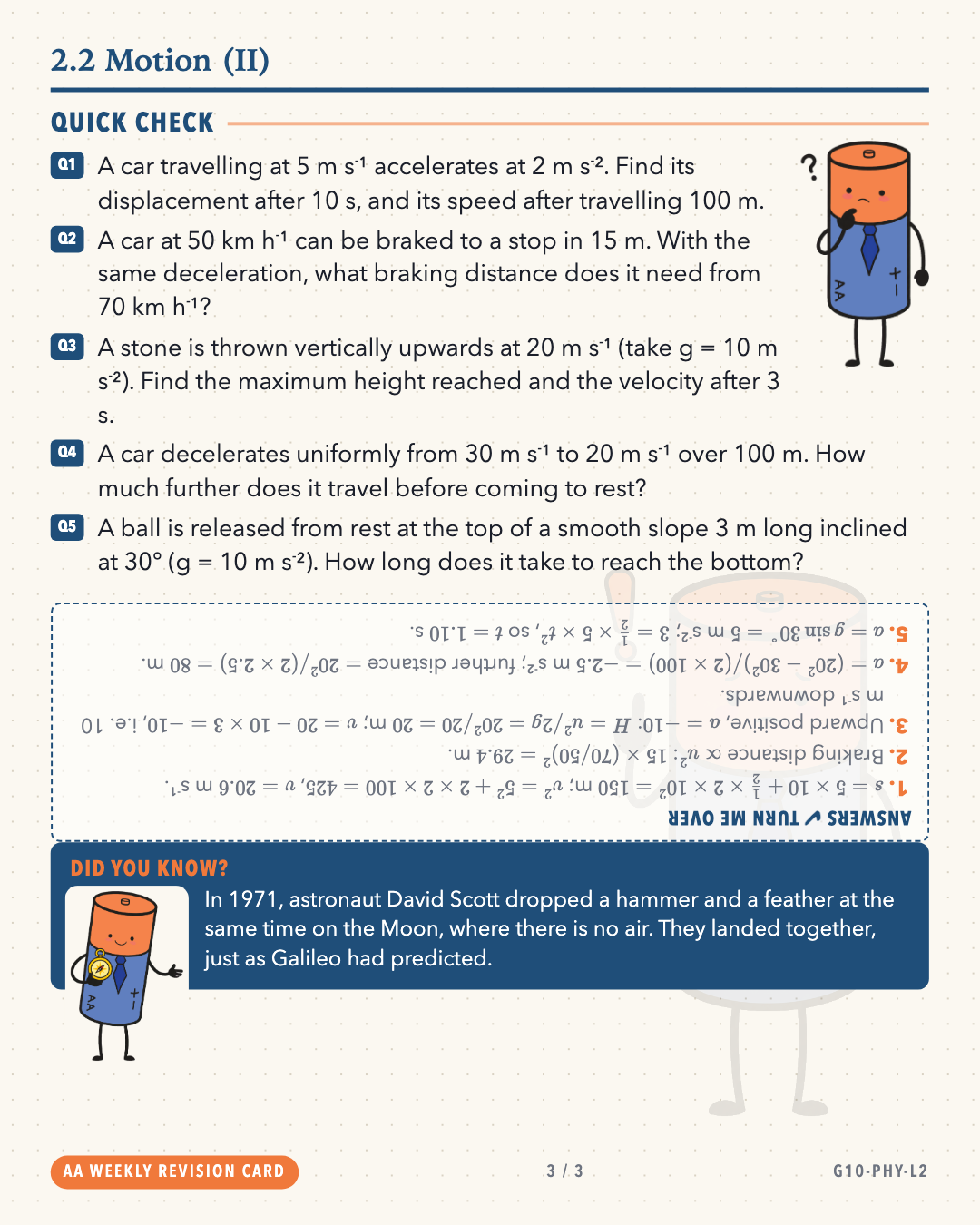
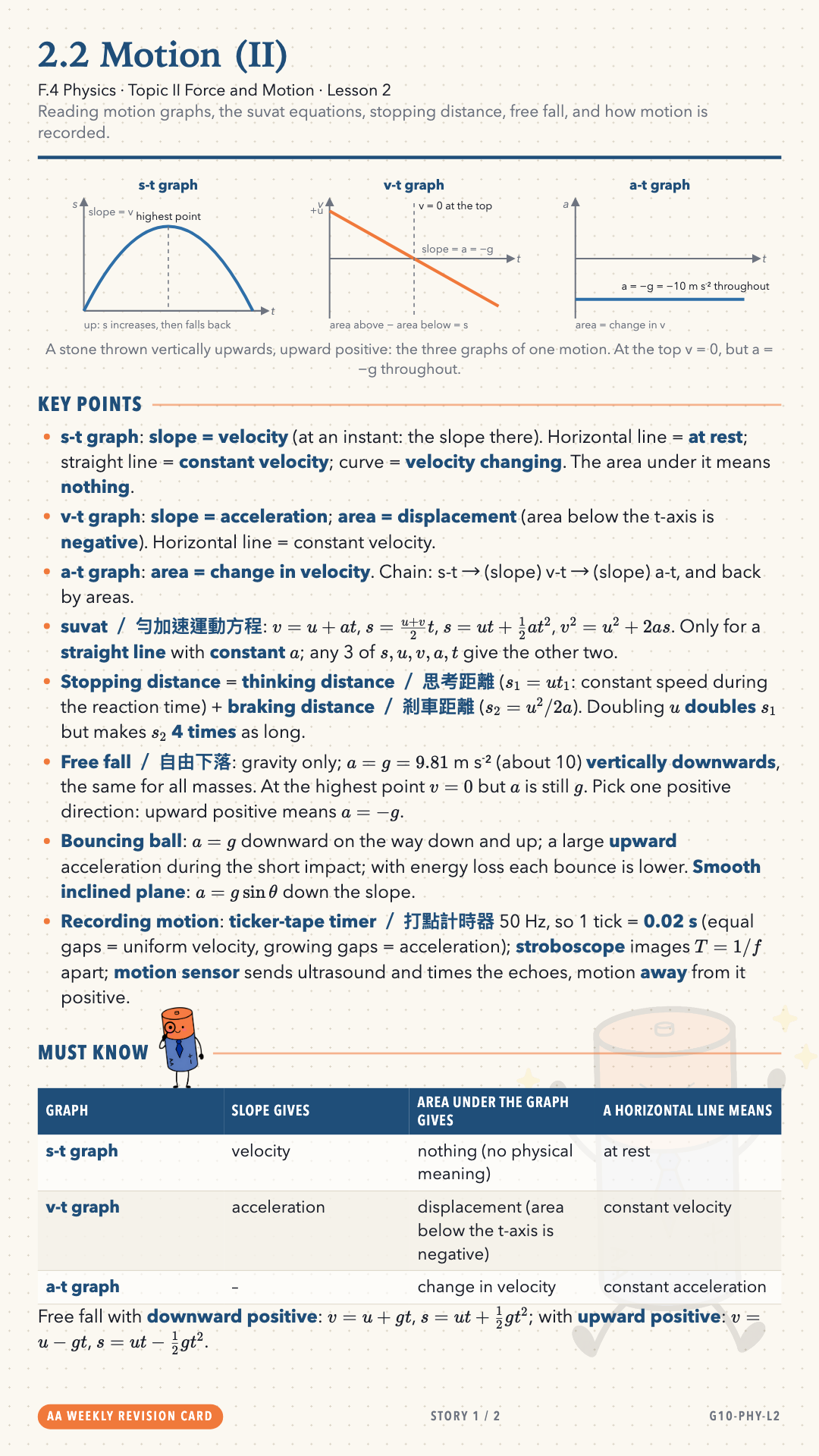
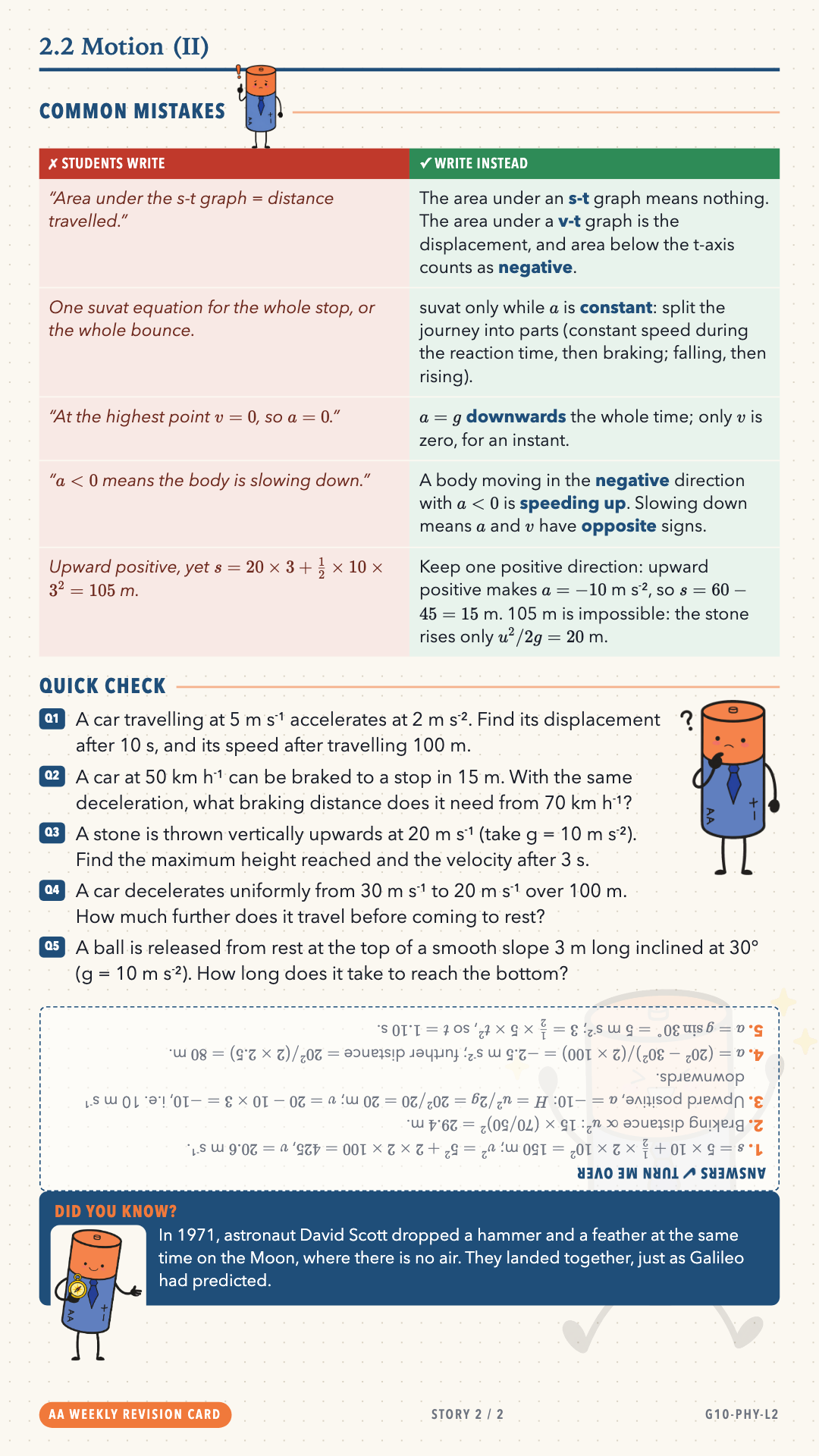
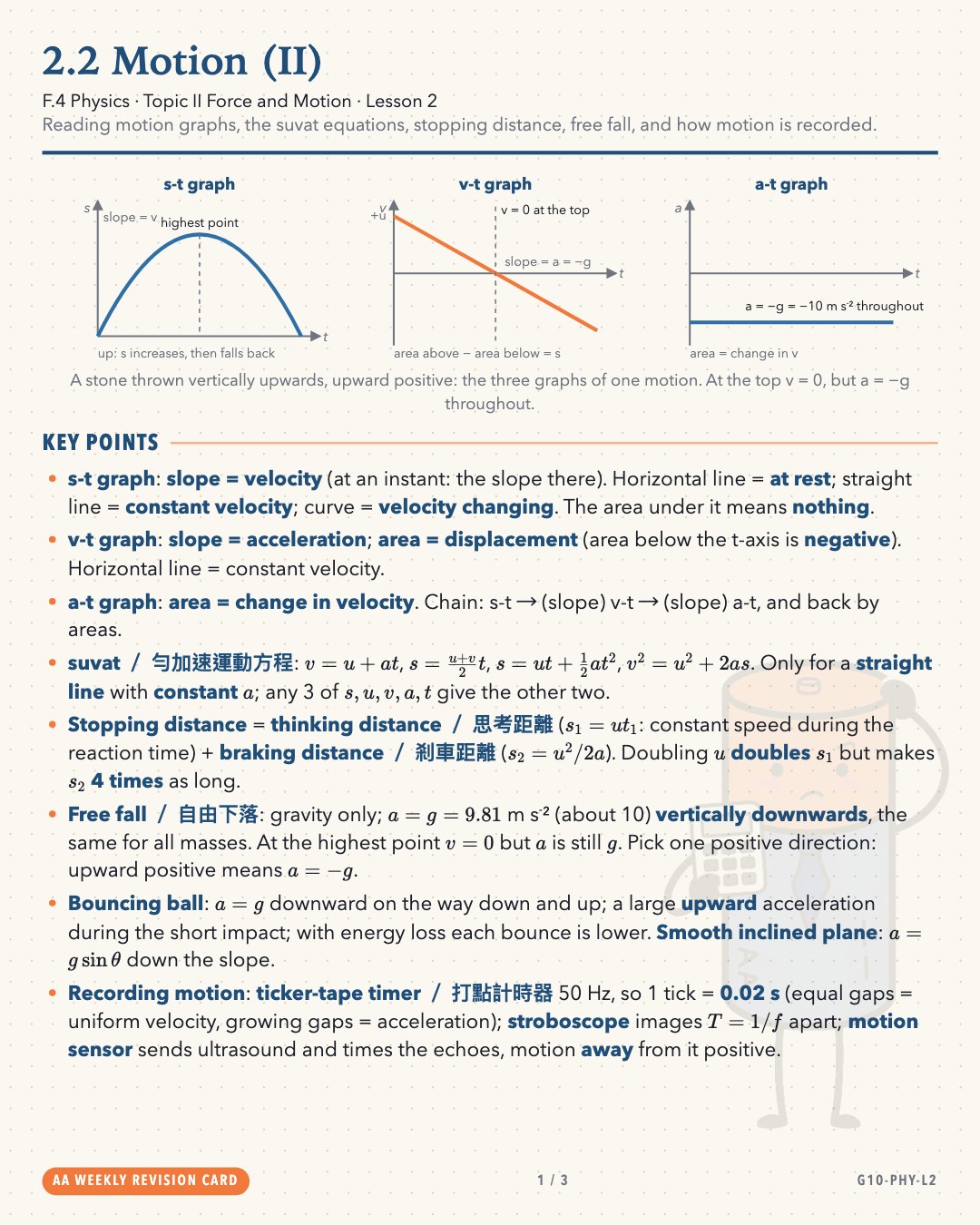
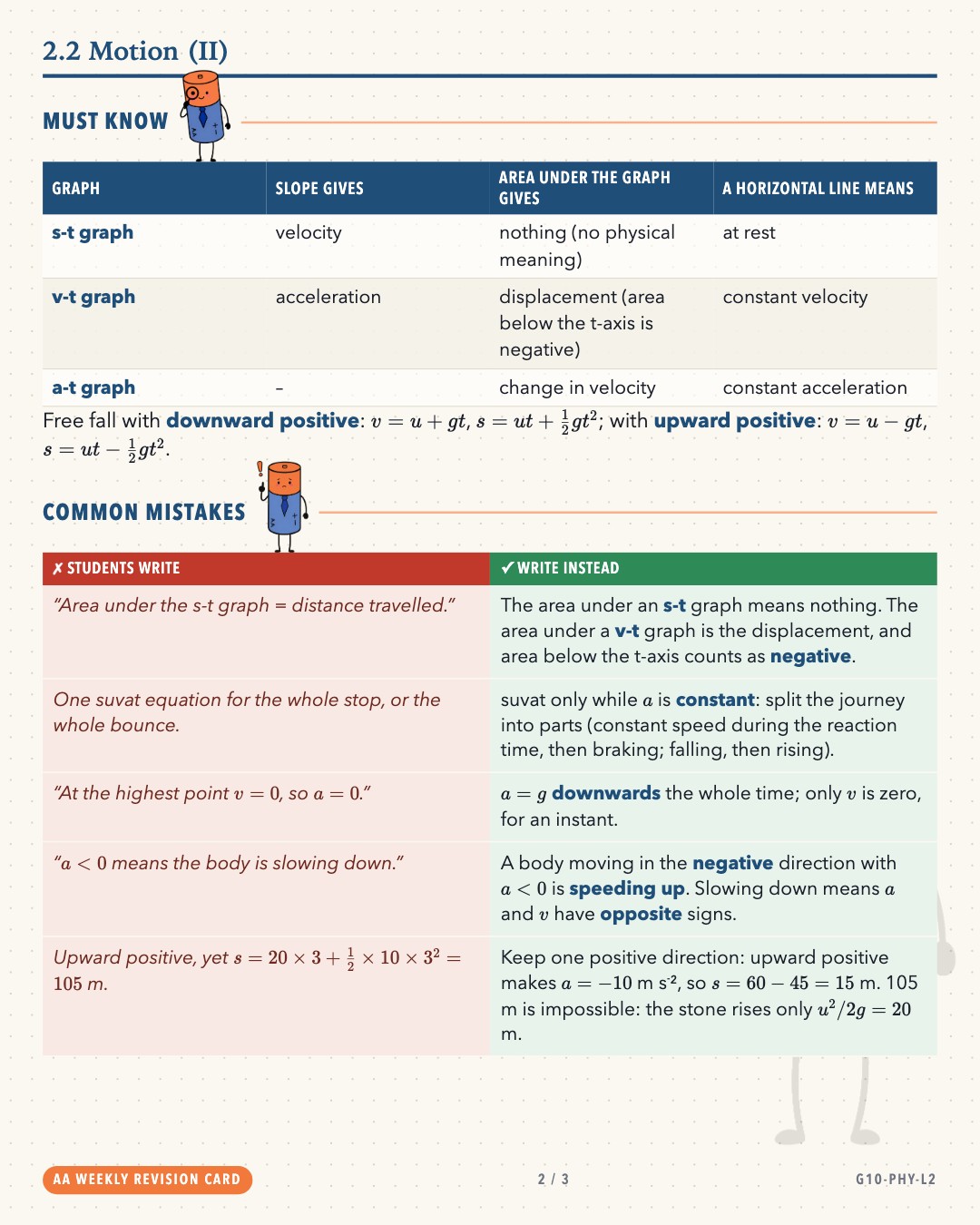
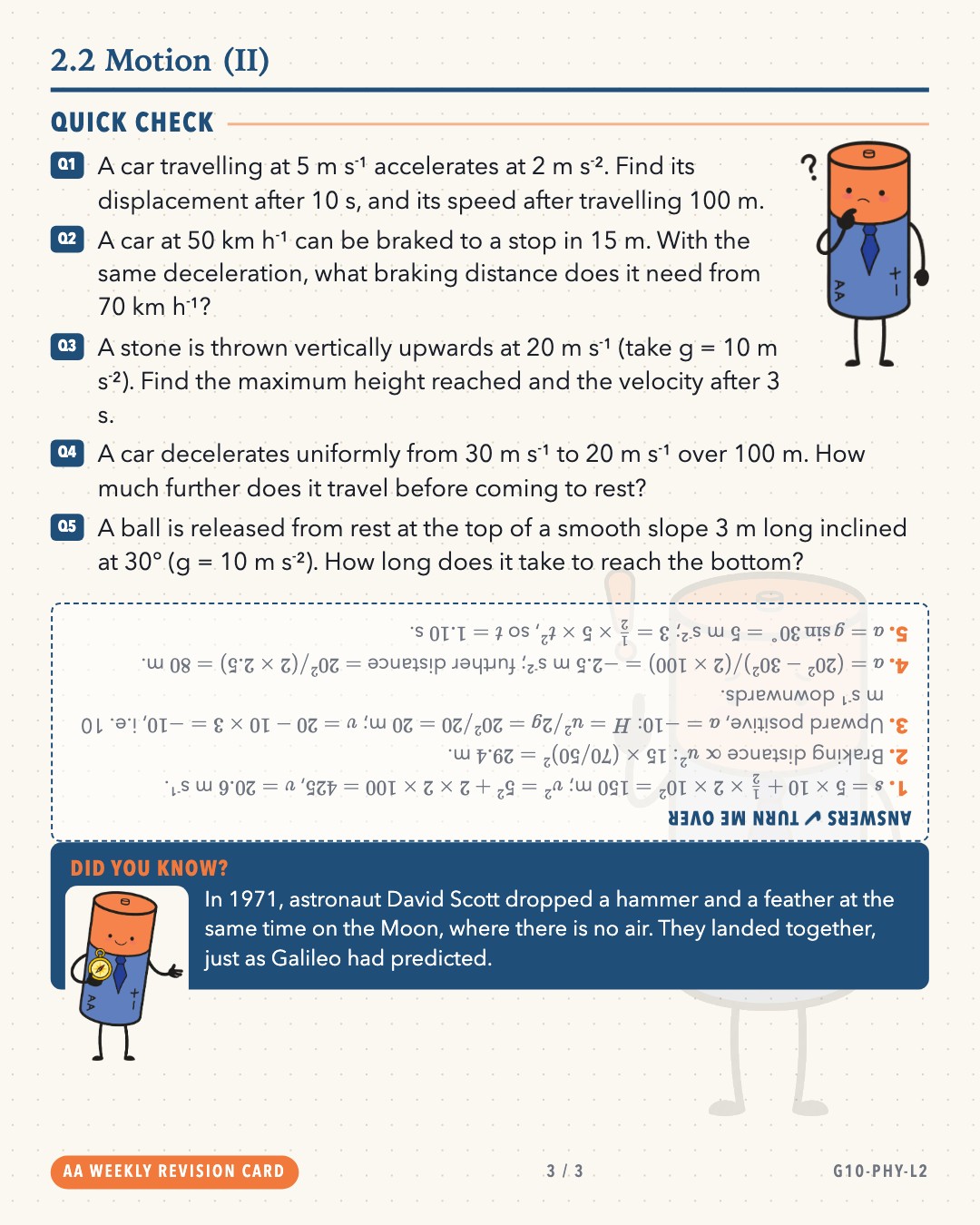
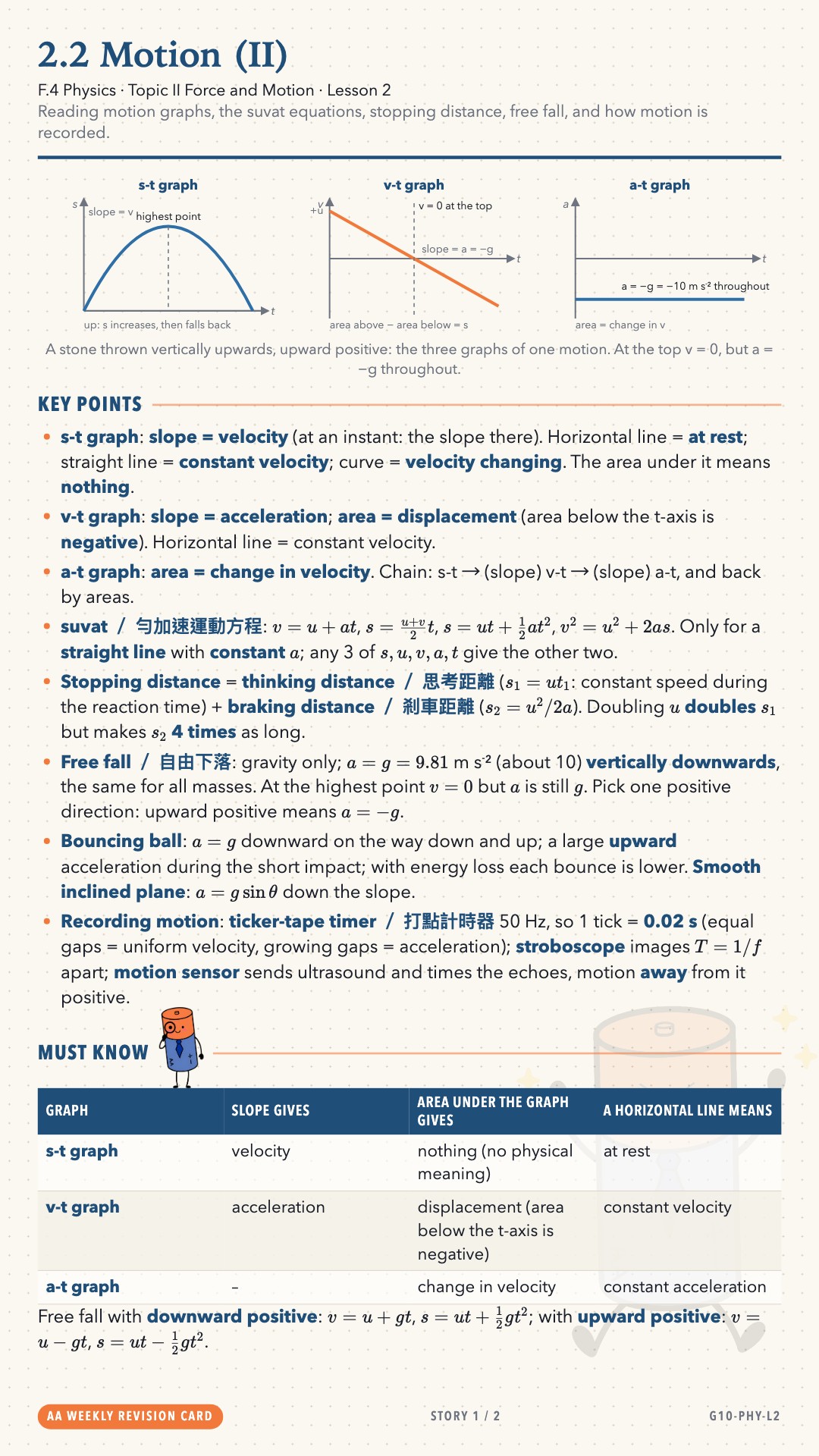
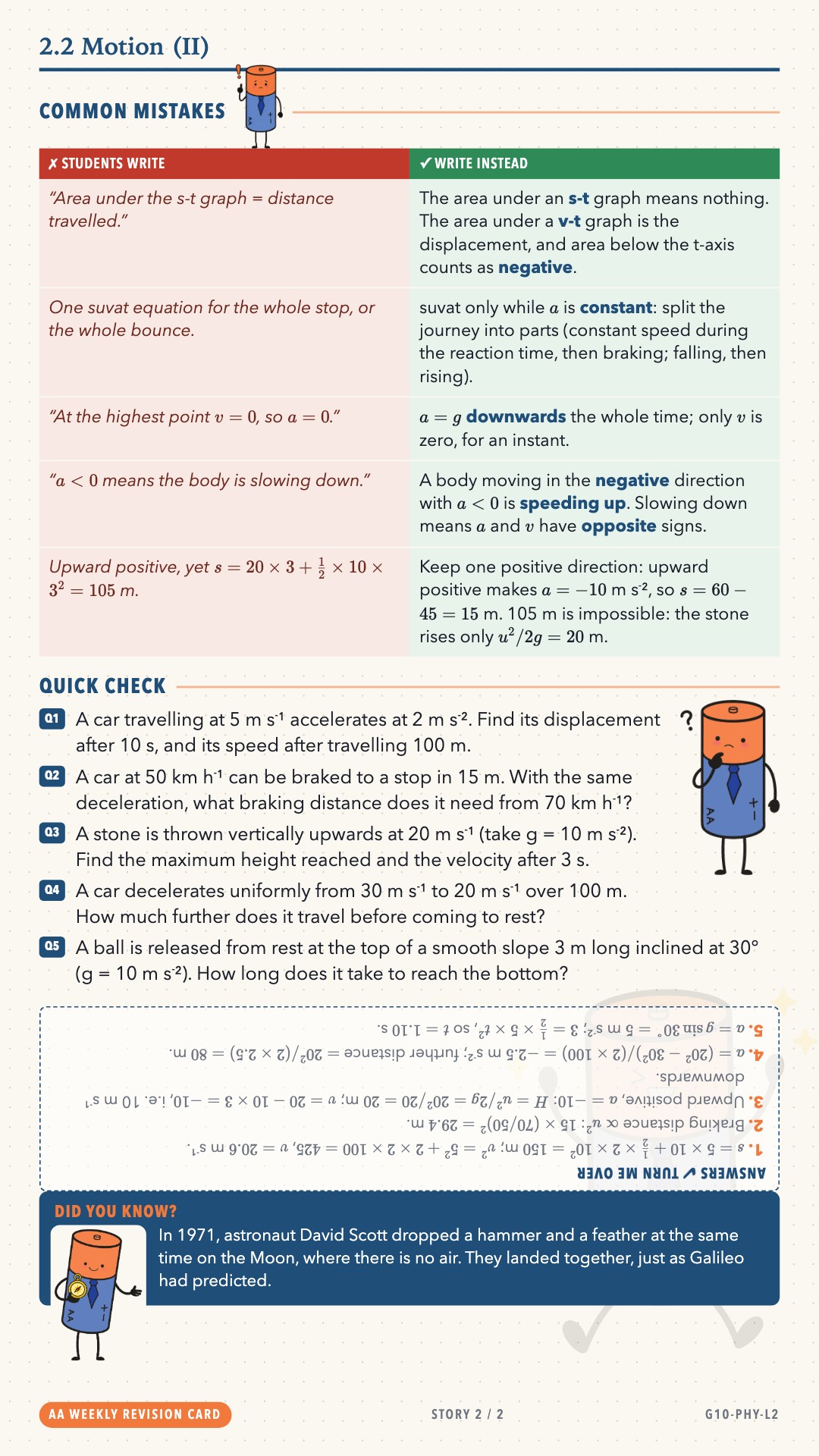
Reading motion graphs, the suvat equations, stopping distance, free fall, and how motion is recorded.
✔ fact-checked · 0 added mistakes tagged [likely] · 1.8 MB JPG · card.md ·
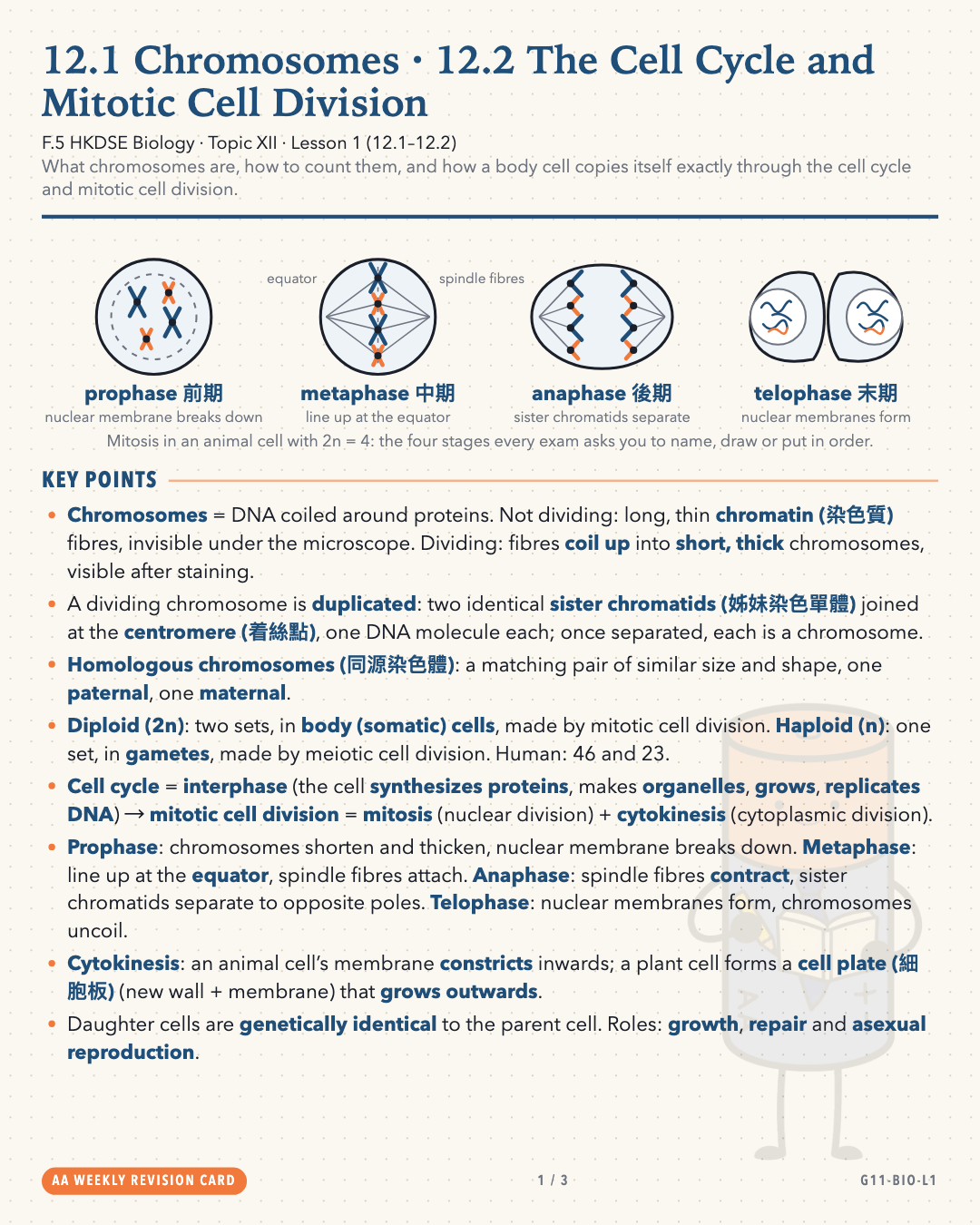
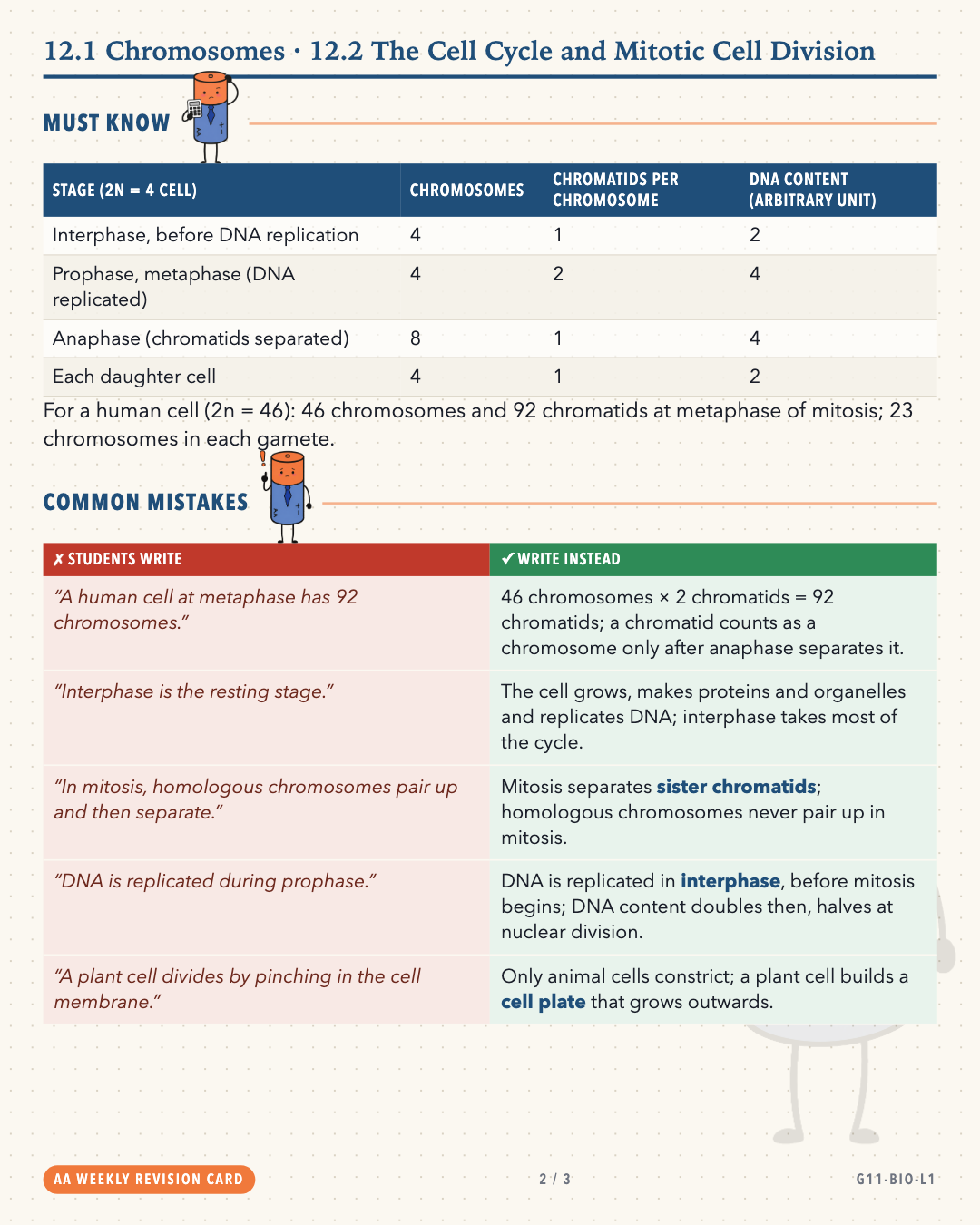
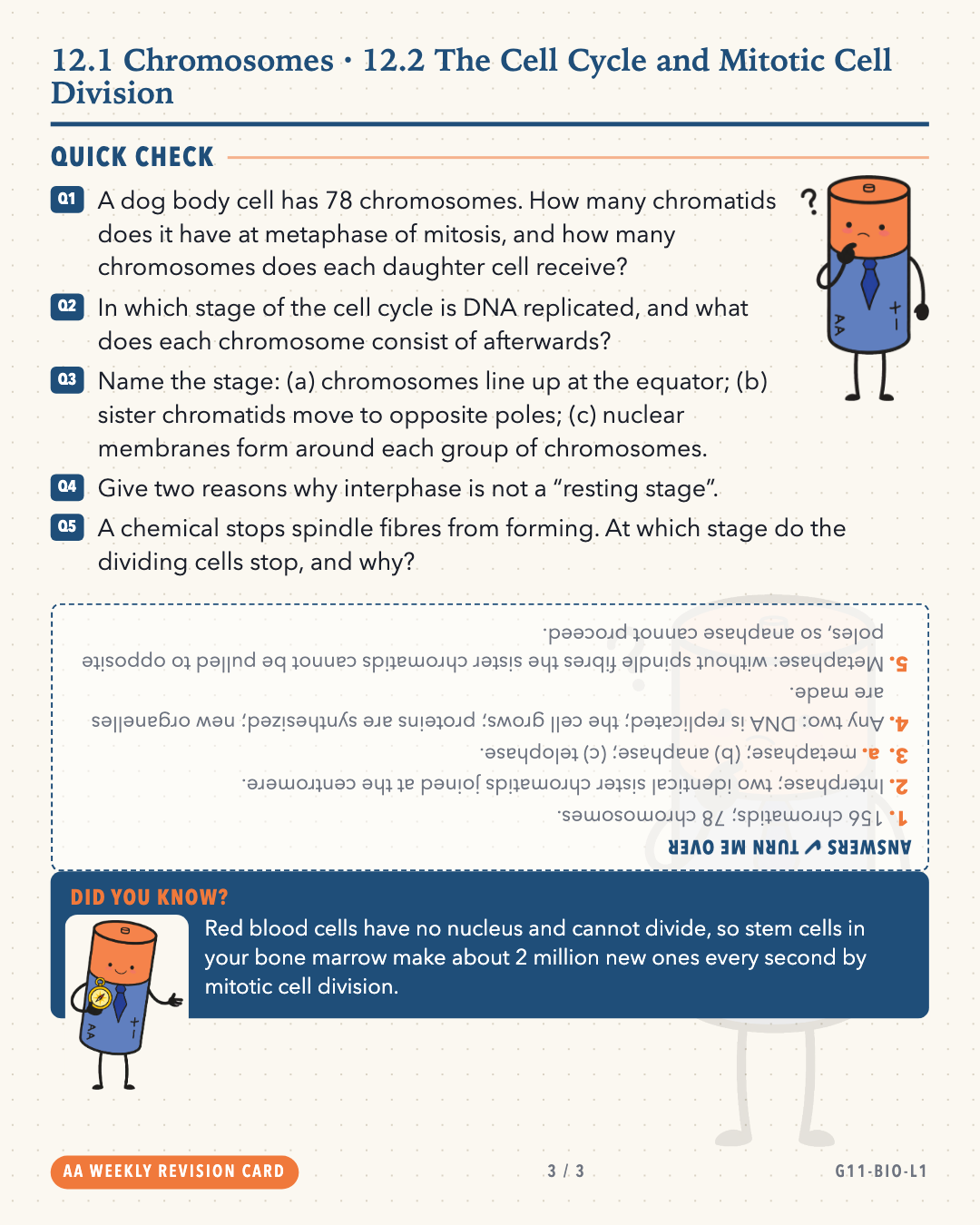
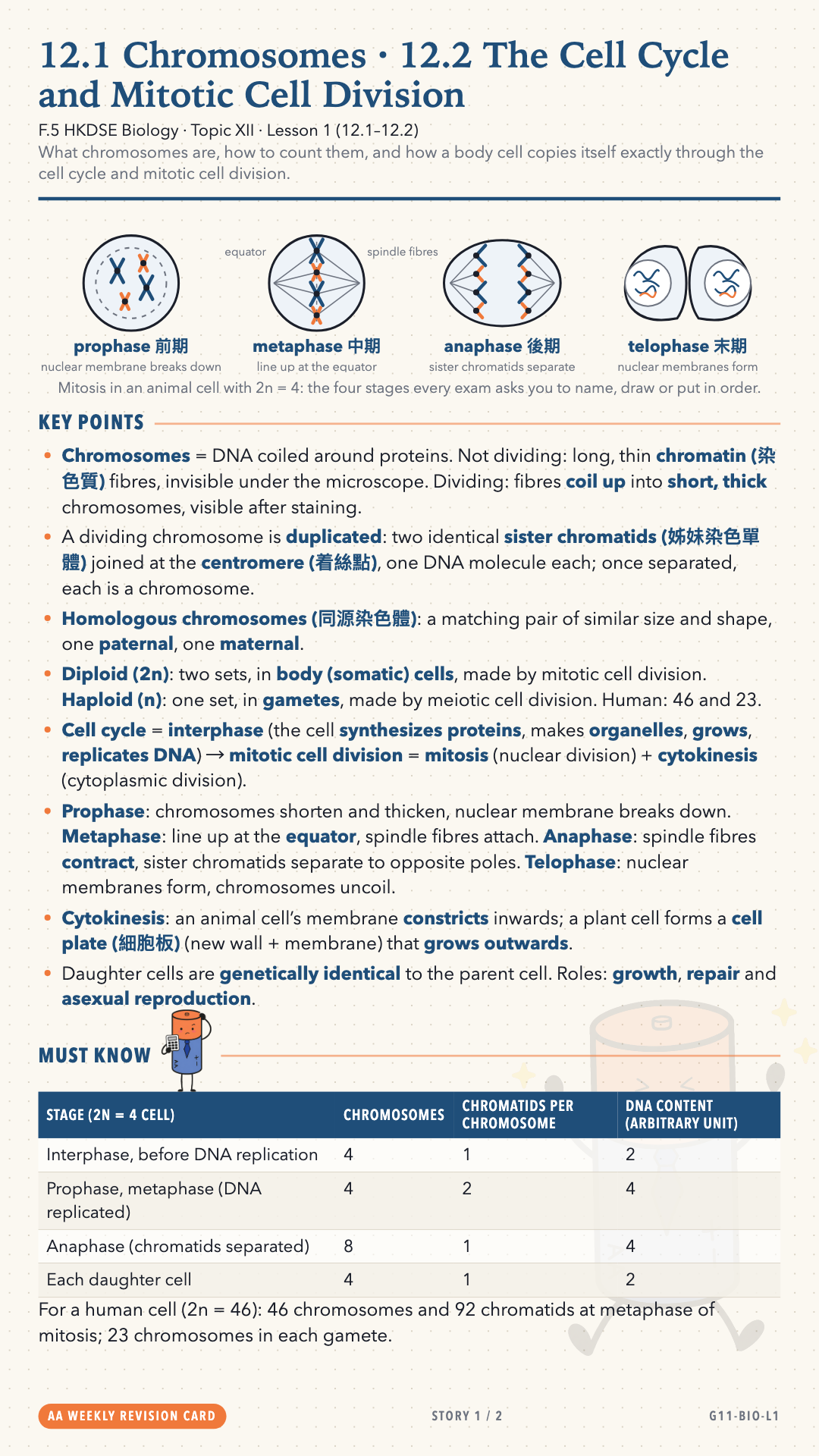
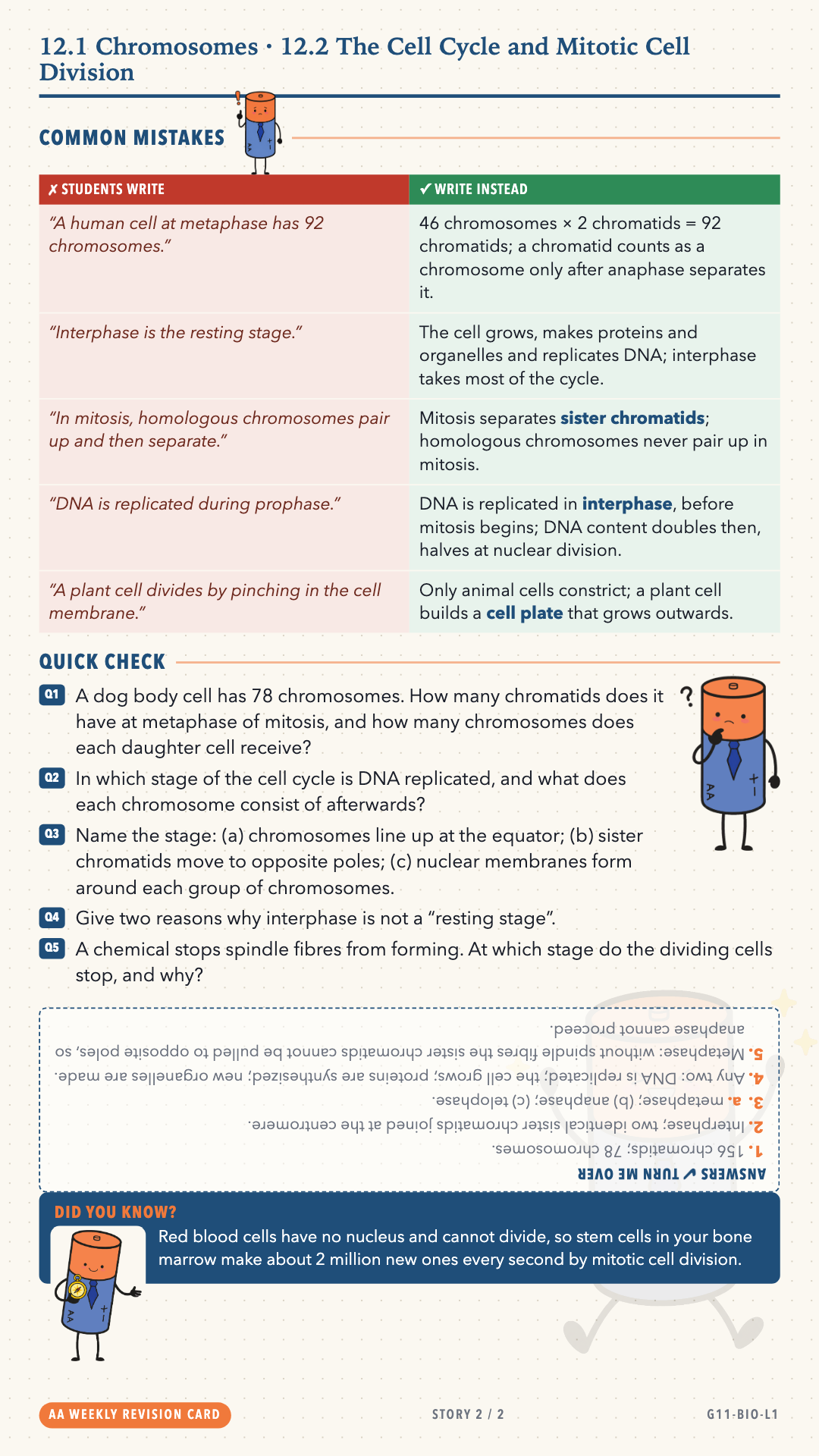
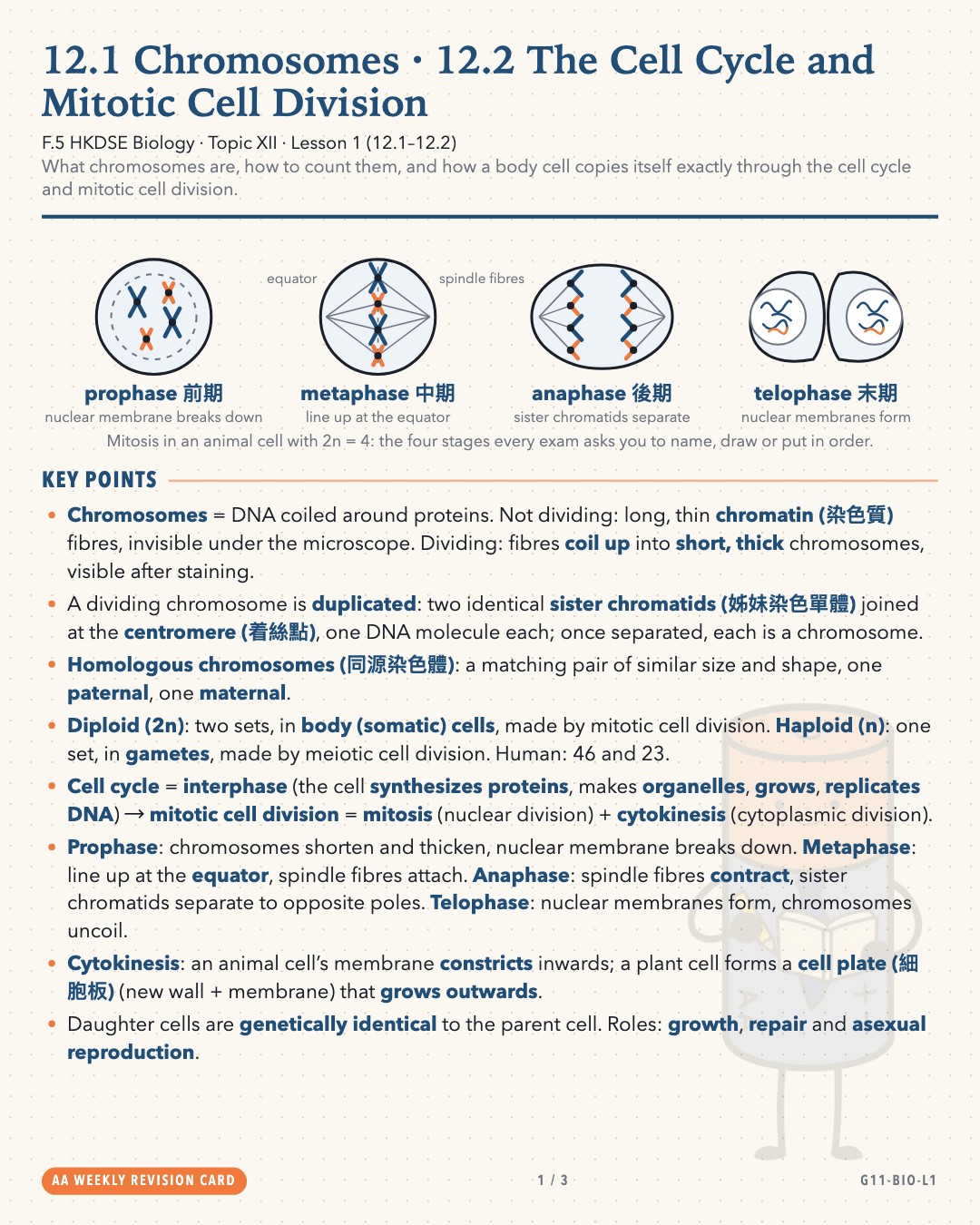
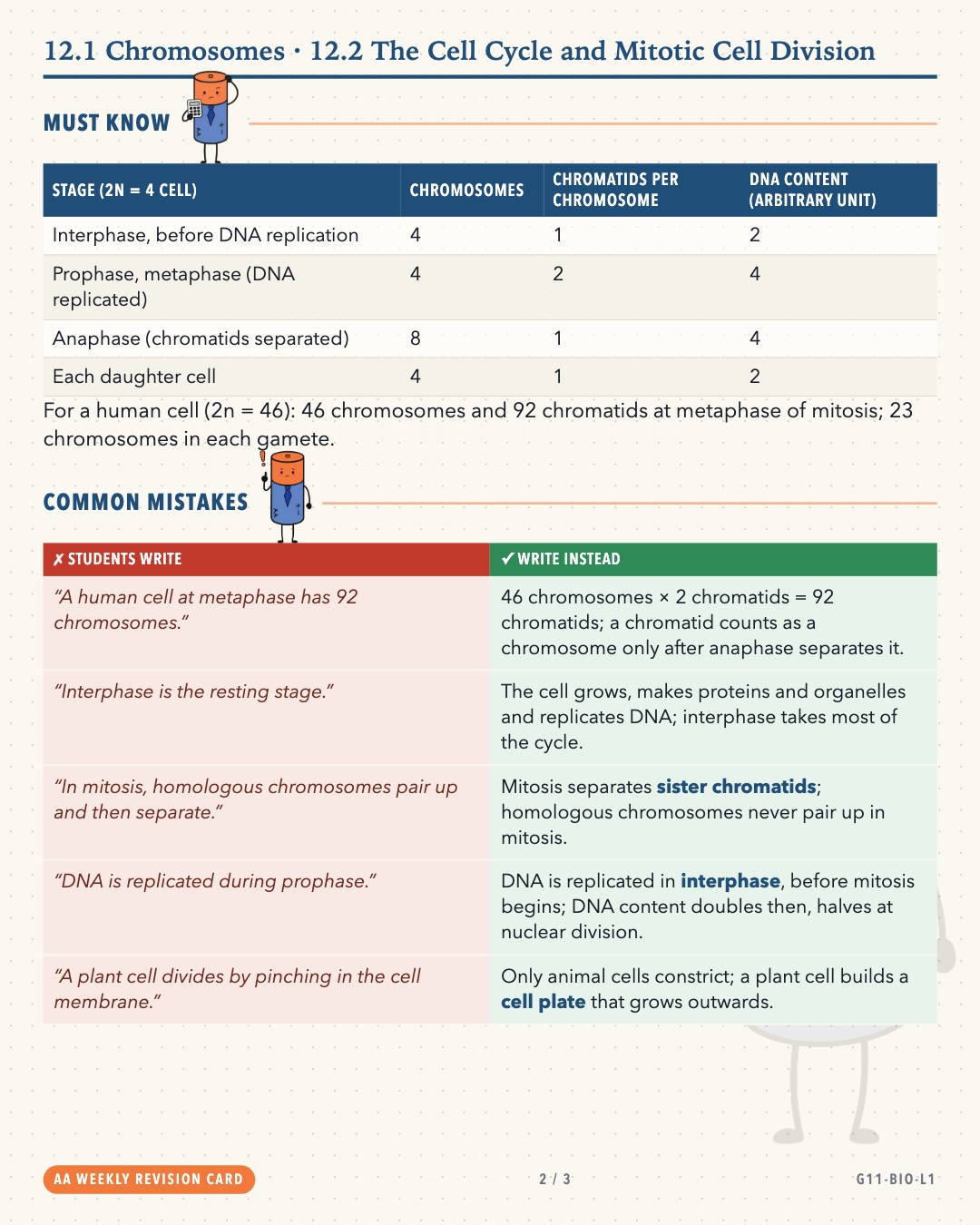
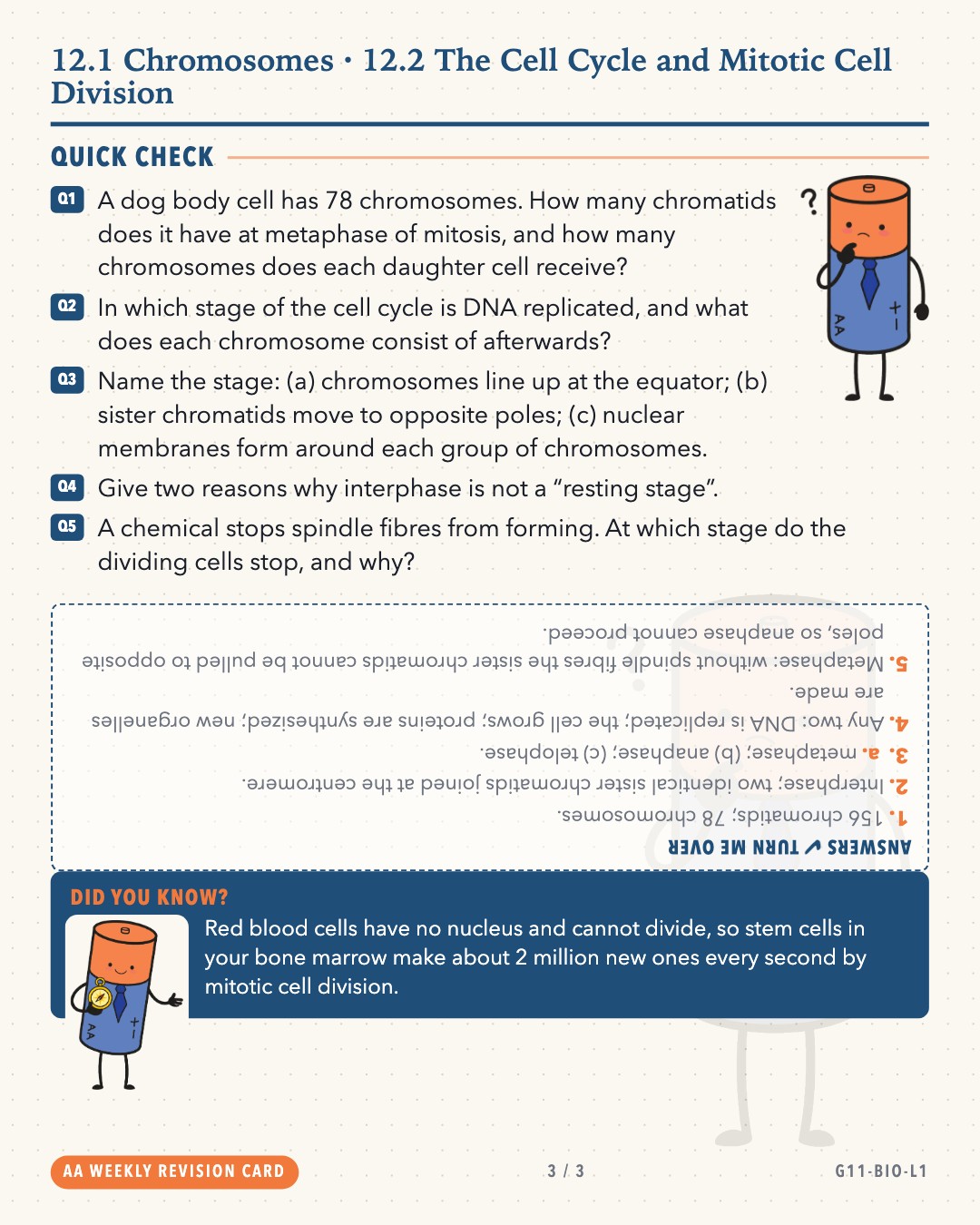
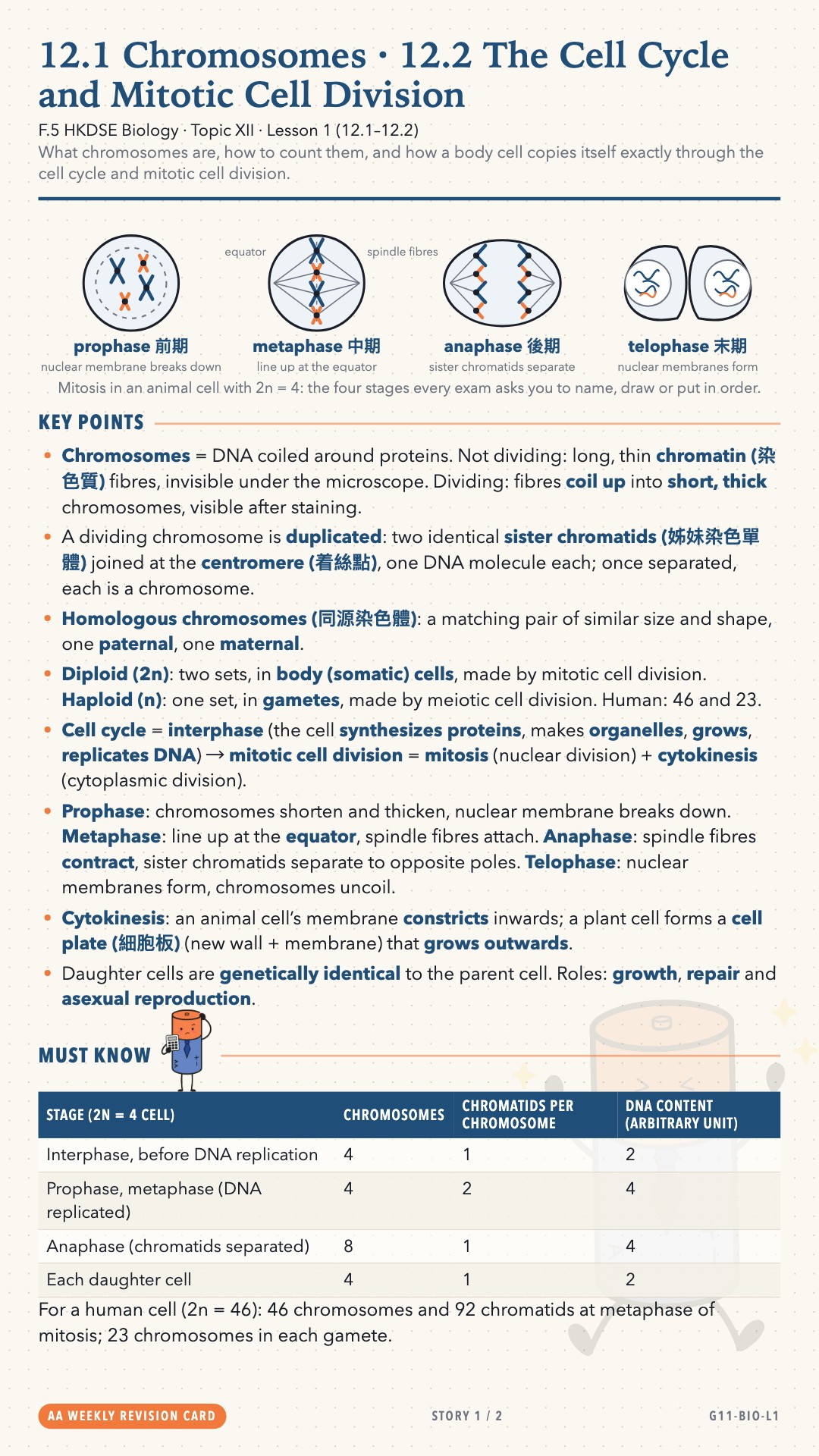
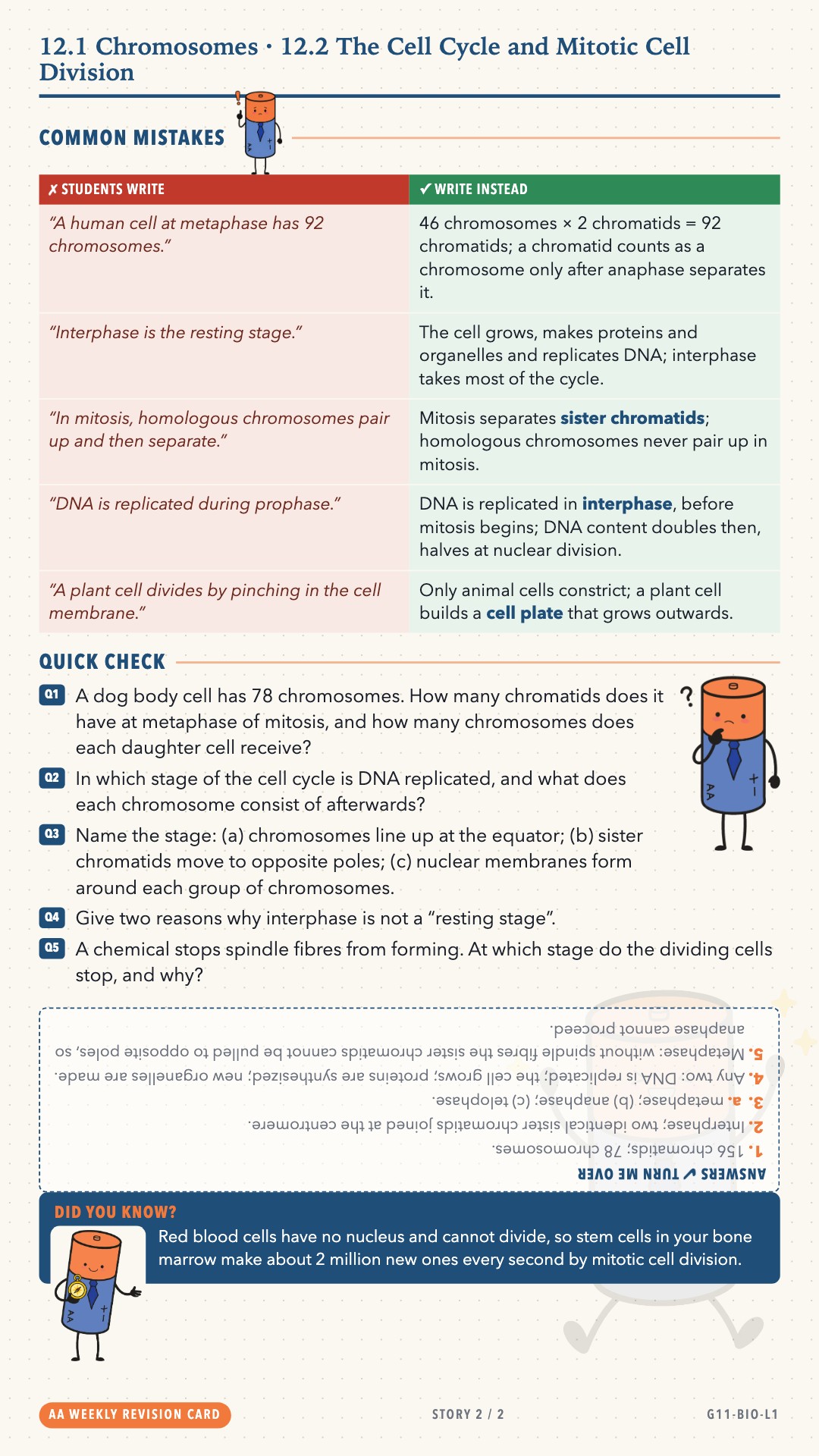
What chromosomes are, how to count them, and how a body cell copies itself exactly through the cell cycle and mitotic cell division.
✔ fact-checked · 2 added mistakes tagged [likely] · 1.9 MB JPG · card.md ·
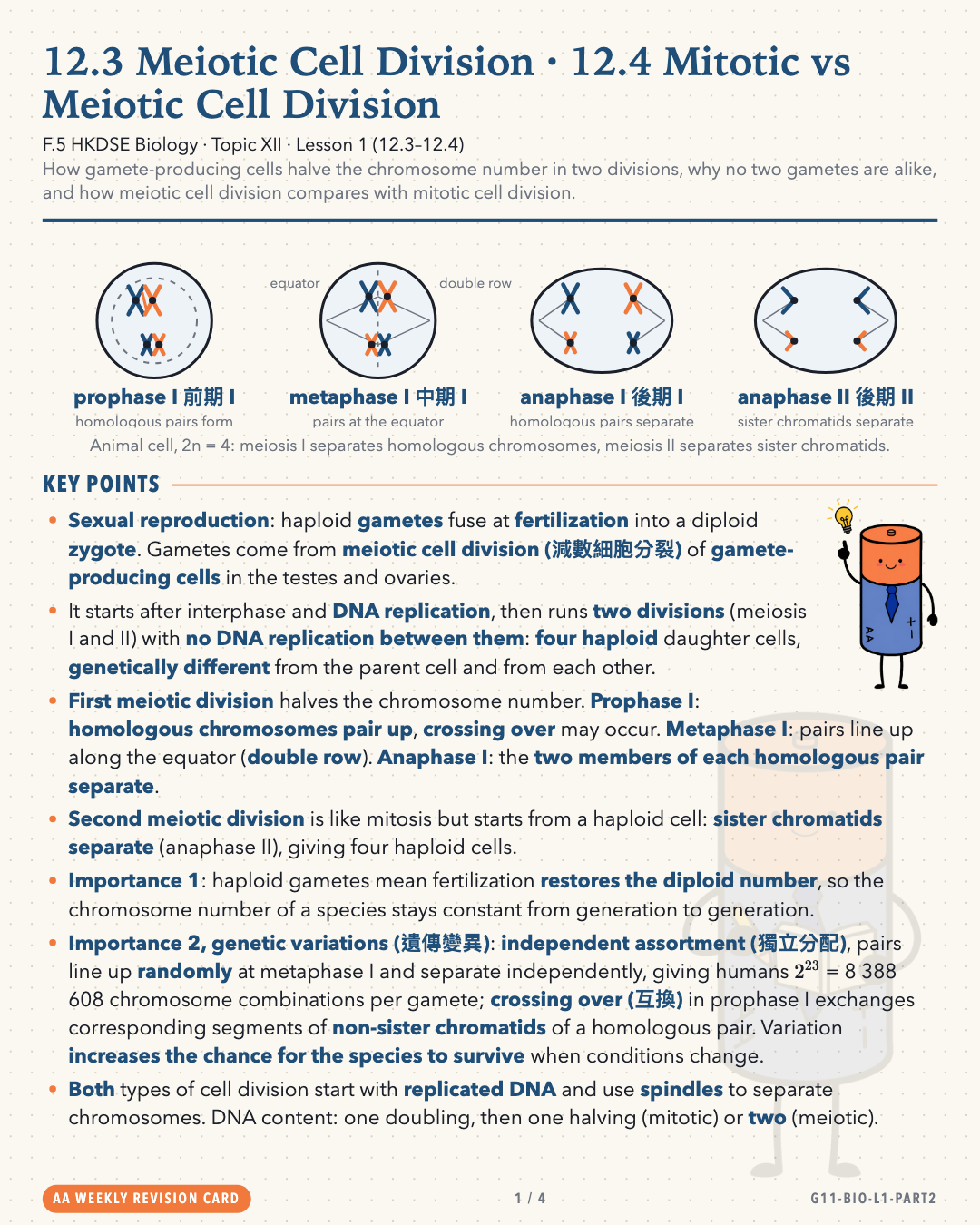
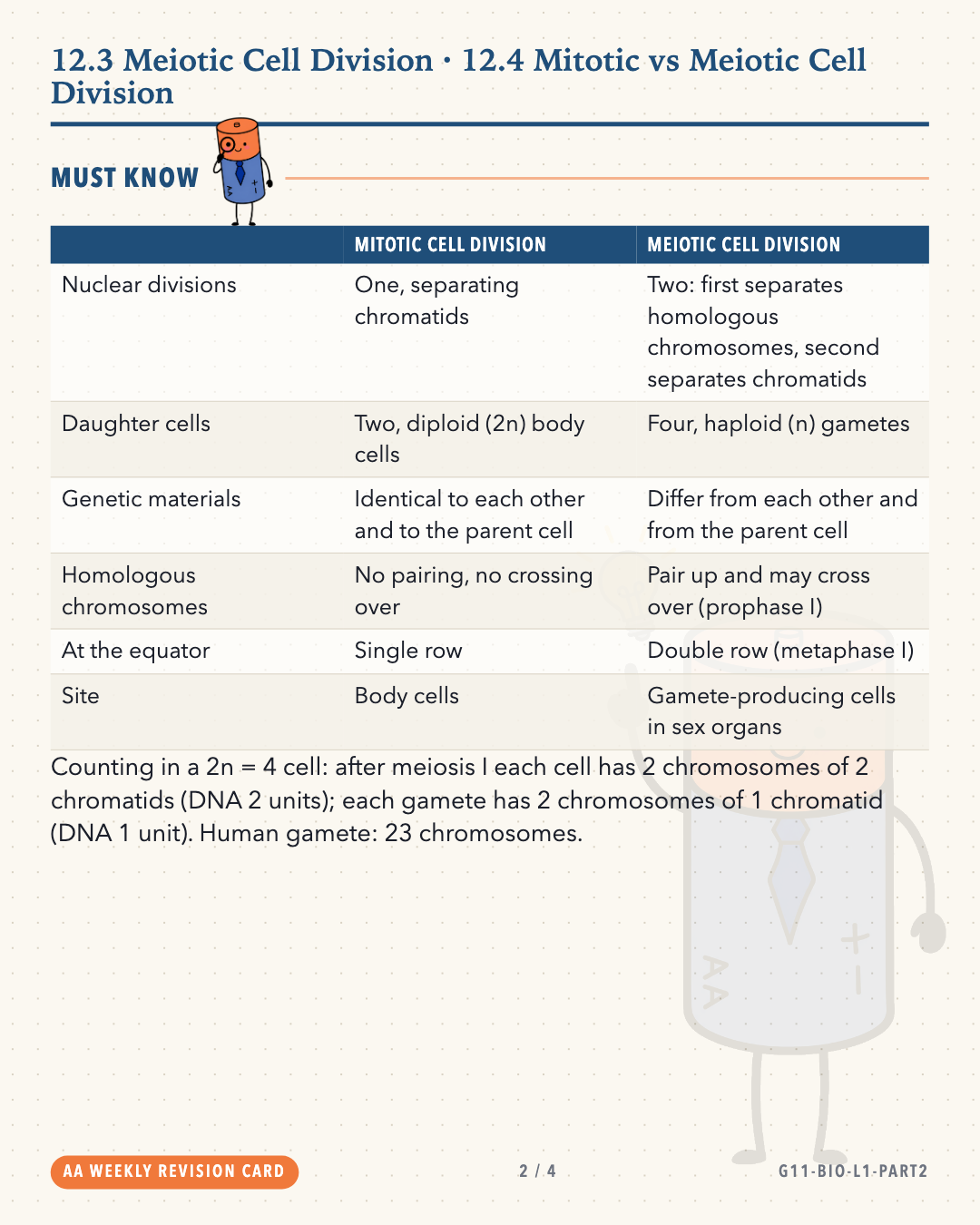
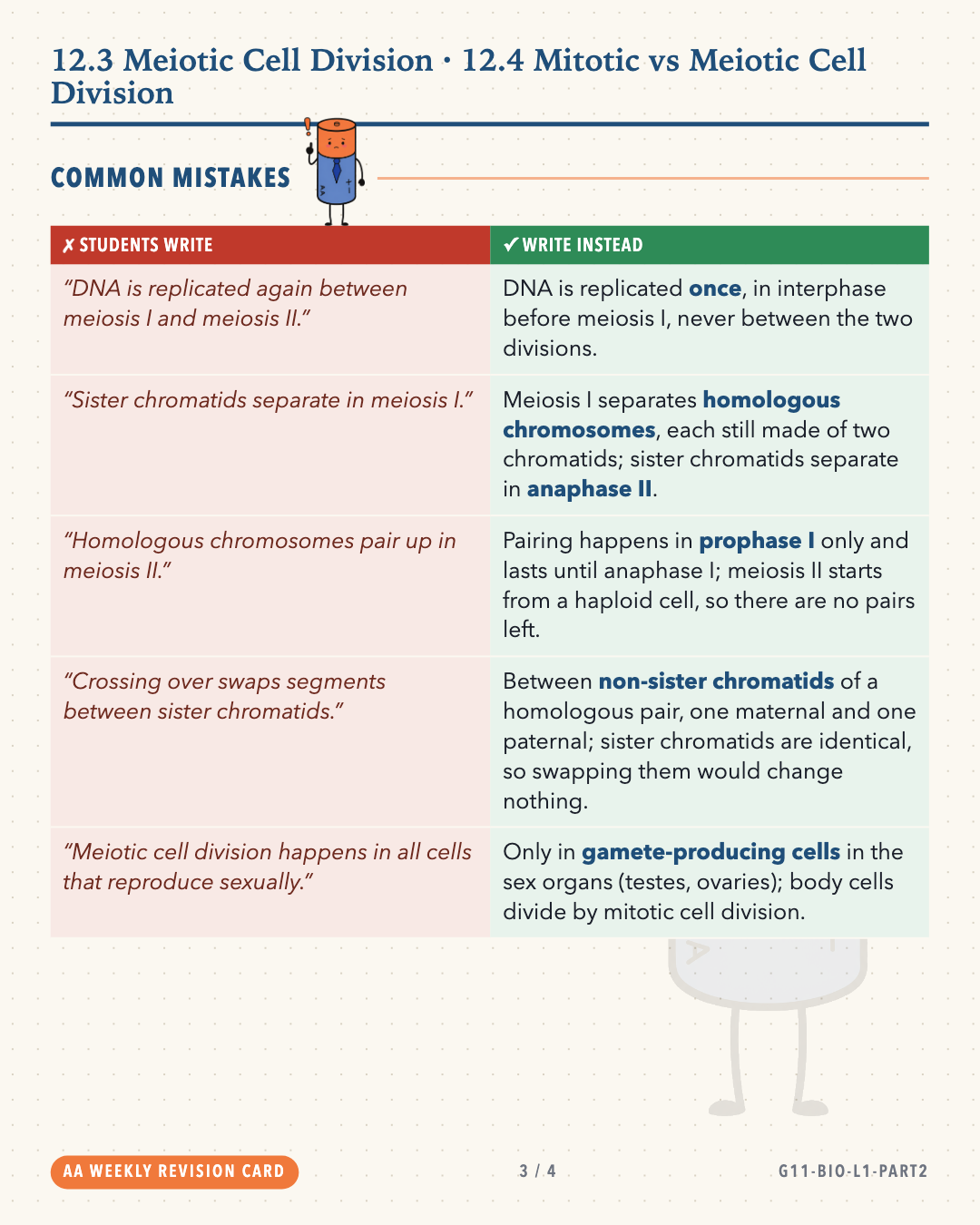
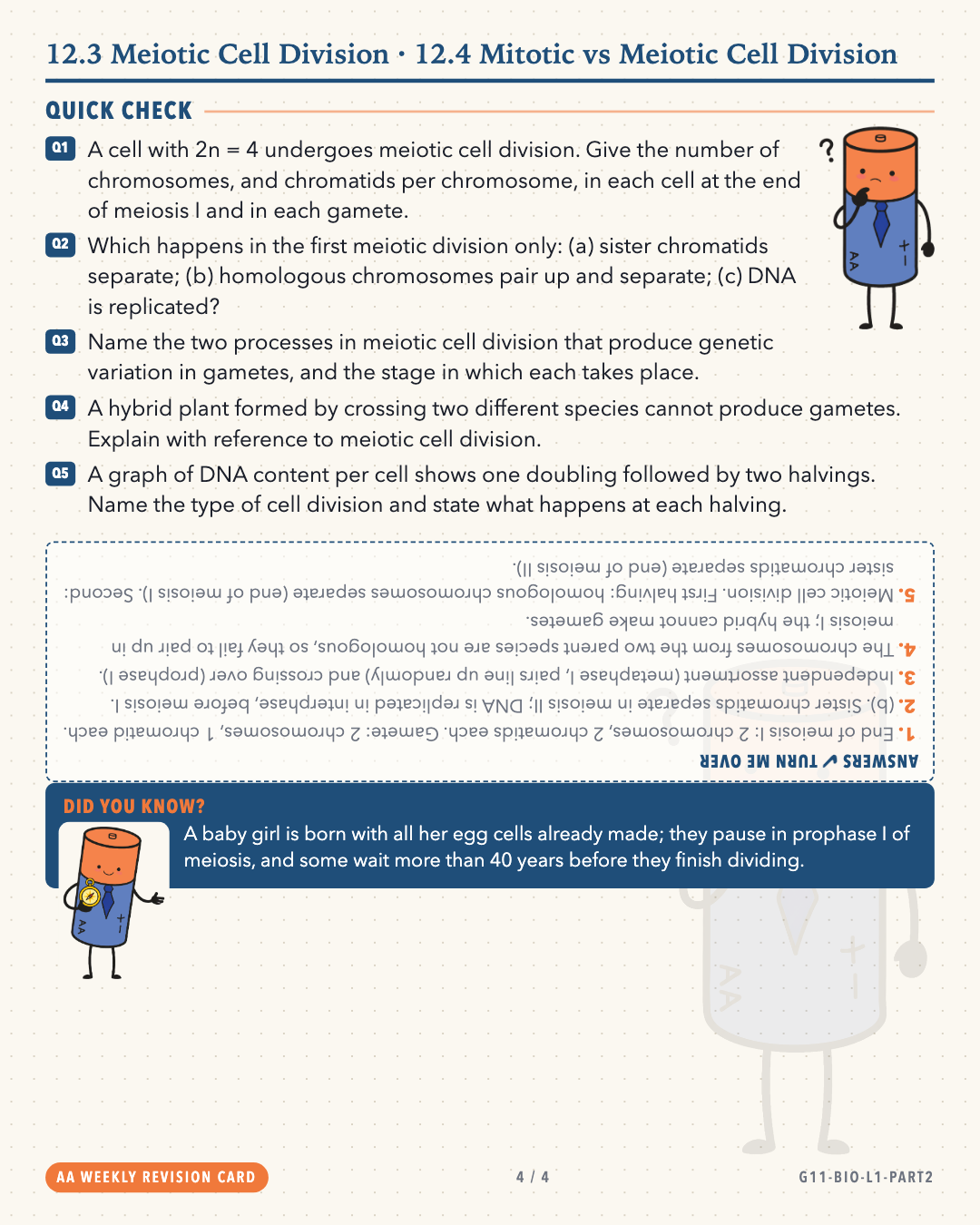
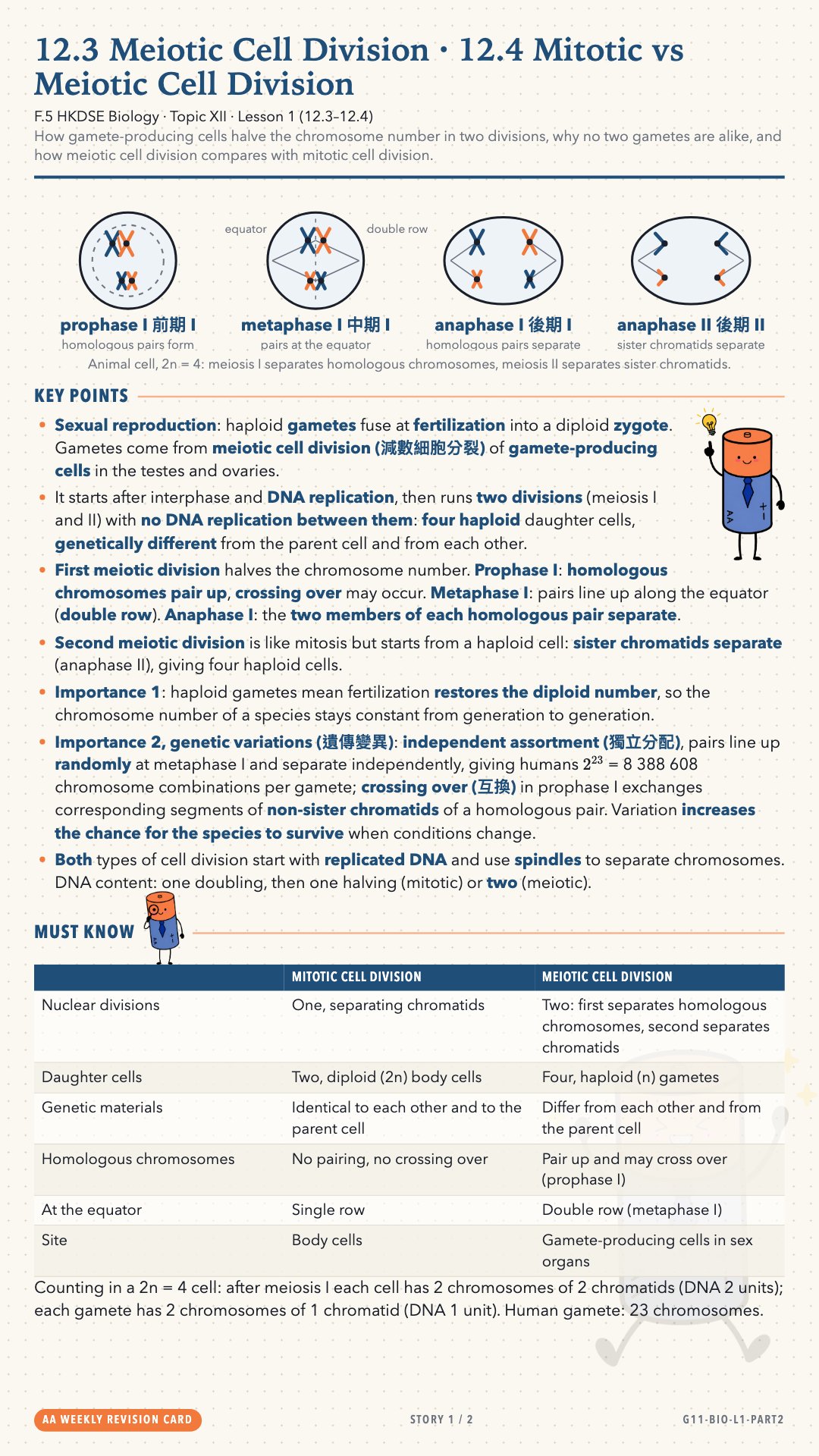
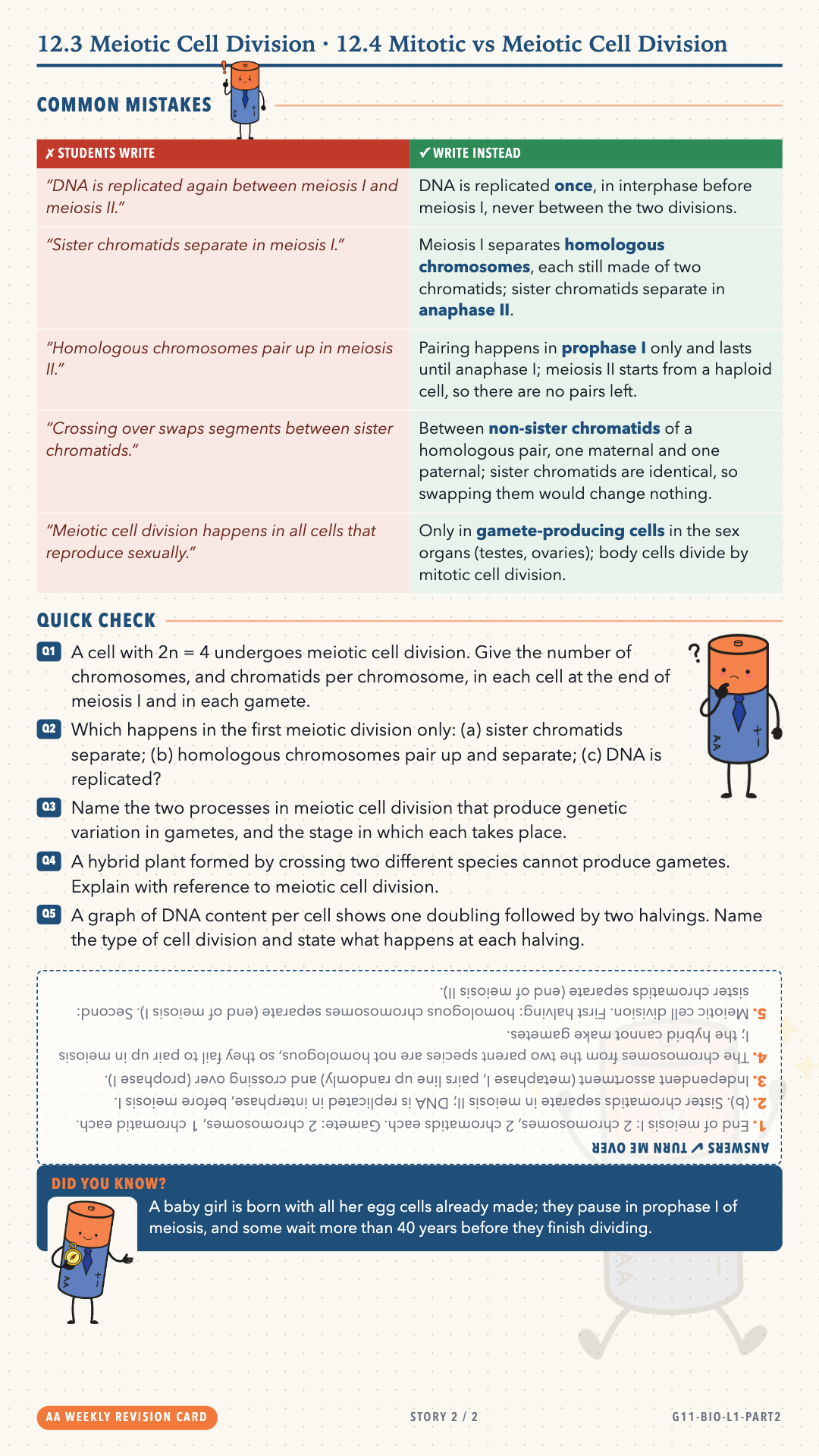
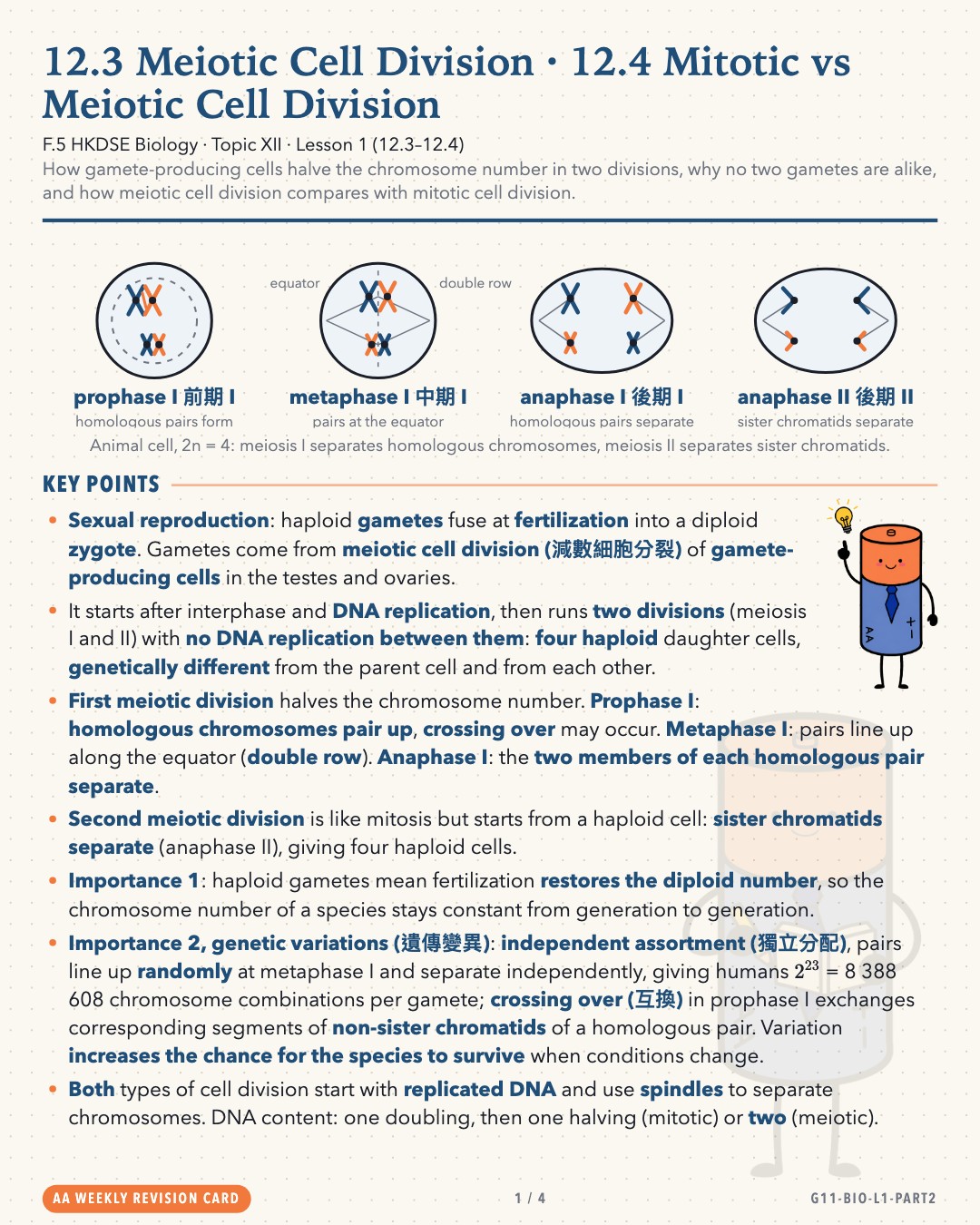
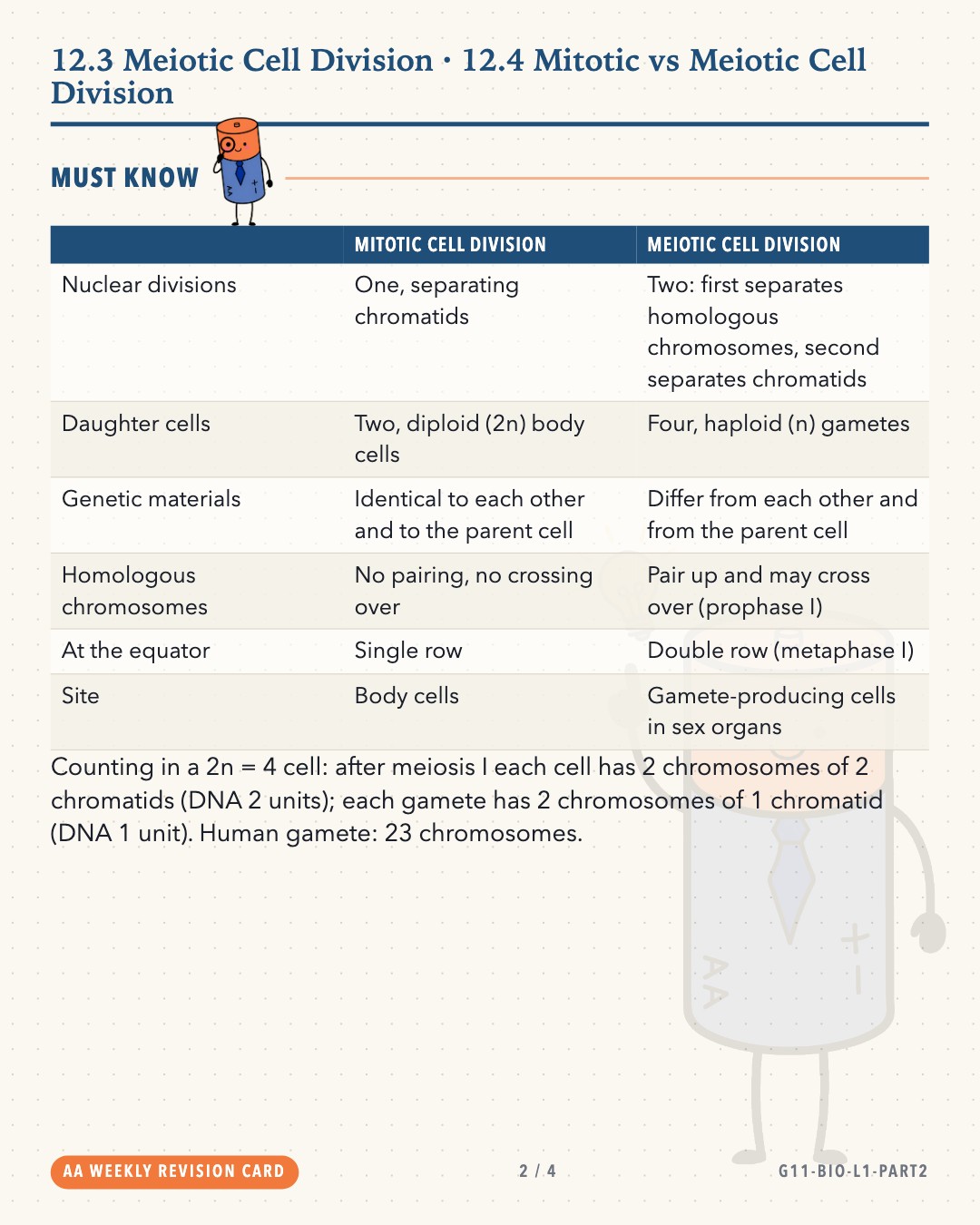
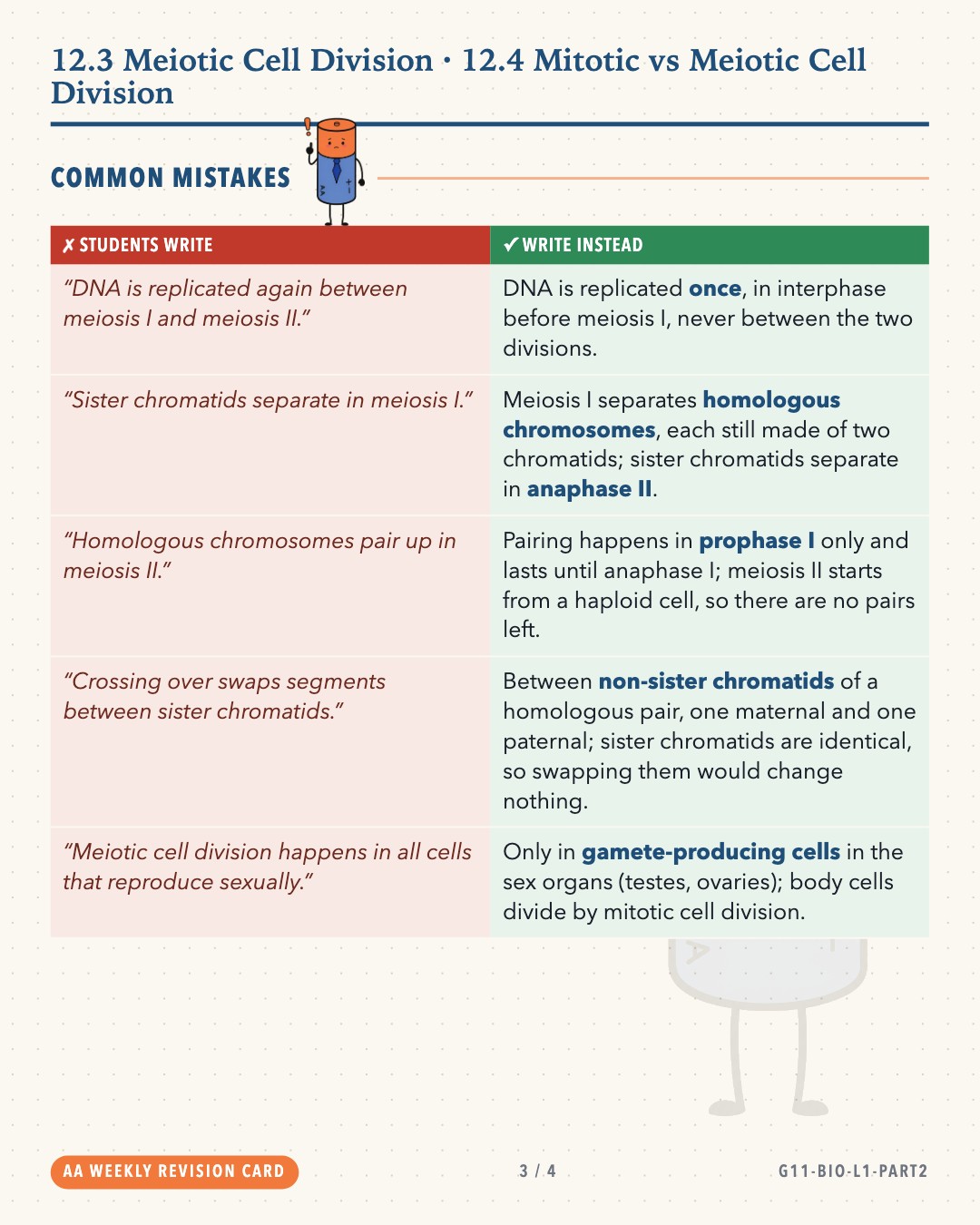
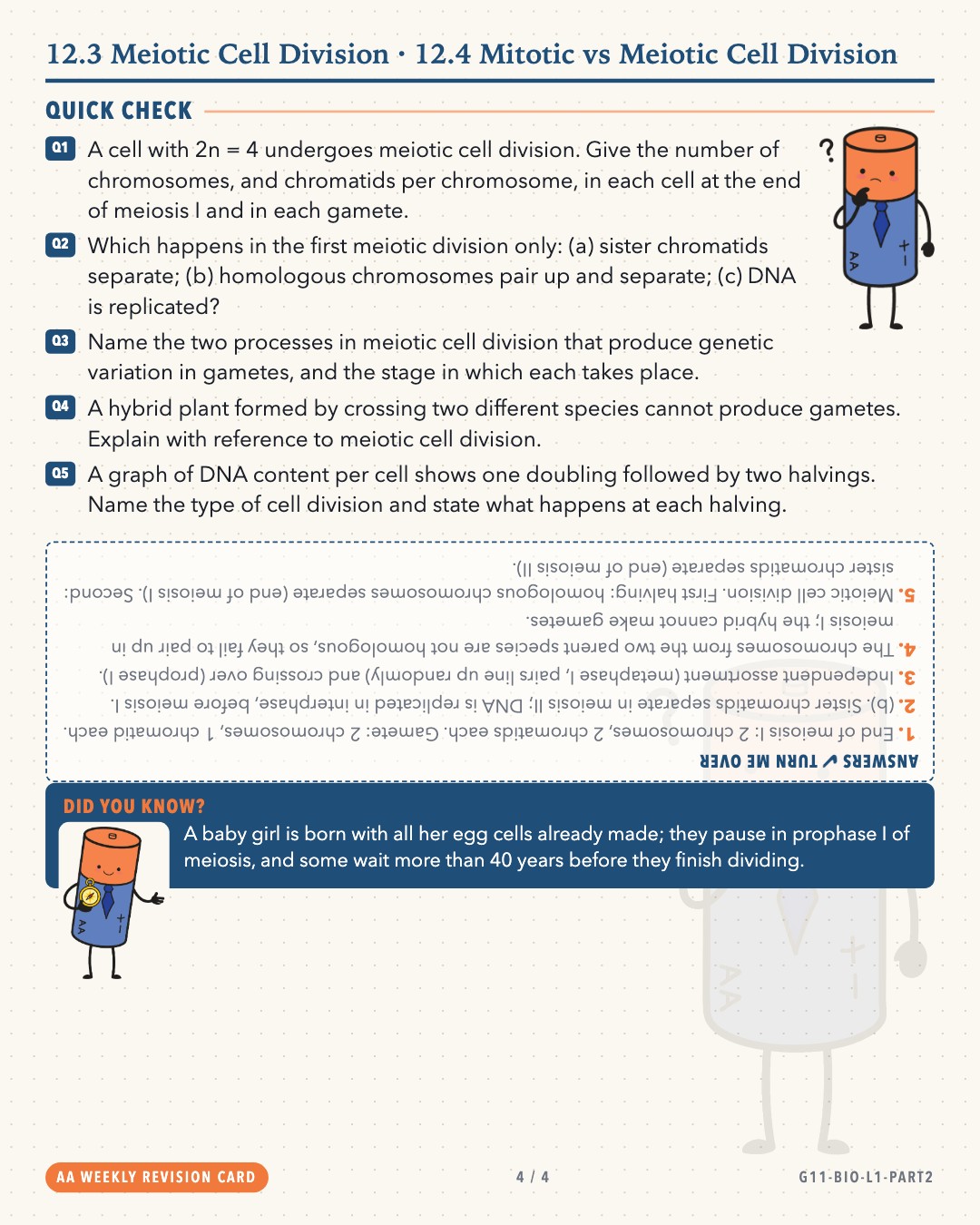
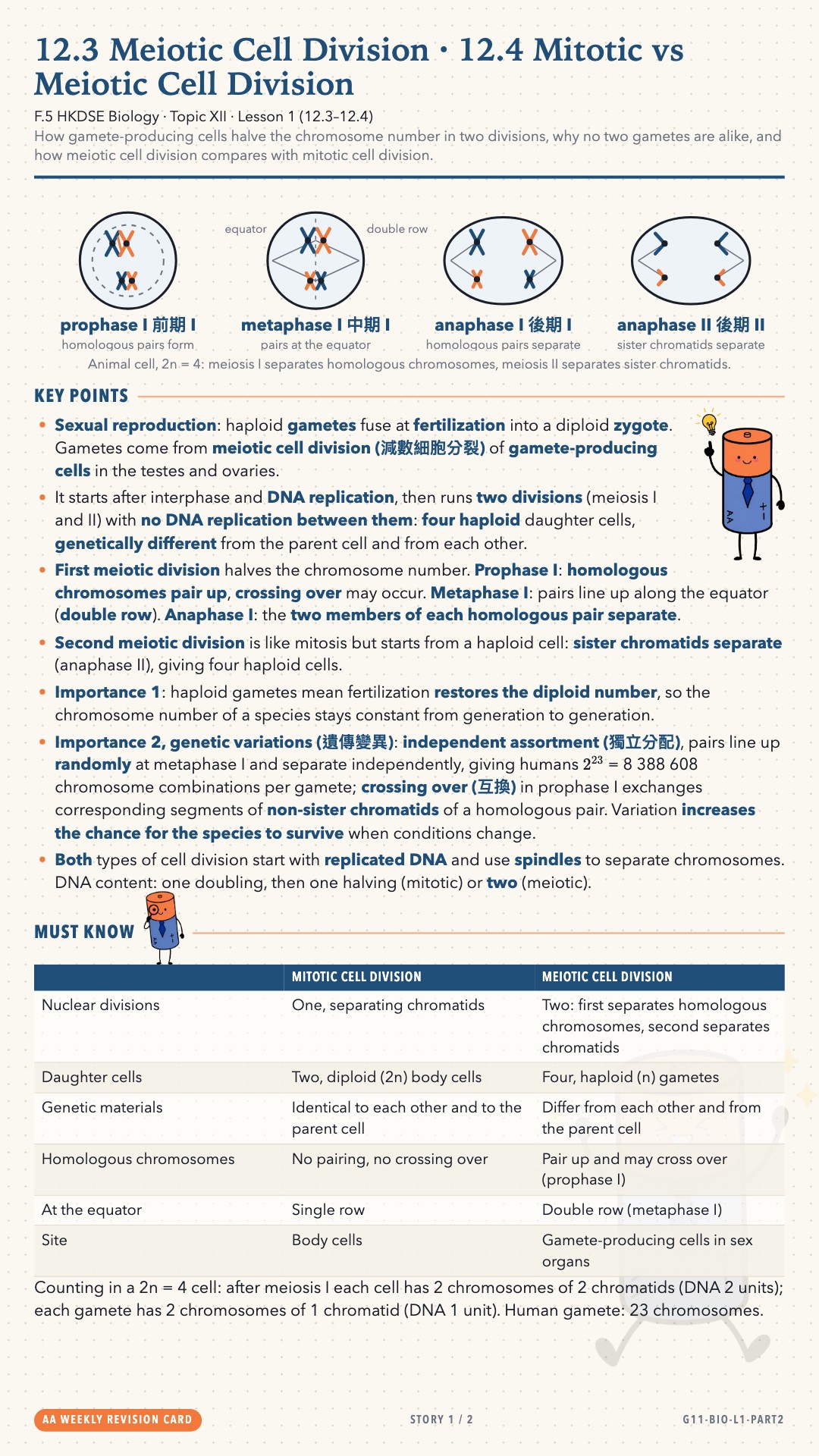
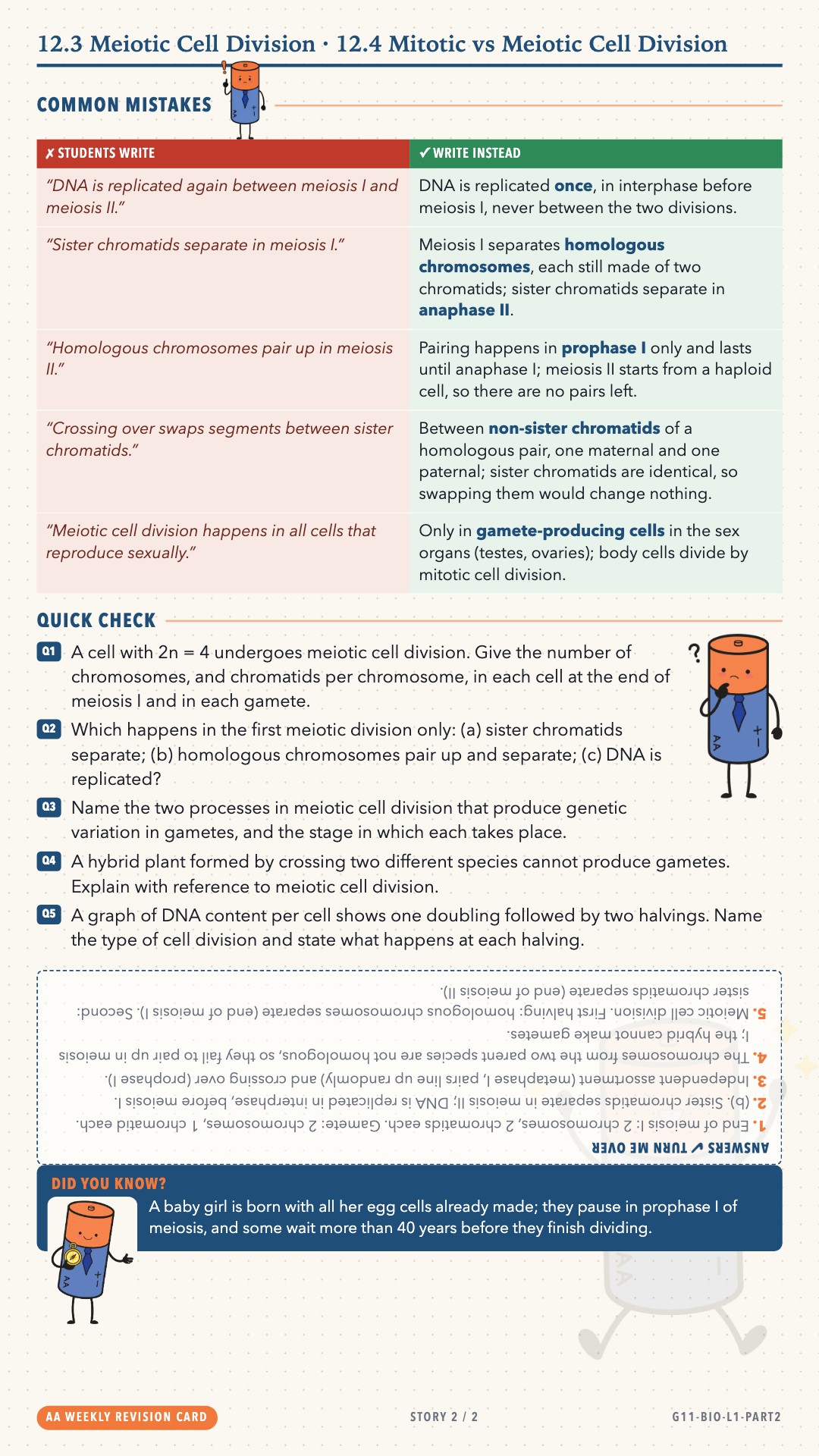
How gamete-producing cells halve the chromosome number in two divisions, why no two gametes are alike, and how meiotic cell division compares with mitotic cell division.
✔ fact-checked · 2 added mistakes tagged [likely] · 2.2 MB JPG · card.md ·
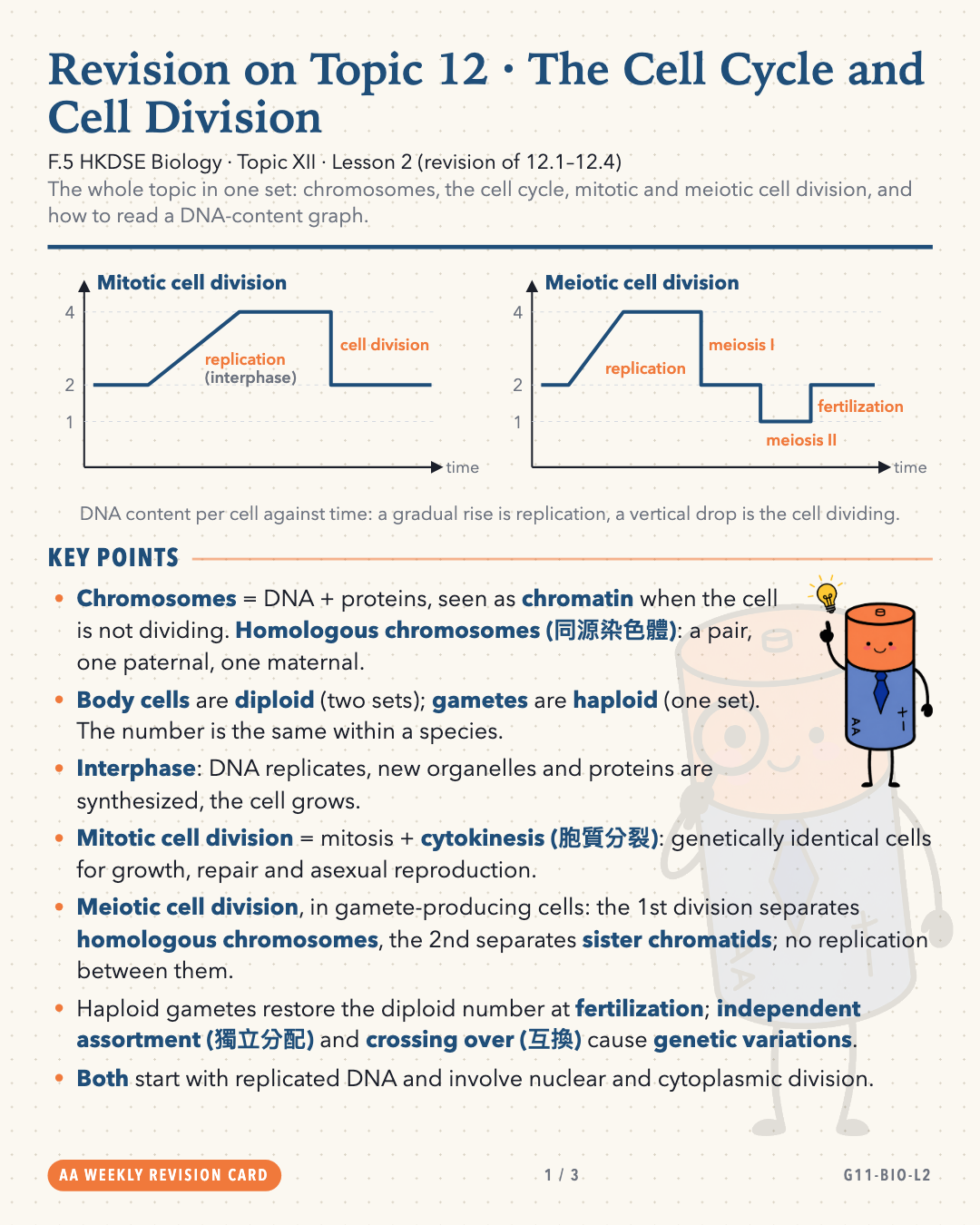
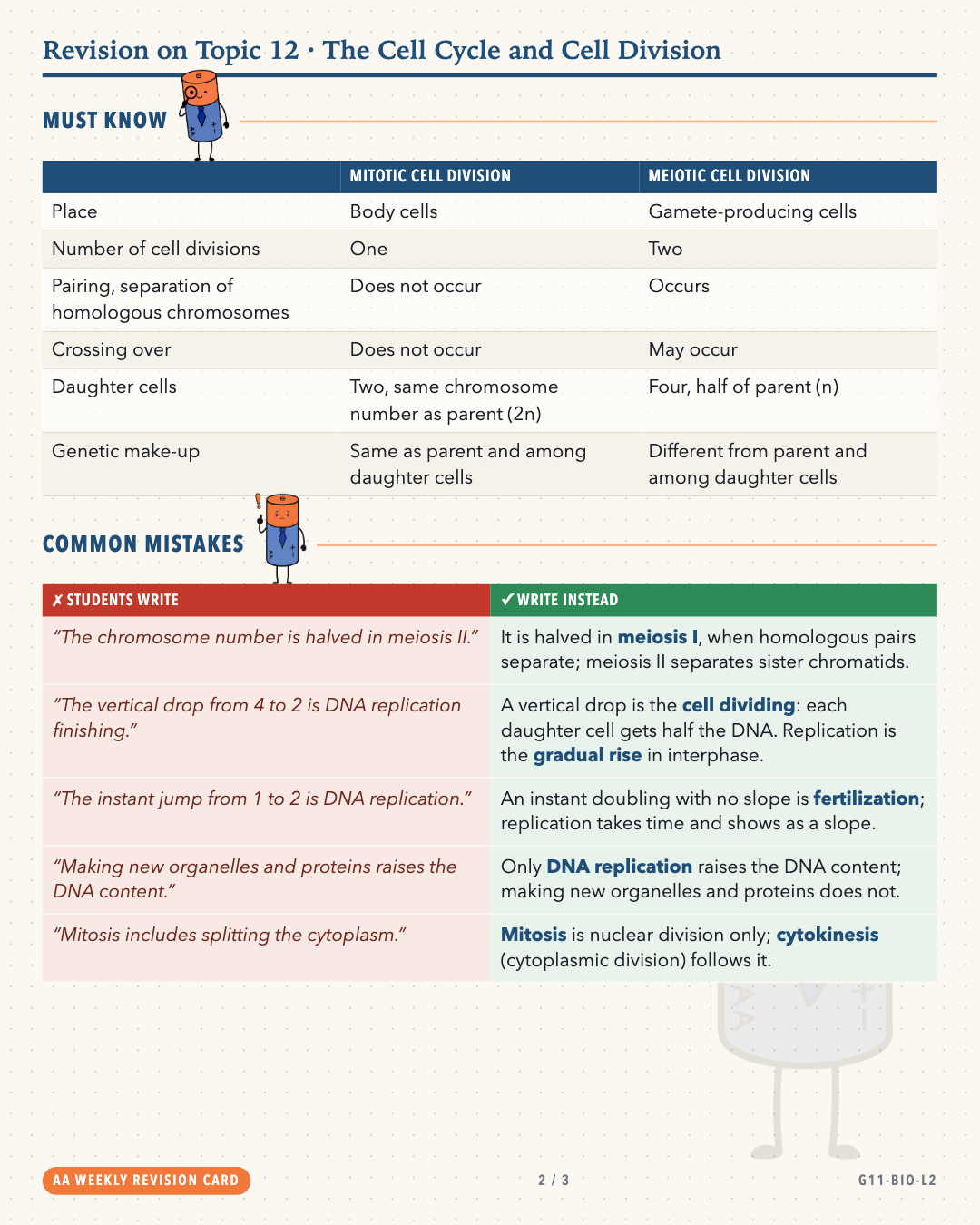
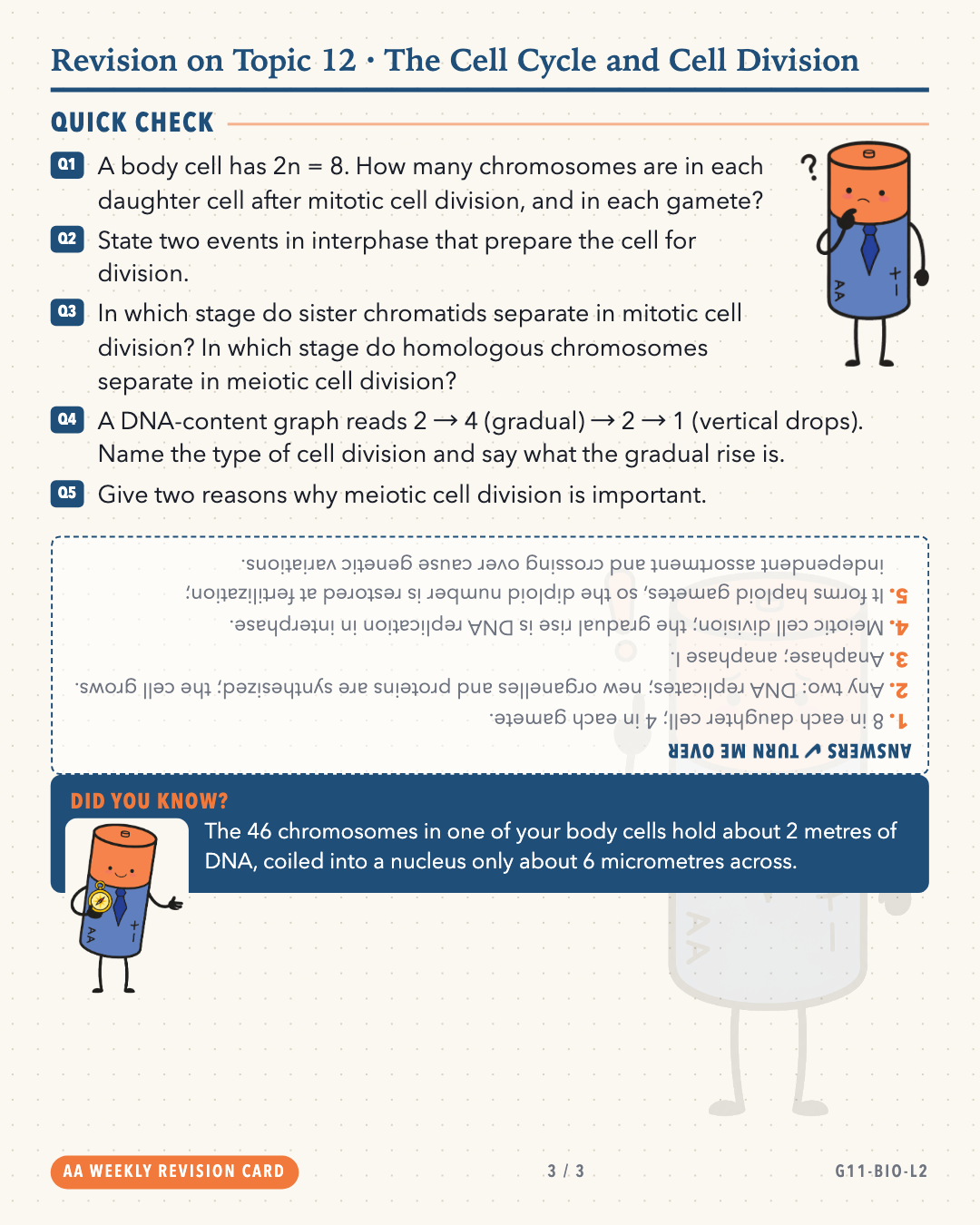
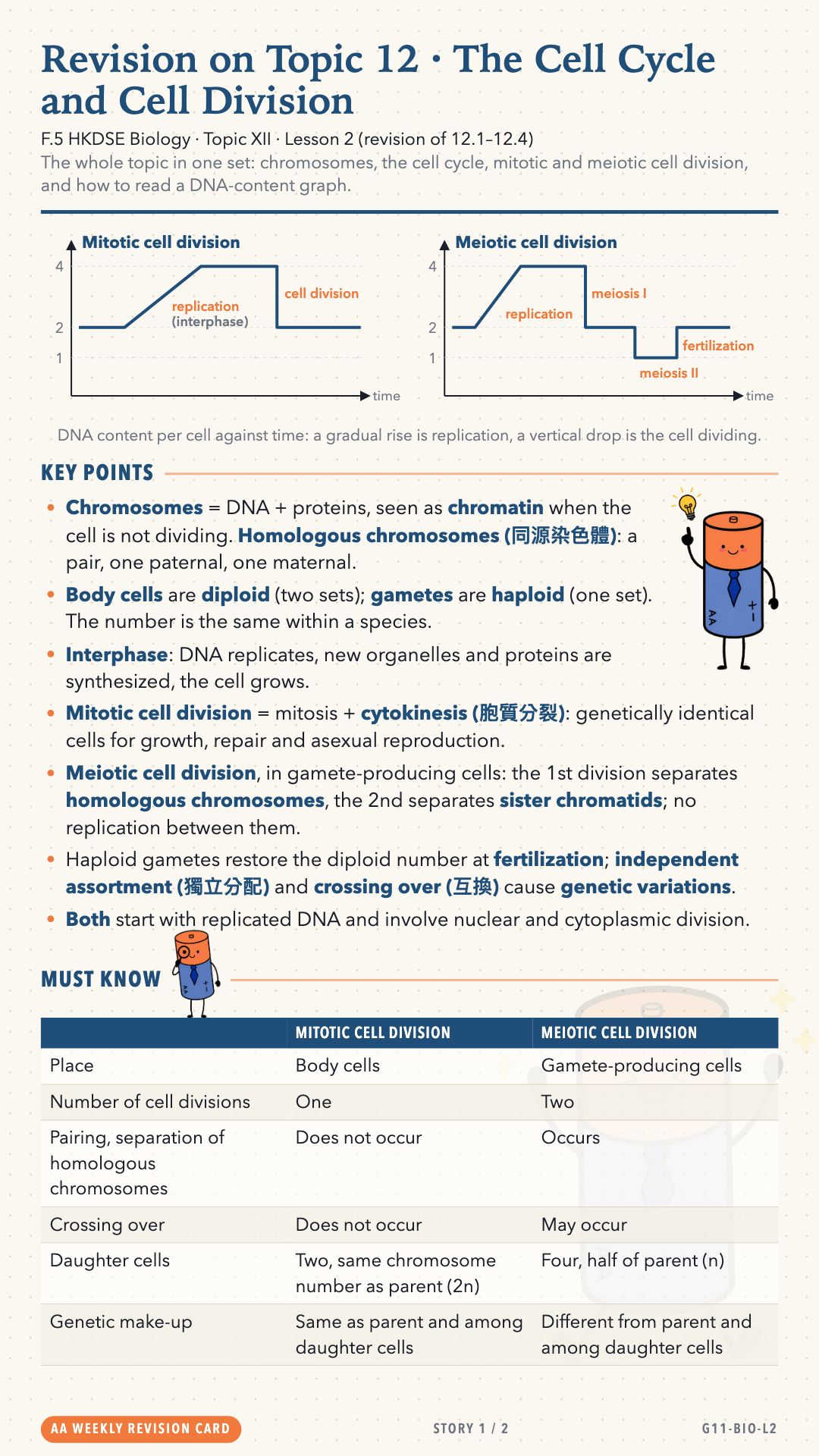
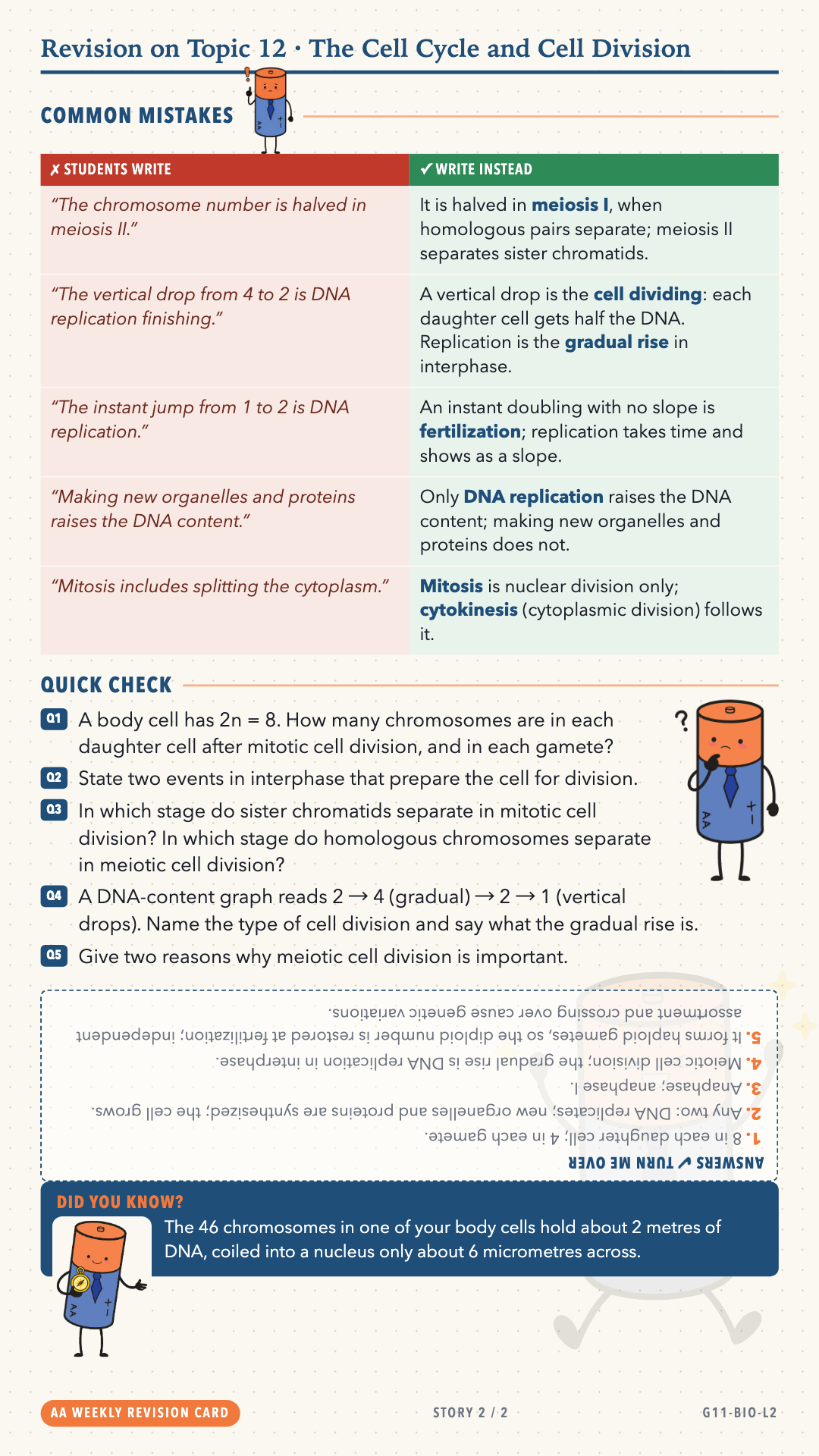
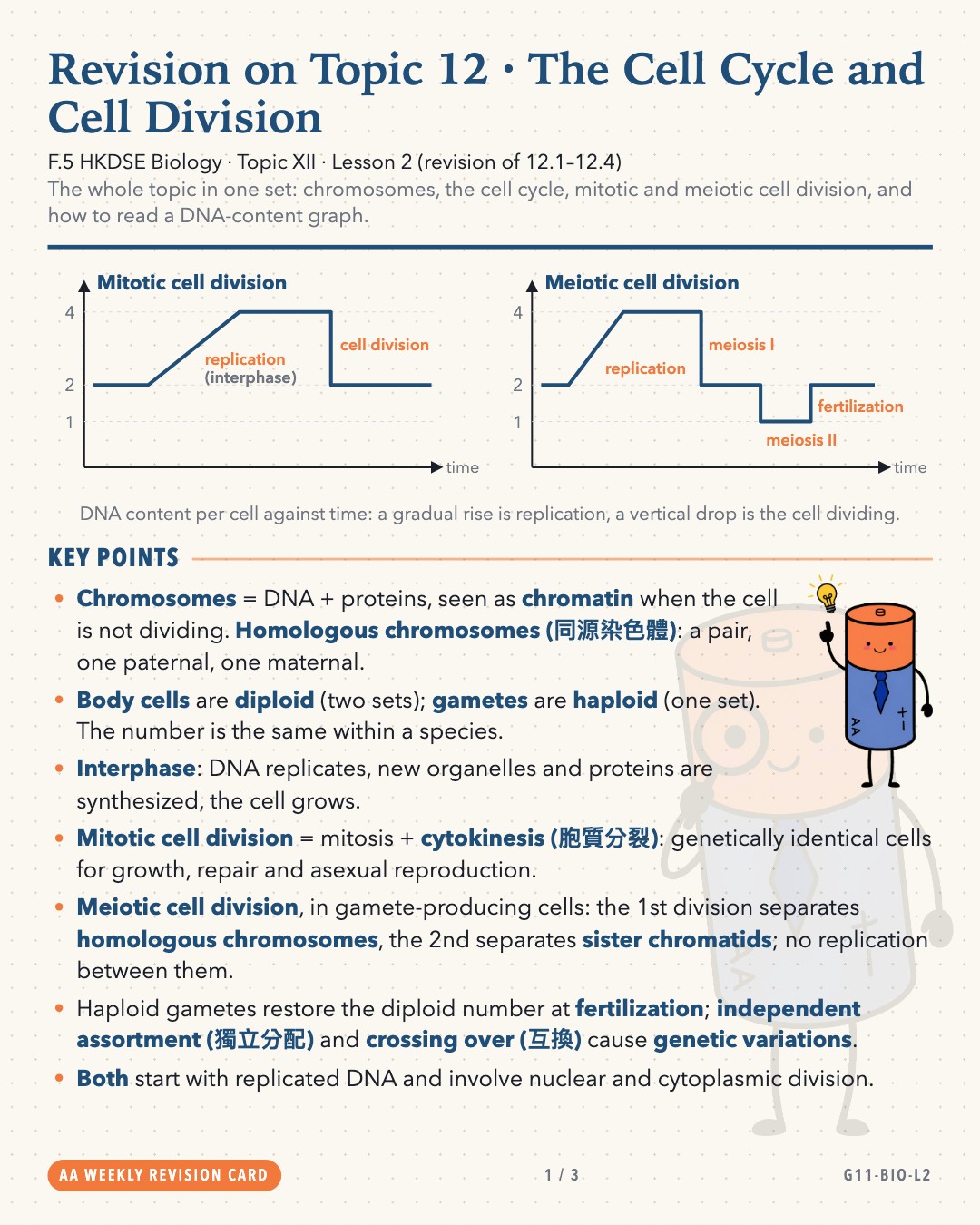
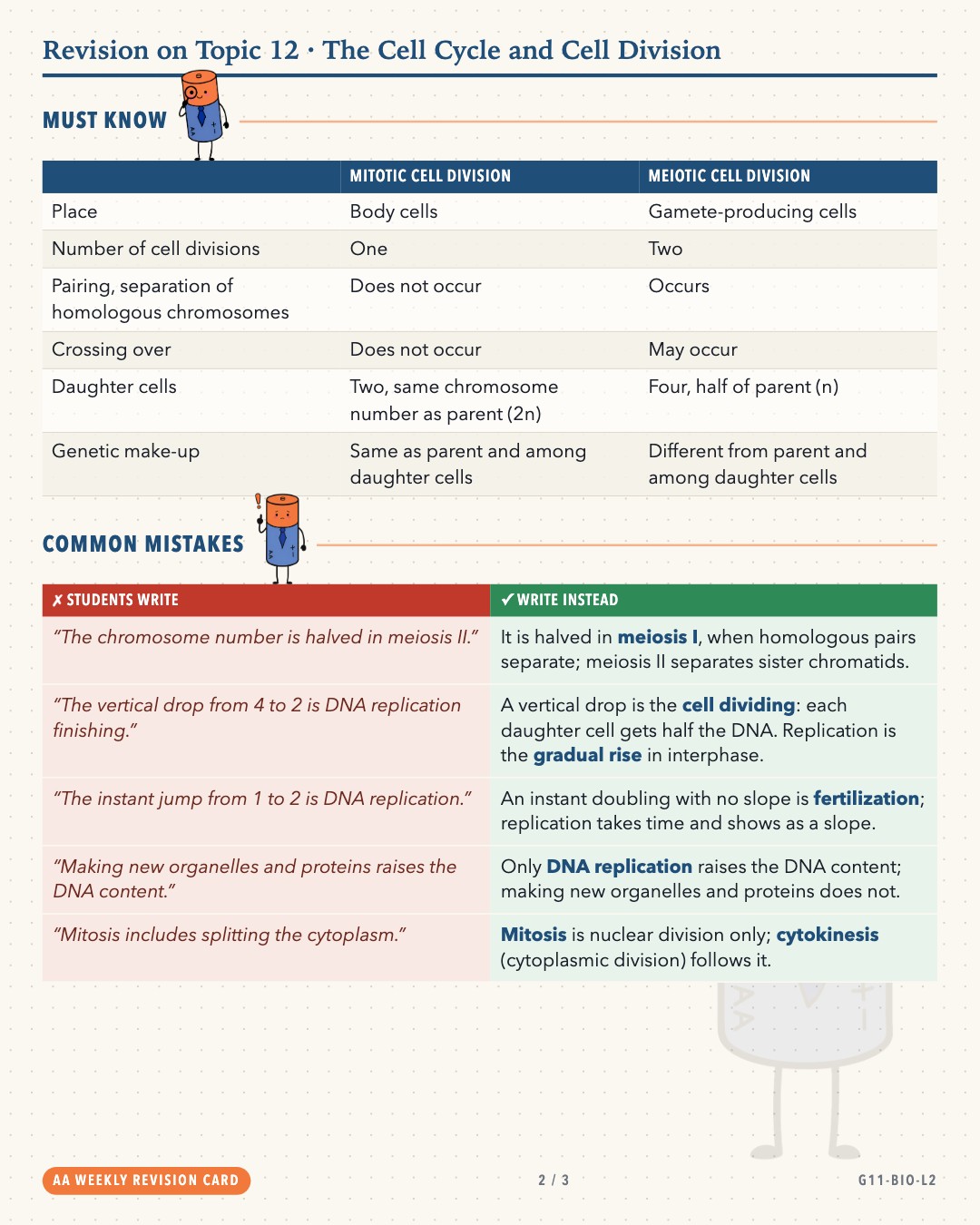
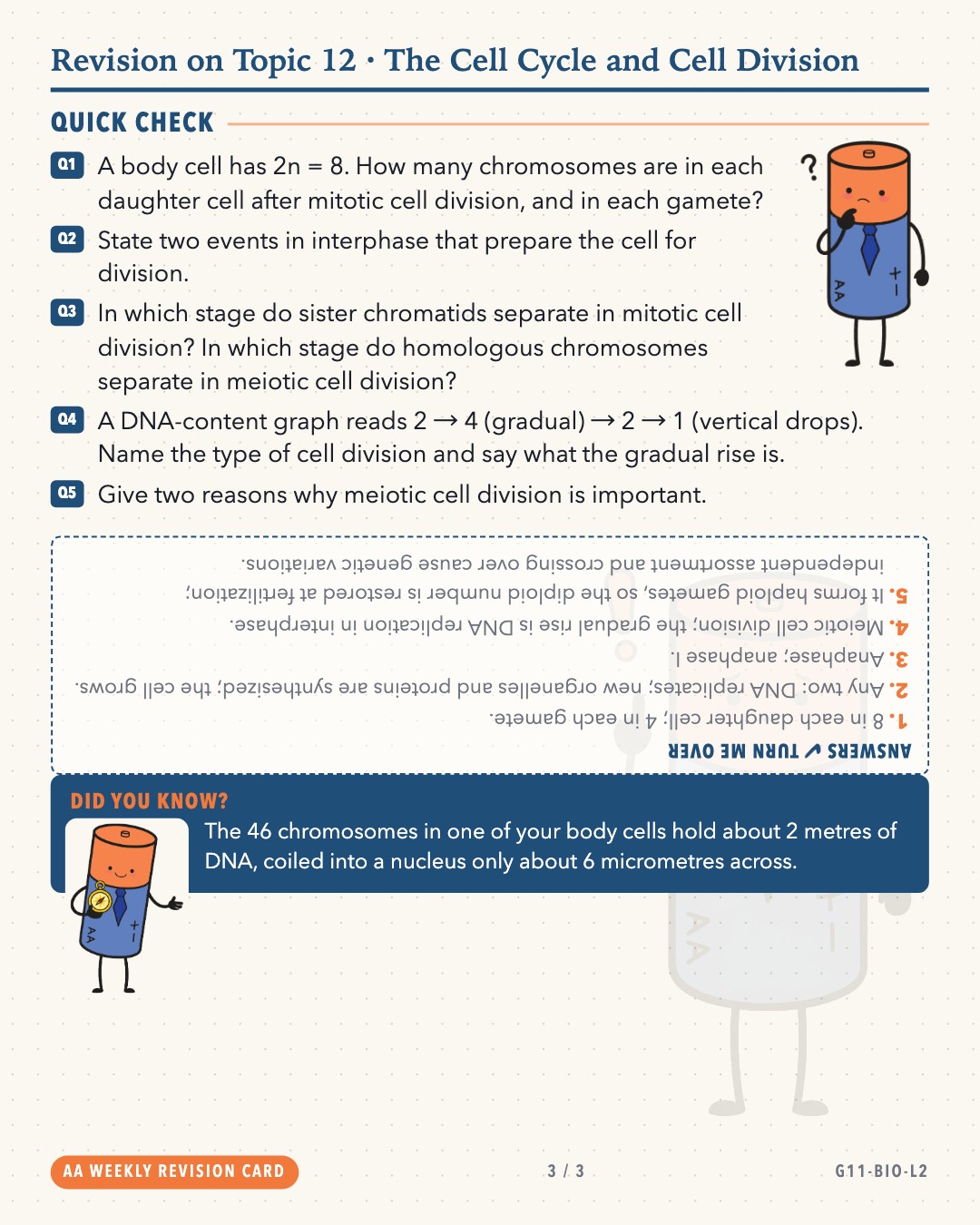
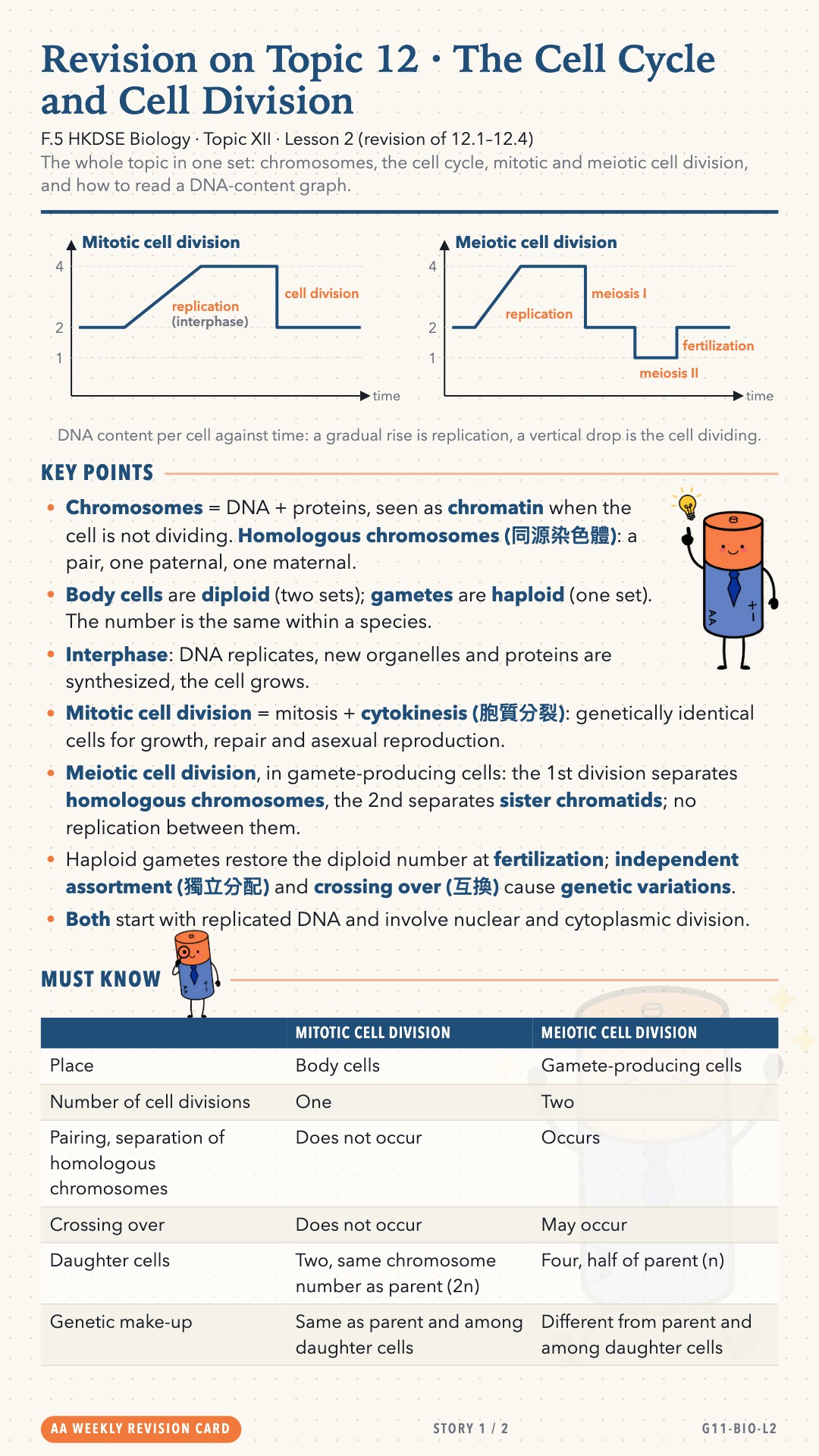
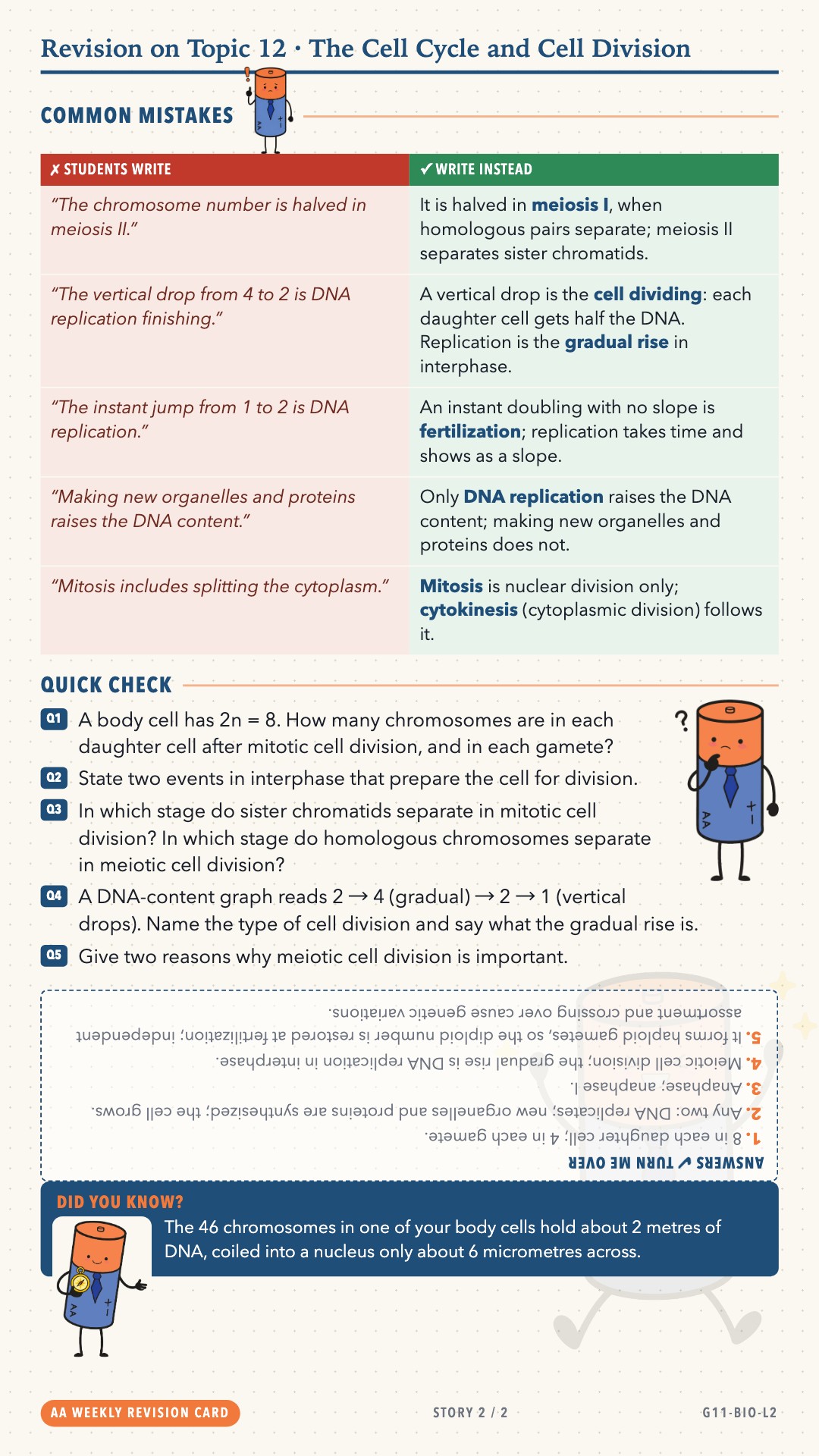
The whole topic in one set: chromosomes, the cell cycle, mitotic and meiotic cell division, and how to read a DNA-content graph.
✔ fact-checked · 2 added mistakes tagged [likely] · 1.7 MB JPG · card.md ·
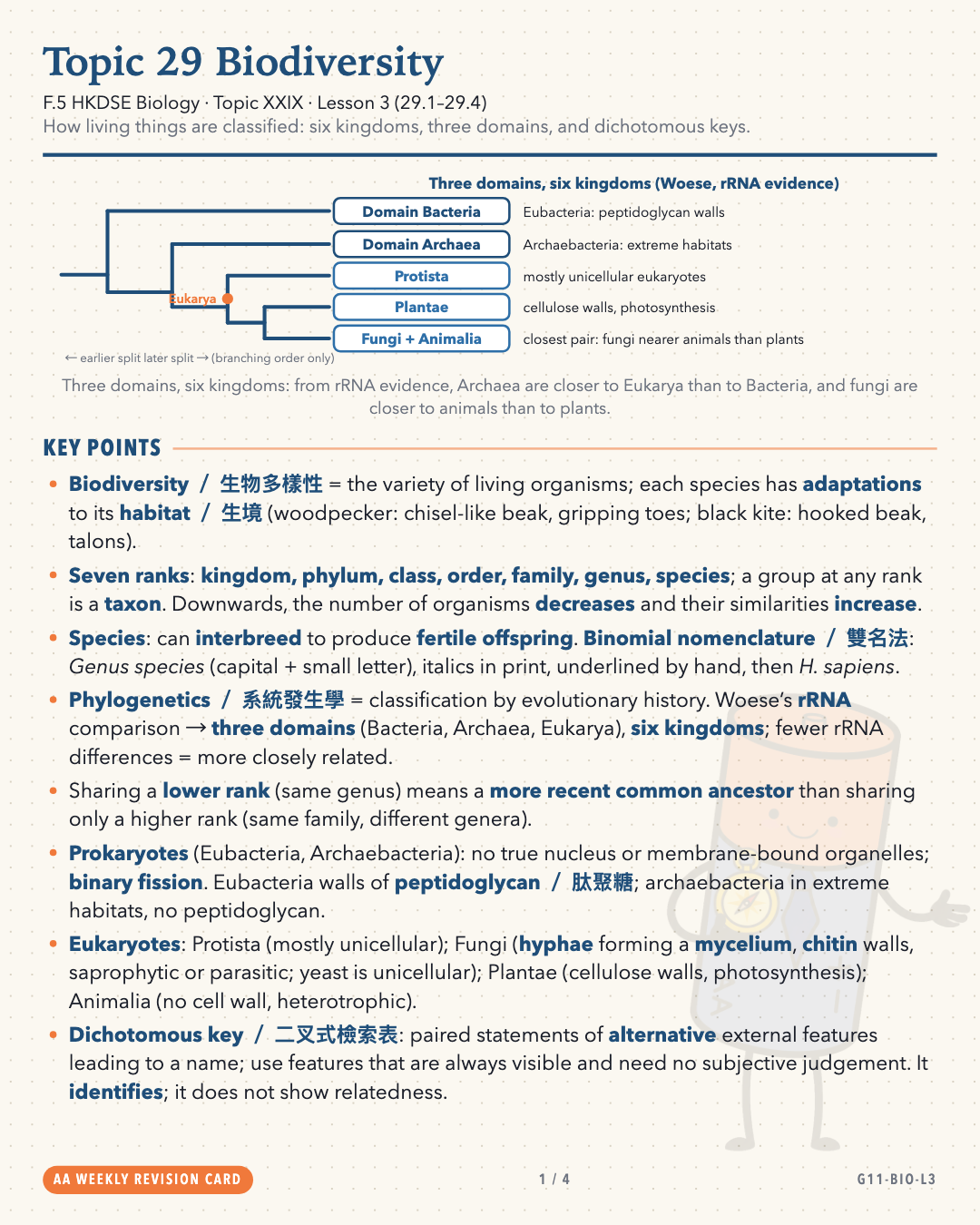
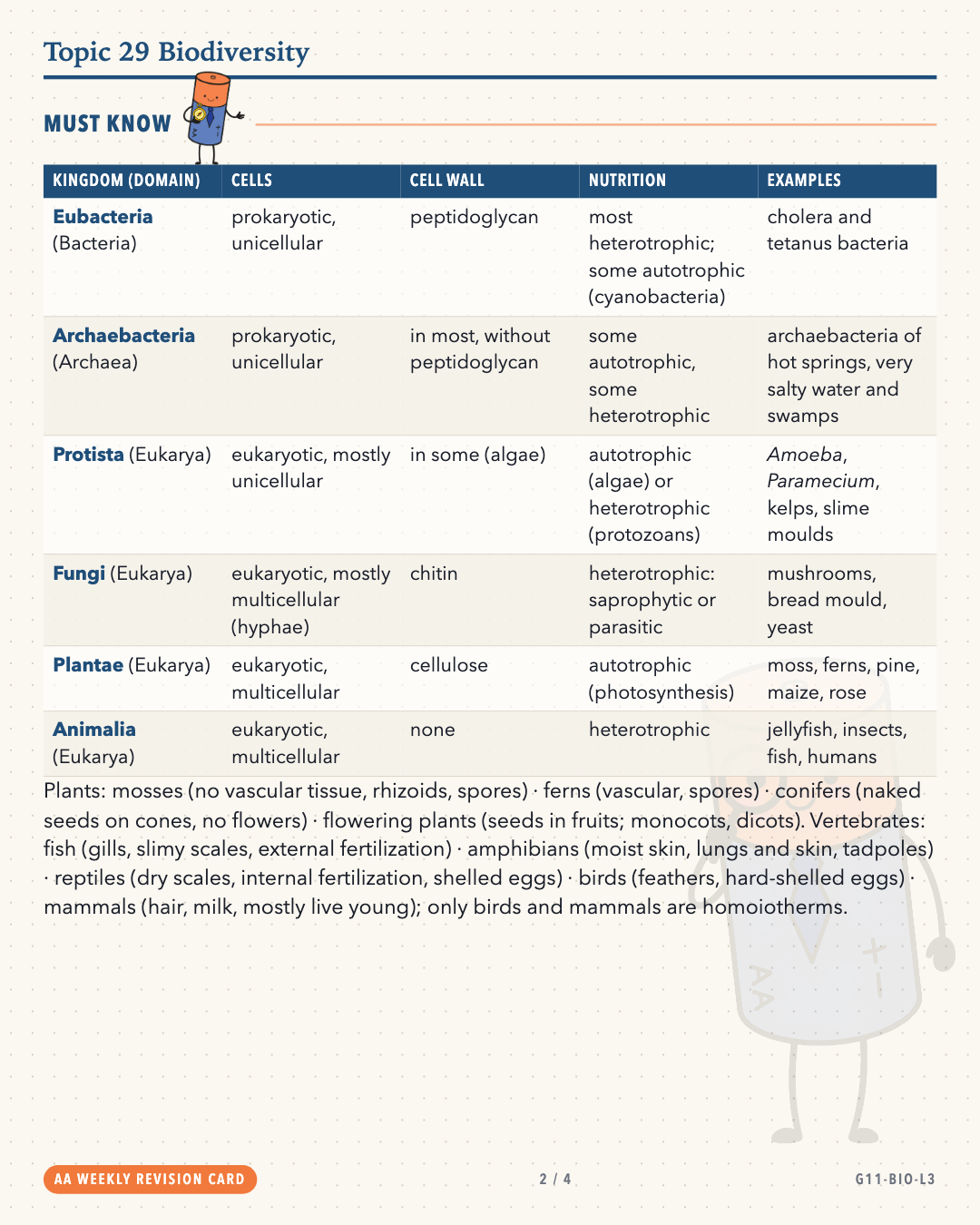
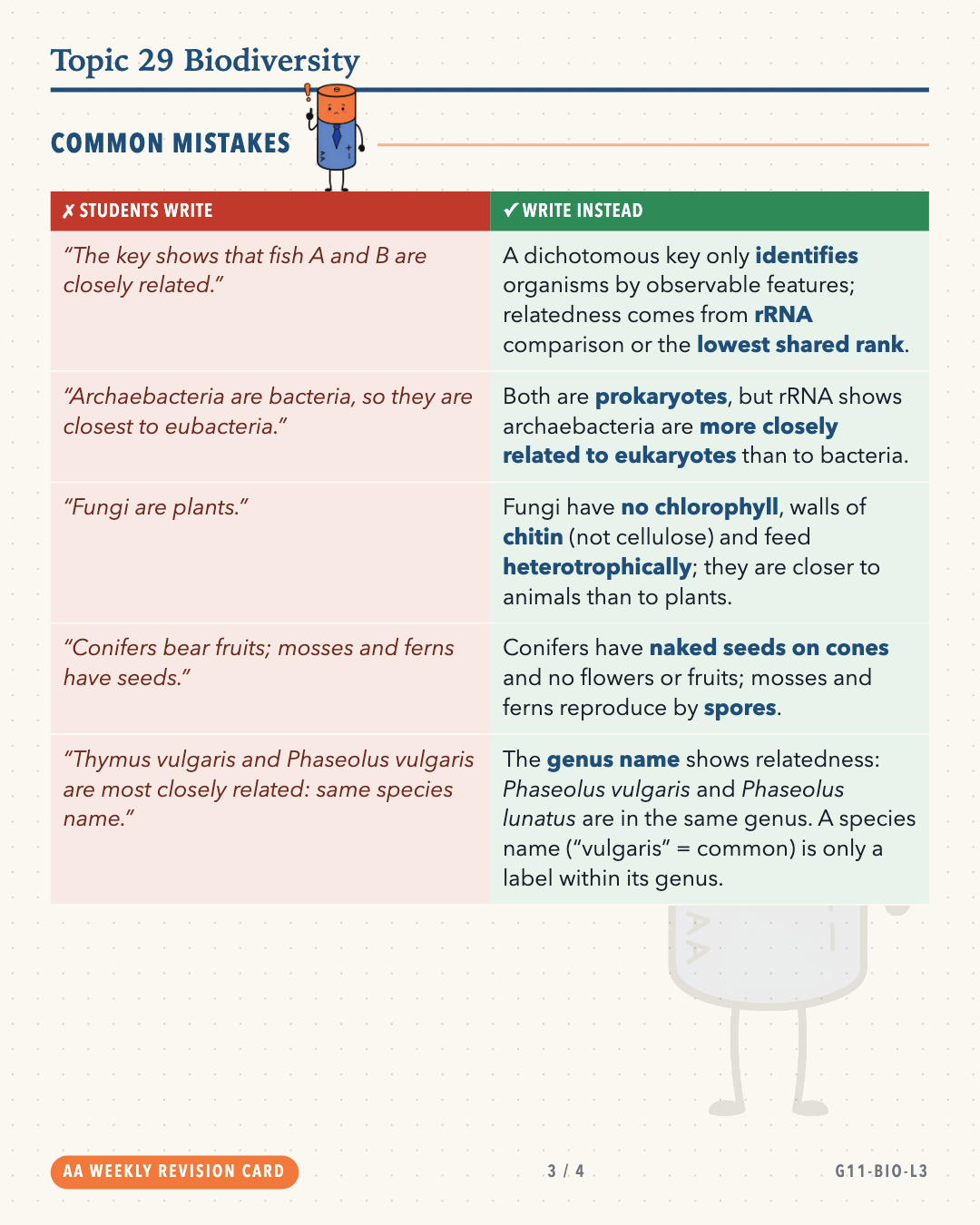
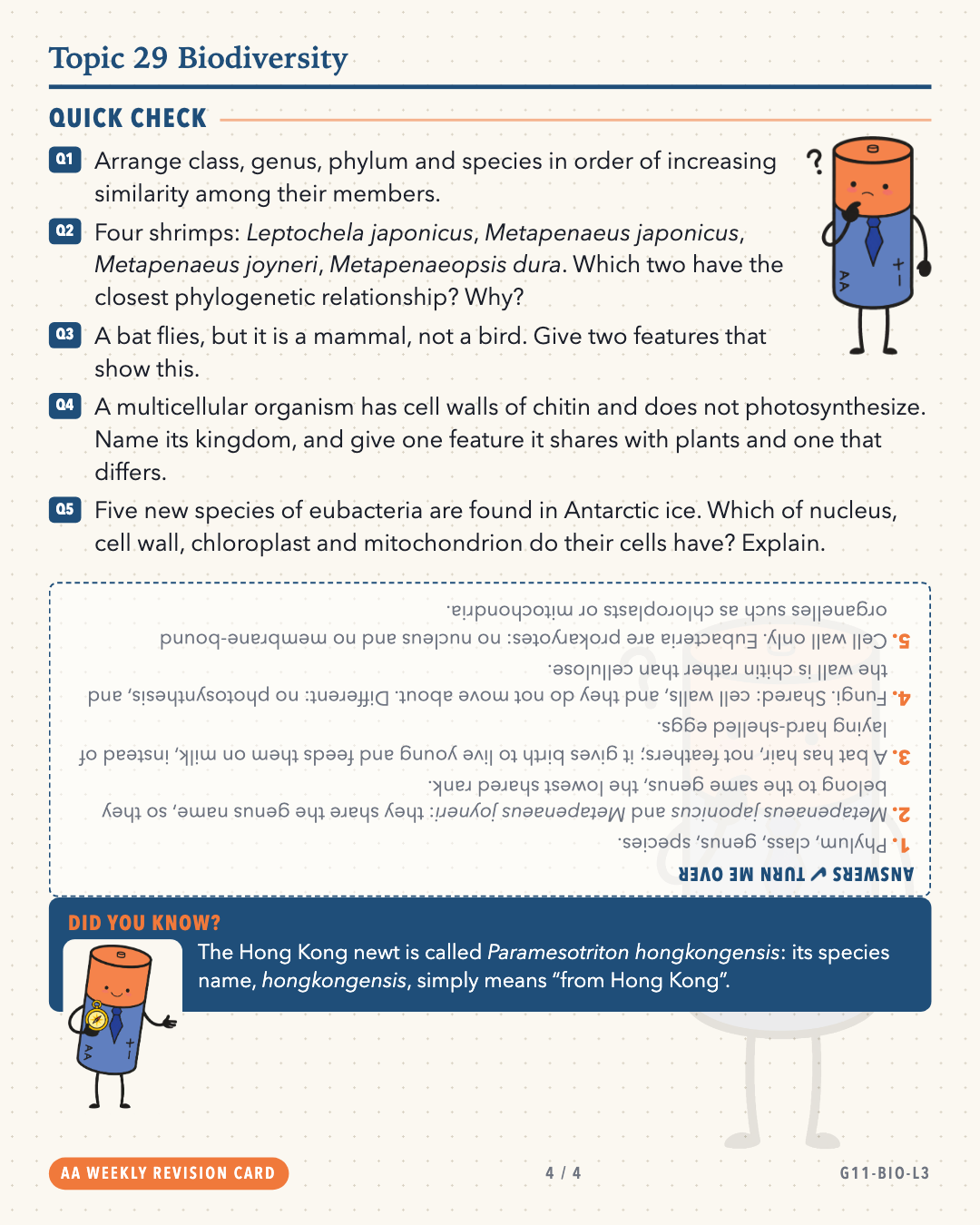
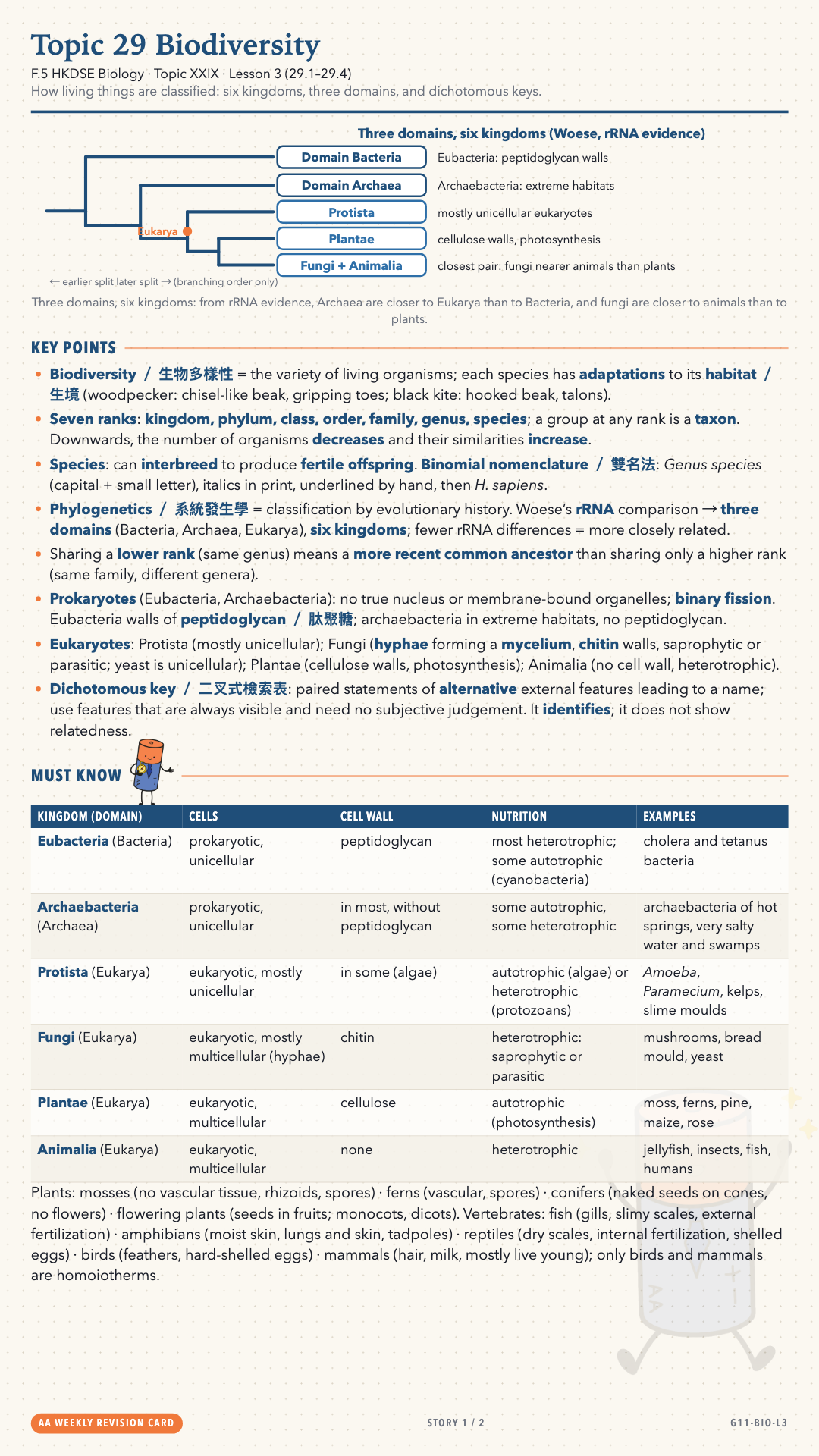
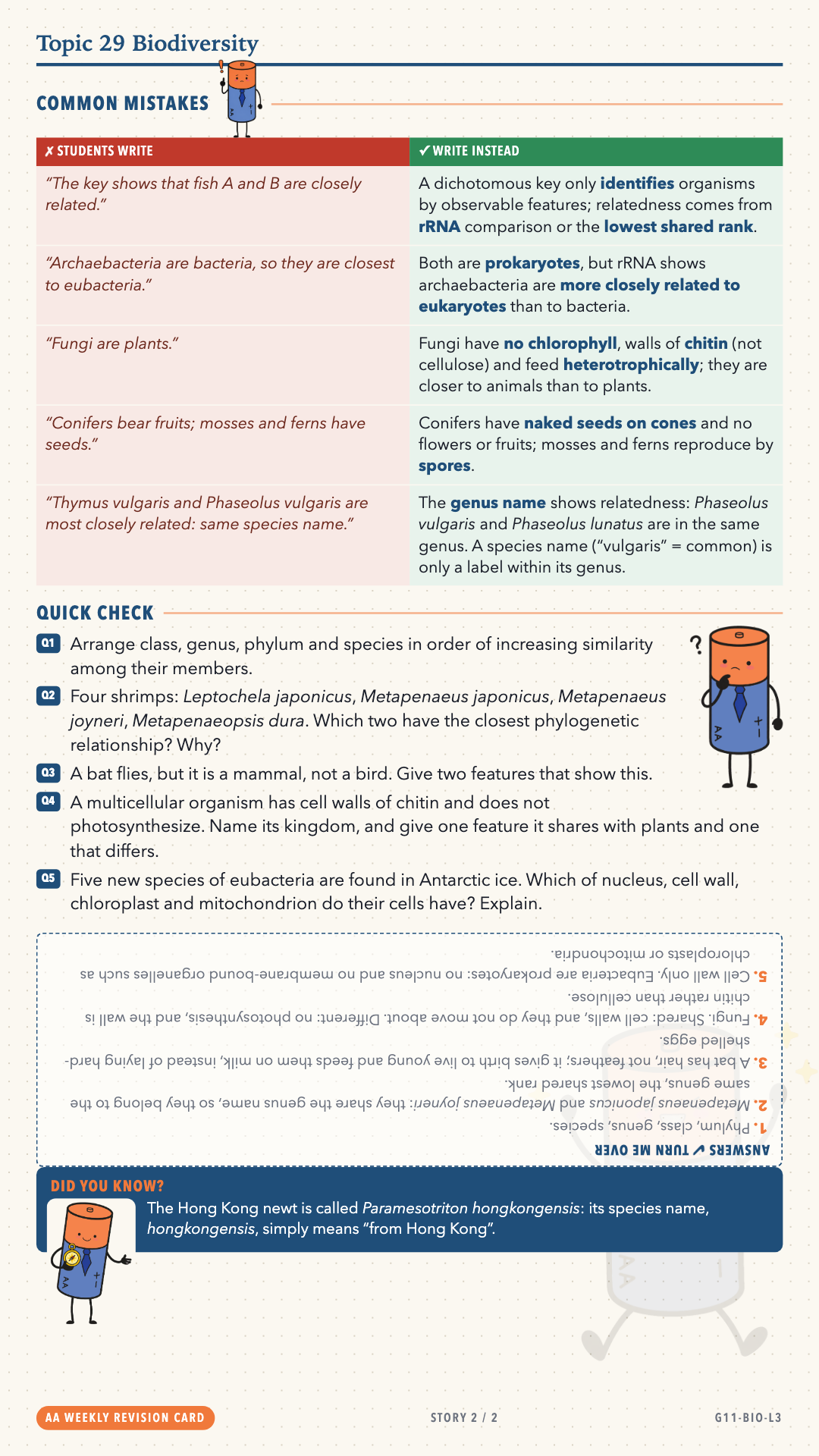
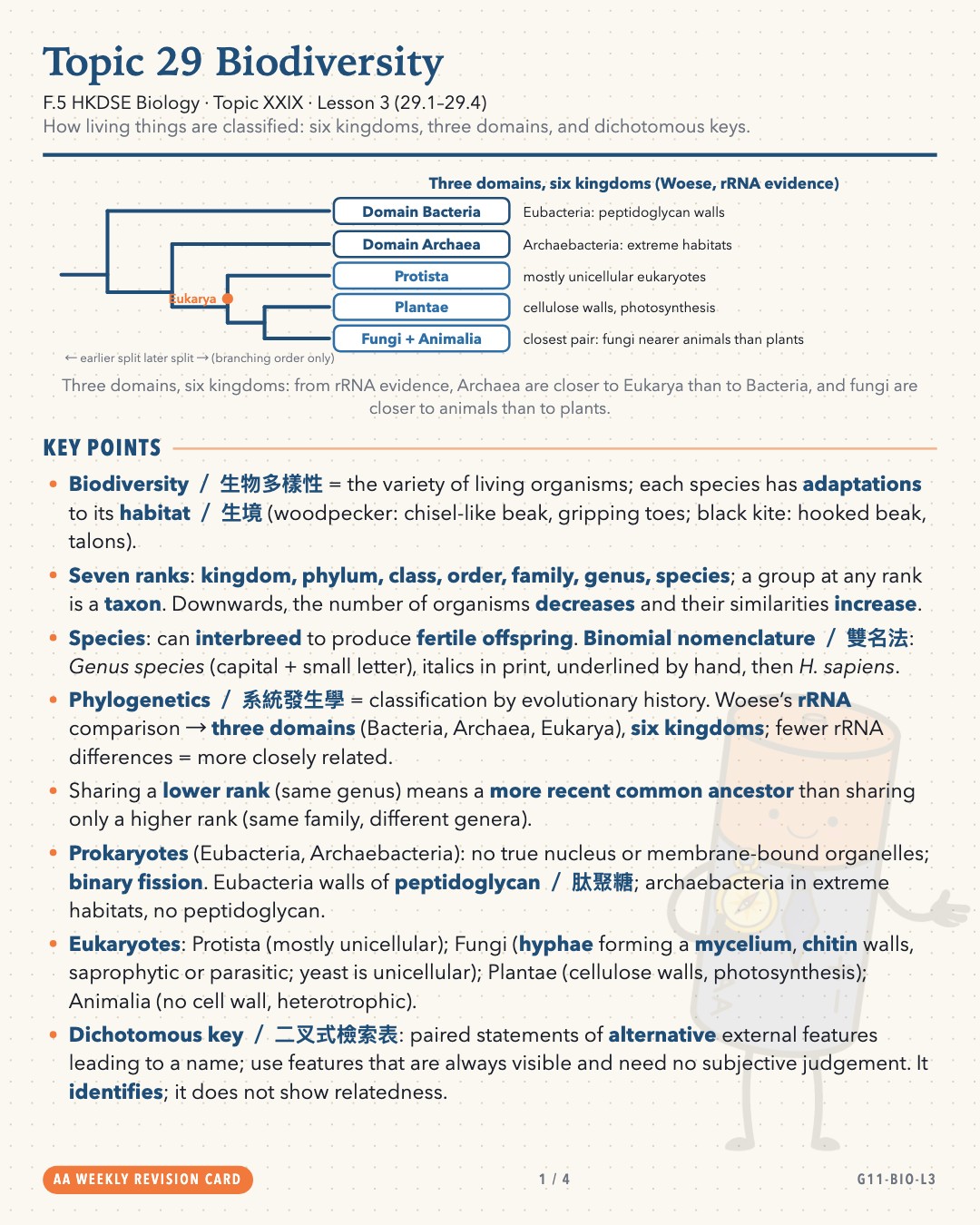
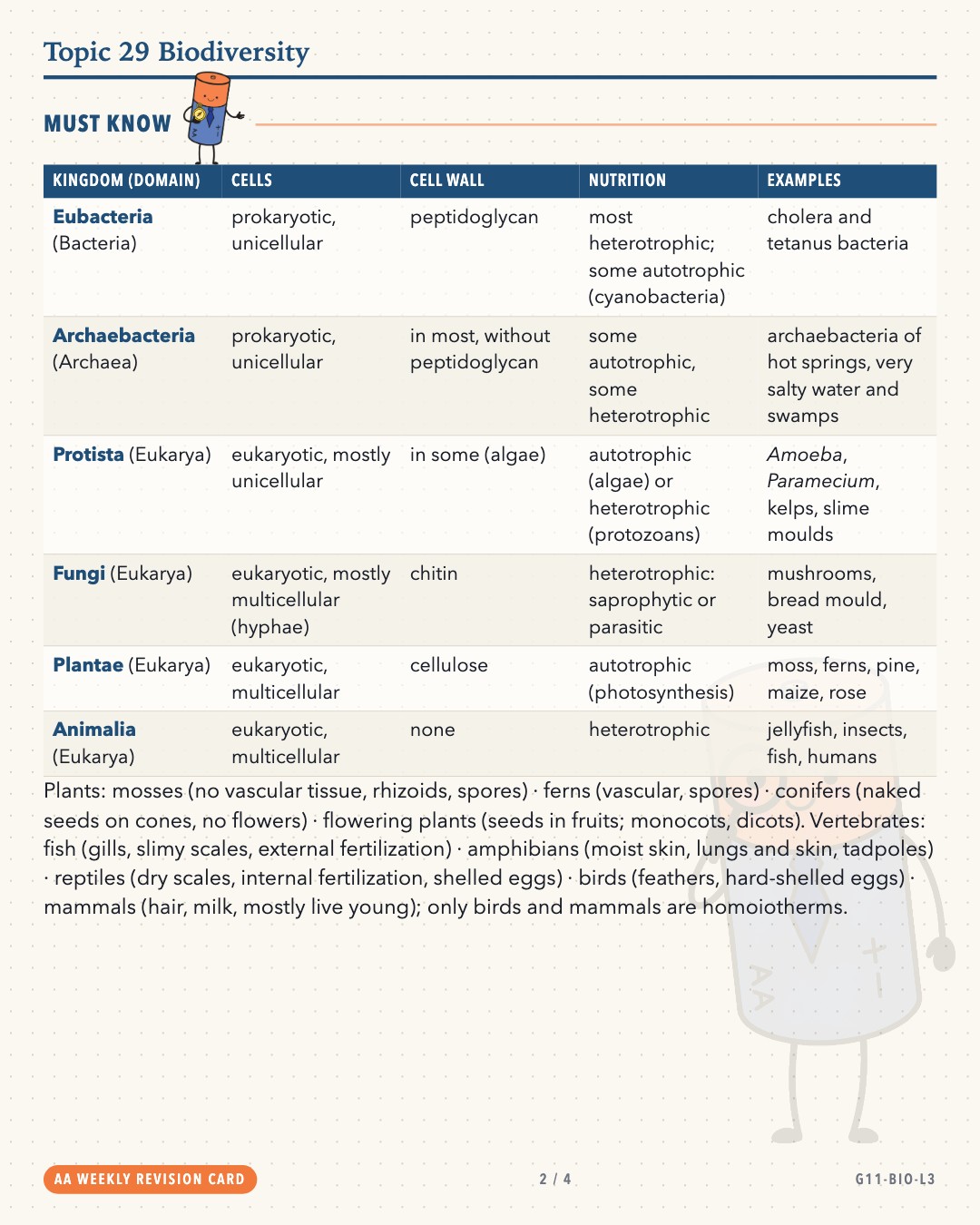
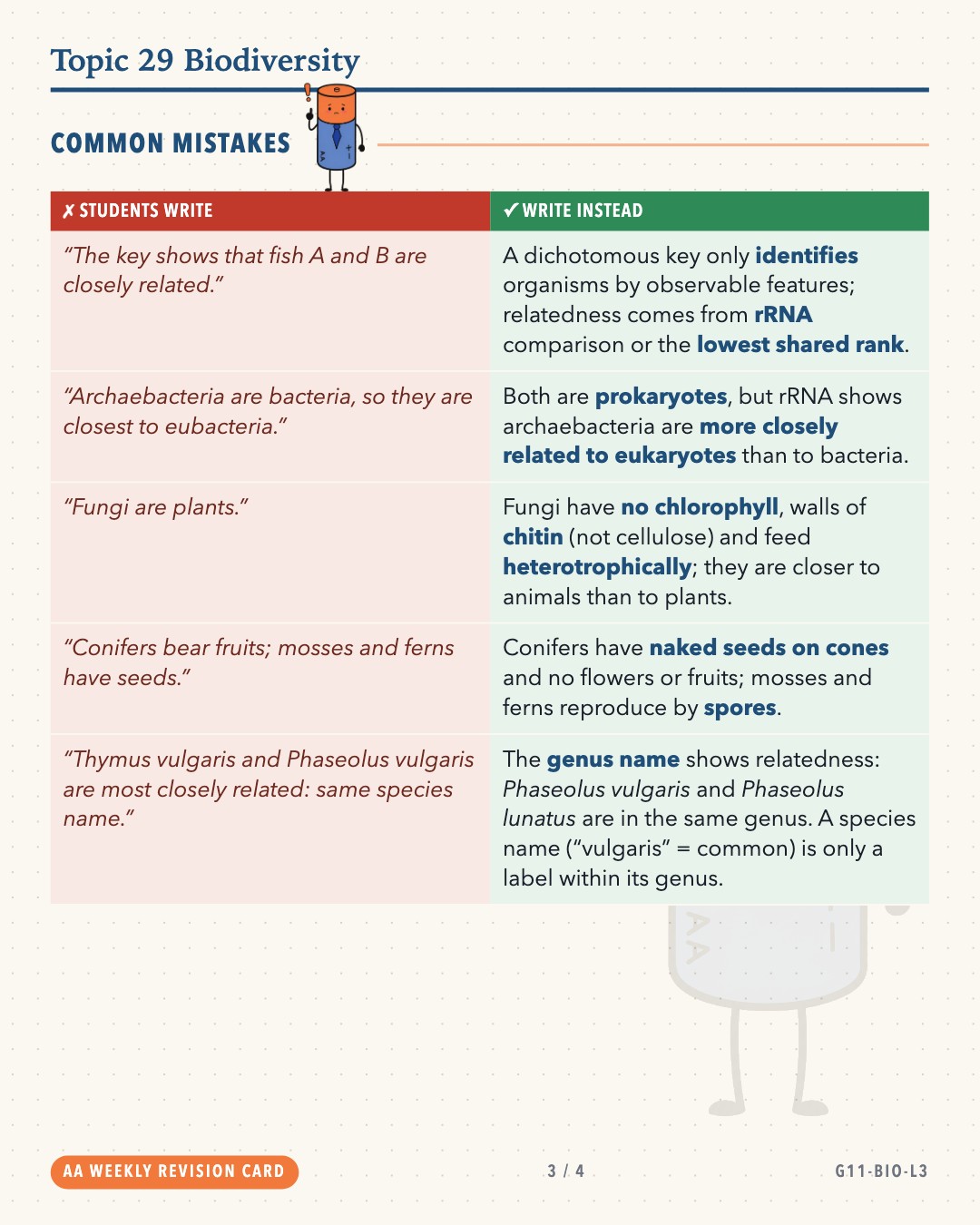
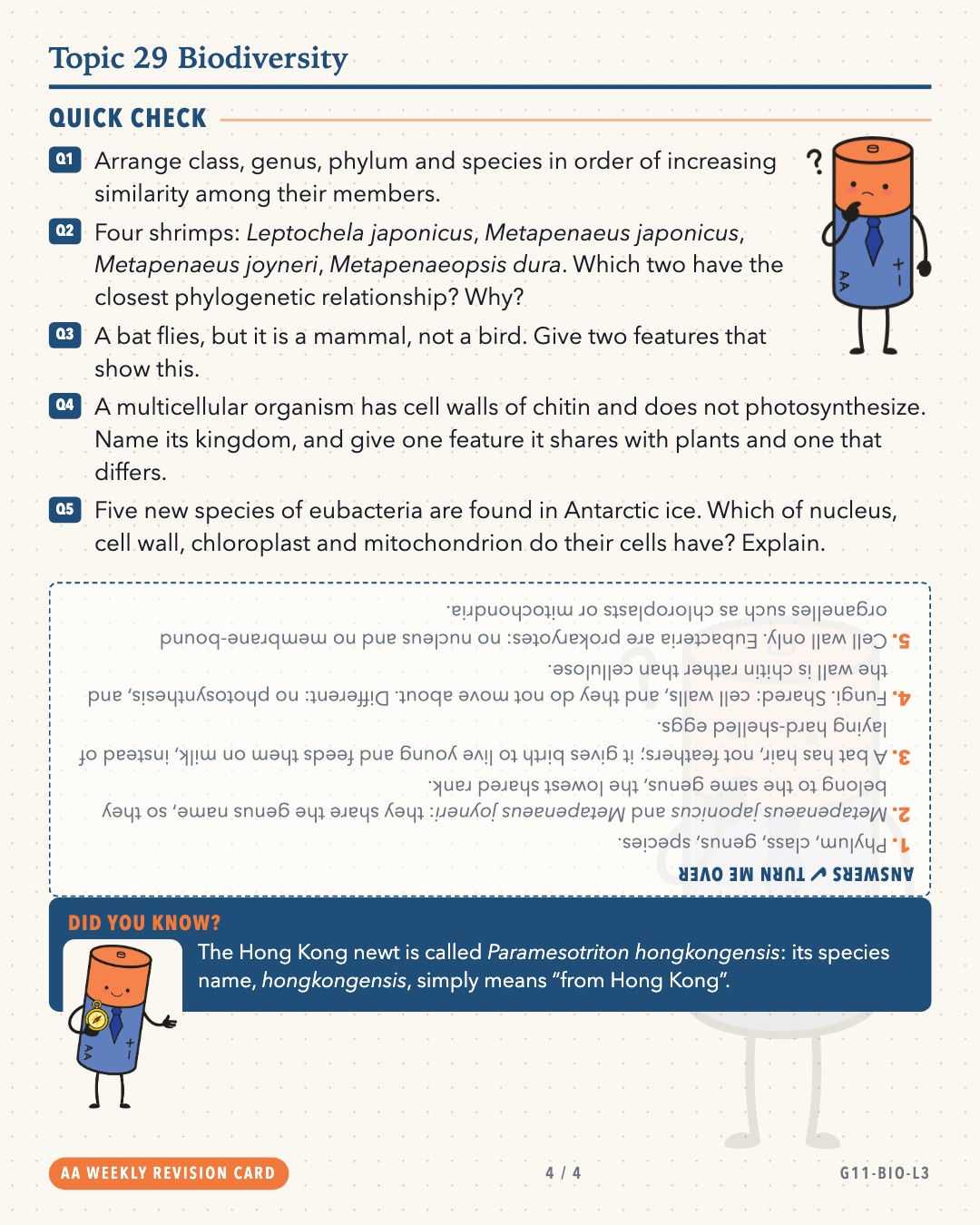
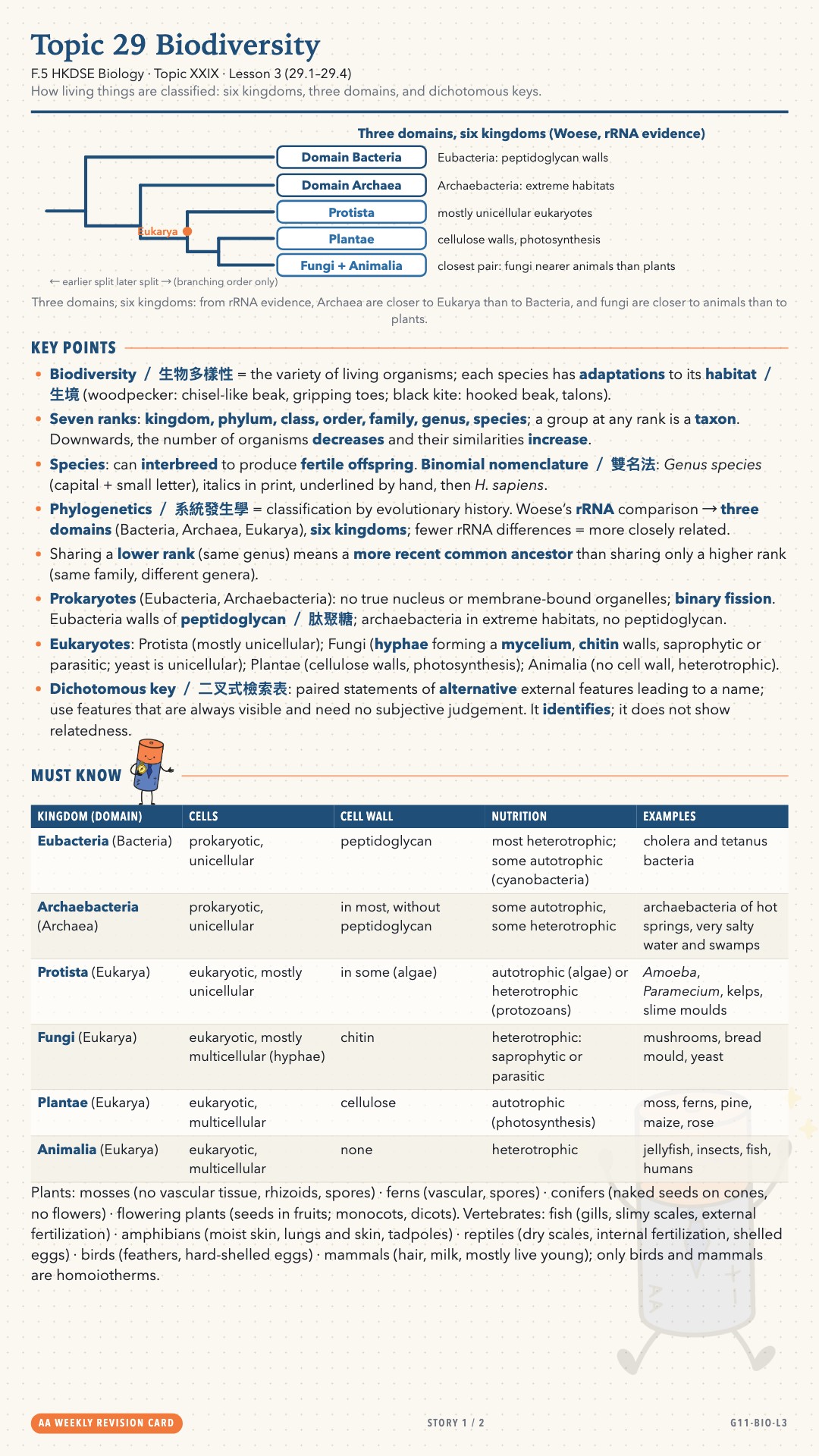
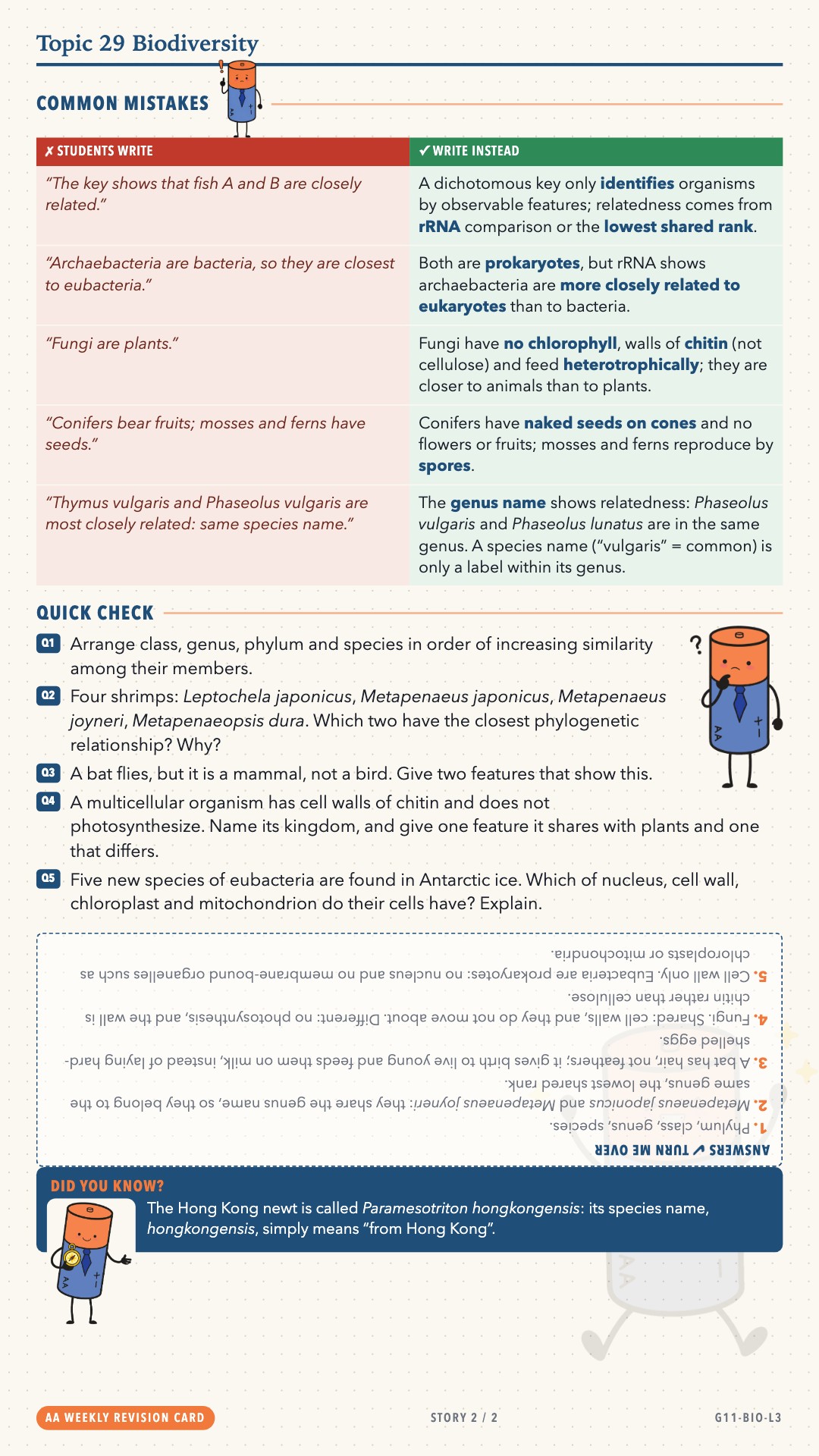
How living things are classified: six kingdoms, three domains, and dichotomous keys.
✔ fact-checked · 0 added mistakes tagged [likely] · 2.1 MB JPG · card.md ·
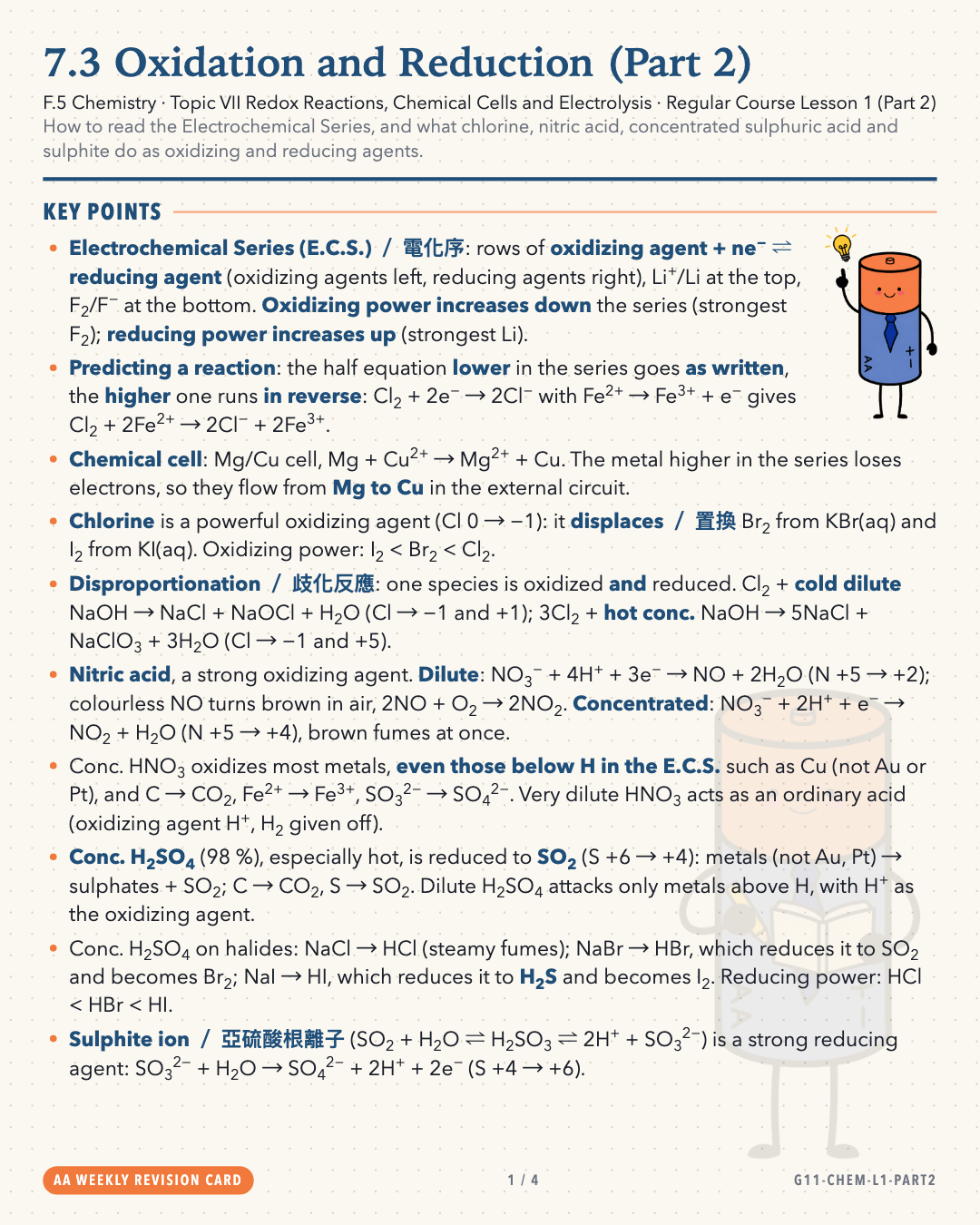
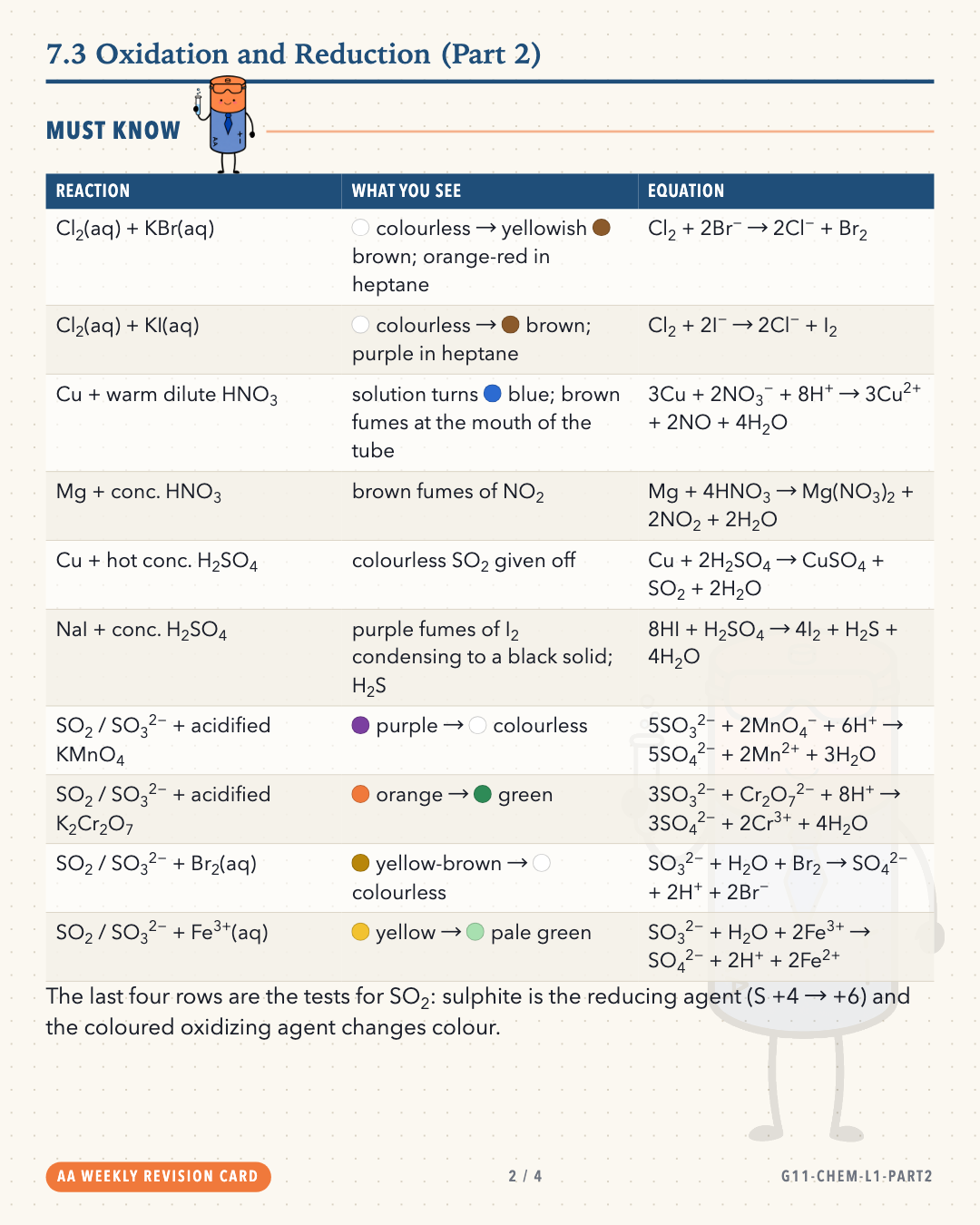
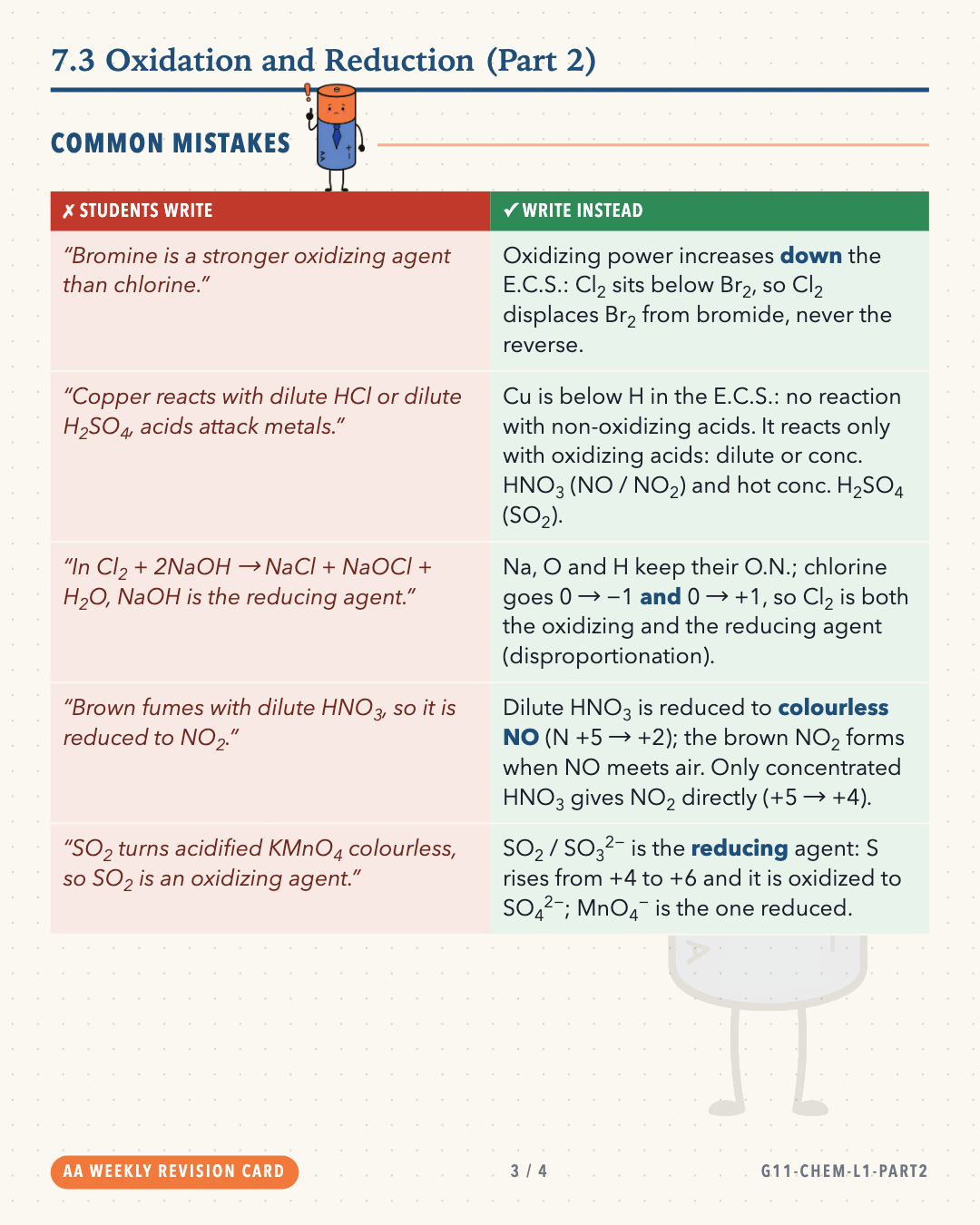
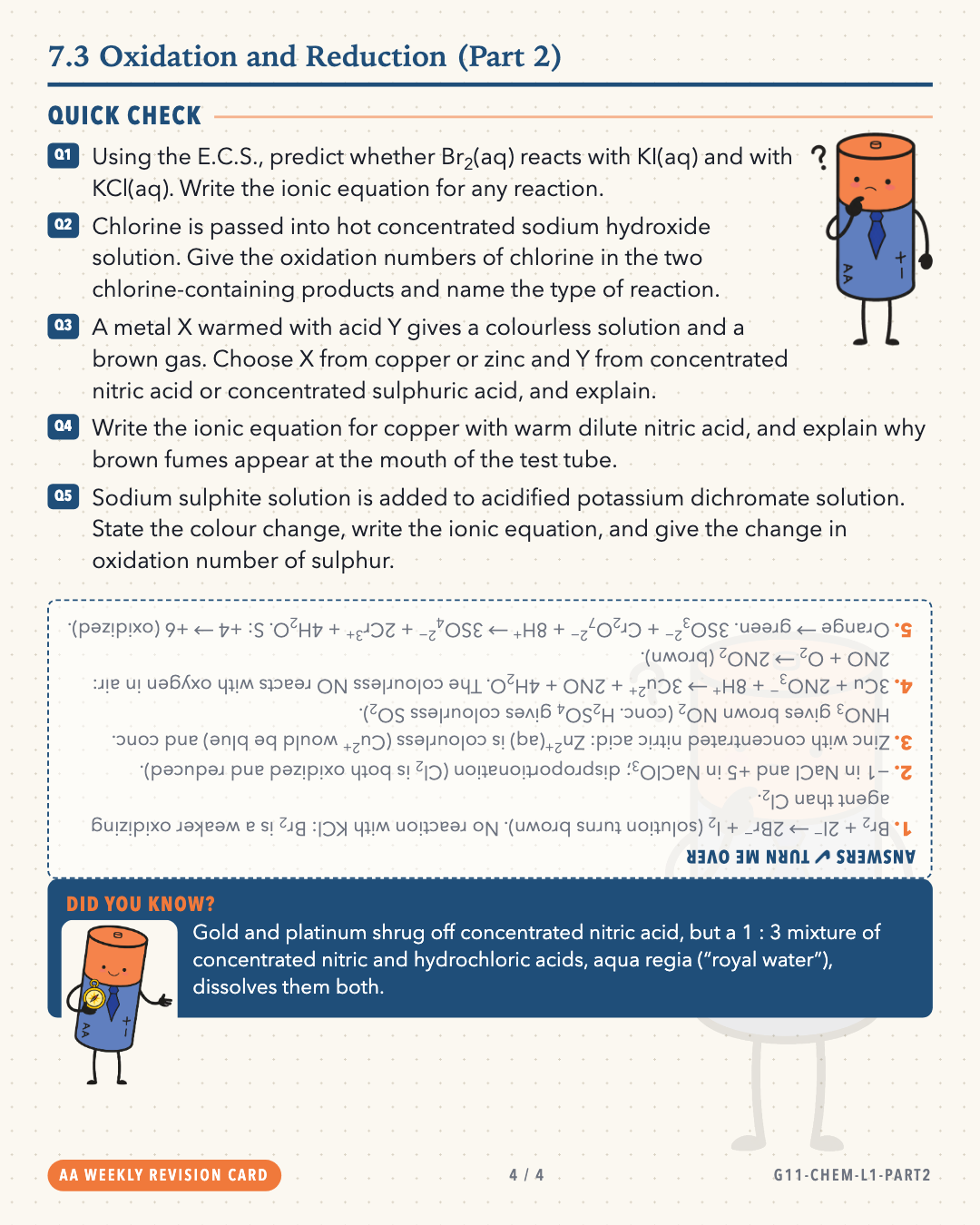
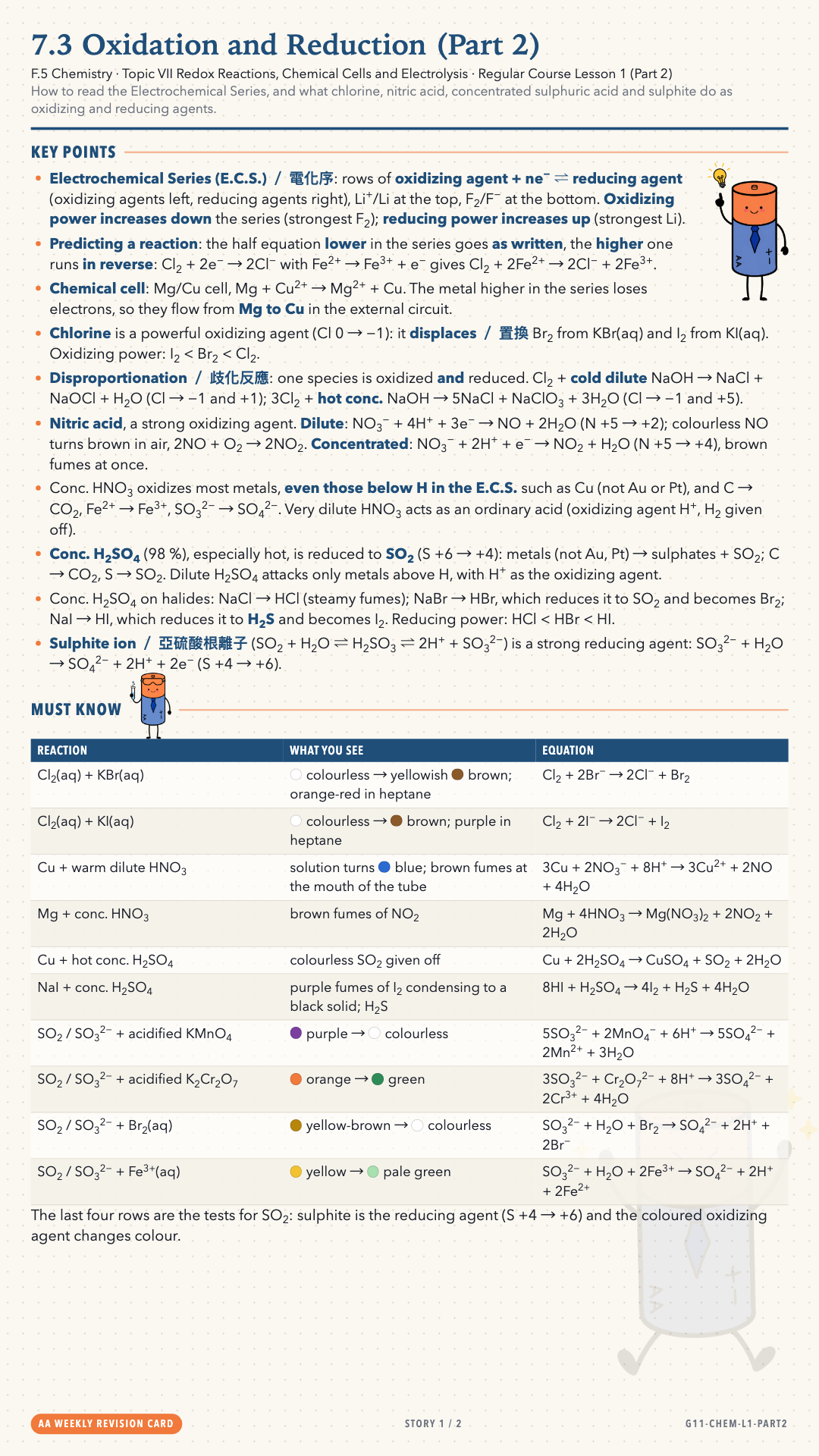
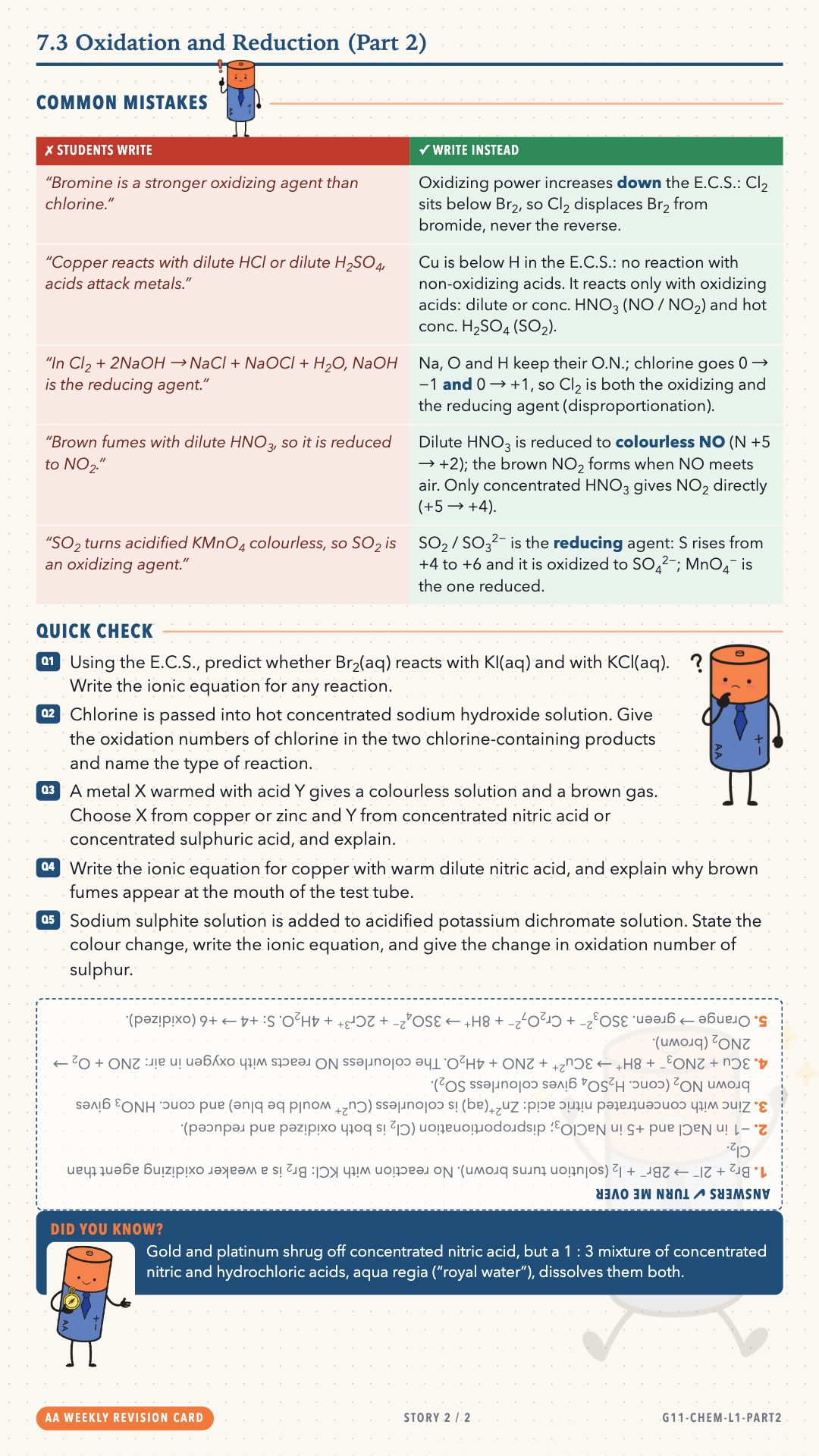
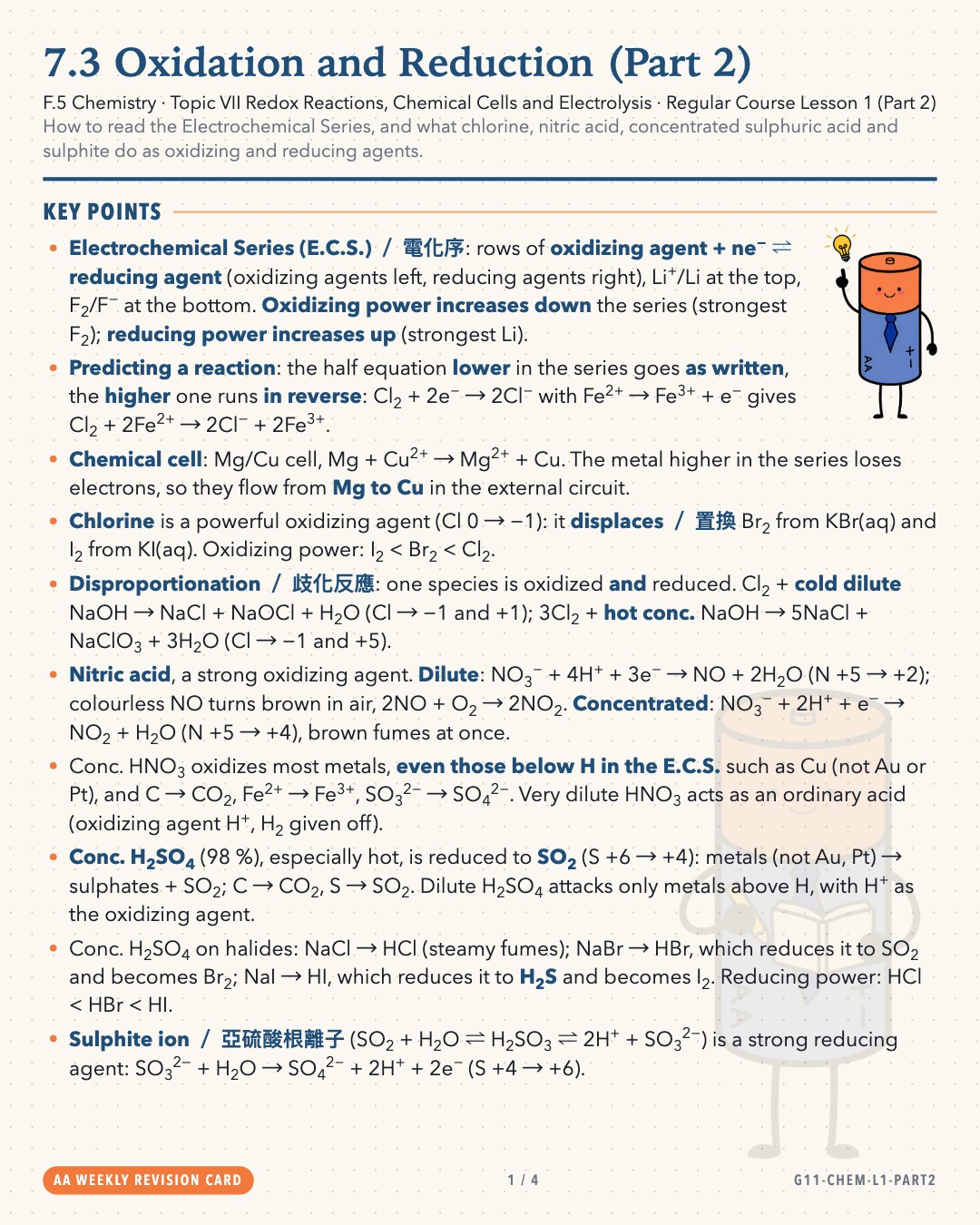
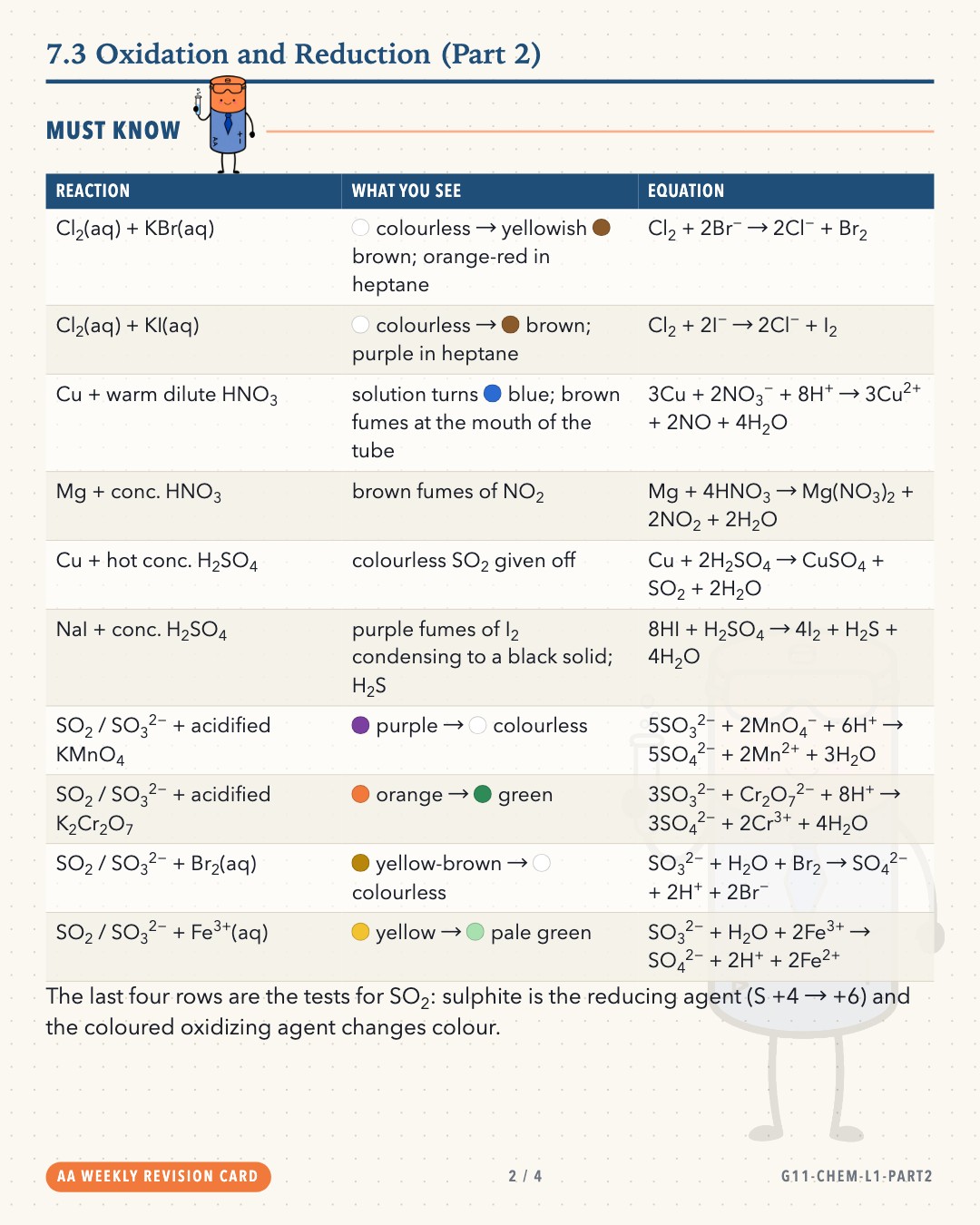
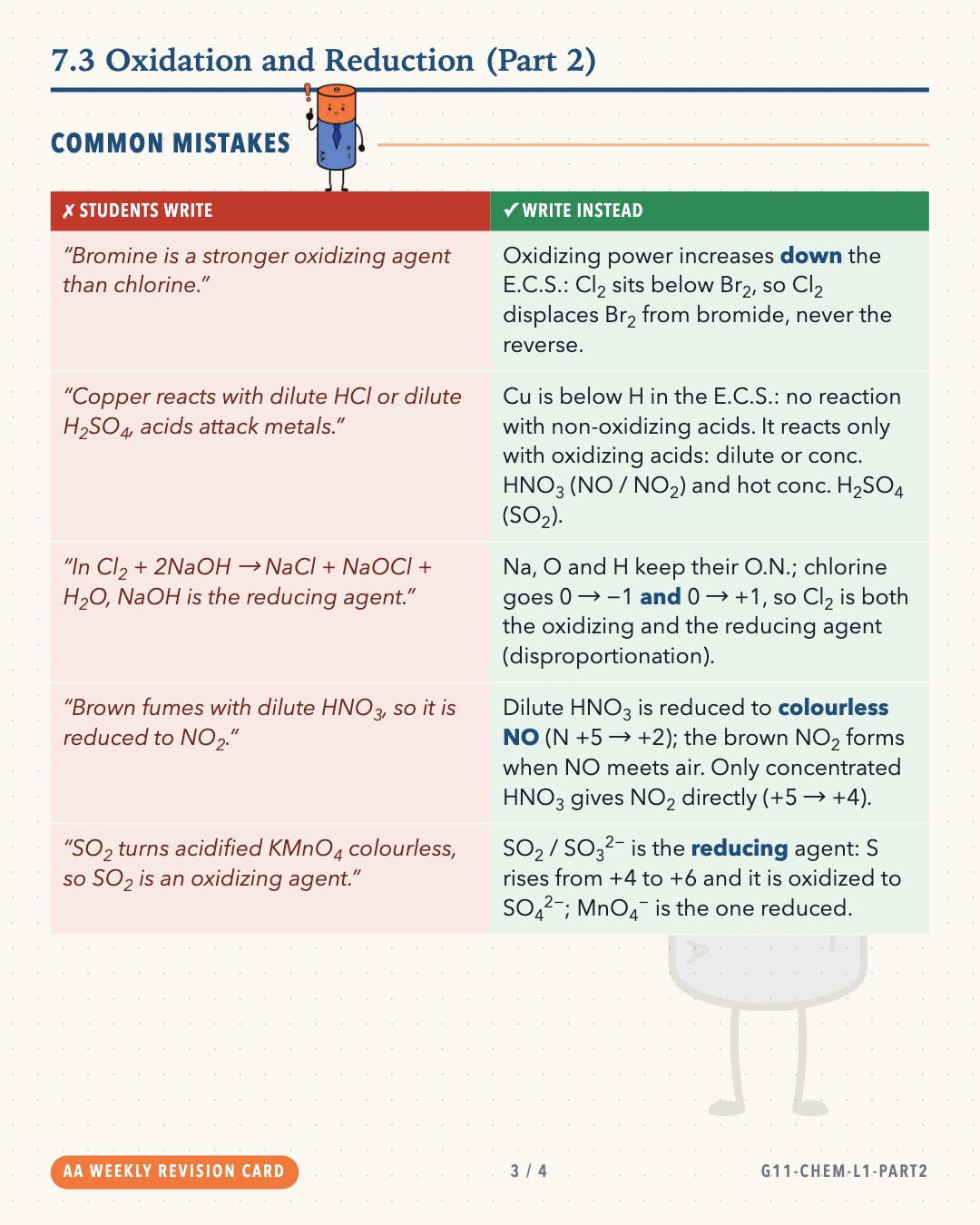
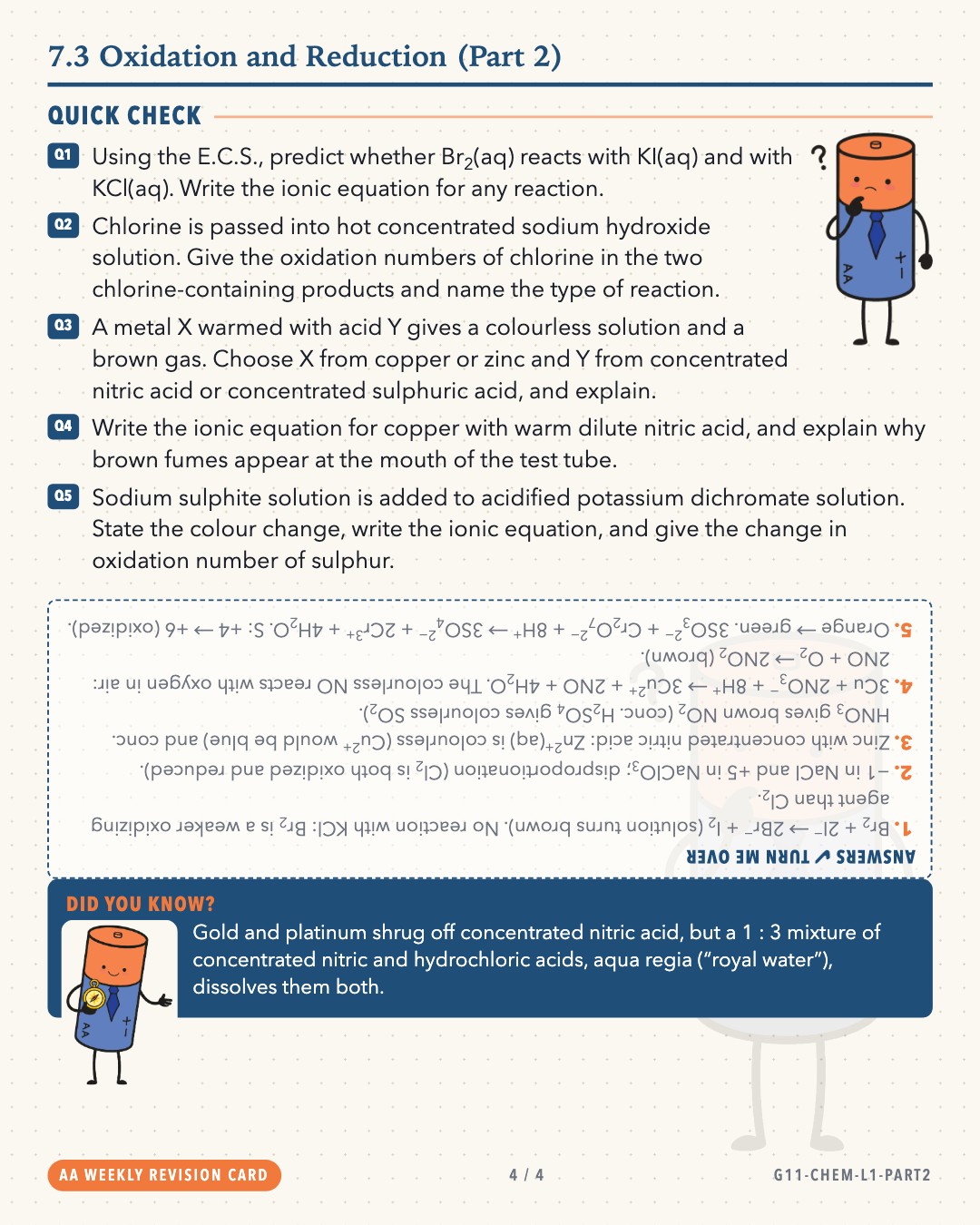
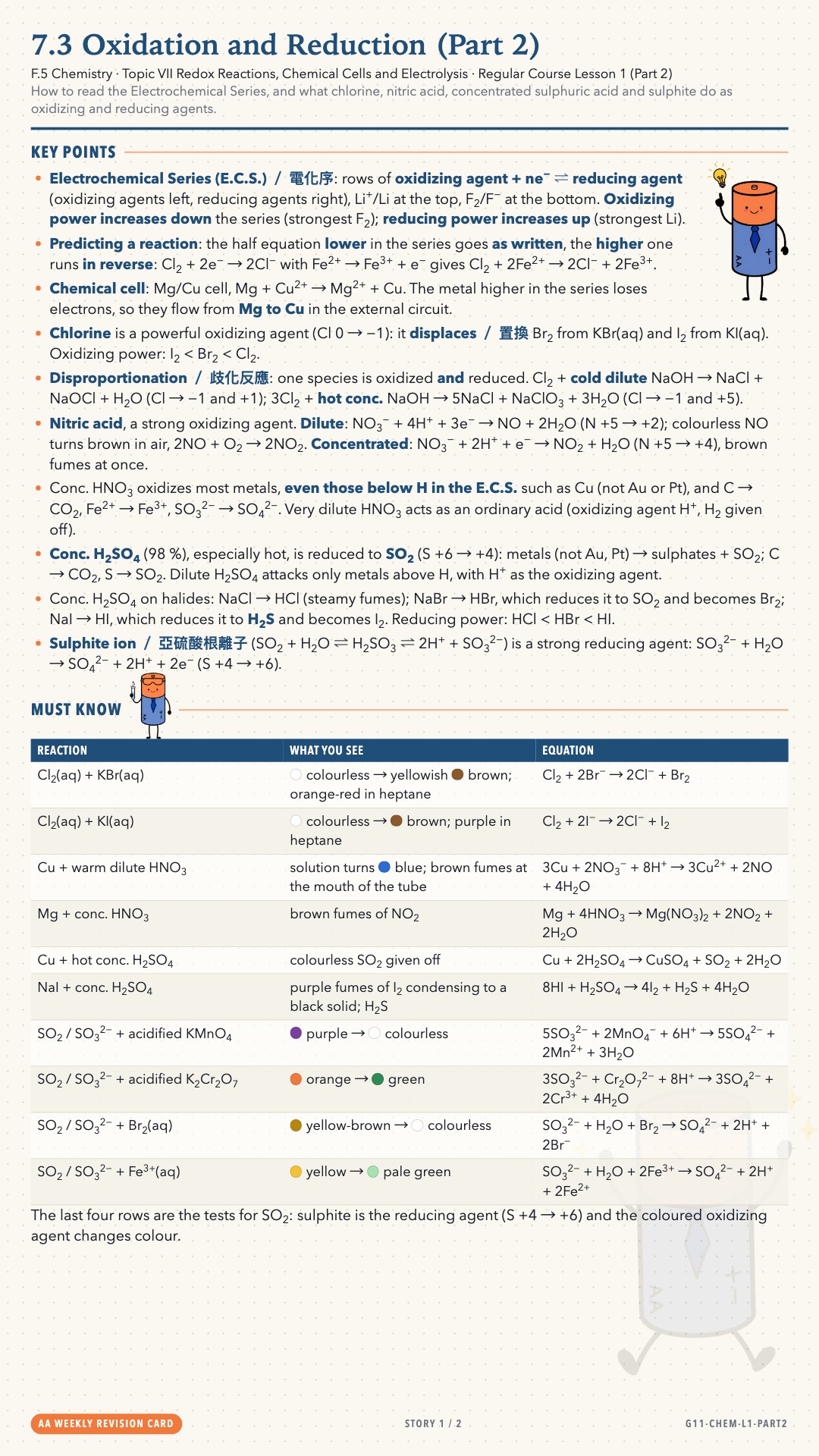
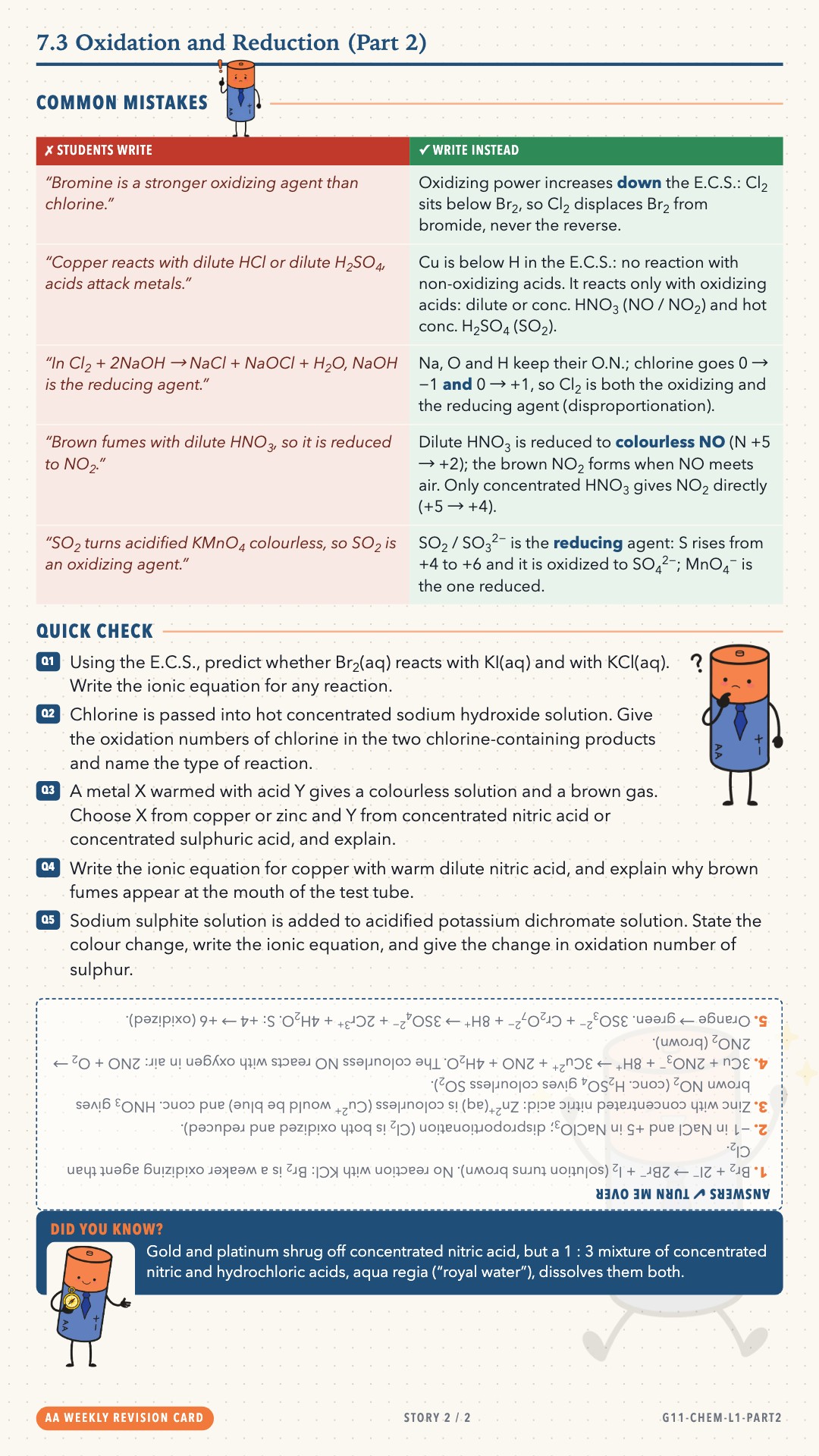
How to read the Electrochemical Series, and what chlorine, nitric acid, concentrated sulphuric acid and sulphite do as oxidizing and reducing agents.
✔ fact-checked · 1 added mistake tagged [likely] · 2.2 MB JPG · card.md ·
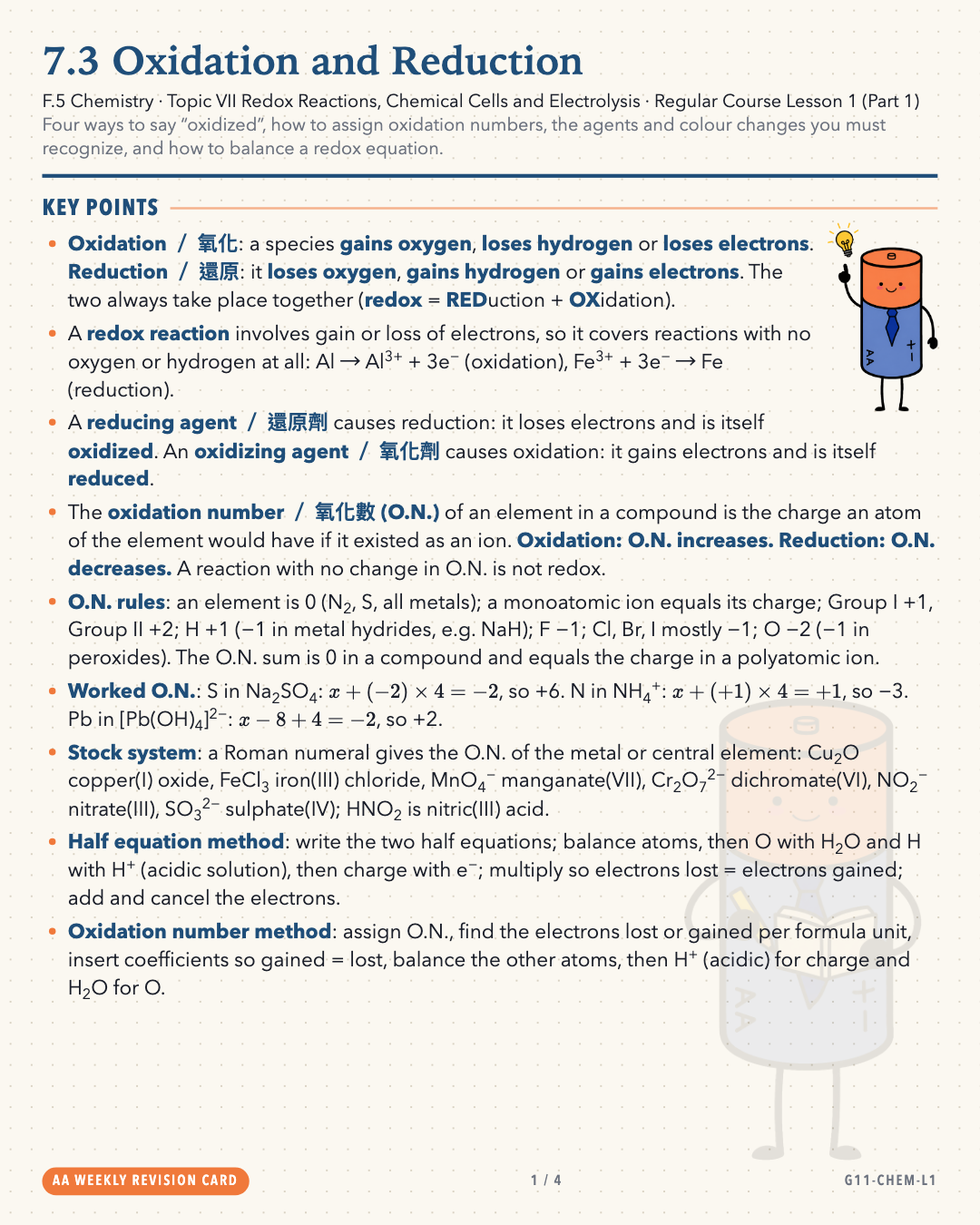
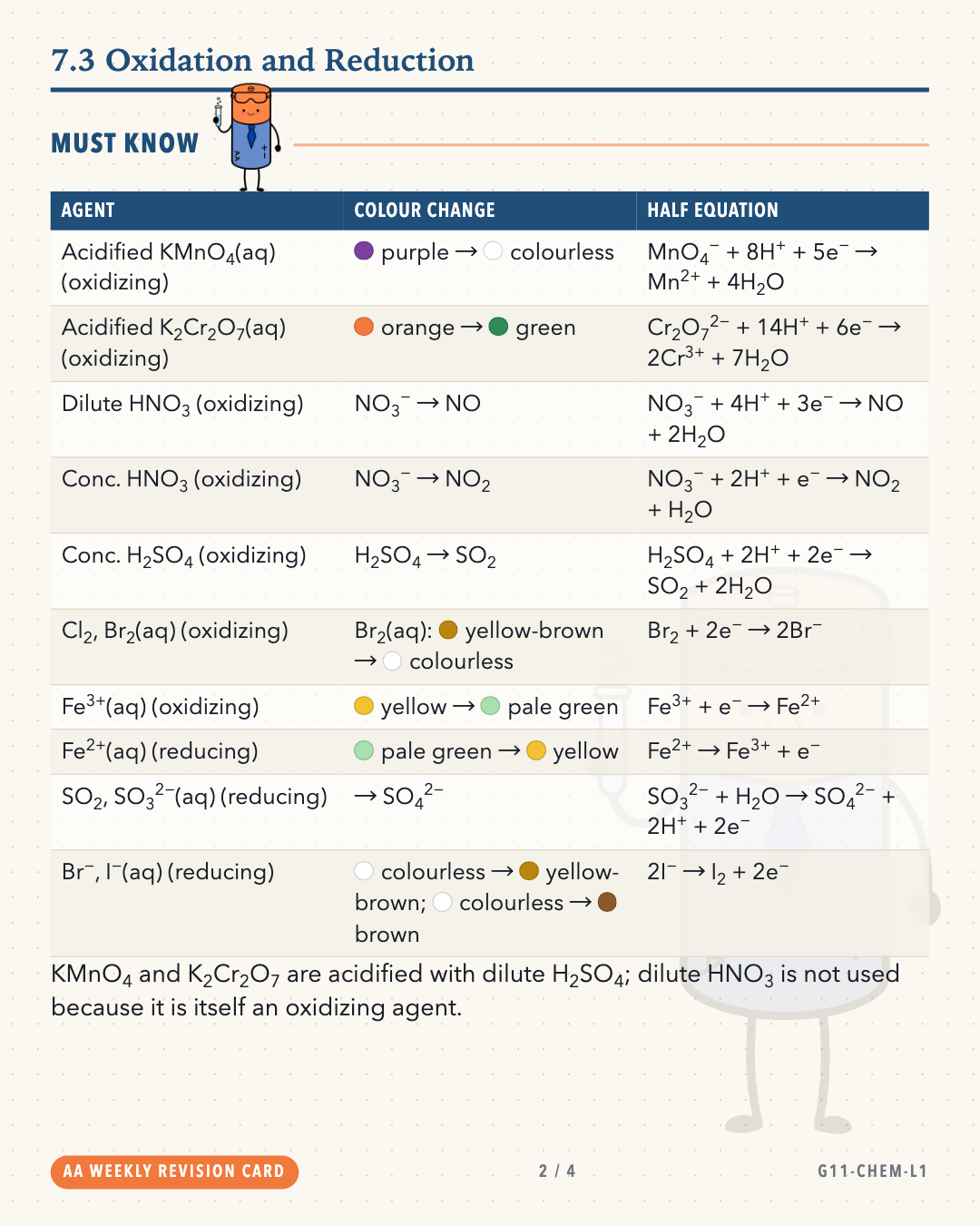
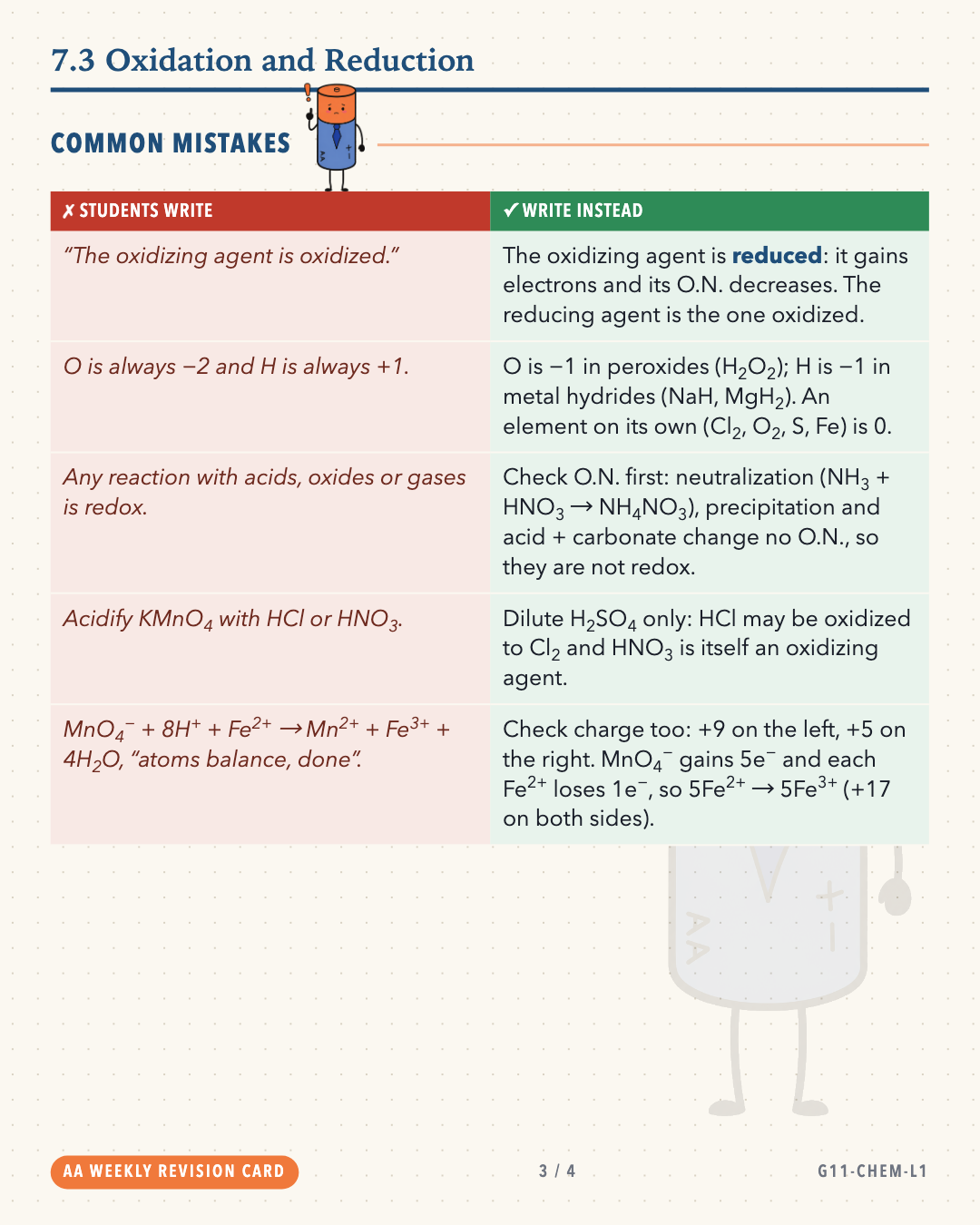
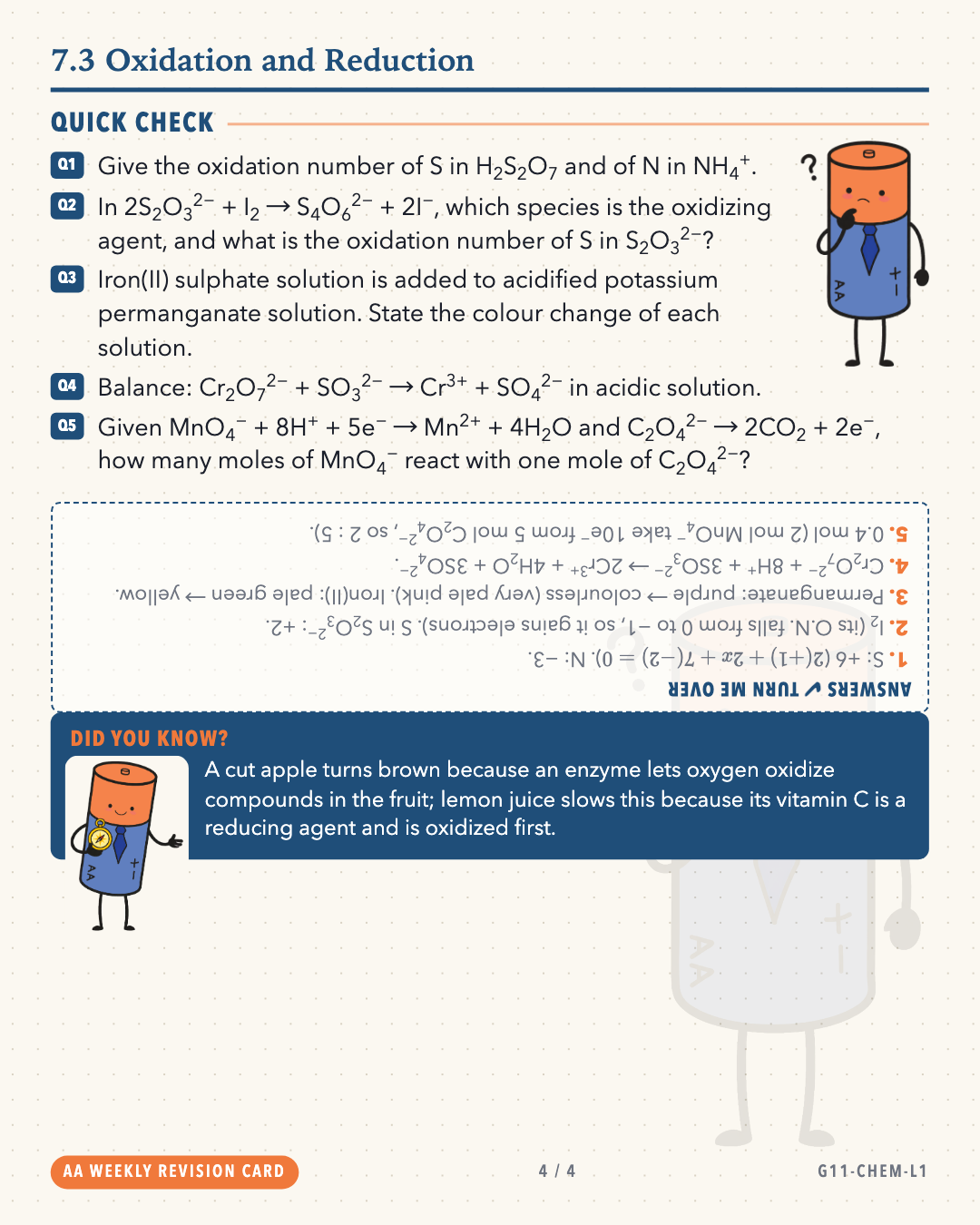
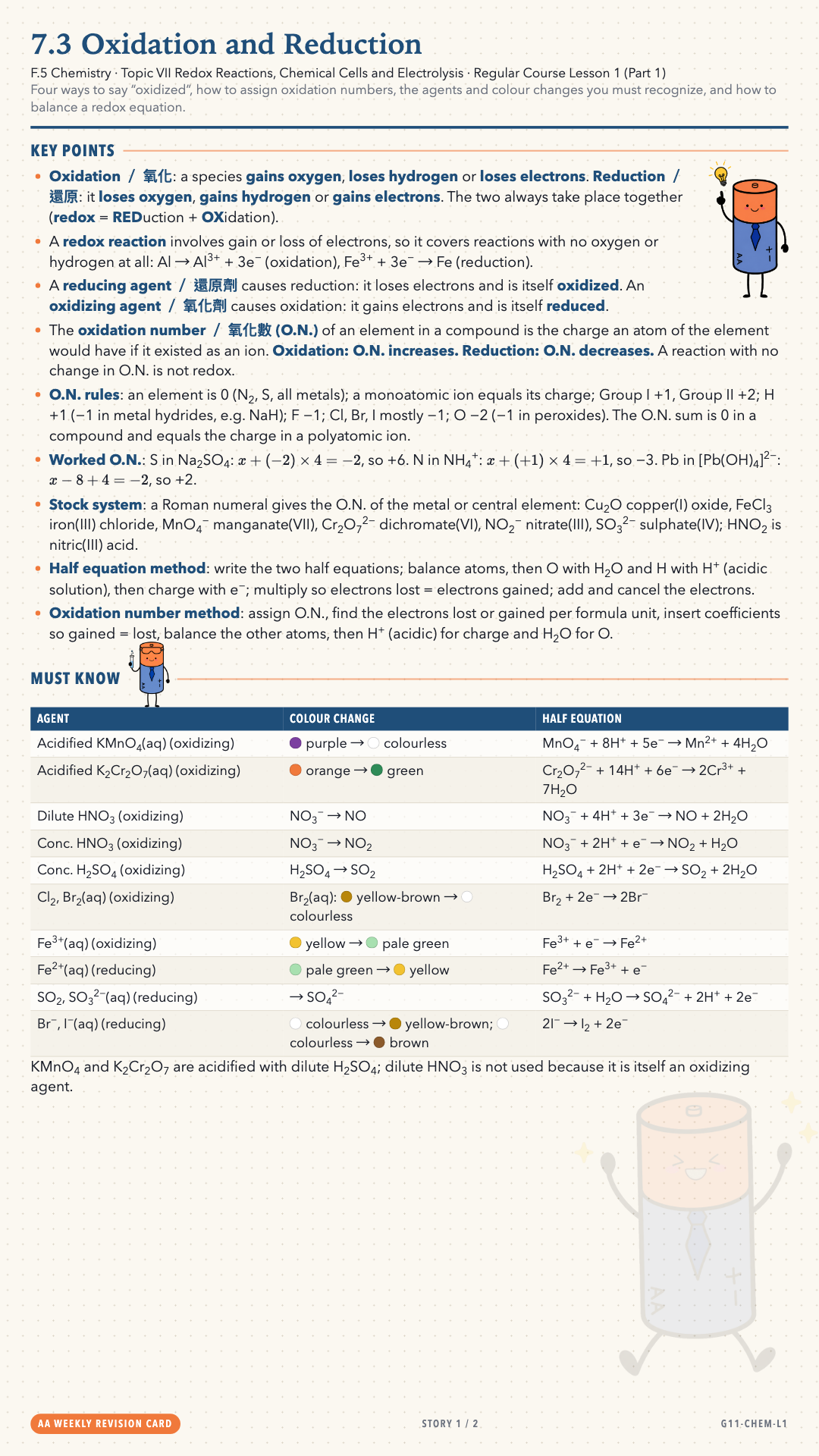
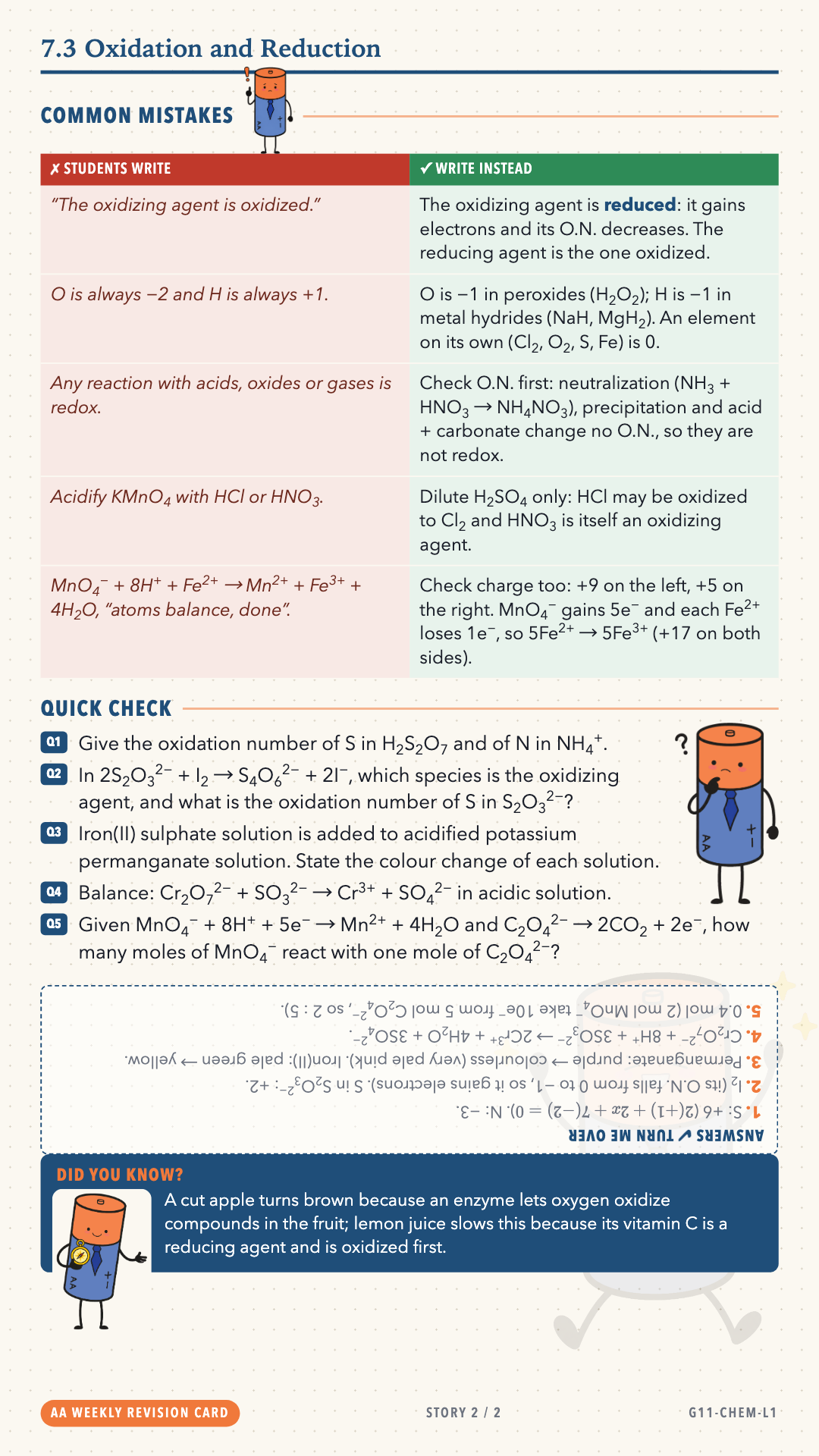
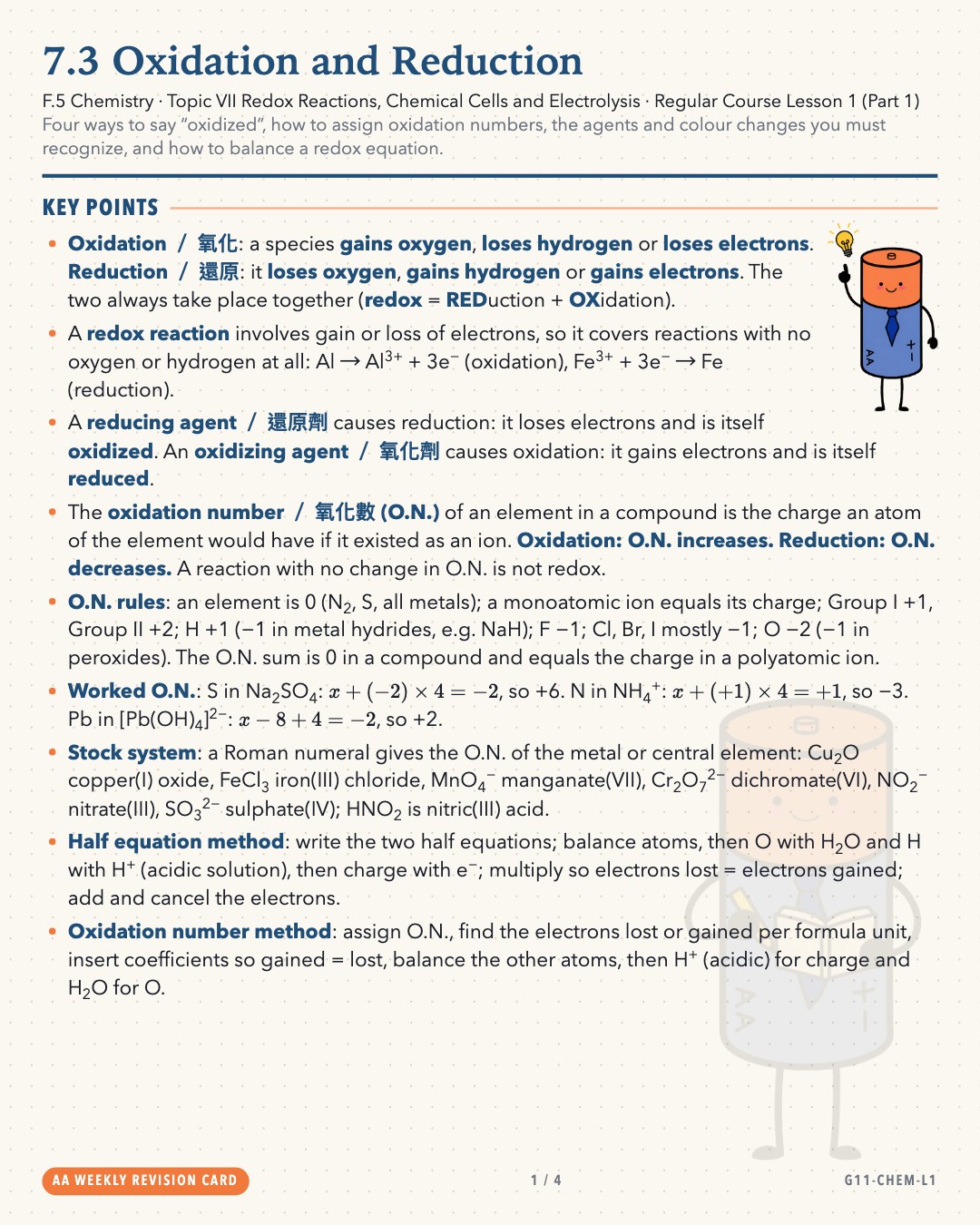
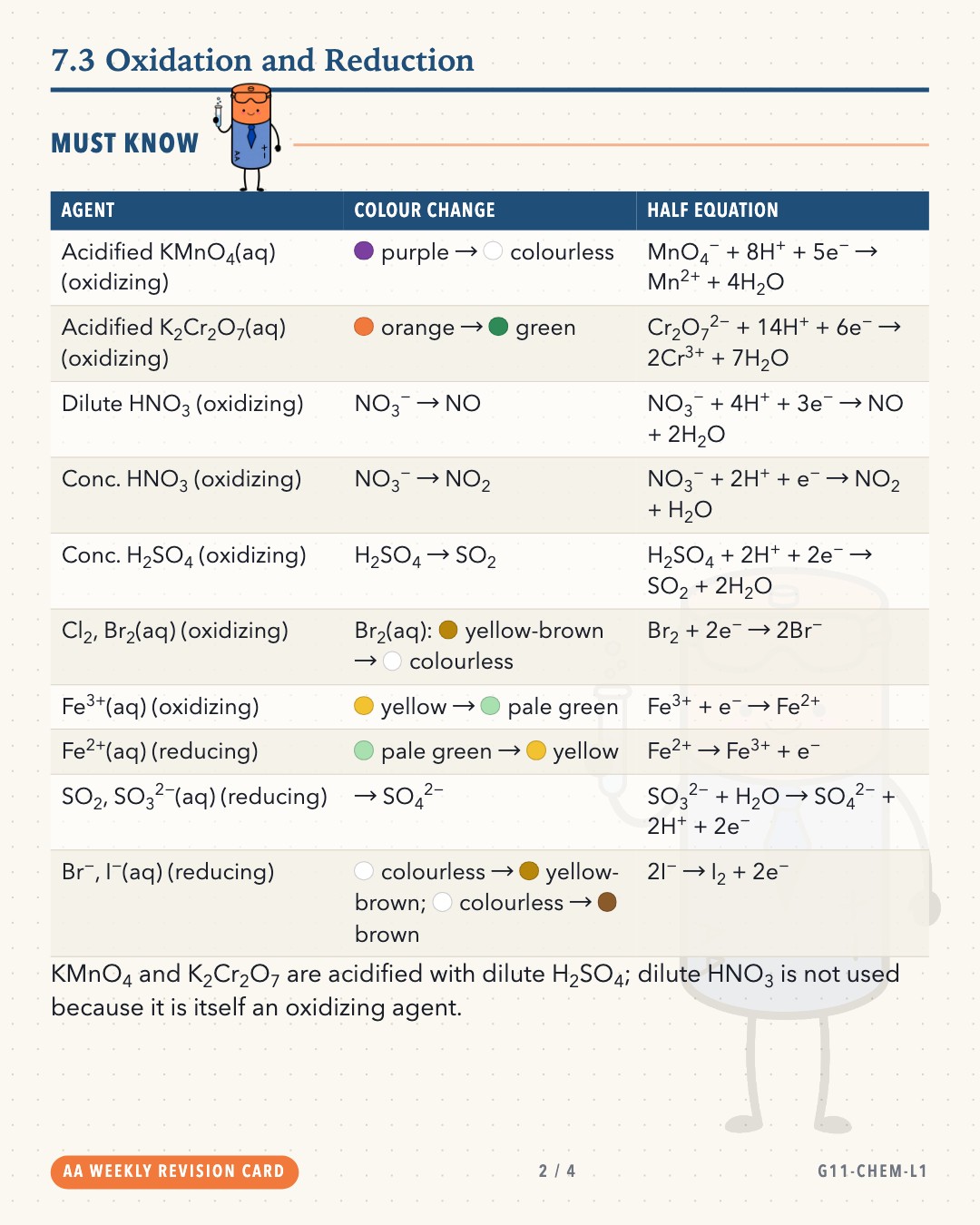
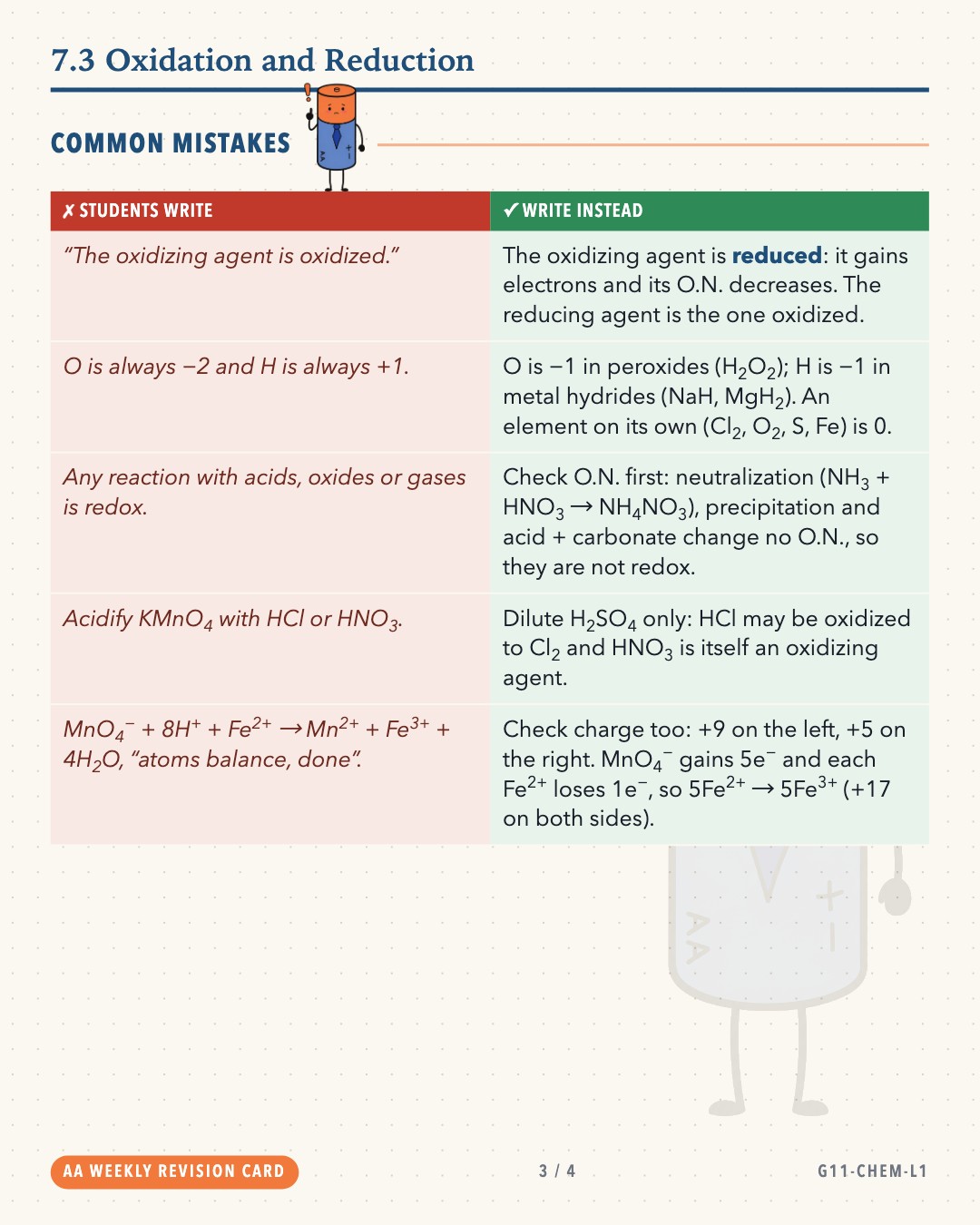
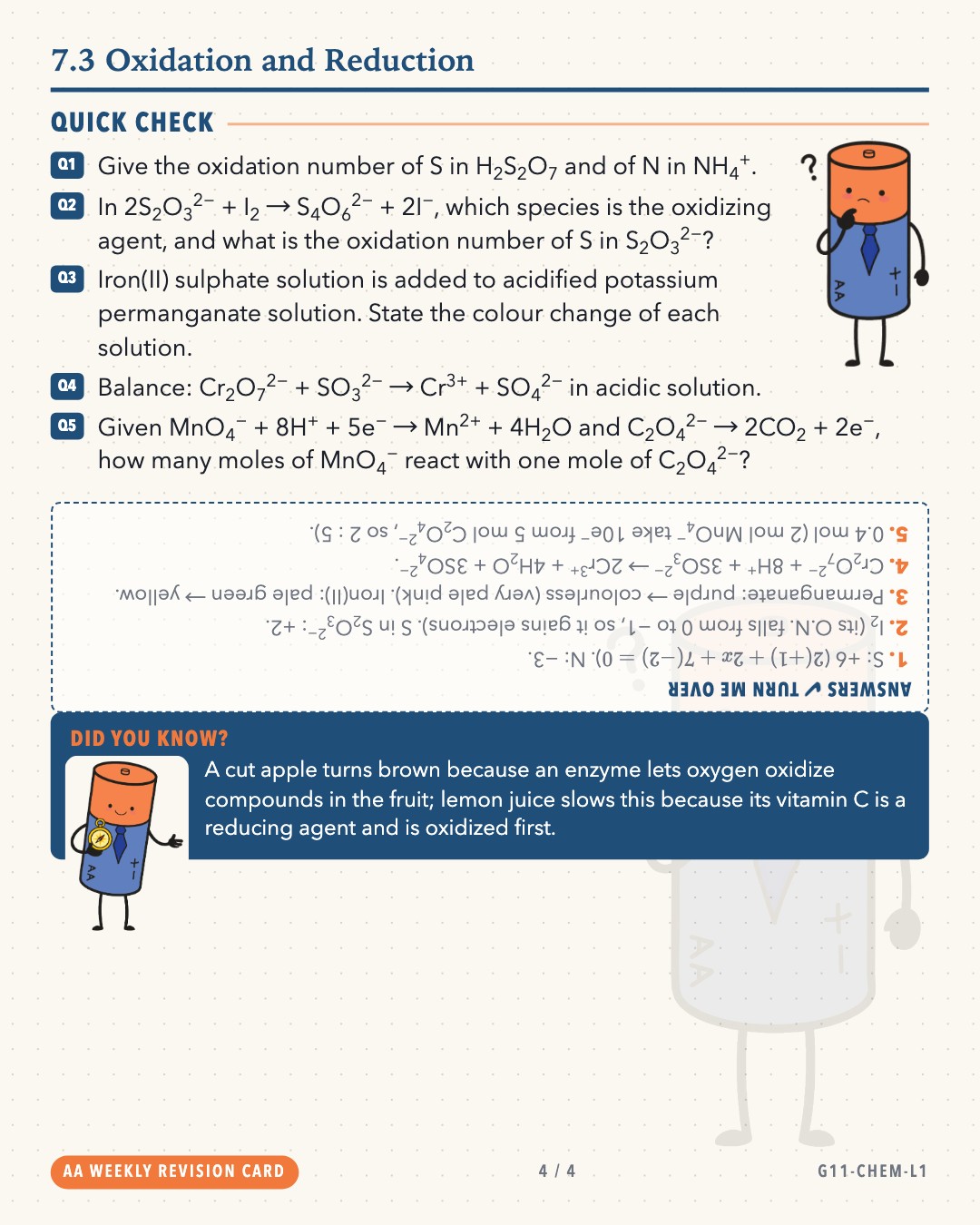
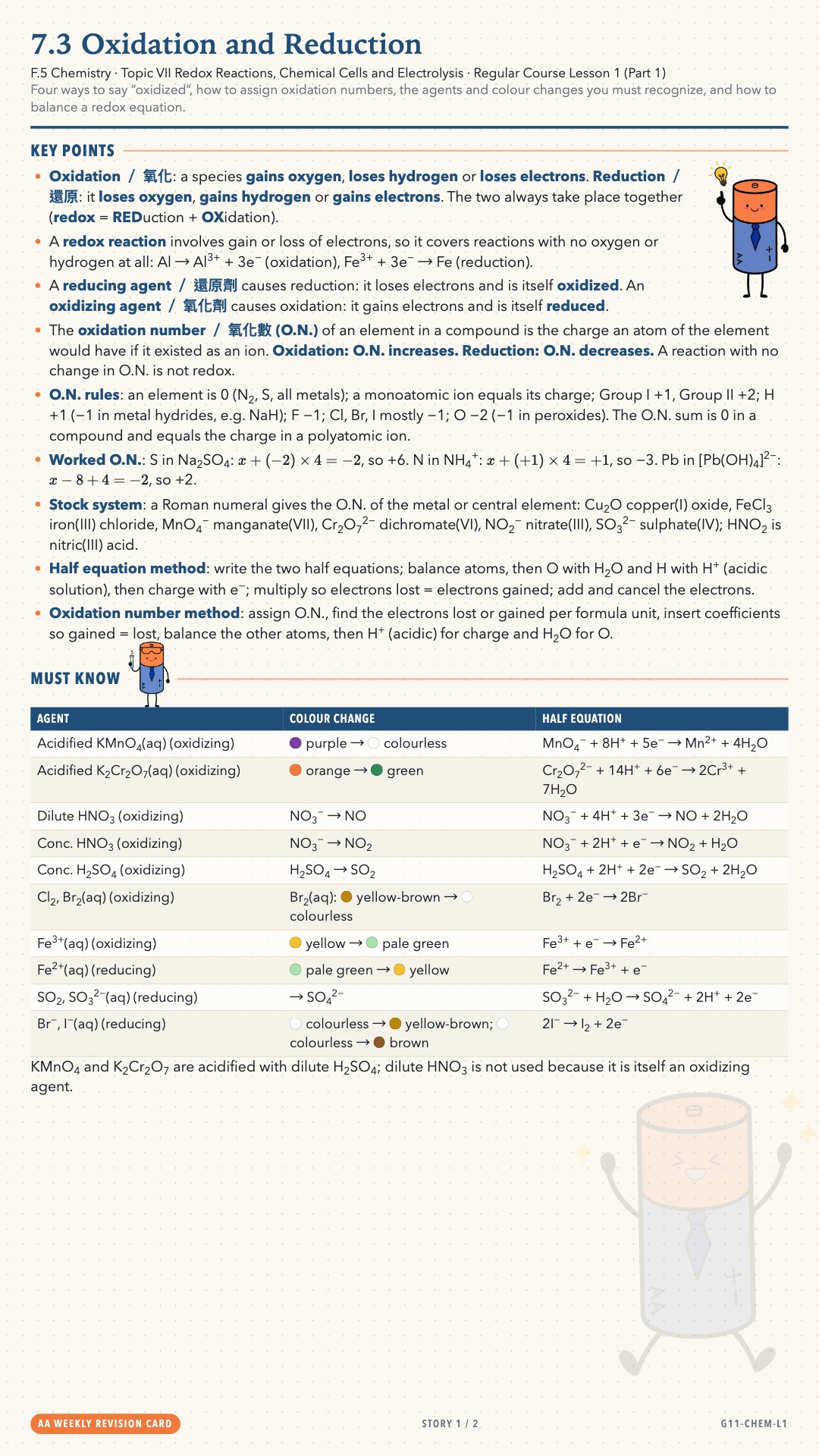
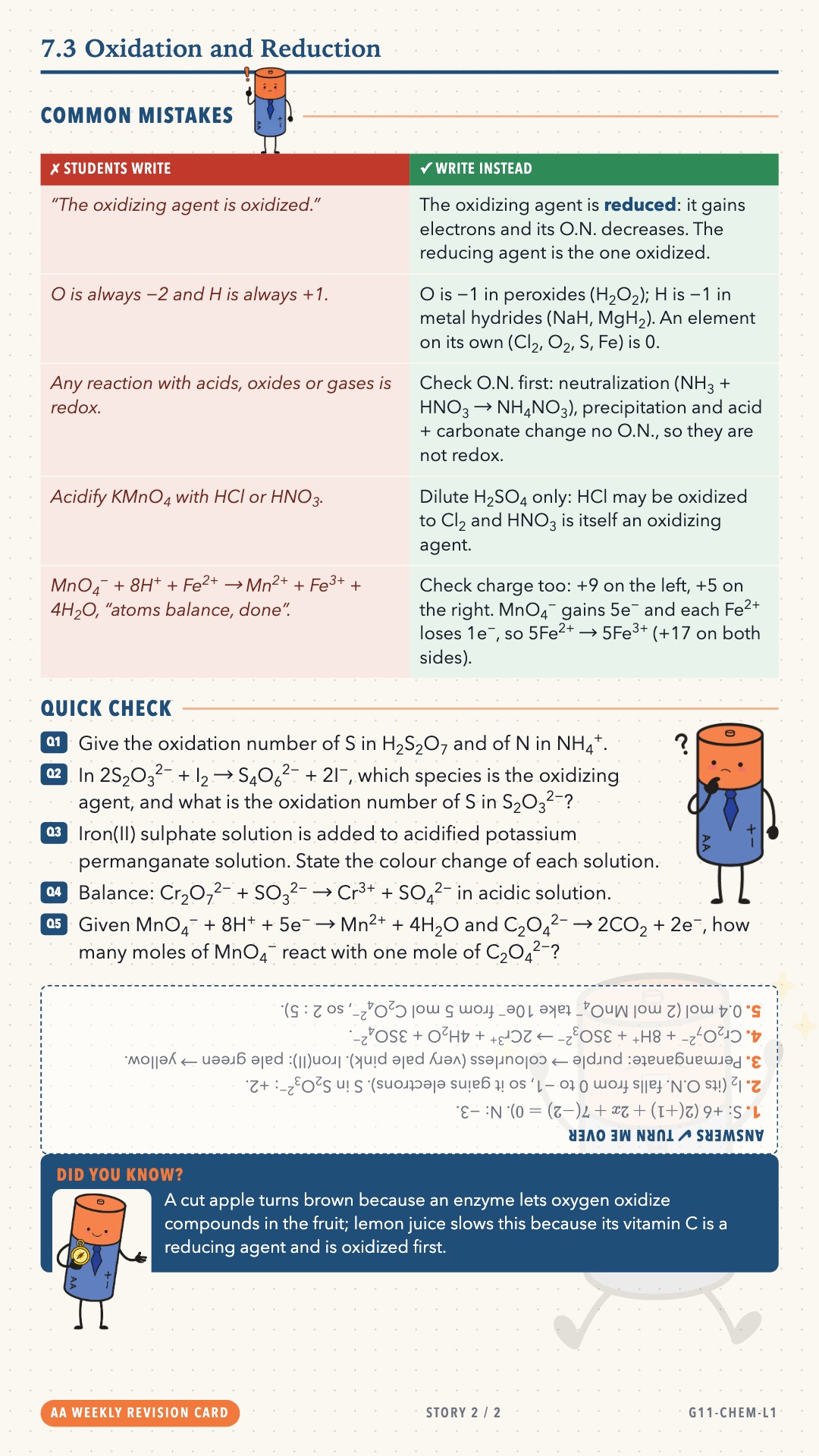
Four ways to say "oxidized", how to assign oxidation numbers, the agents and colour changes you must recognize, and how to balance a redox equation.
✔ fact-checked · 1 added mistake tagged [likely] · 2.0 MB JPG · card.md ·
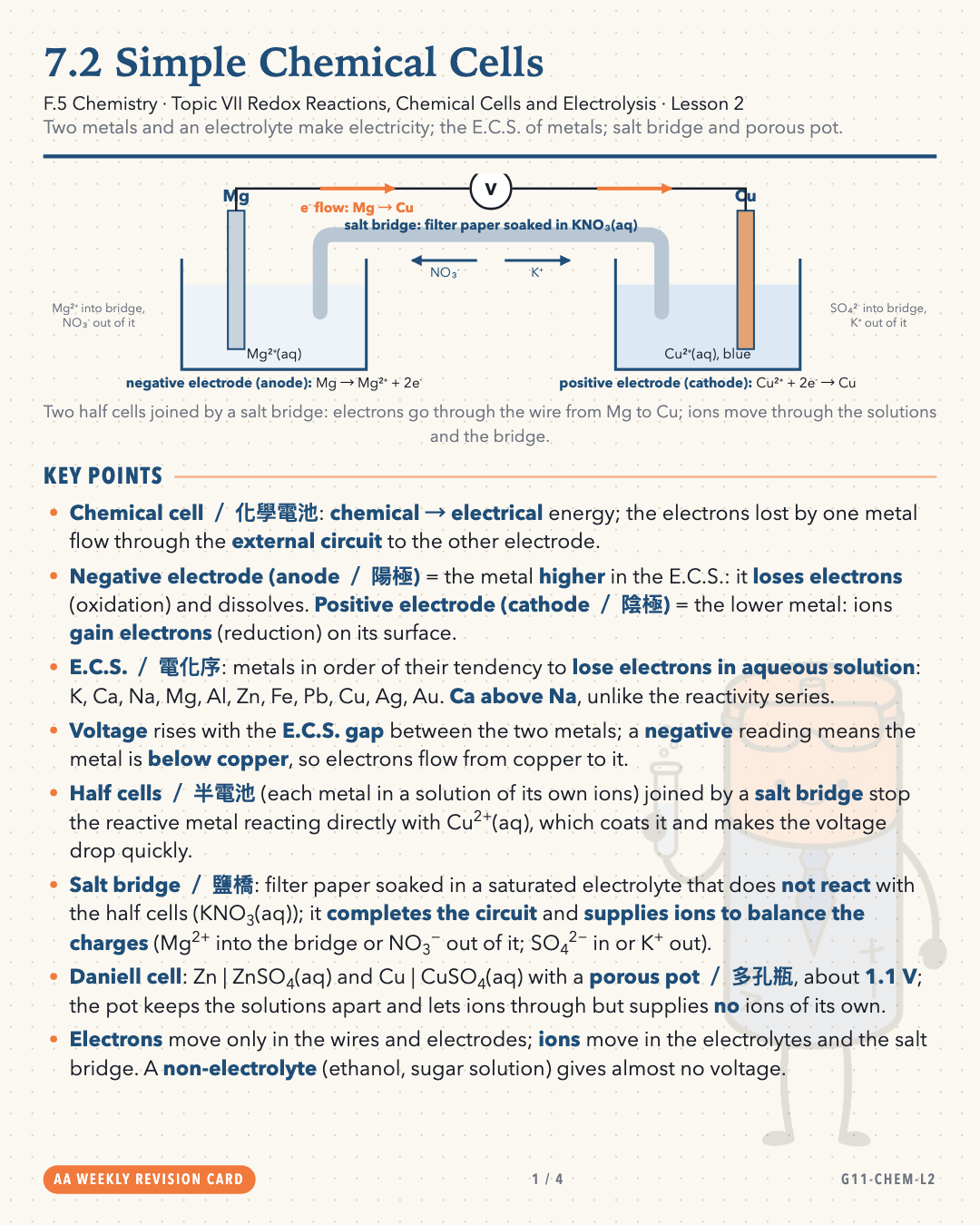
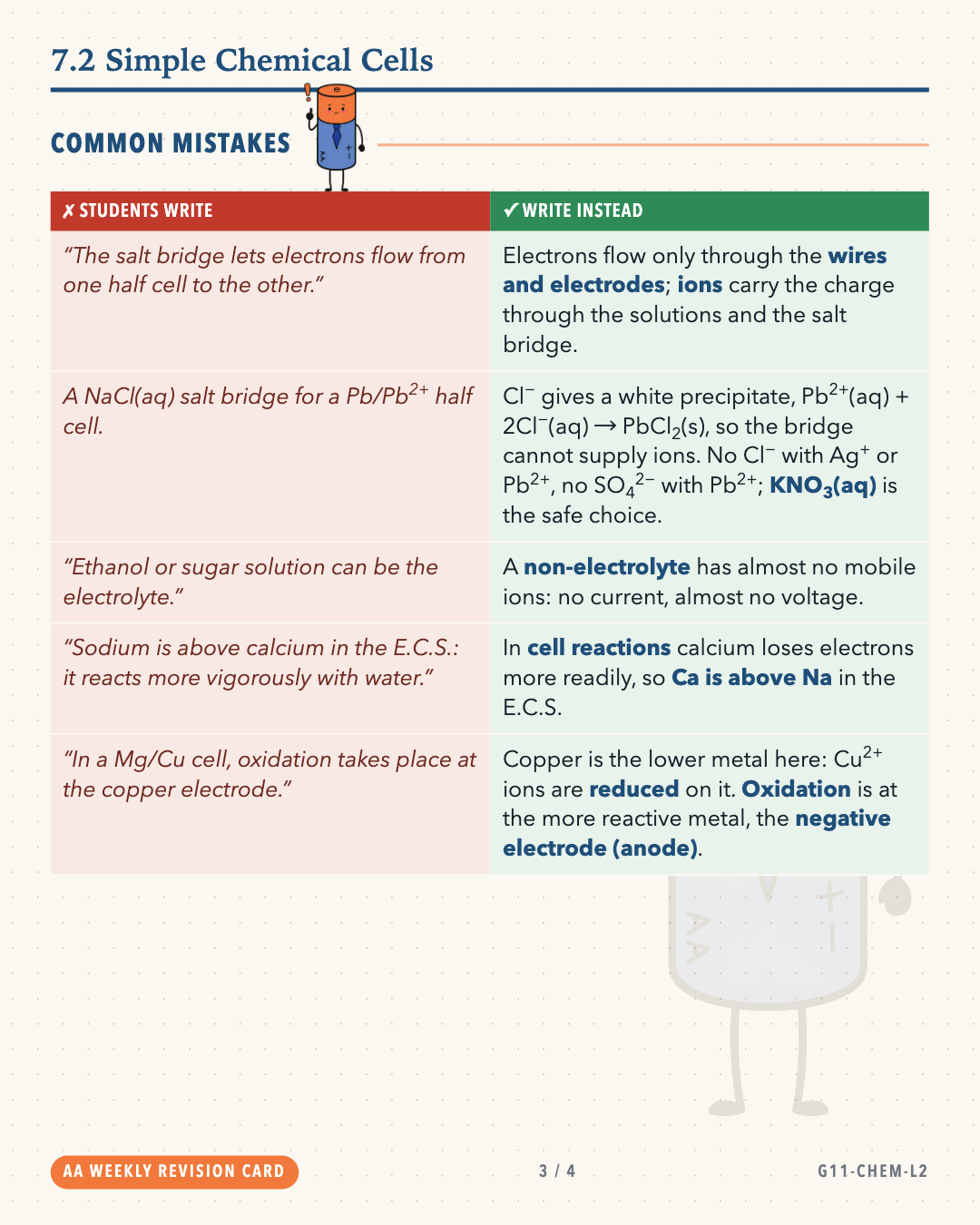
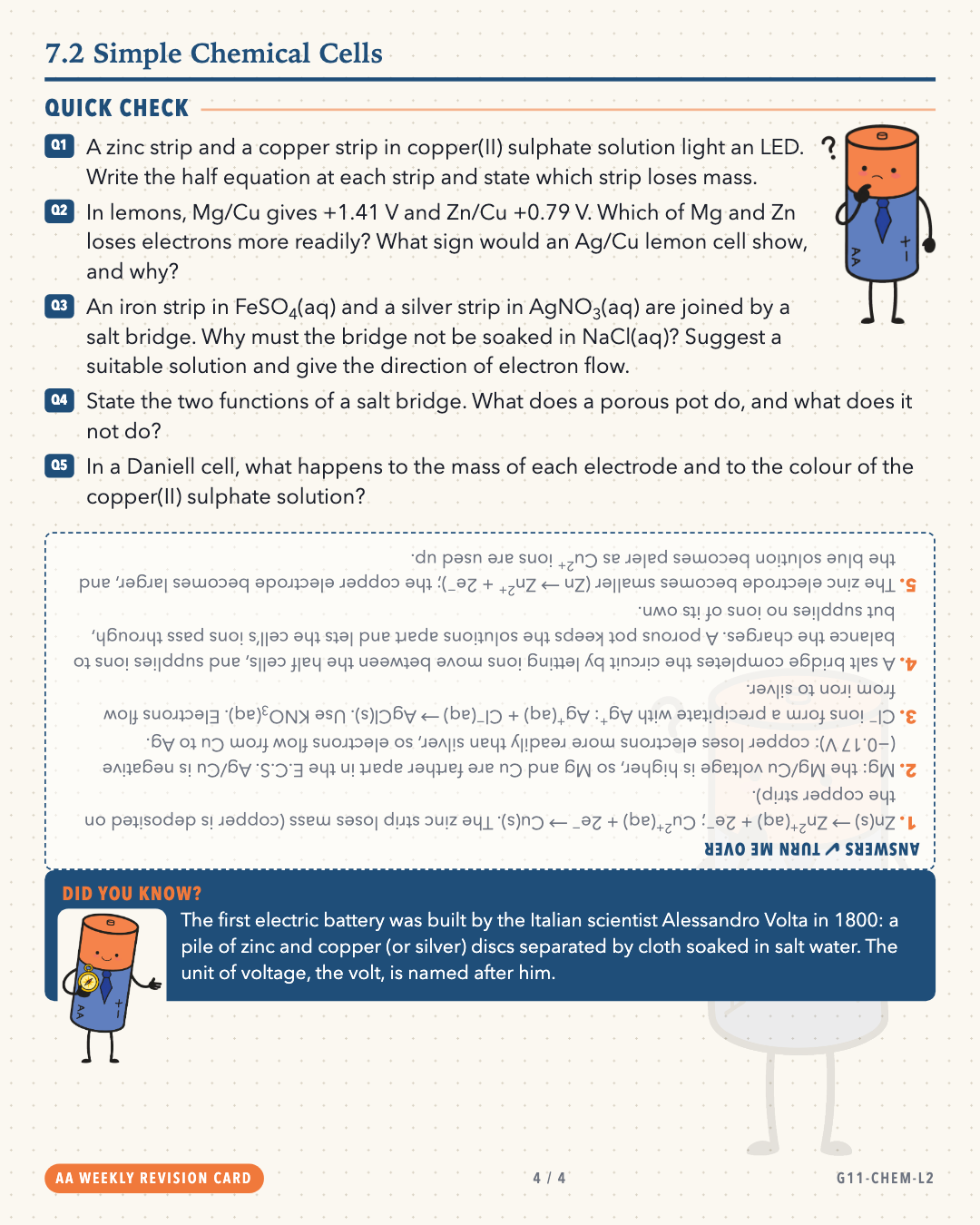
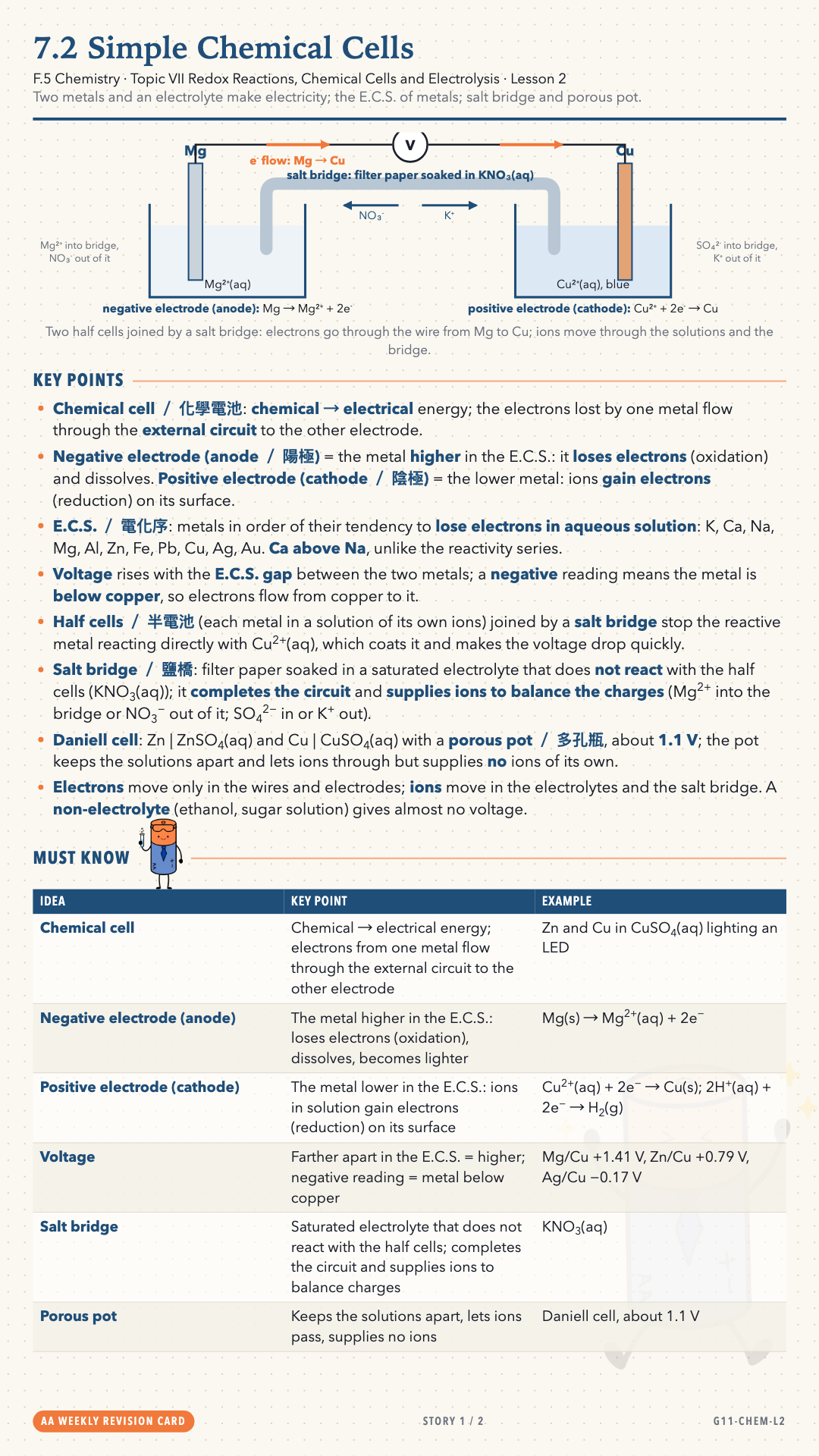
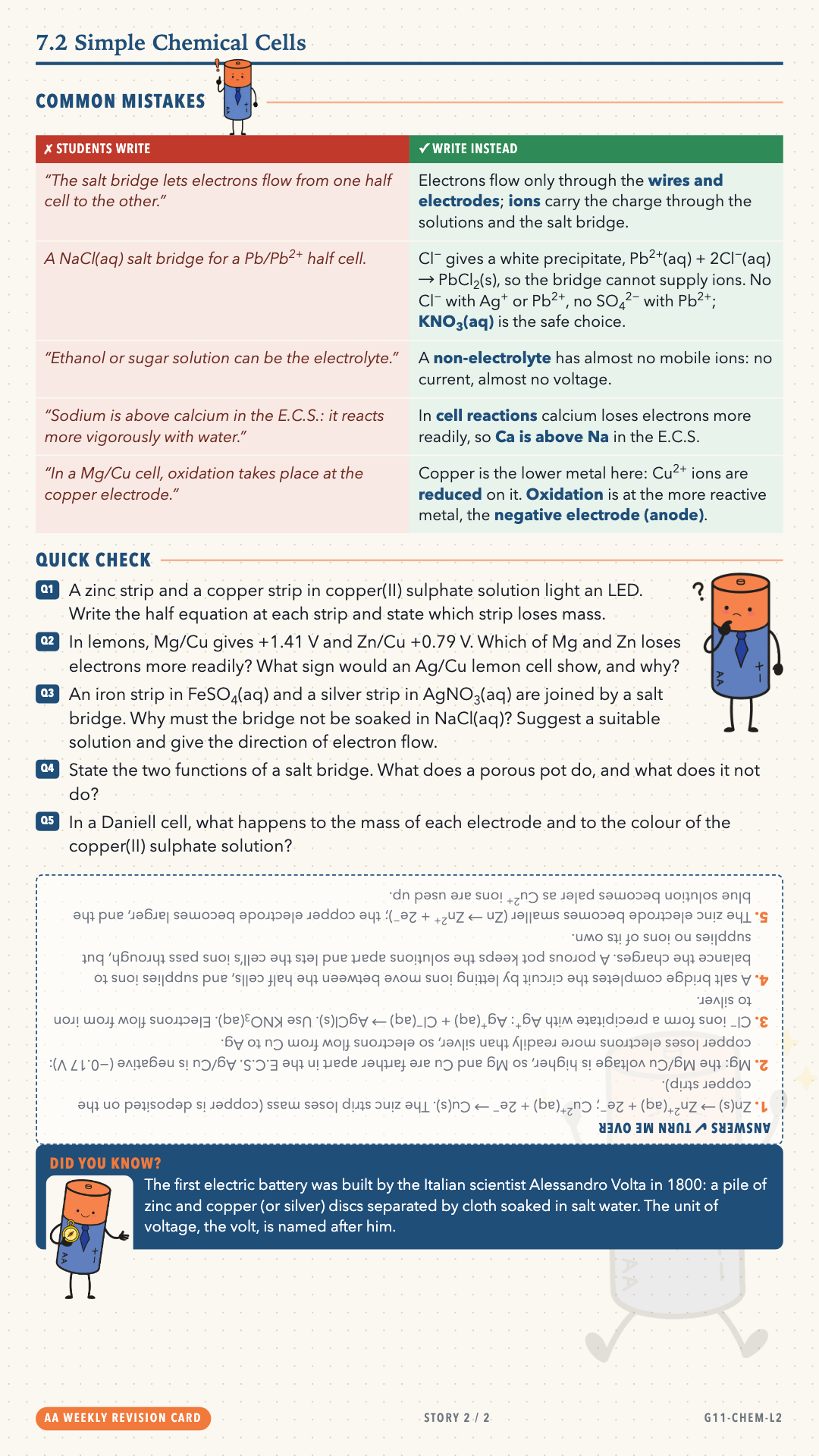
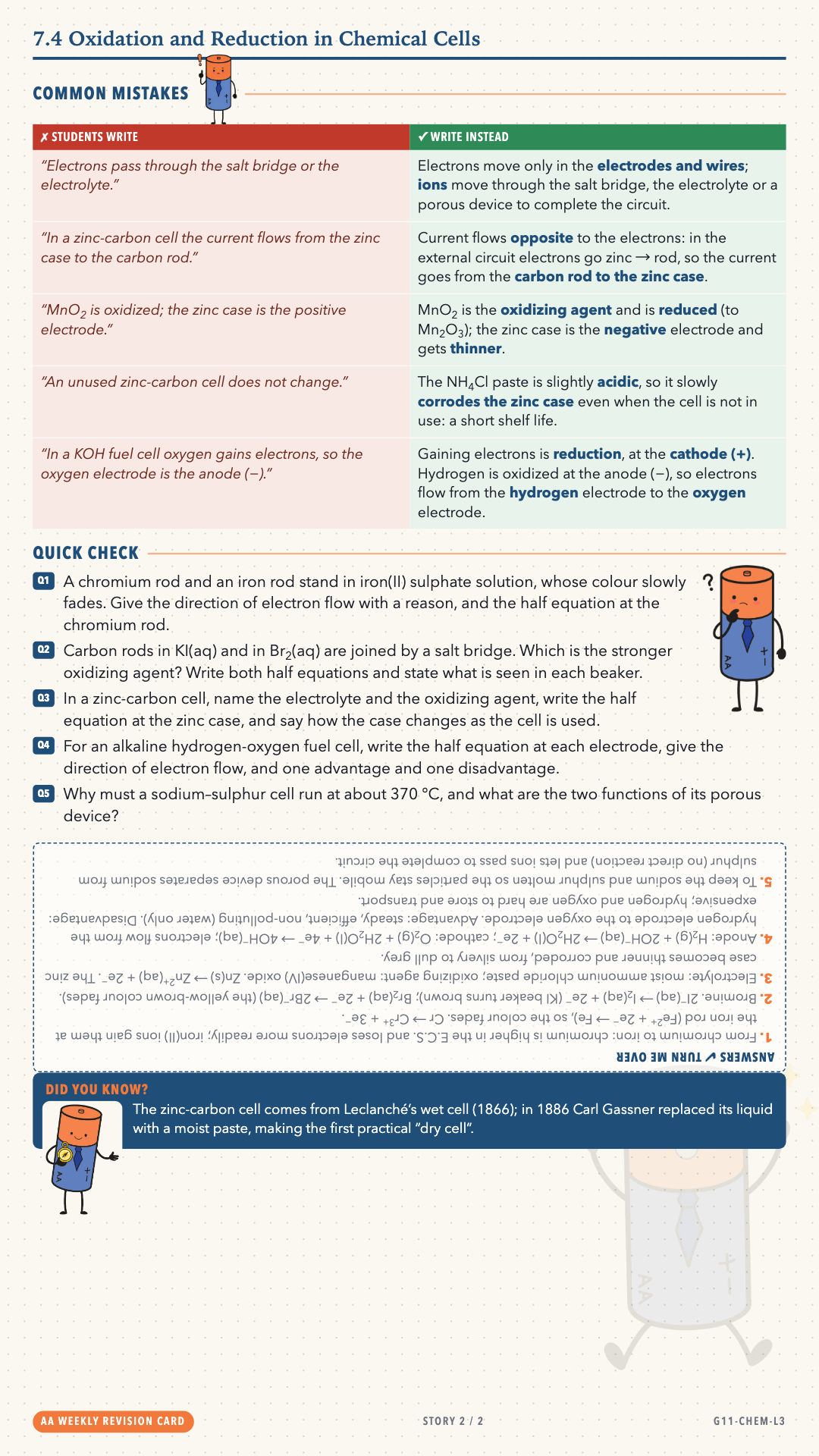
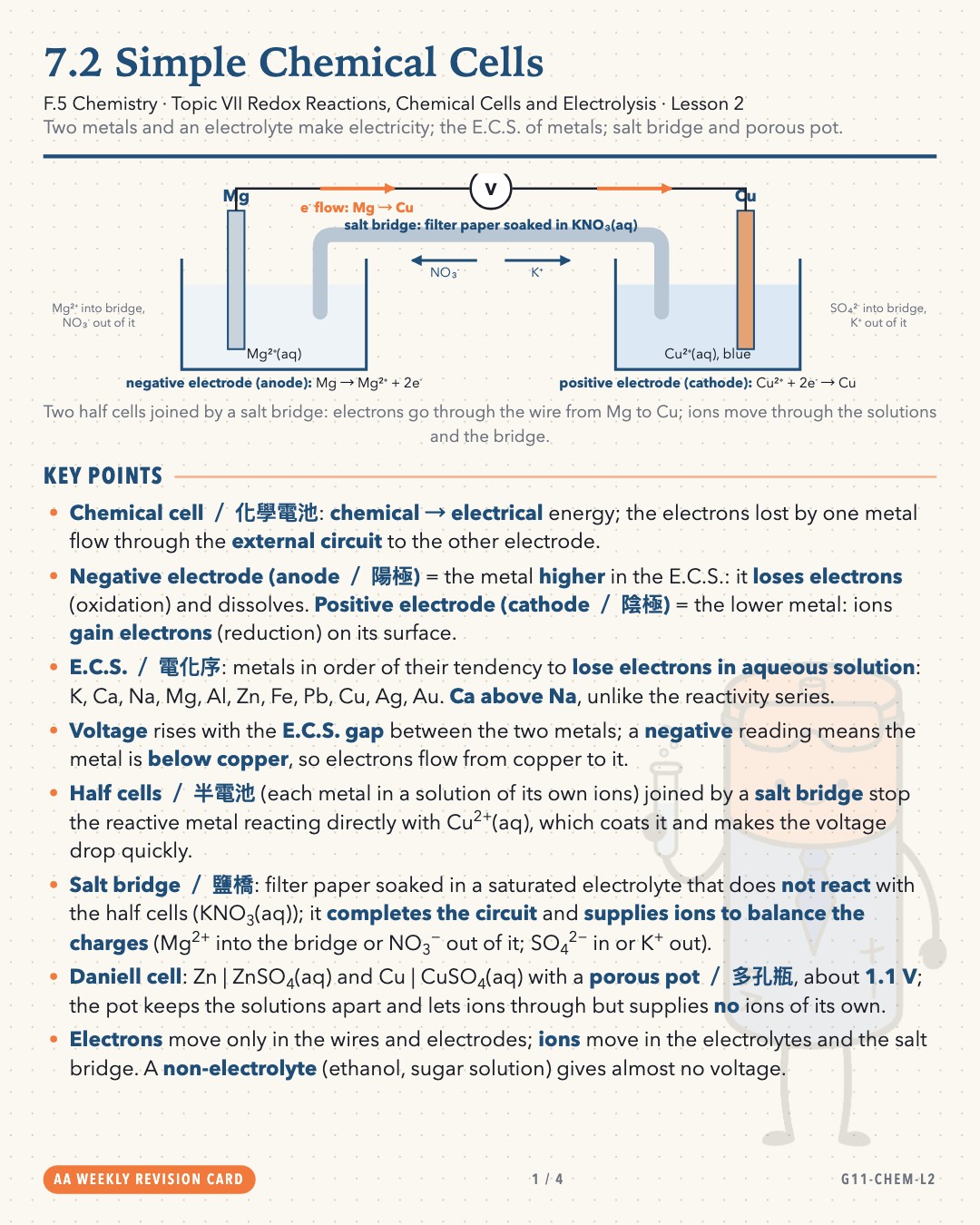
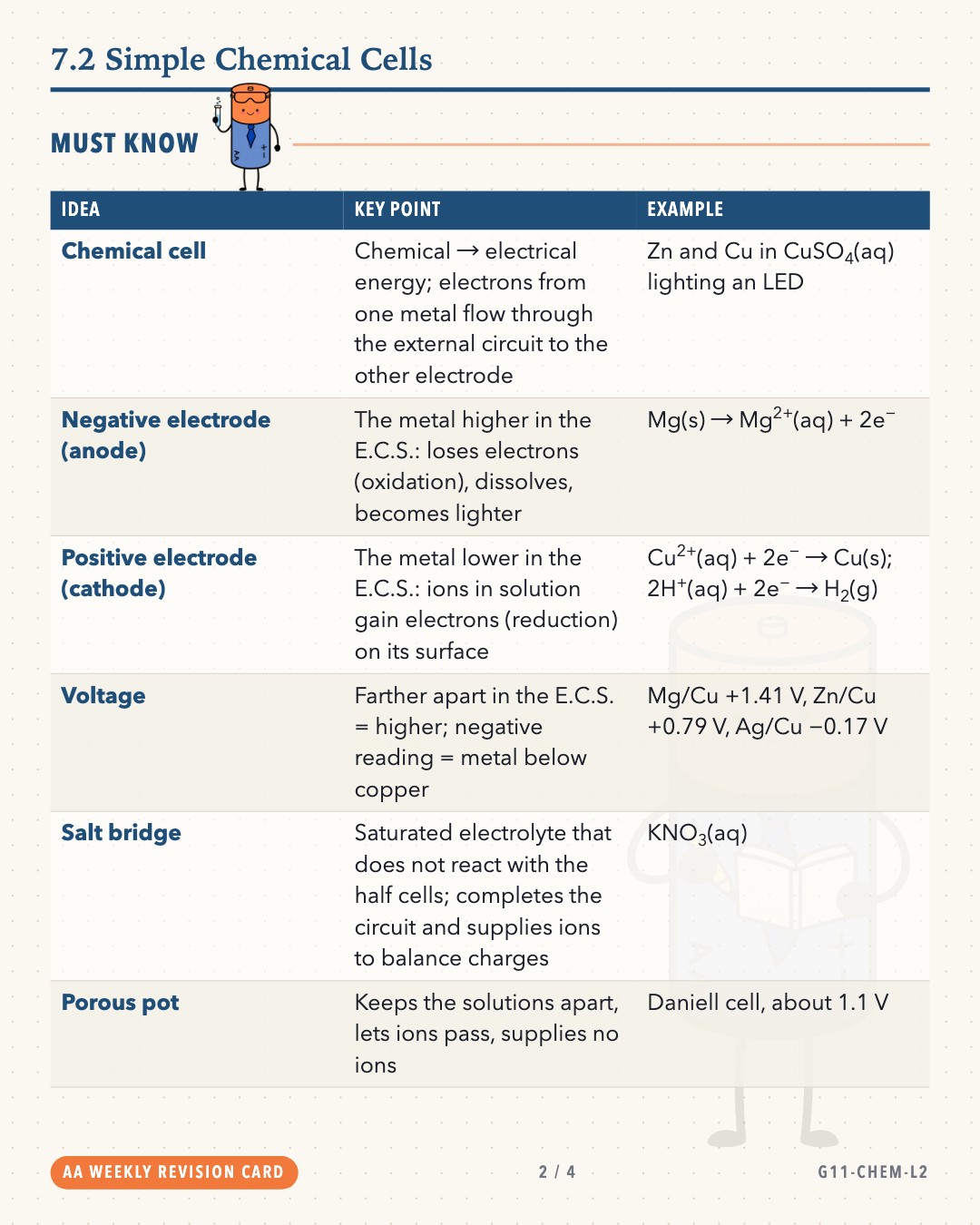
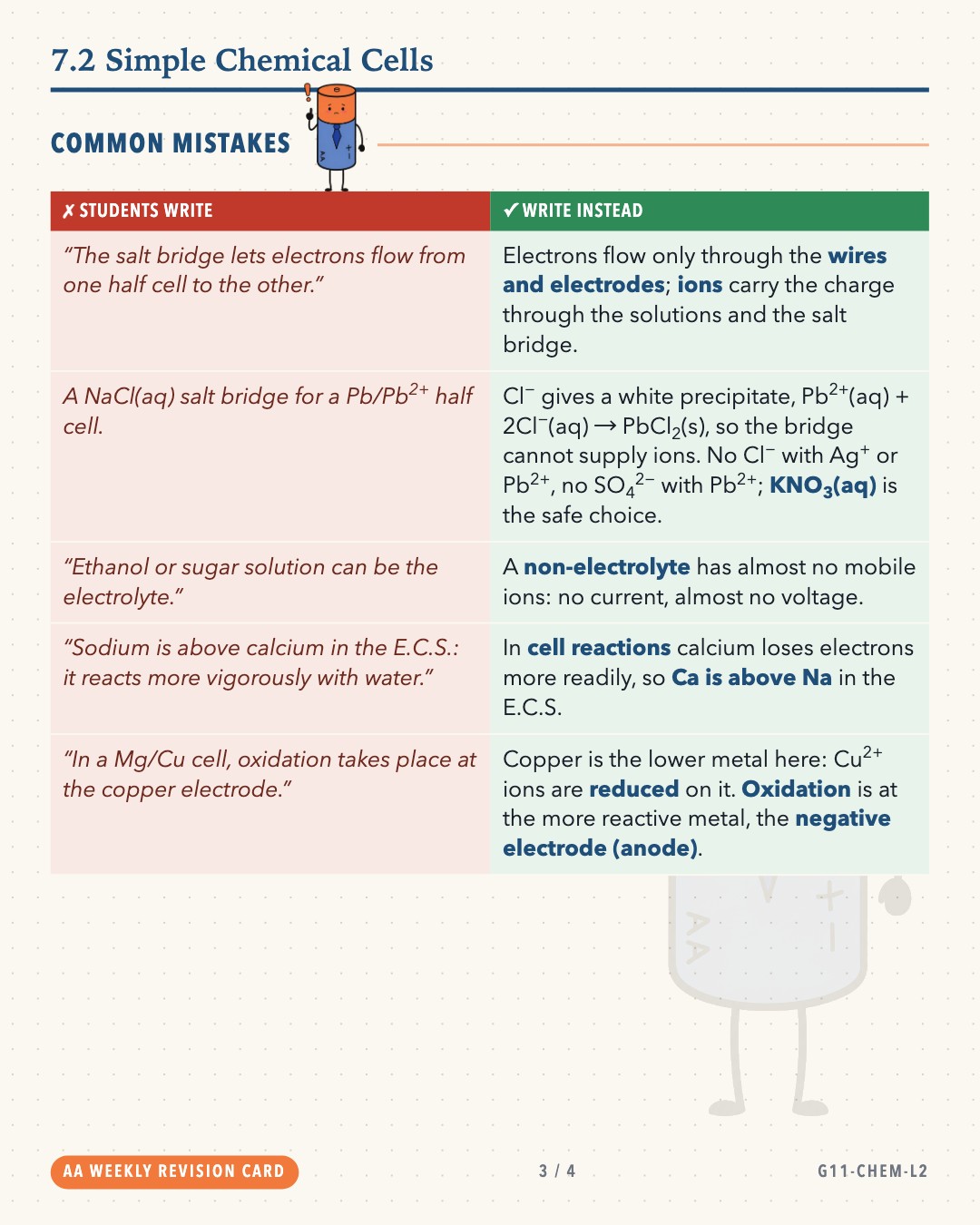
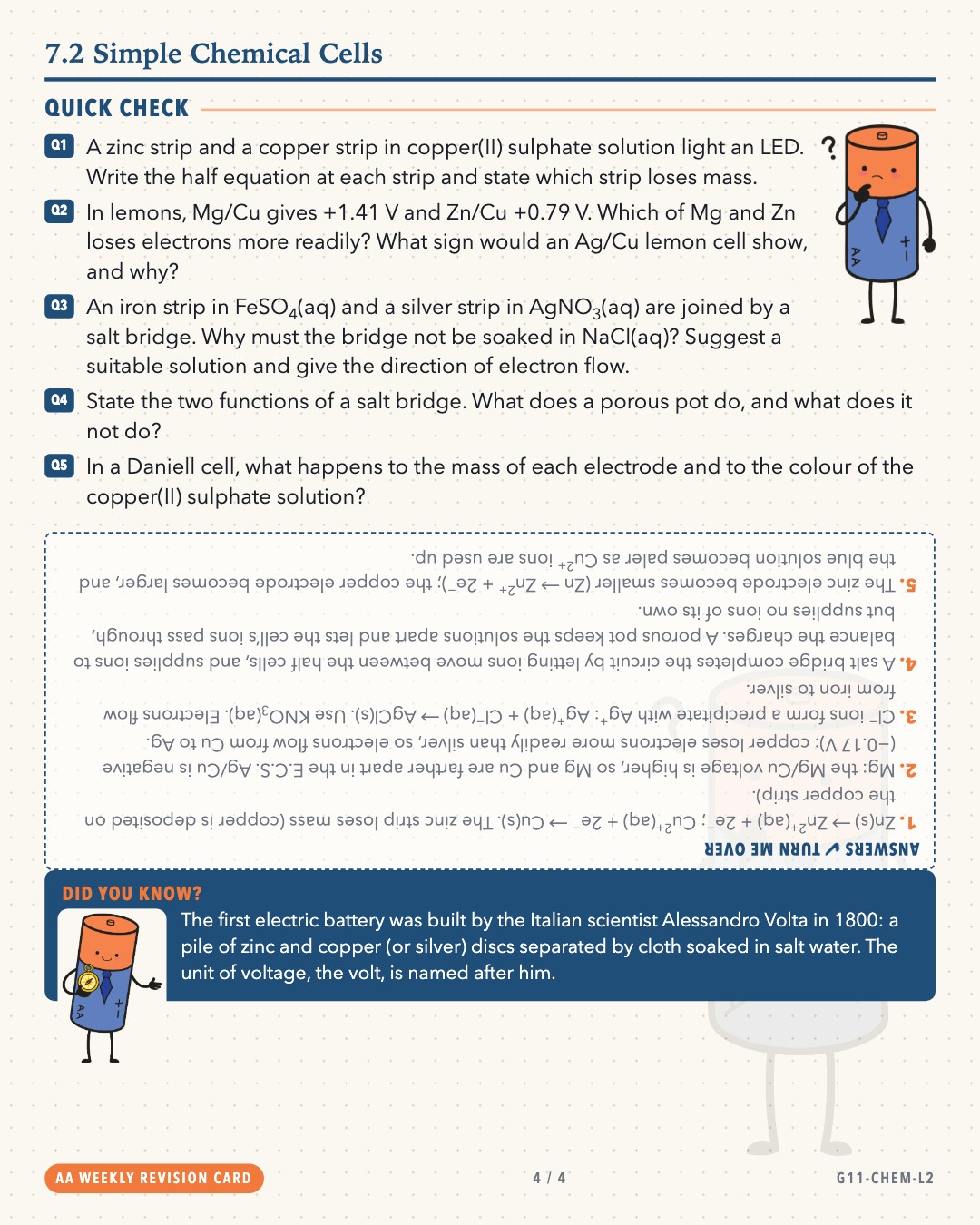
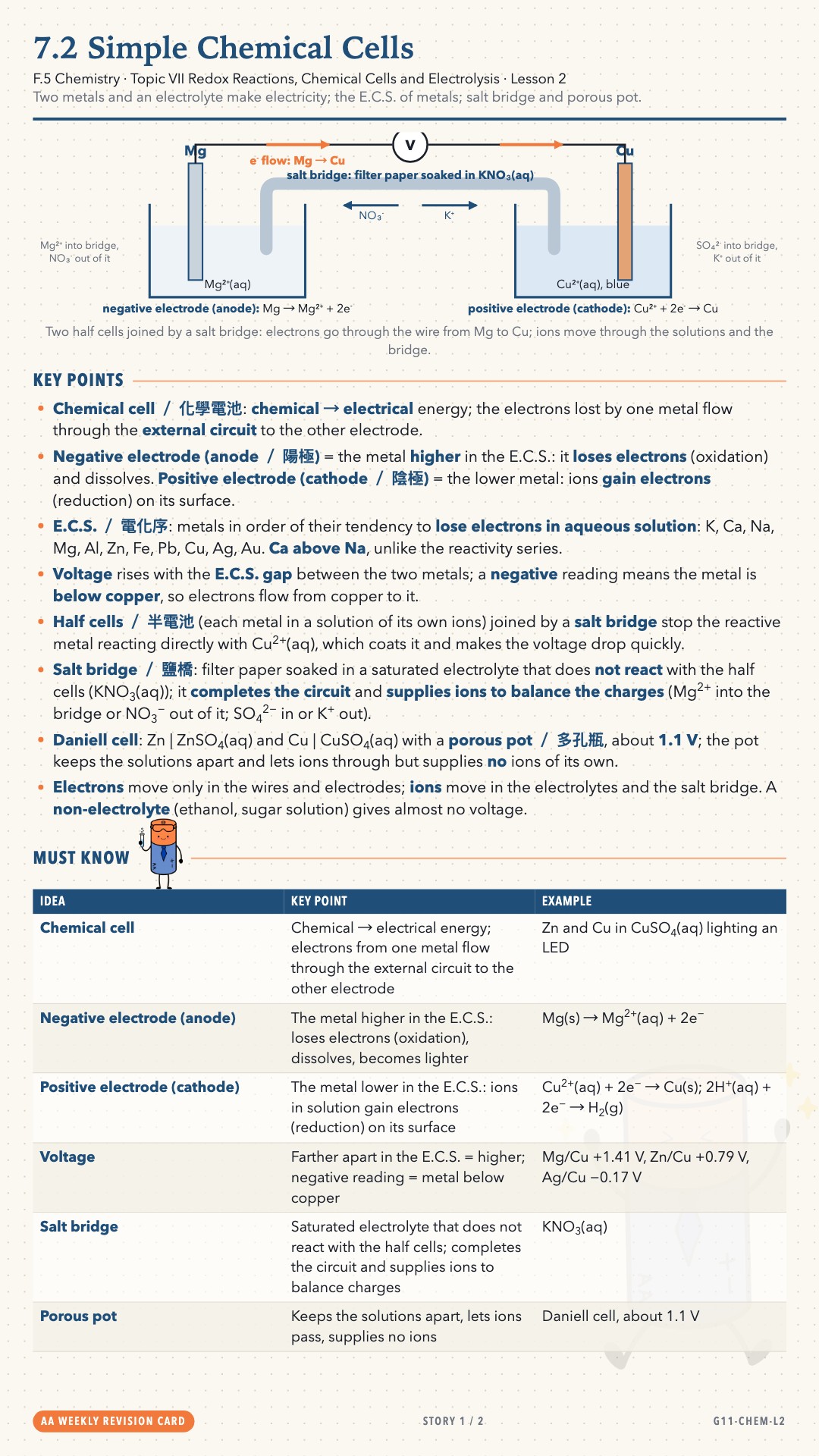
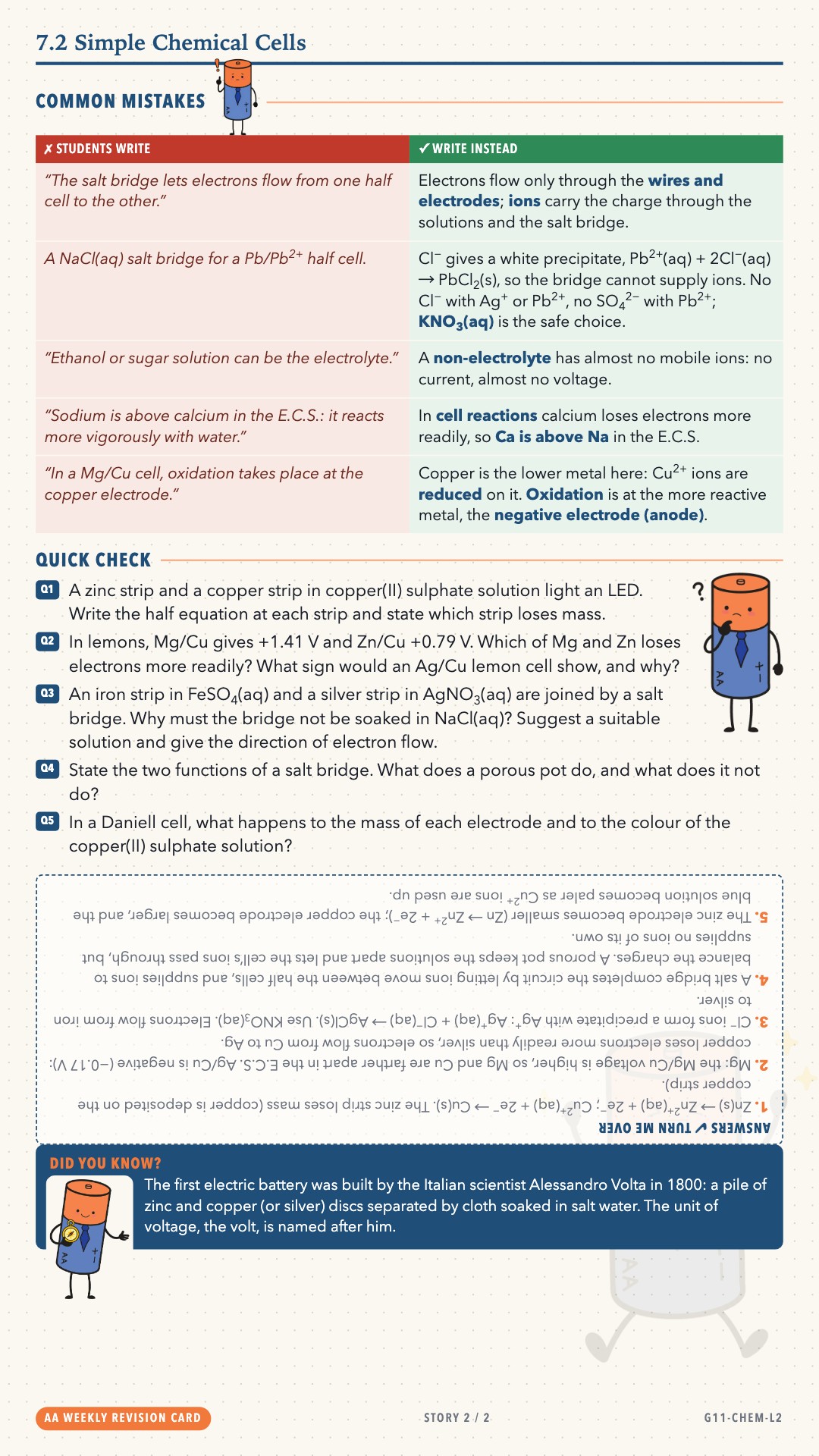
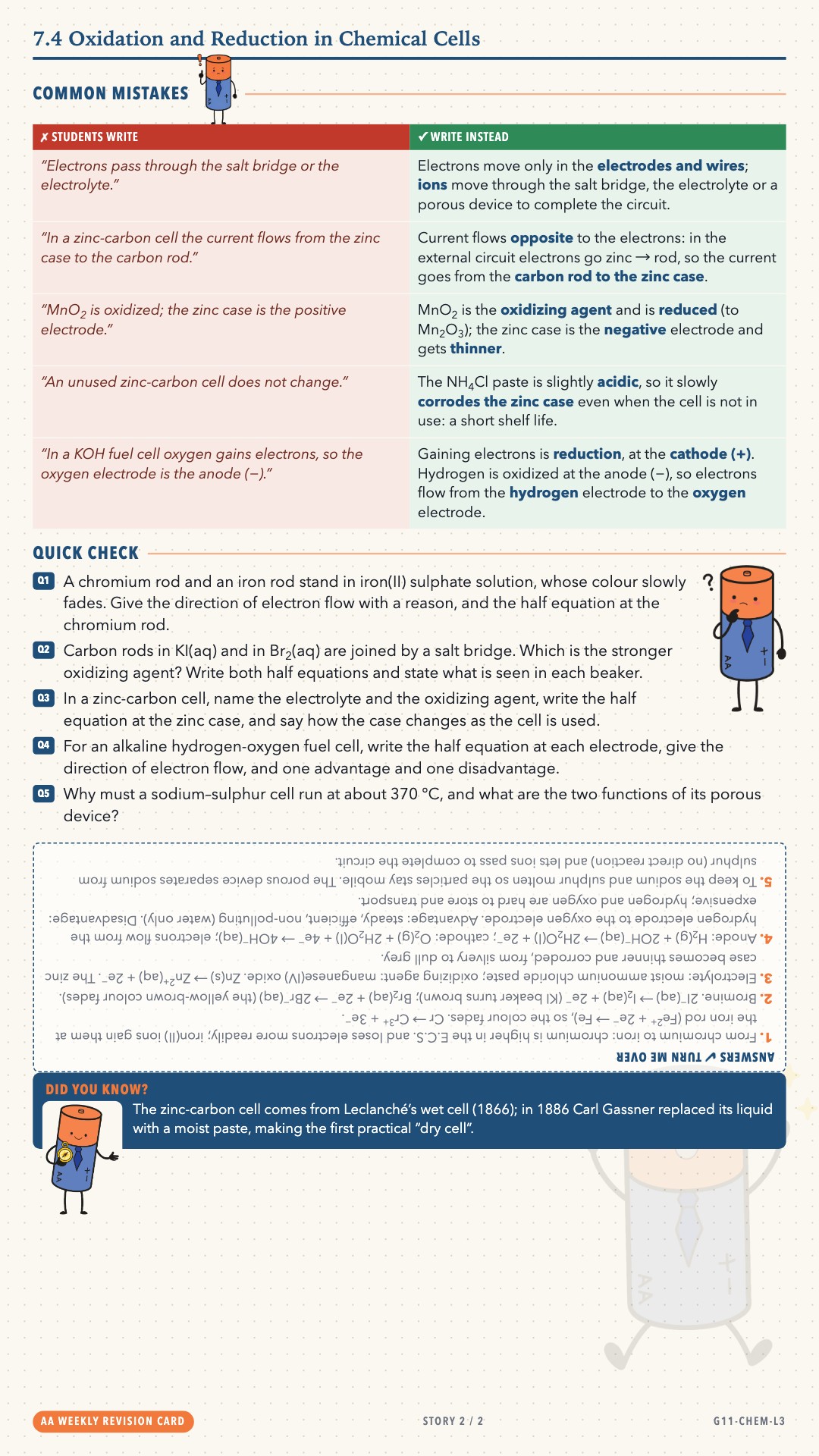
Two metals and an electrolyte make electricity; the E.C.S. of metals; salt bridge and porous pot.
✔ fact-checked · 1 added mistake tagged [likely] · 2.1 MB JPG · card.md ·
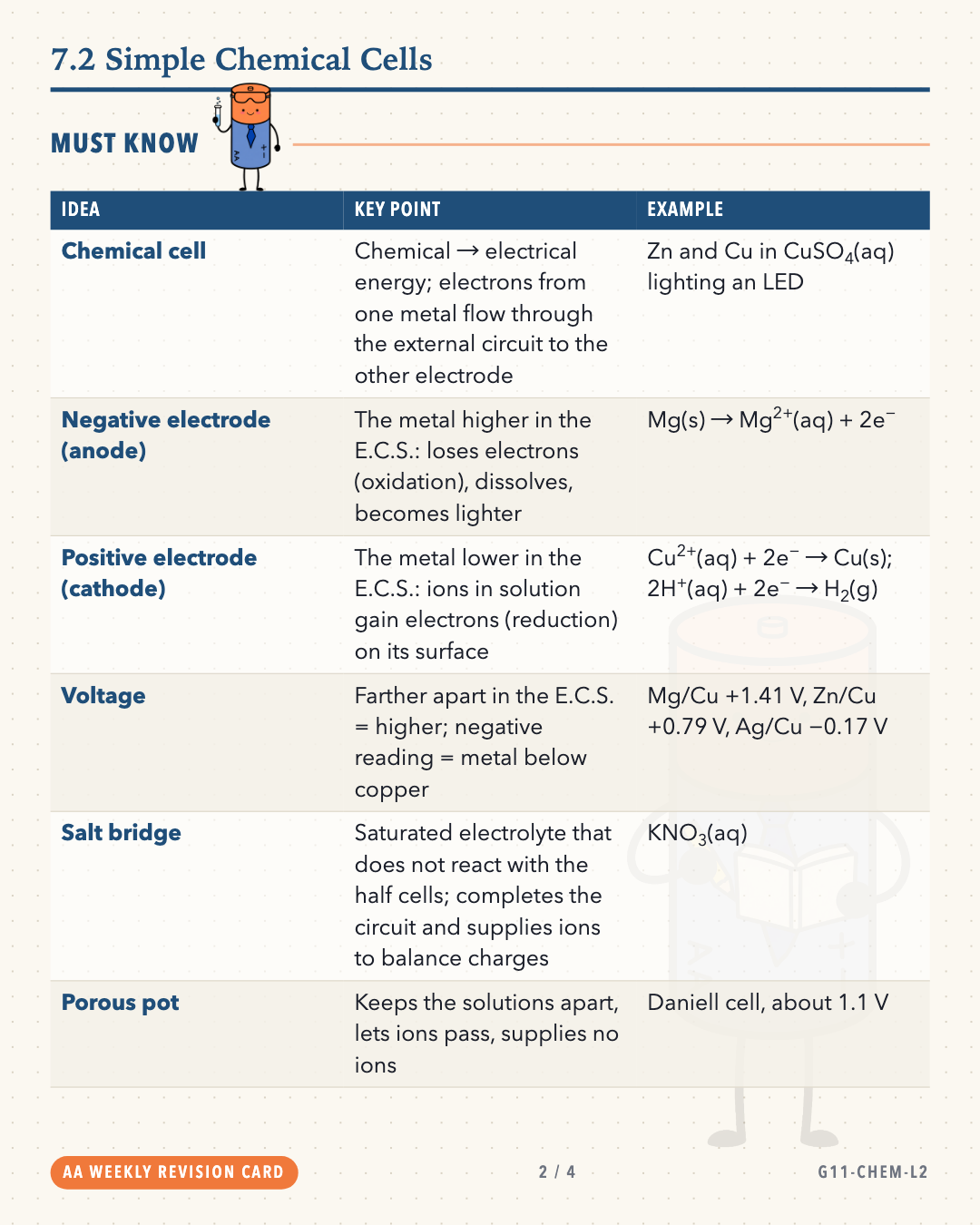
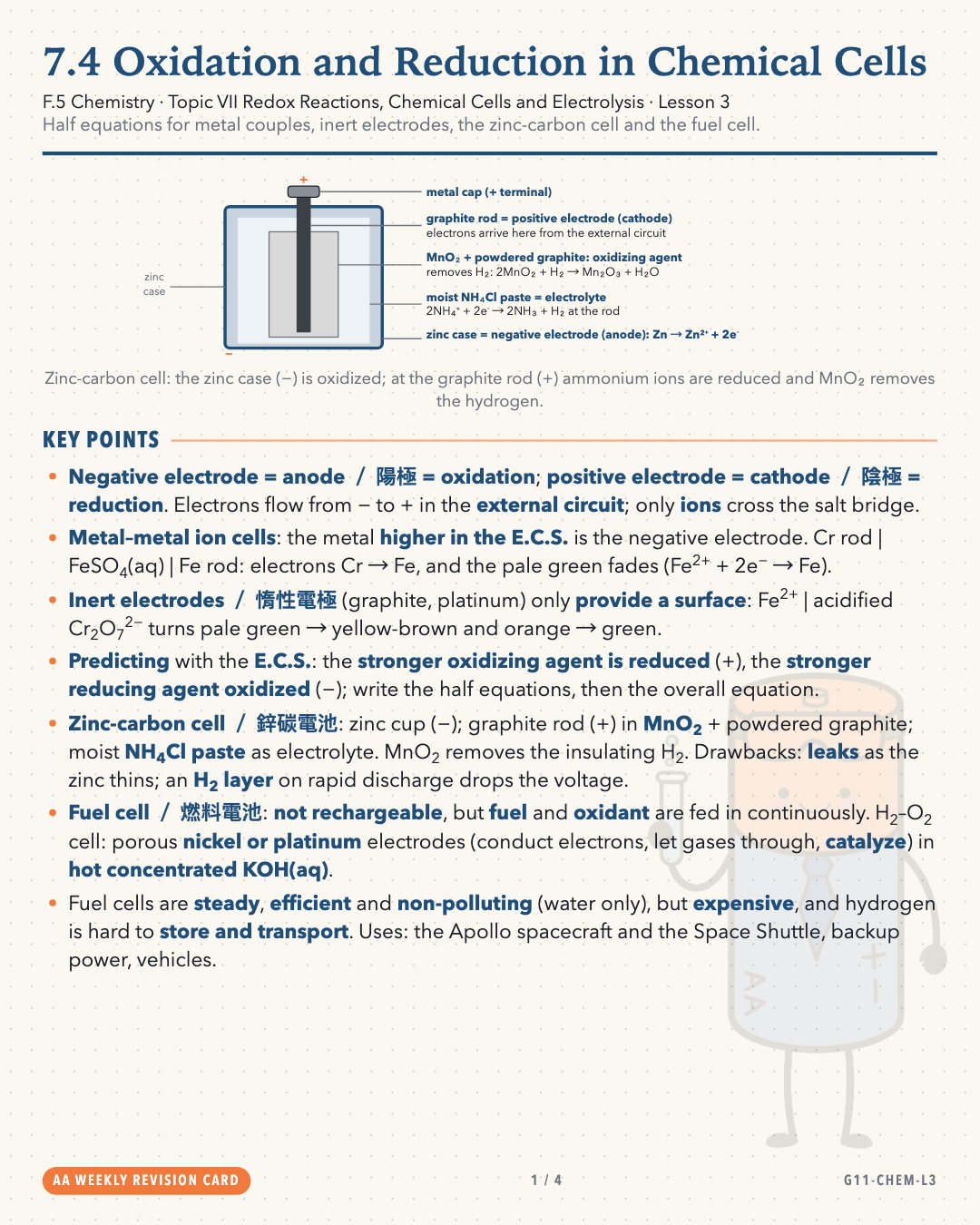
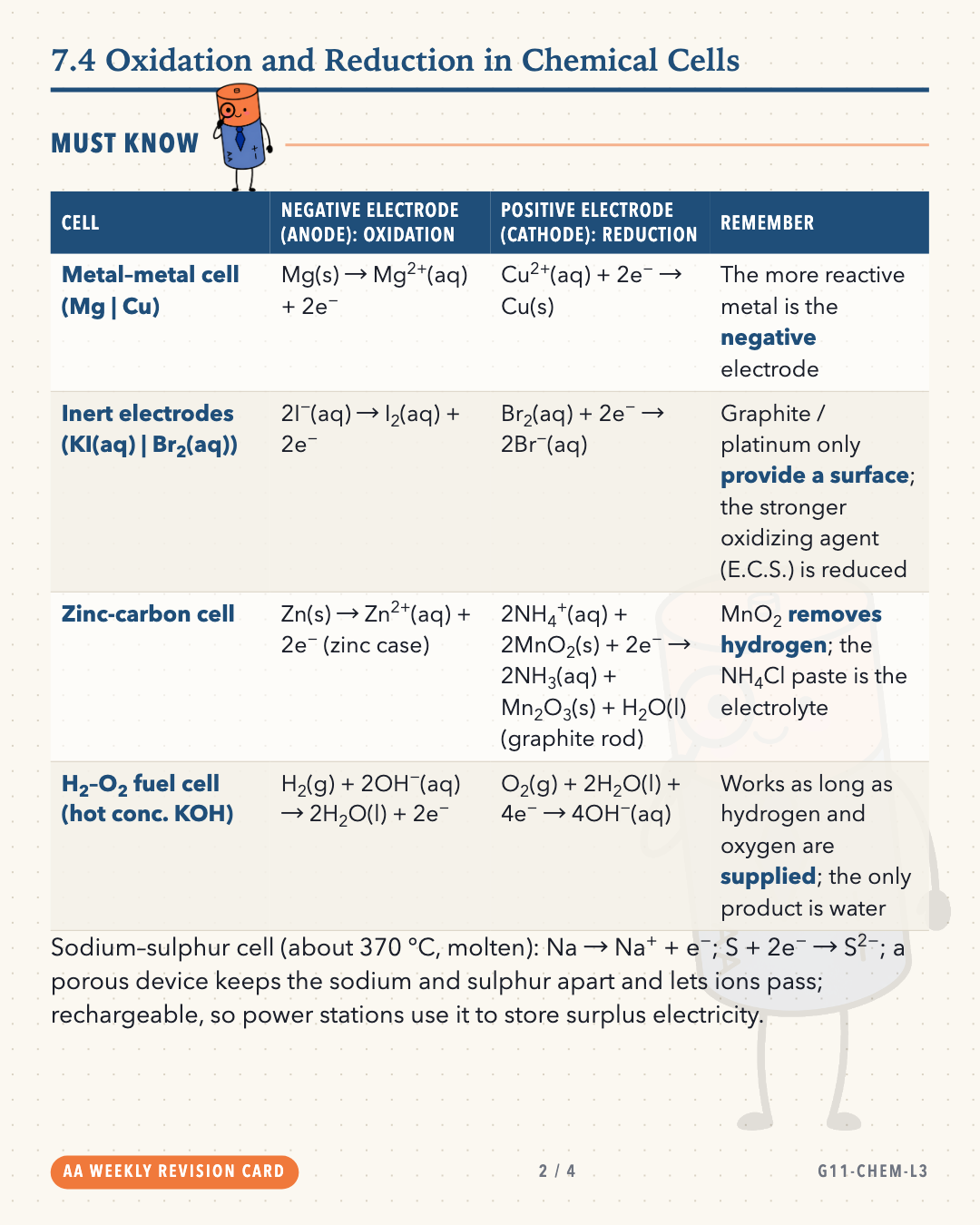
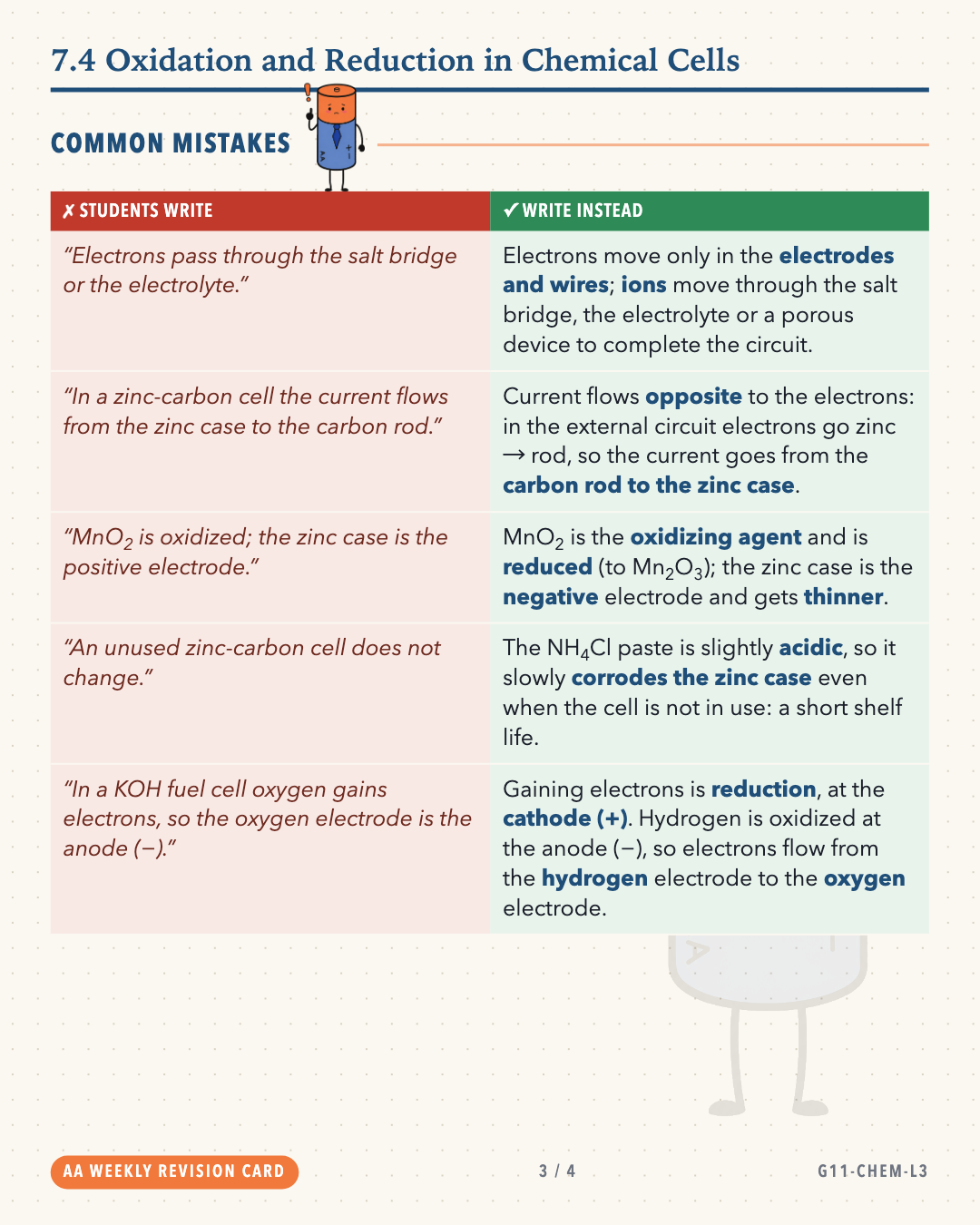
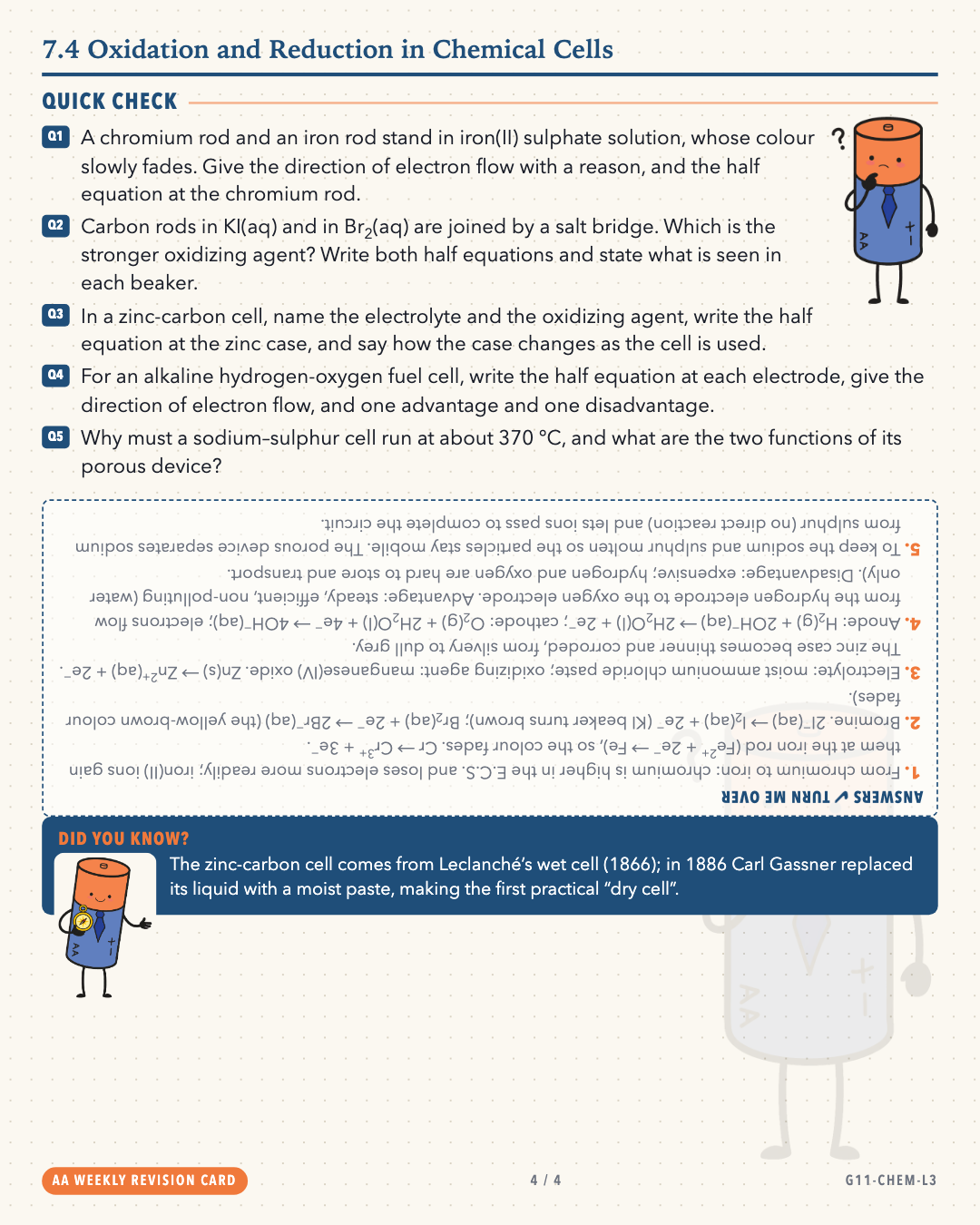
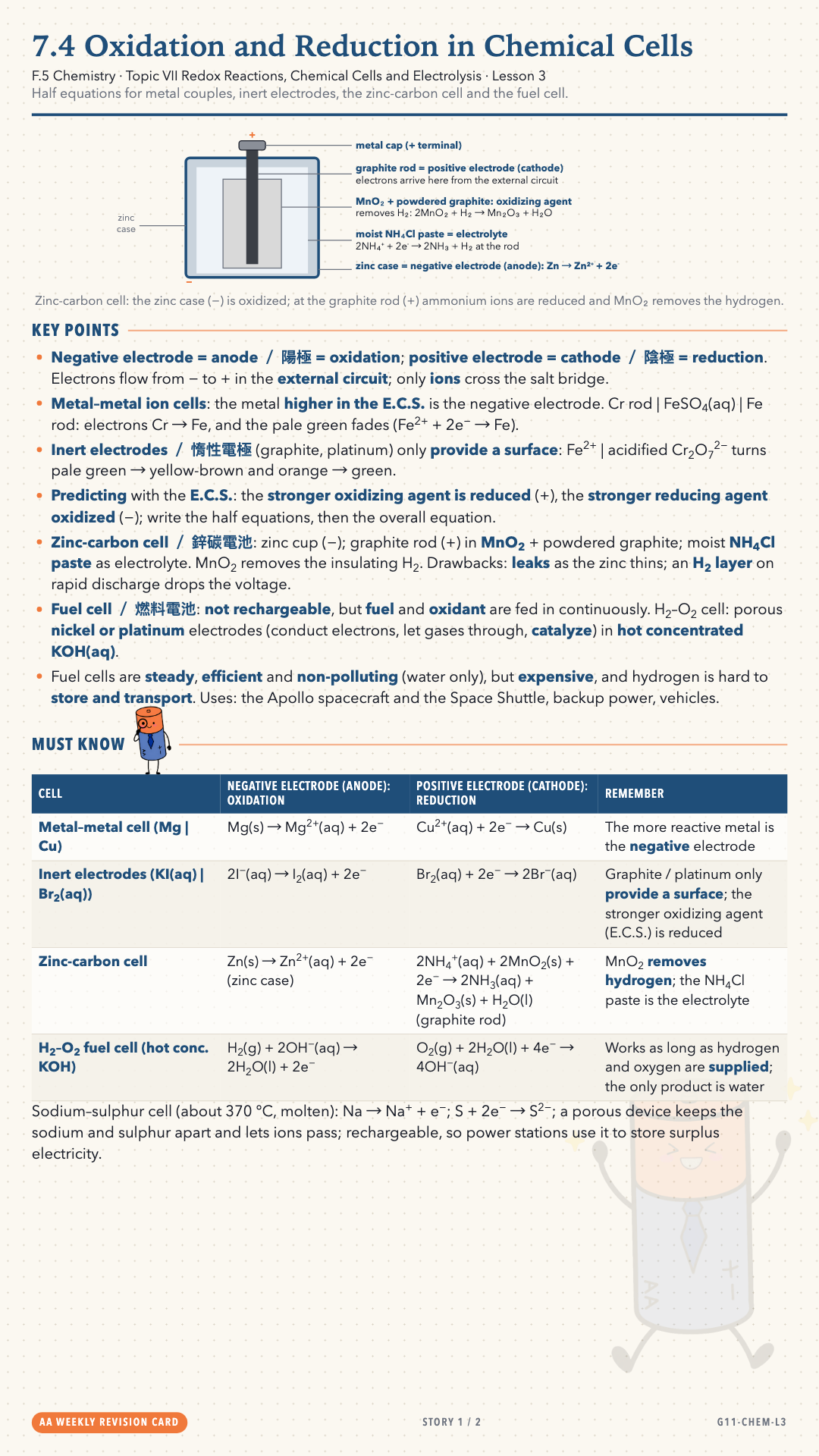
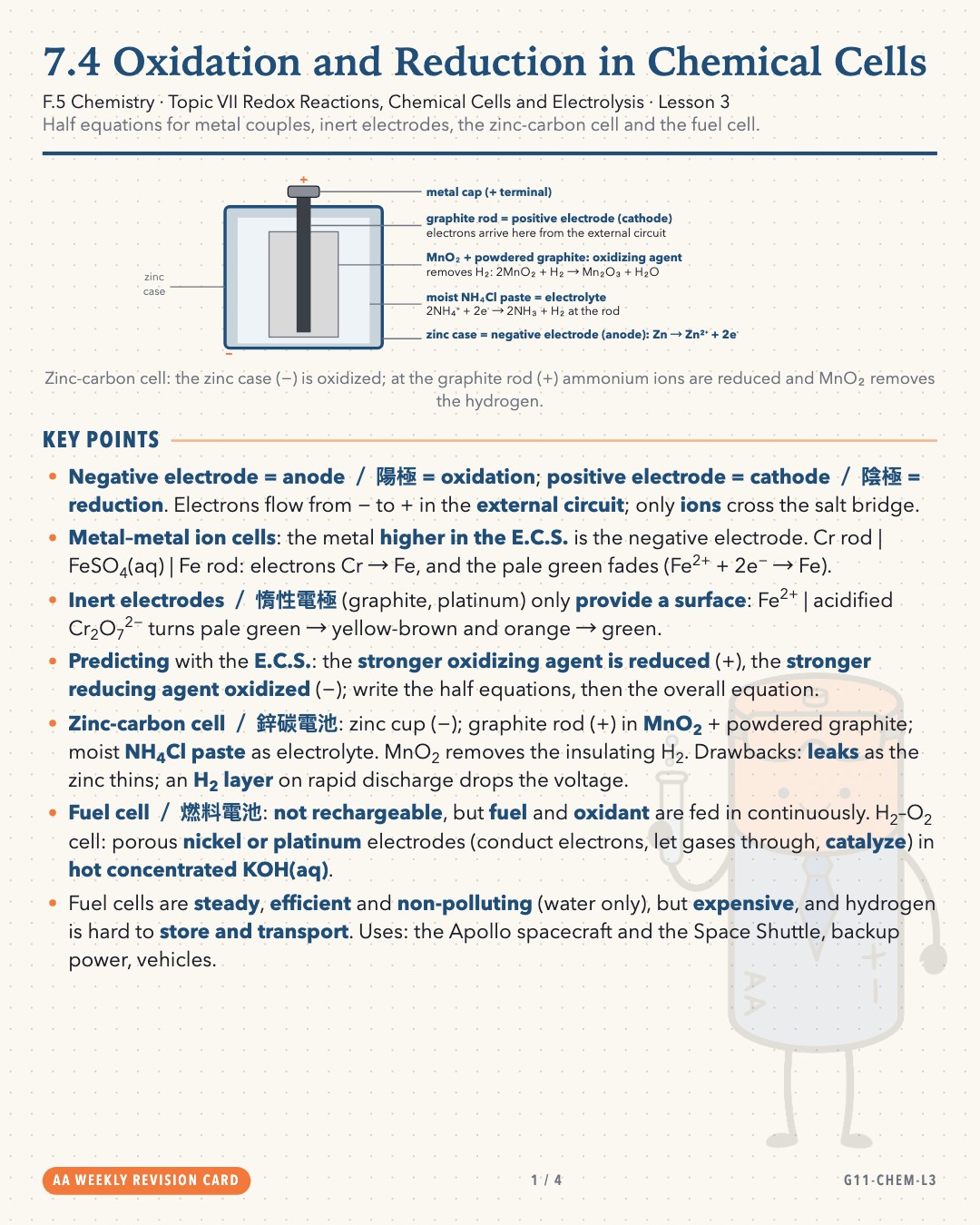
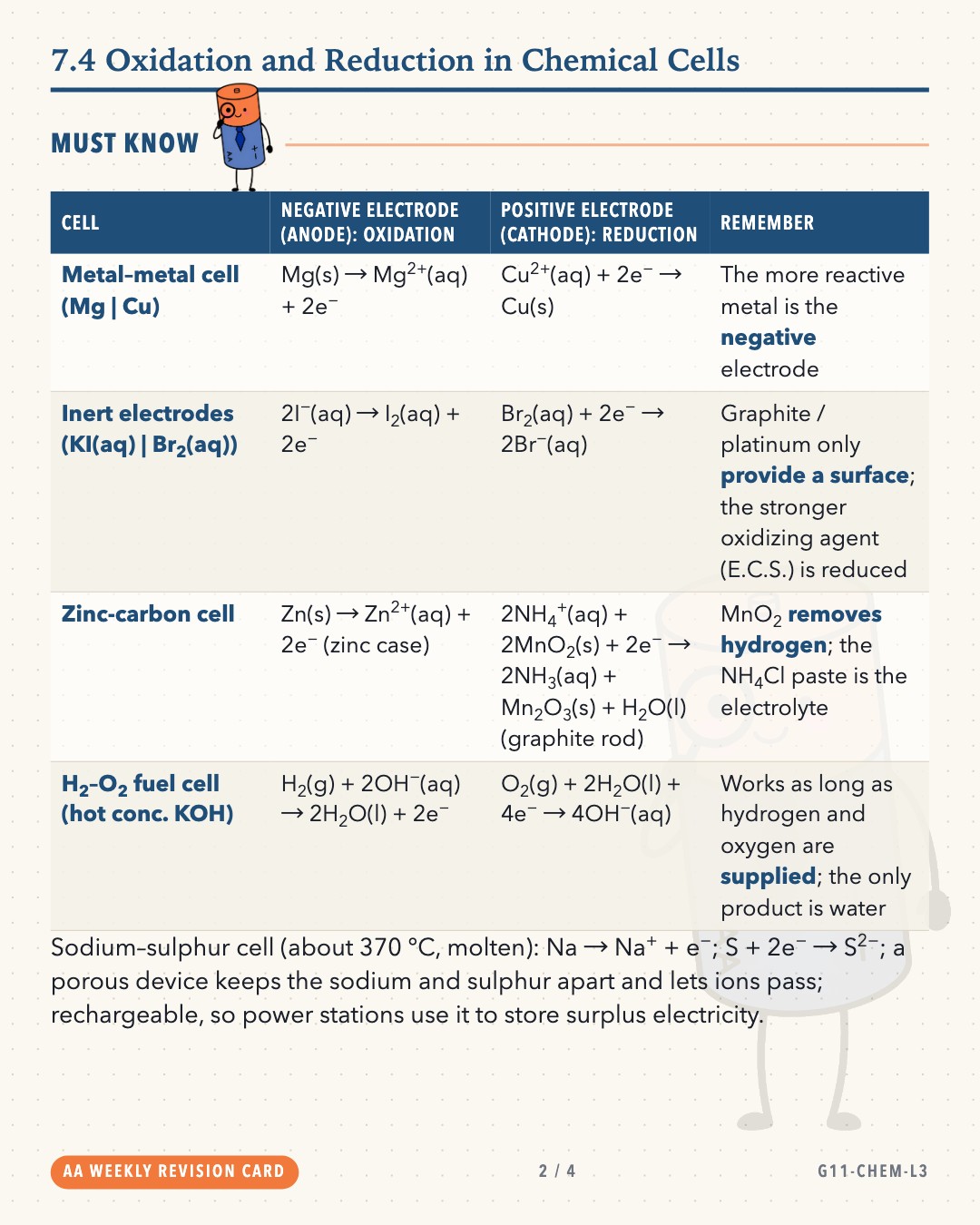
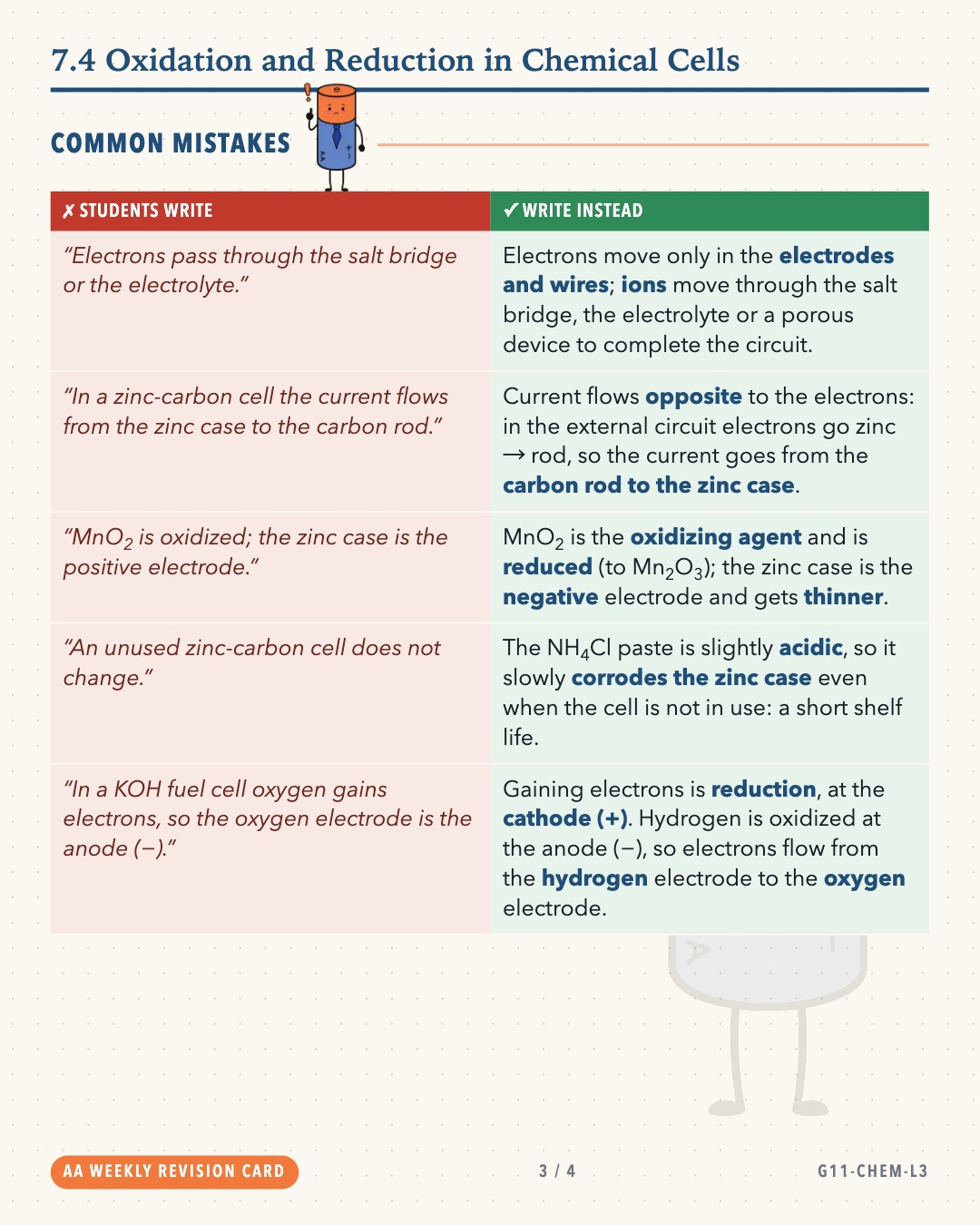
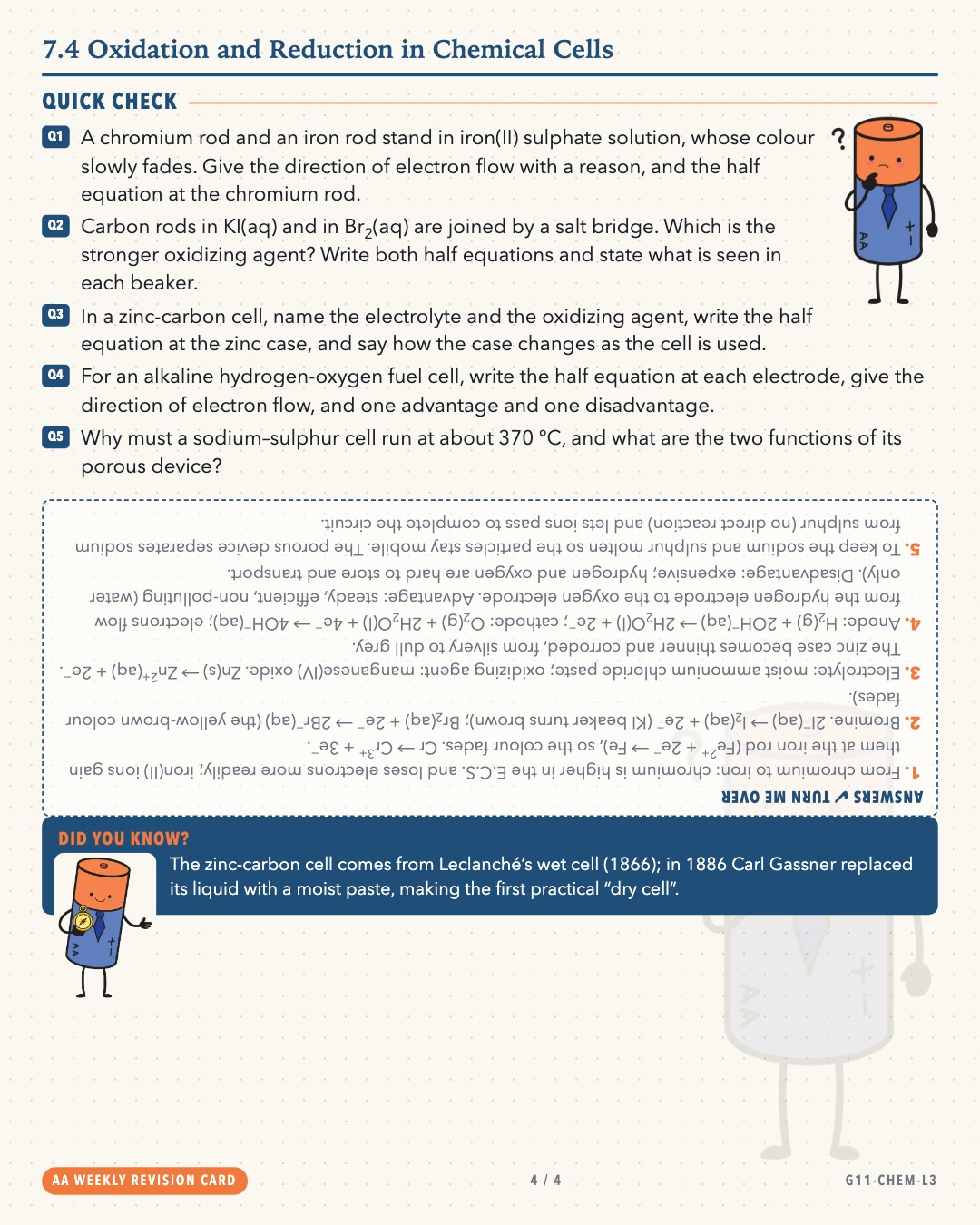
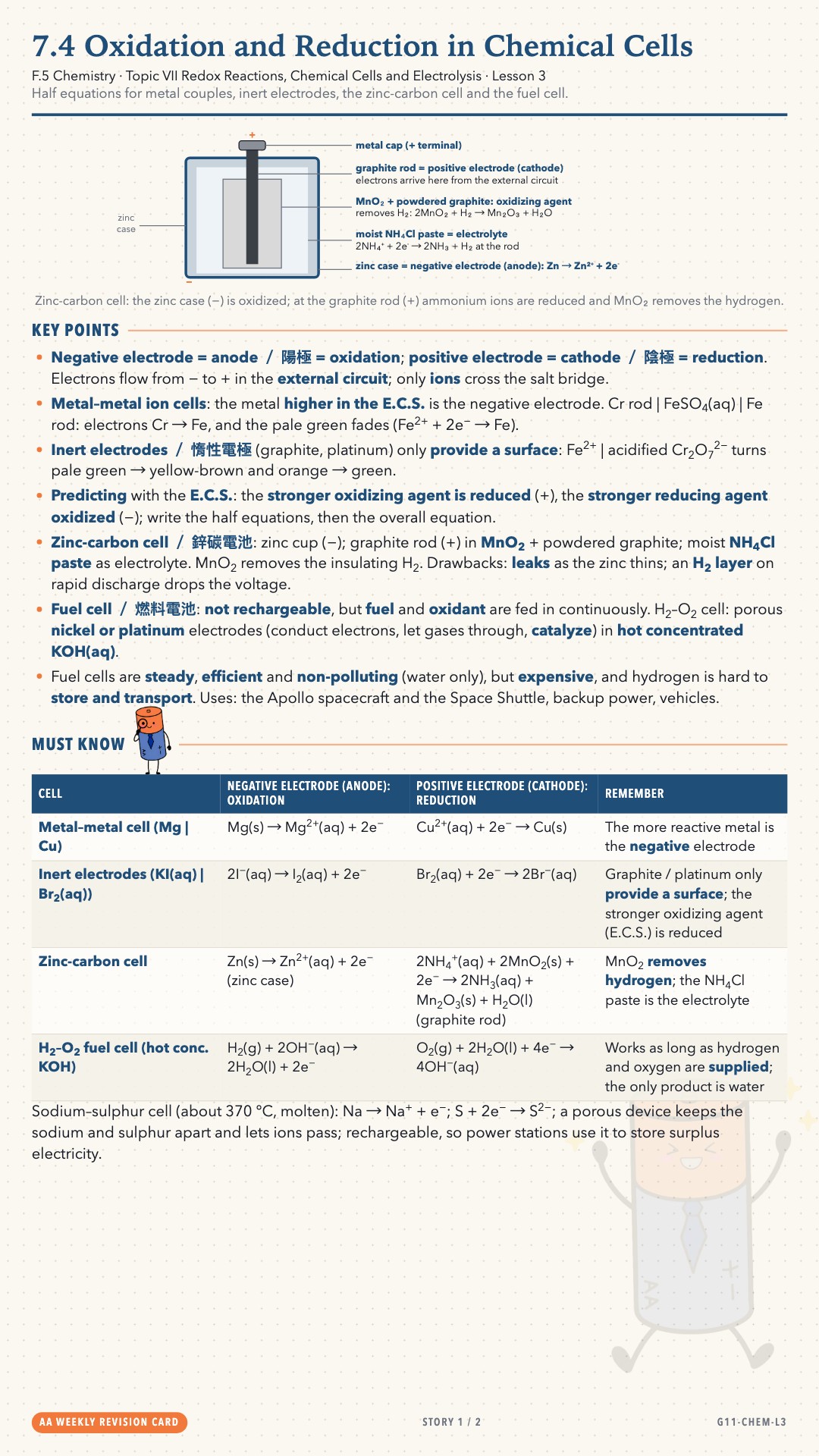
Half equations for metal couples, inert electrodes, the zinc-carbon cell and the fuel cell.
✔ fact-checked · 0 added mistakes tagged [likely] · 2.1 MB JPG · card.md ·
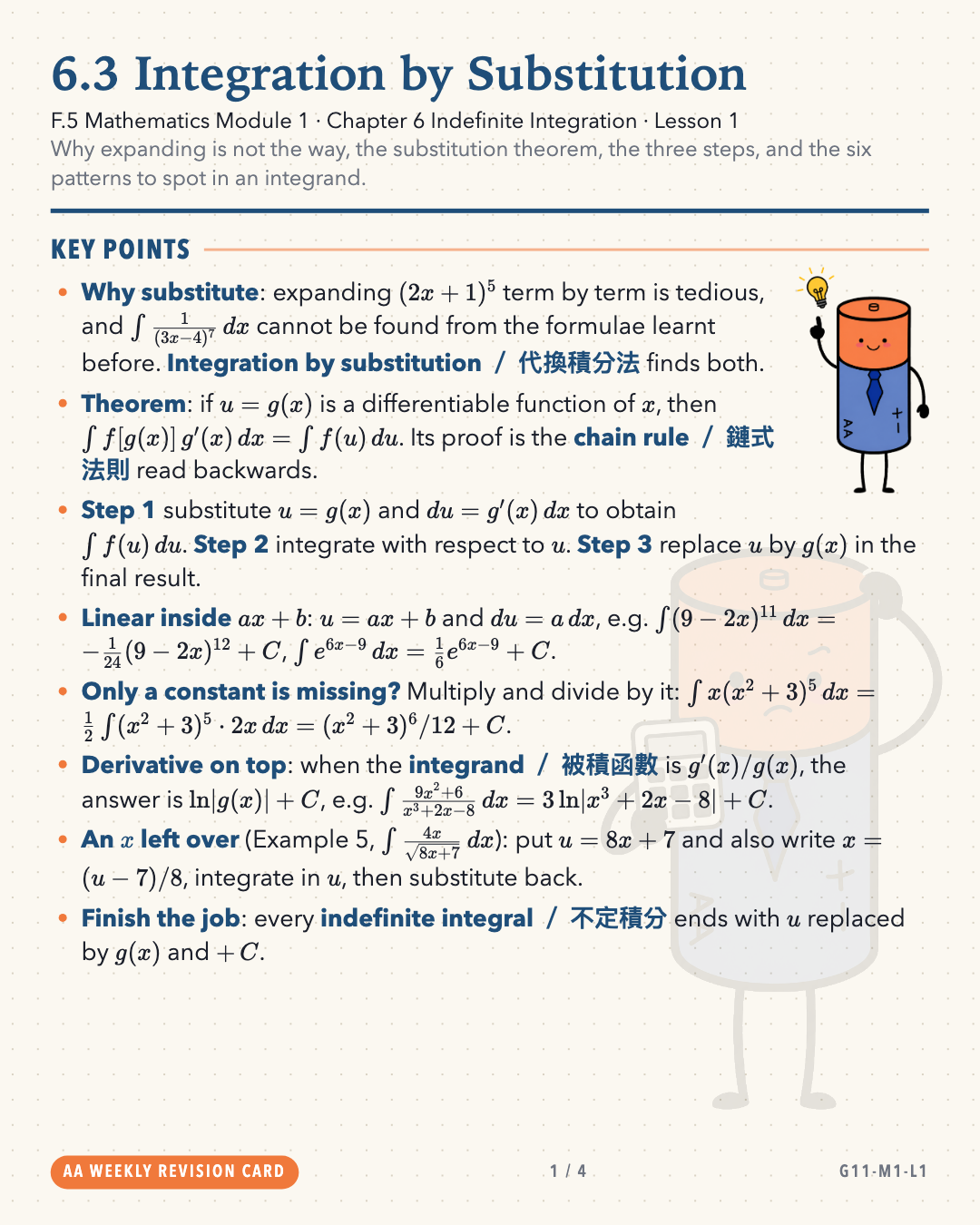
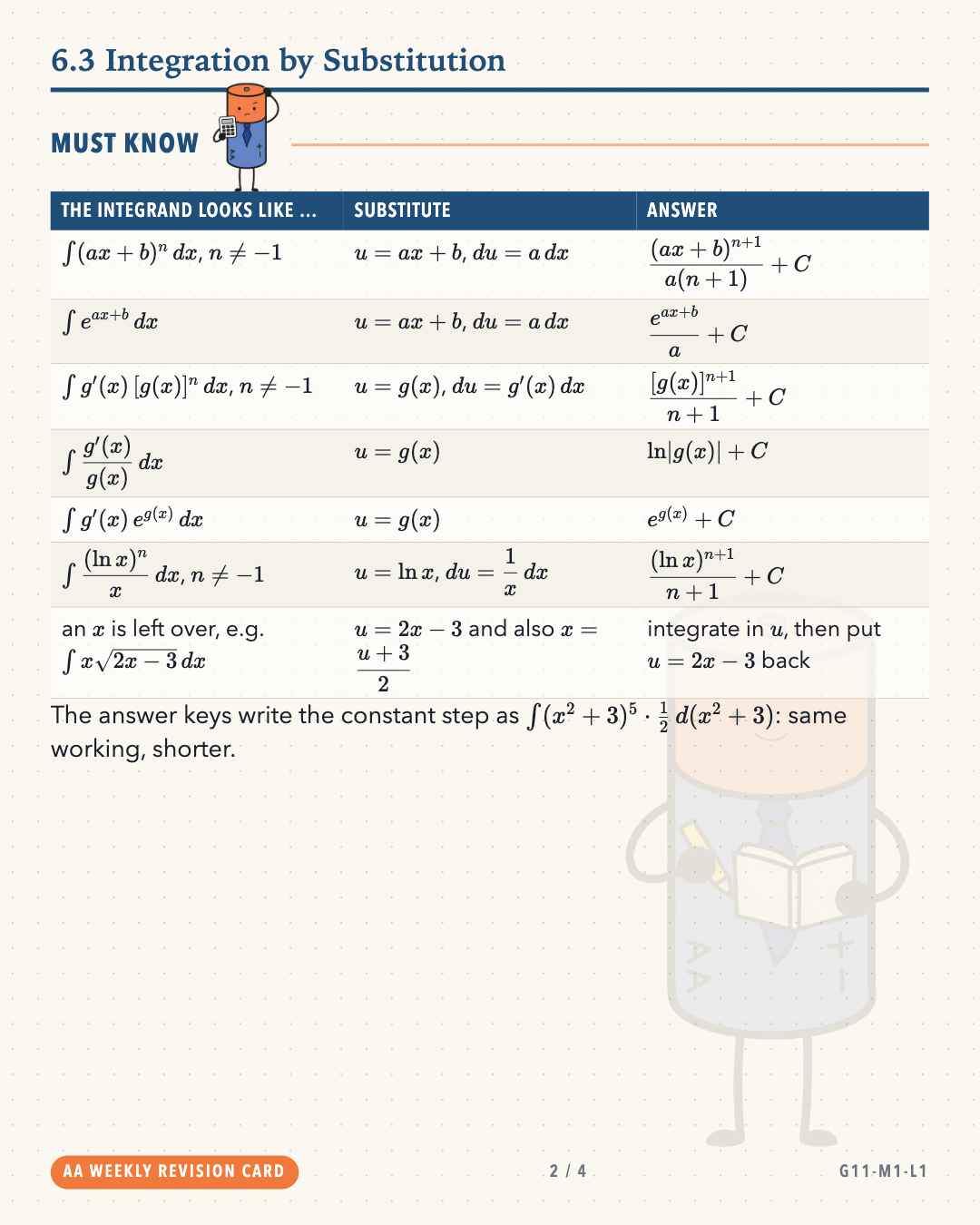
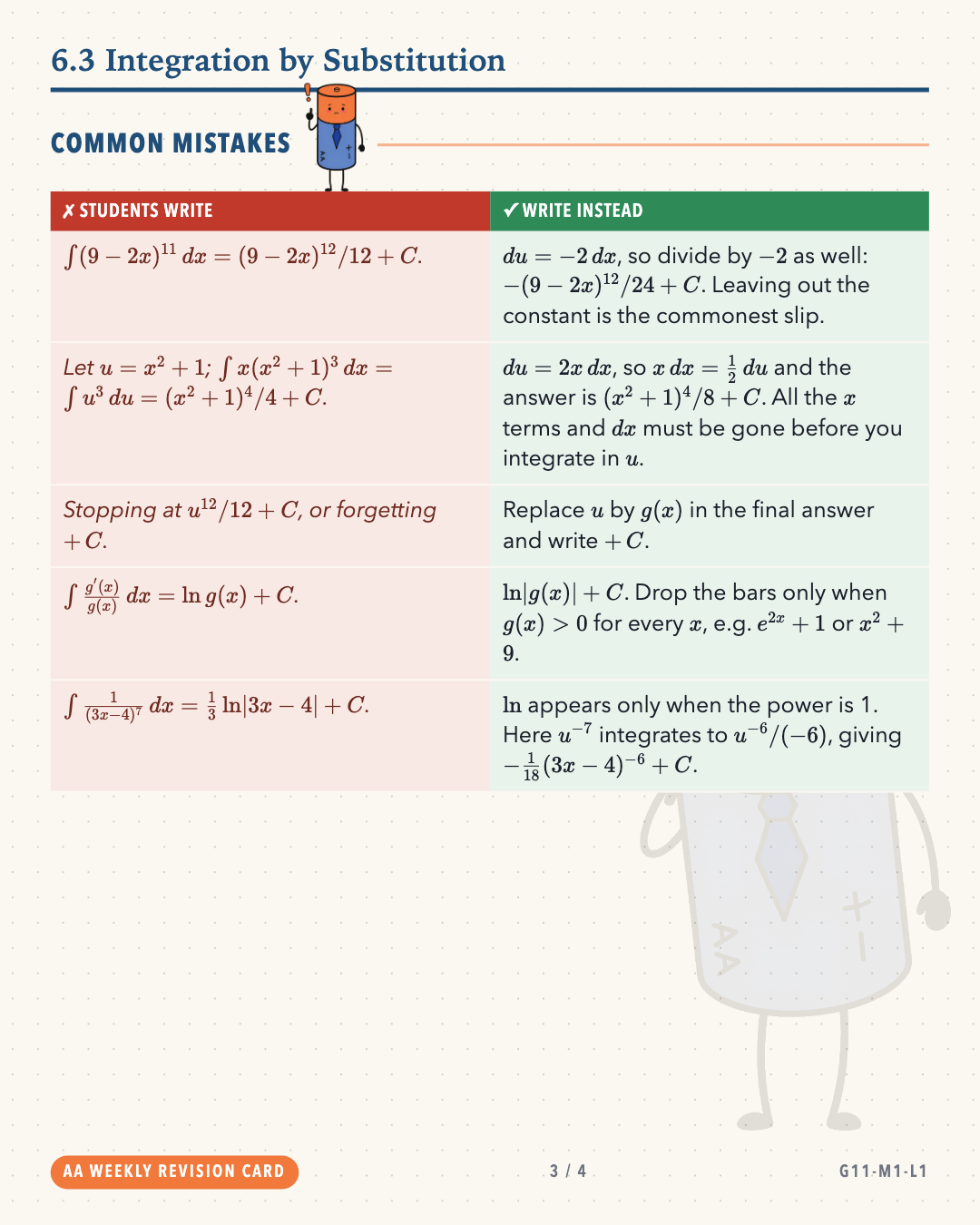
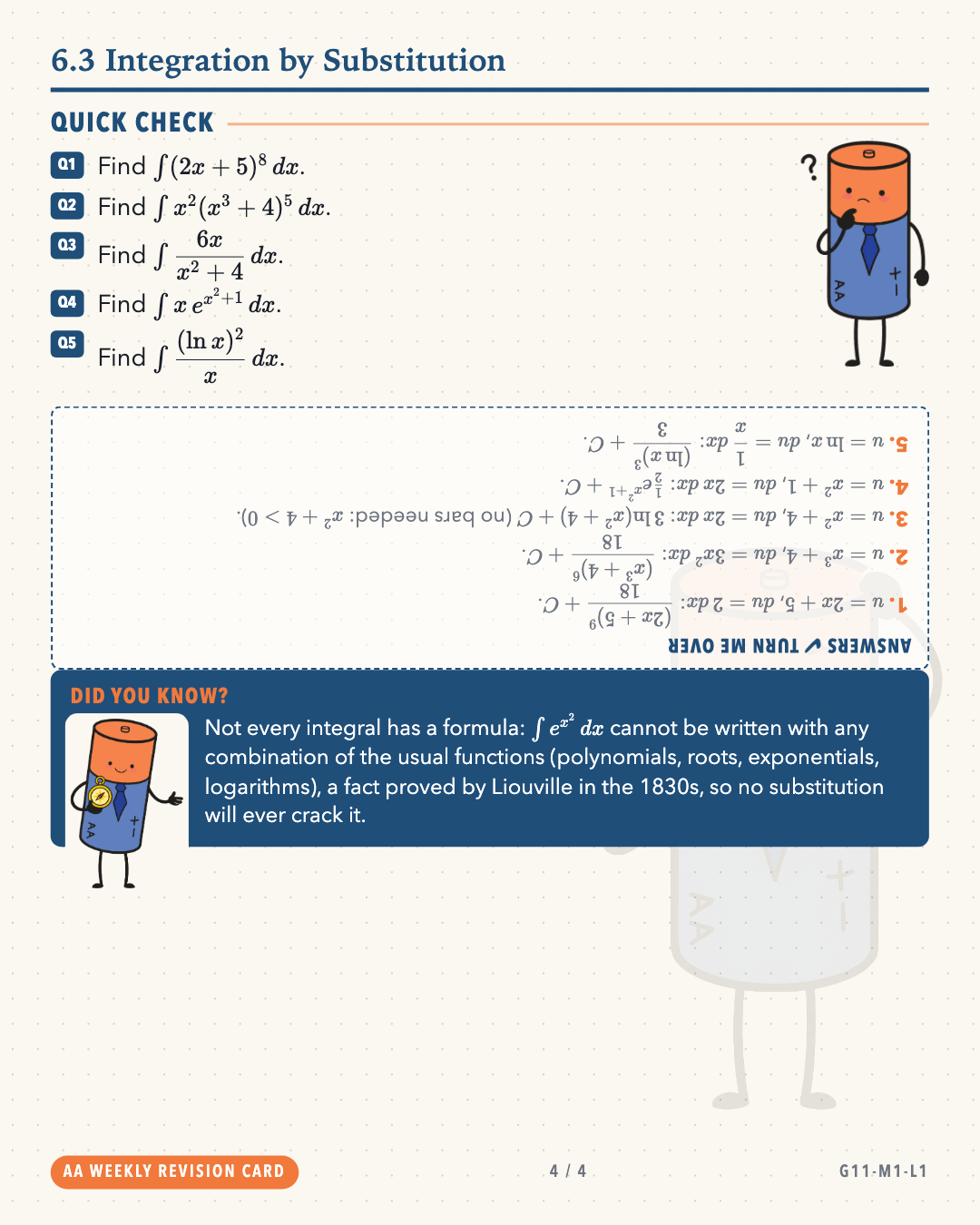
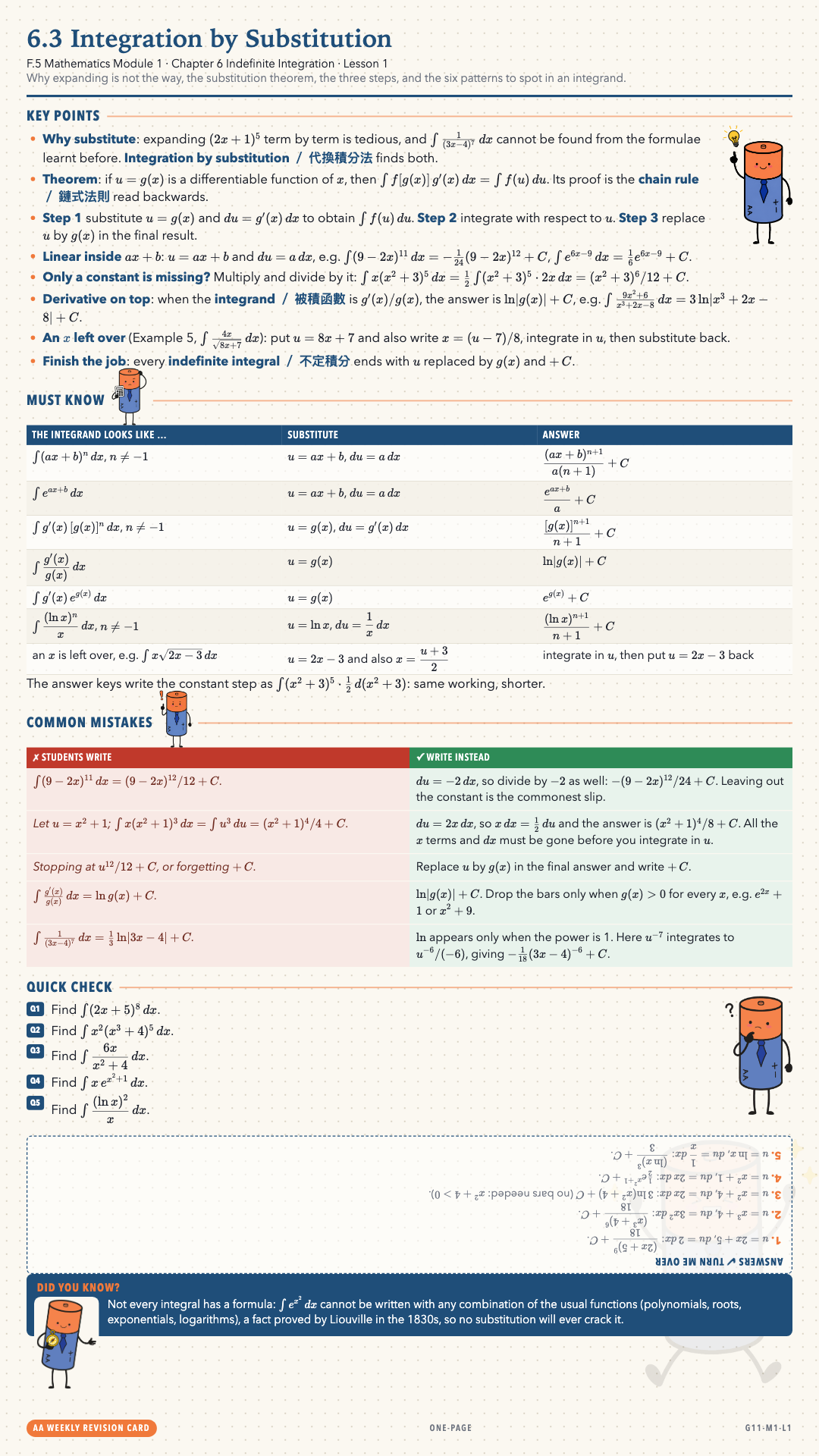
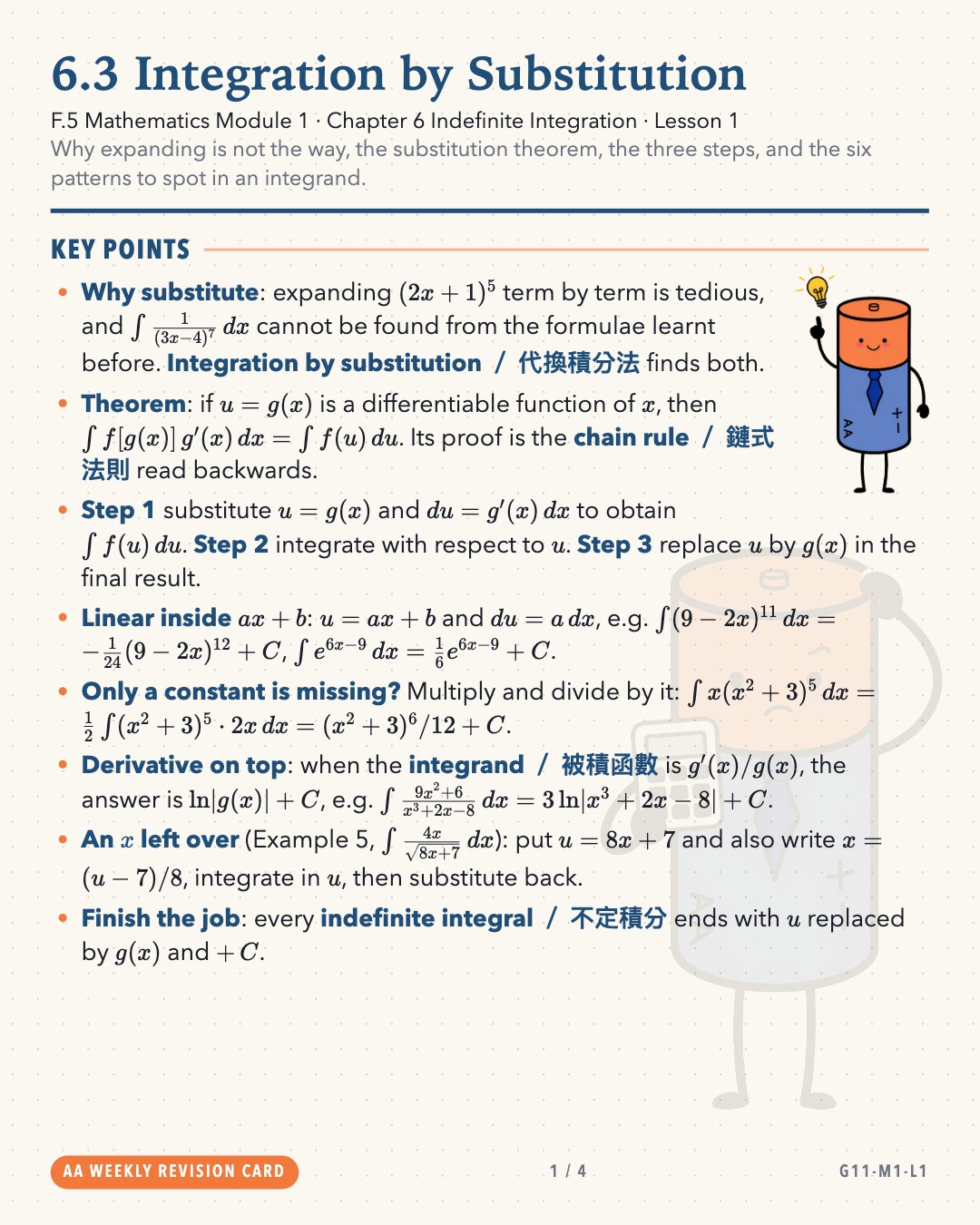
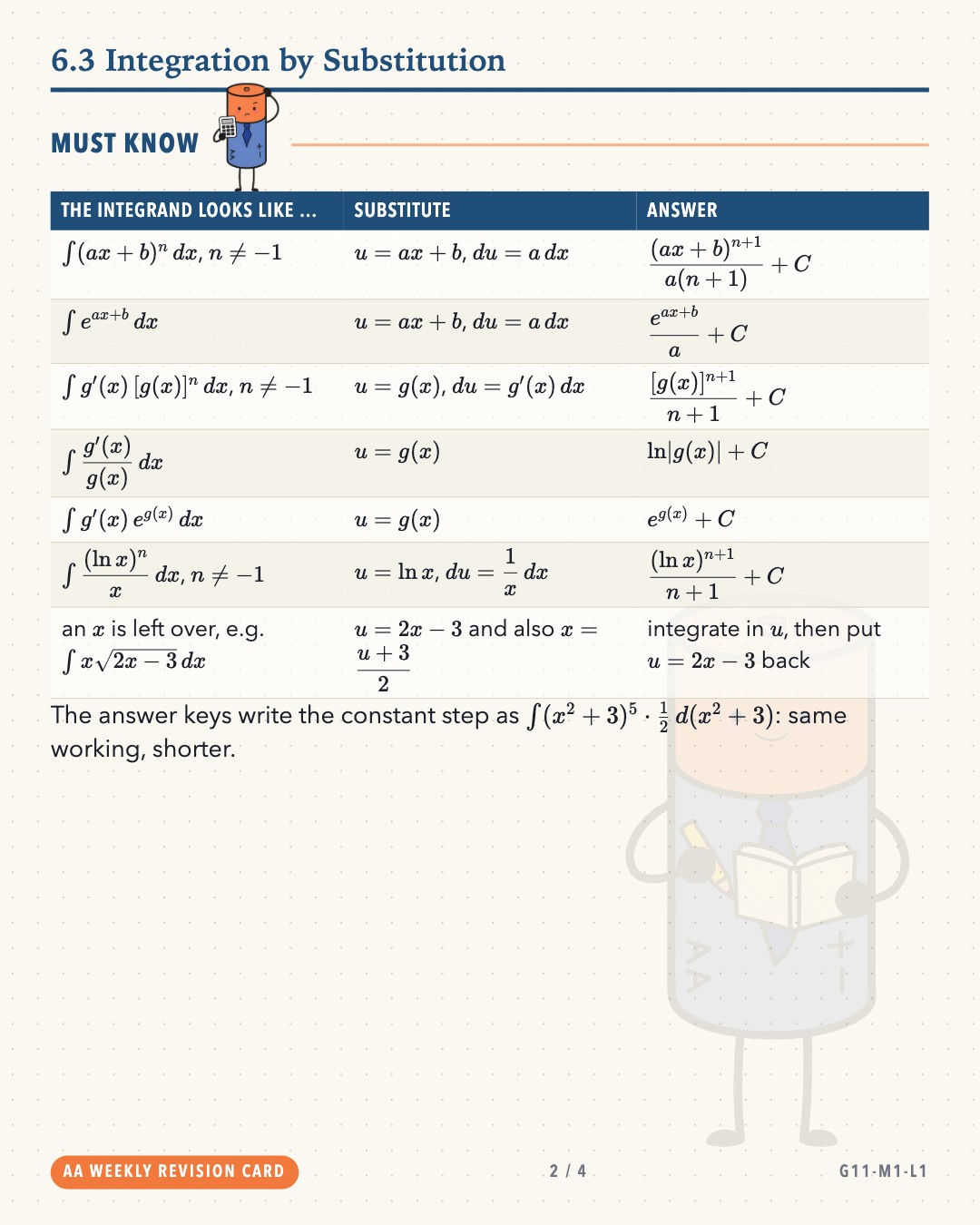
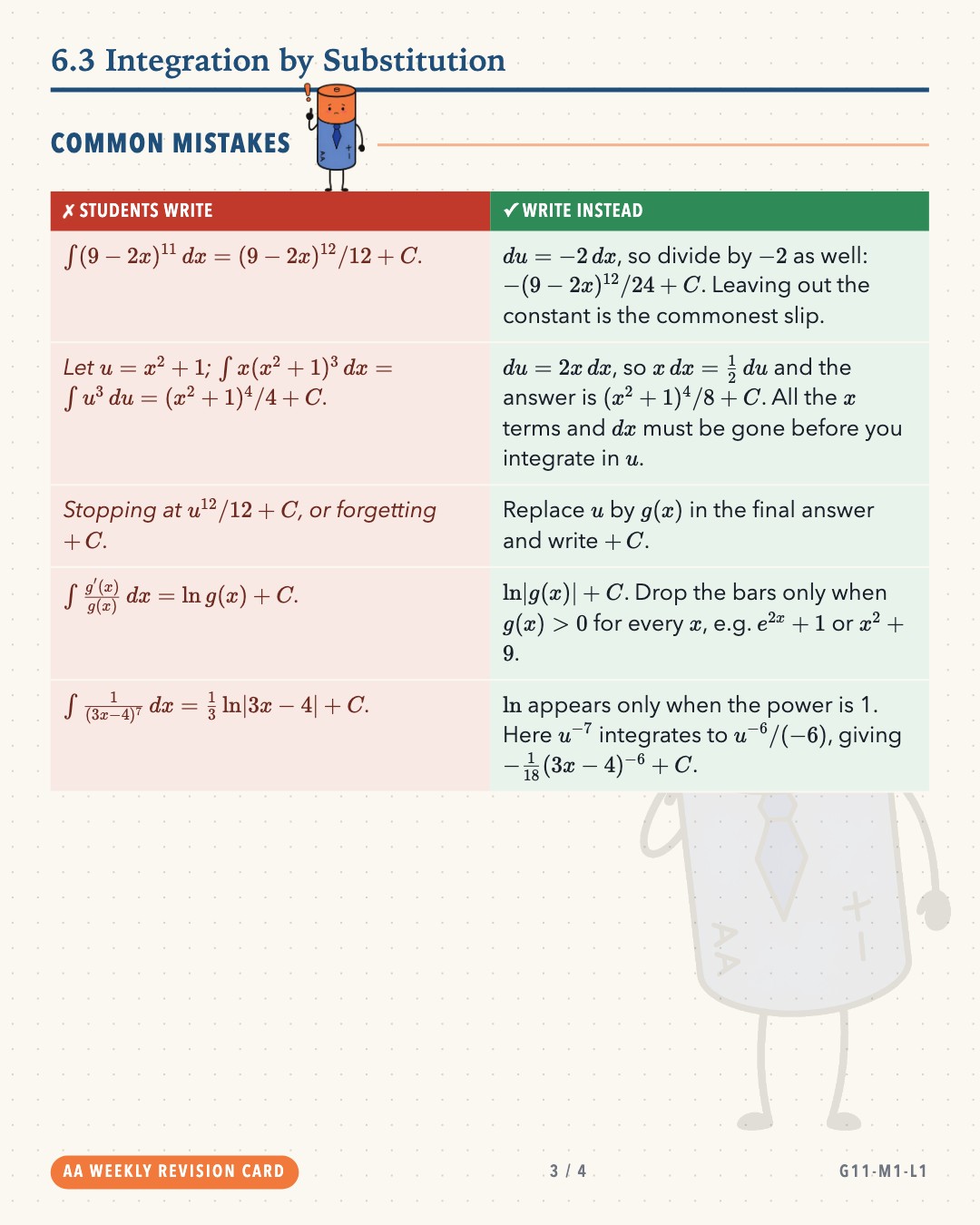
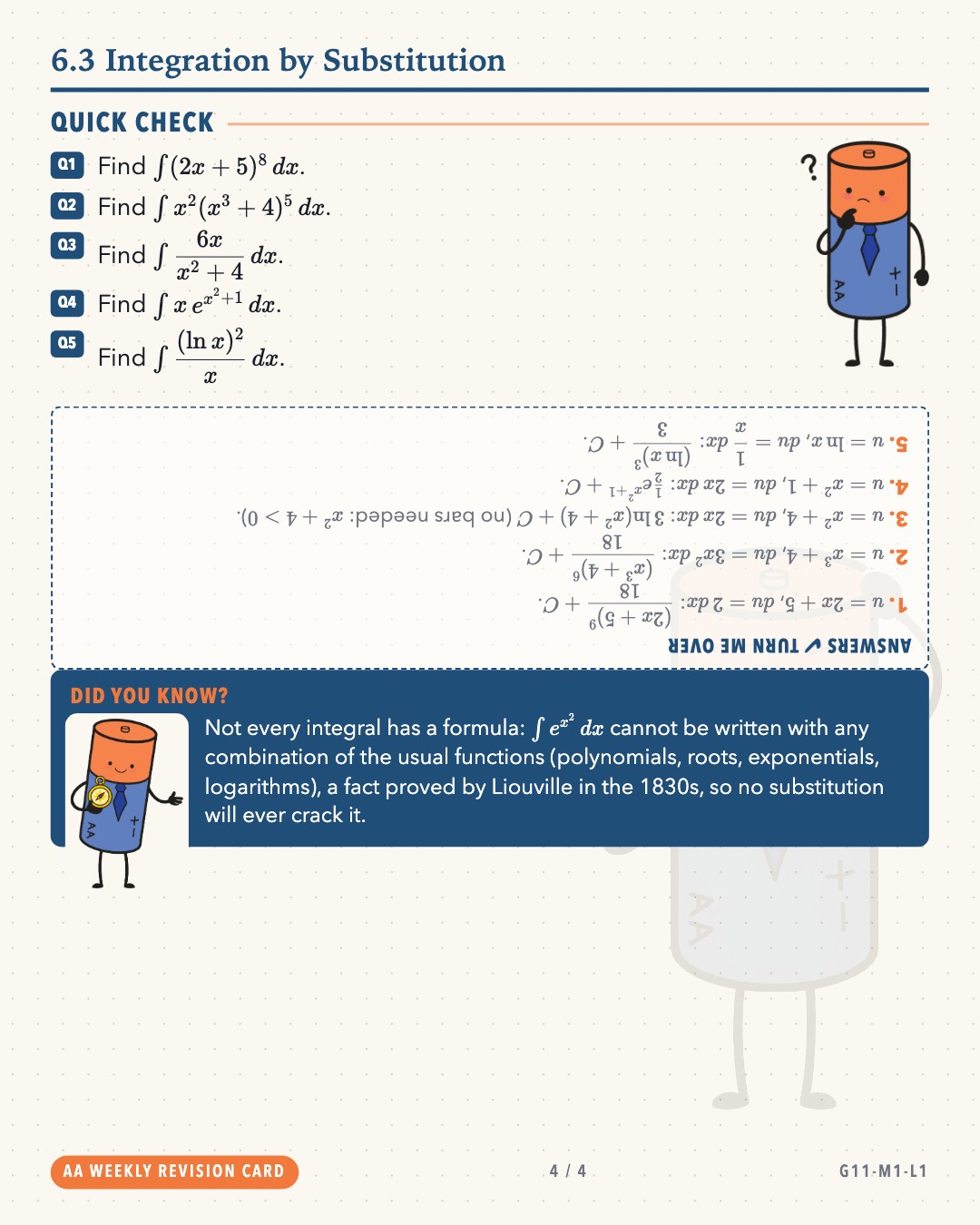
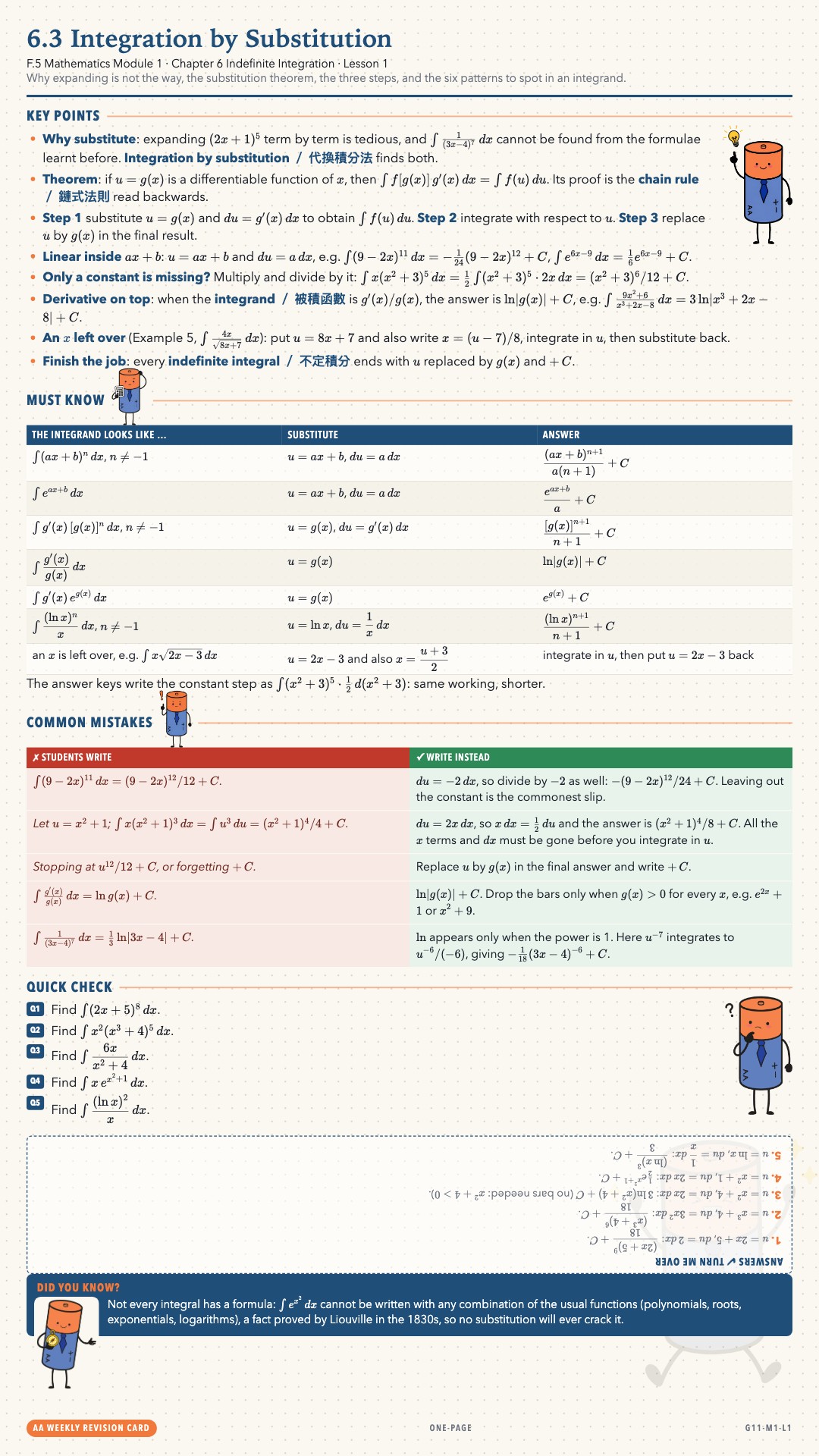
Why expanding is not the way, the substitution theorem, the three steps, and the six patterns to spot in an integrand.
✔ fact-checked · 1 added mistake tagged [likely] · 1.3 MB JPG · card.md ·
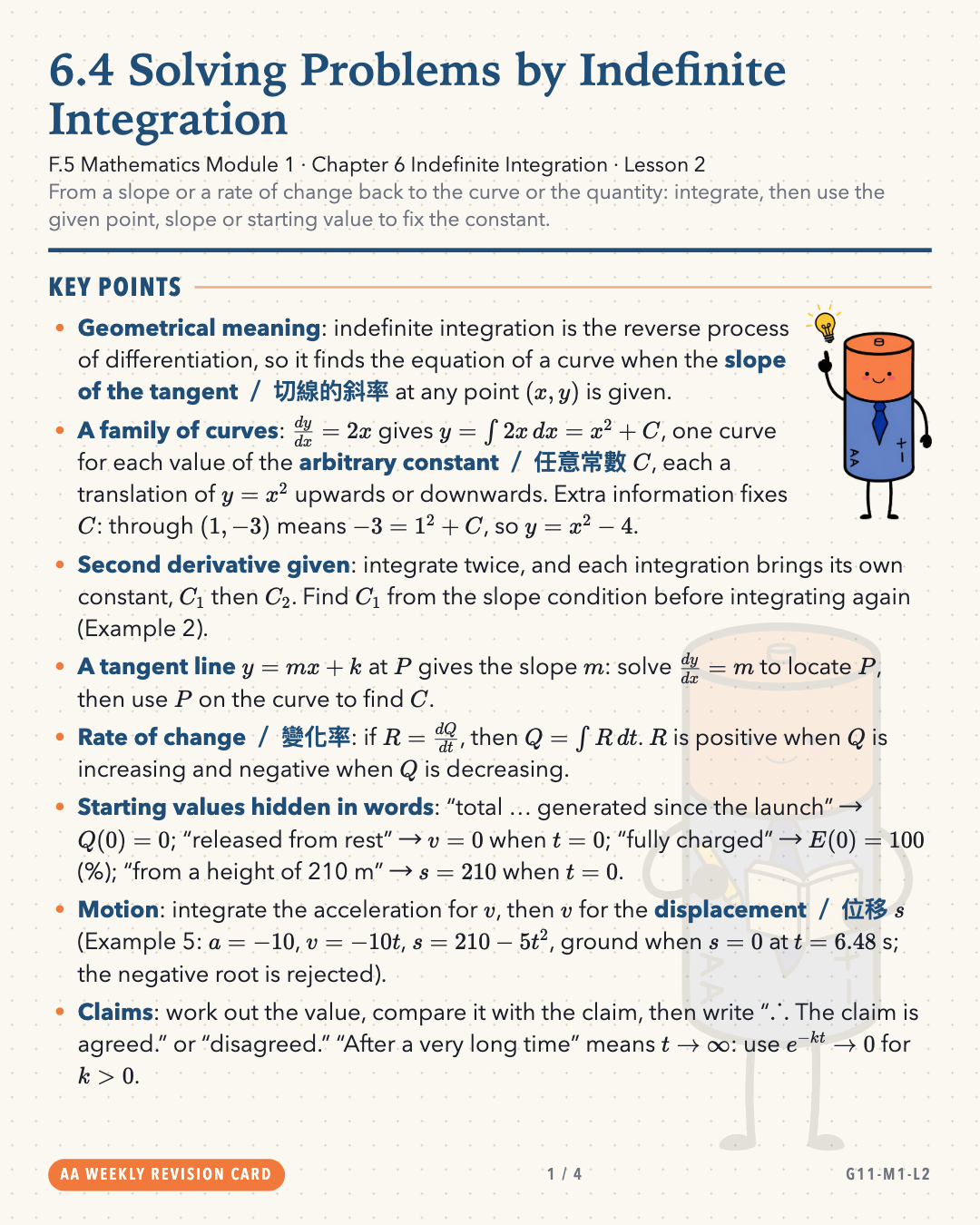
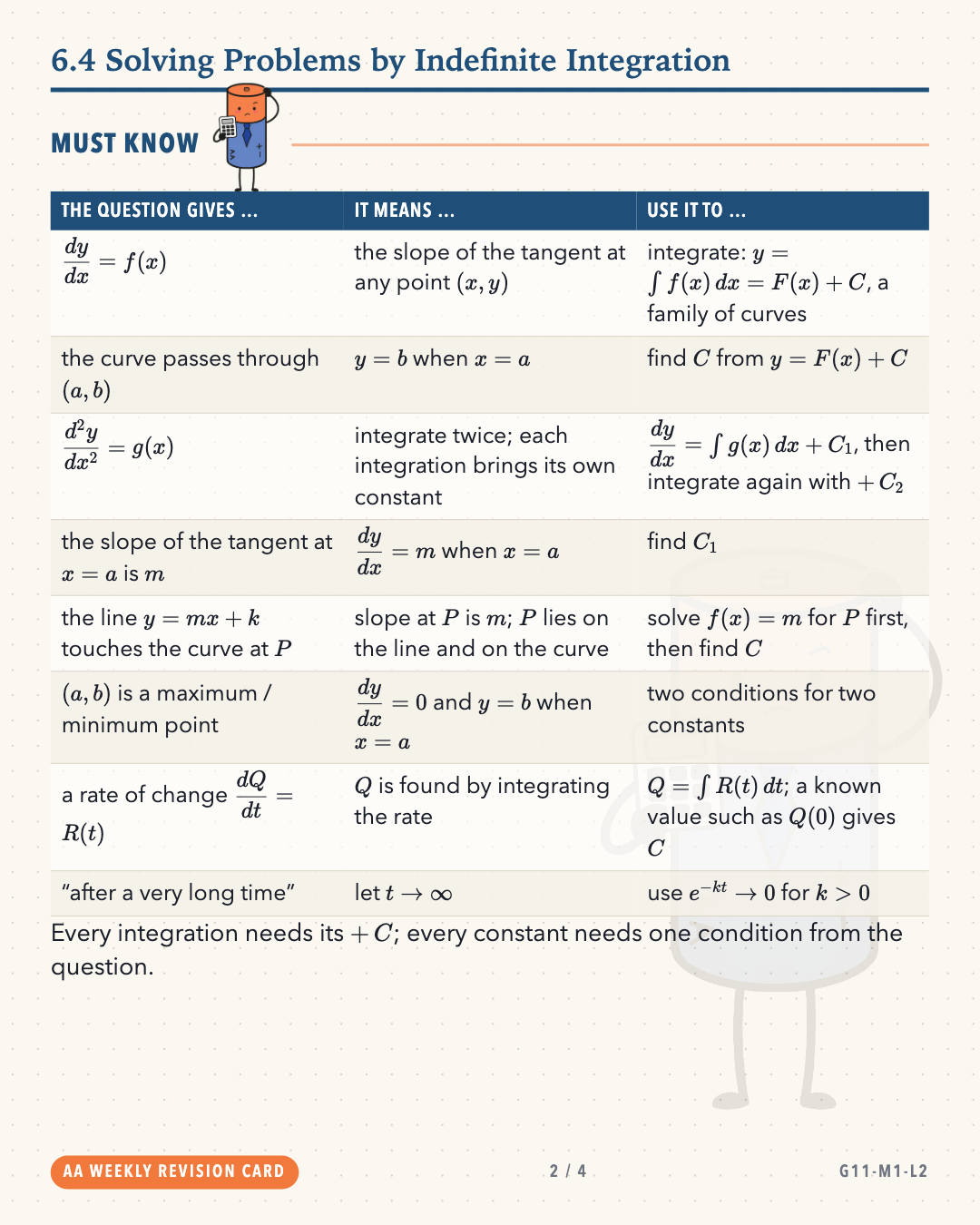
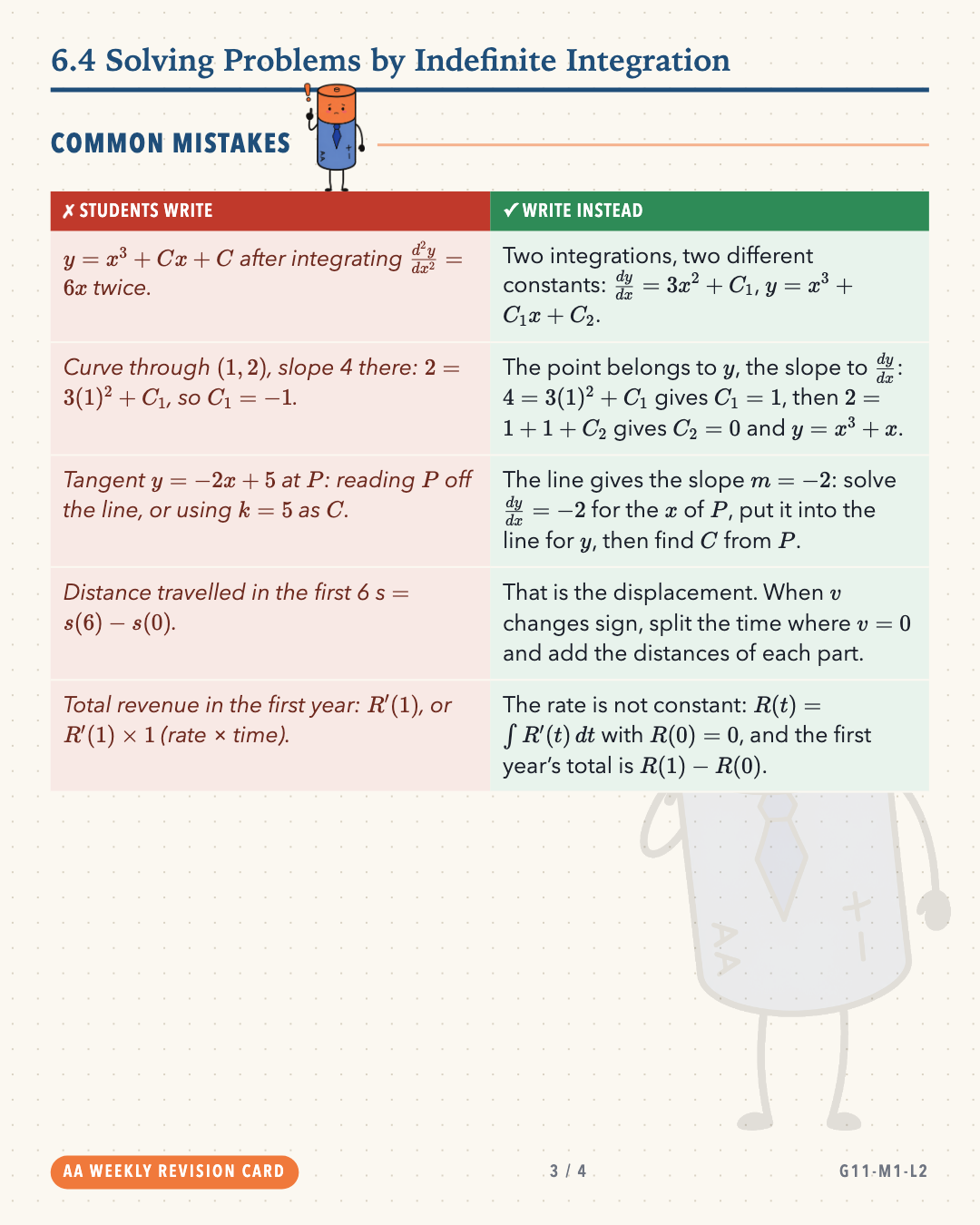
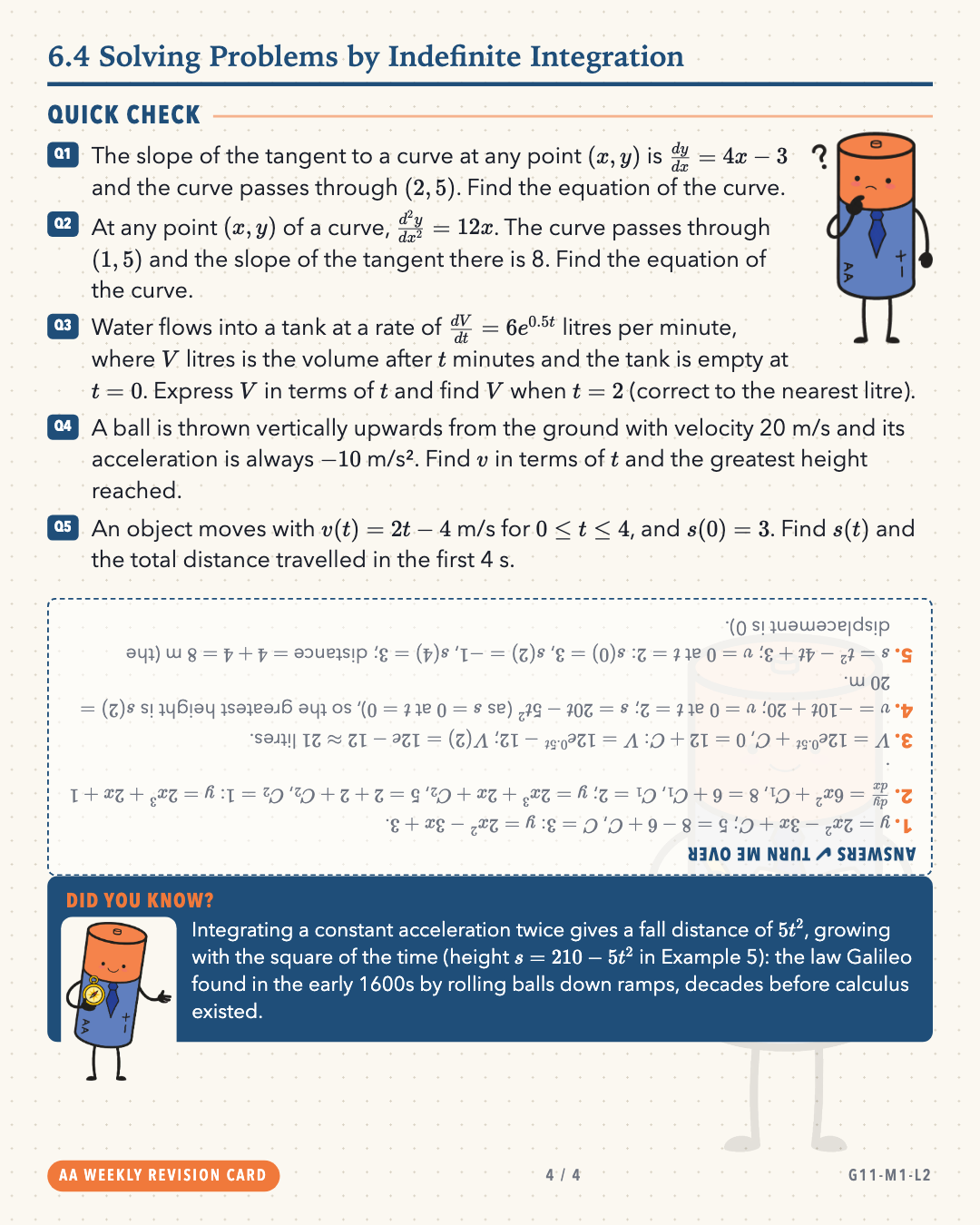
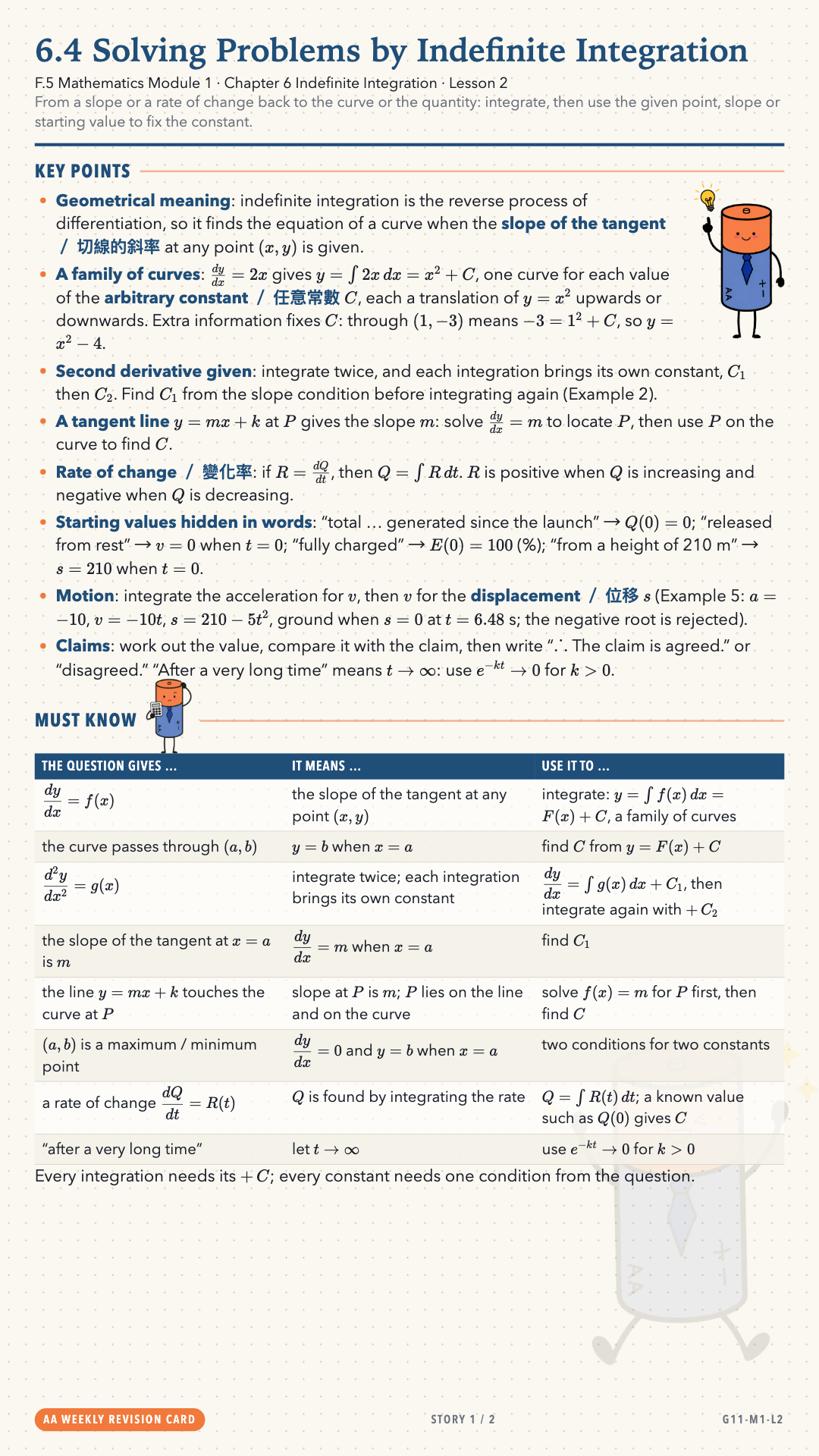
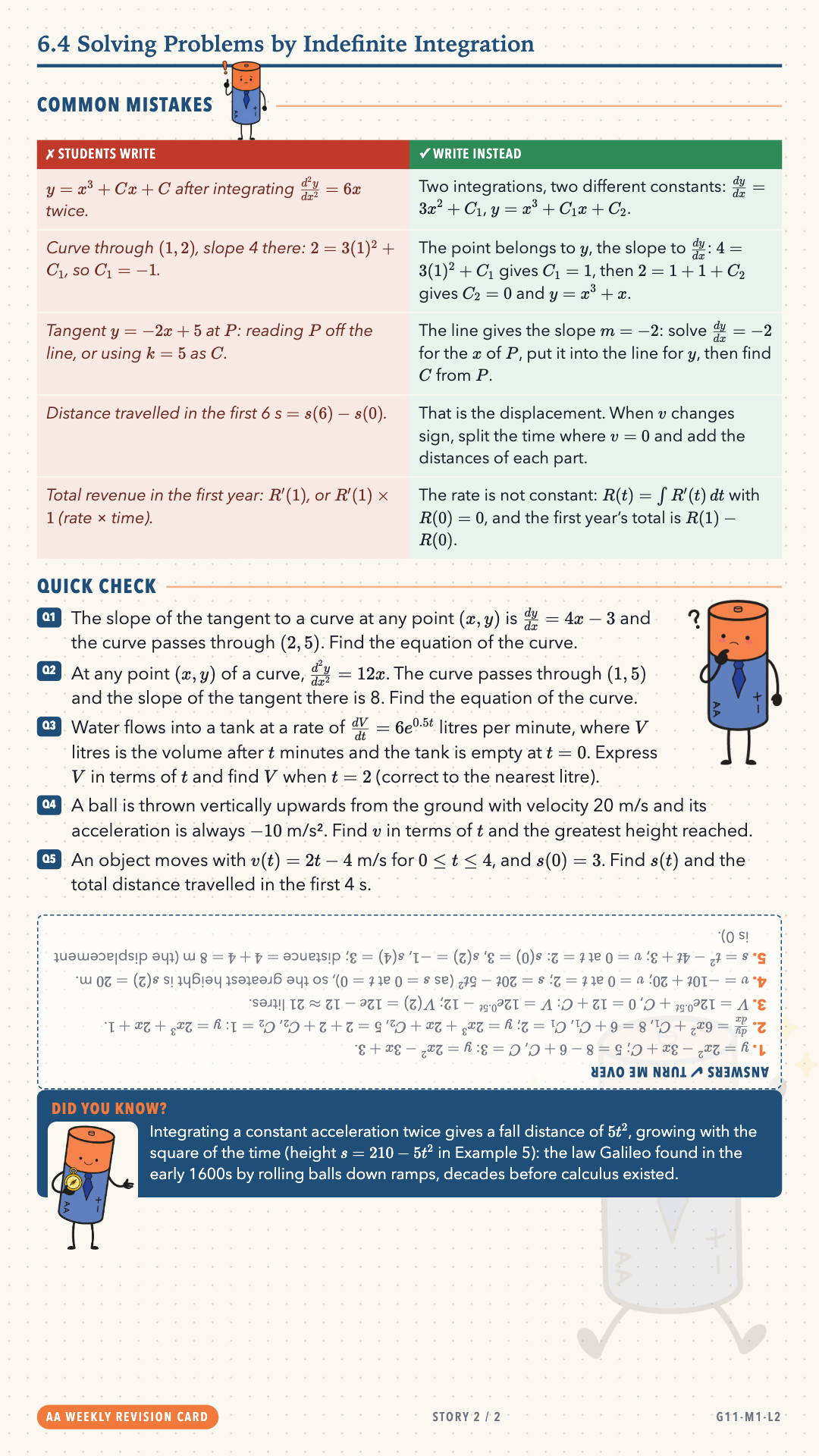
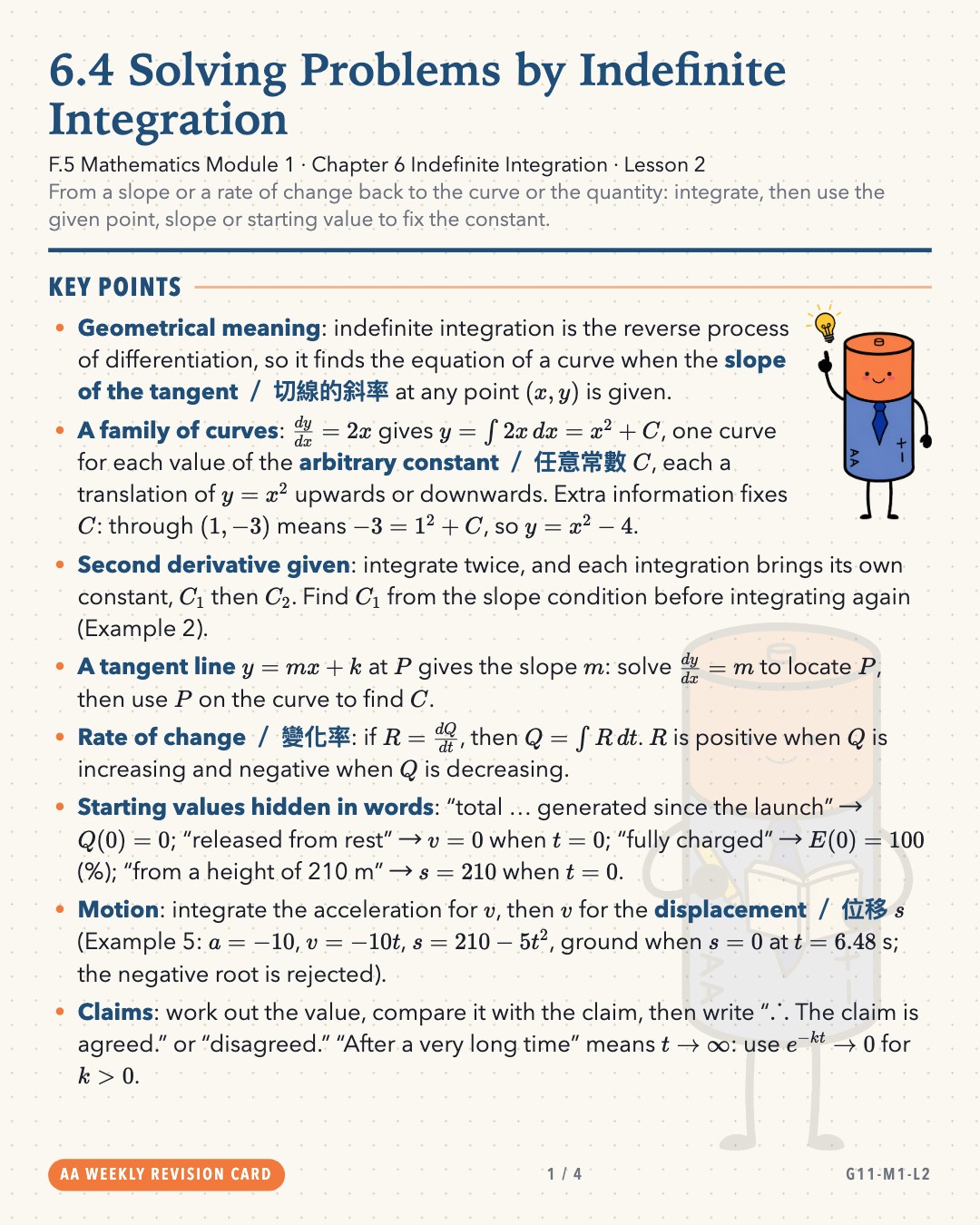
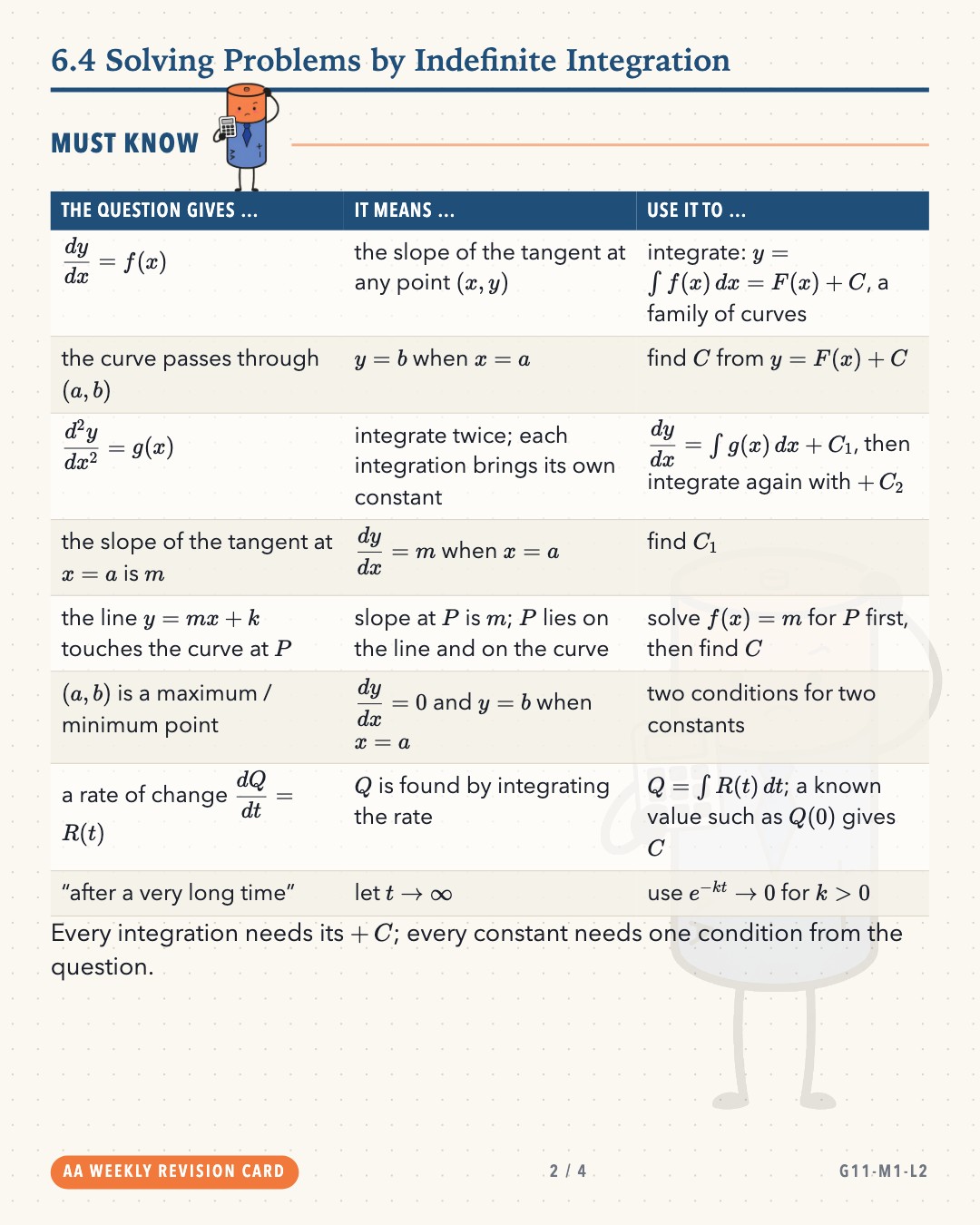
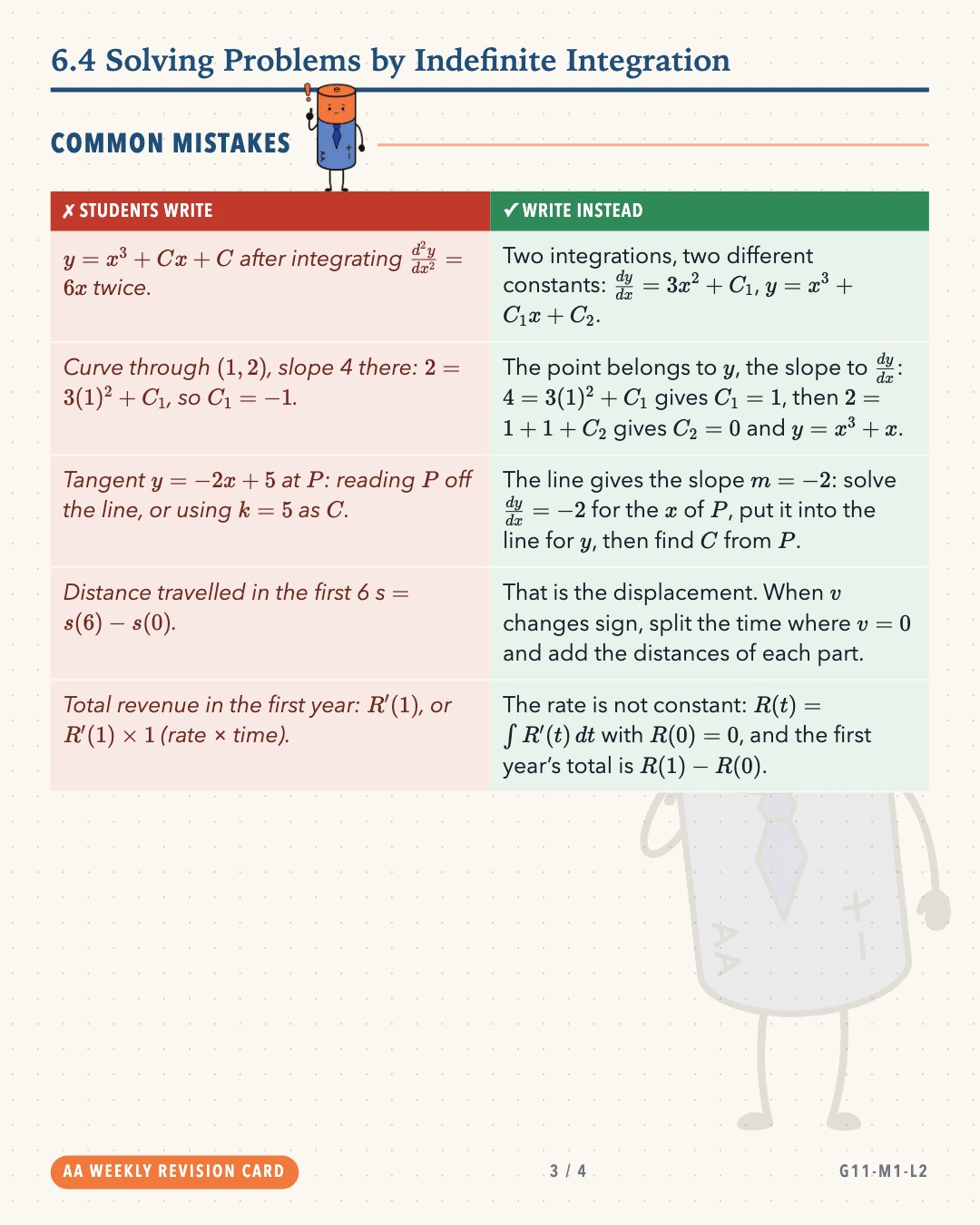
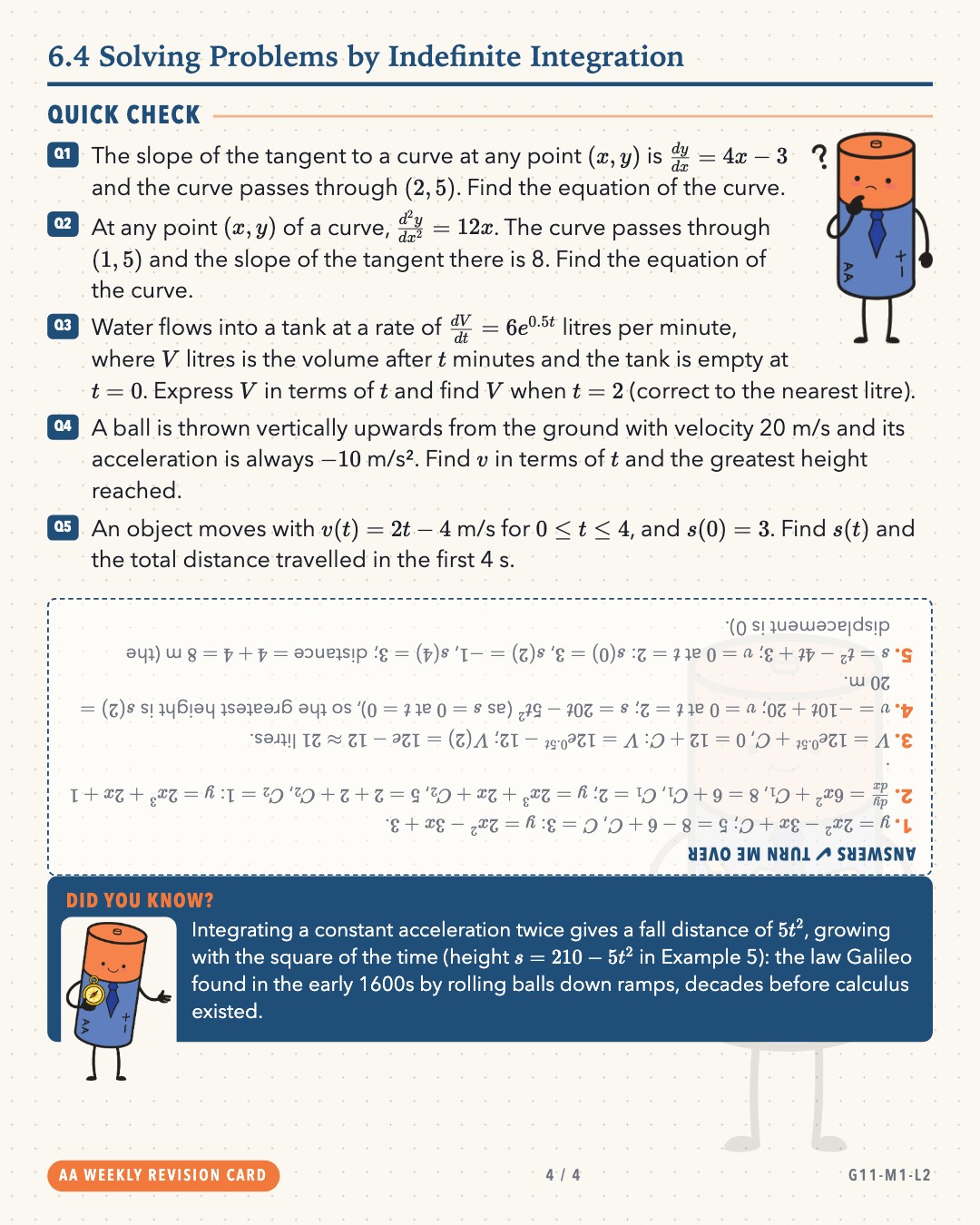
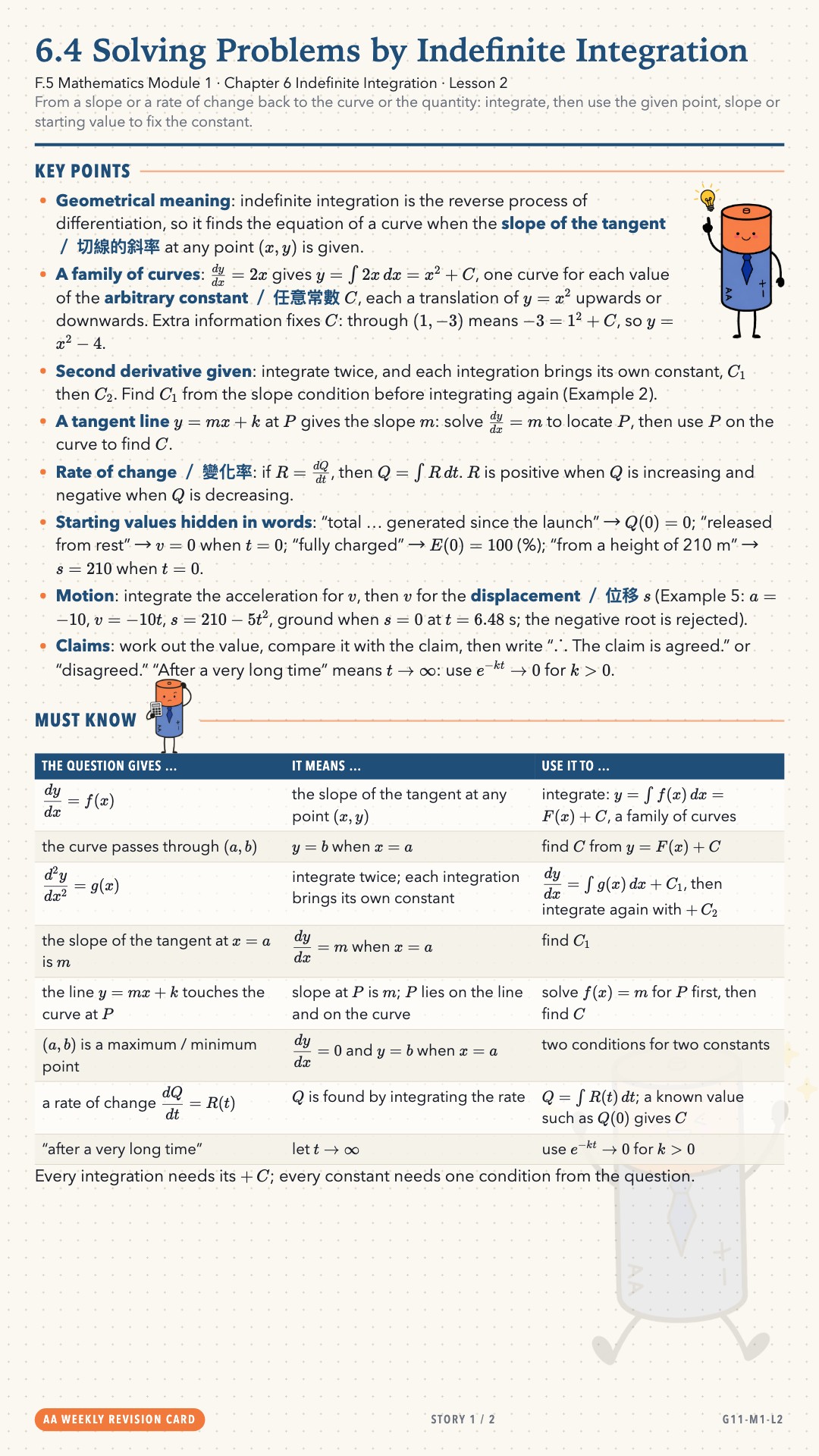
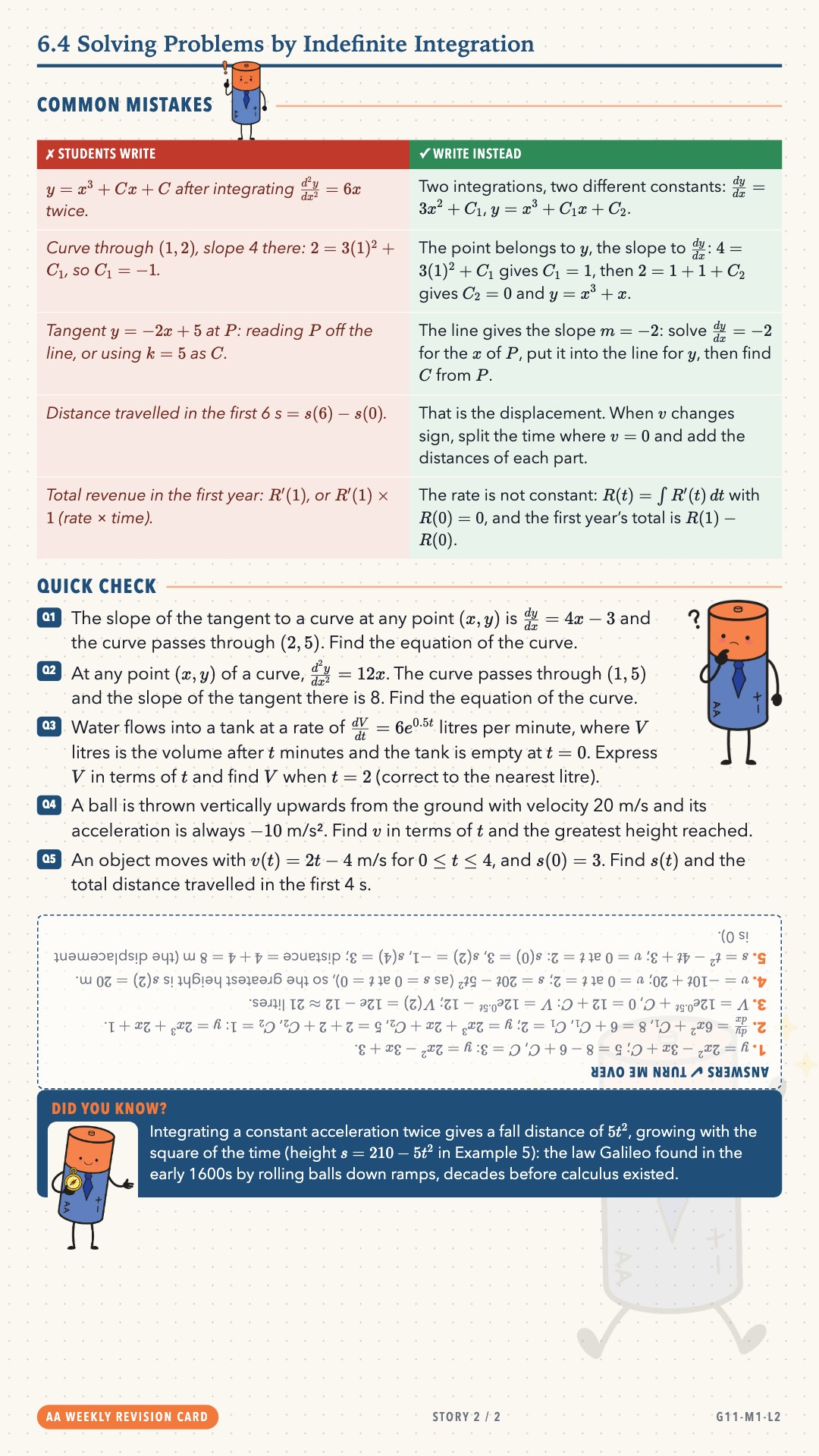
From a slope or a rate of change back to the curve or the quantity: integrate, then use the given point, slope or starting value to fix the constant.
✔ fact-checked · 1 added mistake tagged [likely] · 2.1 MB JPG · card.md ·
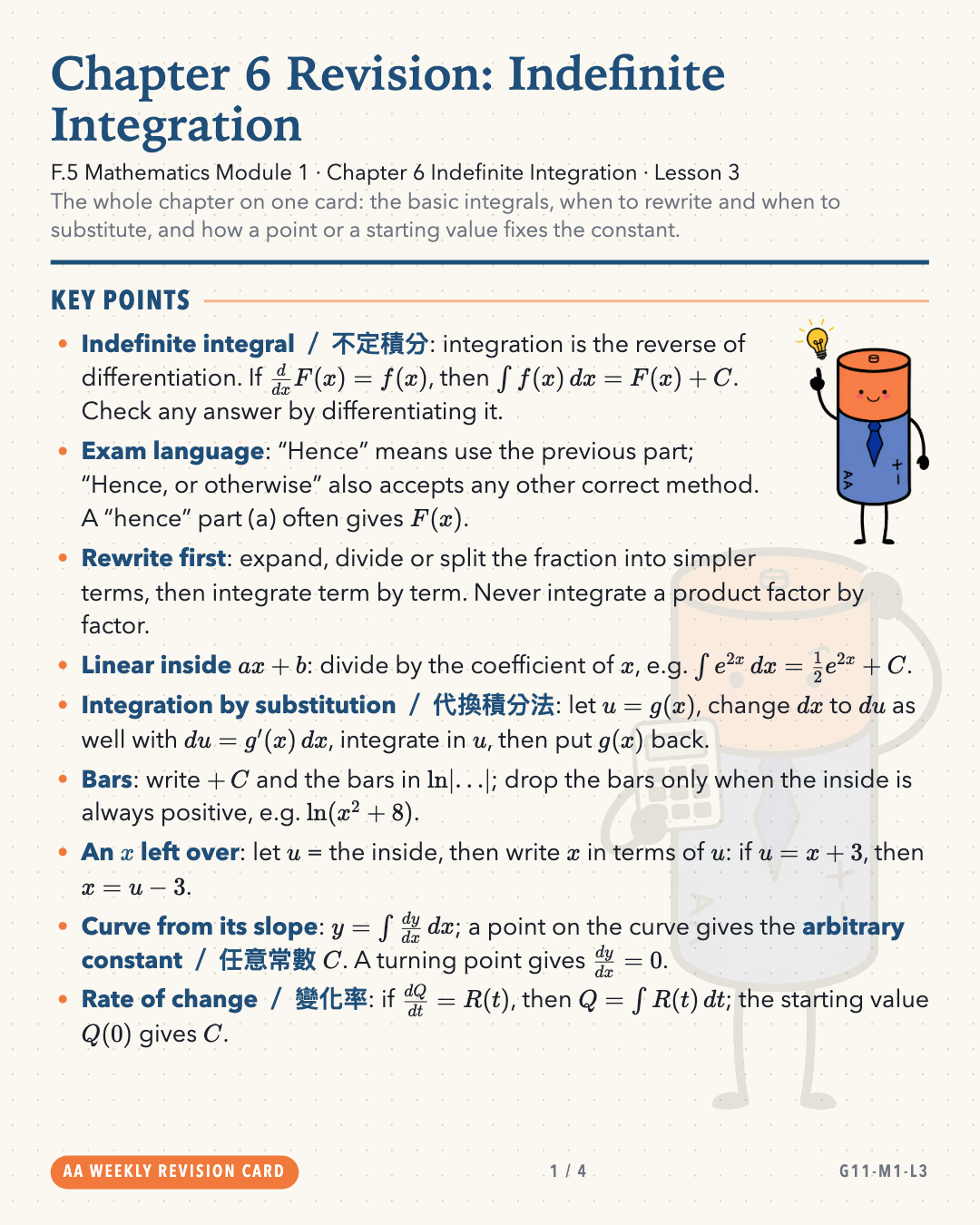
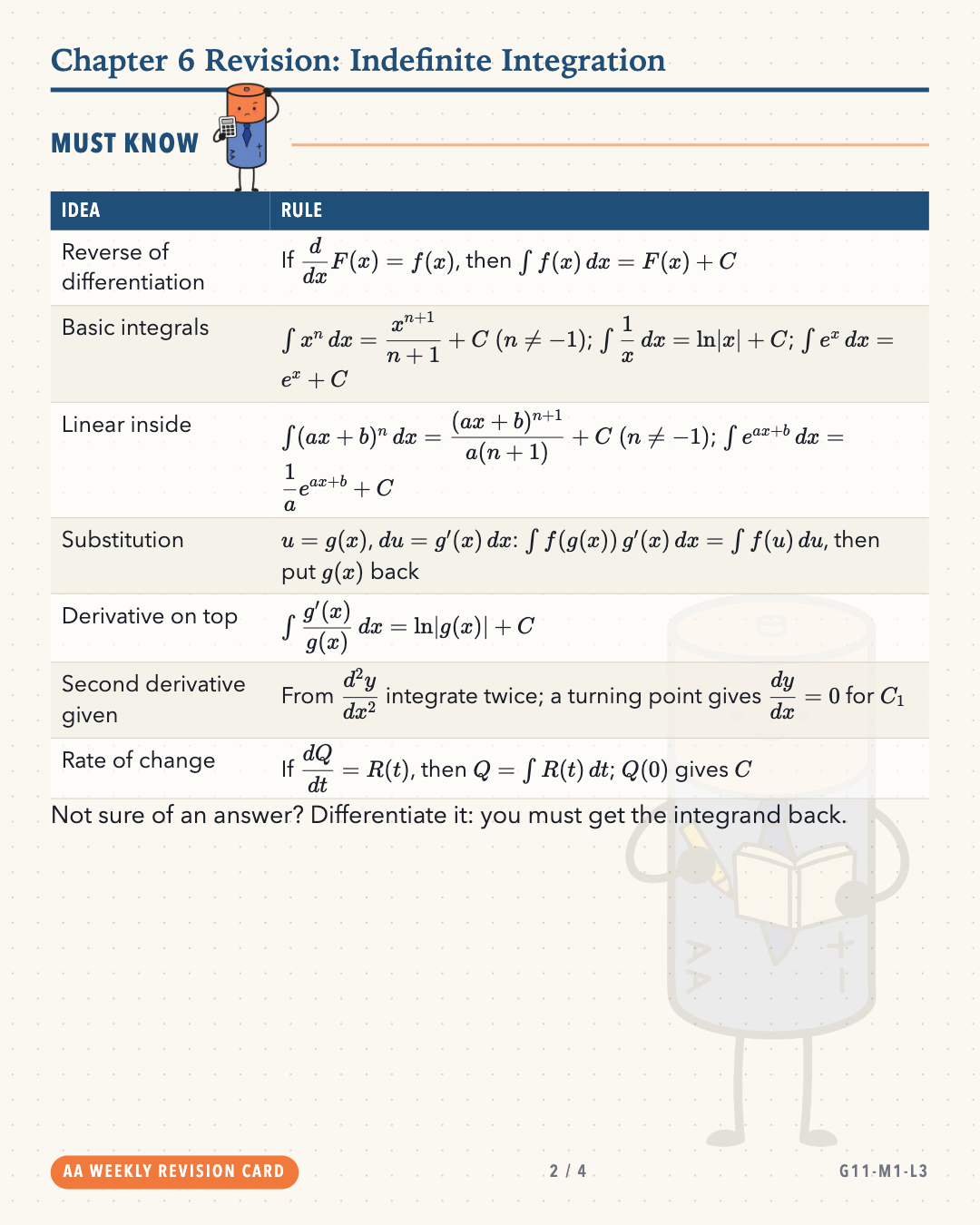
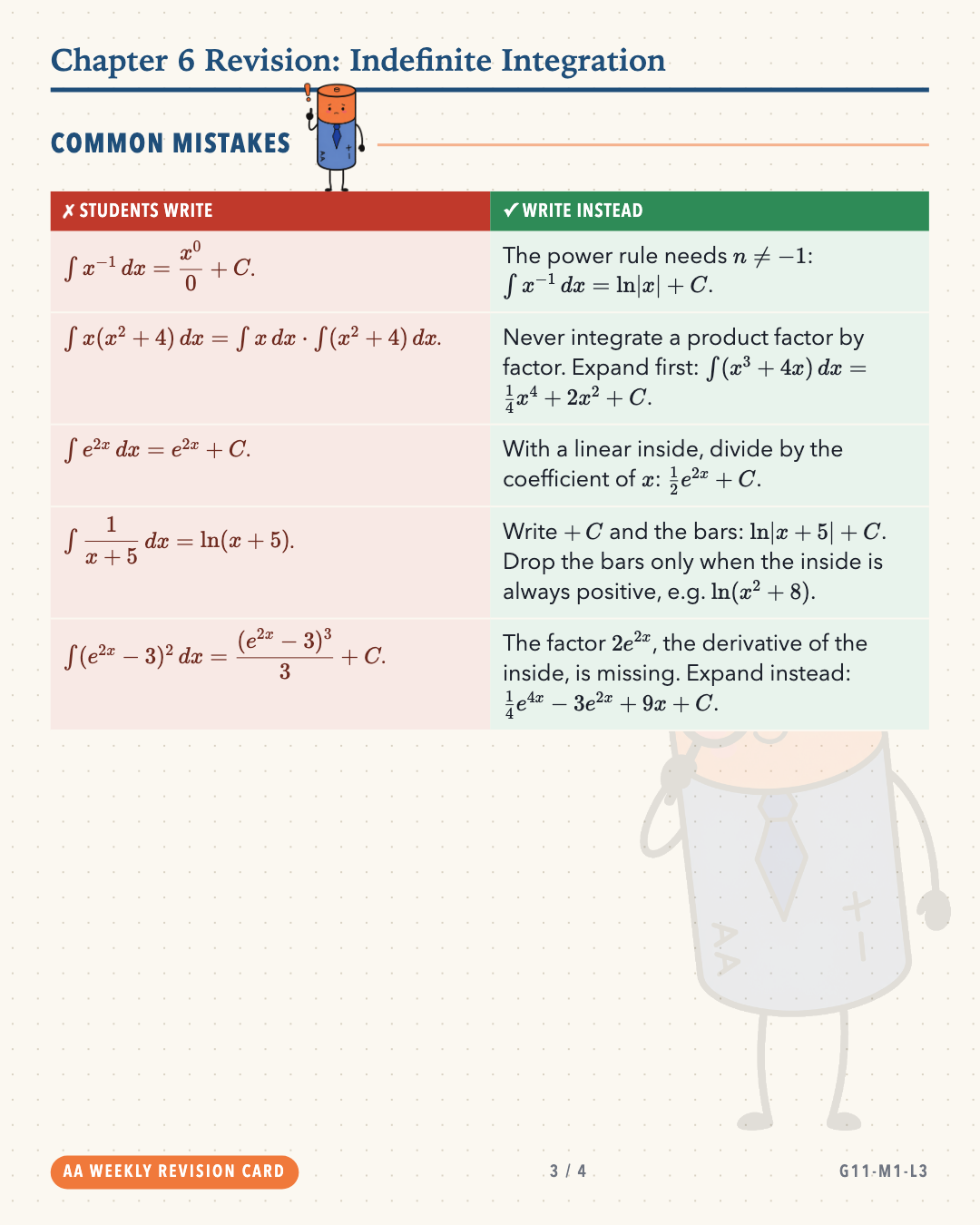
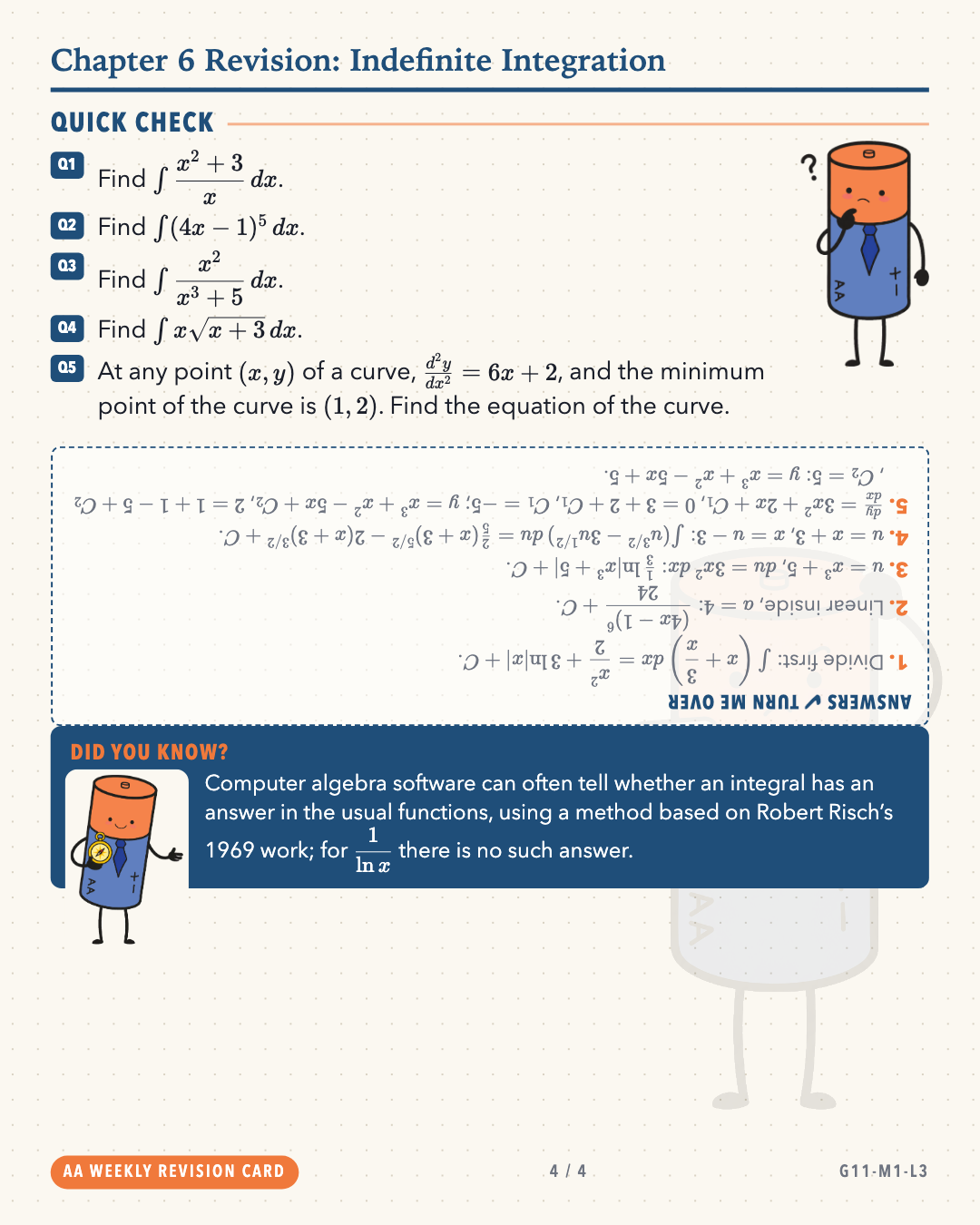
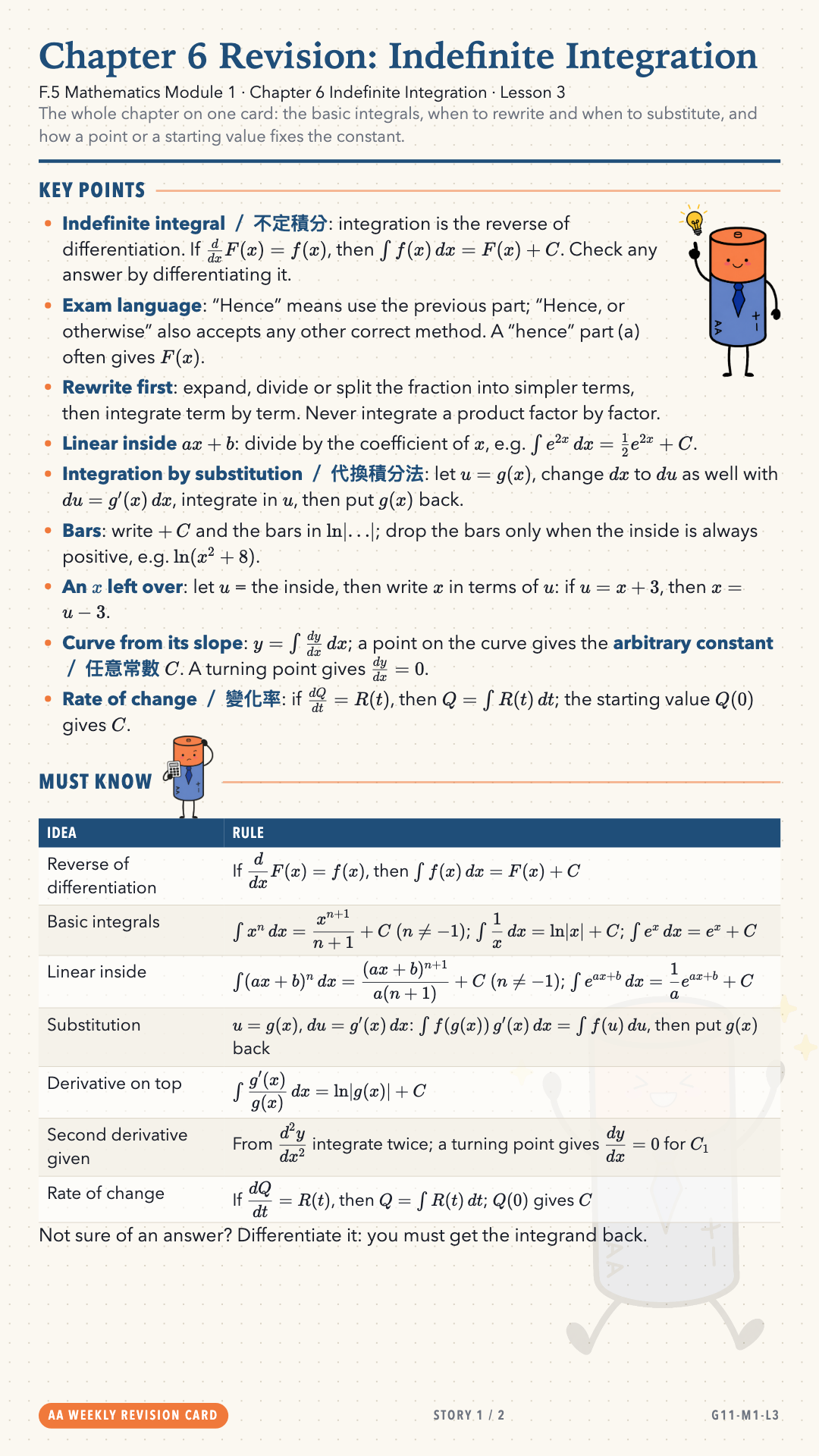
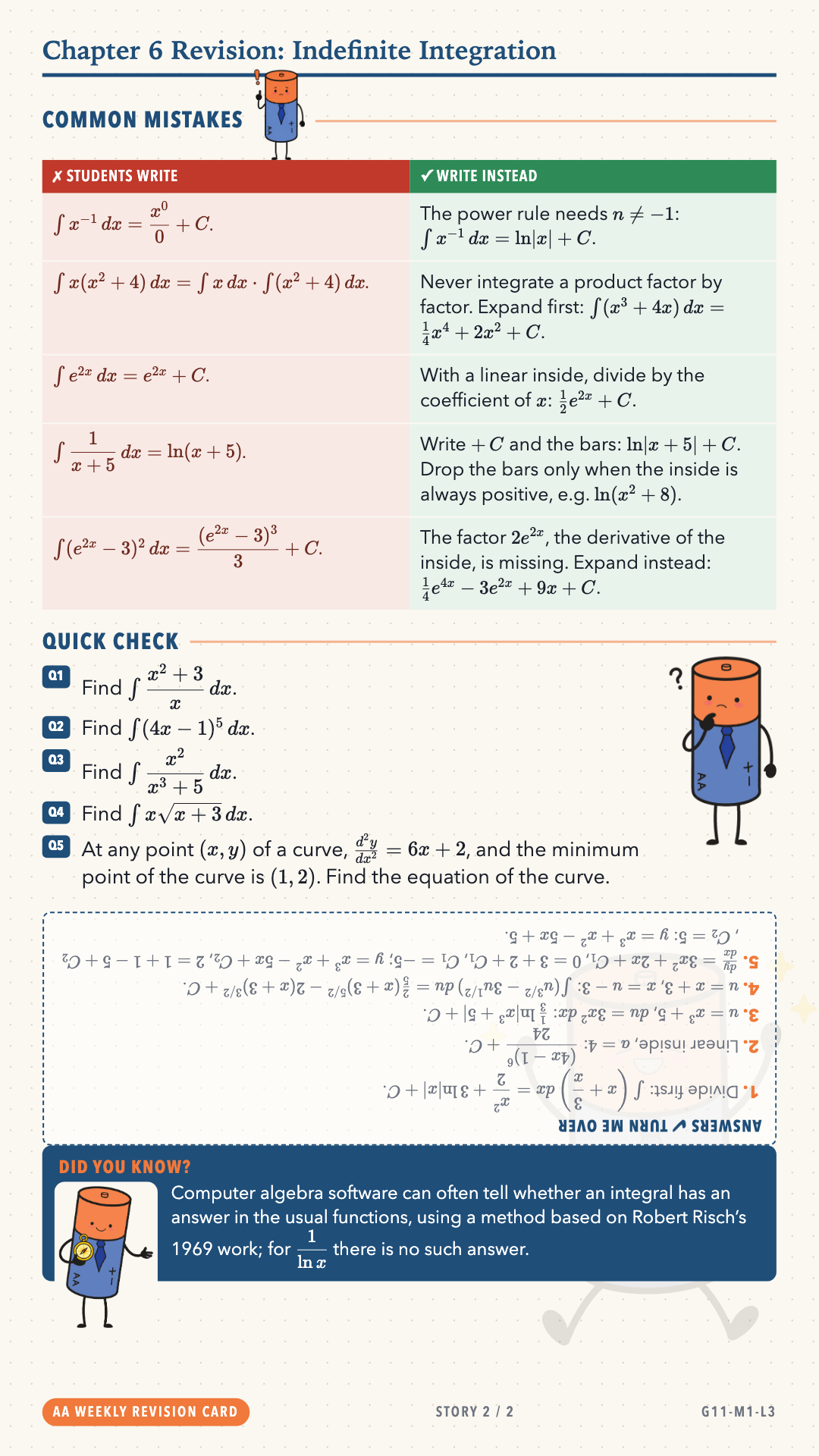
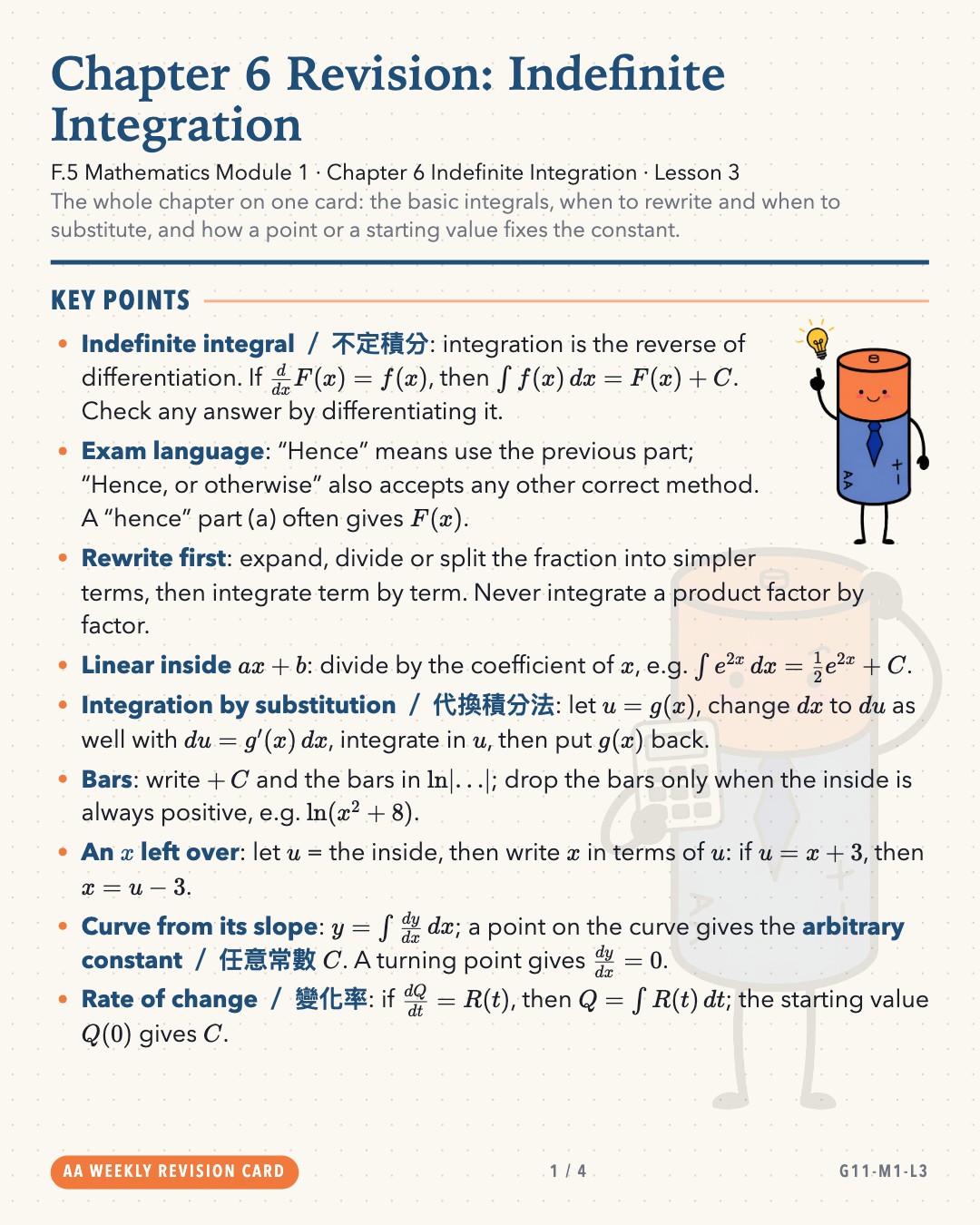
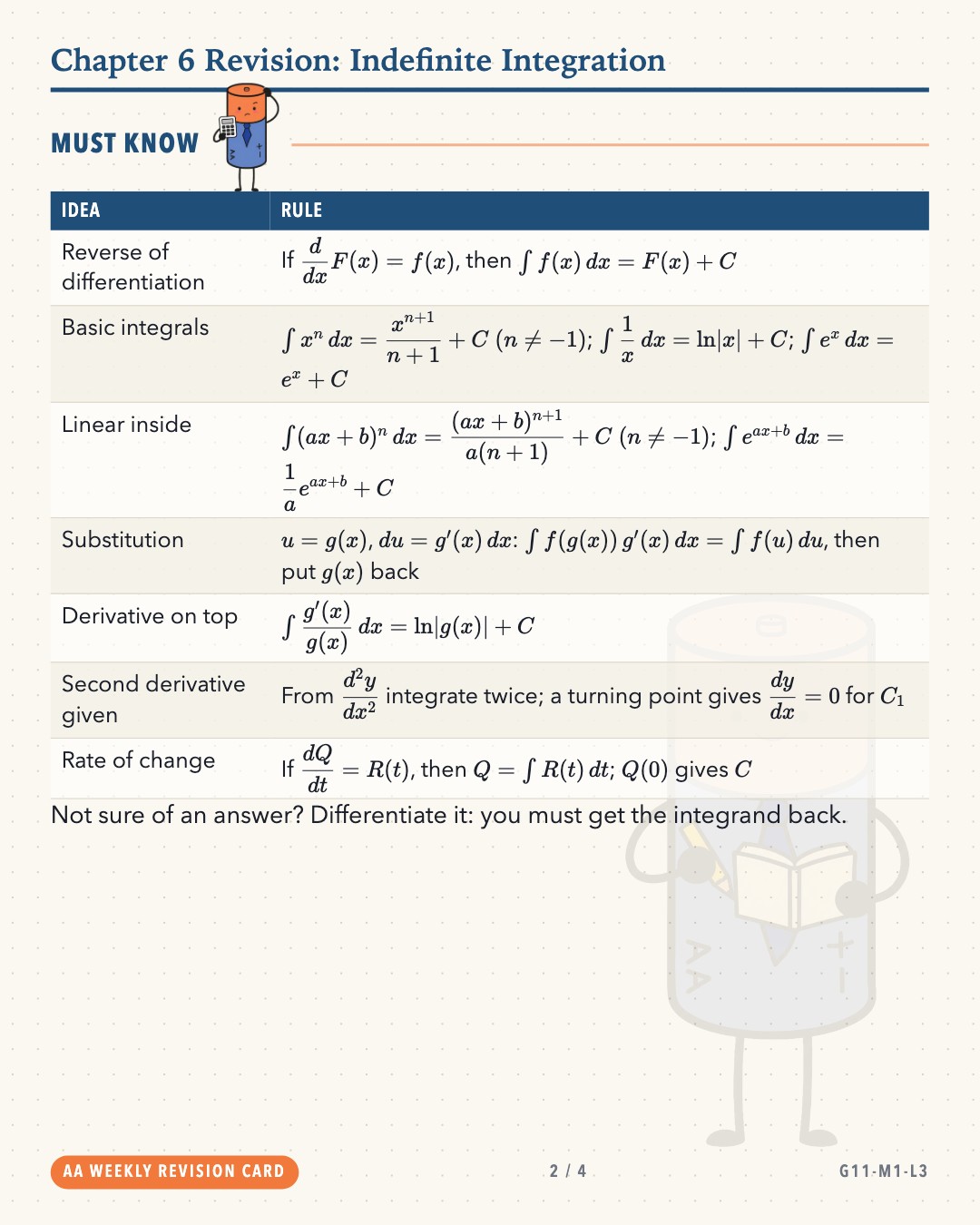
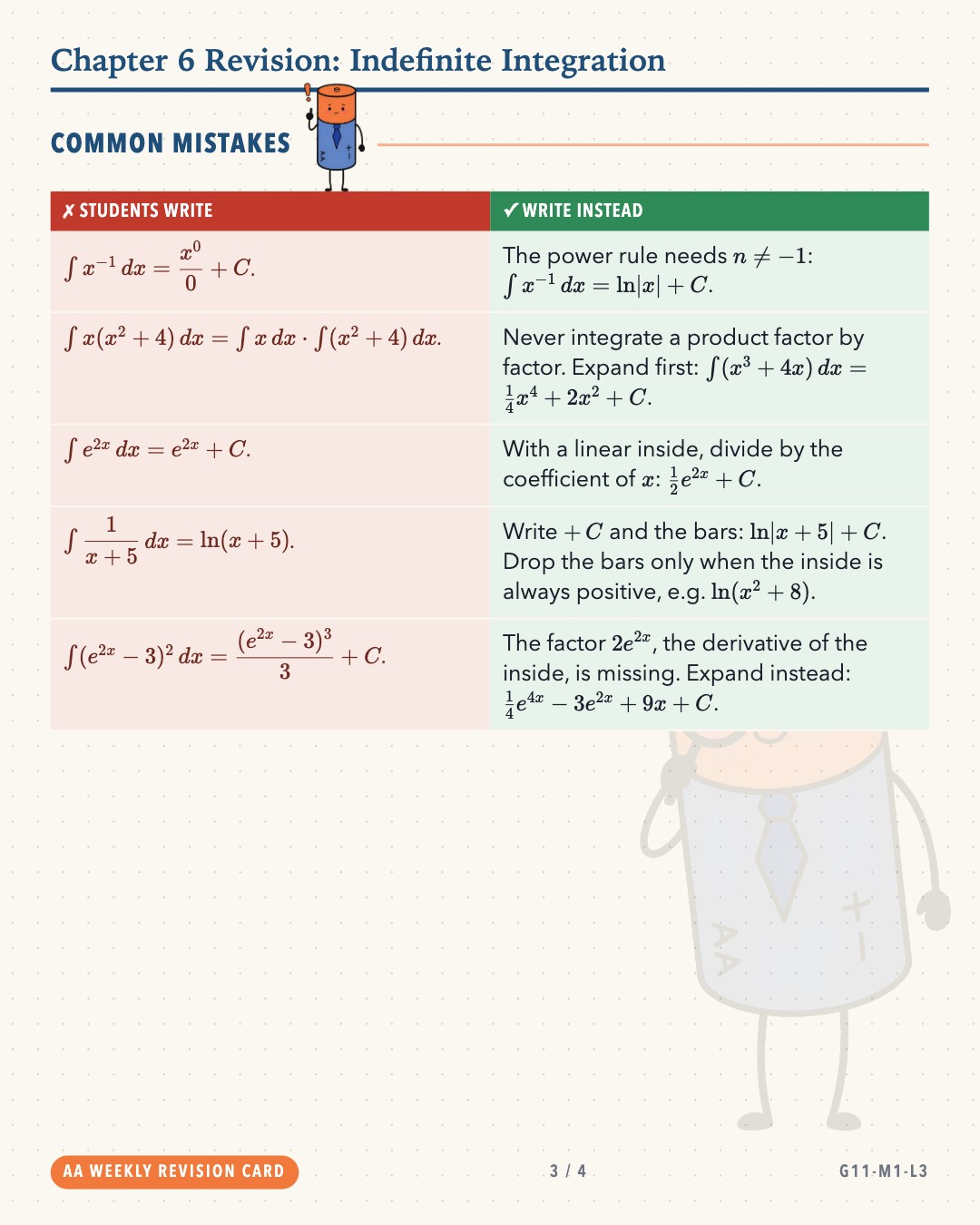
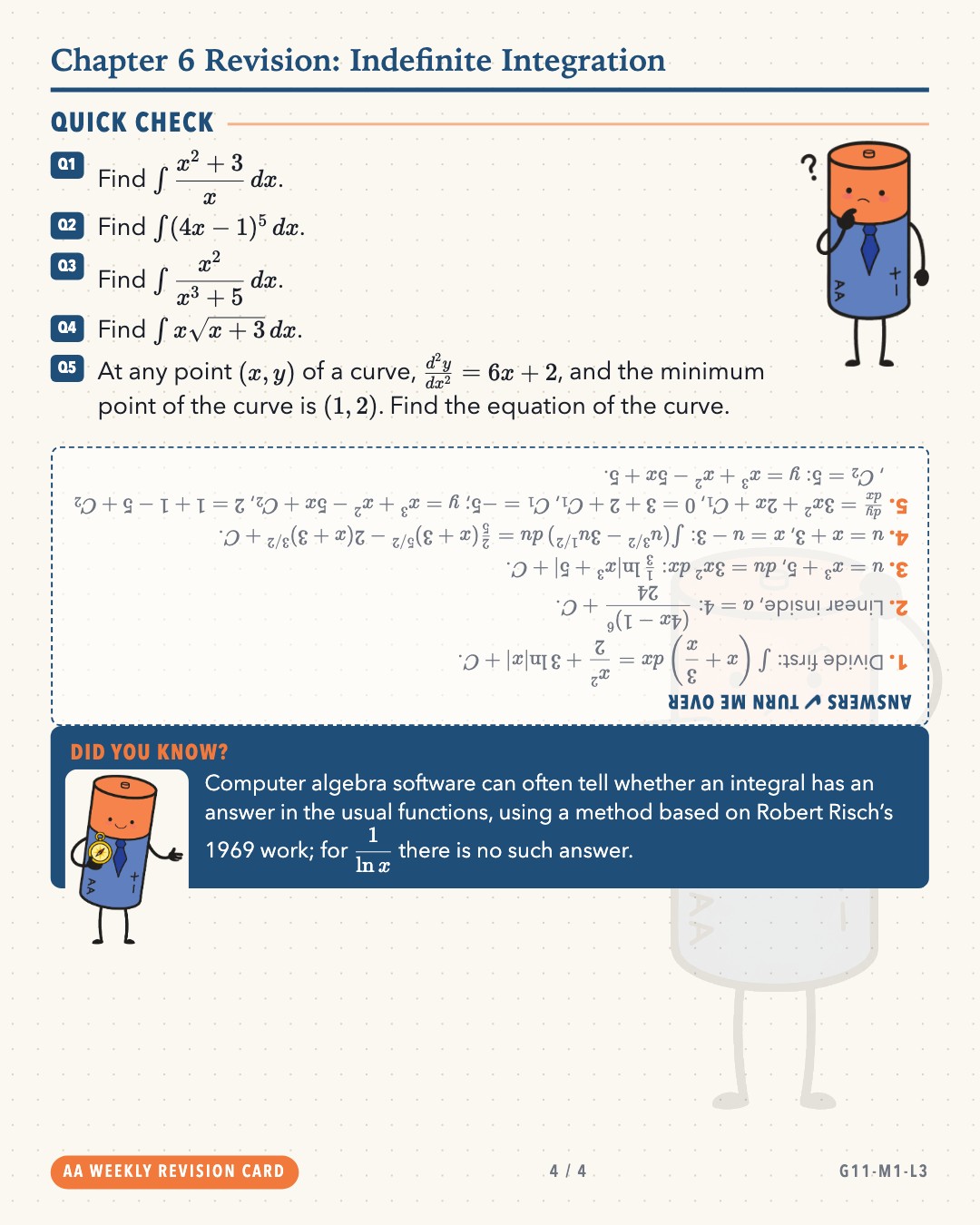
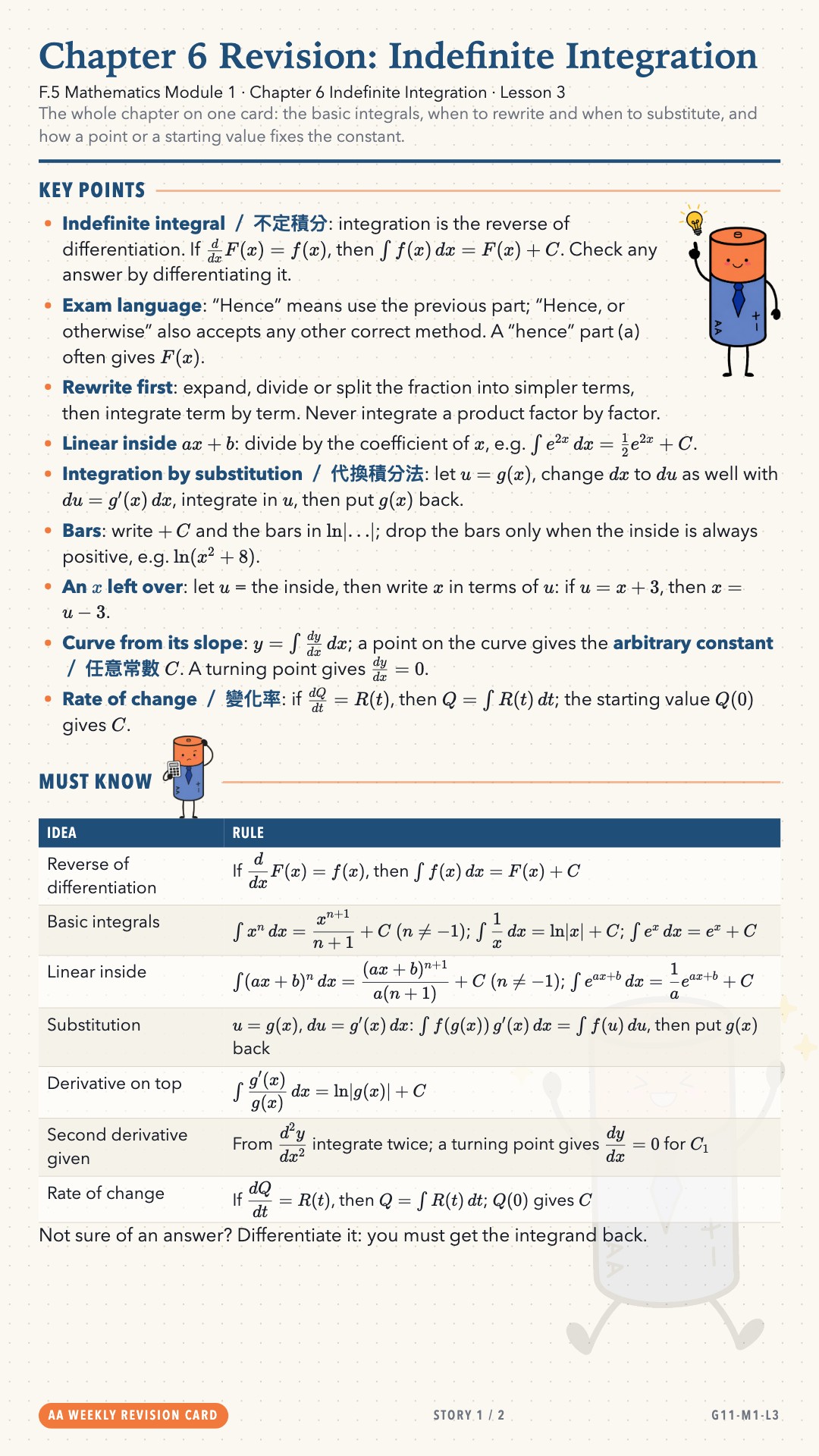
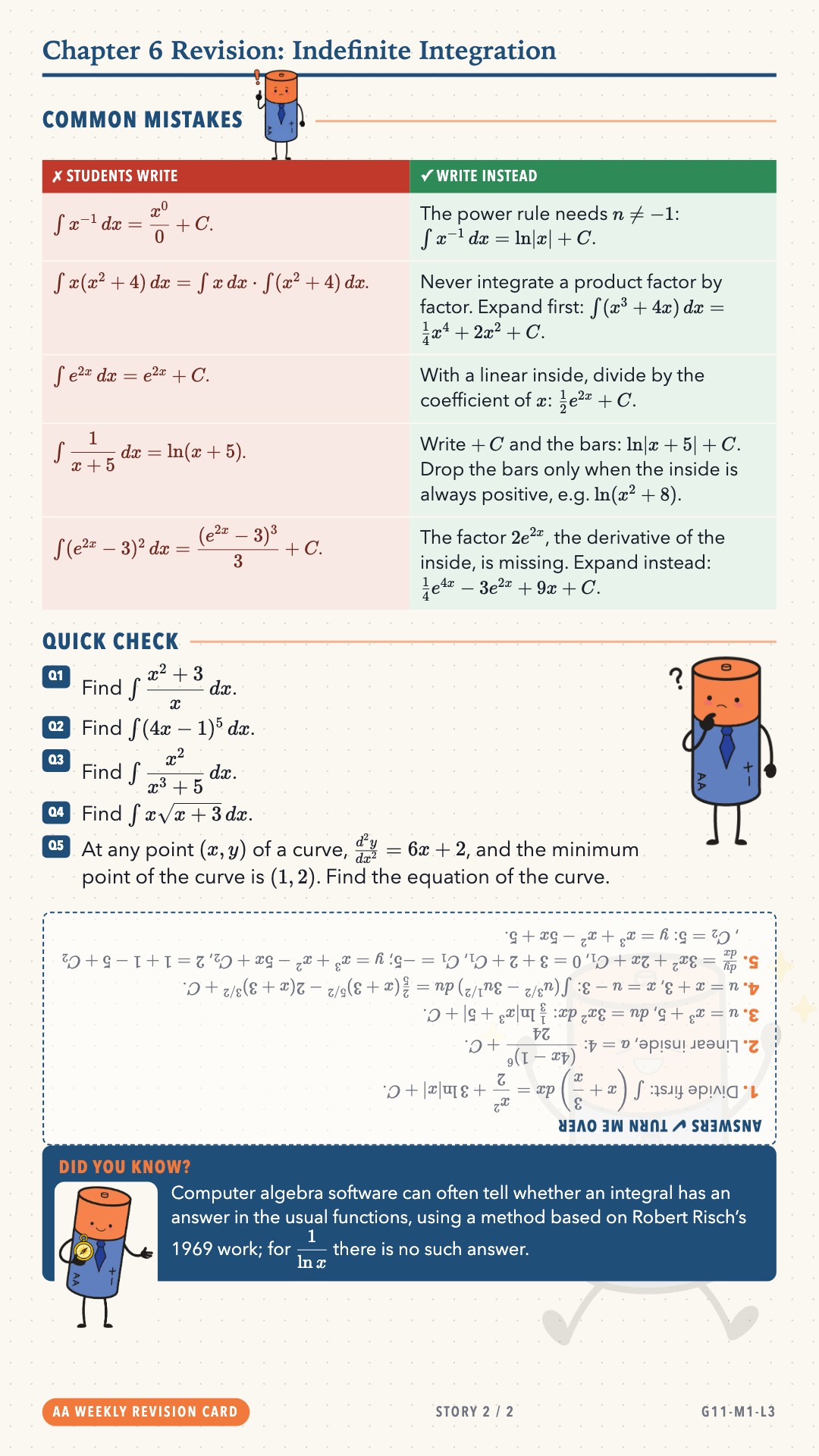
The whole chapter on one card: the basic integrals, when to rewrite and when to substitute, and how a point or a starting value fixes the constant.
✔ fact-checked · 2 added mistakes tagged [likely] · 1.7 MB JPG · card.md ·
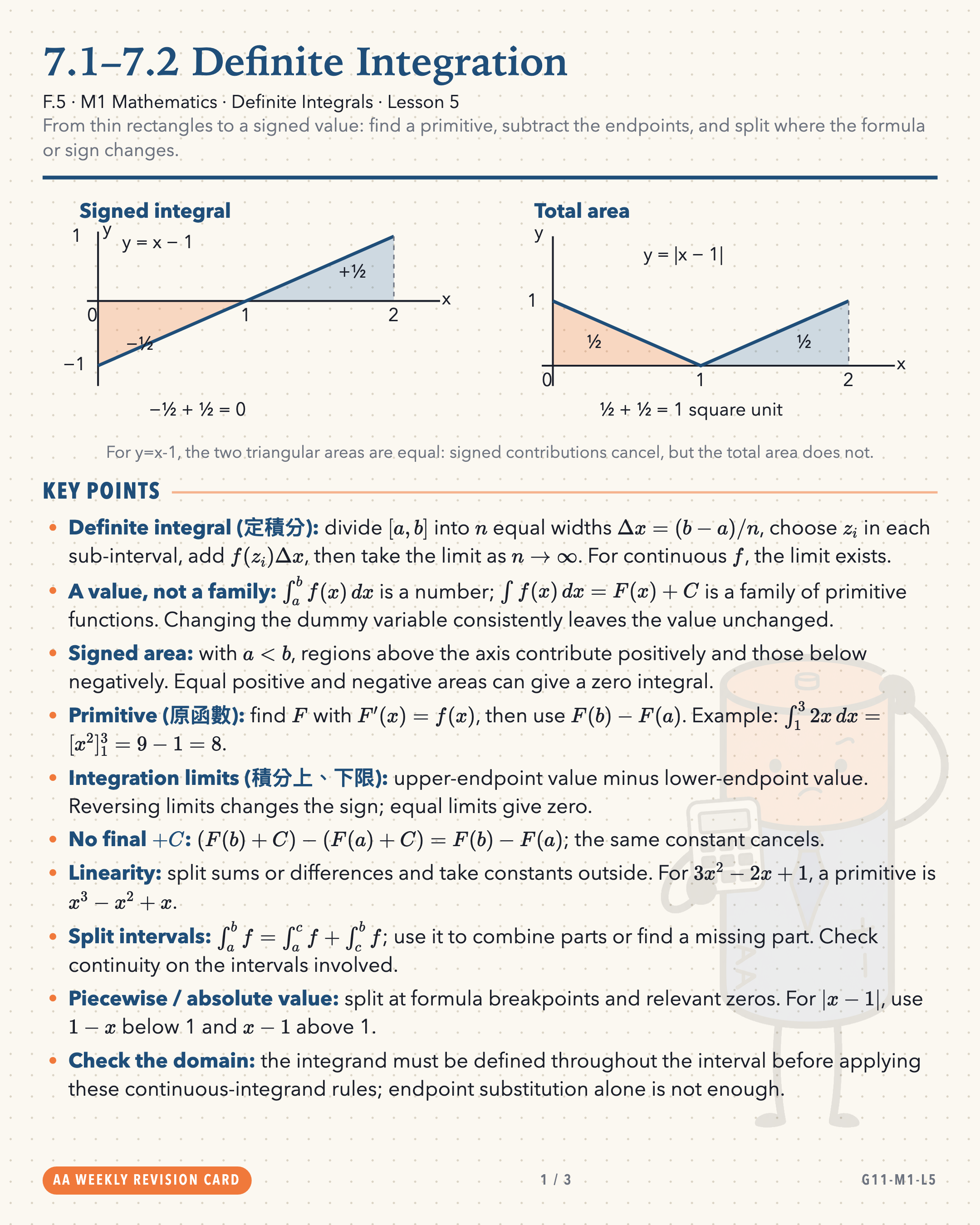
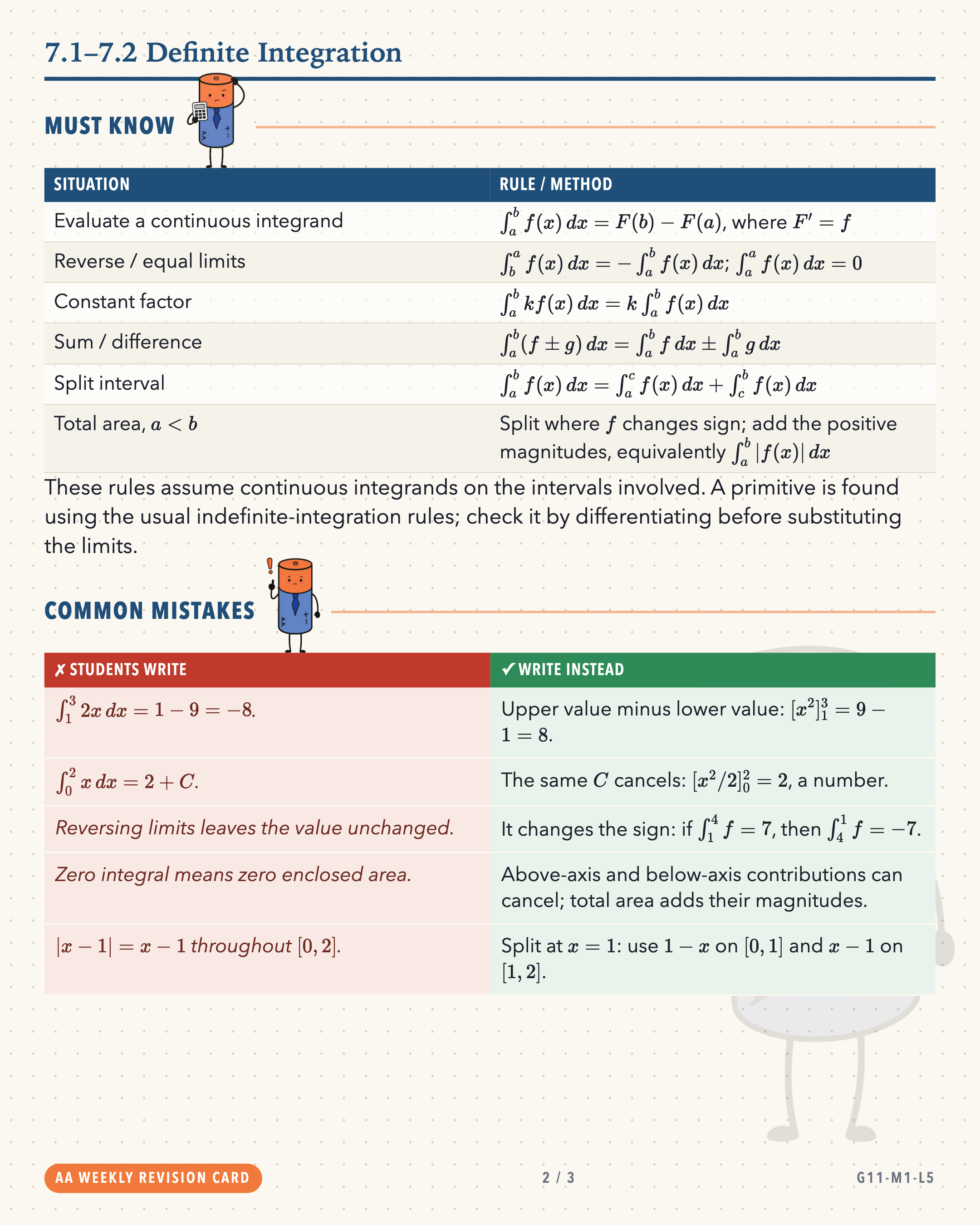
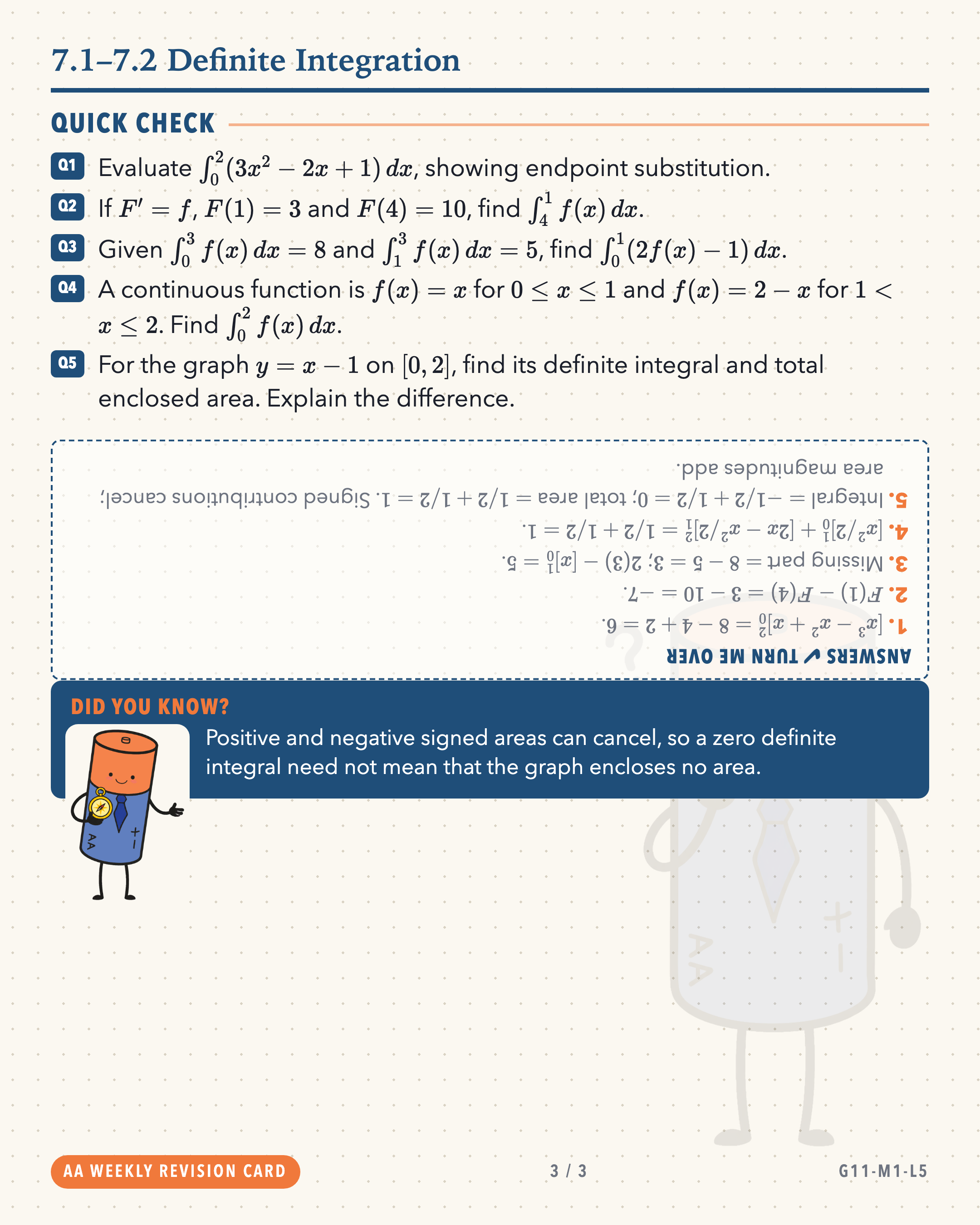
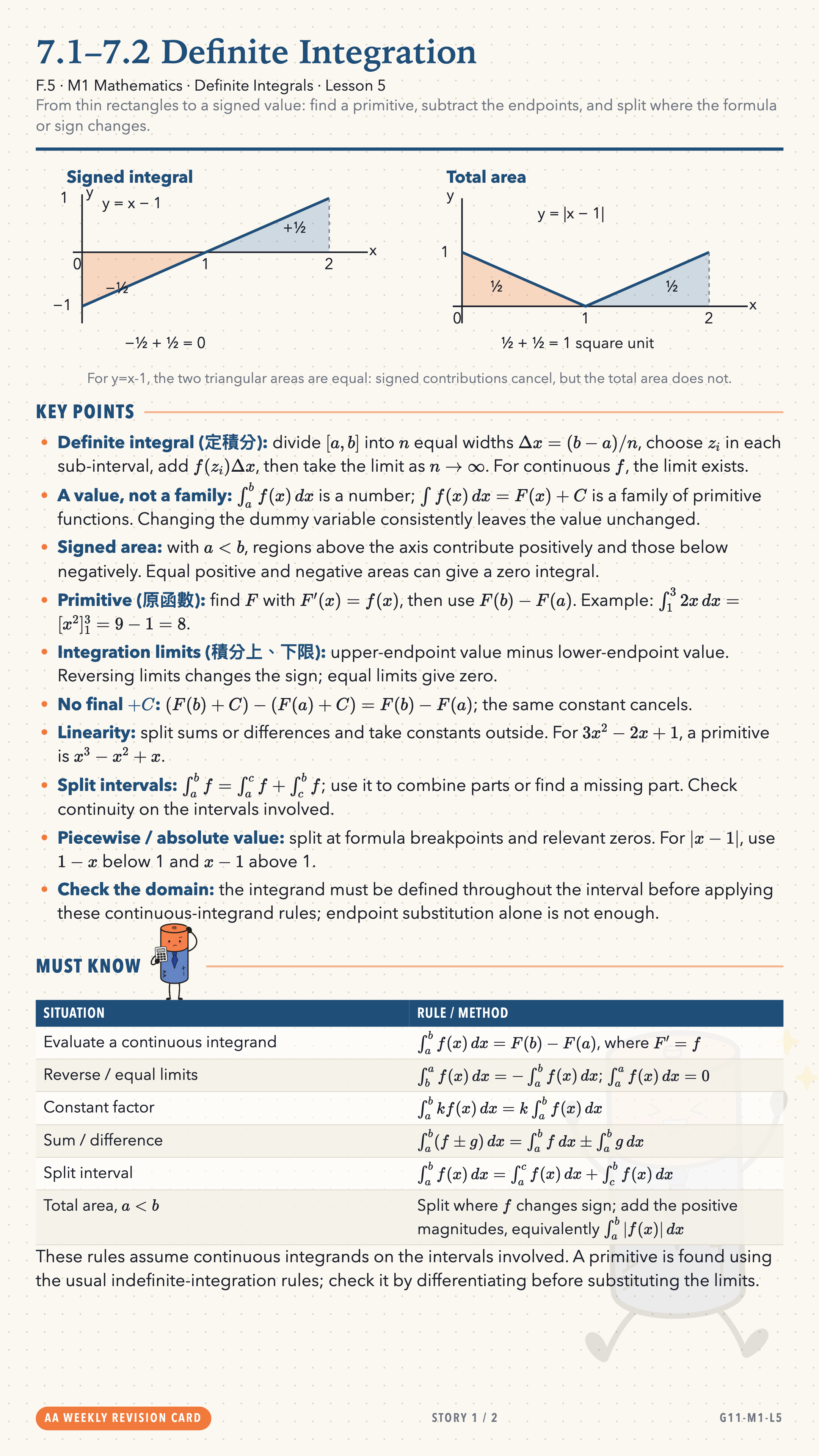
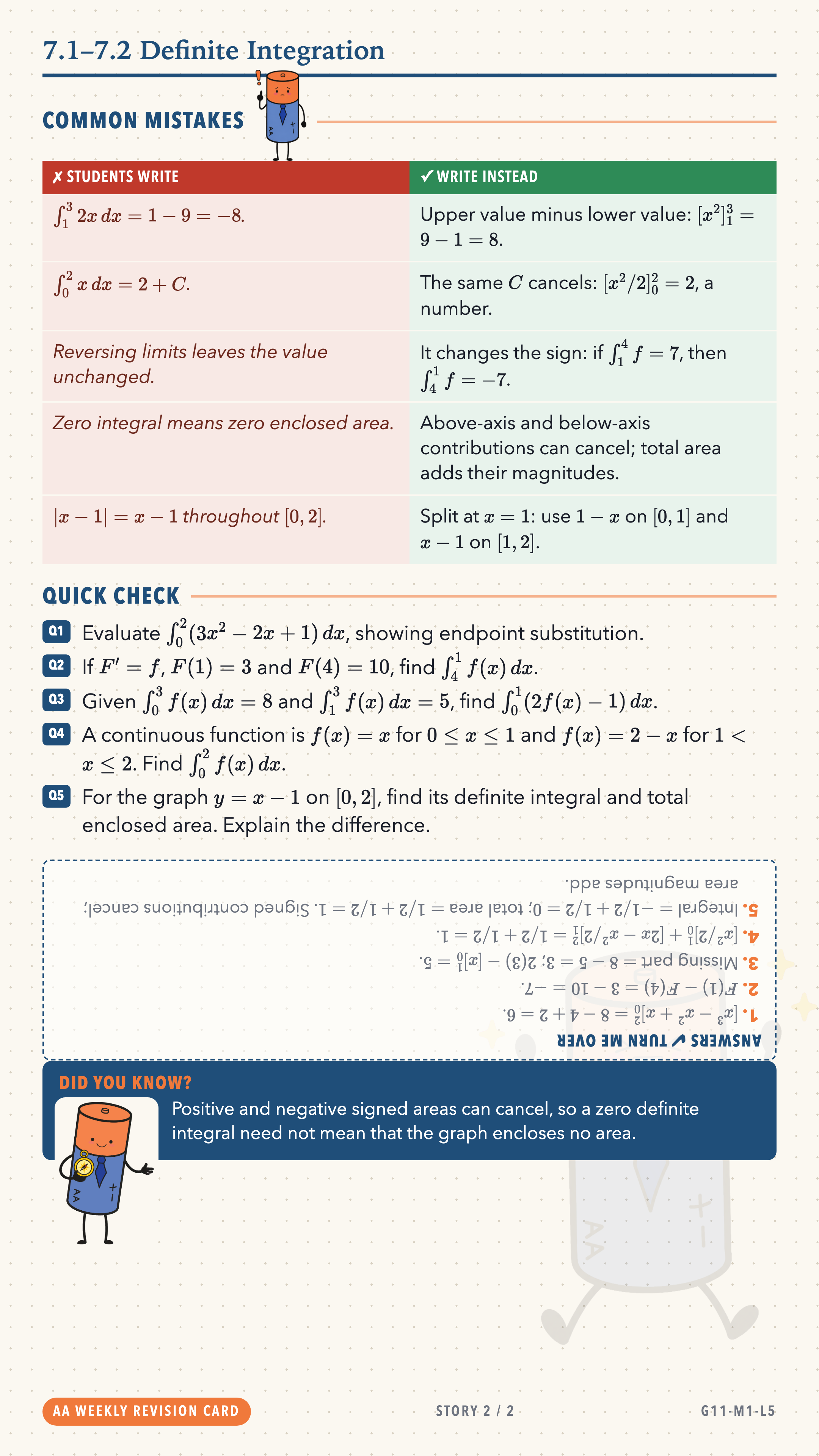
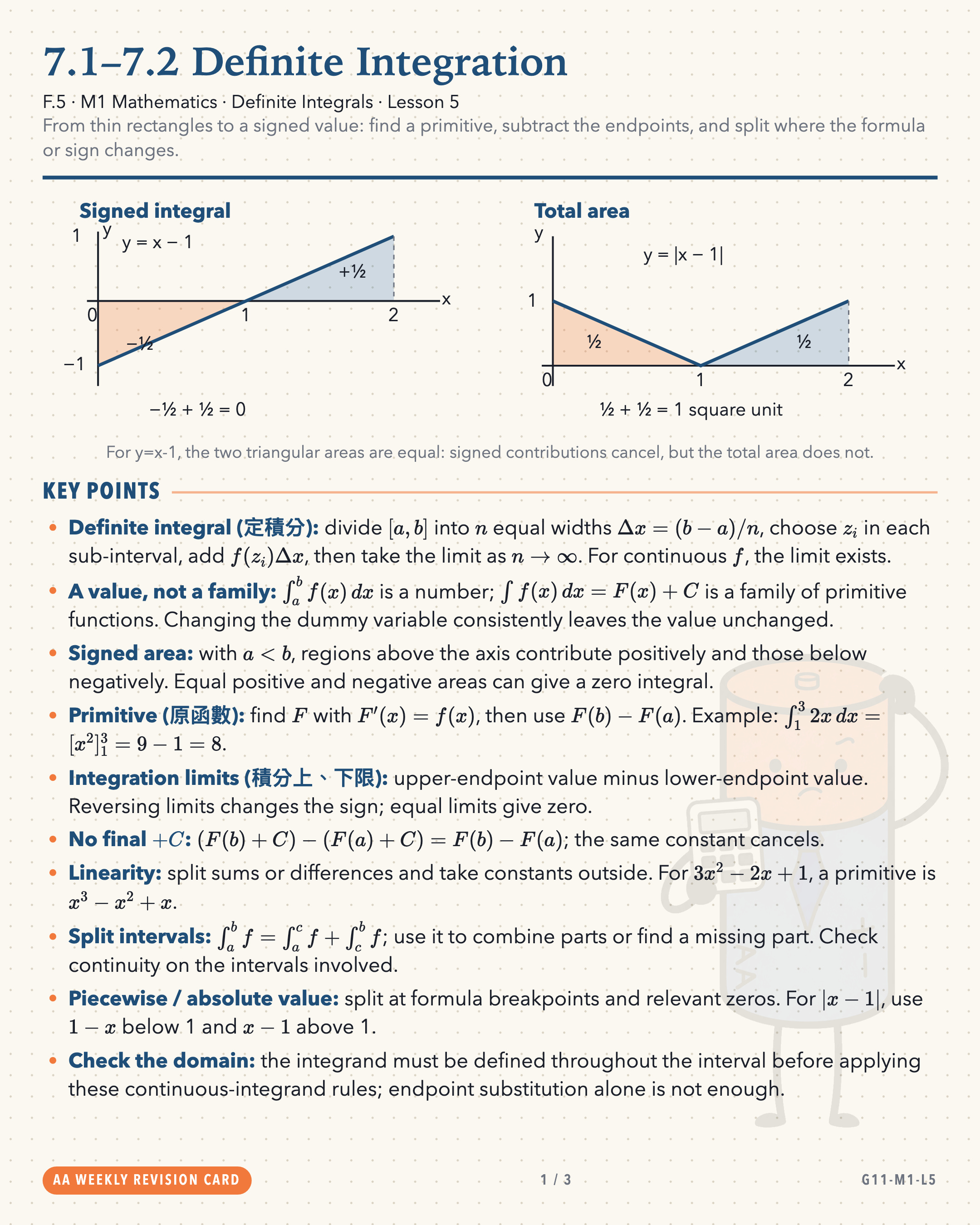
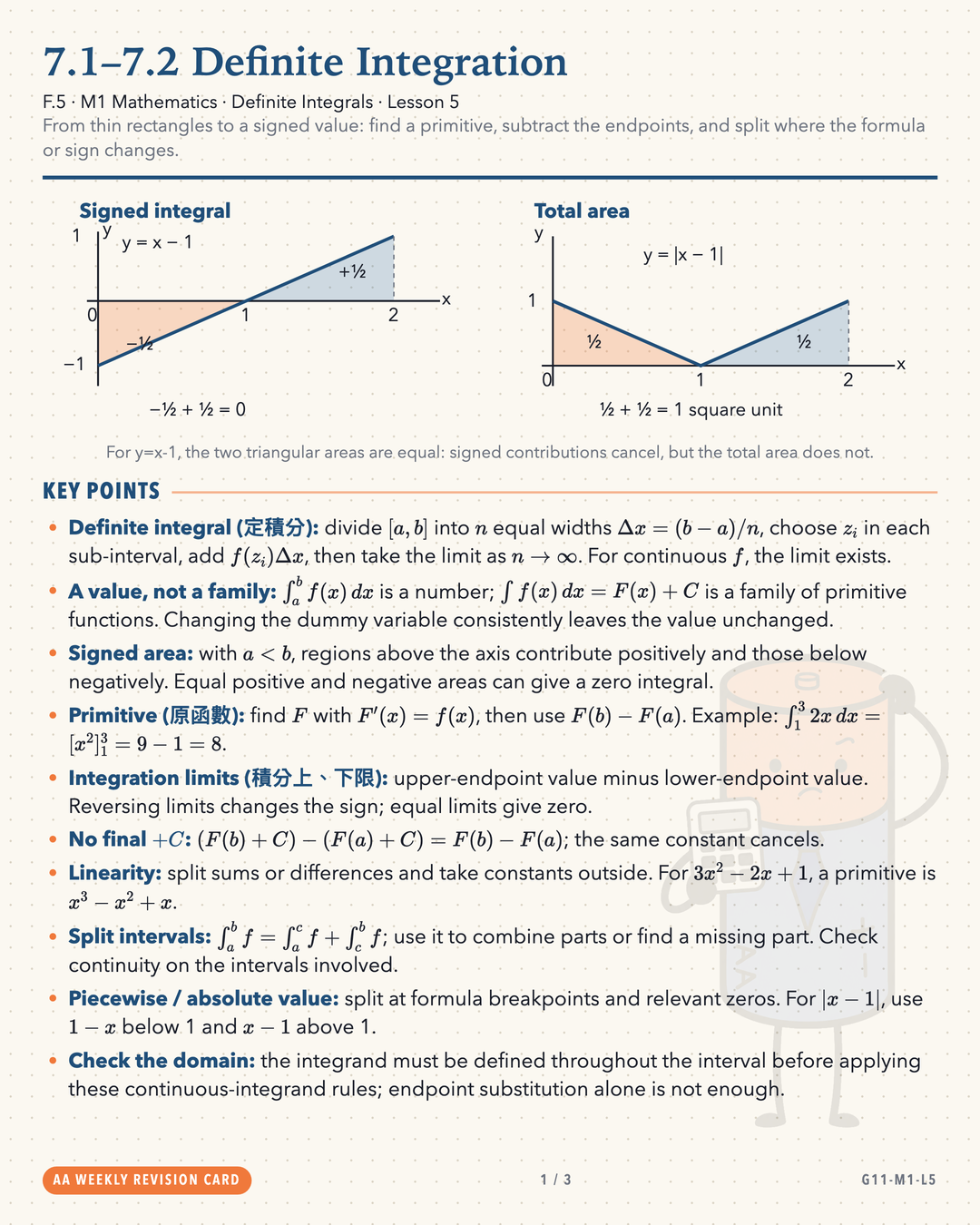
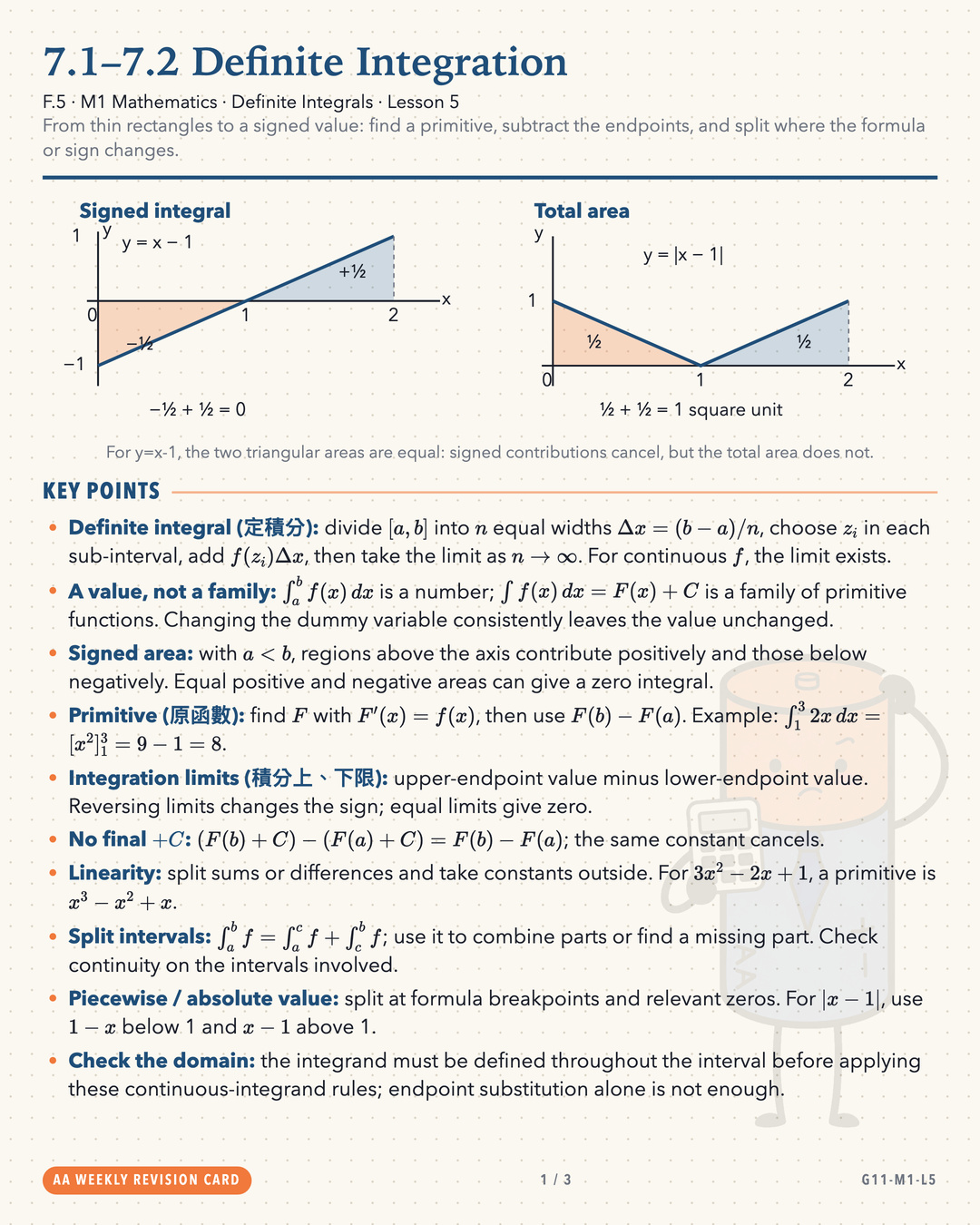
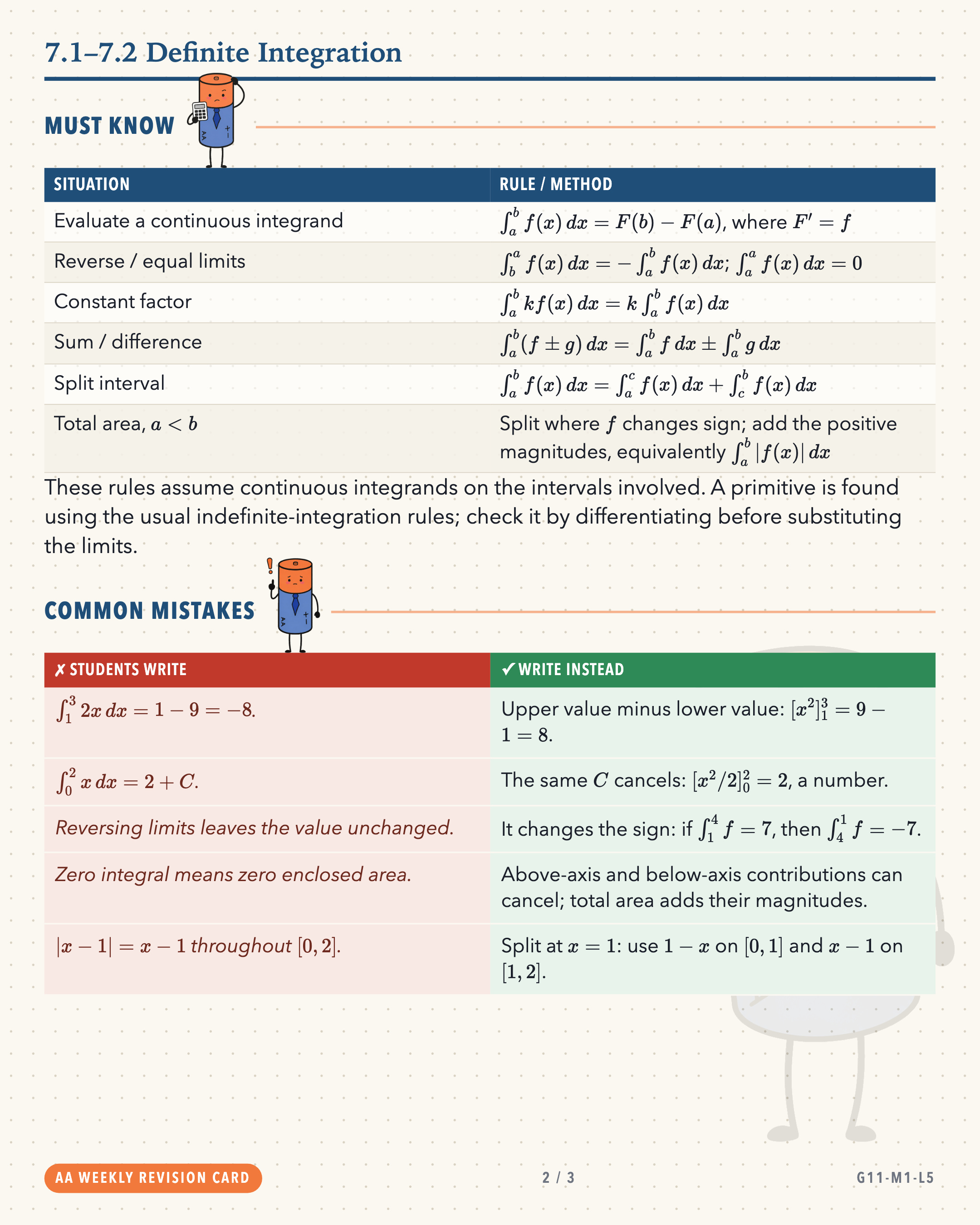
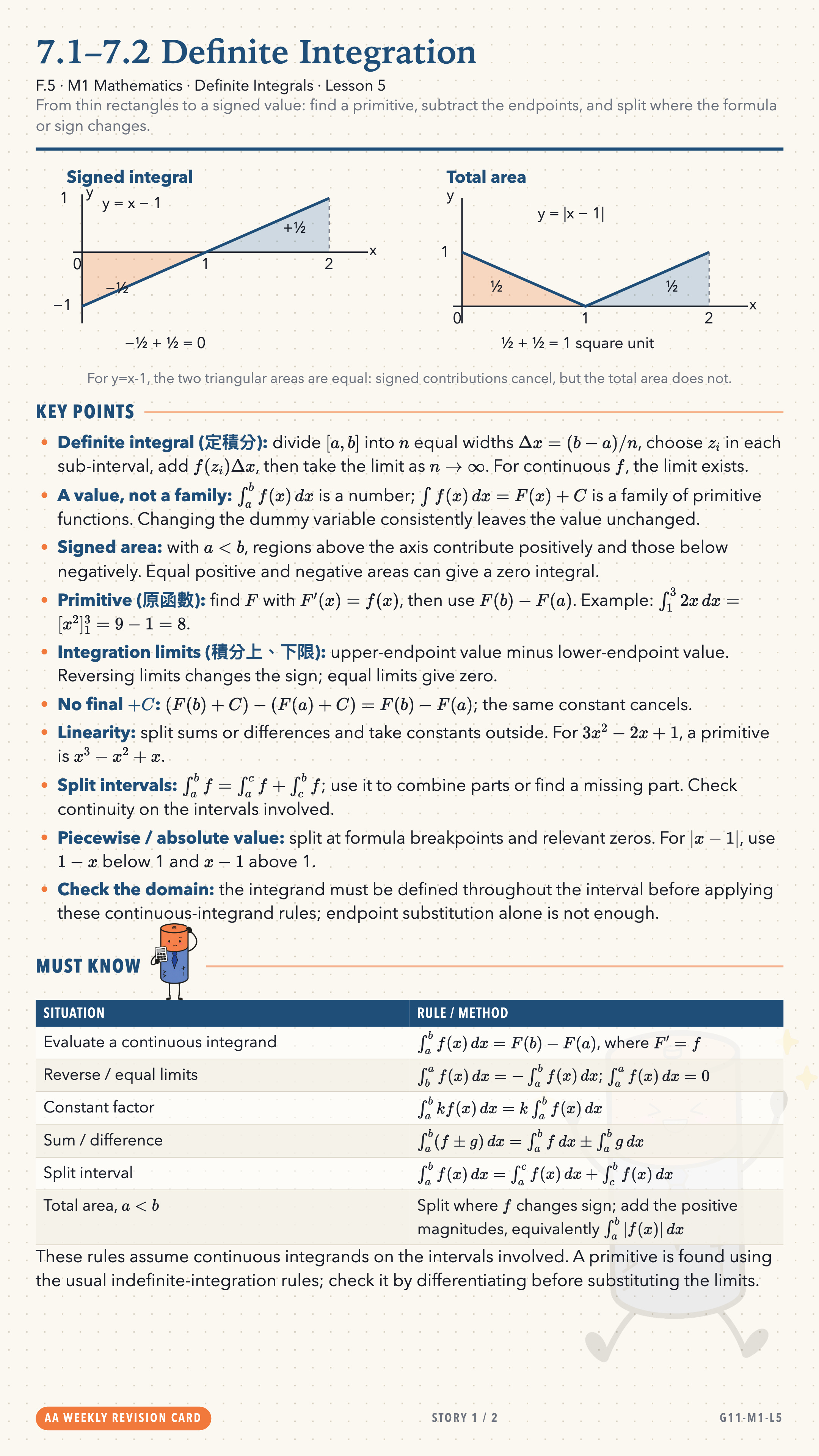
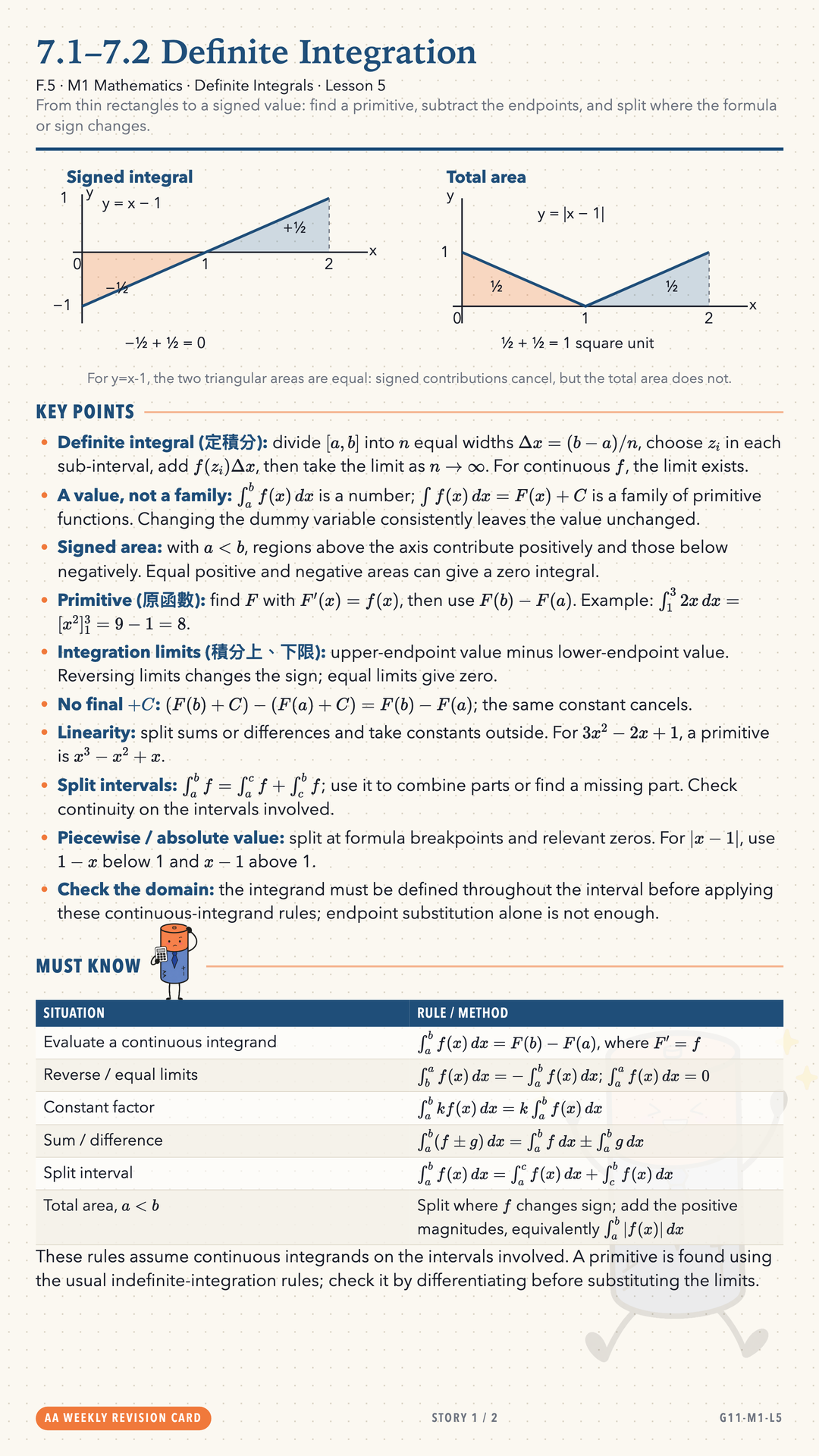
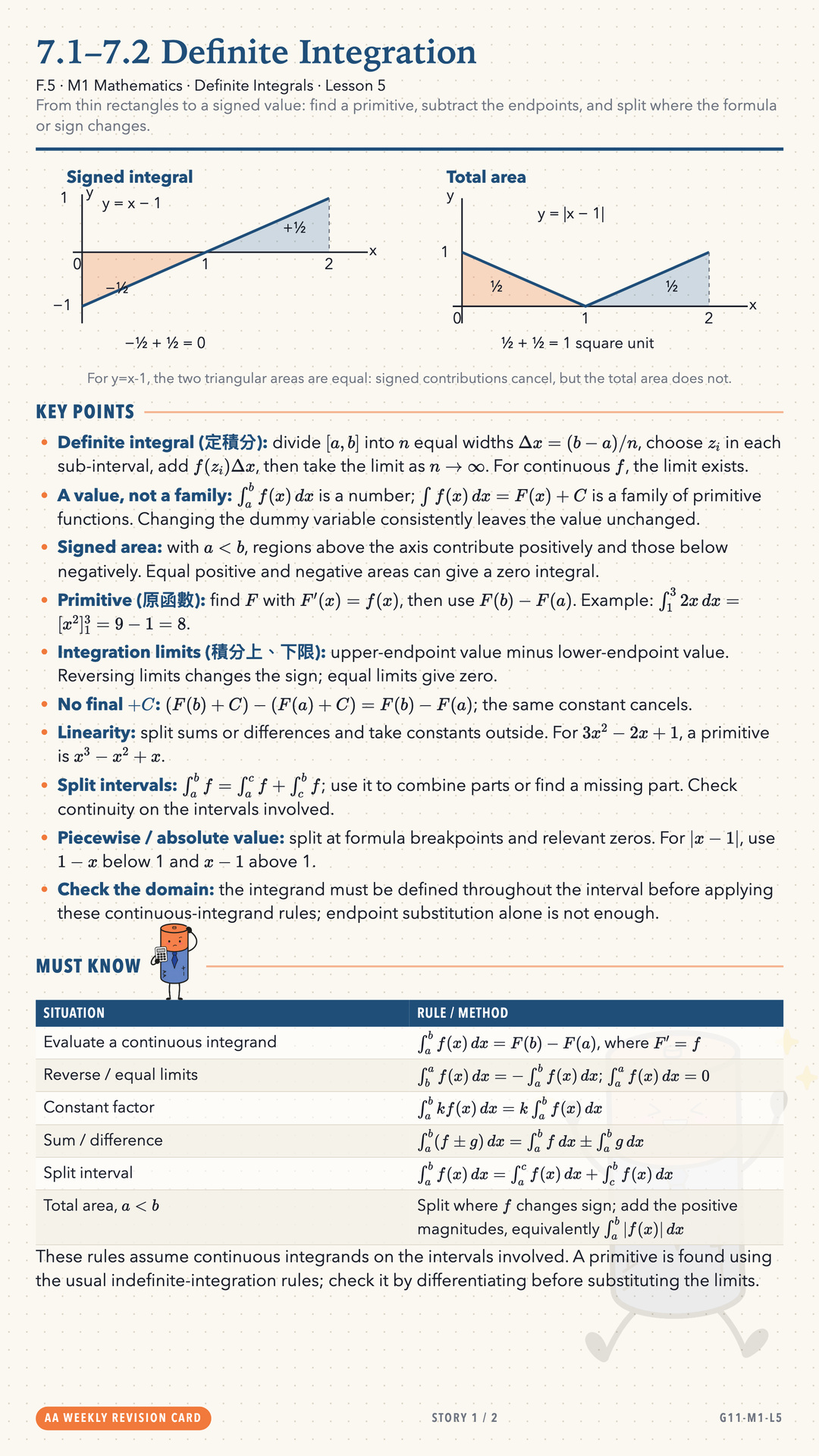
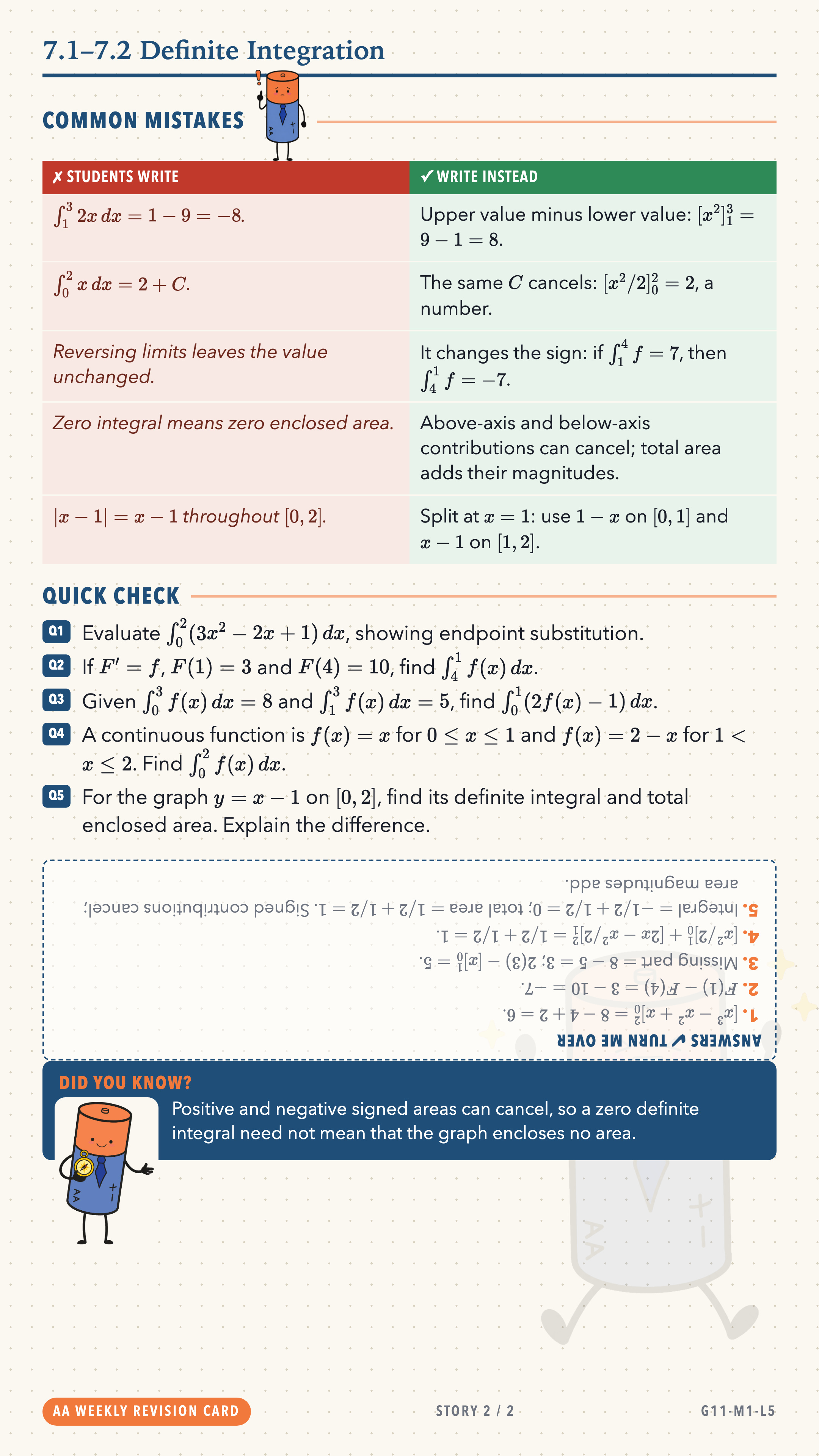
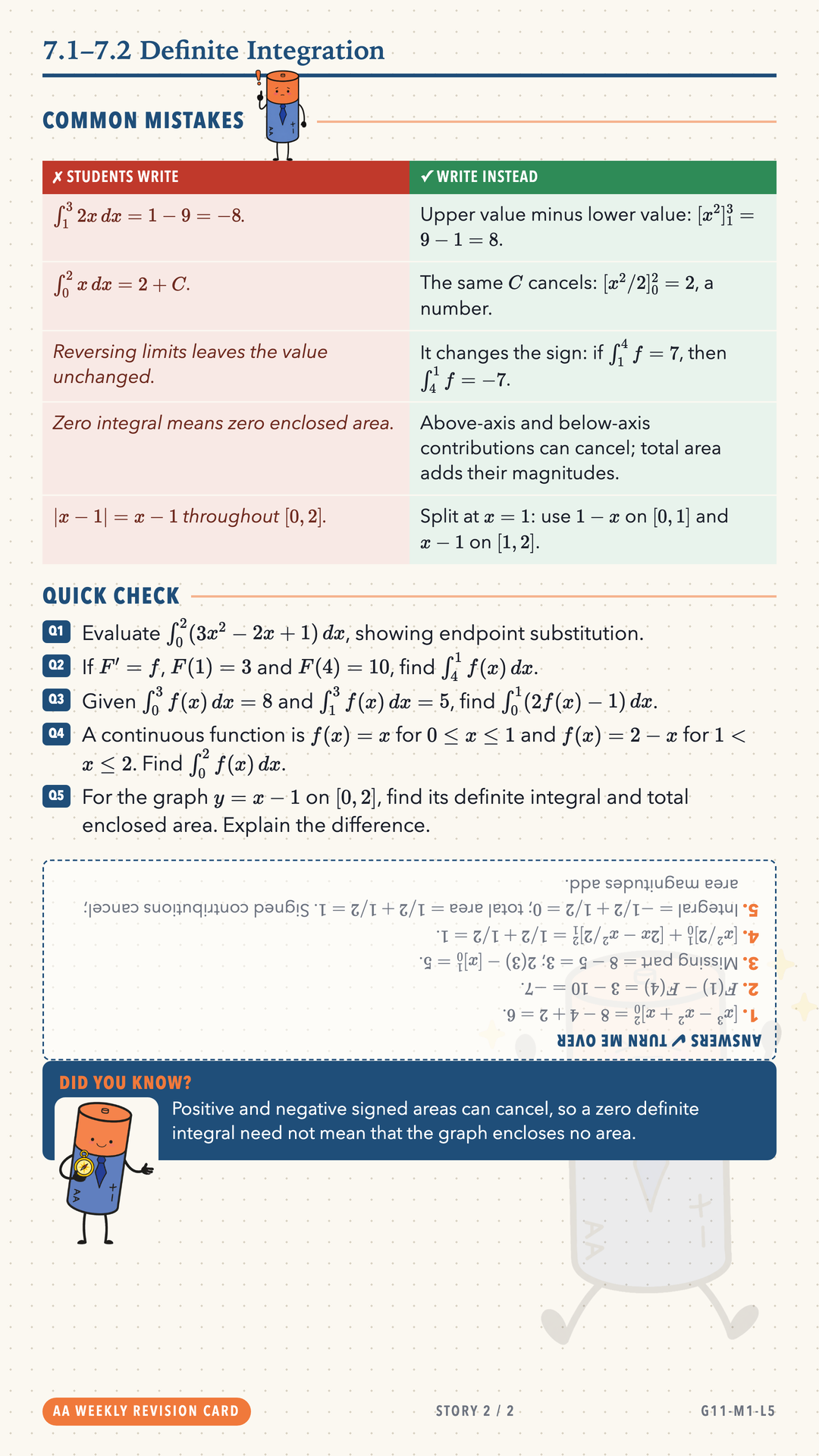
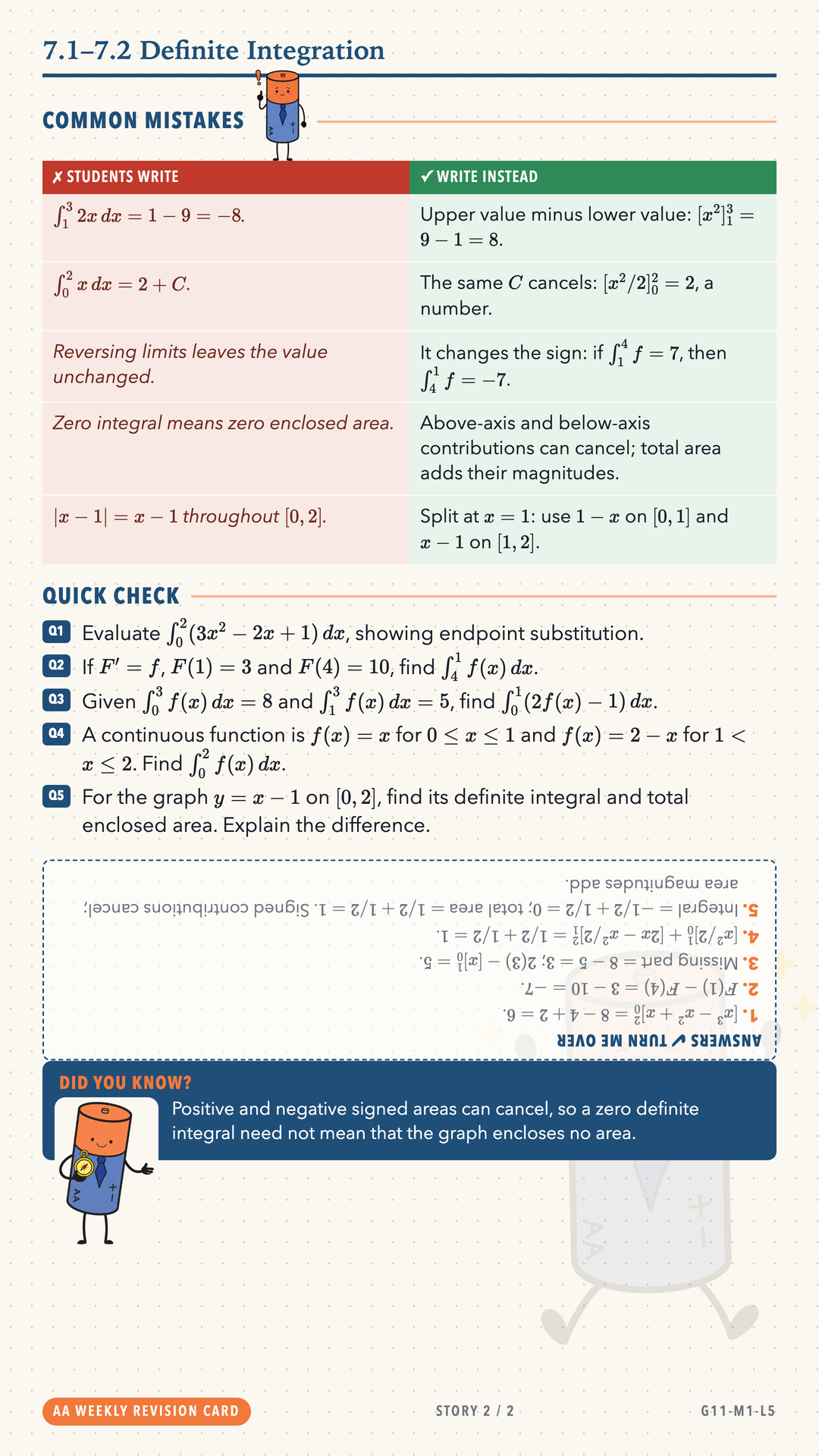
From thin rectangles to a signed value: find a primitive, subtract the endpoints, and split where the formula or sign changes.
✔ fact-checked · 0 added mistakes tagged [likely] · 2.7 MB JPG · card.md ·
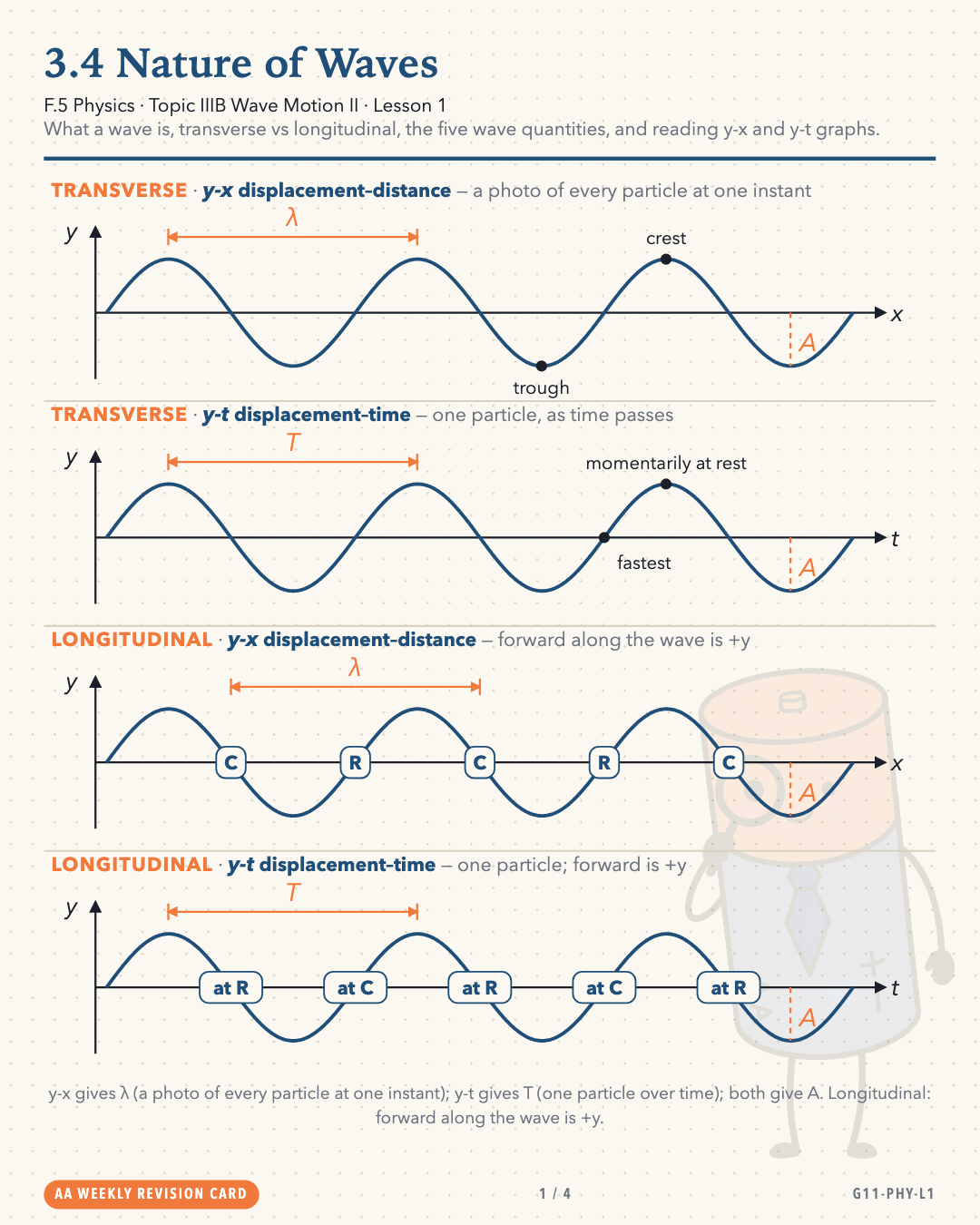
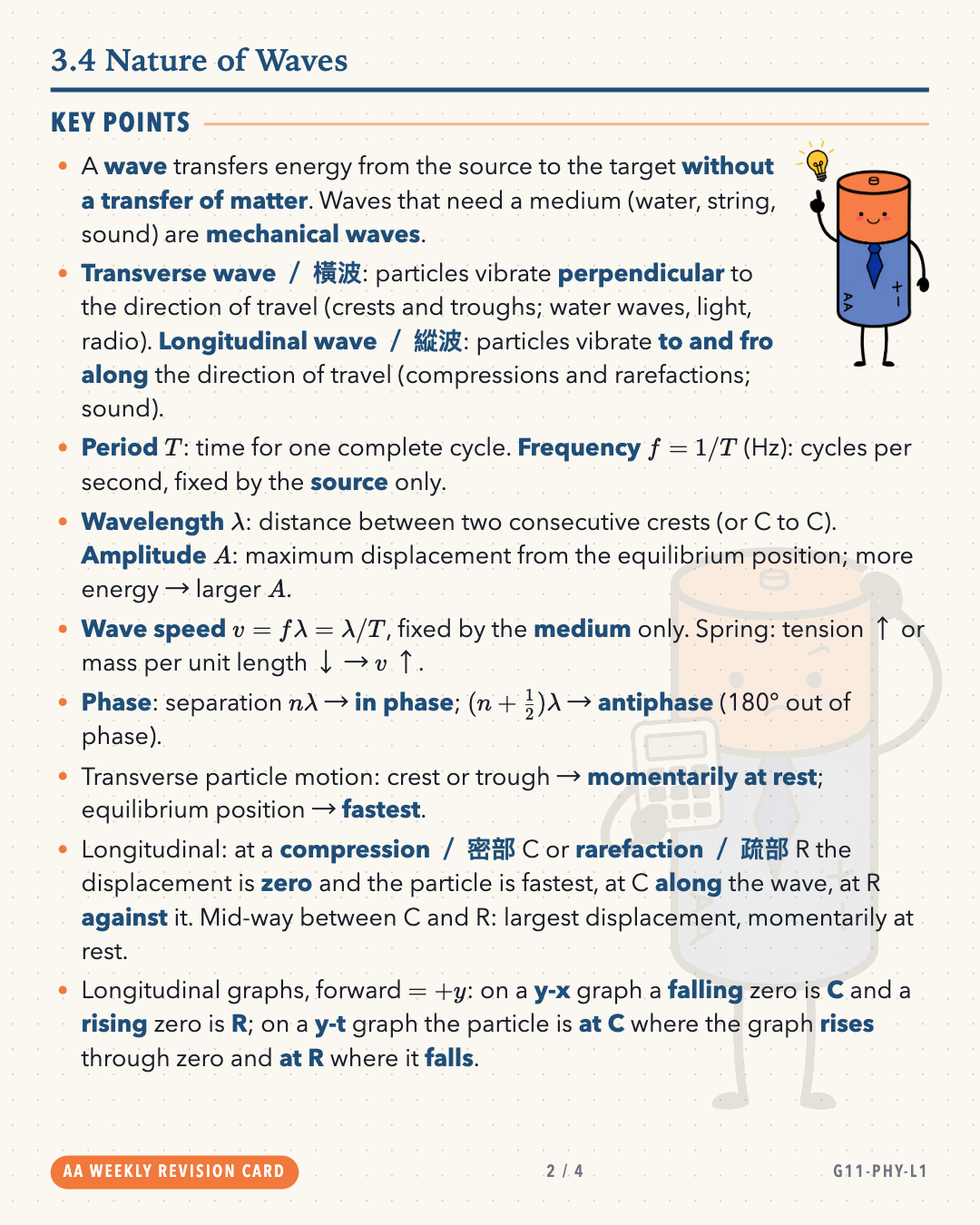
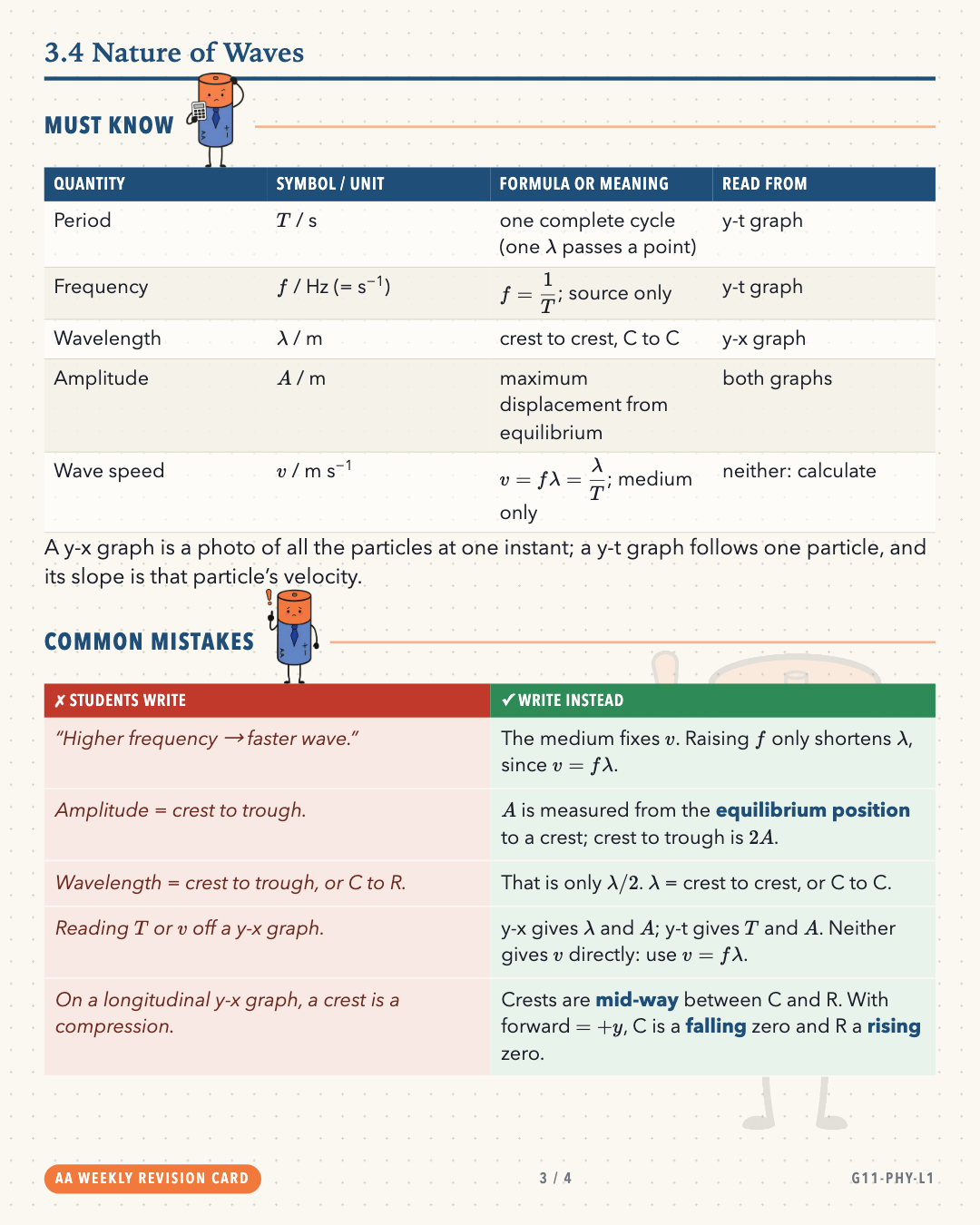
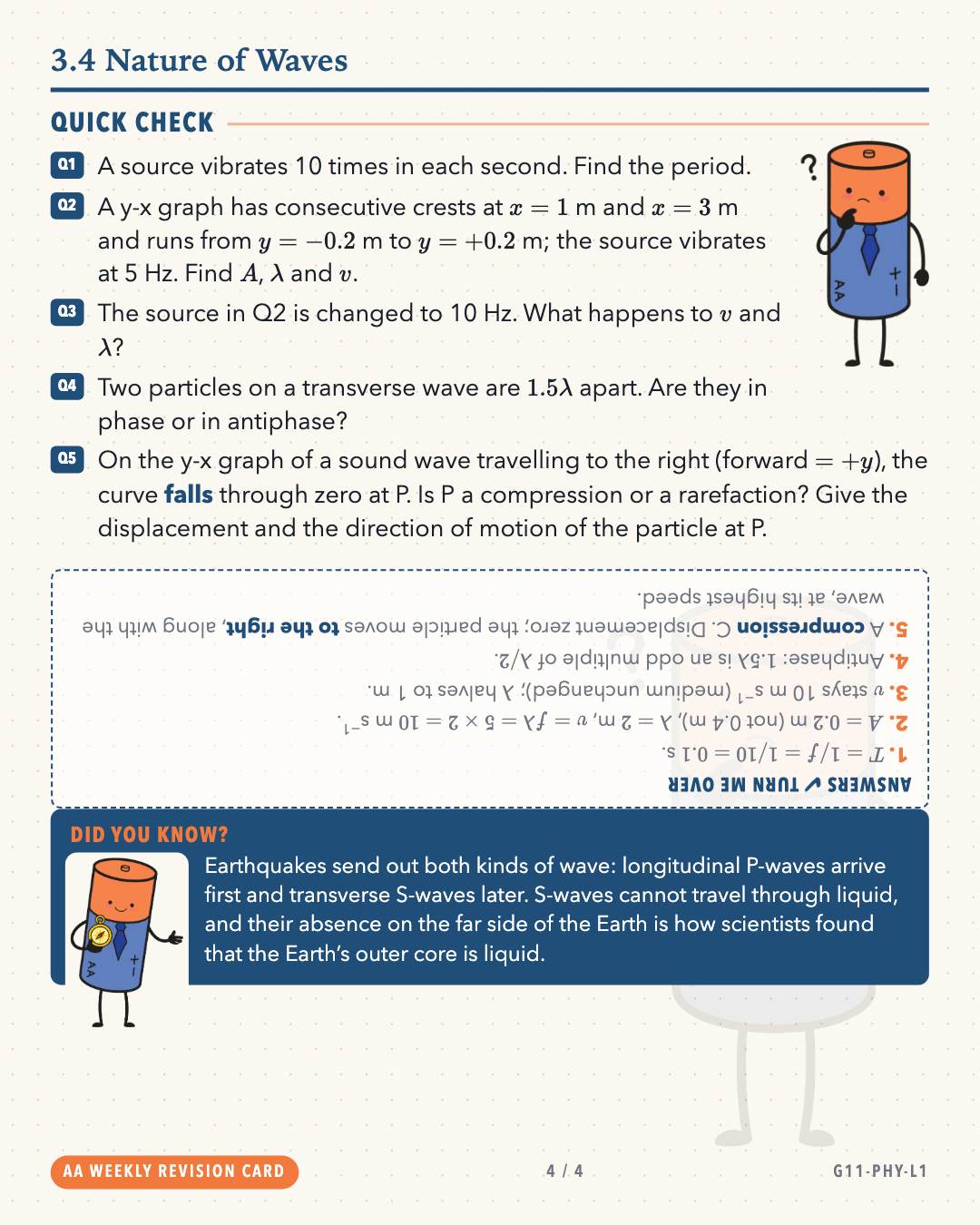
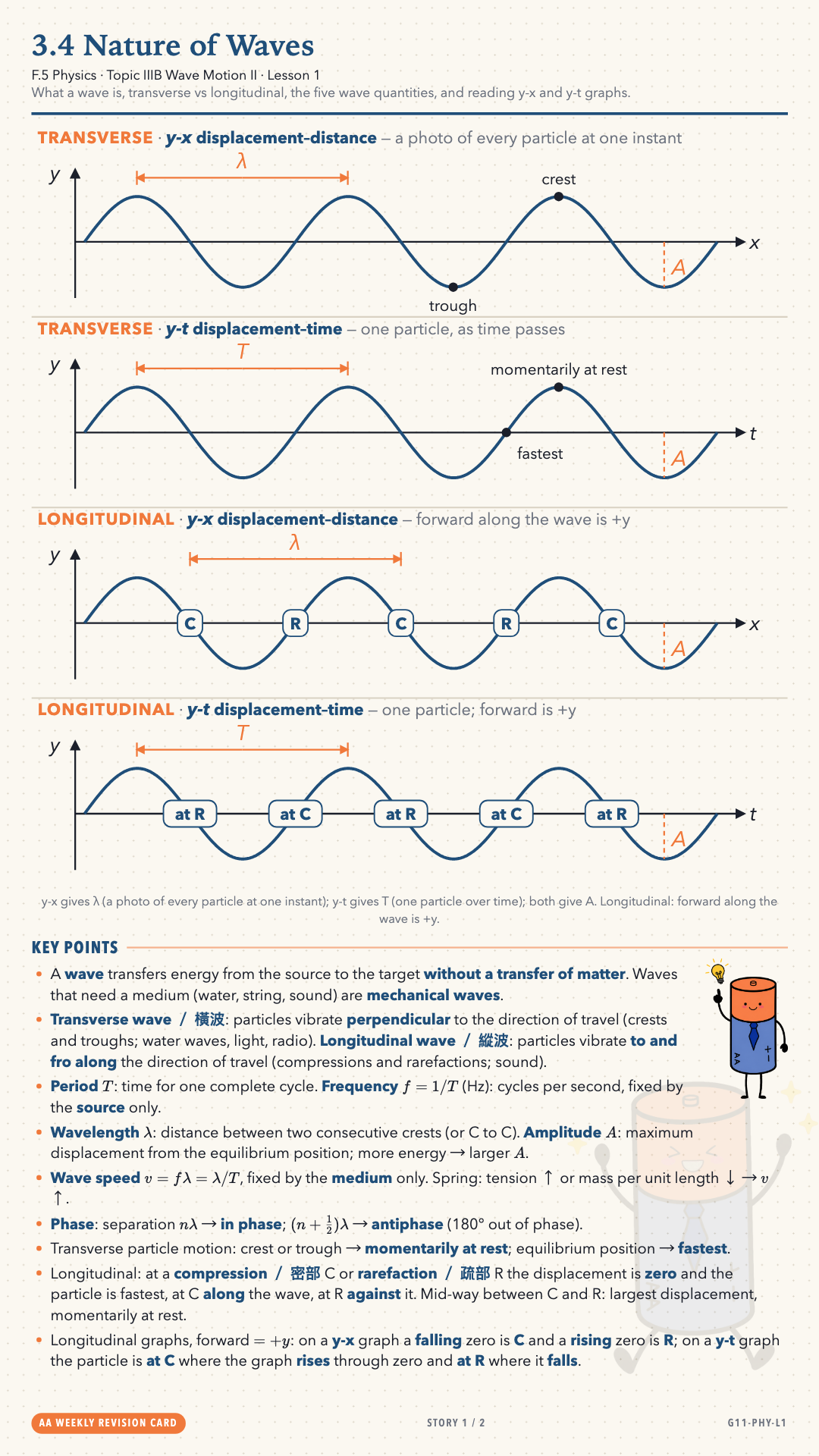
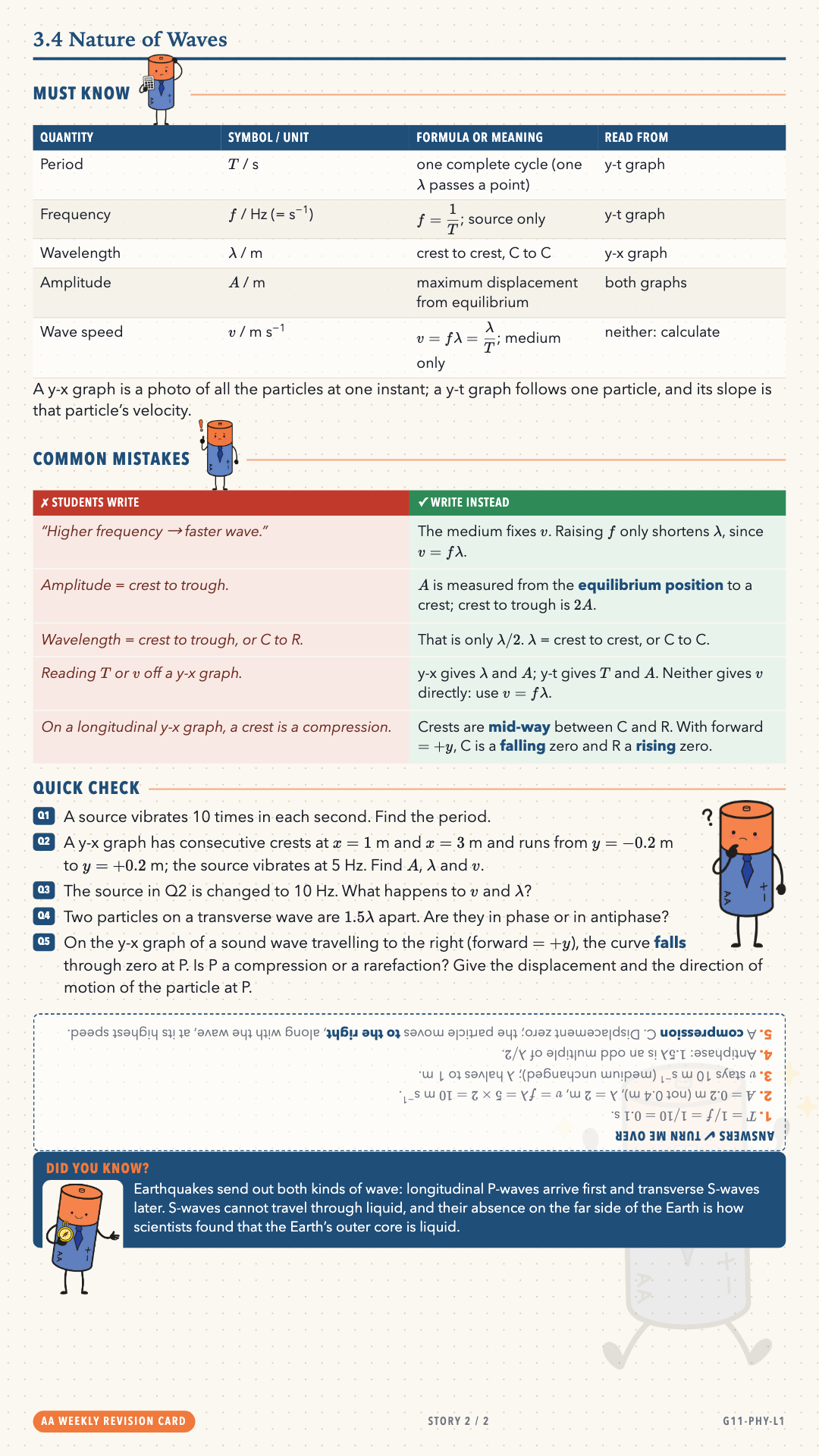
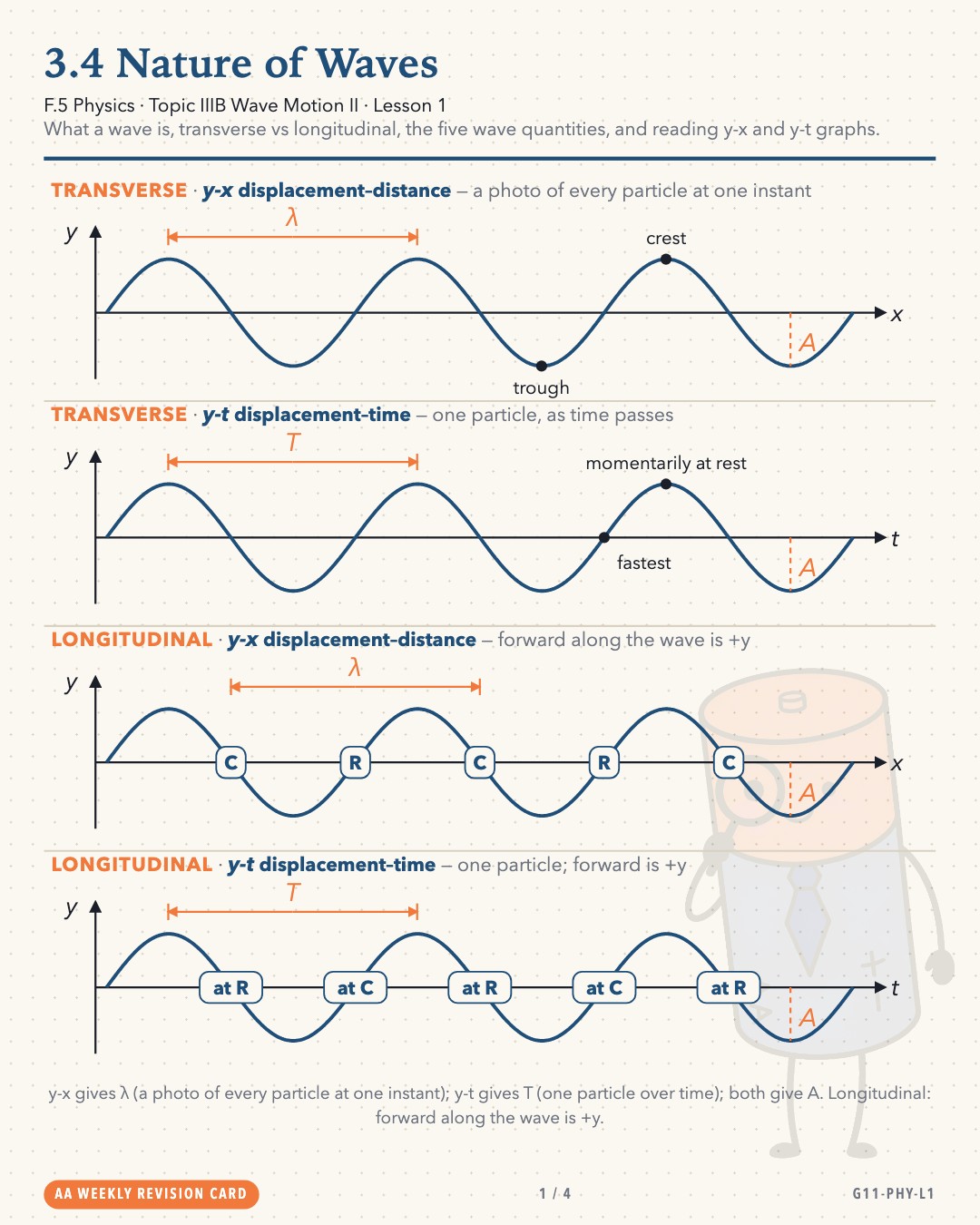
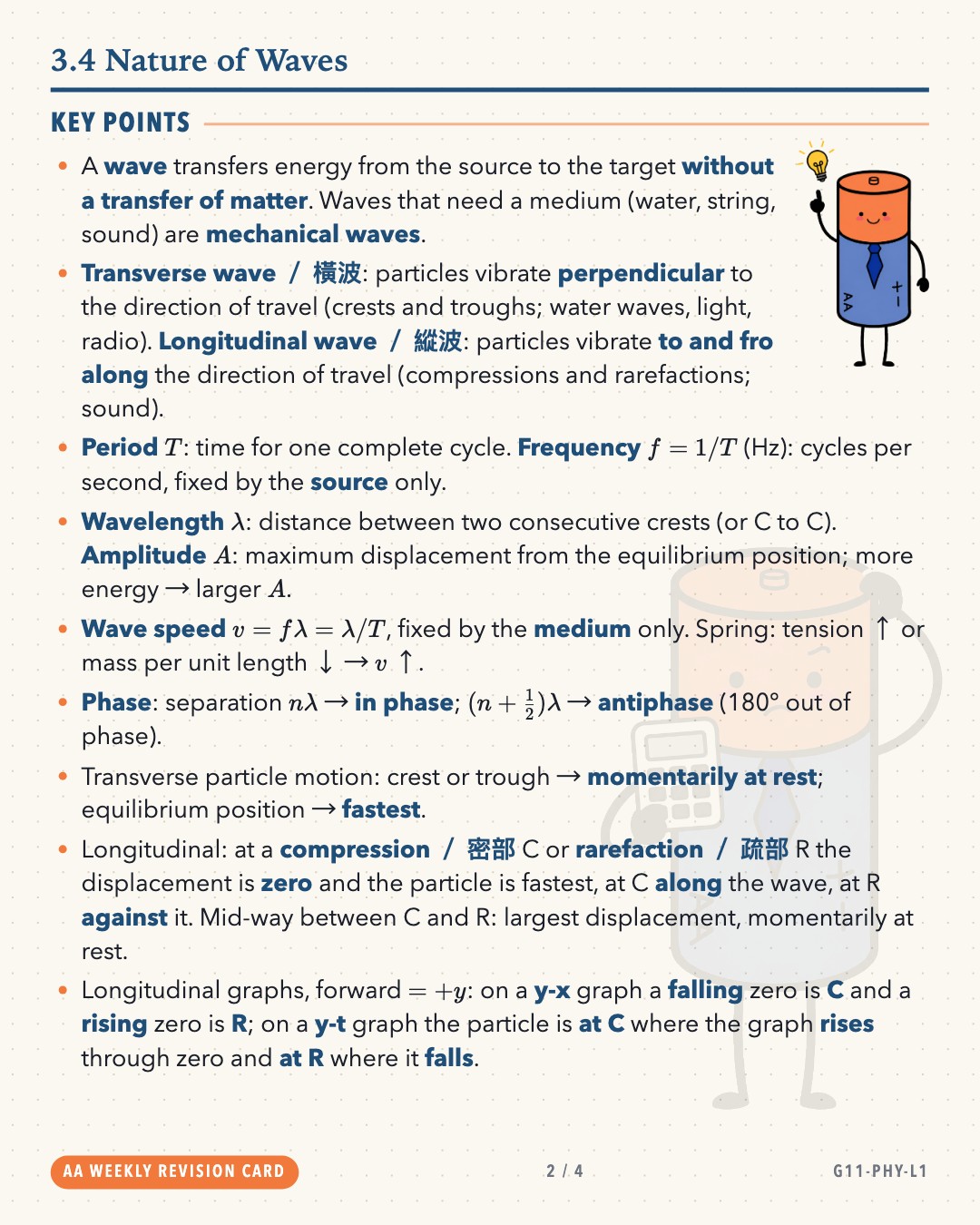
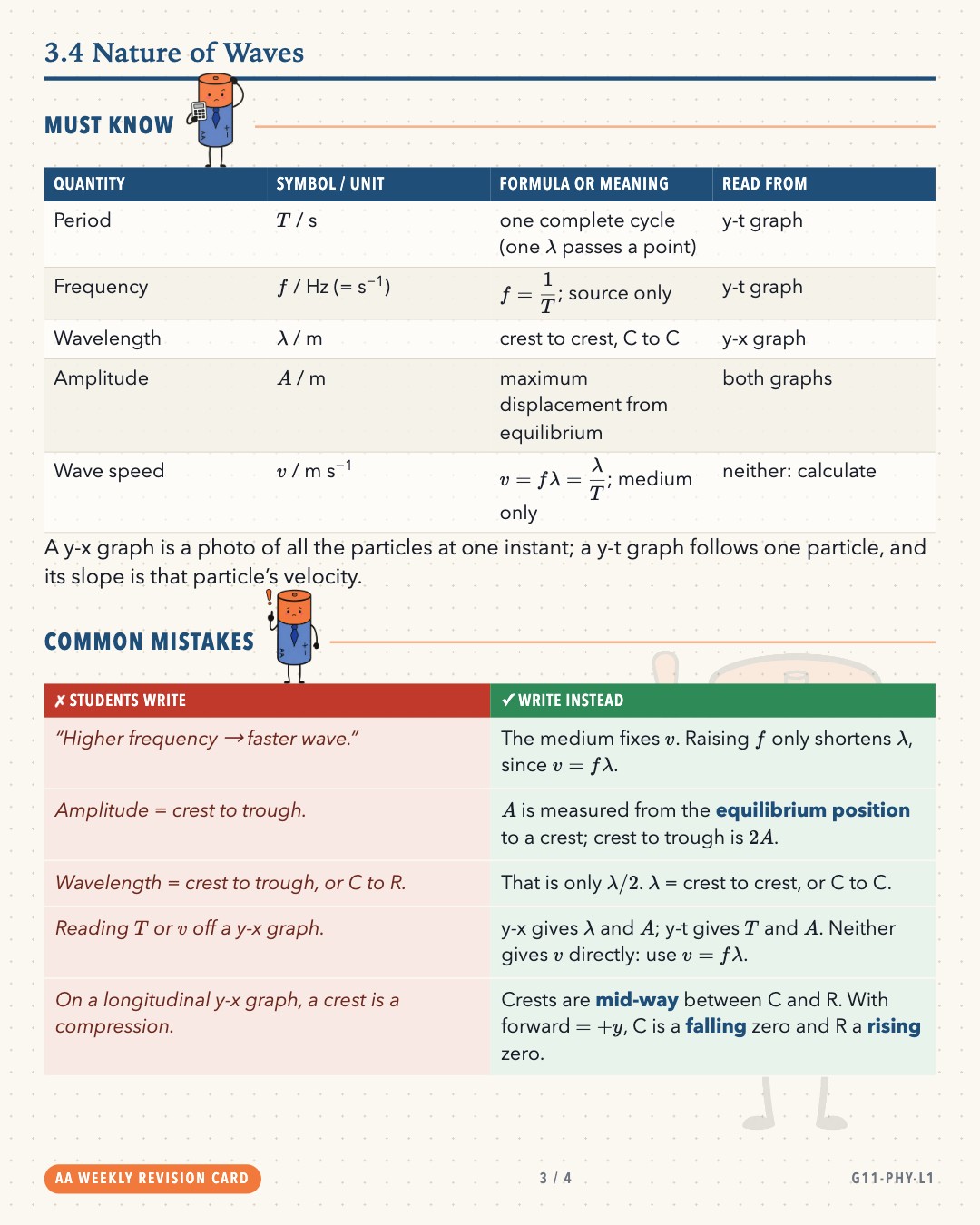
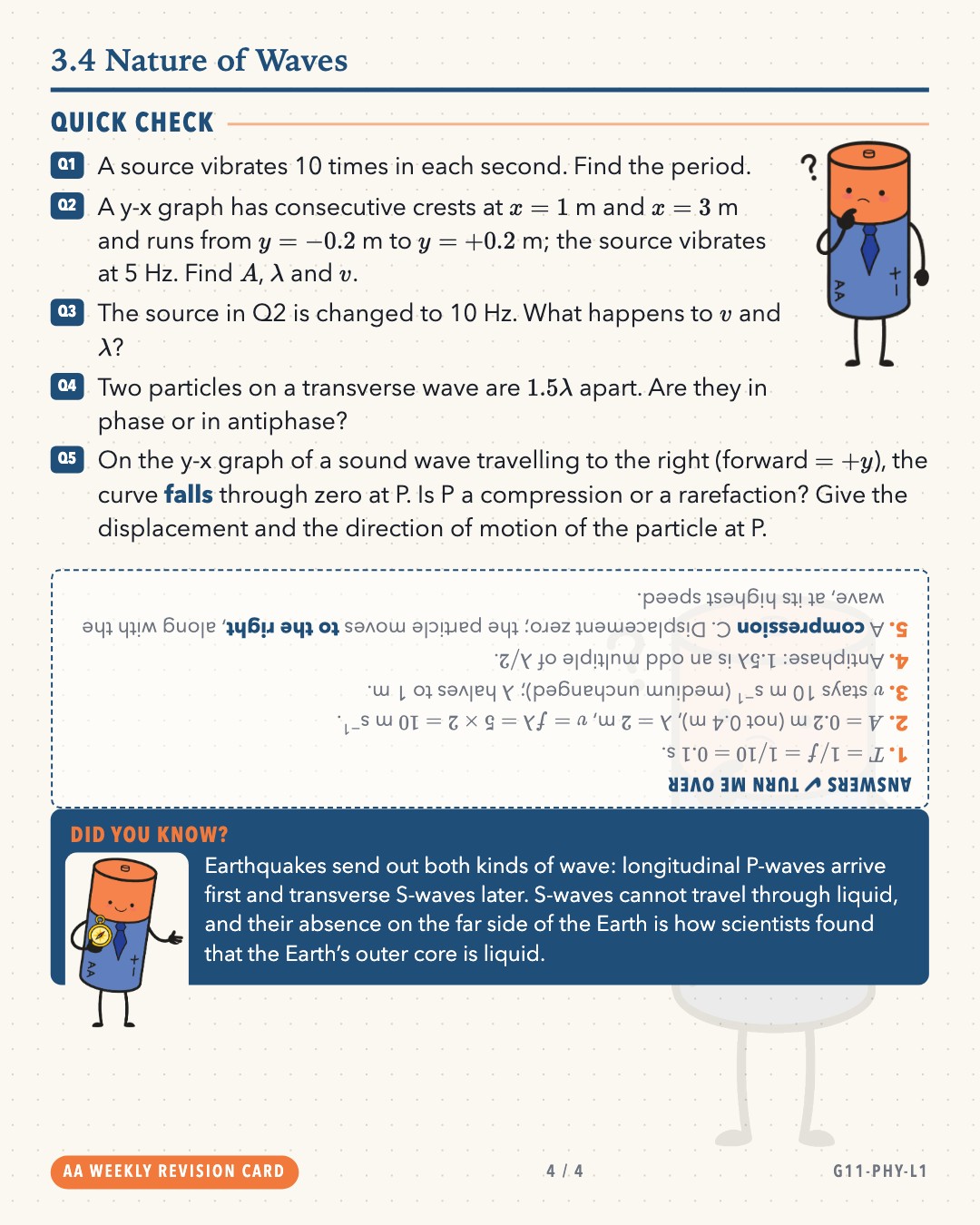
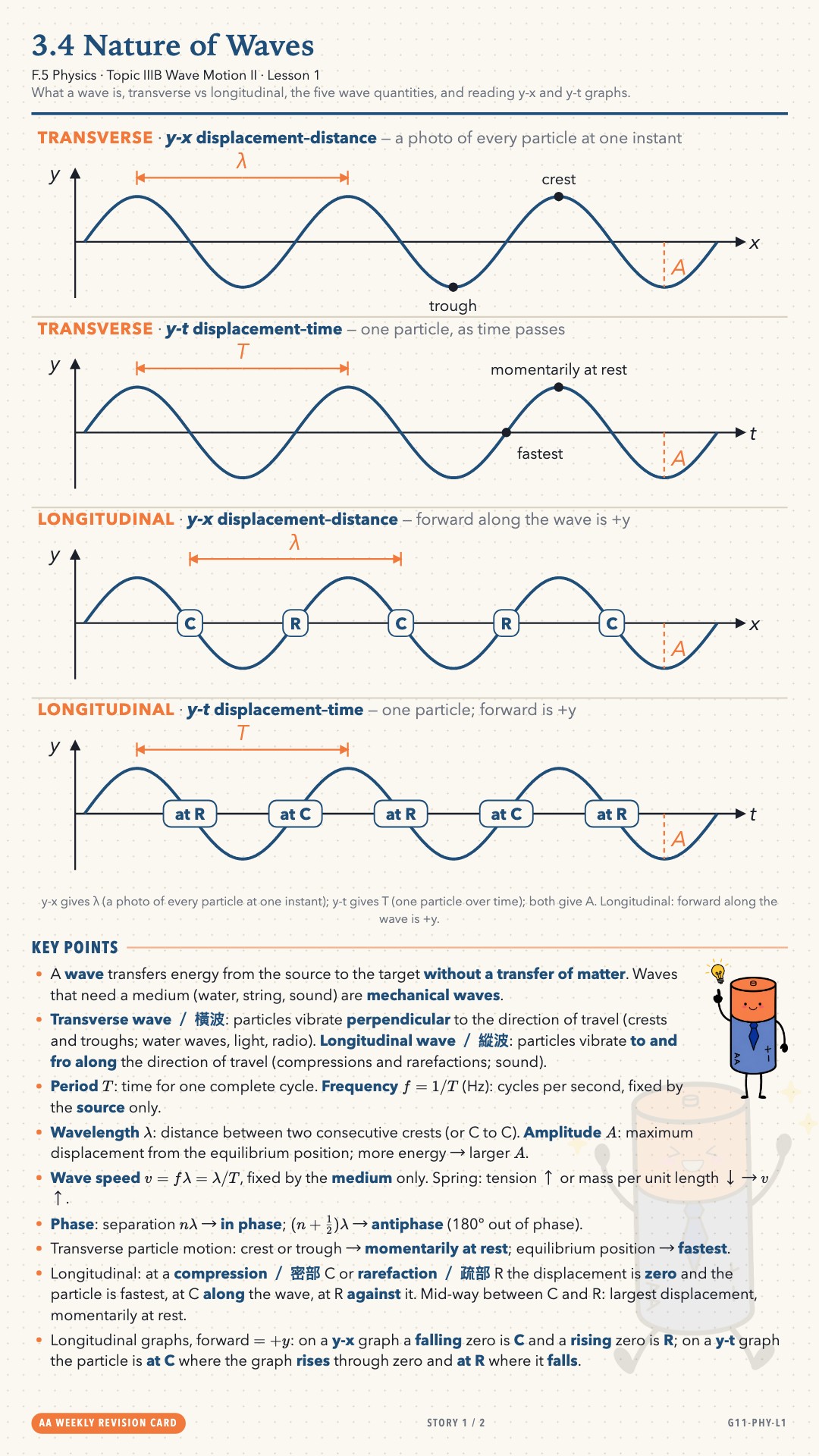
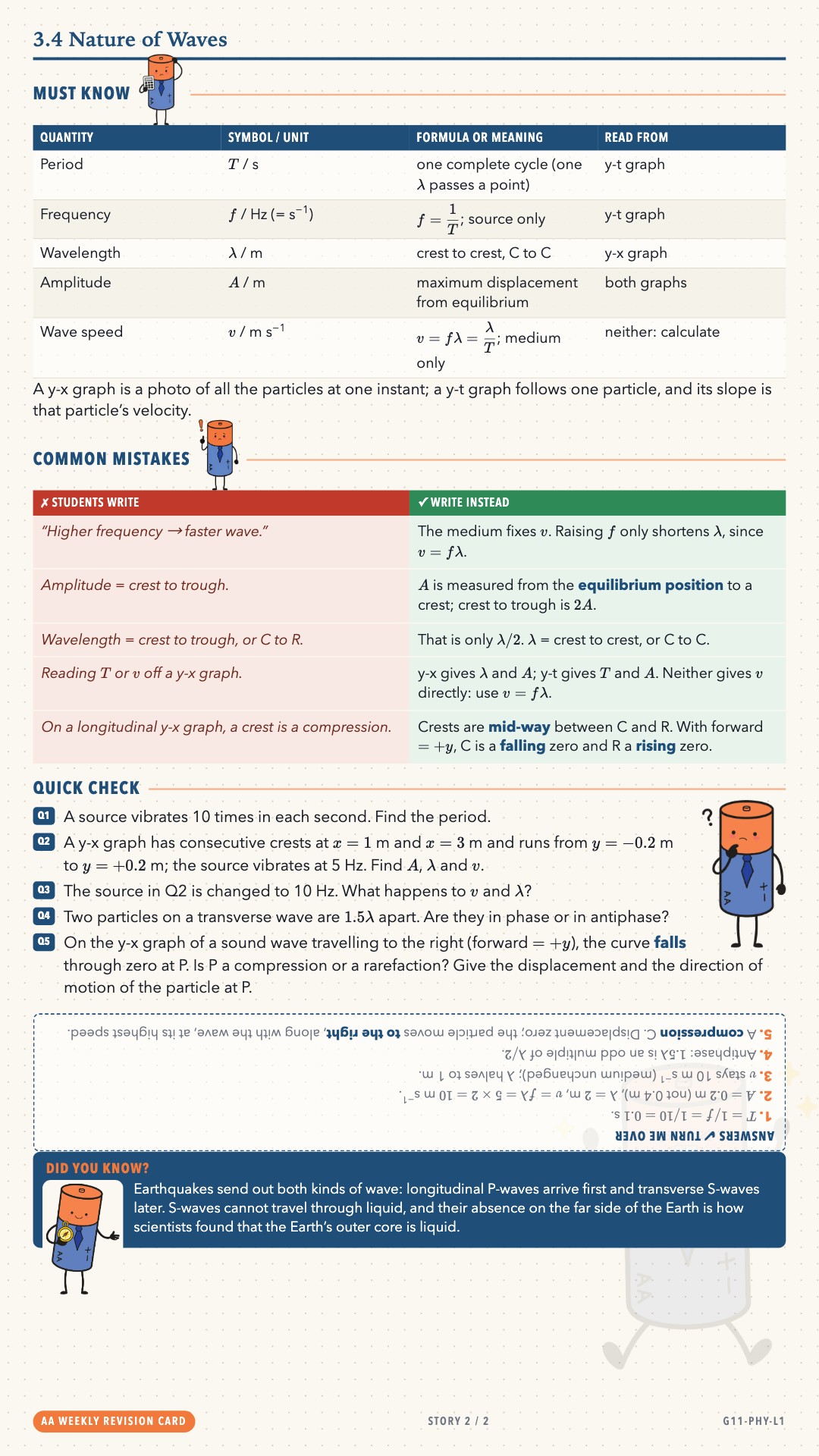
What a wave is, transverse vs longitudinal, the five wave quantities, and reading y-x and y-t graphs.
✔ fact-checked · 2 added mistakes tagged [likely] · 2.0 MB JPG · card.md ·
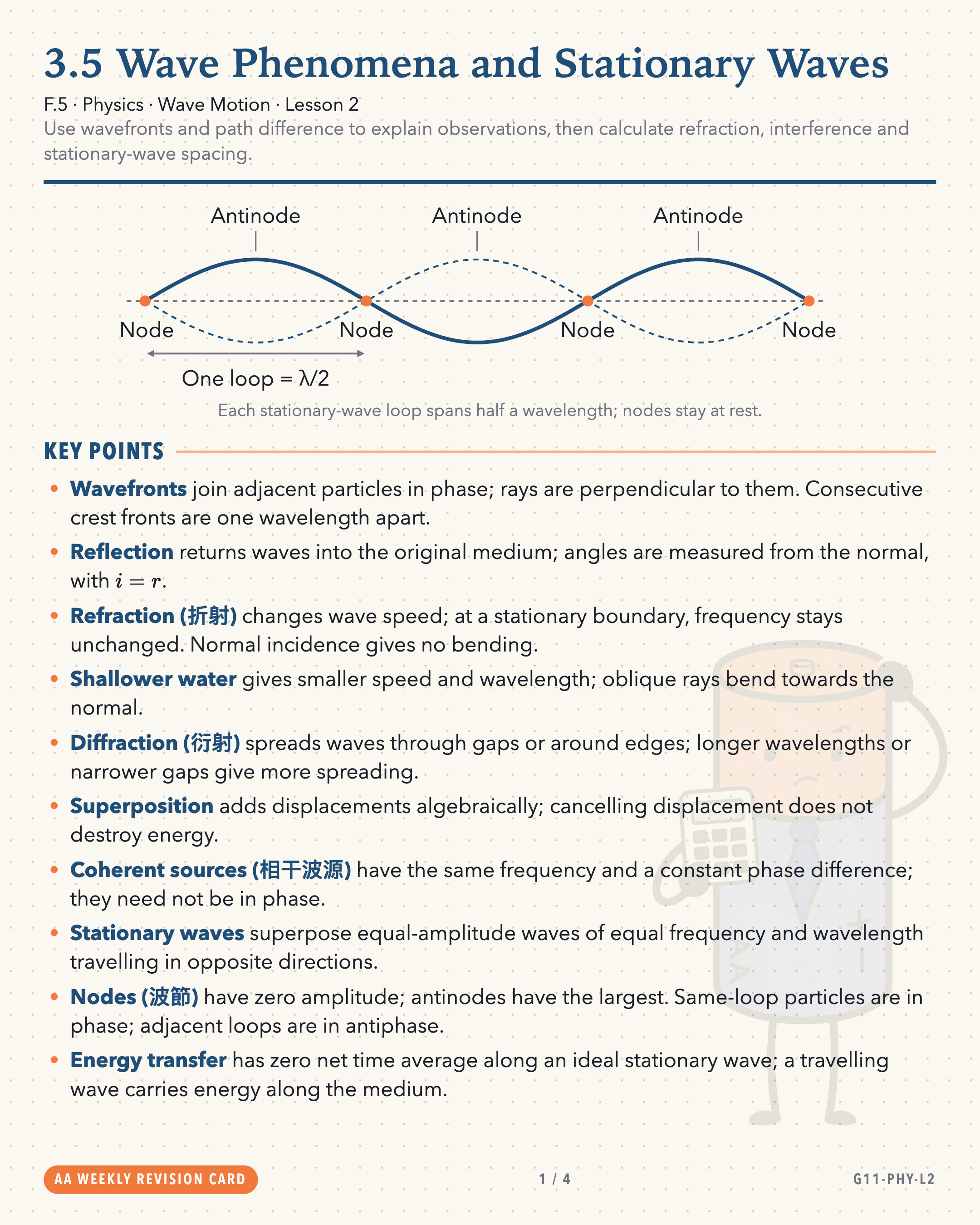
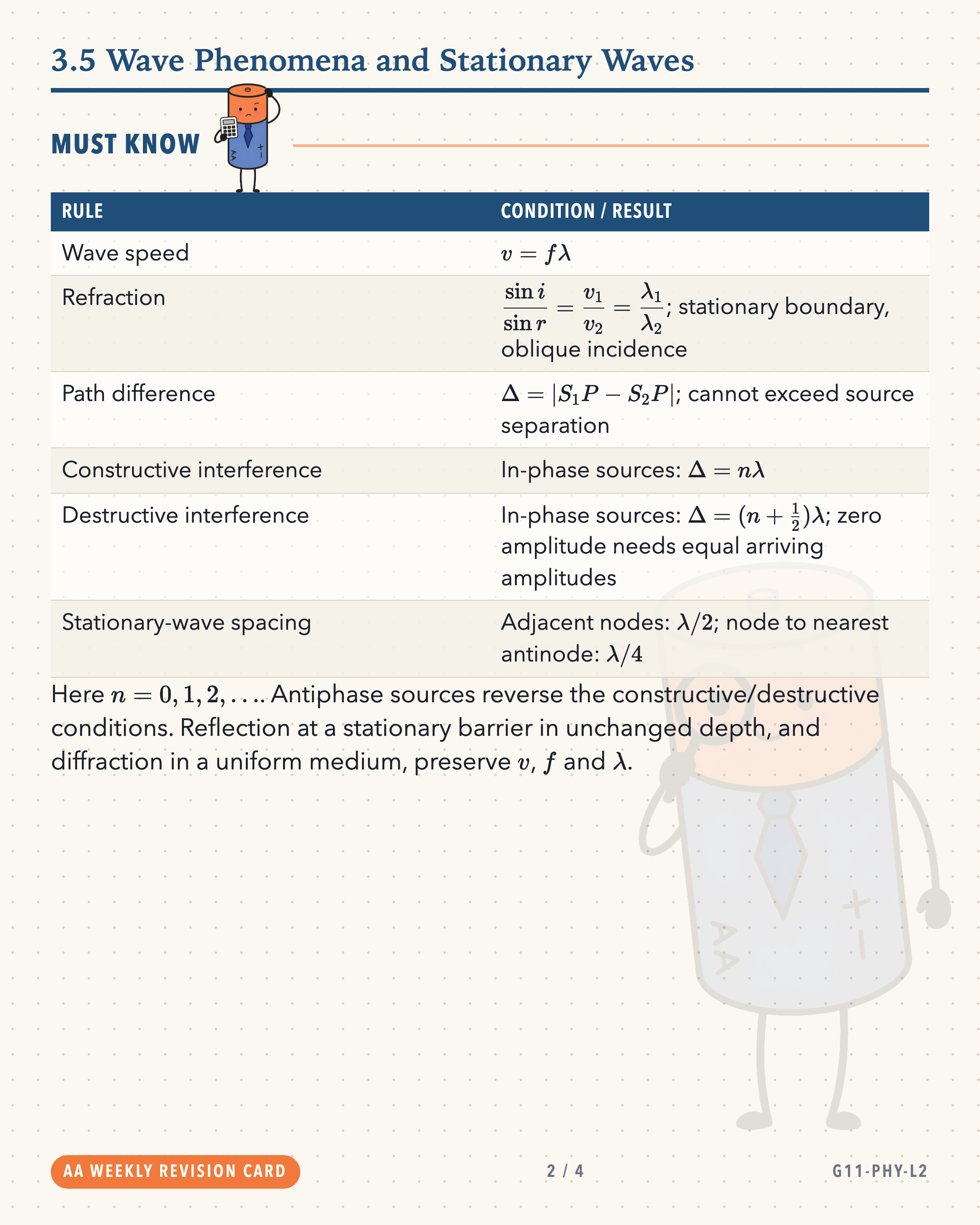
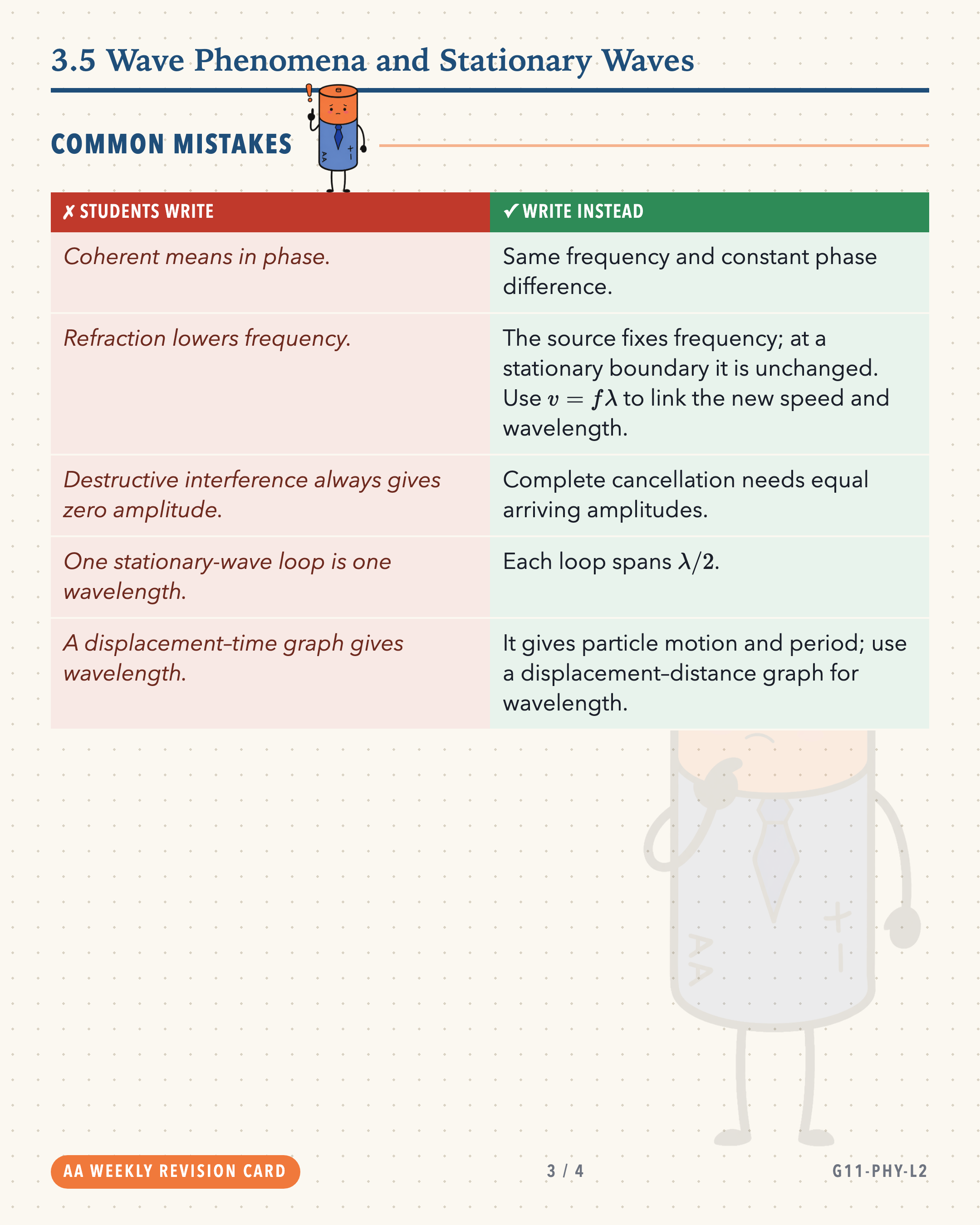
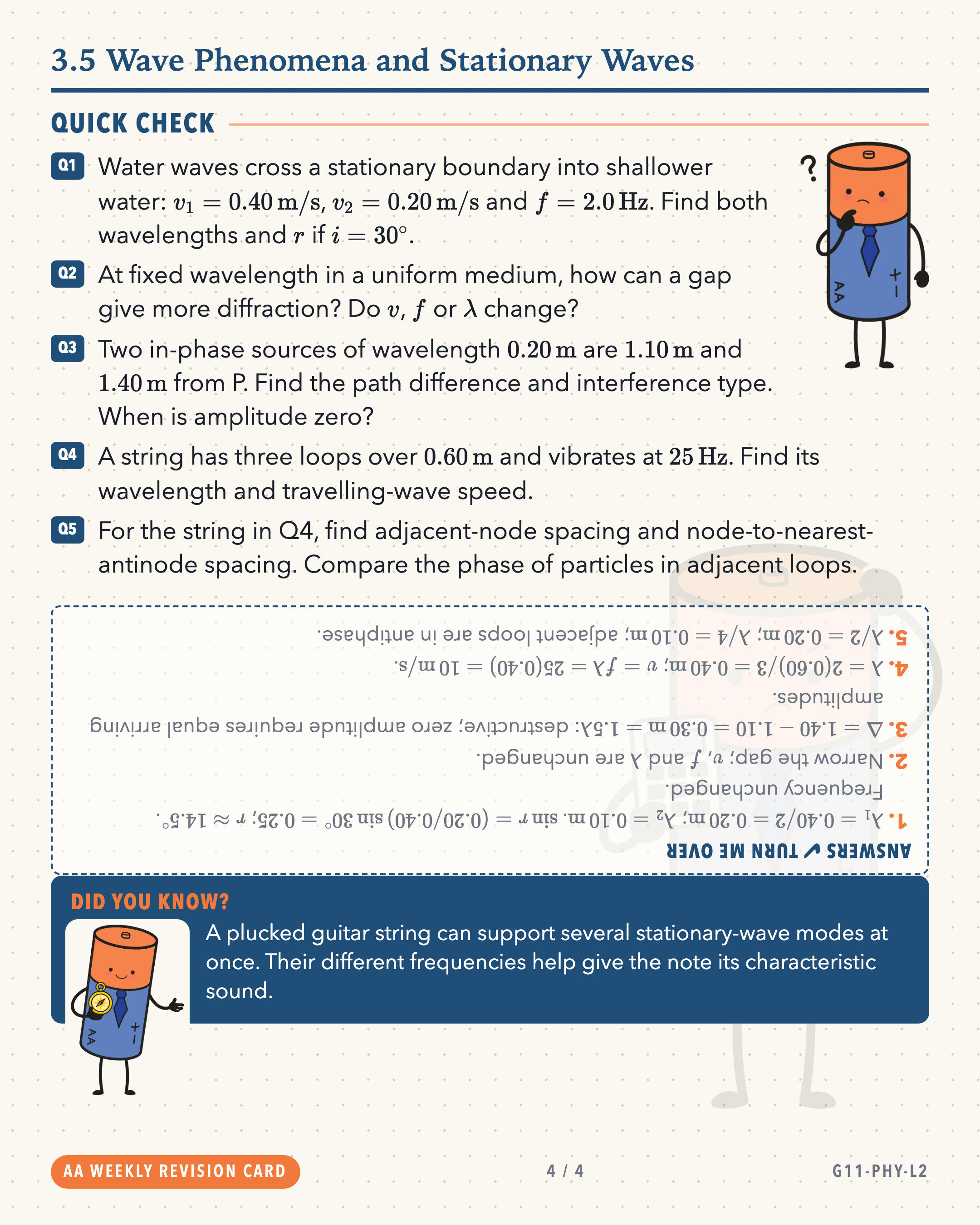
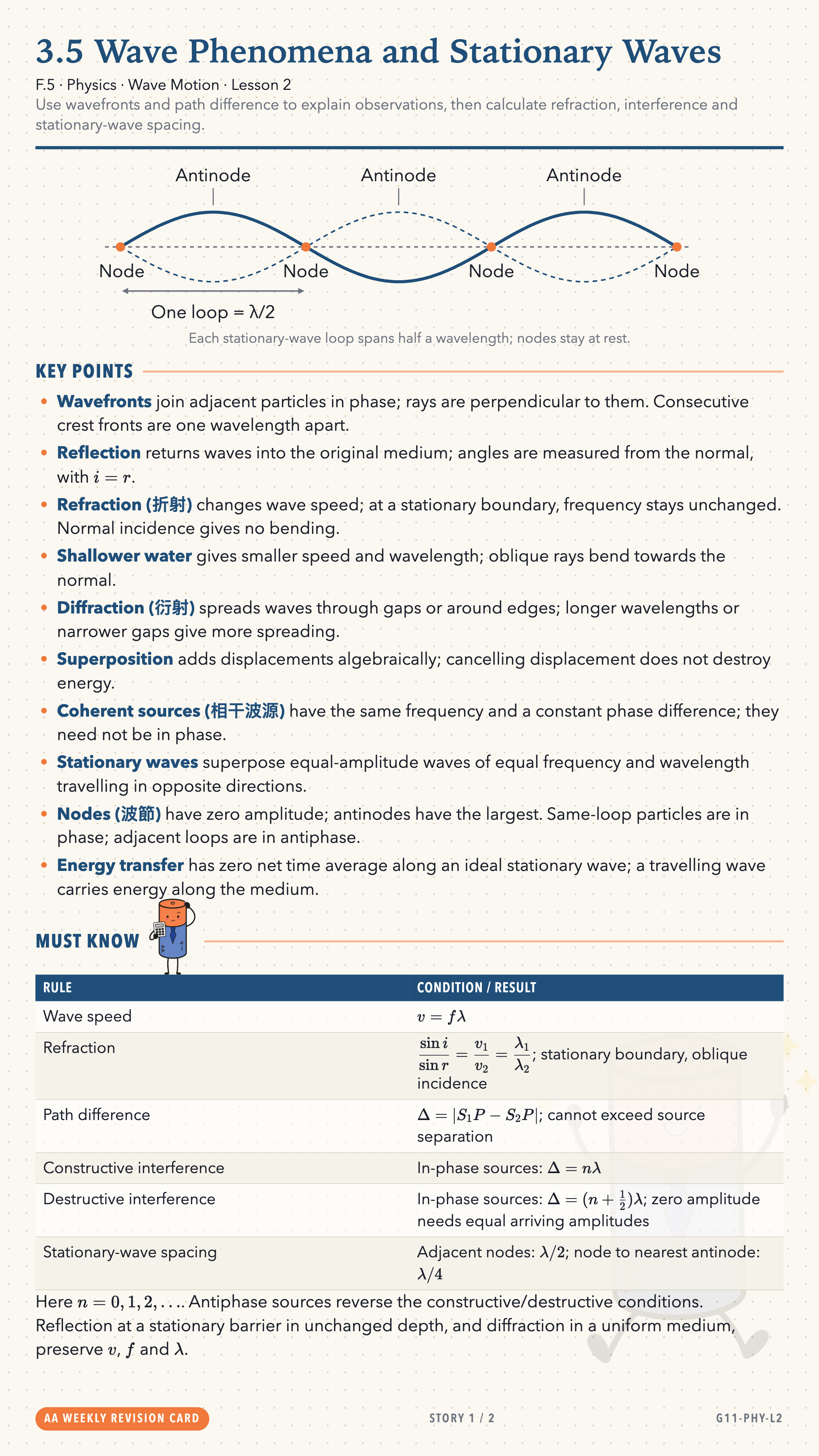
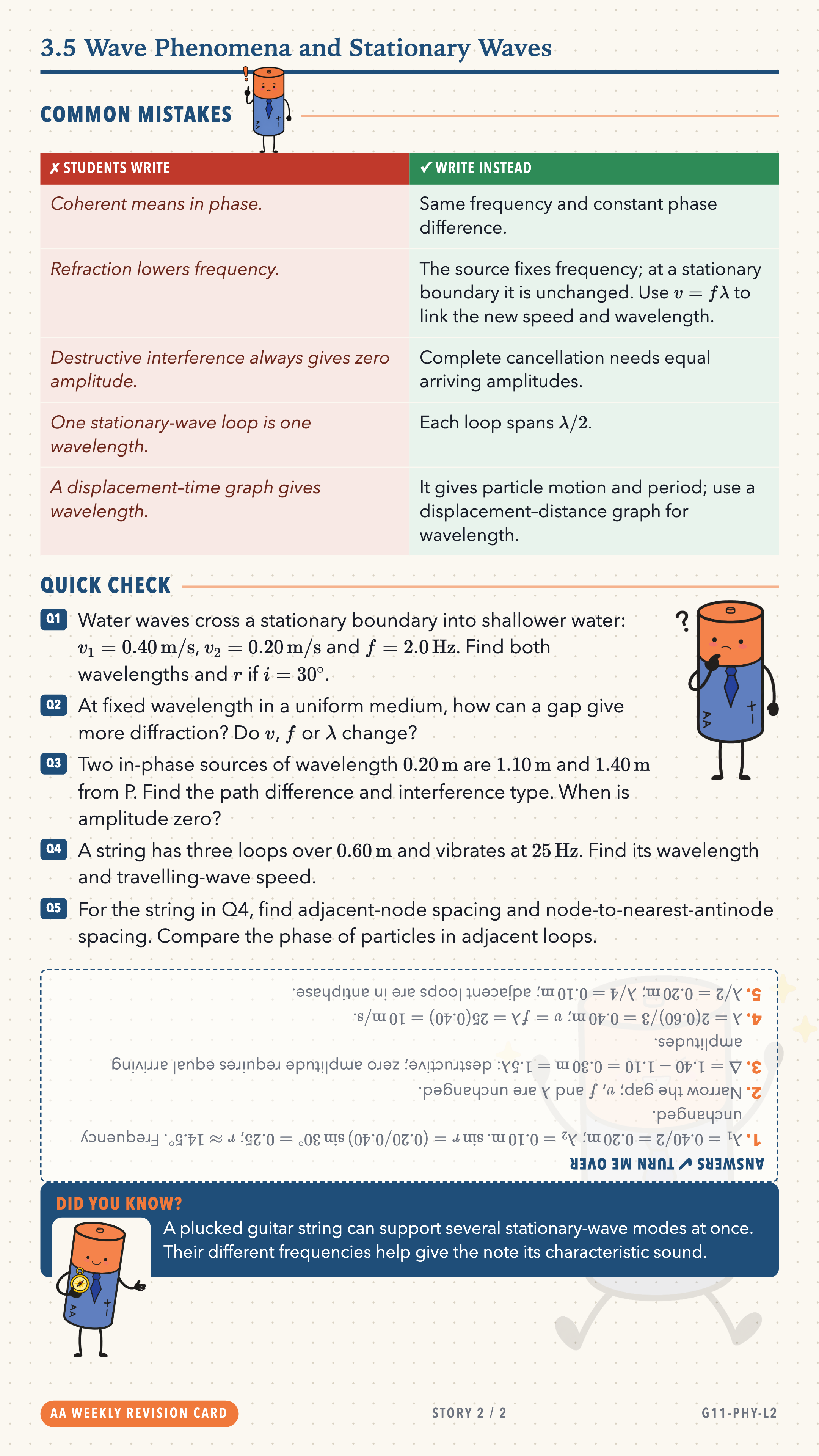
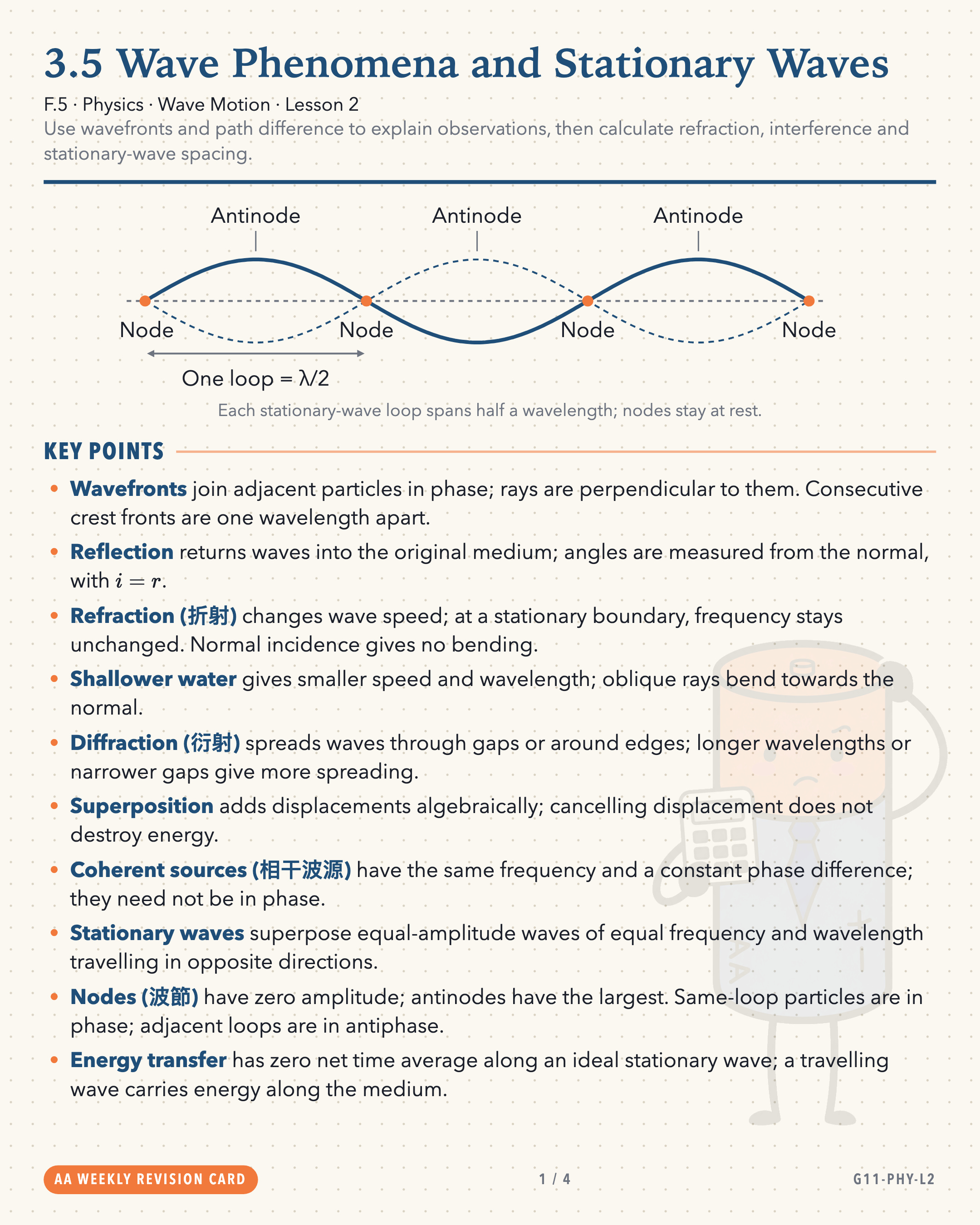
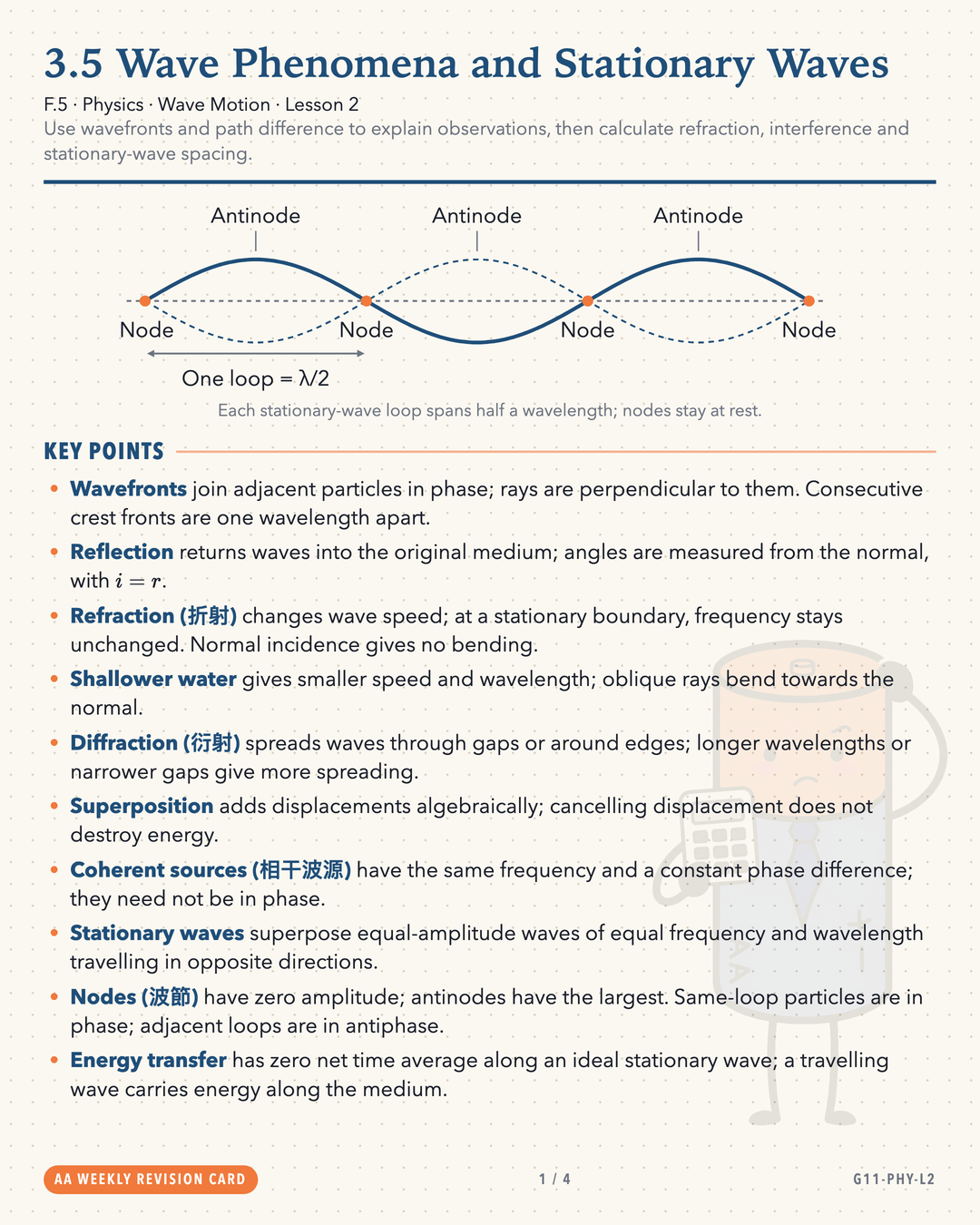
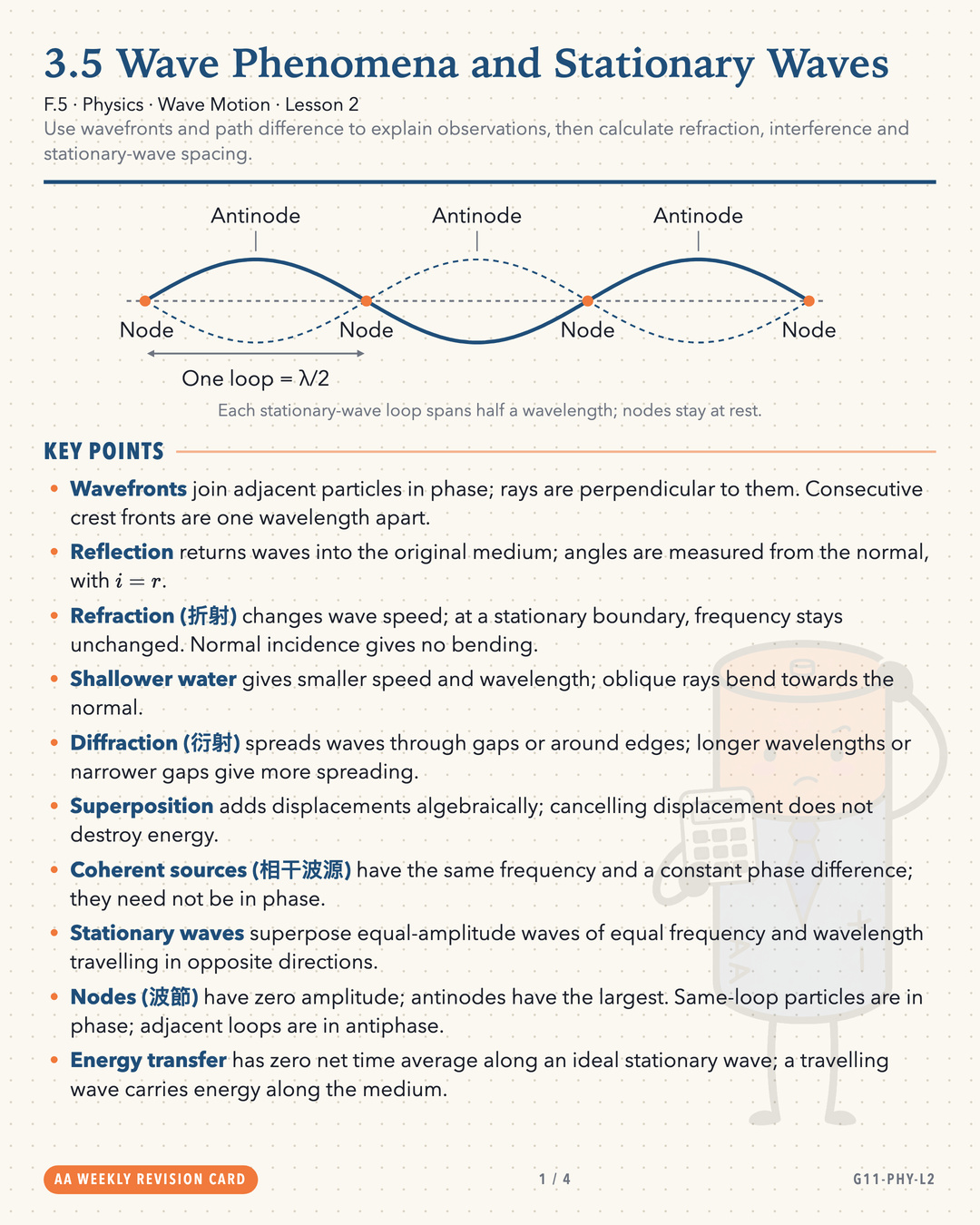
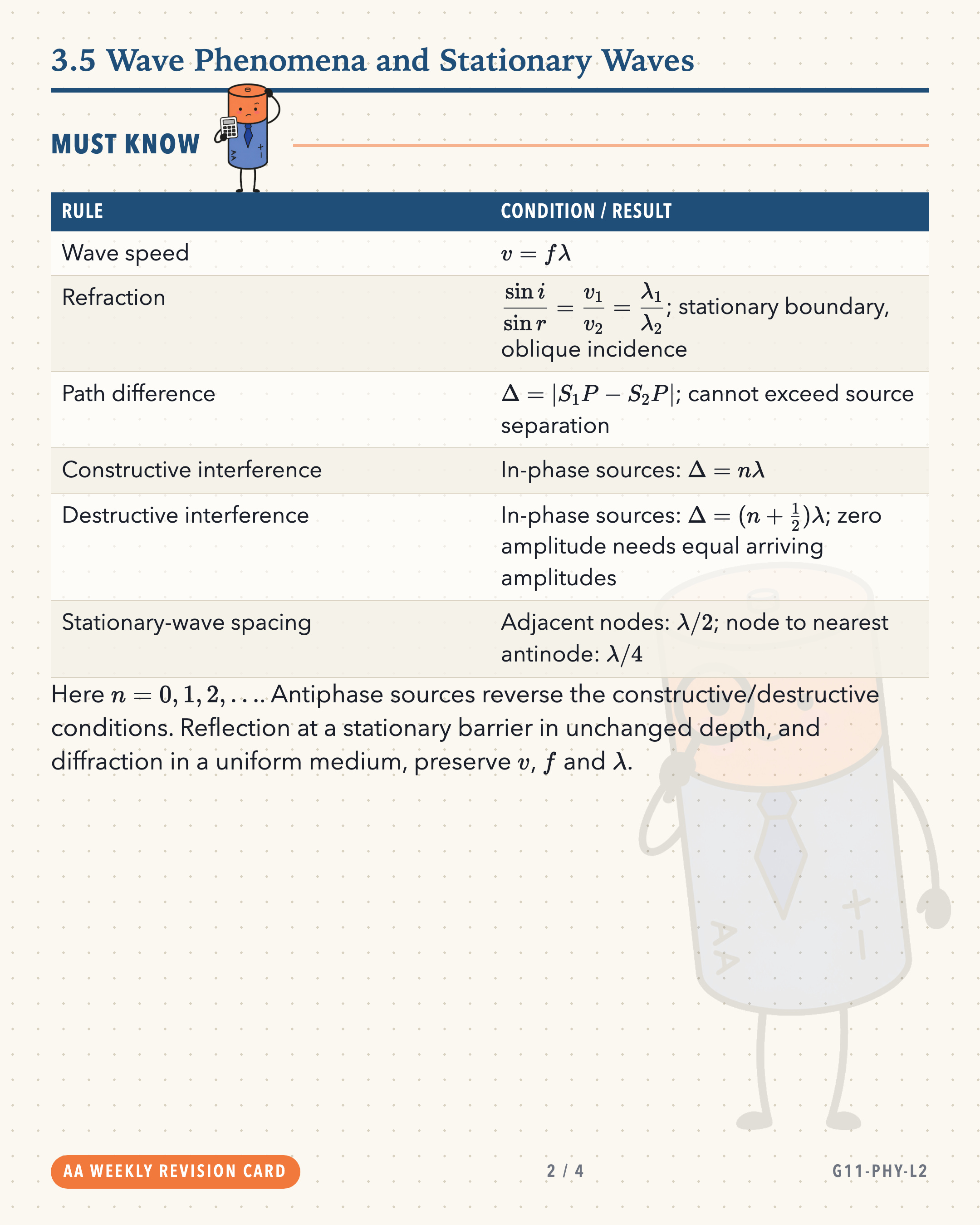
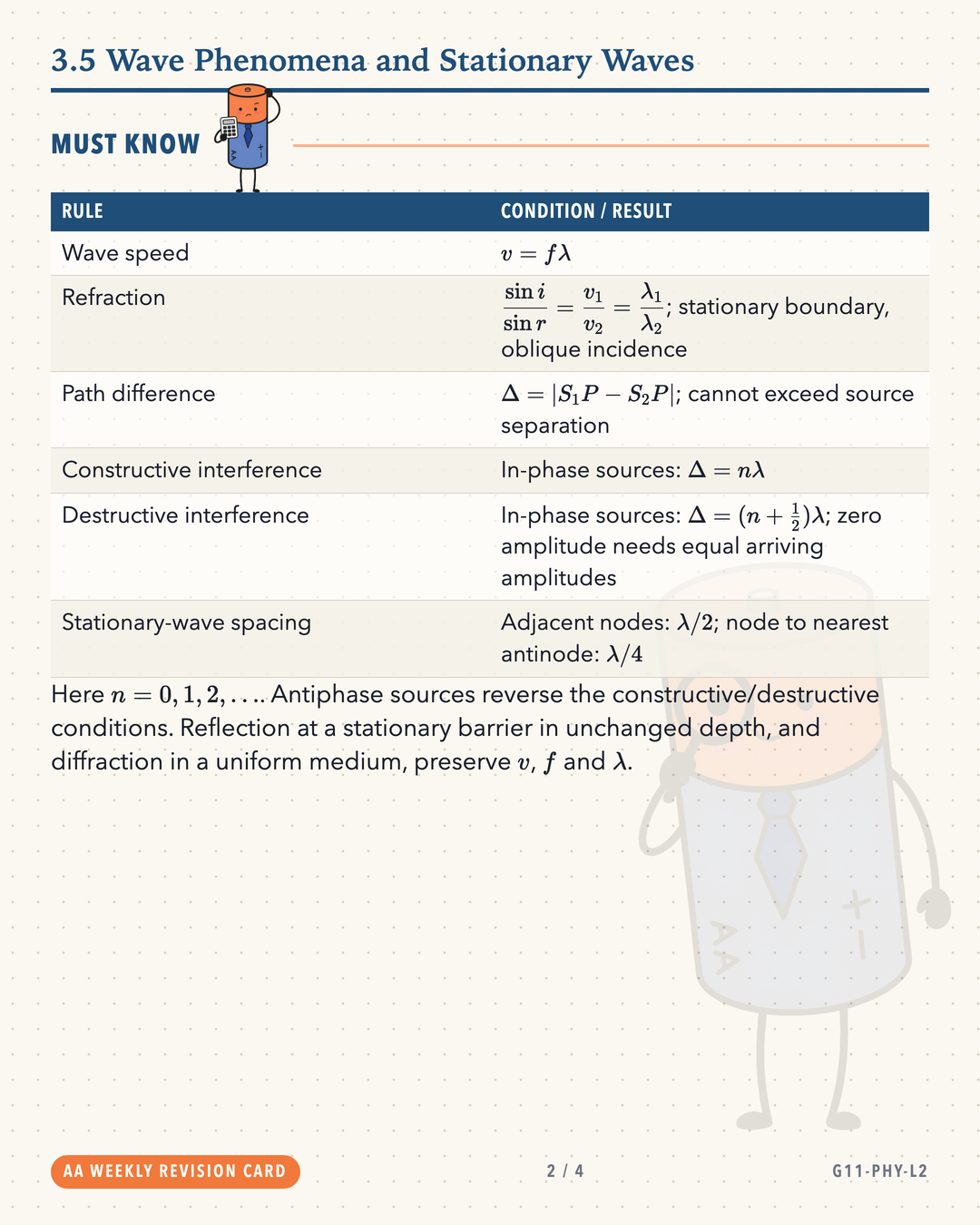
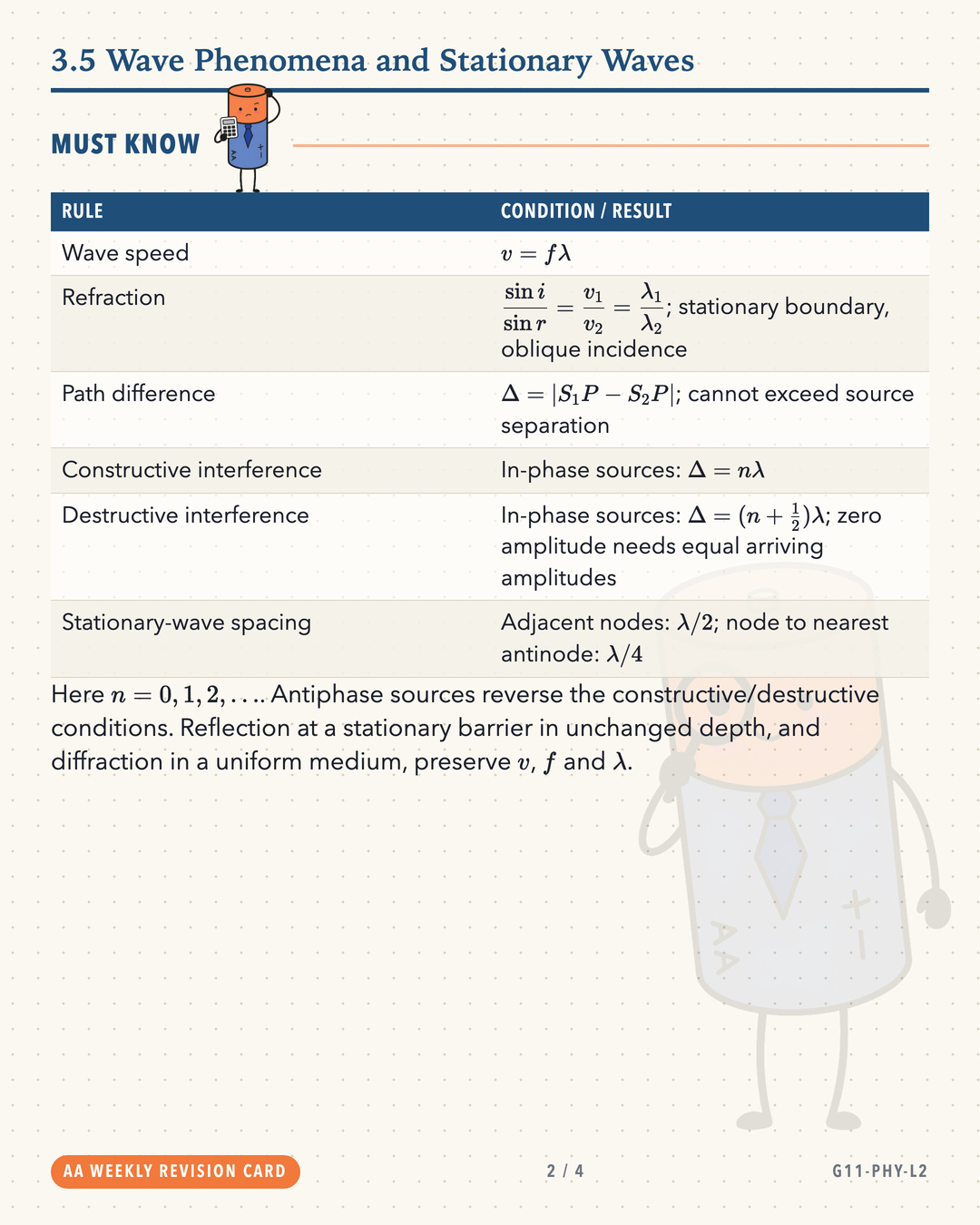
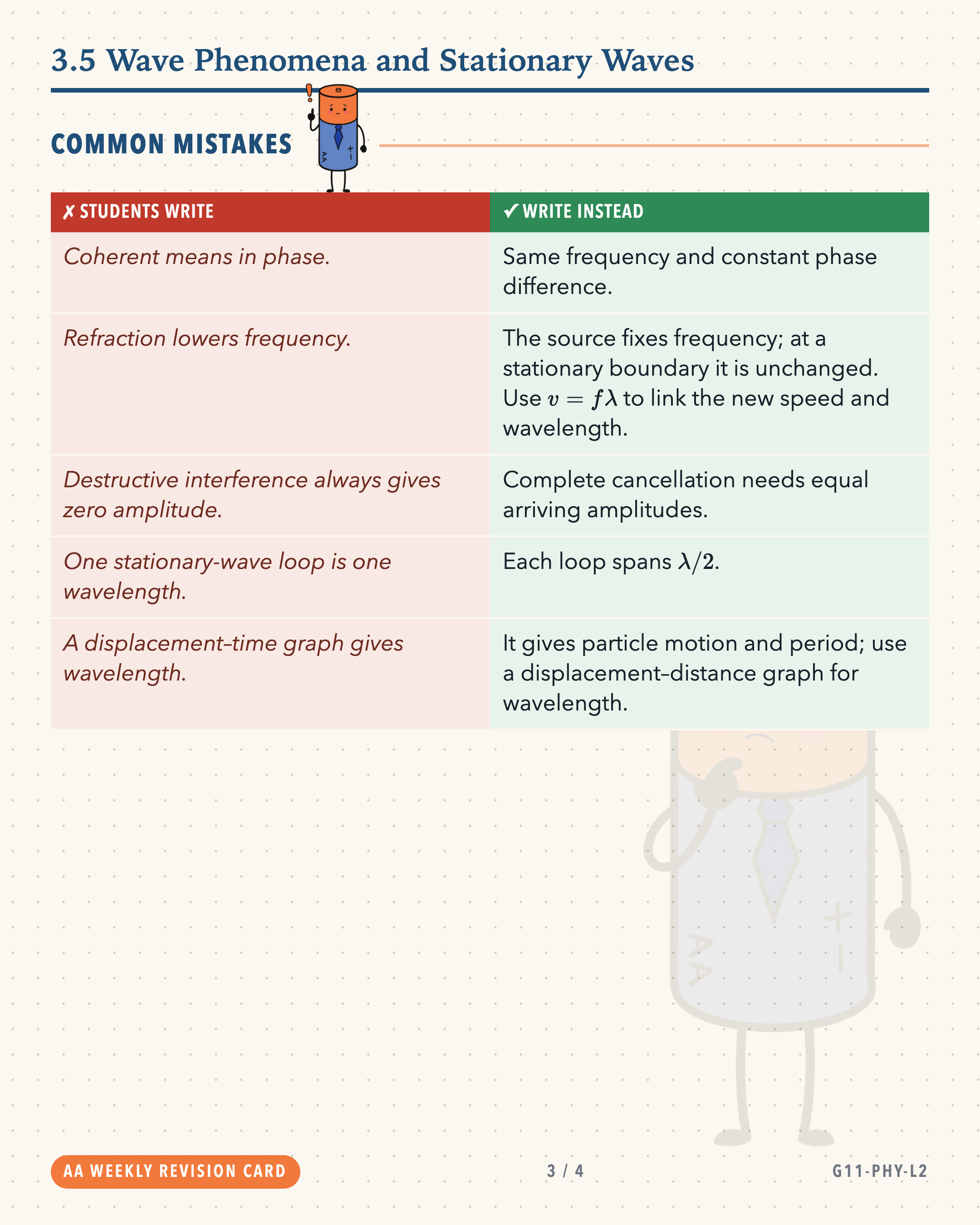
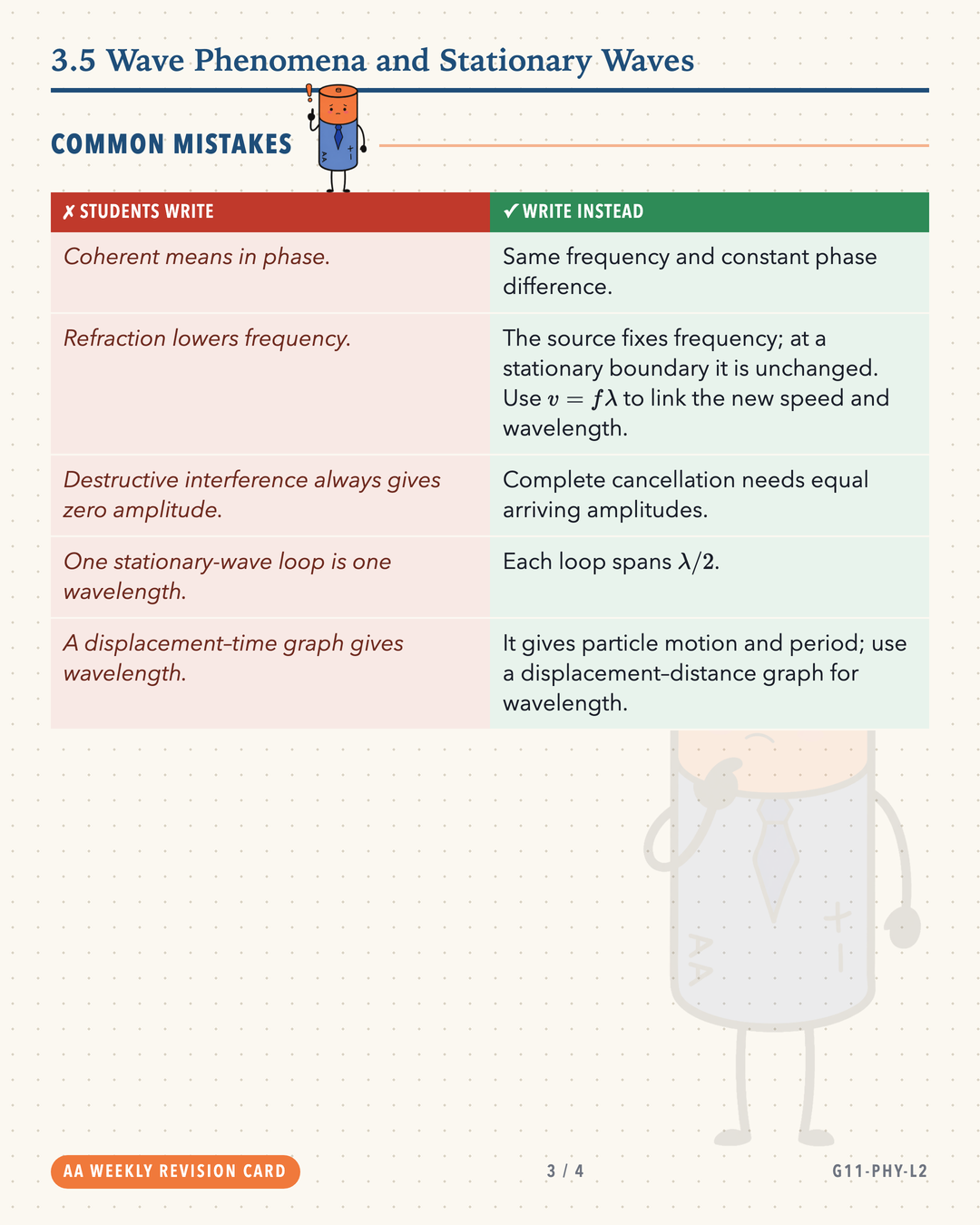
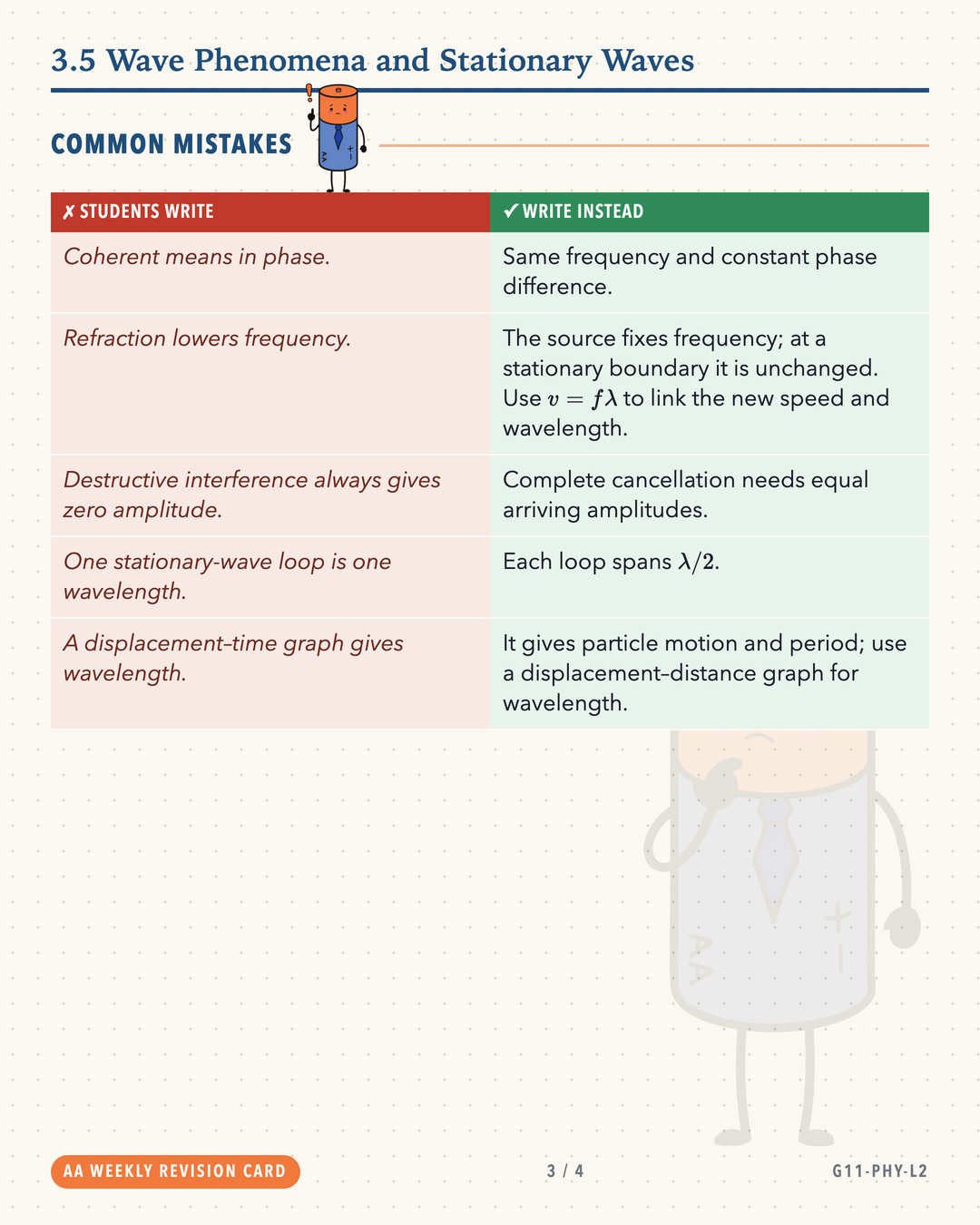
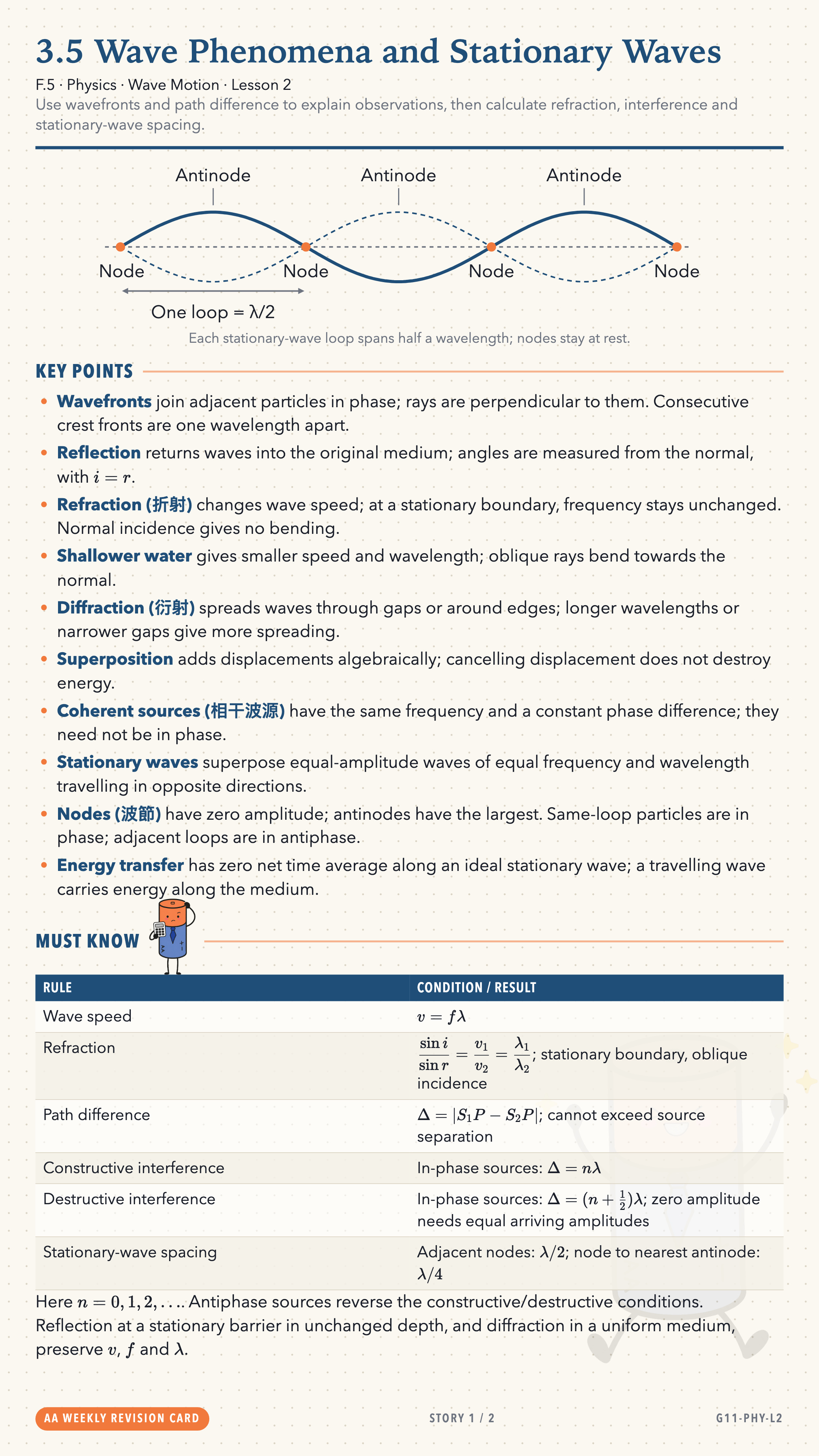
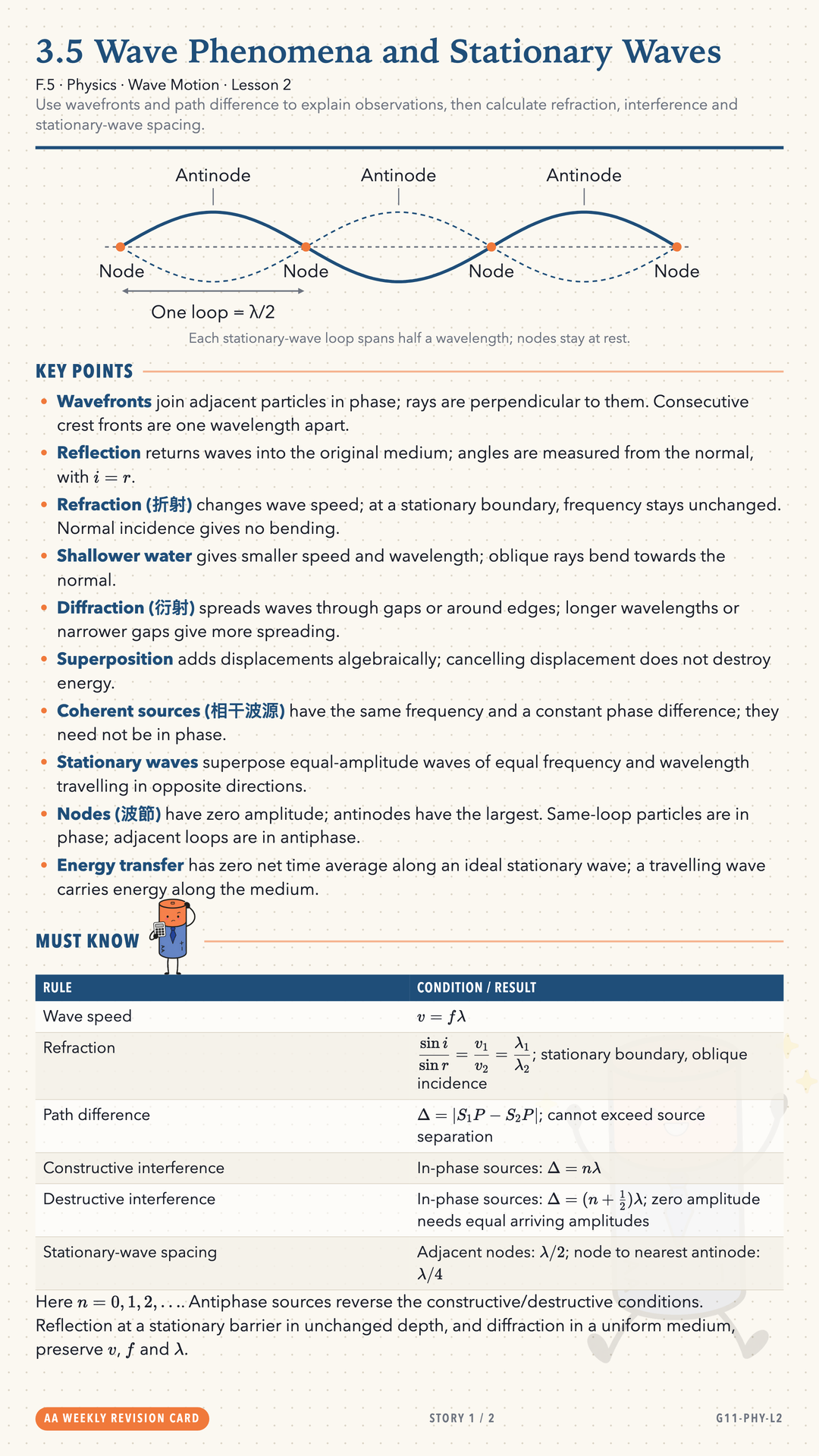
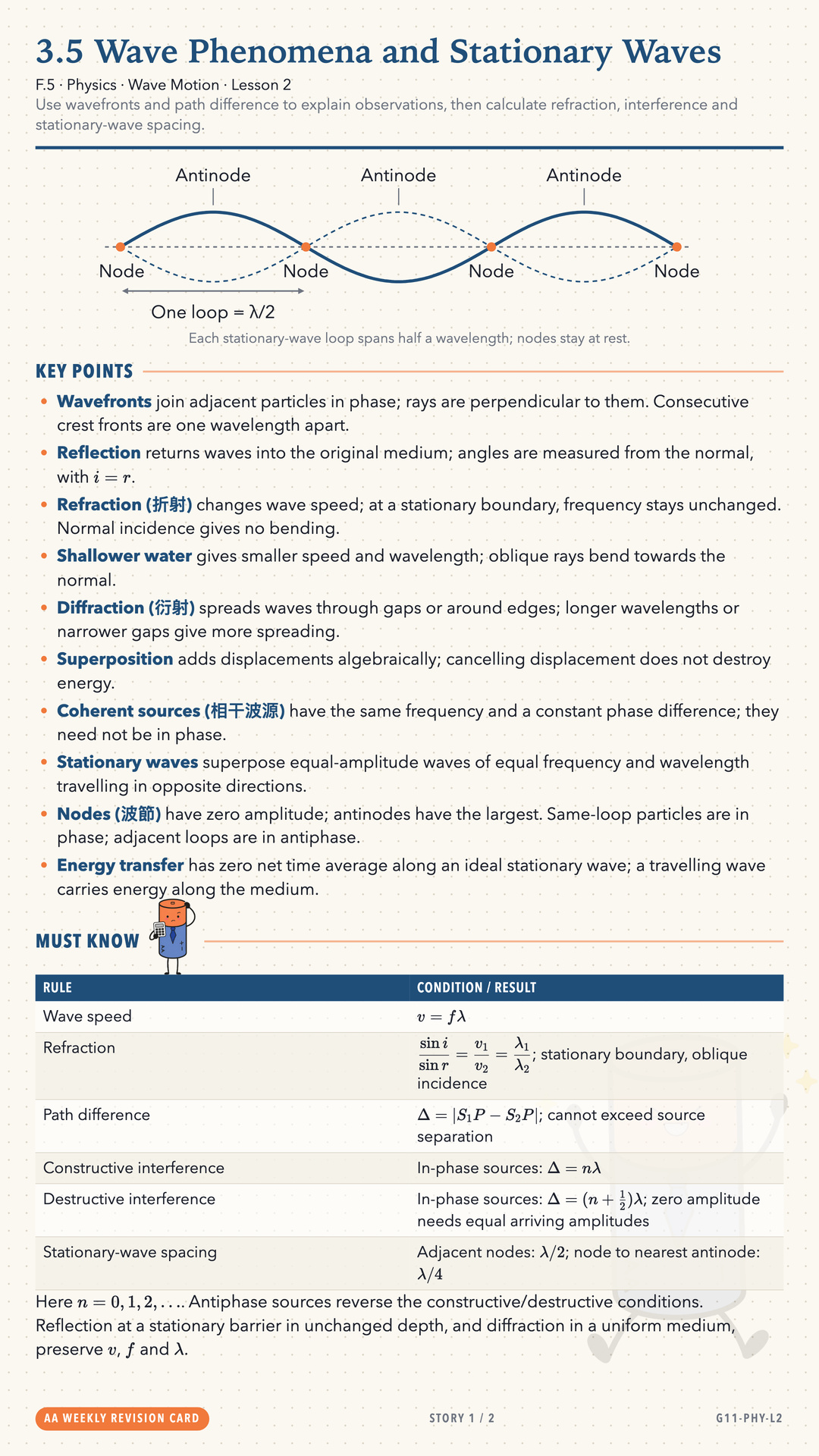
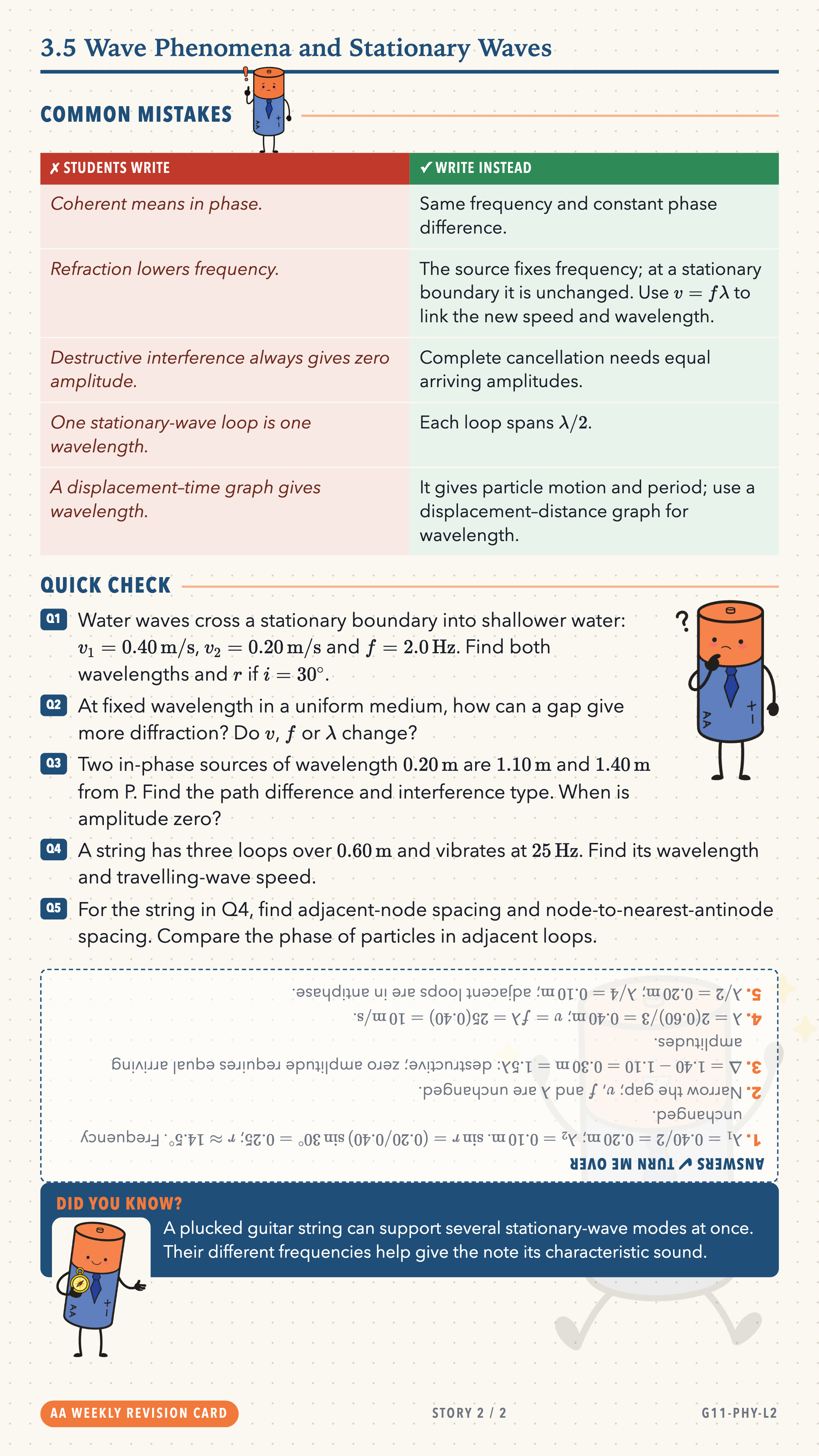
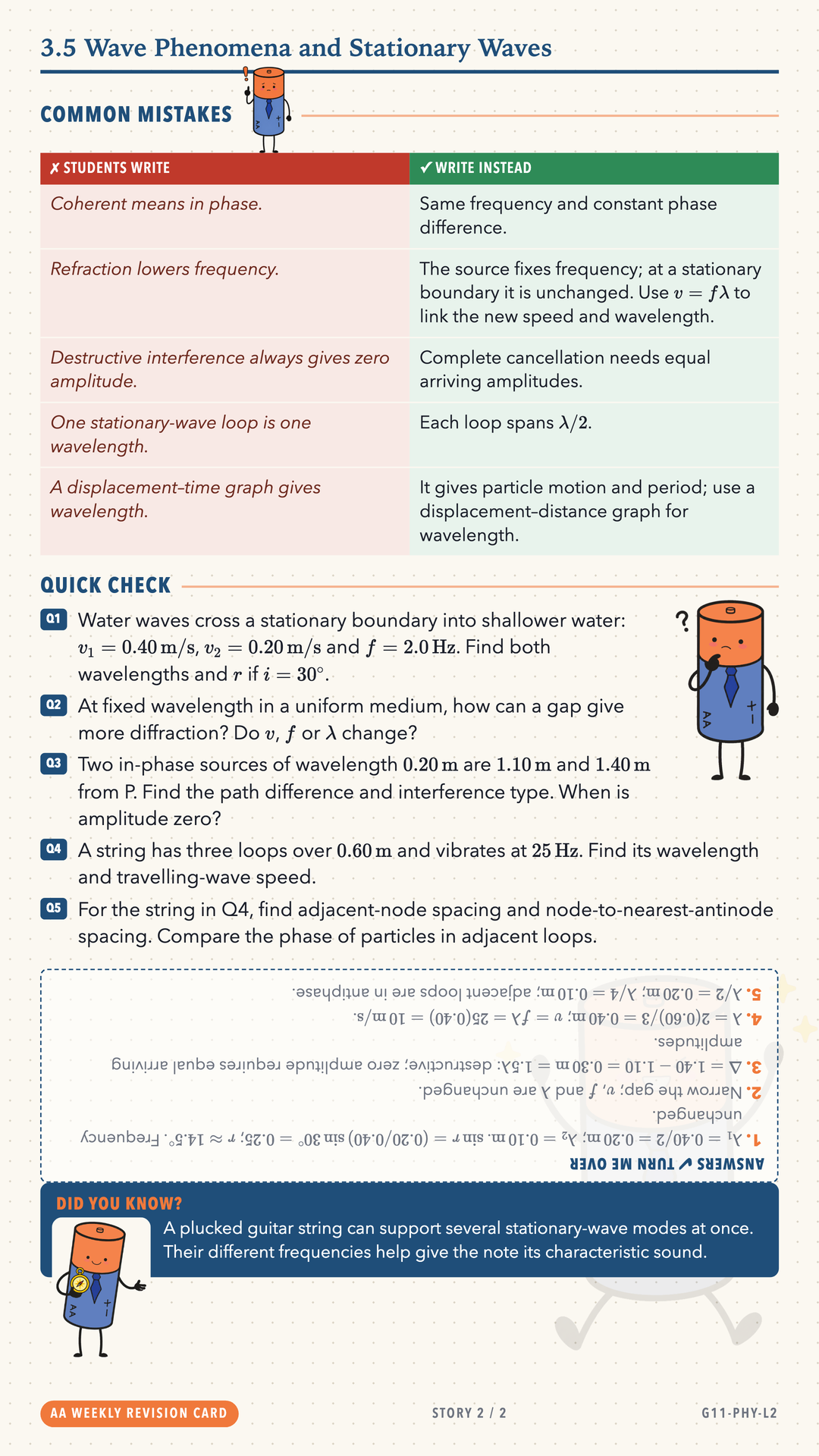
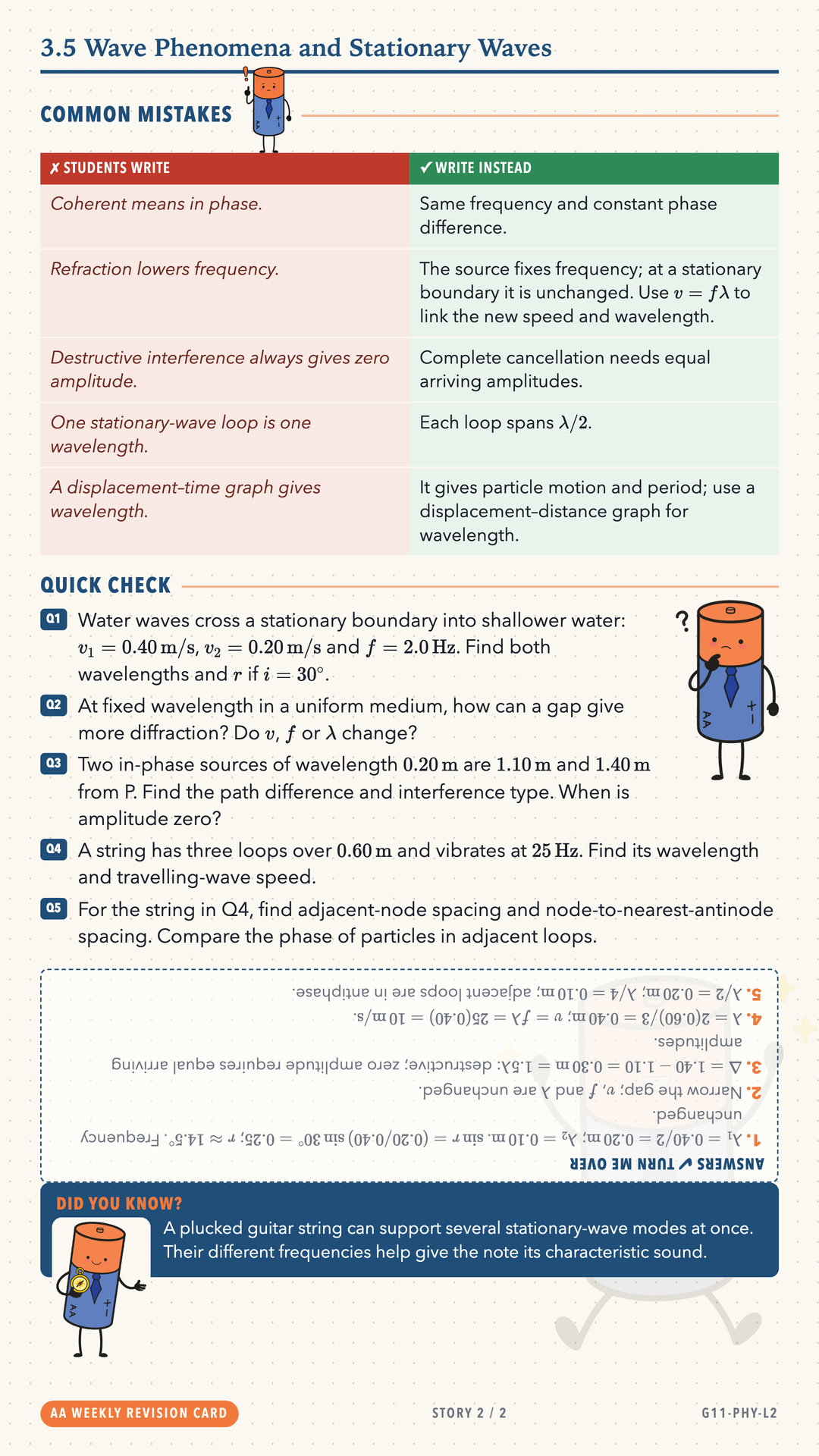
Use wavefronts and path difference to explain observations, then calculate refraction, interference and stationary-wave spacing.
✔ fact-checked · 0 added mistakes tagged [likely] · 3.1 MB JPG · card.md ·
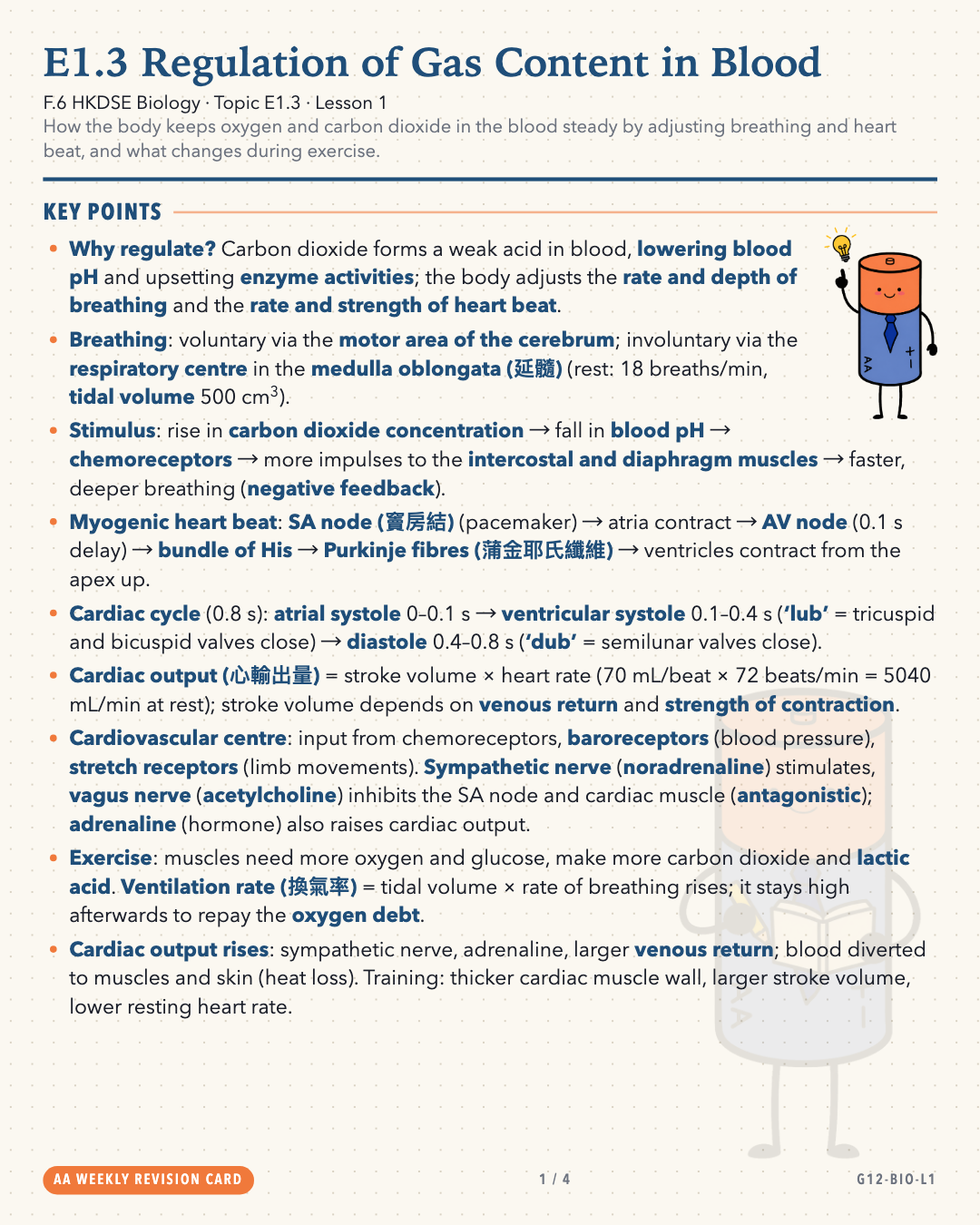
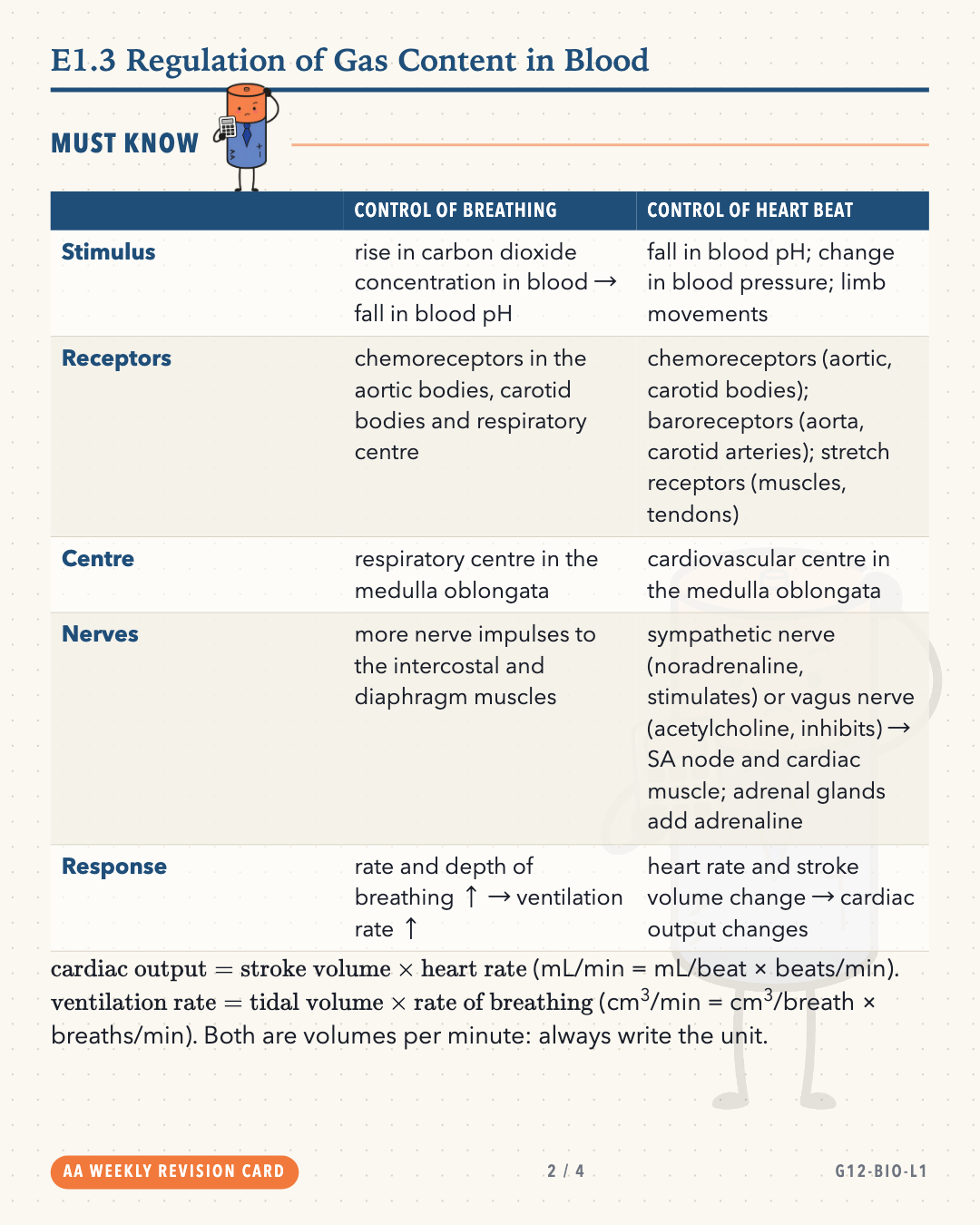
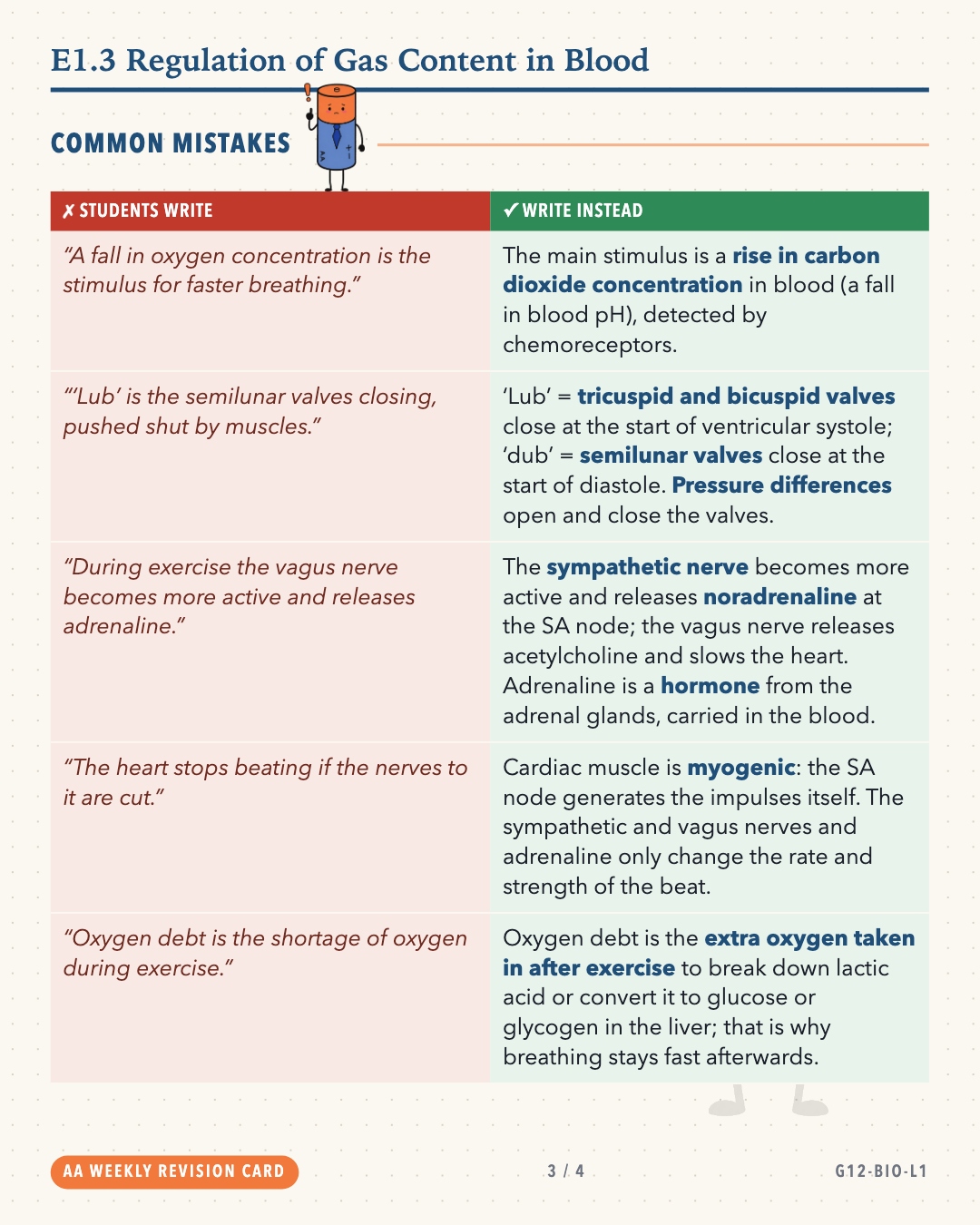
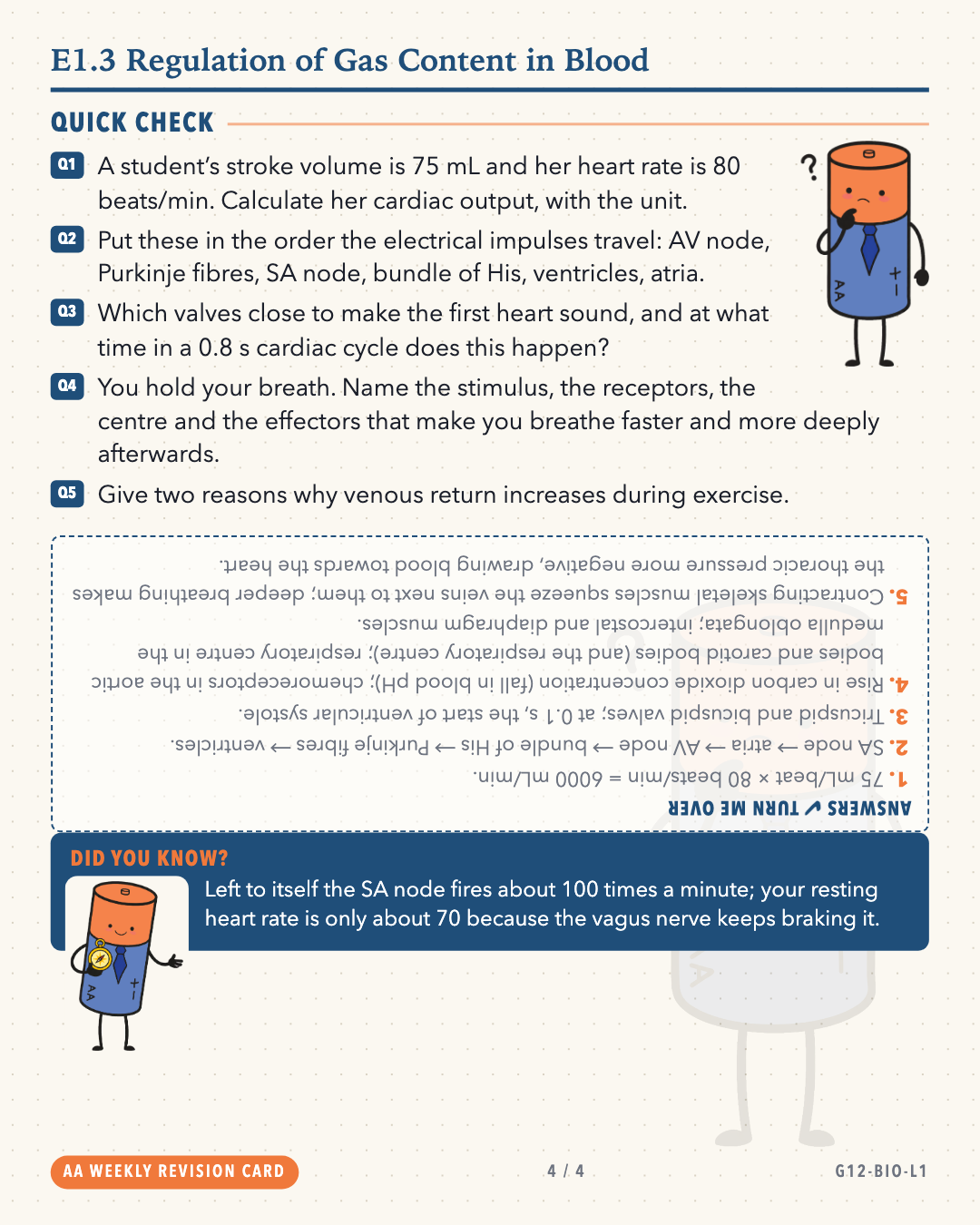
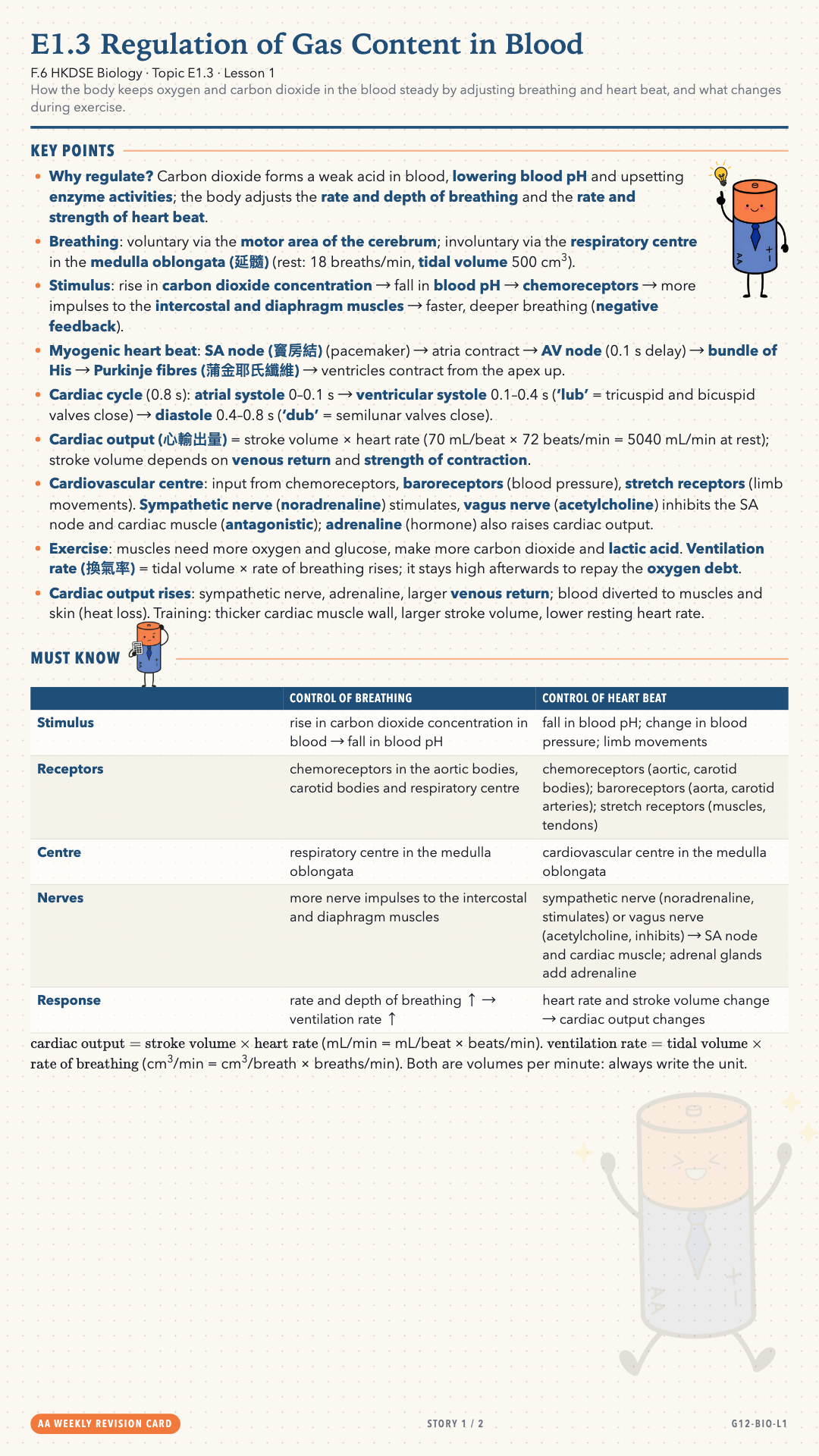
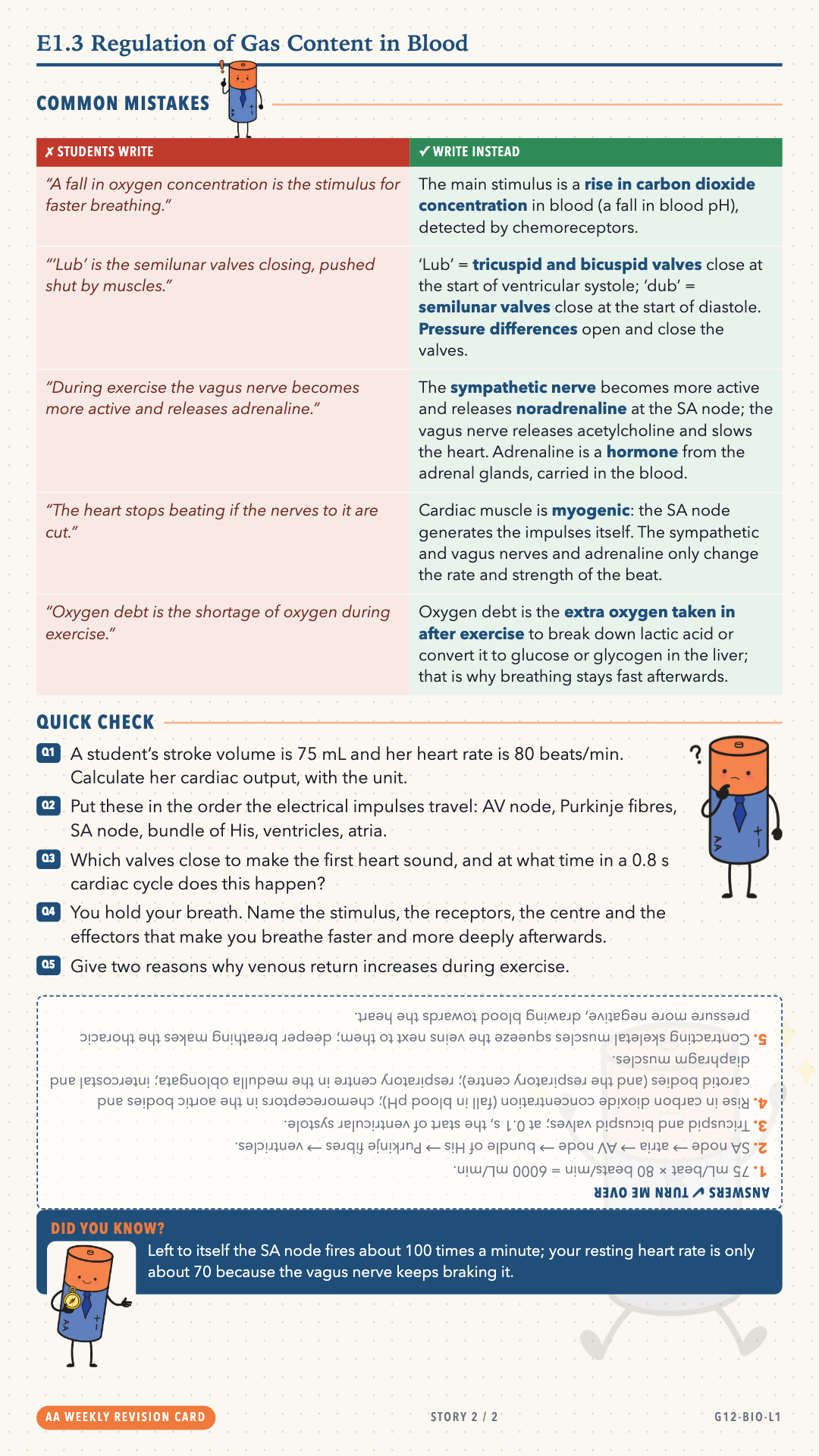
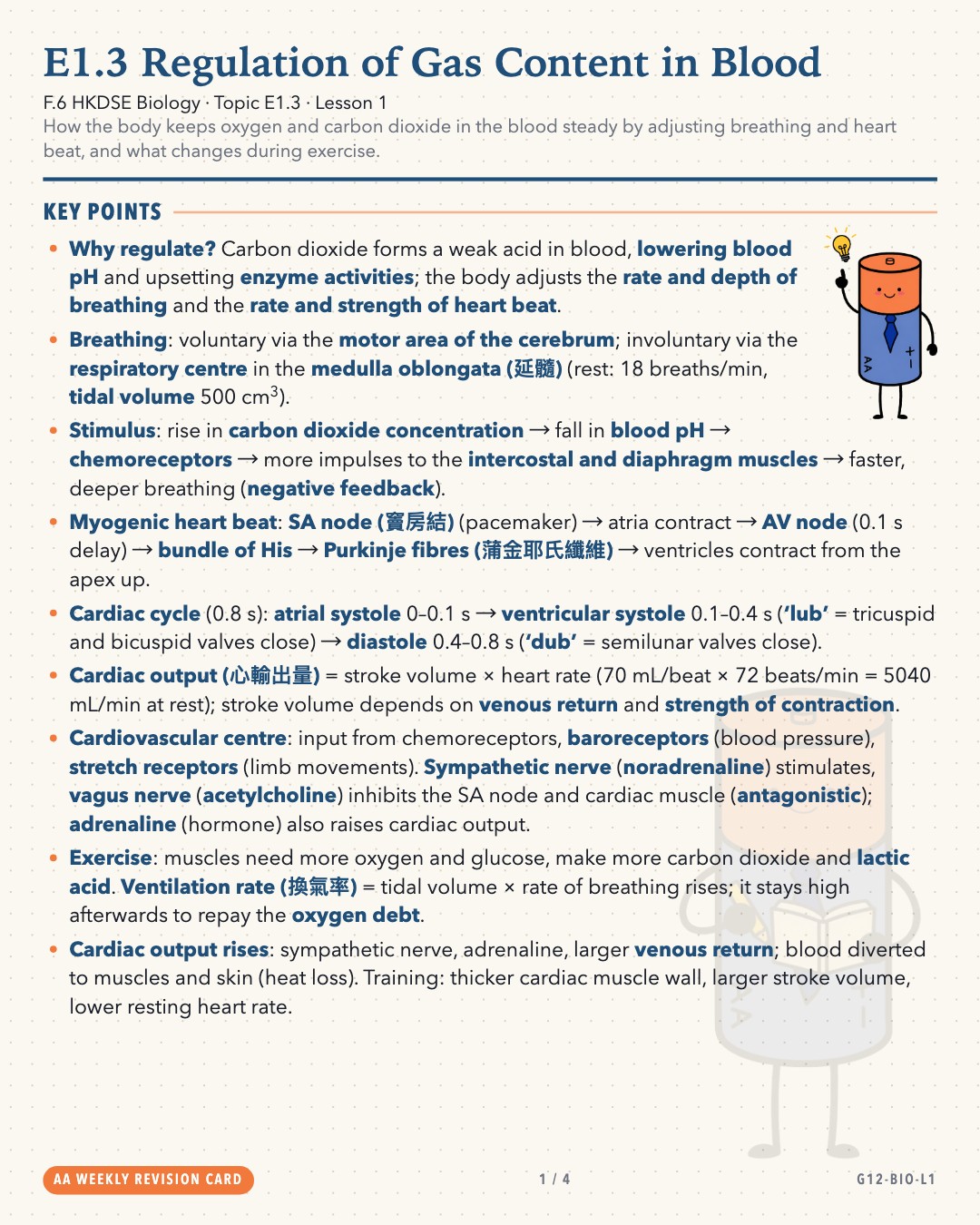
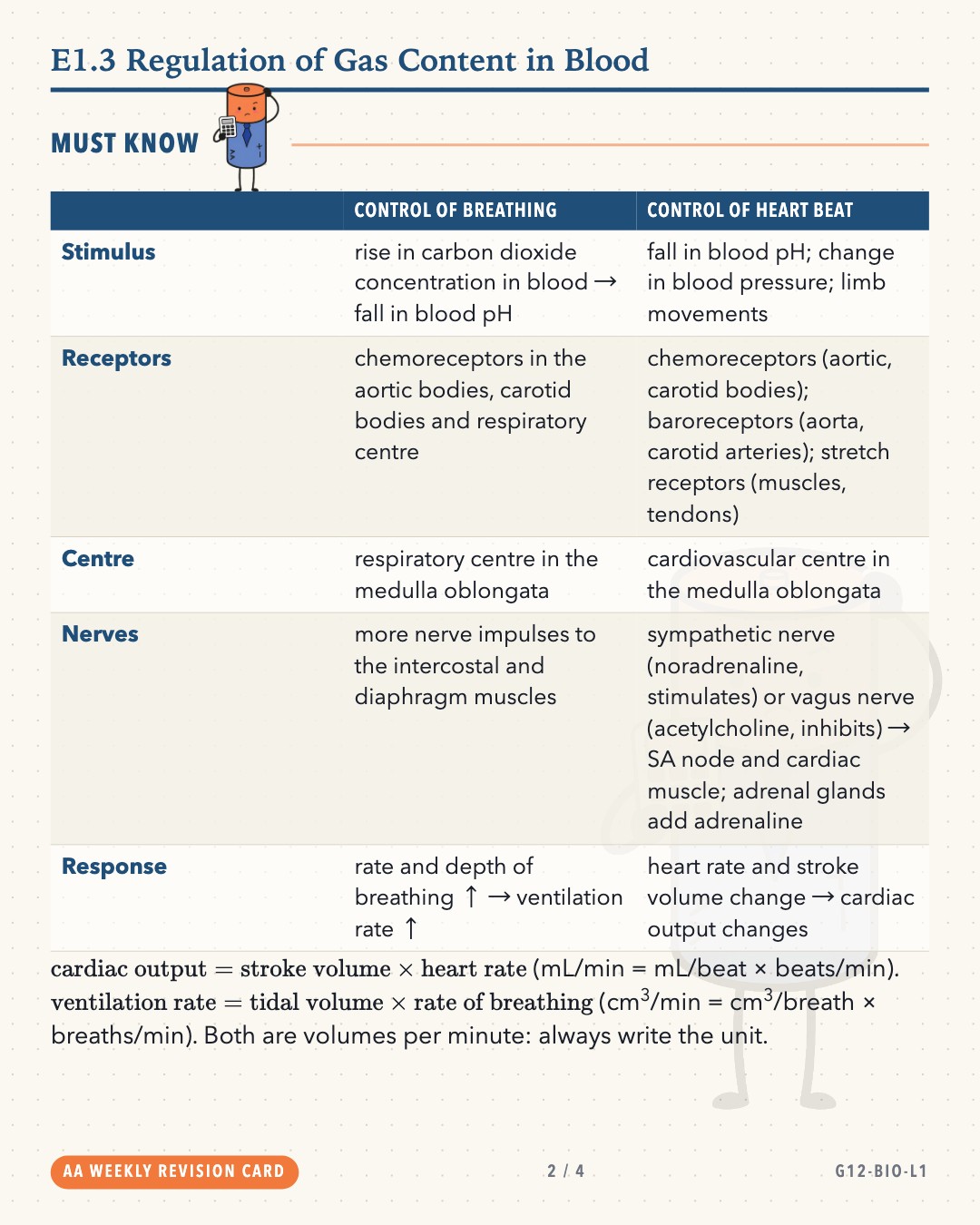
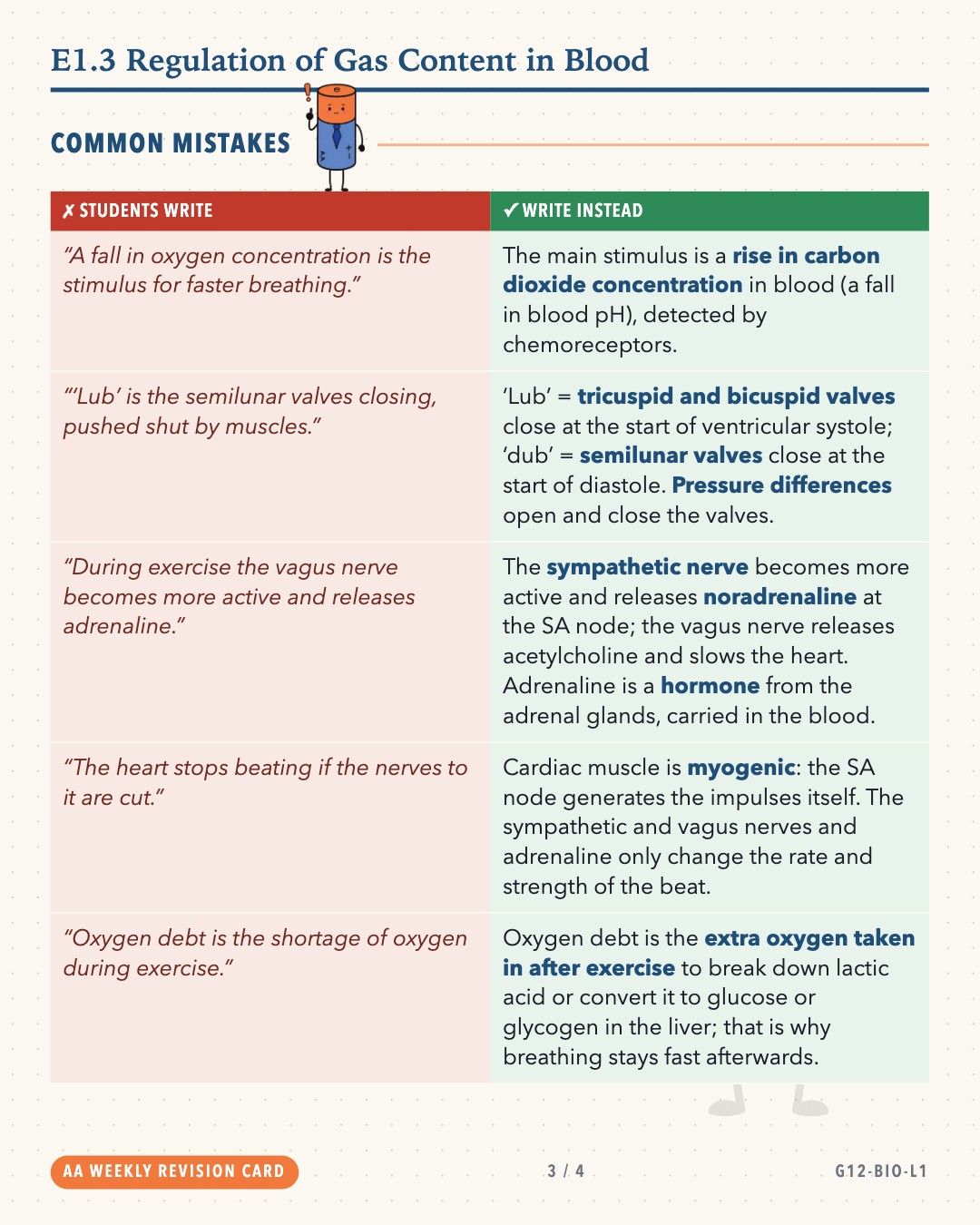
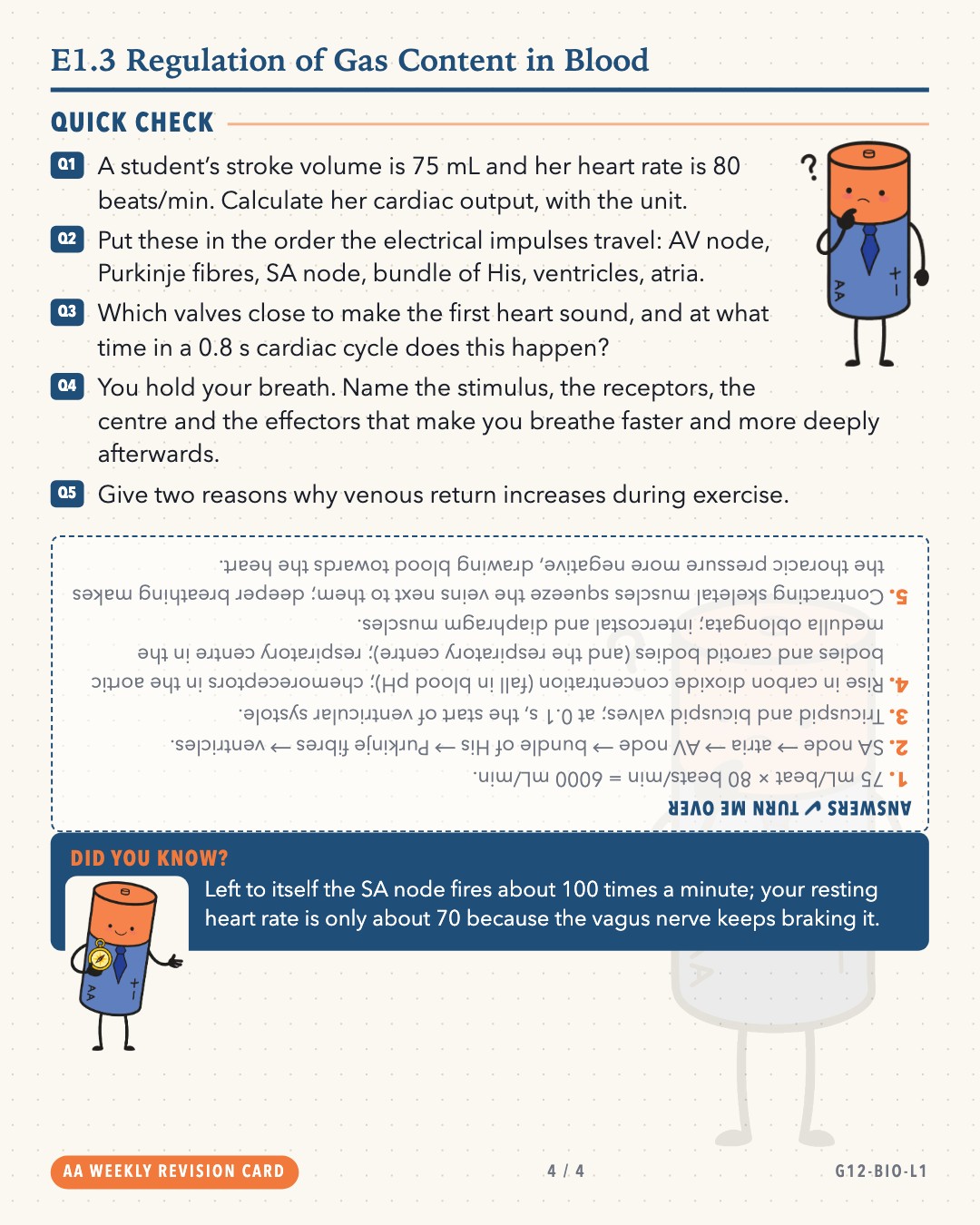
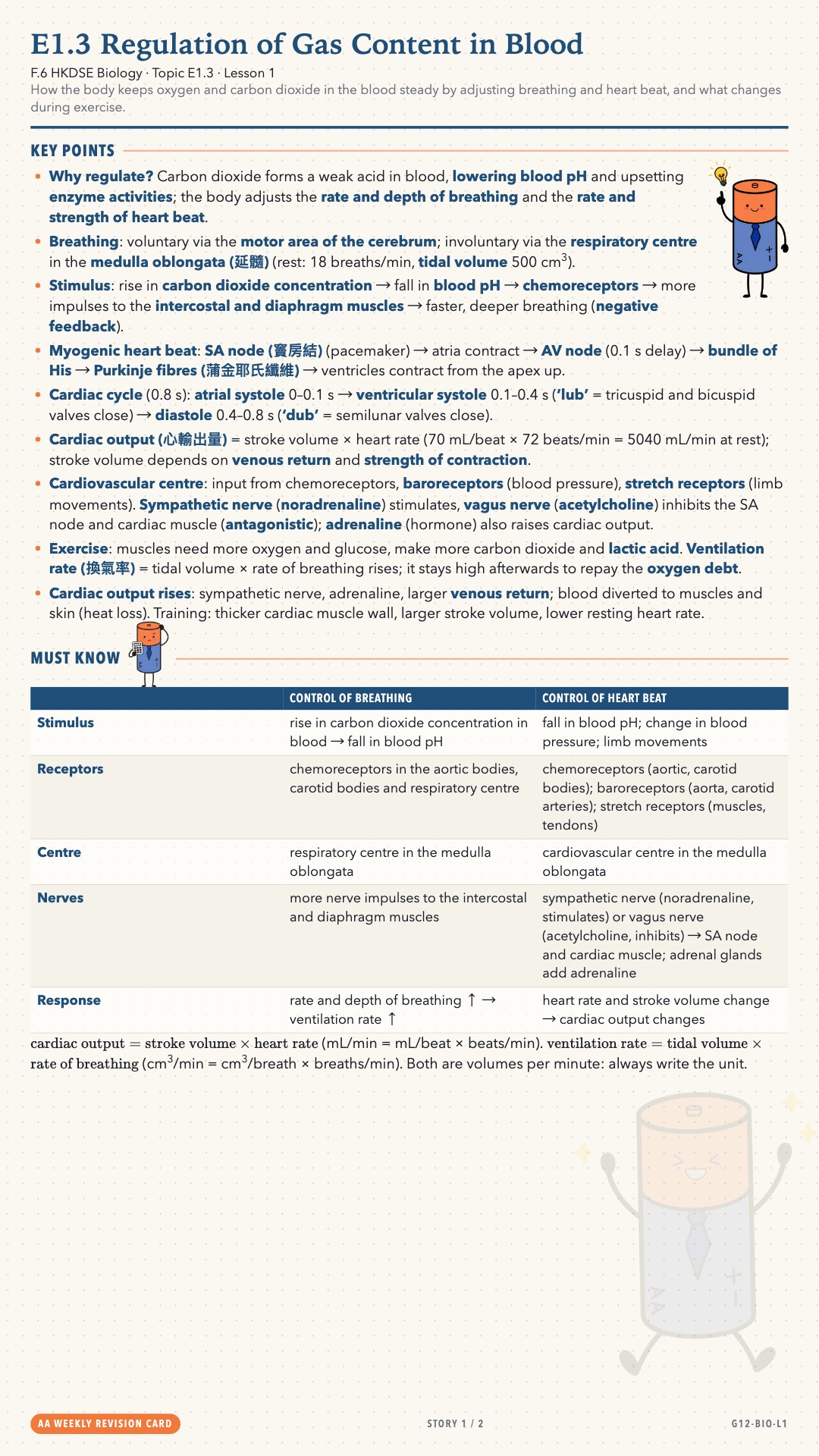
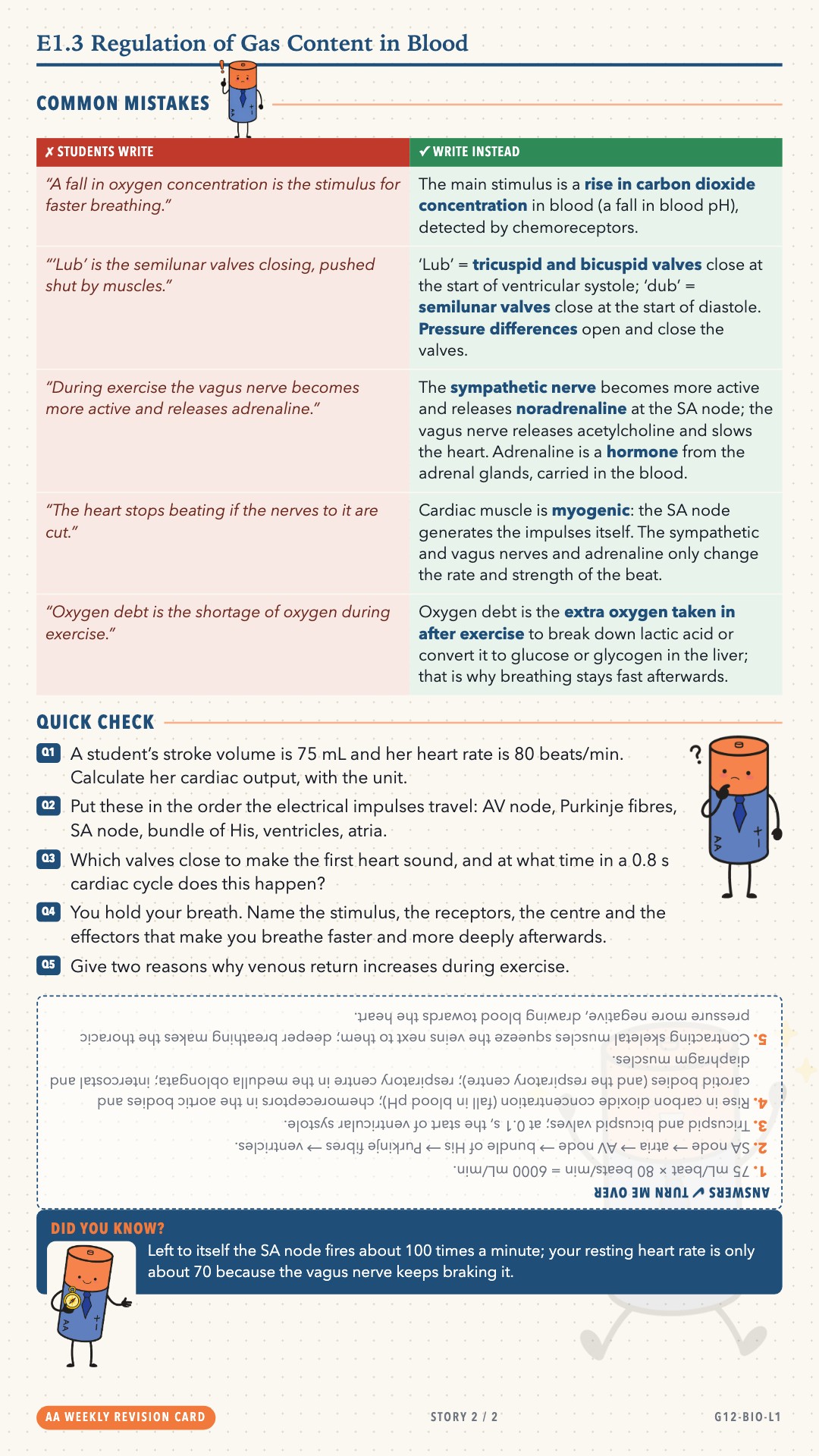
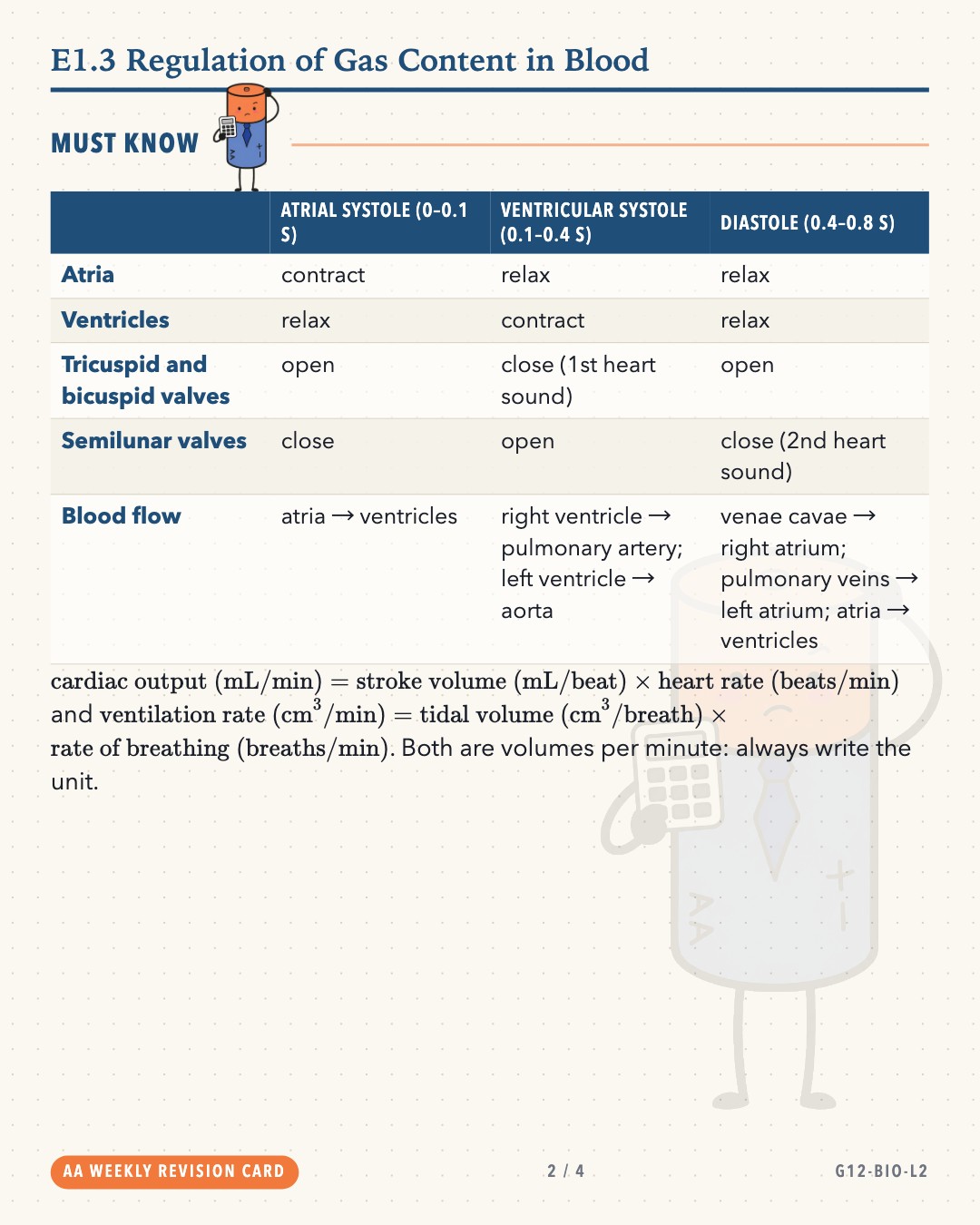
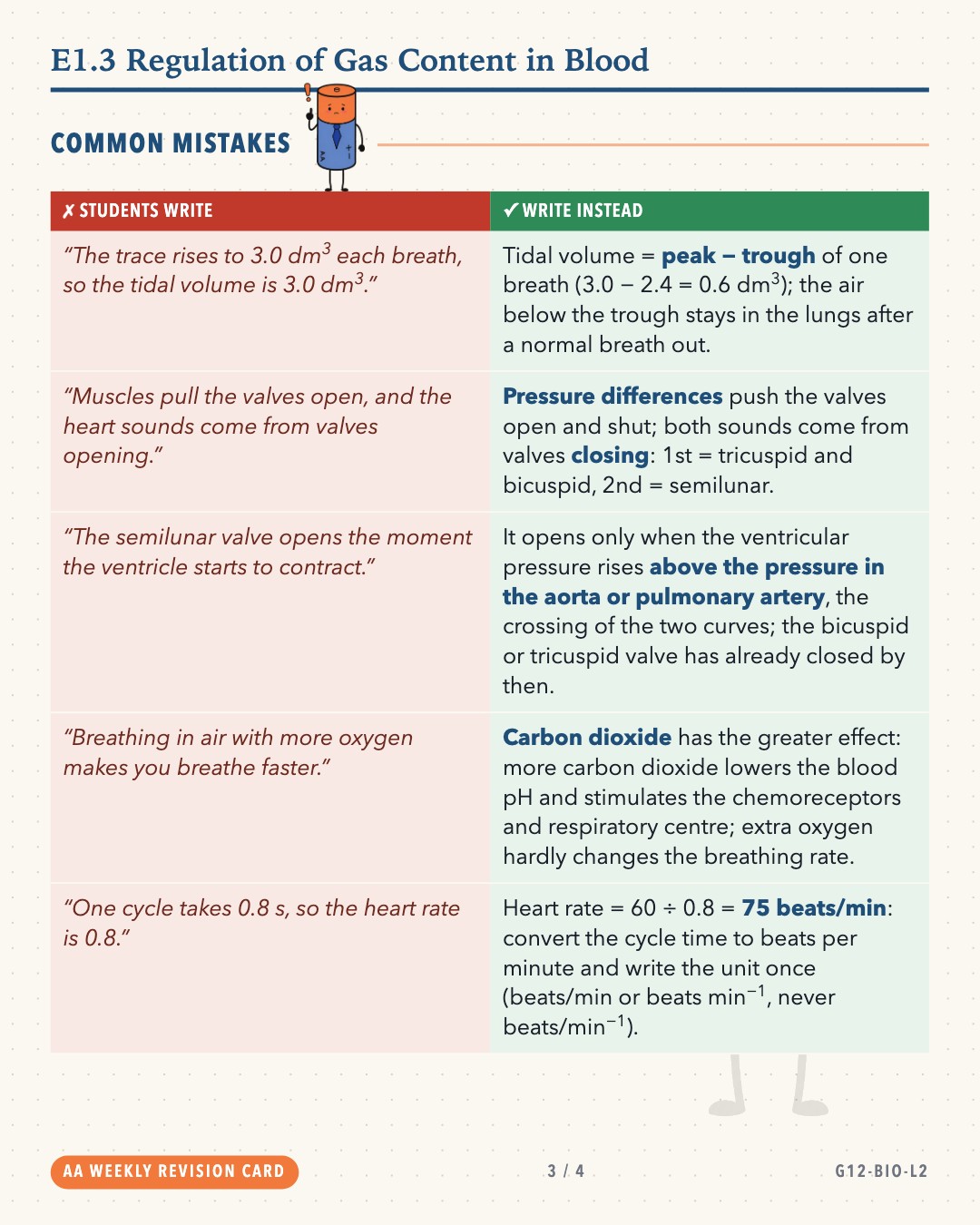
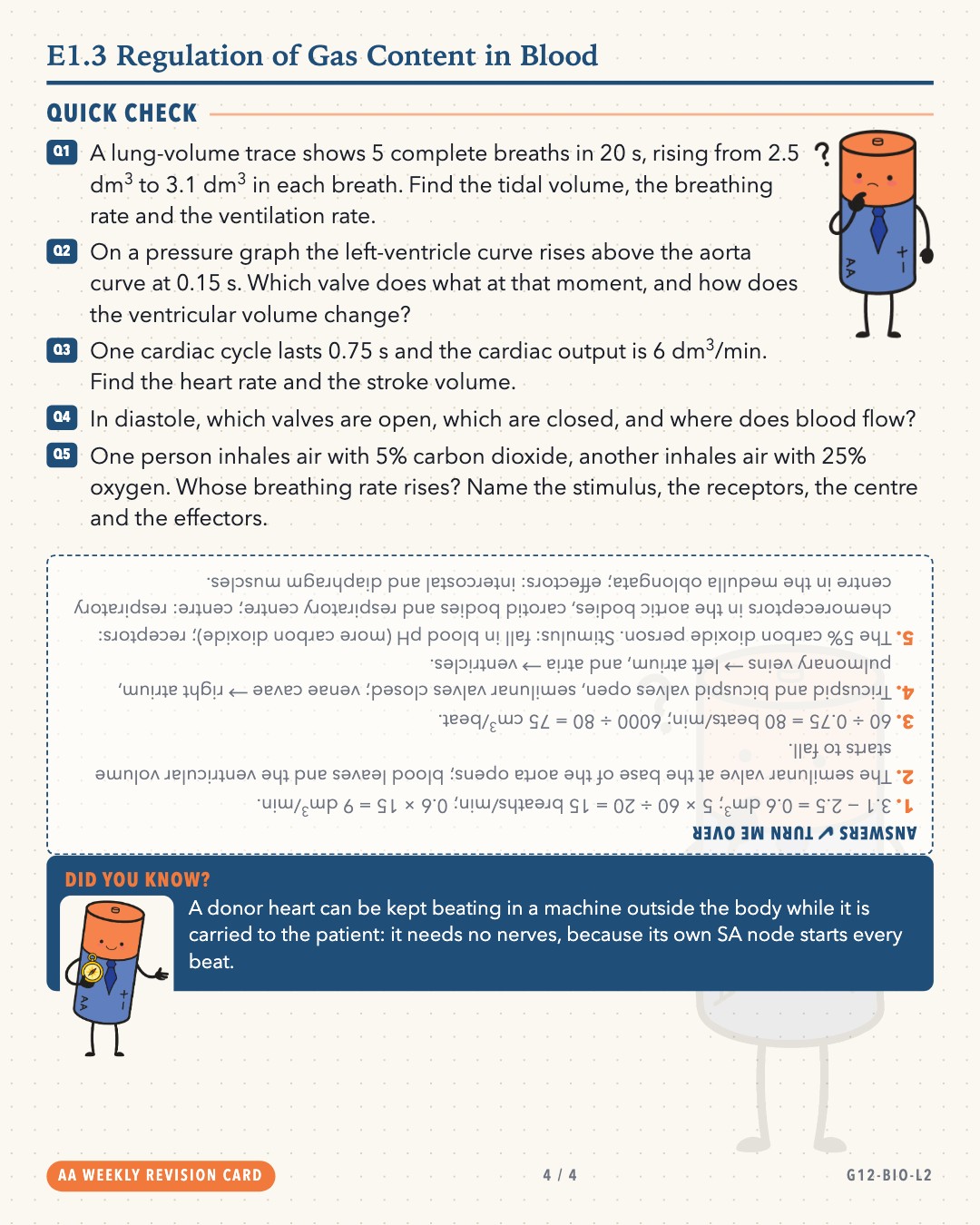
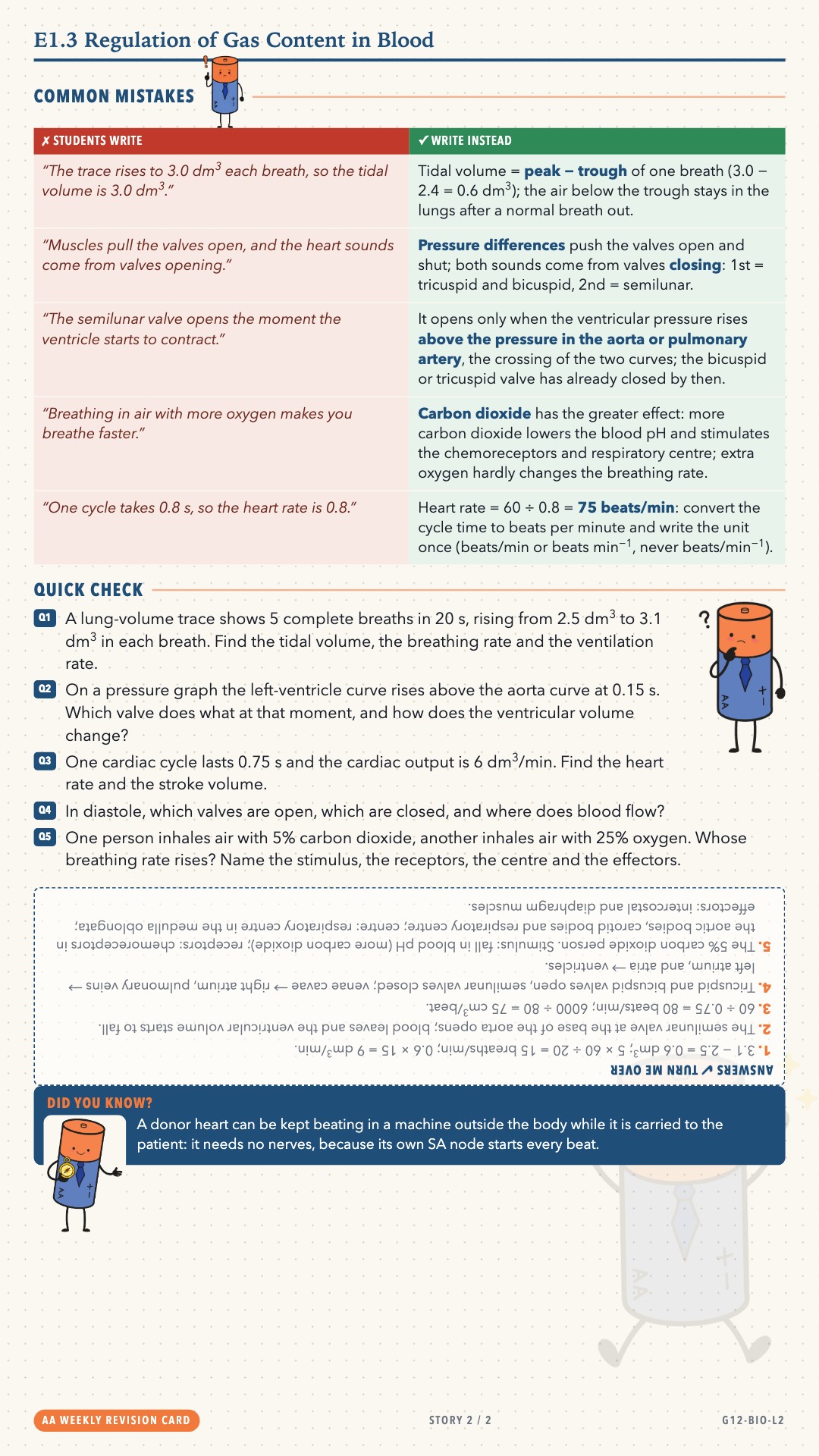
How the body keeps oxygen and carbon dioxide in the blood steady by adjusting breathing and heart beat, and what changes during exercise.
✔ fact-checked · 2 added mistakes tagged [likely] · 2.2 MB JPG · card.md ·
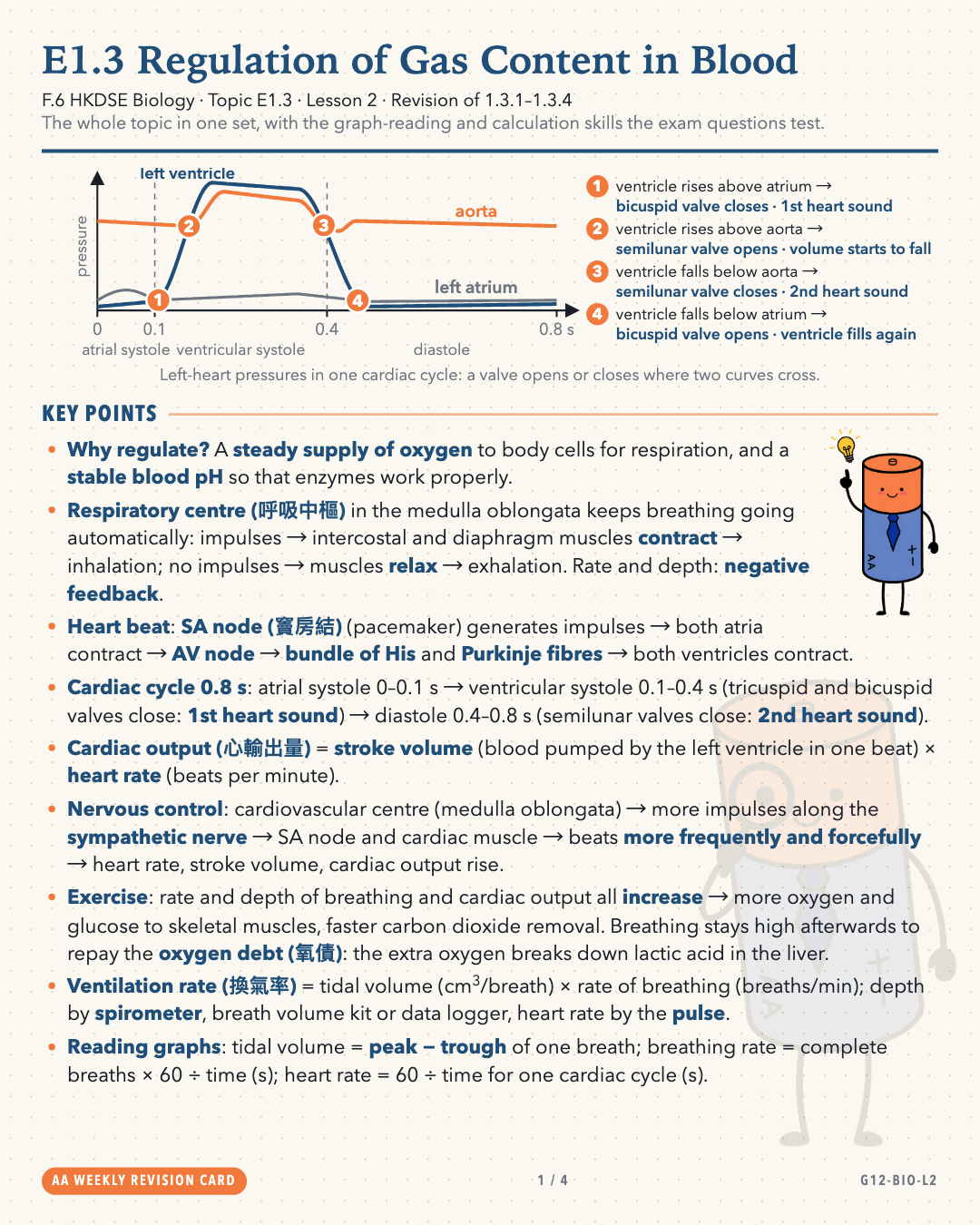
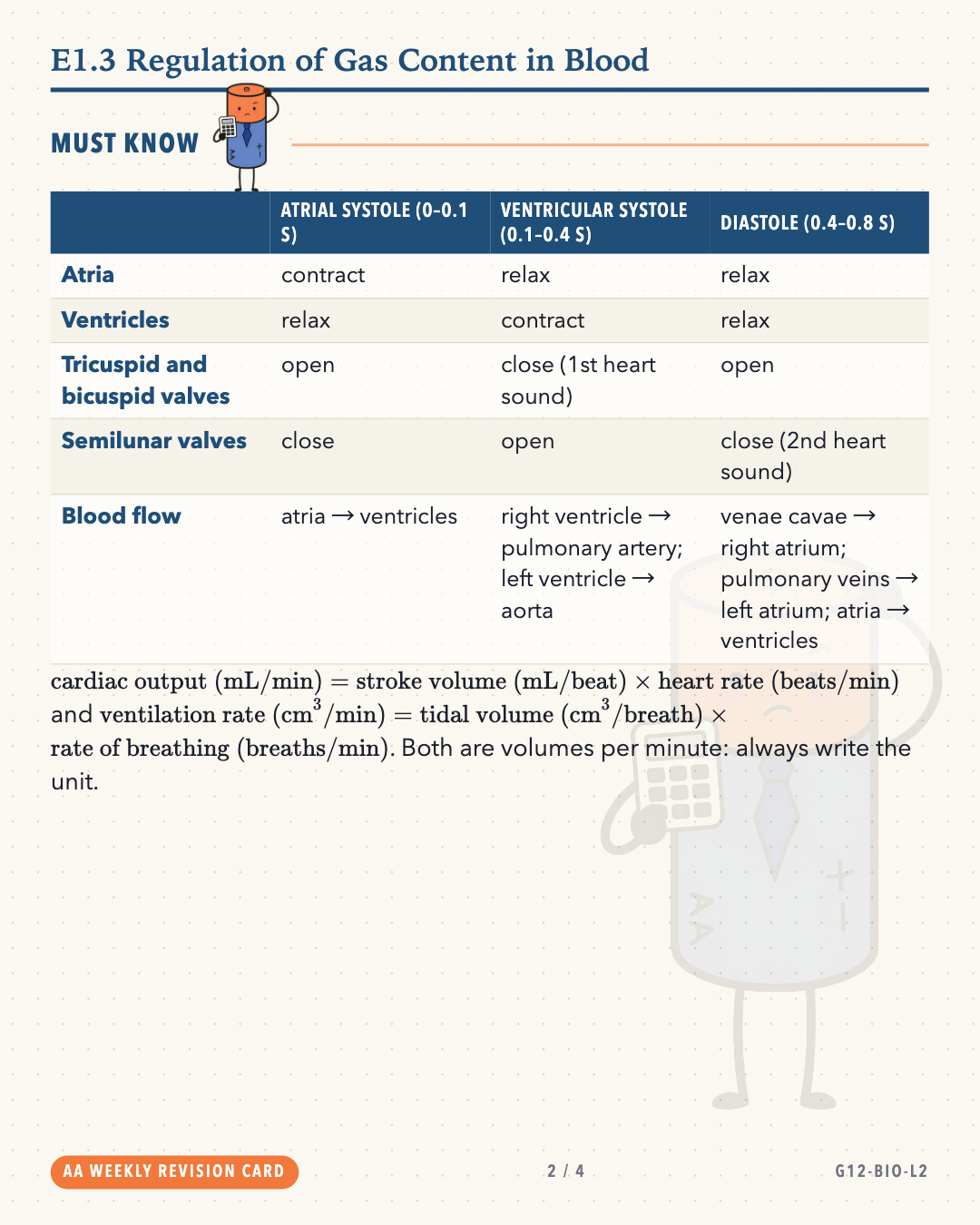
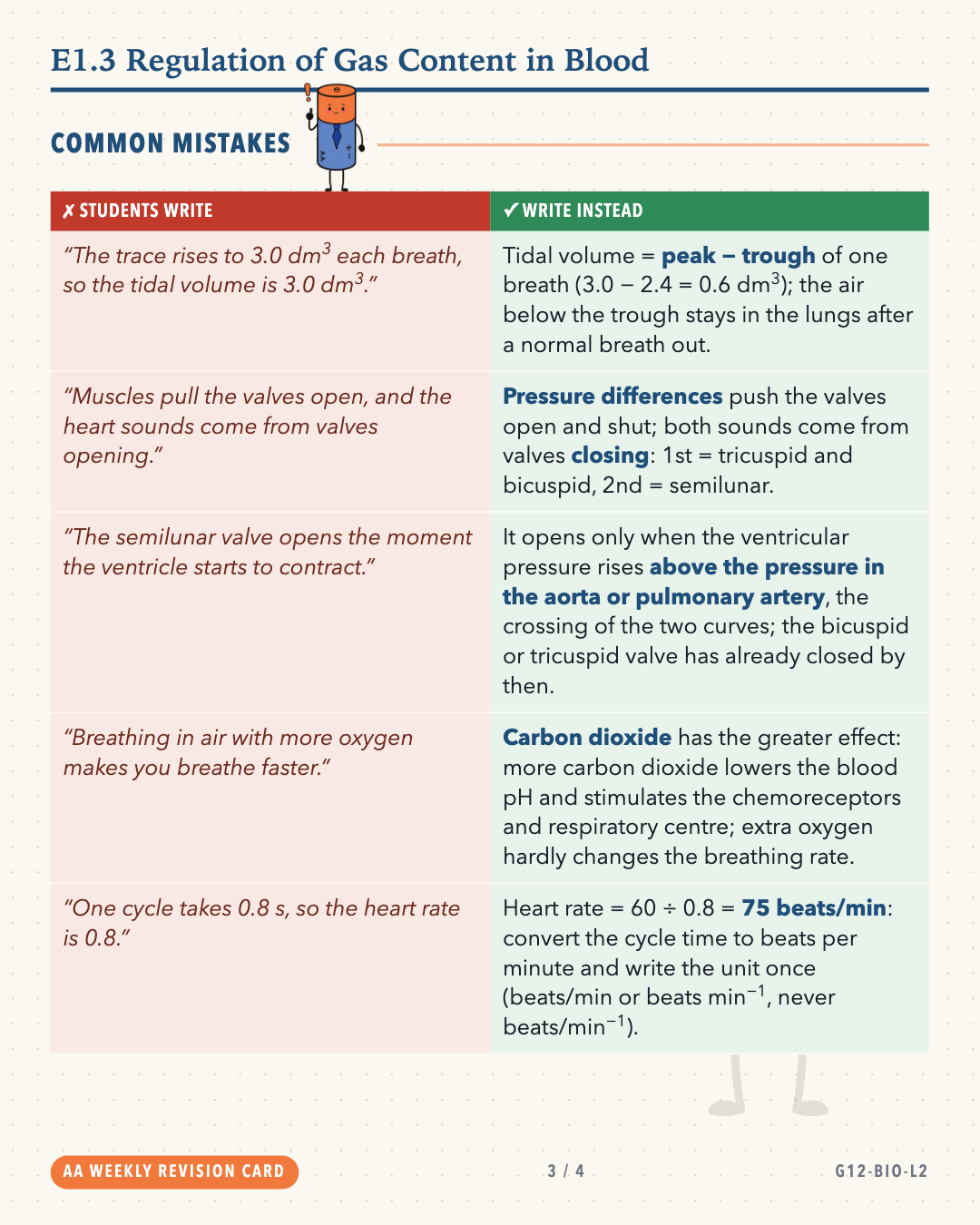
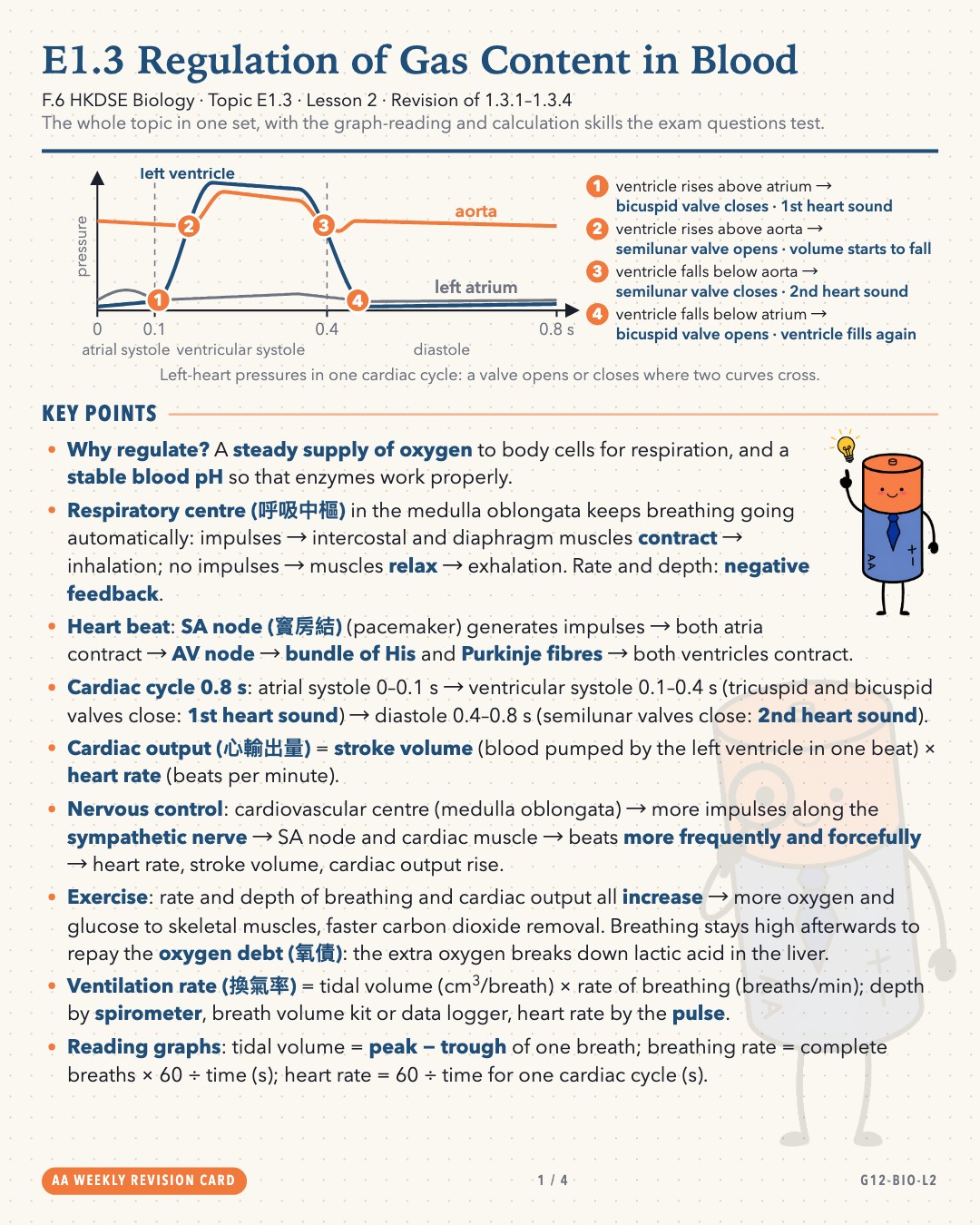
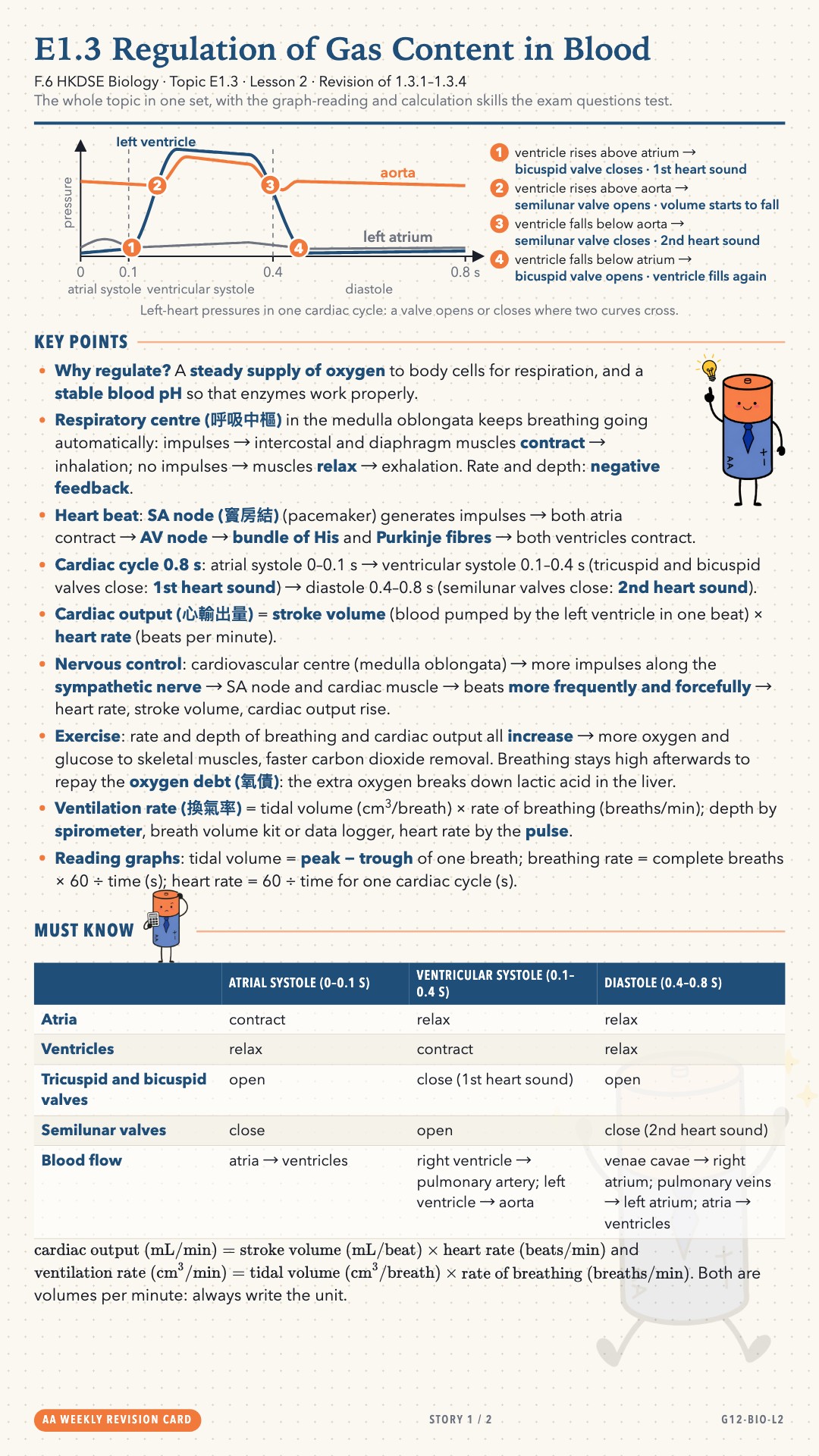
The whole topic in one set, with the graph-reading and calculation skills the exam questions test.
✔ fact-checked · 1 added mistake tagged [likely] · 2.2 MB JPG · card.md ·
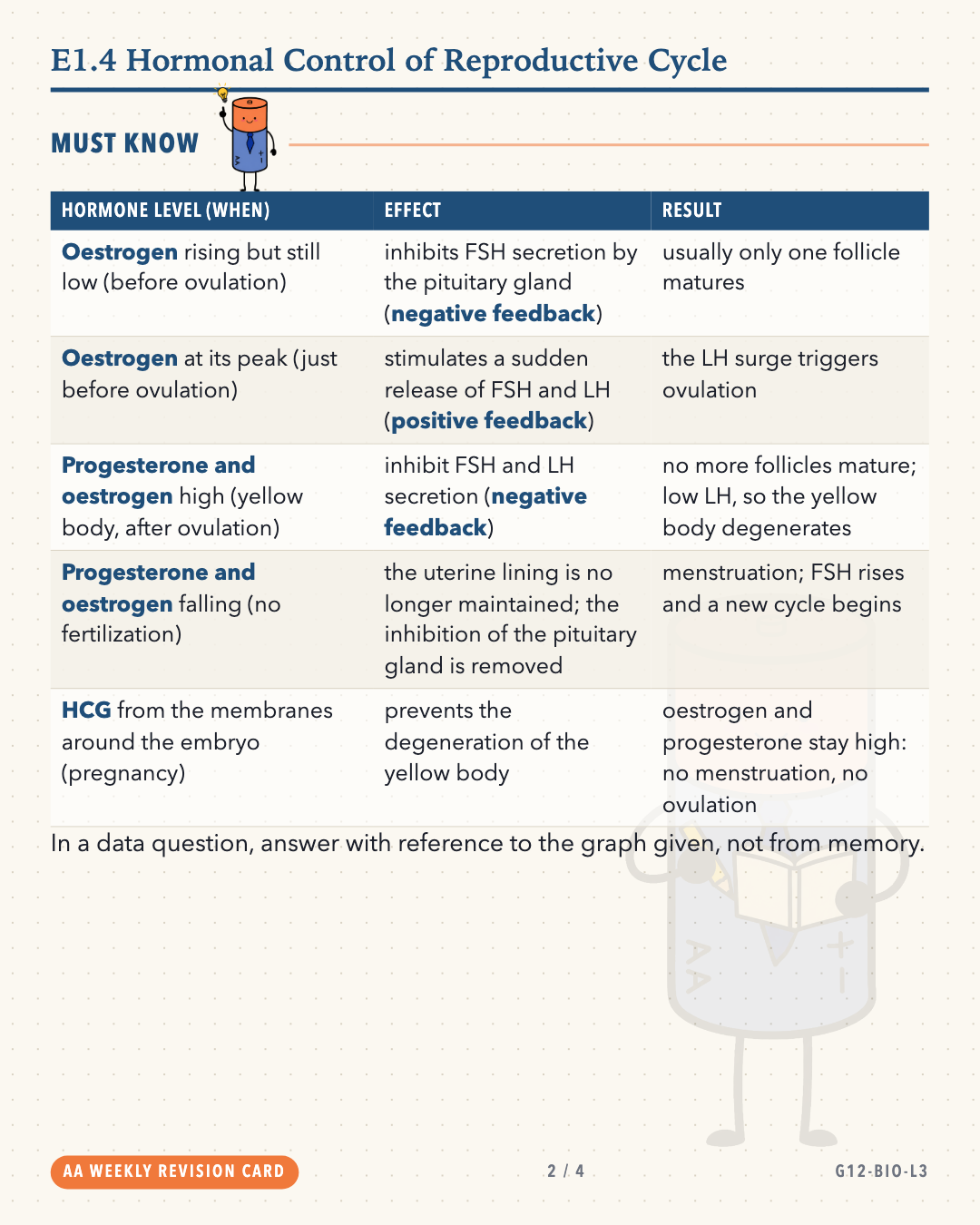
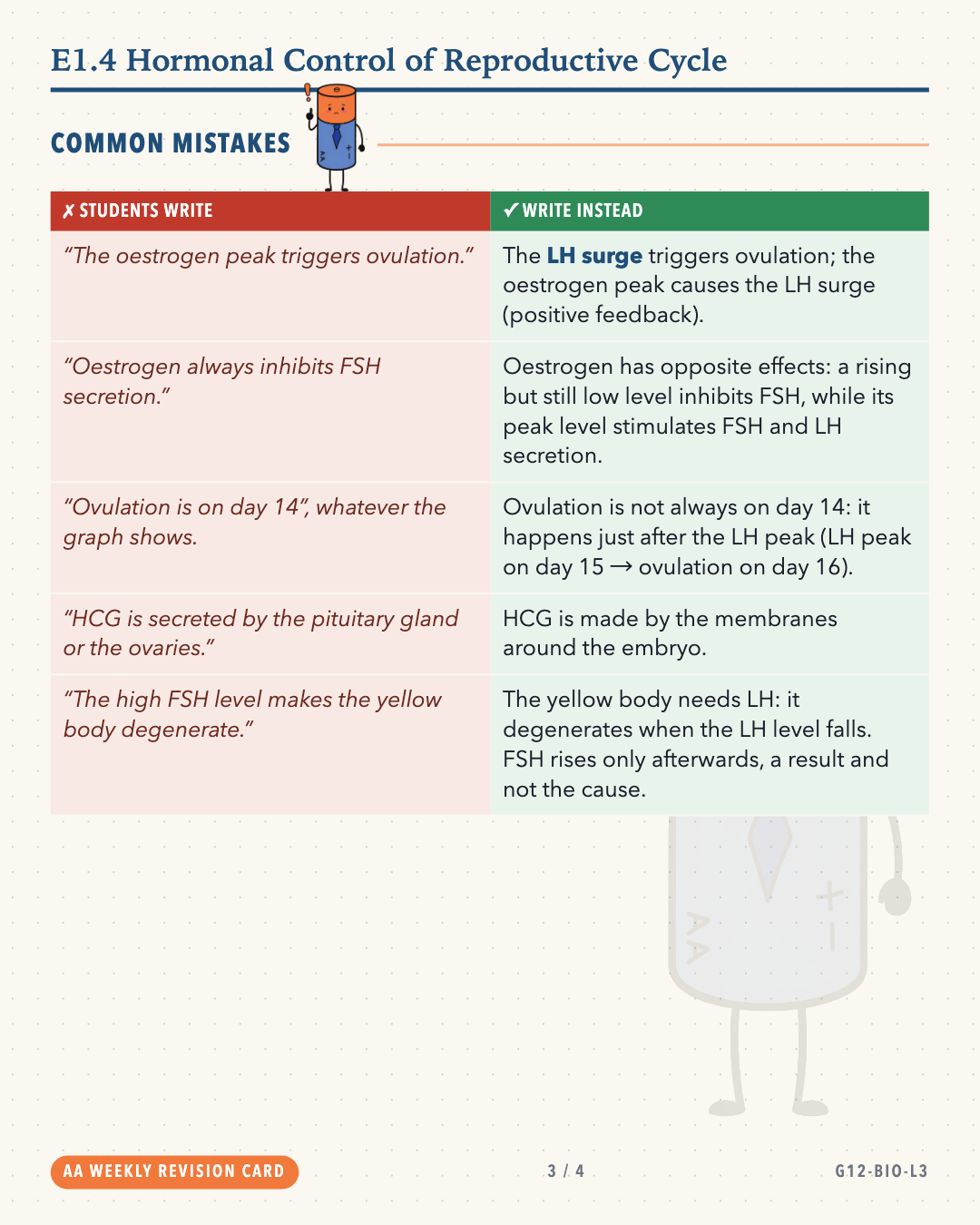
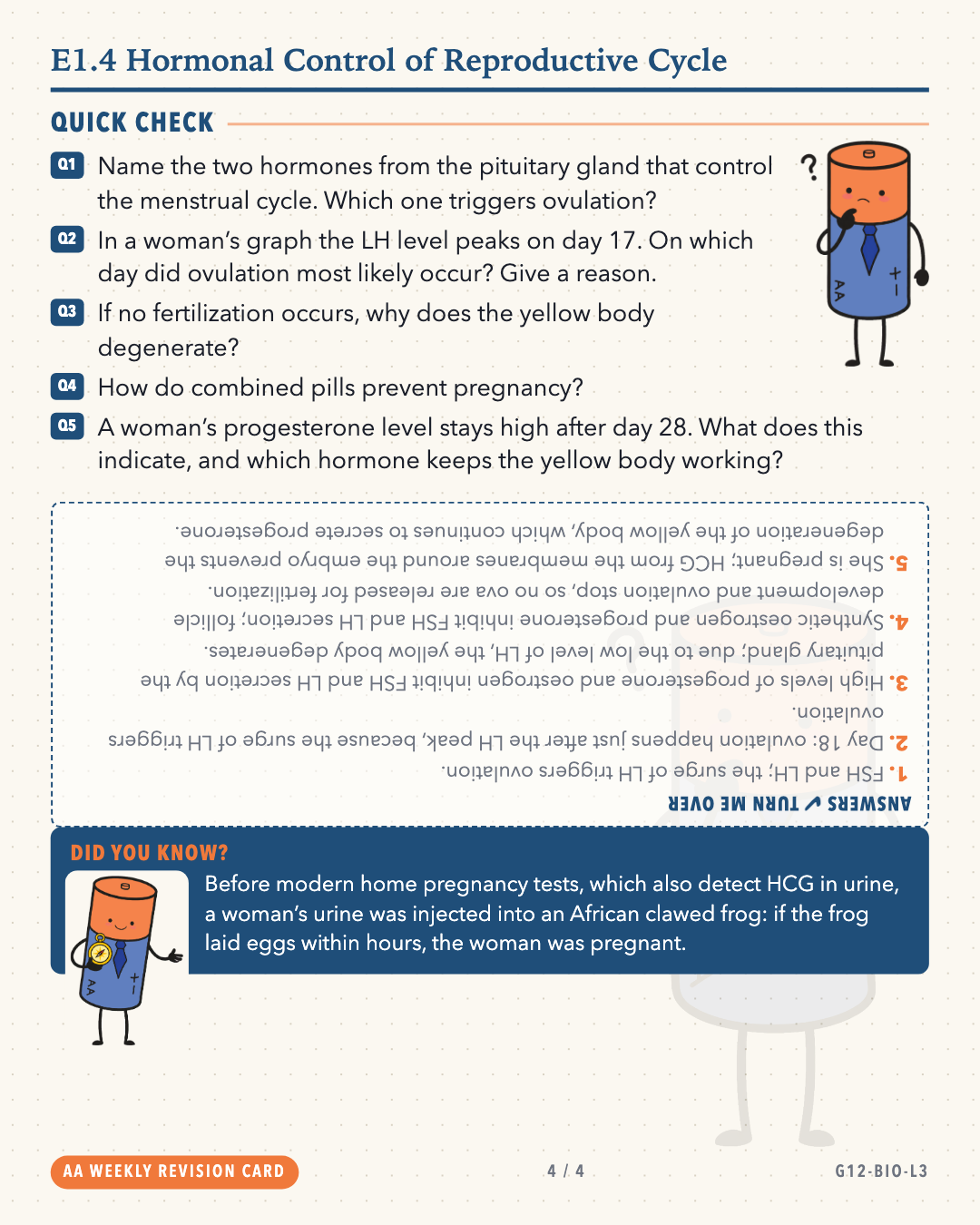
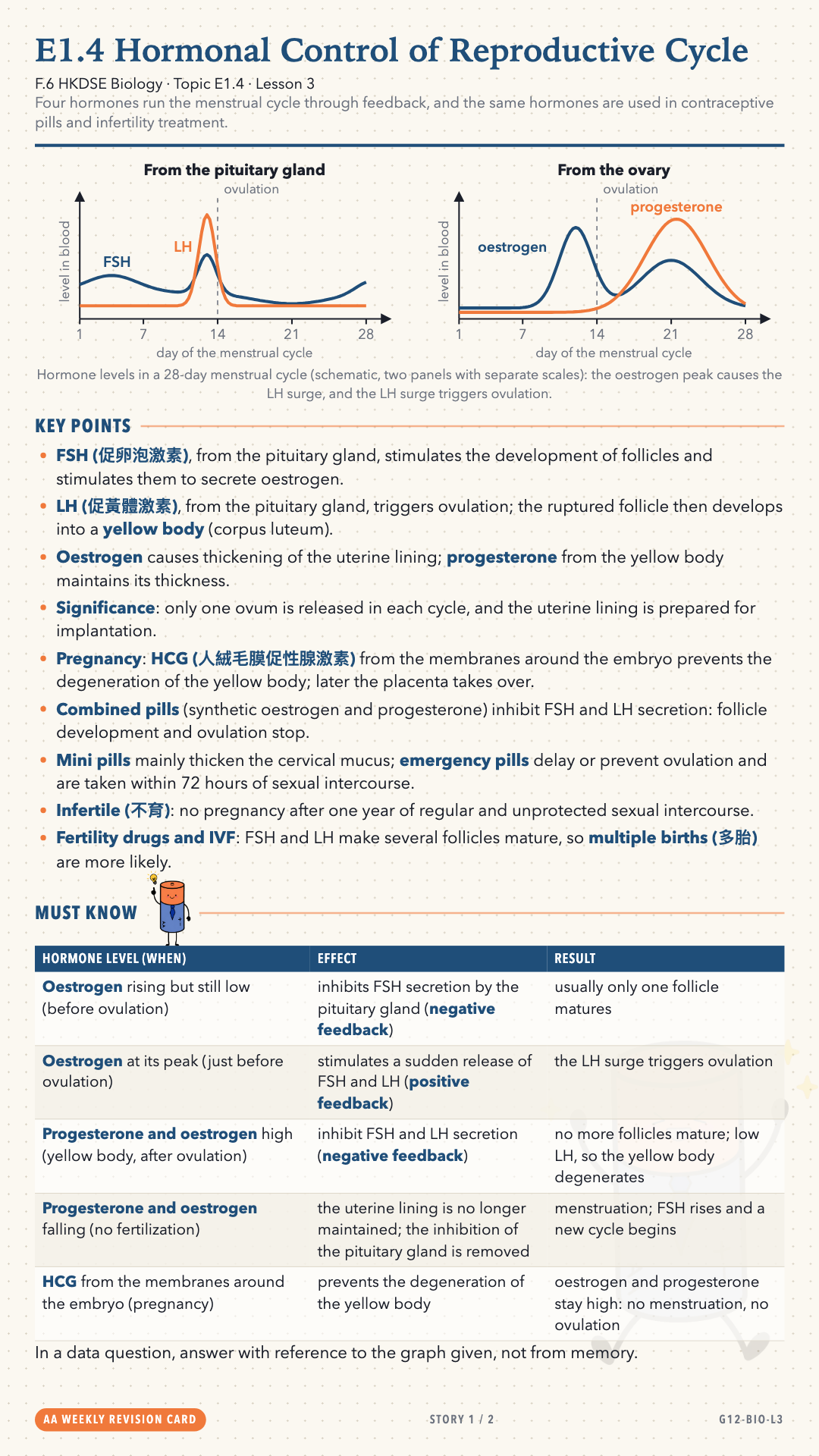
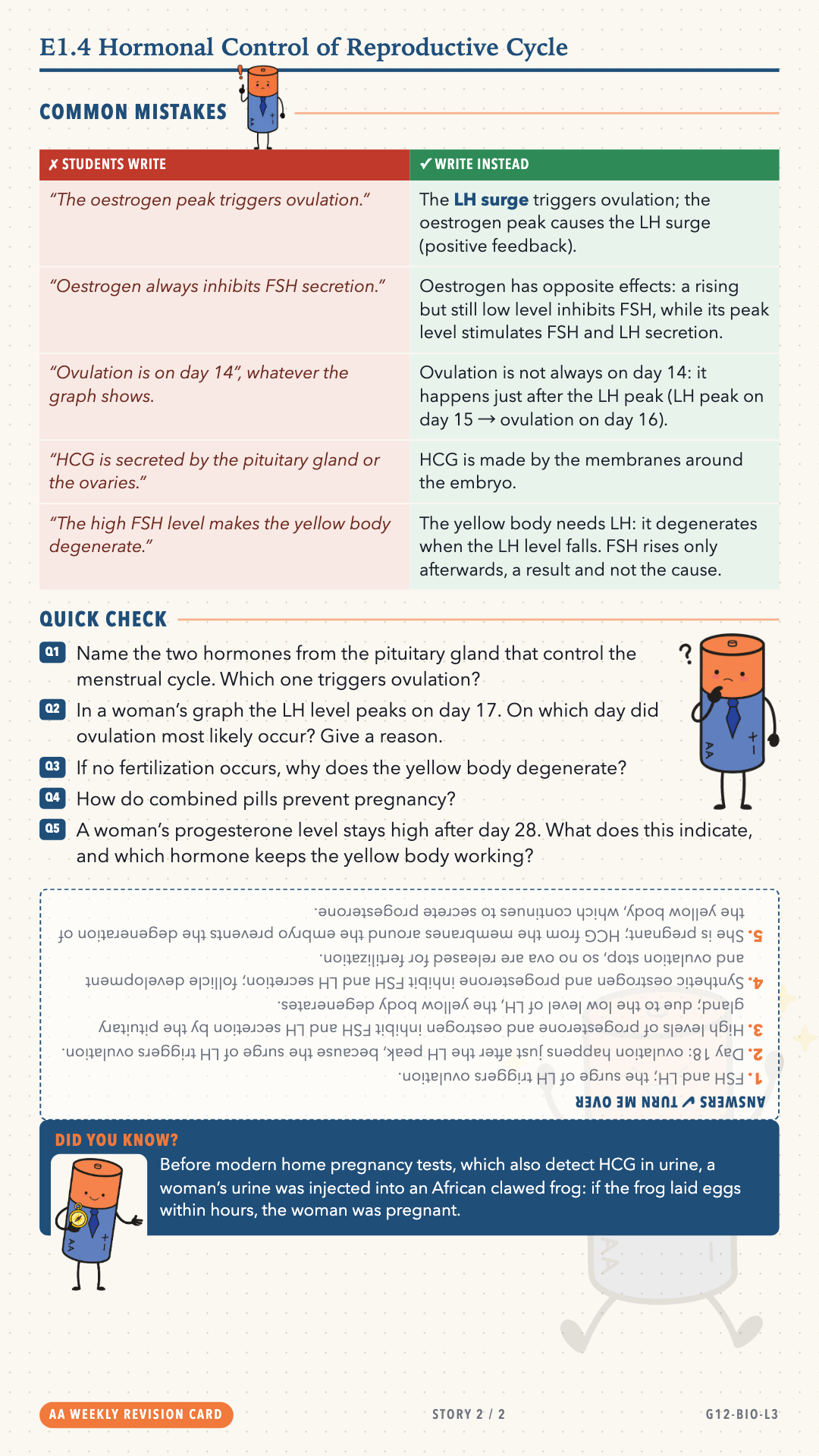
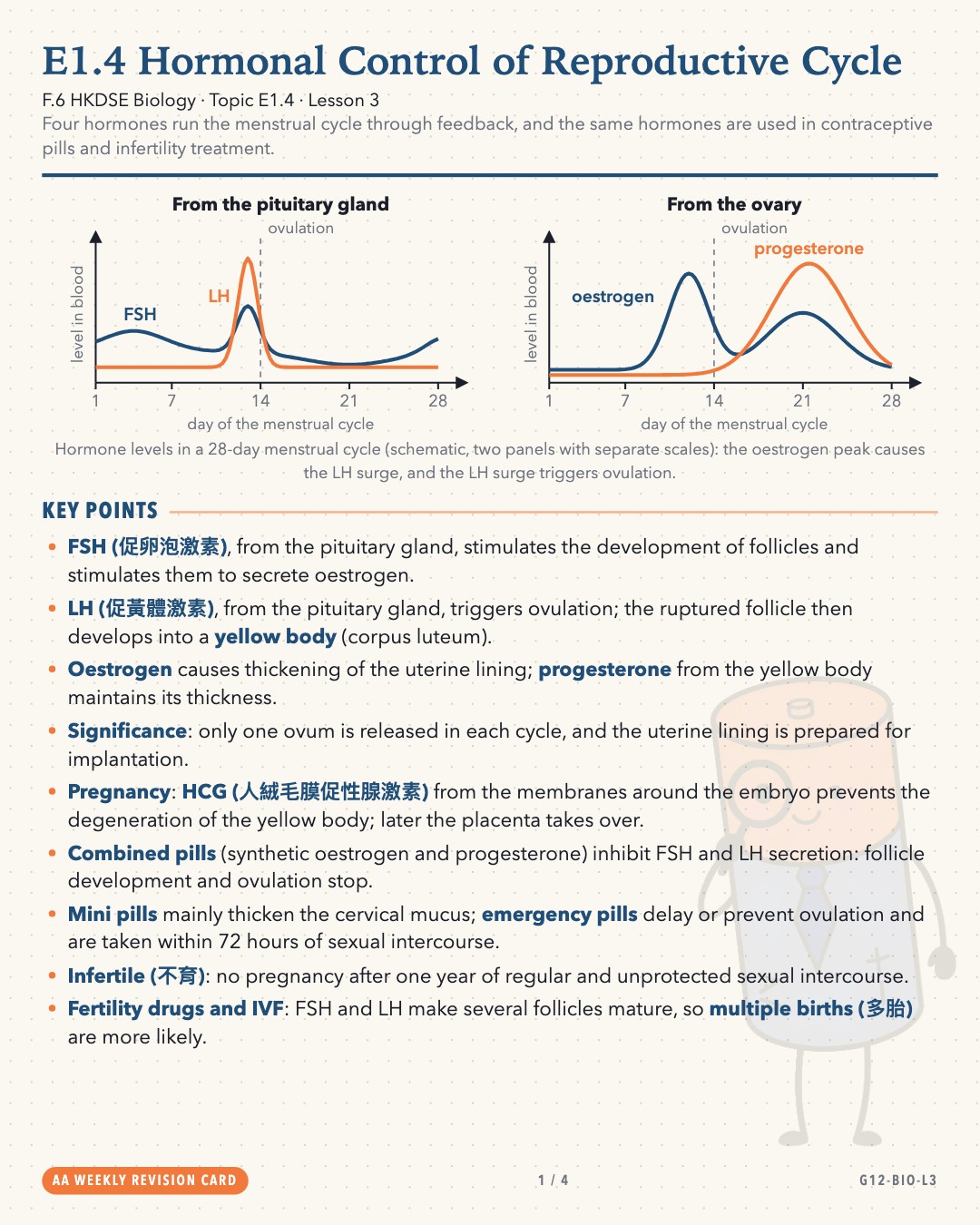
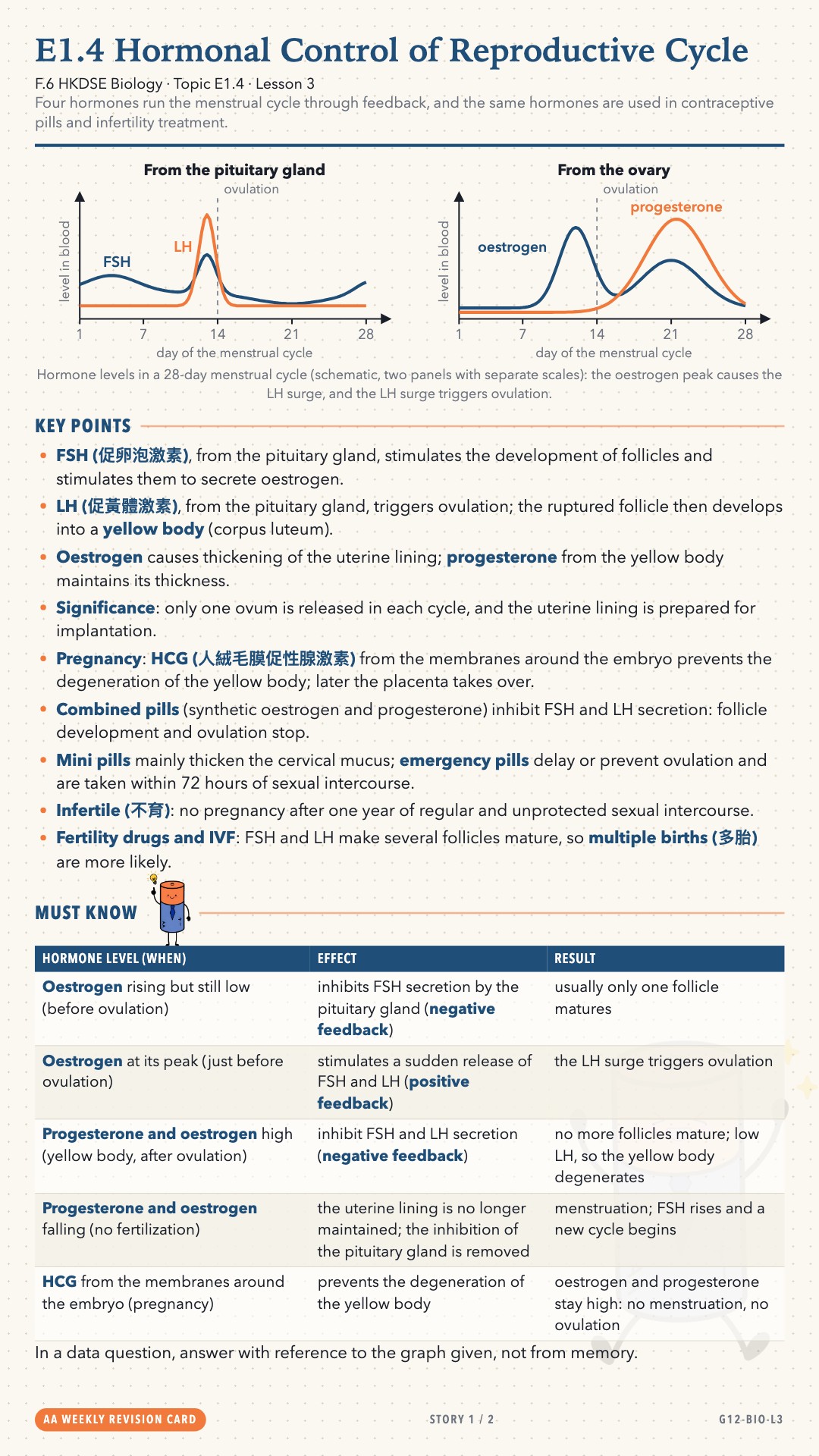
Four hormones run the menstrual cycle through feedback, and the same hormones are used in contraceptive pills and infertility treatment.
✔ fact-checked · 1 added mistake tagged [likely] · 2.0 MB JPG · card.md ·
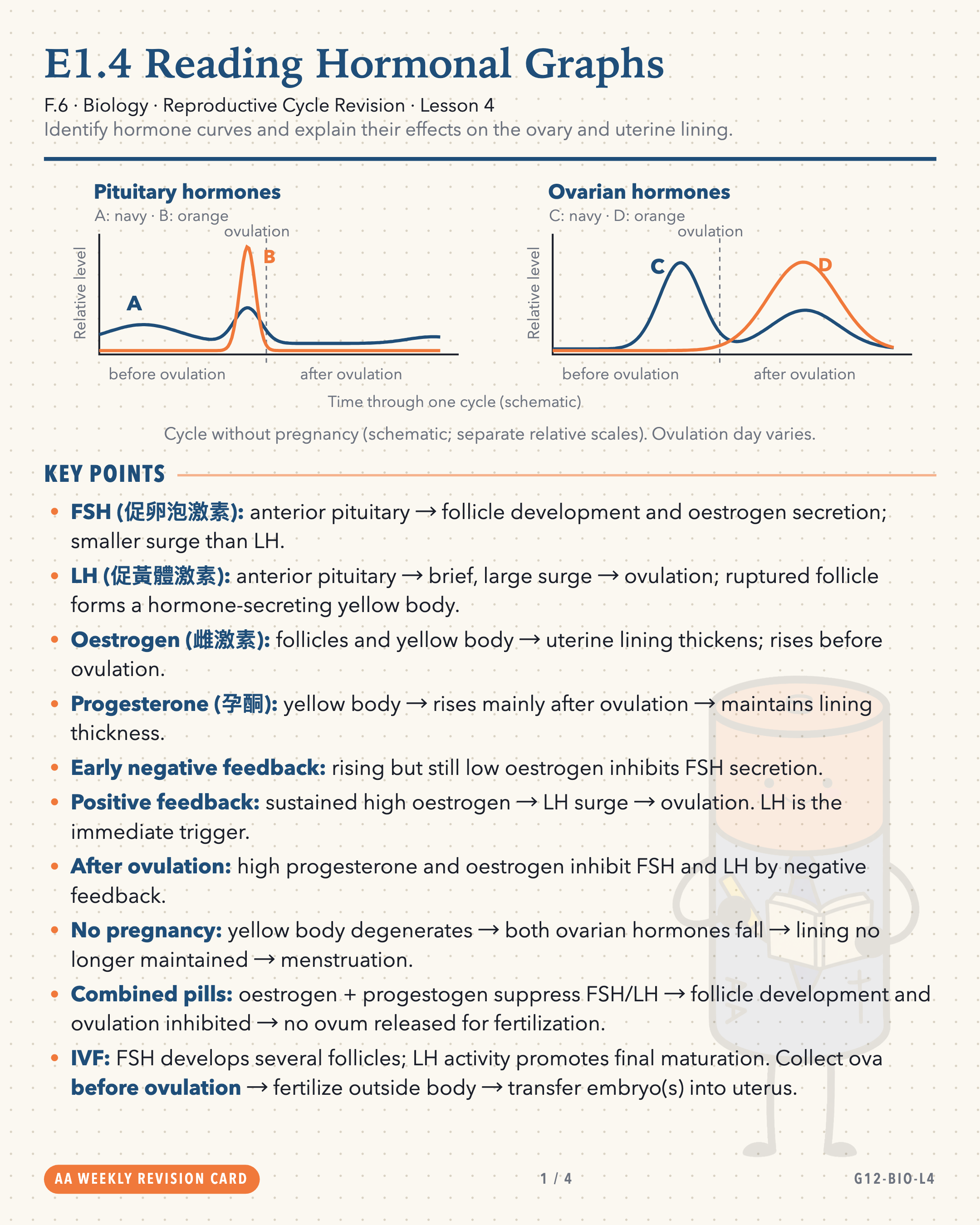
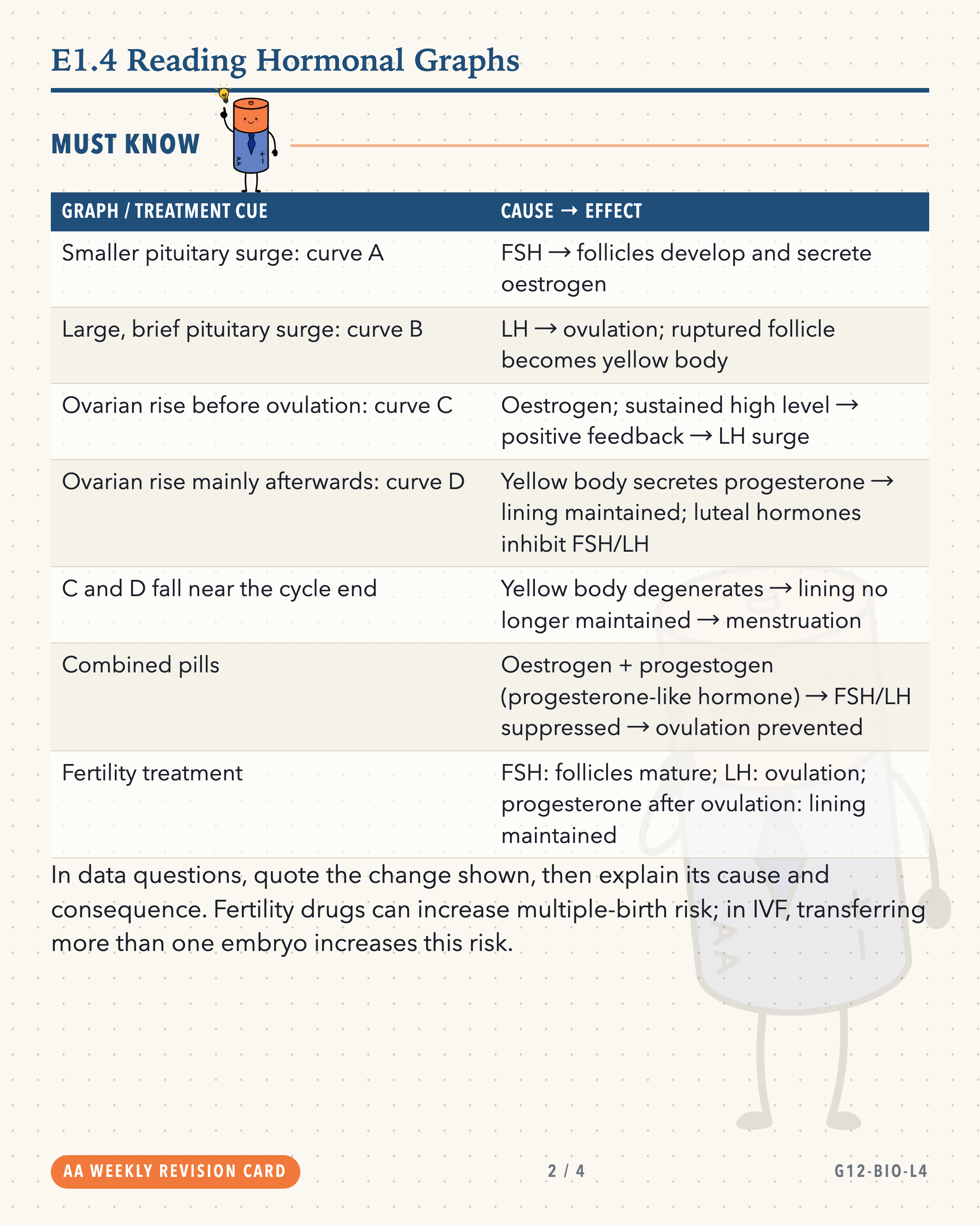
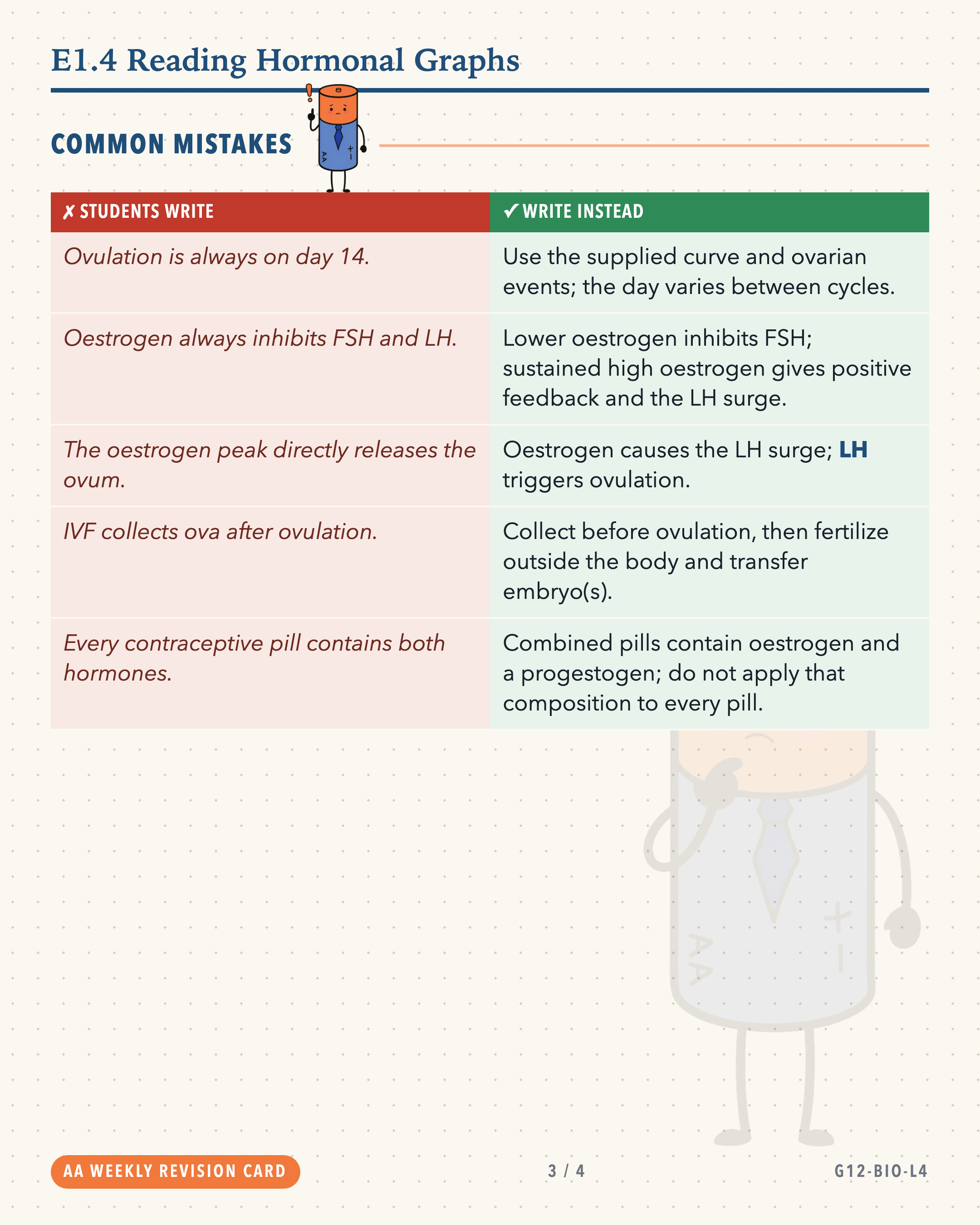
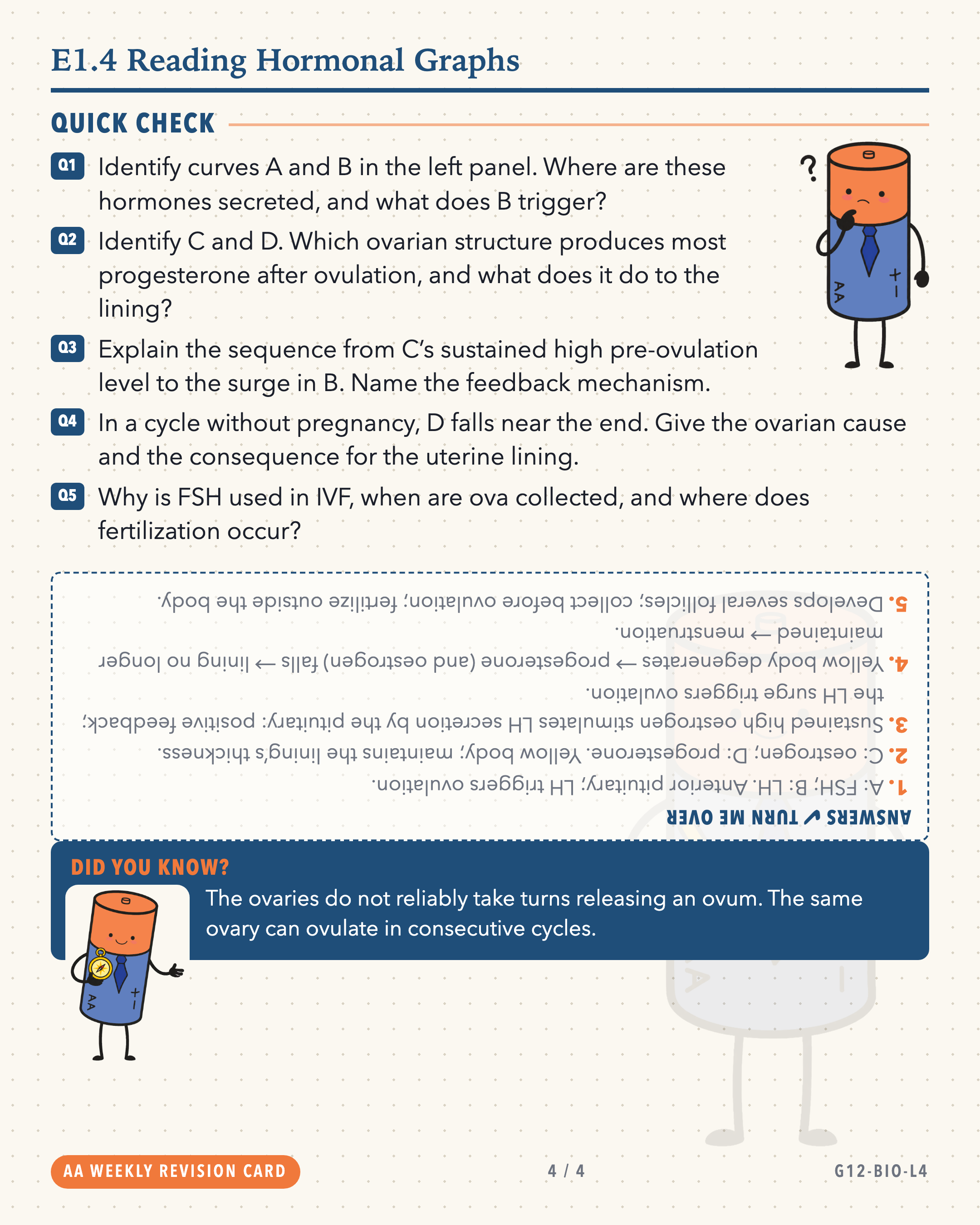
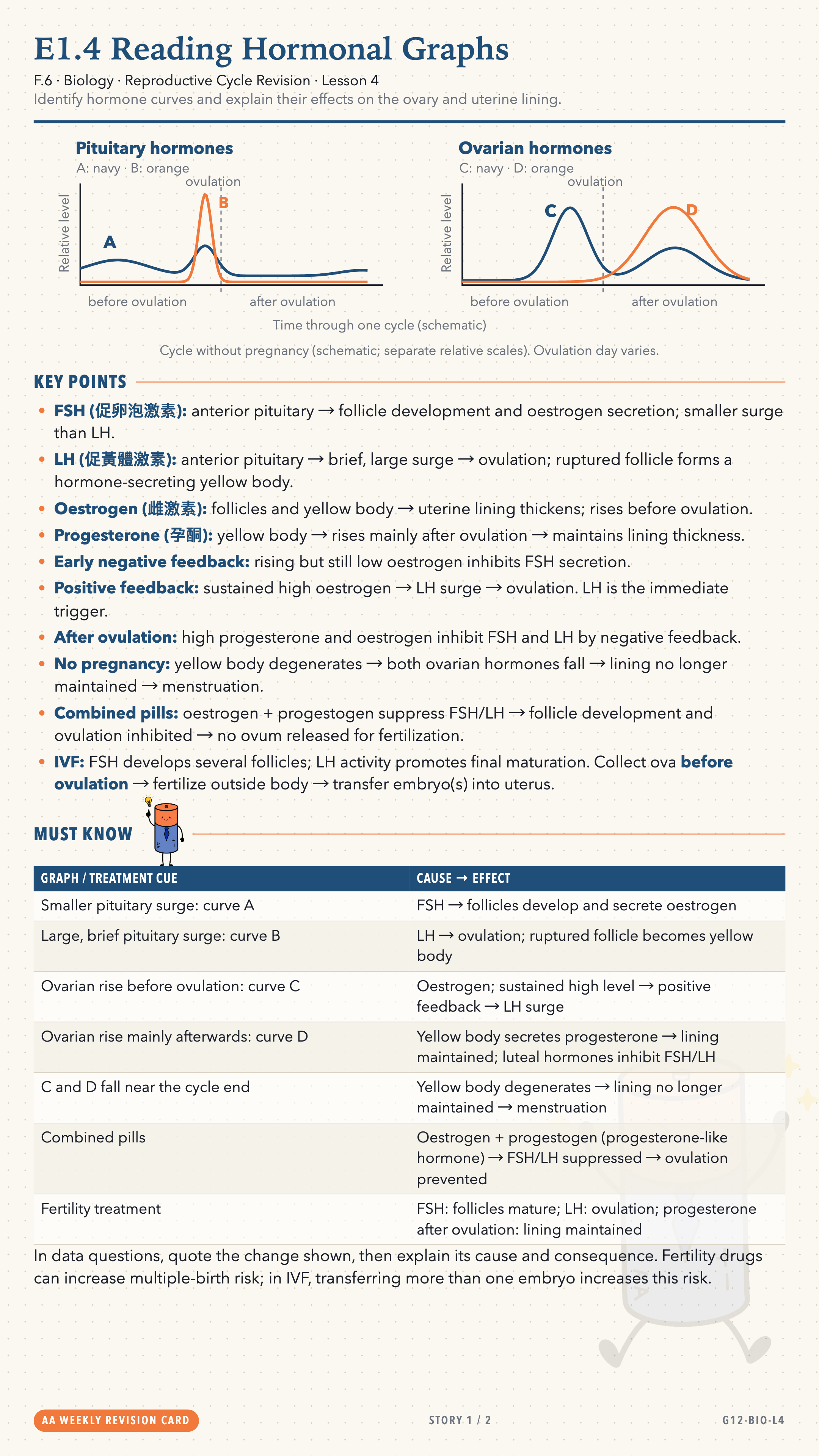
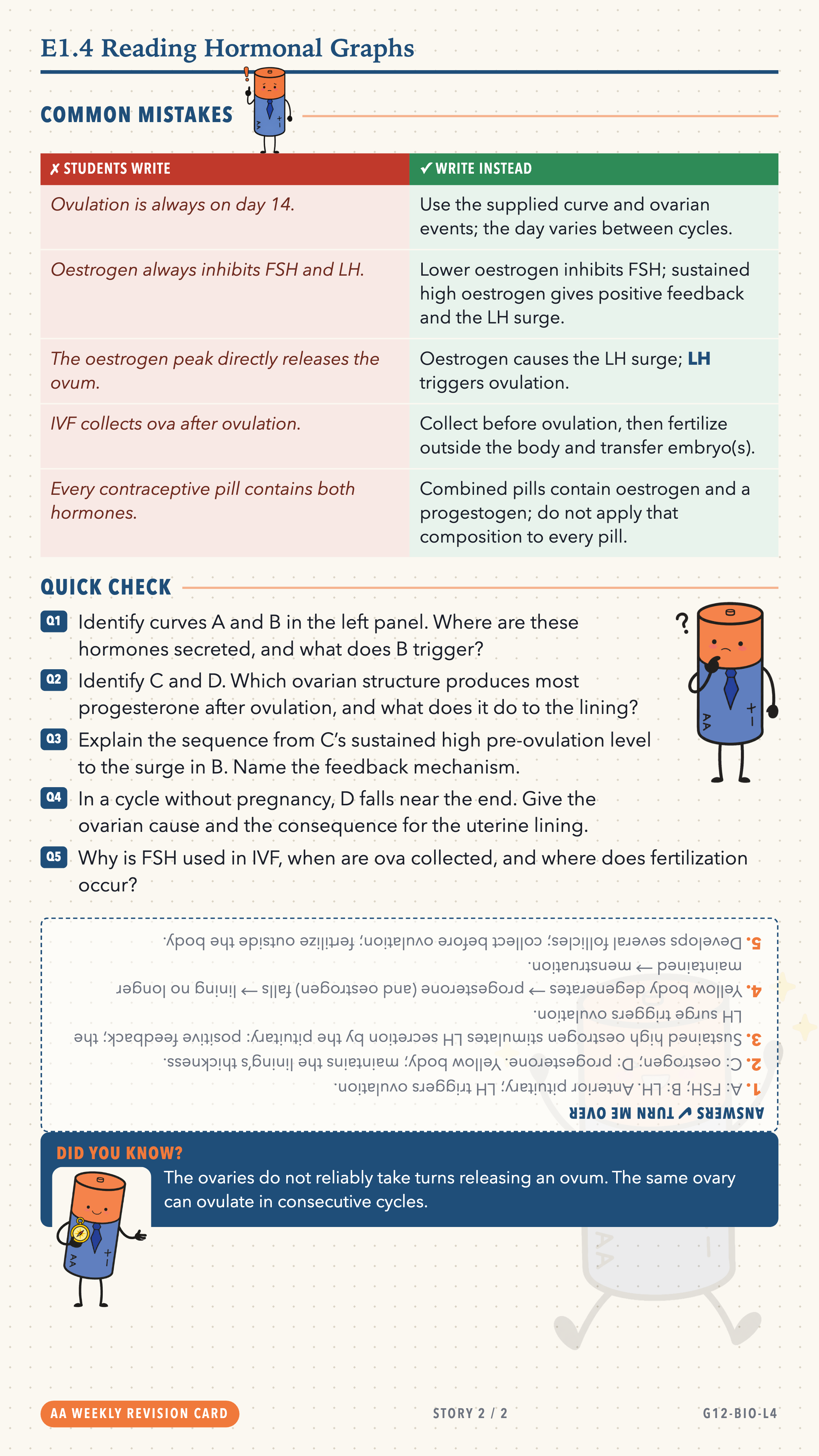
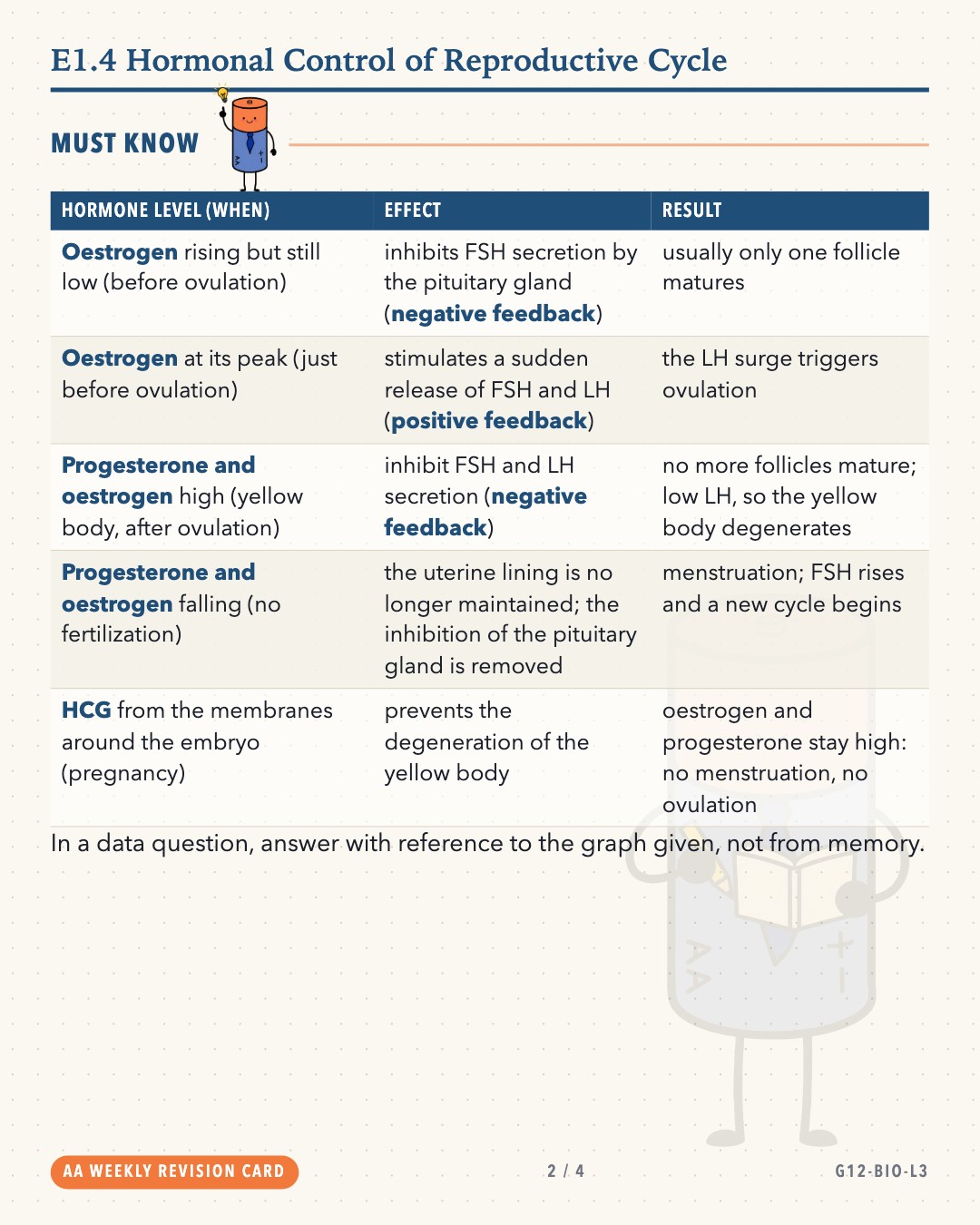
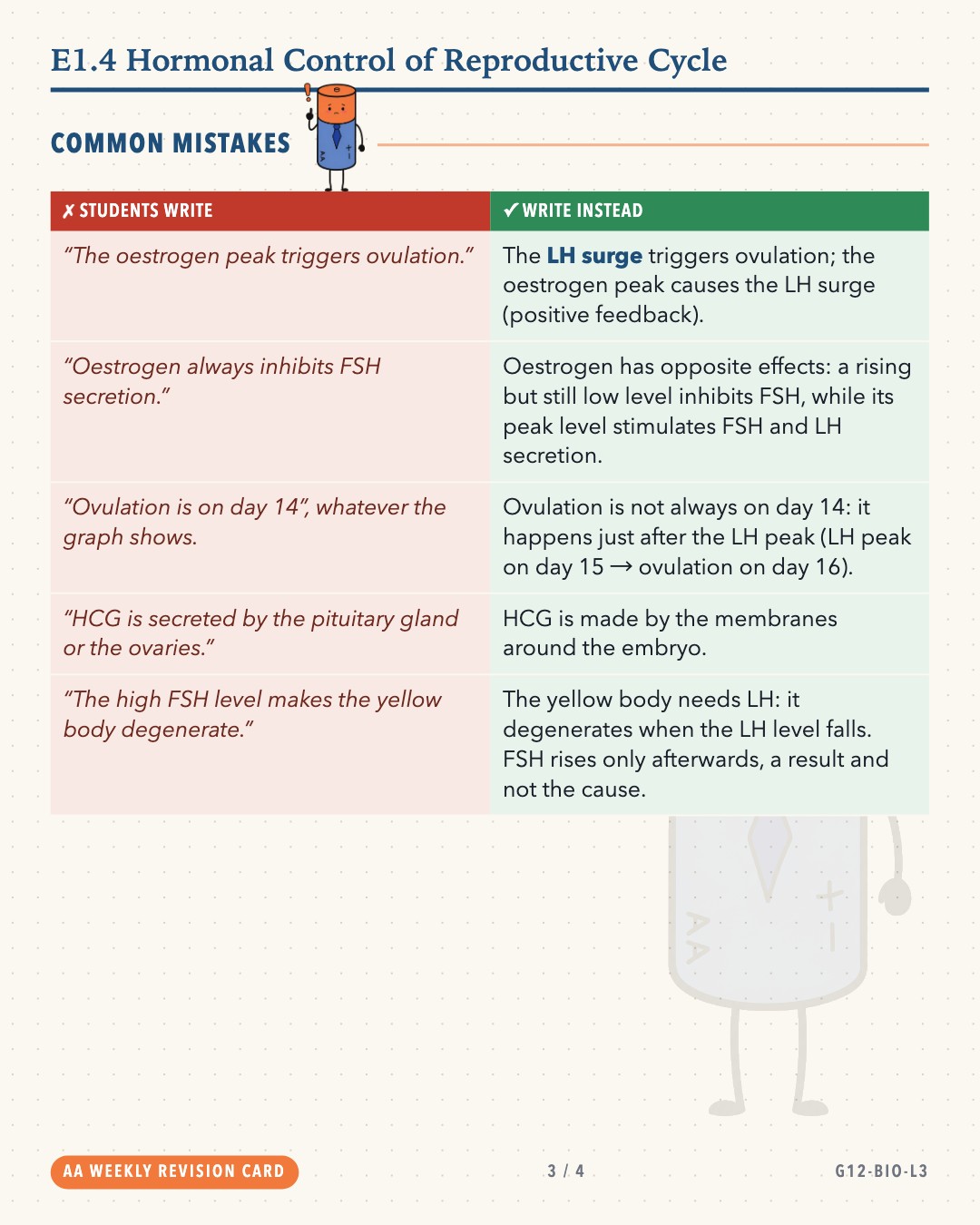
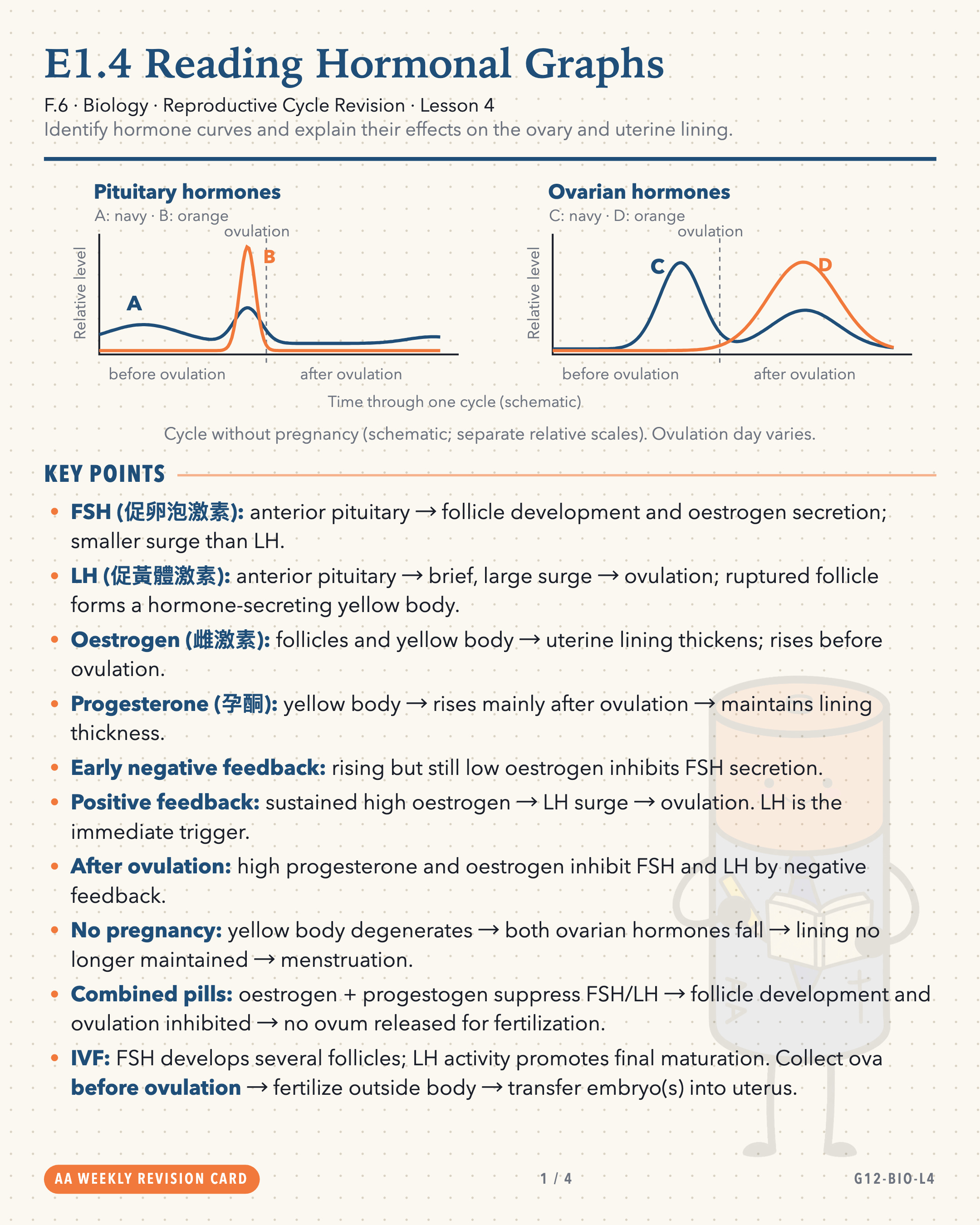
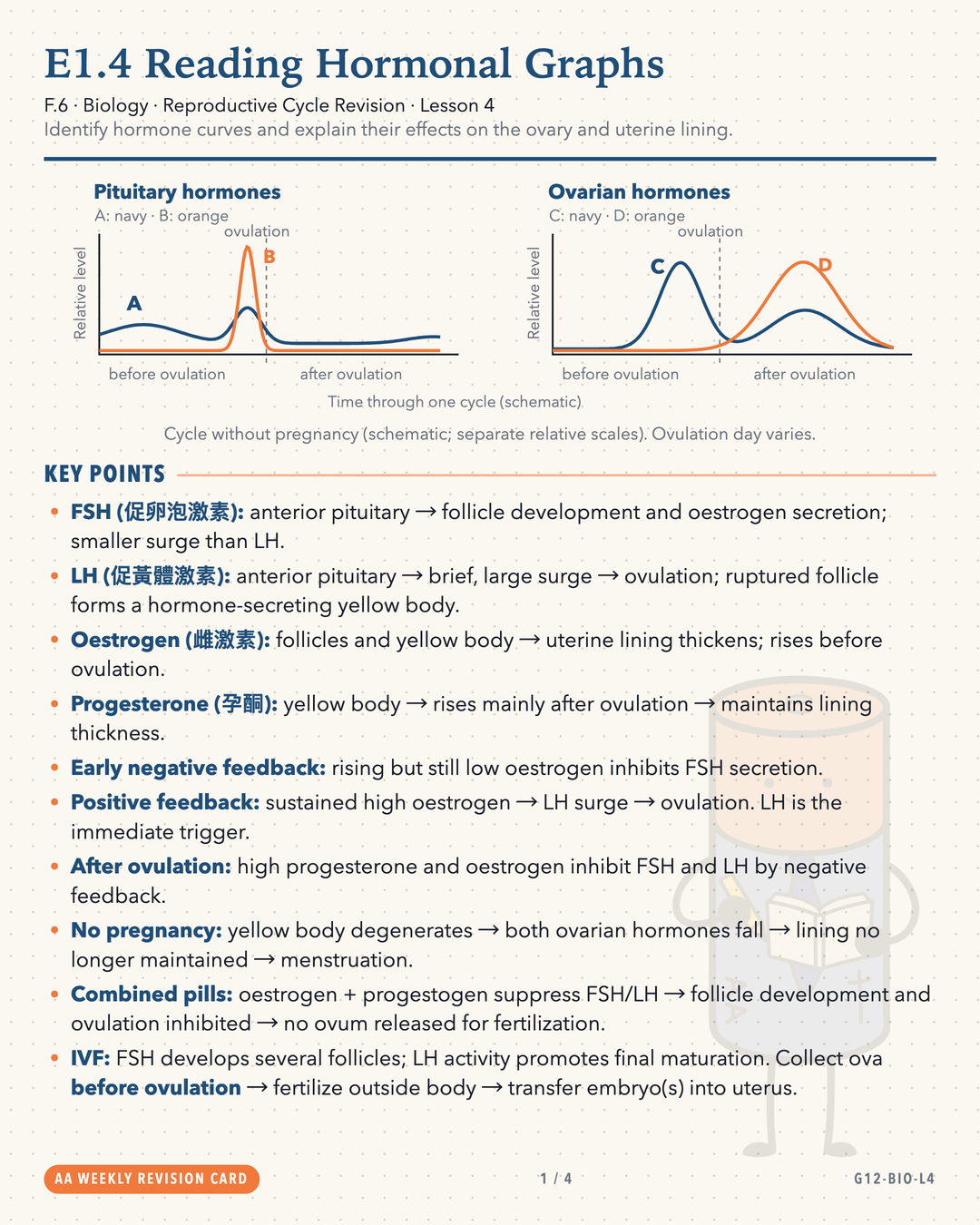
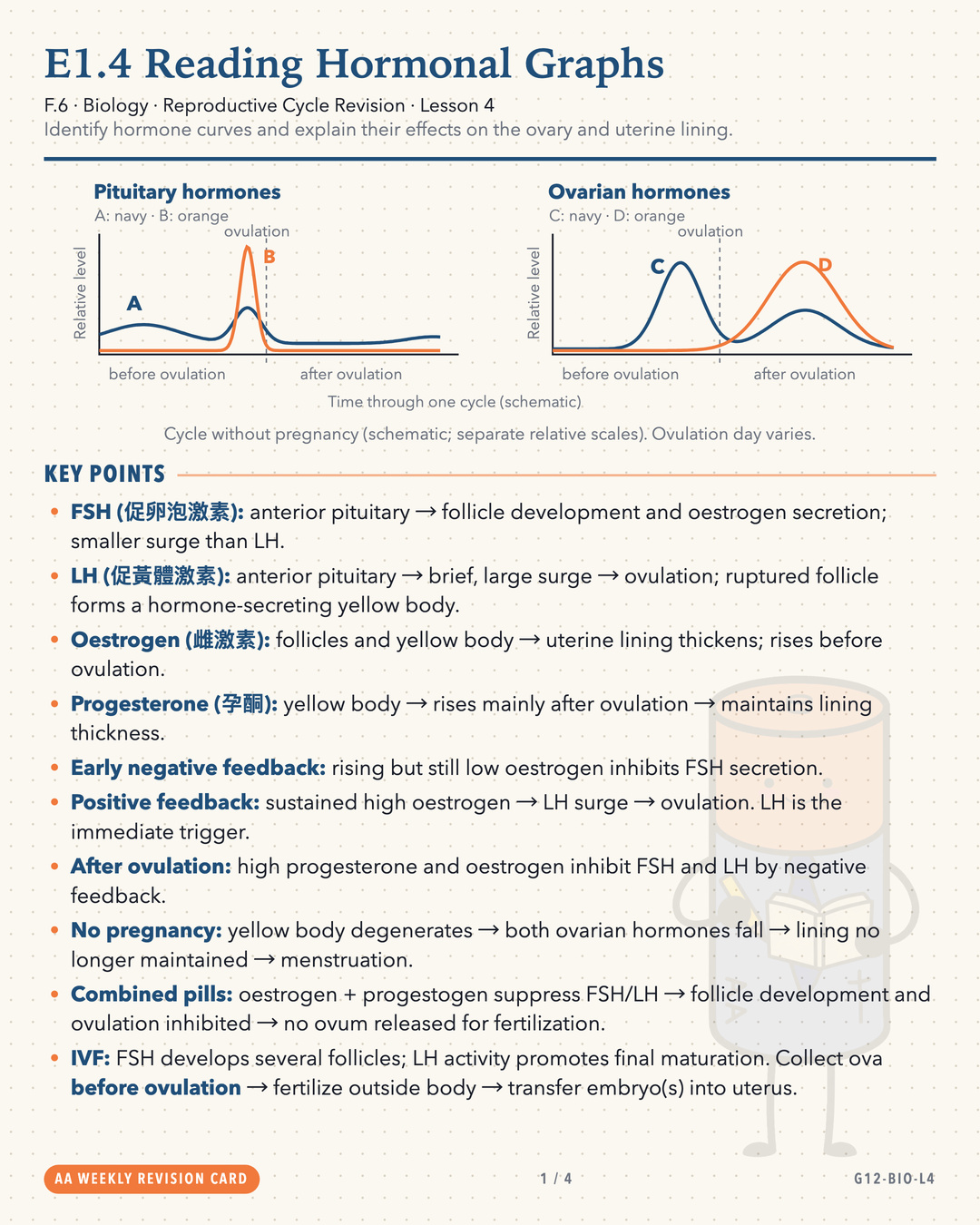
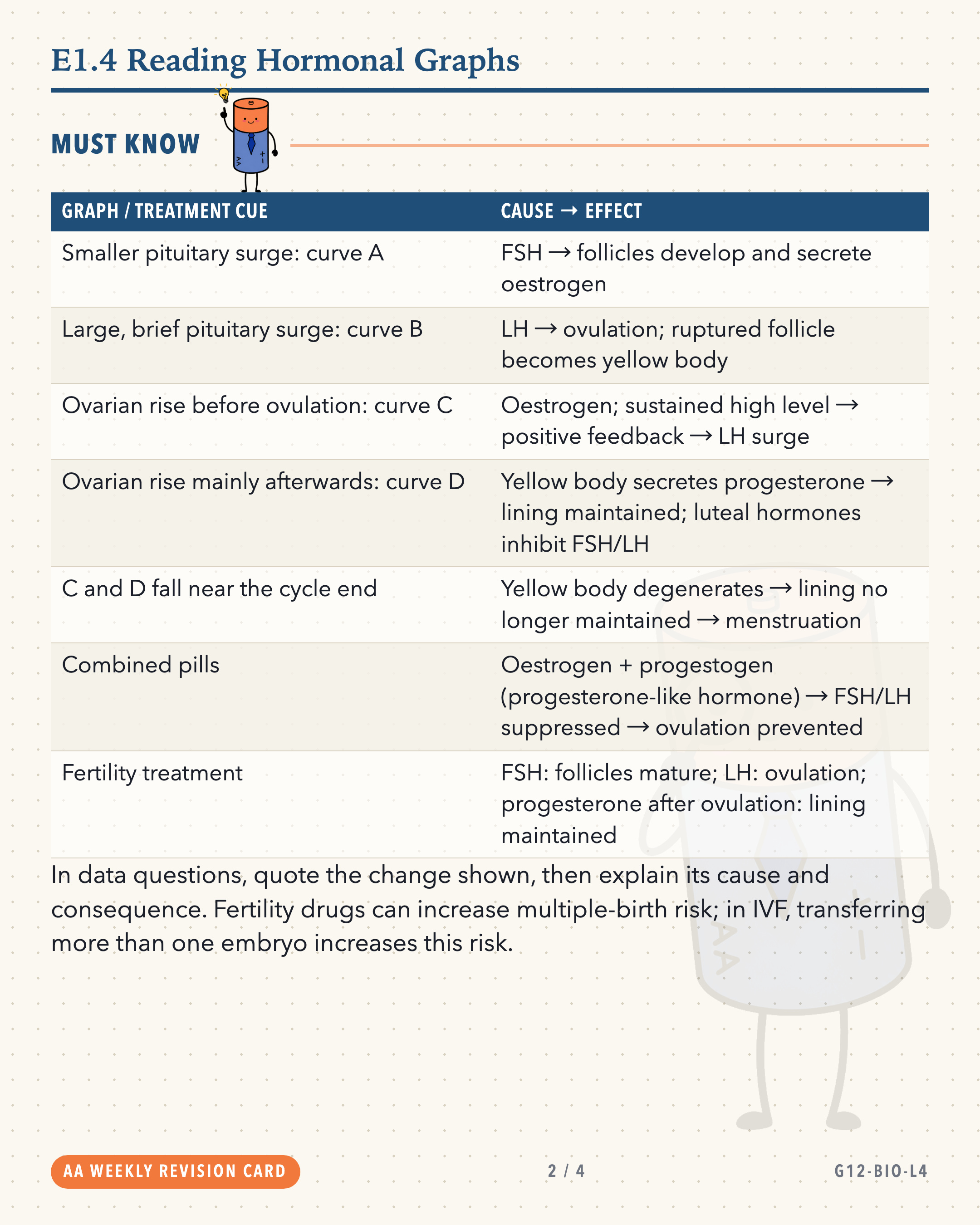
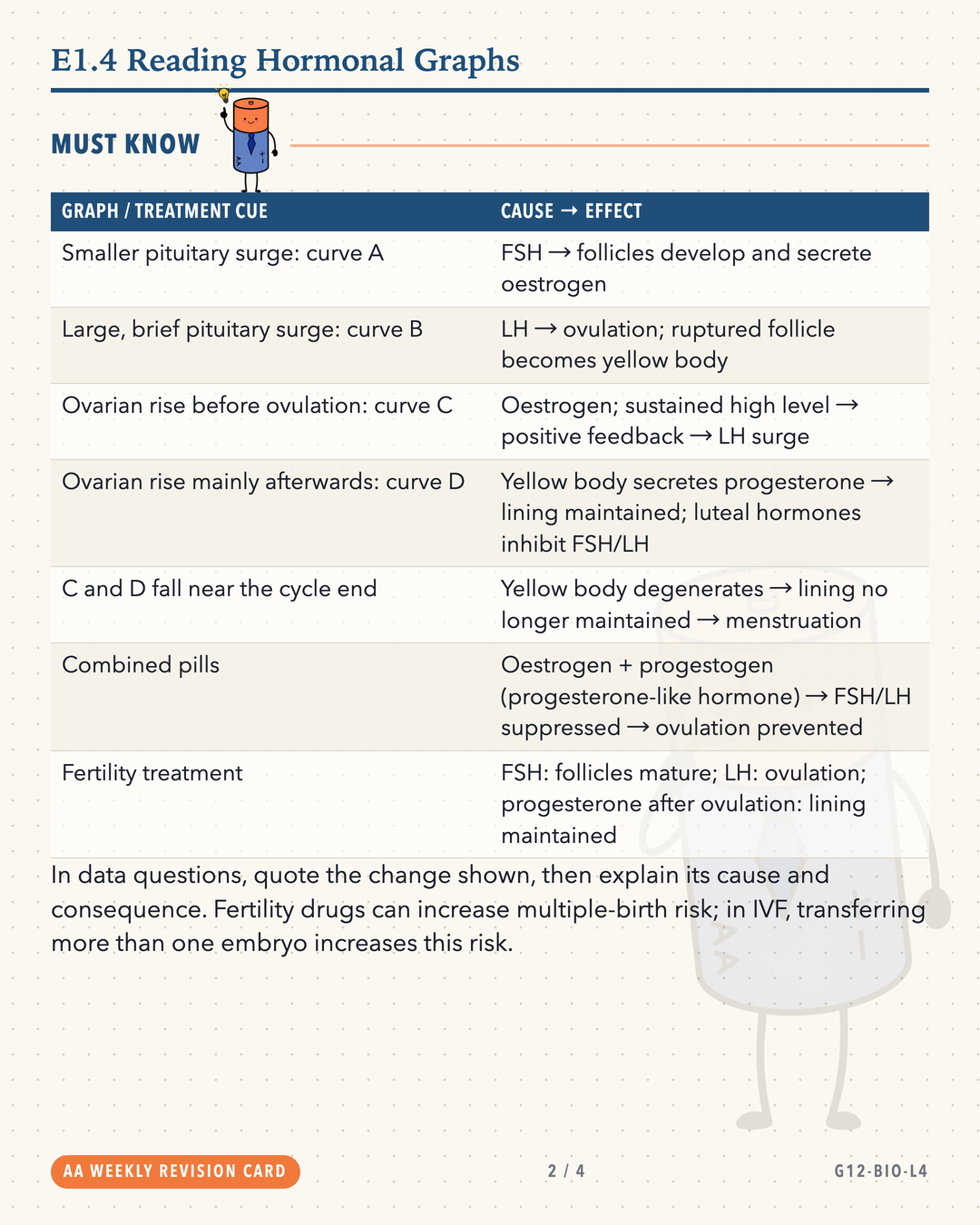
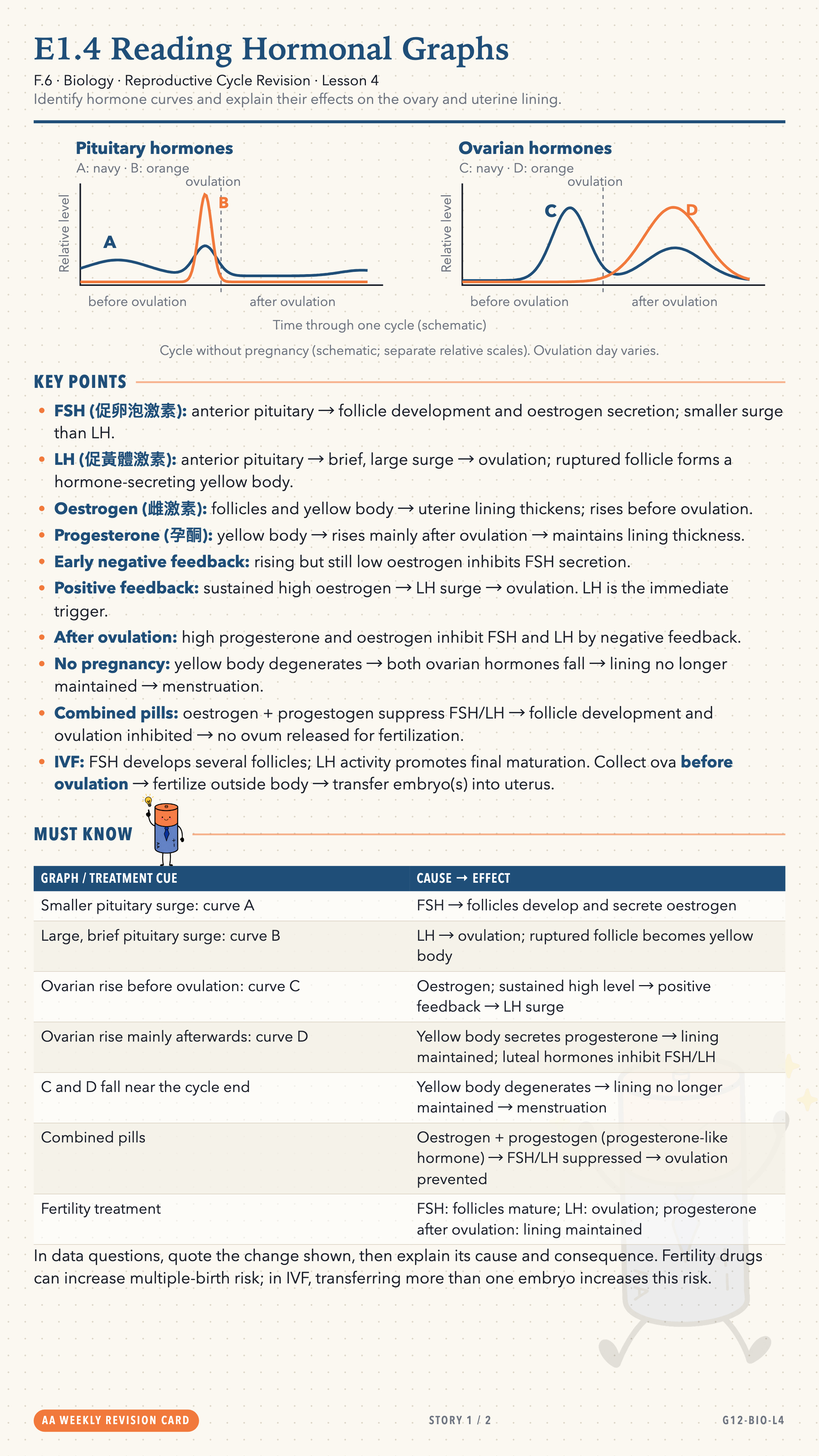
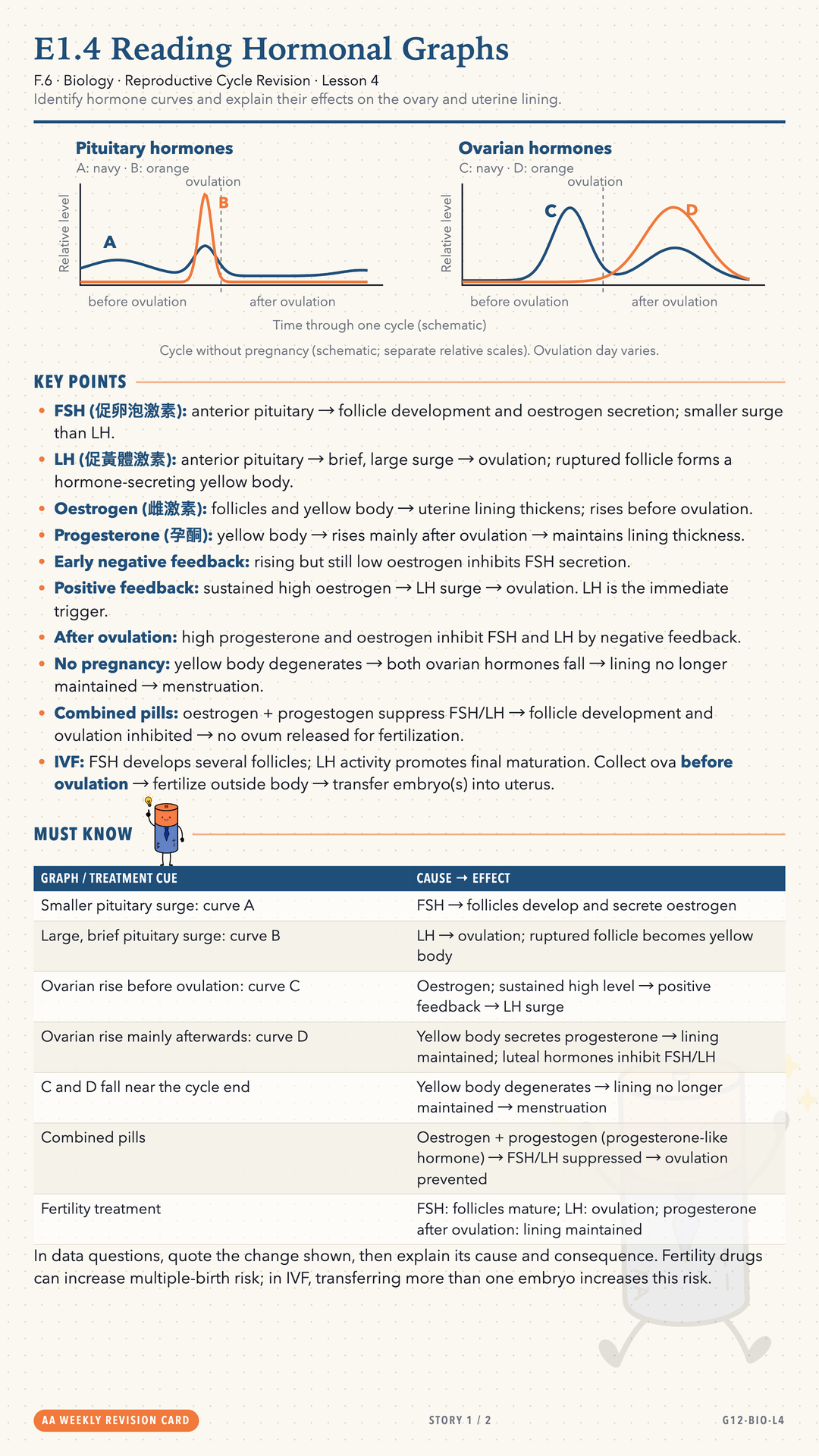
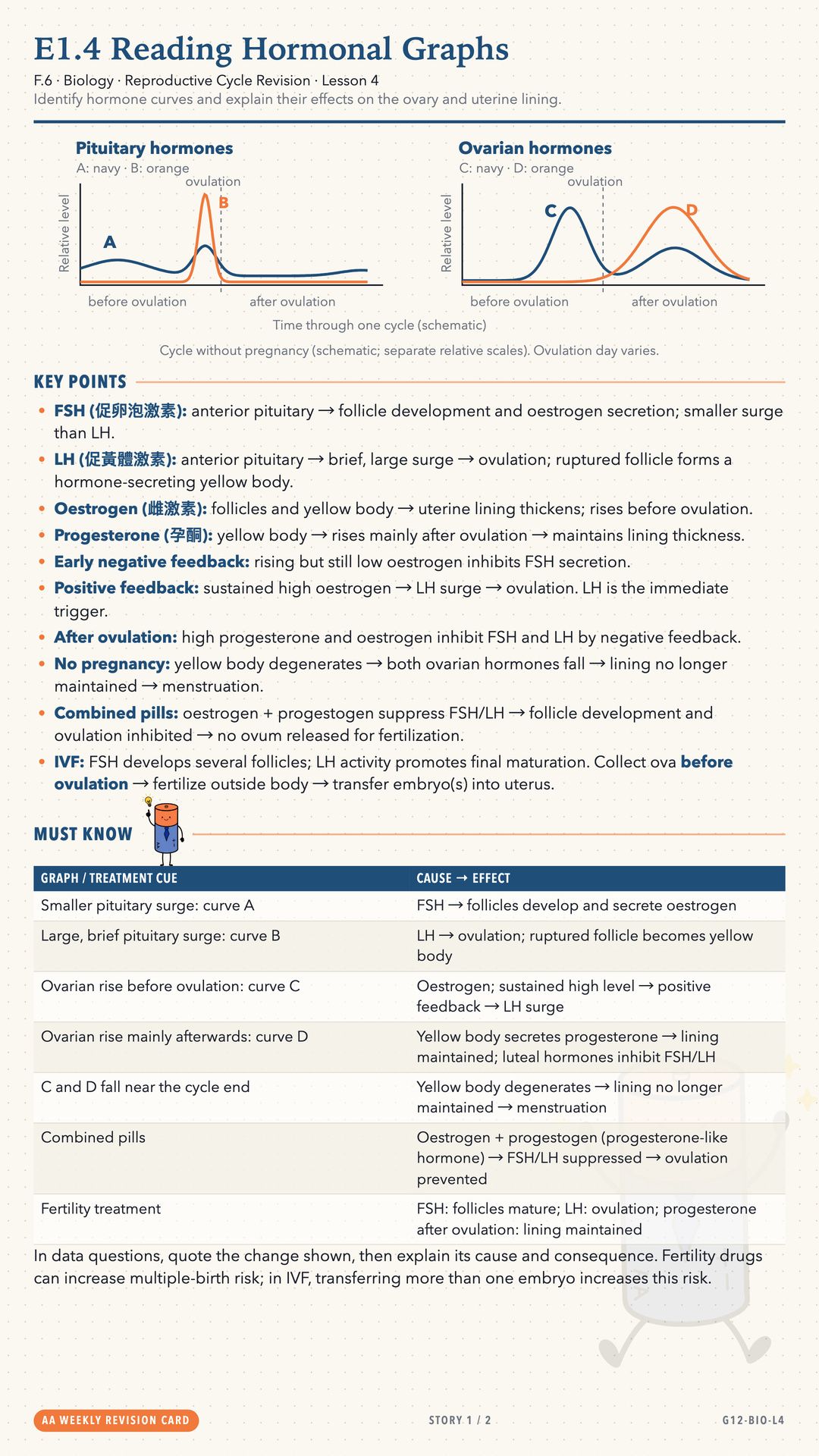
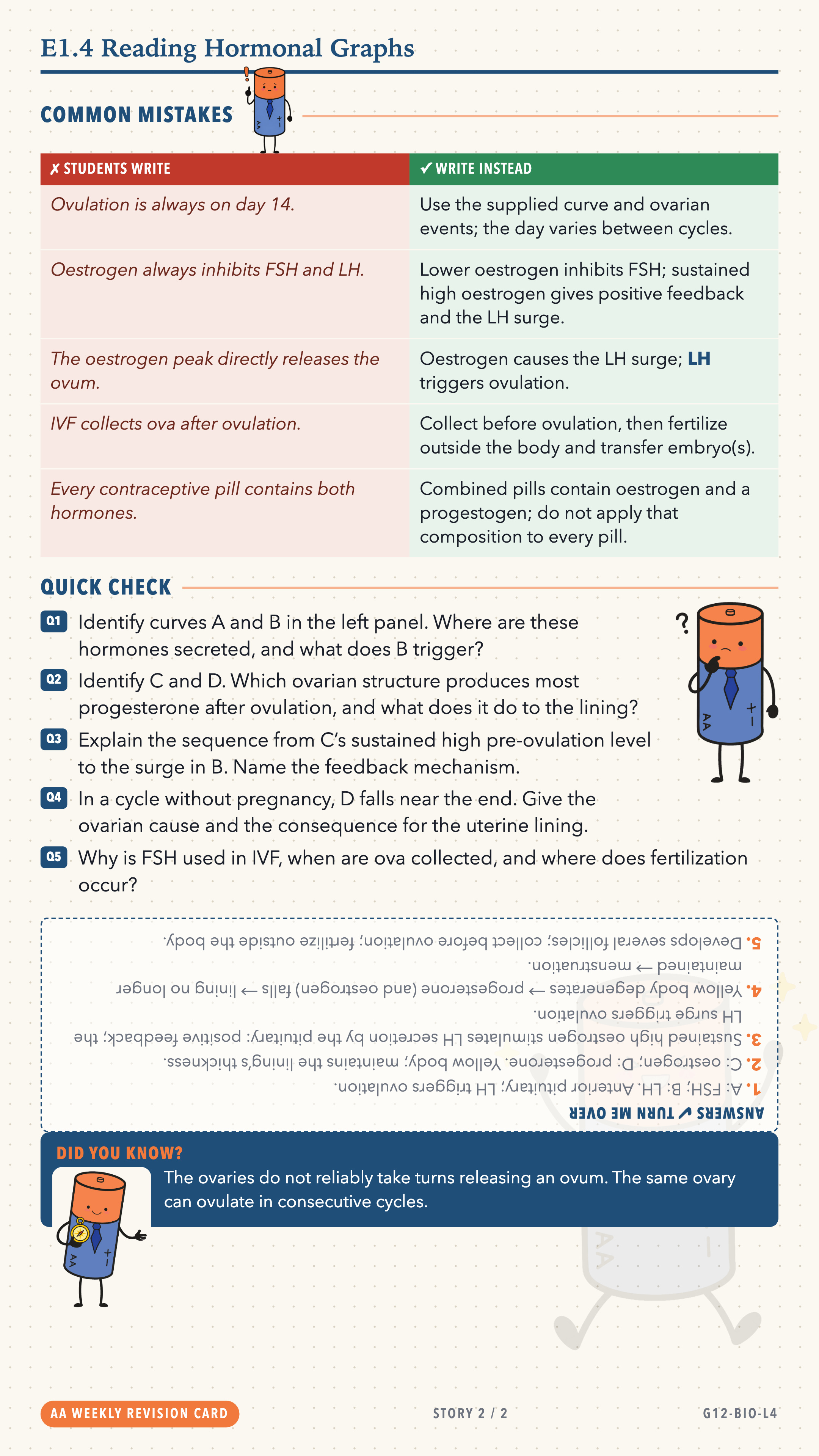
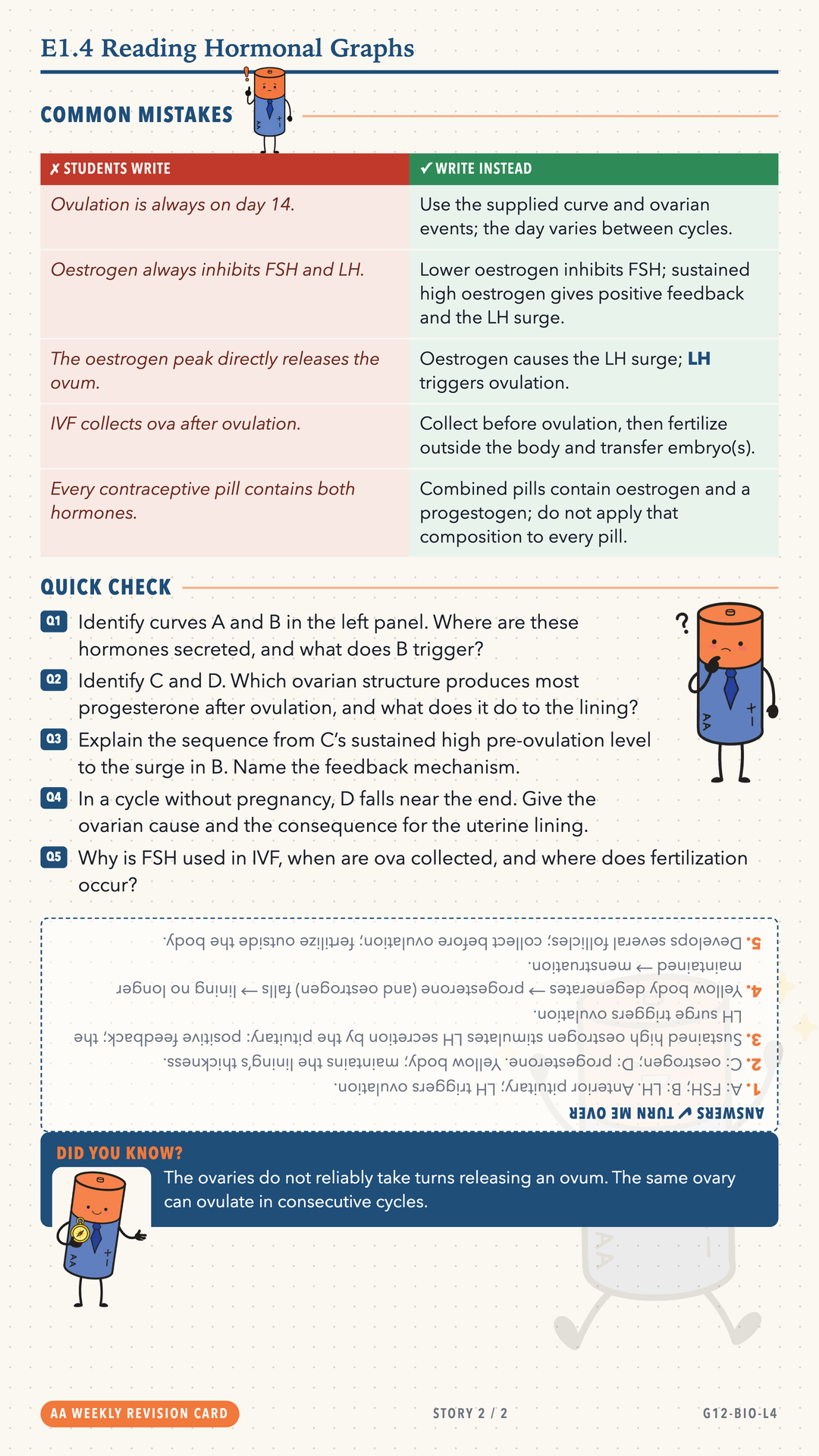
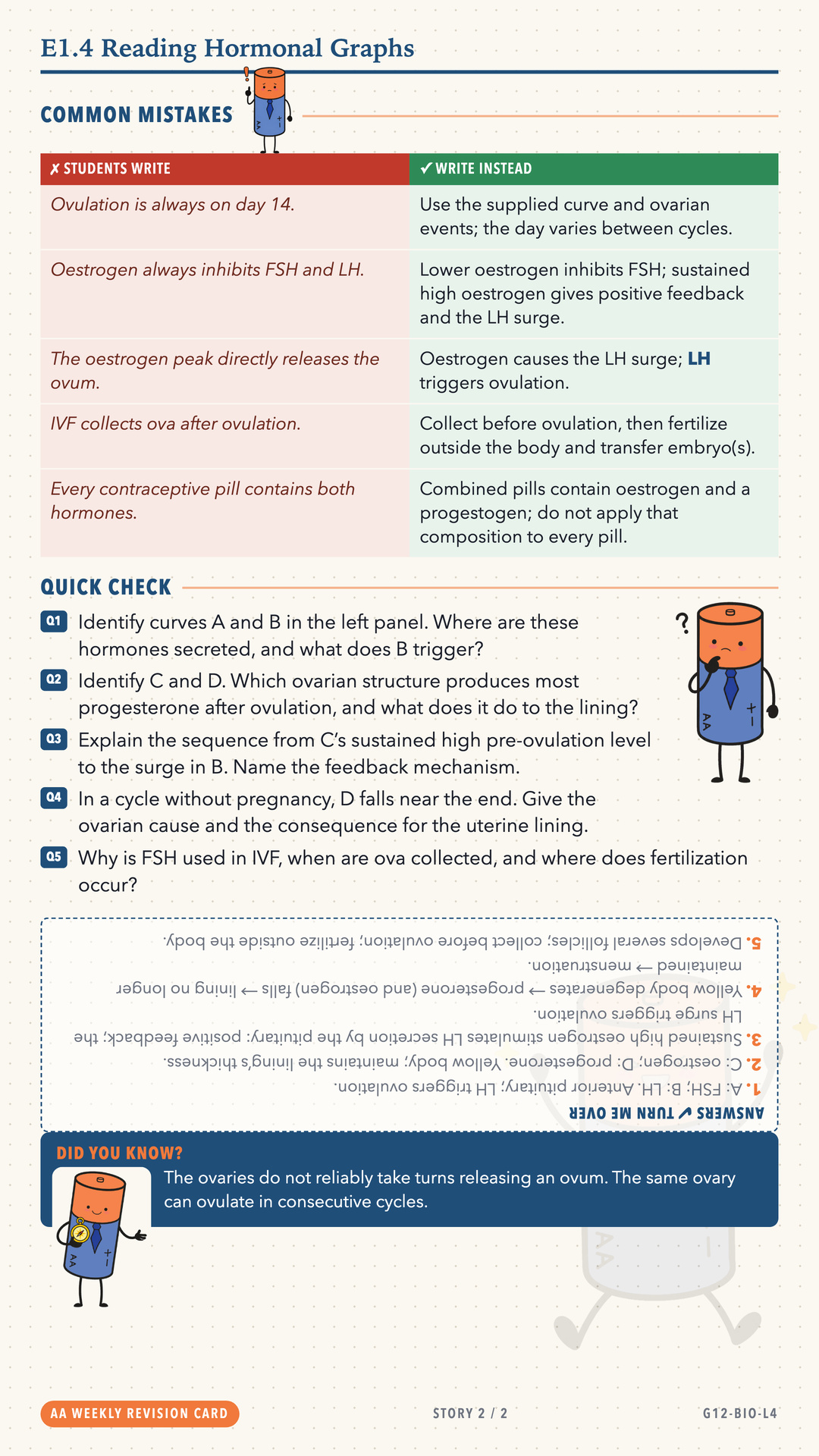
Identify hormone curves and explain their effects on the ovary and uterine lining.
✔ fact-checked · 0 added mistakes tagged [likely] · 3.2 MB JPG · card.md ·
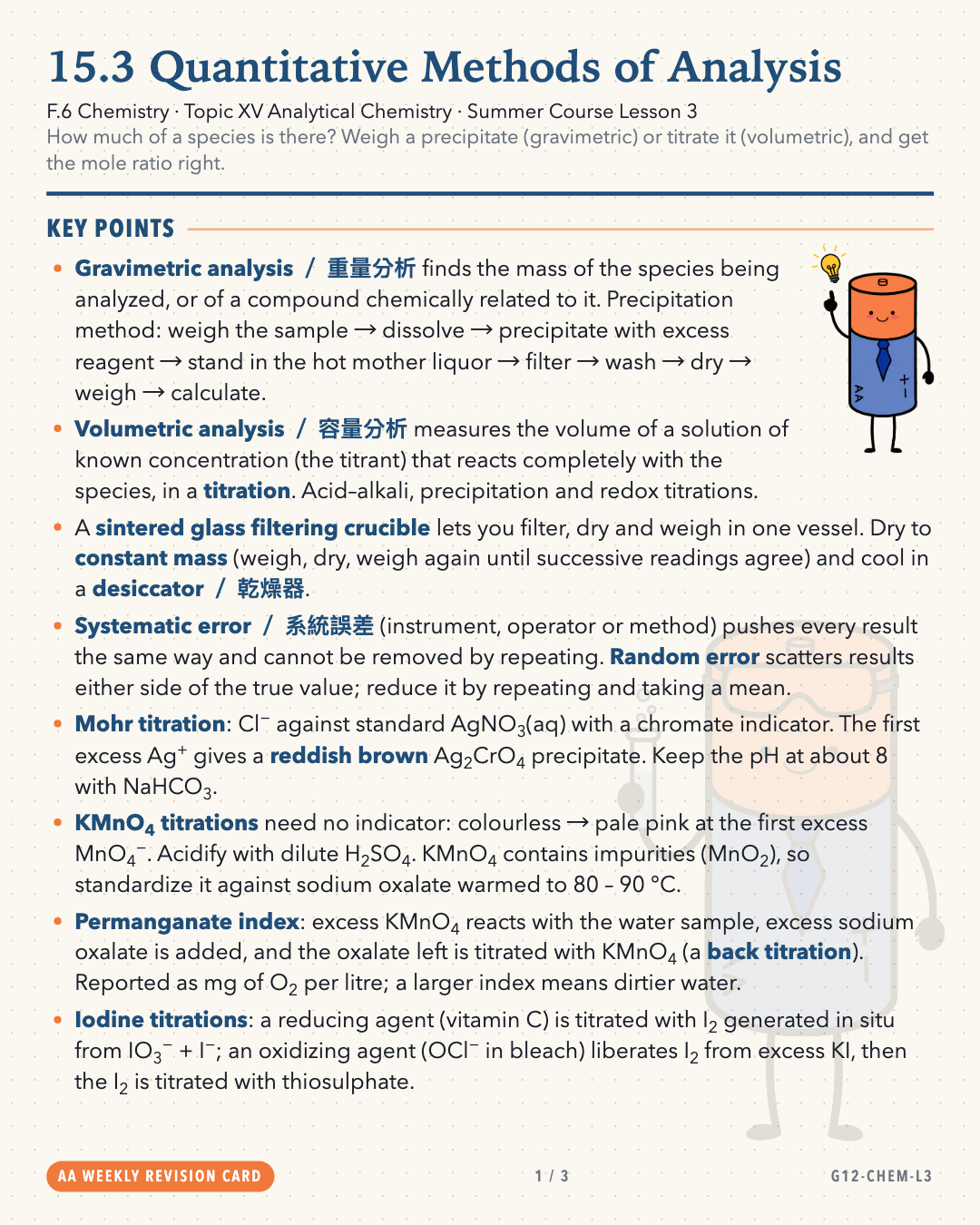
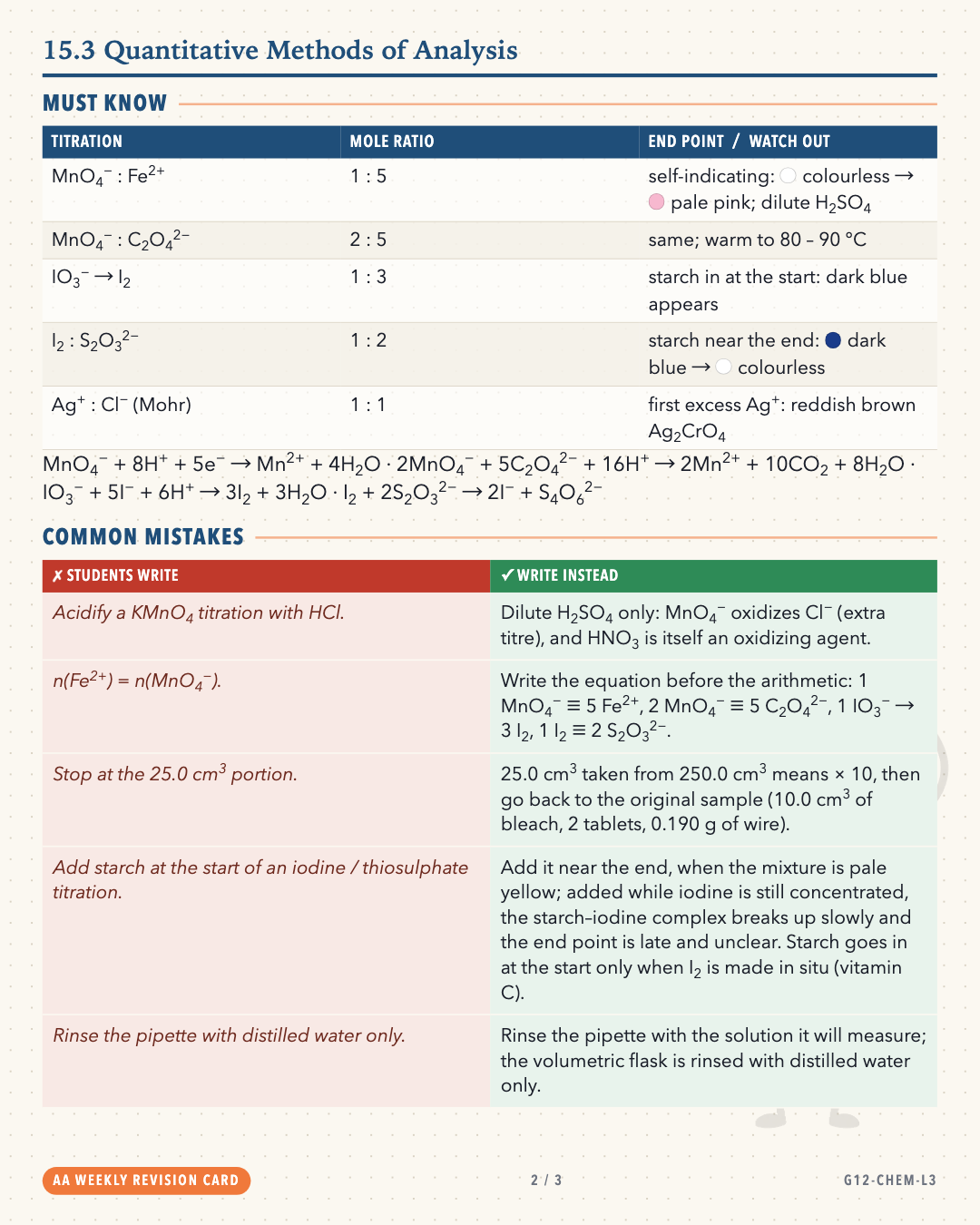
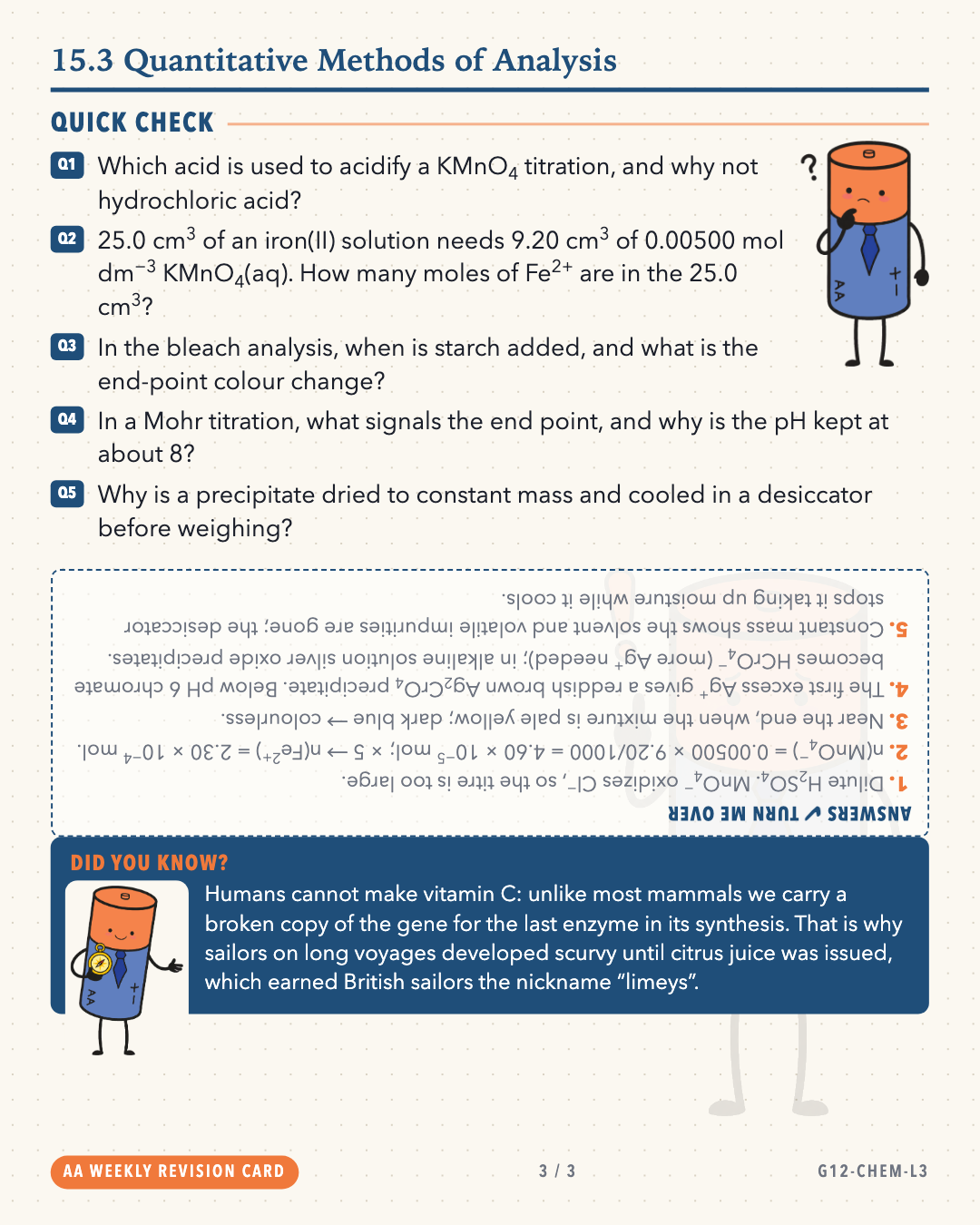
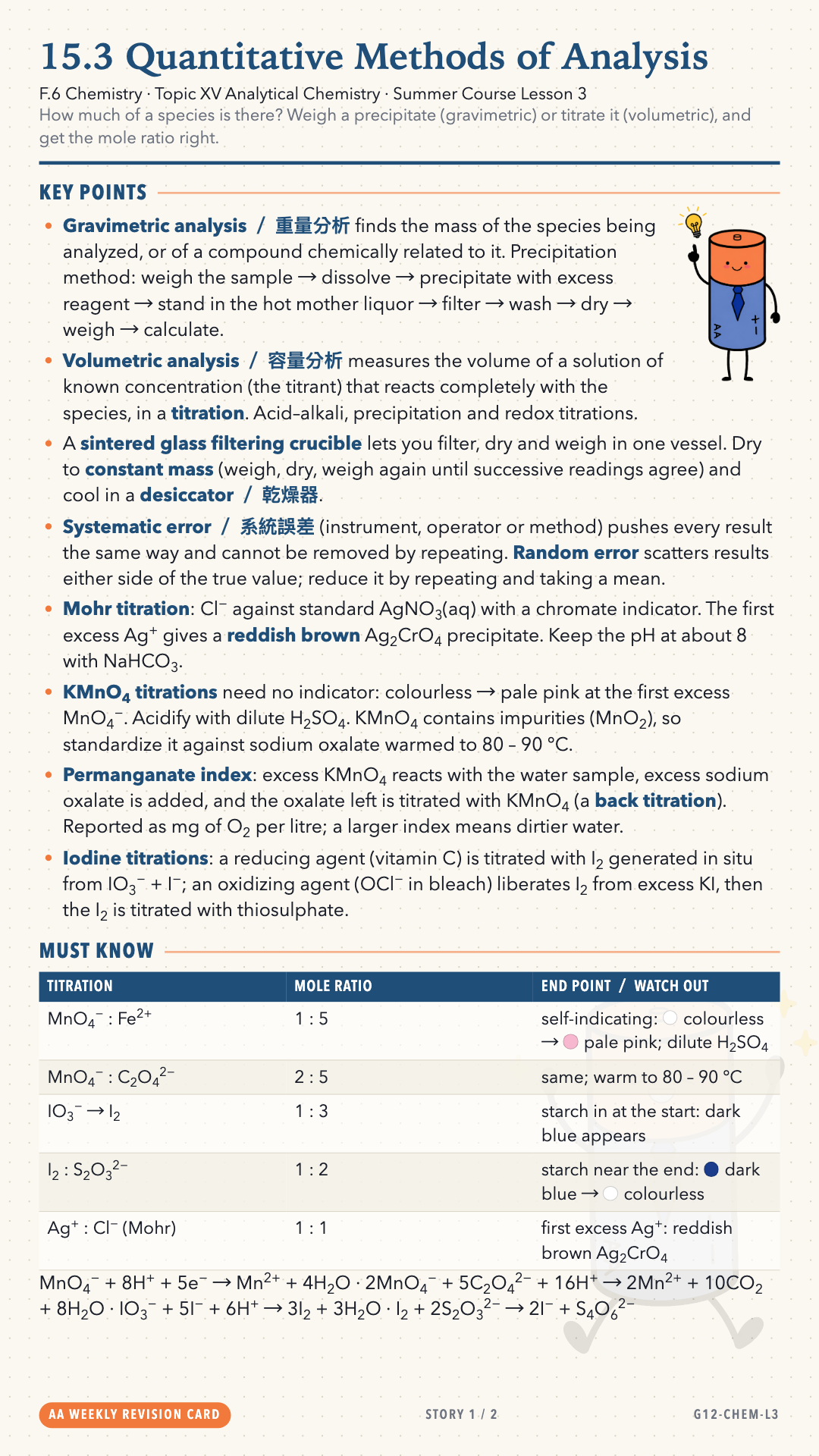
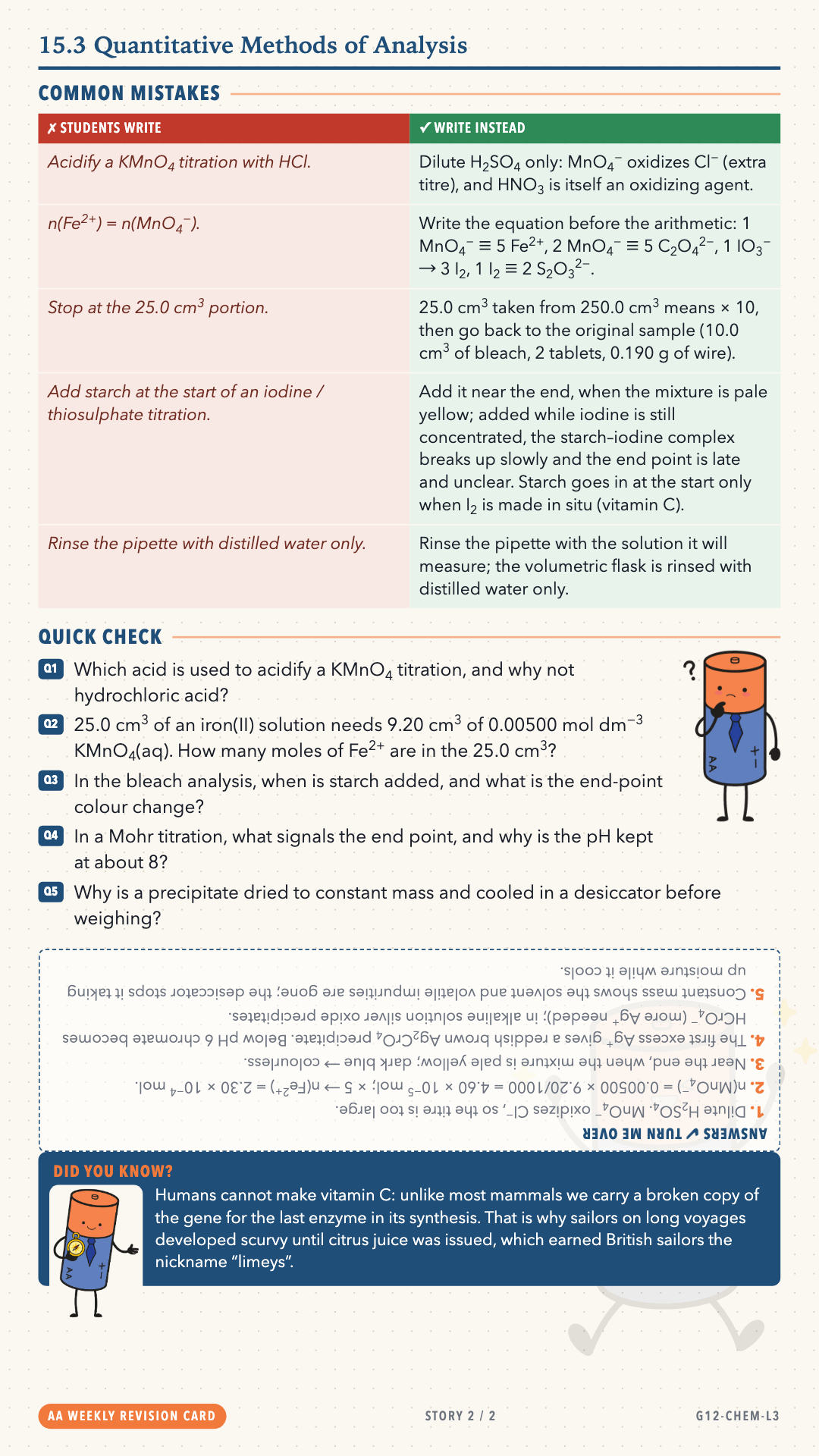
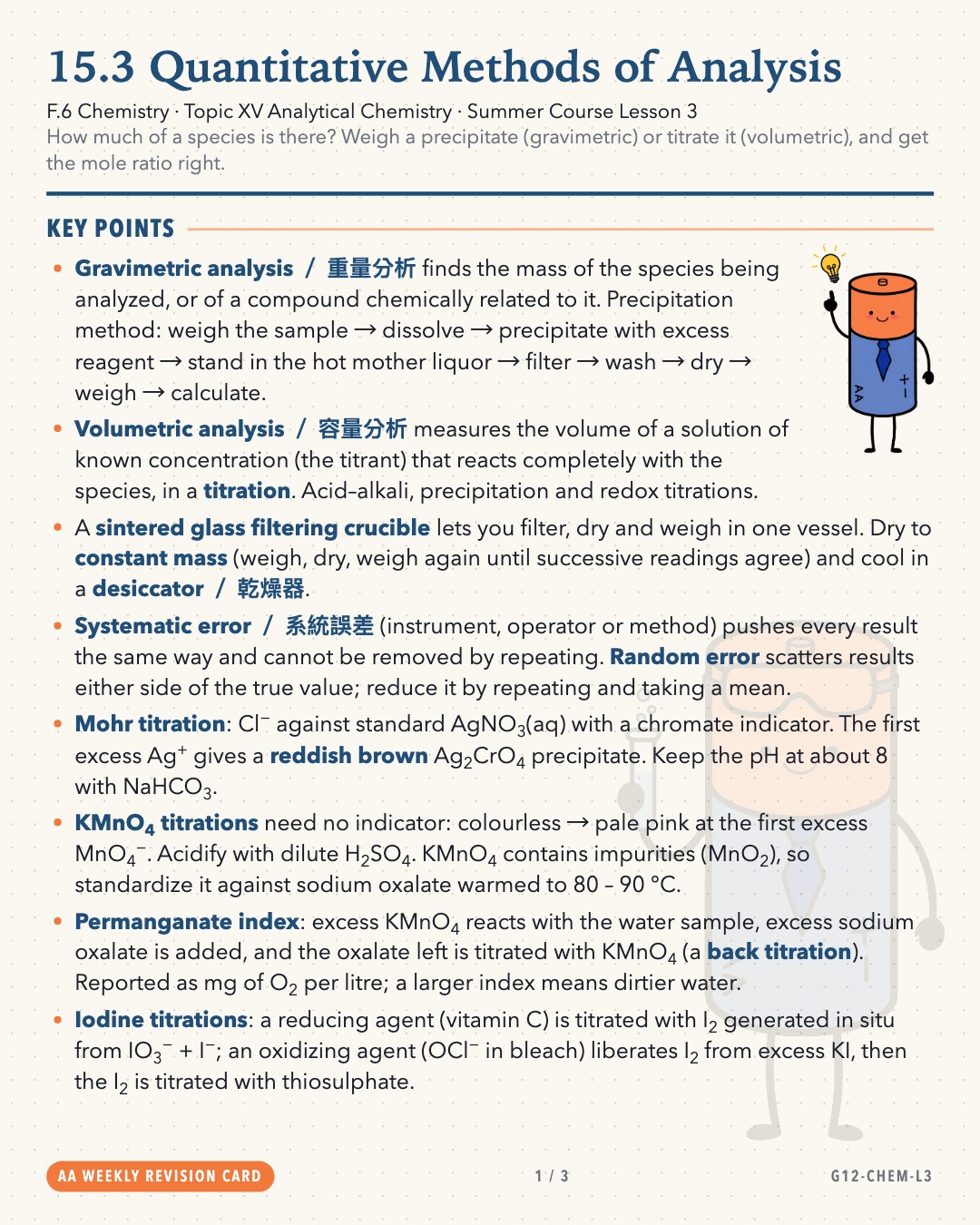
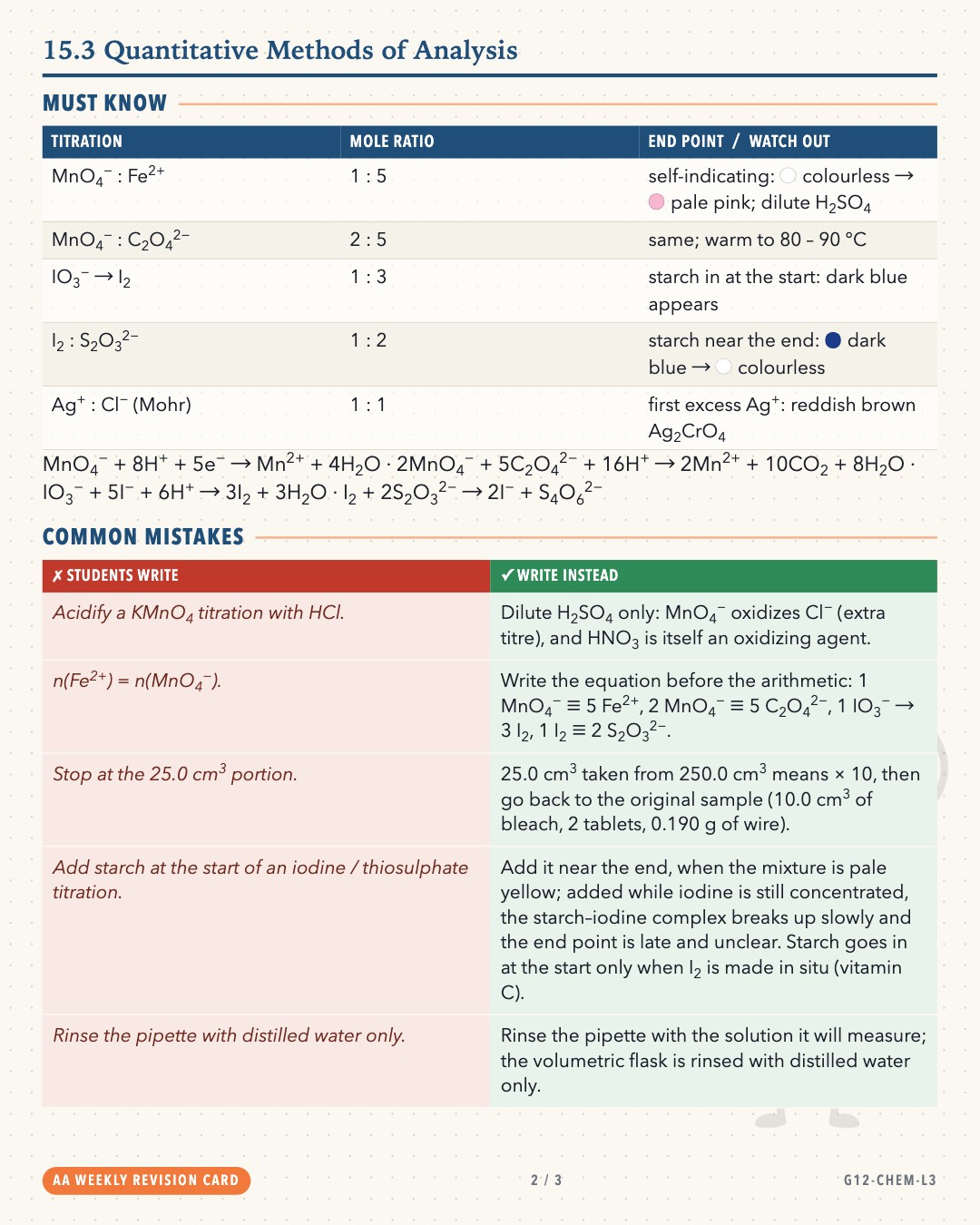
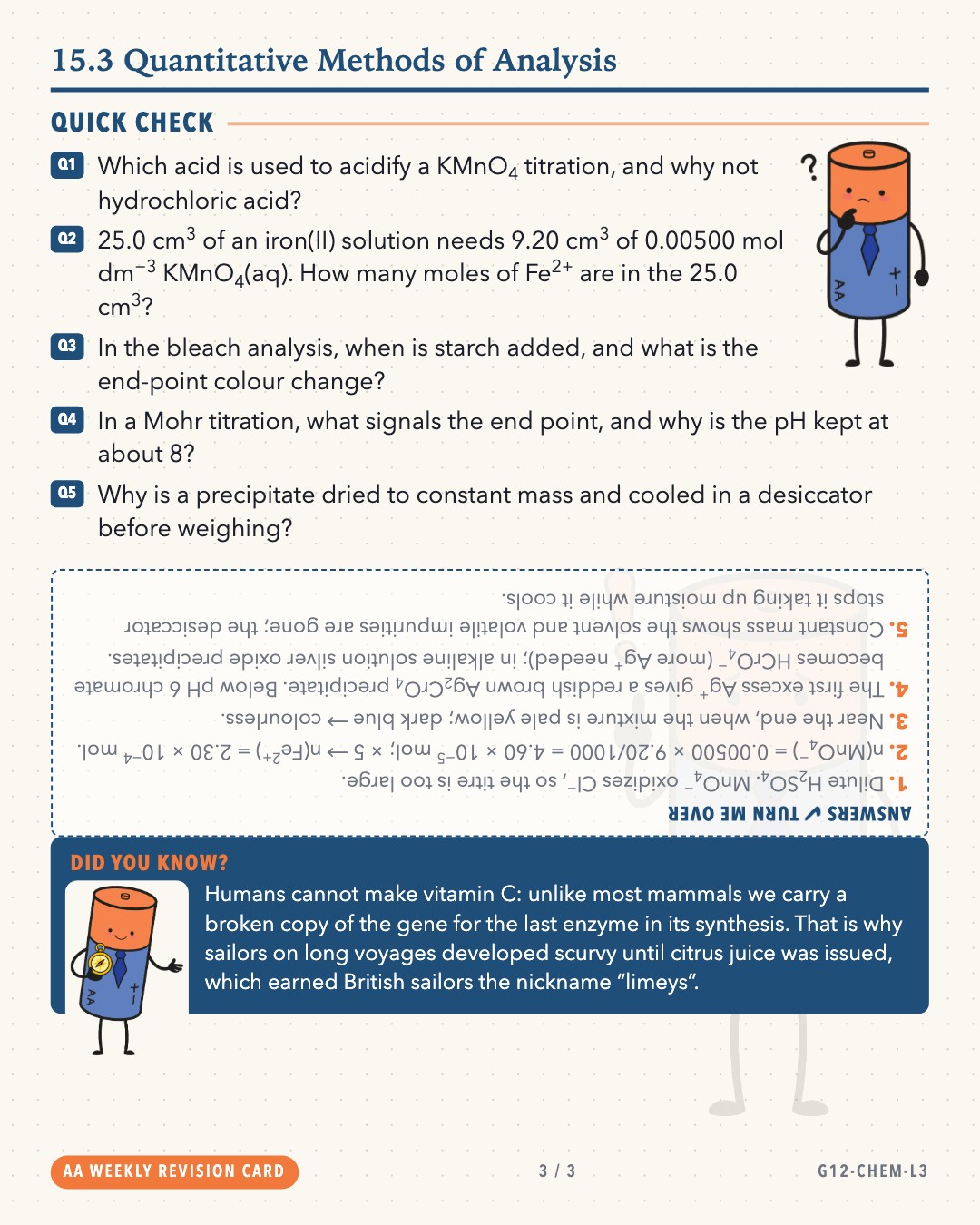
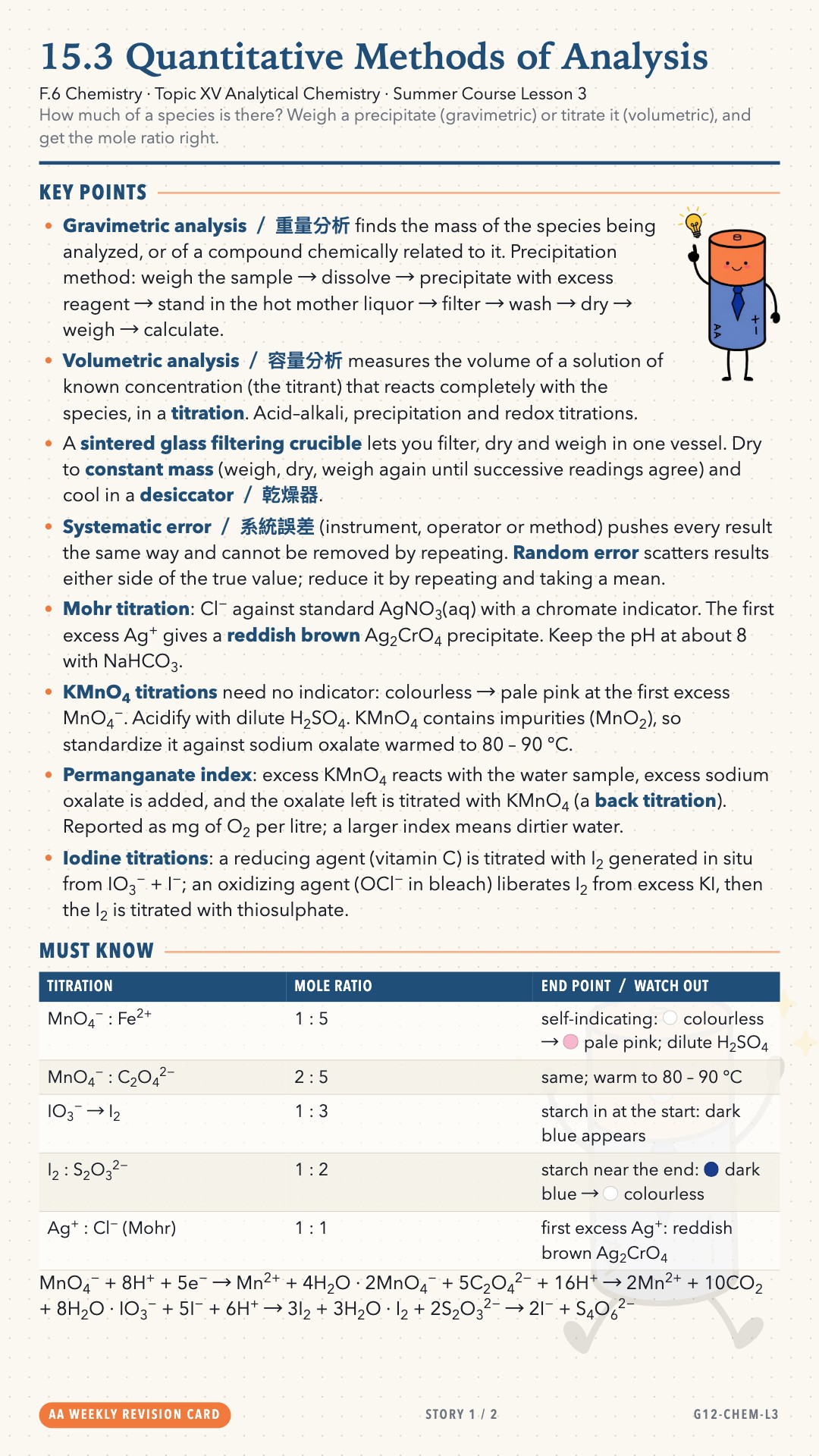
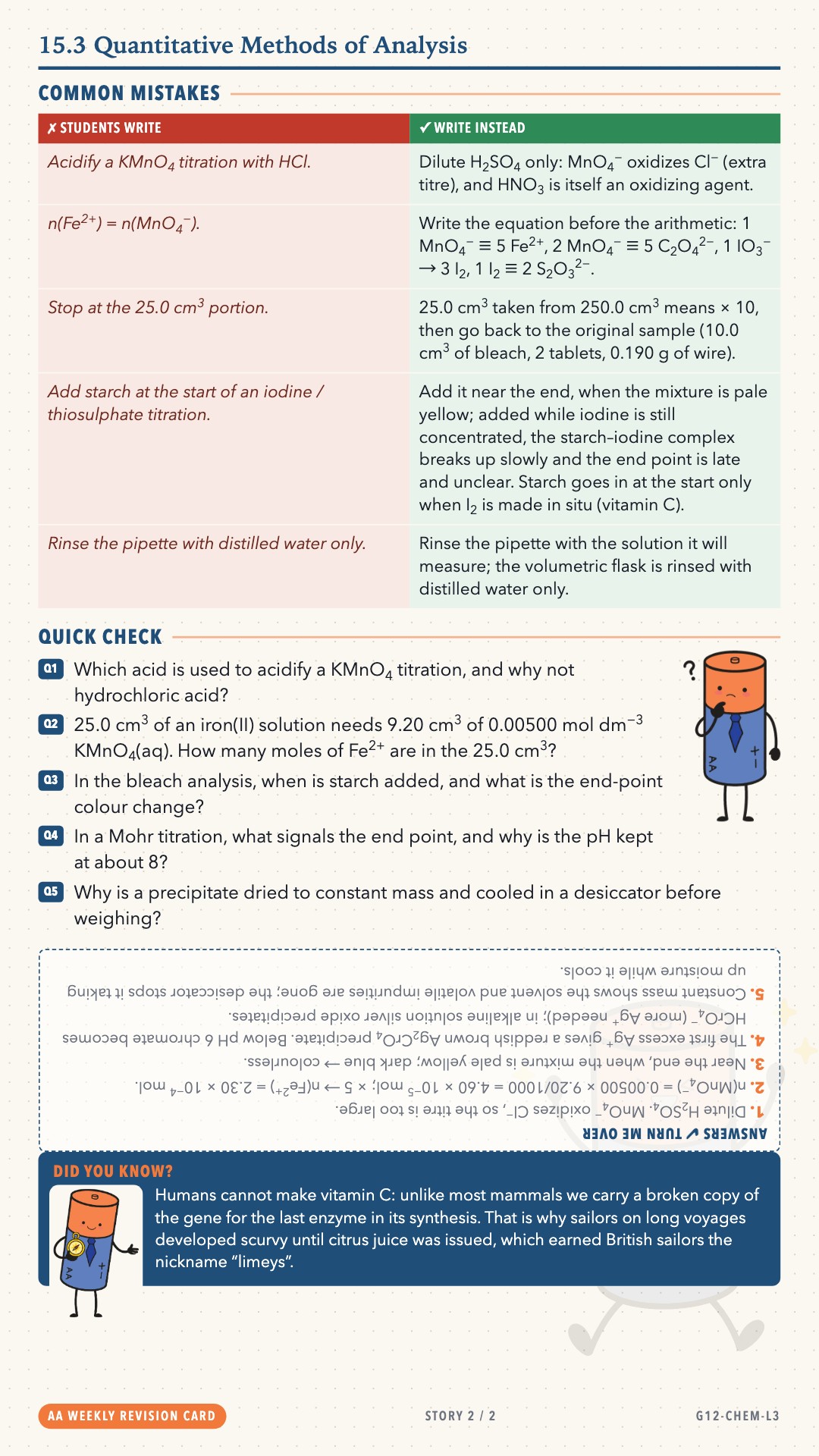
How much of a species is there? Weigh a precipitate (gravimetric) or titrate it (volumetric), and get the mole ratio right.
✔ fact-checked · 0 added mistakes tagged [likely] · 1.9 MB JPG · card.md ·
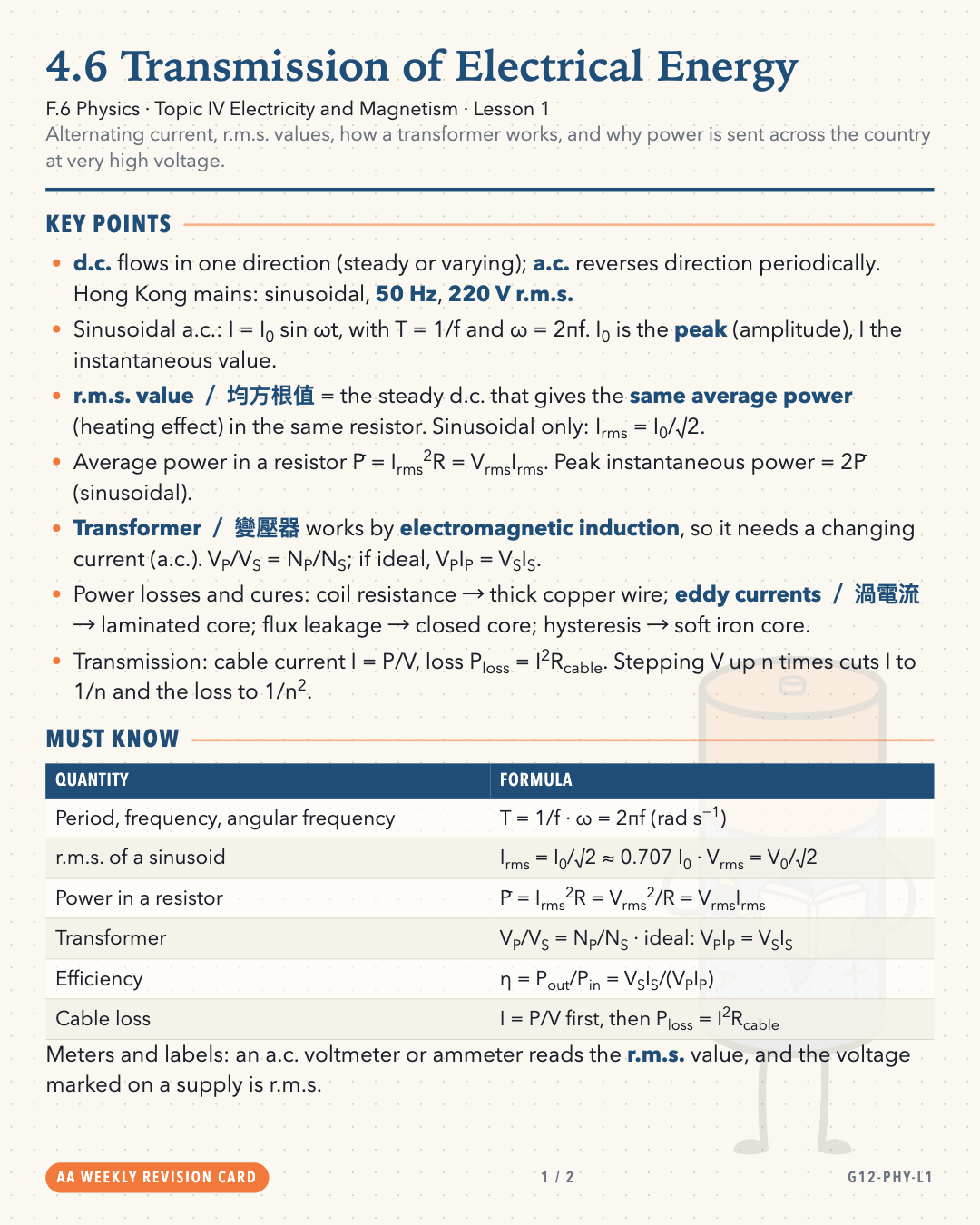
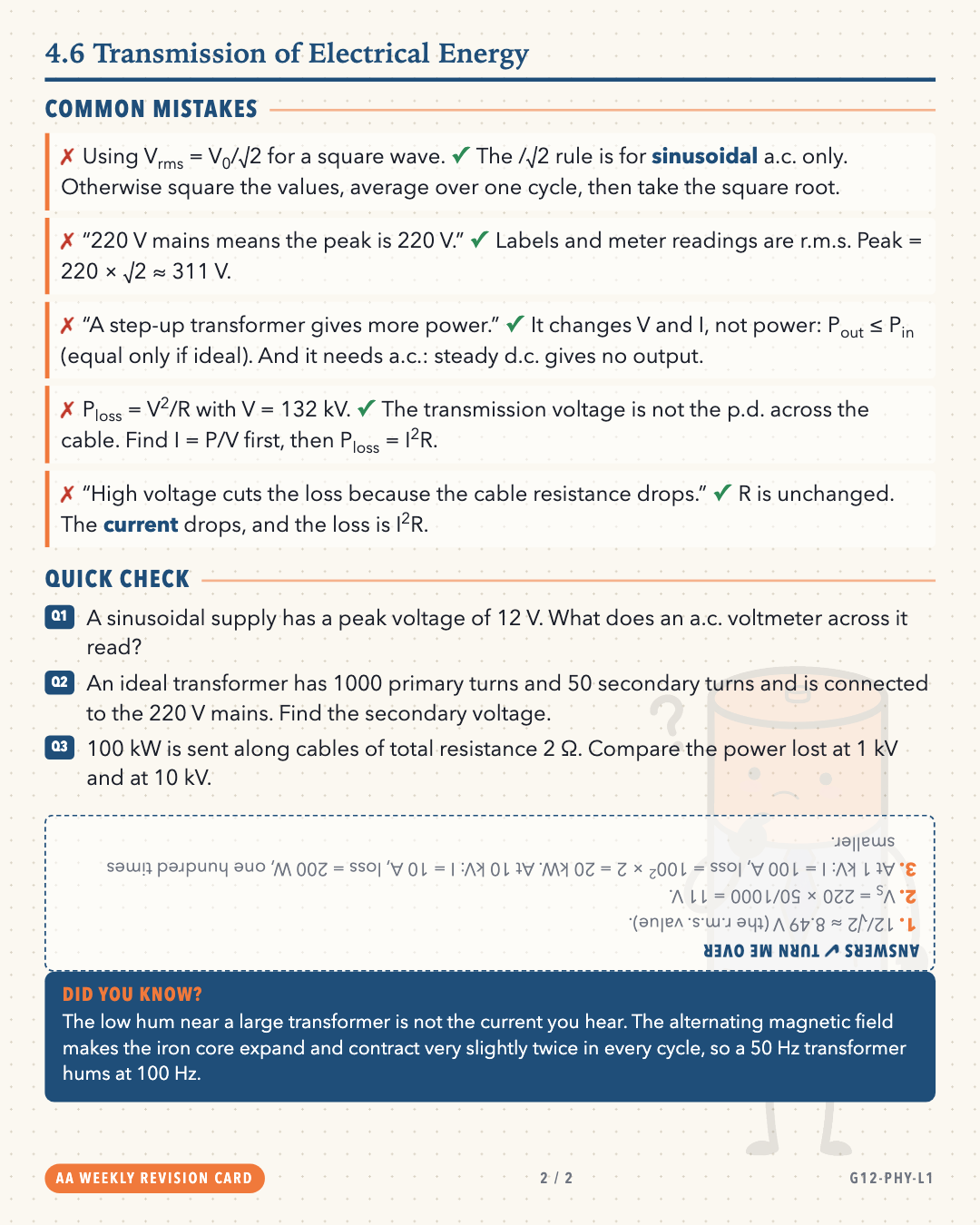
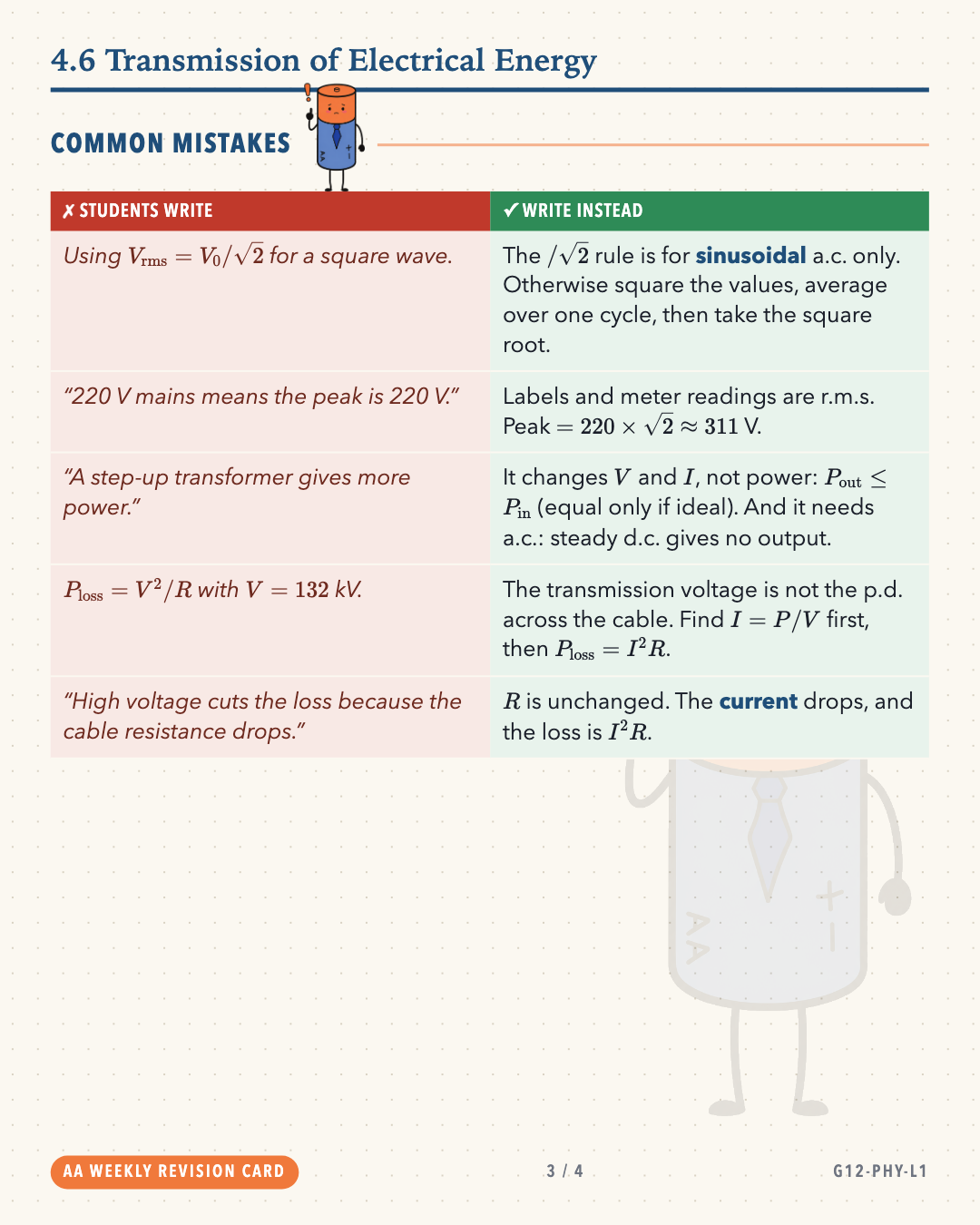
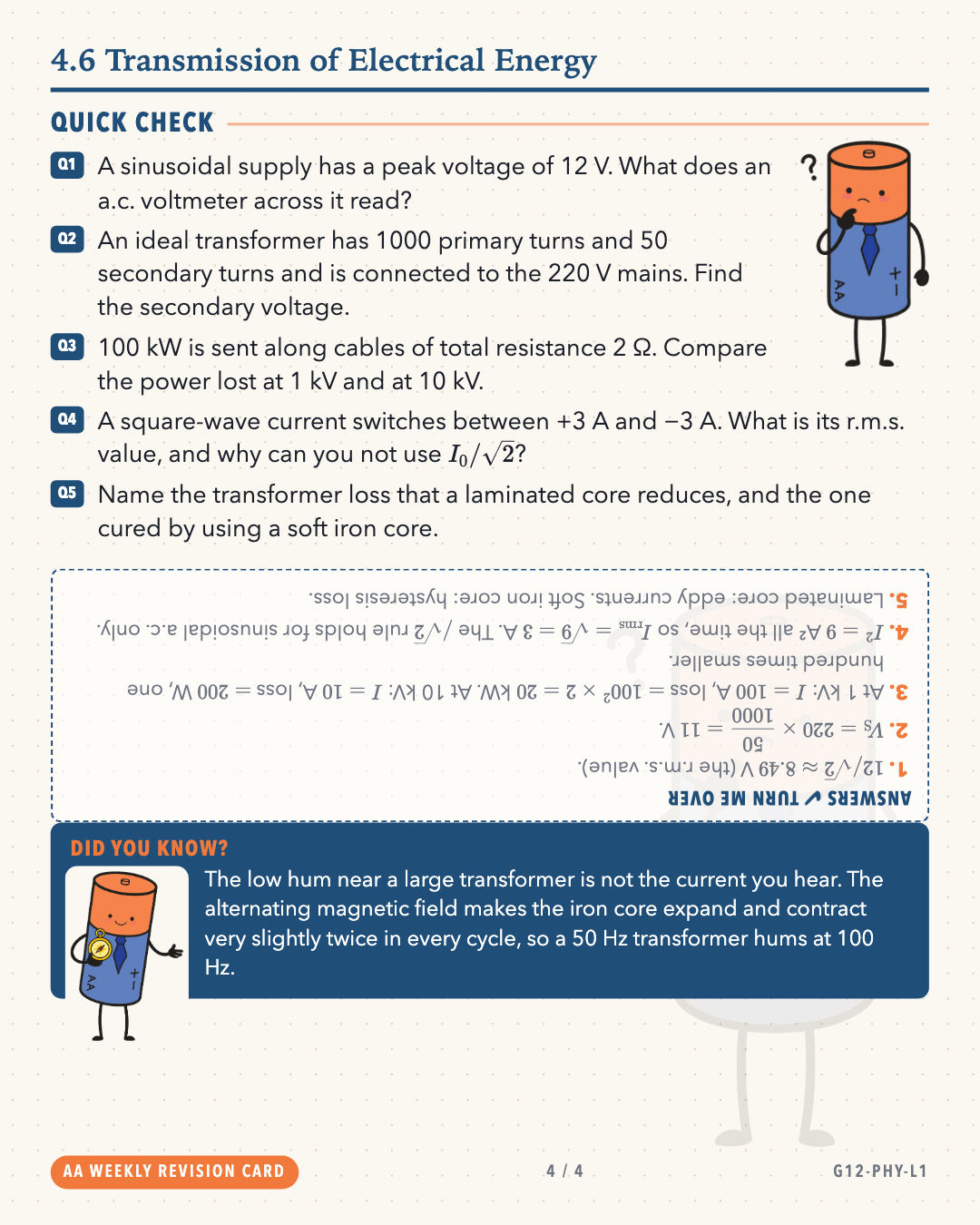
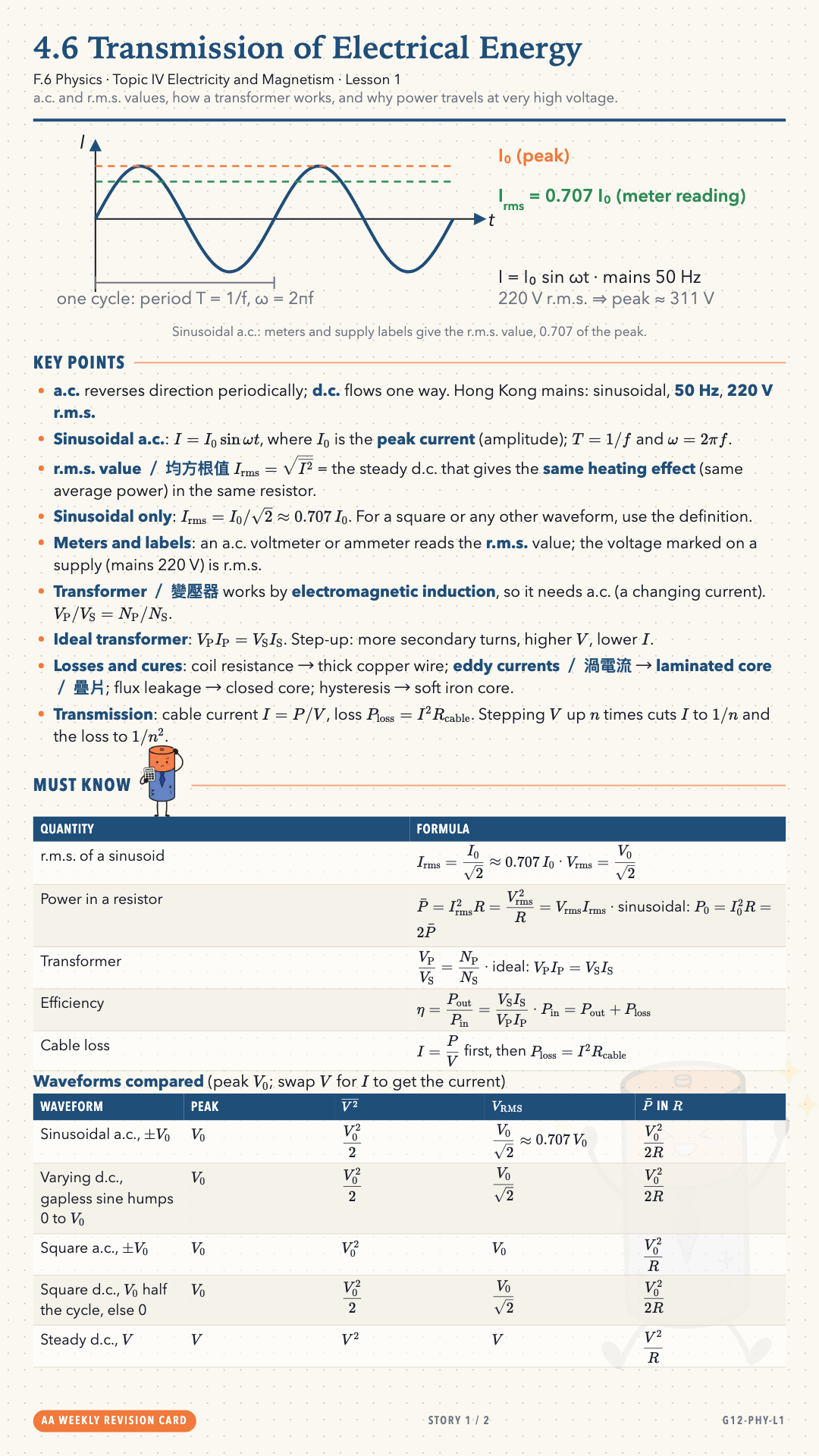
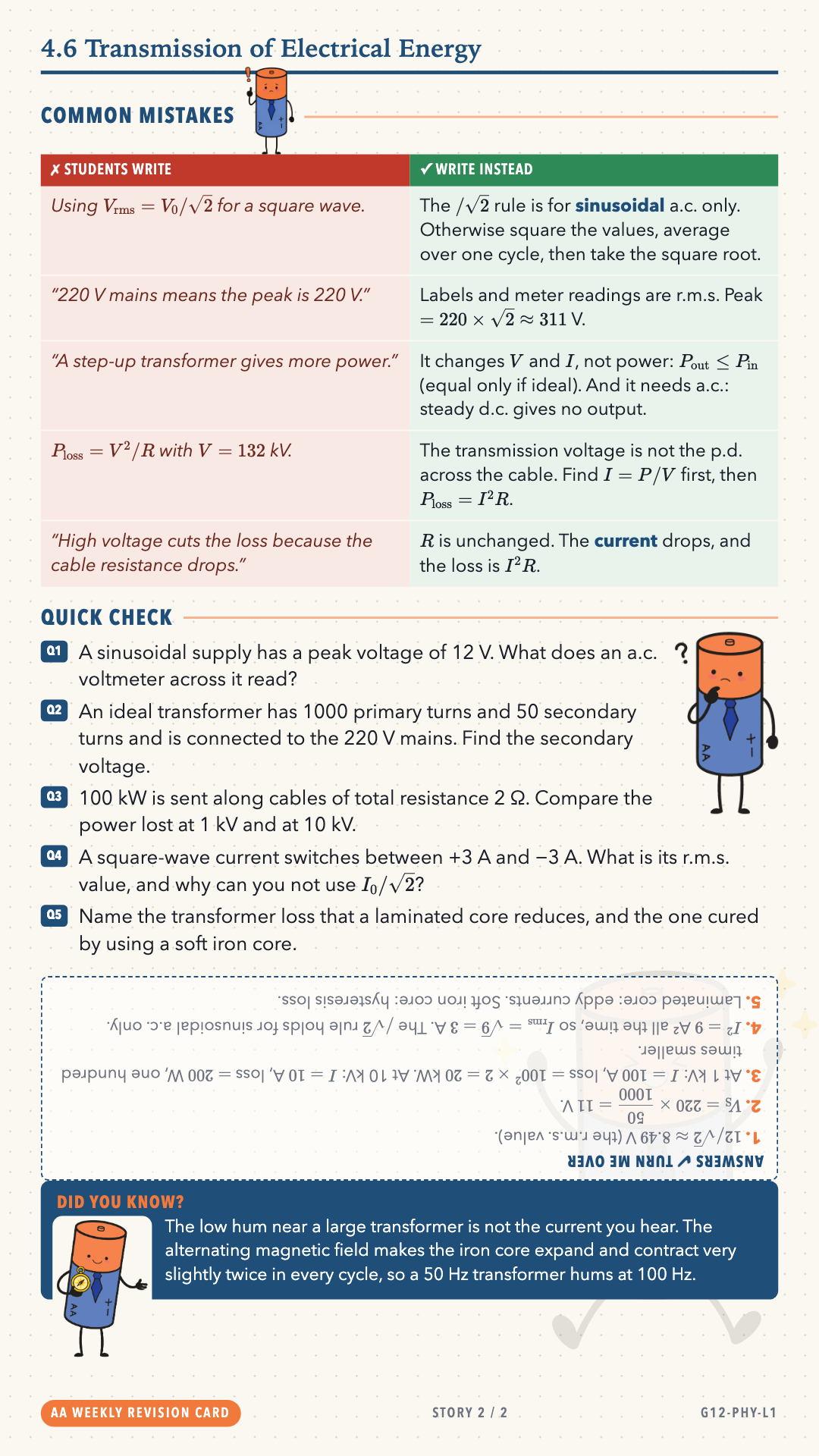
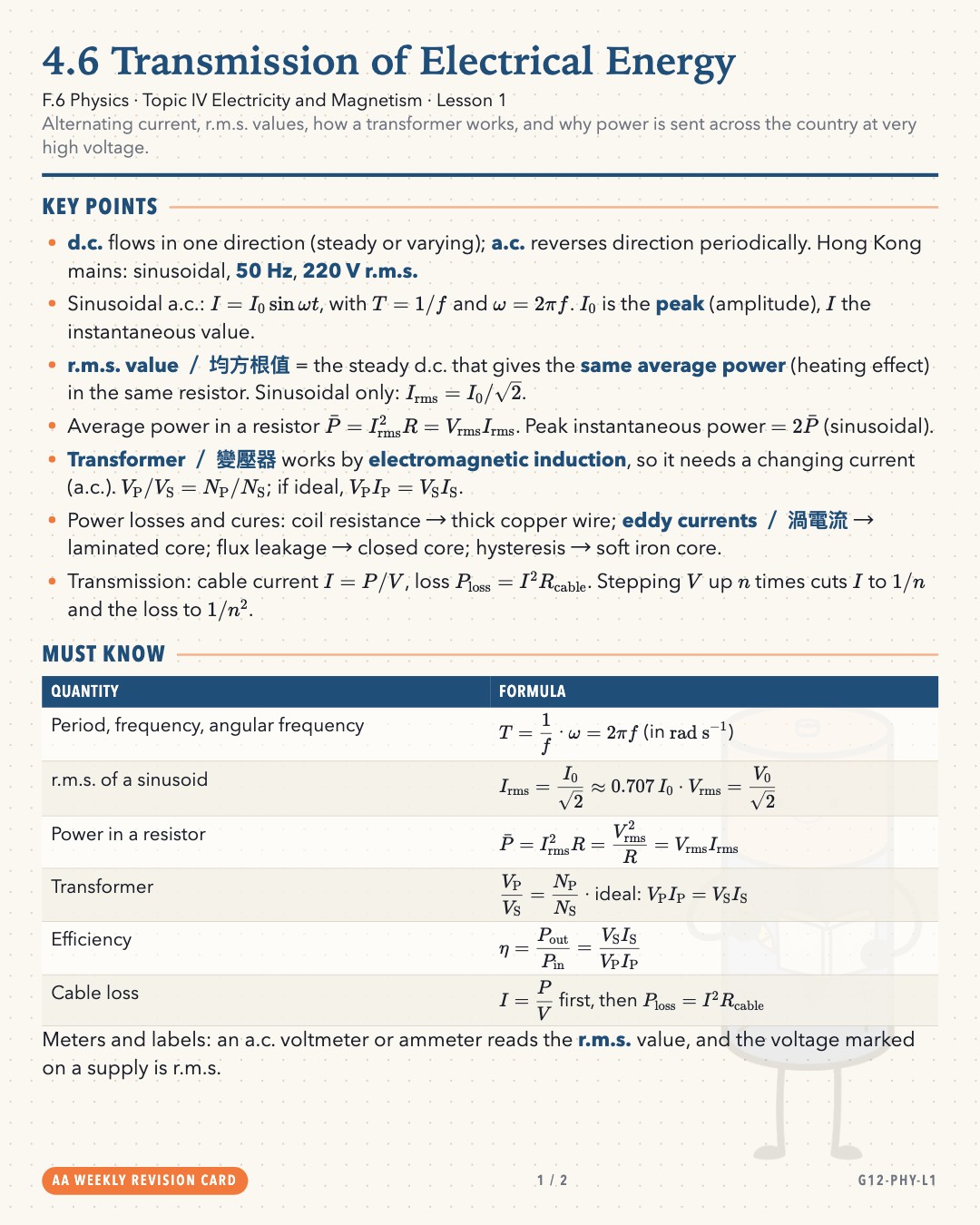
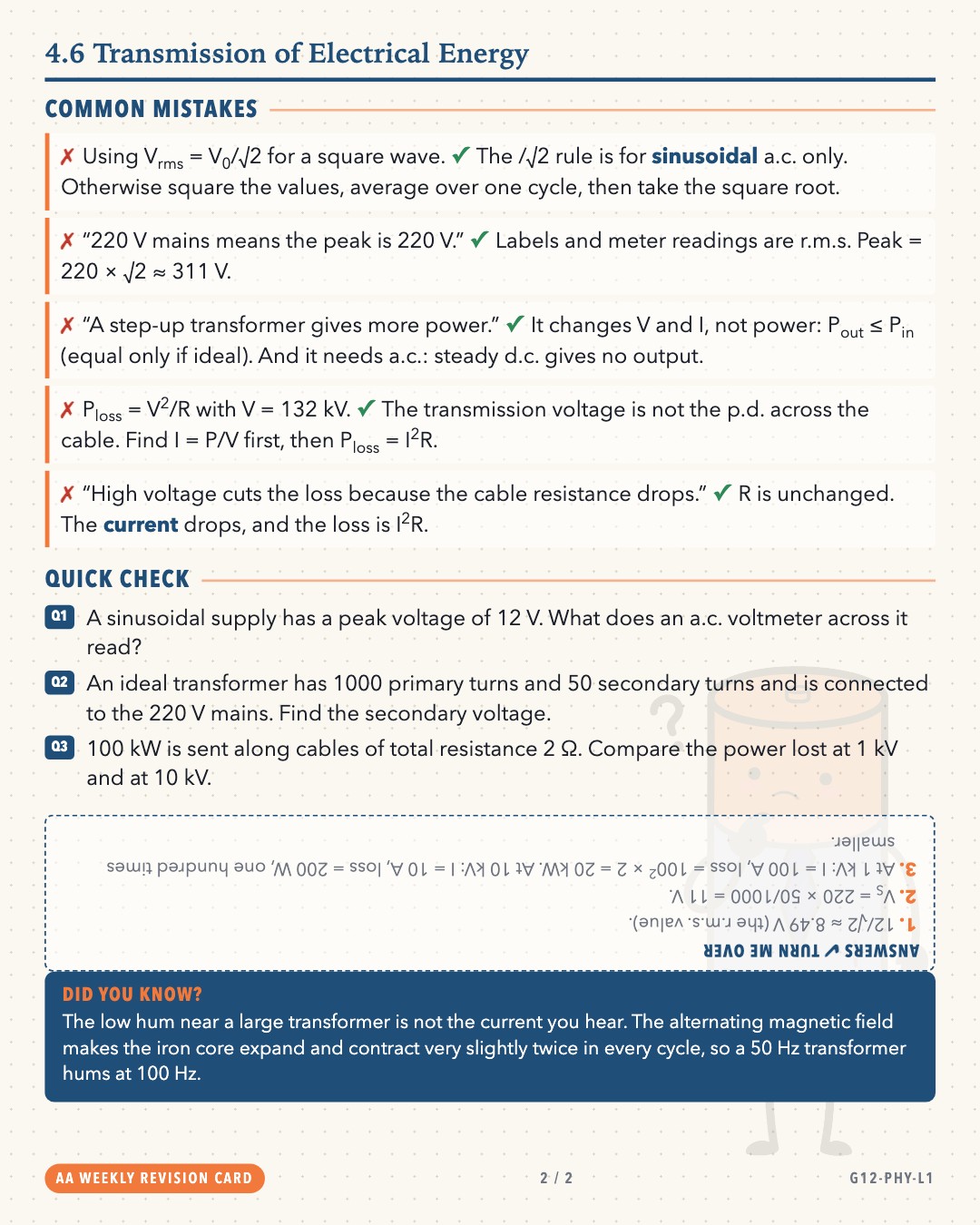
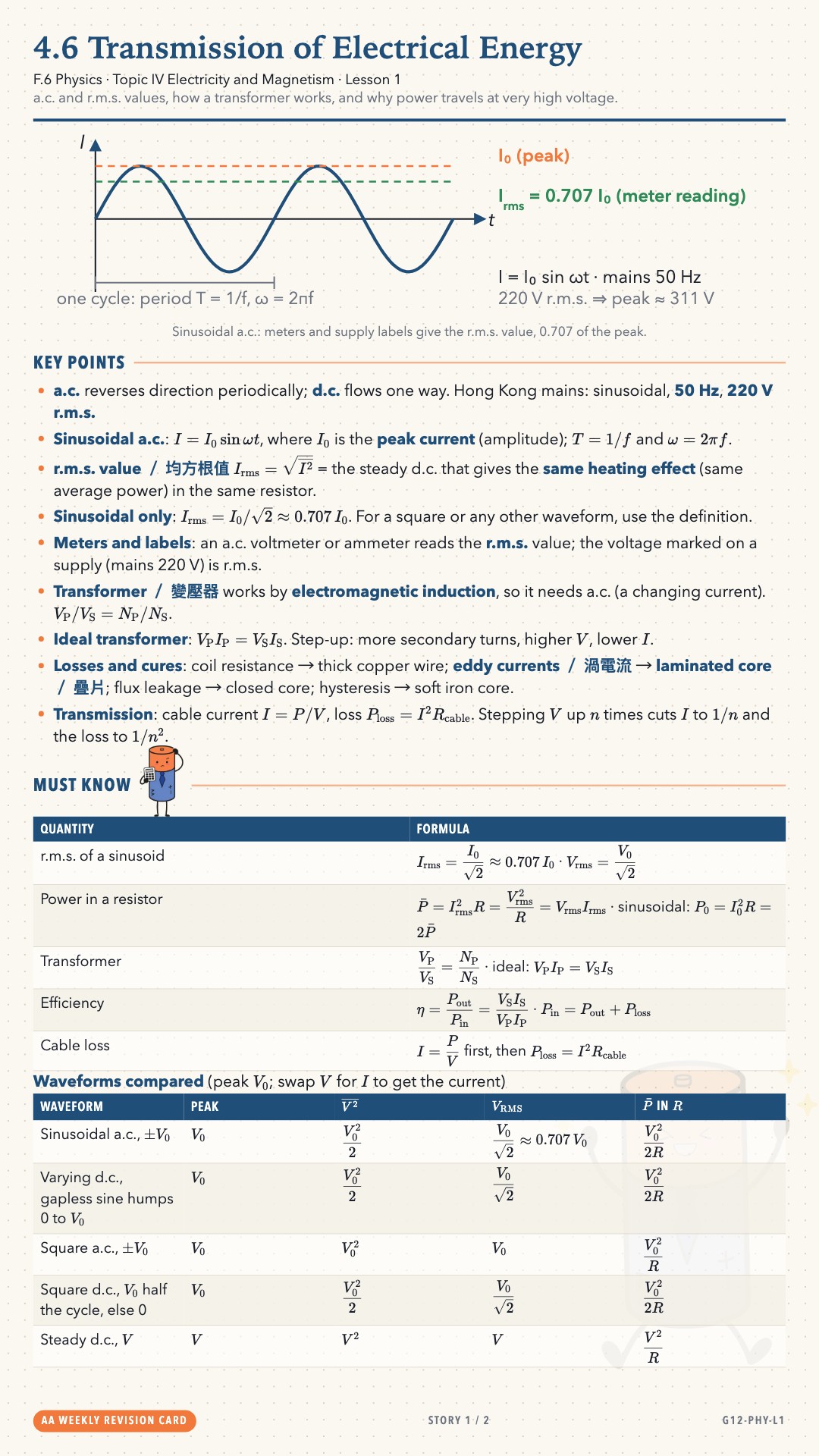
a.c. and r.m.s. values, how a transformer works, and why power travels at very high voltage.
✔ fact-checked · 2 added mistakes tagged [likely] · 1.8 MB JPG · card.md ·